

SUBSCRIBE TO OUR FREE NEWSLETTER
Daily news & progressive opinion—funded by the people, not the corporations—delivered straight to your inbox.
5
#000000
#FFFFFF
To donate by check, phone, or other method, see our More Ways to Give page.
Daily news & progressive opinion—funded by the people, not the corporations—delivered straight to your inbox.
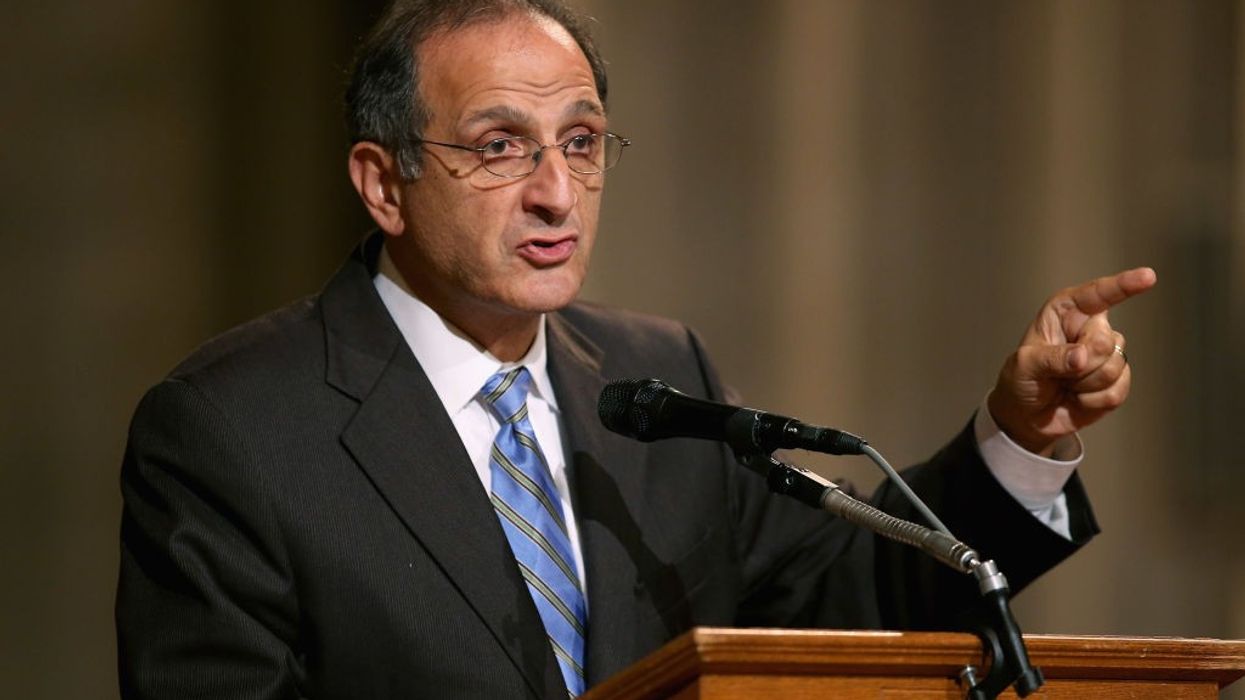
That his post has been viewed by nearly 20 million people makes it even more concerning, as it only takes one deranged individual who has read it to decide to respond by striking out in an act of violence.
This past week began on a deeply disturbing note. Elon Musk reposted on X (formerly Twitter) a dangerously false attack on more than a dozen American entities who had received USAID or State Department grants over the past decade. The original post referred to the groups as “terrorist-linked.” In his repost Musk commented, “As many people have said, why pay terrorist organizations and certain countries to hate us when they’re perfectly willing to do it for free?”
The groups listed in the original post had apparently been compiled by an individual with an anti-Arab or anti-Muslim bias. He appears to have gone through a list of grant recipients and randomly culled out entities with “Arab” or “Muslim” in their name or who had done work in the Middle East. I don’t know all of the groups mentioned, but those I do know—for example, American Near East Refugee Aid (ANERA)—have been in the forefront of providing lifesaving support to refugees or victims of war or natural disasters, and, in the process, building better ties between the U.S. and affected communities in need across the Middle East. Other groups I recognized had equally important, impressive records of service.
What was obviously most troubling to me was that my organization, the Arab American Institute, was second on the list. This was upsetting for two reasons: The charge was profoundly off-base and irresponsibly dangerous.
As welcoming and inclusive as the U.S. can be, we also must acknowledge that our country has a history of hate and violence, a disproportionate amount of which in recent decades has been directed at Arab Americans and supporters of Palestinian rights.
The fact is that the institute received a State Department grant in 2018 (during the first Trump administration) to create partnerships between Arab American elected officials and public servants with local elected officials in Tunisia. The institute, which was founded in 1985, has a proud history of encouraging Arab Americans to get elected to local office. As our work progressed, we realized that many of these young leaders had never been to the Middle East, and if they had gone at all, it had simply been to the countries from which their parents had come. I had long hoped to create a program that would enable them to both get exposure to and an understanding of the broader Arab World, and to be able to share their experiences and what they had learned in American political life with their counterparts in Arab countries.
The initial phase of the program was so successful that the State Department supported expanding it into Morocco and then Jordan. It was a delight to see these young Arab and Arab American participants working together in a collaborative manner, discussing problems they face in municipal governance and actions that could be taken to improve constituent services—how to address local needs and challenges. They worked together in building local democracy and finding solutions that made a difference in people’s day-to-day lives—issues like trash collection, creating community tech hubs, and providing support for families with disabled children. The program ended in 2023.
For an individual infected by an anti-Arab or anti-Muslim bias to identify these people-to-people efforts with support for terrorism is so wrong that it defies understanding. And for a person of Mr. Musk’s standing in this administration to have amplified this message with a repost and comment is irresponsibly dangerous.
As welcoming and inclusive as the U.S. can be, we also must acknowledge that our country has a history of hate and violence, a disproportionate amount of which in recent decades has been directed at Arab Americans and supporters of Palestinian rights. After a former employee of mine at the American-Arab Anti-Discrimination Committee was murdered in 1985, I was asked to testify before the U.S. Civil Rights Commission and the U.S. Congress on hate and violence directed against my community. In my testimony I noted how the environment for hate crimes against Arab Americans was fostered by those who have incited against us. I observed that when we have been called terrorists or terrorist supporters (sometimes by respected pro-Israel groups), it has spurred some to use violence against us. I know this personally from the content of death threats I have received over the years.
In the last two decades alone, there have been four convictions of individuals who have threatened my life and the lives of my family and my staff. These threats have most often been accompanied by accusations of terrorism or support for terrorism.
And so, I take it seriously when a person as powerful and well-positioned as Mr. Musk irresponsibly charges my institute with being a supporter of terrorism. That his post has been viewed by nearly 20 million people makes it even more concerning, as it only takes one deranged individual who has read it to decide to respond by striking out in an act of violence.
Some have cautioned us not to react to Musk’s incitement, hoping that it would just fade away. I disagree. In the end, the best defense we have is to point out both how wrong he has been and the danger posed by his words.
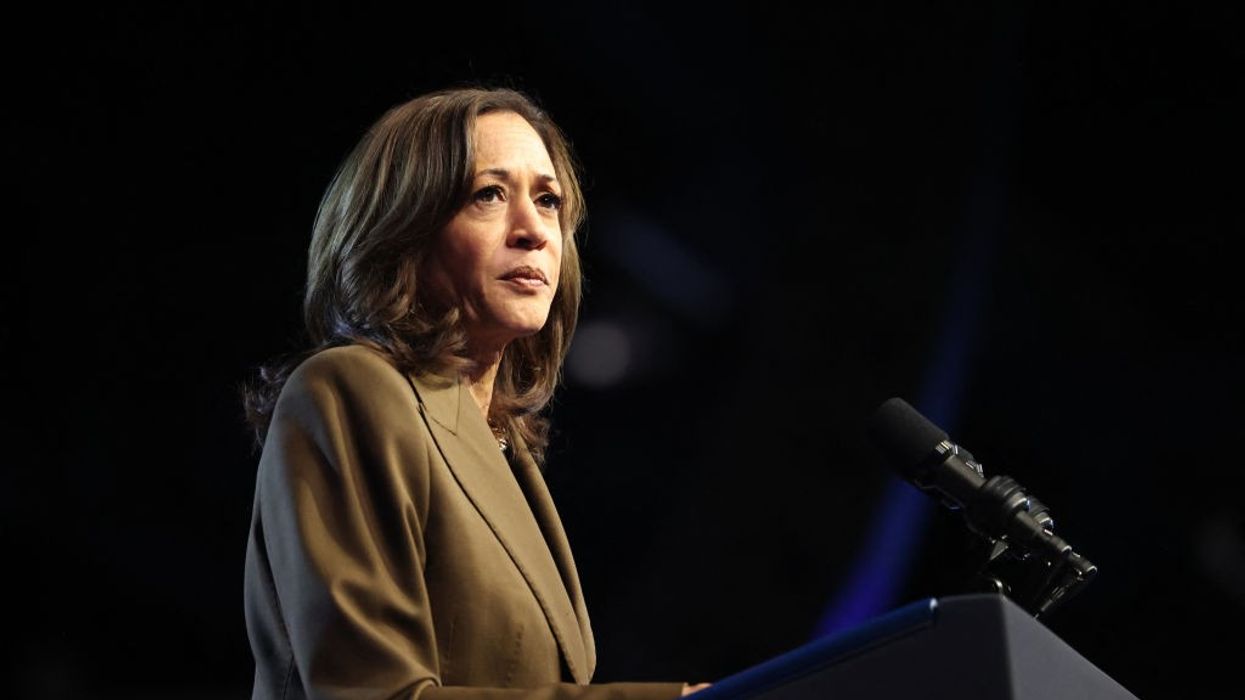
In our 30 years of polling Arab American voters, we haven’t witnessed anything like the role that the war on Gaza is having on voter behavior.
For Arab Americans, Israel’s war on Palestinians in Gaza looms large and will play a significant role in this November’s election. This is one of the key observations emerging from a mid-September nationwide poll of 500 Arab American registered voters conducted by John Zogby Strategies for the Arab American Institute.
A full year of this devastating assault on Gaza has reshaped the Arab American electorate, souring their attitude toward the Democratic Party, sapping their enthusiasm to vote in this election, and negatively impacting their inclination to vote for Vice President Kamala Harris for President.
Since we first began polling Arab Americans 30 years ago, the community has consistently favored the Democratic Party, with the margin of that support holding steady at nearly two to one for the past decade and a half. The Biden administration’s handling of the crisis in Gaza, however, has eroded that support resulting in Arab Americans now evenly divided between the two parties—38.5% for each. Equally revealing is the fact that by a slight margin (46% to 44%) voters in the community say they would prefer to see Republicans controlling the next Congress.
Arab American voter turnout has consistently been in the 80% range. But this year only 63% of the community say they are enthusiastic about voting in November, likely impacting voter turnout in November.
All of this has taken a toll on Harris’ prospects for winning Arab American votes in her contest with former President Donald Trump. While President Biden won 59% of the Arab American vote in 2020, compared with 35% for Trump, this year’s poll shows that in a multi-candidate matchup both candidates are in a virtual dead heat in the 41-42% range. More ominous for Harris is that when only considering likely voters, Trump leads 46% to 42%.
Arab American voter turnout has consistently been in the 80% range. But this year only 63% of the community say they are enthusiastic about voting in November, likely impacting voter turnout in November.
While a few unscientific “polls” have suggested that a third-party candidate would garner a majority of the Arab American vote, this AAI poll shows that not to be the case. All of the third-party candidates combined receive just 12% of the Arab American vote. Instead, it’s Trump who is the beneficiary of the community’s anger and, I might add, even despair over the Biden administration’s failure in addressing the crisis in Gaza.
This may be surprising given Trump’s record and recent statements, but there are a few factors that may account for this development. On the one hand, it may be that as a result of the year-long trauma, there is a desire to punish Democrats. Additionally, it appears that despite Trump’s dismal record with regard to the Israeli-Palestinian conflict and his total support for Israel’s aims in the war, the data from the AAI poll shows that sub-groups previously aligned with the Republican Party are returning to the fold and voting for that party’s candidate. All of which lends emphasis to the way the Gaza crisis has impacted this election.
Further evidence of Gaza’s role is the 81% of Arab Americans who say that Gaza will be an important consideration in their vote. For example, when asked if Harris were either to demand an immediate ceasefire and unimpeded humanitarian aid to Palestinians in Gaza or to withhold diplomatic support for and arms aid to Israel until it implements a ceasefire and withdraws its forces from Gaza, Harris’ vote among Arab Americans would increase to around 62%. This new Harris tally captures one-third of Trump voters, while virtually wiping out the votes that would go to the third-party candidates. If Trump were to make the same demands on Israel, he too would benefit increasing his vote tally to 56%. This increased vote count for Trump comes from one-quarter of Harris voters and one-half of the votes going to third-party candidates.
The year-long unfolding genocide in Gaza and the catastrophe now facing Lebanon has impacted every component sub-group within the community
While these measures are needed and important to end the war, announcing such a policy change in the midst of a campaign might be considered a heavy lift. Other less dramatic steps could have been taken to win more Arab American support. For example, Harris lost an important opportunity to send a message to Arab Americans demonstrating concern for Palestinians when her campaign refused to include a Palestinian American with family in Gaza to speak at the Democratic convention. When asked if it would have made a difference in how they would vote if the Harris campaign had invited a Palestinian American to speak, the response was a substantial “yes.” If the campaign had done so, Harris’ vote tally from Arab Americans would have increased to 61%. That moment was squandered, but others may still arise and if Harris still wants Arab American support, then these opportunities shouldn’t be passed over.
In our 30 years of polling Arab American voters, we haven’t witnessed anything like the role that the war on Gaza is having on voter behavior. The year-long unfolding genocide in Gaza and the catastrophe now facing Lebanon has impacted every component sub-group within the community, with only slight variations among religious communities and countries of origin, immigrant or native-born, gender and age groups. With little over one month remaining before the election, Arab Americans and, as our polls of U.S. voters have shown, those who share their concerns (young and non-white voters) will be watching to see if their deeply felt concerns with Gaza and now Lebanon will be recognized and respected with a promise for change.
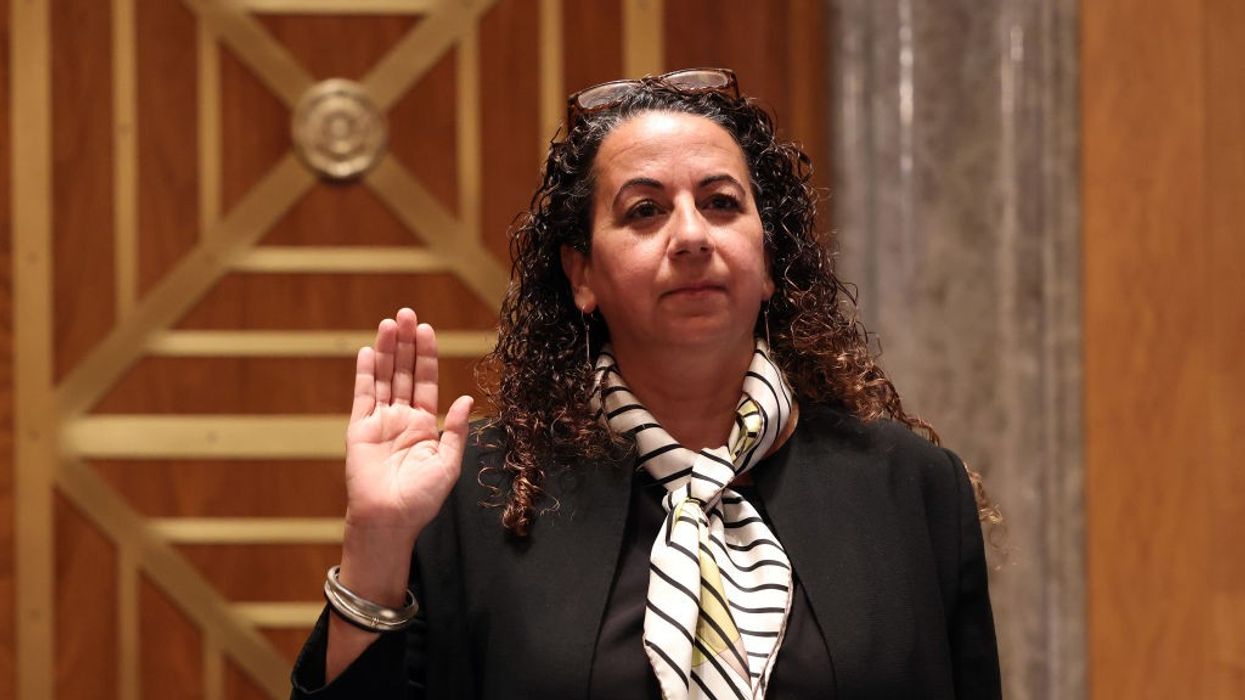
One side wanted to understand the problem of hate and what can be done to understand and arrest its growth, while the other side seemed more intent on pouring gasoline on the fire. It was shameful.
Our politics and system of governance is in crisis. This was made clear this past week before and during the US Senate Judiciary Committee’s hearing on hate crimes in America.
The hearing was titled, “A Threat to Justice Everywhere: Stemming the Tide of Hate Crimes in America,” and was designed to examine the dramatic increase in hate crimes and to suggest a whole of government approach to deal with this problem. The expert witnesses invited to present testimony were: Kenneth Stern, Director of the Bard Center for the Study of Hate; Maya Berry, Co-chair of the Hate Crimes Task Force at the Leadership Conference on Civil and Human Rights (LCCHR) and Executive Director of the Arab American Institute; and Rabbi Mark Goldfeder, Director of the National Jewish Advocacy Center. Stern and Berry were invited by the Majority (Democrats), while Goldfeder was the pick of the Republican side.
Even before the day of the hearing, the depth of the divisions plaguing American society were evident. Republicans objected that the hearings were designed to focus on hate crimes affecting all vulnerable communities in the US. What they wanted instead was a replication of the hearings that the GOP-led House had convened, ostensibly focused on antisemitism, but which strayed far afield. A few conservative American Jewish organizations were also troubled by this broader approach.
Republicans criticized Stern, who despite having been an official at the American Jewish Committee and the lead author of the controversial International Holocaust Remembrance Alliance (IHRA) definition, has since become a critic of the way this IHRA definition has been used to restrict free speech and its conflation of some legitimate criticism of Israel with antisemitism.
Berry is one of the leading researchers on hate crime data on the federal and state levels and the problems encountered in hate crime reporting. She was also the force behind the “Jabara-Heyer NO HATE Act” designed to improve federal hate crime reporting. Though highly regarded for her advocacy for all affected communities through her work with LCCHR, she was seemingly targeted by Republicans for one simple reason: She’s an Arab American who has been critical of Israeli policies and of efforts, domestically, to punish critics of those policies.
It was clear from the outset that all would not go well. Democrats made the case that their concern was the overall rise in hate crimes affecting multiple groups, while Republicans derided the entire effort as deliberately sidestepping the “real problem”—antisemitism. For her part, Berry meticulously detailed the statistics of the dramatic rise in recent years in hate crimes against each group: Blacks, Latinos, Asians, Arabs, Jews, Muslims, LGBTQ, and those with disabilities. She then outlined problems with underreporting, the difficulty in reconciling state and federal data, and made specific recommendations for improving reporting and enforcement of existing hate crime legislation.
Stern insisted that universities have an obligation to protect all students and faculty against being “bullied, harassed, intimidated, threatened, or discriminated against,” cautioned Congress against codifying a broad definition of antisemitism, noting it has not been necessary to fight hate for any community. He argued that instead of policing speech— prioritizing one view over another, resulting in an “us versus them” polarization—universities had the responsibility to protect speech and promote civil discourse by challenging students to understand diverse points of view and the people who hold these views. It is the more difficult path to pursue, but, in the end, it is the role of the university to educate not police or punish.
On the other hand, Goldfeder agreed with the Republicans that the hearing should have only focused on antisemitism, arguing that it is not only the most important challenge facing America today, but also that all other forms of hate emanate from it.
True to form, the Republicans who asked questions rejected the broad focus of the hearing, delivering inflammatory remarks against U.S. students protesting the genocide unfolding in Gaza, charging that they were being funded or encouraged by Hamas, Hezbollah, and Iran. Goldfeder agreed saying that the students were either directly serving these entities or were their “useful idiots.”
Others harassed Berry, demanding that she denounce Hamas and agree that statements like “intifada” or “from the river to the sea…” were calls for genocide against Jews. Berry calmly rejected this baiting, saying that she of course didn’t support Hamas as it is a “foreign terrorist organization” and she rejected all forms of violence. This, however, wasn’t enough for one Senator, who continued to badger her, causing her to respond that she was only being asked these questions because she is an Arab-American woman. She went on: “It’s regrettable that as I sit here today, I have experienced the very issue that we’re attempting to deal with today. This has been regrettably a real disappointment, but very much an indication of the danger to our democratic institutions that we’re in today.”
The audience of largely Arab and Jewish Americans, who had gathered to witness the hearing, instead of learning about the rise of hate and the crimes that might result from it, left with heightened passions. It was, as Berry noted, disappointing and an indication of how broken we have become. One side wanted to understand the problem of hate and what can be done to understand and arrest its growth, while the other side seemed more intent on pouring gasoline on the fire and watching it burn—all for political gain.
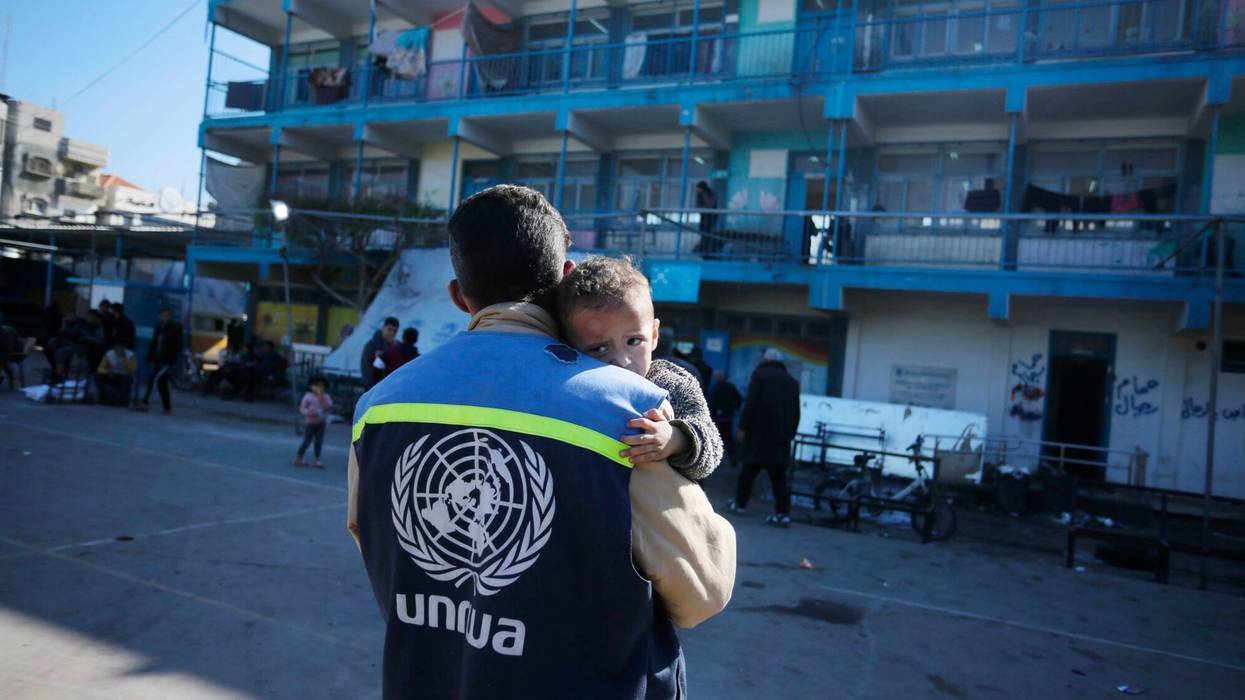
"The need for U.S. support is more urgent than ever," said one advocate. "The lives and well-being of millions depend on it."
Rights groups on Thursday applauded three Democratic lawmakers for their proposal of a bill to restore United States funding to the United Nations' key agency tasked with providing services and humanitarian assistance to Palestinians in Gaza, six months after the U.S. suspended contributions following unverified accusations against the agency.
James Zogby, president of the Arab American Institute, expressed gratitude to Reps. André Carson (D-Ind.), Pramila Jayapal (D-Wash.), and Jan Schakowsky (D-Ill.) for introducing the UNRWA Emergency Restoration Act of 2024, aimed at restoring funding to the U.N. Relief and Works Agency for Palestine Refugees in the Near East—legislation that Zogby said would be "lifesaving" if passed into law.
" UNRWA plays a vital role in providing essential services to millions of Palestinian refugees across the occupied Palestinian territory, Lebanon, Jordan, and Syria," said Zogby. "The ongoing genocide in Gaza has resulted in increased displacement, starvation, and death. It is both inhumane and unconscionable to continue withholding financial support from UNRWA."
The U.S.—the largest international funder of the agency, which relies almost entirely on voluntary contributions from donor states—promptly suspended funding for UNRWA last January after Israel claimed without evidence that 12 out of the agency's 13,000 staff members in Gaza had been involved in a Hamas-led attack on southern Israel last October.
Congress later passed a bill prohibiting UNRWA funding through at least March 2025.
In 2022, the U.S. contributed more than $343 million to the agency.
"UNRWA is the backbone of humanitarian aid in the Gaza Strip. U.S. funding should be restored immediately."
The Biden administration's decision to suspend donations to UNRWA pushed a number of U.S. allies to do the same, but countries including Germany, Sweden, Japan, and the United Kingdom have since reinstated their funding after an independent probe found that Israel had provided no supporting evidence of its claim.
"The United States should join our key allies in restoring this urgently needed funding for UNRWA. There is no time to lose," said Hassan El-Tayyab, legislative director for Middle East policy at the Friends Committee on National Legislation, expressing support for the newly introduced bill.
Bridget Moix, general secretary for the group, added that cutting of funding was "simply unconscionable" because the U.S.—as the Israeli military's largest international funder—bears responsibility for the "horrific violence and a massive humanitarian crisis" in Gaza.
"UNRWA is the backbone of humanitarian aid in the Gaza Strip," said Moix. "U.S. funding should be restored immediately."
Cavan Kharrazian, senior policy adviser for Demand Progress, noted that since the U.S. suspended funding to UNRWA, the humanitarian crisis in Gaza has worsened, with U.N. experts warning in July that famine had spread across the enclave.
"The need for U.S. support is more urgent than ever," said Kharrazian. "The lives and well-being of millions depend on it."
"We call on leaders in Congress to take principled stands like this as future funding bills move," he added, "removing these harmful prohibitions against UNRWA funding."
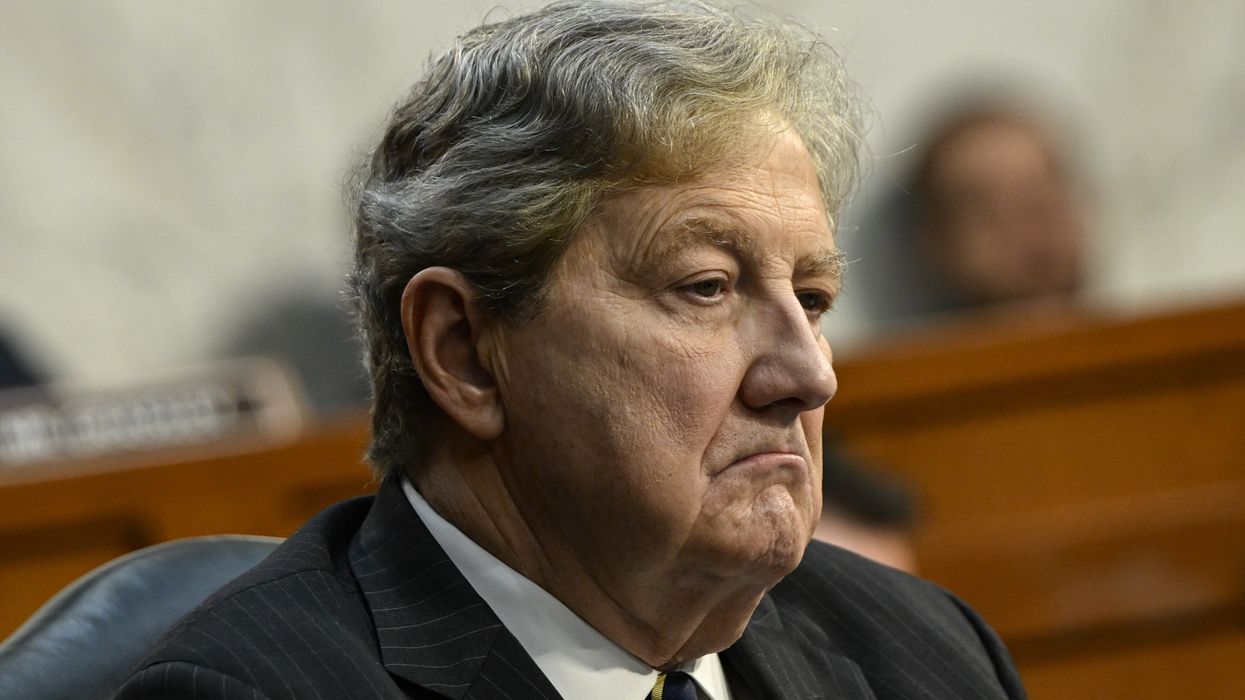
At the hearing, advocate Maya Berry said she "experienced the very issue that we're attempting to deal with today."
After Republican lawmakers and some activists objected to Arab American Institute executive director Maya Berry's inclusion in the U.S. Senate Judiciary Committee's hearing on the rise in hate crimes in the country, GOP Sen. John Kennedy unleashed what one critic said was anti-Muslim "hate speech" during his questioning.
"You support Hamas, don't you?" asked the Louisiana senator at the hearing titled "A Threat to Justice Everywhere: Stemming the Tide of Hate Crimes in America." Kennedy also conflated Hamas with the United Nations Relief and Works Agency for Palestine Refugees in the Near East (UNRWA), the agency tasked with providing public services and aid to Gaza's 2.3 million residents.
Berry replied that it was "exceptionally disappointing that you're looking at an Arab American witness before you and saying, 'You support Hamas.'"
She then said clearly, "I do not support Hamas," but was cut off by Kennedy as he raised his voice to accuse her of being unable to disavow the group, also accusing her of supporting Hezbollah and Iran.
"You should hide your head in a bag," said Kennedy, drawing gasps from the audience.
The "horrific remark" was "a blatant example of anti-Arab, anti-Palestinian, and anti-Muslim rhetoric," said the Muslim voter mobilization group Emgage Action.
The Democrats on the Senate Judiciary Committee denounced Kennedy's "horrible" comment, instead amplifying Berry's response, in which she said that while taking part in a hearing on hate speech and hate crimes, she "experienced the very issue that we're attempting to deal with today."
"This has been, regrettably, a real disappointment but very much an indication of the danger to our democratic institutions that we're in now," said Berry.
Berry also faced condemnation from Kennedy over her opposition to the United States' decision to suspend funding for UNRWA—a move that resulted from unverified Israeli claims that agency employees had worked with Hamas, and which has been denounced by international rights groups and experts due to its impact on people who rely on the agency in Gaza.
"Maya Berry went before the committee to discuss hate crimes. Both Ms. Berry and the topic should have been treated with the respect and seriousness they deserve," said Robert McCaw, government affairs director for the Council on American-Islamic Relations (CAIR). "Instead, Sen. Kennedy and others chose to be an example of the bigotry Arabs, Palestinians, and Muslims have faced in recent months and years."
Republicans on the committee had decried Democrats for inviting witnesses whose testimony delved into issues aside from antisemitism—which was conflated with anti-Zionism in a bill passed by the House earlier this year and in one introduced in the Senate.
Along with Berry, a leading advocate against anti-Arab and anti-Muslim bias in the U.S., the Democrats invited Kenneth Stern, director of the Bard Center for the Study of Hate, who has denounced right-wing groups for "weaponizing" claims of antisemitism against people who speak out against the Israeli government.
In her testimony, Berry spoke about the rise in hate crimes against Arab and Muslim Americans, as well as against Jewish people, Black people, Asian Americans, and other groups.
After Israel began its bombardment of Gaza in retaliation for a Hamas-led attack last October, CAIR reported a 56% rise in hate crimes against Palestinians and Muslims in the United States, with 8,061 attacks reported in 2023. From January-June 2024, the grou documented 4,951 complaints, a 69% increase over the same period in 2023.
Arif Rafiq, a strategist and author, said that there would likely be "no censure of Sen. Kennedy" following his comments in the hearing.
"Bigotry toward Arabs and Muslims, even in this most brazen form," said Rafiq, "is acceptable in American politics."
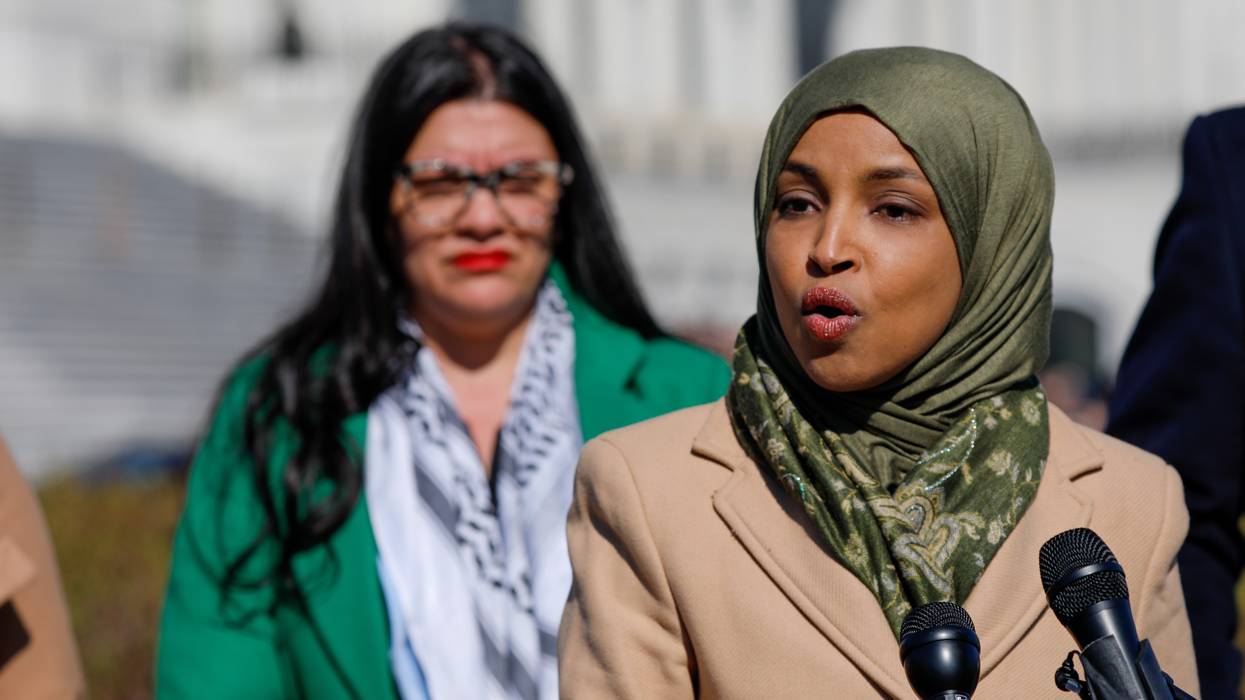
"This vital hearing is a crucial step in addressing the alarming rise of hate crimes across our nation, particularly those targeting Muslim, Jewish, and Palestinian Americans."
On the eve of a U.S. Senate Judiciary Committee hearing about "stemming the tide of hate crimes" nationwide, Congresswoman Ilhan Omar on Monday commended the panel's chair, Sen. Dick Durbin, for "hosting this groundbreaking yet overdue" event.
Discrimination against Jews and Muslims has significantly increased in the United States since the Hamas-led October 7 attack on Israel and the U.S.-backed Israeli retaliation on the Gaza Strip, which critics worldwide call genocide. In May, Durbin (D-Ill.) vowed to hold a hearing "in response to the ongoing and persistent rise in antisemitism and other forms of bigotry across the country."
The committee announced last week that it had scheduled a Capitol Hill hearing for 10:00 am Tuesday to "examine how we can better protect Jewish, Arab, and Muslim Americans, and other vulnerable communities from bigoted attacks."
Durbin—who has faced calls from Republican committee members to hold a hearing focused on "the civil rights violations of Jewish students" and "the proliferation of terrorist ideology"—said at the time that "hate crimes are a threat to justice everywhere. Sadly, no community is immune from violent acts of hate. Congress cannot turn a blind eye to it."
"We must stand united against hate in all its forms and reaffirm our commitment to justice, equality, and the protection of all Americans, regardless of their race, faith, or national origin."
Omar (D-Minn.) expressed gratitude for Durbin's broader event, saying Monday that "this vital hearing is a crucial step in addressing the alarming rise of hate crimes across our nation, particularly those targeting Muslim, Jewish, and Palestinian Americans."
"I'm glad this committee hearing will address the rise in hate felt by thousands across the country, I hope this hearing serves as a catalyst for meaningful action," she continued. "We must stand united against hate in all its forms and reaffirm our commitment to justice, equality, and the protection of all Americans, regardless of their race, faith, or national origin."
Omar is an outspoken opponent of Israel's assault on Gaza and U.S. support for it. She fled war in Somalia as a child and is one of only a few Muslim members of Congress—and while in office, she has endured intense racism, sexism, Islamophobia, and death threats. Some of the hate has come from fellow federal lawmakers.
Her praise for the hearing came amid reports that some Republicans and Jewish groups are unhappy with Democrats' witnesses: Arab American Institute executive director Maya Berry and Kenneth Stern, director of the Bard Center for the Study of Hate.
Notably, when Stern was with the American Jewish Committee, he helped craft the International Holocaust Remembrance Alliance's (IHRA) Working Definition of Antisemitism. He has since accused right-wing groups of "weaponizing" it in their efforts to conflate criticism of Israeli government policies and practices with anti-Jewish bigotry.
Describing both Berry and Stern as "at odds with Jewish communal leaders," Jewish Insider reported:
In his opening statement to the committee, obtained by Jewish Insider ahead of Tuesday's hearing, Stern will testify that "advocating for genocide against anyone of course should be robustly condemned; but the mere expression of such ideas (whether intended as such or heard as such) should be countered, not as a matter for discipline."
Stern will also say that it is a good thing that David Duke, the former grand wizard of the Ku Klux Klan, did not face any disciplinary action when he spread Nazi propaganda on Louisiana State University's campus as a student in 1968. "This would have allowed him to claim the status of martyr, and changed the subject to his right to speech as opposed to the content of his hate," Stern will say.
"Berry's written testimony focuses primarily on hate crimes data and reporting, and federal enforcement of hate crimes laws," according to Jewish Insider. The outlet added that the Republican witness Rabbi Mark Goldfeder, director of the National Jewish Advocacy Center, "is set to express support for the IHRA definition."
In response to Jewish Insider editor in chief Josh Kraushaar's social media post sharing the report, Center for International Policy executive vice president Matt Duss said, "Translation: testimony from Ken Stern and Maya Berry, who are both widely respected authorities on these issues, makes it harder to use this hearing as part of the campaign to suppress pro-Palestinian activism."
While this will be the first Senate hearing on hate crimes since last October, the Republican-controlled House of Representatives has held multiple, mostly focusing on campus anti-genocide protests. Critics have argued that the lower chamber's events have pushed university administrators to enable violent law enforcement crackdowns on students demonstrating against Israel's assault on Gaza.