SUBSCRIBE TO OUR FREE NEWSLETTER
Daily news & progressive opinion—funded by the people, not the corporations—delivered straight to your inbox.
5
#000000
#FFFFFF
To donate by check, phone, or other method, see our More Ways to Give page.
Daily news & progressive opinion—funded by the people, not the corporations—delivered straight to your inbox.
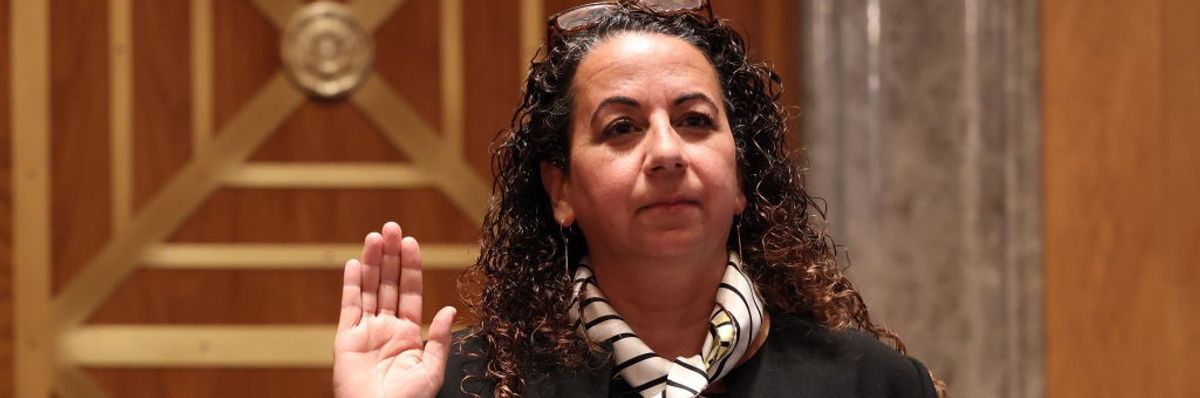
Maya Berry, Executive Director of the Arab American Institute, is sworn-in during a Senate Homeland Security and Governmental Affairs Committee hearing on domestic terrorism and violent extremism, at the Dirksen Senate Office Building on August 05, 2021 in Washington, DC. The hearing investigated the threats and causes of ethnic, religious and politically motivated terrorism.
One side wanted to understand the problem of hate and what can be done to understand and arrest its growth, while the other side seemed more intent on pouring gasoline on the fire. It was shameful.
Our politics and system of governance is in crisis. This was made clear this past week before and during the US Senate Judiciary Committee’s hearing on hate crimes in America.
The hearing was titled, “A Threat to Justice Everywhere: Stemming the Tide of Hate Crimes in America,” and was designed to examine the dramatic increase in hate crimes and to suggest a whole of government approach to deal with this problem. The expert witnesses invited to present testimony were: Kenneth Stern, Director of the Bard Center for the Study of Hate; Maya Berry, Co-chair of the Hate Crimes Task Force at the Leadership Conference on Civil and Human Rights (LCCHR) and Executive Director of the Arab American Institute; and Rabbi Mark Goldfeder, Director of the National Jewish Advocacy Center. Stern and Berry were invited by the Majority (Democrats), while Goldfeder was the pick of the Republican side.
Even before the day of the hearing, the depth of the divisions plaguing American society were evident. Republicans objected that the hearings were designed to focus on hate crimes affecting all vulnerable communities in the US. What they wanted instead was a replication of the hearings that the GOP-led House had convened, ostensibly focused on antisemitism, but which strayed far afield. A few conservative American Jewish organizations were also troubled by this broader approach.
Republicans criticized Stern, who despite having been an official at the American Jewish Committee and the lead author of the controversial International Holocaust Remembrance Alliance (IHRA) definition, has since become a critic of the way this IHRA definition has been used to restrict free speech and its conflation of some legitimate criticism of Israel with antisemitism.
Berry is one of the leading researchers on hate crime data on the federal and state levels and the problems encountered in hate crime reporting. She was also the force behind the “Jabara-Heyer NO HATE Act” designed to improve federal hate crime reporting. Though highly regarded for her advocacy for all affected communities through her work with LCCHR, she was seemingly targeted by Republicans for one simple reason: She’s an Arab American who has been critical of Israeli policies and of efforts, domestically, to punish critics of those policies.
It was clear from the outset that all would not go well. Democrats made the case that their concern was the overall rise in hate crimes affecting multiple groups, while Republicans derided the entire effort as deliberately sidestepping the “real problem”—antisemitism. For her part, Berry meticulously detailed the statistics of the dramatic rise in recent years in hate crimes against each group: Blacks, Latinos, Asians, Arabs, Jews, Muslims, LGBTQ, and those with disabilities. She then outlined problems with underreporting, the difficulty in reconciling state and federal data, and made specific recommendations for improving reporting and enforcement of existing hate crime legislation.
Stern insisted that universities have an obligation to protect all students and faculty against being “bullied, harassed, intimidated, threatened, or discriminated against,” cautioned Congress against codifying a broad definition of antisemitism, noting it has not been necessary to fight hate for any community. He argued that instead of policing speech— prioritizing one view over another, resulting in an “us versus them” polarization—universities had the responsibility to protect speech and promote civil discourse by challenging students to understand diverse points of view and the people who hold these views. It is the more difficult path to pursue, but, in the end, it is the role of the university to educate not police or punish.
On the other hand, Goldfeder agreed with the Republicans that the hearing should have only focused on antisemitism, arguing that it is not only the most important challenge facing America today, but also that all other forms of hate emanate from it.
True to form, the Republicans who asked questions rejected the broad focus of the hearing, delivering inflammatory remarks against U.S. students protesting the genocide unfolding in Gaza, charging that they were being funded or encouraged by Hamas, Hezbollah, and Iran. Goldfeder agreed saying that the students were either directly serving these entities or were their “useful idiots.”
Others harassed Berry, demanding that she denounce Hamas and agree that statements like “intifada” or “from the river to the sea…” were calls for genocide against Jews. Berry calmly rejected this baiting, saying that she of course didn’t support Hamas as it is a “foreign terrorist organization” and she rejected all forms of violence. This, however, wasn’t enough for one Senator, who continued to badger her, causing her to respond that she was only being asked these questions because she is an Arab-American woman. She went on: “It’s regrettable that as I sit here today, I have experienced the very issue that we’re attempting to deal with today. This has been regrettably a real disappointment, but very much an indication of the danger to our democratic institutions that we’re in today.”
The audience of largely Arab and Jewish Americans, who had gathered to witness the hearing, instead of learning about the rise of hate and the crimes that might result from it, left with heightened passions. It was, as Berry noted, disappointing and an indication of how broken we have become. One side wanted to understand the problem of hate and what can be done to understand and arrest its growth, while the other side seemed more intent on pouring gasoline on the fire and watching it burn—all for political gain.
Dear Common Dreams reader, It’s been nearly 30 years since I co-founded Common Dreams with my late wife, Lina Newhouser. We had the radical notion that journalism should serve the public good, not corporate profits. It was clear to us from the outset what it would take to build such a project. No paid advertisements. No corporate sponsors. No millionaire publisher telling us what to think or do. Many people said we wouldn't last a year, but we proved those doubters wrong. Together with a tremendous team of journalists and dedicated staff, we built an independent media outlet free from the constraints of profits and corporate control. Our mission has always been simple: To inform. To inspire. To ignite change for the common good. Building Common Dreams was not easy. Our survival was never guaranteed. When you take on the most powerful forces—Wall Street greed, fossil fuel industry destruction, Big Tech lobbyists, and uber-rich oligarchs who have spent billions upon billions rigging the economy and democracy in their favor—the only bulwark you have is supporters who believe in your work. But here’s the urgent message from me today. It's never been this bad out there. And it's never been this hard to keep us going. At the very moment Common Dreams is most needed, the threats we face are intensifying. We need your support now more than ever. We don't accept corporate advertising and never will. We don't have a paywall because we don't think people should be blocked from critical news based on their ability to pay. Everything we do is funded by the donations of readers like you. When everyone does the little they can afford, we are strong. But if that support retreats or dries up, so do we. Will you donate now to make sure Common Dreams not only survives but thrives? —Craig Brown, Co-founder |
Our politics and system of governance is in crisis. This was made clear this past week before and during the US Senate Judiciary Committee’s hearing on hate crimes in America.
The hearing was titled, “A Threat to Justice Everywhere: Stemming the Tide of Hate Crimes in America,” and was designed to examine the dramatic increase in hate crimes and to suggest a whole of government approach to deal with this problem. The expert witnesses invited to present testimony were: Kenneth Stern, Director of the Bard Center for the Study of Hate; Maya Berry, Co-chair of the Hate Crimes Task Force at the Leadership Conference on Civil and Human Rights (LCCHR) and Executive Director of the Arab American Institute; and Rabbi Mark Goldfeder, Director of the National Jewish Advocacy Center. Stern and Berry were invited by the Majority (Democrats), while Goldfeder was the pick of the Republican side.
Even before the day of the hearing, the depth of the divisions plaguing American society were evident. Republicans objected that the hearings were designed to focus on hate crimes affecting all vulnerable communities in the US. What they wanted instead was a replication of the hearings that the GOP-led House had convened, ostensibly focused on antisemitism, but which strayed far afield. A few conservative American Jewish organizations were also troubled by this broader approach.
Republicans criticized Stern, who despite having been an official at the American Jewish Committee and the lead author of the controversial International Holocaust Remembrance Alliance (IHRA) definition, has since become a critic of the way this IHRA definition has been used to restrict free speech and its conflation of some legitimate criticism of Israel with antisemitism.
Berry is one of the leading researchers on hate crime data on the federal and state levels and the problems encountered in hate crime reporting. She was also the force behind the “Jabara-Heyer NO HATE Act” designed to improve federal hate crime reporting. Though highly regarded for her advocacy for all affected communities through her work with LCCHR, she was seemingly targeted by Republicans for one simple reason: She’s an Arab American who has been critical of Israeli policies and of efforts, domestically, to punish critics of those policies.
It was clear from the outset that all would not go well. Democrats made the case that their concern was the overall rise in hate crimes affecting multiple groups, while Republicans derided the entire effort as deliberately sidestepping the “real problem”—antisemitism. For her part, Berry meticulously detailed the statistics of the dramatic rise in recent years in hate crimes against each group: Blacks, Latinos, Asians, Arabs, Jews, Muslims, LGBTQ, and those with disabilities. She then outlined problems with underreporting, the difficulty in reconciling state and federal data, and made specific recommendations for improving reporting and enforcement of existing hate crime legislation.
Stern insisted that universities have an obligation to protect all students and faculty against being “bullied, harassed, intimidated, threatened, or discriminated against,” cautioned Congress against codifying a broad definition of antisemitism, noting it has not been necessary to fight hate for any community. He argued that instead of policing speech— prioritizing one view over another, resulting in an “us versus them” polarization—universities had the responsibility to protect speech and promote civil discourse by challenging students to understand diverse points of view and the people who hold these views. It is the more difficult path to pursue, but, in the end, it is the role of the university to educate not police or punish.
On the other hand, Goldfeder agreed with the Republicans that the hearing should have only focused on antisemitism, arguing that it is not only the most important challenge facing America today, but also that all other forms of hate emanate from it.
True to form, the Republicans who asked questions rejected the broad focus of the hearing, delivering inflammatory remarks against U.S. students protesting the genocide unfolding in Gaza, charging that they were being funded or encouraged by Hamas, Hezbollah, and Iran. Goldfeder agreed saying that the students were either directly serving these entities or were their “useful idiots.”
Others harassed Berry, demanding that she denounce Hamas and agree that statements like “intifada” or “from the river to the sea…” were calls for genocide against Jews. Berry calmly rejected this baiting, saying that she of course didn’t support Hamas as it is a “foreign terrorist organization” and she rejected all forms of violence. This, however, wasn’t enough for one Senator, who continued to badger her, causing her to respond that she was only being asked these questions because she is an Arab-American woman. She went on: “It’s regrettable that as I sit here today, I have experienced the very issue that we’re attempting to deal with today. This has been regrettably a real disappointment, but very much an indication of the danger to our democratic institutions that we’re in today.”
The audience of largely Arab and Jewish Americans, who had gathered to witness the hearing, instead of learning about the rise of hate and the crimes that might result from it, left with heightened passions. It was, as Berry noted, disappointing and an indication of how broken we have become. One side wanted to understand the problem of hate and what can be done to understand and arrest its growth, while the other side seemed more intent on pouring gasoline on the fire and watching it burn—all for political gain.
Our politics and system of governance is in crisis. This was made clear this past week before and during the US Senate Judiciary Committee’s hearing on hate crimes in America.
The hearing was titled, “A Threat to Justice Everywhere: Stemming the Tide of Hate Crimes in America,” and was designed to examine the dramatic increase in hate crimes and to suggest a whole of government approach to deal with this problem. The expert witnesses invited to present testimony were: Kenneth Stern, Director of the Bard Center for the Study of Hate; Maya Berry, Co-chair of the Hate Crimes Task Force at the Leadership Conference on Civil and Human Rights (LCCHR) and Executive Director of the Arab American Institute; and Rabbi Mark Goldfeder, Director of the National Jewish Advocacy Center. Stern and Berry were invited by the Majority (Democrats), while Goldfeder was the pick of the Republican side.
Even before the day of the hearing, the depth of the divisions plaguing American society were evident. Republicans objected that the hearings were designed to focus on hate crimes affecting all vulnerable communities in the US. What they wanted instead was a replication of the hearings that the GOP-led House had convened, ostensibly focused on antisemitism, but which strayed far afield. A few conservative American Jewish organizations were also troubled by this broader approach.
Republicans criticized Stern, who despite having been an official at the American Jewish Committee and the lead author of the controversial International Holocaust Remembrance Alliance (IHRA) definition, has since become a critic of the way this IHRA definition has been used to restrict free speech and its conflation of some legitimate criticism of Israel with antisemitism.
Berry is one of the leading researchers on hate crime data on the federal and state levels and the problems encountered in hate crime reporting. She was also the force behind the “Jabara-Heyer NO HATE Act” designed to improve federal hate crime reporting. Though highly regarded for her advocacy for all affected communities through her work with LCCHR, she was seemingly targeted by Republicans for one simple reason: She’s an Arab American who has been critical of Israeli policies and of efforts, domestically, to punish critics of those policies.
It was clear from the outset that all would not go well. Democrats made the case that their concern was the overall rise in hate crimes affecting multiple groups, while Republicans derided the entire effort as deliberately sidestepping the “real problem”—antisemitism. For her part, Berry meticulously detailed the statistics of the dramatic rise in recent years in hate crimes against each group: Blacks, Latinos, Asians, Arabs, Jews, Muslims, LGBTQ, and those with disabilities. She then outlined problems with underreporting, the difficulty in reconciling state and federal data, and made specific recommendations for improving reporting and enforcement of existing hate crime legislation.
Stern insisted that universities have an obligation to protect all students and faculty against being “bullied, harassed, intimidated, threatened, or discriminated against,” cautioned Congress against codifying a broad definition of antisemitism, noting it has not been necessary to fight hate for any community. He argued that instead of policing speech— prioritizing one view over another, resulting in an “us versus them” polarization—universities had the responsibility to protect speech and promote civil discourse by challenging students to understand diverse points of view and the people who hold these views. It is the more difficult path to pursue, but, in the end, it is the role of the university to educate not police or punish.
On the other hand, Goldfeder agreed with the Republicans that the hearing should have only focused on antisemitism, arguing that it is not only the most important challenge facing America today, but also that all other forms of hate emanate from it.
True to form, the Republicans who asked questions rejected the broad focus of the hearing, delivering inflammatory remarks against U.S. students protesting the genocide unfolding in Gaza, charging that they were being funded or encouraged by Hamas, Hezbollah, and Iran. Goldfeder agreed saying that the students were either directly serving these entities or were their “useful idiots.”
Others harassed Berry, demanding that she denounce Hamas and agree that statements like “intifada” or “from the river to the sea…” were calls for genocide against Jews. Berry calmly rejected this baiting, saying that she of course didn’t support Hamas as it is a “foreign terrorist organization” and she rejected all forms of violence. This, however, wasn’t enough for one Senator, who continued to badger her, causing her to respond that she was only being asked these questions because she is an Arab-American woman. She went on: “It’s regrettable that as I sit here today, I have experienced the very issue that we’re attempting to deal with today. This has been regrettably a real disappointment, but very much an indication of the danger to our democratic institutions that we’re in today.”
The audience of largely Arab and Jewish Americans, who had gathered to witness the hearing, instead of learning about the rise of hate and the crimes that might result from it, left with heightened passions. It was, as Berry noted, disappointing and an indication of how broken we have become. One side wanted to understand the problem of hate and what can be done to understand and arrest its growth, while the other side seemed more intent on pouring gasoline on the fire and watching it burn—all for political gain.