SUBSCRIBE TO OUR FREE NEWSLETTER
Daily news & progressive opinion—funded by the people, not the corporations—delivered straight to your inbox.
5
#000000
#FFFFFF
To donate by check, phone, or other method, see our More Ways to Give page.


Daily news & progressive opinion—funded by the people, not the corporations—delivered straight to your inbox.
"The temperatures here went very high so everything outside melted,” said one scientist.
Climate scientists are sounding the alarm after an unprecedented heatwave hit Antarctica this month and delivered temperatures 20°C higher than normal.
According to a Friday report in The Guardian, temperatures at Antarctica's Trinity Peninsula this month hit peaks of over 15°C, even though it is the start of winter when ice typically expands on the continent. The prior record June temperature at the peninsula, 13.3°C, was set in 1998.
After weeks of above-average temperatures, scientists noticed that an area of sea ice that typically forms in the region—one roughly the size of France—was missing.
"It’s depressing,” Will Hobbs, an Antarctic sea ice expert at the University of Tasmania, told The Guardian. "It is remarkable that we are in June and there is no sea ice there."
Hobbs also predicted that the loss of sea ice is likely permanent at this point given the trajectory of global temperature changes.
Peter Fretwell, a scientist at the British Antarctic Survey, explained to the newspaper that the loss of sea ice poses a serious threat to penguin populations.
"Sea ice is forming too late and breaking up too early," Fretwell explained. "It leads to reduced breeding success and longer trips to moulting grounds."
In a separate interview with The Guardian last week, Raúl Cordero, a climate professor at the University of Groningen, expressed astonishment at the record-breaking Antarctic heat.
“This is absolutely crazy,” Cordero said. "That is a huge anomaly.”
Luis Muñoz, a Chilean glaciologist, told the newspaper he was shocked to step outside at King George's Island, located just north of Trinity Peninsula, and seeing the ground uncovered by snow.
"The temperatures here went very high so everything outside melted,” Muñoz explained. “Usually there is 20 centimeters of snow and a lot of ice on the ground at this time.”
Taking stock of the bigger picture, the newspaper reported that scientists are now fearful that some of the biggest glaciers in the region of the peninsula have now "past a tipping point" that could "push up global sea levels by four meters."
Such a rise in global sea levels would be unprecedented. Scientists estimate that global sea levels have risen by between 21 and 24 centimeters since 1880.
"Fossil fuel pollution is sending climate chaos off the charts," U.N. Secretary-General António Guterres said.
Last year broke records for several key climate indicators, including surface temperatures, ocean heat, sea-level rise, and the loss of Antarctic sea ice, the World Meteorological Organization found in its State of the Global Climate 2023 report, released Tuesday.
The agency confirmed that 2023 was the hottest year on record and said it gave an "ominous" new meaning to the phrase "off the charts."
"Earth is issuing a distress call," United Nations Secretary-General António Guterres said in a video statement. "The latest State of the Global Climate report shows a planet on the brink. Fossil fuel pollution is sending climate chaos off the charts. Sirens are blaring across all major indicators."
"The climate crisis is THE defining challenge that humanity faces and is closely intertwined with the inequality crisis."
2023 saw an average global near-surface temperature of 1.45°C, the report found, making 2023 the hottest on record and the cap on the warmest 10-year period on record.
"Never have we been so close—albeit on a temporary basis at the moment—to the 1.5°C lower limit of the Paris agreement on climate change," WMO Secretary-General Celeste Saulo said in a statement. "The WMO community is sounding the red alert to the world."
The European Union's Copernicus Climate Change Service and European Center for Medium-Range Weather Forecasts had found separately that January 2024 capped a 12-month period that exceeded the 1.5°C target for the first time.
2023 was also a particularly alarming year for ocean heat, with nearly a third of the ocean in the midst of a marine heatwave at any time during the year. Global sea-surface temperatures reached record heights for April and every month after, with July, August, and September especially hot. Ocean heat content also broke records, and more than 90% of the ocean experienced a heatwave for at least a portion of the year.
The world's glaciers and sea ice did not fare any better. Glaciers lost the most ice in any year since record-keeping began in 1950, and Antarctica's sea-ice extent at the end of winter smashed the previous record by 1 million square kilometers.
"Because of burning fossil fuels, which leads to CO2-induced global heating, we have impacted the polar regions to such a degree that 2023 saw by far the greatest loss of sea ice in the Antarctic and of land ice in Greenland," University of Exeter polar expert Martin Siegert told Common Dreams. "The world will feel the detrimental effects now and into the future because the changes observed will lead to 'feedback' processes encouraging further change."
"Our only response must be to stop burning fossil fuels so that the damage can be limited," Siegert added. "That is our best and only option."
2023 also saw record sea-level rise and ocean acidification.
"Climate change is about much more than temperatures," Saulo said. "What we witnessed in 2023, especially with the unprecedented ocean warmth, glacier retreat, and Antarctic sea ice loss, is cause for particular concern."
Records were broken too for the main cause of all this warming and melting—the levels of greenhouse gasses in the atmosphere. Carbon dioxide, methane, and nitrous oxide all reached record levels in 2022, and data indicates that the atmospheric concentrations of all three continued to rise in 2023, with carbon dioxide levels 50% higher than before the industrial revolution.
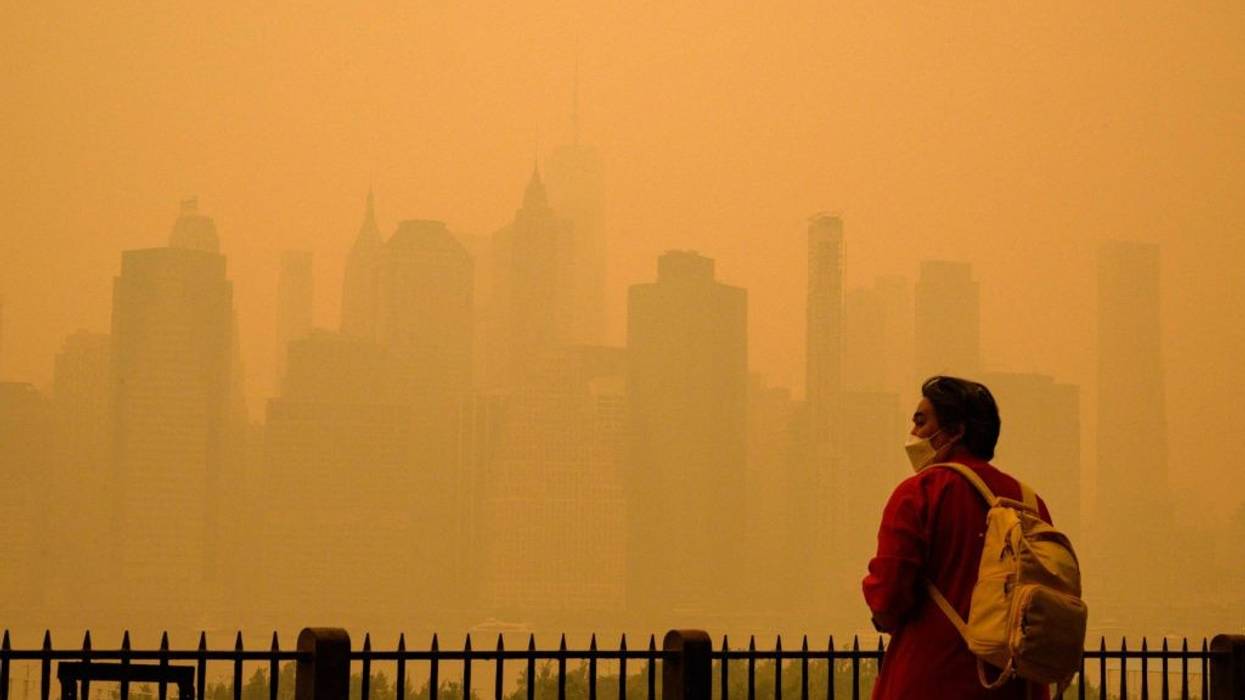
The report also considered the impacts of global heating on extreme weather events: 2023 saw several especially devastating climate-fueled disasters, including lethal flooding from Cyclone Daniel in Libya; Tropical Cyclone Mocha, which displaced 1.7 million people in the region around the Bay of Bengal; an extreme heatwave in southern Europe and North Africa; a record wildfire season in Canada that smothered several North American cities in heavy smoke; and the deadliest U.S. wildfire in more than 100 years in Hawaii.
In addition to claiming lives and forcing people from their homes, these disasters have several other impacts on peoples' well-being. For example, the report noted that the number of people suffering from acute food insecurity had shot up to 333 million in 2023, more than two times the 149 million before the pandemic. While the root causes of this are war and conflict, economic downturns, and high food prices, extreme weather events can make the situation worse. When Cyclone Freddy, one of the longest-lasting cyclones ever, struck Madagascar, Mozambique, and Malawi in February, it flooded vast swaths of agricultural fields and damaged crops in other ways.
"The climate crisis is THE defining challenge that humanity faces and is closely intertwined with the inequality crisis—as witnessed by growing food insecurity and population displacement, and biodiversity loss," Saulo said.
Guterres, meanwhile, said the impact of extreme weather on sustainable development was "devastating."
"Every fraction of a degree of global heating impacts the future of life on Earth," he said.
There was some positive news in the report, mainly that renewable energy increased new capacity by nearly 50% in 2023 compared with 2022, the highest rate of increase in 20 years. Global climate finance nearly doubled from 2019-2020 to almost $1.3 trillion, but this was still only 1% of global gross domestic product.
To have a shot at limiting warming to 1.5°C, finance needs to increase by nearly $9 trillion by 2030 and another $10 trillion by 2050, but this is much lower than the estimated cost of doing nothing, which would be $1,266 trillion from 2025-2100, though the WMO said this was likely a "dramatic underestimate."
Guterres said it was still possible to limit long-term global temperature rise to 1.5°C, but it required swift action; leadership from the G20 nations toward a just energy transition; countries proposing 1.5°C-compliant climate plans by 2025; increased climate finance flows toward the developing world, including for adaptation and Loss and Damage; universal coverage by early warning systems by 2027; and "accelerating the inevitable end of the fossil fuel age."
"There's still time to throw out a lifeline to people and planet," Guterres said, "but leaders must step up and act now."
"As remarkable as this might appear, it is not really surprising as the continuous warming of the climate system inevitably leads to new temperature extremes," said the head of the E.U. climate service.
Last month was the warmest February on record, the European Union’s climate service said Wednesday, marking the ninth consecutive month of unprecedented heat as the climate crisis continues to drive up global temperatures.
Climate scientists say the climate crisis, without a doubt, is to blame for increased temperatures.
Not only was it warm above sea level—global ocean temperatures also reached a record high last month. That's not just for February but for any month on record.
"Ocean warming has prompted concerns about the mass bleaching of coral reefs. It also raises global sea levels and can help to fuel higher intensity hurricanes," the BBC reports. "Unusually warm waters may also have been a factor in another exceptional month for Antarctic sea ice. The three lowest minimum extents in the satellite era have now occurred in the last three years."
The #C3S's monthly climate bulletin is out now:
📈 February 2024 was globally the warmest on record;
📈 Global Sea Surface Temperatures hit record highs.
▶️https://t.co/XEmBnArhh6 pic.twitter.com/uUubVY9c05
— Copernicus ECMWF (@CopernicusECMWF) March 7, 2024
Arctic sea ice is also disappearing, and the Arctic could be virtually ice-free during the summer within a decade.
"February joins the long streak of records of the last few months," said Carlo Buentempo, director of the Copernicus Climate Change Service. "As remarkable as this might appear, it is not really surprising as the continuous warming of the climate system inevitably leads to new temperature extremes."
“The climate responds to the actual concentrations of greenhouse gases in the atmosphere so, unless we manage to stabilize those, we will inevitably face new global temperature records and their consequences,” Buentempo added.
The last year has been over 1.5°C above pre-industrial averages—1.56°C, to be exact—but that won't signify a breach of the goals set in the Paris Agreement unless temperatures remain elevated for the next few years.
"A year ago, the fact that the global temperature for a particular month would reach 1.5°C above the pre-industrial level would have been considered exceptional," Julien Nicolas, a senior scientist at Copernicus, told The New York Times.
The world will have to get off of fossil fuels in order to halt runaway warming, and this year could help determine the future of the climate, considering one of the people running to lead the nation appears destined to unleash billions of tons of additional planet-warming emissions should he return to office.
After 2023 was the hottest year in human history, experts warn that 2024 "has strong potential to be another record-breaking year."
While global policymakers continue to drag their feet on phasing out planet-heating fossil fuels, scientists around the world "are freaking out" about high ocean temperatures, as they told The New York Times in reporting published Tuesday.
A "super El Niño" has expectedly heated up the Pacific, but Times reporter David Gelles spoke with ocean experts from Miami to Cambridge to Sydney about record heat in the North Atlantic as well as conditions around the poles.
"The sea ice around the Antarctic is just not growing," said Matthew England, a University of New South Wales professor who studies ocean currents. "The temperature's just going off the charts. It's like an omen of the future."
Rob Larter, a marine geophysicist with the British Antarctic Survey who watches polar ice levels, told the paper that "we're used to having a fairly good handle on things. But the impression at the moment is that things have gone further and faster than we expected. That's an uncomfortable place as a scientist to be."
Last week, Jeff Berardelli, WFLA's chief meteorologist and climate specialist, also highlighted the warm North Atlantic and that "all signs are pointing to a busy hurricane season" later this year.
Noting that in the middle of this month, sea surface temperatures in the North Atlantic were around 2°F higher than the 1990-2020 normal and nearly 3°F above the 1980s, Berardelli explained:
That may not sound like a lot, but consider this is averaged over the majority of the basin shown in the red outline in the image above. A deviation like that is unheard of... until now.
To put it into more relatable terms, considering what's been normal for the most recent 30 years, the statistical chance that any February day would be as warm as it is right now is 1-in-280,000. That's not a typo. This is according to University of Miami researcher Brian McNoldy...
And that 1-in-280,000 is compared against a recent climate, which had already been warmed substantially by climate change. If you tried to compare it against a climate considered normal around the year 1900, the math would become nonsensical. Meaning an occurrence like this simply would not be possible.
McNoldy also stressed the shocking nature of current conditions to the Times, telling Gelles that "the North Atlantic has been record-breakingly warm for almost a year now... It's just astonishing. Like, it doesn't seem real."
The new comments from McNoldy and other scientists come on the heels of various institutions and experts worldwide recently confirming that 2023 was the hottest year in human history. Research also showed that it was the warmest year on record for the oceans, which capture about 91% of excess heat from greenhouse gases.
As Common Dreams reported last month, Adam Scaife, a principal fellow at the United Kingdom's Met Office, said that "it is striking that the temperature record for 2023 has broken the previous record set in 2016 by so much because the main effect of the current El Niño will come in 2024."
That's the warm phase of the El Niño Southern Oscillation, a climate phenomenon that also has a cool phase called La Niña expected later this year. Still, Scaife warned that "the Met Office's 2024 temperature forecast shows this year has strong potential to be another record-breaking year."
Throughout the record-shattering 2023, experts also expressed alarm. After an April study showed that the ocean is heating up faster than previously thought, the BBC revealed that some scientists declined to speak about it on the record, reporting that "one spoke of being 'extremely worried and completely stressed.'"
In July, when a buoy roughly 40 miles south of Miami recorded a sea surface temperature of 101.1°F just after a "100% coral mortality" event at a restoration site, Florida State University associate professor Mariana Fuentes told NPR that "if you have several species that are being impacted at the same time by an increase in temperature, there's going to be a general collapse of the whole ecosystem."
The following month, the European Union's Copernicus Climate Change Service announced that the average daily global ocean surface temperature hit 69.7°F, and deputy director Samantha Burgess said, "The fact that we've seen the record now makes me nervous about how much warmer the ocean may get between now and next March."
"The more we burn fossil fuels, the more excess heat will be taken out by the oceans, which means the longer it will take to stabilize them and get them back to where they were," Burgess emphasized at the time.
Last year ended with a United Nations climate summit that scientists called "a tragedy for the planet," because the final deal out of the conference—led by an Emirati oil CEO—did not demand a global phaseout of fossil fuels.
Azerbaijan, which is set to host this year's U.N. conference in November, has similarly selected a former fossil fuel executive to lead the event. The country also plans to increase its gas production by a third during the next decade.
"Governments at the COP28 climate talks must take real action for a full, fair, funded, and fast phaseout of fossil fuels," one advocate said in response to the news.
It is "virtually certain" that 2023 will be the warmest year on record, the World Meteorological Organization concluded in its provisional State of the Global Climate report for the year.
That was only one of the broken records detailed in the report, which was released Thursday to coincide with the start of the United Nations Climate Change Conference (COP28) in the United Arab Emirates. The WMO documented a year of "extreme weather and climate events" that "had major impacts on all inhabited continents."
"Record heat. Deadly floods. Toxic air. It has never been clearer that the world must stop burning fossil fuels if we want a safe, livable planet," Oil Change International global policy manager Romain Ioualelen said in response to the findings. "And yet, the fossil fuel industry is pumping more and more gas and oil, expanding its business, lying to us, and raking in deadly profits, as millions of people are displaced, harmed, and killed. Governments at the COP28 climate talks must take real action for a full, fair, funded, and fast phaseout of fossil fuels."
As of October, 2023 was set to be the warmest year in 174 years of record-keeping, WMO confirmed. The body's findings come as scientists have previously said it will likely be the hottest year in 125,000 years as well. Mean near-surface temperatures during the first 10 months of the year were around 1.4°C above the average from 1850 to 1900, WMO found. Because 2016 and 2020, the two previous hottest years on record, came in at 1.29°C and 1.27°C above that average, it is unlikely that the last two months of 2023 would be cold enough to offset its lead.
Hottest year wasn't the only record broken in 2023. The year also saw the hottest monthly ocean temperatures on record from April through September, and the hottest land temperatures from July to October. Because July is typically the hottest month of the year, this July was the hottest month ever recorded.
Sea level rise reached a record height, and the rate of increase from 2013 to 2022 was more than double the rate from 1993 to 2002. Antarctic sea-ice extent also shrank to its lowest level on record in February and struggled to recover, measuring its lowest maximum extent on record in September.
"We urge governments to be ready now at the U.N. climate talks to take action commensurate with what the science is telling us."
Some markers for which 2023 data is not yet available broke records in 2022. This included atmospheric levels of the three main greenhouse gases—carbon dioxide, methane, and nitrous oxide—and ocean heat content.
"It's a deafening cacophony of broken records," WMO Secretary-General Petteri Taalas said in a statement. "These are more than just statistics. We risk losing the race to save our glaciers and to rein in sea level rise."
The report also detailed how a warming climate is having a direct and devastating impact on human communities. Climate-fueled weather disasters this year included Storm Daniel, which brought severe flooding to much of the Mediterranean, with especially deadly consequences for Libya; a record wildfire season in Canada that shrouded major North American cities in toxic smoke; heat waves, which reached especially severe heights Southern Europe and North Africa; and flooding in the Horn of Africa following five years of drought that made the soil less able to absorb the rainfall. Many of these events forced people to flee their homes and made it harder for them to secure food.
"This year we have seen communities around the world pounded by fires, floods, and searing temperatures. Record global heat should send shivers down the spines of world leaders," United Nations Secretary-General António Guterres said in response to the report.
Guterres and other climate advocates used the report to push world leaders to deliver ambitious climate action at COP28, which is mired in controversy following revelations that its president Sultan Ahmed Al Jaber, who is also the CEO of Abu Dhabi National Oil Company, used the talks to push oil and gas deals.
"We have the roadmap to limit the rise in global temperature to 1.5 °C and avoid the worst of climate chaos. But we need leaders to fire the starting gun at COP28 on a race to keep the 1.5 degree limit alive," Guterres said.
He called for a commitment to phase out fossil fuels, triple renewable energy, double energy efficiency, set clear guidelines for the next round of pledges, and provide countries with the financial support they need to make them happen.
Ioualelen said that the delegates should pay attention to experts instead of fossil fuel companies.
"Rather than prioritizing lobbyists and corporations, we need leaders to make real change that tackles the root cause of the climate crisis, fossil fuels, and makes a better world for all of us—today and for generations to come," Ioualelen said. "We urge governments to be ready now at the U.N. climate talks to take action commensurate with what the science is telling us."
Taalas also called for action to avoid worsening extremes.
"We cannot return to the climate of the 20th century, but we must act now to limit the risks of an increasingly inhospitable climate in this and the coming centuries," he said.
The new study's lead author said that "it is extremely concerning to see such significant warming in Antarctica, beyond natural variability."
Antarctica is warming at about double the rate of the rest of the planet and far more quickly than widely cited models projected, according to a study published Thursday in the journal Nature Climate Change that swiftly alarmed scientists around the world.
"This is absolutely devastating news," declared climate scientist and University College London professor emeritus Bill McGuire.
"First, one has to wonder if perhaps we have already passed the West Antarctic collapse tipping point," the expert added on social media. "Second, it begs the question, are other climate model projections underestimating the speed of climate breakdown?"
Polar amplification, a phenomenon that causes higher temperatures near the poles, is well established in the Arctic, with a study published last year showing that the northern region is warming nearly four times faster than the global average. However, it has been less clearly identified across Antarctica, where scientists must contend with limited available temperature records and natural climate variability.
Due to the lack of Antarctic weather stations covering more than the past six decades, the four researchers behind the new study—who come from various European institutions—analyzed 78 ice cores to determine temperature variability over 1,000 years across seven regions.
The team found "direct evidence of Antarctic polar amplification at regional and continental scales," which major climate models don't show. The study states that "failing to consider the feedback loops causing polar amplification could lead to an underestimation of the magnitude of anthropogenic warming and its consequences in Antarctica."
Lead author Mathieu Casado, of the Laboratoire des Science du Climat et de l'Environnement in France, told The Guardian that "it is extremely concerning to see such significant warming in Antarctica, beyond natural variability."
Kyle Clem, a scientist at Victoria University of Wellington in New Zealand who was not involved with the new research but has studied record high temperatures at one South Pole weather station, told the newspaper that "the implications of this study are of particular importance for considering future changes in Antarctic sea ice, terrestrial and marine ecosystems, and potentially even sea-level rise."
"As far as sea-level rise, ocean warming is already melting protective ice shelves in West Antarctica and causing the West Antarctic ice sheet to retreat," Clem said. He also highlighted the potential impact on coastal ice shelves that protect glaciers, explaining that "this has already been seen on the Antarctic peninsula in recent decades, and it could become a more widespread occurrence around Antarctica sooner than anticipated in a more strongly warming Antarctic climate."
The research from Casado's team was published the same day as a study about the West Antarctic ice sheet published in The Cryosphere.
"With more and more ice being lost in Antarctica over the last years, concerns have been raised whether a tipping point has already been crossed and an irreversible, long-term collapse of the West Antarctic ice sheet has already been initiated," noted lead author Ronja Reese of the Potsdam Institute for Climate Impact Research in Germany and England's Northumbria University.
"The results of our studies deliver two messages: First, while a number of glaciers in Antarctica are retreating at the moment, we find no indication of irreversible, self-reinforcing retreat yet, which is reassuring," Reese said. "However, our calculations also clearly indicate that an onset of an irreversible retreat of the ice sheet in West Antarctica is possible if the current state of the climate is sustained."
The new studies follow findings throughout this year that have elevated fears about the impact of human-caused global heating on Antarctica—from researchers revealing in February that Antarctic sea ice coverage hit its lowest January level ever recorded, to a May study that showed a 30% slowdown in vital deep water currents around the continent.
Research from last month warned it is "virtually certain that future Antarctic extreme events will be more pronounced than those observed to date" as humanity continues to burn fossil fuels, the key driver of the climate emergency. Another August study found that when Antarctic sea ice melted last year, it likely killed over 9,000 emperor penguin chicks.
Both Reese and Casado's studies also cap off a week of alarming global data about the climate emergency. International researchers confirmed that greenhouse gas concentrations, global sea level, and ocean heat content broke records last year. Scientists also announced that this summer of deadly heat is the hottest on record.
"Breaking heat records has become the norm in 2023," said one scientist. "Global warming continues because we have not stopped burning fossil fuels. It is that simple."
Climate scientists across the world have been alarmed over the past three months by fast-spreading wildfires, prolonged and deadly heatwaves, and numerous shattered heat records across the northern hemisphere both in the oceans and on land—and data released Tuesday confirmed that the past three months have been the hottest summer on record, driven by humans' continued emission of heat-trapping gases and compounded by El Niño.
The Copernicus Climate Change Service (C3S), the European Union's climate agency, found that the global average temperature during June, July, and August reached 16.77°C (62.18°F), which was 0.66°C or 1.18°F above the 1991-2020 average.
The previous temperature record was set in 2019 and was 0.29°C (0.5°F) lower than this year's high.
Last month was the hottest August on record "by a large margin," said the World Meteorological Organization, with the average temperature 1.5°C higher than the preindustrial average.
United Nations Secretary-General António Guterres said Wednesday the world is experiencing the consequences of "our fossil fuel addiction," which "scientists have long warned" would be unleashed if humans continue extracting oil and gas instead of rapidly shifting to renewable energy sources.
"Our planet has just endured a season of simmering—the hottest summer on record. Climate breakdown has begun," said Guterres.
"In the southern hemisphere Antarctic sea ice extent was literally off the charts, and the global sea surface temperature was once again at a new record. It is worth noting that this is happening BEFORE we see the full warming impact of the El Niño event."
C3S released the data as the Eastern United States experienced a "dangerous heatwave," with cities including New York and Washington, D.C. announcing heat advisories.
As the World Weather Attribution (WWA) said earlier this summer, the extreme heat felt across North America and Europe in July—the hottest month ever on record, followed by August—would have been "virtually impossible" without planetary heating and the climate crisis.
Scientists at the WWA also found that the hot, dry conditions that allowed wildfires to spread rapidly in Eastern Canada were made twice as likely by the climate emergency, and independent scientists at Climate Central determined that the current heat forecast in the United Kingdom—with temperatures over 33°C or 91°F expected in London on Saturday—was made five times more likely.
Friederike Otto, a senior lecturer on climate change and the environment at Imperial College London, told The Guardian that "breaking heat records has become the norm in 2023."
" Global warming continues because we have not stopped burning fossil fuels," said Otto. "It is that simple."
Scientists last observed a powerful El Niño warming event, which is marked by very high temperatures in the Pacific Ocean near the equator, in 2016, which currently holds the record for the hottest January-August period, followed by this year.
El Niño is still developing this year, and experts have warned that next summer could see even more intense heatwaves and wildfires as the effects of the warming phenomenon are typically observed the year after it develops.
"The northern hemisphere just had a summer of extremes—with repeated heatwaves fueling devastating wildfires, harming health, disrupting daily lives, and wreaking a lasting toll on the environment," said Petteri Taalas, secretary-general of the WMO. "In the southern hemisphere Antarctic sea ice extent was literally off the charts, and the global sea surface temperature was once again at a new record. It is worth noting that this is happening BEFORE we see the full warming impact of the El Niño event."
Mark Maslin, professor of earth system science at University College London, told The Guardian that the news from C3S "is a wake-up call to international leaders that we must rapidly reduce carbon emissions now."
"Let us hope this message hits home at COP28... this December and action actually happens," Maslin said.
Advocates have raised alarm about the appointment of Sultan Ahmed Al Jaber, CEO of the United Arab Emirates' Abu Dhabi National Oil Company, to lead the United Nations Climate Change Conference, also known as COP28, later this year.
"Surging temperatures demand a surge in action," said Guterres. "Leaders must turn up the heat now for climate solutions. We can still avoid the worst of climate chaos—and we don't have a moment to lose."
One scientist warned that if humanity doesn't stop burning fossil fuels, "we will drive these iconic, beautiful birds to the verge of extinction."
As Antarctic sea ice dwindled to match record low levels last year, it caused "catastrophic breeding failure" in four emperor penguin colonies.
The loss of more than 9,000 chicks was documented in a study published in Communications Earth & Environment Thursday. It's the first recorded case of such extensive breeding failure in the charismatic penguins due to sea-ice loss, but the study authors warn it may be a "snapshot of a future, warming Antarctica."
"There is hope: We can cut our carbon emissions that are causing the warming," study lead author Peter Fretwell of the British Antarctic Survey (BAS) told BBC News. "But if we don't we will drive these iconic, beautiful birds to the verge of extinction."
Antarctic sea ice is in the midst of a striking decline. Four of the years with the lowest sea-ice extent in the 45-year satellite record have been in the last seven years, with the lowest in 2021-22 and 2022-23, according to BAS. In February of this year, ice extent shrank to a record low. And it has not fully recovered during the Antarctic winter months, BAS pointed out. The winter extent as of August 20 was lower than the previous record low by about half of a square mile and differed from the 1981 to 2022 median by an area larger than Greenland.
Natural variations like El Niño can alter sea-ice extent year to year, and it will take more data and research to determine the cause of the current anomaly, polar scientist Caroline Holmes told BAS.
"However," she added, "the recent years of tumbling sea-ice records and warming of the subsurface Southern Ocean point strongly to human-induced global warming exacerbating these extremes."
"This paper dramatically reveals the connection between sea-ice loss and ecosystem annihilation."
This is bad news for emperor penguins. Between April and January, they spend their time on sea ice connected to the land. There, they lay and hatch their eggs in the Antarctic winter and rear them through the spring until the chicks develop waterproof plumage in December or January and are ready to strike off on their own, as Inside Climate News explained.
"But if it breaks earlier than that, the chicks basically lose that platform," study co-author Norm Ratcliffe told Inside Climate News. "So they either fall into the sea and they drown."
Ratcliffe added that while the chicks might be able to make it to an iceberg, their feathers would still be wet, so "they'll probably freeze to death."
That's exactly what the scientists think happened to 4 out of 5 emperor penguin colonies in the Bellingshausen Sea region. Researchers had been tracking the colonies using satellite imagery for years based on the buildup of guano on the ice. Then, in November, that ice suddenly disintegrated, with some areas seeing a loss of 100%. With the ice went the guano, leading the scientists to conclude the colonies were abandoned. They think it's unlikely that the chicks survived the loss.
"It's a grim story," Fretwell told The Guardian. "I was shocked. It's very hard to think of these cute fluffy chicks dying in large numbers."
While individual colonies have been impacted by sea-ice loss before, what happened in the Bellingshausen Sea region was "unprecedented," BAS said.
When sea ice disappeared locally from Halley Bay in the Weddell Sea after 2016, for example, penguins with a colony there relocated to Dawson Lambton Glacier, the study authors noted.
"However, such a strategy will not be possible if breeding habitat becomes unsuitable at a regional scale," the study authors wrote.
Up until now, emperor penguins have emerged relatively unscathed from the pressures of industrial capitalism, such as massive hunting, overfishing, or habitat loss. But that is changing. BAS observed that the study lends support to the prediction that more than 90% of emperor penguin colonies could be nearly extinct by 2100 if nothing is done to stop burning fossil fuels and curb predicted temperature rise.
"This paper dramatically reveals the connection between sea-ice loss and ecosystem annihilation," BAS sea ice physicist Jeremy Wilkinson said in a statement.
"It is another warning sign for humanity that we cannot continue down this path, politicians must act to minimize the impact of climate change," Wilkinson added. " There is no time left."
Slashing greenhouse gas emissions is "our best hope of preserving Antarctica," said the lead author of a new study.
The warming continent of Antarctica will face increasingly extreme and damaging weather events in the coming years if world leaders don't take "drastic action" to rein in fossil fuels, the primary driver of global climate chaos.
That's the conclusion of a study published Tuesday in the journal Frontiers in Environmental Science amid growing alarm over the failure of Antarctic sea ice to replenish during the continent's winter. According to scientists, Antarctica was missing an Argentina-sized amount of sea ice as of July—the hottest month on record.
The new study, led by glaciologist Martin Siegert of the University of Exeter, finds that it is "virtually certain that future Antarctic extreme events will be more pronounced than those observed to date" as countries continue to burn fossil fuels at a pace incompatible with warming targets set by the Paris climate accord.
The study notes that "the most extreme 'heatwave' ever recorded globally occurred over East Antarctica in March 2022 when surface temperature anomalies of up to 38.5°C were observed." The heatwave was associated with an atmospheric river, which transports "heat and moisture from the subtropics into the heart of the Antarctic continent."
"Although it was so extreme, a formal attribution of the March 2022 event to human factors has not yet been conducted," the study adds. "However, an attribution analysis of an earlier record-breaking heatwave, that affected the Antarctic Peninsula in February 2020 and led to the highest recorded temperature in the Antarctic mainland (18.3°C at Esperanza Station), concluded a likely significant contribution from fossil-fuel burning."
The analysis also points to extreme cyclones that were "implicated in a major iceberg calving event of the Brunt Ice Shelf in 2020" as well as "the rapid sea ice decline in the Weddell Sea in 2016/17."
"Possibly the most recognizable extreme event that occurred in the atmosphere was the loss of stratospheric ozone, discovered above Antarctica in the 1980s," the study continues. "This loss was caused largely by a particular class of chemicals: Chlorofluorocarbons (CFCs). Whilst this event catalyzed rapid and effective policy action by the global community in the development of the Montreal Protocol (adopted in 1987), the effects of the 'ozone hole' are being felt decades later."
"This must matter to every country—and individual—on the planet."
Anna Hogg, professor in the School of Earth and Environment at the University of Leeds and a study co-author, said the new research makes clear that "while extreme events are known to impact the globe through heavy rainfall and flooding, heatwaves, and wildfires, such as those seen in Europe this summer, they also impact the remote polar regions."
"Antarctic glaciers, sea ice, and natural ecosystems are all impacted by extreme events," said Hogg.
According to the new study, the Antarctic ice sheet today "contributes six times more mass to the ocean than it did just 30 years ago," an increase that the authors attributed to the burning of fossil fuels.
Siegert stressed that "Antarctic change has global implications." A study published earlier this year in the journal Nature found that melting Antarctic ice could impact global oceans for "centuries to come" by disrupting the critical process of overturning circulation.
"Reducing greenhouse gas emissions to net zero is our best hope of preserving Antarctica, and this must matter to every country—and individual—on the planet," said Siegert.
Dozens of countries—including the United States, the world's top historical emitter of planet-warming carbon dioxide—are party to the Antarctic Treaty, an agreement that obliges signatories to protect the continent from "considerable stress and damage."
"Nations must understand that by continuing to explore, extract, and burn fossil fuels anywhere in the world," Siegert said Tuesday, "the environment of Antarctica will become ever more affected in ways inconsistent with their pledge."
When what should be top "headline news," gets nearly no major coverage at all.
On the heels of the latest Intergovernmental Panel on Climate Change (IPCC) report (3/20/23), which featured scientists running out of ways to emphasize how urgently deep cuts in fossil fuel use are needed, a troubling new climate study has emerged. Published in the prominent peer-reviewed science journal Nature (3/29/23), the study found that a little-studied deep ocean circulation system is slowing dramatically, and could collapse this century. One IPCC author not involved in the study declared it "headline news." Unfortunately, science doesn't guide US corporate media, which were virtually silent on the landmark study.
The authors modeled the effects of Antarctic meltwater on deep ocean currents crucial to marine ecosystems. Similar to the more well-studied Atlantic Meridional Overturning Circulation (AMOC) that the Gulf Stream is a part of, and which is also known to be dangerously weakening, the Antarctic overturning circulation has major planetary impacts. It pushes nutrient-dense water from the ocean floor up toward the surface, where those nutrients support marine life. The Nature study, which also refers to the current as the Antarctic Bottom Water, found that this circulation system is projected to slow down 42% by 2050, with a total collapse "this century," according to study co-author Matthew England (CNN.com, 3/29/23).
Toronto-based wire service Reuters (3/29/23), the London Guardian (3/29/23) and BBC (3/30/23) also published articles.
Climate activist Bill McKibben (Crucial Years, 4/2/23) argued that Donald Trump's arrest, which dominated headlines the day the Nature study came out, was far less remarkable as news goes. "Him ending up in trouble for tax evasion to cover up an affair with a porn star seems unlikely only in its details," McKibben wrote, while the Antarctic story was "one of the most important installments in the most important saga of our time, the rapid decline of the planet's physical health."
Last year, FAIR (4/21/22) found that after paying brief lip service to that year's IPCC report, TV news networks virtually ignored the climate crisis for the next six weeks—when they had a chance to pay lip service to the crisis again on Earth Day. Perhaps the Nature study came too soon after the IPCC report, and corporate media had had their fill of news requiring viewers to question the grip the fossil fuel industry—a major news advertiser—has on politics. In any case, the shocking lack of coverage of Nature's devastating study demonstrates, once again, that corporate media's commitment to a livable planet comes nowhere close to matching the urgency of the situation.