SUBSCRIBE TO OUR FREE NEWSLETTER
Daily news & progressive opinion—funded by the people, not the corporations—delivered straight to your inbox.
5
#000000
#FFFFFF
To donate by check, phone, or other method, see our More Ways to Give page.
Daily news & progressive opinion—funded by the people, not the corporations—delivered straight to your inbox.
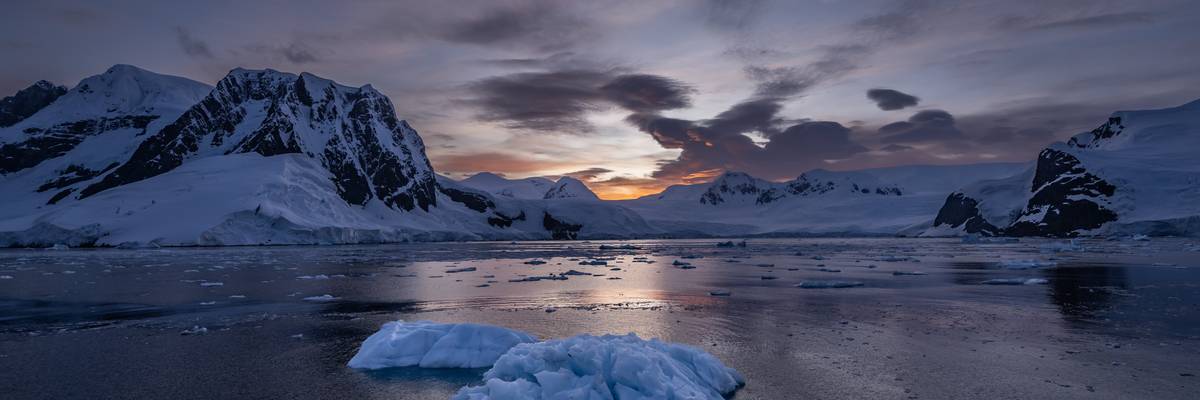
Melting icebergs are seen in Antarctica on February 26, 2023.
Slashing greenhouse gas emissions is "our best hope of preserving Antarctica," said the lead author of a new study.
The warming continent of Antarctica will face increasingly extreme and damaging weather events in the coming years if world leaders don't take "drastic action" to rein in fossil fuels, the primary driver of global climate chaos.
That's the conclusion of a study published Tuesday in the journal Frontiers in Environmental Science amid growing alarm over the failure of Antarctic sea ice to replenish during the continent's winter. According to scientists, Antarctica was missing an Argentina-sized amount of sea ice as of July—the hottest month on record.
The new study, led by glaciologist Martin Siegert of the University of Exeter, finds that it is "virtually certain that future Antarctic extreme events will be more pronounced than those observed to date" as countries continue to burn fossil fuels at a pace incompatible with warming targets set by the Paris climate accord.
The study notes that "the most extreme 'heatwave' ever recorded globally occurred over East Antarctica in March 2022 when surface temperature anomalies of up to 38.5°C were observed." The heatwave was associated with an atmospheric river, which transports "heat and moisture from the subtropics into the heart of the Antarctic continent."
"Although it was so extreme, a formal attribution of the March 2022 event to human factors has not yet been conducted," the study adds. "However, an attribution analysis of an earlier record-breaking heatwave, that affected the Antarctic Peninsula in February 2020 and led to the highest recorded temperature in the Antarctic mainland (18.3°C at Esperanza Station), concluded a likely significant contribution from fossil-fuel burning."
The analysis also points to extreme cyclones that were "implicated in a major iceberg calving event of the Brunt Ice Shelf in 2020" as well as "the rapid sea ice decline in the Weddell Sea in 2016/17."
"Possibly the most recognizable extreme event that occurred in the atmosphere was the loss of stratospheric ozone, discovered above Antarctica in the 1980s," the study continues. "This loss was caused largely by a particular class of chemicals: Chlorofluorocarbons (CFCs). Whilst this event catalyzed rapid and effective policy action by the global community in the development of the Montreal Protocol (adopted in 1987), the effects of the 'ozone hole' are being felt decades later."
"This must matter to every country—and individual—on the planet."
Anna Hogg, professor in the School of Earth and Environment at the University of Leeds and a study co-author, said the new research makes clear that "while extreme events are known to impact the globe through heavy rainfall and flooding, heatwaves, and wildfires, such as those seen in Europe this summer, they also impact the remote polar regions."
"Antarctic glaciers, sea ice, and natural ecosystems are all impacted by extreme events," said Hogg.
According to the new study, the Antarctic ice sheet today "contributes six times more mass to the ocean than it did just 30 years ago," an increase that the authors attributed to the burning of fossil fuels.
Siegert stressed that "Antarctic change has global implications." A study published earlier this year in the journal Nature found that melting Antarctic ice could impact global oceans for "centuries to come" by disrupting the critical process of overturning circulation.
"Reducing greenhouse gas emissions to net zero is our best hope of preserving Antarctica, and this must matter to every country—and individual—on the planet," said Siegert.
Dozens of countries—including the United States, the world's top historical emitter of planet-warming carbon dioxide—are party to the Antarctic Treaty, an agreement that obliges signatories to protect the continent from "considerable stress and damage."
"Nations must understand that by continuing to explore, extract, and burn fossil fuels anywhere in the world," Siegert said Tuesday, "the environment of Antarctica will become ever more affected in ways inconsistent with their pledge."
Dear Common Dreams reader, It’s been nearly 30 years since I co-founded Common Dreams with my late wife, Lina Newhouser. We had the radical notion that journalism should serve the public good, not corporate profits. It was clear to us from the outset what it would take to build such a project. No paid advertisements. No corporate sponsors. No millionaire publisher telling us what to think or do. Many people said we wouldn't last a year, but we proved those doubters wrong. Together with a tremendous team of journalists and dedicated staff, we built an independent media outlet free from the constraints of profits and corporate control. Our mission has always been simple: To inform. To inspire. To ignite change for the common good. Building Common Dreams was not easy. Our survival was never guaranteed. When you take on the most powerful forces—Wall Street greed, fossil fuel industry destruction, Big Tech lobbyists, and uber-rich oligarchs who have spent billions upon billions rigging the economy and democracy in their favor—the only bulwark you have is supporters who believe in your work. But here’s the urgent message from me today. It's never been this bad out there. And it's never been this hard to keep us going. At the very moment Common Dreams is most needed, the threats we face are intensifying. We need your support now more than ever. We don't accept corporate advertising and never will. We don't have a paywall because we don't think people should be blocked from critical news based on their ability to pay. Everything we do is funded by the donations of readers like you. When everyone does the little they can afford, we are strong. But if that support retreats or dries up, so do we. Will you donate now to make sure Common Dreams not only survives but thrives? —Craig Brown, Co-founder |
The warming continent of Antarctica will face increasingly extreme and damaging weather events in the coming years if world leaders don't take "drastic action" to rein in fossil fuels, the primary driver of global climate chaos.
That's the conclusion of a study published Tuesday in the journal Frontiers in Environmental Science amid growing alarm over the failure of Antarctic sea ice to replenish during the continent's winter. According to scientists, Antarctica was missing an Argentina-sized amount of sea ice as of July—the hottest month on record.
The new study, led by glaciologist Martin Siegert of the University of Exeter, finds that it is "virtually certain that future Antarctic extreme events will be more pronounced than those observed to date" as countries continue to burn fossil fuels at a pace incompatible with warming targets set by the Paris climate accord.
The study notes that "the most extreme 'heatwave' ever recorded globally occurred over East Antarctica in March 2022 when surface temperature anomalies of up to 38.5°C were observed." The heatwave was associated with an atmospheric river, which transports "heat and moisture from the subtropics into the heart of the Antarctic continent."
"Although it was so extreme, a formal attribution of the March 2022 event to human factors has not yet been conducted," the study adds. "However, an attribution analysis of an earlier record-breaking heatwave, that affected the Antarctic Peninsula in February 2020 and led to the highest recorded temperature in the Antarctic mainland (18.3°C at Esperanza Station), concluded a likely significant contribution from fossil-fuel burning."
The analysis also points to extreme cyclones that were "implicated in a major iceberg calving event of the Brunt Ice Shelf in 2020" as well as "the rapid sea ice decline in the Weddell Sea in 2016/17."
"Possibly the most recognizable extreme event that occurred in the atmosphere was the loss of stratospheric ozone, discovered above Antarctica in the 1980s," the study continues. "This loss was caused largely by a particular class of chemicals: Chlorofluorocarbons (CFCs). Whilst this event catalyzed rapid and effective policy action by the global community in the development of the Montreal Protocol (adopted in 1987), the effects of the 'ozone hole' are being felt decades later."
"This must matter to every country—and individual—on the planet."
Anna Hogg, professor in the School of Earth and Environment at the University of Leeds and a study co-author, said the new research makes clear that "while extreme events are known to impact the globe through heavy rainfall and flooding, heatwaves, and wildfires, such as those seen in Europe this summer, they also impact the remote polar regions."
"Antarctic glaciers, sea ice, and natural ecosystems are all impacted by extreme events," said Hogg.
According to the new study, the Antarctic ice sheet today "contributes six times more mass to the ocean than it did just 30 years ago," an increase that the authors attributed to the burning of fossil fuels.
Siegert stressed that "Antarctic change has global implications." A study published earlier this year in the journal Nature found that melting Antarctic ice could impact global oceans for "centuries to come" by disrupting the critical process of overturning circulation.
"Reducing greenhouse gas emissions to net zero is our best hope of preserving Antarctica, and this must matter to every country—and individual—on the planet," said Siegert.
Dozens of countries—including the United States, the world's top historical emitter of planet-warming carbon dioxide—are party to the Antarctic Treaty, an agreement that obliges signatories to protect the continent from "considerable stress and damage."
"Nations must understand that by continuing to explore, extract, and burn fossil fuels anywhere in the world," Siegert said Tuesday, "the environment of Antarctica will become ever more affected in ways inconsistent with their pledge."
The warming continent of Antarctica will face increasingly extreme and damaging weather events in the coming years if world leaders don't take "drastic action" to rein in fossil fuels, the primary driver of global climate chaos.
That's the conclusion of a study published Tuesday in the journal Frontiers in Environmental Science amid growing alarm over the failure of Antarctic sea ice to replenish during the continent's winter. According to scientists, Antarctica was missing an Argentina-sized amount of sea ice as of July—the hottest month on record.
The new study, led by glaciologist Martin Siegert of the University of Exeter, finds that it is "virtually certain that future Antarctic extreme events will be more pronounced than those observed to date" as countries continue to burn fossil fuels at a pace incompatible with warming targets set by the Paris climate accord.
The study notes that "the most extreme 'heatwave' ever recorded globally occurred over East Antarctica in March 2022 when surface temperature anomalies of up to 38.5°C were observed." The heatwave was associated with an atmospheric river, which transports "heat and moisture from the subtropics into the heart of the Antarctic continent."
"Although it was so extreme, a formal attribution of the March 2022 event to human factors has not yet been conducted," the study adds. "However, an attribution analysis of an earlier record-breaking heatwave, that affected the Antarctic Peninsula in February 2020 and led to the highest recorded temperature in the Antarctic mainland (18.3°C at Esperanza Station), concluded a likely significant contribution from fossil-fuel burning."
The analysis also points to extreme cyclones that were "implicated in a major iceberg calving event of the Brunt Ice Shelf in 2020" as well as "the rapid sea ice decline in the Weddell Sea in 2016/17."
"Possibly the most recognizable extreme event that occurred in the atmosphere was the loss of stratospheric ozone, discovered above Antarctica in the 1980s," the study continues. "This loss was caused largely by a particular class of chemicals: Chlorofluorocarbons (CFCs). Whilst this event catalyzed rapid and effective policy action by the global community in the development of the Montreal Protocol (adopted in 1987), the effects of the 'ozone hole' are being felt decades later."
"This must matter to every country—and individual—on the planet."
Anna Hogg, professor in the School of Earth and Environment at the University of Leeds and a study co-author, said the new research makes clear that "while extreme events are known to impact the globe through heavy rainfall and flooding, heatwaves, and wildfires, such as those seen in Europe this summer, they also impact the remote polar regions."
"Antarctic glaciers, sea ice, and natural ecosystems are all impacted by extreme events," said Hogg.
According to the new study, the Antarctic ice sheet today "contributes six times more mass to the ocean than it did just 30 years ago," an increase that the authors attributed to the burning of fossil fuels.
Siegert stressed that "Antarctic change has global implications." A study published earlier this year in the journal Nature found that melting Antarctic ice could impact global oceans for "centuries to come" by disrupting the critical process of overturning circulation.
"Reducing greenhouse gas emissions to net zero is our best hope of preserving Antarctica, and this must matter to every country—and individual—on the planet," said Siegert.
Dozens of countries—including the United States, the world's top historical emitter of planet-warming carbon dioxide—are party to the Antarctic Treaty, an agreement that obliges signatories to protect the continent from "considerable stress and damage."
"Nations must understand that by continuing to explore, extract, and burn fossil fuels anywhere in the world," Siegert said Tuesday, "the environment of Antarctica will become ever more affected in ways inconsistent with their pledge."