

SUBSCRIBE TO OUR FREE NEWSLETTER
Daily news & progressive opinion—funded by the people, not the corporations—delivered straight to your inbox.
5
#000000
#FFFFFF
To donate by check, phone, or other method, see our More Ways to Give page.
Daily news & progressive opinion—funded by the people, not the corporations—delivered straight to your inbox.

Noting his issues "align with nurses from top to bottom," National Nurses United, the nation's largest organization of nurses, today endorsed Senator Bernie Sanders for President.
" Bernie Sanders has a proven track record of uncompromised activism and advocacy for working people, and a message that resonates with nurses, and, as we have all seen, tens of thousands of people across the country. He can talk about our issues as well as we can talk about our issues. We are proud to stand with him in his candidacy for President today," said NNU Executive Director RoseAnn DeMoro.
NNU, which represents some 185,000 nurses from California to Florida, including nurses who live in the early caucus and primary states of Iowa, New Hampshire, and Nevada, becomes the first national union to endorse Sanders.
The announcement was made at a National Nurses Conversation with Bernie Sanders attended by hundreds of RNs in the Oakland, Ca office of NNU, and watched on live stream, with questions asked, by nurses at 34 watch parties in 14 states. The festive "Brunch with Bernie" even included ice cream donated by Ben Cohen and Jerry Greenfield, founders of Ben and Jerry's Ice Cream.
"Bernie's issues align with nurses from top to bottom," DeMoro continued. Among them - "insisting that healthcare for everyone is a right not a privilege, protecting Social Security and Medicare from those who want to destroy or privatize it and working to expand both, holding Wall Street accountable for the damage it has done to our communities, understanding the threat to public health from the climate crisis, environmental degradation, and the Trans-Pacific Partnership, support for minimum nurse-to-patient ratios for hospital patients, and on and on," DeMoro said.
The NNU Executive Council voted to endorse Sanders. Factors for NNU backing, said DeMoro, included:
NNU, said DeMoro, has adopted a call to "Vote Nurses Values - caring, compassion, community. Nurses take the pulse of America, and have to care for the fallout of every social and economic problem -- malnutrition, homelessness, un-payable medical bills, the stress and mental disorders from joblessness, higher asthma rates, cancer, heart ailments and birth defects from environmental pollution and the climate crisis. Bernie Sanders's prescriptions best represents the humanity and the values nurses embrace."
DeMoro noted that in a presentation July 29 to the AFL-CIO Executive Council, on which DeMoro sits as a national vice president, "he made it clear that you will never have to wonder which side he is on. As he told the union leaders, 'I see myself as part of you. This is not a conventional moment, we are fighting for the future of this country'."
A central focus for nurses, DeMoro noted, is "our dysfunctional healthcare system. Too many Americans, even with the Affordable Care Act, remain priced out of access to the health care they need even if they have insurance due to lack of effective price controls, and a still broken system based on private profit not patient need. Sanders has long championed the full, humane reform we need, an updated, expanded Medicare for all."
She noted Sanders' statement July 30th in Washington at a rally, hosted by NNU to celebrate the 50th anniversary of the enactment of Medicare and Medicaid, at which Sanders said, "Let's end the international embarrassment of the U.S. being the only major country on earth that does not guarantee healthcare to all people as a right. The time has come to say that we need to expand Medicare to every man, woman, and child as a single-payer national healthcare program."
Nurses also welcome Sanders call, evidenced in a bill he authored, S 1731, calling for a Robin Hood tax on Wall Street speculation, on trades of stocks and other financial instruments, that could raise hundreds of billions of dollars annually to pay for healthcare for all, free college tuition to expand access to education, more jobs at living wages, ending AIDS, real action against the climate crisis, and other basic needs.
" Economic inequality remains the fundamental issue of our time. It is a major reason why the U.S. lags so far behind many other industrial nations not only in poverty and social injustice, but in a broad array of health outcomes, from maternal and infant mortality to life expectancy. Sanders' leadership in calling for Wall Street to pay its share for rebuilding our national and global communities is a reminder of why we need his vision leading America," DeMoro said.
Sanders also stands out, said DeMoro, in his outspoken opposition to the Trans-Pacific Partnership, "which includes a terrible handout to pharmaceutical giants that will further drive up drug prices, a life and death issue for millions of people."
National Nurses United, with close to 185,000 members in every state, is the largest union and professional association of registered nurses in US history.
(240) 235-2000
“Here we are prepared to fight imperialism," said Cuban lawmaker Mariela Castro, daughter of Raúl Castro. "Cuba is a small and poor country, but one with experience confronting US imperialism."
Tens of thousands of Cubans rallied Friday in Havana to denounce the Trump administration's indictment of former President Raúl Castro and threats to attack the island nation, whose socialist government has been preparing its citizens to defend their homeland and revolution against US aggression.
“No disrespect is shown to the heroes of the homeland!" Cuban President Miguel Díaz-Canel said as people flooded the streets outside the US Embassy in Havana. "History and traditions are not insulted without a response! That does not happen in Cuba!"
The massive rally followed Wednesday's US Department of Justice indictment of revolutionary hero Raúl Castro, who served as president for a decade after his older brother, Fidel Castro, stepped down in 2008. The DOJ indicted Castro for his alleged role in the 1996 shoot-down of planes operated by the counterrevolutionary group Brothers to the Rescue after repeated warnings that they had violated Cuban airspace.
Rallying under the slogan "Raúl is Raúl"—originally popularized during the transitional period of rule between the Castros to highlight the younger brother's reforms—Cubans vowed to defend their revolution in the face of the latest US threats.
“This new aggression has united us more and elevated the honor, dignity, and anti-imperialist spirit of a people already recognized around the world for their brave resistance to any form of subordination to the empire,” Díaz-Canel said.
Cuban legislator Mariela Castro, Raúl's granddaughter, told rallygoers that “we are prepared for combat."
"No one is going to kidnap him. I can assure you of that," she said, alluding to the US invasion and abduction of Venezuelan President Nicolás Maduro on dubious narco-terrorism charges earlier this year. "Neither him nor anyone else."
"My father is very calm, watching and smiling,” Castro added. "Here, we are prepared to fight imperialism. Cuba is a small and poor country, but one with experience confronting US imperialism. We know that as long as there is an anti-imperialist revolution, there will be a gigantic and ruthless enemy."
Critics noted the hypocrisy of the Castro indictment, given the ongoing illegal US bombing of boats that the Trump administration claims—without providing evidence—were smuggling drugs in the Caribbean Sea and Pacific Ocean.
“Washington has no moral authority to judge anyone,” Gerardo Hernández, coordinator of the Committees for the Defense of the Revolution, said, referring to the boat-bombing campaign, which has killed nearly 200 people in close to 60 reported attacks. “Cuba is a people of peace and reaffirms its legitimate right to self-defense."
"Cuba does not constitute a threat to US security," he continued. "On the contrary, Cuba is a state under attack by the United States."
Observers have pointed to the decadeslong US-backed campaign of anti-Castro terrorism against the Cuban people, including the 1976 bombing of Cubana Flight 455, a commercial airliner with 73 people aboard, including 11 Guyanese nationals and 24 teenage members of Cuba's junior Olympic fencing team. Perpetrators of the attack enjoyed safe haven in the United States, mainly in Miami, where the city celebrated a day in honor of one of the bombing's alleged masterminds.
“The Cuban people reaffirm the unwavering decision to defend their homeland and revolution," Hernández added. "With the greatest determination, they reaffirm their absolute and firm support for Army General Raúl Castro."
Mariela Castro said that "my family, like all Cuban families, is waiting for instructions to know where we need to go" in the event of a US attack.
As US Secretary of State Marco Rubio—whose parents immigrated to the United States from Cuba during the US-backed dictatorship that preceded the Castro-led revolution—said Thursday that the chances of a "negotiated and peaceful agreement" with Havana are "not high," Deputy Cuban Foreign Minister Carlos Fernández de Cossío acknowledged that his country is preparing for war, asserting that "we would be naive not to."
Cuban officials have been circulating a pamphlet titled a “Family Guide for Protection Against Military Aggression." The publication warns that the US is preparing "to launch a military assault and destroy our society with the aim of perpetuating capitalism... and annihilating the dream of our Commander-in-Chief, Fidel Castro.”
The pamphlet instructs Cubans to pack survival kits and seek shelter in the event of air-raid alerts. It also contains life-saving first aid instructions.
“Should the enemy attack, our Revolution will defend itself until victory is achieved and the aggressor is expelled," the pamphlet states.
US President Donald Trump recently tightened the internationally condemned 65-year US economic embargo on Cuba, imposing a fuel blockade that has exacerbated an energy emergency characterized by blackouts and deadly suffering among the most vulnerable Cubans, including sick people and children.
Last month, Trump said that “we may stop by Cuba after we’re finished" with the illegal US-Israeli war of choice against Iran. The president has also stated he believes he’ll “be having the honor of taking Cuba,” language echoing the 19th-century US imperialists who conquered the island along with Puerto Rico, Guam, and the Philippines from Spain in another war waged on dubious pretense.
“Whether I free it, take it—I think I can do anything I want,” Trump said of the island and its 11 million inhabitants.
BreakThrough News interviewed Havana residents earlier this week about the specter of US attack.
"We Cubans have to protect ourselves," elderly Havana resident Juan Hernández said. "We're not going to hand any Cuban over to a foreigner, because that would be immoral. It would be treason."
Hernández accused the US of "provocation" in order to "justify invading the country," adding "that would only lead to bloodshed on both sides."
"Besides," he added, "Cuba isn't a threat to them at all. What does Cuba have? Do we have atomic bombs? Do we have anything? We have nothing."
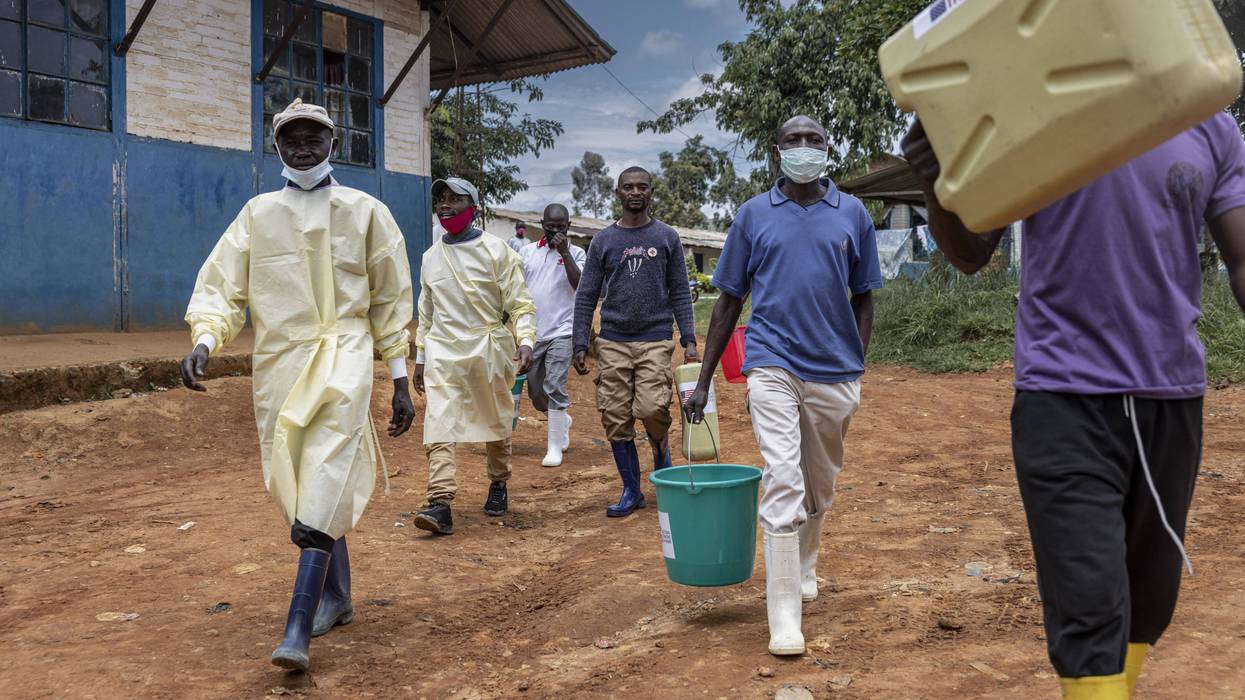
"Unsure how any US citizen would feel comfortable deploying" to help fight the outbreak, said one doctor, "knowing our government would not make sure they are okay if something happened."
The United Nations' emergency relief office on Thursday was mobilizing $60 million to fight the rapidly spreading Ebola outbreak in the Democratic Republic of Congo, with the body's under-secretary-general for humanitarian affairs saying relief teams are "fully mobilized" and "applying lessons from previous outbreaks," with a focus on building community trust and communicating with governments.
But with the Trump administration having dismantled the US Agency for International Development (USAID) and slashed funding and staffing for the Center for Disease Control and Prevention's (CDC) global efforts, the response is largely missing a key feature that helped with containment during the 2014 and 2019 outbreaks—the involvement of the US government and public health teams—and Secretary of State Marco Rubio signaled on Thursday that was unlikely to change.
In comments to the press, Rubio said the Trump administration's top priority is that Ebola doesn't reach the US—even if that means imposing travel restrictions against the guidance of the World Health Organization (WHO)—and described an approach that one disaster relief leader said was antithetical to the actions the US took in previous Ebola outbreaks.
"Our number-one objective on Ebola, before anything else, and we think it's terrible what's happening there to the people... Our number-one thing has to be, we can't have it affect the United States," said Rubio. "We can't have Ebola cases coming here."
Rubio: "We can't have ebola cases here. In fact, I think we had a flight last night headed to Detroit that was diverted." pic.twitter.com/S84FmWIq5b
— Aaron Rupar (@atrupar) May 21, 2026
The secretary of state noted that an Air France flight that had been headed for Detroit was diverted to Montreal on Wednesday after a passenger from Congo was found to have boarded the plane "in error."
The Department of Homeland Security announced new restrictions this week saying that all travelers who have been in the DRC, Uganda, and South Sudan in the past 21 days—including US citizens and permanent residents—can only enter the US through Washington Dulles International Airport.
When WHO declared the Ebola outbreak a public emergency of international concern last weekend, the agency noted that "no country should close its borders or place any restrictions on travel and trade."
"Such measures are usually implemented out of fear and have no basis in science," said WHO in its guidance, which also noted "state parties should be prepared to facilitate the evacuation and repatriation of nationals (e.g. health workers) who have been exposed" to Ebola.
Jeremy Konyndyk, president of Refugees International and a former USAID disaster relief official, said the message sent by Rubio was "insanely counterproductive."
By sending the message that the US is prioritizing that Ebola stays outside US borders above all, said Konyndyk, the Trump administration is telling "any US health workers that if they get infected trying to contain the outbreak, they won't be allowed home."
"In the 2014 outbreak we did the opposite, because we knew that posture would undermine the response and extend the outbreak," he said.
Dr. Krutika Kuppalli, who specializes in infectious diseases and deployed to West Africa in 2014 to help fight the Ebola outbreak that killed more than 11,000 people, said she did so "with the understanding that if something happened my government would take care of me."
"Unsure how any US citizen would feel comfortable deploying, knowing our government would not make sure they are okay if something happened," said Kuppalli.
The Trump administration's refusal to directly help US healthcare workers impacted by the outbreak has already resulted in two doctors being sent to European countries including Germany and the Czech Republic for treatment.
As he emphasized that Ebola cannot reach US shores, Rubio sent out messages of thanks to German and Czech officials for admitting the two medical workers to their hospitals.
With more than 170 deaths and about 750 infections suspected in the "rapidly" spreading Ebola outbreak and cases reported in Uganda as well as the DRC, public health experts are warning that the crisis is likely to "get worse before it gets better" and that its impact has likely already reached farther than initial numbers show due to a lack of surveillance on the ground.
Former CDC Director Robert Redfield told NewsNation on Thursday that "normally when we have these Ebola outbreaks, and I had three of them when I was CDC director, all of which were in the DRC, normally we recognize them when we have five, 10 cases, you know, at most."
"This one really wasn’t picked up until there was over 100 cases," he said.
WHO Director General Tedros Adhanom Ghebreyesus said Friday that the risk assessment for Ebola is "very high at the national level, high at the regional level and low at the global level."
As Common Dreams reported earlier this week, experts have pointed to President Donald Trump's cuts to foreign assistance and public health initiatives as reasons the outbreak had already spread as far as it did when the emergency was declared this week.
The State Department announced on Monday it was mobilizing $13 million in assistance to help contain the outbreak; the US spent more than $5 billion to fight to 2014 epidemic that hit several countries in West Africa.
"The United States cannot quickly reverse our abdication of leadership on the global health stage," wrote Dr. Craig Spencer, an emergency medicine physician who helped treat Ebola patients in 2014 and survived the disease himself. "But we can bolster our response to this crisis. There should be a steadfast commitment to working closely and coordinating with essential partners like the WHO. We need to mobilize funding and experts, speed up the development of new treatments, and increase resources for protective equipment and expanded testing."
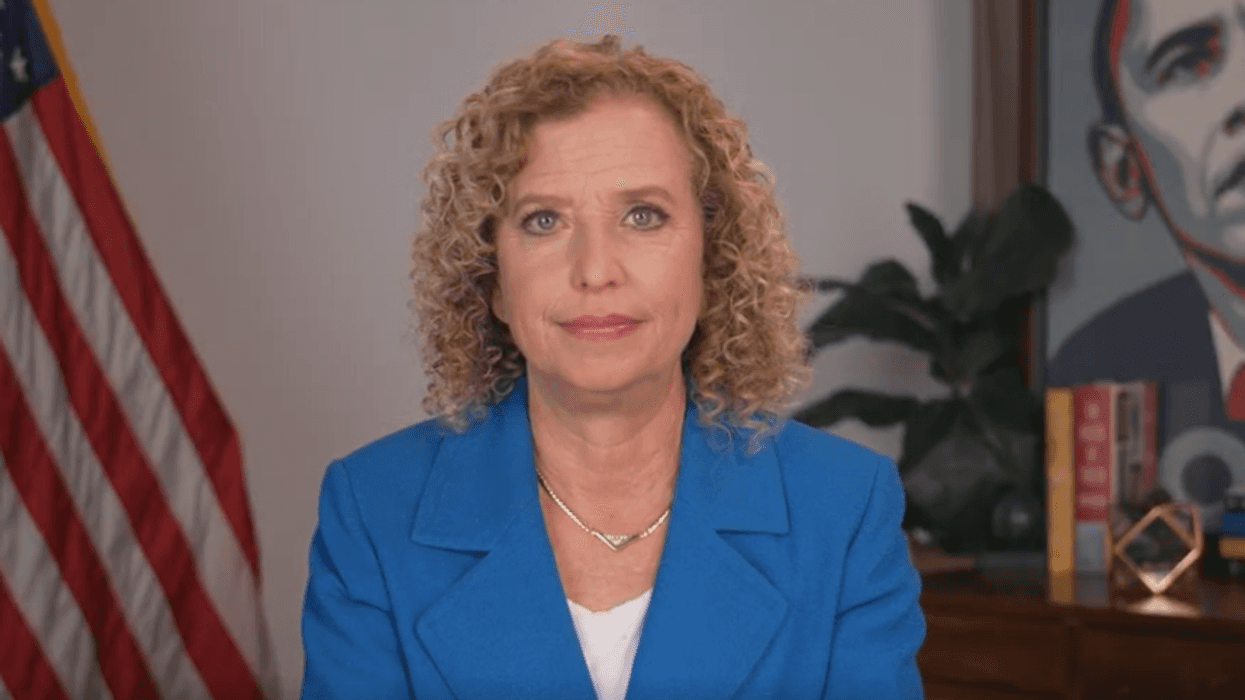
"She is no different than the Jim Crow Republicans that are eviscerating Black Representation across the South," said another District 20 candidate.
Less than three weeks after Florida Gov. Ron DeSantis signed a congressional map rigged for his fellow Republicans into law, Democratic Rep. Debbie Wasserman Schultz came under fire on Friday for switching districts.
First elected to Congress in 2004, Wasserman Schultz currently serves the 25th District, a target of Florida Republicans' recently redistricting—which is part of President Donald Trump's national push to retain control of the House of Representatives.
DeSantis split up the Democrat's District 25 "into five different districts in his newly approved maps, leaving her with complicated options as Black Democratic leaders and candidates fight to keep her out of at least one of those districts," the Miami Herald reported earlier this month.
Despite that opposition, Wasserman Schultz announced in a Friday video featuring various local figures that she is indeed running there—in District 20.
"I've fought for the people of Broward County my whole adult life, and you've always been able to count on me to deliver results for our community," she said. "And I've waged these battles when our values were on the line, all while still raising a family, beating cancer, and answering President Barack Obama's call to lead our national party."
Wasserman Schultz chaired the Democratic National Committee from 2011 until her 2016 resignation—after WikiLeaks published her emails showing bias in that year's presidential primary. She didn't acknowledge her scandalous departure from DNC leadership in the video, but she did speak in front of an Obama poster and an American flag.
"I'm announcing my candidacy for reelection in Congressional District 20, because we cannot let Trump destroy Broward County's power. And we know Republicans couldn't care less about lowering your healthcare, gas, or grocery bills," she continued. "But I'll use all my seniority and influence in Washington to continue to make our lives more affordable, and make Broward a safer, less expensive place to live, raise a family, and retire. This district deserves a representative who won't be learning on the job and has a proven record of results."
As the Herald detailed last week:
Only two of the five districts her voters were split into favor a Democratic candidate—and both of those districts were created in 1992 under the Voting Rights Act to ensure Black voters could elect a candidate of their choice.
Rep. Frederica Wilson's district, the 24th Congressional District, was drawn to pack an even larger Black majority into the district in the new maps. But DeSantis' office intentionally broke up Black neighborhoods in District 20 as a justification for redrawing surrounding districts in a way that favors Republicans.
Black candidates and party leaders in that district say a well-funded, white Democrat jumping into the race would work to further weaken Black political power.
Elijah Manley, one of the Black Democrats who was already running in District 20, criticized Wasserman Schultz's potential run to the newspaper earlier this month, and again on Friday, after she confirmed her decision, calling her "Jim Crow Debbie."
"Debbie Wasserman Schultz is carpetbagging to FL-20, a Black opportunity district, instead of running in her own," Manley said on social media. "DWS is everything that's wrong with the Democratic establishment. From insider trading to payday lenders."
"She is no different than the Jim Crow Republicans that are eviscerating Black Representation across the South," he added in a statement. "I look forward to retiring her from public office permanently."
As Politico reported Friday:
The district Wasserman Schultz is seeking to represent was previously held by Democratic Rep. Sheila Cherfilus-McCormick, who resigned from her seat in April following ethics and legal deliberations over allegations she denies that she stole federal emergency funds and routed them to her campaign.
Cherfilus-McCormick is running again. The seat was held by a Black lawmaker for more than 30 years—a fact often raised by existing CD-20 Democratic candidates, all of whom are Black, as Wasserman Schultz was weighing whether to run for the seat...
The other candidates in the race include Manley, Luther Campbell, a former 2 Live Crew member who won a landmark free-speech Supreme Court case, physician Rudolph Moise, and former Broward County Mayor Dale Holness. Several of the candidates have accused Wasserman Schultz of counting on the county’s African American and Caribbean American voters splitting their allegiances, drawing an advantage to her candidacy despite the 20th District having been historically drawn to help with Black representation.
The Florida Legislative Black Caucus said in a lengthy statement that Wasserman Schultz's "decision to pursue reelection in this historically Black district, despite explicit requests from the Black community to seek candidacy in a neighboring district, is disheartening," and stressed that "this is more than a political issue; it is a pressing voting rights and civil rights issue."
"The residents of District 20 deserve transparency, engagement, and genuine commitment to listening," the caucus continued. "Building trust with Black leaders and constituents should be paramount for anyone seeking to represent a majority-Black district. Unfortunately, the actions taken by Congresswoman Wasserman Schultz suggest a failure to prioritize these essential values, perpetuating a narrative of performative allyship rather than meaningful connection."
Wasserman Schultz also faced criticism for her move beyond Florida. Nina Turner, a former Democratic Ohio state senator and congressional candidate, declared: "Time to retire her. Where are you DNC? Her run illustrates her clear disregard and disrespect for the Black community, especially in this moment. This is just as bad as what the GOP is doing across the country."
Mason Pressler, a national committeeman for Young Democrats of Michigan, said that "as progressives field Black candidates for majority-Black seats (PA-03, MO-01, MI-13, etc.), establishment Democrats like DWS are showing their true colors when it comes to protecting black representation. They don't care, and voters must reject this at the primary ballot box."