
SUBSCRIBE TO OUR FREE NEWSLETTER
Daily news & progressive opinion—funded by the people, not the corporations—delivered straight to your inbox.
5
#000000
#FFFFFF
To donate by check, phone, or other method, see our More Ways to Give page.


Daily news & progressive opinion—funded by the people, not the corporations—delivered straight to your inbox.
The decision tells the international community that "you can ignore American law with respect to the provision of humanitarian aid and the use of weapons provided by American taxpayers."
A memorandum aimed at restricting arms sales to protect human rights, issued by former U.S. President Joe Biden last year amid intensifying outcry over his administration's support for Israel's bombardment of Gaza, ultimately did little to stop the U.S. from continuing to back a military operation in which there is abundant evidence of war crimes.
But advocates decried President Donald Trump's decision Monday to repeal the document, National Security Memorandum-20 (NSM-20) as "shameful," warning that it sends the message that "anything goes," as Sen. Chris Van Hollen (D-Md.) said.
Van Hollen proposed legislation last year that pushed Biden to introduce NSM-20, which required countries that receive military aid from the U.S. to provide assurances that the weapons will not be used to violate international humanitarian law.
When the memo was introduced last February, rights advocates had been warning for months that continued U.S. support for Israel violated laws that were already in place, including the Foreign Assistance Act and the Arms Export Control Act, which restrict arms sales to countries that block humanitarian aid or otherwise break human rights laws.
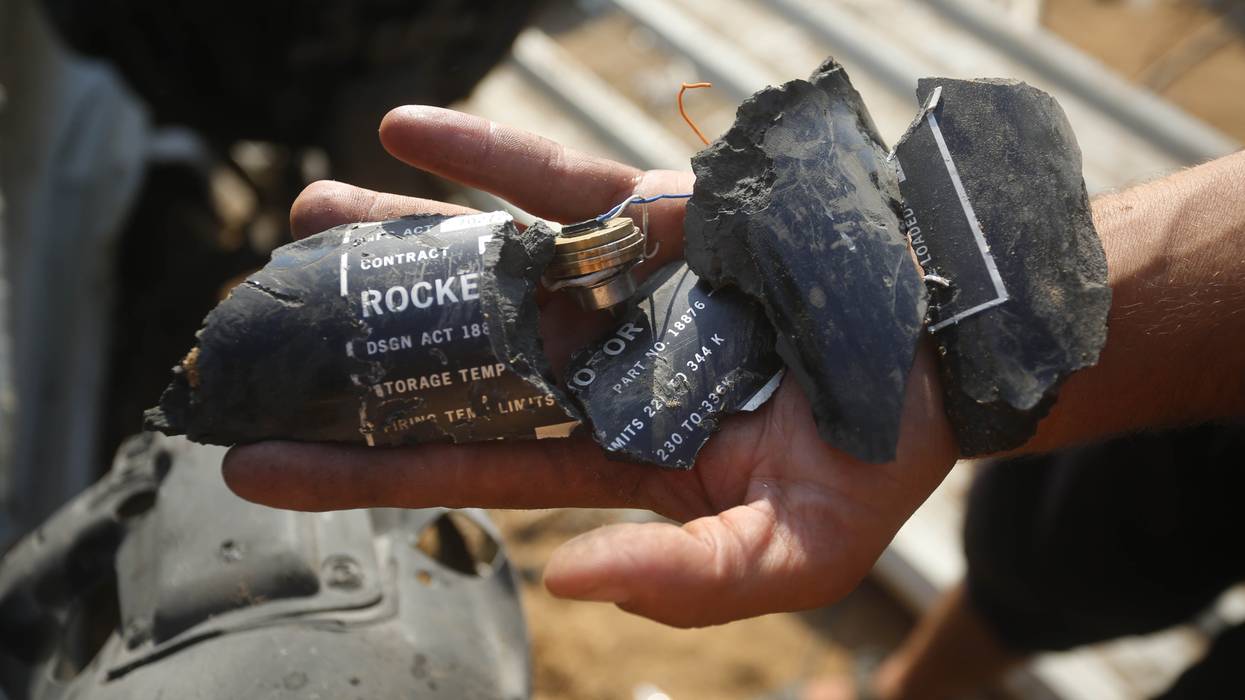
The U.S. is the largest international funder of the Israel Defense Forces (IDF), which began bombarding Gaza in October 2023 in retaliation for a Hamas-led attack. Numerous reports have shown that the Israeli military has attacked Palestinian civilians indiscriminately in Gaza, with U.S. weapons used in some assaults.
At least 48,346 people have been killed in Gaza since the bombardment began. A temporary cease-fire was established in January.
Trump quietly repealed NSM-20 after approving the sale of more than $7.4 billion in arms sales to Israel earlier this month and lifting sanctions on Israeli settlers in the occupied West Bank.
The president also released one shipment of 2,000-pound bombs that had been frozen by the Biden administration after NSM-20 was issued last year.
Last May, Biden paused the shipment as Israel's incursion in the southern Gaza city of Rafah garnered international outcry over the danger the expanded attacks posed to the 1.5 million Palestinians who were sheltering in the city.
But that same month, the Democratic administration issued a report that was required by NSM-20 claiming that there was not enough evidence that Israel had violated international humanitarian law to end overall U.S. support for the IDF.
That assessment came days after World Food Program executive director Cindy McCain warned that Israel's blocking of humanitarian aid into Gaza had led to a "full-blown famine" in the northern part of the enclave.
The administration's continued support for Israel led some to dismiss NSM-20 as a "PR stunt" and a "gimmick."
Although NSM-20 did not stop the Biden administration from putting human rights at risk, critics warned that countries such as Israel will be even more emboldened following Trump's repeal of the memo.
The decision tells the international community that "you can ignore American law with respect to the provision of humanitarian aid and the use of weapons provided by American taxpayers," Van Hollen told The Washington Post.
Christopher Le Mon, a former State Department official under Biden, told the outlet that "the only thing the Trump administration does by eliminating NSM-20 is signal to U.S. partners that the administration simply doesn't care how these governments use U.S. arms, no matter how immoral or illegal their conduct."
Sarah Yager, Washington director of Human Rights Watch, told the Post that with NSM-20 rescinded but other laws like the Foreign Assistance Act still in place, the Trump administration must now "show the American people that [it] will abide by U.S. laws when sending weapons to allies."

Lawmakers told the Biden administration they are "deeply troubled by the continued level of civilian casualties and humanitarian suffering in Gaza."
As Israel continues to decimate the Gaza Strip with American weapons, 77 Democrats in the U.S. House of Representatives this week demanded that the Biden administration "provide a full assessment of the status of Israel's compliance with all relevant U.S. policies and laws, including National Security Memorandum 20 (NSM-20) and Section 620I of the Foreign Assistance Act."
Reps. Jason Crow (D-Colo.), Madeleine Dean (D-Pa.), and Chrissy Houlahan (D-Pa.) spearheaded the Thursday letter to Secretary of State Antony Blinken and Secretary of Defense Lloyd Austin, with less than six weeks left in President Joe Biden's term.
Since Biden issued NSM-20 in February, his administration has repeatedly accepted the Israel government's assurances about the use of U.S. weapons, despite reports from journalists and human rights groups about how they have helped Israeli forces slaughter at least 44,875 Palestinians and injure another 106,454 people in the besieged enclave over the past 14 months.
"Our concerns remain urgent and largely unresolved, including arbitrary restrictions on humanitarian aid and insufficient delivery routes."
House Democrats' letter begins by declaring support for "Israel's right to self-defense," denouncing the Hamas-led October 2023 attack, and endorsing the Biden administration's efforts "to broker a bilateral cease-fire that includes the release of hostages," noting the deal recently negotiated for the Israeli government and the Lebanese group Hezbollah.
"Further, we condemn the unprecedented Iranian attacks against Israel launched on April 13, 2024, and October 1, 2024," the letter states, declining to mention the Israeli actions that led to those responses. "We must continue to avoid a major regional conflict—and we welcome the concerted diplomatic efforts by the U.S. and our allies to prevent further escalation."
"We are also deeply troubled by the continued level of civilian casualties and humanitarian suffering in Gaza," the lawmakers wrote, citing the administration's October 13 letter imposing a 30-day deadline for Israel to improve humanitarian conditions in Palestinian territory. "That deadline has expired, and while some progress has been made, we believe the Israeli government has not yet fulfilled the requirements outlined in your letter."
Asked during a November 12 press conference if the Israeli government has met the administration's demands, State Department spokesperson Vedant Patel said that "we have not made an assessment that they are in violation of U.S. law."
Shortly after that, U.S. Sen. Bernie Sanders (I-Vt.) forced votes on resolutions to block the sale of 120mm tank rounds, 120mm high-explosive mortar rounds, and Joint Direct Attack Munitions (JDAMs) to Israel, but they didn't pass.
Progressives and Democrats in Congress have been sounding the alarm about U.S. government complicity in Israel's armed assault and starvation campaign—which have led to an ongoing genocide case at the International Court of Justice—to varying degrees since October 2023, including with a May letter led by Crow and Rep. Chris Deluzio (D-Pa.) and signed by 85 others.
Citing that letter on Thursday, the 77 House Democrats wrote that "our concerns remain urgent and largely unresolved, including arbitrary restrictions on humanitarian aid and insufficient delivery routes, among others. As a result, Gaza's civilian population is facing dire famine."
"We believe further administrative action must be taken to ensure Israel upholds the assurances it provided in March 2024 to facilitate, and not directly or indirectly obstruct, U.S. humanitarian assistance," the letter concludes. "We remain committed to a negotiated solution that can bring an end to the fighting, free the remaining hostages, surge humanitarian aid, and lay the groundwork to rebuild Gaza with a legitimate Palestinian governing body. We thank you and the administration for its ongoing work to achieve those shared goals."
"We should not wait 30 days," one group argued. "U.S. law requires ending the weapons NOW."
After a year of outrage over U.S. support for Israel's devastating assault on the Gaza Strip, multiple media outlets reported Tuesday that the Biden administration threatened to cut off U.S. weapons if the Israeli government does not take "urgent and sustained actions" to improve humanitarian conditions in the Palestinian territory within 30 days.
The October 13 letter from U.S. Secretary of State Antony Blinken and Secretary of Defense Lloyd Austin is addressed to Israeli Minister of Defense Yoav Gallant and Minister of Strategic Affairs Ron Dermer. Axios reporter Barak Ravid published images of the letter on social media and The Washington Post reported that its "authenticity was confirmed by U.S. and Israeli officials."
Blinken and Austin noted requirements under federal law—which critics of the war have often cited in arguments that continuing to provide Israel with weapons is illegal—and National Security Memorandum 20, which President Joe Biden issued in February. NSM-20 directs the secretary of state "to obtain certain credible and reliable written assurances from foreign governments" that they use U.S. arms in line with international humanitarian law and will not "arbitrarily deny, restrict, or otherwise impede, directly or indirectly, the transport or delivery of United States humanitarian assistance."
The U.S. secretaries wrote that "to reverse the downward humanitarian trajectory and consistent with its assurances to us, Israel must, starting now and within 30 days, act on the following concrete measures. Failure to demonstrate a sustained commitment to implementing and maintaining these measures may have implications for U.S. policy under NSM-20 and relevant U.S. law."
The letter calls on the Israeli government to "surge all forms of humanitarian assistance throughout Gaza," with a list of specific actions. It also demands that Israel "ensure that the commercial and Jordan Armed Forces (JAF) corridors are functioning at full and continuous capacity" and "end the isolation in northern Gaza."
While acknowledging concerns about Israel's unverified allegations that a small number of staff from the United Nations Relief and Works Agency for Palestine Refugees in the Near East were involved in the Hamas-led October 7, 2023 attack, Blinken and Austin also expressed alarm about the Knesset's potential adoption of UNRWA legislation that "would devastate the Gaza humanitarian response at this critical moment and deny vital educational and social services to tens of thousands of Palestinians in the West Bank and East Jerusalem, which could have implications under relevant U.S. law and policy."
As CNN reported Tuesday:
Israel appears to already be responding to the letter, at least indirectly. Just one day after the letter was sent, COGAT, the Israeli agency that manages policy for the Palestinian territories and the flow of aid into the strip, tweeted photos of aid going into Gaza.
"30 trucks entered northern Gaza through the Erez Crossing earlier today. Israel is not preventing the entry of humanitarian aid, with an emphasis on food, into Gaza," COGAT said in a post on X. "Israel will continue to allow the entry of humanitarian aid to the residents of Gaza, while simultaneously destroying Hamas’ military and governance infrastructures."
However, since Sunday, Israel has also continued killing civilians in Gaza, bombing a hospital complex and refugee camps—actions that have led progressive U.S. lawmakers to call on Biden to stop "this evil genocide."
Israel faces a genocide case at the International Court of Justice over its yearlong assault on Gaza—which, according to local officials in the Hamas-governed enclave, has killed at least 42,344 Palestinians and wounded another 99,013, with thousands more missing.
Responding to the new letter in a Tuesday statement, Sarah Leah Whitson, executive director of Democracy for the Arab World Now, said that "however long overdue, this official warning that Israel must stop blocking humanitarian aid to Gaza or face a suspension of U.S. military aid is an important and unprecedented signal that Israel has crossed even the Biden administration's permissive red lines."
"We now need the Biden administration to show action, not just words, in enforcing U.S. laws, which prohibit aid to Israel given not only its relentless obstruction of humanitarian relief but deliberate starvation and incessant bombardment of Gaza's civilians," she added.
The Institute for Middle East Understanding Policy Project noted on social media that the United States Agency for International Development and the State Department's Bureau of Population, Refugees, and Migration "recommended ending weapons to Israel months ago for these violations."
"Blinken ignored them and lied to Congress about their findings," the group said. "We should not wait 30 days. U.S. law requires ending the weapons NOW."
Georgia state Rep. Ruwa Romman (D-97), who is Palestinian American, agreed. She declared: "Do it now! There's 370 days of evidence. The hundreds of thousands of people being starved in Gaza won't survive 30 more days."
Outgoing Congressman Jamaal Bowman (D-N.Y.)—who lost his June primary to a pro-Israel candidate backed by lobbyist money—also argued Tuesday that "30 days is too long to wait and see if we will impose an arms embargo."
"How many more Palestinians are we going to allow Israel to murder in 30 days?" he asked. "How many more children and families and generations? We need an arms embargo NOW!"
"International and U.S. law, as well as your administration's policies including NSM-20," said the groups, "require suspending weapons transfers to the Israeli government."
As U.S. State Department spokesperson Matthew Miller was telling reporters on Tuesday that assessments regarding whether Israel is abiding by international humanitarian law in Gaza are ongoing, more than two dozen rights groups were telling the Biden administration that it need look no further than its own memo released months ago to see that the U.S. must end its support for the Israeli military.
Groups including Amnesty International, the Center for Civilians in Conflict, and Refugees International were among 25 organizations that signed a letter sent Tuesday to President Joe Biden; Vice President Kamala Harris, the Democratic presidential nominee; and their foreign policy advisers. The letter was sent a day after the British government announced it was suspending 30 arms export licenses for Israel, citing "a clear risk that they might be used to commit or facilitate a serious violation of international humanitarian law."
The letter pointed out that it's been nearly four months since the administration released its report on May 10 on National Security Memorandum 20 (NSM-20), which "concluded that U.S.-provided arms had likely been used by Israeli security forces in manners 'inconsistent with its IHL [international humanitarian law] obligations.'"
NSM-20, issued in February, required Secretary of State Antony Blinken to confirm that countries using U.S. weapons—including Israel, which has received more than 100 military transfers from the U.S. since last October—are not blocking U.S. humanitarian aid and are using the weapons in accordance with international law.
The groups on Tuesday noted that despite the finding in the May 10 report, the administration claimed that Israel's assurances that it had not used U.S. weapons in strikes that violated international law were "credible and reliable," and that the U.S. would not suspend weapons transfers at that time.
The claim that Israel's assurances were credible was in direct opposition to a leaked internal memo in which four State Department officials said they had "serious concern over non-compliance" with international law.
"Since your May 10 report, the U.N. estimates a 300% increase in acute malnutrition in Northern Gaza."
The official assessment released in May also "stood in stark contrast to the realities in Gaza and across occupied Palestine and appeared to blatantly disregard both the requirements of U.S. law and policy and extensive documentation submitted by human rights and humanitarian organizations and independent experts," reads the new letter, citing reports by Amnesty International, Human Rights Watch, and other groups that detailed how U.S. weapons have been used in attacks that killed civilians and could constitute war crimes.
Moreover, the letter states, "the humanitarian catastrophe in Gaza has only worsened" since the NSM-20 report, but the U.S. policy of providing "virtually unconditional military support for the Israeli government continues."
The letter notes that the U.S. continues to support the Israel Defense Forces (IDF) despite continued restrictions on aid flowing into Gaza by Israel, with the level of aid entering Gaza through the Karem Abu Salem crossing dropping by more than 80% over the past three months.
"As a result of the compounding access and delivery challenges, malnutrition and the perpetual risk of famine remains rampant across Gaza," wrote the groups. "Since your May 10 report, the U.N. estimates a 300% increase in acute malnutrition in Northern Gaza, while the Integrated Food Security Phase Classification, the leading analyst on food insecurity, found in June that all of Gaza is at high risk of famine and 96% of the population is currently food insecure."
Annie Shiel, U.S. advocacy director for the Center for Civilians in Conflict, noted that the Biden administration's continued military support for Israel as famine takes hold of Gaza may violate the Humanitarian Aid Corridor Act—Section 620I of the Foreign Assistance Act of 1961.
The Biden administration's continued support for the IDF sends "a political signal of unconditional support for Israel's conduct," said Shiel. "The U.S. has the leverage to bring about a cease-fire—but chooses not to use it."
The letter on Tuesday also pointed to numerous reports that U.S.-made weapons have been used by Israel in attacks that killed civilians since May 10, including:
"These developments should compel the United States to suspend arms transfers to the Israeli government under the Conventional Arms Transfer policy, which prohibits arms transfers when 'the United States assesses that it is more likely than not that the arms to be transferred will be used by the recipient to commit, facilitate the recipients' commission of, or to aggravate risks that the recipient will commit' serious violations of international humanitarian or human rights law," wrote the groups.
The organizations urged "an immediate, public review of Israel's compliance with NSM-20, accounting for the numerous apparent violations of international law and restrictions on humanitarian aid documented by civil society and the media since May 10 and throughout the NSM-20 reporting period."
As U.S. support continues, said the groups, "the risk of United States' and U.S. officials' complicity in Israeli violations of international law due to U.S. arms transfers has only increased."
"We urgently call upon your administration to change its approach and suspend weapons transfers to Israel, which continue to cause devastating harm and risk making the United States complicit in war crimes," they wrote. "International and U.S. law, as well as your administration's policies including NSM-20, require suspending weapons transfers to the Israeli government."
Stacy Gilbert, a 20-year State Dept. veteran, described reading the final NSM-20 report in shock, given the way it contradicted expert consensus. She immediately decided to resign.
Stacy Gilbert, a U.S. State Department official who resigned this week over Gaza, said Thursday that part of a key report on humanitarian assistance issued earlier this month was "patently false" and that it contradicted the consensus of the department's own experts, according to The Guardian.
Humanitarian groups had widely condemned the department's NSM-20 report, released May 10, which, among other contentious findings, determined that Israel wasn't restricting the transport or delivery of U.S. humanitarian assistance—an assessment that allowed the Biden administration to continue providing arms to Israel. Countries that have blocked U.S. aid are ineligible for arms and security assistance under U.S. law.
Gilbert's comments on Thursday revealed that department officials, and not just outside humanitarian groups, disagreed with the official assessment, which she said was taken out of expert hands within the department during the final weeks and "edited at a higher level." She told The Guardian that it was clear that Israel was limiting the amount of food and medical supplies coming into Gaza.
"There is consensus among the humanitarian community on that," Gilbert said. "It is absolutely the opinion of the humanitarian subject matter experts in the State Department, and not just in my bureau—people who look at this from the intelligence community and from other bureaus."
"I would be very hard-pressed to think of anyone who has said [Israeli obstruction of aid] is not an issue," she added. "That's why I object to that report saying that Israel is not blocking humanitarian assistance. That is patently false."
The Washington Post, which broke the story of Gilbert's resignation on Tuesday, reported that her view that "Israel was impeding the aid from reaching civilians in Gaza" was "echoed by the vast majority of aid and humanitarian organizations."
It was not clear from the reporting in The Guardian or the Post whether Gilbert also disagreed with the other major assessment in the NSM-20 report—that U.S.-supplied weapons couldn't be definitively linked to violations of international law in Gaza. Oxfam called the report a "slap in the face," citing a memorandum it had jointly written with Human Rights Watch on international law violations and Israeli restrictions on aid. Other humanitarian and watchdog groups had similar responses to the report.
Gilbert, a 20-year department veteran who worked in the Bureau of Population, Refugees, and Migration, described reading the final NSM-20 report in shock when it was released. She sent an email explaining her intention to resign just two hours later. This week, she sent another email to department staff explaining her views about the errors in the report, according to the Post.
Gilbert is one of two Biden administration officials to resign this week, bringing the overall total to at least nine. Alexander Smith, a contractor and senior adviser at the U.S. Agency for International Development (USAID), resigned Monday after a presentation that he prepared on maternal and child health in Gaza was canceled. He sent a letter to USAID Administrator Samantha Power critiquing inconsistencies in the agency's approach to different humanitarian crises, The Guardian reported. Smith had been with USAID for four years.
"I cannot do my job in an environment in which specific people cannot be acknowledged as fully human, or where gender and human rights principles apply to some, but not to others, depending on their race," Smith wrote.
The report—due Wednesday under the terms of a White House directive—has been indefinitely postponed, according to congressional aides.
Before Tuesday's reporting that the Biden administration will delay a highly anticipated report on whether Israel is using U.S. military aid in compliance with international law, a coalition of advocacy groups circulated a letter urging the White House to share the document with the public once it's published.
In February, President Joe Biden issued National Security Memorandum (NSM)-20, which requires Secretary of State Antony Blinken "to obtain certain credible and reliable written assurances from foreign governments" receiving U.S. arms "that the recipient country will use any such defense articles in accordance with international humanitarian law" and then provide Congress with periodic reports "to enable meaningful oversight."
The first report is due by Wednesday. However, four congressional aides
told Politico Tuesday that publication would be postponed indefinitely.
"It is not clear if your administration intends to... make this report available to the public," coalition members Amnesty International USA, Defending Rights & Dissent, Freedom of the Press Foundation, National Press Photographers Association, Radio Television Digital News Association, and Reporters Without Borders said in a letter to Biden drafted ahead of Politico's reporting.
"We strongly urge you to make the report available to the public and the press to the greatest extent possible," the groups added.
Access to the document, the coalition argued, "will allow the press to more fully and accurately report on how elected leaders are making decisions about military aid to foreign countries" and "will help Americans make informed judgments about our leaders' decisions on foreign military aid."
"We strongly urge you to make the report available to the public and the press to the greatest extent possible."
The letter comes as Israel uses U.S.-supplied arms and ammunition to wage what hundreds of international legal experts and others say is a genocidal war on Gaza. These include 155-millimeter artillery shells and 2,000-pound guided "bunker-buster" bombs, which Israel says are necessary to target Hamas' underground tunnels.
Aided by artificial intelligence-based target selection systems, Israel Defense Forces commanders are ordering strikes they know will cause large numbers of civilian casualties. In a bid to assassinate a single Hamas commander, the IDF dropped at least two 2,000-pound bombs on the densely populated Jabalia refugee camp on October 31, killing more than 120 civilians.
Even the U.S. military—which since 2001 has killed hundreds of thousands of people during the open-ended so-called War on Terror—avoids using 2,000-pound bombs in densely populated areas due to the tremendous damage they cause.
One prominent U.S. military historian called Israel's Gaza onslaught "one of the most intense civilian punishment campaigns in history," comparing it to the Allied firebombing of Dresden during World War II, which also killed tens of thousands of civilians.
The letter also comes as the Biden administration reportedly believes that Israel's nascent ground invasion of Rafah does not cross the president's "red line" warning that any "major operation" in the southern city—where more than 1 million Palestinians forcibly displaced from other parts of Gaza are sheltering alongside around 280,000 local residents—would damage U.S.-Israeli relations.
The International Court of Justicefound in January that Israel is "plausibly" perpetrating genocide in Gaza, where Israeli bombs, bullets, and blockades have left more than 123,000 Palestinians—most of them women and children—dead, injured, or missing since October 7, and hundreds of thousands more suffering full-blown famine.
While the Biden administration has accepted the Israeli government's claims that it is not breaking international law when using American weapons, a number of House Democrats have challenged Israel's assurance, citing "mounting credible and deeply troubling reports and allegations" of human rights crimes committed by IDF troops in Gaza, and by soldiers and settlers in the illegally occupied West Bank and East Jerusalem.
Officials at the United States Agency for International Development also concluded in a confidential April memo to Blinken that Israel is violating NSM-20 by blocking humanitarian aid from entering the besieged Gaza Strip as children there starve to death.
Furthermore, a leaked State Department memo revealed last month that officials at four of the agency's bureaus concluded that Israel's assurances of legal arms use are "neither credible nor reliable."
In addition to NSM-20, federal legislation including the Arms Control Export Act and Leahy Laws also proscribe U.S. arms transfers to human rights violators—although there are many examples of these statutes being ignored for the benefit of key allies including Israel, Saudi Arabia, Egypt, and other nations.
"The public has a profound interest in understanding how the U.S. ensures that its military aid doesn't go to human rights abusers," Caitlin Vogus, deputy advocacy director at Freedom of the Press Foundation, said in a statement Tuesday.
"If the Biden administration can stand behind its decisions about defense assistance, it should have no reason to withhold the report that members of Congress will see from the press and the public," Vogus added.
While Biden has criticized Israel's "indiscriminate bombing" of Gaza and is reportedly holding up two shipments of precision-guided bombs to send a message to Israeli leaders, the president continues to affirm his steadfast support for Israel and has recently approved the transfer of more warplanes, 2,000-pound bombs, and other arms to its key Middle Eastern ally. The administration is also pushing Congress to approve the sale of $18 billion worth of F-15 fighter jets to Israel.
Earlier this year, a group of mostly Democratic members of Congress asked Blinken to explain what they called "highly unusual" moves by the Biden administration to bypass lawmakers in order to fast-track emergency military aid to Israel. Biden—who recently signed off on $14.3 billion in new armed aid to Israel atop the $4 billion it already gets from Washington each year—has also come under fire for approving more than 100 weapons sales to Israel since October.
Human rights defenders slammed Biden's reported decision to postpone publication of the report due on Wednesday.
"It's obvious why Biden is burying the NSM-20 report on Israel: He won't hold Israel accountable," Georgetown University adjunct professor Josh Reubner asserted on social media. "There's no way to conclude that Israel hasn't violated assurances it won't use U.S. weapons to break international law or block aid. Of course it's doing both."
Palestinian American author and political analyst Yousef Munayyer asked: "Hey, Joe Biden, what are you hidin'?"