

SUBSCRIBE TO OUR FREE NEWSLETTER
Daily news & progressive opinion—funded by the people, not the corporations—delivered straight to your inbox.
5
#000000
#FFFFFF
To donate by check, phone, or other method, see our More Ways to Give page.
Daily news & progressive opinion—funded by the people, not the corporations—delivered straight to your inbox.
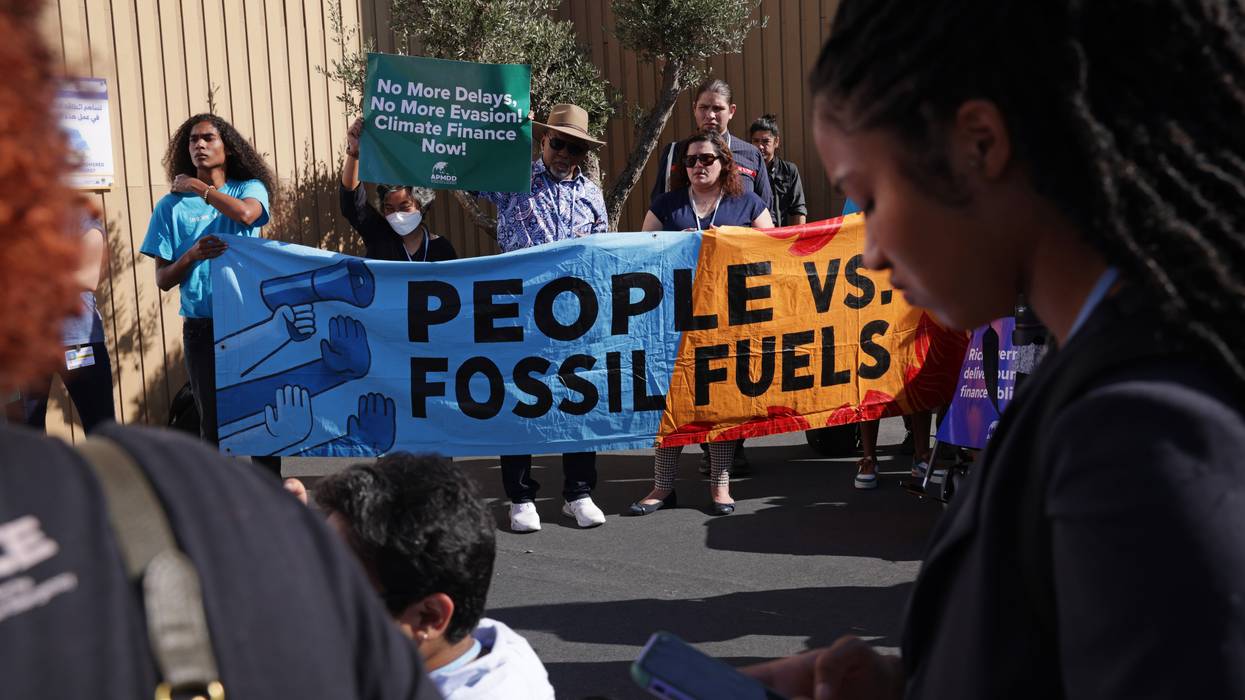
"People are no longer buying the lies. They see the fingerprints of fossil fuel giants all over the storms, floods, droughts, and wildfires devastating their lives, and they want accountability," said the head of one green group.
Large majorities of people around the world support both taxing oil, gas, and coal companies for the environmental damage made worse by fossil fuels and using higher taxes on polluters to support communities most impacted by the climate crisis, according to the results of an international survey released Thursday.
The study, which was jointly commissioned by Greenpeace International and Oxfam International, surveyed roughly 1,200 people in each of these 13 countries: Brazil, Canada, France, Germany, India, Italy, Kenya, Mexico, Philippines, South Africa, Spain, United Kingdom, and the United States. The research was conducted by the data company Dynata, and field work was done between May 9-28, 2025. Greenpeace noted that, taken together, the countries represent close to 50% of the globe's population.
The results of the survey showed a whopping 81% of those surveyed would support taxes fossil fuel companies to pay for damages wrought by "fossil-fuel driven climate disasters."
"These survey results send a clear message: people are no longer buying the lies. They see the fingerprints of fossil fuel giants all over the storms, floods, droughts, and wildfires devastating their lives, and they want accountability," said Mads Christensen, the executive director of Greenpeace International.
"It's only fair that those who caused the crisis should pay for the damage, not those suffering from it," he added.
The study findings come as individual states in the U.S. show a growing interest in passing legislation to force fossil fuel companies to help pay for the recovery cost of climate-related disasters. Vermont became the first state in the country to pass a climate "Superfund" law in 2024, and New York followed suit later that year. Several other states are considering such legislation, according to March reporting from Stateline.
The survey also found that 86% of respondents support channeling revenues "from higher taxes on oil and gas corporations towards communities most impacted by the climate crisis."
Climate campaigners have long sought international financial arrangement that would see rich countries transfer money to developing countries in order to help the latter cut their emissions and adapt to climate change. Last year's United Nations climate negotiations ended with a pledge by donor countries to set at least $300 billion annually for that purpose. That amount was criticized for being inadequate.
The study was launched Thursday at the UN Climate Meetings in Bonn, where government representatives are discussing climate policies, including ways to raise at least $ 1.3 trillion annually for climate mitigation, adaptation, and recovery by 2035 across the Global South.
According to Amitabh Behar, executive director of Oxfam International, "a new tax on polluting industries could provide immediate and significant support to climate-vulnerable countries, and finally incentivize investment in renewables and a just transition."

"What's at stake here isn't just who pays for climate disasters—it's whether our democracy allows powerful industries to simply rewrite the rules when justice catches up to them," said the communications director at Make Polluters Pay.
Over 190 groups are urging Democrats in Congress resist any attempts by Big Oil to evade potential legal liability amid the growing number of legal and legislative efforts aimed at holding major polluters accountable for their role in the climate crisis.
In a Thursday letter addressed to Senate Minority Leader Chuck Schumer (D-N.Y.) and House Minority Leader Hakeem Jeffries (D-N.Y.), the groups urge Democratic lawmakers "to proactively and affirmatively reject any proposal that would shield fossil fuel companies" from those efforts.
A quarter of U.S. residents live in a state or locality that is "taking ExxonMobil and other major fossil fuel companies to court to hold them accountable for this deception and make them pay for the damage their climate lies have caused," according to the letter. Maine, for example, became the eighth U.S. state to sue major oil and gas companies for deceiving the public about their products' role in the climate crisis.
The letter signatories include a long list of green groups such as the Center for Biological Diversity and Extinction Rebellion US, as well as the American Association of Justice and other nonprofits.
The Supreme Court on Monday denied a request by a coalition of Republican state attorneys general aimed at preventing oil and gas companies from facing these types of lawsuits. Trump has also vowed to block climate litigation aimed at Big Oil.
In their letter, the groups also point to a number of efforts, some successful, to pass what are known as "superfund laws," which force privately owned polluters to help cover the costs of protecting public infrastructure from climate-fueled threats. Oil and gas companies have lobbied against the passage of these laws.
"What's at stake here isn't just who pays for climate disasters—it's whether our democracy allows powerful industries to simply rewrite the rules when justice catches up to them," said Cassidy DiPaola, communications director of Make Polluters Pay—one of the letter's signatories—in a Thursday statement.
"Lawmakers must decisively reject any attempt by the fossil fuel industry to evade accountability and ensure both justice today and the right of future generations to hold polluters responsible for decades of deception," DiPaola continued.
The letter references episodes when "fossil fuel companies and their allies" tried to "secure a blanket waiver of liability for their industry."
In 2017, a carbon tax plan spearheaded by a group of Republican statesmen and economists proposed stopping potential lawsuits against oil companies and other corporations that release greenhouse gases, and in 2020, the fossil fuel industry tried to quietly include a liability waiver for itself in a government Covid-19 relief package, according to the outlet Drilled.
The letter also highlights that 60 Democratic House members urged leadership to categorically oppose efforts to "immunize polluters" in response to the latter effort.
"We have reason to believe that the fossil fuel industry and its allies will use the chaos and overreach of the new Trump administration to attempt yet again to pass some form of liability waiver and shield themselves from facing consequences for their decades of pollution and deception," the letter states. "That effort—no matter what form it takes—must not be allowed to succeed."
The demand from these groups comes amid broader attacks on climate and environmental protections from the Trump administration
On Wednesday, the head of the U.S. Environmental Protection Agency announced a series of actions to roll back environmental regulation impacting issues ranging from rules on pollution from power plants to regulations for vehicles.
On his first day in office, Trump signed executive orders withdrawing the United States from the Paris Climate Agreement and initiated plans to open up Alaskan wilderness to drilling and mining.
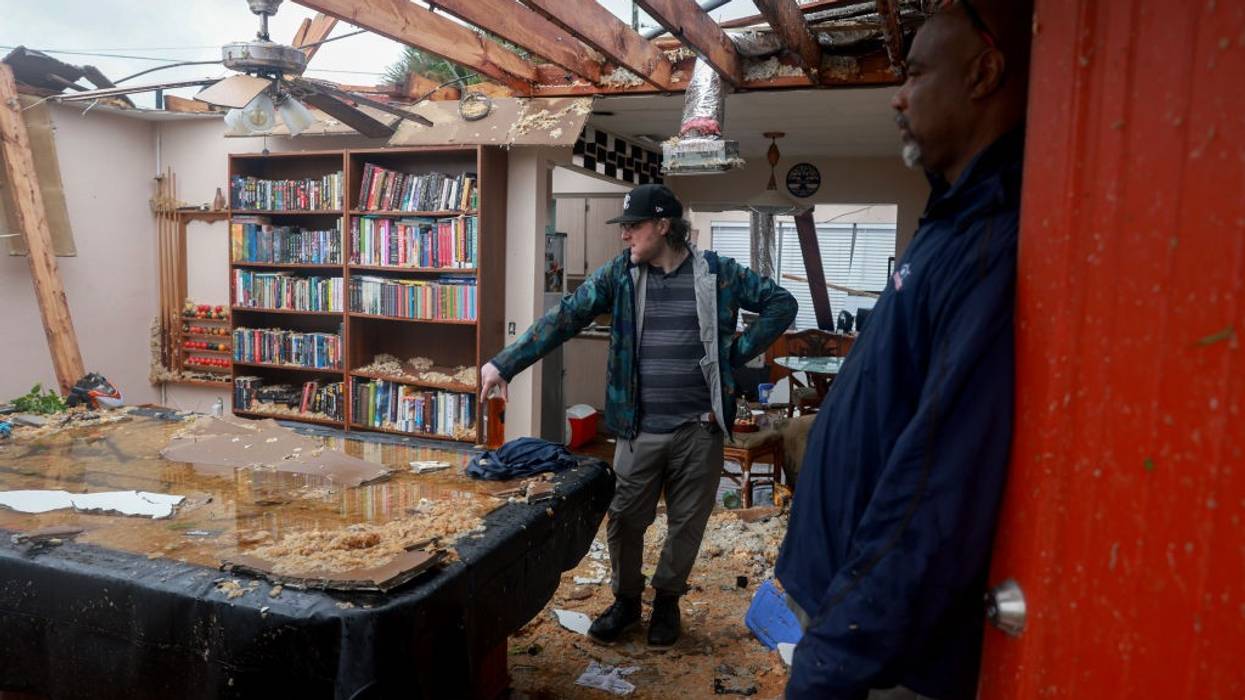
Recent polling shows that 70% of US voters support making oil and gas companies pay their fair share for these fossil fuel-driven catastrophes. What are we waiting for?
“There would be much more violent weather – more storms, more droughts, more deluges.”
That prophecy isn’t from the Book of Revelation, but from a confidential 1989 Shell Oil memo the company commissioned to better understand what global warming could mean for their business in the decades to come.
Today, the sentence reads like a daily weather report. In the last few weeks, we’ve seen the devastation wrought by Hurricane Helene, a “deluge” that wiped out entire towns and sent homes and semi-trucks spiraling down rivers of mud, and now Hurricane Milton, one of the strongest hurricanes ever recorded. In Nepal, extreme flooding there has claimed over more than 200 lives and left parts of the capitol underwater. Meanwhile, the Amazon is facing its “worst drought on record,” further endangering what scientists have referred to as the “lungs of the world.”
“Civilisation could prove a fragile thing,” wrote the authors of the 1989 Shell memo. Indeed. As we’ve seen over the last few months, even supposed climate havens, like Asheville, NC, have been undone by extreme weather. We’ve entered an age where our civilization, no matter where we live, will likely be in need of constant upkeep and repair in the face of ever worsening climate disasters. Rebuilding our communities, and strengthening them for the challenges ahead, will be an ongoing struggle for generations to come.
For more than 70 years the fossil fuel industry has continued to rake in profits without paying a single dollar for the damage they knew their product was causing to our climate and communities.
Which raises the question: how are we going to pay for all of this? Early estimates put the damage of Hurricane Helene at over $200 billion and Hurricane Milton at $175 billion, astronomical figures that still can’t begin to calculate the cost of the lives lost and communities upended. That’s on top of the more than $150 billion a year the US government estimates Americans are already paying for extreme weather events. And that’s a low end estimate. According to a study released earlier this year in Nature concluded that the cost of climate damages to the global economy could reach $38 trillion a year by 2050.
Right now, those costs are coming out of one place in particular: our pockets. Even if your home hasn’t been washed away by a flood, you’re likely paying more for your home insurance due to others that have. Even if your farm hasn’t been wrecked by drought, you’re now paying more for your groceries at the supermarket. The dollars your town had set aside for a new school? They’re now being spent to rebuild roads or repair a bridge that got wiped out by yet another “100-year” flood.
Faced with these ever mounting costs, some local leaders are turning to a different solution: making polluters pay their fair share for the damage they’ve done. After all, that 1989 Shell memo isn’t the only example that fossil fuel companies knew exactly the consequences of the ongoing use of their product. As early as the 1950s, oil and gas companies knew about the dangers of global warming, but instead of warning the public and moving to clean energy, they went on to spread lies and disinformation to protect their profits.
Put another way, for more than 70 years the fossil fuel industry has continued to rake in profits without paying a single dollar for the damage they knew their product was causing to our climate and communities. Instead, they’ve very intentionally “externalized” those costs onto the rest of us, not only in the form of climate impacts, but in terms of our health, local environments, and more.
Now the bill is coming due. This May, Vermont became the first state in the country to pass a Climate Superfund Act that will make oil and gas companies pay into a fund that can be used for climate adaptation and disaster response. Five other states are debating similar legislation, including in New York, where legislators passed a climate superfund bill in June and are now waiting on Governor Kathy Hochul’s signature (last week, activists delivered more than 127,000 signatures to the Governor’s office demanding she stop dragging her feet and sign the bill into law). In September, Senator Van Hollen and Representative Jerry Nadler introduced a federal Climate Superfund bill that would collect $1 trillion from oil and gas companies to be used for relief and resiliency efforts nationwide.
The push for state and federal climate superfund bills is running in parallel to the now dozens of city, state, county, and Tribal governments who have filed lawsuits against the fossil fuel industry for climate lies and damages. These lawsuits could recoup even more money from oil and gas companies for damages, as well as uncover yet more evidence of their ongoing fraud and deception. In addition to these civil cases, some experts and attorneys are now proposing bringing criminal charges against oil companies for the “wrongful deaths” associated with extreme weather events (expect to hear more about climate homicide in the months ahead).
The devastation caused by Hurricanes Helene and Milton, and similar climate disasters around the world, demands more of a response than the “thoughts and prayers” offered by politicians still in the pocket of Big Oil. Recent polling shows that 70% of US voters support making oil and gas companies pay their fair share for climate damages. It’s time for our leaders to answer that call and make polluters pay.
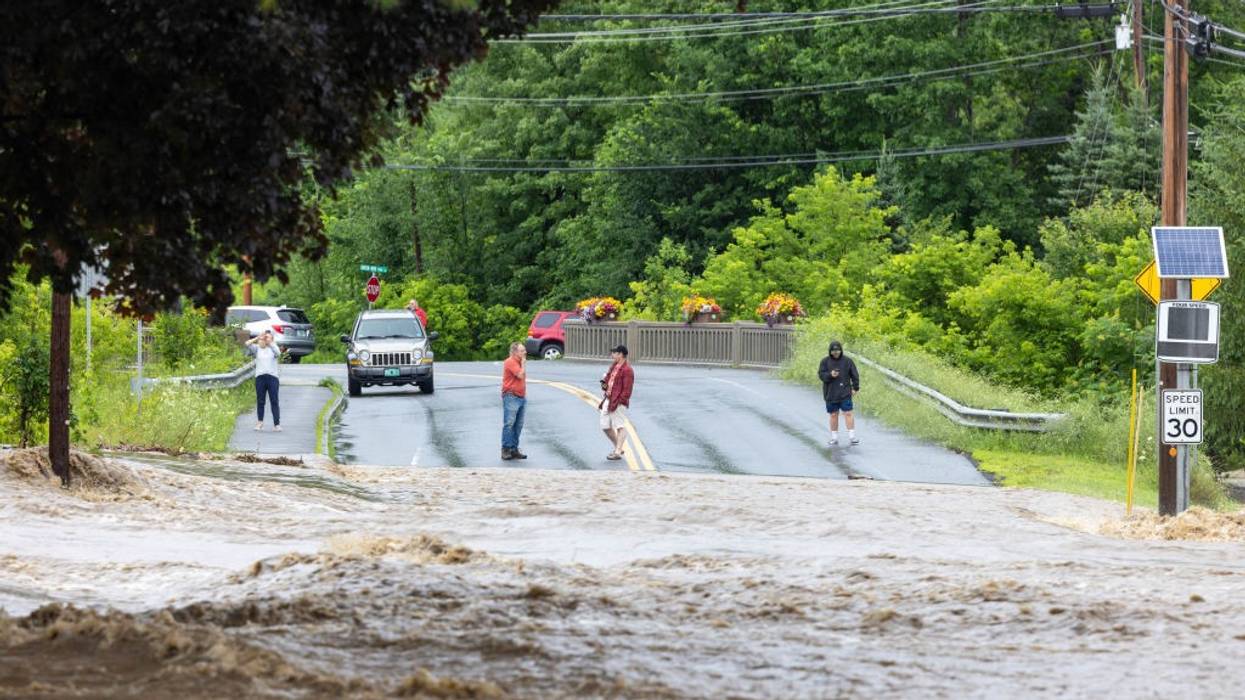
"If you contributed to a mess, you should play a role in cleaning it up," said one supporter of a bill that could be a model for other states to follow.
This week, Vermont became the nation's first state to pass legislation requiring fossil fuel giants to pay for the damage and disruption caused by their planet-warming products, offering a model for others to follow.
While it remains likely Republican Gov. Phil Scott will veto the bill passed by the state Senate in March and the House on Monday, the legislation—now heading for his desk—was celebrated as a blueprint for others to imitate.
As Vermont Public reported:
Modeled after the federal Superfund program, the policy would require companies like ExxonMobil Corporation and Shell to pay Vermont a share of what climate change has cost the state in recent decades. Vermont would use those payments to establish a program to fund recovery from climate-fueled disasters and work to adapt to the state’s already-changed climate.
Vermont could become the first state in the country to enact such legislation. New York, California, Massachusetts and Maryland are all considering similar bills, as is Congress.
The fossil fuel industry has opposed the measure and vowed legal action if it becomes law. In March, the American Petroleum Institute (API), which represents oil and gas companies, called the legislation "bad policy" and argued that it "may be unconstitutional" for holding corporations responsible for what society at large has done.
Evidence has shown, however, that the fossil fuel industry knew about the climate impacts of burning coal, oil, and gas for decades but hid those understandings from the public as it fought efforts to curb emissions or mitigate the damage being done.
"If you contributed to a mess, you should play a role in cleaning it up," Elena Mihaly, vice-president of the Conservation Law Foundation's Vermont chapter and a supporter of the bill, told The Guardian.
Like many other states, Vermont has suffered expensive damage from climate-related weather events in recent years—costs that proponents of the bill say should not be shouldered by the state alone when it's so clear the fossil fuel industry's role in creating the current crisis.
"You see towns across the state underwater, and communities and businesses financially devastated. The reality of the climate crisis just really comes crashing home," Ben Edgerly Walsh, climate and energy program director for the Vermont Public Interest Research Group, told NBC News following passage in the House. "These are facts that we are dealing with in real-time that we need the financial resources to deal with."
If Scott vetoes the bill, the state House and Senate lawmakers would have to muster a two-thirds majority to override his rejection.

"Without robust cuts to fossil fuels, programs like these will only expand exponentially," said one writer.
An entry in the Federal Register on Monday explicitly notes that new rules pertaining to government disaster assistance have been finalized due to the climate crisis, with the Federal Emergency Management Agency expecting to increase its costs by $512 million per year implementing the policies.
FEMA said it is overhauling its disaster aid rules after outcry from survivors of hurricanes and other extreme weather disasters, with people who have been forced to rebuild their lives reporting that delays in receiving assistance and bureaucratic red tape have worsened their suffering.
As "extreme weather events are increasing in intensity as well as frequency," said FEMA in the interim final rule published in the Federal Register, the agency is expanding eligibility for assistance and reducing the steps survivors will need to go through to get help.
Sunrise Movement, the national climate action campaign that has pushed the Biden administration to declare a climate emergency and "reform the Federal Emergency Management Agency's approval processes for aid," applauded FEMA's announcement.
"The pressure is working," said the group.
Under the new rule, FEMA will expand access to immediate direct payments of $750, which households can get after evacuating their home in the event of flooding, wildfires, and other climate disasters. The agency said renters and people with low incomes will particularly be helped by the rule.
FEMA is also establishing a Displacement Assistance program to provide more financial aid to people who need to stay in hotels or with friends or family.
Survivors will no longer be required to apply for aid from the Small Business Administration before they can get assistance from FEMA. People who are self-employed and who have work equipment that gets lost or damaged in a climate disaster will be eligible for additional aid for replacements, and people whose homes are damaged will be able to more easily access funding to rebuild.
Homes that previously had structural problems like leaky roofs will now be eligible for repair funds, and FEMA will pay for upgrades to help people with disabilities, such as ramps.
People who miss application deadlines will no longer have to document why they were late, reducing paperwork for people whose daily routines have been upended.
"The regulatory changes in this rule seek to add efficiency in the delivery of assistance to survivors by simplifying processes, removing barriers to entry, and increasing eligibility for certain types of assistance under the program," the published rule reads.
FEMA said that in addition to responding to feedback from survivors, it was making the changes because "climate change has elevated the need for the delivery of efficient disaster services."
"Extreme weather events are increasing in intensity as well as frequency," said FEMA. "Sustained changes in climate have exacerbated the physical risks and threats coastal communities are exposed to every day. As climate change threatens to bring more extreme events like increased floods, sea-level rise, and intensifying droughts and wildfires, [it] is our responsibility to better prepare and support communities, families, and businesses before, during, and after disasters."
As planet-heating fossil fuel emissions persist each year, FEMA is spending more from its disaster fund, according to federal data. From 1992-2004, the agency spent about $5 billion each year to respond to hurricanes and other disasters, but between 2005-21, it spent about $12.5 billion per year.
In 2022, the world's costliest climate disaster of the year happened in the U.S.—Hurricane Ian, which cost about $100 billion in damages.
"The troubling reality" behind the news that FEMA is overhauling its assistance programs, said writer Ryan Meehan, is "that without robust cuts to fossil fuels, programs like these will only expand exponentially."
The fact that the Biden administration is acknowledging that the climate crisis is the reason for the expansion, he pointed out, offers the latest reason for President Joe Biden to strengthen his response to the crisis.
"I'm no expert," said Meehan, "but these seem like the conditions for a climate emergency."
The latest United Nations (UN) analysis of the climate pledges of world governments reveals the commitments are not enough to avert "climate catastrophe," green groups warned on Friday.
UN climate chief Christiana Figueres and German State Secretary Jochen Flasbarth presented in Berlin on Friday their report (pdf) on the effects of 146 participating countries' Intended Nationally Determined Contributions (INDCs)--representing 86 percent of global greenhouse gas emissions--submitted ahead of the UN's upcoming COP21 climate talks in Paris.
"While this round of pledges is a step in the right direction, they only take us from a 4 C catastrophe to a 3 C disaster."
--Tim Gore, Oxfam
Their conclusion: the pledges will not be sufficient "to reverse by 2025 and 2030 the upward trend of global emissions. Furthermore, estimated annual aggregate emission levels resulting from their implementation do not fall within least-cost 2degC scenarios levels."
"The INDCs can limit the forecast temperature rise to around 2.7C by 2100, by no means enough but a lot lower than the estimated four, five, or more degrees of warming projected by many prior to the INDCs," Figueres said.
In fact, if emissions continue unchecked, current trends indicate that the global temperature rise could be as much as 4.5 degrees Celsius by 2100, the UN reported—well above the threshold climate experts say would cause catastrophic floods, droughts, and other extreme weather events.
The report said a 2degC goal is still within reach. However, climate activists warned that meeting such a goal will require much more aggressive action by wealthy nations. Many of these nations have recently been criticized for their lackluster pledges and attempts to evade financial obligations to developing countries.
"We're going to need to see more ambition in Paris," 350.org strategy and communications director Jamie Henn said on Friday. "The targets currently on the table still aren't enough to prevent climate catastrophe. To close the gap, politicians must settle on a clear mechanism to increase ambition, make real financial commitments, and agree to a unifying goal of completely decarbonizing the global economy."
However, the current inadequate pledges are "still enough to signal investors that the age of fossil fuels is over--there's no way to meet these targets, let alone the stronger ones necessary, without a full-scale transition to renewable energy," Henn said.
Tim Gore, head of food and climate policy at humanitarian aid group Oxfam, added, "The UN's verdict reveals that, while the world is progressing, much more needs to be done. While this round of pledges is a step in the right direction, they only take us from a 4 C catastrophe to a 3 C disaster."
"The targets currently on the table still aren't enough to prevent climate catastrophe."
--Jamie Henn, 350
The Least Developed Countries (LDC), a coalition of frontline nations participating in the climate talks, were even more critical of the findings. These findings come just days after preliminary negotiations in Bonn ended without a concrete plan for rich countries to step up their participation.
"Today's analysis shows the urgent need to address the lack of ambition within the INDCs," said LDC chair and Angolan diplomat Giza Gaspar-Martins. "Governments must do more in Paris, but the work does not end there. For the INDCs to succeed, they must be adjusted before 2020 and reviewed in five-year cycles from 2020 to ensure national actions quickly and rapidly progress, or we all face a grim and uncertain future."
Small island nations are particularly vulnerable to rising sea levels, Gaspar-Martins continued. "For 48 of the world's poorest and most vulnerable countries, economic development, regional food security and ecosystems are at risk in this 2C 'safe zone'. So we once again call on the world to grow its ambition for a 1.5C target," he said.
"With the support of good people and the resilience of brave people, it seems like anything can be accomplished. Sustain the Nine."
-- the late Pamela Dashiell, climate justice leader based in New Orleans' Lower Ninth Ward
With the tenth anniversary of Hurricane Katrina around the corner -- August 29th -- I've been thinking about justice. What do environmental justice and climate justice mean to me? Who are my environmental justice and climate justice (s)heroes?
When I think about justice, I think about communities living on the front lines. People living on the Gulf Coast from New Orleans to Miami. People living near industrial facilities -- mines, refineries, and power plants. Too many of these people are sick. They are physically ill with diseases like asthma, COPD, cancer, and reproductive and neurological challenges. As weather patterns drastically change, these sick people are also bearing the brunt of climate disasters.
From those suffering from the recent flooding in Houston, to the farm workers in California's drought-hit Central Valley, to the families still living with the horror of Hurricanes Katrina and Rita -- these people face injustice every day. They live in the shadows of large industries and are excluded from political debates.
These are people who are directly impacted by the horrors of corporate greed and climate change. On top of the life challenges that everyone faces -- finding a decent place to live and putting food on the table -- they also carry the burden of possibly having to evacuate their home and/or a higher incidence of suffering from long-term disease. And they have fewer resources for support.
The odds are against these communities. However, in the wake of disaster and sickness, some leaders rise above the odds.
When I think of climate justice (s)heroes, I think first of a powerful ally I was lucky enough to work with, whom we've now sadly lost: Pam Dashiell. Just after Hurricane Katrina, Pam returned to New Orleans and fought for the right to bring people home -- to have people rebuild in the Lower Ninth Ward, one of the city's hardest hit areas, even though many in power wanted to condemn it.
Pam founded the Lower 9th Ward Center for Sustainable Engagement and Development (CSED), which helped returning residents obtain building materials and trained them to construct more sustainable and energy-efficient houses. Pam's tenacity and influence grew quickly. She was involved in White House meetings about rebuilding the Lower Ninth Ward and collaborated with Brad Pitt on the Make it Right project. Pitt raised funds to build 100 green-certified homes in the Lower Ninth Ward with regular community input.
I met Pam through her work with the Louisiana Bucket Brigade. Pam was uncannily aware of the racial and environmental injustices in the Ninth Ward and dedicated herself to changing them.
Pam passed away in December 2009 at the age of 61. She had a strong impact on her community. Despite the devastation, this woman rose above the destruction and politics and continued to work for justice.
Ahead of the tenth anniversary of Hurricane Katrina, I think about climate justice leaders like Pam, whom I have had the opportunity to meet and stand beside in their struggles—our struggles. Despite their own personal suffering, many of these leaders rose to the occasion, relentlessly driving forward to pursue something bigger, knowing their community deserved better.
They were ordinary people who were able to do something extraordinary. Reflecting on these moments, often filled with sadness, anger, rage, and fear, I remember that to stand in solidarity means to stand strong with climate justice communities. Learning lessons from leaders like Pam reminds me that I have a duty and responsibility to support needy communities.
These communities are on the front lines of climate injustice and should be at the forefront of environmental and social justice movements. When we can support children's freedom to breathe, find renewable jobs for low-income communities, and stop industrial waste from being released into the air, land, and water, then we have started to do our job as a movement.
2015 is on track to be the hottest year in recorded history, and this December, hundreds of world governments will meet in Paris to try to strike a global climate agreement. It will be the biggest gathering since 2009, potentially a big deal for our global movement.
"No matter what happens in the negotiating halls, we must build power to hold them accountable to the principles of justice and science."
In Paris, our governments are supposed to agree on a shared target for climate action based on the national plans they have been putting together all year. However, the numbers just don't add up. Everything being discussed will allow too many communities that have polluted the least to be devastated by floods, rising sea levels, and other disasters.
This has the makings of a global failure of ambition--and at a moment when renewable energy is becoming a revolutionary economic force that could power a just transition away from fossil fuels. Click here to join us in telling world leaders to keep fossil fuels underground and finance a just transition to 100% renewable energy by 2050.
Our movement has grown tremendously--and it shows every time a new leader stands up to declare we must keep fossil fuels under ground, or a university, church or pension fund divests from fossil fuels. The problem is the power of the fossil fuel industry.
The Paris negotiations could signal that world governments are serious about keeping fossil fuels in the ground. If they fail, it will embolden the fossil fuel industry and expose more communities to toxic extraction and climate disasters.
The solutions are obvious: we need to stop digging up and burning fossil fuels, start building renewable energy everywhere we can, and ensure communities on the front lines of climate change have the resources they need to respond to the crisis.
This could be a turning point--if we push for it. Click here to join our global call for action to world governments, telling them to commit to keeping at least 80% of fossil fuels underground and financing a just transition to 100% renewable energy by 2050.
The time for feeling powerless in the face of climate chaos is over. No matter what happens in the negotiating halls, we must build power to hold them accountable to the principles of justice and science.
After many months of consultation with our global network, here is the plan for what I call "The Road Through Paris": the plan to grow our movement and hold world leaders accountable to the action we need.
"The solutions are obvious: we need to stop digging up and burning fossil fuels, start building renewable energy everywhere we can, and make sure communities on the front lines of climate change have the resources they need to respond to the crisis."
First, we will launch a global framework in September to grow the movement before and after the Paris talks. On September 10th, Bill McKibben, Naomi Klein, and others will be joined by global movement leaders in New York City to lay out our vision for the road ahead. Then, on September 26th, communities across the globe will hold workshops to plan for the coming months of action. After that, we'll see several months of escalating activity as communities drive the message home that we can't wait for action.
The talks in Paris start on November 30th and run for 2 weeks. But before the talks start, the world will stand together in a weekend of global action, paired with an enormous march in the streets of Paris. During the talks, 350's team on the ground will do their best to help keep you in the loop on the most important developments. And when the talks wrap up, we're planning a big action in Paris on December 12th to ensure the people--not the politicians--have the last word.
But most importantly, we won't stop there. Please mark your calendars for April 2016. That's when we will mobilize in a global wave of action unlike any we've seen before. Not one big march in one city, not a scattering of local actions--but rather a wave of historic national and continent-wide mobilizations targeting the fossil fuel projects that must be kept in the ground and backing the energy solutions that will take their place.
In the 6 years 350.org has been around, this is the most ambitious plan we've ever proposed. But ambition is called for, along with courage, faith in each other, and the readiness to respond when disaster strikes, plans change, or politicians fail to lead.
We are nearer than ever to the changes we've been fighting to see. I hope to see them through with you in the coming months.