

SUBSCRIBE TO OUR FREE NEWSLETTER
Daily news & progressive opinion—funded by the people, not the corporations—delivered straight to your inbox.
5
#000000
#FFFFFF
To donate by check, phone, or other method, see our More Ways to Give page.
Daily news & progressive opinion—funded by the people, not the corporations—delivered straight to your inbox.
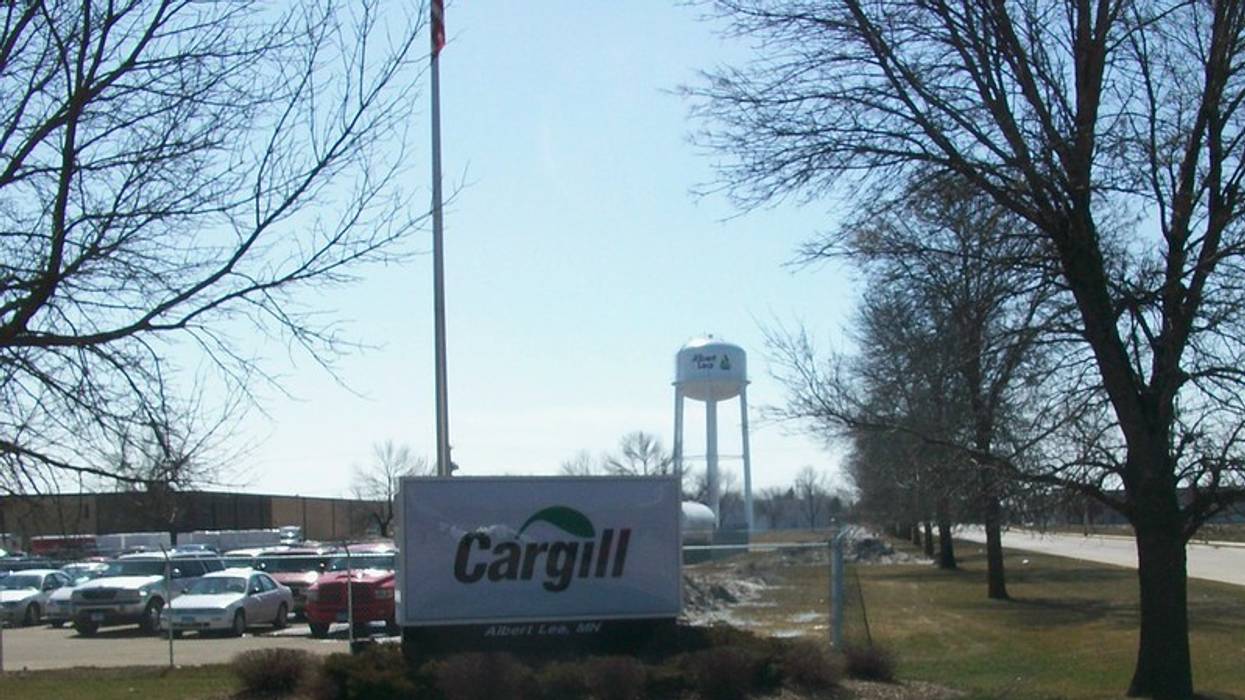
"We knew that the company didn't care, but we expected more from the family," one campaigner said.
The Cargill-MacMillan family refused to meet with a young Indigenous advocate who had traveled 4,000 miles to hand-deliver a letter calling on them to stop deforestation in the Brazilian Amazon and Cerrado grassland.
Security guards denied entry to 21-year-old Beka Saw Munduruku when she arrived at the driveway of the family's offices in Wayzata, Minnesota, on Thursday. The family had not responded to requests to arrange a meeting ahead of time.
"It is appalling that an emissary who traveled 4,000 miles to deliver an urgent message from her people would be treated with such dismissal and disrespect," Amazon Watch program director Christian Poirier said in a statement.
"The Cargill-MacMillan family has demonstrated that they are unconcerned with the impacts of the company's actions on those victimized by them."
Cargill is the world's largest agribusiness company, according to advocacy group Stand.earth. It is also family-owned, with around 88% of it controlled by approximately 20 people. The Cargill-MacMillans have the highest concentration of billionaires of any family worldwide and are the fourth-richest family in the U.S. While the company has made commitments to end deforestation and human rights abuses in its supply chain, Munduruku said that this hasn't been the experience of her community in the state of Pará in the Brazilian Amazon.
"In every region where Cargill operates, you are destroying the environment and driving out or threatening the communities who live there," Munduruku wrote in the letter she attempted to deliver Thursday.
In her letter, Munduruku called out a specific project of Cargill's: the 1,000-kilometer Ferrogrão railway that would cut a swath through the Amazon to transport soy grown in the Cerrado.
"Last year the forests and savannas of the Cerrado were destroyed at a rate of 8,000 acres a day," Munduruku wrote in her letter. "This is an area of destruction the size of your hometown of Minneapolis every five days."
Munduruku, who is a member of the Munduruku community and lives on Sawré Muybu Indigenous territory, is the first Indigenous Brazilian leader to visit Cargill on its home turf to protest its activities.
By refusing to see her, Stand.earth campaign director Mathew Jacobson said, "the Cargill-MacMillan family has demonstrated that they are unconcerned with the impacts of the company's actions on those victimized by them. And they are dismissive of all attempts to bring it to their attention."
"We knew that the company didn't care, but we expected more from the family," Jacobson continued. "It's high time the family intervenes. We hope that the family will choose to be remembered as one that made the world a better place, not a worse one."

In every region where Cargill operates, you are destroying the environment and driving out or threatening the communities who live there.
The following is a letter to the Cargill-MacMillan family.
My name is Beka. I am 21 years old. I live on Sawré Muybu Indigenous territory in the Amazon forest in the state of Pará, Brazil.
I have come to the United States to ask the Cargill-MacMillan family to stop the destruction of our land.
My people are called the Munduruku, which means “the red ants.” We are 13,000 strong, divided into 160 communities. Life is simple here. We plant, we harvest, we create. We learn by watching our elders. This is how we learn the riches of our culture: our stories, our forests, our animals.
We defend our lands not just for our people but for all of humanity. Your company is harming our collective future.
We have lived here in the heart of the Amazon for over 4,000 years. But now our world hangs by a thread.
Modern science tells us that our forests stabilize the climate and shape the weather. My people have always known this. Science tells us the Amazon is nearing a tipping point, a point of no return. My people already see and suffer from these changes.
But this is not our biggest problem.
There is illegal mining, there is illegal logging. There is the theft of our land and our trees and the damming of rivers. There is the murder of those who defend the land and the brutal intimidation of our leaders. And all of these problems grow because companies like Cargill covet our land and subject it to so-called development.
We have been fighting against Cargill for a long time. It has been devastating.
Your executives tell us that Cargill is a good company, that they have pledged to end the destruction of nature. But this is not our experience.
In every region where Cargill operates, you are destroying the environment and driving out or threatening the communities who live there.
Despite your many commitments to end deforestation, the destruction has increased. Last year alone an area of tropical forest the size of Switzerland was destroyed.
And while your company publicly promises to end these practices, you only expand further into our lands.
The worst example of Cargill’s unceasing expansion is the Ferrogrão. The Ferrogrão is a 1,000-kilometer railway that Cargill wishes to cut through our lands to transport soy. Soy produced from the destruction of the Cerrado—a critical ecosystem south of the Amazon.
Last year the forests and savannas of the Cerrado were destroyed at a rate of 8,000 acres a day. This is an area of destruction the size of your hometown of Minneapolis every five days.
Our relatives in the Cerrado are the target of constant threats from ranchers and land-grabbers. In addition to this, they are suffering from pesticides from the crops and the contamination of their rivers and streams.
The Ferrogrão will impact16 Indigenous territories including those of the Munduruku, Panará, Kayapó, and our relatives of the Xingu Indigenous Land. This railway will destroy 2,000 square kilometers of the Amazon forests we live in, including Munduruku lands that are currently federally protected Indigenous Territory. It will open our lands to more land grabbers and illegal miners and loggers that already invade and burn our lands and murder our people.
The Brazilian Supreme Court has ruled that the Ferrogrão is illegal, but economic interests like Cargill want to change the laws to allow for construction.
Cargill has said that anyone who opposes the Ferrogrão is “irresponsible.” We are fighting for our lives. For our land. For our cultures. For our children and grandchildren. This is not irresponsible.
What is irresponsible is for your company to make promises to end deforestation while continuing to expand into our territories and giving license to others to do the same.
You have the power to stop this.
You must cease the destruction of our forests. You must stop expanding into our territory. You must stop selling commodities from lands stolen from Indigenous peoples. You must stop the murder of the defenders of these lands.
Listen to the guardians of the Amazon and cease your destruction. We defend our lands not just for our people but for all of humanity. Your company is harming our collective future.
We wish to leave our children and grandchildren the life our ancestors gave to us. I am Munduruku, and I will never give up this fight.

It’s time for the family to step up and show leadership: Honor Cargill’s commitment to end human rights abuses and the destruction of nature throughout its entire supply chain.
Twice in the last few weeks, people in the U.S. could buy a lottery ticket for a jackpot in excess of $1 billion. But the Cargill-MacMillan family doesn’t need to play, their company just earned them a cool $1 billion—on top of the estimated $65 billion they already have—and who knows how big the jackpot will be next year.
In early August, Cargill, the largest privately owned company in America, and the largest agribusiness company in the world, announced record revenues of $177 billion. The Cargill-MacMillan Family, whose ranks include more billionaires than any other family in the world, get to split a chunk of the profits. While most of the world wrestles with pandemic recovery, supply chain disruptions, food price increases, and the increasing impacts of climate change, Cargill has posted 10-digit profits three years in a row.
The Cargill family’s windfall comes at a price—for everyone else. The company’s reputation for the destruction of nature, human rights abuses, and corporate malfeasance is notorious—even as the dearth of environmental and social governance boosts the company’s robust bottom line.
Put simply, it is outrageous that in 2023 one of the richest families in America is still profiting from African children laboring on plantations.
Cargill has committed numerous times to address human rights abuses and the destruction of nature in its supply chain, but it has not followed through on these commitments:
Not one of these commitments have been fulfilled. In fact, the problems have gotten worse.
Industrial agriculture is the single largest driver of deforestation and the destruction of nature, and Cargill is the single largest driver of industrial agriculture. In the years since committing to end deforestation by 2020, global tropical deforestation actually increased 40%. An area of 81 million acres of primary tropical forest has been lost, about 1.5 times the size of Cargill’s home state of Minnesota.
In 2018, the Brazilian government levied a $6.5 million fine on Cargill and four other companies for their role in illegal deforestation. The following year, Cargill publicly abandoned its goal and, subsequently, offered a new commitment: to end deforestation by 2030. Another decade of forest destruction is probably longer than the planet can stand, given current rates—even if the company kept its commitment.
According to the peer-reviewed International Journal of Management Studies and Social Science Research, “Cargill continues to adjust its goals for the future based on its inability to obtain its sustainability objectives in a timely manner.”
The stage continues to be set for progress in public commitments addressing some of the most critical issues in our time—or any time.
It has been demonstrated time and again that Latin America contains enough degraded and deforested lands—more than 1.6 billion acres, or about two-thirds of the size of the entire United States including Alaska—to dramatically expand agricultural production without destroying forests or other intact ecosystems.
Cargill’s human rights record is no better. In Côte d’Ivoire, where Cargill is the largest cocoa exporter, the prevalence of child labor in cocoa production has increased 14% since the company made its commitments. Even the prevalence of hazardous child labor has increased 13% in this timeframe.
The U.S. government points out that 1.56 million children work on cacao farms in Côte d’Ivoire and Ghana. According to International Rights Advocates, overwhelming evidence shows that forced child labor is still being widely used in the cocoa industry, including by Cargill’s suppliers.
Put simply, it is outrageous that in 2023 one of the richest families in America is still profiting from African children laboring on plantations.
For years the Cargill-MacMillan family has delegated the management of the company. They have trusted Cargill’s executives to conduct business ethically, to follow up on its commitments, and to report accurately on this critically important work. That trust was not rewarded. But the reward for not holding the executives accountable is the equivalent of a billion-dollar lottery ticket. Annually.
We are not asking for anything other than what the company has already promised. Cargill is well-situated to be a leader on these issues rather than a laggard. The stage continues to be set for progress in public commitments addressing some of the most critical issues in our time—or any time.
It’s time for the family to step up and show leadership: Honor Cargill’s commitment to end human rights abuses and the destruction of nature throughout its entire supply chain.
It is time for the Cargill-MacMillans to take these matters into their hands and steer the company into the future.
Nestle, the world's largest food company, is known for scandal. It earned the nickname "babykiller" in the 1970s for causing infant illness and death in low-income communities by promoting bottle feeding of its infant formula and discouraging breastfeeding. In recent years, similar charges have been made against the company for contributing to soaring rates of obesity and diabetes in poor communities by targeting them for sales of ultra-processed junk foods. But there's another scandal of equally grim proportions that is contained within the company's accounting sheets.
On April 23, 2020, with the world in the grips of the Covid-19 pandemic and the FAO warning of a looming global food crisis, Nestle's shareholders and executives awarded themselves a record dividend payout of US$8 billion. In a time of a global health and food crisis, this handout is worth more than the entire annual budget for the UN's World Food Programme and would be enough to cover the average annual expenditures on health care for more than 100 million people in Africa.
Nestle's massive 2020 dividend payment was, in fact, just a fraction higher than the previous year's. Such large payouts for shareholders and executives is standard practice for the company-- as it is for all the big transnational food and agribusiness companies, even at times of global health catastrophes. Other notable shareholder dividends, announced in April this year, include a US$2.8 billion payout by the world's largest seed and agrochemical company Bayer AG, a US$600 million payout by the world's largest poultry producer Tyson and a US$500 million payout by the world's largest pork company, the WH Group. Cargill, the word's largest agribusiness company, is on track to top last year's record payout of US$640 million, which it makes to just a small number of Cargill family members. Increased e-commerce, particularly of food items, during the Covid-19 crisis increased the net worth of Jeff Bezos, the founder of e-commerce giant Amazon, by a shocking US$24 billion. It is even a rich time for the shareholders of smaller players in the industry, like the oil palm and rubber plantation company SOCFIN. The two French and Belgian families that essentially own the company, received EUR20 million (around US$22.5 million) in dividends and remunerations from SOCFIN's group operations while communities where it operates in Nigeria, Ghana and Cameroon cannot access clean or safe water.
All this greed at the top leaves devastation and little to trickle down to the bottom, where its consequences are deadly.
A powerful industry in the midst of a "perfect storm"
The labourers in the corporate food system, those who are quite literally dying on the frontlines to sustain the lifestyles of shareholders and executives, are not faring well. The supply chains of the big food companies, which have always been dangerous places for workers, have now become hotspots for Covid-19 infections and transmission. Across the world, there have been deadly outbreaks in meat plants, port facilities, warehouses, fish canneries, oil palm plantations, fruit farms, supermarkets and all other points along the chains that these companies command-- with the exception of their office towers, of course.
The big meat companies have perhaps been the worst offenders. With the Covid-19 pandemic in full bloom, they aggressively sped up their assembly lines to ramp up exports to China, where meat prices are unusually high. This decision was taken in full knowledge that these increases in processing made social distancing impossible and put their workers and the surrounding communities at risk of mass virus outbreaks. By the end of May, the results in the biggest meat exporting nations were horrific: hundreds of migrant meat plant workers sick with Covid-19 in Germany and Spain, thousands of cases of workers ill with Covid-19 in Brazil's meat packing industry, and over 20,000 workers infected with Covid-19 in US meat packing plants, with at least 70 deaths. Meanwhile, hundreds of thousands of animals are being culled, under atrocious conditions because these massive plants have had to shut production down, and the small abattoirs that could have taken in the livestock, have long since been forced out of business.
The carnage in Latin America, the new epicentre of the Covid-19 pandemic, has been particularly severe. With the global economy at a near standstill, agribusiness in the region has continued functioning with total impunity, deepening its impact and harm on communities and ecosystems. In almost all the countries in the region, agro-industrial activities have been exempted from quarantine, as they are considered "essential", even though their focus is on exports, not on providing food to local people.
For example, Ecuador's government issued a state of emergency decree paralysing the country, but ensuring that "all export chains, agricultural industry, livestock [industry] ... will continue to function." As a result, workers in the banana and palm plantations, seafood factories, flower farms, and many more, were forced to continue working as if the country was not under a health emergency, thereby exposing themselves to the risk of contracting Covid-19.
Similarly, the Bolsonaro government in Brazil declared that the production, transport and general logistics of export food chains were essential activities that must continue functioning without restrictions. In this context, exports of meat, soybeans and other commodities are surging - as are the numbers of people exposed to Covid-19 along the export chains. In the Brazilian state of Rio Grande do Sul, a meat export hub, more than a quarter of the confirmed novel coronavirus cases in May were among meat plant workers. Labour prosecutors are now fighting to close infested plants and force companies to implement even basic measures to protect and care for their workers during the pandemic.
Brazil's soybean exports, which are up 38 percent from last year, are another potential hotspot for Covid-19, especially at the ports where trucks and workers are constantly circulating. When the local government of the port town of Canarana in Mato Grosso tried to take action by issuing a decree to pause the export of soybeans and other grains in the absence of proper health and safety conditions, the agribusiness giants Louis Dreyfus and Cargill intervened and were able to reverse the decree within a few days. Canarana is now, in early June, seeing a surge in Covid-19 infections.
All this export frenzy has a tremendous impact on the ground. According to Deter, the real-time detection system of the Brazilian national space research institute, deforestation of the Amazon in Brazil has increased by more than 50 percent in these first three months of 2020 - at the height of the coronavirus pandemic, in comparison to the previous year's first quarter. Taking advantage of the pandemic smoke screen, with fewer inspection agents able to carry out inspection, agribusiness and mining operations are advancing on protected areas and indigenous territories, increasing the contagion of Covid-19 in indigenous populations. Many observers fear a genocide as a result of these reckless advances of agribusiness and mining operations during the pandemic.
Such brazen corporate profiteering is creating a legitimacy crisis for the corporate food system.Amidst the national quarantine in Argentina, soybean exports and forest clearings have not ceased either. In one of the most preserved forests in the entire Gran Chaco ecosystem, an area of 8,000 hectares is being prospected for clearing. Furthermore, based on monitoring with satellite imagery, Greenpeace denounced that almost 10,000 hectares were cleared in the North of the country since the lockdown began.
Such brazen corporate profiteering is creating a legitimacy crisis for the corporate food system. Although the lockdowns make it difficult to measure, the ground appears to be shifting: we see workers in the food industry speaking out, organising and getting more support and solidarity from others; we see increasing interest among consumers in healthy, local foods and the well-being of food producers and farmers; and there's been an undeniable boom in community-oriented efforts to get food to where it's needed through solidarity, mutual aid, volunteer work and cooperatives. There's even been some victories at the policy level, such as the German government's recent decision to ban sub-contracted labour in meat plants and another to prevent companies taking public aid from paying out dividends.
But this is a powerful industry, with ample amounts of cash and political connections at its disposal, and there is no doubt that it will do everything it can to use this moment of confusion and lockdowns to advance its interests. We have already seen this with the executive order that US President Trump issued at the behest of JBS, Tyson, Cargill and other meat corporations to keep their Covid-infested plants running. We have also seen it in Brazil where the Bolsonaro government approved a record 96 new pesticides in the first months of 2020, more than all the approvals for 2019. The same government deliberately used the cover of the pandemic to try and pass a law that would legalise land grabs and deforestation covering 80 million hectares in the Amazon and Cerrado regions. The pandemic has also been used as an opportunity to rapidly expand e-commerce in food retail and push ahead with Genetically Modified Organisms (GMOs) in Ethiopia and in Bolivia, where the de-facto government claimed that the Covid-19 health emergency made GM seeds a necessity for the country.
Agribusiness as big winner from new wave of structural adjustment
Worse is yet to come. Many governments are employing global consulting firms, like McKinsey, to shape their plans to open their economies back up. These secretive firms which are deeply connected to the world's largest corporations, including those from the food and agribusiness sector, will no doubt influence who emerges as winners and losers from the pandemic responses-- workers or bosses, farmers' markets or e-commerce giants, fisherfolk or the trawling industry.
We are also seeing the IMF and World Bank use their Covid-19 emergency funds to push countries into implementing agribusiness-friendly reforms. In the Ukraine, for example, a law privatising farmland was implemented despite the opposition of a majority of Ukrainians. In the coming months, such pressures will escalate. Dozens of countries are heading for defaults, and those debts will have to be negotiated not only with the IMF and bilateral lenders, but also with private creditors who have already indicated that they are not interested in even delaying debt and interest payments during this health crisis. A new wave of structural adjustment is on the way that will focus heavily on increasing foreign agribusiness investment and exports of agricultural commodities to pay off the vultures.
This time, however, governments are going to find it incredibly difficult to impose a new round of agro-imperialism on populations that have already had more than enough of it, and that are increasingly hungering for the alternatives that social movements have been advancing for decades.
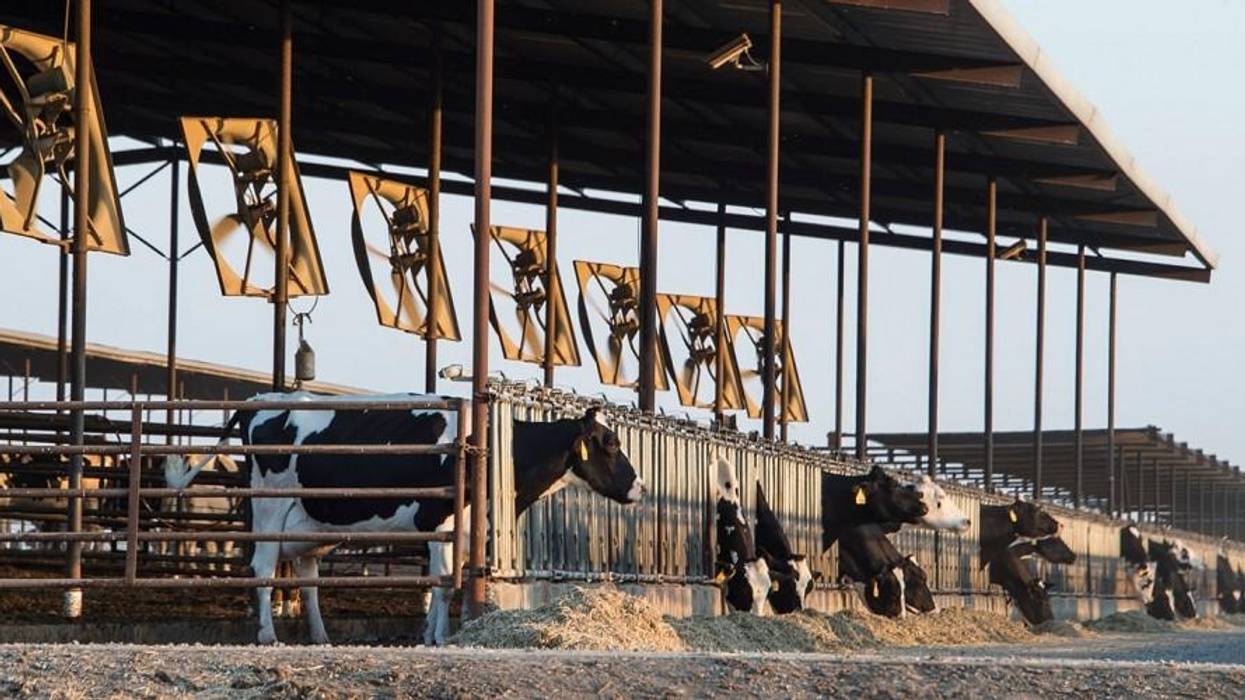
This week's UN Climate Action Summit will be tricky for agribusiness CEOs. With forest fires raging in the Amazon, a damning new report about the food system by the International Panel on Climate Change (IPCC), and millions of young people out in streets clamouring to shut down fossil fuels and factory farming, it will be hard for the world's largest food and agribusiness companies to get away with another round of voluntary pledges to reduce their gigantic emissions.
At the last UN summit on climate, held five years ago in New York, agribusiness dazzled everyone with two initiatives on deforestation and agriculture, both of which are now in shambles.
Their initiative on deforestation, a New York Declaration on Forests, championed by the world's largest buyer of palm oil, Unilever, was supposed to put a major dent in tropical deforestation. Instead, rates of tree cover loss have soared, the Amazon is in flames, and those trying to defend forests from agribusiness companies are being killed in record numbers. Now we are learning that the Brazilian Cerrado, a biodiversity hot spot on par with the Amazon and one of the main frontiers for agribusiness expansion, is also burning at a record rate. Agribusiness is responsible, but so are the big global financial firms that having been buying up vast swaths of Cerrado lands and converting them to mega-farms, such as the Swedish national pension fund, Blackstone and the Harvard University endowment.
The top 20 meat and dairy companies emit more greenhouse gases than Germany, Europe's biggest climate polluter.
The other initiative at the last summit, a Global Alliance for Climate Smart Agriculture, was the handiwork of Yara, the world's top nitrogen fertiliser producer and one of the planet's worst emitters of greenhouse gases. It was the fertiliser industry's PR response to the growing movement for a real climate solution based on fertiliser-free agroecological farming. The trick worked, for a while. Global production of nitrogen fertiliser rose steadily over the next few years. But the most recent IPCC report pointed to nitrogen fertilisers as one of the most dangerous and underestimated contributors to the climate crisis, and new research is showing that the industry has vastly underestimated its own emissions.
Right now, climate activists are mobilising in Germany for the first mass climate action against Yara and the fertiliser industry. They are targeting Yara because of its multi-million euro lobbying efforts to green-wash industrial agriculture, which they say is one of the main drivers of the climate breakdown.
The big meat and dairy companies are also in trouble. These companies, such as Tyson, Nestle and Cargill, have emissions levels that approximate their counterparts in the fossil fuel industry. The top 20 meat and dairy companies emit more greenhouse gases than Germany, Europe's biggest climate polluter. But none of these companies have credible action plans to reduce their emissions and only 4 of the top 35 companies are even reporting their emissions! Instead of taking meaningful action to cut back on production, several companies have been making a lot of noise about their minor investments in plant-based alternatives. People are not being fooled. On the eve of last week's global climate strike, more than 200 representatives of Indigenous Peoples, workers, academia, environmental and human rights groups adopted a landmark declaration that singled out the "fossil fuel industry and large-scale agribusiness" for "being at the core of the destruction of our climate".
Big food and agribusiness companies are desperate to portray themselves as part of the solution. But there is no way to reconcile what's needed to heal our planet with their unflinching commitment to growth. We cannot address the climate crisis if these companies are allowed to keep on sourcing, processing and selling ever more agricultural commodities, be it meat, milk, palm oil or soybeans. Their massive supply chains are what drives the food system's catastrophic emissions--which the IPCC now says stands at up to 37% of global human-made GHG emissions.
Yet, if we look beyond the public relations of Big Food and Ag we will see that there are plenty of real solutions that can feed the planet perfectly well. All kinds of alternatives are flourishing, especially in the global South, where small farmers and local food systems still supply up to 80% of the food people eat. The industrial food system only exists today because of the support it gets from governments which march in lockstep with corporate lobbyists. Public subsidies, trade deals, tax breaks and corporate-friendly regulations are all designed to prop up the big food and agribusiness companies--and facilitate the growing criminalisation of affected communities, land defenders and seed savers resisting these corporations on the ground. We urgently need to send agribusiness out of the room and demand that governments shift support to small food producers and local markets which would actually save us from planetary collapse.
Back in March, we tried to imagine through a short video what it would be like if the President got a wake-up call about his proposed food safety budget cuts and how they might affect one his favorite meals: a hamburger. On second thought, make that a turkey burger. Cargill Value Added Meats Retail, a subsidiary of Cargill Meat Solutions Corporation, just recalled 36 MILLION POUNDS of ground turkey products because of possible Salmonella contamination. This is exactly why it's not a good idea to cut critical food and safety protections from the federal budget.
Cargill, the third largest turkey processor in the United States, is recalling the turkey products because of a strain of bacteria called Salmonella Heidelberg, which has sickened 76 consumers and caused one death. The fact that Salmonella Heidelberg is antibiotic-resistant certainly reinforces the need for ending the overuse of antibiotics in livestock production.
Tracing the contamination back to its source -- no easy task when you're talking about 36 million pounds of processed food distributed to 26 states -- has been the task of the Centers for Disease Control and Prevention in conjunction with USDA and state health agencies. In case you're wondering how long it takes to figure out where food contamination originated, in this case it took five months since the first reported case of food illness was reported until they linked the public health threat to Cargill's ground turkey.
Food recalls like this one have become typical in an age of consolidation in agriculture and food -- when 58 percent of the poultry market is controlled by the top four firms. Big firms like Cargill brag about their market share in their quarterly reports, but this type of marketplace domination is putting consumers at risk and farmers out of business. There are hidden costs to doing business this big, and one of them is public health. And, we can only rely so much on our federal agencies to provide food safety if their budgets are being cut. They are strained now; what will their challenges be like next year if they have less funding and more responsibility?
This is the reason our Food & Water Watch organizers are currently out on the road, covering 20 states in 34 days, and talking to people about the Farm Bill. If we want to fix this broken food system -- one that is controlled by food processing middle men, not farmers -- we need to make better farm and food policy, and to fund critical programs that protect consumers.
As you sit down to dinner tonight, think about where you want your food to come from: a grower in your region of the country or a processing plant on the other side of it that's handling millions of pounds of your dinner.
We'd love to know what you think about how this food recall relates to our efforts to improve our food system through the Farm Bill in 2012. Please go to our Facebook page and share your thoughts!