SUBSCRIBE TO OUR FREE NEWSLETTER
Daily news & progressive opinion—funded by the people, not the corporations—delivered straight to your inbox.
5
#000000
#FFFFFF
To donate by check, phone, or other method, see our More Ways to Give page.


Daily news & progressive opinion—funded by the people, not the corporations—delivered straight to your inbox.
His new dietary guidelines promoting saturated fats are a recipe for disaster, and a heart attack.
Fat is now phat, at least according to Robert F. Kennedy Jr.
When President Donald Trump’s Health and Human Services (HHS) secretary unveiled new federal dietary guidelines this January, he declared: “We are ending the war on saturated fats.” Seconding Kennedy was Food and Drug Administration Commissioner Marty Makary, who promised that children and schools will no longer need to “tiptoe” around fat.
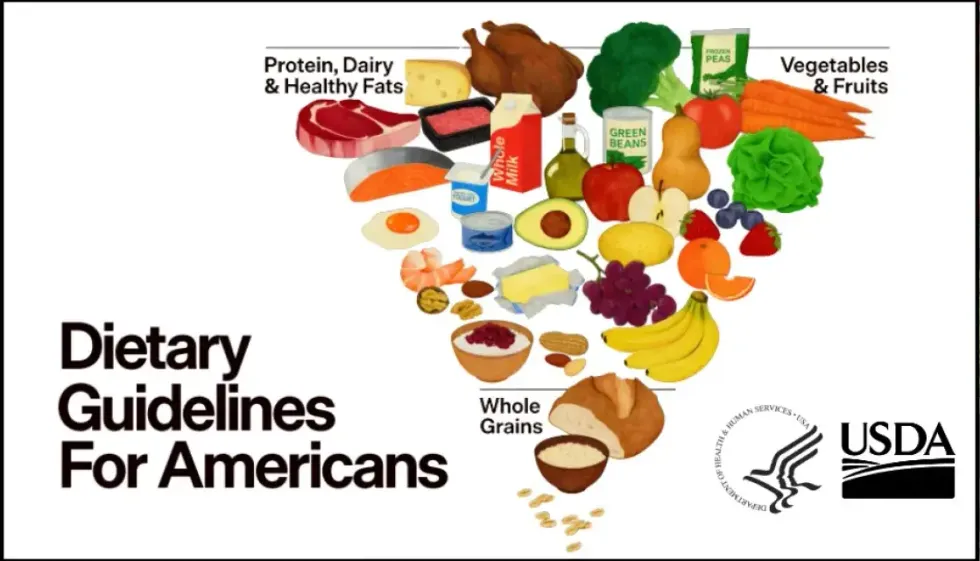
Kennedy’s exaltation of fat comes complete with a new upside-down guidelines pyramid where a thick cut of steak and a wedge of cheese share top billing with fruit and vegetables. This prime placement of a prime cut is the strongest endorsement for consuming red meat since the government first issued dietary guidelines in 1980.
The endorsement reverses decades of advisories, which the US Department of Agriculture (USDA) and HHS jointly issue every five years, to limit red meat consumption issued under both Democratic and Republican administrations given the strong evidence that eating less of it lowers the risk of cardiovascular disease. Multiple studies over the last decade have linked red and processed meats not only to cardiovascular disease, but also to colon polyps, colorectal cancer, diabetes, diverticulosis, pneumonia, and even premature death.
Given the scientific evidence, we should intensify the war against saturated fats, not call it off.
The new dietary guidelines even contradict those issued under the first Trump administration just five years ago, warning Americans not to eat too much saturated fat. “There is little room,” those guidelines stated, “to include additional saturated fat in a healthy dietary pattern.” A significant percentage of saturated fat comes from red meat. Americans, who account for only 4% of the people on the planet, consume 21% of the world’s beef.
Kennedy’s fatmania even extends to beef tallow and butter, which the new pyramid identifies—along with olive oil—as “healthy fats” for cooking. In fact, beef tallow is 50% saturated fat. Butter is nearly 70%. Olive oil, meanwhile, is just 14% saturated fat and is, indeed, healthy.
This rendering of recommended fats muddles a message that could have been stunningly refreshing, given the Trump administration’s penchant for meddling with science. Some of the new pyramid’s recommendations were applauded by mainstream health advocacy groups, particularly one advising Americans to consume no more than 10 grams of added sugar per meal and others, as Kennedy pointed out, calling for people to “prioritize whole, nutrient-dense foods—protein, dairy, vegetables, fruits, healthy fats, and whole grains—and dramatically reduce highly processed foods.”
But such wholesomeness could easily be wasted if Americans increase their meat consumption. That would not, as Kennedy professes, make America healthy again. Given the scientific evidence, we should intensify the war against saturated fats, not call it off.
The 420-page report by the Dietary Guidelines Advisory Committee prepared in 2024 for the USDA and HHS found that more than 80% of Americans consume more than the recommended daily limit of saturated fat, which is about 20 grams—10% of a 2,000 calorie-per-day diet. The report concluded that replacing butter with plant-based oils and spreads higher in unsaturated fat is associated with lower cardiovascular disease risk and eating plant-based foods instead of meat is “associated with favorable cardiovascular outcomes.”
A March 2025 peer-reviewed study in JAMA Internal Medicine came to a similar conclusion. It found that eating more butter was associated with a higher risk of cardiovascular disease and cancer. Using plant-based oils instead of butter, the researcher found, was associated with a 17% lower risk of death. Such a reduction in mortality, according to study co-author Dr. Daniel Wang, means “a substantial number of deaths from cancer or from other chronic diseases … could be prevented” by replacing butter with such plant-based oils as soybean or olive oil.
What does a “substantial” number of deaths look like? Heart disease is the No. 1 killer in the United States, and heart disease and stroke kill more people than all cancers and accidents combined. The annual number of American deaths tied to cardiovascular disease is creeping toward the million mark. According to the American Heart Association (AHA), it killed more than 940,000 people in 2022.
Over the next 25 years, AHA projects that the incidence of high blood pressure among adults will increase from 50% today to 61%, obesity rates will jump from 43% to 60% and diabetes will afflict nearly 27% of Americans compared to 16% today. Reducing mortality by 17% for those and other related health problems would go a long way to make Americans healthier.
A good place to begin reducing food-related mortality is by cutting highly processed foods out of the American diet. That would require a drastic change in eating habits for a lot of people. A July 2022 study found that nearly 60% of calories in the average American diet comes from ultra-processed foods, which have been linked to cancer, cardiovascular disease, depression, diabetes, and obesity.
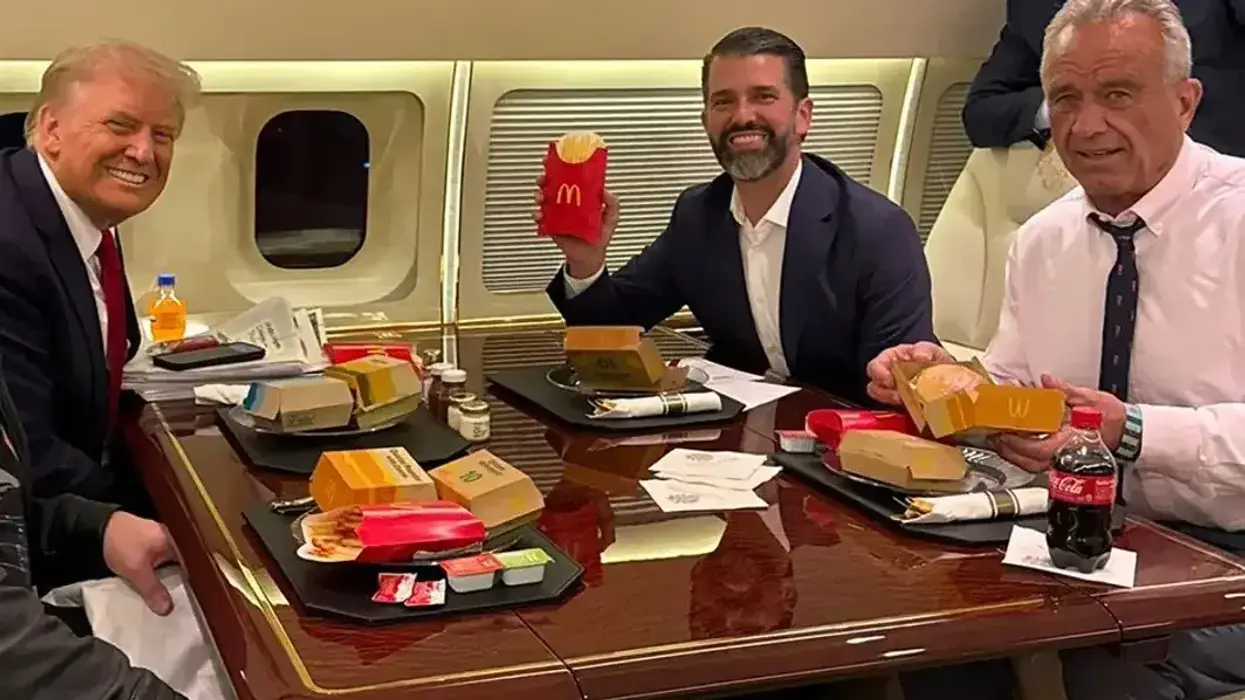
One of the main culprits is fast food. A January 2025 study of the six most popular fast-food chains in the country—Chick-fil-A, Domino’s Pizza, McDonald’s, Starbucks, Subway and Taco Bell—found that 85% of their menu items were ultra-processed. And, according to a 2018 study, more than a third of US adults dine at a fast-food chain on any given day, including nearly half of those aged 20 to 39.

Our overreliance on fast food presents a huge conundrum. US food systems are structured in a way that it is unlikely you can tell people to cut processed foods and eat more meat at the same time. Hamburgers and processed deli meat are among the main ways Americans consume red meat. And given the blizzard of TV ads for junk food and fast-food joints, which have proliferated across the country and especially in low-income food deserts—it is also unlikely that many people will use the new guidelines to comb through their local grocer’s meat department for the leanest (and often most expensive) cut of beef.
According to the University of Connecticut’s Rudd Center for Food Policy and Health, food, beverage, and restaurant companies spend $14 billion a year on advertising in the United States. More than 80% of those ad buys are for fast food, sugary drinks, candy, and unhealthy snacks. That $14 billion is also 10 times more than the $1.4 billion fiscal year 2024 budget for chronic disease and health promotion at the Centers for Disease Control and Prevention. And don’t expect the CDC to get into an arms race with junk food advertisers any time soon. Kennedy slashed the CDC staff by more than 25%, from 13,500 to below 10,000.
All of this adds up to the probability that Americans will see the new guidelines’ recommendation to eat red meat as a green light to gorge on even more burgers and other fast-food, ultra-processed meat.
The new guidelines’ green light for consuming red meat and saturated fats is particularly vexing given the guidelines produced five years ago during Trump’s first term did not promote them. Why the about-face?
During the run-up to Trump’s second term, the agribusiness industry went into overdrive to install Trump in the White House and more Republicans in Congress. In 2016, agribusinesses gave Trump $4.6 million for his campaign, nearly double what it gave Hillary Clinton. But in 2024, they gave Trump $24.2 million, five times what it gave Kamala Harris. Agribusinesses also donated $1 million to Kennedy’s failed 2024 campaign, making him the fourth-biggest recipient among all presidential candidates during that election cycle.
Robert F. Kennedy Jr. is nowhere near making America healthy again by declaring in his new food pyramid that red meat is as healthy as broccoli, tomatoes, and beans.
Despite claiming he wanted dietary guidelines “free from ideological bias, institutional conflicts, or predetermined conclusions,” Kennedy rejected the recommendations of the Dietary Guidelines Advisory Committee and turned over the nation’s dietary data to 9 review authors, at least 6 of whom had financial ties to the beef, dairy, infant-formula, or weight-loss industry.
Three of them have received either research grant funding, honoraria, or consulting fees from the National Cattlemen’s Beef Association, which is known for funding dubious research downplaying or dismissing independent scientific findings that show read meat to be threat to public health and the environment. In 2024, the trade group gave nearly all of its $1.1 million in campaign contributions to Republican committees and candidates.
Kim Brackett, an Idaho rancher and vice president of the beef industry trade group, hailed the new guidelines, claiming “it is easy to incorporate beef into a balanced, heart-healthy diet.”
Perhaps, but the grim reality is most Americans do not follow a balanced, heart-healthy diet. Four out of five of us are already consuming more than the recommended daily limit of saturated fat and we are well on our way to a 60% obesity rate.
So, Robert F. Kennedy Jr. is nowhere near making America healthy again by declaring in his new food pyramid that red meat is as healthy as broccoli, tomatoes, and beans. Beholden to Big Beef, he is driving us full speed ahead on the road to a collective heart attack.
This article first appeared at the Money Trail blog and is reposted here at Common Dreams with permission.
"As usual, President Trump appears more concerned with buoying business interests than reforming our broken system to deliver safe, affordable food," one advocate said.
In her confirmation hearing before the U.S. Senate on Thursday, President Donald Trump's agriculture secretary nominee Brooke Rollins expressed support for the mass deportation of undocumented immigrants, work requirements for federal food aid, and a law that would prohibit states from passing independent regulations of agricultural products.
Her testimony sparked concern from food justice and sustainable agriculture advocates, who said her lack of agricultural experience and pro-corporate worldview would harm farmworkers, animals, public health, and families in need.
"Rollins, as secretary of agriculture, will be a serious setback for farmers, ranchers, and rural communities already burdened by extreme weather events; livestock disease outbreaks; challenges in accessing land, capital, and new markets; food insecure families who rely on federal assistance to reach their nutritional needs; and for small and family farms being squeezed out by powerful food and agriculture corporations," Nichelle Harriott, policy director at Health, Environment, Agriculture, Labor (HEAL) Food Alliance, said in a statement.
"Her history demonstrates a disregard for and lack of commitment to supporting Black, Indigenous, and other farmers and ranchers of color, as well as small and family farmers, farmworkers, and the working people who sustain our food system."
Rollins, who testified before the Senate Committee on Agriculture, Nutrition, and Forestry at 10:00 am Eastern Time on Thursday, was a surprise choice to lead the U.S. Department of Agriculture (USDA) for many agricultural groups as well as other members of the Trump team. While she grew up on a farm in Texas, participated in the 4-H and Future Farmers of America, and earned a bachelor's degree in agricultural development from Texas A&M University in 1994, her career diverged from the agricultural world once she graduated from the University of Texas School of Law. She worked for then-Texas Gov. Rick Perry, served under the first Trump administration in the White House Office of American Innovation and then as acting director of the U.S. Domestic Policy Council, and co-founded the right-wing America First Policy Institute think tank after 2020.
"Essentially, in more than three decades, Rollins has never had a job solely focused on food and agriculture policy," Karen Perry Stillerman, director in the Food and Environment Program at the Union of Concerned Scientists (UCS), wrote in a blog post ahead of Rollins' hearing.
One statement that particularly concerned food and agriculture justice campaigners was Rollins' support for the Ending Agricultural Trade Suppression (EATS) Act. This act would repeal California's Proposition 12, which bans the sale in the state of pork, veal, or eggs from animals "confined in a cruel manner." It would also prevent other states from passing similar laws and is backed by agribusiness lobby firms like the National Cattlemen's Beef Association, the National Pork Producers Council, and the Farm Bureau.
"Brooke Rollins is a well established Trump loyalist, ready to bow to corporate interests on Day One. Her endorsement of the EATS Act signals the dangerous pro-corporate agenda she appears ready to bring USDA, if confirmed to lead the key agency," Food & Water Watch senior food policy analyst Rebecca Wolf said in a statement.
"The USDA has massive leverage in shaping our food system, but, as usual, President Trump appears more concerned with buoying business interests than reforming our broken system to deliver safe, affordable food," Wolf continued. "Congress must stand up to Trump's corporate cronies and their dangerous legislation. That means stopping the EATS Act, which threatens to exacerbate consolidation in the agriculture sector and drive an archaic race to the bottom in which consumers, animals, and our environment lose out to enormous profit-grubbing corporations."
During the hearing, senators questioned Rollins on how her USDA would handle key aspects of Trump's agenda that are likely to impact farmers. His planned 25% tariffs on China, Mexico, and Canada could lead to retaliation from those countries that would block U.S. access to their markets, as happened with China in 2018.
Rollins said that the administration was prepared to give aid to farmers as it did during Trump's first term.
"What we've heard from our farmers and ranchers over and over again is they want to be able to do the work. They want to be able to export. They don't want to solve this problem by getting aid," Sen. Michael Bennet (D-Colo.) responded.
Rollins answered that she would also work to expand access to agricultural markets.
Sen. Dick Durbin (D-Ill.), meanwhile, raised the question of how Trump's USDA would respond to his plan to deport millions of undocumented immigrants, given that around 40% of U.S. farmworkers are undocumented.
"The president's vision of a secure border and a mass deportation at a scale that matters is something I support," Rollins answered. "My commitment is to help President Trump deploy his agenda in an effective way, while at the same time defending, if confirmed secretary of agriculture, our farmers and ranchers across this country... And so having both of those, which you may argue is in conflict, but having both of those is key priorities."
Another major policy area that Rollins would oversee as agriculture secretary is the Supplemental Nutrition Assistance Program (SNAP), formerly referred to as food stamps. SNAP makes up the bulk of federal spending in the Farm Bill, which has been delayed as Congress debates both nutrition and work requirements for the program, according to The Texas Tribune. While most SNAP recipients are already required to work unless they have child- or eldercare responsibilities, lawmakers are debating stricter requirements.
Rollins told senators that she thought work requirements were "important."
In her pre-hearing article, UCS's Stillerman also expressed concerns about Rollins' history of climate denial and marriage to the president of an oil exploration company.
"In 2018, then-White House aide Rollins told participants at a right-wing energy conference that 'we know the research of CO2 being a pollutant is just not valid'—a perspective that is extreme even in the Trump era," she wrote.
Further, Stillerman noted Rollins' history of repeating "hateful and dangerous conspiracy theories," in particular about Democrats, left-wing organizations, and movements for women's and Black rights.
"Given her apparent antipathy for social justice movements, I have to wonder what Rollins thinks about the 66 recommendations made in early 2024 by the USDA Equity Commission to address a long history of racial discrimination and level the playing field for farmers of all kinds," Stillerman wrote.
After the hearing, Harriott of HEAL Food Alliance said: "Our food and farming communities deserve leadership that champions the needs of everyone, regardless of where we live or what we look like. The next secretary of agriculture must ensure that all farmers, ranchers, farmworkers, and food system workers have the resources they need to thrive."
"Unfortunately, despite her testimony today, Brooke Rollins lacks the agricultural expertise required to effectively lead the USDA. Her history demonstrates a disregard for and lack of commitment to supporting Black, Indigenous, and other farmers and ranchers of color, as well as small and family farmers, farmworkers, and the working people who sustain our food system," Harriott continued.
In the case that Rollins is confirmed, Harriott called on her to "prioritize disaster relief for farmers facing climate-related disruptions; invest in small farms and those practicing traditional, cultural, and ecological farming methods; ensure protections for food and farmworkers; and safeguard vital nutrition programs like SNAP to reduce hunger nationwide."
For agriculture as with energy, the real climate solutions are being silenced by the corporate cacophony.
I remember being filled with excitement when the Paris agreement to limit global warming to 1.5°C was adopted by nearly 200 countries at COP21. But after the curtains closed on COP29 last month—almost a decade later—my disenchantment with the event reached a new high.
As early as the 2010s, scientists from academia and the United Nations Environment Program warned that the U.S. and Europe must cut meat consumption by 50% to avoid climate disaster. Earlier COPs had mainly focused on fossil fuels, but meat and dairy corporations undoubtedly saw the writing on the wall that they too would soon come under fire.
Our food system needs to be sustainable for all—people, animals, and our planet.
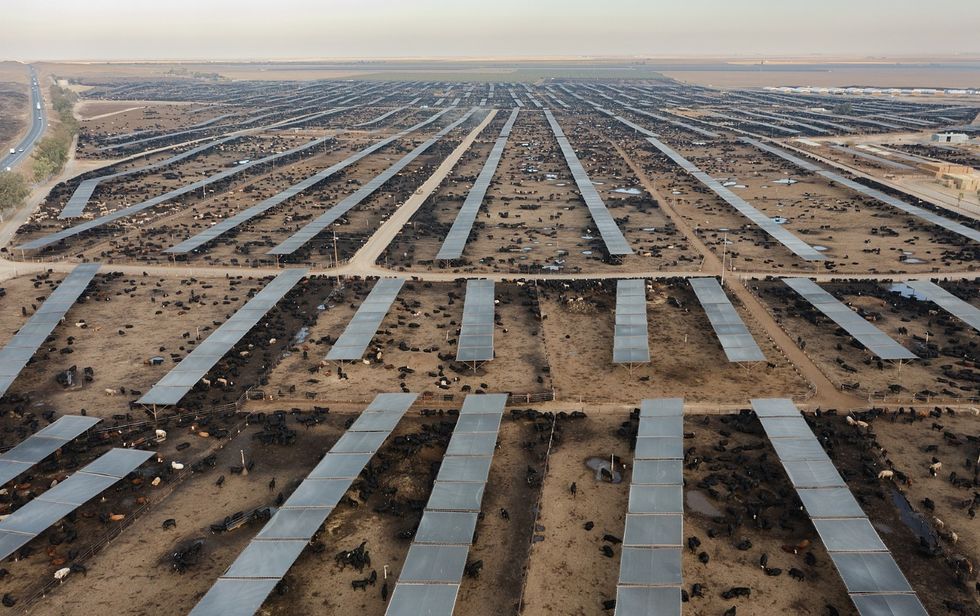
Animal agriculture accounts for at least 14.5% of global greenhouse gas emissions, over quadruple the amount from global aviation. Global meat and dairy production have increased almost fivefold since the 1960s with the advent of industrialized agriculture. These factory-like systems are characterized by cramming thousands of animals into buildings or feedlots and feeding them unnatural grain diets from crops grown offsite. Even if all fossil fuel use was halted immediately, we would still exceed 1.5°C temperature rise without changing our food system, particularly our production and consumption of animal-sourced foods.
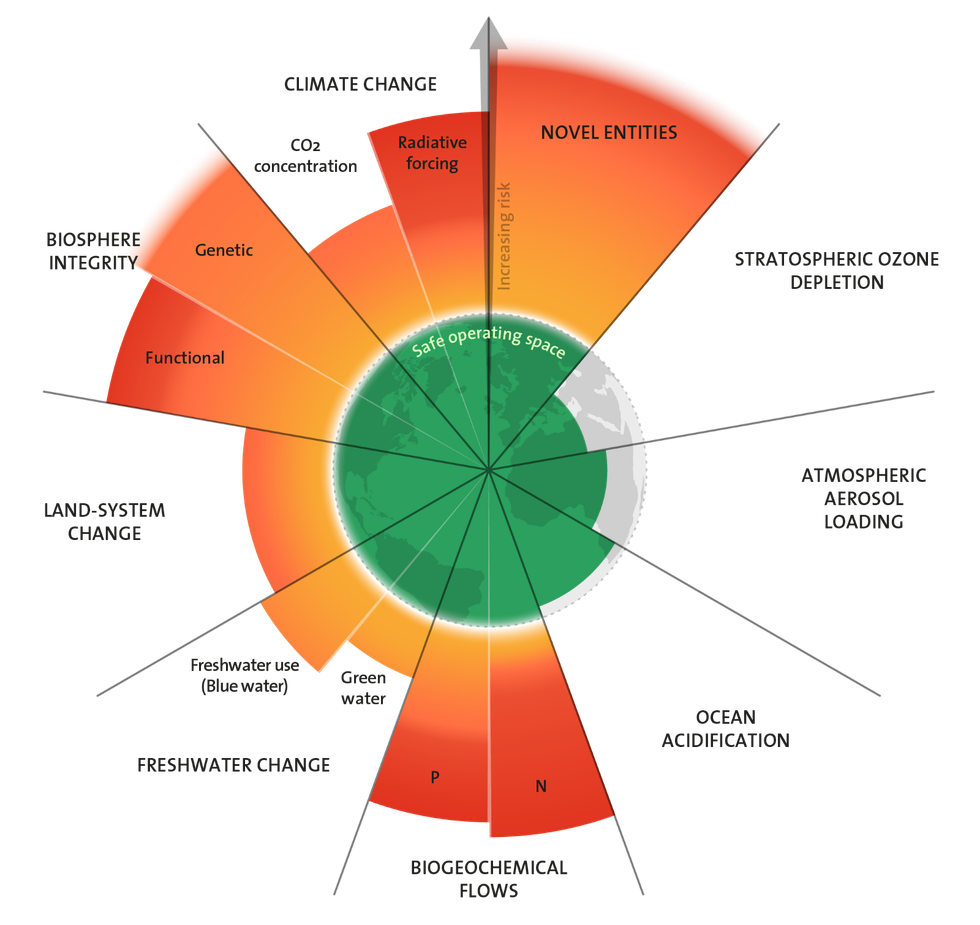
But climate change is just one of the threats we face. We have also breached five other planetary boundaries—biodiversity; land-use change; phosphorus and nitrogen cycling; freshwater use; and pollution from man-made substances such as plastics, antibiotics, and pesticides—all of which are also driven mainly by animal-sourced food production.

By the time world leaders were ready to consider our food system's impact on climate and the environment, the industrialized meat and dairy sector had already prepared its playbook to maintain the status quo. The Conference of Parties is meant to bring together the world's nations and thought leaders to address climate change. However, the event has become increasingly infiltrated by corporate interests. There were 52 delegates from the meat and dairy sector at COP29, many with country badges that gave them privileged access to diplomatic negotiations.
In this forum and others, the industry has peddled bombastic "solutions" under the guise of technology and innovation. Corporate-backed university research has lauded adding seaweed to cattle feed and turning manure lagoons the size of football fields into energy sources to reduce methane production. In Asia, companies are putting pigs in buildings over 20 stories tall, claiming the skyscrapers cut down on space and disease risks. And more recently, Bill Gates and Jeff Bezos started bankrolling research and development into vaccines that reduce the methane-causing bacteria found naturally in cows' stomachs. The industry hopes that the novelty and allure of new technologies will woo lawmakers and investors, but these "solutions" create more problems than they solve, exacerbating net greenhouse gas emissions, air and water pollution, wildlife loss, and freshwater depletion.
Emissions from animal-sourced foods can be broadly divided into four categories: ruminant fermentation (cow burps); manure; logistics (transport, packaging, processing, etc.); and land-use change, i.e., the conversion of wild spaces into pasture, feedlots, and cropland for feed. In the U.S., ruminant fermentation and manure emit more methane than natural gas and petroleum systems combined.
A new report found that beef consumption must decline by over a quarter globally by 2035 to curb methane emissions from cattle, which the industry's solutions claim to solve without needing to reduce consumption. But the direct emissions from cattle aren't the only problem—beef and dairy production is also the leading driver of deforestation, which must decline by 72% by 2035, and reforestation must rise by 115%. About 35% of habitable land is used to raise animals for food or to grow their feed (mostly corn and soy), about the size of North and South America combined.

Put simply, the inadequate solutions put forth by Big Ag cannot outpace industrialized farming's negative impacts on the planet. While seaweed and methane vaccines may address cow burps, they don't address carbon emissions from deforestation or manure emissions of nitrous oxide, a greenhouse gas over 270 times more powerful than CO2. They also don't address the nitrate water pollution from manure, which can sicken people and cause massive fish kills and harmful algal blooms; biodiversity decline from habitat loss, which has dropped 73% since the rise of industrialized animal agriculture; freshwater use, drying up rivers and accounting for over a quarter of humanity's water footprint; or pesticide use on corn and soy feed, which kills soil microorganisms that are vital to life on Earth.
Skyscrapers, while solving some land-use change, do not consider the resources and the land used to grow animal feed, which is globally about equivalent to the size of Europe. They also don't address the inherent inefficiencies with feeding grain to animals raised for food. If fed directly to people, those grains could feed almost half the world's population. And while the companies using pig skyscrapers claim they enhance biosecurity by keeping potential viruses locked inside, a system failure could spell disaster, posing a bigger threat to wildlife and even humans.
We need both a monumental shift from industrialized agriculture to regenerative systems and a dramatic shift from animal-heavy diets to diets rich in legumes, beans, vegetables, fruits, and whole grains, with meat and dairy as a specialty rather than a staple.
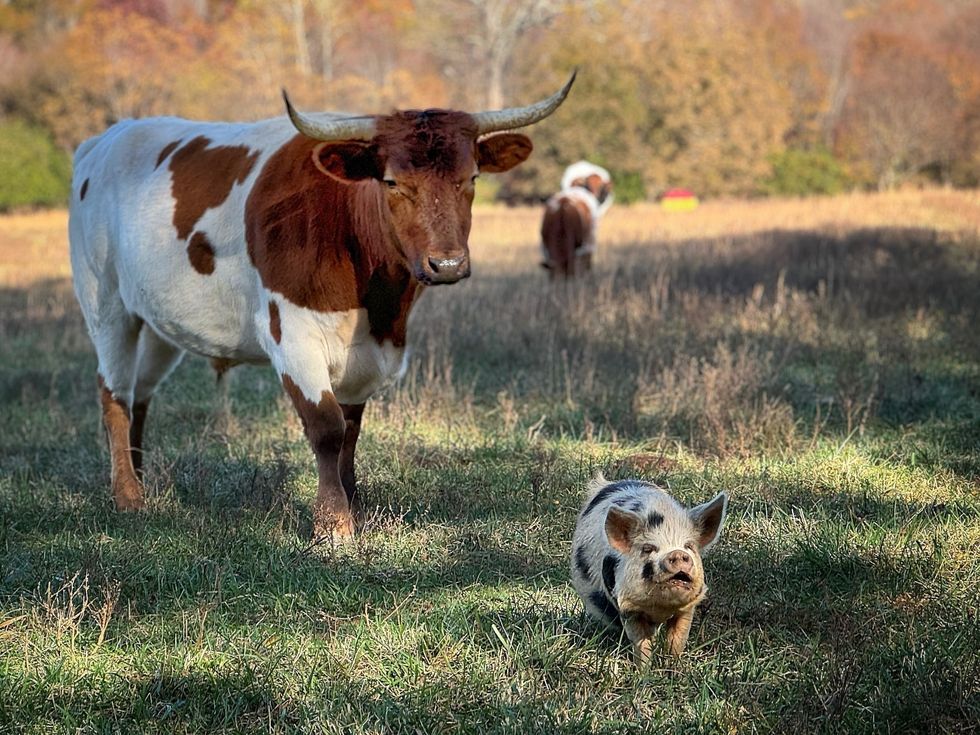
One solution that is gaining traction as an alternative to Big Ag's proposals is regenerative grazing. When done right, regenerative grazing eliminates the need for pesticides and leans into the natural local ecology, putting farm animals onto rotated pastures and facilitating carbon uptake into the soil. Regenerative animal agriculture is arguably the only solution put forward that addresses all six breached planetary boundaries as well as animal welfare and disease risk, and studies suggest it can improve the nutritional quality of animal-sourced foods. While it is imperative to transition from industrialized to regenerative systems, regenerative grazing comes with major caveats. This type of farming is only beneficial in small doses—cutting down centuries-old forests or filling in carbon-rich wetlands to make way for regenerative pastures would do much more climate and ecological harm than good. Soil carbon sequestration takes time and increases with vegetation and undisturbed soil, meaning that any regenerative pastures made today will never be able to capture as much carbon as the original natural landscape, especially in forests, mangroves, wetlands, and tundra. And while regenerative farmlands create better wildlife habitats than feedlots and monocultures, they still don't function like a fully natural ecosystem and food web. Also, cattle emit more methane than their native ruminant counterparts such as bison and deer.
Most notably, however, we simply don't have enough land to produce regeneratively raised animal products at the current consumption rate. Regenerative grazing requires more land than industrialized systems, sometimes two to three times more, and as mentioned the livestock industry already occupies over one-third of the world's habitable land. In all, we have much more to gain from rewilding crop- and rangeland than from turning the world into one big regenerative pasture.

All this brings us to one conclusion—the one that was made by scientists over a decade ago: We need to eat less meat. As Action Aid's Teresa Anderson noted at this year's COP, "The real answers to the climate crisis aren’t being heard over the corporate cacophony."
Scientific climate analyses over the last few years have been grim at best, and apocalyptic at worst. According to one of the latest U.N. reports, limiting global temperature rise to 1.5°C (2.7°F) requires cutting greenhouse gas (GHG) emissions by 57% by 2035, relative to 2023 emissions. However, current national policies—none of which currently include diet shifts—will achieve less than a 1% reduction by 2035. If the 54 wealthiest nations adopted sustainable healthy diets with modest amounts of animal products, they could slash their total emissions by 61%. If we also allowed the leftover land to rewild, we could sequester 30% of our global carbon budget in these nations and nearly 100% if adopted globally.
Our food system needs to be sustainable for all—people, animals, and our planet. Quick fixes and bandages will not save our planet from climate change, biodiversity loss, and pollution. We need both a monumental shift from industrialized agriculture to regenerative systems and a dramatic shift from animal-heavy diets to diets rich in legumes, beans, vegetables, fruits, and whole grains, with meat and dairy as a specialty rather than a staple. As nations draft their policies for COP30, due early this year, we need leaders to adopt real food system solutions instead of buying into the corporate cacophony.