

SUBSCRIBE TO OUR FREE NEWSLETTER
Daily news & progressive opinion—funded by the people, not the corporations—delivered straight to your inbox.
5
#000000
#FFFFFF
To donate by check, phone, or other method, see our More Ways to Give page.
Daily news & progressive opinion—funded by the people, not the corporations—delivered straight to your inbox.
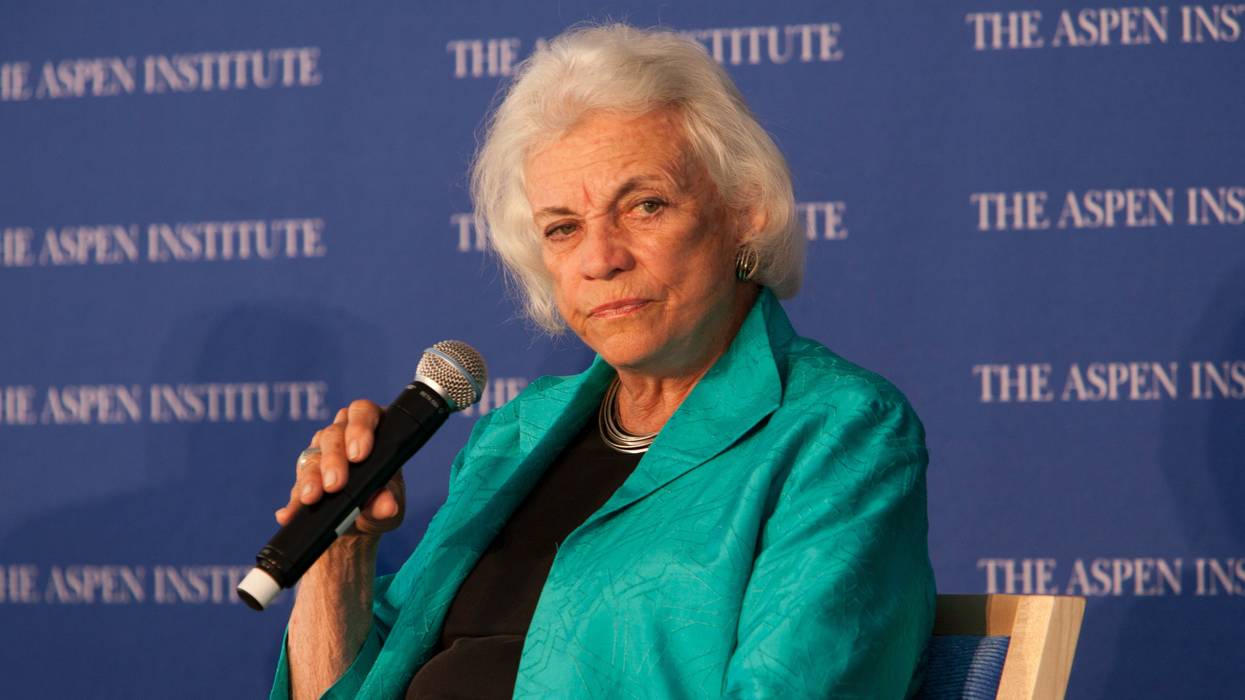
The right-wing justice sought to influence the opinions of others on the high court even before they heard arguments in Bush v. Gore.
Former U.S. Supreme Court Justice Sandra Day O'Connor played a greater role than previously known in handing the highly contentious 2000 presidential election to George W. Bush, a document released Tuesday by the Library of Congress revealed.
It has long been known that O'Connor—who was appointed by former President Ronald Reagan and was the first woman to serve on the Supreme Court—wanted Bush to win the 2000 election, at least in part because of her right-wing views; her admiration for his father, former President George H. W. Bush; and because she wanted to retire after a Republican president nominated her replacement.
However, the newly released documents—part of a trove of former Justice John Paul Stevens' papers—include a four-page memo O'Connor sent to her colleagues on December 10, 2000, even before they heard arguments in Bush v. Gore. Her memo laid the groundwork for the controversial 5-4 ruling that stopped Florida's court-ordered recount in a too-close-to-call contest between Bush and then-Vice President Al Gore and gave the presidency to the Republican Texas governor.
In her memo, O'Connor attacked the unanimous November 21, 2000 Florida Supreme Court decision that the results of manual ballot recounts in Miami-Dade, Broward, and Palm Beach counties must be included in the final state tally, while giving the three counties five days to certify their results.
"Before there was 2020 there was 2000."
During that period, Bush's legal team appealed to the U.S. Supreme Court while self-described "dirty trickster" Matt Schlapp and future seven-count felon Roger Stone led an effort to fly hundreds of paid operatives to Florida to harass and intimidate Miami-Dade officials—the so-called "Brooks Brothers Riot"—in a bid to thwart their court-ordered work.
"I am concerned that the Florida Supreme Court transgressed the lines of authority drawn by Article II of the federal Constitution in substantially changing the state Legislature's statutory scheme for the appointment of presidential electors," O'Connor wrote.
"The Florida Supreme Court provided no uniform, statewide method for identifying and separating the undervotes," she noted, a reference to instances when voting machines could not read ballots.
"Accordingly, there was no guarantee that those ballots deemed undervotes had not been previously tabulated," O'Connor asserted. "More importantly, the court failed to provide any standard more specific than the 'intent of the voter' standard to govern this statewide undervote recount. Therefore, each individual county was left to devise its own standards."
O'Connor noted that the Florida Legislature "has created a detailed, if not perfectly crafted statutory scheme that provides for the appointment of presidential electors by direct election," and that "the Legislature has designated the secretary of state as the 'chief election officer.'"
Florida's secretary of state at the time, Katherine Harris, was not only a Republican, she also co-chaired Bush's campaign in the state. On November 26, 2000 Harris declared Bush the winner in Florida by 537 votes, even though there were counties still tallying ballots.
Ignoring this obvious conflict of interest, O'Connor said the Florida Supreme Court "disregarded the secretary of state's delegated duty to exercise her discretion to determine whether to accept the state's late returns" and whether a manual recount requested by Gore was warranted.
Gore had asked for recounts in four heavily Democratic counties amid drama over dimpled, pregnant, and hanging chads; butterfly and caterpillar ballots; write-in votes; overcounts; undercounts; and a bewildering barrage of strange new terms. Some political commentators have argued that Gore's failure to request a statewide manual recount may have been a fatal miscalculation.
The day after O'Connor circulated her memo, Justice Anthony Kennedy, another Reagan appointee and frequent swing vote, wrote to right-wing Chief Justice William Rehnquist endorsing her "very sound approach."
Rehnquist—who was appointed by Republican former President Richard Nixon—was a proponent of what is now called the independent state legislature theory (ISLT), the fringe right-wing notion that state lawmakers alone can regulate federal elections. Hard-right Justices Antonin Scalia and Clarence Thomas, two of the five votes for Bush, also embraced the dubious theory.
Prominent purveyors of former President Donald Trump's "Big Lie" that the 2020 presidential election was "stolen" have cited ISLT when pushing state lawmakers to help overturn President Joe Biden's Electoral College victory. Thomas' wife Ginni Thomas—who in 2000 solicited resumes for positions in the presumptive Bush administration before her husband cast his decisive vote in Bush v. Gore—unsuccessfully pressed Arizona state lawmakers to invoke ISLT in service of Trump's ill-fated effort to reverse his 2020 loss.
Notably, Bush's legal team in Bush v. Gore included current right-wing U.S. Supreme Court Justices John Roberts, Brett Kavanaugh, and Amy Coney Barrett. Moore v. Harper, a North Carolina voting rights case currently before the court, could decide the legal validity of ISLT.
On December 12, 2000 the justices ruled in a 7-2 per curiam opinion that Florida's court-ordered recount must be stopped on equal protection grounds, and 5-4 that there was no other way to recount all of the contested votes in a timely manner. Rehnquist, Kennedy, O'Connor, Scalia, and Thomas voted in favor of Bush, while Justices Ruth Bader Ginsburg, Stephen Breyer, David Souter, and Stevens dissented.
In his stirring dissent, Stevens presciently noted that "although we may never know with complete certainty the identity of the winner of this year's presidential election, the identity of the loser is perfectly clear. It is the nation's confidence in the judges as an impartial guardian of the rule of law."
Four out of the five justices who sided with Bush were accused of conflicts of interest: Rehnquist and O'Connor were septuagenarians who had stated their desire to retire during a Republican presidency—the latter reportedly exclaimed "this is terrible" in response to a TV news report showing Gore leading on election night; Thomas' wife was headhunting personnel for a potential Bush administration; and two of Scalia's sons worked for law firms representing Bush. None of the four justices recused themselves from Bush v. Gore. Bush later nominated Eugene Scalia for U.S. labor solicitor.
O'Connor—who is now 93 years old—would come to have regrets, which she expressed years after her 2006 retirement. In 2013, she told the Chicago Tribune editorial board that Bush v. Gore "stirred up the public" and "gave the court a less-than-perfect reputation."
"It took the case and decided it at a time when it was still a big election issue," she said. "Maybe the court should have said, 'We're not going to take it, goodbye.'"
There were other reasons why some commentators refer to the 2000 presidential election as "stolen." Chiefly, massive voter disenfranchisement resulting from racist policies of Republican Florida Gov. Jeb Bush—the GOP candidate's brother—played what one federal civil rights official called an "outcome-determinative" role in the state's, and therefore the nation's, results.
Scalia infamously dismissed his friend Bader Ginsburg's concerns over Black disenfranchisement as the "Al Sharpton Footnote," and habitually advised Americans disturbed by Bush v. Gore to "get over it."
However, it was ultimately the Supreme Court's cessation of the unfinished Florida recounts, and Gore's subsequent meek acquiescence "for the sake of our unity as a people and the strength of our democracy," that handed victory to Bush.
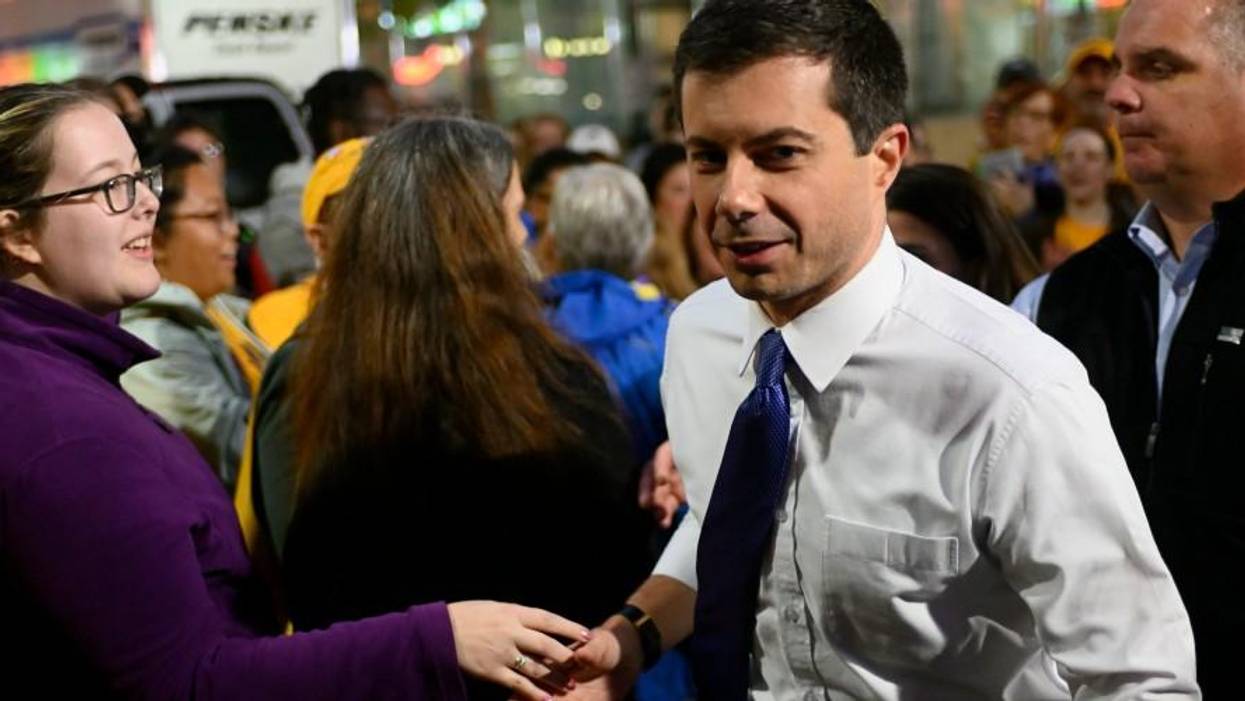
Progressives on Thursday piled on Pete Buttigieg--the mayor of South Bend, Indiana and a 2020 Democratic presidential candidate--for praising former U.S. Supreme Court Justice Anthony Kennedy in an interview with Cosmopolitan.
While explaining possible reforms "to stop the descent of the Supreme Court into becoming yet another political body," Buttigieg said that "one of them would be to have 15 members, but 5 of them can only be seated if the other 10 unanimously agree. The idea here is you get more justices who think for themselves. Justices like Justice Kennedy."
Rolling Stone senior writer Jamil Smith called Buttigieg's remarks "utterly disqualifying for me as a primary voter."
Kennedy retired from the Supreme Court last year, paving the way for President Donald Trump to nominate and the Republican-held Senate to confirm Brett Kavanaugh. Critics of Kennedy swiftly called attention to his record of judicial rulings.
"Pete Buttigieg's model Supreme Court justice is a guy who was appointed by Reagan, consistently worked to gut workers' rights and voting rights, and resigned to allow Donald Trump to appoint Kavanaugh," tweeted The Nation's national affairs correspondent Jeet Heer.
Brian Tashman, a researcher at the ACLU, pointed out that Kennedy "voted to uphold Trump's Muslim ban, voted for the Janus decision gutting labor unions, and voted to uphold voter suppression in Husted."
Responding to Tashman on Twitter Thursday, Buttigieg spokesperson Sean Savett wrote that "this tweet ignores his comments in the interview, in which he said his appointments would 'definitely be people who share my values,' and how depoliticizing SCOTUS is personal to him because his marriage exists by a single vote on the court."
Sen. Bernie Sanders (I-Vt.), another White House hopeful, also weighed in. Linking to Tashman's summary of Kennedy's record, Sanders tweeted, "Interesting, I'd like more justices like Ruth Bader Ginsburg and Sonia Sotomayor."
This post has been updated with comment from Buttigieg spokesperson Sean Savett.
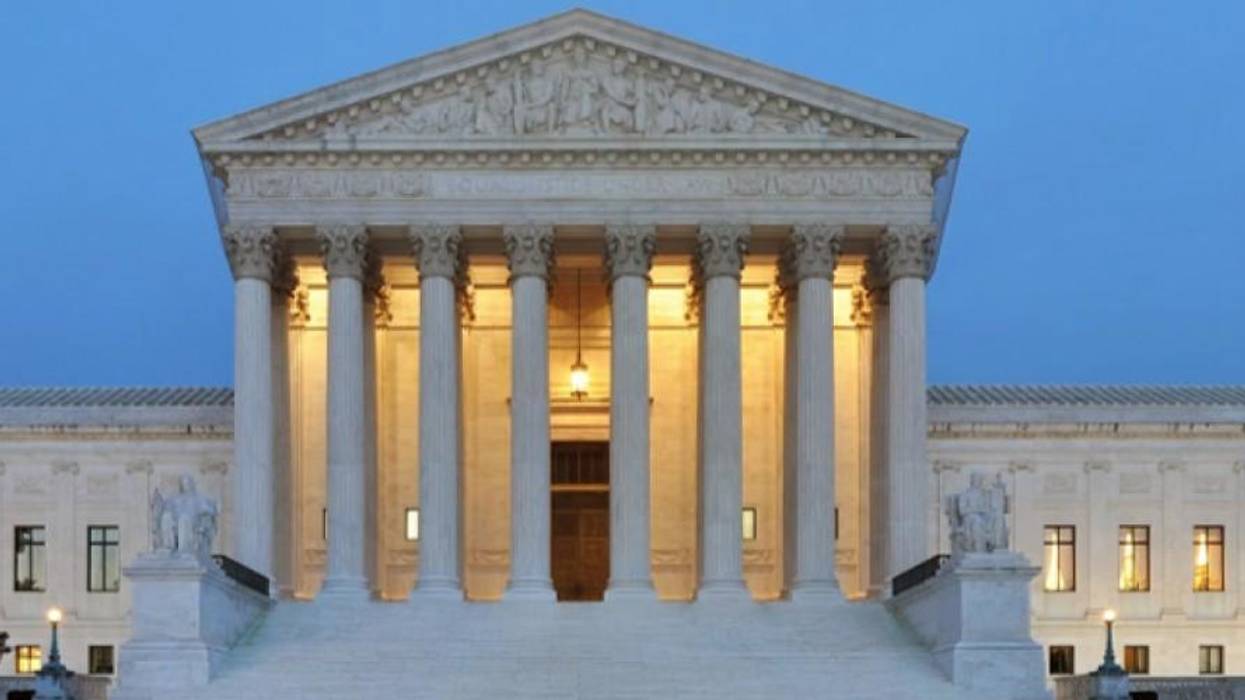
The second point ... about the illusion of the Court's legitimacy, is just as important as the first. If the Court were ever widely seen as acting outside the bounds of its mandate, or worse, seen as a partisan, captured organ of a powerful and dangerous political minority (which it certainly is), all of its decisions would be rejected by the people at large, and more importantly, the nation would plunged into a constitutional crisis of monumental proportions. We are in that crisis now, but just at the start of it.--Yours truly (from "Anthony Kennedy and Our Delayed Constitutional Crisis")
In the same way that countries like Libya are "failed states," the U.S. Supreme Court is a failed institution. Always partisan, either mainly or partly, its authority--meaning the people's acceptance of the validity of its rulings--rests on a kind of momentum, a belief that despite its long history of missteps (Dred Scott and Plessy v. Ferguson, to name just two) the Court can be trusted, in time, to self-correct.
That the Supreme Court was failing its constitutional role had been clear to close observers since the 1976 decision in Buckley v. Valeo, which ruled that election spending was "speech." Yet despite the numerous bad decisions that followed, the momentum of belief--and the illusion that Anthony Kennedy represented a "swing vote" on an otherwise ideologically balanced bench--has kept most Americans, if not blind, then unnoticing of the modern Court's deadly defects.
The first real crack in the dam of faith occurred with the Bush v. Gore decision, in which a nakedly partisan majority installed a losing presidential candidate in the Oval Office simply because it could, using only its authority, and not the law, as justification. Later decisions like Citizens United put proof to many people's suspicions that the Court was an operative in a war for political control and no longer a place where law, even bad law, had a place.
The recent, manipulated addition of the clearly unfit Brett Kavanaugh, a partisan right-wing warrior, to the bench confirmed those suspicions in spades. He even appeared to threaten revenge when he reached the Court for the way he and his confirmation were treated.
What will happen when, not just some, but most Americans consider the Supreme Court illegitimate, when the Court reveals itself to be fully what it is--a captured body serving a powerful, very small political minority (the very rich, the pathologically "moral") to the exclusion of the whole of the rest of the country and its needs?
We're poised on the cusp of that revelation, of the Court's self-outing in full view of the public. With cases like Roe v. Wade, to name just one, coming before it and a bench with no supposed "swing vote," the country is about to witness from the John Roberts judiciary what it has already witnessed from the Mitch McConnell Senate--what it has the power to do, it will do, simply because it can, however destructive the results to norms, precedent or established behavior.
We're about to witness Bush v. Gore on steroids--not a semi-forgivable, if monumentally wrong one-off, but a series of decisions that define a willful judicial oppression that will last through the next generation.
What can be done to prevent this oppression and the revolt that will surely follow? Is there a solution?
Expanding the Court: Four Proposals
Expanding the Supreme Court has often been offered as an answer, but the last attempted expansion--FDR's so-called court-packing scheme--still leaves a bad taste in the mouths of most Democratic politicians (even though it worked; see "The switch in time that saved nine").
Yet the composition of the Supreme Court has changed many times throughout our history, and the number of judges was deliberately and explicitly left to Congress, an obvious example of a constitutional check against the over-exercise of judicial power. Clearly, congressional action can address the problem.
But what should Congress do? Is "court packing" the only alternative?
In an excellent article published in the Harvard Law and Policy Review, Kurt Walters offers not just one, but four ways that Congress could restructure the Court. Each deserves attention and consideration:
The first and most straightforward approach to expanding the Court is adding two, four, or six new justices to the Court. This suggestion has been advanced by Professor Michael Klarman of Harvard Law School, among others. This expansion would serve to offset the tarnished confirmations of the most recent two Supreme Court nominees, although critics of this approach, including Senator Bernie Sanders, warn it could unleash a spiral of retaliatory moves by whichever party is in power.
The second option is to reconstitute the Supreme Court in the image of a federal court of appeals. This course of action would increase the number of justices to fifteen or a similar number. Panels of justices would be drawn from this larger group, with an option of en banc review. This plan would not only dislodge the Court's current reactionary majority, but the panel format also would allow a greater number of cases to be heard.
Third is the Supreme Court Lottery, a more aggressive version of the panel strategy. Daniel Epps and Ganesh Sitaraman have outlined this proposal in a forthcoming Yale Law Journal piece. All federal appellate court judges, roughly 180 in total, would become associate justices on the Supreme Court. Panels of nine justices would be randomly selected from this pool. Importantly, decisions on whether to grant certiorari on a given case would be made by panel members who would not know the ideological makeup of the panel that would hear the case. Thus, this plan would frustrate partisan maneuvering.
Fourth and finally is Epps and Sitaraman's idea for a "Balanced Bench." This proposal aims to counteract the effects of partisanship on the Court by explicitly recognizing and institutionalizing partisanship presence. The Court would have ten justices, with five seats allocated to each of the two major parties. Those ten justices would select sets of five additional justices at a time to serve a future, non-renewable one-year term. That selection would operate on a requirement of near-unanimity to ensure that this final set of five justices would be relatively even-handed. However, it is not certain how a Democratic president would fill a vacancy in a Republican seat that arose during her tenure, or how a Republican president would fill an analogous Democratic vacancy.
I'm partial to the second and third alternatives myself, with the added benefit that under the third proposal,"decisions on whether to grant certiorari on a given case would be made by panel members who would not know the ideological makeup of the panel that would hear the case." Implementing a proposal like that would certainly tip the scales of justice toward justice and away from partisan manipulation.
Will a future Democratic Congress be bold enough to offer any of these proposals? If the timid behavior of the present Democratic House is any indication, likely not--unless Congress is led to it, perhaps, by a bold and aggressive future Democratic president, someone truly on the people's side, for a change. Yet another reason to support the boldest progressive in the race, whoever he or she might be.
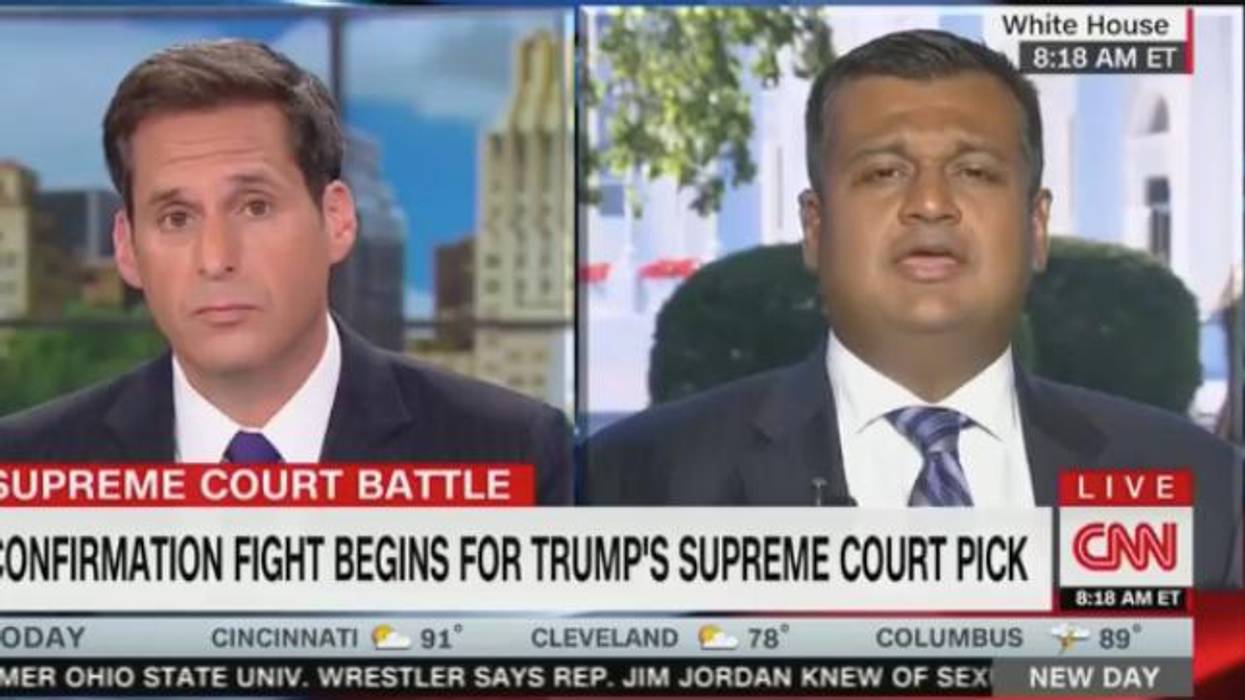
White House Deputy Press Secretary Raj Shah on Tuesday declined multiple opportunities to deny a report that President Donald Trump struck an undisclosed agreement with outgoing Supreme Court Justice Anthony Kennedy over replacing him with Brett Kavanaugh--Kennedy's former law clerk.
After Trump revealed Monday night that he had selected Kavanaugh--who has been on the public potential nominee list since November--Shah was repeatedly asked, during an interview with CNN early Tuesday, whether Kennedy and Trump had discussed Kavanaugh as a replacement prior to the outgoing justice's retirement annoucement nearly two weeks ago.
Shah confirmed that Trump met with the justice at the White House on the day he announced his retirement, but asked whether Kennedy expressed support for Kavanaugh before that meeting, said, "I'll allow Justice Kennedy to speak for himself."
Given yet another chance to respond to reporting that Kennedy may have spoken to someone inside or connected to the White House about his support for Kavanaugh months ago, Shah said, "I'm not gonna read out private conversations that Justice Kennedy had with either members of the White House or the president."
Watch:
Ahead of Shah's CNN interview on Tuesday morning, NBC News Capitol Hill reporter Leigh Ann Caldwell had detailed in a series of tweets that, according to an unnamed source, "the five names Trump added to his list of Federalist Approved judges last November was to get Kavanaugh on that list. The other four names were considered cover, per source. In other words: the decision has been baked for a while."
While that tweet remains online, Caldwell later deleted another early morning tweet--which had said, in part, "once Kennedy received assurances that it would be Kavanaugh, his former law clerk, Kennedy felt comfortable retiring"--and offered the following clarification:
Caldwell's tweets followed a report from Politico late Monday that, according to administration officials, "Trump was taken with Kavanaugh even before his conversation with Kennedy" on the day of his retirement announcement, "but Kennedy, in leaving the impression with Trump that Kavanaugh would be a great candidate for the job, helped the president make up his mind."
Politico noted that Trump "has told people that the opportunity to have two Supreme Court nominees during his first 18 months in office is historic, giving him the chance to reshape the direction of the courts and fulfill a major campaign promise," and that Kennedy's seat "seemed destined to go to Kavanaugh, thanks in part to the glowing review of Kennedy, whose son, Justin, knows Donald Trump Jr. through New York real estate circles."
"For a White House that had been taking the pulse of the court through the deep network of Kennedy law clerks, his retirement had long been on their wish list," the report continued. "And a year after Trump chose [Neil] Gorsuch to serve with his mentor, he picked another ex-Kennedy aide to join him on the high court, a move that will shape how the president and the retired justice are remembered."
Responding to the nomination, a Republican close to the White House told Politico that the president "is very transactional in a lot of ways--as long as it's fairly immediate to the benefit for him. ...The fact that Kennedy gave him that, he was flattered and thrilled by it."
Justice Anthony Kennedy's retirement has pushed a number of significant issues to the forefront of discussion, since his more right-wing replacement could join the rest of the conservatives on the court to overturn such landmark decisions as Roe v. Wade and Obergefell v. Hodges.
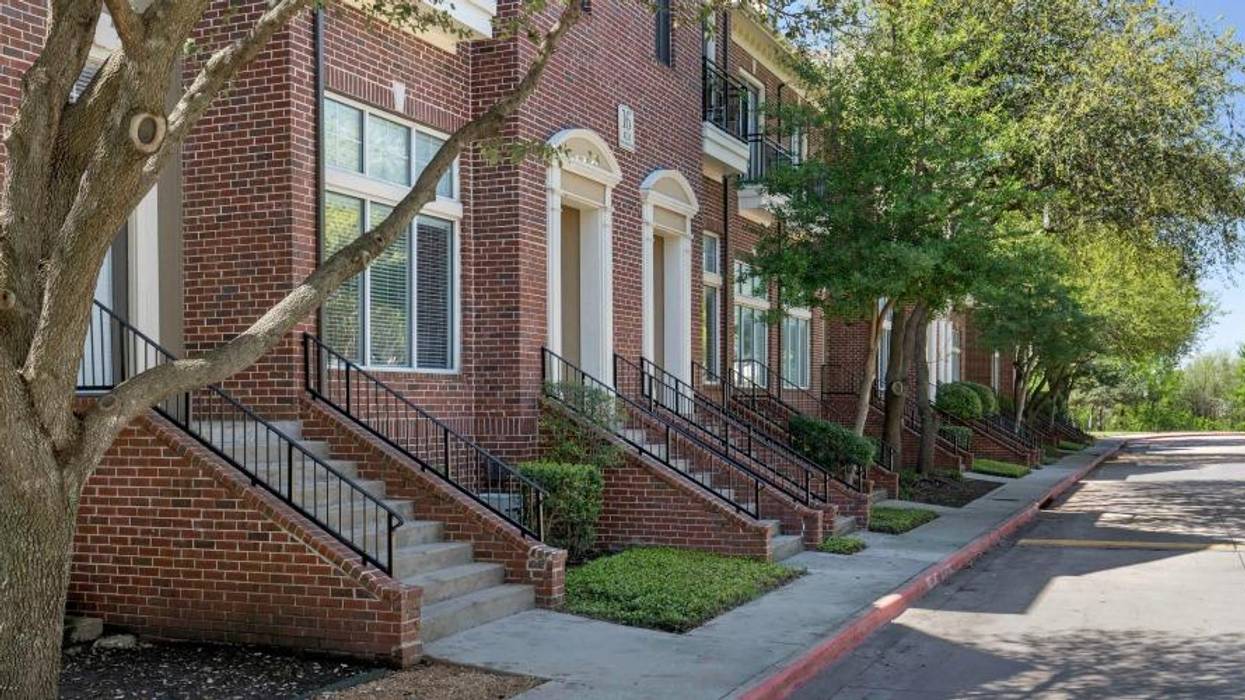
One case of particular importance on which Kennedy provided the swing vote involves curbing discrimination--even if it's subtle discrimination--in housing policy. 2015's Texas Department of Housing and Community Affairs v. The Inclusive Communities Project, Inc. confirmed that the government can use "disparate impact" as means to prove discrimination in housing, which is how the Fair Housing Act had been interpreted since its inception in 1968. Disparate impact is the idea that discrimination can occur based on race or another protected class even if it's not explicitly written into policy. For example, even if a policy itself is neutral, if it causes a disproportionate, negative effect on those in a protected class, it is still unlawful discrimination.
Because there's myriad research that shows that people of color are negatively affected by racial disparities in poverty rates, income, and wealth, the notion of disparate impact is important.
In the 2015 case, the Inclusive Communities Project, a Texas nonprofit, successfully sued the state because the tax credits it provided for low-income housing in Dallas concentrated these developments in low-income, predominantly black neighborhoods. The nonprofit argued that the state was contributing to segregation due to disparate impact. The state countersued on the basis that the Fair Housing Act only protects explicit discrimination.
Had a 5-4 conservative majority sided with Texas, it was possible that the court could have killed disparate impact for good--which would have upended 50 years of precedent. But as he had on a handful of important occasions, Kennedy swung.
Penning the opinion of the court, Kennedy wrote that disparate impact claims are central to the Fair Housing Act. He wrote, "Suits targeting unlawful zoning laws and other housing restrictions that unfairly exclude minorities from certain neighborhoods without sufficient justification are at the heartland of disparate-impact liability."
In their dissent, the four other conservative justices took a much more limited view of the law, arguing that only intentional, explicit discrimination is unlawful. Justice Samuel Alito, who wrote the dissent, seized on the words "because of" in the Fair Housing Act, which reads that it is against the law to:
refuse to sell or rent after the making of a bona fide offer, or to refuse to negotiate for the sale or rental of, or otherwise make unavailable or deny, a dwelling to any person because of race, color, religion, sex, familial status, or national origin.
Alito's dissent devotes several paragraphs to explain the meaning of "because of," writing, "When English speakers say they did something 'because of' a factor, what they mean is that the factor was a reason for what was done." In other words, real, unlawful discrimination is devoid of subtlety.
Without Kennedy, there's a chance the court could reduce the Fair Housing Act to Alito's interpretation, and only target flagrant racism and discrimination, even though so much of discrimination today is successful because it is subtlety embedded in laws and policies.
It's important to also consider the ramifications of gutting the Fair Housing Act, and the consequences of the subtle discrimination that could ensue. So much of family wealth today is built through homeownership, which people of color in the U.S. could not access for centuries. Even more recent developments helped cement these disparities. While the GI Bill after World War II helped white families buy homes and start lives in the suburbs, black families were generally excluded, since banks wouldn't grant mortgages in black neighborhoods--and other racist practices kept black families from living in different neighborhoods. And still, facsimiles of redlining continue today.
All this is certainly part of the reason why black and Latino Americans have so much less wealth than white families. In 2017, the median white family had 12 times the wealth of the median black family. And 60 percent of Latino families are liquid-asset poor, which means that they don't have enough savings to live at the poverty level for three months if they encountered a sudden loss of income, compared to 28 percent of white families. This picture is stark enough, but it's also getting worse: Median wealth for black and Latino families has been declining over the past three decades. From 1983 to 2013, the median wealth of a black family fell by 75 percent, and the median wealth of a Latino family fell 50 percent. Meanwhile, median white wealth rose 14 percent.
Yet, Secretary Ben Carson's Department of Housing and Urban Development seems to be on a mission to steer HUD's focus away from combatting discrimination. HUD has reopened the policy on disparate impact, requesting comment for possible changes. In an interview with CityLab, Jesse Van Tol, CEO of the National Community Reinvestment Coalition, a fair housing group, said, "This new advance notice of proposed rulemaking appears to ask the kinds of questions that you might ask if you were trying to water down a rule. Are there loopholes that should be provided? Is the rule burdensome?"
Carson has also suspended enacting the Obama-era Affirmatively Furthering Fair Housing Rule, which was meant to make mandatory a provision of the 1968 Fair Housing Act that directed agencies to find ways to integrate communities, and which most localities had ignored.
Since those policy changes apparently aren't sufficient to get across how Carson's HUD views its role in contesting discriminatory practices, in March someone leaked a HUD proposal that would actually remove the words "discrimination" from the department's mission statement.
And the Trump administration recently proposed raising rents on the low-income families who receive rental assistance, as well as introducing harsh--and ineffective--work requirements into housing assistance programs.
The future of the Fair Housing Act is just one of many issues that the Kennedy vacancy could bring into the spotlight--for the worse. If the court does eventually rule against disparate impact due to a new Trump pick, there would be one winner: a less-constrained real estate industry.
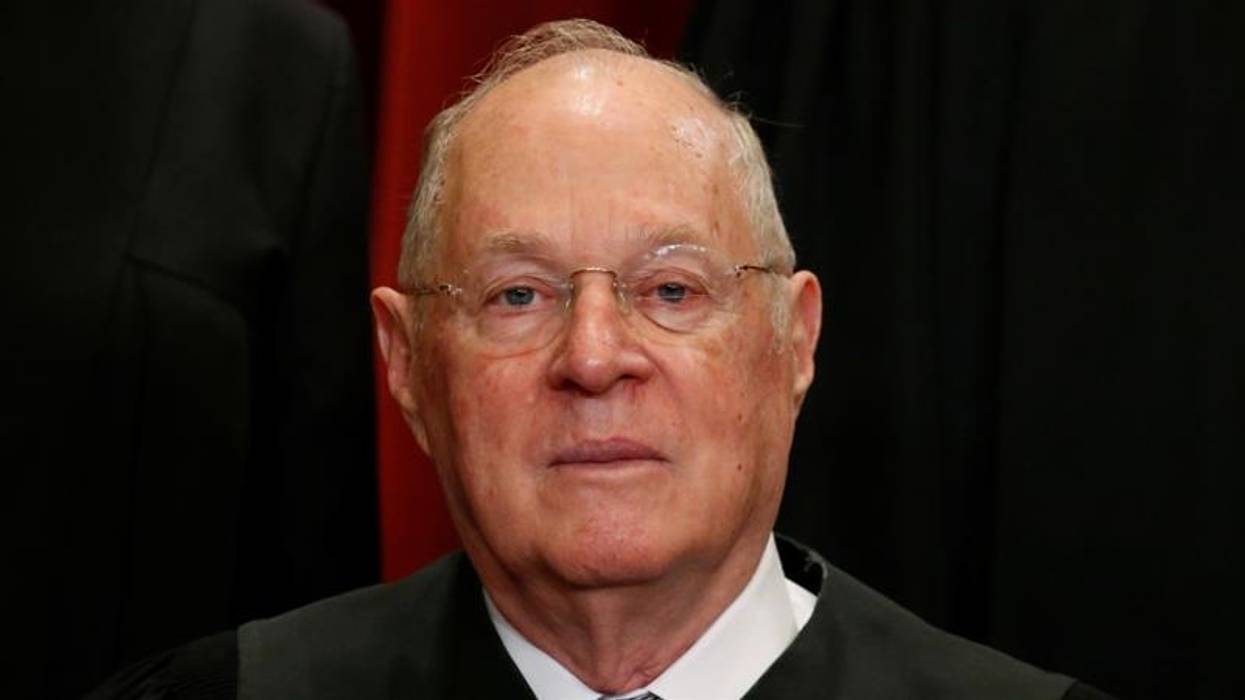
If democracy ends in America in the near future and gives way to an oligarchy - as seemed likely up until last year - or a kleptocracy - the current portent of things to come - and historians attempt to look backward to discover how it happened, one of the characters who will appear in their pantheon of anti-heroes should be Supreme Court Associate Justice Anthony Kennedy.
Kennedy has a fairly good reputation. In a court that is constantly divided with four on the right and four on the left, he has been the "swing" vote. As a result, he has been considered neither truly conservative nor liberal, and, therefore, a person of individual conscience and probity. That's the result of the misapplication of conventional thinking.
Kennedy's votes, and his opinions, line up in two categories. On social issues, which means abortion and gay rights, he has been, indeed, liberal. When it comes to money and power, he has been an agent of the top one percent in its class warfare against the rest.
This may sound strident and over the top. But a look at a single decision, Citizens United vs FEC (2010), will show that it's not. The landmark campaign finance ruling paved the way for anyone to support a candidate with unlimited funding through the use of groups known as Super PACs (political action committees) and allowed donors to keep their identity and the source of their money secret through similar organisations which have earned them the nickname "Dark Money" groups.
Kennedy was saying that influence of money in politics was the way democracy is supposed to work.
The case began with Citizens United, a nonprofit corporation that wanted to advertise for a documentary critical of Hillary Clinton before the 2008 presidential election. However, federal law set strict limits on the ability of corporations and unions to spend and attempt to influence elections. The case pitted campaign finance restrictions against Citizens United's claim that businesses have First Amendment free speech rights.
To begin with, the majority - as noted in the dissent by Justice Stevens, "changed the case to give themselves an opportunity to change the law". Kennedy wrote the majority opinion. It could be described as rewriting reality as radically as Trump does, but with enough sobriety that makes it sound sane.
Kennedy, writing for the majority, said that corporations have all the same free speech rights as human beings because they are associations of human beings. Before anyone buys into the notion that this comes from a total and fervent belief in free speech, as Kennedy would like us to think, it has to be noted that when it came to actual humans, especially individuals with limited power - a student, a prisoner, a whistle-blower in the LA DA's office, and a peace group - Kennedy voted that their speech rights could be constrained.
His opinion reiterated and institutionalised the idea that money is speech. In his opinion, he even renamed the people who spent money on advertising, calling them "speakers". That gives spending on advertising and advocacy First Amendment protection. If we look at Kennedy's votes elsewhere, we discover that what he really meant was that spending by the rich cannot be limited, but public spending (Smith v Arizona Citizens Clean Elections Commission), or even raising the amounts that other private citizens could contribute to compete with a self-funding billionaire (Davis v FEC), could be squelched. Indeed, it had to be stepped on, because it violated the free speech rights of the richer parties.
What? That's the special logic of a right-wing Supreme Court justice. You're supposed to respect it.
He voted, in those cases, to support of the idea that "levelling the playing field," and to "combat corruption" did not really represent a "compelling interest" of the state.
In Citizens United, Kennedy wrote that "independent expenditures, including those made by corporations," for the benefit of a candidate "do not give rise to corruption". This denies fundamental reality. People do things in return for money. People who give money usually want things in return.
He took it further, claiming those expenditures don't even "give rise to ... the appearance of corruption". But of course, they do. Eighty-four percent of Americans believe that there's too much money in politics. That's more than the number of Americans who think the Earth revolves around the sun (74 percent). He spoke, soothingly, for us all, that "the appearance of influence or access will not cause the electorate to lose faith in this democracy". But of course, for many, around the whole world, it has.
Where all this was going was even worse. It wasn't that he was denying reality. Kennedy was saying that influence of money in politics was the way democracy is supposed to work. He quoted himself from another case (McConnell vs FEC) in which he'd been in the minority. "Favoritism and influence are not, as the Government's theory suggests, avoidable in representative politics ... It is well understood that a substantial and legitimate reason, if not the only reason, to cast a vote for, or to make a contribution to, one candidate over another is that the candidate will respond by producing those political outcomes the supporter favors. Democracy is premised on responsiveness."
It would seem to mean that a million dollars should have a million times the influence of a one-dollar contribution in the way that a million votes should swamp a single vote.
Now, money was equated with votes, as well as speech. It would seem to mean that a million dollars should have a million times the influence of a one-dollar contribution in the way that a million votes should swamp a single vote.
In the course of this, Kennedy was also defining away corruption. Short of taking wads of cash in a brown paper bag, along with a surreptitiously recorded conversation where one of the participants talks like Tony Soprano and wants the garbage-hauling contract in return, it could no longer be prosecuted. Sure enough, a few years later, the Supreme Court overturned the conviction of Virginia Governor Robert McConnell because the things that the jury saw as bribery, the Supreme Court now saw as "constituent services".
In terms of women's rights, reproductive rights, gay rights, Kennedy will be missed.
His final act, timing his retirement so that Trump could select his replacement and Mitch McConnell still had control of the Senate to ram it through, is compelling testimony that he was committed, above all, to transferring as much power and wealth to the right, to corporations, and to the rich, as he possibly could.

After a series of rulings just this week demonstrated how much damage a conservative majority on the Supreme Court can do to the rights of workers, women, and immigrants, Justice Anthony Kennedy announced on Wednesday that he is retiring, handing President Donald Trump a golden opportunity to push the nation's highest court even further to the right.
"With Justice Kennedy's retirement, Chuck Schumer and other Democrats will have to demonstrate a different level of political courage. It is not a time to play nice."
--Eddie Glaude
"This is not a drill," NARAL Pro-Choice America declared on Twitter following Kennedy's announcement, highlighting the fact that Trump's second Supreme Court pick will give conservatives the power to go after Roe v. Wade, which affirms the constitutional right to abortion.
"Trump and his anti-choice allies have already stolen one [Supreme Court] seat, and we've seen the devastating effects on our rights already," NARAL added. "Now, he'll get the chance to steal another."
While Kennedy was a conservative who had a hand in the court's most recent appalling rulings, he provided a crucial swing vote for the liberal side on issues like same-sex marriage and abortion access. Trump will now have an opportunity to replace that swing vote with one of the dozens of extremist, anti-choice judges he already has lined up.
"Time to get to work," Topher Spiro, senior fellow at the Center for American Progress, wrote on Wednesday. "Roe v. Wade is in great peril. So are pre-existing condition protections and gay rights."
With Senate Majority Leader Mitch McConnell (R-Ky.) already aiming to confirm Kennedy's successor "this fall," activists are pressuring Senate Minority Leader Chuck Schumer (D-N.Y.) to deploy the same hard-ball tactics McConnell used to steal a Supreme Court nominee from former President Barack Obama.
"With Justice Kennedy's retirement, Chuck Schumer and other Democrats will have to demonstrate a different level of political courage," concluded Princeton University professor Eddie Glaude. "It is not a time to play nice."
It is the last Monday in June and I don't know if Supreme Court Justice Anthony Kennedy is going to resign. Neither do you. This is yet another one of these insipid inside-Washington stories where the few people who know aren't talking and the many people who are talking don't know.
One thing is clear: Like him or not, Justice Kennedy stands today as one of the last bulwarks against a right-wing counterrevolution that threatens to roll back constitutional rights and protections for hundreds of millions of Americans. His departure from the Court during a Trump presidency, with his successor chosen from a list bequeathed by the Federalist Society or the Heritage Foundation and the Senate in the hands of Mitch McConnell, would eliminate the judicial branch as an effective check-and-balance against unfettered partisan power.
For over a decade now, since the premature retirement of Justice Sandra Day O'Connor, Justice Kennedy has been at the Court's center, voting with the majority in almost every term about 90 percent of the time. The Reagan-appointee has never wavered from his right-of-center jurisprudence; he voted to gut the Voting Rights Act and federal campaign finance reform, for example, and he has been a consistent vote against consumers and employees in corporate cases. But he's also consistently voted with progressives, helping to save whatever is left of affirmative action and the constitutional right to choose.
Kennedy sits at the center of the Court now only because the Court itself has moved so far to the right in the past 12 years. Chief Justice John Roberts and Justices Samuel Alito Jr. and Justice Neil Gorsuch all are as conservative or more so than the men they replaced. Kennedy's departure would mean that the Chief Justice, by default, would assume the role of the "swing" vote. Don't listen to all the happy talk about how the Chief Justice is going to move to the center to help save the Court's reputation; if he is the "swing" vote the Court is going to "swing" right almost every time and progressives causes are going to suffer.
Without Kennedy, the five-justice conservative majority will almost certainly roll back protections for gay and lesbian citizens. Maybe gay marriage rights will last-- maybe-- but the discriminatory laws popping up all over the country, the ones that sanction bigotry in the name of religious freedom, will have five loyal votes at the Court. Money will pour even faster in politics under the pretense of "free speech." The Voting Rights Act will further be imperiled (because despite his vote against the VRA in 2013 Justice Kennedy has sought in the meantime to limit the devastating impact of that ruling).
Meanwhile, capital punishment in America, which Kennedy slowly but steadily restricted, will be allowed again to expand. So will the use of solitary confinement, which Kennedy is recent years has sharply criticized. And if you think abortion rights are precariously perched now, it is a virtual certainty they will be further restricted if Kennedy leaves and is replaced by a Trump nominee. It is not hyperbole to suggest that Roe v. Wade itself could be overturned once Kennedy is gone but even if the Court's conservatives gin up some hoary formula that keeps Roe on the books as a technicality the guts of it surely will be will be gone. Yes, Kennedy has restricted abortion rights in the past decades but he never has beeilling to go as far as his successor will go (or as Justices Alito and Thomas already have said they would go).
The Supreme Court, like Congress and the presidency, has swung back and forth over the generations between the parties and among various ideologies. There was a period in the 1960s where Democrats controlled both house of Congress, the White House, and, effectively, the Supreme Court with Chief Justice Earl Warren at the helm. But Warren himself (not to mention Justice William Brennan) was nominated by a Republican president (Dwight Eisenhower) and Congress was very different then than it is today. There were more moderates in the Senate and lawmakers came from more swing-districts than they do in today's gerrymandered world.
That was 50 years ago. The Court (and the country's politics) have grown more conservative ever since. It says a lot about where we stand today compared to where we once stood that a judge appointed by Ronald Reagan would be widely seen as the last moderate Republican on the Court. In defense of his centrist position, Kennedy said last year: "The cases swing, I don't." He's right. He hasn't swung much. The world around him, and the court around him, has swung.
I would like to think that Justice Kennedy will stick around a bit longer to ensure that his own judicial legacy isn't eroded, quickly, by what's to come during a Trump presidency and a Court with John Roberts as the so-called voice of moderation. But nothing surprises me any more about how the justices think about their own lives, and their own careers, and what they feel they owe and do not owe to the nation. For all I know Justice Thomas will resign first, to live out the rest of his days in relative peace knowing he was replaced by another ardent conservative ideologue.
In the meantime, a slow term is about to end and a brand new one is taking shape. If it is still Kennedy's court on the first Monday in October, progressive cases and causes (at least some of them, anyway) will have a chance. If not we are about to embark on an era of conservative jurisprudence that no one alive has ever witnessed, a period marked by a level of heterogeneity unprecedented in our history.
On Wednesday, a panel of federal judges advanced what an expert says could be "the biggest gerrymandering case in a generation." This case could have nationwide implications for elections and democracy across the United States.
The three-judge court ruled 2-1 (pdf) that the First Amendment-based claim against partisan gerrymandering in Maryland's sixth congressional district is valid and may proceed to summary judgment or trial. The ruling has no bearing on voting this November, and a decision would apply only to future elections.
"Today's decision is another victory for voters and their right to choose their legislators rather than allowing legislators to choose their voters."
--Karen Hobart Flynn, Common Cause
The case, brought by American University law student Steve Shapiro, argues that Maryland's congressional district map, drawn by Democratic lawmakers following the 2010 Census, violated the rights of 6th District Republican voters to political association and expression.
But as the case has the potential to set a national precedent restricting partisan gerrymandering, it moving forward is "excellent news for both Democrats and democracy because of how widespread Republican gerrymandering is nationwide," Daily Kos contributing editor Stephen Wolf wrote Wednesday.
Indeed, the Washington Post reported:
Michael Kimberly, Shapiro's attorney, said that if his client prevails at trial, and the case ends up back in the Supreme Court, it could eventually bring sweeping changes to redistricting across the country.
"This could be the biggest gerrymandering case in a generation," Kimberly said. "It could have enormous impact."
As North Carolina's News & Observer wrote earlier this month:
Opinions by U.S. Supreme Court justices, Ruth Bader Ginsburg and Anthony Kennedy in particular, have suggested that they believe partisan gerrymandering is a problem, [Common Cause North Carolina executive director Bob] Phillips said.
"Partisanship might be the next frontier for redistricting cases," said Wendy Underhill, director of the Elections and Redistricting Program for the National Conference of State Legislatures.
Of the prospect of a Supreme Court decision in the Maryland case, Wolf wrote: "Such a ruling could have enormous effects since 55 percent of congressional districts are currently drawn to favor Republicans while just 10 percent were designed for Democrats--particularly when the current partisan and institutional balance of power significantly constrains anti-gerrymandering efforts at the legislative level."
Karen Hobart Flynn, president of the pro-democracy group Common Cause, wrote an op-ed earlier this month stating that "gerrymandering pits political power against the people, regardless of which party holds power."
On Wednesday, in response to the judge's ruling, Hobart Flynn added: "Today's decision is another victory for voters and their right to choose their legislators rather than allowing legislators to choose their voters. Partisan gerrymanders strip citizens of the ability to elect the candidates of their choice, and that is why Common Cause is fighting this gerrymander by Democrats in Maryland and why we have brought suit challenging a blatant partisan gerrymander perpetrated by Republicans in North Carolina."
Common Cause brought the North Carolina lawsuit in early August. It argues that the legislature's gerrymandering clearly violates the Equal Protection Clause of the 14th Amendment.
Members of the Gay Men's Chorus of Washington, wearing blue T-shirts emblazoned with the name of a popular gay sports bar in Washington, were on a strategic street corner singing "The Impossible Dream," the Supreme Court to their front and the Capitol to their rear.
Following that star, no matter how hopeless, no matter how far. If there ever were an impossible dream, marriage equality was it just a few short years ago. Even some of the most ardent crusaders for gay, lesbian, bisexual and transgender equality believed that demanding recognition for same-sex marriage was a fool's errand.
But people in love can be the most audacious of rebels. So it was that seven same-sex couples sued the state of Massachusetts in 2001, at a time when some Democrats in the state legislature were helping to lead the anti-marriage-equality effort and much of the gay rights establishment had not yet devoted significant firepower to defend the couples. The ruling that the state Supreme Court handed down in 2003 ruling that prohibitions against same-sex marriage was unconstitutional not only shook the nation, but it challenged those of us in the LGBT rights movement to not constrain our political agitation to the limits of what was politically possible, but to agitate to change what is politically possible.
Other bold couples teamed up with legal teams around the country, with the support of LGBT rights organizations and a growing constellation of civil rights allies. Couples in Massachusetts led the way again in 2009 in challenging the Defense of Marriage Act, the legislation that President Bill Clinton now recognizes was one of the worst stains on his legacy. Their perseverance led to the Supreme Court ruling in 2013 that the Defense of Marriage Act was unconstitutional.
That set the stage for the legal collapse of gay marriage bans around the country. By the time Justice Anthony Kennedy read his landmark decision in Obergefell v. Hodges this morning, marriage equality was already the law of the land in 36 states, either through judicial or legislative action. That meant that roughly 70 percent of the country was living in a state where same-sex marriages were legal - and the parade of horribles predicted by anti-marriage-equality conservatives was not happening.
What was happening instead was what Mary L. Bonauto, the lawyer representing the couples in the Massachusetts case and who argued on behalf of gay couples in this latest case before the Supreme Court, described in a column today in The Boston Globe. As Kennedy announced his ruling, "I recalled the many voices from government leaders to clergy to everyday people who moved us forward: the Catholic mother who wanted her gay son to be able to marry, the Connecticut state trooper who demanded that the government protect her family should she be injured in the line of duty, the New Hampshire Marine who wanted to be his gay brother's best man one day."
A phrase that quickly comes to mind is the famous quote from Dr. Martin Luther King Jr.: "The arc of the moral universe is long, but it bends towards justice." Sometimes, as President Obama said in his Rose Garden remarks today, change only comes through the plodding, painstaking persistence of dedicated people, their successes measured in modest increments that are too often offset by frustrating setbacks. "Then there are days like this, he said, "when that slow, steady effort is rewarded by justice that arrives like a thunderbolt."
The president went on to say that the ruling is not only a victory for LGBT people but "a victory for America" and for the notion that "when all Americans are treated as equal, we are all more free."
This ruling does not put to rest the struggle for LGBT equality, no more than a series of racial equality victories before the Supreme Court and in Congress put to rest the struggle for racial equality - just ask the people of Charleston, S.C., who today are putting to rest the Rev. Clementa Pinckney, the pastor of Emanuel AME Church who was gunned down with eight of his parishioners by a Confederate flag-waving racist.
Pinckney, by the way, was an African-American preacher who likely would have celebrated this day were he alive. "He gave me his assurance then that he was on our side," Jeff Ayres of South Carolina Equality told Mother Jones.
So this moment of celebration, as is so often true, comes mixed with a heavy reminder of the work that must be done - as well as a lesson in the value of the persistent pursuit of justice.
"Tragedy after tragedy remind us that people are still targeted for discrimination and even unspeakable violence because of who they are," Bonauto wrote. "Friday's decision should energize us for the urgent and ongoing work to achieve justice not only for all LGBT people but for all Americans. As we celebrate this landmark ruling, let us also rededicate ourselves to ensuring that all Americans -- no matter who they are or where they live -- have the same opportunities and freedom to live equally, safely, and securely."