SUBSCRIBE TO OUR FREE NEWSLETTER
Daily news & progressive opinion—funded by the people, not the corporations—delivered straight to your inbox.
5
#000000
#FFFFFF
To donate by check, phone, or other method, see our More Ways to Give page.
Daily news & progressive opinion—funded by the people, not the corporations—delivered straight to your inbox.
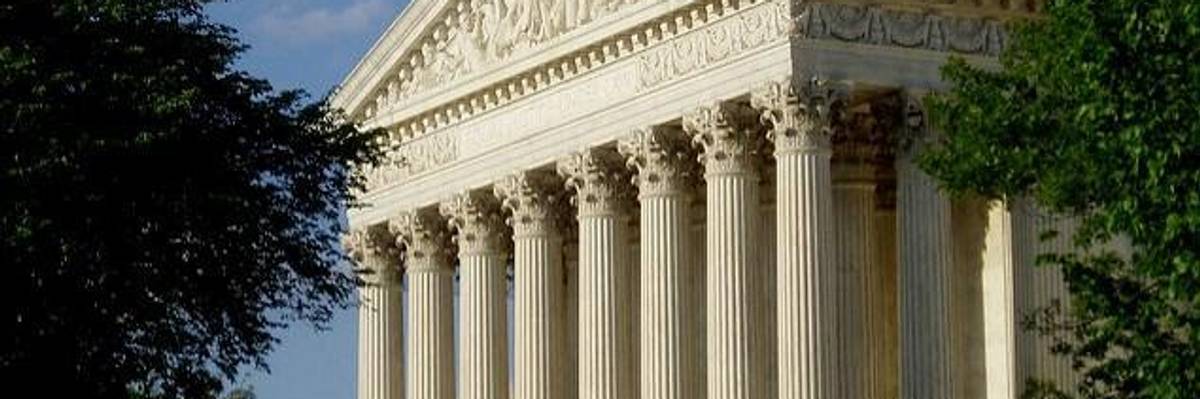
Image: Supreme Court, Flickr.com/MattWade
It is the last Monday in June and I don't know if Supreme Court Justice Anthony Kennedy is going to resign. Neither do you. This is yet another one of these insipid inside-Washington stories where the few people who know aren't talking and the many people who are talking don't know.
One thing is clear: Like him or not, Justice Kennedy stands today as one of the last bulwarks against a right-wing counterrevolution that threatens to roll back constitutional rights and protections for hundreds of millions of Americans. His departure from the Court during a Trump presidency, with his successor chosen from a list bequeathed by the Federalist Society or the Heritage Foundation and the Senate in the hands of Mitch McConnell, would eliminate the judicial branch as an effective check-and-balance against unfettered partisan power.
For over a decade now, since the premature retirement of Justice Sandra Day O'Connor, Justice Kennedy has been at the Court's center, voting with the majority in almost every term about 90 percent of the time. The Reagan-appointee has never wavered from his right-of-center jurisprudence; he voted to gut the Voting Rights Act and federal campaign finance reform, for example, and he has been a consistent vote against consumers and employees in corporate cases. But he's also consistently voted with progressives, helping to save whatever is left of affirmative action and the constitutional right to choose.
Kennedy sits at the center of the Court now only because the Court itself has moved so far to the right in the past 12 years. Chief Justice John Roberts and Justices Samuel Alito Jr. and Justice Neil Gorsuch all are as conservative or more so than the men they replaced. Kennedy's departure would mean that the Chief Justice, by default, would assume the role of the "swing" vote. Don't listen to all the happy talk about how the Chief Justice is going to move to the center to help save the Court's reputation; if he is the "swing" vote the Court is going to "swing" right almost every time and progressives causes are going to suffer.
Without Kennedy, the five-justice conservative majority will almost certainly roll back protections for gay and lesbian citizens. Maybe gay marriage rights will last-- maybe-- but the discriminatory laws popping up all over the country, the ones that sanction bigotry in the name of religious freedom, will have five loyal votes at the Court. Money will pour even faster in politics under the pretense of "free speech." The Voting Rights Act will further be imperiled (because despite his vote against the VRA in 2013 Justice Kennedy has sought in the meantime to limit the devastating impact of that ruling).
Meanwhile, capital punishment in America, which Kennedy slowly but steadily restricted, will be allowed again to expand. So will the use of solitary confinement, which Kennedy is recent years has sharply criticized. And if you think abortion rights are precariously perched now, it is a virtual certainty they will be further restricted if Kennedy leaves and is replaced by a Trump nominee. It is not hyperbole to suggest that Roe v. Wade itself could be overturned once Kennedy is gone but even if the Court's conservatives gin up some hoary formula that keeps Roe on the books as a technicality the guts of it surely will be will be gone. Yes, Kennedy has restricted abortion rights in the past decades but he never has beeilling to go as far as his successor will go (or as Justices Alito and Thomas already have said they would go).
The Supreme Court, like Congress and the presidency, has swung back and forth over the generations between the parties and among various ideologies. There was a period in the 1960s where Democrats controlled both house of Congress, the White House, and, effectively, the Supreme Court with Chief Justice Earl Warren at the helm. But Warren himself (not to mention Justice William Brennan) was nominated by a Republican president (Dwight Eisenhower) and Congress was very different then than it is today. There were more moderates in the Senate and lawmakers came from more swing-districts than they do in today's gerrymandered world.
That was 50 years ago. The Court (and the country's politics) have grown more conservative ever since. It says a lot about where we stand today compared to where we once stood that a judge appointed by Ronald Reagan would be widely seen as the last moderate Republican on the Court. In defense of his centrist position, Kennedy said last year: "The cases swing, I don't." He's right. He hasn't swung much. The world around him, and the court around him, has swung.
I would like to think that Justice Kennedy will stick around a bit longer to ensure that his own judicial legacy isn't eroded, quickly, by what's to come during a Trump presidency and a Court with John Roberts as the so-called voice of moderation. But nothing surprises me any more about how the justices think about their own lives, and their own careers, and what they feel they owe and do not owe to the nation. For all I know Justice Thomas will resign first, to live out the rest of his days in relative peace knowing he was replaced by another ardent conservative ideologue.
In the meantime, a slow term is about to end and a brand new one is taking shape. If it is still Kennedy's court on the first Monday in October, progressive cases and causes (at least some of them, anyway) will have a chance. If not we are about to embark on an era of conservative jurisprudence that no one alive has ever witnessed, a period marked by a level of heterogeneity unprecedented in our history.
Dear Common Dreams reader, It’s been nearly 30 years since I co-founded Common Dreams with my late wife, Lina Newhouser. We had the radical notion that journalism should serve the public good, not corporate profits. It was clear to us from the outset what it would take to build such a project. No paid advertisements. No corporate sponsors. No millionaire publisher telling us what to think or do. Many people said we wouldn't last a year, but we proved those doubters wrong. Together with a tremendous team of journalists and dedicated staff, we built an independent media outlet free from the constraints of profits and corporate control. Our mission has always been simple: To inform. To inspire. To ignite change for the common good. Building Common Dreams was not easy. Our survival was never guaranteed. When you take on the most powerful forces—Wall Street greed, fossil fuel industry destruction, Big Tech lobbyists, and uber-rich oligarchs who have spent billions upon billions rigging the economy and democracy in their favor—the only bulwark you have is supporters who believe in your work. But here’s the urgent message from me today. It's never been this bad out there. And it's never been this hard to keep us going. At the very moment Common Dreams is most needed, the threats we face are intensifying. We need your support now more than ever. We don't accept corporate advertising and never will. We don't have a paywall because we don't think people should be blocked from critical news based on their ability to pay. Everything we do is funded by the donations of readers like you. When everyone does the little they can afford, we are strong. But if that support retreats or dries up, so do we. Will you donate now to make sure Common Dreams not only survives but thrives? —Craig Brown, Co-founder |
It is the last Monday in June and I don't know if Supreme Court Justice Anthony Kennedy is going to resign. Neither do you. This is yet another one of these insipid inside-Washington stories where the few people who know aren't talking and the many people who are talking don't know.
One thing is clear: Like him or not, Justice Kennedy stands today as one of the last bulwarks against a right-wing counterrevolution that threatens to roll back constitutional rights and protections for hundreds of millions of Americans. His departure from the Court during a Trump presidency, with his successor chosen from a list bequeathed by the Federalist Society or the Heritage Foundation and the Senate in the hands of Mitch McConnell, would eliminate the judicial branch as an effective check-and-balance against unfettered partisan power.
For over a decade now, since the premature retirement of Justice Sandra Day O'Connor, Justice Kennedy has been at the Court's center, voting with the majority in almost every term about 90 percent of the time. The Reagan-appointee has never wavered from his right-of-center jurisprudence; he voted to gut the Voting Rights Act and federal campaign finance reform, for example, and he has been a consistent vote against consumers and employees in corporate cases. But he's also consistently voted with progressives, helping to save whatever is left of affirmative action and the constitutional right to choose.
Kennedy sits at the center of the Court now only because the Court itself has moved so far to the right in the past 12 years. Chief Justice John Roberts and Justices Samuel Alito Jr. and Justice Neil Gorsuch all are as conservative or more so than the men they replaced. Kennedy's departure would mean that the Chief Justice, by default, would assume the role of the "swing" vote. Don't listen to all the happy talk about how the Chief Justice is going to move to the center to help save the Court's reputation; if he is the "swing" vote the Court is going to "swing" right almost every time and progressives causes are going to suffer.
Without Kennedy, the five-justice conservative majority will almost certainly roll back protections for gay and lesbian citizens. Maybe gay marriage rights will last-- maybe-- but the discriminatory laws popping up all over the country, the ones that sanction bigotry in the name of religious freedom, will have five loyal votes at the Court. Money will pour even faster in politics under the pretense of "free speech." The Voting Rights Act will further be imperiled (because despite his vote against the VRA in 2013 Justice Kennedy has sought in the meantime to limit the devastating impact of that ruling).
Meanwhile, capital punishment in America, which Kennedy slowly but steadily restricted, will be allowed again to expand. So will the use of solitary confinement, which Kennedy is recent years has sharply criticized. And if you think abortion rights are precariously perched now, it is a virtual certainty they will be further restricted if Kennedy leaves and is replaced by a Trump nominee. It is not hyperbole to suggest that Roe v. Wade itself could be overturned once Kennedy is gone but even if the Court's conservatives gin up some hoary formula that keeps Roe on the books as a technicality the guts of it surely will be will be gone. Yes, Kennedy has restricted abortion rights in the past decades but he never has beeilling to go as far as his successor will go (or as Justices Alito and Thomas already have said they would go).
The Supreme Court, like Congress and the presidency, has swung back and forth over the generations between the parties and among various ideologies. There was a period in the 1960s where Democrats controlled both house of Congress, the White House, and, effectively, the Supreme Court with Chief Justice Earl Warren at the helm. But Warren himself (not to mention Justice William Brennan) was nominated by a Republican president (Dwight Eisenhower) and Congress was very different then than it is today. There were more moderates in the Senate and lawmakers came from more swing-districts than they do in today's gerrymandered world.
That was 50 years ago. The Court (and the country's politics) have grown more conservative ever since. It says a lot about where we stand today compared to where we once stood that a judge appointed by Ronald Reagan would be widely seen as the last moderate Republican on the Court. In defense of his centrist position, Kennedy said last year: "The cases swing, I don't." He's right. He hasn't swung much. The world around him, and the court around him, has swung.
I would like to think that Justice Kennedy will stick around a bit longer to ensure that his own judicial legacy isn't eroded, quickly, by what's to come during a Trump presidency and a Court with John Roberts as the so-called voice of moderation. But nothing surprises me any more about how the justices think about their own lives, and their own careers, and what they feel they owe and do not owe to the nation. For all I know Justice Thomas will resign first, to live out the rest of his days in relative peace knowing he was replaced by another ardent conservative ideologue.
In the meantime, a slow term is about to end and a brand new one is taking shape. If it is still Kennedy's court on the first Monday in October, progressive cases and causes (at least some of them, anyway) will have a chance. If not we are about to embark on an era of conservative jurisprudence that no one alive has ever witnessed, a period marked by a level of heterogeneity unprecedented in our history.
It is the last Monday in June and I don't know if Supreme Court Justice Anthony Kennedy is going to resign. Neither do you. This is yet another one of these insipid inside-Washington stories where the few people who know aren't talking and the many people who are talking don't know.
One thing is clear: Like him or not, Justice Kennedy stands today as one of the last bulwarks against a right-wing counterrevolution that threatens to roll back constitutional rights and protections for hundreds of millions of Americans. His departure from the Court during a Trump presidency, with his successor chosen from a list bequeathed by the Federalist Society or the Heritage Foundation and the Senate in the hands of Mitch McConnell, would eliminate the judicial branch as an effective check-and-balance against unfettered partisan power.
For over a decade now, since the premature retirement of Justice Sandra Day O'Connor, Justice Kennedy has been at the Court's center, voting with the majority in almost every term about 90 percent of the time. The Reagan-appointee has never wavered from his right-of-center jurisprudence; he voted to gut the Voting Rights Act and federal campaign finance reform, for example, and he has been a consistent vote against consumers and employees in corporate cases. But he's also consistently voted with progressives, helping to save whatever is left of affirmative action and the constitutional right to choose.
Kennedy sits at the center of the Court now only because the Court itself has moved so far to the right in the past 12 years. Chief Justice John Roberts and Justices Samuel Alito Jr. and Justice Neil Gorsuch all are as conservative or more so than the men they replaced. Kennedy's departure would mean that the Chief Justice, by default, would assume the role of the "swing" vote. Don't listen to all the happy talk about how the Chief Justice is going to move to the center to help save the Court's reputation; if he is the "swing" vote the Court is going to "swing" right almost every time and progressives causes are going to suffer.
Without Kennedy, the five-justice conservative majority will almost certainly roll back protections for gay and lesbian citizens. Maybe gay marriage rights will last-- maybe-- but the discriminatory laws popping up all over the country, the ones that sanction bigotry in the name of religious freedom, will have five loyal votes at the Court. Money will pour even faster in politics under the pretense of "free speech." The Voting Rights Act will further be imperiled (because despite his vote against the VRA in 2013 Justice Kennedy has sought in the meantime to limit the devastating impact of that ruling).
Meanwhile, capital punishment in America, which Kennedy slowly but steadily restricted, will be allowed again to expand. So will the use of solitary confinement, which Kennedy is recent years has sharply criticized. And if you think abortion rights are precariously perched now, it is a virtual certainty they will be further restricted if Kennedy leaves and is replaced by a Trump nominee. It is not hyperbole to suggest that Roe v. Wade itself could be overturned once Kennedy is gone but even if the Court's conservatives gin up some hoary formula that keeps Roe on the books as a technicality the guts of it surely will be will be gone. Yes, Kennedy has restricted abortion rights in the past decades but he never has beeilling to go as far as his successor will go (or as Justices Alito and Thomas already have said they would go).
The Supreme Court, like Congress and the presidency, has swung back and forth over the generations between the parties and among various ideologies. There was a period in the 1960s where Democrats controlled both house of Congress, the White House, and, effectively, the Supreme Court with Chief Justice Earl Warren at the helm. But Warren himself (not to mention Justice William Brennan) was nominated by a Republican president (Dwight Eisenhower) and Congress was very different then than it is today. There were more moderates in the Senate and lawmakers came from more swing-districts than they do in today's gerrymandered world.
That was 50 years ago. The Court (and the country's politics) have grown more conservative ever since. It says a lot about where we stand today compared to where we once stood that a judge appointed by Ronald Reagan would be widely seen as the last moderate Republican on the Court. In defense of his centrist position, Kennedy said last year: "The cases swing, I don't." He's right. He hasn't swung much. The world around him, and the court around him, has swung.
I would like to think that Justice Kennedy will stick around a bit longer to ensure that his own judicial legacy isn't eroded, quickly, by what's to come during a Trump presidency and a Court with John Roberts as the so-called voice of moderation. But nothing surprises me any more about how the justices think about their own lives, and their own careers, and what they feel they owe and do not owe to the nation. For all I know Justice Thomas will resign first, to live out the rest of his days in relative peace knowing he was replaced by another ardent conservative ideologue.
In the meantime, a slow term is about to end and a brand new one is taking shape. If it is still Kennedy's court on the first Monday in October, progressive cases and causes (at least some of them, anyway) will have a chance. If not we are about to embark on an era of conservative jurisprudence that no one alive has ever witnessed, a period marked by a level of heterogeneity unprecedented in our history.