SUBSCRIBE TO OUR FREE NEWSLETTER
Daily news & progressive opinion—funded by the people, not the corporations—delivered straight to your inbox.
5
#000000
#FFFFFF
To donate by check, phone, or other method, see our More Ways to Give page.


Daily news & progressive opinion—funded by the people, not the corporations—delivered straight to your inbox.
Sanders has said his endorsements are about "building a movement for the future" capable of not just taking on the GOP, but also the Democratic Party establishment.
Progressive candidates endorsed by Sen. Bernie Sanders swept to victory on Tuesday in Democratic primaries across the US.
In New Jersey, surgeon Adam Hamawy prevailed in the Democratic primary in the state's 12th Congressional District, while Rep. Analilia Mejia (D-NJ) easily defeated primary challengers in the state's 11th Congressional District by garnering more than 80% of the vote. Sanders (I-Vt.) endorsed both candidates.
Sanders-backed candidates in California also put in strong showings, with former San Francisco city supervisor Jane Kim advancing to the general election in the race to be the state's next insurance commissioner.
Political scientist Randy Villegas, meanwhile, is currently edging out rival Jasmeet Bains in the jungle primary in California's 22nd Congressional District, currently represented by Rep. David Valadao (R-Calif.).
And in Montana, former smokejumper and union leader Sam Forstag won the Democratic primary to represent the state's 1st Congressional District, where he'll face off against Republican Aaron Flint in the fall.
Sanders adviser Faiz Shakir on Wednesday took a victory lap in the wake of the results.
"Shaping up to be a clean sweep for Bernie’s endorsements last night," Shakir wrote in a social media post.
In an interview with The New York Times last month, Sanders said that his goal with the endorsements is "building a movement for the future" capable of not just taking on President Donald Trump's Republican Party, but also the Democratic Party establishment.
“Our effort is to lead a national movement against Trump’s authoritarianism and kleptocracy and unnecessary wars and his contempt for the Constitution,” Sanders told the Times. “But equally important, the American people need an alternative to the Democratic establishment, which is significantly dominated by big-money interests."
In an era defined by authoritarian escalation and billionaire consolidation, many ask whether democracy can defend itself. No, it cannot. But organized neighbors can.
When I stepped into leadership as co-executive director of Popular Democracy in Action alongside Analilia Mejia in 2021, the central question we both set out to answer was not whether the far-right was consolidating power. That much was obvious. The question, as leaders of the largest progressive networks of base-building organizations in the country, was whether we could scale our power to meet it.
How do you build enough base and narrative power to confront a coordinated, well-funded, disciplined right-wing shift? How do you move beyond reactive mobilization and build durable organizing infrastructure? How do you prepare communities not just to resist authoritarianism, but to win governing power?
For years, our organization invested in answering those questions. We refined our organizing model through practice, experimentation, and hard-earned lessons. So when the opportunity arose last November for one of our own, Analilia Mejía, to run for the open seat in New Jersey’s 11th District left vacant by Mikie Sherrill’s successful gubernatorial bid, I understood it as more than a campaign. It was an opportunity to test our theory of change.
On Monday, as Analilia was sworn into the House of Representatives as New Jersey’s newest congresswoman, there were many reasons to celebrate. She beat her opponent by at least 20 points, running a whopping 12 points ahead of 2024 presidential margins, underscoring the strength of a people-powered campaign. Not only did our movement succeed in sending a champion for the working class to Congress, but we have proven that our organizing model could hold up under today’s political conditions and win.
Organizers often inherit an electoral culture built on urgency and amnesia. Consultants arrive late. Mailers flood inboxes. Relentless text and phone calls. Volunteers are recruited weeks before Election Day. Then everyone disappears until the next crisis.
We grew tired of repeating a cycle that left our people feeling mobilized in the moment and abandoned afterward. So we chose a different path.
This victory in NJ-11 required deep relationship building; message discipline; and courage from organizers, volunteers, and voters alike.
We built the Guardians of Democracy program, and through it Popular Democracy in Action and our affiliates invested in leadership development rooted in political education and hyperlocal relational organizing. At its core, Guardians is a civic infrastructure strategy—one that can be replicated, scaled, and paired with other leadership pipelines to deliver material wins for Black, brown, and working-class communities.
Participants ground themselves in a worker-centered history of America—from the Reconstruction Amendments to the Civil Rights Movement—connecting neighborhood organizing to a longer arc of struggle over who counts and who governs. After a series of trainings, they practice organizing where they live. Each participant receives a list of 100 of their closest neighbors, often on their own block. They learn to initiate organizing conversations, sustain relationships, and bring more people into their local campaigns.
The goal is simple and ambitious: Build neighborhood-based leaders during non-election years who could be activated when it matters most.
Over the last few years, we've trained 12,430 leaders across the country. We've mapped strategic geographies and have worked closely with our affiliates to refine the model: Train members deeply, anchor them locally, and maintain consistent outreach long before ballots are even printed.
This is the kind of quiet, patient, disciplined organizing infrastructure that can become an organization’s secret weapon.
In a crowded field of 13 candidates in NJ-11, with virtually no district-wide name recognition and a firm commitment to reject corporate PAC money, Analilia entered the race as a clear underdog. From the moment the seat opened, colleagues, movement peers, elected officials, and community leaders urged her to step forward. For me, her candidacy represented a proving ground. Could our organizing infrastructure pass this stress test?
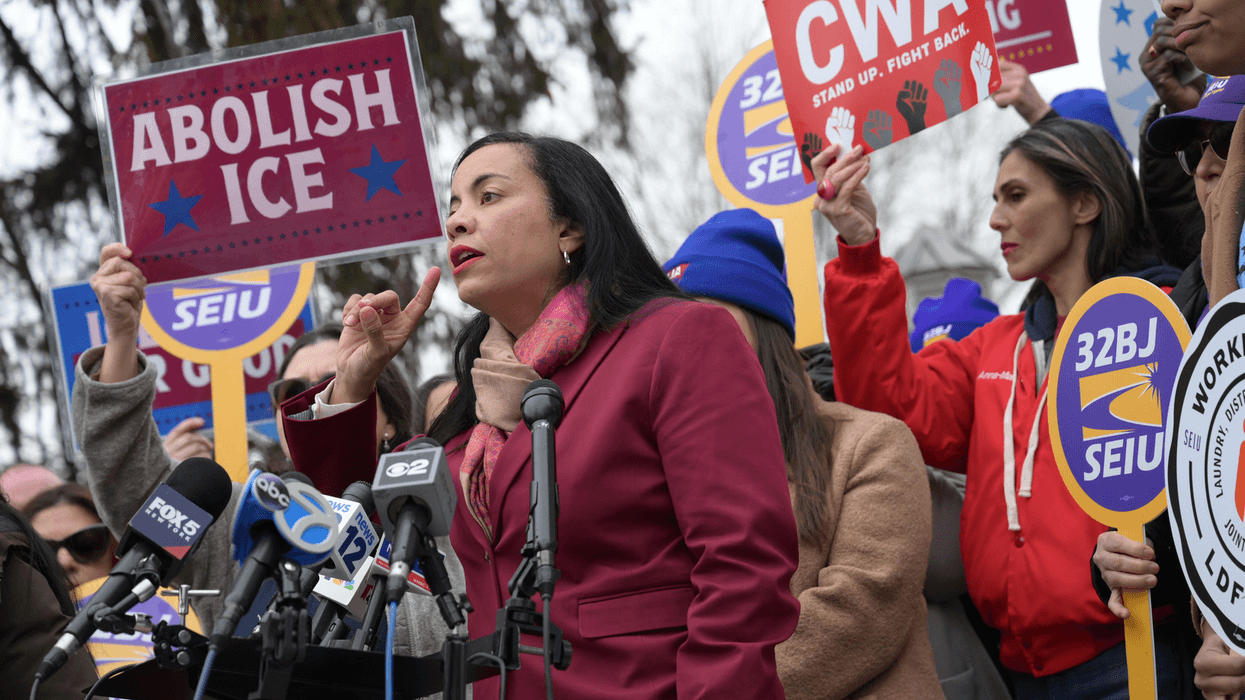
As one of the first races of the 2026 midterm cycle, the outcome in NJ-11 carries significant weight in the broader narrative wars shaping this political moment. Would voters in a district long represented by establishment figures choose a movement candidate running unapologetically on Medicare for All, abolishing Immigration and Customs Enforcement (ICE), and taxing the wealthiest individuals and corporations?
Then there was the question on building power in strategic geographies: Could long-term relational organizing—rooted in political education and neighborhood leadership—overcome the gravitational pull of big money and name recognition?
Yes, yes, and yes.
Analilia’s victory in NJ-11 was powered by more than any single organization. Labor unions, local and national movement organizations, progressive elected leaders, and grassroots networks across the district consolidated quickly and decisively around her candidacy. Organizers who have been fighting for housing, healthcare, immigrant rights, and worker power recognized the stakes of this race and pulled their weight, aligning people and resources behind a shared vision.
But any honest accounting of this victory would be remiss to not center the extraordinary organizing efforts of Make the Road Action New Jersey (MRANJ).
For years, MRANJ has built deep relationships with working-class voters, immigrants, and communities of color across NJ-11. Their members are not seasonal volunteers. They are leaders formed through a common fight for housing, economic, and immigrant justice.
When Analilia’s campaign began, the organizing muscle was already there.
Over the course of the campaign, Make the Road Action NJ led a relentless, people-powered field operation—knocking 25,100 doors in freezing winter and spring sun alike, making 154,430 calls to voters across the district, and organizing 1,078 volunteer canvass shifts. Popular Democracy in Action supported this work by mobilizing our national network, deploying staff to coordinate volunteer operations in the district, hosting national phone banks, and aligning resources with the strategy on the ground. In the lead-up to the primary on February 5, we helped fund targeted outreach, including mobile billboards in key areas and a free party bus to the polls in Belleville to boost turnout.
But numbers alone do not tell the story.
What mattered was that many of the people knocking those doors were Guardians—leaders trained in prior years to organize their own neighborhoods. They were not strangers coming into the turf. They were familiar faces. They were neighbors.
Relational organizing is often dismissed as a buzzword. In practice, it is slow, trust-based work. It means your neighbor opens the door because they know you. It means you can have a conversation about rent hikes, losing your healthcare, or fear of ICE raids because of shared lived realities.
This is what years of investment in people looks like, and it went a long way in this campaign.
This victory in NJ-11 required deep relationship building; message discipline; and courage from organizers, volunteers, and voters alike. It required labor partners, grassroots organizations, and national networks pulling in the same direction. And it required the steady leadership of Make the Road Action New Jersey, whose long-term base building anchored the work on the ground.
During these last few months, I have seen firsthand the unique power of our network.
We proved that investing in hyperlocal leaders during non-election years must come first. We proved that narrative power and base building, developed patiently over time, can withstand the test of a competitive race. Most importantly, we proved that organized people can defeat better-funded opponents without surrendering their values.
In an era defined by authoritarian escalation and billionaire consolidation, many ask whether democracy can defend itself.
No, it cannot.
But organized neighbors can.
Analilia’s victory in NJ-11 is not the end of a story. It is evidence of what becomes possible when movements invest in long-term organizing models. For organizers across the country, the lesson is clear: If we want material gains—universal healthcare, immigrant rights, wages that keep up with inflation—we must invest in leadership, relationships, and narrative power long before the next fight reaches the ballot box.
Poll after poll shows majorities of the public back taxing corporations and the very rich, prefer a Medicare for All healthcare system to our patchwork private insurance system, and are deeply concerned about climate change.
The re-election of Donald Trump reignited a simmering feud between the progressive and centrist wings of the Democratic Party. While centrists have cautioned against alienating “moderate” voters, progressives have urged the party to rally around universal healthcare, raising wages, and other populist measures.
If recent elections are any indication, moderate voters seem plenty receptive to progressive appeals.
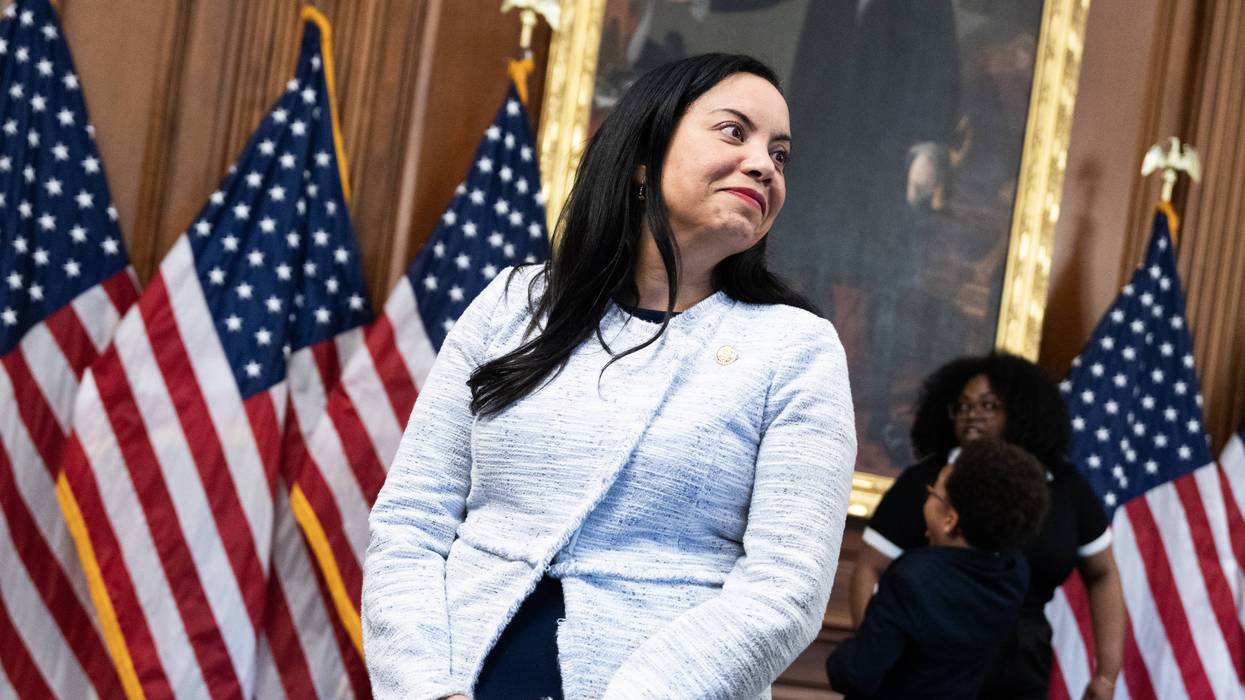
Newly minted Rep. Analilia Mejia recently won a special election for New Jersey’s 11th district in the House of Representatives. Mejia replaces moderate Democrat Mikie Sherill, who vacated her seat in the affluent, suburban district after winning the state’s gubernatorial election.
Mejia gave a fiery inaugural address on April 20 calling on her colleagues to “Stand up, defend, and restore not only our democracy, but also a just economy that actually works for working people.”
Centrism means preserving the status quo—and the status quo is a failure for most Americans.
Mejia has built a political career championing economic populism. Not only did she serve as Sen. Bernie Sanders’ (I-Vt.) 2020 campaign political director, but was also co-executive director of the Center for Popular Democracy and director of the New Jersey Working Families Alliance.
Poll after poll shows majorities of the public back taxing corporations and the very rich, prefer a Medicare for All healthcare system to our patchwork private insurance system, and are deeply concerned about climate change. Mejia says that makes those issues good politics as well as policy.
I talked to Mejia in the run-up to the 2022 midterms. “The policies that really motivate people, that work for working families,” she told me then, “are also popular ideas.”
She’s right. This year, Mejia won her suburban district handily, beating out Republicans and more centrist or conservative Democrats. Her populist, morally unambiguous platform included a demand to abolish Immigration and Customs Enforcement (ICE) and a denunciation of Israel’s genocide in Gaza.
In November 2026, Mejia will run for the same congressional seat, facing Republican candidate Joe Hathaway, a man who labeled her a “radical socialist.”
But there’s nothing radical about popular programs that address affordability.
Pundits have claimed for years that tacking to the center is a surefire way to win political power. When Vice President Kamala Harris ran for president on a centrist campaign in 2024, many explained her loss to Donald Trump as the result of her identity rather than her politics.
But centrism means preserving the status quo—and the status quo is a failure for most Americans. Sharp analysts such as Tressie McMillan Cottom identified the real reason Harris lost, saying her “promise was that nothing much would change about the country but the race and gender of the one in charge.”
At a time when some members of Harris’ party are giving in to a white supremacist resurgence by backing away from people of color in positions of power, Mejia leans into her racial and ethnic identity to connect with voters of all backgrounds. “I am the daughter of a Dominican factory worker and a Colombian seamstress who knew struggle,” she said during her inaugural speech.
Indeed, candidates like Mejia—and progressive populist politicians such as Rep. Delia Ramirez (D-Ill.), Rep. Summer Lee (D-Pa.), and New York Mayor Zohran Mamdani—have proven that demographic diversity is not a liability for candidates who embrace justice-driven platforms and take principled stands on issues.
“The ideas that we support are popular ideas, are transformative ideas, and if we get together and raise our voices, we can and must win,” Mejia told me in 2022. “Everything depends on it.”
She added, “Democracy is not a spectator sport. You have to jump in and participate.” And that’s precisely what she did.
"We need an economy that reflects the realities of 2026, not one stuck over a decade ago," said the newly sworn-in Rep. Analilia Mejía, who helped lead the campaign to raise wages in her home state of New Jersey.
A pair of progressive Democrats unveiled a bill on Tuesday that would raise the federal minimum wage to $25 per hour, considered the bare minimum a single adult needs to meet the cost of living in much of the US.
The Living Wage For All Act is the first bill to be introduced by the newly sworn-in Rep. Analilia Mejía (D-NJ), who won a special election earlier this month after helping to lead the fight for a $15 minimum wage in her home state of New Jersey.
Citing data from MIT's Living Wage Calculator, the Living Wage For All campaign backing the legislation argues that $25/hour is needed for a single adult in most parts of the country to afford basic necessities like housing, food, and healthcare.
As the cost of living has skyrocketed over the past decade and a half, the federal minimum wage has remained frozen at $7.25 and hour since 2009.
"This is unacceptable," Mejía said. "We need an economy that reflects the realities of 2026, not one stuck over a decade ago."
The bill is cosponsored by Rep. Delia Ramirez (D-Ill.), the daughter of Guatemalan immigrants who, she said, worked multiple minimum-wage jobs just to get by.
“I remember being in the fourth grade, and my mom talked about her job, and she was getting paid $4.75 an hour,” the 42-year-old congresswoman said during a press conference on Capitol Hill Tuesday. “Yet the federal minimum wage is barely $7.25, many years later.”
"Today, as we think about companies reporting record high earnings, working people are still struggling to survive," she said. "People are working full-time jobs and still cannot afford to live."
A USA TODAY survey from January found that around 40% of workers say their paychecks have not grown enough to meet the rising cost of living, which has been further exacerbated by spiking inflation caused by President Donald Trump's erratic tariff regime and war in Iran. Another survey conducted by Resume Now in April found that about half of workers fear their wages will never catch up to the cost of living.
While some states and cities have gradually raised their minimum wages above the federal level and have seen modest declines in poverty as a result, none have been raised to the point of being considered a living wage.
The bill introduced by Mejía and Ramirez would similarly phase in its increase to the federal minimum wage over more than a decade, with larger employers leading the transition.
Companies with more than $1 billion gross revenue or more than 500 employees would be scheduled to increase their minimum pay to $25/hour by 2031, while smaller employers would be on a longer timeline to reach $25/hour by 2038.
To ensure wages don’t lag again in the following years, the bill also requires the minimum wage to automatically grow each year to reach the equivalent of two-thirds the national median hourly wage. It also eliminates the subminimum wage, which is paid to tipped workers, youth workers, and workers with disabilities.
The bill is almost certainly dead on arrival in a Republican-controlled Congress. Even if Democrats retake both chambers come November, it would likely face an uphill battle to pass.
In 2021, the last time Democrats had a governing trifecta, eight centrist members of the Democratic caucus killed an amendment by Sen. Bernie Sanders (I-Vt.) to include a $15/hour minimum wage in then-President Joe Biden's post-Covid budget reconciliation package, the American Rescue Plan.
But as Democrats seek to address rising fears about America's "affordability" crisis, Saru Jayaraman, the president of One Fair Wage, said politics are starting "to catch up to reality."
"Across the country—from California to the Midwest to the East Coast—workers are organizing for $25 and $30 because that is what it takes to live," she said. "The polling shows this is not just popular, it is necessary."
“We cannot talk about affordability without talking about what people are paid,” added Stuart Appelbaum, the president of the Retail, Wholesale, and Department Store Union.
More than 20 Democrats have signed onto the bill as cosponsors, including Congressional Progressive Caucus Chair Greg Casar (D-Texas) and Rep. Ro Khanna (D-Calif.).
The effort is being spearheaded by the Living Wage For All Coalition, a national collective of labor unions, civil rights groups, and other economic justice organizations that are simultaneously pushing legislation to adopt a living wage in states like New York, Illinois, and Maryland, and municipalities such as Los Angeles and Washington, DC.
April Verrett, the international president of the Service Employees International Union, which has more than 2 million members across North America, said that “the introduction of the Living Wage for All Act is a powerful testament to the worker-led movement that is forcing a new baseline for livable wages.”
Voters "chose people over corporations," said one progressive group.
Two months after her primary victory was declared a sign that progressive advocates for the working class can win elections "everywhere" in the US, organizer Analilia Mejia easily won a special election in New Jersey's 11th Congressional District on Thursday after a campaign dominated by big spending by the pro-Israel lobby.
Mejia, an organizer who worked on Sen. Bernie Sanders' (I-Vt.) 2020 presidential campaign and has served as executive director of the New Jersey Working Families Alliance, was outspoken in her support for expanding the Medicare program to the entire US population through the Medicare for All Act, abolishing US Immigration and Customs Enforcement, canceling student debt, and breaking up corporate monopolies.
“In one of the richest nations in the world, middle-class families, working-class families, should not find themselves falling behind in greater and greater debt, while billionaires consolidate their stranglehold on every aspect of our economy,” said Mejia in her victory speech.
The race was called by The Associated Press within minutes of polls closing Thursday night. With 94% of votes tallied as of early Friday afternoon, Mejia was nearly 20 points ahead of her opponent, Republican Joe Hathaway.
Despite the resounding victory, Hathaway insisted in his concession speech that the "broader electorate" is not enthusiastic about "the kind of far-left policies embraced by Ms. Mejia.”
Journalist Ryan Grim of Drop Site News noted that, as with other races in which progressives have challenged more moderate Democrats like former Rep. Tom Malinowski, whom Mejia ran against in the primary, "the argument was that candidates like Mejia couldn’t win this district."
Mejia is one of several progressive Democrats also running in the 2026 midterm elections, in which the Democratic Party is hoping to take control of at least one chamber of Congress to weaken President Donald Trump's grip on the federal government.
In Maine, political newcomer Graham Platner, a combat veteran and advocate for a billionaire's minimum tax, is running against Democratic Gov. Janet Mills in the primary; Mills was pushed by Senate Minority Leader Chuck Schumer (D-NY) to join the race. In Michigan, a new poll from Emerson College this week showed Medicare for All advocate Abdul El-Sayed statistically tied with state Sen. Mallory McMorrow (D-8); El-Sayed was eight points ahead of where he was in the same survey in January, following sustained attacks by McMorrow and a centrist group over his decision to campaign with an outspoken critic of Israel.
The result in New Jersey's 11th Congressional District, said Grim, "suggests a new world is possible."
In addition to pushing for policies to improve the lives of working New Jersey families, Mejia was the only candidate in the Democratic primary election in February who publicly stated that Israel's US-backed assault on Gaza is a genocide.
Journalist Zaid Jilani noted that—with public support for Israel plummeting, including among Jewish voters, as it wages war on Gaza, Iran, and Lebanon—Mejia's position didn't prevent largely Jewish communities in the 11th District from supporting her.
Hathaway accused Mejia of being antisemitic over her criticism of Israel's assault on Gaza, an allegation she vehemently rejected during a debate.
“As a member of Congress, I would use every legislative power at my disposal to protect the rights of Jewish constituents and convene spaces to educate and to fight antisemitism, because I know it’s real,” she said.
During the primary, the United Democracy Project, a super political action committee aligned with the powerful pro-Israel lobby group the American Israel Public Affairs Committee, focused its attention on Malinowski, attacking the longtime supporter of Israel for his criticism of far-right Prime Minister Benjamin Netanyahu. The group's spending against Malinowski appeared to backfire, benefiting Mejia, who has been more outspoken in her objections to Israel's violent policies.
Mejia was elected to fill the seat left vacant by Gov. Mikie Sherrill, also a Democrat, for the next eight months. She has already entered the race for the November election, and Hathaway has signaled he plans to run as well.
The progressive advocacy group Our Revolution said that by electing Mejia to represent the 11th District, voters "chose people over corporations."
"They chose to send an organizer to Congress," said the group, "to fight for radical change and build a better Democratic Party."