

SUBSCRIBE TO OUR FREE NEWSLETTER
Daily news & progressive opinion—funded by the people, not the corporations—delivered straight to your inbox.
5
#000000
#FFFFFF
To donate by check, phone, or other method, see our More Ways to Give page.
Daily news & progressive opinion—funded by the people, not the corporations—delivered straight to your inbox.

So even if everything goes well today—and there's no guarantee yet that it will—we must not fool ourselves into believing that our job is done.
It is impossible to know how America will vote today. The polls are encouraging, but, as we have painfully learned, they cannot be relied upon.
All we really can rely on is the good sense of the American people.
True, some Americans continue to worship at the altar of the worst president in American history. Others continue to be so angry and disaffected that they lash out against scapegoats such as Muslims, transgender people, Black people, and immigrants.
Others with better sense understand that Trump and his Republican sycophants in Congress have caused prices to rise faster than their wages, largely because of Trump’s war with Iran and his tariffs. As a result, they’re justifiably furious at the economic crisis Trump and Republicans have foisted upon them and their families.
Those with the best sense see that Trump and the GOP have also betrayed the central values of America — democracy, equal justice under the law, and basic fairness. And they’re committed to changing course.
I believe that a majority of Americans fall into the latter two categories. They will put an end to Republican control of the House and possibly the Senate.
But even if the great sleeping giant of America fully awakens today, our job just begins.
A dangerous man continues to occupy the White House, and his already tenuous grip on rational thought is rapidly slipping away. His Cabinet appointees are among the most ignorant and treacherous ever to hold these jobs. A majority of the Supreme Court holds bizarre positions, such as the “unitary executive” and “originalist” theories found nowhere in law or the Constitution.
So even if everything goes well today, we must not fool ourselves into believing that our job is done. Whatever happens, we’re going to have to continue to organize, mobilize, and energize everyone around us to put pressure on Congress — even a Congress controlled by the Democrats — to protect and strengthen our democracy.
For now, let us hope and pray that common sense prevails today.

The president is trying to cancel the midterm elections like he cancels culture at museums, at the same time trying to buy the results.
Someday soon, it will be possible to call for an orange skin cosmetology appointment with your not-made-in-America Trump phone, which has been on back order for 18 months; schedule the appointment with your Trump watch; and pay for it—and a new US passport with a likeness of President Donald Trump—with Trump bitcoins, while staying at a Trump hotel near a Trump golf course. You can already take a cross country trip to visit national parks with your Trump digital pass embossed with a picture of George Washington and a convicted felon. Travel will be safer in a surplus Trump Catering truck® like that Trump used to flee Turkey fearfully from imagined Iranian attacks. Will the Trump Catering truck® be assembled from the bodies of unsaleable Tesla Cybertrucks?
There are limits to Trump merch. When you get cancer you will not be treated in Trump Hospital because there is none and your medical insurance has been eliminated. Nor will you receive support from the Trump Foundation because it was closed for fraud. But citizens will have their Trump-embossed Bible at hand (only $59!!) to use prayer to appeal denied claims with insurers. Recovery will be difficult in any event in the face of patient malnutrition: TrumpSNAP© benefits have been cut by the Big Beautiful Bill™. But patriotic American children, should they outlive their parents, will be able to draw on their Trump Savings Accounts©, with $1,000 never coming from the US government as golden seed money.
Fortunately, when they retire in 70 or 80 years, these citizens will take their huge nest eggs to book a room at the Trump Gaza resort. Here they will be served by TrumpGastarbiter©—undocumented workers who have been vetted by Jared Kushner. Palestinian chefs will be unavailable since they will have been forcefully deported—to Venezuela or Greenland. No one will be able to afford meals at Trump Resorts in any event, as Trump himself proudly noted, suggesting that the $5,000 price of a hamburger and dessert is beyond the means of American spongers. That’s TrumpAffordability©! At least clothing will be inexpensive. We hear that Trump “Nice As*” T-shirts are being produced now. They can be bought in bulk at the “Trump Post-midterm Black Tuesday™” Fire Sale at your local Trump Merchandise Stores or online. They look good when worn with Trump Never Surrender gold sneakers.
This is all chump change to the grafter-in-chief. The president is trying to cancel the midterm elections like he cancels culture at museums, at the same time trying to buy the results. The election fraud has already begun through the Trump Vote Buy2025™ program that consists of a variety of ploys. While Trump and his family have added as much as the $10 billion in digital wealth to their pockets in the past two years, Trump promises $4.5 billion to fund wealth accounts for 10 million children—roughly $450 for each child. A parent can secure the funds through the gold-plated Trump Accounts App. Trump repeatedly promises Trump Tariff© rebates at $2,000, Trump Doge™ savings of $2 trillion, and Trump $5,000 Vote Only Republican© checks (roughly $1.2 trillion). He cynically gifted $500 each to 1 million people for their Affordable Care Act premiums that he previously cut to ensure their indebtedness. He started a $30,000 hotline per tip up to $25 million for Government Fraud Whistleblower Program, a one-time $90 payment for some Medicare B enrollees, and $8 billion farmer aid to cover the $2.4 billion it has cost farmers to date to buy diesel and $33 billion because of tariffs.
As the elections approach, the president will give himself some major award, perhaps the Presidential Medal of Freedom? Since he will never win the Nobel Peace Prize, only the FIFA Peace Prize, the MAGA contingent has already proposed the Bolsonaro Brazil Election Tantrum Prize and the Trump “Sexual Misconduct” Prize (28 accusations counting). It is said that Reporters Without Borders contemplated the creation of the Trump Orange Journalism award.
Finally, we await rumored sale of a signed, limited edition wall-size reproduction of Trump’s loving 50th birthday greeting to Jeffery Epstein, that will go for $1,000. Soon, he’ll take his satchels of money on board his Qatari747 “Air Fraud One” for off into the sunset to Mar-o-Lago, with its $5,000 burgers and gold bathroom fixtures replete with classified documents.
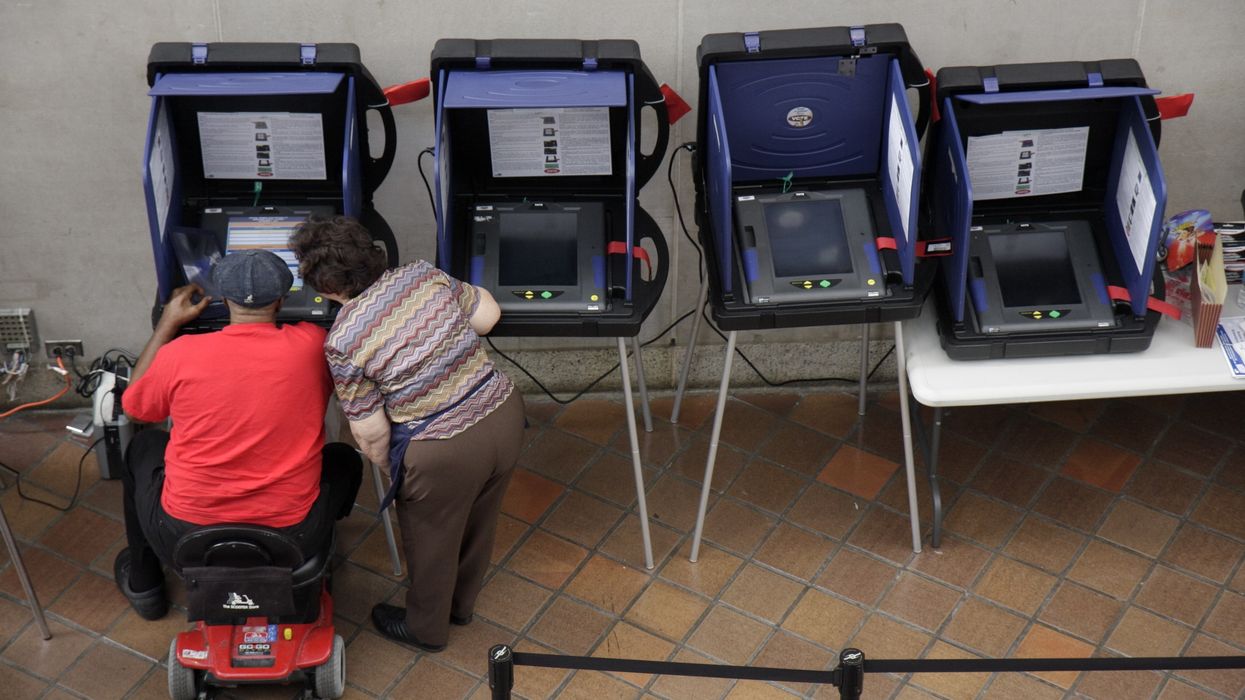
Our right to have a say in what comes next is on the line. We have an opportunity to demand a future that puts our families and caregivers first.
This country depends on caregivers, but too often it fails the very people holding our families and communities together. As we head into the midterms, we have the chance to make our voices heard on the policies that affect our lives and families’ futures.
A 2025 AARP and National Alliance for Caregiving survey found that 63 million Americans identify as caregivers—nearly 50% more than the decade prior. That’s millions of people raising children, caring for aging parents, supporting loved ones with disabilities, all while balancing that labor with jobs and bills of their own. Caregiver needs and experiences deserve to be represented in the decisions we make at the ballot box.
Both of us are parents (one of us is a mother to six beautiful children and leads an advocacy organization and the other is a father and maternal health advocate).
Caregivers deserve a voice in the decisions that shape our lives, but exercising that right can be difficult when we’re already stretched thin.
We understand personally and professionally that the burden of caregiving is not shared equally, that mamas are expected to do more with less. There is an absolute need for fathers to do more as engaged parents. Black mamas make up nearly 40% of caregivers in the US. Yet, Black women continue to die from pregnancy-related causes at three times the rate of our white counterparts. When mothers lack support, the whole family feels it.
These inequities are not inevitable. They reflect decisions about whose health, time, and communities our systems prioritize—and whose needs are overlooked. Those priorities are shaped by the people we elect as leaders and the policies they enact.
As we head into the midterm elections, we cannot afford to let confusion, misinformation, or intimidation efforts stop us from making our voices heard. For parents and caregivers, these are not abstract policy fights. They are about whether we have a say in the decisions that determine our access to affordable childcare, quality healthcare, and the support we deserve.
That’s what we mean when we say care is on the ballot this November. Our right to have a say in what comes next is on the line. We have an opportunity to demand a future that puts our families and caregivers first.
Care is about more than what happens in a doctor’s office. It is whether we can afford groceries, find childcare, and take time off for a sick loved one. It is whether moms receive support before, during, and after pregnancy, and whether dads have the resources to be the parents they want to be. And it is whether our children have the tools they need to not only survive, but thrive.
From pregnancy through postpartum, care should be full-spectrum, comprehensive, and supportive. It should protect maternal health, provide direct cash during and after pregnancy, offer support to fathers, and help care for our kids while we work to put food on the table.
Caregivers deserve a voice in the decisions that shape our lives, but exercising that right can be difficult when we’re already stretched thin. We should not have to navigate a maze just to exercise our right to vote while juggling the demands of caring for our families. And we cannot hold elected officials accountable if we are shut out of the process.
Yet, changing voting rules are making it harder to understand when, where, and how to cast a ballot. From new mail-in voting shifts and voter ID requirements to redistricting efforts and the gutting of federal protections under the Voting Rights Act, these changes create additional uncertainty for busy families and caregivers—especially Black voters and other historically marginalized communities who have long faced barriers to the ballot. We cannot allow these barriers to deepen or history to repeat itself.
Every eligible voter deserves to cast a ballot free from intimidation, with confidence that their vote is private, and that their voice will be counted. Our democracy works best when everyone has a free and fair chance to participate.
Moms and dads alike know what it takes to care for what matters. Now is the time to bring the same determination to the ballot box.

Today, we must stand shoulder to shoulder, in unity, to defeat the oligarchs and fascists and preserve all that is great about America!
On November 8 1933, Franklin Roosevelt won an unprecedented landslide victory over President Herbert Hoover; and Democrats won massive majorities in both houses of congress.
Two days earlier, on November 6 1932, the Nazi Party failed to win a majority of seats in the German parliamentary elections, performing more poorly than the previous election in June, which also resulted in a hung parliament. In both elections, the left, center-left, and center parties, all of which opposed the Nazis, won enough seats to form a government, but they refused to enter into a coalition. New elections were called for March 1933. The Reichstag burned down on February 27. We all know what followed
Today—November 3, 2026—we cannot, we must not, make the same mistake the German people made in 1932 when the opposition divided and the Nazis ascended. We must act again as Americans did on election day 1932 when our love for democracy and its institutions generated a landslide! That result produced the most popular administration in American history, one that unapologetically served the interests of working people and proceeded to marginalize reactionary politics in America and crush fascism around the world.
If anyone believes these kleptocrats have any interest in supporting a broadly middle class society, like the one developed in post-WWII America, they are either willfully naïve, stone cold stupid, or on the take.
Yes, it’s true that between progressives and moderate Democrats, independents and ethical conservatives, we have our differences and they are not insignificant—but we are bonded by our support for our constitutional democratic republic.
Today, we must stand shoulder to shoulder, in unity, to defeat the oligarchs and fascists and preserve all that is great about America!
I am loathe to compare anything to Hitler and the Nazis, but the historical proximity of those two elections 96 years ago reveals, in stark relief, the importance of Americans reaffirming our commitment to democracy—and how much better the country and the world will be afterwards.
Indeed, it is not only the maintenance of popular sovereignty, in the land that launched the age of democracy, that is on the line. Also at stake is any possibility of our country returning to an economic social contract that serves the vast majority of the population. According to all polling, the return of an economy that prioritizes the interest of average middle class households is the deepest wish of the American people—and has been since the collapse of the housing market, and the great recession that followed, in 2008.
As bad as American wealth inequality was by 2024, we’ve never seen anything like the past two years. While most Americans struggle to get by, not only have unimaginable fortunes been accrued by the country’s billionaires, but a notable subset of this tiny fraction of the population have become part of President Donald Trump’s inner circle—and are shamelessly wielding political power in their own interests.
If anyone believes these kleptocrats have any interest in supporting a broadly middle class society, like the one developed in post-WWII America, they are either willfully naïve, stone cold stupid, or on the take.
Tuesday is likely our last opportunity to check their power; and begin, through democratic means, to build an economy for all the people.
Fortunately, the signs are promising. Early voting has shattered previous records. Just one more day of non-stop GOTV efforts, followed by 60 days of legal vigilance (until the new Congress is seated)—then we begin to make things right!
* * * * *
One final thought, on a theme I will return to after the elections.
For all non-progressives reading this (and for progressives, please share this with your non-progressive friends), understand that the contemporary progressive movement is not anything radically exotic or unfamiliar on the American landscape.
As mentioned above, progressives were behind the most popular administration in our history, we also designed the economic policies in the era of America’s greatest prosperity, and we ran the country during our greatest military triumph (WWII).
Just like then, we simply want a free and just America that works for all people. As during the “golden era” of post-war America, we want to live in a prosperous society with unlimited possibilities—with the one caveat that, going forward, those opportunities must be extended equally to all people.
Because these are our convictions, we support a set of policies with a proven track record to deliver these society-wide outcomes. They worked previously in America and are still succeeding around the world—and, with only a few tweaks and updates, we are superconfident they will work their magic again in 21st century America.
So, don’t be swayed by anyone who tries to make us sound scary or irresponsible. Give us a listen, and you’ll quickly realize that we are just like you. We want the same things, and we look forward to working together to achieve our shared goals.
The first step is winning big today! Onward!

The 2026 midterms are about more than congressional majorities; they are an opportunity for Americans to hold their representatives accountable and decide whether fear should remain an instrument of government.
The grandfather of the current president of the United States, Friedrich Trump, arrived penniless from Germany at the age of 16 in 1885. He worked as a barber in New York before heading west, eventually opening a restaurant in a mining town. Like so many immigrant stories, his is unremarkable in one sense, and quintessentially American in another. It reminds us that history often looks different when viewed from a distance.
Today, however, history is being written in real time. And the images now emerging from the United States tell a troubling story.
Across many American cities, armed and masked Immigration and Customs Enforcement (ICE) agents are conducting highly visible raids. Videos show people being detained in the streets, families disrupted, and communities thrown into fear. Other footage captures American citizens confronting federal agents in their own neighborhoods amid tear gas, pepper spray, and rubber bullets. These scenes dominated evening news broadcasts not only in the United States, but in Europe and elsewhere. Footage related to the fatal shootings in Minneapolis spread globally. Now, California’s Central Valley faces raids and accusations of voter intimidation ahead of Tuesday’s elections. They project an image of a nation in distress, one in which fear appears to be overtaking everything.
The nation’s greatness has always rested on the idea that people from every corner of the world came here to live under the same laws, to contribute, to succeed, and—eventually—to become citizens.
Some of these encounters raise serious constitutional questions. When force is used during immigration enforcement actions, concerns arise about the Fourth Amendment’s protections against unreasonable searches and seizures, the Fifth Amendment’s guarantee of due process, and the First Amendment rights of citizens who protest in public spaces. These are not abstract legal matters. They go to the heart of what it means to live under a constitutional democracy.
Why are so many people willing to stand in the streets to protect their neighbors? Because those neighbors are deeply woven into the fabric of American life. Undocumented immigrants often perform jobs that others are unwilling to take: picking apples, tending livestock, washing dishes, cleaning hospitals, and caring for the elderly. They work hard, pay taxes, and spend money in local economies. Economist Paul Krugman has noted that immigrants played a critical role in stabilizing the US economy after the pandemic, continuing essential work when much of the country shut down. Have we already forgotten that?
Most Americans either descended from immigrants who once lacked legal status or know family stories that began that way. This country has always been a mosaic of people who arrived with little, worked relentlessly, and eventually earned not only stability but admiration. They learned to love this land. Many still feel a surge of pride when they hear the national anthem or see the Stars and Stripes.
That is why what is happening now should concern all of us. Fear is spreading through immigrant neighborhoods—fear of going to work, going shopping, seeing a doctor, even answering the door. Parents worry about what will happen to their children. Communities are learning to live with the anxiety that a knock at dawn could change everything.
History teaches us that when societies normalize fear directed at a particular group, the consequences are rarely confined to that group alone. The United States has long defined itself by its rejection of such thinking. Dystopian novels were not written as instruction manuals, but as warnings to recognize the early signs of authoritarian drift and stop it.
As America celebrates the ongoing 250th anniversary year, it should be recommitting itself to the ideals articulated in 1776: liberty, dignity, and equal protection under the law. The nation’s greatness has always rested on the idea that people from every corner of the world came here to live under the same laws, to contribute, to succeed, and—eventually—to become citizens.
Thus, America must find the courage to honor its own history. That means recognizing the contributions of immigrants, including undocumented ones; rejecting policies that force people into hiding like thousands of Anne Franks; and pursuing reforms that help them obtain citizenship and integrate them into civic life. In doing so, the nation would not only honor its founding principles, but also the generations of immigrants—like Friedrich Trump—who believed in America enough to come here with nothing and help build it.
The 2026 midterms are about more than congressional majorities. They are an opportunity for Americans to hold their representatives accountable and decide whether fear should remain an instrument of government. They offer Americans an opportunity to remember those who made America their home but now live in constant fear.
After all, a president may wear many hats—or, in Trump’s case, many MAGA baseball caps—but no president should forget that his own family has an immigrant past. And that includes immigrant brides. How America treats immigrants ultimately reflects what kind of country it chooses to be. It is hubris to treat immigrants badly.

Our students deserve so much better than the chaos the legislature has thrown at our public schools. It’s vital that communities across New Hampshire vote no on the tax cap on November 3.
On Election Day, New Hampshire residents will face a ballot initiative that aims to place a tax cap on every public school district in the state. Similar proposals to cap property taxes or eliminate them for certain property owners are on the ballots this November in multiple states. But regardless of where the initiatives are being considered, if successful, the financial consequences will threaten school sports, extracurriculars, and even basic academic programming statewide. In the case of New Hampshire, the consequences will be especially negative to schools, families, and children.
At least since the Covid-19 pandemic, New Hampshire school districts have struggled to stay afloat. In September 2026, the town of Milton, New Hampshire was shocked by revelations of a $2.5 million hole in its school district’s budget. Nearby, the Farmington School District was forced to reduce teaching positions in the 2025-2026 school year due to a growing budget deficit. In the western part of the state, Claremont schools cut teaching positions and students washed cars to raise funds. At the same time, New Hampshire launched a universal voucher program to the tune of $102 million, sending a record amount of public money to private schools.
Historically, New Hampshire has largely left local communities to fund public schools on their own. In the 2024-2025 academic year, according to data from the National Education Association, New Hampshire ranked 50th in the share of state revenue contributed to public schools, at 28%. While some argue that New Hampshire has maintained level funding in real tax dollars, the state has simply not made budget increases on pace with rising costs, leaving local taxpayers holding the bill.
The new approach intrudes on that time-honored process of collective decision-making through deliberation. Instead, it places school funding into the hyper-partisan environment of the midterms.
In 2026, a superior court ruled the state had not been fulfilling its constitutional responsibility to provide adequate funding to public schools. New Hampshire Attorney General John Formella is appealing the case to the state’s supreme court, where he is also attempting to overturn the landmark 1993 case that established the state’s responsibility to provide fair funding to all public schools.
In this context, a local tax cap for schools would be detrimental for students and communities in general. While New Hampshire does not allow for statewide referendums on its ballots, legislators supporting the tax cap circumvented this with clever legislation. In 2025, Republican Gov. Kelly Ayotte signed HB 1300 into law, a measure that automatically places a tax cap question on the ballot of every municipality in the state in 2026 and in 2028.
The ballot measure was challenged on multiple fronts in court, including on the lack of clear constitutional standing and on account of being difficult to understand. The state supreme court, which has been plagued by scandals—including the chief justice’s resignation in September over an ethics violation—ultimately rejected these challenges.
The tax cap will require a three-fifths approval of local voters to go into effect. If enacted, it would limit local control of the schools with a tax cap that is linked to the Consumer Price Index (CPI), which, by nature of being tied to non-salary costs, is unpredictable on a year-to-year basis and can easily be outpaced by school costs, especially with rising fuel prices. It would also impose a limit on administrative spending as a proportion of the total school budget.
The effort to institute a tax cap defies New Hampshire’s long history of local control. It’s a tradition that brings residents of towns across the state together for town halls each spring, where school budgets are debated publicly. The process honors the citizens’ right to petition and write warrant articles that meet the specific needs of the locality, including placing limits on spending, if that is the collective will of the people. The new approach intrudes on that time-honored process of collective decision-making through deliberation. Instead, it places school funding into the hyper-partisan environment of the midterms.
Marianne Doane, who has taught in Milton for more than 40 years, is dedicated to its youth. As the president of the local teachers association, Doane has worked across differences to build support for her students and their education. She has organized babysitting services during town meetings to help provide childcare for parents who otherwise might not be able to participate. She has encouraged families to vote by sponsoring civic engagement programming for children outside of polling places. One year, she facilitated an activity for kids to design “I Voted” stickers and handed them out at the polls. In an interview, Doane shakes her head in disbelief about the tenuous position of the schools in her small town.
“Right now if the tax cap passes, the oil bill is $51,000 and the anticipated budget for special education is $500,000,” she says. “In order to come up with that amount, we are looking at losing 12 teachers. We only have 12 teachers at the elementary school. Who’s going to be left to teach?”
Down the road in Farmington, school administrator and veteran classroom teacher Kimberly McGlinchey is running for state representative. Her campaign is centered on defending public schools and addressing the school funding crisis. The district she seeks to represent is split between two towns as part of a legislative gerrymander.
Undeterred by the challenges of running a school and running for office, McGlinchey is clear-eyed about what the tax cap will mean for students.
“The problem with the school property tax cap is it does not consider local needs,” McGlinchey tells The Progressive. “The inflation rate of fuel, food, and materials has increased far more than the CPI. This means there will be a direct impact on programming and staffing that affects student learning and instruction, depleting the quality of New Hampshire students’ education. Limiting the funds without proper budgeting in relationship to needs will ultimately leave schools shortchanged.” McGlinchey has taken this message to the streets, most recently at the town center.
Some communities, like the town of Franklin, New Hampshire, have had tax caps in place for decades. Franklin teacher and union leader Jennifer Weaver says the town struggles to recruit and retain teachers, adding another burden to the long-term staff.
“We’ve been under a tax cap since the 1980s,” Weaver says. “Our [current] tax cap is strangling our community and school.”
Weaver’s warning about the harm of tax caps must be heeded before it’s too late. It’s all part of a multipronged attack against public schools over the last six years that includes the expansion of school voucher programs that funnel public money to private schools.
Our students deserve so much better than the chaos the legislature has thrown at our public schools. It’s vital that communities across New Hampshire vote no on the tax cap on November 3, and learn more about the systematic effort underway to erode public education.

When our government makes decisions about how we get power in our communities, they are also making decisions about whose health and wealth we protect; we should not have to pay the price while corporate polluters and data centers benefit.
$295 million; 200,000 kids with asthma.
That’s the cost of keeping a Michigan coal plant running after it was supposed to close. Now, customers across the Midwest are being forced to pick up the tab—in more ways than one.
Last year, the US Department of Energy (DOE) declared an emergency order to force a coal plant in West Olive to remain open past its scheduled closing. In September, a federal court ruled that this move was unlawful. By ordering the plant to stay open past its planned retirement, the Trump administration made Consumers Energy pay $295 million to keep it running—the equivalent of more than $615,000 per day passed on to consumer energy bills.
Let’s make sure we all fight for a Michigan where future generations can live, work, learn, pray, and play safely in clean air.
This is a story playing out across the country: Federal decisions are keeping power plants online and putting corporate profits over public health while driving up energy costs. Since May 2025, the Trump DOE has ordered seven fossil-fuel power plants in six states to remain open past their planned retirement.
When our government makes decisions about how we get power in our communities, they are also making decisions about whose health and wealth we protect. Our families should not have to pay the price while corporate polluters and data centers benefit. The Trump administration wants you to believe in fabricated emergencies in order to pay for rising energy costs—costs largely driven by the artificial intelligence data center buildout. But the real emergency is the cost we’re paying with our health, our wallets, and our future—the kind of cost that shows up on our utility bills and in countless doctor appointments, school absences, missed work days, and hospital visits.
Power plants are a major source of pollution, releasing dangerous greenhouse emissions and hazardous air pollutants like mercury, soot, and smog. Air pollution is a public health crisis in the United States that disproportionately affects people of color, and communities of color are more likely to live near power plants, and are most vulnerable to climate impacts. The US saw more deaths from air pollution in 2021 than any other high-income country.
That’s why we spend every day fighting for the right to clean air.
For decades, we have worked to connect environmental health protection with the values that guide our lives. Through the Green Door Initiative based in Detroit, statewide Michigan Green Muslims, and with the national Clean Air for the Long Haul coalition, we work with communities to put our values into practice—greening our schools, creating air monitoring and workforce development programs, and helping families understand the real costs and injustices of the energy systems around them.
This work begins with a simple understanding that caring for the environment is inseparable from caring for one another. The air we breathe does not stop at a neighborhood boundary, and pollution does not ask what we believe or what we look like before it enters our lungs. We all share the air around us, and we have a responsibility to protect it.
Decisions made in DC can feel removed, but their consequences reach our communities. Three days after the court ruled in Michigan, the US Environmental Protection Agency (EPA) finalized the repeal of most of its 2024 carbon standards for power plants and proposed to rescind all remaining regulations that curb power plant pollution. This is part of a larger effort by the federal government to roll back over 30 clean air and climate protections. Once again, the administration’s polluter-first agenda is prioritizing financial benefits for big business while intentionally ignoring public health harms.
Closer to home, DTE, Michigan’s largest utility, has proposed new gas plants as it plans for much higher electricity demand, and watchdogs say data centers are driving that need. Michigan customers could be left to pay for polluting power plants that leave them with blackouts to feed energy-hungry and water-thirsty data centers instead.
We must demand better. Urge the Michigan Public Service Commission to reject new gas plants and retire existing coal plants on schedule. Submit a letter on EPA’s proposal to roll back the power plant standards. Explain who you are, where you live, and why clean air is a human right for you and your family. Every story makes a difference.
Let’s make sure we all fight for a Michigan where future generations can live, work, learn, pray, and play safely in clean air. That’s something worth investing in.

The public option is a fantasy solution for real healthcare problems that only single payer can solve.
Americans are discouraged about the state of healthcare in the United States. The “Public Option” has again emerged as a possible solution to our healthcare woes.
There are several different proposals labelled as being “the public option” but, at its core, the public option is a health insurance plan that would be placed side-by-side and would also compete with commercial health insurance offerings, for example on the Obamacare exchanges. While the “public” in public option suggests a Medicare-type administration structure, the public option in some formulations would actually be administered by private insurers.
The public option stands in stark contrast to single-payer plans which cover everyone and eliminate private insurance plans entirely. Single-payer plans are often termed Medicare-for-All and, critically, are based on Medicare rather than on Medicare Advantage plans which tend to be run by private insurers.
Americans had already been dissatisfied with the affordability of health insurance and healthcare in recent years, but the passage of H.R. 1, the “One Big Beautiful Bill Act,” has brought additional pain to Americans. This is due, in part, to the failure of H.R. 1 to extend healthcare subsidies that had previously been in place for individuals and families in the Exchanges. The full toll of H.R. 1 is not yet visible, but marketplace enrollment has dropped in 41 states. For example, North Carolina and Ohio saw declines of 22% and 20%, respectively.
Washington state and Colorado have both created public option experiments, and these experiments have not been very successful in lowering premiums or enrolling significant numbers of people.
Democratic politicians (including Washington Sen. Patty Murray) have touted the public option. Presidential candidate Joe Biden, an opponent of single payer, floated the public option. There is a center created at Georgetown University in 2022 with the explicit option of assisting policy makers in exploring the public option. A number of conservative groups have urged Republican legislators to support the creation of the public option.
Reforms aimed at reversing the healthcare in the US can be judged by examining the extent to which plans fulfill the following criteria: Does the proposed solution
Based on the four criteria outlined above, the public option fails to provide meaningful reform.
Health insurance companies provide NO actual healthcare services on their own. The widely accepted theory is that these companies control healthcare costs by means of gatekeeping, but these companies actually add to healthcare costs by creating an expensive insurance workforce that Americans pay for with premiums. Private insurance also installs a costly workforce in hospitals and doctors’ offices that is dedicated to dealing with and defending against the challenges created by the health insurance companies. These costs are ultimately borne by patients.
Insurance companies are savvy and constantly alter their coverage rules and processes with an eye to maximizing their bottom lines. These companies also try to attract patients who won’t cost them too much and shed those who are expensive. This latter tendency can be expected to persist under a public option system and could doom the entire project (see above).
Because the public option would graft another insurance plan on to an already complicated and expensive coverage system, the public option will not heal and can worsen our healthcare landscape by delaying definitive solutions and by damping enthusiasm for genuine effective reform.
The obvious solution is to remove the health insurance companies from the mix and join the rest of the industrialized Western world in enacting a single-payer system. Returning to the criteria used (above) to measure the public option, a single-payer system would
In a nutshell, this is because a single-payer system refers to a common coverage system that covers everyone equally and whose administration is modelled on classic Medicare. This universal coverage would allow for real negotiating power.
The public option bobs to the surface again and again as a possible solution and a putative viable alternative to a single-payer program as it allows politicians to express concerns about healthcare in a way that does not threaten campaign contributions from insurance companies and Big Pharma.
In so doing, these various advocates have often portrayed single payer as “too radical” or “too impractical” to merit serious consideration
I can credibly be accused of being favorably disposed to single payer. The Mercatus Institute cannot. When this libertarian, Koch-funded, free-market-oriented organization set out to study the cost of a single-payer health system, their data did not discredit the economics of single payer but instead provided evidence that single-payer policies would lower healthcare costs.
In contrast to the views of politicians, ordinary Americans in increasing numbers are reporting that they are in favor of single-payer plans and are dissatisfied both with the cost of coverage and the barriers to care embodied in current health insurance coverage. Tellingly, when even Sarah Longwell of The Bulwark (an organization staffed by former Republicans) gives single payer consideration and predicts movement in the direction of single payer, one can argue that the current healthcare crisis may be creating an increased appetite for meaningful change.
The public option cannot fix our healthcare woes. Moreover, adopting this “solution” has the potential to cause further damage to our healthcare mess. A public option is highly likely to prove fiscally unworkable. The failure of this shiny object to address the very real pain Americans are experiencing will delay consideration of solutions that can work. And, critically, a failure of the public option has the potential to extinguish a collective will to do the hard work of creating a healthcare system that works for all of us.

What the midterms could reveal about civic power in this country.
Heading into Tuesday’s midterm elections, the ballot measure landscape reveals a struggle over whether government will respond to people’s needs—and whether communities will retain the power to act through direct democracy when it does not. Economic anxiety, contested rights, and efforts to restrict direct democracy are converging around questions that reach beyond any individual proposal: Who benefits from policy change? Whose priorities will guide government? And what happens when elected officials advance an agenda their constituents reject?
Recent elections suggest that voters are responding to more than a disconnect between their priorities and those of elected officials: they reveal a willingness to take power into their own hands when government fails to deliver. In Oklahoma, voters approved Medicaid expansion in 2020 after years of legislative inaction, using a citizen initiative to secure healthcare access that elected officials had resisted. In Missouri, voters approved Proposition A in 2024 to raise the minimum wage to $15 and establish paid sick leave, translating demands for economic security into a direct policy decision. Voters have also acted to defend their ability to make those decisions: in Ohio’s August 2023 special election, they rejected a legislative proposal to raise the constitutional amendment approval threshold to 60 percent and impose additional petition requirements.
These outcomes do not establish that every voter shared the same motivations, but they demonstrate how communities can pursue change and challenge institutional resistance through direct democracy. In the immediate term, ballot measures can turn that demand into policy. But in the long term, they help build constituencies around concrete solutions and establish priorities that responsive elected officials can carry into their governing agendas. Recent elections suggest that voters are willing to hold politicians accountable for inaction and eager for new leadership who challenge that disconnect. The success of candidates promising concrete economic improvements, the rejection of unpopular legislative proposals, and some incumbent defeats reflect a shared demand for more responsive government. These outcomes do not establish a uniform ideological shift, but they offer a useful lens for understanding Tuesday’s ballot: voters are looking for both economic relief and a greater say in the decisions shaping their lives.
Voters are looking for both economic relief and a greater say in the decisions shaping their lives.
Over the last decade, economic ballot measures have consistently revealed a persistent demand for the government to improve the material conditions of people’s lives. Through proposals to raise wages, expand access to healthcare, and secure paid leave, communities have used direct democracy to pursue economic relief when elected officials have failed to act. These efforts provide an important backdrop for understanding the appeal of campaigns like the one led by New York City Mayor Zohran Mamdani: affordability-centered candidacies reflect demands that voters have long been advancing through the People’s Tool.
Ballot measures are not tools for electing candidates, but they can help create the conditions for more responsive governing. They elevate community priorities, organize constituencies around concrete solutions, and demonstrate public support for policies that elected officials can advance and implement. The connection is not that economic ballot measures successfully elect candidates like Mamdani, but that both reflect a demand for leaders who listen to constituents and use their governing power to deliver tangible improvements. And if they don’t—voters will craft and pass those policies themselves, bypassing unresponsive legislators.
Missouri’s August 2026 election illustrates how similar concerns can produce a decisive “no.” Voters rejected Amendment 5’s proposed income tax overhaul by approximately 83%, amid concerns that eliminating income taxes would expose residents to substantially higher sales taxes. They also rejected Amendment 4, which would have required citizen-initiated constitutional amendments to win majority approval in every congressional district, by approximately 80%. Both defeats represented a sweeping repudiation of major legislative priorities.
Tuesday will test both the demand for policy change and the durability of earlier voter decisions. Reproductive freedom measures in Idaho, Nevada, and Virginia seek to establish or strengthen protections, while Missouri’s proposal would roll back rights voters approved in 2024 while also testing whether to relinquish rights at the expense of banning gender affirming care for minors. These contrasting measures demonstrate that the struggle continues after passage: voters may have to defend a decision they have already made. At the same time, proposals such as Utah’s 60% approval requirement for certain citizen-initiated tax changes would alter their capacity to pursue future solutions.
We must see the emerging connection is between economic security, public power, and democratic accountability. Ballot measures make the distance between legislative priorities and community needs visible. They can also provide a vehicle for closing that distance—especially for people historically excluded from policymaking. Recent results suggest that next Tuesday, voters may reward credible promises of improvement while resisting efforts to shift costs onto them or narrow their governing authority. Whether that resistance consistently produces consequences for elected officials remains an open question.

President Trump and his allies in Congress, across two presidential terms, have broken the federal corporate income tax.
They reduced the statutory tax rate to its lowest level since 1939 and lavishly exempted an enormous share of corporate income from taxation. The results?
Last year, the largest profitable corporations in the country paid the smallest share of their profits in federal income taxes since the Institute on Taxation and Economic Policy, the organization I head, began analyzing this over 40 years ago. Extraordinarily profitable companies paid very little and, shockingly, 114 corporations paid nothing at all.
It is likely that most of these corporate CEOs didn’t break any laws. They don’t have to. Their profligate campaign spending elects candidates who are beholden to them.
Who bears the cost of corporations paying such a pittance? The American people.
Our findings should alarm anyone who thinks enormous companies ought to contribute to the government of the country that enables them to profit so much. The report takes the Fortune 1000 and S&P 500 lists of the largest U.S. corporations and examines the 706 of them that reported profits and disclosed enough information to allow analysis of their 2025 federal income tax.
What stands out is not only the number of huge entities paying little or nothing, but the household names.
American Airlines, 3M, Citigroup, CVS, Doordash, Duke Energy, GoDaddy, H&R Block, Hasbro, Honeywell, Live Nation, Palantir, Southwest Airlines, Tesla, United Airlines, and Walt Disney are just some of the 114 companies that paid no federal income tax in 2025.
It wasn’t because they had a bad year. Tesla paid no tax on profits of $5.7 billion, giving Elon Musk his money’s worth from hundreds of millions in political spending. Citigroup paid no tax on profits of $4.4 billion. CVS paid nothing on $8 billion. It’s a nice deal if you can get it.
Along with no-tax corporations, there are plenty of low-tax ones: On top of the 114 zero tax companies, 144 more paid less than 7 percent on their income. Their average rate was 3.1 percent.
This list includes Amazon, AT&T, Coca-Cola, Delta Airlines, ExxonMobil, J.P. Morgan-Chase, Johnson & Johnson, Meta, Microsoft, News Corp., Uber, and many more. Again... profitable companies all.
On average, the 706 corporations in the ITEP report paid 10.4 percent of their profits in federal corporate income tax in 2025, the lowest level in at least 40 years. One reason is that the legal rate is lower than it’s been in over 80 years, down from 35 percent to 21 percent in President Trump’s first term. On top of that are tax subsidies, the breaks that exempt huge profits so corporations pay even less than 21 percent of their profits in taxes.
Every company in our study was profitable. The 706 corporations reported $1.88 trillion in domestic profits last year. At the pre-Trump rate of 35 percent, they would have paid $658 billion in taxes. Between the reduction in the rate and the subsidies, these corporations saved more than $460 billion.
The corporate tax slashing is happening even as federal spending cuts bludgeon our communities.
It is likely that most of these corporate CEOs didn’t break any laws. They don’t have to. Their profligate campaign spending elects candidates who are beholden to them. Their lobbying dictates what elected officials should do. And they profit from the laws that Congress and the President deliver.
The $460 billion in taxes saved by these 706 corporations could have been used to benefit the American people and tackle some of our biggest policy problems. It could have bought Medicaid coverage for more than 55 million people, Social Security for more than 18 million retired workers, or childcare for more than 34 million children.
The corporate tax slashing is happening even as federal spending cuts bludgeon our communities. While Trump’s 2025 tax law will cut $1 trillion in taxes for the richest 1 percent over the next decade, it will also chop $1 trillion from healthcare, forcing higher health insurance costs for Americans and eliminating insurance entirely for millions. Social Security will be insolvent by 2032 unless Congress allocates more resources. And childcare remains a cost-prohibitive essential for young working families.
Enough is enough. Inequality is soaring, prices are high, and instead of combatting the affordability crisis, this Congress and this president are passing laws that enrich the richest and abandon the rest of us.
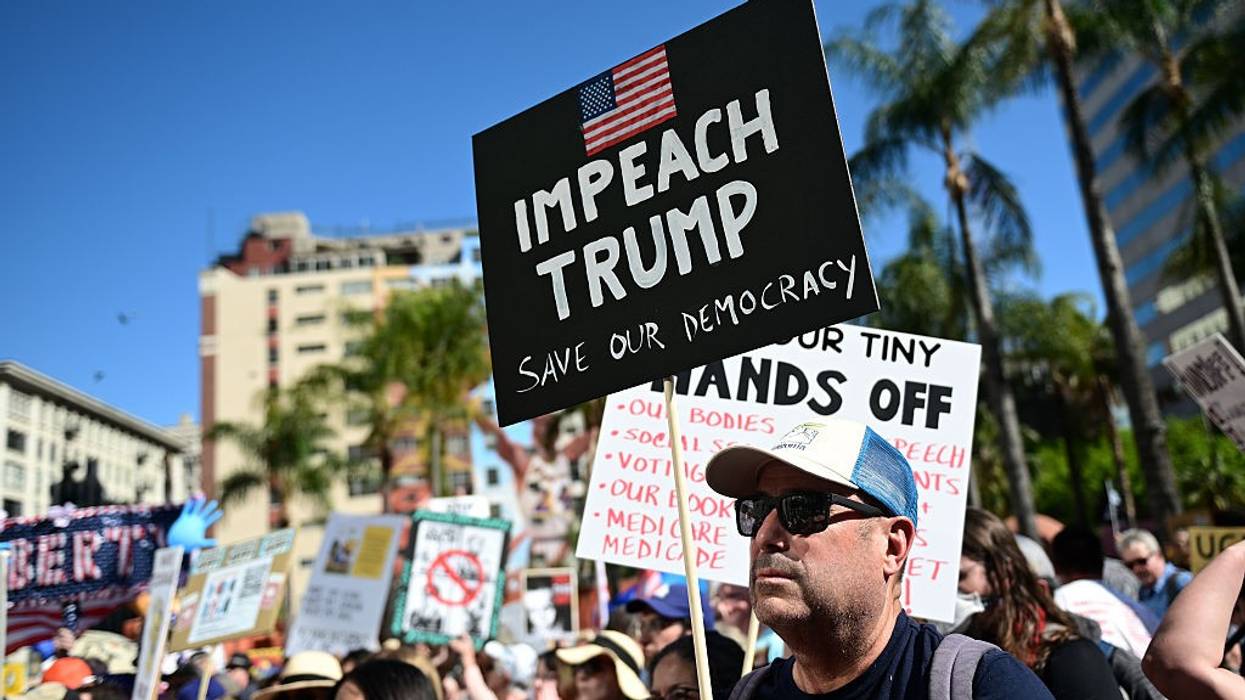
Of all the accountability tools that will be available should the Democrats prevail on November 3, impeachment and court reform stand out as the most powerful.
It’s not enough for the Democrats to win the midterms. Whether they take back one or both chambers of Congress, their overriding objective must be to cripple the remainder of Donald Trump’s presidency and dismantle the MAGA movement he leads. Holding Trump and his key enablers to account for their lawlessness and corruption will be the standard for success. Without accountability, there will be no justice and no end to the growing threat of fascism in America.
Of all the accountability tools that will be available should the Democrats prevail on November 3, impeachment and court reform stand out as the most powerful. Both are implicitly on the midterm ballot, and while neither is a magic bullet for checking Trumpism, they can and must be deployed far more aggressively and urgently than in the past.
The road ahead won’t be easy, but the party may never get another opportunity.
The Supreme Court’s 2024 decision on presidential immunity (Trump v. United States), penned by Chief Justice John Roberts, has made it all but impossible to hold Trump accountable through ordinary criminal prosecutions. As legal analyst Jeffrey Toobin has noted, Roberts’ opinion contains language that “suggests the president cannot even be investigated for his official actions,” much less indicted.
But the immunity ruling in no way undermines Congress’ impeachment powers. Even Trump’s lead lawyer in the case—D. John Sauer, now the administration’s solicitor general—acknowledged the broad scope of the impeachment power, contending that the Constitution’s Impeachment Judgment Clause (Article I, Section 3, Clause 7) requires that a president be impeached by the House and convicted in the Senate before being prosecuted criminally. Although the court rejected Sauer’s prerequisite argument, it recognized, consistent with the views of the Founders, that impeachment is a political process separate and apart from criminal prosecutions.
As Trump’s lawlessness and corruption have become more brazen and unrestrained, appeals for a third impeachment are mounting. In early October, the Philadelphia Inquirer published a series of editorials and op-eds calling on Congress to act in response to the president’s unconstitutional military operations in Iran and elsewhere; his attacks on judges, journalists, law firms, and political opponents; his threats to execute members of Congress; his reckless deployment of Immigration and Customs Enforcement agents; his inhumane mass deportations and detentions; his assault on birthright citizenship; and his use of the presidency for base self-enrichment, among myriad other “high crimes and misdemeanors.”
As Ralph Nader and Bruce Fein put it in their contribution to the Inquirer series, “Trump has turned the Constitution into a museum piece and claimed the infinite unchecked power of a dictator.” In their view, the “doubting Thomases who dismiss” a third impeachment are turning a blind eye to Trump’s “litany” of derelictions.
Even if conviction in the Senate is unlikely, the process itself has enormous value. Writing for LawFare in 2021 at the outset of Trump’s second impeachment trial, Princeton University political science professor Keith Whittington explained:
[R]emoval and disqualification are not the sole purposes of the impeachment clause. The impeachment process is a “grand inquest” in the sense that it is congressional oversight on steroids. The impeachment power gives the first, most democratic branch of the government the ability to scrutinize the actions of individuals in the other branches of government and call them to account for their actions… What’s more, the impeachment process serves as a warning to future officeholders.
There is also no reason for the Democrats to limit impeachment proceedings to the president. The vice president and all civil officers of the United States, including the justices of the Supreme Court, will all be fair game. Aware of his exposure, Defense Secretary Pete Hegseth is reportedly eyeing a Senate seat in Tennessee, hoping that if Marsha Blackburn becomes the state’s next governor, she will appoint him to fill her vacant seat, as senators are not considered civil officers of the US.
Many Trump aides are also reportedly seeking pardons to protect themselves from future federal criminal charges. Trump has expressed a willingness to comply, but the Constitution is very clear that the pardon power does not extend to cases of impeachment.
With the midterm elections behind them and an electoral base demanding action, we could see not one but multiple impeachment inquiries in the House—and, later, trials in the Senate—aimed at airing the facts of the Trump administration’s malfeasance for all the world to see, and serving as a catalyst for legislation to prevent another Trump-like tyrant from rising in the future.
John Roberts and his Republican confederates have issued a blistering succession of reactionary majority opinions, not only on presidential immunity, but also on voting rights, gerrymandering, union organizing, the death penalty, environmental protection, gun control, abortion, affirmative action, campaign finance, the use of dark money in politics, and equality for LGBTQ+ people, to cite just a few of the worst.
Reversing the tide and restoring our rights will require court reform. And while the most far-reaching reforms—such as more justices and term limits—will have to wait until the election of a Democratic president, a new Democratic Senate majority will be able to immediately block the confirmation of any pending or future Trump judicial nominees.
Clarence Thomas, 78, and Samuel Alito, 76, are the Supreme Court’s oldest members. Both are far beyond their salad days, and Alito has said that he is considering retirement before Trump leaves office. If either or both step aside while the Republicans hold the Senate, Trump will undoubtedly replace them with younger and possibly even more extreme jurists, such as James Ho of the 5th US Circuit Court of Appeals, or the obsequious Florida US District Court Judge Aileen Cannon, who killed the Mar-a-Lago documents case. If the Democrats retake the upper chamber, the two senior justices will likely hang on as long as they can, but neither will outlast the term of the next Democratic president, who can replace them with liberals.
The outlook for the lower federal courts, where the vast majority of cases are decided, is even more favorable. A Democratic Senate majority should mean the end to new Trump judges anywhere in the country.
Nothing is certain in politics, and it is entirely possible that the Democrats, once back in the majority, will try to mend fences with their MAGA adversaries in a futile attempt to restore the status quo ante Trump.
This is where we come in.
Voting is essential, but it cannot be the end of our political engagement. After the midterms, and throughout the run-up to 2028, we will need to keep the pressure on. We cannot allow the Democrats to chicken out, as they have so often in the past. There can be no more Biden nice guys, and no more Merrick Garlands. We have seen that movie before, and it isn’t worth a sequel.