

5
#000000
#FFFFFF
To donate by check, phone, or other method, see our More Ways to Give page.
Daily news & progressive opinion—funded by the people, not the corporations—delivered straight to your inbox.

"When the government hides the true cost of its war, it misleads the country and dishonors the fallen," said one veterans' group.
The Trump administration—which calls itself the "most transparent administration in history"—is once again under fire for its lack of transparency after The Washington Post on Friday published a report in which US officials said more American troops have died during the Iran War than the Pentagon has disclosed.
Five officials familiar with the Pentagon's internal casualty accounting told the Post under condition of anonymity that at least 22 US service members have died since Trump launched the Iran War on February 28—four more than the 18 fatalities currently listed in the Pentagon's public Defense Casualty Analysis System, or DCAS. A sixth official put the number at 23.
The officials said that not all of the additional deaths were necessarily caused directly by Iranian attacks, but rather involved US personnel stationed in the Middle East.
The report raises questions regarding transparency, as well as the military's line-of-duty investigations following service member deaths that can affect survivors' benefits.
Retired US Army Brig. Gen. Steve Anderson asked some of those questions in a Friday Substack post directed at Hegseth and calling the reported obfuscation an "unforgivable sin":
Responding on social media to the Post report, US Defense Secretary Pete Hegseth wrote, "This is DISGUSTING and FAKE. A complete LIE."
"Shame on The Washington Post—they’re worse than Iranian state media," Hegseth added.
Hegseth's denial follows earlier controversies over the Pentagon's casualty reporting.
In July, the department's public database briefly excluded four US service members killed during renewed fighting, even though the Pentagon had separately announced the deaths. Officials subsequently blamed the discrepancy on technical problems.
Also in July The New York Times revealed that the Pentagon hid dozens of US military injuries from Iranian strikes on bases in Jordan.
Sen. Tammy Duckworth (D-Ill.), a disabled Iraq War veteran, wrote on Bluesky in response to the Post report that "22 of our service members have been killed in Trump's illegal war. Not 18 like we were told."
"The Pentagon hid four more heroes' deaths from us for months," she added. "Congress cannot let them get away with this."
To that end, Duckworth and other Democratic lawmakers in both the House and Senate have introduced legislation aimed at preventing the Pentagon from manipulating troop casualty data.
Last month, Duckworth led 17 upper chamber colleagues in introducing the Honoring the Sacrifices of Our Troops in War Act, which her office said came partly in response to the Trump administration's "shameless attempt to downplay the damage done and evade accountability to the American people."
Outgoing Congressman Thomas Massie (R-Ky.) on Thursday separately moved to force a House vote on impeaching Hegseth, accusing the defense secretary of violating provisions of the War Powers Resolution by continuing hostilities without congressional authorization.
After several failed attempts, both houses of Congress in June passed a war powers resolution directing Trump to withdraw US forces from hostilities with Iran. Trump did not comply.
The number of US troops killed and wounded in the Iran War pales in comparison to Iranian casualty figures. Thousands of Iranians—including more than 3,500 civilians, more than 380 of them children—have been killed and tens of thousands more wounded by US and Israeli attacks since February 28, according to Iranian and international officials.
"A vote to let this sale proceed is a decision to help Israel commit more war crimes."
3
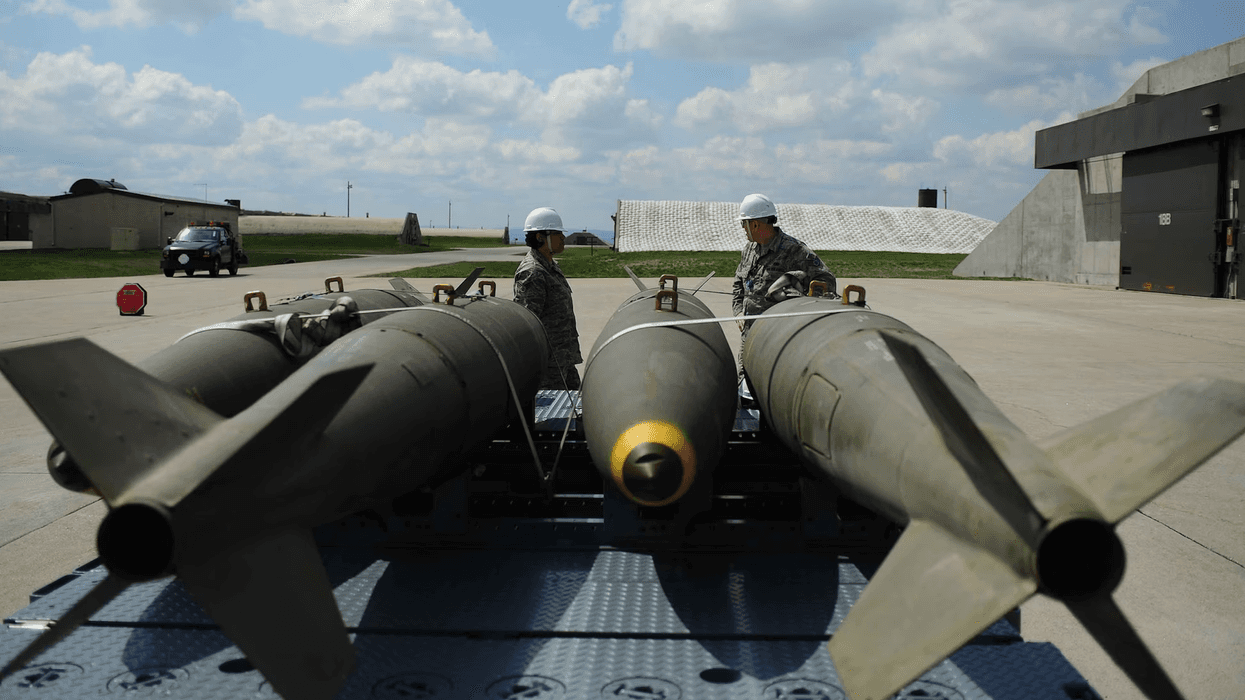
A human rights organization on Friday called on members of Congress to block the Trump administration's proposed $2.8 billion transfer of 40,000 2,000-pound bombs to Israel, warning that approving the massive weapons package could violate US law and expose lawmakers to potential liability for complicity in war crimes.
In a letter to congressional lawmakers, Democracy for the Arab World Now (DAWN) urged legislators to introduce joint resolutions of disapproval under the Arms Export Control Act (AECA) once the administration formally notifies Congress of the sale.
"Forty thousand of the bombs that flattened Gaza is not a defense package, it is a down payment on the next round of atrocities," DAWN executive director Omar Shakir said in a statement. "Every member of Congress now has the law and the evidence in front of them. A vote to let this sale proceed is a decision to help Israel commit more war crimes."
1/ Members of Congress should introduce and pass joint resolutions of disapproval under the Arms Export Control Act to block the Trump administration's proposed $2.8 billion transfer of 40,000 2,000-pound bombs to Israel, DAWN said today in a letter to every member of the Senate and House.
[image or embed]
— DAWN (@dawnmenaorg.bsky.social) September 18, 2026 at 9:39 AM
The proposed package includes 20,000 MK-84 general-purpose bombs and 20,000 BLU-117s, along with 20,000 I-2000 penetrator warheads, according to reporting by The Washington Post. The weapons would be purchased largely through Foreign Military Financing, meaning US taxpayers would pay for Israel's acquisition of the munitions.
The MK-84 is among the largest conventional bombs in the US arsenal. The Post reported that its blast can propel metal fragments thousands of feet, penetrate thick concrete and metal, and create large craters.
"Munitions experts [said] that US forces almost never drop bombs of this size in populated areas," DAWN wrote in its letter. "Israel has used them hundreds of times in Gaza and Lebanon. The Biden administration paused a shipment of these bombs in May 2024 precisely because of the risk of mass casualties in Rafah; President [Donald] Trump released it within days of taking office."
Loosened rules of engagement implemented by the Israel Defense Forces following the Hamas-led attack of October 2023, combined with the IDF's use of artificial intelligence technology to select targets far more rapidly than humans, resulted in a staggering loss of civilian life in Gaza when 2,000- and 1,000-pound bombs were dropped.
"Israel's assault has killed more than 73,000 Palestinians in Gaza, including more than 21,000 children, and the killing has not stopped," DAWN said on Friday, adding that the United Nations Children's Fund "said last month that at least 300 children had reportedly been killed since the October 2025 ceasefire, an average of one child every day."
DAWN argued that the proposed transfer would violate multiple US laws, including provisions of the AECA and Foreign Assistance Act governing how American weapons may be provided and prohibiting assistance to governments engaged in consistent patterns of gross human rights violations. The organization also invoked the Leahy Laws, which prohibit certain assistance to foreign military units credibly implicated in gross human rights abuses.
The group further warned that knowingly providing weapons that are subsequently used to commit war crimes could also be "illegal" under the Rome Statute governing the International Criminal Court (ICC). Although Israel and the US are not signatories to the Rome Statute, the treaty stipulates that people from nonsignatory nations who commit crimes in states that are party to the treaty—as Palestine is—can be held criminally accountable for their acts.
The ICC has issued warrants for the arrest of Israeli Prime Minister Benjamin Netanyahu and former Defense Minister Yoav Gallant for alleged war crimes and crimes against humanity in Gaza, including murder and forced starvation. The Hague-based court also ordered the arrest of three senior Hamas leaders; all three were extrajudicially assassinated by Israel.
The proposed sale has already encountered some congressional resistance. Rep. Gregory Meeks (D-NY), the ranking member of the House Foreign Affairs Committee, announced Wednesday that he would not clear the transfer, citing the absence of sufficient assurances that the weapons would be used consistently with US and international law and concerns about civilian protection in Gaza and Lebanon. Sen. Chris Van Hollen (D-Md.) has also vowed to block the sale in the upper chamber.
However, DAWN cautioned that a congressional hold is not necessarily sufficient to stop the transfer. The organization noted that the Trump administration has previously invoked emergency authorities to bypass congressional review of arms sales to Israel.
Under the AECA, Congress can attempt to block a major arms transfer through a joint resolution of disapproval. DAWN is urging lawmakers to bring such resolutions to recorded votes in both chambers and to hold public hearings examining the administration's use of emergency authorities to circumvent congressional oversight.
"The administration is betting that Congress will do what it always does: complain, then look away," DAWN advocacy director Raed Jarrar said on Friday. "Congress should show the administration that it's no longer the rubber stamp it long has been on arms to Israel and block this sale."
The effort comes as senators also sound the alarm about a possible nuclear energy agreement and the administration continues to greenlight arms sales to the kingdom.
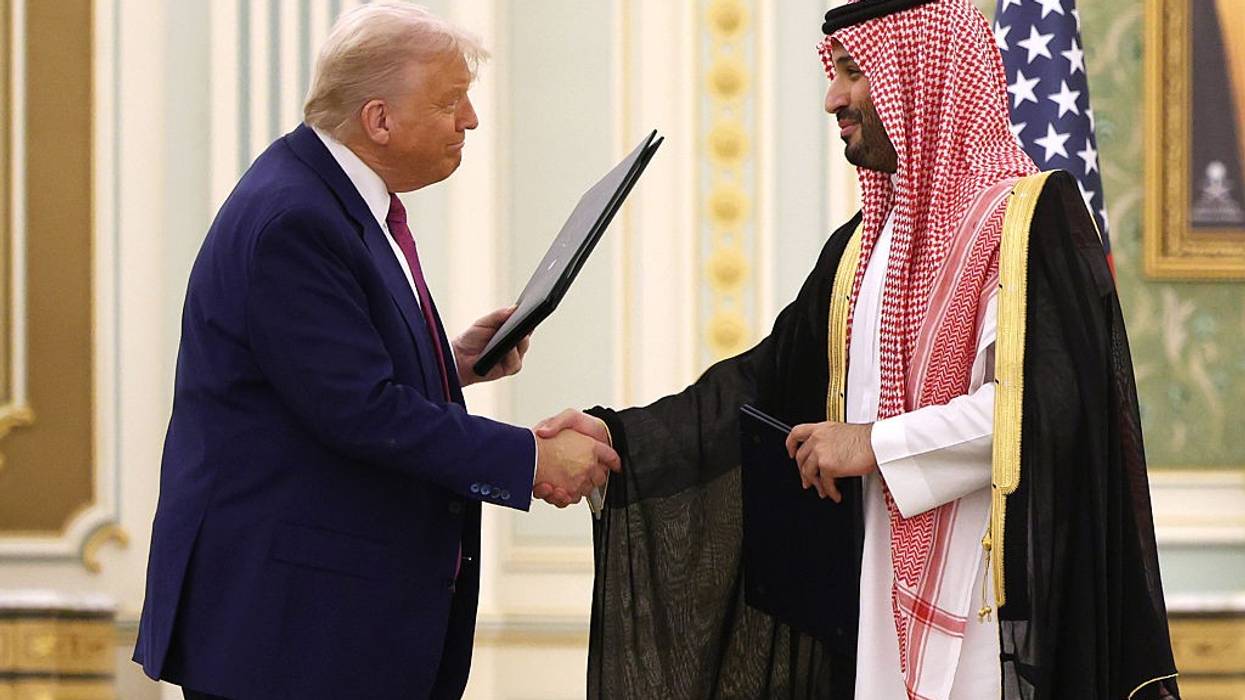
A trio of progressive US senators this week introduced legislation to block a $5 billion conventional weapons sale to Saudi Arabia while also pushing for the release of more details about President Donald Trump's proposed nuclear cooperation agreement with the Middle Eastern kingdom.
"The United States must not send thousands of conventional weapons to Saudi Arabia or allow it to develop a nuclear program," said Sen. Ed Markey (D-Mass.) in a Thursday statement—a day after he partnered with Sens. Jeff Merkley (D-Ore.) and Bernie Sanders (I-Vt.) to introduce the joint resolution of disapproval, which was referred to the Senate Foreign Relations Committee.
"I am deeply concerned by the kingdom's human rights abuses, the security of the region as the war in Iran rages on, and the proxy war that is escalating between Iran and Saudi Arabia in Yemen," Markey explained. "Further escalation in the Saudi-Iran proxy war will worsen an already dire humanitarian catastrophe in Yemen and risks setting off a nuclear arms race between Iran and Saudi Arabia."
The resolution targets a sale approved by the US State Department on September 4 that includes over 10,000 joint direct attack munition (JDAM) guidance kits. As Breaking Defense detailed, "The prospective transaction includes a similar number of dumb bombs—split almost evenly between 500 lb. and 2,000 lb. munitions—which, when equipped with a JDAM, can be used as a precision weapon."
The bill does not apply to the other possible sale to Saudi Arabia endorsed by the department that same day—$750 million for AGT-1500 engines and related equipment—or the $24.3 billion deal for F-35 Lightning II fighter jets, which the Trump administration greenlit Thursday, after the resolution was introduced.
The latest approval "comes nearly two months after Saudi Defense Minister Khalid bin Salman traveled to Washington to lobby senior Trump administration officials on the sale, with Riyadh hoping to advance the deal ahead of the midterms," Semafor noted. The upcoming US elections could lead to Trump's Republican Party losing control of Congress.
The warplanes sale could also face pushback from Congress. According to Politico, Rep. Raja Krishnamoorthi (D-Ill.), who sits on the House Intelligence Committee, warned that "it could put the crown jewels of American military technology within reach of the Chinese Communist Party."
US approves $24.3 billion sale of 48 F-35 stealth warplanes to Saudi Arabia.US intelligence analysts have raised the possibility that China could acquire F-35 technology through its partnerships with Saudi. Israel had been the only country in the Middle East to operate the jetsu.afp.com/SjRn
[image or embed]
— AFP News Agency (@en.afp.com) September 17, 2026 at 9:41 PM
In addition to unveiling their resolution about the JDAMs and bombs on Wednesday, Markey and Merkley, co-chairs of the bicameral Nuclear Weapons and Arms Control Working Group, led a bipartisan group of senators—including Sanders—in urging a pair of Trump Cabinet members to declassify two side letters associated with the administration's proposed nuclear deal.
The administration submitted the pending 30-year agreement—which would allow US companies to share nuclear power technology with the kingdom—to Congress after it was signed by US Energy Secretary Chris Wright and Saudi Energy Minister Prince Abdulaziz bin Salman in July.
Under Section 123 of the Atomic Energy Act, Congress has 90 days of continuous session to review the deal and either move to block it or let it take effect. The senators' new letter to Wright and Secretary of State Marco Rubio notes that "in previous 123 agreements, the executive branch publicly released the agreement along with side letters and related documents."
"Access to the full text is required for the Senate and the public to have a clear understanding of the commitments being made on the nation's behalf and those being made by Saudi Arabia to the United States," the senators argued. "Their public release would also allow civil society, independent experts, and other affected stakeholders to scrutinize the deal."
"Transparency and open debate are cornerstones of our democracy," they emphasized. "Congress and the American public must have a meaningful opportunity to review and debate the key components of the US-Saudi nuclear deal before it potentially enters into force. To that end, we call on you to declassify and release the two side letters without delay."
A director at Amnesty International said the US had made clear it was seeking to “punish the state of Palestine for pursuing international justice and accountability at international institutions.”
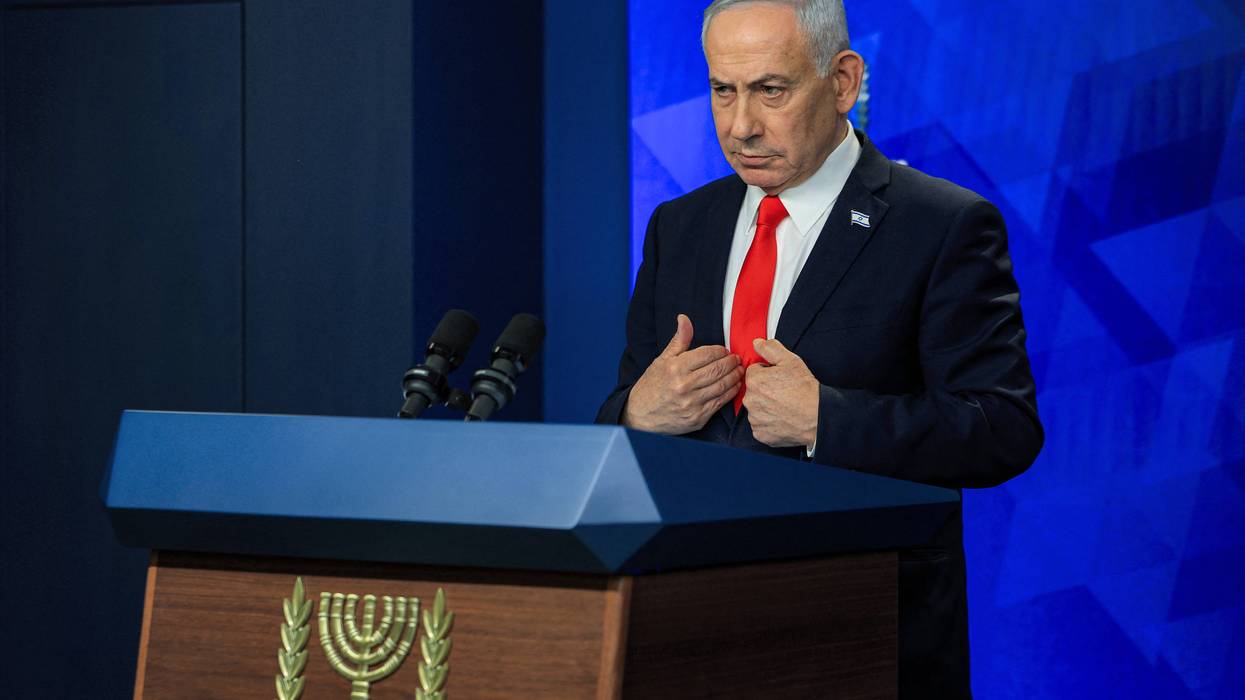
While the Trump administration bars Palestinian Authority President Mahmoud Abbas and his delegation from entering the US to attend the United Nations General Assembly for the second year in a row, it is welcoming Israeli Prime Minister Benjamin Netanyahu, who is accused of war crimes and crimes against humanity in Gaza by the International Criminal Court.
In November 2024, the ICC found “reasonable grounds to believe” that Netanyahu bore criminal responsibility for the use of starvation as a method of warfare and the crimes of murder, persecution, and other inhumane acts, including intentionally targeting civilians.
Since October 2023, Israel's assault on Gaza has killed at least 73,000 Palestinians, including more than 21,000 children, while reducing much of the landscape to rubble and leaving most of the population displaced. Meanwhile, Israel's restrictions on food, water, medicine, electricity, and other essentials have created conditions of severe hunger, dehydration, the collapse of medical care, and civilian deaths.
President Donald Trump has previously assured Netanyahu that he would not be arrested while visiting New York on the basis of the ICC warrant. The US and Israel are not parties to the Rome Statute, meaning that they are not obligated to enforce the ICC's warrant.
New York City Mayor Zohran Mamdani examined whether his administration had the legal authority to detain Netanyahu earlier this year. Officials determined they did not, but Mamdani called on the federal government to execute the ICC warrant and said, “Benjamin Netanyahu is not welcome in New York City, nor is any other war criminal at large."
As The Jerusalem Post reported earlier this week, there has been "unusual involvement" from the US Secret Service with the prime minister's visit next week, with more than 60 New York Police Department security officers and detectives expected to participate in his security detail.
Netanyahu is set to take the podium on Thursday, September 24, amid intense international scrutiny and condemnation of the aggressive US-Israeli war against Iran, the expansion of illegal Israeli settlements across the West Bank and the explosion of settler terrorism against Palestinians, and Israel's occupation of southern Lebanon.
The US State Department has emphasized that it barred Abbas and around 80 other Palestinian officials from attending—forcing Abbas to appear at the UNGA remotely via video call—partially in response to Palestinian leaders bringing evidence of Netanyahu's crimes before international tribunals including the ICC and the International Court of Justice (ICJ), where Israel has been accused of violating the 1948 Genocide Convention in Gaza.
The State Department described the use by Palestinians of international legal bodies like the ICC and ICJ as part of an effort to "internationalize the Israeli-Palestinian conflict.” Incidentally, around two-thirds of the weapons Israel has imported between 2021-25 have been from the US.
Erika Guevara Rosas, a senior director at Amnesty International, said on Thursday that “the State Department’s statement makes it obvious: This decision is designed to punish the state of Palestine for pursuing international justice and accountability at international institutions, including through the International Criminal Court (ICC) and the International Court of Justice (ICJ).”
"This measure is part of a relentless campaign of reprisals against the very notion of international justice," Guevara Rosas continued.
The Trump administration has also sanctioned ICC personnel over its case against Netanyahu, as well as Palestinian human rights organizations that provided evidence that assisted in the prosecution of Israeli nationals.
In July, US Secretary of State Marco Rubio said the US was launching a “whole-of-government response” intended to “systematically disable” the ICC's ability to operate and threatened to dismantle the institution “brick by brick, if necessary.”
Guevara Rosas argued that the ban on Abbas constituted a "clear violation" of the 1947 UN Headquarters Agreement, which states that the US cannot block individuals from entry simply because of poor relations with their home government.
The State Department acknowledged this explicitly on Thursday when it announced that it would allow the president and foreign minister of Iran—a nation with which the US has been at war for more than six months—into the country “consistent with our host country obligations,” though they have faced some shopping and travel restrictions.
Guevara Rosas said the Trump administration was "setting a dangerous precedent in which the US instrumentalizes its privilege as the host country of the UN to impose arbitrary restrictions on attending the UNGA, and other UN meetings."
On Thursday, the General Assembly voted 152-3 calling on the US to reverse its decision to deny entry to the Palestinian delegation in person and allow them to participate via a pre-recorded message.
Itay Epshtain, an Israeli international humanitarian law expert who works with the Norwegian Refugee Council, argued that the UN could do much more, including voting to move part of the General Assembly to a location where the Palestinians would be allowed to participate.
“The [UNGA] decision to allow President Abbas to speak remotely is welcome,” he wrote on social media. “But precedent is more exacting: In 1988, when the US barred PLO chairperson [Yasser] Arafat, the assembly moved its Palestine debate to Geneva.”

"We have a moral obligation to use our privilege and platforms to protect children and human rights," said Ms. Rachel.
Rachel Griffin Accurso, the YouTube star and child educator known popularly as Ms. Rachel, is vowing to match the $1 million donation made by rapper Macklemore to Palestinian aid organizations.
In a Thursday social media post, Ms. Rachel said she was giving $1 million to groups dedicated to helping Palestinians who have been suffering for years under Israeli military assaults and occupation.
The YouTube star also encouraged "every wealthy white celebrity to match it and speak out against the genocide in Gaza."
"Over 20,000 precious Palestinian children have been killed and children continue to be killed every day," Ms. Rachel said. "We have a moral obligation to use our privilege and platforms to protect children and human rights."
In the comments, Macklemore thanked Ms. Rachel, who has a long history of advocating for Palestinians and highlighting the horrors inflicted on Gaza by the Israeli military, for backing his campaign.
"Love you so much," he wrote.
Macklemore first announced his $1 million donation shortly after he was removed as an opening act from fellow musician Ed Sheeran's nationwide stadium tour because he said "Free Palestine" onstage earlier this month during a show at MetLife Stadium in New Jersey.
On Wednesday, Macklemore revealed his donation campaign and invited New England Patriots owner Robert Kraft—who led the pressure campaign to remove the rapper from the tour—to join him.
"Whatever we disagree about, perhaps we can agree on this: Palestinian lives are worth protection,” Macklemore wrote in a social media post, addressing Kraft directly. “A Palestinian life is no less valuable than any life on this earth.”
The rapper said he was giving to six organizations who were aiding Palestinians: HEAL Palestine, Gaza Soup Kitchen, Medical Aid for Palestinians, the United Nations Relief and Works Agency for Palestine Refugees in the Near East (UNRWA), and American Near East Refugee Aid.
"Trump waving around 'annihilation' as if he’s God" is "startling to hear," wrote one progressive critic. "He is, after all, batshit crazy."
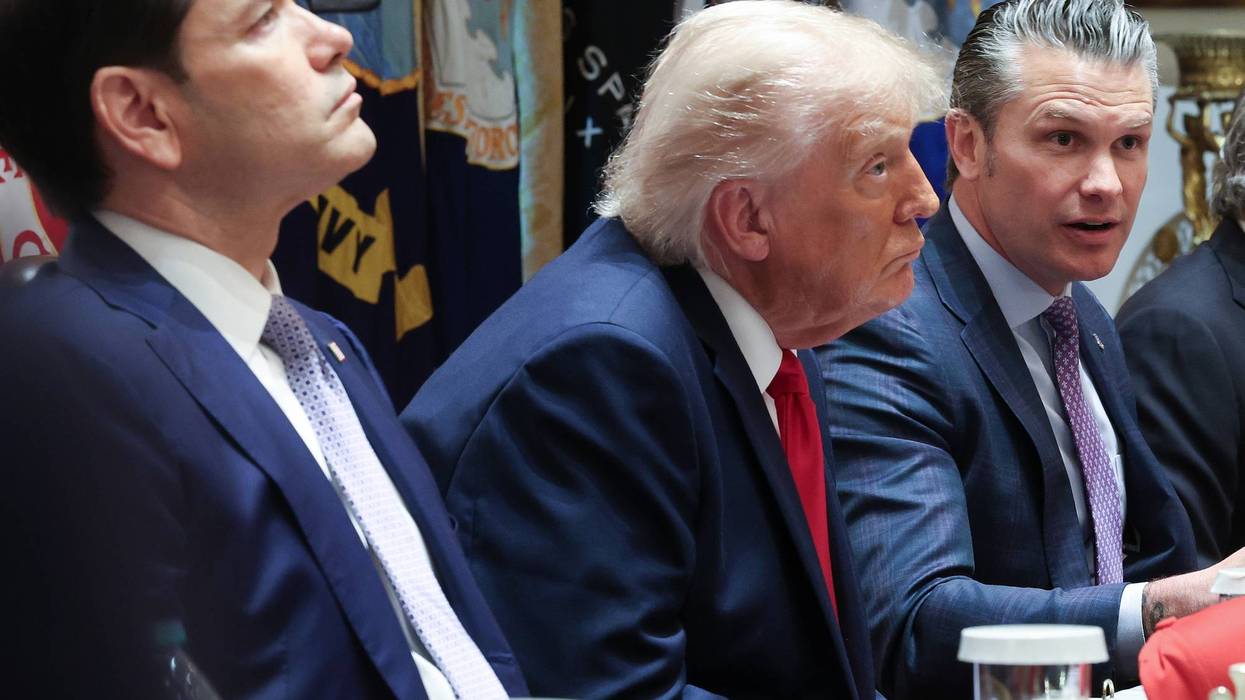
President Donald Trump on Thursday said he is weighing whether or not to "annihilate" Iran in a renewed effort to end the illegal 201-day US-Israeli war of choice, musings that came on the heels of a report by United Nations experts who said the United States likely committed war crimes during earlier attacks on the Middle East nation.
"I have a big decision coming up. Do I want to go in and annihilate them, or do I not?" Trump told Axios' Barak Ravid. "It's a big decision. Anything could happen with me."
Ravid said that Trump was referring to the Iranian government. However, the Iranian people have borne the brunt of six-and-a-half months of war and years of deadly economic strangulation.
Trump’s threat came as a United Nations fact-finding mission said there are “reasonable grounds to believe” the United States committed a war crime in two February strikes—one on the Shajareh Tayyebeh School in Minab and another on a sports complex and residential area in Lamerd—that killed a combined total of at least 178 civilians, including 120 children.
The UN experts' report pointed to the Trump administration’s “deprioritization of civilian harm mitigation and of compliance with [international humanitarian law], expressed through public statements by senior US leadership, including the president and the secretary of defense.”
Secretary of Defense Pete Hegseth said early in the war that the US would eschew “stupid rules of engagement" meant to protect civilians, while vowing that US forces would rain “death and destruction from the sky all day long.”
Trump has repeatedly expressed his willingness to commit war crimes and atrocities against Iran, including through threats to “completely obliterate” the country's power, energy and water infrastructure and bomb the nation of over 90 million people "back to the Stone Ages."
“If they don’t sign the deal, then the whole country is going to get blown up,” the president said in April while unsuccessfully trying to pressure Tehran into an agreement to end the war. He also said that Iran's “whole civilization will die” if Tehran did not accept his demands.
The UN experts said that while they could not independently verify how many Iranian casualties the US-Israeli war has caused, they have "strong grounds to believe that the true figures for deaths and injuries are significantly higher than the [Iranian] government's reported toll" earlier this year of over 28,000 people killed and wounded.
Responding to the president's latest threat, progressive commentator Heather Digby Parton—who blogs under the name Digby—wrote that "this could all be bluster."
"Trump waving around 'annihilation' as if he’s God is still startling to hear," she added. "But I don’t have the sense that even he believes it anymore. But I would never assume that he won’t. He is, after all, batshit crazy."

The organizers said the "culture of bipartisan elite immunity" was why "Biden officials knew they could arm, defend, and cover up the genocide in Gaza for 15 months, and simply move back into liberal spaces."
As another presidential election approaches and a new Democratic administration may be on the horizon, human rights campaigners are trying to ensure that it won't be staffed with the same policy officials who architected former President Joe Biden's Gaza policy.
Most Democratic voters are now appalled by Israel's military campaign in Gaza, which leading human rights groups and scholars have recognized as a genocide. It has led to the deaths of at least 73,000 Palestinians, including more than 21,000 children, according to official totals, and left most of the population displaced and living amongst rubble.
But many of the Biden advisers and appointees who gave cover to Israel during its pivotal, exceptionally deadly early months have settled comfortably back into the respectable liberal intelligentsia, with roles at universities, think tanks, and media outlets.
As 2028 inches closer, a coalition of peace groups is urging these institutions to pledge that they will "drop the Genocide 20," a group of 20 ex-Biden officials they deemed "responsible for promoting, lying about, and covering up the Gaza genocide," even as Israeli officials made numerous statements indicating intent to fully destroy Gaza and its people.
The list, published Thursday on the coalition's website, includes:
"The purpose of the list is to demand these officials be removed from future Democratic administrations, as well as think tanks and academic and liberal spaces," said the coalition, which includes Just Foreign Policy; Palestinian Youth Movement; Track AIPAC, which tracks lobbying by pro-Israel donors; Peace Action; the Democratic Socialists of America; and About Face, a group representing anti-war veterans.
"The culture of bipartisan elite immunity is what drives US war crimes and support for war crimes. From the Vietnam War to post-9/11 torture to the Iraq War, elite war criminality never receives any meaningful sanction from either party. It is treated as a mere policy disagreement among friends," the coalition said. "This dynamic is a key reason Biden officials knew they could arm, defend, and cover up the genocide in Gaza for 15 months, and simply move back into liberal spaces, nonprofits, and future governments."
The campaign urged these organizations to oppose any efforts to give the 20 people on the list "institutional or political power that positions them to continue to perpetrate harm."
Rep. Rashida Tlaib (D-Mich.), the only Palestinian American lawmaker in the US House of Representatives, has signed the pledge, as has Pennsylvania state Rep. Chris Rabb, who is likely to enter the US House in January after winning the Democratic primary for Pennsylvania's 3rd Congressional District earlier this year.
Zeteo reporter Prem Thakker, who first broke news of the coalition's effort, said more lawmakers were expected to join in support.
The coalition noted that there were "far more than 20 people in the US government responsible for the US-backed genocide in Gaza" but acknowledged that it needed to limit itself to those most responsible to remain actionable.
It also said that a parallel effort was in the works to hold members of the Trump administration accountable for their own policies in Gaza and elsewhere.
"The Trump administration’s time will come, especially given its attack on Iran and war crimes against the Iranian people," the coalition said.
But for now, the activists are putting their focus on the Biden administration because “that’s who is currently out of power and actively engaging in reputation laundering and historical revisionism.”
The pledge comes as increasing numbers of Democratic politicians describe Israel's conduct in Gaza as constituting a genocide, a position shared by the majority of Democratic voters. The coalition said that without consequences, this is meaningless.
“The word ‘genocide’ has certain implications and obligations. It’s not a buzzword,” the coalition said. “If an elected [official] says Israel committed genocide, as 22 members of Congress have, then it logically follows they would agree to not hire, work with, or otherwise validate those most responsible for that which they themselves argue is a genocide. It’s common sense.”

With that additional $930 per household spent on energy, the analysis says the total cost due to higher prices from the war is closer to $1760.
A recently published economic analysis estimates that President Donald Trump’s illegal war with Iran has cost US consumers an average of $1,760 per household—including a total of $121 billion in extra spending on energy alone—since the conflict began less than 8 months ago.
The war, which Trump launched without congressional authorization in February, has sent energy prices spiking across the world, as Iran responded to US attacks by shutting down commercial shipping traffic in the Strait of Hormuz.
According to the estimate by Moody’s Analytics, US consumers have spent over $121 billion—or $930 per household—more on energy since the start of the war, accounting for more than half of the total added expenses imposed by the conflict.
Mark Zandi, chief economist at Moody’s, told CNBC in an interview published Wednesday that the analysis reflects the fact that "consumers are under a lot of financial pressure."
The analysis also finds that the average US household has spent an additional $425 due to higher interest rates caused by the war, as well as $405 for higher military spending, which Zandi explained to CNBC would come from footing the bill through either national debt expansion or increased taxes.
Karthik Sankaran, senior research fellow in geoeconomics at the Quincy Institute for Responsible Statecraft, argued in an analysis published Thursday that relief for US energy consumers could be a long way off given recent developments in the Middle East, including Houthi fighters seizing a key port city along the Red Sea and a drone strike on a Saudi oil pipeline.
Sankaran warned that nations worldwide have far fewer options now to cushion against energy shocks than they did at the start of the war.
"Seaborne storage on tankers has been depleted," Sankaran wrote, "the US Strategic Petroleum Reserve has released about 130 million barrels, and the world’s largest importer, China, is increasing imports to 7.2 million barrels per day, up from a low of 6 million barrels in June."
Sankaran noted that, as uncomfortable as high energy prices are for Americans, the situation is even more dire in the Global South.
"The spike in diesel prices is likely to hit countries in the Global South especially hard," Sankaran explained. "The higher energy density of diesel means that it is used to power trucks, buses, and agricultural equipment, making it the most important fuel in poorer countries where individual ownership of automobiles is much less widespread."
A Tuesday report from CNN highlighted how high fuel prices have led to protests across the globe, including in Syria, Guatemala, France, Portugal, and the Philippines.
The protests in Syria have been particularly intense, CNN noted, as demonstrators on Sunday "blocked the Hasaka–Deir ez-Zor highway, where they burned tires and stopped oil tankers."
Muaz Al Abdullah, Syria analyst at global conflict monitor Armed Conflict Location and Event Data (ACLED), told CNN that "fuel availability, rising prices, falling purchasing power, and poor services are all reasons that have accumulated public resentment," which have led to demands that the country oust its energy minister.
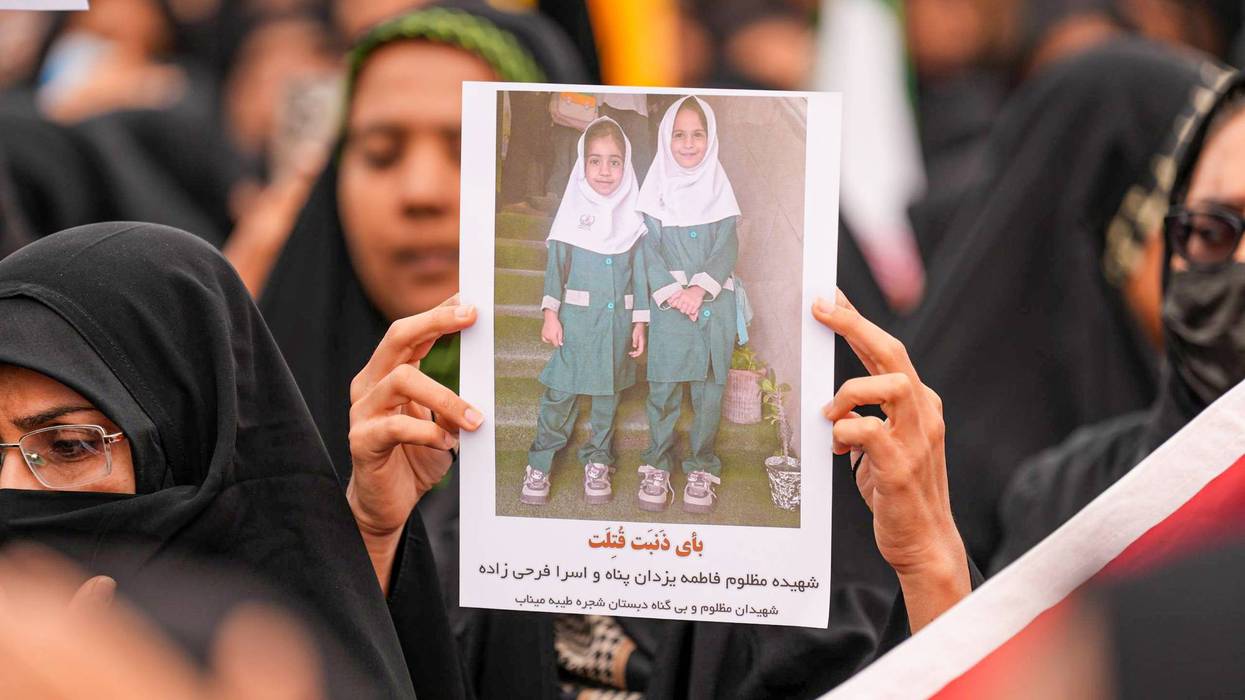
The report points to statements by Defense Secretary Pete Hegseth that signaled the "deprioritization of civilian harm mitigation and of compliance with international law."
Human rights experts who led a United Nations fact-finding mission in Iran are set to submit their findings to the UN Human Rights Council that the United States likely committed war crimes in the early days of the US-Israeli war there.
The experts examined evidence regarding two airstrikes that killed at least 178 civilians, including 120 children, according to Iranian authorities—the bombing of the Shajareh Tayyebeh School in Minab and an attack on a sports complex and residential area in Lamerd, both of which took place on February 28.
The report notes that the Pentagon has not released findings of its own investigation into the Minab school bombing and the US has not accepted responsibility for the attack, although Reuters reported on an internal probe that found US forces were likely behind the strike.
Despite the lack of a response from the US to the fact-finding mission's requests for information, the experts said they found "reasonable grounds to believe that the US committed the war crime of launching an indiscriminate attack resulting in loss of life or injury to civilians or damage to civilian objects."
The report pointed to the Trump administration's "deprioritization of civilian harm mitigation and of compliance with IHL [international humanitarian law], expressed through public statements by senior US leadership, including the president and the secretary of defense."
Secretary of Defense Pete Hegseth said early in the war that the US would dispense with “stupid rules of engagement”—which are meant to protect civilians under international law—and said US forces would rain "death and destruction from the sky all day long."
The Pentagon also relied on "outdated targeting data" when deciding to bomb the school in Minab, which was clearly identified as a school for young children, said the report.
"The mission considers that the United States' failure to update information in relation to the school in its targeting databases and to verify that the building was a military objective before launching the attack went beyond mere negligence," reads the report. "Rather, the US directed the strikes at the building of the school while being aware of a substantial risk of striking a civilian object and acting recklessly as regards the possibility that this would happen."
More than 150 people were killed in the attack, including 120 children.
The experts also said the sports complex and residential area in Lamerd on February 28 were "clearly identifiable" as civilian targets, and that the weapon used in the attack—Lockheed Martin-manufactured Precision Strike Missiles (PrSM) that disperse tungsten pellets over a wide area—show that the strike "constituted an indiscriminate attack in violation of the principle of distinction" between civilians and military targets.
The missiles, said the experts, "could not be directed at a specific military objective and their effects on civilians and civilian objects could not be limited as required by IHL. The US was under the IHL obligation to employ weapons systems and ammunition that satisfied these requirements."
The UN team said 22 civilians were killed in the attack in Lamerd, including four schoolchildren and a two-year-old girl who was killed while playing in front of her home.
US Central Command has denied responsibility for the attack, but top US officials in March boasted that the military had "made history" by using the PrSM for the first time in the war.
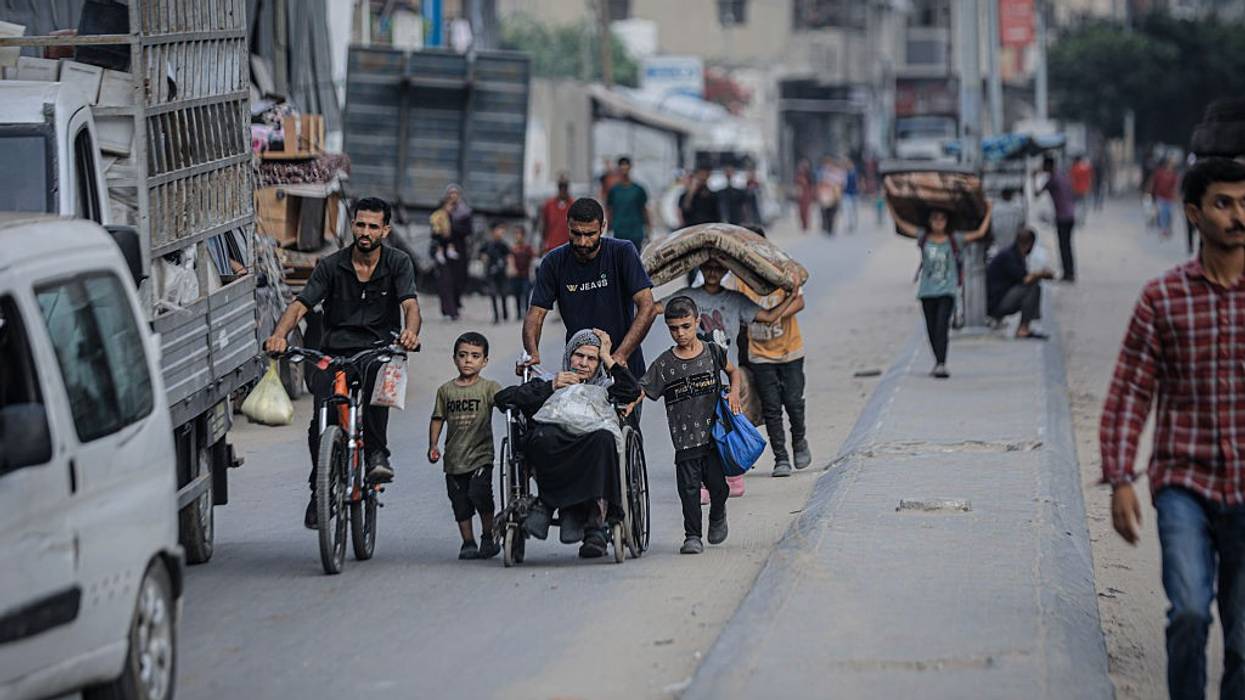
Citing the 70% depopulation of Gaza, Israeli Defense Minister Israel Katz vowed to "finish the job" of what he called Palestinian "migration"—a euphemism, say critics, for ethnic cleansing.
Amid a so-called "ceasefire" during which Israeli forces continue to kill and maim Palestinians, Israel's defense minister on Wednesday vowed to "finish the job" of depopulating the Gaza Strip—a plan human rights defenders have described as ethnic cleansing.
Responding to criticism from right-wing political rival Ofer Winter ahead of next month's Israeli elections, Defense Minister Israel Katz said the Israel Defense Forces (IDF) would soon resume the full-scale assault on Gaza—which has left more than 250,000 Palestinians dead, maimed, or missing since October 2023, 90% of the strip in ruins, and around 2 million people forcibly displaced, starved, or sickened.
Noting that 70% of Gaza has been forcibly depopulated, Katz said that "the IDF is prepared, once given the directive to eliminate Hamas, to finish the job so that we can also implement the migration plan," according to The Times of Israel.
Katz's remarks came after he said earlier this month that Israel was ready to implement plans to forcibly displace Palestinians from Gaza once US President Donald Trump gives his approval.
Trump has repeatedly backed the ethnic cleansing of Gaza's Palestinians. He said last year that the United States would "own" Gaza, "level it out," and build "the Riviera of the Middle East" there after the Palestinians—most of whom are descendants of people ethnically cleansed from the rest of Palestine during the bloody establishment of Israel in 1948—were gone.
While many proponents of expulsion claim it would be "voluntary," most Palestinians vehemently reject any relocation, voluntary or otherwise.
"Gaza is an integral part of our state," Palestinian Authority President Mahmoud Abbas stressed on Wednesday.
Numerous countries have been floated as possible destinations for Palestinians who are forced from or choose to leave Gaza, with Egypt—specifically the Sinai Peninsula—often topping such lists.
However, on Wednesday, Egyptian President Abdel Fattah el-Sisi reaffirmed his government's "firm stance against the displacement of the Palestinian people or any attempt to annihilate the Palestinian cause," drawing praise from Abbas.
Katz has repeatedly advocated the ethnic cleansing of Gaza. He said last year that IDF troops were “expanding to crush and clean” the strip. He also said the military was “seizing large areas that will be added to the security zones of the state of Israel for the protection of fighting forces and the settlements,” a reference to plans by far-right members of Israeli Prime Minister Benjamin Netanyahu’s government and leaders of the settler movement for the illegal recolonization of the Palestinian exclave.
Last year, Israeli lawyer Omer Shatz filed an incitement to genocide case at the International Criminal Court in The Hague against eight Israeli officials, including Netanyhau, Katz, and former Israeli Defense Minister Yoav Gallant. Netanyahu and Gallant are already fugitives from the ICC, where they are wanted for alleged crimes against humanity and war crimes in Gaza.
Israel is also the subject of a genocide case currently before the International Court of Justice filed by South Africa and formally supported by nearly 20 countries.
Katz's latest remarks come amid a nearly yearlong "ceasefire" during which more than 1,300 Palestinians have been killed by Israeli forces in Gaza. On Wednesday, a war-damaged apartment building in Gaza City collapsed, killing at least 21 Palestinians, including children. IDF airstrikes are also killing Palestinians on a daily basis.

"Today’s tragedy underscores the grave risks faced by families living in these structures and the urgent need for safer alternatives," said one UN official.
Nearly three years of Israeli bombardment in Gaza have left tens of thousands of Palestinians with no choice but to live in an estimated 2,000 buildings that have been severely damaged, and the danger of such precarious living conditions was starkly illustrated early Wednesday morning when an apartment building in Gaza City collapsed, killing at least 21 people and trapping dozens beneath rubble.
Rescuers reported that at least eight children were among those killed when the bombed-out building fell down onto adjacent tents that were also housing forcibly displaced Palestinians.
More than 10 families had been living in the building, which had four apartments on each floor and became even more vulnerable to collapse as damp autumn weather arrived in recent weeks.
"There are approximately 400 buildings at risk of collapse," Alessandro Mrakic, head of the United Nations Development Program's Gaza office, told Reuters. "And we know that these buildings will collapse, especially now with the upcoming winter."
Rescuers reported hearing people calling out beneath the rubble, but the search-and-rescue operation has been made more difficult by a lack of machinery, Mrakic said.
Heavy machinery is among many items that Israeli authorities restrict from entering Gaza, claiming that they'll be used by Hamas.
"There are actually people are digging with their bare hands," Mrakic told Reuters. "We need to prepare [for more deaths]."
Adequate tents and mobile homes are also blocked from entering Gaza, reported Drop Site News, contributing to families' reliance on severely damaged buildings for shelter.
When asked by The Guardian whether they were afraid to live in the building, survivors of the collapse said: “Yes, we are afraid, but where can we go? This is better than staying out on the street.”
At least 25 people were confirmed as injured and hospitalized on Wednesday.
"Across Gaza, people are living in hundreds of damaged structures assessed as unsafe, for lack of better options," said Ramiz Alakbarov, the UN humanitarian coordinator for the occupied Palestinian territories. "Today’s tragedy underscores the grave risks faced by families living in these structures and the urgent need for safer alternatives. No one should have to risk their life simply to find a safe place to shelter."
"I call for urgent approvals for the entry of heavy machinery, specialized equipment, engine oil and fuel needed for search-and-rescue operations," said Alakbarov. "Tents, tarpaulins, and other nonfood items must also reach the most vulnerable communities in the next four weeks. Every possible effort must be made to save lives, protect people from further harm, and provide families with safer places to live. Every minute counts."
Videos and images circulating on social media showed rescue workers desperately trying to pull people from the rubble, and the spokesperson for Gaza's Civil Defense, Mahmoud Basal, carrying a child wrapped in a scarf stained with blood.
At least 20 people, mostly women and children, have been killed after a six-story residential building collapsed in Gaza City.
Extensive efforts are underway to rescue dozens of civilians missing under the rubble of the building, which had previously been damaged by Israeli… pic.twitter.com/gqHSgfKUEp
— PALESTINE ONLINE 🇵🇸 (@OnlinePalEng) September 16, 2026
More than 90% of housing units in Gaza have been destroyed by Israel since October 2023, when it began its assault on Gaza in retaliation for a Hamas-led attack. More than 73,000 Palestinians have been killed, including thousands of children, journalists, healthcare workers, and humanitarian workers—while Israel and its allies, including the US government, have persisted in claiming the military operation is targeting Hamas fighters.
Attacks have continued in Gaza despite a ceasefire that was brokered last October, and families have become increasingly desperate to find housing after Israeli Prime Minister Benjamin Netanyahu ordered the Israel Defense Forces to take over 70% of Gaza in violation of the ceasefire deal.
The building collapse came as it was reported that the Trump administration was preparing to send Israel tens of thousands of 2,000-pound bombs.