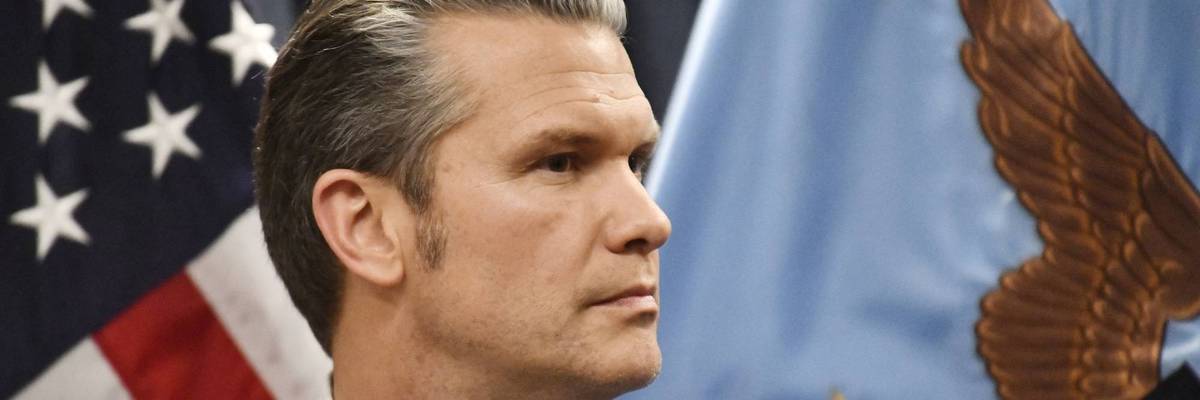
US Secretary of Defense Pete Hegseth looks on during a press conference at MacDill Air Force Base in Tampa, Florida, on March 5, 2026.
Trump's ‘Slaughter at Sea Continues’ as US Military Kills 6 More in Eastern Pacific
"No telling what a military that engages in a monthslong killing spree outside the law might do," said one policy expert.
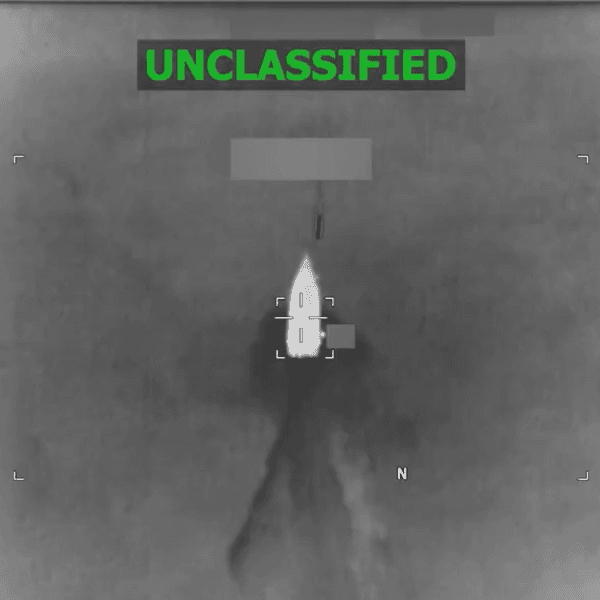
With the Trump administration's unprovoked war on Iran spiraling out of control, sending oil prices skyrocketing and leading to war crimes allegations against the US, the public's attention has largely shifted away from the White House's bombings of boats in the Caribbean Sea and eastern Pacific Ocean—but the killings of six men on Sunday made clear that the administration has no intention of ending its deadly attacks on boats it claims, without providing evidence, are involved in drug trafficking.
US Southern Command said in a social media post Sunday evening that at the direction of Gen. Francis Donovan, it had struck a vessel "operated by designated terrorist organizations."
The announcement echoed previous communications about lethal boat strikes since last September, claiming that the vessel "was transiting along known narco-trafficking routes in the eastern Pacific and was engaged in narco-trafficking operations," but pointing to no evidence the US forces used to make that determination.
The bombing was the 42nd strike carried out by the Trump administration in six months, according to Adam Isacson of the Washington Office on Latin America.
The New York Times reported that at least 156 people have now been killed in the boat strikes, while Isacson placed the number at 158. He emphasized that the victims' "guilt for a noncapital crime" remains unknown.
Drug trafficking in the Latin America region has typically been treated as a criminal offense, with US law enforcement agencies sometimes working with the Coast Guard to intercept boats suspected of carrying illicit substances to the US, arresting those on board, and conviscating the drugs.
Under President Donald Trump's second administration, the Department of Defense has insisted boats in the Caribbean and eastern Pacific pose an imminent threat to the US and that an influx of drugs from Latin America qualifies as an attack on US soil.
The deadly bombings the Pentagon has carried out as a result have led legal experts to accuse Defense Secretary Pete Hegseth and others involved in the strikes of war crimes and murder.
Trump claimed to Congress in October that the US is in an "armed conflict" with drug cartels in Venezuela, but Congress has not authorized attacks on boats or inside Venezuela.
Both Democratic and Republican lawmakers have introduced war powers resolutions to stop the attacks from continuing, but they have been voted down, with the vast majority of Republicans rejecting them. Sen. John Fetterman (D-Pa.) joined the GOP in voting down one of the resolutions in the Senate.
A day before the latest strike, Trump met with Latin American leaders at the "Shield of the Americans" summit in the Dominican Republic and urged them to join the United States' fight against drug cartels, calling them an "unacceptable threat to national security."
Forces from the US and Ecuador also joined in carrying out military operations against criminal organizations in the South American country last week.
Although Trump's claims that drugs are being trafficked to the US from Venezuela and that the country's government was participating in the criminal enterprise have underpinned the boat bombings, Venezuela has not been found to be a major source of drugs that arrive in the US. After invading the country in January, the president quickly pivoted to discussions on taking control of Venezuela's vast oil reserves.
Brian Finucane, senior adviser at the International Crisis Group, suggested Sunday that Trump's continued boat strikes show the White House is unlikely to be bound by international law as it continues to threaten countries in Latin America, such as Cuba, and carries out its war on Iran.
"The slaughter at sea continues," said Finucane. "No telling what a military that engages in a monthslong killing spree outside the law might do."
On Friday, the Inter-American Commission on Human Rights is scheduled to hold its first-ever hearing on the legality of the US boat strikes, following a push for action from human rights groups.
We are at a crossroads
This country and this world are at a monumental crossroads. In a few short weeks, US voters will have an opportunity to beat back the forces of fascism and confront the billionaires who are rigging the economy, our media system, and our democracy, making it increasingly impossible for ordinary people to get by. We’re not just talking about the election. We’re talking about what must be done once these fascist elements are vanquished from power. We need a bolder set of solutions than what either major party has so far been willing to offer and a working-class movement ready to fight like hell for it. Trump didn't emerge from nowhere. The conditions that fueled MAGA authoritarianism were created by decades of radical neoliberal economic policies and a corrupt political system dominated by corporate interests. They slashed taxes on the super-rich, promising that the benefits would trickle down. They said giveaways to the corporate titans would make life more affordable for the rest of us. It was all bullshit. And when a bitter, betrayed populace searches for someone to blame, right-wing demagogues have little trouble finding scapegoats. People know when they're being lied to, but you won't hear any of this from the corporate media. Only independent journalism—powered and funded by people who believe in building a better world—can deliver truly trustworthy daily news. Our Fall Campaign is underway, and we need your help. To power our newsroom through the rest of the year, we need to raise $125,000 by midnight on October 31. So if you share our vision, please contribute whatever you can to sustain our work. |
With the Trump administration's unprovoked war on Iran spiraling out of control, sending oil prices skyrocketing and leading to war crimes allegations against the US, the public's attention has largely shifted away from the White House's bombings of boats in the Caribbean Sea and eastern Pacific Ocean—but the killings of six men on Sunday made clear that the administration has no intention of ending its deadly attacks on boats it claims, without providing evidence, are involved in drug trafficking.
US Southern Command said in a social media post Sunday evening that at the direction of Gen. Francis Donovan, it had struck a vessel "operated by designated terrorist organizations."
The announcement echoed previous communications about lethal boat strikes since last September, claiming that the vessel "was transiting along known narco-trafficking routes in the eastern Pacific and was engaged in narco-trafficking operations," but pointing to no evidence the US forces used to make that determination.
The bombing was the 42nd strike carried out by the Trump administration in six months, according to Adam Isacson of the Washington Office on Latin America.
The New York Times reported that at least 156 people have now been killed in the boat strikes, while Isacson placed the number at 158. He emphasized that the victims' "guilt for a noncapital crime" remains unknown.
Drug trafficking in the Latin America region has typically been treated as a criminal offense, with US law enforcement agencies sometimes working with the Coast Guard to intercept boats suspected of carrying illicit substances to the US, arresting those on board, and conviscating the drugs.
Under President Donald Trump's second administration, the Department of Defense has insisted boats in the Caribbean and eastern Pacific pose an imminent threat to the US and that an influx of drugs from Latin America qualifies as an attack on US soil.
The deadly bombings the Pentagon has carried out as a result have led legal experts to accuse Defense Secretary Pete Hegseth and others involved in the strikes of war crimes and murder.
Trump claimed to Congress in October that the US is in an "armed conflict" with drug cartels in Venezuela, but Congress has not authorized attacks on boats or inside Venezuela.
Both Democratic and Republican lawmakers have introduced war powers resolutions to stop the attacks from continuing, but they have been voted down, with the vast majority of Republicans rejecting them. Sen. John Fetterman (D-Pa.) joined the GOP in voting down one of the resolutions in the Senate.
A day before the latest strike, Trump met with Latin American leaders at the "Shield of the Americans" summit in the Dominican Republic and urged them to join the United States' fight against drug cartels, calling them an "unacceptable threat to national security."
Forces from the US and Ecuador also joined in carrying out military operations against criminal organizations in the South American country last week.
Although Trump's claims that drugs are being trafficked to the US from Venezuela and that the country's government was participating in the criminal enterprise have underpinned the boat bombings, Venezuela has not been found to be a major source of drugs that arrive in the US. After invading the country in January, the president quickly pivoted to discussions on taking control of Venezuela's vast oil reserves.
Brian Finucane, senior adviser at the International Crisis Group, suggested Sunday that Trump's continued boat strikes show the White House is unlikely to be bound by international law as it continues to threaten countries in Latin America, such as Cuba, and carries out its war on Iran.
"The slaughter at sea continues," said Finucane. "No telling what a military that engages in a monthslong killing spree outside the law might do."
On Friday, the Inter-American Commission on Human Rights is scheduled to hold its first-ever hearing on the legality of the US boat strikes, following a push for action from human rights groups.
- UN Experts Say Those Ordering and Carrying Out US Boat Strikes Should Be 'Prosecuted for Homicide' ›
- Trump Ends 2025 by Bombing More Boats, Bringing Death Toll to at Least 115 ›
- 4 More Killed in Pacific Boat Strike as White House Ramps Up Demands for Venezuelan Oil ›
- US Kills at Least 2 More People in Yet Another Illegal Boat Bombing | Common Dreams ›
With the Trump administration's unprovoked war on Iran spiraling out of control, sending oil prices skyrocketing and leading to war crimes allegations against the US, the public's attention has largely shifted away from the White House's bombings of boats in the Caribbean Sea and eastern Pacific Ocean—but the killings of six men on Sunday made clear that the administration has no intention of ending its deadly attacks on boats it claims, without providing evidence, are involved in drug trafficking.
US Southern Command said in a social media post Sunday evening that at the direction of Gen. Francis Donovan, it had struck a vessel "operated by designated terrorist organizations."
The announcement echoed previous communications about lethal boat strikes since last September, claiming that the vessel "was transiting along known narco-trafficking routes in the eastern Pacific and was engaged in narco-trafficking operations," but pointing to no evidence the US forces used to make that determination.
The bombing was the 42nd strike carried out by the Trump administration in six months, according to Adam Isacson of the Washington Office on Latin America.
The New York Times reported that at least 156 people have now been killed in the boat strikes, while Isacson placed the number at 158. He emphasized that the victims' "guilt for a noncapital crime" remains unknown.
Drug trafficking in the Latin America region has typically been treated as a criminal offense, with US law enforcement agencies sometimes working with the Coast Guard to intercept boats suspected of carrying illicit substances to the US, arresting those on board, and conviscating the drugs.
Under President Donald Trump's second administration, the Department of Defense has insisted boats in the Caribbean and eastern Pacific pose an imminent threat to the US and that an influx of drugs from Latin America qualifies as an attack on US soil.
The deadly bombings the Pentagon has carried out as a result have led legal experts to accuse Defense Secretary Pete Hegseth and others involved in the strikes of war crimes and murder.
Trump claimed to Congress in October that the US is in an "armed conflict" with drug cartels in Venezuela, but Congress has not authorized attacks on boats or inside Venezuela.
Both Democratic and Republican lawmakers have introduced war powers resolutions to stop the attacks from continuing, but they have been voted down, with the vast majority of Republicans rejecting them. Sen. John Fetterman (D-Pa.) joined the GOP in voting down one of the resolutions in the Senate.
A day before the latest strike, Trump met with Latin American leaders at the "Shield of the Americans" summit in the Dominican Republic and urged them to join the United States' fight against drug cartels, calling them an "unacceptable threat to national security."
Forces from the US and Ecuador also joined in carrying out military operations against criminal organizations in the South American country last week.
Although Trump's claims that drugs are being trafficked to the US from Venezuela and that the country's government was participating in the criminal enterprise have underpinned the boat bombings, Venezuela has not been found to be a major source of drugs that arrive in the US. After invading the country in January, the president quickly pivoted to discussions on taking control of Venezuela's vast oil reserves.
Brian Finucane, senior adviser at the International Crisis Group, suggested Sunday that Trump's continued boat strikes show the White House is unlikely to be bound by international law as it continues to threaten countries in Latin America, such as Cuba, and carries out its war on Iran.
"The slaughter at sea continues," said Finucane. "No telling what a military that engages in a monthslong killing spree outside the law might do."
On Friday, the Inter-American Commission on Human Rights is scheduled to hold its first-ever hearing on the legality of the US boat strikes, following a push for action from human rights groups.
- UN Experts Say Those Ordering and Carrying Out US Boat Strikes Should Be 'Prosecuted for Homicide' ›
- Trump Ends 2025 by Bombing More Boats, Bringing Death Toll to at Least 115 ›
- 4 More Killed in Pacific Boat Strike as White House Ramps Up Demands for Venezuelan Oil ›
- US Kills at Least 2 More People in Yet Another Illegal Boat Bombing | Common Dreams ›