SUBSCRIBE TO OUR FREE NEWSLETTER
Daily news & progressive opinion—funded by the people, not the corporations—delivered straight to your inbox.
5
#000000
#FFFFFF
To donate by check, phone, or other method, see our More Ways to Give page.
Daily news & progressive opinion—funded by the people, not the corporations—delivered straight to your inbox.
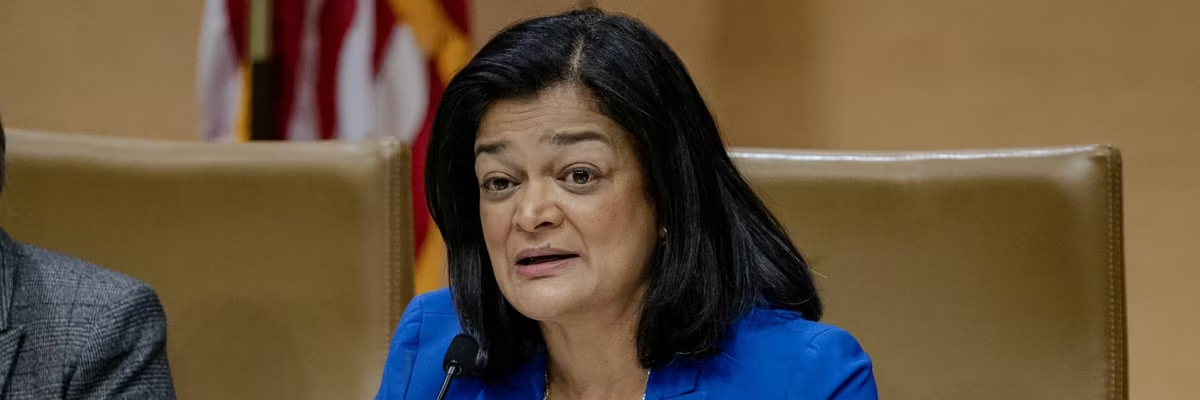
US Rep. Pramila Jayapal (D-Minn.) attends a field hearing at the Minnesota Senate building on January 16, 2026 in St. Paul, Minnesota.
Trump's threats against Cuba are "just a plain attempt to open up Cuban markets to his billionaire buddies," warned the Washington Democrat.
As the Trump administration celebrates its broadly unpopular war on Iran—one in which an estimated 1,332 people have been killed in the country, including nearly 200 children at a girls' school—US Rep. Pramila Jayapal noted that President Donald Trump is still imposing a blockade on Cuba and denounced his stated plan to take over the island.
"The US maximum pressure campaign on Cuba is a cruel and failing policy that has caused incredible harm to the Cuban people," said Jayapal (D-Wash.).
Trump's oil blockade on Cuba in recent weeks and his threats to push out its communist government are "just a plain attempt to open up Cuban markets to his billionaire buddies," said Jayapal.
Trump announced last week that US companies would be permitted to sell small amounts of oil to Cuba if they circumvent the government and that Venezuelan fuel could be sold to private businesses in the communist country.
That decision came after weeks of a worsening fuel crisis on the island, triggered by Trump's push to take control of Venezuelan oil and his threat to hit any country that provided oil to Cuba with tariffs. In January, he issued an executive order accusing the country of supporting terrorism and posing a security threat to the US.
The blockade has left cities struggling to provide sanitation services and pushed Cuba's healthcare system to the brink of collapse, according to the country's health minister. Officials blamed the US this week for a blackout that plunged millions of people into darkness for 16 hours.
On Friday, as Trump's Iran war sent US oil prices soaring and the attack on girls' school was found by numerous investigations to have "likely" been carried out by the US, the president attempted to change the subject to his plans for Cuba, telling CNN, "Cuba is gonna fall too."
He told the outlet that Secretary of State Marco Rubio, who has long advocated for regime change in Cuba, would turn his attention to pushing out the country's government after the war in Iran—which the president and his officials have estimated could take anywhere from four weeks to six months.
"Your next one is going to be, we want to do that special Cuba,” Trump told CNN. “[Rubio]’s waiting. But he says, ‘Let’s get this one finished first.’ We could do them all at the same time, but bad things happen. If you watch countries over the years, you do them all too fast, bad things happen. We’re not going to let anything bad happen to this country.”
The president made similar comments to Politico on Thursday, saying the US is "talking to Cuba" and that his decision to cut off the island's crucial Venezuelan oil supply is pressuring the government.
"Well, it’s because of my intervention, intervention that is happening,” Trump said. “Obviously, otherwise they wouldn’t have this problem."
Sen. Lindsey Graham (R-SC) also warned this week that "Cuba's next."
Jayapal said Friday that Trump's takeover of Venezuela, after which administration officials admitted the White House was after the country's oil supply and claimed the administration has the right to take over any country if doing so serves US interests, "is a clear example that Trump doesn't care about democracy or civil society."
Trump's threats against Cuba, she said, are "just a plain attempt to open up Cuban markets to his billionaire buddies."
Dear Common Dreams reader, It’s been nearly 30 years since I co-founded Common Dreams with my late wife, Lina Newhouser. We had the radical notion that journalism should serve the public good, not corporate profits. It was clear to us from the outset what it would take to build such a project. No paid advertisements. No corporate sponsors. No millionaire publisher telling us what to think or do. Many people said we wouldn't last a year, but we proved those doubters wrong. Together with a tremendous team of journalists and dedicated staff, we built an independent media outlet free from the constraints of profits and corporate control. Our mission has always been simple: To inform. To inspire. To ignite change for the common good. Building Common Dreams was not easy. Our survival was never guaranteed. When you take on the most powerful forces—Wall Street greed, fossil fuel industry destruction, Big Tech lobbyists, and uber-rich oligarchs who have spent billions upon billions rigging the economy and democracy in their favor—the only bulwark you have is supporters who believe in your work. But here’s the urgent message from me today. It's never been this bad out there. And it's never been this hard to keep us going. At the very moment Common Dreams is most needed, the threats we face are intensifying. We need your support now more than ever. We don't accept corporate advertising and never will. We don't have a paywall because we don't think people should be blocked from critical news based on their ability to pay. Everything we do is funded by the donations of readers like you. When everyone does the little they can afford, we are strong. But if that support retreats or dries up, so do we. Will you donate now to make sure Common Dreams not only survives but thrives? —Craig Brown, Co-founder |
As the Trump administration celebrates its broadly unpopular war on Iran—one in which an estimated 1,332 people have been killed in the country, including nearly 200 children at a girls' school—US Rep. Pramila Jayapal noted that President Donald Trump is still imposing a blockade on Cuba and denounced his stated plan to take over the island.
"The US maximum pressure campaign on Cuba is a cruel and failing policy that has caused incredible harm to the Cuban people," said Jayapal (D-Wash.).
Trump's oil blockade on Cuba in recent weeks and his threats to push out its communist government are "just a plain attempt to open up Cuban markets to his billionaire buddies," said Jayapal.
Trump announced last week that US companies would be permitted to sell small amounts of oil to Cuba if they circumvent the government and that Venezuelan fuel could be sold to private businesses in the communist country.
That decision came after weeks of a worsening fuel crisis on the island, triggered by Trump's push to take control of Venezuelan oil and his threat to hit any country that provided oil to Cuba with tariffs. In January, he issued an executive order accusing the country of supporting terrorism and posing a security threat to the US.
The blockade has left cities struggling to provide sanitation services and pushed Cuba's healthcare system to the brink of collapse, according to the country's health minister. Officials blamed the US this week for a blackout that plunged millions of people into darkness for 16 hours.
On Friday, as Trump's Iran war sent US oil prices soaring and the attack on girls' school was found by numerous investigations to have "likely" been carried out by the US, the president attempted to change the subject to his plans for Cuba, telling CNN, "Cuba is gonna fall too."
He told the outlet that Secretary of State Marco Rubio, who has long advocated for regime change in Cuba, would turn his attention to pushing out the country's government after the war in Iran—which the president and his officials have estimated could take anywhere from four weeks to six months.
"Your next one is going to be, we want to do that special Cuba,” Trump told CNN. “[Rubio]’s waiting. But he says, ‘Let’s get this one finished first.’ We could do them all at the same time, but bad things happen. If you watch countries over the years, you do them all too fast, bad things happen. We’re not going to let anything bad happen to this country.”
The president made similar comments to Politico on Thursday, saying the US is "talking to Cuba" and that his decision to cut off the island's crucial Venezuelan oil supply is pressuring the government.
"Well, it’s because of my intervention, intervention that is happening,” Trump said. “Obviously, otherwise they wouldn’t have this problem."
Sen. Lindsey Graham (R-SC) also warned this week that "Cuba's next."
Jayapal said Friday that Trump's takeover of Venezuela, after which administration officials admitted the White House was after the country's oil supply and claimed the administration has the right to take over any country if doing so serves US interests, "is a clear example that Trump doesn't care about democracy or civil society."
Trump's threats against Cuba, she said, are "just a plain attempt to open up Cuban markets to his billionaire buddies."
As the Trump administration celebrates its broadly unpopular war on Iran—one in which an estimated 1,332 people have been killed in the country, including nearly 200 children at a girls' school—US Rep. Pramila Jayapal noted that President Donald Trump is still imposing a blockade on Cuba and denounced his stated plan to take over the island.
"The US maximum pressure campaign on Cuba is a cruel and failing policy that has caused incredible harm to the Cuban people," said Jayapal (D-Wash.).
Trump's oil blockade on Cuba in recent weeks and his threats to push out its communist government are "just a plain attempt to open up Cuban markets to his billionaire buddies," said Jayapal.
Trump announced last week that US companies would be permitted to sell small amounts of oil to Cuba if they circumvent the government and that Venezuelan fuel could be sold to private businesses in the communist country.
That decision came after weeks of a worsening fuel crisis on the island, triggered by Trump's push to take control of Venezuelan oil and his threat to hit any country that provided oil to Cuba with tariffs. In January, he issued an executive order accusing the country of supporting terrorism and posing a security threat to the US.
The blockade has left cities struggling to provide sanitation services and pushed Cuba's healthcare system to the brink of collapse, according to the country's health minister. Officials blamed the US this week for a blackout that plunged millions of people into darkness for 16 hours.
On Friday, as Trump's Iran war sent US oil prices soaring and the attack on girls' school was found by numerous investigations to have "likely" been carried out by the US, the president attempted to change the subject to his plans for Cuba, telling CNN, "Cuba is gonna fall too."
He told the outlet that Secretary of State Marco Rubio, who has long advocated for regime change in Cuba, would turn his attention to pushing out the country's government after the war in Iran—which the president and his officials have estimated could take anywhere from four weeks to six months.
"Your next one is going to be, we want to do that special Cuba,” Trump told CNN. “[Rubio]’s waiting. But he says, ‘Let’s get this one finished first.’ We could do them all at the same time, but bad things happen. If you watch countries over the years, you do them all too fast, bad things happen. We’re not going to let anything bad happen to this country.”
The president made similar comments to Politico on Thursday, saying the US is "talking to Cuba" and that his decision to cut off the island's crucial Venezuelan oil supply is pressuring the government.
"Well, it’s because of my intervention, intervention that is happening,” Trump said. “Obviously, otherwise they wouldn’t have this problem."
Sen. Lindsey Graham (R-SC) also warned this week that "Cuba's next."
Jayapal said Friday that Trump's takeover of Venezuela, after which administration officials admitted the White House was after the country's oil supply and claimed the administration has the right to take over any country if doing so serves US interests, "is a clear example that Trump doesn't care about democracy or civil society."
Trump's threats against Cuba, she said, are "just a plain attempt to open up Cuban markets to his billionaire buddies."