

SUBSCRIBE TO OUR FREE NEWSLETTER
Daily news & progressive opinion—funded by the people, not the corporations—delivered straight to your inbox.
5
#000000
#FFFFFF
To donate by check, phone, or other method, see our More Ways to Give page.
Daily news & progressive opinion—funded by the people, not the corporations—delivered straight to your inbox.
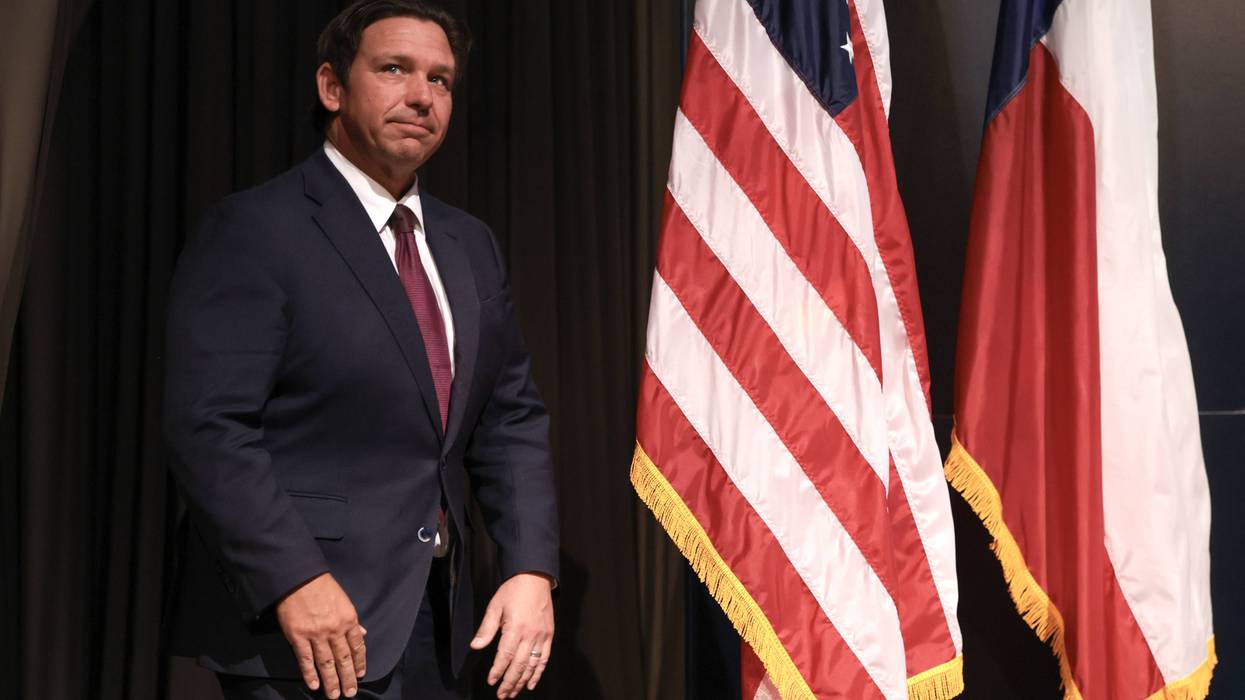
Florida's constitution explicitly bans partisan gerrymandering. But a court full of DeSantis appointees just upheld maps that give the GOP 24 of the state's 28 seats with no time to reverse it before November.
In defiance of state law and the will of voters, the Florida Supreme Court has handed Republicans another major win in the redistricting wars in time for this year’s midterms, approving a ruthlessly gerrymandered map that could hand another four US House seats to the GOP.
Florida’s state constitution is unusually explicit in its ban on partisan gerrymandering; the Fair Districts Amendment (FDA) approved in 2010 by 63% of voters expressly states that maps may not be drawn “with the intent to favor or disfavor a political party or an incumbent.” The court has struck down previous attempts by Republicans to draw more favorable maps on these grounds as recently as 2015.
But six of the seven justices that make up the current court have been appointed by Florida’s Republican Gov. Ron DeSantis. And when voting rights groups challenged a new map signed by the governor last month that is projected to give Republicans an advantage in 24 of the state’s 28 House districts, the right-wing court gave DeSantis what he wanted.
By a 6-1 ruling, the court on Wednesday declined to rule on the merits of the case, denying opponents' request for an emergency injunction, with the majority arguing that, despite the rapidly approaching election, this was not enough of a reason to rule on it while it's still being reviewed by a lower court.
The lone dissenter, Justice Jorge Labarga, who happens to be the only justice not appointed by DeSantis, argued that the case could be reviewed under the court's "pass-through" provision, which allows the court to expedite rulings on matters of great public importance.
"Surely," he said, "the upcoming 2026 congressional elections affecting the representation of millions of Floridians meet that threshold.”
With the state’s primaries set for August 18, this virtually guarantees that, despite its unconstitutionality, the map will be in place come November, as Republicans across the nation try to "pack and crack" enough Democratic strongholds to cling to control of the House in 2026.
In a post to social media, Florida's Republican Attorney General, James Uthmeier, celebrated the order as a “COMPLETE AND TOTAL VICTORY.”
The Florida Supreme Court has REJECTED the challenge to the state’s redistricting plan and new map.
This assures that the recently enacted map will be in place for the 2026 election.
— Ron DeSantis (@RonDeSantis) June 10, 2026
Opponents of the map—including Common Cause, the League of Women Voters, and the League of United Latin American Citizens—have said that the governor has made no effort to hide the overtly partisan nature of his redistricting push, which he carried out rapidly under an emergency session of the state legislature without public input.
In their lawsuit last month, they pointed out that the governor himself provided a color-coded version of the map to Fox News to highlight projected GOP gains—although Republicans won just under 57% of votes in House elections across Florida in 2024, they’d be expected to control nearly 86% of seats under the new maps.
Meanwhile, Jason Poreda, a senior DeSantis adviser who has described himself as the map's "drawer" has acknowledged that he used "partisan data" to draw the map in spite of the FDA.
As is the case with many of the maps drawn to maximize GOP power, DeSantis' cracks up majority-minority districts, including one predominantly Black district in Palm Beach and Broward County, and splinters the Orlando-Kissimmee area's Latino community across four districts.
And here is the new Florida congressional map in Dave's Redistricting: https://t.co/fTqDHjncwz pic.twitter.com/UTxflFazT0
— The Redistrict Network (@RedistrictNet) June 10, 2026
“The fact that this is a partisan gerrymander is as obvious as it is unconstitutional,” said Bradley Heard, deputy legal director of the Southern Poverty Law Center, which represented the plaintiffs last month. “And while this unnecessary map is egregious in how it advantages Republicans and disadvantages Democrats, the people who will suffer the most if it is allowed to stand are once again Black and Brown communities, whose voices are consistently silenced in these redistricting battles."
Florida Circuit Judge Joshua Hawkes, a DeSantis appointee who upheld the maps last month, declined to weigh in substantively on the question of whether the new map violated the FDA, but said it was more in line with the maps favored by the US Supreme Court in the recent Louisiana v. Callais decision, which struck at the heart of the Voting Rights Act of 1965 by effectively ending protections for districts drawn to give representation to nonwhite voters.
While Hawkes also did not weigh in on Republican arguments that the entire FDA should be thrown out because of Callais, he said it was ultimately fine for the court to defer ruling on DeSantis' map because "to the extent the court has to balance Florida’s FDA prohibition of improper partisan intent and the United States Constitution’s Equal Protection guarantees, it seems clear that the potential partisan intent is the lesser of the two evils."
The Callais decision has given Republicans a decisive upper hand in the redistricting wars that were kicked off last year when President Donald Trump called on red states to enact unprecedented hyperpartisan gerrymanders in an effort to beat back an expected Democratic wave in 2026.
An aggressive and explicitly racial gerrymander in Texas enacted without voter approval was upheld by the US Supreme Court last month, netting the GOP an expected five seats, and six other red states have redrawn maps to likely squeeze in one new Republican seat apiece.
And while GOP gains have been somewhat offset by California voters' approval of an amendment to allow Democrats to draw their own hyperpartisan maps, the US Supreme Court's refusal to stop the Virginia state supreme court from striking down of a voter-approved Democratic gerrymander dealt a critical blow to efforts to even the score, and Democrats have vanishingly few opportunities to make up ground before the coming midterms.
Florida Republicans blatantly violate their constitution and brutally gerrymander their map without a single vote = 100% legal.
Virginians vote to change their constitution so they can temporarily offset right wing gerrymandering = 100% illegal.
America is a banana republic. https://t.co/vTer29RSqQ
— Micah Erfan (@micah_erfan) June 11, 2026
Florida represents yet another notch in the win column for Republicans, but opponents say they will attempt to fight the gerrymander ahead of future elections.
"The Florida Supreme Court's failure to stop this brazen partisan power grab is not only an assault on democracy, but an abdication of its duty to the people of Florida," said Genesis Robinson, the executive director of the voting rights group Equal Ground. "Courts are meant to serve as a check on government overreach and a safeguard against constitutional violations, but, once again, when Floridians needed that protection most, the court declined to intervene."
"The time to protect voters from irreparable harm is before another election takes place under this map," he added. "And while we remain committed to ensuring that Florida's constitutional protections are fully upheld, Florida voters deserve fair maps, fair representation, and a democracy that works for everyone now."
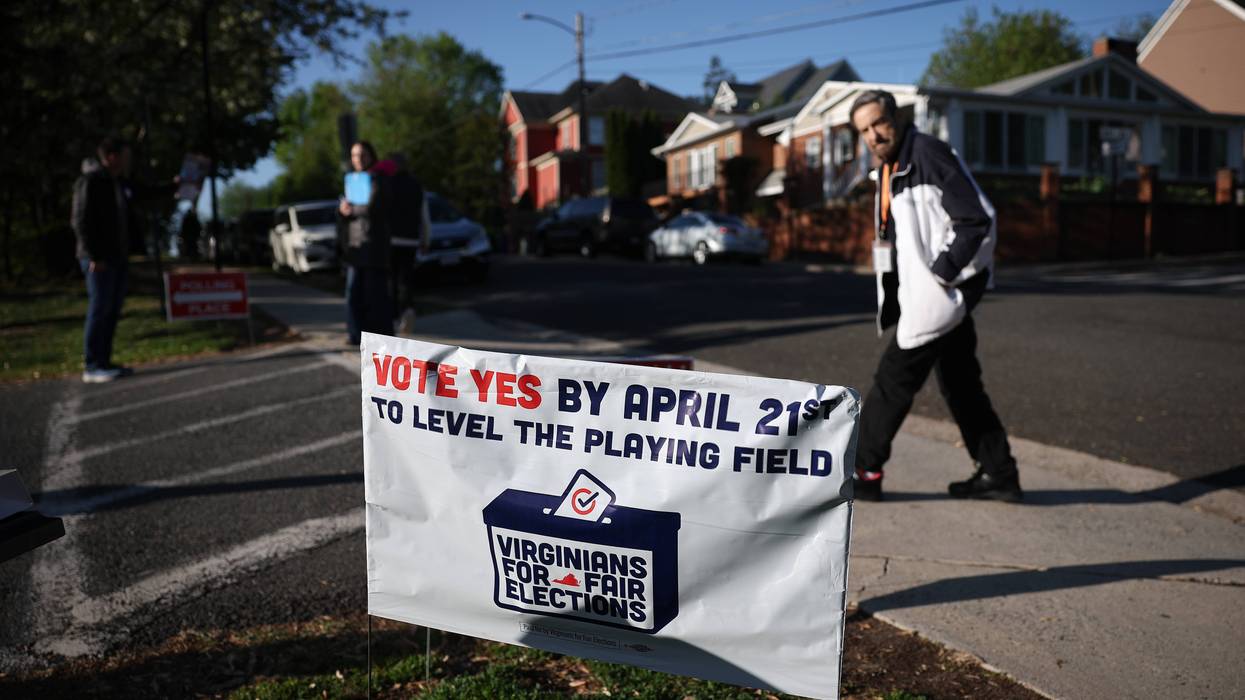
"Donald Trump, Republican state legislatures, and conservative courts are systematically and unabashedly tilting power away from the people for Trump’s political gain," said state Attorney General Jay Jones.
Virginia's Democratic attorney general, Jay Jones, said Friday night that he would redouble efforts to campaign on behalf of Democrats in the upcoming midterm elections following the US Supreme Court's rejection of a request to restore a voter-approved congressional map.
Following the high court's one-sentence denial of Democratic state officials' petition for emergency relief, which they had filed to block the state Supreme Court's ruling against a congressional map that passed via ballot measure last month, Jones said he would be "working tirelessly to support our Democratic candidates so we can win control of the House in spite of Republicans putting their thumbs on the scale."
With no dissents noted, the Supreme Court said Friday evening that it was denying the request to block the Virginia high court's ruling that had tossed out last month's redistricting referendum.
BREAKING: SCOTUS denies Virginia Democrats' request to block the Virginia Supreme Court ruling tossing out the redistricting referendum. There are no noted dissents and no opinion.
[image or embed]
— Chris Geidner (@chrisgeidner.bsky.social) May 15, 2026 at 6:35 PM
The decision "leaves in place the deeply flawed ruling from the Supreme Court of Virginia, which overturned the results of a lawful election and erased the will of millions of Virginia voters," said Jones.
It also served as "yet another profoundly troubling example of the continued national attack on voting rights and the rule of law by [President] Donald Trump, Republican state legislatures, and conservative courts," said the attorney general.
The map that was narrowly approved by voters last month included four new Democratic-leaning US House districts in Virginia, putting the party on equal footing with Republicans nationally or potentially giving it an edge in a mid-decade redistricting battle that was kicked off last year. Trump has urged Republican state legislatures to redraw congressional districts to give the GOP more winnable seats in the US House—as the president's economic policies and his deeply unpopular war on Iran as well as other military actions have pushed his approval rating to a low point for his second term ahead of the November midterms.
The redistricting fight was intensified late last month with the Supreme Court's ruling in Louisiana v. Callais, which held that Louisiana must redraw its 2024 congressional map. The map had created a second majority-minority district in the state, whose population is one-third Black. The ruling effectively gutted Section 2 of the Voting Rights Act, which allowed voters of color to challenge racially discriminatory electoral maps in court.
After the ruling, Louisiana's Republican governor, Jeff Landry, suspended the state's primary elections to allow the Republican-controlled legislature to redraw the congressional map, throwing out roughly 45,000 votes that had already been cast.
In the Virginia case, the US Supreme Court sided with the state's high court, which had found earlier this month that Virginia's Democratic legislature improperly began the process of placing an amendment to the state constitution after early voting in last fall's election was underway. The amendment cleared the way for Democrats to redraw the map, and the General Assembly approved the amendment days before the election.
Virginia voters then approved the redrawn map in April, only to have the state Supreme Court strike it down.
In filing their emergency petition with the US Supreme Court, Virginia Democrats argued the ruling had undermined the will of the residents who had voted for the referendum in April.
On Friday evening, Democratic Gov. Abigail Spanberger said the court had chosen "to nullify an election and the votes of more than three million Virginians."
Jones added in his statement that "Donald Trump, Republican state legislatures, and conservative courts are systematically and unabashedly tilting power away from the people for Trump’s political gain. Just this past month in Louisiana, Tennessee, and South Carolina, they have redrawn their maps and diluted Black political representation because it threatens their hold on power."
"This attack is not subtle," said the attorney general. "It is a coordinated effort to stack the deck in the Republicans' favor before the midterms, lock in political advantage, and make it harder for voters, especially Black voters and communities of color, to hold Trump and his allies accountable. There can be no doubt: Trump and his allies want only their most politically extreme supporters to have their voices heard in Washington. The Supreme Court of Virginia’s previous decision and today’s refusal by the United States Supreme Court to act are only bolstering these extreme MAGA voices."
Addressing Virginia voters, Jones added, "This fight is far from over, and I am committed to fighting alongside you."
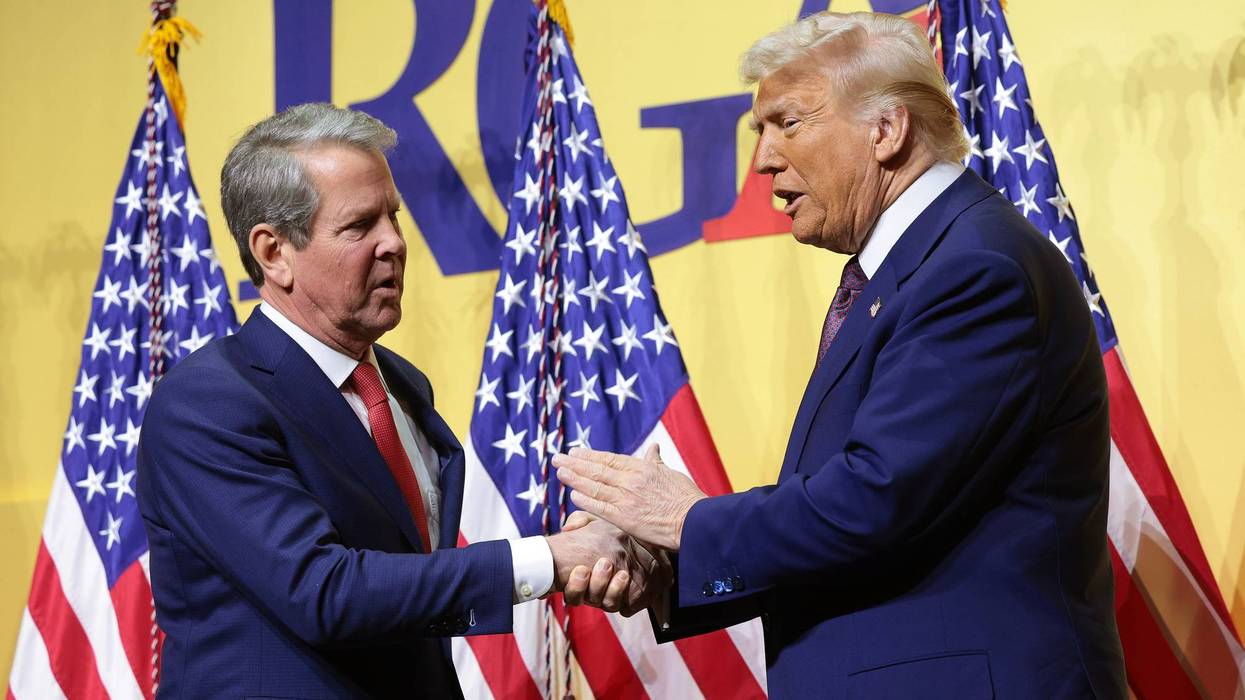
"We will not sit back and watch while Gov. Kemp takes orders from a felon-in-chief to turn Dr. King's dream into a nightmare," said the head of Common Cause Georgia.
Republican state leaders are forging ahead with President Donald Trump's campaign to rig congressional districts for the GOP, with Georgia Gov. Brian Kemp on Wednesday signing a proclamation for a special legislative session and South Carolina Gov. Henry McMaster expected to make a similar announcement soon.
While GOP policymakers facing pressure from Trump have pursued mid-decade redistricting in several states ahead of the November midterm elections—in which Democrats aim to reclaim majorities in both chambers of Congress—Kemp's proclamation explicitly states that any changes in Georgia would be for 2028, which is the next presidential cycle.
Kemp's proclamation cites the US Supreme Court's decision last month that a Louisiana map predating Trump's redistricting push was "an unconstitutional racial gerrymander," which gutted the remnants of Section 2 of the Voting Rights Act (VRA) of 1965.
In a statement condemning the proclamation, Common Cause Georgia director Rosario Palacios pointed to the late Rev. Martin Luther King Jr., a key figure in the movement that led to the VRA as well as the Civil Rights Act the previous year.
"We will not sit back and watch while Gov. Kemp takes orders from a felon-in-chief to turn Dr. King's dream into a nightmare. Too many civil rights leaders have done work in our state for us [to] take this sitting down," Palacios declared. "Common Cause is mobilizing thousands of people to stop state lawmakers from passing any new maps before 2030 that destroy Black voters' power for political gain. Voters should not have to rely on lawsuits to protect their right to fair representation. Congress must end this abuse once and for all so every voter can cast a ballot in free and fair elections, no matter their political party."
US Sen. Raphael Warnock (D-Ga.), who is up for reelection in 2028, similarly ripped the Georgia redistricting effort on social media Wednesday: "There is an extreme movement in this country that will stop at nothing to hold on to power, even if it means stripping representation away from millions. I will fight this with everything I have."
Republicans in various states have moved to "shamelessly capitalize" on the April ruling from the high court's right-wing supermajority. On Monday, as the Supreme Court cleared the way for the Alabama GOP to rescind the creation of its second Black-majority district, Memphis voters sued over a new map targeting Tennessee's only majority-Black congressional district.
On Tuesday, as the Missouri Supreme Court declined to strike down a new congressional map that state voters are working to challenge with a referendum, five Republican South Carolina senators joined Democrats in blocking a GOP effort to advance Trump's gerrymandering campaign in their state.
However, The Post and Courier's Nick Reynolds reported Wednesday that South Carolina Senate Majority Leader Shane Massey (R-25) believes the governor "will call legislators back into a special session amid the redistricting fight."
Also reporting on the anticipated move Wednesday, Politico's Andrew Howard and Alec Hernandez noted that "McMaster's plan—confirmed by four people familiar with the decision, who were granted anonymity to share private details—is a reversal of his position earlier this month and follows pressure" from the president and his allies.
A redistricting push in South Carolina is expected to target the seat held by Democratic Congressman Jim Clyburn—who last month warned that the Supreme Court ruling on Louisiana's map and the VRA "threatens to send our country deeper into the thicket of never-ending redistricting fights, with repeated aggressive map redraws, protracted legal battles, and relentless partisan tugs-of-war, all of which are destined to result in more regressive court decisions."

"It’s not a big deal," Landry said after casually announcing that legally cast ballots were "discarded" after he suspended elections.
Louisiana's Republican Gov. Jeff Landry is facing criticism over his blasé admission that tens of thousands of Louisianans would have their legally cast ballots thrown out after he suspended the state's primary elections.
Landry signed an executive order suspending the state's May 16 and June 27 primaries immediately after the US Supreme Court’s landmark decision in late April, which held that the state’s maps guaranteeing districts representing the state's Black residents constituted “an unconstitutional racial gerrymander."
The ruling in Louisiana v. Callais effectively destroyed Section 2 of the 1965 Voting Rights Act and set the stage for the GOP to draw new districts that could totally wipe out the electoral power of Louisiana's Black population, which makes up about one-third of the state, and do the same across the country.
Declaring a "state of emergency," the governor announced that elections were suspended just as early voting was set to begin, leading many to conclude that the right-wing high court's ruling was timed to allow Republicans to maximize their power as they enter this year's midterms.
In an interview with "60 Minutes" on Sunday night, Landry was asked by anchor Cecilia Vega about the unprecedented decision to suspend the election and what would happen to the roughly 45,000 mail ballots cast before the order went into effect.
Landry contended that he had no choice but to suspend the elections because "we don't have a map that our voters can vote on" as a result of the court's ruling.
Vega noted that during times of much greater strife, including "during the Civil War, during two world wars, elections still went on."
"We'll have an election, and we're actually going to have an election on Election Day," Landry responded, in an apparent shot at those who cast their votes early.
"But voting was already happening," Vega said. "More than 45,000 ballots have been returned. What happens to those?"
Landry said, "Those ballots are discarded, and those voters will vote again in November." (Notably, Landry's order does not delay primary elections until November, but until July 15 or whenever the legislature enacts new maps.)
Vega responded with incredulity at the governor's casual acknowledgment that the state would simply throw out tens of thousands of legally cast votes.
“You say that like it’s not a big deal,” she said.
“Well, it’s not a big deal,” Landry responded. “It’s not my fault. If anyone has a grievance, take it to the United States Supreme Court.”
The voting rights-focused news outlet Democracy Docket responded to Landry on social media: "It is a big deal to the 45,000 voters whose ballots you trashed. It’s also your fault."
They echoed the words of Rep. Cleo Fields (D-La.), whose majority Black 6th congressional district in Baton Rouge is expected to be chopped up by the GOP, and who has joined a lawsuit with other candidates hoping to stop Landry's suspension of elections.
“The Supreme Court ruled that the map that you created, that this legislature created, and this governor signed, was illegal,” Fields said to Landry on Monday. "The Supreme Court did not say, ‘Throw away those ballots.’"
The decision to suspend Louisiana’s primary comes amid a multi-pronged assault on voting rights coming from the administration of President Donald Trump, who has himself repeatedly floated the idea of canceling elections and praised Landry for “moving so quickly” to block his constituents from voting.
But many were particularly shocked at Landry's apparent ho-hum attitude toward mass disenfranchisement.
Civil rights attorney and public defender Scott Hechinger marveled at the “governor of Louisiana throwing out 45,000 votes with a smug smirk and a chuckle.”
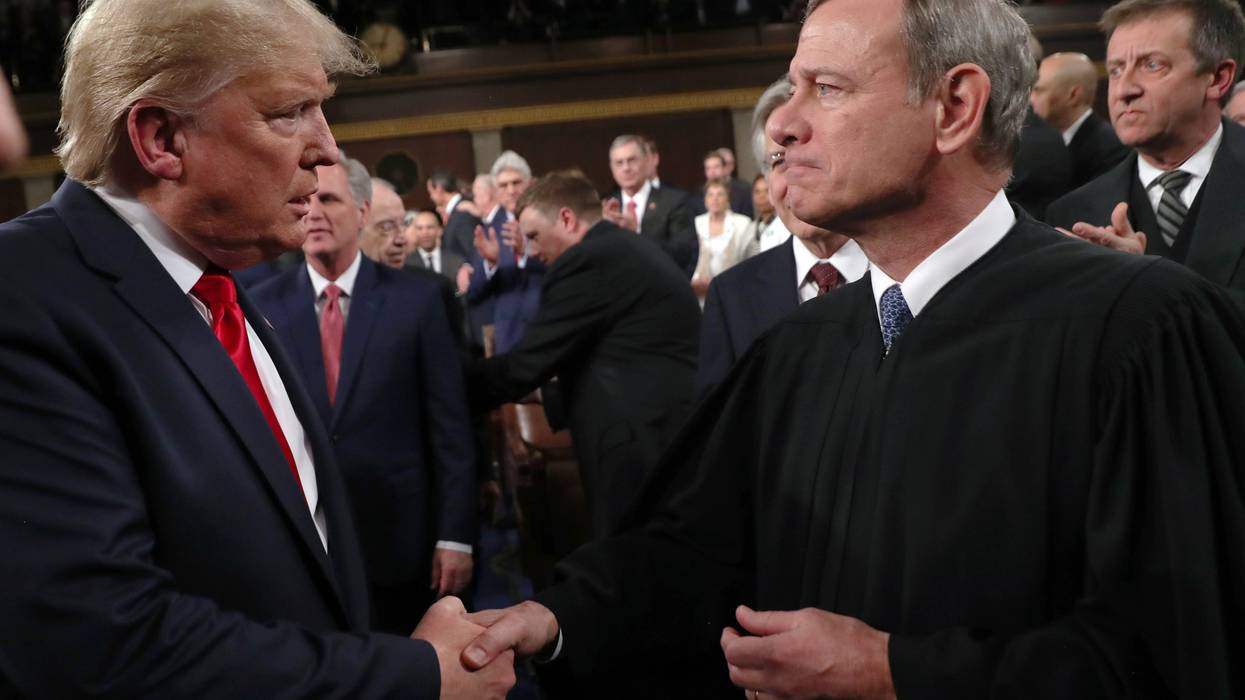
"The irreparable harm resulting from the Supreme Court of Virginia's decision is profound and immediate," top state Democrats said of the decision that struck down the new districts.
Virginia Attorney General Jay Jones and Democratic leaders in the state General Assembly on Monday asked the US Supreme Court to block a ruling against a ballot measure establishing new voter-approved congressional districts that favored Democrats.
The Virginia Supreme Court on Friday delivered a blow to the Democratic battle against President Donald Trump's gerrymandering campaign when it struck down a political map that Virginians had narrowly backed last month. The new districts could help Democrats secure up to four seats in the US House of Representatives in the November midterm elections.
Jones, Speaker of the Virginia House of Delegates Don Scott (D-88), state Senate Majority Leader Scott Surovell (D-34), and Senate President Pro Tempore L. Louise Lucas (D-18) are seeking a stay, arguing that based on a "novel and manifestly atextual interpretation" of the Virginia Constitution, the state Supreme Court "overrode the will of the people who ratified the amendment by ordering the commonwealth to conduct its election with the congressional districts that the people rejected."
"A stay is warranted because the decision by the Supreme Court of Virginia is deeply mistaken on two critical issues of federal law with profound practical importance to the nation. The decision below violates federal law in two separate ways," the emergency application says. "First, it predicated its interpretation of the Virginia Constitution on a grave misreading of federal law, which expressly fixes a single day for the 'election' of representatives and delegates to Congress."
"Second, by rejecting the plain text of the Virginia Constitution's definition of the term 'election' to adopt its own contrary meaning, the Supreme Court of Virginia 'transgressed the ordinary bounds of judicial review such that it arrogated to itself the power vested in the state legislature to regulate federal elections,'" the application continues.
The filing also stresses that "the irreparable harm resulting from the Supreme Court of Virginia's decision is profound and immediate. By forcing the commonwealth to conduct its congressional elections using districts different from those adopted by the General Assembly pursuant to a constitutional amendment the people just ratified, the Supreme Court of Virginia has deprived voters, candidates, and the commonwealth of their right to the lawfully enacted congressional districts."
The Associated Press noted that "Democrats are taking a legal long shot in asking the justices to reverse the Virginia ruling. The Supreme Court tries to avoid second-guessing state courts’ interpretations of their own constitutions. In 2023, it turned down a request by North Carolina Republicans to overrule a state Supreme Court decision that blocked the GOP's congressional map."
The high court also has a right-wing supermajority that includes three Trump appointees—and which gutted the remnants of the Voting Rights Act in a ruling related to Louisiana's congressional districts late last month.
Under current conditions, Republicans are expected to pick up seats in Florida, Missouri, North Carolina, Tennessee, and Texas due to redistricting demanded by Trump, while Democrats are expected to win more districts in California, where voters also approved new political lines benefiting them.
The Washington Post reported Monday that "some top Democrats express little hope that the appeal will affect this November's congressional midterms and are pivoting to waging campaigns in the state's existing districts."
According to the newspaper:
Surovell (D-Fairfax) said "the practical realities of our election calendar" will prevent candidates from running in new maps even if conservative justices on the US Supreme Court were open to helping Virginia Democrats.
Tuesday is the deadline set by state elections officials for putting the ballot mechanisms in place. Surovell noted that Virginia’s elections software is antiquated and overdue for replacement.
Instead, Democrats are making the case that it’s time to work with the cards they have in hand.
"Since we can't control anything other than mobilizing and organizing, then let's mobilize and organize and turn our anger into fuel for that," Rep. Jennifer McClellan (D-Va.) said.
In a Monday letter to fellow congressional Democrats, US House Minority Leader Hakeem Jeffries (NY) called out the "vicious Republican assault on the right to vote, free and fair elections, and Black political representation in the South," and pledged that "our effort to forcefully push back against the Republican redistricting scheme will not slow down."
Jeffries also announced a caucus-wide briefing planned for Thursday "to discuss the steps Democrats are taking to advance the largest voter protection effort in modern American history," and declared that "Democrats will take control of the House of Representatives in November."
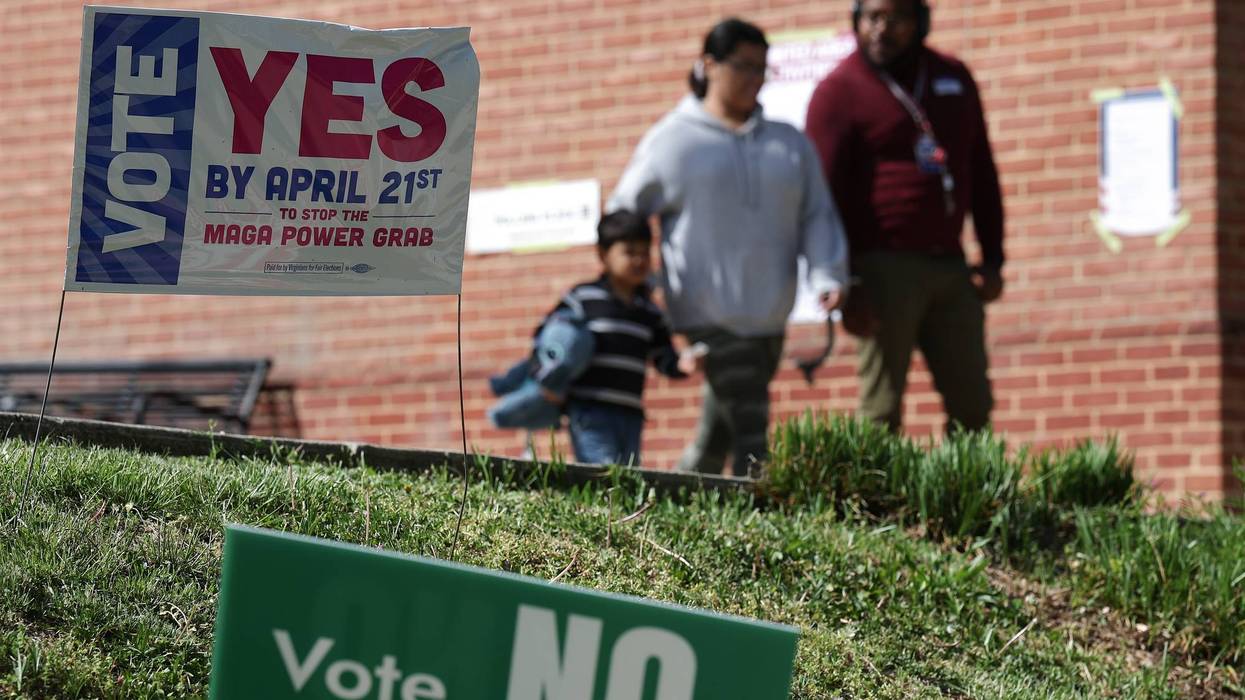
"Unlike GOP-led states that redrew their congressional maps in backroom deals, Virginia let the people decide," said Sen. Tim Kaine. "But the Virginia Supreme Court has blocked the people's choice."
Virginia, one of two states that combated President Donald Trump's gerrymandering campaign by enacting voter-approved congressional districts favoring Democrats, had its new map struck down by the state Supreme Court on Friday.
"On March 6, 2026, the General Assembly of Virginia submitted to Virginia voters a proposed constitutional amendment that authorizes partisan gerrymandering of congressional districts in the commonwealth," notes the court opinion. Voters narrowly approved the proposal, 51.7% to 48.3% last month.
However, the state's high court found that "the legislative process employed to advance this proposal violated Article XII, Section 1 of the Constitution of Virginia. This constitutional violation incurably taints the resulting referendum vote and nullifies its legal efficacy."
Responding in a Friday statement, Speaker of the Virginia House of Delegates Don Scott (D-88) said that "we respect the decision of the Supreme Court," while also celebrating that so many Virginians turned to the ballot box to "fight back against the Trump power grab" and pledging to keep up the battle "for a democracy where voters—not politicians—have the final say."
Some leading Democrats were more critical of the Republican-majority state court, which Virginia Attorney General Jay Jones said "has chosen to put politics over the rule of law" with a decision that "silences the voices of the millions of Virginians who cast their ballots in every corner of the commonwealth, and... fuels the growing fears across our nation about the state of our democracy."
"Before the court, my office clearly laid out both in filings and oral arguments that this constitutional amendment process and voter ratification occurred in a timely, constitutionally compliant, and legally sound manner," he continued. The court "contorted the plain language of the constitution and code of Virginia to give it a meaning that was never intended, which allowed them to reach the wrong legal conclusion that fit their political agenda. The consequences of their error are grave."
"This court's ruling follows a dangerous trend of tilting power away from the people," Jones added. "My team is carefully reviewing this unprecedented order, and we are evaluating every legal pathway forward to defend the will of the people and protect the integrity of Virginia's elections."
Denouncing the decision as "outrageous and unconscionable," Congressman Eugene Vindman (D-Va.) said that "at the heart of our democracy is the principle that the results of elections ought to be respected, and the Virginia Supreme Court today dealt our democracy a terrible blow."
MoveOn Political Action's chief communications officer, Joel Payne, also called out the court for "silencing and invalidating the votes of 3 million Virginians," the majority of whom "voted to level the playing field against Republican efforts to avoid accountability at the ballot box."
"Once again, the courts have blunted the will of the people, and are giving a green light to President Trump and Republicans’ unprecedented power grab in the midterms," said Payne, whose group had endorsed Virginia's ballot measure.
US Tim Kaine (D-Va.) isn't up for reelection this cycle, but he still stressed the importance of convincing voters to support Democrats, no matter what their congressional maps look like, in the November midterms. As he put it: "Unlike GOP-led states that redrew their congressional maps in backroom deals, Virginia let the people decide. But the Virginia Supreme Court has blocked the people's choice. So we have to campaign and win on their maps. We can do it!"
California is the other state where voters approved a new map for the US House of Representatives in response to Trump pushing Republican leaders in Texas, Missouri, and Florida to redraw districts to help the GOP in the next election. As in Virginia, California's redistricting is being challenged in court. There have also been recent changes to political lines in Ohio and Utah that could help influence control of Congress.
The 4-3 ruling in Virginia—which election expert Dave Wasserman noted is an "enormous setback for Dems" who had hoped to pick up four seats—came just hours after Tennessee Republicans passed a new map targeting the state's only majority-Black district, despite objections in Memphis and across the state. Their move followed the US Supreme Court ruling that gutted the remnants of the Voting Rights Act (VRA) last week, which also led to an ongoing fight over a primary in Louisiana.
Human rights attorney and former Illinois congressional candidate Qasim Rashid said Friday: "So to be sure, US Supreme Court says red states can ignore the will of the people and gerrymander their districts 9-0 in favor of MAGA Republicans. But VA Supreme Court says blue states cannot put the vote to the will of the people and follow through on the people's vote to redistrict."
"Once again, gerrymandering that centers white people is A-OK, but gerrymandering that centers a broad base of voters is not," he added. "Absurd."
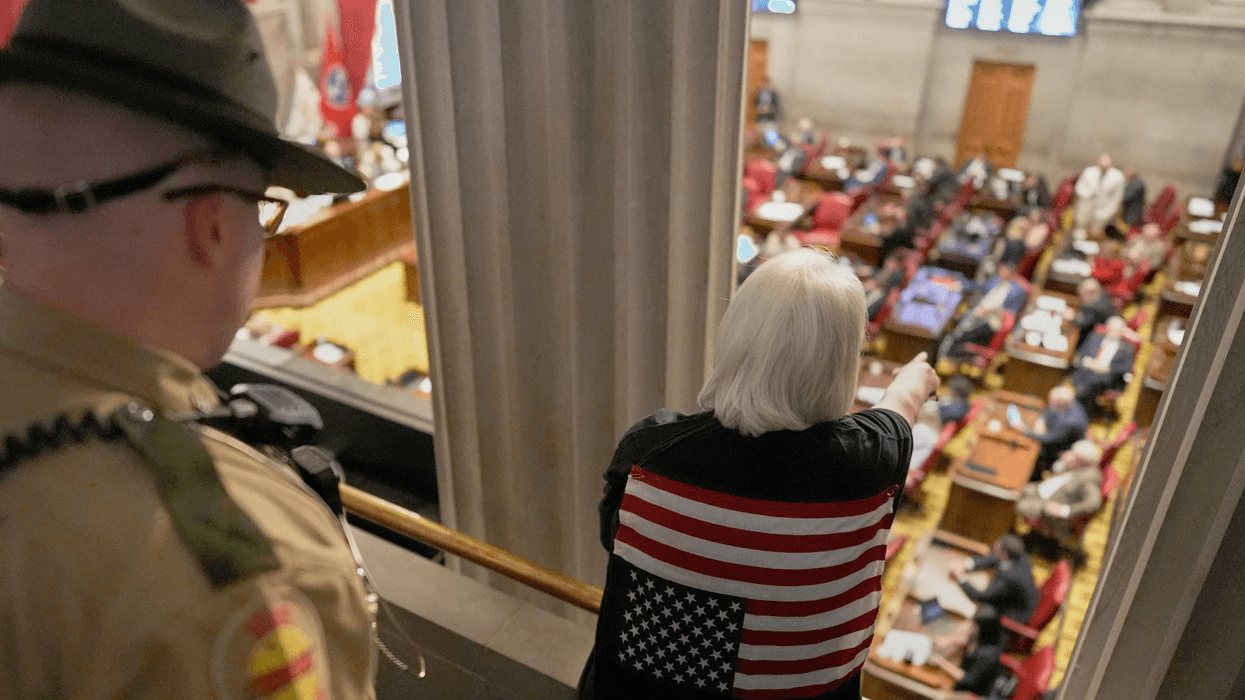
“This is not a special session—this is a white power rally, and a white power grab," said one Tennessee Democrat.
Republicans in the Tennessee House of Representatives voted during a special session on Thursday to adopt a new congressional map that would carve up the state's lone majority-Black district, a move that came amid raucous protests from angry residents and Democratic lawmakers.
The special session was called by GOP Gov. Bill Lee at the behest of President Donald Trump, whose aggressive gerrymandering push across the country was supercharged by the US Supreme Court's decision last week gutting the 1965 Voting Rights Act’s protections against racial discrimination. One Tennessee Republican—state Rep. Todd Warner (R-92)—walked into the House chamber for Thursday's vote wearing a Trump 2024 flag as a cape.
The Tennessee House approved the new congressional map, which would likely draw the only Democrat in Tennessee's US congressional delegation out of his seat, by a party-line vote of 64 to 25. Following the vote, The Tennessean reported that "Democrats linked arms and walked out of the room. Seconds later, the chamber adjourned."
Shouts of rage flooded the Tennessee House chamber after the map passed, and protesters booed and jeered Republican lawmakers as they exited.
⚡️ WATCH — JUST NOW — 99% white Tennessee House Republicans pass a racist 9-0 map stripping majority Black Memphis of congressional representation pic.twitter.com/OYwTWZK2i1
— The Tennessee Holler (@TheTNHoller) May 7, 2026
House passage of the map came after lawmakers voted to repeal a 1972 ban on mid-decade redistricting after limited debate, clearing the way for approval of the new district lines, which are expected to draw US Rep. Steve Cohen (D-Tenn.)—the only Democrat in Tennessee's congressional delegation—out of his seat.
The Tennessee Senate is expected to approve the new map on Friday.
State Rep. Justin Pearson (D-86), whose brother was among the demonstrators arrested during a protest against the new map, said in the wake of Thursday's vote that "this is what evil looks like."
"I told a colleague today that you're all going to have a lot to repent for, because these actions are evil," Pearson told Zeteo. "And we have to use that language."
Ahead of Thursday's vote, state Rep. Gloria Johnson (D-90) said that "this is not a special session—this is a white power rally, and a white power grab."
REP. @VoteGloriaJ: “This is not a special session, this is a white power rally, and a white power grab.”#JimCrow #Memphis pic.twitter.com/K3TO3IAbzk
— The Tennessee Holler (@TheTNHoller) May 7, 2026
Democracy Docket reported that the new map "splits Memphis, a majority-Black city that made up most of the state’s 9th Congressional District, between three districts."
"It also further fractures Nashville, another Democratic stronghold in the state," the outlet added.
The ACLU of Tennessee called the redrawn district lines a "Jim Crow" map with the "specific goal of targeting the state's only majority-minority district in Memphis."
"The moment politicians manipulate the map," the group warned, "the power begins to leave your hands."
Tennessee's special session came days after Louisiana's Republican governor suspended his state's US House primaries to allow lawmakers to redraw district lines following the US Supreme Court's decision in Louisiana v. Callais, the high court's latest hammer blow to the Voting Rights Act.
Republican lawmakers in Alabama and Mississippi are also moving to redraw their states' district lines following the Supreme Court's ruling.
"By weakening protections against racial gerrymandering, the court made it easier for politicians to draw voting maps that look neutral but quietly weaken the voices of communities of color," warned the pro-democracy group Common Cause. "When that happens, certain voters have less of a say in who represents them, and that’s exactly how power gets skewed.
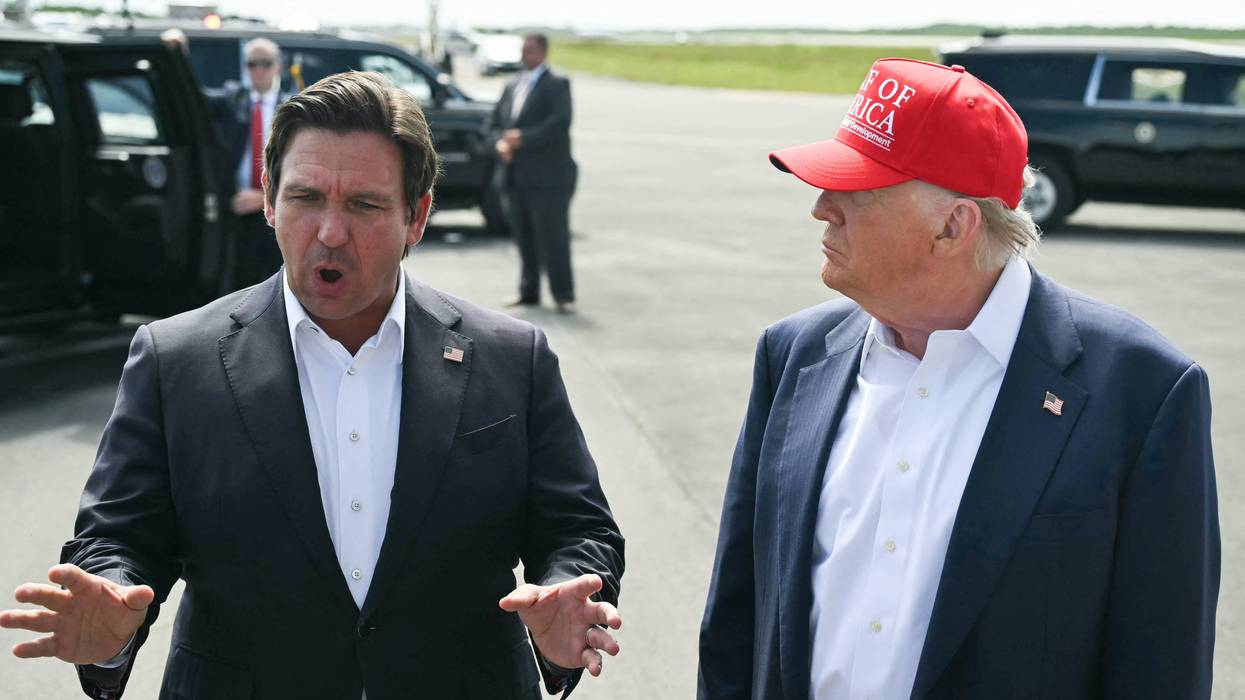
"This poses another dangerous threat to free and fair elections in this country, and other Democratic states must act now to ultimately protect a fair and representative democracy," said one national expert.
President Donald Trump's push to rig US congressional maps for Republicans ahead of this year's elections expanded to his home state of Florida on Wednesday, when GOP Gov. Ron DeSantis announced the Legislature will hold a special session in April.
While Trump has openly pressured Republican state leaders to take action—and threatened those who don't—DeSantis tried to frame the plans as an effort to "ensure that Florida's congressional maps accurately reflect the population of our state."
DeSantis also explained during a press conference that he is pushing the session to April 20-24 because of a forthcoming US Supreme Court decision "that's gonna affect the validity of some of these districts nationwide, including some of the districts in the state of Florida."
While the high court's right-wing supermajority last month gave Texas Republicans a green light to use their recently redrawn political map in the midterm elections, DeSantis was referring to the expected ruling on a case about Louisiana's congressional districts that predates Trump's gerrymandering push.
The outcome of Louisiana v. Callais could be "the GOP's best chance of defending its narrow, five-seat majority in the House of Representatives," Bloomberg reported Wednesday. "In oral arguments last fall, the conservative justices appeared poised to significantly limit, if not completely overturn, the provision of the 1965 Voting Rights Act that bars changes in election laws that have the effect of discriminating against racial minorities."
In a statement, the Florida Democratic Party called DeSantis' map-rigging effort "reckless, partisan, and opportunistic."
"This is nothing more than a desperate attempt to rig the system and silence voters before the 2026 election," the party said. "Now, after gutting representation for Black Floridians just three years ago, Ron is hoping the decimation of the Voting Rights Act by Trump's Supreme Court will allow him to further gerrymander and suppress the vote of millions of Floridians."
Florida Senate Minority Leader Lori Berman (D-31) said that "Florida's Fair Districts Amendment strictly prohibits any maps from being drawn for partisan reasons, and regardless of any bluster from the governor's office, the only reason we're having this unprecedented conversation about drawing new maps is because Donald Trump demanded it."
"An overwhelming majority of Floridians voted in favor of the Fair Districts Amendment and their voices must be respected," Berman declared. "The redistricting process is meant to serve the people, not the politicians."
Florida House Minority Leader Fentrice Driskell (D-67) similarly said during a press briefing that "people should pick their politicians. Politicians should not pick their people. Florida's government should not be rigging elections. That's what they do in places like Cuba and Venezuela, not America. This is a cynical swamp-like behavior that makes people hate politics, and Florida doesn't have to do this, period."
The National Democratic Redistricting Committee, founded and chaired by former Attorney General Eric Holder, also condemned the move. The group's president, John Bisognano, said that "the proclamation that the state should wait for 'guidance' from the US Supreme Court is just a thinly veiled call for Florida Republicans to further gerrymander, no matter the court's decision."
"The Sunshine State is already one of the most egregiously gerrymandered states in the country, with a DeSantis-drawn congressional map that robs millions of voters—particularly voters of color—of their rightful representation," Bisognano noted.
"Right now, Florida Republicans are aiming to enact an even more extreme gerrymander on top of an already extreme gerrymander, not because Floridians want this, but because they want to cater to the DC politicians and special interests and dilute Black and Latino voting power," he added. "This poses another dangerous threat to free and fair elections in this country, and other Democratic states must act now to ultimately protect a fair and representative democracy."
In addition to Texas, Republicans have recently redrawn maps to appease Trump in Missouri and North Carolina—while GOP state senators in Indiana joined Democratic lawmakers to block an effort there.
Voters in California responded by approving new congressional districts for their state that favor Democrats, which swiftly drew a lawsuit from the Trump administration. Democratic lawmakers in Maryland may follow the Golden State's lead.
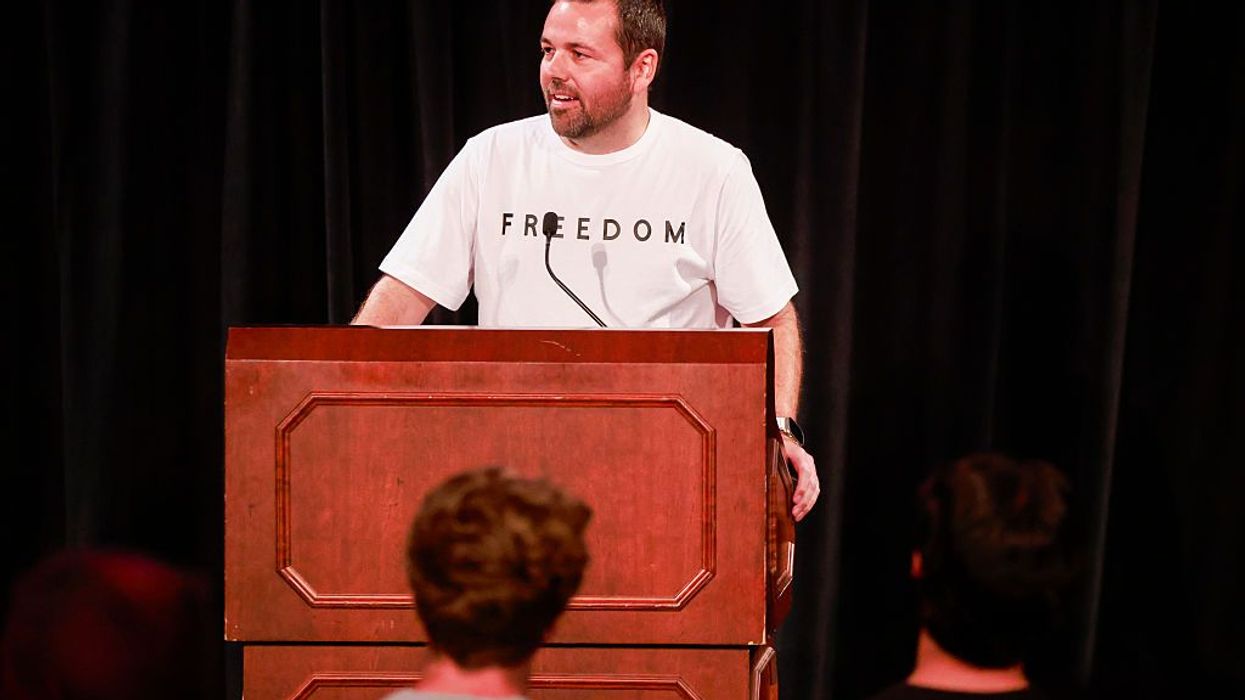
Some Indiana Republicans vocally objected to the president's pressure campaign, with one saying Hoosiers "don’t like to be bullied in any fashion."
Republican Indiana Lt. Gov. Micah Beckwith posted and subsequently deleted a claim that President Donald Trump had threatened to cut off funding to his state unless its legislators approved a mid-decade gerrymander that would have changed the composition of its congressional map to further favor the GOP.
Just over four hours after the Republican-led Indiana state Senate on Thursday voted down the Trump-backed gerrymander—which would have changed the projected balance of Indiana’s current congressional makeup from seven Republicans and two Democrats to a 9-0 map in favor of the GOP—Beckwith took to X to warn that the Hoosier State would soon be feeling the president's wrath.
"The Trump admin was VERY clear about this," he wrote, referring to threats to take away federal funding for Indiana. "They told many lawmakers, cabinet members, and the [governor] and I that this would happen. The Indiana Senate made it clear to the Trump admin today that they do not want to be partners with the [White House]. The WH made it clear to them that they'd oblige."
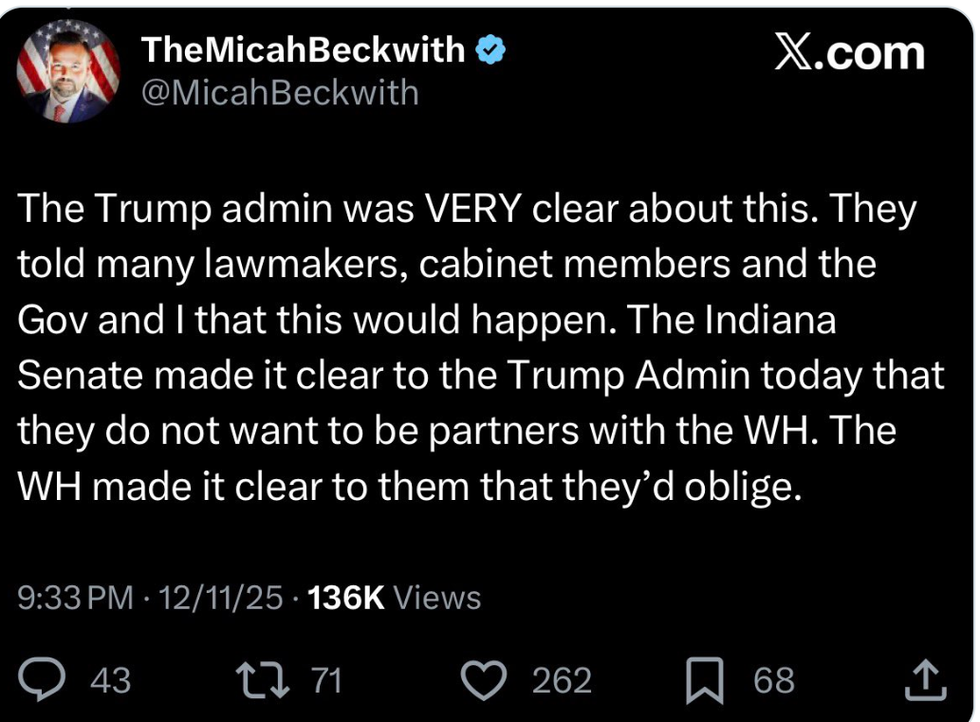
Although Beckwith deleted his post, he also confirmed to Politico reporter Adam Wren that the White House said that Indiana could lose out on funding for projects if the state did not approve the map, although Beckwith insisted that this was not a "threat" but merely "an honest conversation about who the White House does want to partner with."
Earlier on Thursday, the X account for right-wing advocacy group Heritage Action, a sister organization of the Heritage Foundation think tank, claimed that Trump had threatened to decimate Indiana's state finances unless the state Senate approved his proposed gerrymander.
"President Trump has made it clear to Indiana leaders: if the Indiana Senate fails to pass the map, all federal funding will be stripped from the state," Heritage Action wrote. "Roads will not be paved. Guard bases will close. Major projects will stop. These are the stakes and every NO vote will be to blame."
Trump has not yet publicly threatened to cut off Indiana's federal funds, and it's not clear that the administration actually plans to punish the state for defying the president.
According to a Thursday report from CNN, the Trump White House pressure campaign against Republican Indiana state senators backfired because many legislators resented being subjected to angry threats from Trump supporters, including some incidents in which lawmakers were swatted at their homes.
Republican Indiana state Sen. Jean Leising told CNN that the all-out pressure campaign waged by the president ended up pushing more people into opposing his agenda.
"You wouldn’t change minds by being mean," Leising said. "And the efforts were mean-spirited from the get-go. If you were wanting to change votes, you would probably try to explain why we should be doing this, in a positive way. That never happened, so, you know, I think they get what they get."
Fellow Republican Indiana state Sen. Sue Glick echoed Leinsing's assessment, and said that blunt-force threats against legislators were doomed to failure.
"Hoosiers are a hardy lot, and they don’t like to be threatened," Glick said. "They don’t like to be intimidated. They don’t like to be bullied in any fashion. And I think a lot of them responded with, ‘That isn’t going to work.' And it didn’t."
Indiana’s rejection of the proposed gerrymander this week was a major blow to Trump’s unprecedented mid-decade redistricting crusade, which began in Texas and subsequently spread to Missouri and North Carolina.
Democratic State Sen. Fady Qaddoura, who immediately filed legislation to ban mid-decade redistricting, called the new map an illegal "racial gerrymander."
After months of escalating attacks against Indiana's Republican lawmakers by President Donald Trump, the state House GOP has revealed a new map for the 2026 midterms designed to hand every US House seat in the state to Republicans.
Republicans won 58% of the vote across Indiana's US House elections in 2024, granting them an already overrepresentative seven of the state's nine congressional seats. The new map, published Monday, would eliminate the remaining two seats in the state held by Democrats.
As Bolts magazine editor and founder Daniel Nichanian explained on social media, under the new map, "Indianapolis would be cracked into GOP seats, and Gary would be drowned in red." In other words, the new map would transparently dilute the power of Indiana's two largest concentrations of nonwhite voters.
The redrawing of Indiana's map comes amid a wider push spearheaded by Trump for Republican states to pursue unprecedented mid-decade gerrymandering in hopes of clinging to a governing trifecta against what is expected to be a wave year for Democrats in 2026.
A similar effort has been undertaken in Texas to potentially add five more seats to the GOP ranks, which is currently under appeal at the US Supreme Court. Trump has likewise pressured Republican lawmakers in Missouri, Utah, and North Carolina to draw maps that would net the GOP even more seats. This power grab has been met with redistricting efforts by some blue states, most notably California, which passed a new map last month, likely adding five more seats to the Democratic column.
Indiana's new map could be put to a vote in the state House as soon as December 8, where it would then be kicked up to the Senate. That is where Trump has run into some resistance, and he hasn't taken it well.
In mid-November, a group of 19 Republican state senators joined a united Democratic caucus to vote down the new map—one of the no votes, state Sen. Kyle Walker (R-33), said he'd "spent the past several months listening closely to [his] constituents on mid-decade redistricting" and found "93% opposed."
After the map was voted down, Trump lit into some of the holdouts in a rant on Truth Social. He said he was "disappointed" in the senators who voted against the map, adding that "any Republican that votes against this important redistricting, potentially having an impact on America itself, should be PRIMARIED," before calling to "get them out of office ASAP" if they failed.
Trump identified two specific lawmakers—Senate Pro Tem Rod Bray (R-37) and Sen. Greg Goode (R-38)—as the "RINO Senators" most responsible for the vote failing.
Within hours of the post, Goode was targeted by a "swatting" attack, in which an anonymous person placed a fraudulent emergency report in hopes of provoking a SWAT team or other large law enforcement response at the target's residence.
Four other Republicans, all of whom had voiced opposition to the map, were also swatted. Another received a bomb threat at his business. And on Monday, another opponent of the map, Sen. Jean Leising (R-42), said she'd received a pipe bomb threat over the weekend, which she blamed on "DC political pundits” in favor of redistricting.
As NBC News reported Monday, at least 10 Indiana Republican lawmakers have received violent threats since Trump's rant—most of whom have been opponents of redistricting.
Indiana Gov. Mike Braun (R) also received threats after catching heat in Trump's rant. But he joined Trump's attacks on the Republican caucus, specifically Bray, who he said "was forced to partner with DEMOCRATS to block an effort by the growing number of America First Senators who wanted to have a vote on passing fair maps.”
Fearful of the wrath of Trump and Braun, Indiana's House reconvened last week. And after saying that the Senate would not reconvene in December, Bray said it would do so on December 8 to "make a final decision… on any redistricting proposal sent from the House.”
Within an hour of Monday's announcement of the GOP map, Democrats, led by state Sen. Fady Qaddoura (D-30), said they planned to introduce legislation to ban mid-decade gerrymandering.
"Voters should choose their leaders, not the other way around," said Qaddoura, who added that the map was "racially gerrymandered."
If the map does pass the Senate, this may present an obstacle. Texas' map is under review by the US Supreme Court after a GOP-majority lower court ruled that the legislature had redrawn districts "based on their racial makeup,” which is illegal under Section 2 of the Voting Rights Act.
But its passage in the state Senate is far from certain. Despite continued pressure from the White House, Politico reports that Bray remains opposed. Meanwhile, Walker has accused the White House of violating the Hatch Act when it invited him to meet with Trump to discuss redistricting.
Trump also lost another ally this weekend in Sen. Mike Bohacek (R-8), who announced that he'd be voting no on redistricting after Trump referred to Minnesota Gov. Tim Walz (D) as "retarded" in an unhinged Thanksgiving Day social media rant.
"I have been an unapologetic advocate for people with intellectual disabilities since the birth of my second daughter," Bohacek said, noting that his daughter has Down syndrome. "This is not the first time our president has used these insulting and derogatory references, and his choices of words have consequences. I will be voting NO on redistricting, perhaps he can use the next 10 months to convince voters that his policies and behavior deserve a congressional majority."
The GOP map remains largely unpopular among Hoosiers. The most recent survey, conducted by the Virginia-based firm Bellwether Research, found that among its sample of 800 voters, "51% didn’t want redistricting now—with 45% 'strongly' opposed. About 39% supported the prospect, but just 23% 'strongly' backed it," as Indiana Public Media reported.
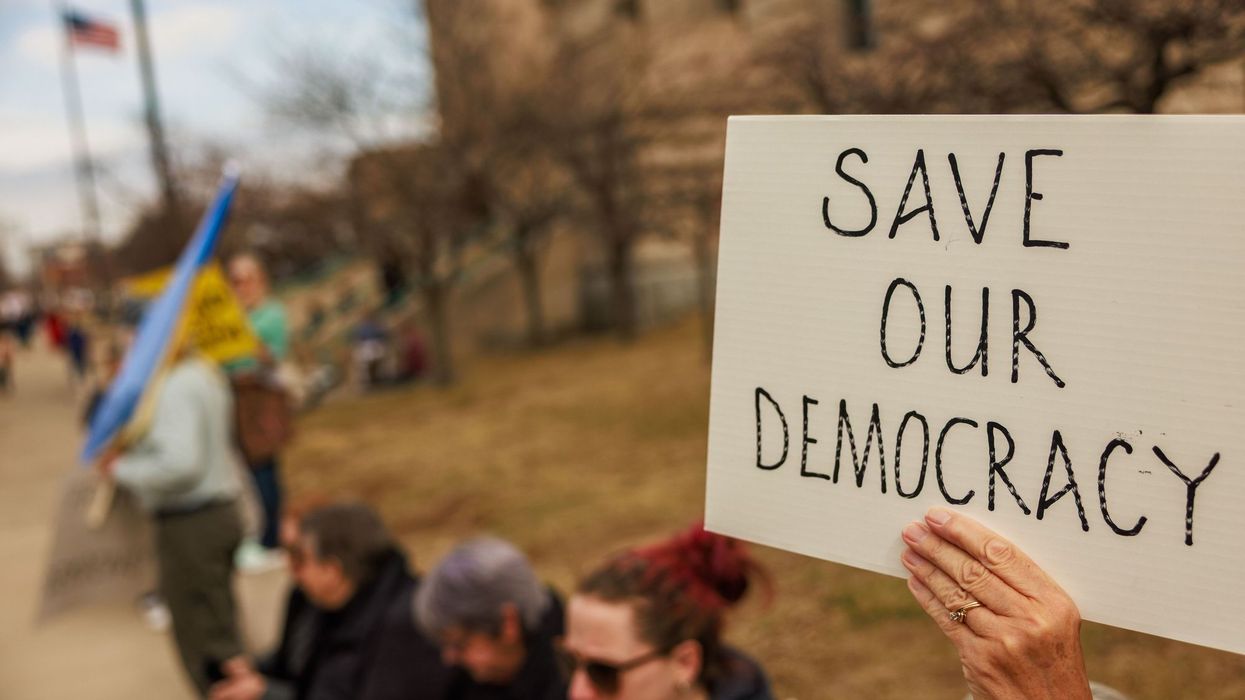
As the map was introduced on Monday, hundreds of Hoosiers gathered inside the State Capitol to voice their disapproval.
"At a time when Hoosiers are facing high costs for childcare, groceries, utilities, housing, and health care, the last thing needed is politicians manipulating maps instead of solving real issues," Qaddoura said. "Hoosiers deserve fair elections, stable districts, and a government that reflects them."