SUBSCRIBE TO OUR FREE NEWSLETTER
Daily news & progressive opinion—funded by the people, not the corporations—delivered straight to your inbox.
5
#000000
#FFFFFF
To donate by check, phone, or other method, see our More Ways to Give page.
Daily news & progressive opinion—funded by the people, not the corporations—delivered straight to your inbox.
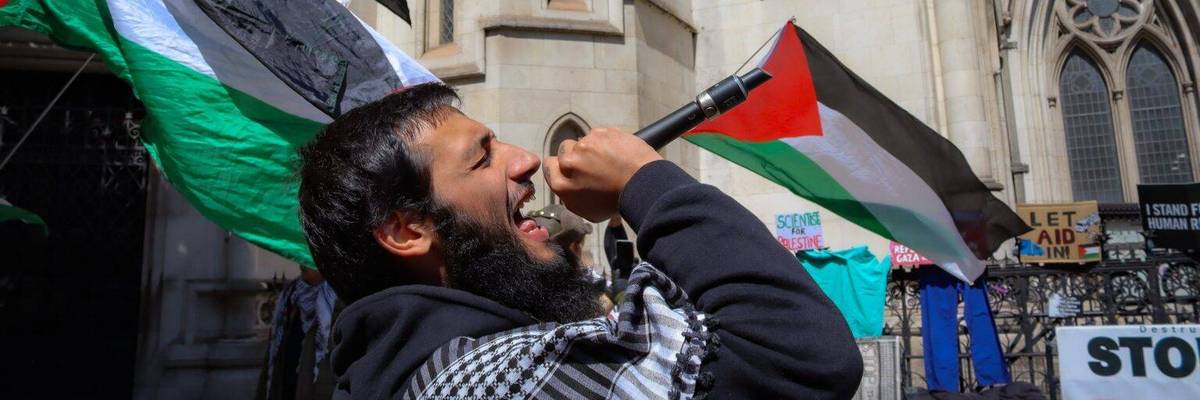
22-year-old Umer Khalid, an activist with the group Palestine Action, shouts at a protest outside the Royal Courts of Justice in London.
"If David Lammy wishes to see me dead, if Keir Starmer wishes to see me dead, they can come and do it themselves," said 22-year-old activist Umer Khalid.
After 17 days without food and three without water, the 22-year-old British pro-Palestine activist Umer Khalid ended his hunger strike after being hospitalized on Monday.
Khalid is the last of the eight young activists with the group Palestine Action to remain on hunger strike to protest their imprisonment without trial and the criminalization of pro-Palestine speech in the UK.
“At the hospital… I was given a choice between treatment and likely death within the next 24 hours due to kidney failure, acute liver failure, and potential cardiac arrest,” said Khalid, in a statement shared by the Prisoners for Palestine group, which is supporting the strikers. He said that he decided to end his hunger strike because, “I am too strong, too loud, too powerful… and there is so much we can do to effect change.”
The activists are being held in prison on remand, meaning they were denied bail and have not yet been given a trial for vandalizing military equipment used to support Israel's genocidal war in Gaza.
Earlier this month, several of the strikers, some of whom had refused food since November, ended their strike after the UK rejected a $2.7 billion contract for a subsidiary of Israel’s largest weapons maker, Elbit Systems.
Four of them were arrested after allegedly breaking into an Elbit facility and destroying equipment. Khalid is among four others accused of trespassing at a British Royal Air Force base and vandalizing airplanes.
Khalid, who suffers from Limb-Girdle Muscular Dystrophy and suffered multiple organ failure during the strike, ended his protest after Amy Frost, the governor of the Wormwood Scrubs prison where he is being held, agreed to meet with him to discuss the conditions of his confinement. After the meeting, he received mail and clothes that the prison had withheld from him, and restrictions on outside visitors that had been in place since July were lifted.
A spokesperson for Prisoners for Palestine said Khalid "absolutely must have compassionate bail in order to heal, all the hunger strikers should."
In addition to protesting the restrictive conditions of their confinement, the strikers were seeking to draw attention to the criminalization of Palestine Action. The UK government, currently led by Labour Party Prime Minister Keir Starmer, added the group to a list of banned "terrorist" organizations in July, meaning that even peaceful support for the group or identification as a member can result in imprisonment.
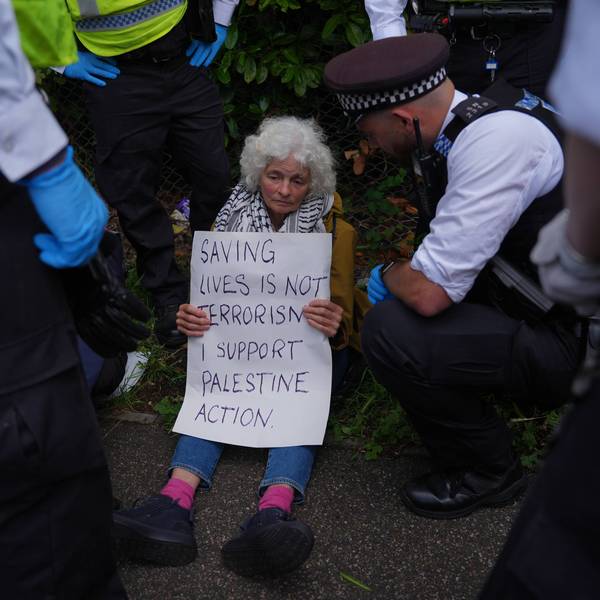
Since the ban went into effect, more than 2,700 people have been arrested across the UK over support for or involvement with Palestine Action, in many cases for actions like holding a sign or chanting a slogan in support of the group.
The British government has been repeatedly pressed to intervene on behalf of the strikers, who have alleged mistreatment and neglect while in confinement.
Khalid previously went on a 12-day hunger strike, which the Canary reported "made Khalid seriously unwell and unable to walk." According to the outlet, "the prison mismanaged his refeeding by giving him protein shakes and biscuits, dangerously unsuitable."
Other strikers have said recovery from weeks or months without food has been exceedingly difficult. Shahmina Alam, a healthcare worker and the sister of Kamran Ahmed, who refused food for 67 days, said the strike showed that "the prison healthcare system is not fit for purpose" and that "there are systemic failures to provide care which is dignified, timely, or even lifesaving."
"These prisoners are not treated as patients or even humans," she continued. "They are dehumanised, handcuffed in their sleep and in the shower, and are given no privacy, confidentiality, or respect."
Despite calls from medical experts and members of Parliament, David Lammy, the secretary of state for justice, has refused calls to meet with the strikers to discuss their demands, which have included immediate bail, an end to the censorship of their communications, and an end to the ban on Palestine Action.
Khalid said he made his decision to end the strike in part because members of the government "have shown without a doubt that they have no concern for our lives and they do not care if we die in these cells."
He said, "If David Lammy wishes to see me dead, if Keir Starmer wishes to see me dead, they can come and do it themselves."
Dear Common Dreams reader, It’s been nearly 30 years since I co-founded Common Dreams with my late wife, Lina Newhouser. We had the radical notion that journalism should serve the public good, not corporate profits. It was clear to us from the outset what it would take to build such a project. No paid advertisements. No corporate sponsors. No millionaire publisher telling us what to think or do. Many people said we wouldn't last a year, but we proved those doubters wrong. Together with a tremendous team of journalists and dedicated staff, we built an independent media outlet free from the constraints of profits and corporate control. Our mission has always been simple: To inform. To inspire. To ignite change for the common good. Building Common Dreams was not easy. Our survival was never guaranteed. When you take on the most powerful forces—Wall Street greed, fossil fuel industry destruction, Big Tech lobbyists, and uber-rich oligarchs who have spent billions upon billions rigging the economy and democracy in their favor—the only bulwark you have is supporters who believe in your work. But here’s the urgent message from me today. It's never been this bad out there. And it's never been this hard to keep us going. At the very moment Common Dreams is most needed, the threats we face are intensifying. We need your support now more than ever. We don't accept corporate advertising and never will. We don't have a paywall because we don't think people should be blocked from critical news based on their ability to pay. Everything we do is funded by the donations of readers like you. When everyone does the little they can afford, we are strong. But if that support retreats or dries up, so do we. Will you donate now to make sure Common Dreams not only survives but thrives? —Craig Brown, Co-founder |
After 17 days without food and three without water, the 22-year-old British pro-Palestine activist Umer Khalid ended his hunger strike after being hospitalized on Monday.
Khalid is the last of the eight young activists with the group Palestine Action to remain on hunger strike to protest their imprisonment without trial and the criminalization of pro-Palestine speech in the UK.
“At the hospital… I was given a choice between treatment and likely death within the next 24 hours due to kidney failure, acute liver failure, and potential cardiac arrest,” said Khalid, in a statement shared by the Prisoners for Palestine group, which is supporting the strikers. He said that he decided to end his hunger strike because, “I am too strong, too loud, too powerful… and there is so much we can do to effect change.”
The activists are being held in prison on remand, meaning they were denied bail and have not yet been given a trial for vandalizing military equipment used to support Israel's genocidal war in Gaza.
Earlier this month, several of the strikers, some of whom had refused food since November, ended their strike after the UK rejected a $2.7 billion contract for a subsidiary of Israel’s largest weapons maker, Elbit Systems.
Four of them were arrested after allegedly breaking into an Elbit facility and destroying equipment. Khalid is among four others accused of trespassing at a British Royal Air Force base and vandalizing airplanes.
Khalid, who suffers from Limb-Girdle Muscular Dystrophy and suffered multiple organ failure during the strike, ended his protest after Amy Frost, the governor of the Wormwood Scrubs prison where he is being held, agreed to meet with him to discuss the conditions of his confinement. After the meeting, he received mail and clothes that the prison had withheld from him, and restrictions on outside visitors that had been in place since July were lifted.
A spokesperson for Prisoners for Palestine said Khalid "absolutely must have compassionate bail in order to heal, all the hunger strikers should."
In addition to protesting the restrictive conditions of their confinement, the strikers were seeking to draw attention to the criminalization of Palestine Action. The UK government, currently led by Labour Party Prime Minister Keir Starmer, added the group to a list of banned "terrorist" organizations in July, meaning that even peaceful support for the group or identification as a member can result in imprisonment.
Since the ban went into effect, more than 2,700 people have been arrested across the UK over support for or involvement with Palestine Action, in many cases for actions like holding a sign or chanting a slogan in support of the group.
The British government has been repeatedly pressed to intervene on behalf of the strikers, who have alleged mistreatment and neglect while in confinement.
Khalid previously went on a 12-day hunger strike, which the Canary reported "made Khalid seriously unwell and unable to walk." According to the outlet, "the prison mismanaged his refeeding by giving him protein shakes and biscuits, dangerously unsuitable."
Other strikers have said recovery from weeks or months without food has been exceedingly difficult. Shahmina Alam, a healthcare worker and the sister of Kamran Ahmed, who refused food for 67 days, said the strike showed that "the prison healthcare system is not fit for purpose" and that "there are systemic failures to provide care which is dignified, timely, or even lifesaving."
"These prisoners are not treated as patients or even humans," she continued. "They are dehumanised, handcuffed in their sleep and in the shower, and are given no privacy, confidentiality, or respect."
Despite calls from medical experts and members of Parliament, David Lammy, the secretary of state for justice, has refused calls to meet with the strikers to discuss their demands, which have included immediate bail, an end to the censorship of their communications, and an end to the ban on Palestine Action.
Khalid said he made his decision to end the strike in part because members of the government "have shown without a doubt that they have no concern for our lives and they do not care if we die in these cells."
He said, "If David Lammy wishes to see me dead, if Keir Starmer wishes to see me dead, they can come and do it themselves."
After 17 days without food and three without water, the 22-year-old British pro-Palestine activist Umer Khalid ended his hunger strike after being hospitalized on Monday.
Khalid is the last of the eight young activists with the group Palestine Action to remain on hunger strike to protest their imprisonment without trial and the criminalization of pro-Palestine speech in the UK.
“At the hospital… I was given a choice between treatment and likely death within the next 24 hours due to kidney failure, acute liver failure, and potential cardiac arrest,” said Khalid, in a statement shared by the Prisoners for Palestine group, which is supporting the strikers. He said that he decided to end his hunger strike because, “I am too strong, too loud, too powerful… and there is so much we can do to effect change.”
The activists are being held in prison on remand, meaning they were denied bail and have not yet been given a trial for vandalizing military equipment used to support Israel's genocidal war in Gaza.
Earlier this month, several of the strikers, some of whom had refused food since November, ended their strike after the UK rejected a $2.7 billion contract for a subsidiary of Israel’s largest weapons maker, Elbit Systems.
Four of them were arrested after allegedly breaking into an Elbit facility and destroying equipment. Khalid is among four others accused of trespassing at a British Royal Air Force base and vandalizing airplanes.
Khalid, who suffers from Limb-Girdle Muscular Dystrophy and suffered multiple organ failure during the strike, ended his protest after Amy Frost, the governor of the Wormwood Scrubs prison where he is being held, agreed to meet with him to discuss the conditions of his confinement. After the meeting, he received mail and clothes that the prison had withheld from him, and restrictions on outside visitors that had been in place since July were lifted.
A spokesperson for Prisoners for Palestine said Khalid "absolutely must have compassionate bail in order to heal, all the hunger strikers should."
In addition to protesting the restrictive conditions of their confinement, the strikers were seeking to draw attention to the criminalization of Palestine Action. The UK government, currently led by Labour Party Prime Minister Keir Starmer, added the group to a list of banned "terrorist" organizations in July, meaning that even peaceful support for the group or identification as a member can result in imprisonment.
Since the ban went into effect, more than 2,700 people have been arrested across the UK over support for or involvement with Palestine Action, in many cases for actions like holding a sign or chanting a slogan in support of the group.
The British government has been repeatedly pressed to intervene on behalf of the strikers, who have alleged mistreatment and neglect while in confinement.
Khalid previously went on a 12-day hunger strike, which the Canary reported "made Khalid seriously unwell and unable to walk." According to the outlet, "the prison mismanaged his refeeding by giving him protein shakes and biscuits, dangerously unsuitable."
Other strikers have said recovery from weeks or months without food has been exceedingly difficult. Shahmina Alam, a healthcare worker and the sister of Kamran Ahmed, who refused food for 67 days, said the strike showed that "the prison healthcare system is not fit for purpose" and that "there are systemic failures to provide care which is dignified, timely, or even lifesaving."
"These prisoners are not treated as patients or even humans," she continued. "They are dehumanised, handcuffed in their sleep and in the shower, and are given no privacy, confidentiality, or respect."
Despite calls from medical experts and members of Parliament, David Lammy, the secretary of state for justice, has refused calls to meet with the strikers to discuss their demands, which have included immediate bail, an end to the censorship of their communications, and an end to the ban on Palestine Action.
Khalid said he made his decision to end the strike in part because members of the government "have shown without a doubt that they have no concern for our lives and they do not care if we die in these cells."
He said, "If David Lammy wishes to see me dead, if Keir Starmer wishes to see me dead, they can come and do it themselves."