

SUBSCRIBE TO OUR FREE NEWSLETTER
Daily news & progressive opinion—funded by the people, not the corporations—delivered straight to your inbox.
5
#000000
#FFFFFF
To donate by check, phone, or other method, see our More Ways to Give page.
Daily news & progressive opinion—funded by the people, not the corporations—delivered straight to your inbox.
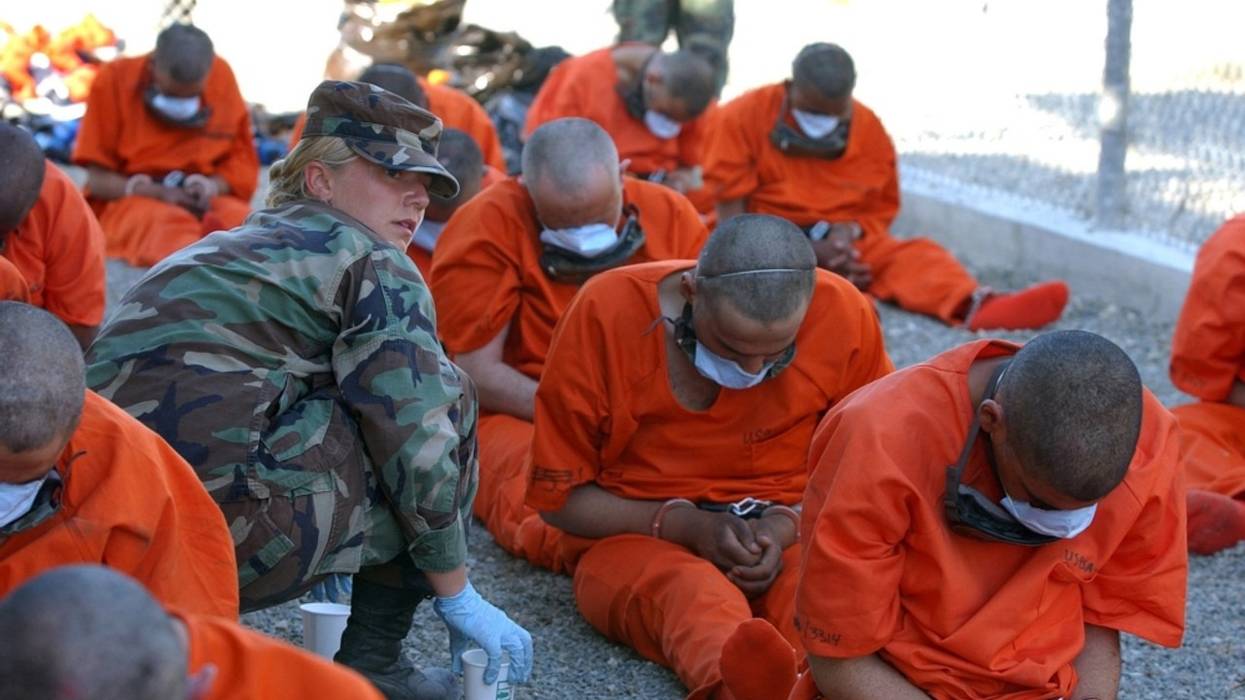
"This decision will ensure nothing but a continued lack of justice and accountability for everyone involved in the 9/11 military trial at Guantánamo," said one critic.
Human rights defenders on Friday condemned a federal appellate panel's decision upholding former U.S. Defense Secretary Lloyd Austin's withdrawal of pretrial plea agreements for three men accused of plotting the September 11, 2001 attacks on the United States.
Austin, who served under former President Joe Biden, "indisputably had legal authority to withdraw from the agreements; the plain and unambiguous text of the pretrial agreements shows that no performance of promises had begun," the D.C. Court of Appeals panel ruled in a 2-1 decision.
Under the proposed deal, accused 9/11 mastermind Khalid Sheikh Mohammed and alleged co-conspirators Mustafa al-Hawsawi and Walid bin Attash would have been spared execution in return for pleading guilty. The agreement came amid years of stalled legal proceedings in a case complicated by the U.S. government's torture of the defendants and efforts to cover it up.
Austin withdrew the plea agreements last August, explaining that he "long believed that the families of the victims, our service members, and the American public deserves the opportunity to see military commission trials carried out in this case."
However, attorneys for the defendants called the legally dubious military commission regime established at the Guantánamo Bay prison—notorious for detainee torture and indefinite detention—during the George W. Bush administration "obviously corrupt and rigged." During the 2000s, several military prosecutors resigned from the commissions in protest over what some of them called a rigged system designed to ensure there were no acquittals.
"The 9/11 case will never be resolved through a contested trial because the defendants were tortured by the CIA."
Last November, Air Force Col. Matthew McCall, a military judge, ruled that Lloyd "did not have the authority to do what he did, asserting that the plea deals "remain valid, and are enforceable," prompting the government's appeal. The following month, a military appeals court also ruled against Austin's bid to ditch the plea deals.
The Center for Constitutional Rights (CCR)—which has long represented Guantánamo detainees—called Friday's decision "a betrayal of justice."
"This decision will ensure nothing but a continued lack of justice and accountability for everyone involved in the 9/11 military trial at Guantánamo," CCR senior staff attorney Wells Dixon said in a statement. "The Biden administration's invalidation of plea agreements that would have resulted in convictions and life sentences for the 9/11 defendants is a painful betrayal of 9/11 victims' families."
"The 9/11 case will never be resolved through a contested trial because the defendants were tortured by the CIA," Dixon added. "The only way to resolve this case is for the Trump administration to succeed where every prior administration has failed and negotiate new deals with the 9/11 defendants that will finally close the 'War on Terror' prison at Guantánamo."
There are still 15 men currently imprisoned in Guantánamo, which is located on Cuban land leased to the U.S. in perpetuity by a dictatorship overthrown in 1959. Multiple detainees have been cleared for release, one of them for 15 years.
Some legal experts doubted whether the U.S. government would ever be able to try, let alone convict, the 9/11 suspects. Military judges and prosecutors have cited defendants' torture in declining to proceed with cases against them. Many men and boys were tortured at CIA "black sites," Guantánamo, and military prisons including Abu Ghraib. At least dozens of detainees died.
The three co-defendants were all captured in Pakistan during late 2002 and early 2003. After being turned over the United States, they were sent to CIA black sites, including the notorious "Salt Pit" outside Kabul, Afghanistan, where suspected militant Gul Rahman was tortured to death in November 2002. In 2006, the men were transferred to Guantánamo.
Mohammed was subjected to interrupted drowning, commonly called "waterboarding," 183 times, as well as other torture and abuse approved under the Bush administration's "enhanced interrogation" program. Hawsawi suffered a shredded rectum resulting from sodomization during so-called "rectal hydration" and has had to manually reinsert parts of his anal cavity to defecate. Bin Attash said he was placed in stress positions for extended periods, beaten, and doused in cold water.
The co-defendants must now decide whether to appeal the ruling to the full D.C. appeals court, the U.S. Supreme Court, or both.
"Putting aside the fantasy that this case is ever going to go to trial—assuming it does go to trial and that there's a conviction—you get to sentencing, and they have a right to put forward evidence... that they were tortured," Dixon told CNN Friday. "That's never going to happen."
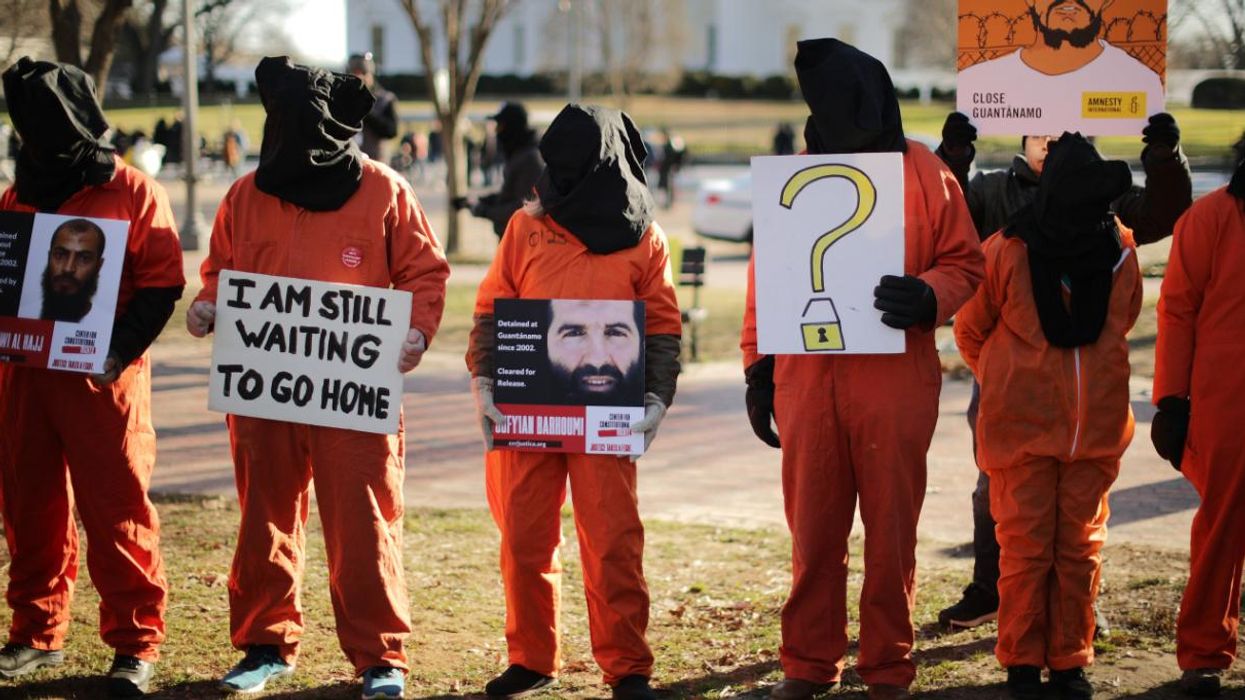
Once you violate both fair treatment of prisoners and the basic principles of law, finding an unchallenged resolution to such cases is essentially inconceivable.
On January 10, one day before the 23rd anniversary of its opening, a much-anticipated hearing was set to take place at the Guantánamo Bay Detention Facility on the island of Cuba. After nearly 17 years of pretrial litigation, the prosecution of Khalid Sheikh Mohammed, or (KSM), the “mastermind” of the devastating attacks of September 11, 2001, seemed poised to achieve its ever-elusive goal of bringing his case to a conclusion. After three years of negotiations, the Pentagon had finally arranged a plea deal in the most significant case at Guantánamo. Along with two others accused of conspiring in the attacks of 9/11, KSM had agreed to plead guilty in exchange for the government replacing the death penalty with a life sentence.
After more than 50 pre-trial hearings and other related proceedings, Americans–and the victims’ families—would finally see closure for those three individuals who stood at the center of this country’s attempt to reckon legally with the 9/11 attacks.
More than 23 years after the 9/11 attacks, here we are in the very same place we’ve been for endless years—on pause again, despite the endless charade of forward steps that go nowhere.
Because of the fact that the defendants had been tortured at notorious CIA “black sites” before arriving at Guantánamo, the case had long been endlessly stalled. After all, so much of the evidence against them came from torture confessions. As it happens, such evidence is not admissible in court under U.S. or international law, or even under the rules of Guantánamo’s military commissions. For obvious reasons, it’s considered tainted information, “the fruit of the poisonous tree,” and so inadmissible in court. Although military commission prosecutors tried repeatedly over the years to find ways to introduce that all too tainted evidence at trial, attempts to do so failed time and again, repeatedly pushing potential trial dates years into the future. As a recently compiled Center on National Security chart shows, the forever delays in those hearings led to calendars of such length as to defy comprehension. In Khalid Sheikh Mohammed’s case, for example, such delays have so far amounted to 870.7 weeks.
With the plea deal now set to come before Judge Matthew McCall, who had agreed to delay his retirement in an effort to see this case to its conclusion, attorneys, journalists, and victims’ family members boarded planes, preparing to witness the longed-for conclusion to a case that had seemed endless. Perhaps you won’t be surprised to learn, however, that the hearing never took place. Delay was again the name of the game. As it turned out, from the moment the plea deal was announced, it became the centerpiece of an intense battle launched by then-Secretary of Defense Lloyd Austin.
Two days after the August 2024 announcement of the plea deal by the “convening authority,” Brigadier General (Ret.) Susan Escallier, the Pentagon official in charge of the military commissions at Guantánamo Bay, Austin summarily overruled her, revoking the plea deal with little explanation and leaving experts and observers alike confused and disappointed. Had the secretary of defense not been consulted on the plea arrangement? That seemed unlikely. Had political pressure caused him to take such a drastic act? If so, then perhaps after the election he would change his mind and restore it. No such luck.
Whatever Austin’s motivation, Judge McCall refused to take “no” for an answer, declaring his revocation invalid.
McCall made it clear, instead, that he was moving forward. As the judge explained, in the memo that Austin had long ago issued appointing Escallier, he had attested to her independent authority. “Ms. Escallier shall exercise her independent legal discretion with regard to judicial acts and other duties of the Convening Authority.” But even as McCall prepared to go forward, Austin appealed to the Court of Military Commissions Review, asking it to rule that he did indeed have the authority to revoke the plea deal. However, that court then ruled that the secretary had improperly rescinded the deal after it had taken effect.
Still, he refused to give up, seeking help elsewhere. And he found it. On the eve of the scheduled hearing, the Department of Justice filed papers asking the D.C. Circuit Court to prohibit the Gitmo court from moving ahead and to stay proceedings while it contemplated the decision. Those who had flown to Guantánamo then returned home, and a new hearing was set for January 28th at the D.C. Circuit Court. At issue was both Austin’s authority to take over the plea deal and whether he had the right to withdraw from it, as lawyers argue that the dependents had already started performing their part of the deal. Of course, in the second age of Trump, it is no longer Austin but Secretary of Defense Pete Hegseth who will decide what happens next.
So, more than 23 years after the 9/11 attacks, here we are in the very same place we’ve been for endless years—on pause again, despite the endless charade of forward steps that go nowhere.
At this point, it’s worth asking whether the resolution of those cases by trial was ever a priority—or even a realistic goal. A look back over the course of the military commissions and the 9/11 case suggests some answers.
The Guantánamo detention facility was set up by a presidential military order issued on November 13, 2001. It authorized the detention of war-on-terror captives and mentioned future trials. “It is necessary for individuals subject to this order… to be detained, and, when tried, to be tried for violations of the laws of war and other applicable laws by military tribunals.” Accordingly, the commander of the naval base at Guantánamo spent the early months of the detention operation scouring the base itself for a suitable facility in which to hold such trials. He was surprised when no one at the Pentagon approached him about the need for such a building.
So here we stand, with Donald Trump back in the White House, awaiting what this will mean for the future of the forever prison.
Fast forward six years, a year after those “high-value detainees” already tortured at CIA black sites were brought to Guantánamo. As NBC’s Bob Windrem later reported, an “Expeditionary Legal Complex was built in 2007 in the expectation it would be used for the trial of terrorists accused of murdering nearly 3,000 people with twin attacks on New York and Washington on September 11, 2001.” In 2008, the 9/11 defendants were charged. And last April, 17 years later, the Pentagon opened a second courtroom at the cost of $4 million for other cases pending before the military tribunals. Intrepid New York Times Gitmo reporter Carol Rosenberg recently summed up the costs associated with those signs of a continuing belief that actual trial proceedings were indeed in the cards this way: “The war court proceedings have cost hundreds of millions of dollars in salaries, infrastructure, and transportation. Since 2019, the Office of Military Commissions has added two new courtroom chambers, new offices and temporary housing, more lawyers, more security personnel, and more contractors.”
On the surface, it would seem as if the commitment to holding various war-on-terror trials was perfectly real. The price tag was certainly hefty enough, as were the numerous pre-trial proceedings in the 9/11 case, as well as in other cases before the military commissions, each involving charges against those accused of committing acts of terrorism—the bombing of the U.S.S. Cole destroyer with one defendant; terror bombings in Bali, Indonesia, with three defendants; and the cases of several other individuals charged with crimes of terrorism.
Yet given the failure of significant forward movement in such cases for so long, it’s hard not to wonder just how serious the commitment to resolving them ever was and whether the construction of such expensive trial buildings was either a mirage, intended to hide the fact that the cases were destined to go nowhere, or self-deception on the part of presidents George W. Bush, Barack Obama, and Joe Biden. (Donald Trump halted the military commissions during his first term in office, leaving them in legal limbo.)
After all this time, only two cases have ever gone to trial, one of which, that of Salim Hamdan, was later overturned. In the other, Ali Hamza al-Bahlul was convicted on three counts, two of which were eventually overturned. (At present, Mr. Bahlul is serving a life sentence at Gitmo, having arrived on its opening day 23 years ago.)
Meanwhile, there have been a grand total of nine plea deals over all these years. Of those, one convicted detainee is serving out a sentence at Guantánamo that ends in 2032, two convictions have been overturned, and two remain on appeal—a paltry record at best, especially given the grimness of those acts of terror. For all of the time, effort, and money, not to mention emotional distress, the results have been appallingly minimal.
To his credit, President Joe Biden, who inherited a Guantánamo with only 40 detainees left out of a total population that once stood at 790, seemed determined to make progress both in the military commissions and in releasing some of the remaining “forever prisoners” (a term originally coined by Times reporter Rosenberg to describe those living in the legal limbo of indefinite detention, neither charged nor released). Biden provided Gitmo watchers (like me) with some hope that the prison, distinctly offshore of American justice, would actually close someday.
During Biden’s years in office, the population was reduced to 15 men—six forever prisoners and nine still part of the military commissions (two of whom are already convicted). Eleven of the Biden releases, consisting of Yemenis sent to Oman, occurred amid the battle over Khalid Sheikh Mohammed’s plea deal, as if he were whispering to us that we needn’t worry, the road to closure was still available. Yet even that set of transfers suffered from the same sort of one-step-forward-two steps-back shuffle that’s been the essence of Gitmo’s history. The Oman arrangement had originally been planned for October 2023, only to be put on pause once the war in Gaza erupted. One of the men released had been cleared since 2010, only to await arrangements made two presidencies later.
The Biden administration unfortunately never released the last prisoners held without charge or brought the accused to trial. Even in these final moments of his presidency, when he was arguably free to do whatever he wanted, including closing the prison, he chose instead, by virtue of his administration putting the deal on hold, to halt forward progress, leaving us to wonder why.
So here we stand, with Donald Trump back in the White House, awaiting what this will mean for the future of the forever prison.
Sometimes, when it comes to Gitmo, it almost seems as if forces beyond the capacity of mere mortals are at play. No matter what promises are made, no matter what hope-inspiring acts are taken, no matter what progress occurs, the prison seems to have a life of its own, aided and abetted by those who continue to mount obstacles to any significant steps forward.
Of course, the biggest of the lessons learned should have been to honor the laws, both domestic and international, forbidding torture. Had the United States not authorized a program of what was euphemistically referred to by the administration of President George W. Bush as “enhanced interrogation techniques,” including beatings, waterboarding, sleep deprivation, sexual humiliation, sensory bombardment, and all too much more, those trials could have been held in a timely fashion and in federal court on the mainland.
As President Barack Obama’s attorney general, Eric Holder, had wanted, the federal courts would have been capable of handling such cases without using “evidence” produced by torture. In fact, one Guantánamo detainee, Ahmed Ghailani, was indeed transferred to the United States for trial in federal court and, though he was acquitted on 284 of 285 charges, he was found guilty on one count and sentenced to life in federal prison. Still, the hundreds of acquittals in his case chased away the idea of trying the remaining Guantánamo defendants in federal court.
From all of this, there’s a basic lesson to be learned: Once you violate both fair treatment of prisoners and the basic principles of law, finding an unchallenged resolution to such cases is essentially inconceivable.
In other words, once you break it, you can never really fix it.
Today, that long, soul-crushing, legally abhorrent story stands, at a far greater cost than we might once have imagined, where it has always stood—as a mistake that never should have happened and that, once made, never found a leader able to muster the courage to end it.
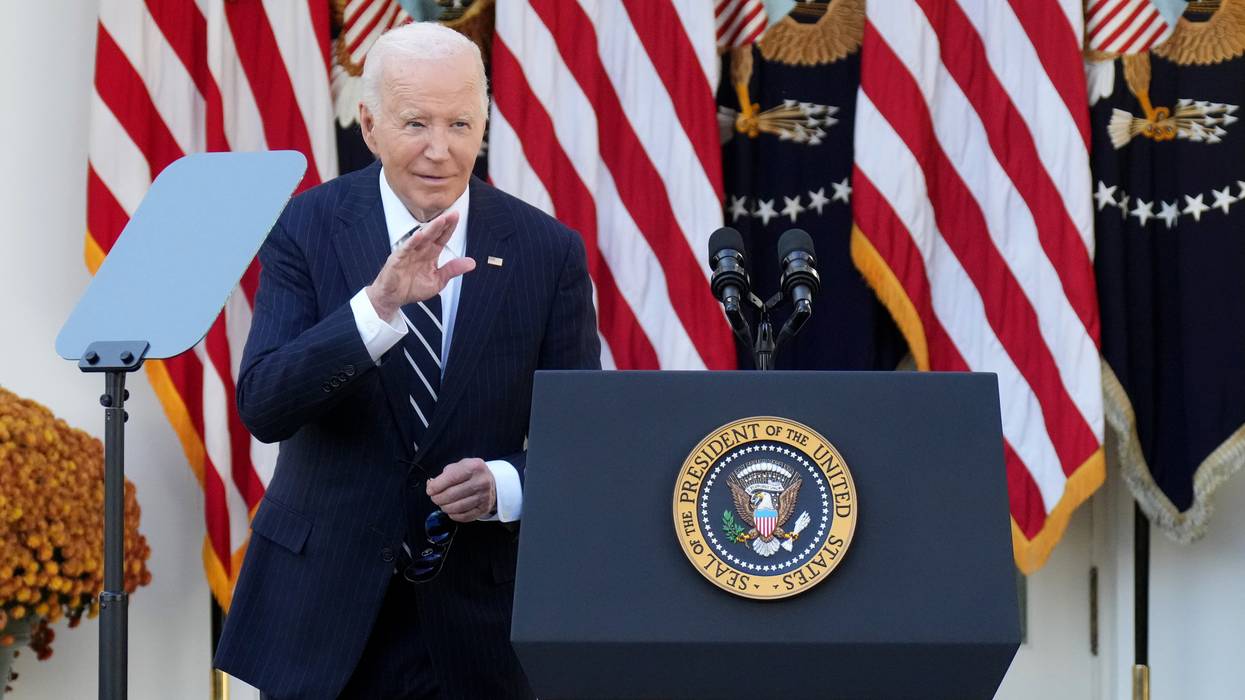
Rights advocates want the president to fulfill his "long-standing commitment to turn the page on the 9/11 era by closing this shameful site of torture and indefinite detention."
U.S. President Joe Biden on Thursday faced pressure from legal groups to accept a military judge's revival of plea deals for three alleged plotters of the September 11, 2001 terrorist attacks and to transfer 19 uncharged men out of the American prison in Guantánamo Bay, Cuba.
Brig. Gen. Susan Escallier, the convening authority for the legally dubious Guantánamo Bay military commissions, this summer reached the controversial deals under which Khalid Sheikh Mohammed, Walid bin Attash, and Mustafa al-Hawsawi agreed to spend the rest of their lives in prison to avoid execution.
U.S. Defense Secretary Lloyd Austin swiftly withdrew the agreements, sparking criticism from some victims' families and legal experts. In a 29-page ruling on Wednesday, the judge, Col. Matthew N. McCall, wrote that the Pentagon chief "did not have the authority to do what he did." Thus, the pretrial agreements "remain valid and are enforceable," he wrote, and plea hearings should be scheduled.
It is not yet clear how the Pentagon will proceed, as its press secretary, Maj. Gen. Patrick Ryder, only told The New York Times that "we are reviewing the decision and don't have anything further at this time." However, legal organizations want the Biden administration to embrace the ruling.
ACLU executive director Anthony D. Romero, whose group represents Mohammed, said in a Thursday statement that "McCall rightly recognizes that Defense Secretary Austin stepped out of bounds" and "we are finally back at the only practical solution after nearly two decades of litigation."
"The government's decision to settle for life imprisonment instead of seeking the death penalty in the case of Khalid Sheikh Mohammed was always the right call," Romero continued. "For too long, the U.S. has repeatedly defended its use of torture and unconstitutional military tribunals at Guantánamo Bay. As a nation, we must move forward with the plea process and sentencing hearing that is intended to give victim family members answers to their questions. They deserve transparency and finality about the events that claimed their loved ones."
"This plea agreement further underscores the fact that the death penalty is out of step with the fundamental values of our democratic system. It is inhumane, inequitable, and unjust," he added. "We also urge the U.S. government to quickly relocate the men cleared for transfer, and finally end all indefinite detentions and unfair trials at Guantánamo."
The Center for Constitutional Rights (CCR)—which represents two of the 19 uncharged men at the facility infamous for torture—also put out a Thursday statement pressuring the administration to accept the judge's decision and focus on transfers.
"The Biden administration should not appeal this ruling because, after more than 20 years of litigation and uncertainty for victims' families, plea deals are the only responsible way to resolve the 9/11 case," CCR argued. "The president must instead use this opportunity to transfer the remaining 19 uncharged men out of Guantánamo, 16 of whom have been approved for transfer by all relevant agencies based on a unanimous determination that they pose no security threat, including our clients Guled Hassan Duran and Sharqawi al Hajj."
"These two steps are essential to fulfilling Biden's long-standing commitment to turn the page on the 9/11 era by closing this shameful site of torture and indefinite detention," the group added.
Biden's time to make any decisions regarding Guantánamo and the men imprisoned there is dwindling. After beating Democratic Vice President Kamala Harris on Tuesday, former President Donald Trump is set to return to the White House in January, shortly after what would be the 23rd anniversary of Guantánamo's opening.
The U.S. prison was launched in January 2002 under then-President George W. Bush, who responded to the 9/11 attacks with a so-called global War on Terror. Biden has so far failed to close Guantánamo, following in the footsteps of former President Barack Obama. Trump, during his first term, took action to keep it open.
As Lawdrawgon reported:
The plea agreements for Mohammad and al-Hawsawi contained provisions that removed the death penalty from the case in the event the government withdrew from the agreements. Sources said that the penalty provision should render the case noncapital, even if Austin was found to have acted lawfully.
The penalty clause was negotiated in the event that a future Trump administration tried to kill the deals, individuals familiar with the negotiations said.
In anticipation of Trump's return to power early next year, Amnesty International is urging Biden to take "six actions before his legacy is sealed for the history books." The final item calls on the outgoing president to "transfer all detainees cleared for release or not charged with crimes to countries where their human rights will be respected, halting the unfair military commissions and fairly resolving the pending cases, and close the Guantánamo prison once and for all."
"We have had an unprecedented act by a government official to pull back what was a valid agreement," said an attorney representing tortured 9/11 suspects imprisoned at Guantánamo Bay.
Attorneys representing alleged 9/11 planners imprisoned at Guantánamo Bay argued Wednesday that U.S. Defense Secretary Lloyd Austin's move to block plea deals for three defendants violated Pentagon rules and belied the corruption of the military commission system established during the George W. Bush administration.
"We have had an unprecedented act by a government official to pull back what was a valid agreement," Walter Ruiz, who represents defendant Mustafa al-Hawsawi, said at a hearing at Guantánamo, according to CNN.
"For us, it raises very serious questions about continuing to engage in a system that seems so obviously corrupt and rigged," Ruiz added.
Last week, the Department of Defense announced that Brig. Gen. Susan Escallier, the convening authority for the Guantánamo military commissions, "has entered into pretrial agreements" with al-Hawsawi, alleged 9/11 mastermind Khalid Sheikh Mohammed, and Walid bin Attash.
The long-anticipated agreement—under which the three men would be spared execution by pleading guilty—came amid years of stalled legal proceedings in a case complicated by the U.S.' torture of the defendants and government efforts to cover it up.
While welcomed by advocates of closing the prison and some victims' families, Escallier's move also sparked a firestorm of criticism from numerous U.S. lawmakers, 9/11 first responders, and victims' relatives.
Last Friday, Austin withdrew the plea agreements. Speaking at a press conference on Tuesday, he explained that he has "long believed that the families of the victims, our service members, and the American public deserves the opportunity to see military commission trials carried out in his case."
"I'm deeply mindful of my duty to all those whose lives were lost or changed forever on 9/11, and I fully understand that no measure of justice can ever make up for their loss," Austin added. "So this wasn't a decision that I took lightly."
Eugene Fidell, a military law professor at Yale University and co-founder of the National Institute of Military Justice, told CNN that Austin's move "was illegal."
According to the network:
One of the primary issues pointed to on Wednesday by defense counsel was a regulation laid out in the military's Manual for Military Commissions, which says the convening authority can withdraw a pretrial agreement before the accused begins "performance of promises" or if the accused does not hold up their end of the deal. Gary Sowards, a defense attorney for Mohammad, said in court that Austin did not have authority under that regulation because his client had "begun very important, substantive, specific performance.'"
Sowards acknowledged that motions for discovery on the issue of potential unlawful influence by Austin, which would "seek to explore how he was coerced and influenced," could take a year or two to litigate. But the issue of the Manual for Military Commissions regulation is "a simple reading of about 12 lines of text," he said, and a decision on it should be able to be expedited.
Prosecutor Clayton Trivett Jr. told the commission Wednesday that the government needed to "work through the issues raised in these motions" so that the prosecution's position can be "fully articulated."
Sowards retorted, "'We want to consult with people'—that sounds like, 'We want to get our stories together.'"
Some legal experts doubted whether the government would ever be able to try, let alone convict, the 9/11 suspects. Military judges and prosecutors have cited defendants' torture in declining to proceed with cases against them. Many men and boys were tortured at CIA "black sites," Guantánamo, and military prisons including Abu Ghraib. At least dozens of detainees died.
Wells Dixon, a lawyer with the Center for Constitutional Rights who represented convicted terrorist Majid Khan, told CNN that the prosecution's unwillingness "to allow evidence about the defendants' torture and abuse to be aired in court" will make it extremely difficult to secure death sentences for the men.
"If Secretary Austin says that a 9/11 case is going to proceed to trial, and a verdict, and possibly a sentencing, then he is either hopelessly ill-informed or is lying to victims' family members," he added.
Accusations of military commission corruption go back decades.
In 2004, three military prosecutors—Maj. Robert Preston, Capt. John Carr, and Capt. Carrie Wolf—requested transfers from the commissions after concluding they were rigged.
"They were told by the chief prosecutor at the time that they didn't need evidence to get convictions," Clive Stafford Smith, an attorney who represented more than 70 Guantánamo detainees, told The Nation in 2008.
That year, former Guantánamo chief prosecutor Col. Morris Davis said that then-Pentagon General Counsel William Haynes told him that "we can't have acquittals."
Atlantic staff writer Graeme Wood asserted this week that "there is a way to clean up this mess."
"Now that Austin has assumed the power of the convening authority, he can restore the agreement he tore up on Friday—to reverse the reversal and bring these sordid proceedings to the end they were until recently already destined for," he wrote. "If he instead wants to extend the life of the commissions, slouching toward a trial that will never happen, then the pointless sacrifice of money and time will continue."
"For the families in search of finality, each minute of delay is a minute stolen, and for the defendants, each is a minute gained," Wood added. "The defendants have already cheated the hangman. The best way to end their run is to take that bitter deal, and bring these commissions to a well-deserved end."

One lawyer warned it will not only "push 9/11 victim family members over an emotional cliff," but likely lead "prosecutors to resign and defendants to seek dismissal of all charges for unlawful command influence."
U.S. Defense Secretary Lloyd Austin on Friday withdrew plea agreements the Pentagon had reached with three men accused of planning the September 11, 2001 terrorist attacks and detained in Guantánamo Bay, the American military prison in Cuba infamous for torture.
"I have determined that... responsibility for such a decision should rest with me," Austin wrote to Brig. Gen. Susan Escallier, the convening authority for the legally dubious Guantánamo Bay military commissions. "Effective immediately, in the exercise of my authority, I hereby withdraw from the three pre-trial agreements that you signed on July 31."
The U.S. Department of Defense confirmed Wednesday that Escallier "entered into pretrial agreements" with Khalid Sheikh Mohammed, Walid bin Attash, and Mustafa al-Hawsawi. The Pentagon did not share details of the deal, but it was reported that in exchange for ruling out the death penalty, the suspects agreed to plead guilty and spend the rest of their lives in prison.
The Center for Constitutional Rights (CCR), which has represented detainees at the prison, stressed that the deals were not only "a substantial step toward ending military commissions and the extralegal nightmare of Guantánamo," but also "inevitable because the 9/11 case was never going to be tried" through a process that has "never provided justice or accountability for anyone."
Others had also emphasized that point. U.S. Senate Judiciary Committee Chair Dick Durbin (D-Ill.) said on social media Wednesday that "after all these years, the victims of 9/11 and their families deserve justice and closure. The Bush administration's disastrous decision to torture detainees and set up untested military commissions made a fair trial impossible."
As The New York Times reported Thursday:
Valerie Lucznikowska, whose nephew was killed in the World Trade Center, said she had been to the Guantánamo Bay prison several times to watch pretrial hearings, but had stopped going out of frustration with the legal process.
"The plea agreements should have been done a long time ago," she said. "The system has not worked for a long time."
Ms. Lucznikowska belongs to the group September 11th Families for Peaceful Tomorrows, many of whose members oppose the death penalty. Her own opposition was both moral and practical, she said.
"If the death penalty stayed as the prime object of the trial, there was no way it would come to a conclusion within my lifetime," she said.
She added: "Guantánamo Bay prison is a stain on America. How are we going to get rid of the stain? We're not going to. But let's get it over with."
However, other relatives of victims and U.S. lawmakers, as well as the union representing New York City firefighters, had criticized the agreements. House Committee on Oversight and Accountability Chair James Comer (R-Ky.) even launched an investigation into "what involvement the White House had in negotiating and/or approving the recently announced plea deal."
After the Pentagon's Friday announcement, September 11th Families for Peaceful Tomorrows released a statement calling out Austin for canceling deals that, while "not the justice originally hoped for," had "offered a path to finality, and a modicum of justice and accountability for the crimes of 9/11."
"That the secretary has now overreached and undertaken direct oversight of the 9/11 commission is cause for enormous concern," the group said. "While we understand there are family members who are opposed to plea agreements, the reality stands that the 9/11 accused were tortured and several were sodomized. If any entity is at fault for the inability to prosecute this case with a slam dunk, it's the torturers. Because of the torture, the 9/11 accused will not be put to death. And any administration official or member of Congress who says otherwise is either uninformed, or politically pandering."
"The men who perpetrated the death of thousands on September 11th; men who have never uttered a word of remorse, should be justly punished. But what happened this week to 9/11 families is emotional whiplash," the group continued. "We will recover. We have been working for justice for the death of our loved ones for 23 years. Our larger concerns today are for this country, for the future of our children and grandchildren when legal principles are compromised. We ask that Secretary Austin meet with the 9/11 prosecution team, learn the deep complexities and flaws in the case, and come to his own conclusion that pretrial agreements will provide the finality and accountability we all deserve."
J. Wells Dixon, a senior staff attorney at CCR who specializes in challenging unlawful detentions at Guantánamo, decried the "dirty move" by Austin and accused him of "robbing victim family members of their only chance for justice and accountability for 9/11."
The Pentagon chief's "astounding decision" will not only "push 9/11 victim family members over an emotional cliff," but likely have legal consequences, Dixon warned. "Wait for prosecutors to resign and defendants to seek dismissal of all charges for unlawful command influence."
Daphne Eviatar, director of Amnesty International USA's Security With Human Rights program, similarly said Saturday that "this is a terrible development. The victims of the 9/11 attacks deserve accountability for the horrendous crimes committed after waiting more than 20 years."
"The defendants, who were brutally tortured and mistreated by U.S. agents and then detained without trial for more than 20 years, deserve a fair judicial resolution of their cases," Eviatar argued.
"The death penalty should have been taken off the table long ago," she added. "It is shameful for the defense secretary after all these years to intervene now to prevent the resolution of this case, at a time when the United States should be making every effort to acknowledge, account for, and finally end the abuses of the post-9/11 'war on terror.'"
John Knefel, a senior writer at Media Matters for America, also responded critically to Friday's news, saying that "this development is 100% in alignment with the history of Gitmo in general and the military commission system specifically—ad hoc, arbitrary, capricious. A repulsive apparatus, and one wholly fitting of U.S. empire."
This post has been updated with comment from Amnesty International September 11th Families for Peaceful Tomorrows.
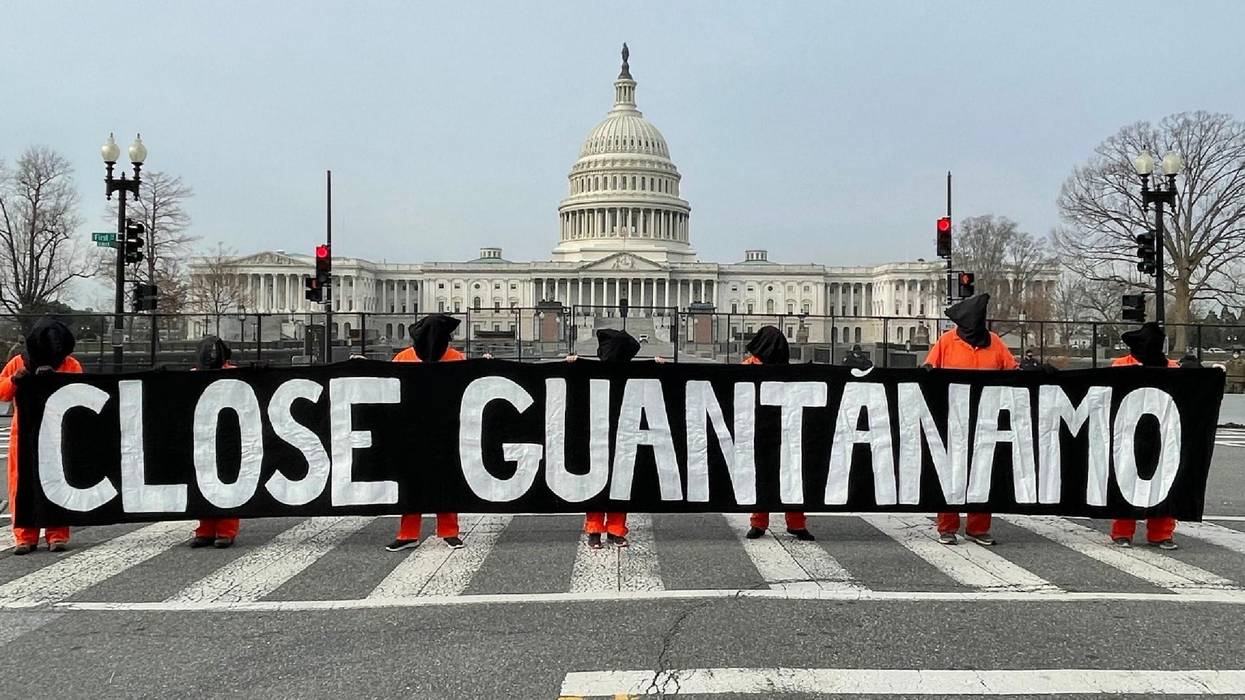
"This should be the beginning of the end of the Guantánamo Bay detention center," said one Amnesty International campaigner.
Forced into a legal corner due to the torture of men accused of planning the September 11, 2001 attacks on the United States, the Pentagon on Wednesday announced it has reached plea agreements with three top 9/11 suspects, who will spend the rest of their lives in prison and avoid execution.
The U.S. Department of Defense said in a statement that Brig. Gen. Susan Escallier, the convening authority for the legally dubious Guantánamo Bay military commissions, "has entered into pretrial agreements" with alleged 9/11 mastermind Khalid Sheikh Mohammed, Walid bin Attash, and Mustafa al-Hawsawi.
Although the Pentagon statement said that "the specific terms and conditions of the pretrial agreements are not available to the public at this time," The New York Times reported that news of the deal was revealed in a recent letter from military prosecutors to relatives of 9/11 victims.
"In exchange for the removal of the death penalty as a possible punishment, these three accused have agreed to plead guilty to all of the charged offenses, including the murder of the 2,976 people listed in the charge sheet," the letter, which was signed by Rear Adm. Aaron C. Rugh, explained.
Responding to the news, the Center for Constitutional Rights (CCR)—which has represented and advocated for Guantánamo detainees—said that "these plea agreements are a substantial step toward ending military commissions and the extralegal nightmare of Guantánamo."
"They were also inevitable because the 9/11 case was never going to be tried before a military commission," CCR continued. "The military commissions at Guantánamo have never provided justice or accountability for anyone. Rather, for the last two decades, they have provided a veneer of legal process that serves only to maintain the unacceptable status quo and cover up the torture and abuse of detainees."
"But as illustrated by the military commission cases of our clients David Hicks and Majid Khan, they have also been a way out of Guantánamo," the group added. "Ironic, because it is ultimately men like our clients Guled Duran and Sharqawi Al Hajj, who committed no offense and are approved for transfer, who remain in detention indefinitely. This has been a central, ugly truth of Guantánamo since it opened in January 2002."
The case against the plea deal trio and other 9/11 defendants—who have been imprisoned by the U.S. military for more than 20 years—was mired in pretrial delays. Defense lawyers asserted that the defendants' torture in CIA "black sites" and at Guantánamo, and the government's subsequent cover-ups, invalidated prosecution evidence against them.
The five 9/11 defendants—the three who struck plea deals plus Ammar al-Baluchi and Ramzi bin al-Shib—were all captured in Pakistan in late 2002 and early 2003 before being turned over to the United States and transferred to CIA black sites, including the notorius "Salt Pit" outside Kabul, Afghanistan, where suspected militant Gul Rahman was tortured to death in November 2002. In 2006, the five were transferred to Guantánamo Bay.
All five men were tortured. Mohammed was waterboarded 183 times and subjected to other tortures approved under the George W. Bush administration's euphemistically named "enhanced interrogation" program. Al-Hawsawi suffered a shredded rectum resulting from sodomization during so-called "rectal hydration" and has had to manually reinsert parts of his anal cavity to defecate.
In 2012, Col. James L. Pohl, then the presiding military commission judge, prohibited all testimony related to the defendants' capture, imprisonment, and torture. According to a May 2016 court filing, Pohl conspired with military prosecutors to destroy evidence in Mohammed's case.
Over the years, numerous Guantánamo prosecutors resigned over what they called a corrupt military commission system designed to guarantee convictions. In 2008, former lead prosecutor Col. Morris Davis blasted the 9/11 trials as "rigged from the start," claiming he was told by a top Bush administration lawyer that acquittals were unacceptable. At least four other military prosecutors asked to be removed from the commissions over perceived unfairness.
This isn't the first time that U.S. torture has stymied military plans to prosecute 9/11 suspects.
In 2004, then-Guantánamo prosecutor Col. Stuart Crouch—whose Marine Corps buddy initially piloted one of the planes that was hijacked and crashed into the World Trade Center on 9/11—refused to prosecute Mohamedou Ould Slahi, who allegedly helped organize the plane's hijacking, citing his torture.
Five years later, Susan J. Crawford, the top Bush administration official in charge of deciding which Guantánamo detainees to bring to trial, declared that the U.S. "tortured" Mohammed al-Qahtani, the alleged would-be 20th 9/11 hijacker, and blocked his prosecution.
More recently, in 2021, all but one member of the military jury convened to hear the case against Guantánamo detainee and alleged terrorist plotter Majid Khan recommended total clemency after the accused testified how he endured torture including rape, being hung from a ceiling beam, and being waterboarded while he was held at a CIA black site in Afghanistan.
Military prosecutors and defense lawyers had been in talks about a possible plea deal for the 9/11 suspects since at least last year. In recent years, people including U.S. Senate Judiciary Chair Dick Durbin (D-Ill.), 9/11 survivors and victims' relatives, and Ted Olsen—the former Bush solicitor-general who once defended the indefinite detention and torture of Guantánamo prisoners—have called for plea agreements and the prison's closure. However, President Joe Biden reportedly balked at the idea of sparing the defendants' lives.
While many Republican U.S. lawmakers condemned Wednesday's plea agreements as a betrayal to relatives of 9/11 victims, rights groups called the deals a big step toward justice and closure.
"This is an incredibly welcome and long-overdue step," Yumna Rizvi, a senior policy analyst at the Center for Victims of Torture, said on social media. "The Biden administration can and should #CloseGuantanamo."
Daphne Eviatar, director of the Security with Human Rights program at Amnesty International USA, said in a statement: "This is welcome news. Finally, after more than 20 years, there will be some accountability for the 9/11 attacks, and justice for the victims and survivors of those horrific crimes. We are also pleased that there is finally an outcome for at least some of the accused, who were tortured and then languished in detention without trial for more than two decades."
"This should be the beginning of the end of the Guantánamo Bay detention center," she added. "We urge the Biden administration to release the remaining detainees who have not been charged with crimes, and close the facility once and for all."
There are 19 men still imprisoned without charge in Guantánamo. Sixteen have been cleared for release, some of them for many years.

"This decision by the military judge today does mark the first time that the United States has formally acknowledged the CIA torture program produced profound and prolonged psychological harm," said al-Shibh's lawyer.
A U.S. military judge on Thursday found Guantánamo Bay prisoner Ramzi bin al-Shibh—who stands accused of being a key 9/11 organizer—unfit to stand trial because he suffers from mental illness his attorney says was caused by CIA torture years ago.
Air Force Col. Matthew McCall severed al-Shibh, a 51-year-old Yemeni, from the conspiracy case involving four other defendants who allegedly organized the cell of militants in Hamburg, Germany who hijacked American Airlines Flight 11 and flew it into the north tower of the World Trade Center in Manhattan on September 11, 2001. Al-Shibh had been charged as an accomplice in the case.
"This decision by the military judge today does mark the first time that the United States has formally acknowledged that the CIA torture program produced profound and prolonged psychological harm," David Bruck, al-Shibh's lead defense attorney, told reporters at Guantánamo Bay on Thursday evening. "This is exactly what the CIA promised would not happen."
McCall's ruling—which does not directly attribute torture as the cause of al-Shibh's afflictions—came after a three-member military "sanity board" diagnosed the defendant with post-traumatic stress disorder with secondary psychotic features and persecutory delusional disorder. This, the board said, renders him "unable to understand the nature of the proceedings against him or cooperate intelligently in his defense."
According to Lawdragon editor-in-chief John Ryan:
Al-Shibh has long claimed that the detention facility guard force has subjected him to noises and vibrations, continuing his torture from CIA black sites... In recent years, his lawyers have also claimed that al-Shibh feels stabbing and other painful sensations that he experiences as directed invisibly at parts of his body. The government has denied the allegations.
"The totality of the facts demonstrates an accused who is wholly focused on his delusions," McCall wrote in his ruling, according to The New York Times. "Again and again, he focuses his counsel's work on stopping his delusional harassment, (which) demonstrates the impairment of his ability to assist in his defense."
Military prosecutor Clayton Trivett Jr. acknowledged that al-Shibh is delusional but insisted "he has the capacity to participate" in his defense, and that his refusal to do so is "really just a choice."
Citing al-Shibh's cooperation with his defense team, Trivett added that "this does not look like someone who is incompetent."
While McCall ordered pretrial proceedings to continue Friday for Khalid Sheikh Mohammed—the alleged mastermind of the attacks that killed nearly 3,000 people on 9/11—as well as three co-defendants, what comes next for al-Shibh is unknown.
All five of the 9/11 defendants—Mohammed, his nephew Ammar al-Baluchi, Walid bin Attash, Mustafa al-Hawsawi, and al-Shibh—were captured in Pakistan in late 2002 and early 2003 before being turned over to the United States. Hassan bin Attash, who was captured with bin al-Shibh in Karachi, has testified that they were both sent via extraordinary rendition to the notorius "Salt Pit" outside Kabul, Afghanistan, where suspected militant Gul Rahman was tortured to death in November 2002.
Like Rahman, al-Shibh says he was shackled naked to a ceiling in a painful "stress position" for days on end. He was then reportedly sent to Jordan, where one witness told Human Rights Watch he was subjected to "electric shocks, long periods of sleep deprivation, forced nakedness, and being made to sit on sticks and bottles."
Al-Shibh told the International Committee of the Red Cross that he was kept naked and shackled to the ceiling for a week at a black site in Poland, where he was also deprived of solid food for three to four weeks.
According to the CIA's own documents:
The interrogation plan proposed that... al-Shibh would be subjected to "sensory dislocation." The proposed sensory dislocation included shaving al-Shibh's head and face, exposing him to loud noise in a white room with white lights, keeping him "unclothed and subjected to uncomfortably cool temperatures," and shackling him "hand and foot with arms outstretched over his head (with his feet firmly on the floor and not allowed to support his weight with his arms)".
The CIA torture plan also included near-constant interrogations, slamming into walls, hard slaps to the face and abdomen, stress positions, sleep deprivation beyond 72 hours, and the interrupted drowning torture known as waterboarding.
Al-Shibh was also held at a black site in Morocco for three-and-a-half months, where Moroccan agents allegedly tortured him under CIA supervision. Moroccan interrogators videotaped some of the interrogations and handed the footage over to the CIA.
This isn't the first time that torture played a role in derailing the prosecution of an alleged 9/11 plotter. In 2009, Susan J. Crawford, the top George W. Bush administration official in charge of deciding whether to bring Guantánamo prisoners to trial, declared that the U.S. "tortured" Mohammed al-Qahtani, the alleged would-be 20th 9/11 hijacker, and declined to green light his prosecution.
Col. Stuart Crouch, a Guantánamo prosecutor whose Marine Corps buddy was a pilot on one of the planes that crashed into the World Trade Center on 9/11, refused to prosecute Mohamedou Ould Slahi—who allegedly helped organize the plane's hijacking—because he was tortured.
Additionally, numerous Guantánamo officials have resigned over what they claim is a corrupt military commission system. Former lead prosecutor Col. Morris Davis—who called trials there "rigged from the start"—stepped down in 2007, claiming he was told by top Bush lawyer Jim Haynes that acquittals were unacceptable.
"I now understand that the commissions were doomed from the start. We used new rules of evidence and allowed evidence regardless of how it was obtained."
At least four other military prosecutors—Maj. Robert Preston, Capt. John Carr, Capt. Carrie Wolf and Darrel J. Vandeval—requested to be removed from the military commissions because they also felt that the proceedings were unfair.
In 2021, seven out of eight members of the military jury convened to hear the case against Guantánamo detainee and alleged terrorist plotter Majid Khan recommended total clemency after the defendant testified how he endured torture including rape, being hung from a ceiling beam, and being waterboarded while he was held at a CIA black site in Afghanistan.
Earlier this year, Ted Olson—the former Bush administration solicitor-general who then argued against basic legal rights for Guantánamo Bay prisoners and defended their indefinite detention and torture—made a stunning admission, saying the military commissions don't work and should be shut down, and the government should strike plea deals with 9/11 defendants held at the prison.
"In retrospect, we made two mistakes in dealing with the detained individuals at Guantánamo," Olson wrote. "First, we created a new legal system out of whole cloth. I now understand that the commissions were doomed from the start. We used new rules of evidence and allowed evidence regardless of how it was obtained."
Defense and prosecution attorneys had been negotiating a possible plea deal that would have spared the defendants the prospect of execution. However, earlier this month the White House said that President Joe Biden would not approve or deny such a request because he "was unsettled about accepting terms for the plea from those responsible for the deadliest assault on the United States since Pearl Harbor," according to The Associated Press.
A U.S. government review board said Friday that Abdul Rahman Shalabi, a prisoner who has been on a nine-year hunger strike at the U.S. base at Guantanamo Bay, Cuba, has been cleared to return to his native Saudi Arabia.
Shalabi, one of the first prisoners brought to Guantanamo in January 2002, was never charged with a crime. The government said he had been a bodyguard for Osama bin Laden and had links to al Qaeda's external operations chief, Khalid Sheikh Mohammed, who is facing trial by military commission at Guantanamo.
The Periodic Review Board--which was established by the Obama administration in 2011 as part of the effort to close the prison at Guantanamo--said in a statement (pdf) published on its website that Shalabi could be released to take part in a Saudi government rehabilitation program for militants and would be subject to monitoring afterward.
"The Board acknowledges the detainee's past terrorist-related activities and connections," the final determination statement (pdf) reads. However, it continues, "in light of the factors and conditions of the transfer...the risk the detainee presents can be adequately mitigated. The detainee does not appear to be in contact with any extremists and his family has no known ties to extremism."
Shalabi has been on hunger strike since 2005, with his lawyer telling (pdf) the review board in April "he has exercised a peaceful means of protest by refusing to consume food and has largely cooperated with the enteral feedings he has been provided on a daily basis over the last nine years."
According to the Associated Press, the U.S. now holds 116 men at Guantanamo, including 52 cleared for transfer or release.
On Thursday, attorneys at the Center for Constitutional Rights (CCR) filed papers demanding the immediate release of another hunger-striking detainee--cleared Guantanamo prisoner Tariq Ba Odah, who has been on hunger strike for eight years to protest his continued indefinite detention and solitary conditions of confinement at the prison. According to medical experts, the military's force-feeding regimen is failing to keep him alive; Ba Odah currently weighs only approximately 75 lbs.--56 percent of his ideal body weight.
"Mr. Ba Odah has been imprisoned at Guantanamo for 13 years, and yet, despite the fact that he was cleared for release by top U.S. security agencies more than five years ago, the U.S. has refused to repatriate him to Saudi Arabia, where his family resides or resettle him in a third country," CCR stated.
"What excuse could the Obama administration possibly have to continue delaying his freedom?" asked CCR's advocacy program manager for the Guantanamo Global Justice Initiative, Aliya Hana Hussain, in a blog post on Friday. "None. It is the Defense Department's gross negligence that has Tariq on the precipice of death, holding on to the only way he has of reflecting back what Guantanamo has done to him and others."
Friday also marks the United Nations' International Day in Support of Victims of Torture.
A Guantanamo Bay detainee turned government witness has accused the U.S. Central Intelligence Agency (CIA) of using even more disturbing forms of torture and abuse during secret interrogations than were included in the U.S. Senate's redacted report last year.
In a newly declassified account published Tuesday by Reuters, Majid Khan said that agents subjected him to waterboarding, poured ice water on his genitals, sexually assaulted him, and threatened to beat him with a hammer, baseball bats, sticks, and leather belts, among other abuses that were not detailed in the Senate report.
"Khan said his feet and lower legs were placed in tall boot-like metal cuffs that dug into his flesh and immobilized his legs. He said he felt that his legs would break if he fell forward while restrained by the cuffs," writes Reuters investigative journalist David Rohde.
"I lived in anxiety every moment of every single day about the fear and anticipation of the unknown," Khan said to his lawyers. "Sometimes, I was struggling and drowning under water, or driving a car and I could not stop."
Khan is now 35 years old and has been in U.S. custody since 2003. He was transferred to Guantanamo Bay in 2006, where he is still being held.
In 2012, Khan pleaded guilty to delivering $50,000 to al Qaeda operatives in Indonesia and plotting with Khalid Sheikh Mohammed to carry out attacks in the U.S.
As Human Rights Watch explained at the time, the guilty plea came "in exchange for a promise of a reduced sentence if he agreed to cooperate, presumably by providing evidence against other Guantanamo detainees."
The 27-page account released Tuesday, compiled by Khan's lawyers over the past seven years, "matches some of the most disturbing findings of the U.S. Senate report, the product of a five-year review by Democratic staffers of 6.3 million internal CIA documents," including forced rectal feedings, Rohde writes.
Rohde continues:
In the interviews with his lawyers, Khan described a carnival-like atmosphere of abuse when he arrived at the CIA detention facility.
"I wished they had killed me," Khan told his lawyers. He said that he experienced excruciating pain when hung naked from poles and that guards repeatedly held his head under ice water.
"'Son, we are going to take care of you,'" Khan said his interrogators told him. "'We are going to send you to a place you cannot imagine.'"
Current and former CIA officials declined to comment on Khan's account.
According to the Center for Constitutional Rights, which represents Khan, he is unique among Guantanamo detainees for two reasons.
First, as a citizen of Pakistan, he has long had political asylum in the U.S. and has other substantial ties to the country, including having lived, worked, and been educated near Baltimore, Maryland.
Second, "in March 2003, Khan was captured and forcibly disappeared by the United States," according to CCR. "There is no serious dispute that he was abducted, imprisoned, and tortured by U.S. officials... Nor is there any serious dispute that Majid Khan's detention and interrogation violated U.S. and international law."
The Senate report, which was released last December, found that the CIA's use of torture was not effective in acquiring intelligence or gaining cooperation from detainees.
Rohde continues:
In a July 2003 session, Khan said, CIA guards hooded and hung him from a metal pole for several days and repeatedly poured ice water on his mouth, nose and genitals. At one point, he said, they forced him to sit naked on a wooden box during a 15-minute videotaped interrogation. After that, Khan said, he was shackled to a wall, which prevented him from sleeping.
When a doctor arrived to check his condition, Khan begged for help, he said. Instead, Khan said, the doctor instructed the guards to again hang him from the metal bar. After hanging from the pole for 24 hours, Khan was forced to write a "confession" while being videotaped naked.
In a statement on Tuesday, Khan's CCR lawyer, J. Wells Dixon, said that the newly released details "confirm that the CIA has repeatedly and continuously lied about the torture program."
Dixon added, "As layers of secrecy have been peeled away throughout the Obama administration, we see more and more evidence of CIA savagery and treachery."
Dixon called for the government to fire CIA director John Brennan, release the full Senate torture report and Panetta Review, and reopen the Justice Department's criminal investigation into the torture program.
"This is the only way to ensure that the U.S. never again resorts to torture and the only way to move the country forward," Dixon said.
Kahn is scheduled to be sentenced by a military judge in Guantanamo Bay by February, although his lawyers are attempting to have his case moved to U.S. federal courts. He faces up to 19 years in prison.