

SUBSCRIBE TO OUR FREE NEWSLETTER
Daily news & progressive opinion—funded by the people, not the corporations—delivered straight to your inbox.
5
#000000
#FFFFFF
To donate by check, phone, or other method, see our More Ways to Give page.
Daily news & progressive opinion—funded by the people, not the corporations—delivered straight to your inbox.

"In less than two weeks, Israel has killed 570 people and displaced 750,000—over 10% of the entire country," the senator said of Lebanon. "Residential buildings are being bombed with no warning."
Just a day after tearing into US President Donald Trump and Israeli Prime Minister Benjamin Netanyahu for "unraveling international law, the Geneva Conventions, and the legitimacy of the United Nations" with their illegal war on Iran, Sen. Bernie Sanders stressed that "it's not just Iran."
"It's Lebanon," Sanders (I-Vt.) said on social media Wednesday. Since Trump and Netanyahu began bombing Iran a dozen days ago, Israel has also ramped up attacks against its northern neighbor—claiming to target the Lebanese political and paramilitary group Hezbollah—despite a November 2024 ceasefire deal.
That agreement to protect the Lebanese people was struck just over a year into Israel's retaliation for the October 2023 Hamas-led attack, which has also left the Gaza Strip in ruins. Despite the Lebanon truce, and another for Gaza reached this past October, Israeli forces have continued to slaughter civilians in both places.
In Lebanon, Sanders noted Wednesday, "in less than two weeks, Israel has killed 570 people and displaced 750,000—over 10% of the entire country. Residential buildings are being bombed with no warning."
"The US cannot continue to be complicit in Netanyahu's wars," declared the senator. His comments came after the White House tried to walk back Secretary of State Marco Rubio's suggestion last week that Trump followed the Israeli prime minister's lead on Iran.
Sanders has also criticized and even attempted to curb US complicity in Netanyahu's genocidal assault on Palestinians in Gaza—under the Biden and Trump administrations—by forcing unsuccessful votes to cut off some weapons to Israel.
The Israeli government has used the operation against Iran—which experts argue violates the US Constitution and UN Charter—to again cut off necessary humanitarian aid to Gaza, claiming last week that "the existing stock is expected to suffice for an extended period."
Philippe Lazzarini, commissioner-general of the United Nations Relief and Works Agency for Palestine Refugees in the Near East, called the move "a new chokehold on Gaza," adding that "after more than two years of unspeakable suffering and a spreading man-made famine, people still lack the most basic supplies, despite increases in aid since the ceasefire.
As for Lebanon, Axios reported Monday that "the Lebanese government proposed direct negotiations with Israel—through the Trump administration—aimed at ending the war and reaching a peace agreement."
However, the Financial Times reported Tuesday that "Israel has rejected diplomatic overtures by Lebanon," with one unnamed source saying that the Lebanese "are ready to talk to Israel, but under the condition of a cessation of fire. Not a ceasefire, but a cessation... so talks can get going in Cyprus."
"Israel has so far refused and says it will only negotiate 'under fire,'" according to that unnamed source.
Trump's ambassador to the United Nations, Mike Waltz, made US support for Israel's bombing of Lebanon clear in his Wednesday remarks to the UN Security Council.
"The United States condemns the attacks that Hezbollah, a long-time proxy of the Iranian regime, has launched against Israel. Hezbollah has yet again made it clear that it does not represent nor does it defend the people of Lebanon. It defends the interests of the Iranian regime," Waltz said, stressing Israel's "right to defend itself."
Waltz also welcomed the Lebanese Council of Ministers' recent decision "to immediately prohibit Hezbollah’s military and security activities," and declared that "now is the time for the government of Lebanon to take back control of the entirety of its country."
Meanwhile, Tom Fletcher, United Nations under-secretary-general for humanitarian affairs and emergency relief coordinator, noted to the Security Council that UN Secretary-General António Guterres "has insisted... we need the protection of civilians, de-escalation, an immediate cessation of hostilities, and genuine dialogue and negotiations towards a peaceful settlement, in line with the charter."
Fletcher concluded his comments at the briefing on Lebanon with calls for the protection of "all civilians throughout the region," "generous funding for a principled, scaled-up humanitarian response," and "a revival of strategic, calm, rational, hopeful diplomacy."
"Lebanon is exhausted by other people's wars," he said. "It is not asking for help, but for oxygen. Its people can defy the history, the geography, even the politics. They can be stronger than the forces pulling them apart. But they can only do that if Iran and Israel stop fighting their war in Lebanon."
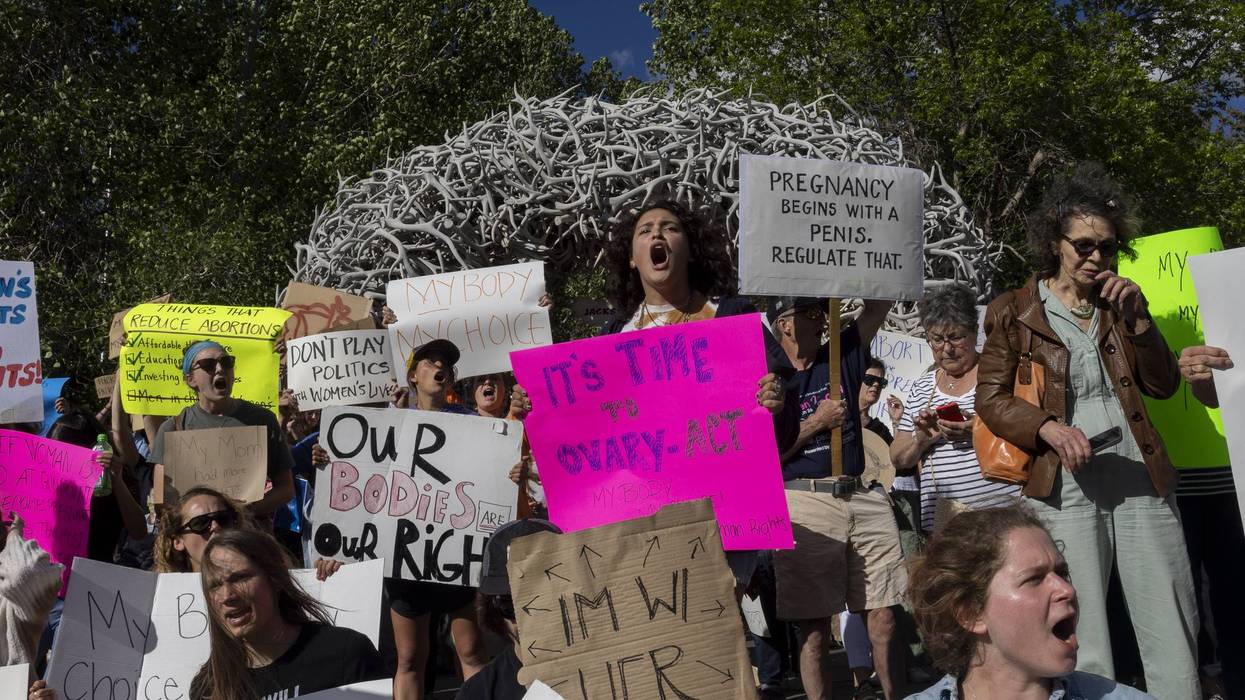
"This new law is part of a relentless campaign by anti-abortion extremists who continue to push restrictions regardless of settled law, patient safety, or basic compassion," said one critic.
A reproductive rights group coalition that recently got two anti-abortion laws overturned in Wyoming's Supreme Court filed a legal challenge on Tuesday against the insidiously named "fetal heartbeat" legislation signed earlier this week by the state's Republican governor.
The advocacy groups Chelsea's Fund and Just the Pill; Wellspring Health Access, Wyoming's only abortion clinic; and three physicians filed a motion seeking to block HB 0126, the so-called Human Heartbeat Act, which was signed Monday by Gov. Mark Gordon.
The law bans abortion when there is a "detectable fetal heartbeat." Critics note that the term "fetal heartbeat" is medically inaccurate and misleading, as what can be detected with a transvaginal ultrasound at around six weeks of gestation is not an actual heartbeat, but rather electrical activity in fetal tissue that later develops into a heart.
The legislation contains an exception to “preserve the woman from an imminent peril that substantially endangers her life or health, according to appropriate medical judgment," but forces victims of rape and incest to carry their abusers' fetus to term.
The “uNfOrTuNaTe fLaW” he's referring to is that the state's abortion ban has no rape or incest exception. 🤬But this is no accident; these policies are DESIGNED to violate our basic human rights. For the extremists who champion these violent laws, this is a feature, not a bug.
[image or embed]
— Center for Reproductive Rights (@reprorights.org) March 11, 2026 at 7:51 AM
Gordon called the glaring lack of exceptions for rape or incest "an unfortunate flaw."
Wyoming's Republican-dominated Legislature passed the law after the state Supreme Court struck down two other pieces of forced-birth legislation in January.
One of the overturned laws outlawed abortion in nearly all cases, except when the pregnant patient’s life is in danger or for victims of rape or incest. The other banned abortion pills. Both laws were passed after the US Supreme Court overturned Roe v. Wade, reversing half a century of federal abortion rights.
In striking down the laws, the state's high court ruled that they violated residents' ability to make their own healthcare decisions—a right enshrined in the Wyoming Constitution.
The groups challenging the new law echoed the ruling in their motion, arguing the legislation "transgresses the constitutional guarantee of plaintiffs’ and individuals’ to make healthcare decisions without interference from the government."
Chelsea's Fund executive director Janean Forsyth expressed dismay over state lawmakers' relentless attacks on healthcare.
“I'm thinking about everyone from the 15-year-old that we supported, whose grandmother actually reached out, a victim of sexual assault,” Forsyth told Wyoming Public Radio on Wednesday. “I'm thinking about a family with a very wanted pregnancy that we supported in eventually seeking an abortion for a severe fetal anomaly.”
"It's not only affecting access to abortion care, it's affecting reproductive healthcare access generally for parents and children, which is really unfortunate,” she added, referring to medical professionals who are leaving the state for fear of prosecution.
On Wednesday, Brittany Fonteno, president and CEO of the National Abortion Federation (NAF), said in a statement:
A mere two months after two abortion bans were struck down by the state’s Supreme Court, Wyoming’s anti-abortion leaders have enacted yet another ban despite clear judicial rulings and public support for the constitutional right to make personal healthcare decisions. This new law is part of a relentless campaign by anti-abortion extremists who continue to push restrictions regardless of settled law, patient safety, or basic compassion.
“But as they have before, providers are standing firm and fighting back," Fonteno added. "NAF is proud to support Wellspring Health Access and the advocates challenging this ban, and we remain committed to ensuring abortion care is not only legal, but accessible and protected for every person, in every state.”
Abortion access has been tenuous in Wyoming in recent years, with bans and a 2022 arson attack on the Wellspring Health Access clinic in Casper—the state's only full-service abortion facility—causing uncertainty and delays.
Lawmakers in Wyoming considered putting the issue before voters in a referendum but decided against doing so, as such ballot measures have repeatedly resulted in the protection of abortion rights—even in deep "red" and conservative-leaning states including Arizona, Kansas, Michigan, Missouri, Montana, and Ohio.
Wyoming is the fifth state to ban abortion at around six weeks, joining Florida, Georgia, Iowa, and South Carolina.
According to the Guttmacher Institute, 13 states currently have near-total abortion bans, while 28 other states restrict the procedure. Numerous forced-birth bills are pending across the nation, and—while unlikely to pass—the most severe proposals including punishing the medical procedure with lengthy imprisonment and even the death penalty for healthcare providers and patients.
Wyoming’s governor signed into law a so-called “fetal heartbeat” ban. Abortion is now banned in the state when “cardiac activity” is detected, around 6 wks of pregnancy. WY now shifts from “Restrictive” to “Very Restrictive” on our interactive map. Learn more: https://gu.tt/4985P4S#AbortionAccess
[image or embed]
— Guttmacher (@guttmacher.org) March 11, 2026 at 6:00 AM
On Monday, the Center for Reproductive Rights published a report examining the human and economic toll of abortion bans, which a separate study last year by the Population Reference Bureau has linked to 478 excess infant deaths and 59 excess deaths of pregnant people since Roe was struck down nearly four years ago.
It's not only state-level bans that harm patients. Republicans' so-called One Big Beautiful Bill Act, signed into law by President Donald Trump last year, contains the biggest cuts to Medicaid in the program's 60-year history. Dramatically decreased Medicaid funding has resulted in the closure of at least 50 Planned Parenthood clinics nationwide, and the reduction of services at many others.

"Massive civilian casualty incidents like the attack in Minab are not only detrimental to the Iranian people," argued the rest of the Senate Democratic Caucus, "but they also undermine US national security interests."
Just a week after Sen. John Fetterman helped Republicans block a war powers resolution intended to halt President Donald Trump and Israel's assault on Iran, the Pennsylvania Democrat again bucked his own party on Wednesday by not signing on to a letter calling for a probe into an apparent US bombing of a girls' school in the Iranian city Minab that killed around 175 people, mostly young children.
As with the unsuccessful resolution from Sen. Tim Kaine (D-Va.), Fetterman was the only member of the Senate Democratic Caucus—which includes Sens. Bernie Sanders (I-Vt.) and Angus King (I-Maine)—who didn't endorse the letter to US Defense Secretary Pete Hegseth.
Fetterman has signaled support for Operation Epic Fury and promoted Trump's narrative that it's motivated by preventing Iran from developing a nuclear weapon. During a Tuesday appearance on Newsmax, he claimed that "negotiating treaties" and coordinating with regional allies "never worked," and wondered why Democrats can't "agree what's happened is a very, very positive development for world peace."
Asked for comment about Democrats' letter, Fetterman told Reuters that he supports the military operation and "the United States never intentionally targets civilians, including its own citizens, unlike Iran. Everyone agrees it was a tragedy. Everyone agrees on performing a full investigation."
A spokesperson for Fetterman added that "whether the senator is on a letter or not, he fully stands behind a comprehensive investigation into this tragedy."
Led by Kaine, Senate Minority Leader Chuck Schumer (D-NY), and Sens. Brian Schatz (D-Hawaii), Chris Van Hollen (D-Md.), and Elizabeth Warren (D-Mass.), the rest of the caucus began the letter by expressing "grave concern" about the bombing—which paramedics and victims' relatives have said was a so-called "double-tap" airstrike—and stressing that the 12-day assault "is a war of choice without congressional authorization."
"Nonetheless, as these military actions continue, the United States and Israel must abide by US and international law, including the law of armed conflict," they wrote. "There must be a swift investigation into the strikes on this school and any other potential US military actions causing civilian harm, and the findings must be released to the public as soon as possible, along with any measures to pursue accountability."
"Massive civilian casualty incidents like the attack in Minab are not only detrimental to the Iranian people, who have already suffered so much at the hands of its own government, but they also undermine US national security interests," the Democrats argued.
The letter cites a Tuesday update from the US-based Human Rights Activists News Agency that the war has killed more than 1,245 civilians and injured over 12,000. The Iranian government said earlier this week that the death toll is above 1,300.
The Senate Democrats didn't just focus on the school; they also sounded the alarm about US and Israeli "use of explosive weapons in major Iranian cities and populated areas," which has damaged "multiple hospitals, cultural heritage sites, and other critical civilian infrastructure."
"These civilian harm events are not taking place in a vacuum," the senators wrote, pointing to Hegseth's recent remarks that Operation Epic Fury would have "no stupid rules of engagement" and there will be "death and destruction from the sky all day long."
They warned that "this rhetoric only serves to endanger civilians, including American citizens, in the region and around the globe. The United States is a party to the Geneva Conventions and bound by international humanitarian law, including the principles of distinction, proportionality, and precaution. These are binding and non-negotiable standards designed to protect innocent human life, and it is unacceptable for the secretary of defense to suggest otherwise."
"Your comments reflect a broader pattern of policies abandoning the Defense Department's commitment to minimizing civilian harm in US military operations," the lawmakers noted, referencing budgetary and personnel cuts, including the removal of senior, nonpartisan judge advocate general officers. "These actions, combined with your comments and the horrific reports of civilian casualties stemming from the war against Iran, suggest the administration has abandoned its duty to protect civilians."
The senators demanded Hegseth's responses to a list of questions about the February 28 school strike, compliance with rules to prevent war crimes, the military's efforts to prevent and mitigate civilian harm, and the use of artificial intelligence no later than March 18.
The Wednesday letter came as the The New York Times reported on the preliminary findings of a Pentagon probe that found the strike on the school in Minab "was the result of a targeting mistake by the US military, which was conducting strikes on an adjacent Iranian base of which the school building was formerly a part."
It also came as a coalition of peace groups launched a national campaign calling on Schumer and House Minority Leader Hakeem Jeffries (D-NY) to resign from their leadership roles over their failure to sufficiently fight back "against a war-crazed Trump administration."
While Hegseth and Trump have so far declined to take responsibility for the school massacre, Sen. John Kennedy (R-La.)—who supports the US-Israeli war on Iran—has apologized for the bombing at least twice this week, saying: "We made a mistake... I'm just so sorry it happened."
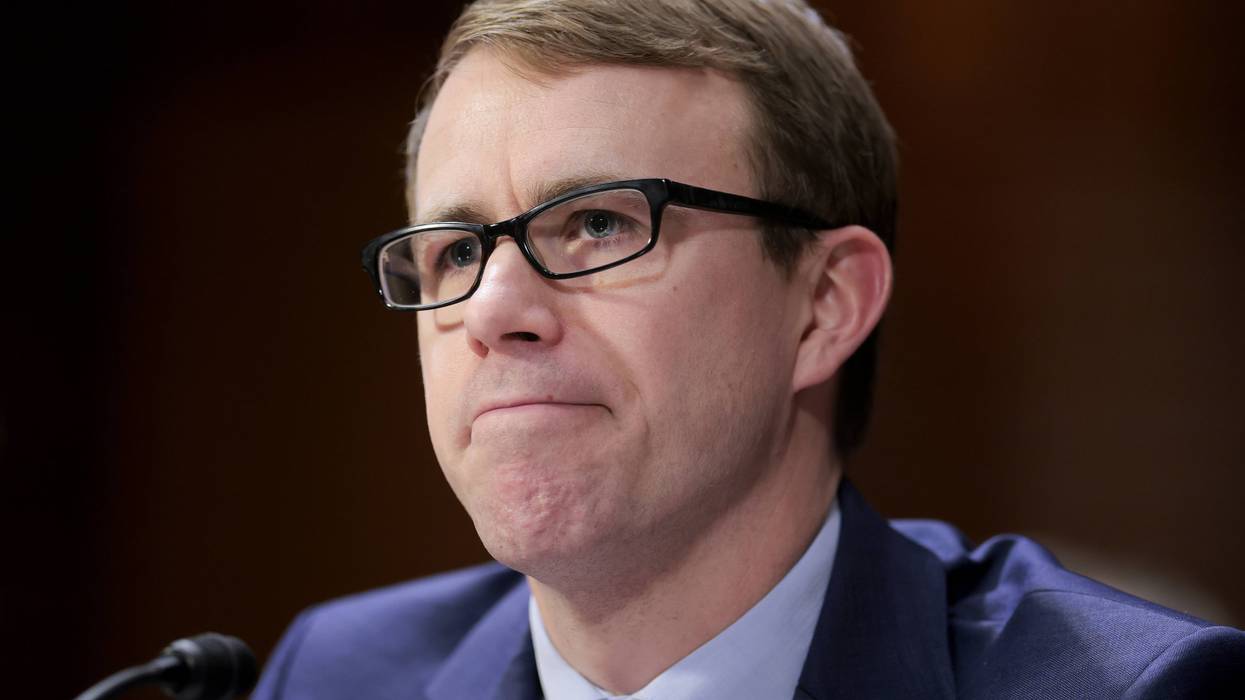
Republican Sen. John Kennedy scoffed as David J. Bier of the Cato Institute outlined how the Trump administration has openly demanded "ethnic cleansing" through the deportation of 100 million people.
A Republican senator on Tuesday accused an immigration policy expert of "hyperbole" in his condemnation of President Donald Trump's anti-immigration agenda during a hearing—but the witness, David J. Bier of the libertarian Cato Institute, emphasized that the administration's own words and policies have clearly pointed to a goal of expelling millions of citizens from the United States.
At a hearing on sanctuary cities held by the Senate Budget Committee, Sen. John Kennedy (R-La.) read a post Bier wrote on social media in December 2025 in which he said Trump administration officials "think they can troll their way into us accepting ethnic cleansing," suggesting it was one of many "hyperbolic statements" that discredit Bier.
Bier, the director of immigration studies for the Cato Institute, has spent the past year tracking the Trump administration's mass deportation agenda, in which a majority of people who have been detained have had no criminal convictions, despite the White House's persistent claims it is targeting "the worst of the worst" violent criminals.
He was unfazed by Kennedy's questioning, quickly replying that his comment was in response to a social media post by the Department of Homeland Security's official account in which the agency shared an image of a Cadillac on a beach, featuring the message, "America after 100 million deportations."
"That was in regard to a Department of Homeland Security post about advocating 100 million deportations," said Bier as the senator attempted to talk over him. "One hundred million deportations would be ethnic cleansing. You would be removing one-third of country."
This exchange between David Bier and Sen Foghorn Leghorn (R-LA) is something else. Kennedy thinks he has him in three separate gotcha moments, but not so fast Bier had his number. The clip is a bit long but it’s 3 minutes of Kennedy getting owned. Watch👇pic.twitter.com/HPHicyUcl1
— Brian Cardone 🏴☠️🇺🇦 (@cardon_brian) March 10, 2026
Kennedy didn't respond, instead reading a post Bier wrote on March 2 which said: "If you rule against Trump's population purge agenda... the nativists will name you, threaten you, and come after you. These judges are much braver than the [Immigration and Customs Enforcement] agents who hide behind masks while violating the Constitution."
Bier stood by his defense of judges; his post had been in reference to a "60 Minutes" interview given by US District Judge John Coughenour, who described a hoax in which law enforcement showed up at his house after getting a report that he had murdered his wife. He also received a bomb threat, with both incidents taking place after he ruled against Trump's executive order aimed at ending the 14th Amendment's guarantee of birthright citizenship.
The Cato expert also defended his reference to a "population purge," saying: "I'm talking about the fact that they're trying to deport US citizens, people born here. They are trying to deport them as well. So it's not a 'mass deportation agenda.' It is also an agenda intended to reduce the population of the United States."
"These are not hyperbolic statements," he said as Kennedy hurled insults at Bier, asking "what planet" he was from and telling him he triggered the senator's "gag reflex" before being cut off by Sen. Lindsey Graham (R-SC).
Kennedy also accused Bier of making a "hyperbolic statement" on February 11, when he posted on the social media platform Bluesky that in addition to advising US military officers to refuse to carry out illegal orders, Democratic members of Congress should warn them "to refuse unethical orders."
Bier readily defended his remark, asking Kennedy: "Do you disagree with it? You think people should do unethical things?" The senator didn't respond.
It was unclear whether Kennedy was unfamiliar with the president's plan to strip people of their US citizenship—one of the first efforts of his second term, with the executive order signed just after he took office—or if he was simply "looking for fundraising sound bites," as one Cato Institute staffer posited.
Bier said Wednesday that it was the second time in a month that Kennedy has appeared "shocked" to learn about the policies of the president he has supported for nearly a decade.
"Just a month earlier I had explained to him how the Trump administration has already banned HALF of all legal immigrants to the US," said Bier, pointing to his testimony from February in which he explained how the White House has suspended immigrant visas and US Citizenship and Immigration Services benefit applications.
Listen to how shocked Senator Kennedy was. I should've clarified more how it's actually three different overlapping policies (the presidential visa ban, the USCIS benefits suspension, and the State Dept immigrant visa suspension) leading to the theft from applicants. pic.twitter.com/SZh4PMzc6j
— David J. Bier (@David_J_Bier) February 11, 2026
The hearing on sanctuary cities was subtitled "The Cost of Undermining Law and Order," but Bier focused his testimony on the Cato Institute's extensive research that's found immigration has reduced government deficits by at least $14.5 trillion over the last 30 years.
"I was invited to the Budget Committee because of this comprehensive study Cato published, not to discuss random tweets," said Bier. "The Democrats all wanted to talk substance. The other side name-called. Incredible contrast."