
SUBSCRIBE TO OUR FREE NEWSLETTER
Daily news & progressive opinion—funded by the people, not the corporations—delivered straight to your inbox.
5
#000000
#FFFFFF
To donate by check, phone, or other method, see our More Ways to Give page.


Daily news & progressive opinion—funded by the people, not the corporations—delivered straight to your inbox.
"You owe the American public an explanation for why you took part in PhRMA's influence-peddling events with President Trump," wrote Sens. Elizabeth Warren, Ron Wyden, and Bernie Sanders.
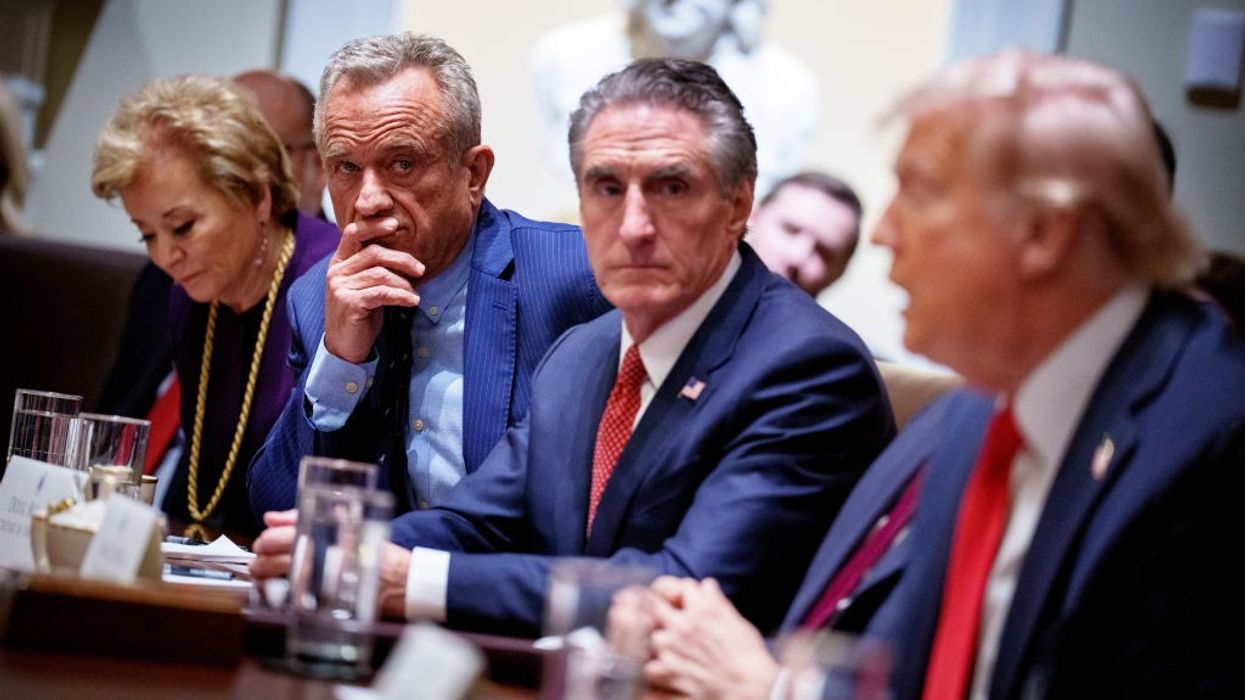
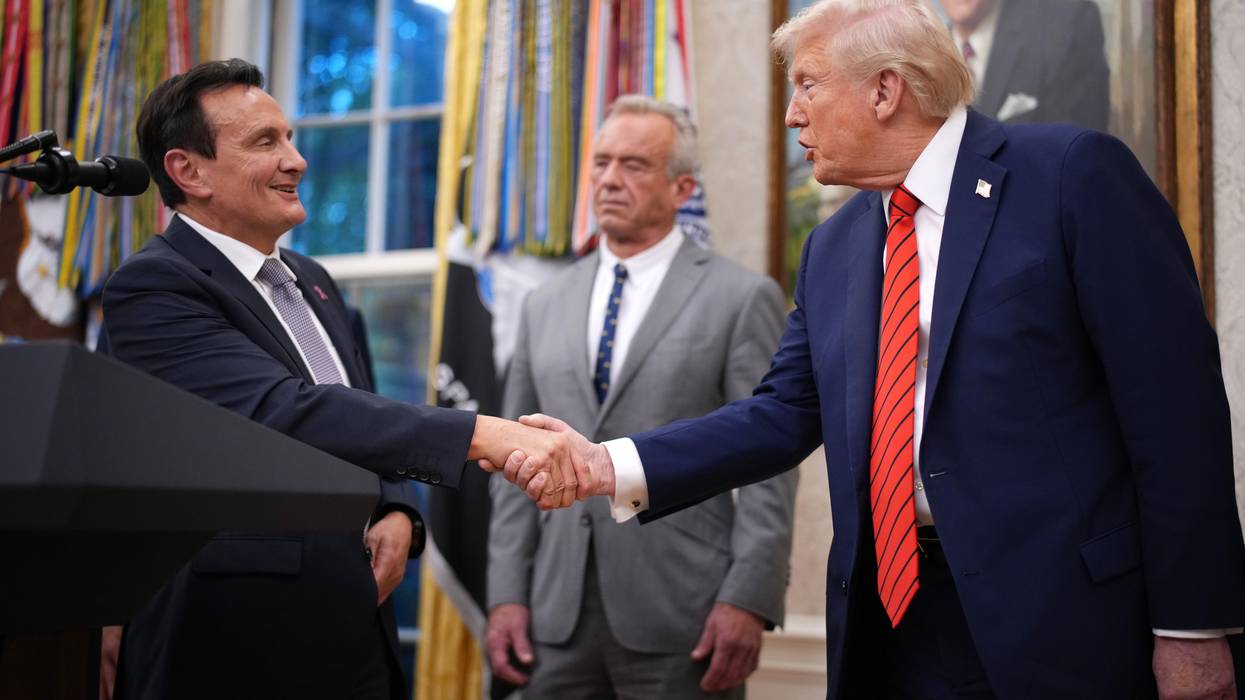
A group of progressive U.S. senators on Monday pushed Robert F. Kennedy Jr., secretary of the Health and Human Services Department, to disclose what he and President Donald Trump discussed with pharmaceutical executives at recent private dinners as the industry pressures the new administration to end Medicare drug price negotiations.
In a letter to Kennedy, Sens. Elizabeth Warren (D-Mass.), Ron Wyden (D-Ore.), and Bernie Sanders (I-Vt.) pointed to Wall Street Journal reporting from last month on the millions of dollars that healthcare industry executives spent to dine with Trump at his Mar-a-Lago club in Florida ahead of his inauguration.
Kennedy, according to the Journal, "attended several of the dinners, but largely stayed quiet as Trump and others talked."
Warren, Wyden, and Sanders wrote to Kennedy that "the dinners may have served as an opportunity for Big Pharma to gain insider access to both you and President Trump" and asked the HHS chief to reveal information about the meetings with industry executives, including how many there have been since the November election and whether Medicare drug price negotiations or other critical matters were discussed.
"Big Pharma stands to profit immensely from a second Trump administration, especially if they can convince you and President Trump to abandon policies like Medicare drug price negotiations and patent reform that would save Americans hundreds of billions of dollars on lifesaving drugs," the senators wrote. "Indeed, the executives that attended these dinners have called on him to 'pause drug negotiations'—negotiations that are expected to save taxpayers $100 billion by 2032."
"You owe the American public an explanation for why you took part in PhRMA's influence-peddling events with President Trump, what happened at these meetings, and whether they will affect your commitment to ensuring that Americans receive the relief they deserve from high drug prices," the senators added.
RFK Jr. said he'd "clean up corruption" as HHS Secretary. So why'd he have dinner with Big Pharma executives at Mar-a-Lago with Trump? The American people deserve to know what kind of deals might have been made at those "million-dollar" dinners.
[image or embed]
— Elizabeth Warren (@warren.senate.gov) March 10, 2025 at 7:29 PM
The Journal reported that the CEO of Pfizer, which pumped $1 million into Trump's inaugural committee, was among the executives who attended the private Mar-a-Lago dinners. Eli Lilly's chief executive also joined at least one of the dinners.
Though Kennedy, an anti-vaccine conspiracy theorist, has vocally criticized Big Pharma and its political influence, the industry did not lobby against his nomination to lead HHS, which oversees the Medicare drug price negotiations that began during the Biden administration.
Last month, the head of the pharmaceutical industry's biggest lobbying group and several pharma CEOs met with Trump as part of a campaign to weaken the price negotiations, which threaten drugmakers' ability to jack up prices at will.
The negotiations have yielded significant results, but Trump's Centers for Medicare and Medicaid Services—an agency within HHS—has signaled it is open to altering the program.
"The Trump administration's statement is far from an embrace of drug price negotiation," Wyden and other senators warned earlier this year, "and appears to be opening the door to changes that could undermine Medicare's ability to get the best price possible on drugs."
"Too often, because manufacturers are pricing out my patients, I have to resort to treatment options that are less effective and less safe," one doctor said.
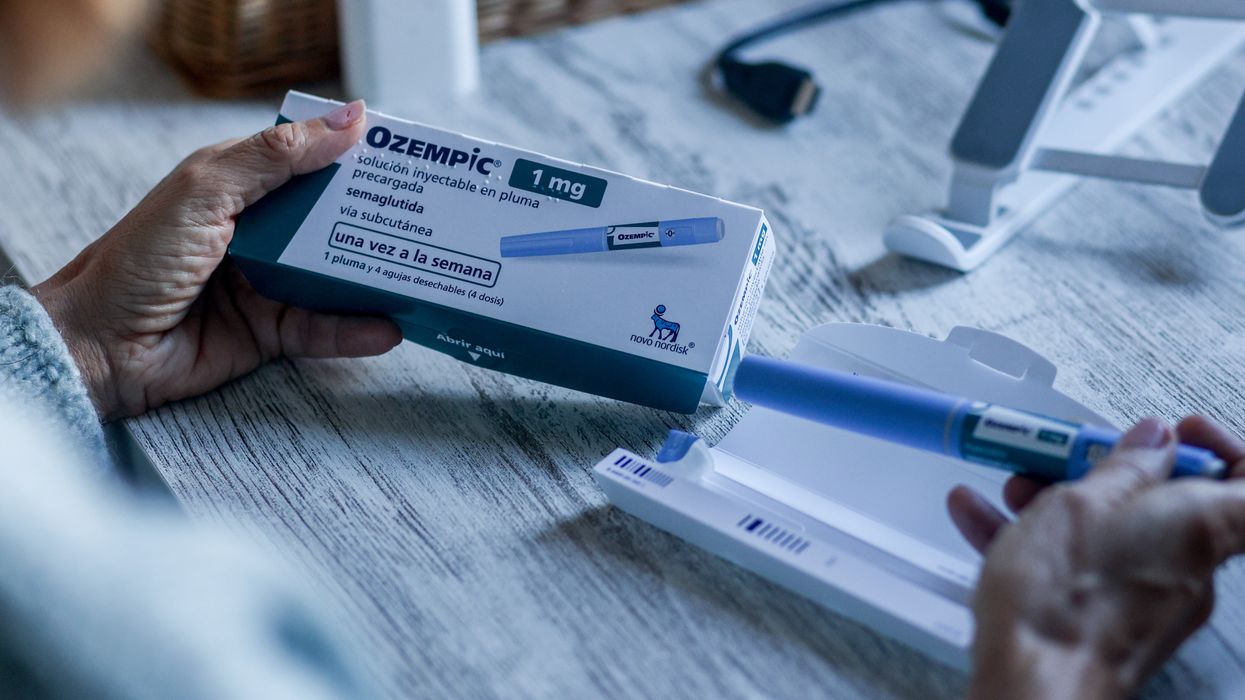
As the U.S. Senate prepares for a hearing on Novo Nordisk overcharging Americans for Ozempic and Wegovy, Sen. Bernie Sanders on Monday released a letter from 253 health professionals asking Congress to take on the "exorbitant prices set by manufacturers" for non-insulin diabetes and weight loss medications.
The clinicians wrote that drugs including "semaglutide (marketed by Novo Nordisk as Ozempic for diabetes and Wegovy for weight loss) and... tirzapetide (marketed by Eli Lilly as Mounjaro for diabetes and Zepbound for weight loss) have been revolutionary in the management of chronic conditions of diabetes and obesity."
"However, even the most transformative medications cannot help our patients if they cannot afford them," states the letter, which is addressed to Sanders (I-Vt.), chair of the Senate Committee on Health, Education, Labor, and Pensions (HELP), and Sen. Bill Cassidy (R-La.), the panel's ranking member.
"If Novo Nordisk does not end its greed and substantially reduce the price of these drugs, we must do everything we can to end it for them."
"Studies have shown that semaglutide can be manufactured for as little as nearly $5 per month, substantially lower than the current U.S. list price of $968 for Ozempic or $1,349 per month for Wegovy," the letter notes. "In contrast, Novo Nordisk has set the price of Wegovy at $92 in the United Kingdom and $186 in Denmark, clearly demonstrating that these drugs are being priced unfairly for our U.S. patients."
The health providers stressed that "for patients, these are not one-off prices they shoulder, but potentially lifelong costs they will need to consider. For obesity, the drugs work while patients take them, but once off treatment, studies have found that patients regain the weight."
"Patients in the U.S. face multiple hurdles in accessing the drugs, which we as prescribers do our best to help them navigate," they explained, detailing issues faced by people who have private insurance, Medicare and Medicaid coverage, and no insurance. "Lack of coverage, supply shortages, and the unreasonable sticker prices of these medications are pushing patients to consider alternative options, which are often unsafe."
"We want our patients to be able to access medications that can improve their health and quality of life, but we do not want to rob the American taxpayers to line the pockets of the pharmaceutical manufacturers," the clinicians concluded. "Senators, we are asking you to do everything in your power to bring down the price of these novel diabetes and obesity drugs. Our patients deserve to have the best options available to them at a fair price."
Echoing the letter in a Monday statement, Dr. Kasia Lipska, a practicing endocrinologist and diabetes researcher at the Yale School of Medicine in Connecticut, said that "the exorbitant prices that manufacturers are asking my patients to pay for these novel diabetes and obesity medications are simply unacceptable."
"Too often, because manufacturers are pricing out my patients, I have to resort to treatment options that are less effective and less safe," Lipska continued. "These are life-changing treatments that should be available to my patients and everyone who needs them, not just those who can afford to pay."
Dr. Elizabeth Dewey, another letter signatory who practices family medicine in Greensboro, North Carolina, said that in her state, "we have been struggling all year with lack of coverage for weight loss medications."
"When our state plan and large employers dropped coverage for weight loss medications earlier this year, patients were left without treatment," Dewey explained. "Those who wanted to continue on the medications could pay cash. But for most patients, paying hundreds of dollars without insurance coverage is not affordable. Even with drug company coupons or discounts on certain doses, these treatments are still unattainable for most of my patients."
Sanders, who launched a probe into Denmark-based Novo Nordisk back in April, welcomed the letter, saying that "doctors across this country are sick and tired of seeing their patients ripped off by giant pharmaceutical companies."
"There is no rational reason, other than greed, for Novo Nordisk to charge Americans with Type 2 diabetes $969 a month for Ozempic, while this same exact drug can be purchased for just $155 in Canada and just $59 in Germany," he argued. "Novo Nordisk also charges Americans with obesity $1,349 a month for Wegovy, while this same exact product can be purchased for just $140 in Germany."
"Doctors agree," he added. "If Novo Nordisk does not end its greed and substantially reduce the price of these drugs, we must do everything we can to end it for them."
The Senate HELP Committee hearing on Capitol Hill is scheduled for 10:00 am on Tuesday, September 24.
Past administrations "have been intimidated and deterred from challenging Big Pharma's monopoly power," an expert said. "Today, however, President Biden and Sen. Bernie Sanders call Big Pharma's bullying bluff."
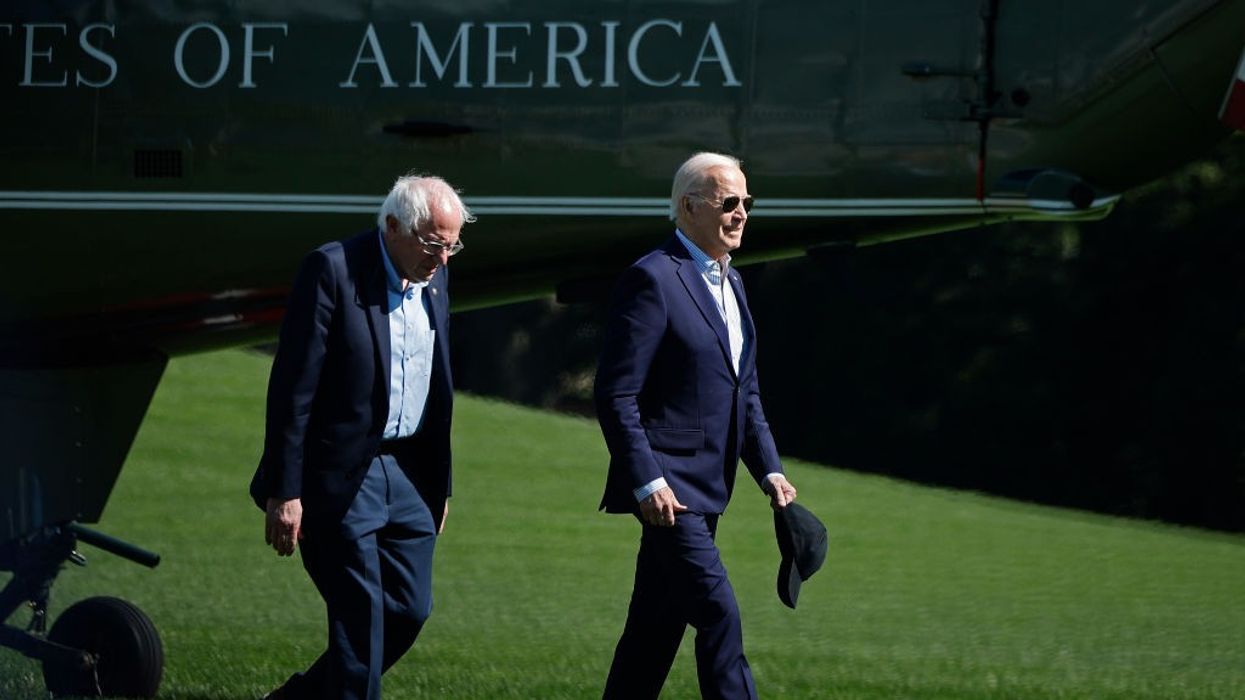
President Joe Biden and Sen. Bernie Sanders on Tuesday called for prescription drug companies to lower prices and stop "ripping off" Americans.
The message from Biden and Sanders (I-Vt.) came in a joint op-ed in USA Today in which they laid out the reforms they've already pushed through, called out two pharmaceutical companies in particular for the "unconscionably" high prices they charge to Americans, and vowed to take governmental action to end the "corporate greed."
"There is no rational reason why Americans, for decades, have been forced to pay, by far, the highest prices in the world for the prescription drugs they need," Biden and Sanders wrote. "There is no rational reason why, for decades, 1 out of 4 Americans have been unable to afford the medicine their doctors prescribe.
"And it is most certainly not Americans' patriotic duty to pay high drug prices at home so others abroad can enjoy the fair prices that every American is entitled to," they added.
Consumer rights groups celebrated the strong position that the president and the senator took.
"For decades, presidential administrations on a bipartisan basis have been intimidated and deterred from challenging Big Pharma's monopoly power," Robert Weissman, president of Public Citizen, an advocacy group, said in a statement. "Today, however, President Biden and Sen. Bernie Sanders call Big Pharma's bullying bluff."
Pharmaceutical companies can make whatever excuses they want for their sky-high drug prices — we know it’s bullshit. And Biden and Bernie just called them on it.
If Big Pharma won’t quell its own greed, it’s up to the government to do it for them.https://t.co/YiodsDIoQI
— Public Citizen (@Public_Citizen) July 2, 2024
Some progress has been made on prescription drug prices in the last four years, Biden and Sanders noted in their op-ed.
The Inflation Reduction Act, which they helped enact, established a price ceiling of $35 per month for insulin for senior citizens. And, starting in 2025, no senior citizen will have to pay more than $2,000 in prescription drug prices in a given year—a reform Biden and Sanders said they'd like to see apply to all Americans. Medicare can now also negotiate with pharmaceutical companies to lower prices, as other countries do.
Yet the problem of high drug prices remains, and Sanders has made solving it a priority, focusing on it as chair of the Senate Health, Education, Labor, and Pensions (HELP) Committee. Last year, he wrote an op-ed in Fox News, calling the opposition to pharmaceutical company profiteering an issue on which Americans of all political stripes "could not be more united." He also released a report showing that medications made using publicly funded research were then being priced exorbitantly by private firms.
The Vermont Independent has also repeatedly grilled pharmaceutical executives in hearings over the last two years, but they have generally not committed to lowering prices, though some companies did institute caps on out-of-pocket expenses on inhalers.
In April, Sanders and Biden teamed up for an event at the White House to discuss the need to lower prescription drug prices.
"I'm proud that my administration is taking on Big Pharma in the most significant ways ever," Biden said at the event. "And I wouldn't have done it without Bernie... Bernie was the one who was leading the way for decades."
Tuesday's op-ed marks the continuation of their partnership on the issue, with Biden effectively endorsing Sanders' drug pricing agenda, particularly for obesity and diabetes medications. HELP launched an investigation into Novo Nordisk's pricing of Ozempic and Wegovy in April, and the Danish multinational was the primary example of wrongdoing chosen by Biden and Sanders in their op-ed.
Ozempic and Wegovy are up to six times more expensive in the U.S. than in peer countries, Biden and Sanders wrote.
"In 2023, for example, Novo Nordisk made over $12 billion in profits, in part by charging Americans over $1,000 a month for a prescription drug that can be profitably manufactured for less than $5. That is not making a reasonable return on investment. That is price gouging. That is corporate greed."
Sanders recently succeeded in pressuring Novo Nordisk CEO Lars Fruergaard Jørgensen to agree to testify in front of HELP in September.
Biden and Sanders noted that even just within obesity and diabetes care, the problem goes beyond Novo Nordisk: Eli Lilly's Mounjaro, a comparable weight-loss drug, is also overpriced. They argued that if the prices of such drugs are not lowered, they could bankrupt the U.S. healthcare system.
Biden then repeated the message through his own channels.
"If Big Pharma refuses to lower prescription drug prices and end their greed, we will do everything within our power to end it for them," Biden wrote on social media following the publication of the op-ed. "Bernie Sanders and I will not rest until every American can afford the prescriptions they need to lead healthy, happy, and productive lives."
Though the timing may be incidental, Biden's cooperation with Sanders, a leading progressive, comes during a week in which he needs to rally his base—a task Sanders is known to excel at. Biden faces widespread pressure to step aside from the presidential race following a subpar debate performance on Thursday night.
While progressives have been sharply critical of Biden on a range of issues, it's not clear whether his potential replacements at the top of the Democratic ticket would be so willing to team up with Sanders and call out corporate greed.
"Bernie Sanders and Joe Biden just co-authored a piece laying into big pharmaceutical companies for overcharging Americans on obesity drugs," Matt Stoller, a progressive commentator and research director of the American Economic Liberties Project, wrote on social media. "I realize Biden is senile, but would his replacements do anything like this? Most wouldn't."
"Millions of Americans' lives are affected by this report and it's crucial that the report tell the truth to American people and it's not degraded into another sales pitch for Big Food and Big Pharma."
Nearly half the members of the U.S. government panel that helps draft dietary guidelines for Americans have ties to the food, pharmaceutical, or weight loss industry, a report released this week revealed.
"Food and pharmaceutical industry actors have historically sought to influence the U.S. Dietary Guidelines for Americans (DGA), and have had financial ties to nutrition experts on the Dietary Guidelines Advisory Committee (DGAC), which reviews the latest science on diet, nutrition, and health outcomes to make recommendations for the DGA," states the report, which was authored by researchers at the advocacy group U.S. Right to Know.
"We found that 13 of 20 DGAC members had high-risk, medium-risk, or possible conflicts of interest with industry actors," the authors wrote.
Of these, nine were high- or medium-risk conflicts with companies and industry groups including Coca-Cola, the Nestlé Nutrition Institute, National Dairy Council, Weight Watchers International, Beyond Meat, the California Walnut Commission, and the National Egg Board. Big Pharma giants including Pfizer, Abbott, Novo Nordisk, and Eli Lilly are also named in the report.
U.S. Right to Know executive director Gary Ruskin told The Guardian that revelations like those in the report erode consumer confidence in government dietary guidelines.
"Millions of Americans' lives are affected by this report and it's crucial that the report tell the truth to American people and it's not degraded into another sales pitch for Big Food and Big Pharma," Ruskin said.
The report also notes some "encouraging findings," including that "seven members had no relationships in the past five years that met our definition" of conflicts of interest, and that "four members only had one instance" of possible conflicts.
"Surely, there is room for further improvement," the publication states. "With high-risk conflicts of interest still present on the DGAC,
the public cannot have confidence that the official dietary advice of the U.S. government is free from industry influence."
The report's authors offer recommendations for the U.S. Department of Health and Human Services and U.S. Department of Agriculture, including:
The group also called on Congress to expand the Physician Payments Sunshine Act to cover the nutrition field.
A lower-priced insulin doesn’t save lives if it’s unavailable. It is simply a strategic public relations move.
On March 1, Eli Lilly announced it would reduce the list prices of some of its insulins, including the generic Lispro, the same product as the name-brand Humalog. At a recent congressional hearing with the CEOs of insulin manufacturers and pharmacy benefit managers, David Ricks, Eli Lilly’s CEO, again celebrated that $25 insulin lispro was available to patients as of May 1. People with diabetes have worked tirelessly to reduce insulin costs for decades. So why aren’t we universally celebrating this announcement of lower prices?
Because it is now the end of May, and I—along with many others in my community—still haven’t been able to get the promised $25 insulin.
I have lived with type 1 diabetes for 22 years, more than ⅔ of my life. In that time, I’ve watched the price of insulin climb, while simultaneously listening to promises from big pharma and the organizations that accept their funding that ultimately led nowhere. However, when I first read that Eli Lilly was going to offer $25 vials of Lispro starting May 1, I was optimistic about what this could mean for the 7+ million people who rely on insulin daily.
I don't usually use insulin Lispro (but rather it’s brand name cousin per my insurance guidelines) so after Eli Lilly’s news, I confirmed with my insurance company that I wouldn’t need a new prescription to access Lispro. They said I wouldn’t—great, and off to the pharmacy I went to purchase my $25 insulin!
I went to my local pharmacy when my refill was up. But when I requested Lispro, the pharmacist shook his head: “We don’t have that in stock.” When I asked when it would be back in stock, he shrugged, “they send Lispro when they have it.” I decided to return at a later date as I happened to have a supply of insulin on hand at home, two weeks later, we had a similar exchange.
The experience was frustrating, however, it ended only in frustration because I was fortunate enough to have extra insulin at home, a prescription for the brand name equivalent, insurance to cover the brand name, and an income that allows me to do so. That is a combination of privilege and luck that many aren’t afforded. In another situation that frustration could have easily turned to a life-threatening and dangerous situation.
If Eli Lilly is going to promise $25 vials of insulin Lispro, it needs to be accessible. A lower-priced insulin doesn’t save lives if it’s unavailable, it is simply a strategic PR move.
And patients don’t have time to wait for Eli Lilly and other insulin manufacturers to follow through on their promises. Now is the time to cap the list price of all insulins.
Since 2020, 21 drug companies have restricted the number of contract pharmacies where 340B nonprofits can fill patient prescriptions. Their attack undermines the intent of the 340B statute.
Drug companies keep making excuses for why they do not have to live up to their 340B statutory obligations. Since 2020, 21 drug companies have restricted the number of contract pharmacies where 340B nonprofits can fill patient prescriptions. Their attack undermines the intent of the 340B statute.
Drug companies insist they have legitimate oversight concerns, yet their supposed good governance concerns belie the pharmaceutical industry’s true intent. Simply stated, drug makers want to extract every dollar they can from their products, even if it means breaking an agreement with the federal government to sell a tiny percentage of their drugs at a discount to the nonprofits that reinforce America’s healthcare safety net.
Healthcare nonprofits rely on 340B drug discount savings to care for the most vulnerable Americans. For patients to access life-saving medicines, they must be able to pick up their prescriptions from community pharmacies. Many low-income, uninsured Americans lack the time and resources to travel far from their work and homes—often passing by multiple pharmacies—to a single drug company-approved prescription drug dispensing site. The 2010 Affordable Care Act (ACA) recognized that problem, empowering the Health Resources and Services Administration (HRSA) to promote medication access through contract pharmacy use. Federal guidelines wisely allow nonprofits to engage in multiple contract pharmacy agreements.
Simply stated, drug makers want to extract every dollar they can from their products, even if it means breaking an agreement with the federal government to sell a tiny percentage of their drugs at a discount to the nonprofits that reinforce America’s healthcare safety net.
So why did drug companies wait until 2020—10 years after the HRSA guidelines went into effect—to begin enacting contract pharmacy restrictions? The answer is simple. Just one year earlier, in 2019, a little-known ACA provision which requires drug makers to submit drug pricing information to a database finally came online. The “ceiling price” database provides nonprofits with the requisite data to ensure drug companies do not charge above the 340B ceiling price. Companies that overcharge are subject to a civil monetary penalty. The 340B statute requires those companies to then sell the offending drug at just one penny in the next calendar quarter.
Data transparency shows that drug companies have broken the law, frequently overcharging healthcare nonprofits for prescription drugs. The pre- and post-ceiling price data reveal a stark contrast in how often HRSA uncovered drug company malfeasance. From 2015 to 2018, only 6% of HRSA audits uncovered instances of drug company overcharging. After January 1, 2019—when mandatory drug company database reporting began—audits found overcharging in 67% of cases. In 2021 alone, 80% of audits revealed drug company overcharges.
Take Eli Lilly as just one example. In December 2022, the drug maker announced refunds for 340B overcharges for the fifth time that year. It is no coincidence that restrictions began apace with the advent of the ceiling price database.
Essentially, drug companies had no issue with nonprofits using multiple contract pharmacies when they could get away with rampant overcharging. And why would they? Without the government watching, multiple dispensing sites afforded drug companies more opportunities to overcharge nonprofits. Drug companies got away with nearly a decade of overcharges, with no recourse for nonprofits. Now, the same companies that ran wild when the government was not watching, decry the lack of federal oversight when it comes to nonprofit contract pharmacy use.
For the record, 340B nonprofits are subject to audit by the federal government and drug makers. Failure to comply removes a nonprofit provider from the 340B program.
Contract pharmacy restrictions couched as best practices represent a cynical ploy by drug companies. Drug companies caterwaul that oversight lapses result in double-charges for 340B discounts, once by nonprofits and once by state Medicaid agencies.
Simply saying something does not make it true. HRSA conducted 638 hospital audits since 2018 to ensure Medicaid fee-for-service compliance rules, and not one 340B contract pharmacy duplicate discount occurred. Drug companies want to be able to raise list prices year-over-year without 340B statutory penalties, and, now that a federal agency is watching, program obligations threaten the bottom line. Drug makers now consider 340B discounts as financial exposure to be avoided at all costs.
Ignore drug industry duplicity when it comes to 340B. Drug companies have repeatedly acted in bad faith, finding any loophole possible to abrogate statutory obligations.
If drug companies no longer wish to participate in 340B, they can leave the program and no longer sell their products to Medicaid and Medicare. Perhaps that is a deal they can finally honor.
The senator introduced legislation last week to cap insulin prices at $20 per vial.
Crediting advocacy groups with pressuring two out of the three pharmaceutical companies that supply insulin to patients with diabetes in the United States to drastically lower their prices, Sen. Bernie Sanders on Tuesday called on the last of the trio, Sanofi, to do the same while arguing price caps should be mandatory—not a choice.
Novo Nordisk on Tuesday announced that it will cut prices by up to 75% for some of its insulin products starting next year, less than two weeks after one of its rival companies, Eli Lilly, said it plans to slash prices for its most widely used insulin products by 70%.
A vial of one of Novo's products, NovoLog, will drop from more than $289 to just over $72, and the insulin product FlexPen will cost $139, down from more than $500, starting January 1, 2024.
The price changes come after the price of insulin for patients has more than tripled in recent decades, with deadly consequences for some of the eight million Americans who rely on synthetic insulin to convert food into energy. A study based on the 2021 National Health Interview Survey last November found that 1.3 million people in the U.S. rationed their insulin supply in 2021 due to the drug's prohibitive cost.
Sanders (I-Vt.) noted that "grassroots pressure" forced Eli Lilly and Novo this month to announce major price cuts, but said that as chairman of the Senate Health, Education, Labor, and Pensions (HELP) Committee he "will soon hold a hearing on the need to guarantee insulin at an affordable price to everyone who needs it," suggesting that voluntary price cuts by companies are not sufficient.
Public pressure by groups including Patients for Affordable Drugs and Lower Drug Prices Now has resulted in some recent insulin price reforms, including a provision that took effect in January capping insulin copayments at $35 per month for Medicare recipients.
As Common Dreams reported last week, days after Eli Lilly announced its voluntary price cuts, Sanders, a longtime advocate of affordable insulin, joined Rep. Cori Bush (D-Mo.) in introducing legislation that would prohibit pharmaceutical companies from charging more than $20 for a vial of insulin. President Joe Biden has called for the product to be capped at $35 per vial for all patients—a proposal that Senate Republicans voted down last year.
Novo's announcement, said Biden, "builds on the important progress we made last year when I signed a law to cap insulin at $35 for seniors. I urge all other manufacturers to follow suit and Republicans in Congress to join us and cap insulin at $35 for all Americans."
Advocacy groups also called on Sanofi, the third insulin manufacturer for American patients, to follow its rival companies' lead and introduce price cuts.
"Let's keep fighting," said Lower Drug Prices Now, "so that patients can afford any medicine they need."
"We can no longer tolerate a rigged healthcare system that forced 1.3 million people with diabetes to ration insulin while the three major insulin manufacturers made $21 billion dollars in profits."
Sen. Bernie Sanders and Rep. Cori Bush on Thursday introduced legislation that would prohibit pharmaceutical companies from charging more than $20 for a vial of insulin, a move that comes a week after Eli Lilly pledged to cap out-of-pocket payments for its insulin products at $35 per month.
"As a nurse, I've seen too many people in our communities struggle to afford their lifesaving insulin medication," Bush (D-Mo.) said in a statement. "People are left choosing between insulin or groceries; insulin or rent; insulin or child care. This is unacceptable."
More than 7 million people across the U.S. use insulin to manage their diabetes, and some have been forced to pay upwards of $1,000 per month for the medicine as pharmaceutical giants have jacked up prices with abandon in recent decades.
According to one study published in October, more than a million people in the U.S. have had to ration insulin due to the high cost.
Sanders (I-Vt.), the chair of the Senate Health, Education, Labor, and Pensions Committee and a longtime advocate of insulin price reform, said Thursday that "there is no reason why Americans should pay the highest prices in the world for insulin—in some cases, ten times as much as people in other countries."
"In 1923, the inventors of insulin sold their patents for $1 to save lives, not to turn pharmaceutical executives into billionaires," said Sanders. "Now, 100 years later, unacceptable corporate greed has caused the price of this lifesaving medication to skyrocket by over 1,000% since 1996. We can no longer tolerate a rigged healthcare system that forced 1.3 million people with diabetes to ration insulin while the three major insulin manufacturers made $21 billion dollars in profits."
"Now is the time for Congress to take on the greed and power of the pharmaceutical industry and substantially lower the price of insulin," the senator added. "In the richest country in the history of the world, no one should die because they cannot afford the medication they need."
If passed, the Insulin for All Act of 2023 would cap the list price of insulin nationwide at "$20 per 1000 units... which may be contained in one or more vials, pens, cartridges, or other forms of delivery."
Original co-sponsors of the legislation include Sen. Ed Markey of Massachusetts, Reps. Jamaal Bowman and Alexandria Ocasio-Cortez of New York, Rep. Rashida Tlaib of Michigan, and Sen. Jeff Merkley of Oregon.
" Big Pharma continues to rake in record profits by gouging patients on insulin prices," Merkley said in a statement. "Unaffordable high prices are forcing patients to ration their insulin, leading to dire health consequences—heart attacks, stroke, blindness, kidney failure, foot disease and amputations, even death. It's tragic, it's unacceptable, and it's time to end this rip-off."
The new bill is also backed by more than 70 advocacy organizations, including T1International, Public Citizen, and Social Security Works.
"This bill being called the Insulin for All Act of 2023 shows the power of grassroots activism," said Elizabeth Pfiester, a patient with Type 1 diabetes and the founder and executive director of T1International, the group behind the #insulin4all campaign.
Eli Lilly's decision earlier this month to slash the prices of its most-prescribed insulin products by 70% was cautiously welcomed by advocates who have been organizing against insulin price gouging for years.
But campaigners stressed that given the serious limitations of Eli Lilly's pledge—and the company's ability to raise prices again whenever it chooses—federal action is still necessary to ensure lower costs for everyone, including those who use products made by the other two giant insulin manufacturers, Sanofi and Novo Nordisk.
The three companies produce more than 90% of the global insulin supply, market dominance that has allowed them to drive up costs massively—drawing legal action from several U.S. states, including California.
Last April, Human Rights Watch released a report showing that Eli Lilly has raised the list price of Humalog by an inflation-adjusted 680% since it first began selling the product in the late 1990s. The company vowed earlier this month to slash the list price of Humalog by 70% starting in the fourth quarter of this year.
"As a result of unacceptable corporate greed, the price of insulin has gone up by over 1,000% since 1996," the Vermont senator said after Eli Lilly announced its price cut.
Sen. Bernie Sanders on Wednesday announced plans to introduce legislation that would cap U.S. insulin prices at $20 per vial after Eli Lilly pledged to cut the list prices of its most commonly used insulin products by 70%.
Sanders (I-Vt.), the chair of the Senate Health, Education, Labor, and Pensions Committee, said in a statement that "this is what fighting back accomplishes" and urged two other major insulin manufacturers to replicate Eli Lilly's move, which also includes capping monthly out-of-pocket insulin payments at $35 for many people with diabetes.
"At a time when Eli Lilly made over $7 billion in profits last year, public pressure forced them to reduce the price of insulin by 70%," said the Vermont senator. "Now is the time for Sanofi and Novo Nordisk to do the same. Now is the time to end the greed of the pharmaceutical industry and substantially lower the outrageous cost of prescription drugs in America."
In letters to the CEOs of Sanofi and Novo Nordisk—which together with Eli Lilly produce more than 90% of the global insulin supply—Sanders wrote that "people with diabetes should not be forced to pay $98 for a vial of insulin that costs just $8 to manufacture and can be purchased in Canada for just $12."
"I urge you to join Eli Lilly in substantially lowering the price your company charges for insulin and make certain that all Americans can purchase this lifesaving drug," added the senator, who has been scrutinizing the trio's business practices—including price collusion—for years.
"Let's be clear: Insulin is not a new drug," Sanders continued. "It was discovered 100 years ago by Canadian scientists who sold the patent rights of insulin for just $1 because they wanted to save lives, not make pharmaceutical executives extremely wealthy. And yet, as a result of unacceptable corporate greed, the price of insulin has gone up by over 1,000% since 1996, causing 1.3 million people with diabetes to ration insulin last year while your companies made billions of dollars in profits. That is absolutely unacceptable."
Eli Lilly's announcement was welcomed as a victory for people with diabetes who have been campaigning tirelessly for years to bring down insulin prices in the U.S., where some patients have been forced to pay more than $1,000 a month for the lifesaving medicine.
But the company's move also drew skepticism as advocates remain wary of the limitations of Wednesday's pledge and of Eli Lilly's commitment to keeping prices low, particularly given the pharmaceutical giant's history of lobbying against efforts to rein in prescription drug costs.
In a footnote at the bottom of its Wednesday press release, Eli Lilly states that "government restrictions exclude people enrolled in federal government insurance programs from Lilly's $35 solutions."
People on Medicare are covered by the Inflation Reduction Act's $35-per-month cap on insulin copayments, but low-income people on Medicaid don't appear to be eligible for Eli Lilly's price-cap program.
Additionally, Eli Lilly's 70% price cut for Humalog—the company's most commonly prescribed insulin product—won't take effect until the fourth quarter of this year, "giving Lilly seven more months of high prices even as they are lauded for their corporate responsibility," noted The American Prospect's Robert Kuttner.
"And since Lilly caps out-of-pocket costs to patients but not necessarily prices charged to insurance companies," Kuttner added, "the result could be cost-shifting and higher insurance premiums."
Such caveats led campaigners to emphasize the necessity of federal action to guarantee that insulin is available and affordable for all who need it.
"Insulin manufacturers have shown time and time again that they will put their CEOs' profits over patients' lives," said Kristen Whitney Daniels, the co-leader of T1International's federal working group and a person living with Type 1 diabetes. "That's why the government also needs to regulate insulin manufacturers to hold them accountable to ensuring the human right to insulin."
"Congress, not greedy corporations trying to redeem their tarnished reputations, should be leading the way on reforms that put patients ahead of pharmaceutical profits."
Eli Lilly, a pharmaceutical giant that has become virtually synonymous with the sky-high cost of insulin in the United States, pledged Wednesday to cut the list prices for its most widely used insulin products by 70%, a move that advocates and experts met with deep skepticism even as they welcomed its potentially significant benefits for some people with diabetes.
"Eli Lilly's price cut will help people," said David Mitchell, the founder of Patients for Affordable Drugs. "But it's the result of years of relentless pressure by diabetes advocates in this country and around the world."
In addition to cutting the list prices of commonly prescribed insulin products such as Humalog—which currently has a price tag of $274.70 per vial—Eli Lilly said it would impose a $35 cap on out-of-pocket insulin costs for people with private insurance who use participating retail pharmacies.
Eli Lilly, one of the three companies that dominate the U.S. insulin market, directed those without health insurance to a company website offering a $35-per-month "insulin savings card."
The company specifically pledged to slash the price of Lispro, Eli Lilly's generic insulin, to $25 a vial—years after lawmakers chastised the drugmaker for failing to make the lower-cost product widely accessible.
The changes are set to take effect in the coming months.
"This decision for affordable insulin shows the power of grassroots advocacy and organizing," Elizabeth Pfiester, executive director of T1International and a person living with Type 1 diabetes, said in a statement. "The T1International community has been taking action and asking insulin manufacturers to put patients over profits for years. In October, T1International and people with diabetes demonstrated outside of Eli Lilly in Indianapolis, and shared a petition with thousands of signatures asking them to lower their list price of insulin."
"Countless patients and families have fought for decades for lower insulin costs and some have even lost loved ones because of the relentless price gouging that fueled profits for corporations like Eli Lilly."
The company's announcement comes nearly two months after a $35-a-month insulin copayment cap took effect for Medicare recipients, a change authorized by the Inflation Reduction Act that congressional Democrats passed and President Joe Biden signed into law last year.
On the surface, Eli Lilly's 70% price cut for many of its insulin products appears substantial, but expert observers stressed that patients—excepting the uninsured and those with high-deductible plans—often don't pay the full list price for prescription medicines, making it easy to overestimate the boldness of the company's move.
"This will be helpful to some consumers," Stacie Dusetzina, a professor at Vanderbilt University School of Medicine, told STAT. "It's not clear to me how much of this is real cutting of the amount that Lilly makes on their insulins versus lowering the list price."
Kristen Whitney Daniels, co-leader of T1International's federal working group, also highlighted the possibility of Eli Lilly reneging on its commitments, something the company has been accused of in the past.
"Insulin manufacturers have shown time and time again that they will put their CEO's profits over patients' lives," said Daniels, who is living with Type 1 diabetes. "Eli Lilly can roll back this new price structure for Lispro at any time, or put in place other practices to limit its use. That's why the government also needs to regulate insulin manufacturers to hold them accountable to ensuring the human right to insulin."
Others echoed that warning and urged lawmakers to continue pushing for broader reforms to bring down prices for insulin and other medications.
"My take? It's a brilliant PR move to halt federal and state legislation, advocacy efforts, negative press, and all the heat pharma has been getting," tweeted Hilary Koch, a public health advocate. "Once that goes away, price of insulin will go back up."
"Any states and advocates currently working on legislation should plow forward," Koch added. "Do NOT let this stop you."
The obscene price of insulin in the U.S. relative to other rich nations has long been a source of outrage among progressive campaigners and lawmakers.
In 2019, Sen. Bernie Sanders of Vermont led a caravan of people with diabetes across the border into Canada to spotlight what he called the "unbelievable greed" of U.S. insulin manufacturers.
Last April, Human Rights Watch published a report showing that Eli Lilly has hiked the list price of Humalog by an inflation-adjusted 680% since 1996, when it first began selling the product.
In November, Eli Lilly's stock price fell sharply after a parody account tweeted that "insulin is free now"—a spoof that brought greater public attention to the company's history of profiteering.
Eli Lilly, Novo Nordisk, and Sanofi are currently facing lawsuits from California, Arkansas, Kansas, and Mississippi that accuse the companies of unlawfully using their dominance of the U.S. insulin market to drive up prices for patients, forcing many to ration the lifesaving drug.
"There's much more to do. Novo Nordisk and Sanofi should follow suit with price reductions immediately," Peter Maybarduk, director of the Access to Medicines program at Public Citizen, said following Eli Lilly's announcement.
"Eli Lilly's overdue price cut is an acknowledgment that insulin prices are a deadly outrage, and is a direct result of #insulin4all activists raising their voices, organizing, and fighting for their lives," Maybarduk continued. "Meanwhile, our government must go far beyond guaranteeing $35 per month insulin on Medicare, to ensure that all insulin products are affordable for everyone who needs them, regardless of age, or insurance type or status."
Margarida Jorge, the head of Lower Drug Prices Now, agreed, saying in a statement Wednesday that while Eli Lilly's voluntary price cut is positive news, "the tens of millions of Americans who can not afford their prescription medication should not have to depend on the goodwill of greedy corporations who have repeatedly shown they care about profits more than people to bring them relief from skyrocketing prescription costs."
"Countless patients and families have fought for decades for lower insulin costs and some have even lost loved ones because of the relentless price gouging that fueled profits for corporations like Eli Lilly," Jorge said. "Congress, not greedy corporations trying to redeem their tarnished reputations, should be leading the way on reforms that put patients ahead of pharmaceutical profits and that guarantee millions of Americans get affordable medicines they need to take care of themselves and their families."