SUBSCRIBE TO OUR FREE NEWSLETTER
Daily news & progressive opinion—funded by the people, not the corporations—delivered straight to your inbox.
5
#000000
#FFFFFF
To donate by check, phone, or other method, see our More Ways to Give page.
Daily news & progressive opinion—funded by the people, not the corporations—delivered straight to your inbox.
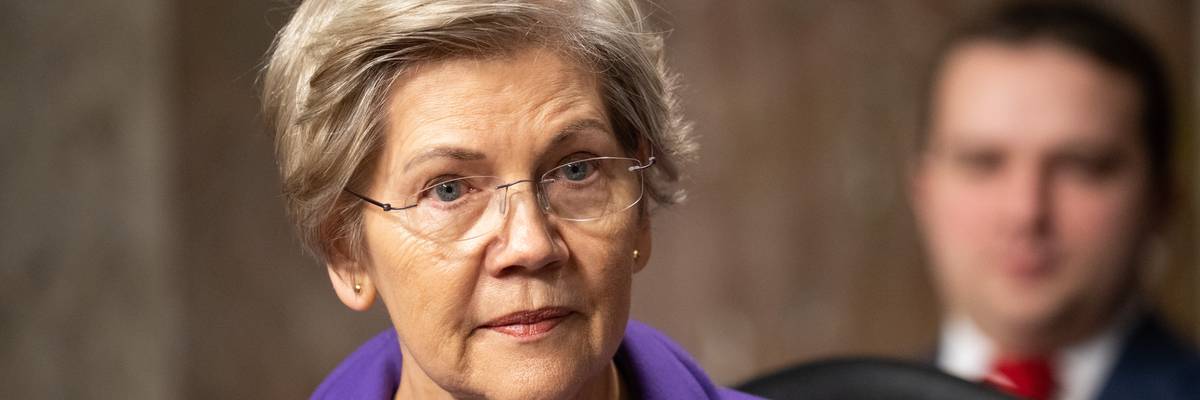
Sen. Elizabeth Warren (D-Mass.) is seen at a Senate Armed Services Committee hearing in Washington, DC on March 7, 2023.
"Why should Americans believe this isn't just another Trump handout to fatten Big Pharma's pockets?"
Nearly two weeks after US Sen. Elizabeth Warren wrote to the Trump administration's top health official in her latest attempt to get answers on "secret pricing deals" with Big Pharma, the Massachusetts Democrat said Wednesday that she is still waiting for the White House to make the terms of the agreements public.
On social media, Warren noted that she asked Health and Human Services Secretary Robert F. Kennedy Jr. to publicize the deals for medicines listed on President Donald Trump's direct-to-consumer website, TrumpRx, at a hearing in April.
"Will you make the deals available to us so we can see them, a little transparency?" the senator had asked.
Kennedy replied that he would be "happy to make the deals available except for proprietary information and trade secrets."
But as the agreements have appeared to do little to reduce drug costs, Kennedy responded to Warren's request in writing without providing "copies of the questionable agreements" or answers to her questions about "unproven claims that the website is saving patients money," the senator noted.
Instead, Kennedy's response raised "fresh questions about whether the Trump administration’s savings estimates are reliable."
Months after her initial request, Warren said Wednesday, "still crickets."
"Why should Americans believe this isn't just another Trump handout to fatten Big Pharma's pockets?" she asked.
As Common Dreams reported last week, experts have pointed to the Biden administration's policy allowing Medicare to directly negotiate the prices of some drugs as the major driver of falling prescription prices, which dropped 3.1% over the past year.
But Trump has claimed that the "most favored nation" deals his administration negotiated with 17 pharmaceutical companies were behind the falling prices, despite the fact that just one aspect of his MFN policy—TrumpRx—has been enacted, and the website has only been found to deliver savings on one out of 54 listed medications.
"While TrumpRx has since added a wider selection of generic drugs and added some information about generic alternatives to select pages, not every brand drug on TrumpRx with an existing generic alternative has that alternative readily available on the site, and a recent analysis finds that the TrumpRx deals represent only around 12% of brand drugs made by participating Big Pharma companies," wrote Warren to Kennedy on August 13. "Thus, consumers still risk overpaying for branded drugs despite the availability of cheaper generics."
She added that the administration recently made the "unfounded claim that TrumpRx has already saved more than $700 million for American patients," while saving the average user of prescription medications only about $5.
"Your response to me raises questions about whether even that estimate was made up out of thin air," wrote Warren, noting that Kennedy had admitted TrumpRx “does not store any patient, health, or prescription information."
She emphasized that drug manufacturers who signed the MFN deals with Trump "have benefited from huge tariff exemptions for branded drugs and received vouchers to fast-track approvals for new products. That is on top of billion-dollar handouts President Trump and Republicans in Congress gave to the pharmaceutical industry last year in their tax law."
"This is a huge win for giant drug companies that will reap billions in additional revenues from higher prices abroad, while doing absolutely nothing to lower drug prices for Americans in need," wrote the senator. "Americans are paying more on everything from school supplies to furniture thanks to Trump’s across-the-board tariffs, and instead of negotiating deals to help workers and American families, he’s using that leverage to go to bat for Big Pharma."
"Americans deserve to know whether the deals the administration is cutting with Big Pharma will lower their prescription drug costs—or just further enrich big drug companies," said Warren. "Despite my request that you make the administration’s MFN deals with giant drug companies public, and your commitment to do so, you have yet to follow through."
Dear Common Dreams reader, It’s been nearly 30 years since I co-founded Common Dreams with my late wife, Lina Newhouser. We had the radical notion that journalism should serve the public good, not corporate profits. It was clear to us from the outset what it would take to build such a project. No paid advertisements. No corporate sponsors. No millionaire publisher telling us what to think or do. Many people said we wouldn't last a year, but we proved those doubters wrong. Together with a tremendous team of journalists and dedicated staff, we built an independent media outlet free from the constraints of profits and corporate control. Our mission has always been simple: To inform. To inspire. To ignite change for the common good. Building Common Dreams was not easy. Our survival was never guaranteed. When you take on the most powerful forces—Wall Street greed, fossil fuel industry destruction, Big Tech lobbyists, and uber-rich oligarchs who have spent billions upon billions rigging the economy and democracy in their favor—the only bulwark you have is supporters who believe in your work. But here’s the urgent message from me today. It's never been this bad out there. And it's never been this hard to keep us going. At the very moment Common Dreams is most needed, the threats we face are intensifying. We need your support now more than ever. We don't accept corporate advertising and never will. We don't have a paywall because we don't think people should be blocked from critical news based on their ability to pay. Everything we do is funded by the donations of readers like you. When everyone does the little they can afford, we are strong. But if that support retreats or dries up, so do we. Will you donate now to make sure Common Dreams not only survives but thrives? —Craig Brown, Co-founder |
Nearly two weeks after US Sen. Elizabeth Warren wrote to the Trump administration's top health official in her latest attempt to get answers on "secret pricing deals" with Big Pharma, the Massachusetts Democrat said Wednesday that she is still waiting for the White House to make the terms of the agreements public.
On social media, Warren noted that she asked Health and Human Services Secretary Robert F. Kennedy Jr. to publicize the deals for medicines listed on President Donald Trump's direct-to-consumer website, TrumpRx, at a hearing in April.
"Will you make the deals available to us so we can see them, a little transparency?" the senator had asked.
Kennedy replied that he would be "happy to make the deals available except for proprietary information and trade secrets."
But as the agreements have appeared to do little to reduce drug costs, Kennedy responded to Warren's request in writing without providing "copies of the questionable agreements" or answers to her questions about "unproven claims that the website is saving patients money," the senator noted.
Instead, Kennedy's response raised "fresh questions about whether the Trump administration’s savings estimates are reliable."
Months after her initial request, Warren said Wednesday, "still crickets."
"Why should Americans believe this isn't just another Trump handout to fatten Big Pharma's pockets?" she asked.
As Common Dreams reported last week, experts have pointed to the Biden administration's policy allowing Medicare to directly negotiate the prices of some drugs as the major driver of falling prescription prices, which dropped 3.1% over the past year.
But Trump has claimed that the "most favored nation" deals his administration negotiated with 17 pharmaceutical companies were behind the falling prices, despite the fact that just one aspect of his MFN policy—TrumpRx—has been enacted, and the website has only been found to deliver savings on one out of 54 listed medications.
"While TrumpRx has since added a wider selection of generic drugs and added some information about generic alternatives to select pages, not every brand drug on TrumpRx with an existing generic alternative has that alternative readily available on the site, and a recent analysis finds that the TrumpRx deals represent only around 12% of brand drugs made by participating Big Pharma companies," wrote Warren to Kennedy on August 13. "Thus, consumers still risk overpaying for branded drugs despite the availability of cheaper generics."
She added that the administration recently made the "unfounded claim that TrumpRx has already saved more than $700 million for American patients," while saving the average user of prescription medications only about $5.
"Your response to me raises questions about whether even that estimate was made up out of thin air," wrote Warren, noting that Kennedy had admitted TrumpRx “does not store any patient, health, or prescription information."
She emphasized that drug manufacturers who signed the MFN deals with Trump "have benefited from huge tariff exemptions for branded drugs and received vouchers to fast-track approvals for new products. That is on top of billion-dollar handouts President Trump and Republicans in Congress gave to the pharmaceutical industry last year in their tax law."
"This is a huge win for giant drug companies that will reap billions in additional revenues from higher prices abroad, while doing absolutely nothing to lower drug prices for Americans in need," wrote the senator. "Americans are paying more on everything from school supplies to furniture thanks to Trump’s across-the-board tariffs, and instead of negotiating deals to help workers and American families, he’s using that leverage to go to bat for Big Pharma."
"Americans deserve to know whether the deals the administration is cutting with Big Pharma will lower their prescription drug costs—or just further enrich big drug companies," said Warren. "Despite my request that you make the administration’s MFN deals with giant drug companies public, and your commitment to do so, you have yet to follow through."
Nearly two weeks after US Sen. Elizabeth Warren wrote to the Trump administration's top health official in her latest attempt to get answers on "secret pricing deals" with Big Pharma, the Massachusetts Democrat said Wednesday that she is still waiting for the White House to make the terms of the agreements public.
On social media, Warren noted that she asked Health and Human Services Secretary Robert F. Kennedy Jr. to publicize the deals for medicines listed on President Donald Trump's direct-to-consumer website, TrumpRx, at a hearing in April.
"Will you make the deals available to us so we can see them, a little transparency?" the senator had asked.
Kennedy replied that he would be "happy to make the deals available except for proprietary information and trade secrets."
But as the agreements have appeared to do little to reduce drug costs, Kennedy responded to Warren's request in writing without providing "copies of the questionable agreements" or answers to her questions about "unproven claims that the website is saving patients money," the senator noted.
Instead, Kennedy's response raised "fresh questions about whether the Trump administration’s savings estimates are reliable."
Months after her initial request, Warren said Wednesday, "still crickets."
"Why should Americans believe this isn't just another Trump handout to fatten Big Pharma's pockets?" she asked.
As Common Dreams reported last week, experts have pointed to the Biden administration's policy allowing Medicare to directly negotiate the prices of some drugs as the major driver of falling prescription prices, which dropped 3.1% over the past year.
But Trump has claimed that the "most favored nation" deals his administration negotiated with 17 pharmaceutical companies were behind the falling prices, despite the fact that just one aspect of his MFN policy—TrumpRx—has been enacted, and the website has only been found to deliver savings on one out of 54 listed medications.
"While TrumpRx has since added a wider selection of generic drugs and added some information about generic alternatives to select pages, not every brand drug on TrumpRx with an existing generic alternative has that alternative readily available on the site, and a recent analysis finds that the TrumpRx deals represent only around 12% of brand drugs made by participating Big Pharma companies," wrote Warren to Kennedy on August 13. "Thus, consumers still risk overpaying for branded drugs despite the availability of cheaper generics."
She added that the administration recently made the "unfounded claim that TrumpRx has already saved more than $700 million for American patients," while saving the average user of prescription medications only about $5.
"Your response to me raises questions about whether even that estimate was made up out of thin air," wrote Warren, noting that Kennedy had admitted TrumpRx “does not store any patient, health, or prescription information."
She emphasized that drug manufacturers who signed the MFN deals with Trump "have benefited from huge tariff exemptions for branded drugs and received vouchers to fast-track approvals for new products. That is on top of billion-dollar handouts President Trump and Republicans in Congress gave to the pharmaceutical industry last year in their tax law."
"This is a huge win for giant drug companies that will reap billions in additional revenues from higher prices abroad, while doing absolutely nothing to lower drug prices for Americans in need," wrote the senator. "Americans are paying more on everything from school supplies to furniture thanks to Trump’s across-the-board tariffs, and instead of negotiating deals to help workers and American families, he’s using that leverage to go to bat for Big Pharma."
"Americans deserve to know whether the deals the administration is cutting with Big Pharma will lower their prescription drug costs—or just further enrich big drug companies," said Warren. "Despite my request that you make the administration’s MFN deals with giant drug companies public, and your commitment to do so, you have yet to follow through."