

SUBSCRIBE TO OUR FREE NEWSLETTER
Daily news & progressive opinion—funded by the people, not the corporations—delivered straight to your inbox.
5
#000000
#FFFFFF
To donate by check, phone, or other method, see our More Ways to Give page.
Daily news & progressive opinion—funded by the people, not the corporations—delivered straight to your inbox.
What can you say about governments that, in the midst of a global food crisis, choose instead to feed machines? You might say they were crazy, uncaring or cruel. But these words scarcely suffice when you seek to describe the burning of food while millions starve.
"If biofuel production ceased worldwide, according to one estimate, the saved crops could feed 1.9 billion human beings."
There's nothing complicated about the effects of turning crops into biofuel. If food is used to power cars or generate electricity or heat homes, either it must be snatched from human mouths, or ecosystems must be snatched from the planet's surface, as arable lands expand to accommodate the extra demand. But governments and the industries that they favor obscure this obvious truth. They distract and confuse us about an evidently false solution to climate breakdown.
From inception, the incentives and rules promoting biofuels on both sides of the Atlantic had little to do with saving the planet and everything to do with political expediency. Angela Merkel pushed for an EU biofuels mandate as a means of avoiding stronger fuel economy standards for German motor manufacturers. In the US, they have long been used to prop up the price of grain and provide farmers with a guaranteed market. That's why the Biden administration, as the midterm elections loom, remains committed to this cruelty.
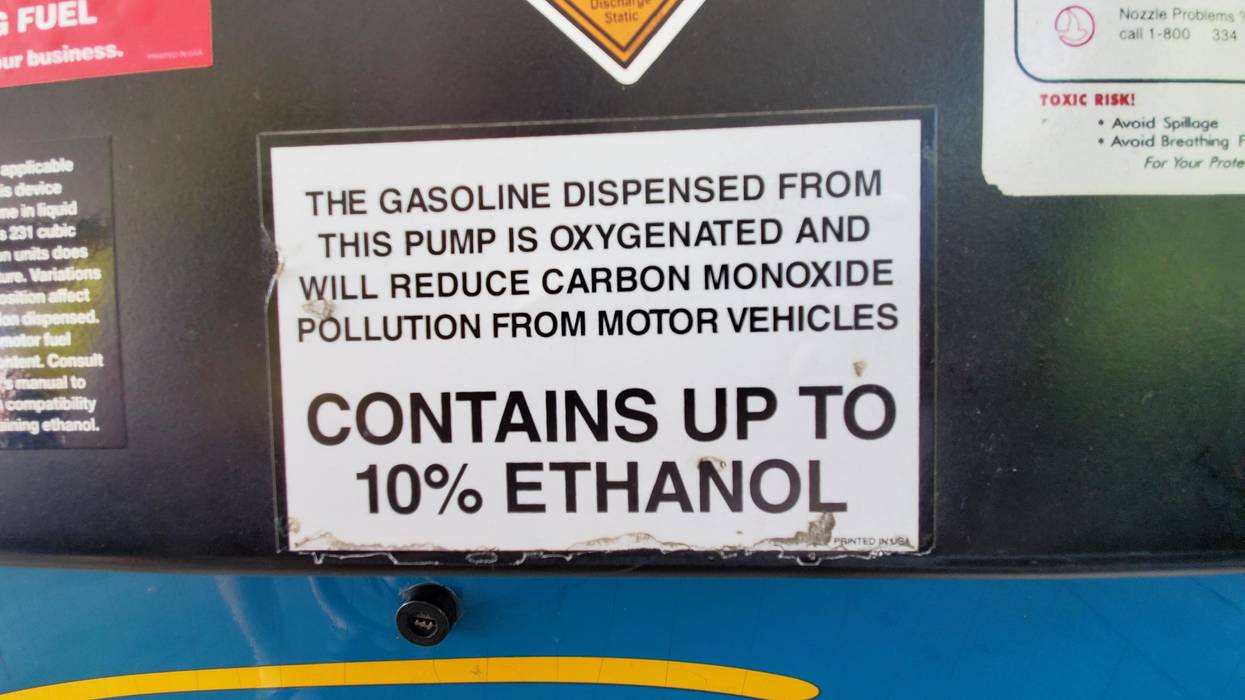
As the investigative group Transport & Environment shows, the land used to grow the biofuels consumed in Europe covers 14m hectares (35m acres): an area larger than Greece. Of the soy oil consumed in the European Union, 32% is eaten by cars and trucks. They devour 50% of all the palm oil used in the EU and 58% of the rapeseed oil. Altogether, 18% of the world's vegetable oil is turned into biodiesel, and 10% of the world's grains are transformed into ethanol, to mix with petrol.
A new report by Green Alliance, an independent think tank, shows that the food used by the UK alone for biofuels could feed 3.5 million people. If biofuel production ceased worldwide, according to one estimate, the saved crops could feed 1.9 billion human beings. The only consistent and reliable outcome of this technology is hunger.
It's not just a matter of the upward pressure on food prices, great as this is. Biofuel markets also provide a major incentive for land grabbing from small farmers and indigenous people. Since 2000, 10m hectares of Africa's land, often the best land, has been bought or seized by sovereign wealth funds, corporations, and private investors. They replace food production for local people with "flex crops": commodities such as soya and maize that can be switched between markets for food, animal feed, or biofuel, depending on which prices are strongest. Land grabbing is a major cause of destitution and hunger.
As biofuels raise demand for land, rainforests, marshes, and savannahs in Indonesia, Malaysia, Brazil, and Africa are cleared. There's a limit to how much we can eat. There's no limit to how much we can burn.
All the major crop sources of biodiesel have a higher climate impact than the fossil fuels they replace. Rapeseed oil causes 1.2 times as much global heating, soy oil twice as much, palm oil three times. The same goes for ethanol made from wheat. Yet this consideration hasn't stopped the reopening of a bioethanol plant in Hull, in response to government incentives, which will use the wheat grown on 130,000 hectares of land.
Whenever a new biofuel market is launched, we are told it will run on waste. A recent example is BP's claim that planes will be fueled by "sustainable feedstocks such as used cooking oil and household waste." Invariably, as soon as the market develops, dedicated crops are grown to supply it. Already, all the waste that can realistically be extracted is being used, yet it accounts for just 17% of the EU's biodiesel and scarcely any bioethanol. Even these figures, according to an industry whistleblower who contacted me, are stretched: as waste palm oil, thanks to the demand for "green" biodiesel, can be more valuable than new oil, fresh supplies are allegedly slipped into the waste stream.
Far from heeding the concerns, however, last year the UK government, "responding to industry feedback", increased its target for the amount of biofuel used in surface transport. Worse, it justifies continued airport expansion with the claim that planes will soon be able to use "sustainable" fuels. In practice this means biofuel, as no other "sustainable" source is likely to power mass air travel in the medium term. But there is no means of flying more than a tiny number of planes on this fuel that does not involve both global starvation and ecological catastrophe.
Now the energy company Ecotricity has relaunched a plan to turn 6.4m hectares of the UK - over one-quarter of our land area - into feedstock for biogas plants. Ecotricity's founder, Dale Vince, has made the astonishing claim that "it's a plan with no downsides." But, as critics have been trying to point out to him, this scheme would incur enormous ecological, carbon, and food opportunity costs. In other words, the land could either be used for growing food; or, if it ceased to be used for food production, would draw down more carbon and harbor more wildlife if it were rewilded. Biogas production has also triggered severe pollution events, caused by spreading the residue back onto the land, which is a crucial part of Ecotricity's plan, or by leaks and ruptures. It's the worst land-use proposal I've ever seen in the UK.
When I challenged Vince about these issues, he told me: "We're not the big bad corporate. We're environmentalists that get things done, and often enough when we start something new we upset the settled view of things."
But we can't use such fixes to solve our climate crisis. To leave fossil fuels in the ground, we should change our energy system: our need to travel, our modes of transport, the fuel economy of our homes, and the means by which we heat them. Modern biofuels, used at scale, are no more sustainable than an older variety: whale oil. And burning food is the definition of decadence.
A new study finds that biofuels derived from plants like corn or soybeans, sometimes considered carbon-neutral, may be worse for the climate than gas.
University of Michigan (UM) Energy Institute research professor John DeCicco analyzed all the greenhouse gas emissions created in the supply chains of various fuel types. For gas, that meant starting with extraction and transportation, among other parts of the process; for biofuels, it was farming and fertilizer use, but not tailpipe pollution, due to the presumed carbon dioxide offset, the Detroit Free Press explains.
The Free Press reports:
Using U.S. Department of Agriculture cropland production data, determining the chemical composition of crops and accounting for all of the carbon from the plants, DeCicco created a "harvest carbon" factor. Over the past decade, as the consumption of corn ethanol and biodiesel more than tripled in the U.S., the increased carbon uptake by the crops only offset 37 percent of carbon dioxide emissions from biofuel combustion, DeCicco said.
Mathematically speaking, "When it comes to the emissions that cause global warming, it turns out that biofuels are worse than gasoline," he said.
The study's doubts about biofuels' efficacy have prompted harsh criticism from those who believe they will help transition to a low-carbon world. Some critics pointed out that the study was funded by the American Petroleum Institute (API), which has a "vested interest" in the biofuel industry's failure, the Free Press notes.
However, plant-based energy sources have been criticized before. A study published last year by the World Resources Institute found that dedicating crops and farmland to the creation of bioenergy "will undercut efforts to combat climate change and to achieve a sustainable food future."
Andrew Steer, president of the World Resources Institute, told the New York Times after the study was published that "many of the claims for biofuels have been dramatically exaggerated. There are other, more effective routes to a low-carbon world."
Timothy Searchinger, a Princeton researcher and biofuel critic, told Climate Central on Thursday that the UM study provides "additional calculation" for the argument that the energy is not, in fact, carbon-neutral.
"The U.S. is not coming close to offsetting the carbon released by burning biofuels through additional crop growth," Searchinger said.
BRUSSELS - Ten years of debate in the European Union over the detrimental effects of the demand for biofuels for transport on food prices, hunger, forest destruction, land consumption and climate change have come to an end.
The European Parliament finally agreed new E.U. laws on Apr. 28 to limit the use of crop-based biofuels, setting a limit on the quantity of biofuels that can be used to meet E.U. energy targets.
"While the EU has not gone far enough to stop the irresponsible use of food crops for car fuel, this new law acknowledges a reality that small-scale food producers worldwide know - that biofuel crops cripple their ability to feed the world, compete for the land that provides their livelihood, and for the water that sustains us." --Kirtana Chandrasekaran, FOEI
With Europe the world's biggest user and importer of biodiesel - from crops such as palm oil, soy and rapeseed - the vote is expected to have a major impact around the world, notably in the European Union's main international supplier countries Indonesia, Malaysia and Argentina. It is likely to signal the end to the expanding use of food crops for transport fuel.
"Let no-one be in doubt," said Robbie Blake, Friends of the Earth Europe's biofuels campaigner, "the biofuels bubble has burst. These fuels do more harm than good for people, the environment and the climate. The EU's long-awaited move to put the brakes on biofuels is a clear signal to the rest of the world that this is a false solution to the climate crisis. This must spark the end of burning food for fuel."
With the vote, the European Union has agreed to put a limit on biofuels from agricultural crops at seven percent of E.U. transport energy - with an option for member states to go lower. Before the vote, the expected 'business as usual' scenario was for biofuels to account for 8.6 percent of E.U. transport energy by 2020. Current usage stands at 4.7 percent, having declined in 2013.
Indirect greenhouse emissions released by expanding biofuels production will be reported every year by the European Commission and by fuel suppliers in an attempt to increase the transparency of the impacts of the policy.
Commenting on the vote, Kirtana Chandrasekaran, Friends of the Earth International's food sovereignty coordinator, said: "While the EU has not gone far enough to stop the irresponsible use of food crops for car fuel, this new law acknowledges a reality that small-scale food producers worldwide know - that biofuel crops cripple their ability to feed the world, compete for the land that provides their livelihood, and for the water that sustains us."
Around the world, 64 countries have policies 64 countries have policies to increase or maintain the amount of biofuels used in transport fuel, including most recently Indonesia, which has been criticised by environmentalists as promoting a policy that will accelerate deforestation in the country.
Kurniawan Sabar, campaign manager for WALHI/Friends of the Earth Indonesia, said: "The people of Indonesia will be relieved to hear that the EU has taken some action to limit Europe's demand for palm oil for biofuels, which has escalated deforestation, land grabbing, and conflicts in Indonesia. The Indonesian government should take note and abandon its own plans for new subsidies to expand biofuels plantations in Indonesian forests."
On Thursday, the Brazilian Landless Workers Movement, MST, made it quite clear that they, along with groups all over the world, soundly reject genetically engineered trees. Futuragene, a company owned by Suzano, one of Brazil's largest pulp producers, had recently applied for commercial release of a GE eucalyptus. A decision by the country's biosafety commission, CTNBio, was expected to take place. Over the past week, groups around the world organized and participated in an "emergency day of action" standing vigil outside of Brazilian embassies urging that GE trees not be approved. A letter delivered to all the relevant ministries stated:
By way of this letter, we want to express our profound indignation with a possible decision of the CTNBio to authorize the commercial release of genetically engineered (GE) eucalyptus, requested by FuturaGene, a biotechnology company fully owned by pulp and paper company Suzano.
Then, as the meeting between CTNBio and Futuragene was about to occur, around 1,000 peasant women from the Brazilian Landless Workers Movement, MST, took over Futuragene's offices in Sao Paulo, and 300 more interrupted the meeting with CTN Bio. The meeting was cancelled and no decision was made regarding the GE tree.
This was not the first expression of "profound indignation" with respect to GE trees, which have in fact met with very strong and ongoing public opposition every step of the way. Tree biotechnology interests claim to be providing solutions: trees that grow faster and provide more wood, or trees that are resistant to disease, or trees that can withstand droughts, etc. But this is a clear example of how the proclaimed search for solutions to our climate and environmental woes can be manipulated and run amok. Climate "solutions" that involve trees and forests seem especially vulnerable. For example, on the one hand, there is much ado about using forests as carbon sinks, and allowing those to be served up as "offsets" to polluters (aka "Reducing Emissions from Deforestation and Forest Degradation", or REDD).
On the other hand, many others, (the Obama administration and its agencies especially) are promoting the large scale conversion of forests and fields into fuel - burning trees and "energy crops" for commercial and industrial scale electricity and heat or refining them into liquid fuels and chemicals. All are subsidized as clean, green, "carbon neutral" and renewable alternatives to fossil energy. The Department of Energy has a program referred to as "PETRO", for "plants engineered to replace oil". And they are currently undergoing a NEPA environmental impact assessment process for establishing a new funding program to speed field testing and deployment of "engineered high energy crops".
Keen to profit from all this new and insatiable demand for "biomass", the tree biotechnology industry is promoting their "faster growing", "freeze tolerant" or "denser wood" trees, as well as trees that secrete certain chemicals or have other "useful" properties that make them amenable to use for fuels, chemicals, even plastics. The idea of GMO contamination spreading from trees engineered for fuels and chemicals, into native forests is fundamentally revolting. Since trees can spread seeds and pollen over great distances, contamination would be virtually impossible to prevent and once it occurs, irreversible.
Companies like Arborgen, a major player in tree biotechnology, have struggled to win over public support. The company is currently testing an engineered eucalyptus in fields across the southern USA with over 250,000 trees. The testing permit was met with a legal challenge that by some admissions was responsible for Arborgen's failure to achieve its desired Initial Public Offering on stock. During their public comment period, 17,500 comments submitted opposed USDA recommendation to permit field testing of a quarter million GE eucalyptus. Only 39 were supportive. Nonetheless, USDA permitted the field trials and Arborgen have applied for deregulation a decision now pending. It seems unlikely in the end that USDA will refuse commercial release. The agency has proven itself a darling of the biotechnology industry, recently even permitting 2,4,D resistant crops as "safe".
In fact the USDA is reluctant to regulate at all, having recently paved a pathway for Arborgen to bypass regulation altogether, and approving one of their engineered loblolly pines without any review or public process. The International Campaign to Stop GE Trees, in a January 29th press release responded:
Groups from around the world today joined together to denounce the US government for allowing the first genetically engineered tree, a loblolly pine, to be legalized with no government or public oversight, with no assessment of their risks to the public or the environment, and without regard to overwhelming public opposition to GE trees.
The loblolly is engineered to have "denser wood", a characteristic that is likely highly favored by energy companies setting up wood pellet manufacturing facilities across the pine plantation covered southern states. Wood pellets are "the new coal" with government renewable energy subsidies offered when coal plants cofire wood with coal. Denser wood burns better.
The USDA decision to bypass regulation was based on a gaping loophole evolving from antiquated circumstances. According to Center for Food Safety scientist, Doug Gurian Sherman:
In the early days of genetic engineering, the large majority of GE crops used plant pest genes or processes. But that is no longer the case. The large majority of potentially useful, and possibly harmful, genes--whether from other plants, microbes, or animals--no longer come from pests. And many kinds of harm that GE crops may cause, like resistant weeds or the loss of monarch butterflies, are not captured by USDA's current definition of "plant pest" harm.
In other words, USDA won't regulate, even though the risks and potential for unanticipated consequences are at least as serious if not more so.
Arborgen has meanwhile been seeking to expand their reach in Brazil, where eucalyptus plantations already abound as they serve the pulp industry and position themselves to further supply "biomass" for energy markets.
Meanwhile, in faraway Malaysia, there is fresh brewing concern over field trials of a rubber tree engineered to secrete pharmaceutical compounds in latex. In biotechnology labs around the world, tree engineers are working to create trees amenable to producing "biomass", secreting chemicals useful for plastics and pharmaceuticals and much more. A virtual war has been waged in the press over the proclaimed safety of GMO food crops as many states have attempted, or (in my home state of Vermont) succeeded in passing GMO labeling laws.
But objections to GMOs do not end with food crops. For many the issue is not purely a matter of reviewing what scientists claim or fail to claim about the health impacts of eating GMO foods. Rather we reject GMOs, including trees and "non food" crops and creatures (fish, livestock etc.) because we do not believe that people, and especially people working for profit, are knowledgeable or wise enough to "control" the code of life. We do not have confidence that scientists in biotechnology labs can outsmart millions of years of evolution, nor understand and anticipate all of the intricacies, shifting dynamics or interactions that make up ecology and evolution.
One need only look at the track record for GMO crops. Cross contamination with non-engineered crops and native varieties is common, and has led to absurd legal battles wherein, for example, farmers are sued by Monsanto because pollen from neighboring GMO planted fields blew onto their fields and contaminated their crops. And there are many other impacts - from increased use of glyphosate and other pesticides and herbicides, to the loss of monarch butterflies, to the development of herbicide resistant weeds, to the depletion of soil microbe communities and much more - should be enough to cause us to reject GE trees outright before they ever reach commercial production.
Currently, there are 64 countries in the world that have mandates for the consumption of biofuels. That's a lot of countries, and a lot of biofuel.
Countries have many shared goals and similar policies - and they often work. But biofuels mandates are having alarming impacts on people around the world - even in countries that don't have their own mandates in place.
Government mandates create an inflexible demand for biofuel crops, driving up the cost of food and making prices more volatile, thereby contributing to hunger around the world.
Currently, there are 64 countries in the world that have mandates for the consumption of biofuels. That's a lot of countries, and a lot of biofuel.
Countries have many shared goals and similar policies - and they often work. But biofuels mandates are having alarming impacts on people around the world - even in countries that don't have their own mandates in place.
Government mandates create an inflexible demand for biofuel crops, driving up the cost of food and making prices more volatile, thereby contributing to hunger around the world.
They also push up demand for land, and as the mandates increase, families in countries outside the US are being kicked off their land to make way for biofuels plantations.
New research released this week by international aid agency ActionAid shows that demand for biofuels will skyrocket in the next ten years, with government mandates leading to a 43% increase in biofuels demand globally. Fuelled by biofuels mandates in the Renewable Fuel Standard, US biofuels demand will account for almost half of the global increase.
So what? You may think. Energy diversification is a good thing. The problem is that the biofuels mandates in the RFS are causing problems elsewhere in the world. Problems that Congress has so far failed to address.
Hoy Mai is a mother and farmer from Cambodia. Her country does not have a biofuels mandate, but is able to grow large amounts of sugar cane - a biofuel crop. She had four children and was pregnant with a fifth when her 20 hectares of land were seized by a sugar company.
Hoy Mai protested the loss of her land, but instead of getting it back, she was put in prison for eight months, and only released briefly to give birth. Without her land, Hoy Mai is struggling to support her children.
Hers is one of many stories from communities around the world that are feeling the sharp end of the biofuels boom. To meet the 43% global increase in biofuels, up to 17 million additional hectares of land and 145 billion more liters of water will be needed - that's an area of land equivalent to New York State. This is all new land, in addition to all the corn and sugar around the world currently being grown to feed our demand for fuel.
Whether or not the sugar produced on Hoy Mai's land ever makes it into a gas tank, it's clear that biofuel demand drives up the price of food crops and increases competition for agricultural land. How many families will be forced off their land to meet the mandates in the RFS?
Our biofuels policies were developed by Congress with good intentions, but in reality they're a failed solution to our energy needs. Congress got this policy badly wrong and it's time for reform.
The new legal framework for Mexico's oil industry has not placed controls on the use of harmful chemicals in the extraction of unconventional fossil fuels, and environmentalists and experts fear their consumption will increase in an industry that is opening up to private capital.
The new legal framework for Mexico's oil industry has not placed controls on the use of harmful chemicals in the extraction of unconventional fossil fuels, and environmentalists and experts fear their consumption will increase in an industry that is opening up to private capital.
The energy reform "will exacerbate the use of chemicals. The new laws do not address this problem. We need to know what is used, because otherwise, we cannot know the consequences. That's why we want a ban on 'fracking' (hydraulic fracturing)," activist Claudia Campero, of Canada's Blue Planet Project, told IPS.
A package of nine initiatives, including eight new laws and modifications to 12 others on fossil fuels, water, electricity and oil funds, came before the senate in the last week of June, after being debated since Jun. 10 by the Energy Commission.
On Dec. 11, 2013, Congress reformed articles 25, 27 and 28 of the Mexican constitution, opening up exploration, extraction, refining, transport, distribution and sales of hydrocarbons to private, local and foreign investors.
This reform dismantled the foundations of the 1938 nationalization of the oil industry.
Analysis of the projects of state oil giant Petroleos Mexicanos (PEMEX), as well as reports from the U.S. Congress and the local oil industry, give an idea of the amount of chemicals used to extract shale gas.
Natural gas trapped in underground shale rock is released by the process of drilling and injecting fluid into the ground at high pressure, which fractures the rocks. The method is known as hydraulic fracturing, or "fracking."
The gas extraction and recovery process requires large amounts of water and chemical additives, some of which are toxic. Drilling and horizontal fracking generate enormous quantities of waste fluid.
The waste liquid contains dissolved chemicals and other pollutants that need to be treated before they are disposed of, and even afterward, according to experts and environmental organizations like Greenpeace.
PEMEX's enviromental impact study for the 2007-2027 Regional Project in Cuenca de Sabinas Piedras Negras, in the northern states of Coahuila and Nuevo Leon, says that "the liquid wastes generated will be sludges."
The waste is classified as dangerous under Mexican regulations and is made up mainly of diesel, barium sulphate and bentonite, a cocktail that is toxic for human health and the environment.
The document says that drilling and fracking will require harmful chemicals like bentonite, lime, calcium carbonate, sodium chloride, caustic soda, additives, emulsifiers and soaps. These substances can damage skin, lungs, liver and eyes.
The project would allocate 34,000 hectares out of the total of 4.5 million hectares in the Sabinas Piedras Negras basin for gas exploration and exploitation. Gas extraction would take place on an area of 21,270 hectares, within which 8,035 hectares would be reserved for drilling.
The Poza Rica Altamira y Aceite Terciario del Golfo 2013-2035 regional oil project, in the states of Veracruz (southeast), Hidalgo (centre) and Puebla (south), is planning to use similar chemicals.
In March, PEMEX presented the environmental impact study for this project to the environment ministry, but withdrew it in May because it would have affected natural protected areas in Puebla. It is expected to reintroduce the project on a more limited geographic scale.
The state-owned company has drilled 18 shale gas wells, five of which are about to complete their exploratory phase, in Coahuila, Nuevo Leon, Tamaulipas and Veracruz. PEMEX plans to operate a total of 6,500 commercial wells over the next 50 years, but shale gas exploitation may end up in private hands because of the energy reform.
PEMEX has identified five regions with potential shale gas reserves, from Veracruz to Chihuahua, on the border with the United States.
The U.S. Energy Information Administration (EIA) ranks Mexico sixth in the world for technically recoverable shale gas resources, after China, Argentina, Algeria, the United States and Canada, in an analysis of 137 reserves in 41 countries.
PEMEX had no information on how the levels of chemical substances they use compare to Immediately Dangerous to Life or Health (IDLH) concentrations.
According to Greenpeace, the fracking fluids used during the life of one well require 380,000 litres of additives.
The Endocrine Disruption Exchange, a U.S. organization that compiles and disseminates scientific information about health and environmental problems caused by exposure to chemicals that interfere with hormone actions, identified 944 products containing 632 chemical substances, many of which are potential endocrine disruptors, that are used in hydraulic fracturing.
The U.S. national hydraulic fracturing chemical registry, FracFocus, reports over 72,000 fracking wells in the country and lists 59 chemicals, consistent with those injected by PEMEX in its wells, including methanol, isopropanol, carbonates and acids.
Mexico's National Hydrocarbons Commission (CNH) has drafted regulations for shale gas operations, but IPS ascertained that these contain no limits on the use of chemicals.
"The problem with the chemicals is the leftover waste, which must be removed from contact with persons and treated to prevent harm to people and the environment. We are going to specify that it must be treated," Nestor Martinez, a member of the CNH, told IPS.
The CNH draft regulations cover water use and pollution, use of dangerous chemicals and production of earth tremors. They seek to reduce work accidents, prevent pollution by waste fluids and chemicals, and reduce the environmental footprint.
The regulations refer to types of drilling slurries, the quality of well sealing, hydraulic fracking methods and the discharge of fluids and solids.
PEMEX's contractors will have to present the CNH with a good management plan that includes specifications to be complied with in those areas.
"Many chemicals have not been tested, and new ones are being developed all the time. Companies use trade secrets as an excuse to withhold information," Blue Planet's Campero said.
The Environment ministry is due to begin reviewing the regulations for drilling wells and discharging waste in October.