
SUBSCRIBE TO OUR FREE NEWSLETTER
Daily news & progressive opinion—funded by the people, not the corporations—delivered straight to your inbox.
5
#000000
#FFFFFF
To donate by check, phone, or other method, see our More Ways to Give page.


Daily news & progressive opinion—funded by the people, not the corporations—delivered straight to your inbox.
"Surely you would agree that the American people deserve to know whether a former president—and a current candidate for president—took an illegal campaign contribution from a brutal foreign dictator."
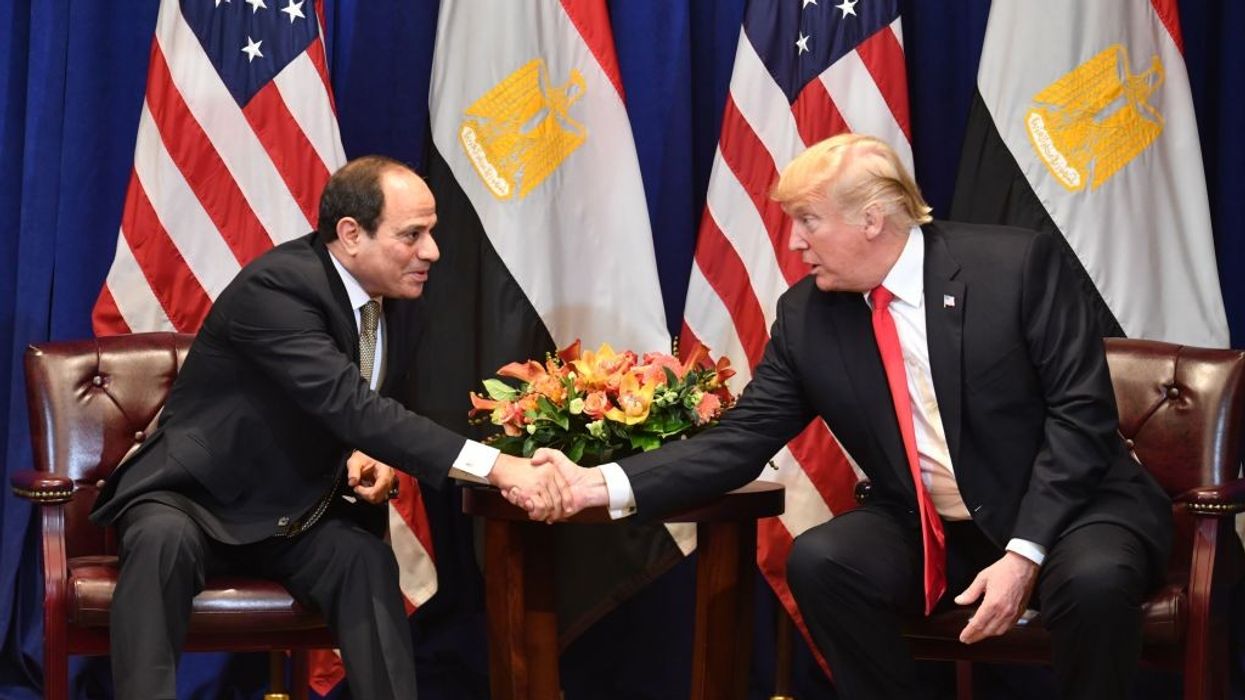
Congressional Democrats on Tuesday launched an investigation in response to recent Washington Post reporting on a closed federal probe into whether Egyptian President Abdel Fatah el-Sisi gave former U.S. President Donald Trump $10 million to illegally help his 2016 campaign.
House Committee on Oversight and Accountability Ranking Member Jamie Raskin (D-Md.) and Congressman Robert Garcia (Calif.), a leader on the Subcommittee on National Security, the Border, and Foreign Affairs, revealed their investigation in a letter to Trump, the Republican nominee for the November presidential election.
In addition to generating suspicion about a cash bribe from el-Sisi, Raskin and Garcia wrote to Trump, "this detailed news report has also triggered serious speculation that your handpicked political appointees at the U.S. Department of Justice (DOJ), including Attorney General William Barr, subsequently blocked efforts by career prosecutors and agents of the Federal Bureau of Investigation (FBI) to investigate the political and financial corruption that has been described."
"Surely you would agree that the American people deserve to know whether a former president—and a current candidate for president—took an illegal campaign contribution from a brutal foreign dictator," the pair continued, requesting that Trump turn over information necessary to assure the panel and the public that he never took money from the Egyptian leader or government.
"We are certain you can see how significant troubling questions still haunt our country about the origins of your $10 million campaign contribution."
The letter summarizes the Post's early August reporting, which was based on thousands of pages of government records and interviews with over two dozen people who spoke on the condition of anonymity and shared emails, texts, and other documents.
As the newspaper detailed: "Investigators identified a cash withdrawal in Cairo of $9,998,000—nearly identical to the amount described in the intelligence, as well as to the amount Trump had given his campaign weeks earlier. A key theory investigators pursued, based on intelligence and on international money transfers, was that Trump was willing to provide the funds to his campaign in October 2016 because he expected to be repaid by Sisi, according to people familiar with the probe."
Michael Sherwin, the then-acting U.S. attorney who closed the case, told the Post that he stands by the decision. The Egyptian government, Trump campaign, Central Intelligence Agency, DOJ, FBI, U.S. attorney's office in Washington, D.C., and key individuals including Barr declined to answer the newspaper's questions, though some sent statements.
Trump spokesperson Steven Cheung called the story "textbook Fake News," while Ayman Walash of Egypt's Foreign Press Center stressed that the DOJ probe ended without charges and said that "it is inappropriate to comment or refer to rulings issued by the judiciary system or procedures and reports taken by Justice Departments" in other nations.
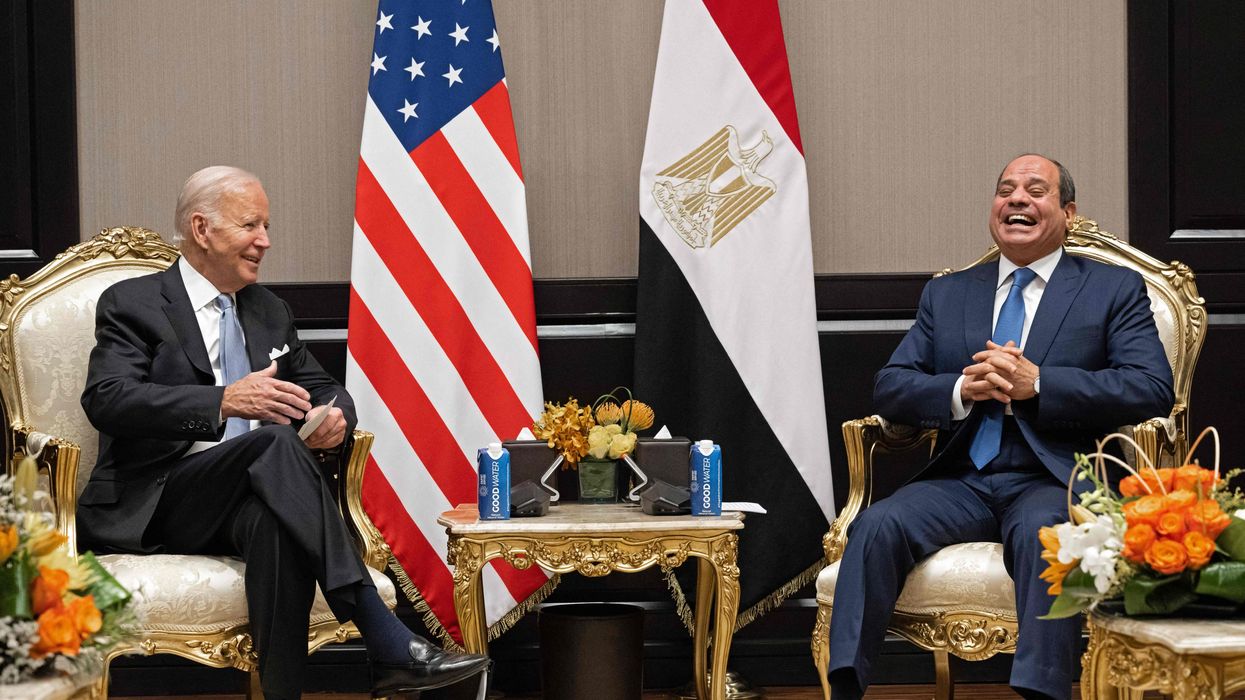
Both the Post and the congressmen highlighted Trump's remarks and policies regarding Egypt and its leader, who seized power in 2013. Noting the Republican's meeting with el-Sisi shortly before the 2016 U.S. election, Raskin and Garcia wrote:
While others at the time "emphasized the importance of respect for rule of law and human rights to Egypt's future progress," you called President el-Sisi a "fantastic guy" and praised his tactics for taking "control" of Egypt. As president, you continued to praise President el-Sisi and drastically shifted U.S. policy in ways to benefit the reviled Egyptian leader. While calling President el-Sisi your "favorite dictator," you released $195 million in military aid in 2018 that the United States had previously withheld because of human rights abuses committed by the Egyptian government, and later released an additional $1.2 billion in military assistance.
"We are certain you can see how significant troubling questions still haunt our country about the origins of your $10 million campaign contribution, the source of any repayment, and the credible allegations that it was all funded with cash provided by President el-Sisi through his grim intelligence services," they added. "These questions are especially alarming given that the allegations appearing in The Washington Post are silhouetted against several proven patterns of corrupt practices exhibited by both the Egyptian government and by you, of course, as a convicted felon, fraudster, and corrupt politician."
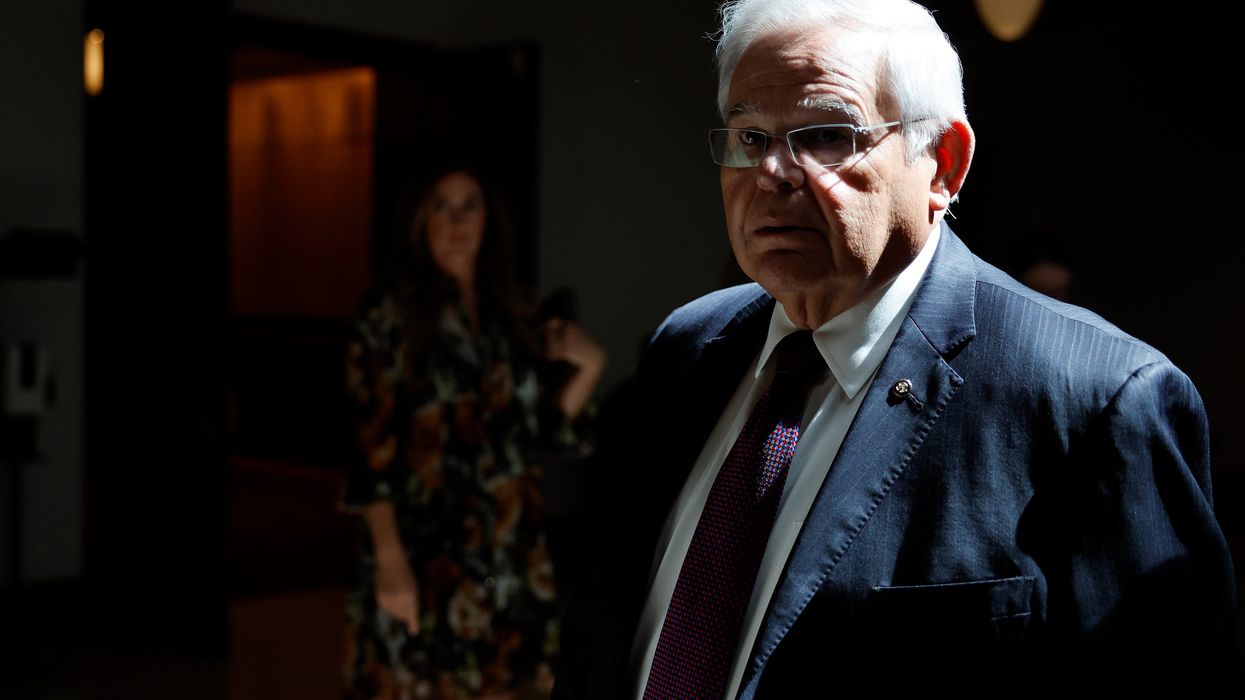
As an example, the congressmen cited the corruption case of U.S. Sen. Bob Menendez (D-N.J.). The Post reporting was published just weeks after a federal jury found the senator guilty of accepting bribes from three businessmen and acting as a foreign agent for the Egyptian government. He finally resigned in mid-August.
Trump, in May, was convicted of 34 felony charges in New York over the falsification of business records related to hush money payments to cover up sex scandals during the 2016 election. He also faces cases at the federal level and in Georgia for his efforts to overturn his 2020 loss. Although a Trump-appointed judge recently dismissed another federal case related to his handling of classified materials, it could soon be revived by an appellate court.
Raskin is a longtime critic of Trump. He led the historic second impeachment of the ex-president and earlier this year launched a probe into the Republican's quid pro quo offer to Big Oil executives: $1 billion in campaign cash for killing climate policies. Some have even floated Raskin for U.S. attorney general if Democratic Vice President Kamala Harris beats Trump in November.
It appears the U.S. has been interested in maintaining short-term stability and allyships more than long-term stability that benefits people of the region.
As global attention zeroes in on the Israel war on Gaza following Hamas attacks earlier this month, and corruption charges face a U.S. senator and his ties to Egypt, it is noteworthy that for many decades, the region has been synonymous with instability and violence.
I grew up in Cairo, Egypt, and have been teaching in the U.S. about that region at the university level for more than a decade, nine years after I arrived to the U.S. where I am a citizen.
The U.S. government has been ineffective at stopping the discord in the region directly and indirectly by what some see as inaction and silence.
U.S. leaders and policymakers must stand up for democratic values in the Middle East and stand against corruptions, wars, and military and colonialist regimes in the region.
President Joe Biden is standing in support of Israel’s prime minister, Benjamin Netanyahu, as he launches war on Gaza, issuing a brief joint statement with the leaders of Canada, France, Germany, and the United Kingdom for the “protection of civilians.” Biden also announced $100 million in aid to Palestine.
The consensus among many observers is that the U.S.’s main concern is to stabilize the region at any cost.
There have been so many reasons for the longstanding and ongoing turbulence in the Middle East, which goes back in its modern version to regimes of post-independence in 1950s. These reasons include colonial wars or invasions of neighboring countries.
Other complications are the presence of corrupt dictatorships such as Saddam Hussein of Iraq and Bashar al-Assad and Hafiz al-Assad in Syria, as well as military dictatorships in Egypt.
The Arab-Israeli conflict goes back to 1948, starting with a war between five Arab countries and Israel after the establishment of the state of Israel in the same year. After that, many wars took place and United Nations resolutions have been discarded by the parties involved.
The Arab Spring uprisings in 2011 represented a great opportunity to establish democracy in the region. But reactionary political elites, tyrannical old regimes, as well as regional and superpowers worked together to contain the change.
Many media observers focus on a singular reason for the turmoil in the Middle East. But the truth is that many factors have contributed to making this region a site of human losses, killing, and violence.
It appears the U.S. has been interested in maintaining short-term stability and allyships more than long-term stability that benefits people of the region. Israel’s security and the flow of oil are often cited as determinants for U.S. foreign policy in the region.
There is also evidence of corruption and influence by at least one U.S. policymaker.
Sen. Bob Menendez (D-N.J.) and his wife, Nadine Menendez, are facing charges in court this week of bribery and conspiracy to act as a foreign agent for Egypt by the Justice Department. At the time Menendez was chair of the Senate Foreign Relations Committee.
Menendez is pleading not guilty to the charge that he and his wife accepted cash, gold bars, and a luxury car from three New Jersey businessmen who wanted the senator’s help and influence over foreign affairs.
The problem is much deeper than this case.
Bribery is defined legally as a corrupt solicitation, acceptance, or transfer of value in exchange for official action. There are also oil and arms sales used for allyship with Saudi Arabia, military bases used for protection, and silence on human rights records in Saudi Arabia, the United Arab Emirates, and Qatar as well as military sales and aid for maintaining influence in Egypt.
The logic of bribery is the opposite of transparency and accountability, which are significant parts of democracy. The logic of democracy stands on the foundation of equality, people’s power, and people’s rule and presumes the right of representative governments to deliberate and the people’s right to hold officials accountable.
In his 2012 book, Democracy Prevention: The Politics of the U.S.-Egyptian Alliance, author Jason Brownlee writes, the U.S. has impeded democratic change and reinforced authoritarianism over time.
The government of Egypt punishes Egyptian artists and activists who speak the truth in the U.S.
After his participation in series of Congressional meetings in 2019 to discuss Egypt’s dictator Abdel Fattah Saeed Hussein Khalil el-Sisi’s human rights violations and the constitutional amendments to extend the dictator’s power, actors Amr Amr Waked and Khaled Abol Naga were expelled from their union for “conspiring against Egypt’s security and stability.”
Waked was sentenced to eight years in prison in a military trial. According to Human Rights Watch, there is a strong evidence that Egyptian intelligence officials trained the Tiger Team squad that killed Washington Post journalist and Saudi Arabia resident Jamal Khashoggi in 2018 and provided the drugs that were used to sedate him.
At the time in 2018 Menendez was allegedly trying to help Egyptian officials ensure weapons continued to flow, Egypt was detaining and torturing U.S. citizens and legal permanent residents—including Mustafa Kassem, who would later die in prison in January 2020.
To be sure, one corrupt Senator does not damn the entire U.S. government.
For the U.S., a solution to dealing with the region can be to work for long-term stability based on supporting genuinely representative, inclusive, and democratic regimes.
U.S. leaders and policymakers must stand up for democratic values in the Middle East and stand against corruptions, wars, and military and colonialist regimes in the region.
It is the right thing to do.
"The Biden administration has not meaningfully changed the U.S. approach of providing military and political support to President Sisi's brutal and dictatorial regime," the report's author asserted.
A decade after Egyptian security forces led by then-Deputy Prime Minister Abdel Fattah el-Sisi massacred over 1,000 people protesting the general's 2013 military coup, a rights group on Friday released a report decrying the Biden administration's failure to support human rights in the key Middle Eastern ally.
The Human Rights First report asserts that "local activists say the United States government has failed human rights defenders in Egypt for the last 10 years."
"I don't feel the U.S. has in any way done enough to support human rights in Egypt since the Rabaa massacre."
Aya Hijazi, an Egyptian-American human rights defender featured in the report who was jailed for three years after the 2013 coup, said that "I don't feel the U.S. has in any way done enough to support human rights in Egypt since the Rabaa massacre."
Hijazi asserted that the Biden administration, Congress, and the U.S. media have failed Egyptians being repressed under el-Sisi.
"Rabaa was the worst massacre in modern Egyptian history and in no way has it got the attention it deserved," she said. "I read somewhere the numbers are equivalent to the Tiananmen Square massacre and yet within American common knowledge almost everyone knows about Tiananmen Square and almost no one knows about Rabaa," she added, referring to the deadly 1989 Chinese government crackdown on pro-democracy demonstrators in central Beijing.
Brian Dooley, a senior adviser at Human Rights First and the report's author, said in a statement that "as they struggle to stay out of prison for their defense of human rights, Egyptian activists know that the United States is not keeping its promise to support human rights in Egypt."
"The U.S government has a legacy of ignoring human rights in allied countries like Egypt, and contrary to campaign promises, the Biden administration has not meaningfully changed the U.S. approach of providing military and political support to President Sisi's brutal and dictatorial regime," Dooley added.
The report offers recommendations from Egyptian activists on how the U.S. government can support human rights in the country, which is allocated $1.3 billion in annual military assistance from Washington. Of that amount, more than $300 million is subject to human rights certification. Last year, the Biden administration refused $130 million of the designated aid on human rights grounds, even as the U.S. State Department approved a sprawling $2.5 billion arms sale.
"The U.S government has a legacy of ignoring human rights in allied countries like Egypt."
On Thursday, a group of 11 U.S. House Democrats led by Rep. Gregory Meeks of New York sent a letter to Secretary of State Antony Blinken asking the Biden administration to withhold $320 million in foreign military assistance meant for Egypt. Their request comes weeks after 11 U.S. senators—10 Democrats plus Vermont Independent Bernie Sanders—also called on Biden to hold back the military aid "absent improvements on human rights," a demand previously made by dozens of advocacy groups.
The senators' letter states that the Egyptian government "has not only failed to investigate allegations of human rights abuses, it has also continued to commit 'significant human rights' violations such as extrajudicial killings; enforced disappearance; torture and life-threatening prison conditions; and severe restrictions on freedoms of expression, assembly, and association as documented in the State Department's latest human rights report."
"The Egyptian government's track record on these criteria has not improved," the senators noted, adding that el-Sisi's administration "has detained supporters and family members of a challenger" while forcing NGOs "to register under a draconian law that prohibits any activities it deems political."
The lawmakers assert that Egypt's government "has not only failed to investigate allegations of human rights abuses, it has also continued to commit 'significant human rights' violations."
Echoing calls from nearly two dozen advocacy groups, 11 U.S. senators on Friday urged the Biden administration to withhold hundreds of millions of dollars in military aid from Egypt "absent improvements on human rights" in a nation where thousands of dissidents are imprisoned and almost all forms of political opposition have been crushed.
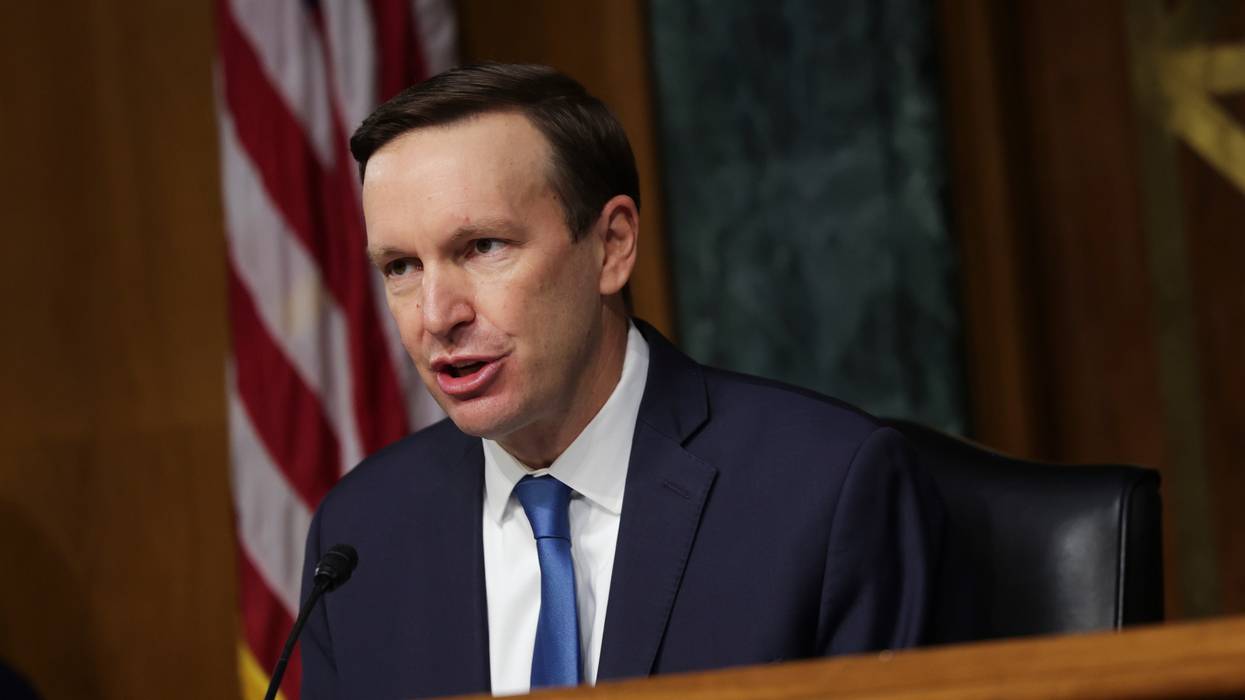
The senators—who include 10 Democrats and independent Bernie Sanders of Vermont—sent a letter led by Sen. Chris Murphy (D-Conn.) to Secretary of State Antony Blinken citing Egypt's deteriorating human rights situation while calling on the administration to withhold $320 million in U.S. military assistance.
The U.S. government conditions the bulk of that aid on Egypt taking "sustained and effective steps" to:
"Over the past year, the Egyptian government's track record on these criteria has not improved," the senators' letter asserts. "Ahead of presidential elections scheduled next year, the Egyptian government has detained supporters and family members of a challenger who intends to run against President Abdel Fattah al-Sisi. The government has forced NGOs to register under a draconian law that prohibits any activities it deems political."
The letter adds that Egypt's government "has not only failed to investigate allegations of human rights abuses, it has also continued to commit 'significant human rights' violations such as extrajudicial killings; enforced disappearance; torture and life-threatening prison conditions; and severe restrictions on freedoms of expression, assembly, and association as documented in the State Department's latest human rights report."
The lawmakers' letter came on the same day that 23 human rights and civil society groups also implored the Biden administration to withhold the $320 million in military aid, accusing Egypt of perpetrating a "merciless crackdown on the press, political opposition, and civil society."
"The Egyptian government's actions in recent months demonstrate that it has not halted its repression campaign or delivered on commitments to meaningfully improve the human rights situation," the groups—which include Amnesty International, Human Rights Watch, Democracy for the Arab World Now, and Project on Middle East Democracy (POMED)—said in a letter.
"Pressure works," POMED tweeted Friday. "Over the past two years, the administration's decision to reprogram some of the conditioned military aid to Egypt has led its government to take limited, albeit insufficient, steps to address U.S. concerns—without undermining the bilateral relationship."
News of the upcoming meeting in Cairo followed U.N. Secretary-General António Guterres' warning that an ongoing armed conflict in Sudan could destabilize "the entire region."
Egypt announced Sunday that it plans to host a summit of Sudan's neighbors on July 13 to discuss how they might help broker an end to the 12-week battle between the Sudanese Armed Forces (SAF) and the paramilitary Rapid Support Forces (RSF)—an ongoing conflict that has exacerbated humanitarian crises in North Africa.
News of Thursday's meeting in Cairo came after United Nations Secretary-General António Guterres warned—in a Saturday statement issued by his deputy spokesperson Farhan Haq—that intensified fighting between the two factions "has pushed Sudan to the brink of a full-scale civil war, potentially destabilizing the entire region."
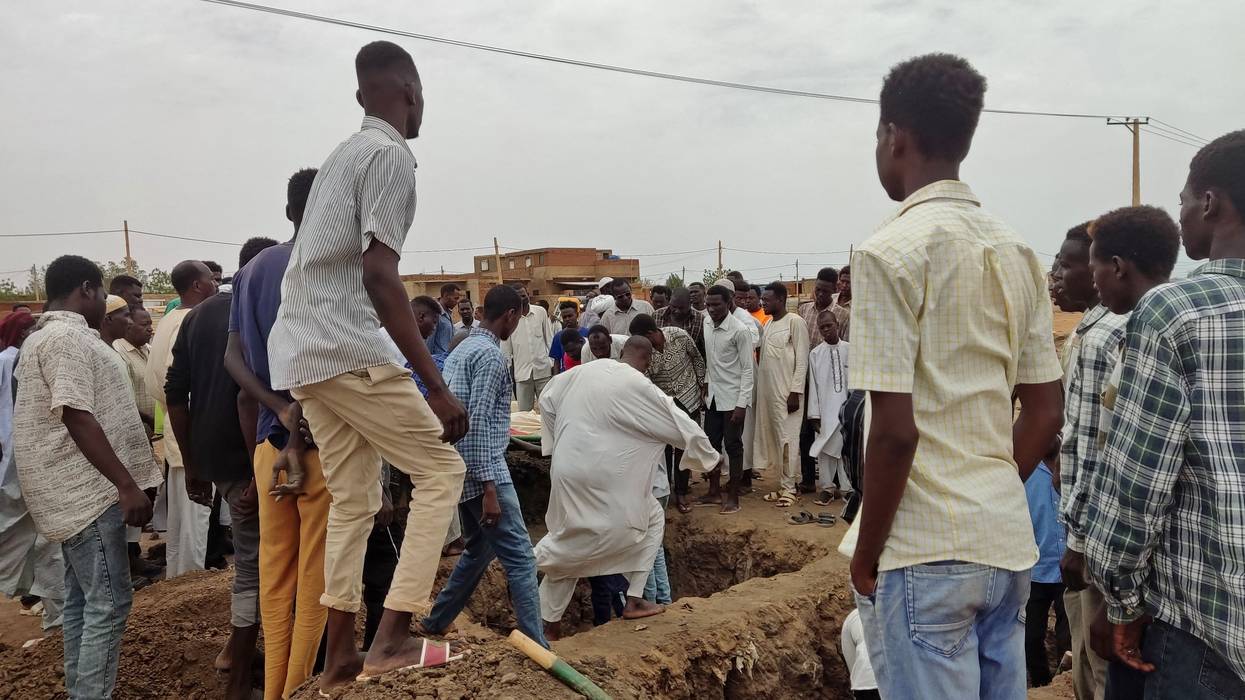
Since combat began on April 15 in the Sudanese capital of Khartoum, hundreds of people have been killed and nearly three million have been displaced, including almost 700,000 who have fled to neighboring countries, many of which are already grappling with extreme poverty and the impacts of local armed conflicts.
Speaking from a refugee camp in Adre, on the Sudan-Chad border, Al Jazeera correspondent Ahmed Idris noted Sunday that "cases of malnutrition are on the rise in camps in eastern Chad and other parts of Chad where Sudanese refugees have moved to."
Reuters reported Sunday that previous diplomatic efforts to halt fighting between SAF and RSF "have so far proved ineffective, with competing initiatives creating confusion over how the warring parties might be brought to negotiate."
As the news outlet explained:
Neither Egypt, seen as the Sudanese army's most important foreign ally, nor the United Arab Emirates, which has had close ties to the RSF, have played a prominent public role.
The two countries were also not involved in talks in Jeddah led by the United States and Saudi Arabia that adjourned last month after failing to secure a lasting ceasefire.
Sudan's two largest neighbors, Egypt and Ethiopia, have been at odds in recent years over the construction of a huge hydroelectric dam on Ethiopia's Blue Nile, close to the border with Sudan.
The upcoming summit in Cairo "aims to 'develop effective mechanisms' with neighboring states to settle the conflict peacefully, in coordination with other regional or international efforts," Reuters reported, citing a statement from Egyptian President Abdel Fattah El-Sisi.
The current fighting in Sudan erupted following weeks of tensions between SAF commander Abdel Fattah al-Burhan, chair of Sudan's Transitional Sovereign Council, and RSF commander Mohamed Hamdan Dagalo, or "Hemedti," the council's deputy chair.
The former allies joined forces to take control of Sudan in October 2021, two years after a 2019 military coup that occurred in the wake of a popular uprising to oust Omar al-Bashir, who had ruled Africa's third-largest country since leading the 1989 overthrow of a democratically elected government. However, during talks to establish a new transitional government, a dispute emerged over security force reform, turning al-Burhan and Dagalo—both of whom have long records of human rights abuses, including the brutal repression of pro-democracy activists—into rivals.
On Saturday, Guterres condemned a fresh air strike that killed at least 22 people in Omdurman, Sudan. After offering his condolences to the families of the victims and wishing a swift recovery to the dozens who were injured, the U.N. chief made clear that he is "appalled by reports of large-scale violence and casualties across Darfur" and "concerned about reports of renewed fighting in North Kordofan, South Kordofan, and Blue Nile States."
"There is an utter disregard for humanitarian and human rights law that is dangerous and disturbing," said Guterres' spokesperson. The U.N. chief reiterated his call for SAF and RSF "to cease fighting and commit to a durable cessation of hostilities." He also urged both sides "to abide by their obligations under international humanitarian and human rights law to protect civilians and to enable humanitarian action."
According to Reuters, "Sudanese delegations, including from civilian parties that shared power with the army and RSF after the overthrow of former President Omar al-Bashir four years ago, are expected to meet on Monday in the Ethiopian capital Addis Ababa for exploratory talks."
"Both countries show striking parallels in their attempts to harass and intimidate into silence all actual or perceived government critics and opponents."
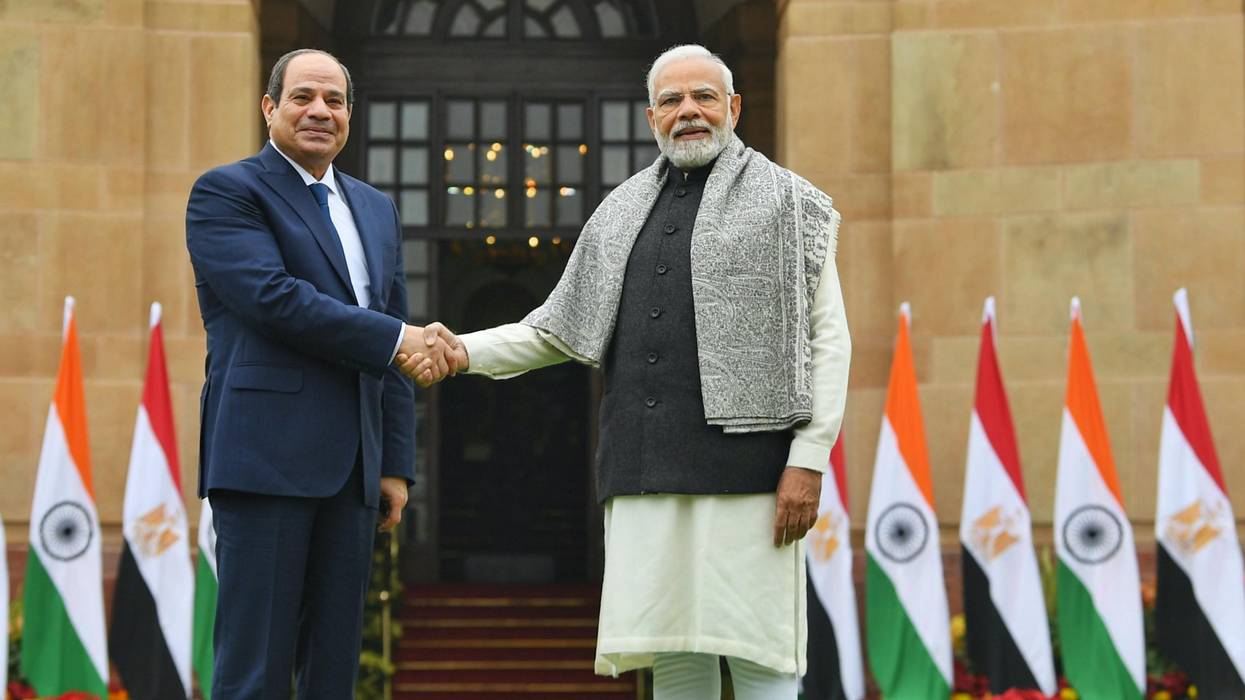
As Indian Prime Minister Narendra Modi welcomed Egyptian President Abdel Fattah El-Sisi as the chief guest at his nation's 74th Republic Day celebrations, Amnesty International on Thursday led calls for both right-wing leaders to "address the ongoing human rights and impunity crises" in their respective countries.
Meeting ahead of events commemorating the adoption of India's constitution—including a military parade in which members of the Egyptian army marched—Modi and El-Sisi agreed to elevate bilateral ties to a "strategic partnership," while calling for a "coordinated and concerted" effort to combat "terrorism."
Modi—who said Wednesday that he and El-Sisi "are in agreement that terrorism is the biggest threat to humanity"—has, like his Egyptian counterpart, been accused of using anti-terrorism laws to crush critics and silence dissent.
"The current human rights crises in India and Egypt are characterized by entrenched impunity and misuse of counterterrorism legislation to clamp down on civic space and peaceful dissent."
"The current human rights crises in India and Egypt are characterized by entrenched impunity and misuse of counterterrorism legislation to clamp down on civic space and peaceful dissent," Philip Luther, Middle East and North Africa research and advocacy director at Amnesty International, said in a statement.
"Both countries show striking parallels in their attempts to harass and intimidate into silence all actual or perceived government critics and opponents. This unrelenting assault on human rights must end," he added.
As Amnesty noted:
In recent years, authorities in both countries have severely repressed the rights to freedom of expression, association, and peaceful assembly and failed to address entrenched discrimination against religious minorities.
[...]
Human rights defenders, lawyers, political opponents, peaceful protesters, academics, and students, face arbitrary arrests and detention, unjust prosecutions, and other forms of harassment and intimidation solely for their peaceful exercise of their human rights in both India and Egypt.
"India and Egypt seem to have taken their long-standing bilateral cooperation to a different level where they share tactics to increasingly repress rights and freedoms," Amnesty International India board chief Aakar Patel said in a statement. "As the leaders of the two countries take the center stage, celebrations of the adoption of India's constitution 74 years ago should not overshadow the grim reality that the human rights situations in both countries have been on a downward spiral."
Leading an open letter from Egyptian and Indian diaspora members published Tuesday by the Canadian alternative news site rabble.ca, Ehab Lotayef, Samaa Elibyari, and Jooneed Jeeroburkhan noted that India's constitution "guarantees full equality and rights to all Indians and declares the country a secular, socialist republic."
"However today's India is led by a Hindu ethno-nationalist party committed to converting it into a Hindu nation," the authors continued, and "the government of India has been called out by domestic and international human rights organizations for unleashing and engendering violence and detentions against Muslim, Dalit, and Christian minorities as well as any human rights defenders."
"Meanwhile, January 25 marks the start of the 17 days in 2011 which forced one of the region's longest-serving and most influential leaders, Egyptian President Hosni Mubarak, from power," they continued. "We recall that moment of incredible exhilaration as all Egyptians aspired to more democracy and social justice. Unfortunately, on July 3, 2013, then-Gen. Abdel Fattah El-Sisi staged a coup d'état that toppled President Mohamed Morsi, the first democratically elected president of Egypt, and returned the country to dictatorial rule."
"Since his ascent to power through dubious elections, El-Sisi has governed Egypt with an iron fist," the trio wrote. "Under his direct command, on August 14, 2013, two encampments of protesters in Rabaa and al-Nahda squares, demanding that President Morsi be reinstated, were dismantled by lethal force and more than 1,000 people were killed."
"To date, no one has been held accountable," the authors added. "Since then, all dissenting voices have been silenced and more than 60,000 political prisoners languish behind bars in abject conditions."
Egyptian President Abdel Fattah al-Sisi on Sunday officially signed into law sweeping new "anti-terrorism" legislation that dramatically expands his powers to impose the death penalty, crackdown on dissent, and stamp out journalism that the government deems to be "false."
The law was passed over widespread opposition, including protests from the Egyptian Press Syndicate, whose members say the legislation threatens what's left of free media in the country. Al Sisi, who already rules by decree amid a suspended parliament, fast-tracked the rule following the late-June killing of state prosecutor Hisham Barakat in a car bombing and a subsequent wave of violence in the North Sinai Peninsula.
The legislation allows authorities to impose the death penalty for anyone the government deems to be leading a "terrorist" group and increases the power of officials to arrest and interrogate suspects. It also buffers Egyptian authorities, including soldiers and police officers, from legal consequences for using force.
One article gives the president the authority, pending approval from the non-active parliament, to impose curfews and isolation on areas of the country for up to six months.
The law also bans journalists from providing information about militant attacks that diverge from the government account, under penalty of steep fines. In addition, while not mentioning journalism, the rule allows the courts to "prevent the convicted from practicing the profession for no more than one year if the crime violates the profession's principles."
At least 18 journalists are already incarcerated in Egypt on charges that include "broadcasting false information," according to Amnesty International.
The rule follows another law passed in February that grants the government broad powers to break up protests. It comes amid an escalating crisis of government killings, torture, and jailing of its critics. Friday was the second anniversary of a massacre in Cairo's Rabaa al-Adawiya Square in which Egyptian security forces killed up to 1,000 sit-in protesters. Al Sisi was in charge of the army at the time, and no one has been held accountable for the mass killing.
"One of the key reasons the Egyptian people took to the streets in 2011 was to abolish the 30-year-long state of emergency imposed by Hosni Mubarak," declared Said Boumedouha, deputy director of the Middle East and North Africa Program at Amnesty International, in a statement released ahead of the legislation's passage. "Granting the current President similar absolute powers is a deadly blow to human rights in Egypt."
U.S. Secretary of State John Kerry recently pledged that Egypt's human rights abuses will not get in the way of increased aid, arms, and military "cooperation."
Egyptian President Abdel Fatah al-Sisi vowed Tuesday to escalate his clampdown on dissent and political opposition by expediting the process of putting people to death.
The announcement is the latest sign the U.S.-backed head of state is enforcing full-blown authoritarian rule, which some analysts warn is the worst the country has seen in 60 years--including during the regime of former President Hosni Mubarak who was toppled by a popular uprising in 2011.
Speaking to reporters at the Cairo funeral of state prosecutor Hisham Barakat, who was killed in a car bombing on Monday, al-Sisi said he will soon unveil laws that will fast track hearings of people on death row and slash their rights to appeal their executions. Because the president is ruling by decree, his statements could very well be implemented.
Al-Sisi vowed this process will move swiftly.
"The hand of justice is tied by laws... We will not wait for that," said al-Sisi in comments broadcast over state television. "We will not sit for five or 10 years putting on trial the people who kill us."
It still is not clear who killed Barakat--who himself oversaw mass trials in which hundreds of people were put to death without due process.
Al-Sisi's remarks came one day after the release of an Amnesty International report that urged Egyptian authorities not to use political violence as "a pretext for trampling upon human rights."
According to the study, the enormity of the crackdown in the short time since al-Sisi took power has already been staggering--funneling an entire generation of young protesters into prisons and transforming Egypt into a blatant police state.
"More than a year after he came to power, Abdel Fattah al-Sisi's government has shown no sign of easing its repressive rule," states the report. "The crackdown has seen more than 41,000 people arrested, charged or indicted with a criminal offense, or sentenced after unfair trials, according to the last available estimates by Egyptian human rights activists."
"The scale of the crackdown is overwhelming. The Egyptian authorities have shown that they will stop at nothing in their attempts to crush all challenges to their authority," said Hassiba Hadj Sahraoui, deputy director of the Middle East and North Africa Program at Amnesty International.
Sahraoui continued, "Those behind bars range from internationally lauded youth movement leaders, to human rights defenders, to students arrested for wearing T-shirts with anti-torture slogans."