

SUBSCRIBE TO OUR FREE NEWSLETTER
Daily news & progressive opinion—funded by the people, not the corporations—delivered straight to your inbox.
5
#000000
#FFFFFF
To donate by check, phone, or other method, see our More Ways to Give page.
Daily news & progressive opinion—funded by the people, not the corporations—delivered straight to your inbox.
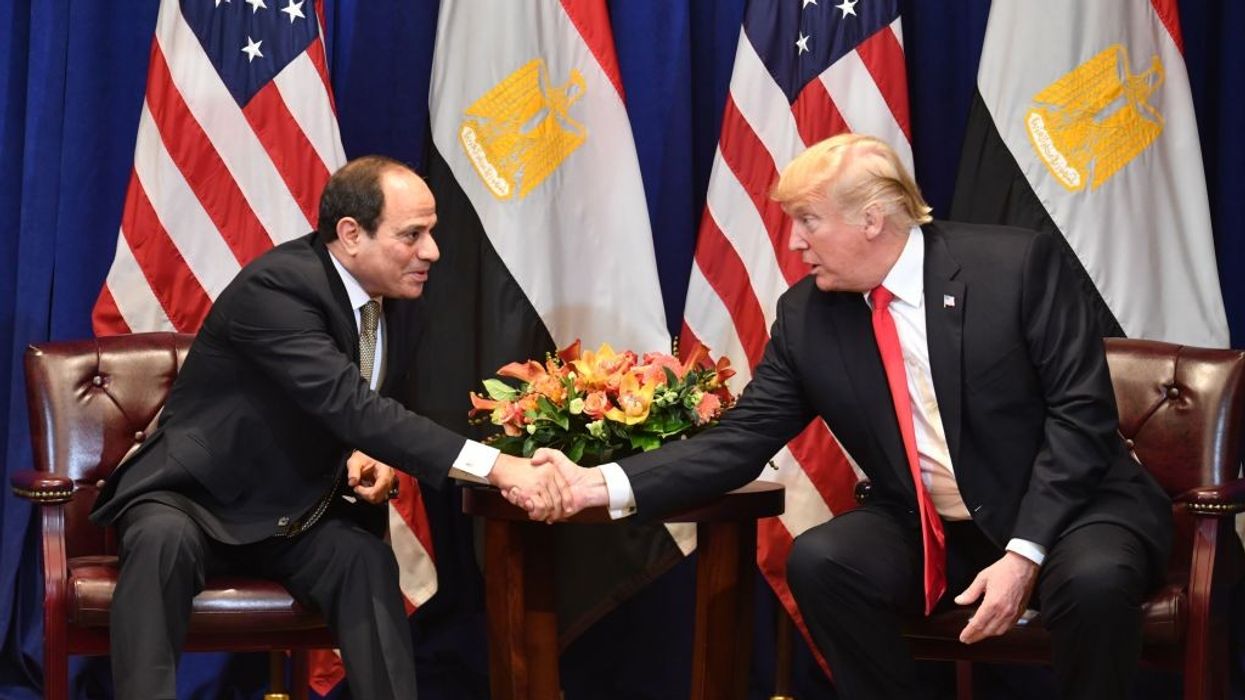
"Surely you would agree that the American people deserve to know whether a former president—and a current candidate for president—took an illegal campaign contribution from a brutal foreign dictator."
Congressional Democrats on Tuesday launched an investigation in response to recent Washington Post reporting on a closed federal probe into whether Egyptian President Abdel Fatah el-Sisi gave former U.S. President Donald Trump $10 million to illegally help his 2016 campaign.
House Committee on Oversight and Accountability Ranking Member Jamie Raskin (D-Md.) and Congressman Robert Garcia (Calif.), a leader on the Subcommittee on National Security, the Border, and Foreign Affairs, revealed their investigation in a letter to Trump, the Republican nominee for the November presidential election.
In addition to generating suspicion about a cash bribe from el-Sisi, Raskin and Garcia wrote to Trump, "this detailed news report has also triggered serious speculation that your handpicked political appointees at the U.S. Department of Justice (DOJ), including Attorney General William Barr, subsequently blocked efforts by career prosecutors and agents of the Federal Bureau of Investigation (FBI) to investigate the political and financial corruption that has been described."
"Surely you would agree that the American people deserve to know whether a former president—and a current candidate for president—took an illegal campaign contribution from a brutal foreign dictator," the pair continued, requesting that Trump turn over information necessary to assure the panel and the public that he never took money from the Egyptian leader or government.
"We are certain you can see how significant troubling questions still haunt our country about the origins of your $10 million campaign contribution."
The letter summarizes the Post's early August reporting, which was based on thousands of pages of government records and interviews with over two dozen people who spoke on the condition of anonymity and shared emails, texts, and other documents.
As the newspaper detailed: "Investigators identified a cash withdrawal in Cairo of $9,998,000—nearly identical to the amount described in the intelligence, as well as to the amount Trump had given his campaign weeks earlier. A key theory investigators pursued, based on intelligence and on international money transfers, was that Trump was willing to provide the funds to his campaign in October 2016 because he expected to be repaid by Sisi, according to people familiar with the probe."
Michael Sherwin, the then-acting U.S. attorney who closed the case, told the Post that he stands by the decision. The Egyptian government, Trump campaign, Central Intelligence Agency, DOJ, FBI, U.S. attorney's office in Washington, D.C., and key individuals including Barr declined to answer the newspaper's questions, though some sent statements.
Trump spokesperson Steven Cheung called the story "textbook Fake News," while Ayman Walash of Egypt's Foreign Press Center stressed that the DOJ probe ended without charges and said that "it is inappropriate to comment or refer to rulings issued by the judiciary system or procedures and reports taken by Justice Departments" in other nations.
Both the Post and the congressmen highlighted Trump's remarks and policies regarding Egypt and its leader, who seized power in 2013. Noting the Republican's meeting with el-Sisi shortly before the 2016 U.S. election, Raskin and Garcia wrote:
While others at the time "emphasized the importance of respect for rule of law and human rights to Egypt's future progress," you called President el-Sisi a "fantastic guy" and praised his tactics for taking "control" of Egypt. As president, you continued to praise President el-Sisi and drastically shifted U.S. policy in ways to benefit the reviled Egyptian leader. While calling President el-Sisi your "favorite dictator," you released $195 million in military aid in 2018 that the United States had previously withheld because of human rights abuses committed by the Egyptian government, and later released an additional $1.2 billion in military assistance.
"We are certain you can see how significant troubling questions still haunt our country about the origins of your $10 million campaign contribution, the source of any repayment, and the credible allegations that it was all funded with cash provided by President el-Sisi through his grim intelligence services," they added. "These questions are especially alarming given that the allegations appearing in The Washington Post are silhouetted against several proven patterns of corrupt practices exhibited by both the Egyptian government and by you, of course, as a convicted felon, fraudster, and corrupt politician."
As an example, the congressmen cited the corruption case of U.S. Sen. Bob Menendez (D-N.J.). The Post reporting was published just weeks after a federal jury found the senator guilty of accepting bribes from three businessmen and acting as a foreign agent for the Egyptian government. He finally resigned in mid-August.
Trump, in May, was convicted of 34 felony charges in New York over the falsification of business records related to hush money payments to cover up sex scandals during the 2016 election. He also faces cases at the federal level and in Georgia for his efforts to overturn his 2020 loss. Although a Trump-appointed judge recently dismissed another federal case related to his handling of classified materials, it could soon be revived by an appellate court.
Raskin is a longtime critic of Trump. He led the historic second impeachment of the ex-president and earlier this year launched a probe into the Republican's quid pro quo offer to Big Oil executives: $1 billion in campaign cash for killing climate policies. Some have even floated Raskin for U.S. attorney general if Democratic Vice President Kamala Harris beats Trump in November.
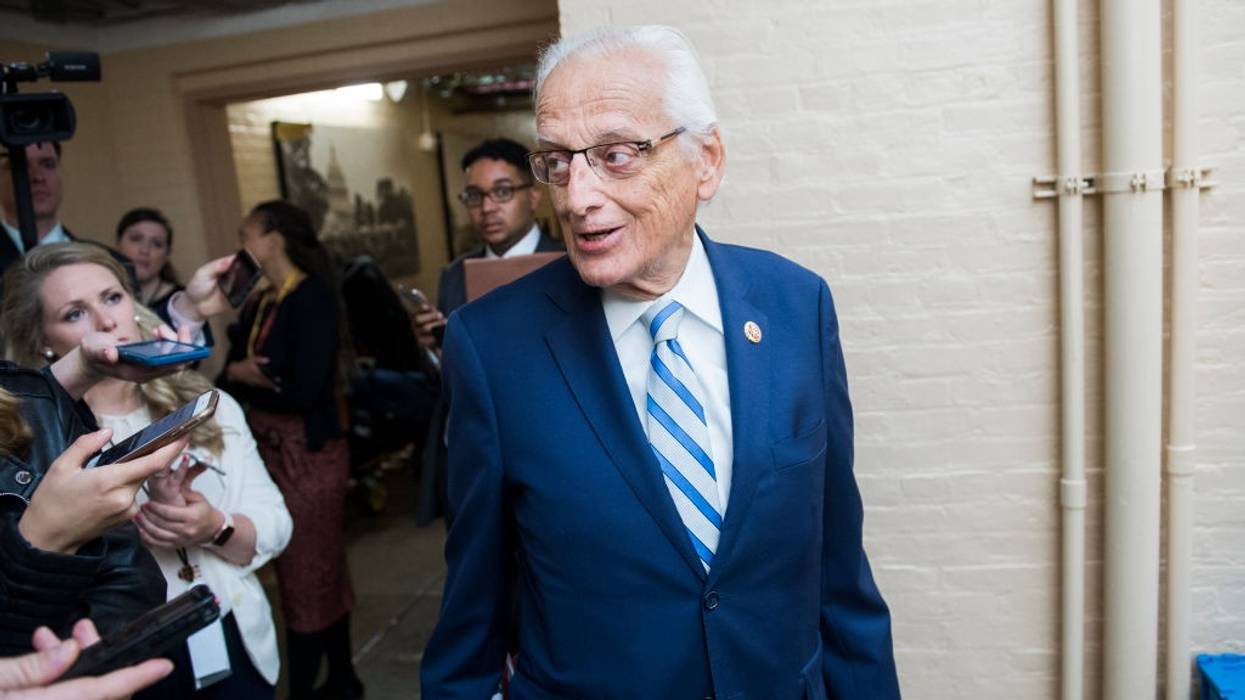
The feisty Democratic congressman from New Jersey died August 21.
U.S. Rep. Bill Pascrell, a longtime congressman from New Jersey and unflinching critic of former President Donald Trump, died at 87 years old on Wednesday, his family announced.
Pascrell (D-N.J.), a former public school teacher, state assemblyman, and mayor of Paterson, was first elected to Congress in 1996 and served 14 terms.
His death led to an outpouring of tributes from dignitaries in New Jersey and across the country. Rep. Pramila Jayapal (D-Wash.), chair of the Congressional Progressive Caucus, called him "a constant fighter for what is right and just."
Pascrell, not one to hold back for fear of impropriety, was known for memorable one-liners. After he arrived in Washington, he put a bumper sticker on his door that said "NAFTA is Shafta," expressing his opposition to free trade agreements.
"The joy of Bill Pascrell is you never walked away from Bill Pascrell saying he was undecided," Rep. Richard Neal (D-Mass.), his colleague on the powerful House Ways and Means Committee, said in 2020.
As he advanced in age, Pascrell became something of an ally to younger colleagues, endorsing a Green New Deal, for example. In 2019, he tweeted a satirical article from The Onion titled "82-Year-Old New Jersey Congressman Bill Pascrell Quietly Asks Ilhan Omar If He Can Be Part Of The Squad."
"Well. How 'bout it," he jokingly asked the the small, left-wing band of lawmakers, getting an immediate "You're in, Bill Pascrell!" in response from Rep. Alexandria Ocasio-Cortez (D-N.Y.).
Mostly, Pascrell was known in his later years for his no-holds-barred criticism of Trump—whose tax returns he pursued vigorously, in his role on the Ways and Means Committee—and other Republicans, and the comedy he produced at their expense.
Pascrell took seeming delight in Trump's recent felony conviction in the New York hush money trial.
Good morning. Republican donald trump is a convicted criminal. pic.twitter.com/YxrRcIJSDG
— Bill Pascrell, Jr. 🇺🇸🇺🇦 (@BillPascrell) July 13, 2024
A few days earlier, Pascrell took aim at U.S. Supreme Court Justice Clarence Thomas, who's been mired in controversy for unreported gifts he accepted from Republican megadonors in the past. Pascrell posted an artistic rendering, based on a real scene from five years ago, of Thomas smoking a cigar while he sits beside megadonor Harlan Crow, his main benefactor, and right-wing legal influencer Leonard Leo, among others.
Corrupt republican supreme court judges are taking bribes from billionaires while attacking your rights and crushing democracy pic.twitter.com/UaQgkfLPIO
— Bill Pascrell, Jr. 🇺🇸🇺🇦 (@BillPascrell) July 9, 2024
Pascrell communicated with a directness that many Democratic officeholders are reluctant to employ, drawing praise—and smiles—from left-leaning followers of his social media account.
The republican party’s record is a disgrace and all Americans should see it for themselves. Please share. pic.twitter.com/FpTgtfo4Dd
— Bill Pascrell, Jr. 🇺🇸🇺🇦 (@BillPascrell) July 23, 2023
In 2018, when Trump remarked that immigrants were coming to the U.S. from "shithole" countries, Pascrell invoked a racist character from the 1970s sitcom All in the Family.
Once again, @POTUS has made a fool of himself & our nation on a worldwide stage. He’s showing his bigoted tendencies in ways that would make Archie Bunker blush. White House statement makes it even more obvious that this president needs some help - what a national disgrace! https://t.co/j0N4K4c495
— Bill Pascrell, Jr. 🇺🇸🇺🇦 (@BillPascrell) January 11, 2018
Pascrell, who was an advocate for veterans who'd suffered brain injuries in Iraq and Afghanistan, objected to Trump's disrespect for those who'd given their lives for the country.
Trump wouldn’t visit a cemetery for US soldiers who gave their lives in battle because he said it was “filled with losers.”
What more can be said about this lowlife? He is beneath contempt. Republicans keep him in office bc they value their power more than America’s honor. https://t.co/koxOz6kkHm
— Bill Pascrell, Jr. 🇺🇸🇺🇦 (@BillPascrell) September 3, 2020
During the pandemic, Pascrell warned that Trump's approach to dealing with Covid-19 could be deadly for Americans.
🚨 Trump and his soulless goons are trying to reduce covid testing to lower the number of reported positive cases.
Responsible for countless dead Americans, trump is willing to kill even more to make himself look better.
The republican party is a direct threat to your life. https://t.co/2ujI9odmrd
— Bill Pascrell, Jr. 🇺🇸🇺🇦 (@BillPascrell) August 26, 2020
Trump's attorney general, William "Bill" Barr, was a frequent target of Pascrell's wrath: The congressman called him the "worst most corrupt despicable attorney general in U.S. history." So when Barr made claims about the Kenosha, Wisconsin, riots of 2020, Pascrell proved skeptical.
Bill barr is a lying disgrace whose word isn’t worth a nickel. Barr should be impeached and then stripped of his personal law licenses for life. #ImpeachBarr #DisbarBarr https://t.co/TG9FqL03q1
— Bill Pascrell, Jr. 🇺🇸🇺🇦 (@BillPascrell) September 1, 2020
In a 2020 debate, when Trump interrupted President Joe Biden while the then-Democratic nominee spoke about the military service of his son Beau Biden, who'd died of cancer five years earlier, Pascrell was unimpressed.
Trump smearing Beau Biden. There is no low for this lowlife piece of impeached garbage. #Debate2020
— Bill Pascrell, Jr. (@PascrellforNJ) September 30, 2020
Pascrell was an indefatigable critic of Postmaster General Louis DeJoy, whom he said had tried to sabotage—that is, slow down—the work of the U.S. Postal Service as a way of helping Trump's elections chances in 2020. (Most mail-in votes were for Democrats.) Pascrell blamed not just DeJoy but also the service's Board of Governors who had appointed the Republican businessman as their head.
Good question. On Jan 25 I was the first member of Congress calling for @POTUS to fire the entire USPS Board of Governors. They’re complicit in dejoy’s destruction. Americans are fed up. Time to clean house at USPS. https://t.co/wTGmjL9Ws4 pic.twitter.com/YZjJPU7oDs
— Bill Pascrell, Jr. 🇺🇸🇺🇦 (@BillPascrell) February 7, 2021
Pascrell kept beating the drum against DeJoy, unsuccessfully, until he died. (DeJoy is still the postmaster general.) The congressman also regularly used social media as a platform to argue that Republicans posed a threat to democracy.
Tapping the sign as republicans today again try to destroy your voting rights pic.twitter.com/a4gIgZ9ZgJ
— Bill Pascrell, Jr. 🇺🇸🇺🇦 (@BillPascrell) July 10, 2024
Pascrell, who was the second-oldest member of the House, will likely be replaced by another Democrat, as his district leans solidly blue.
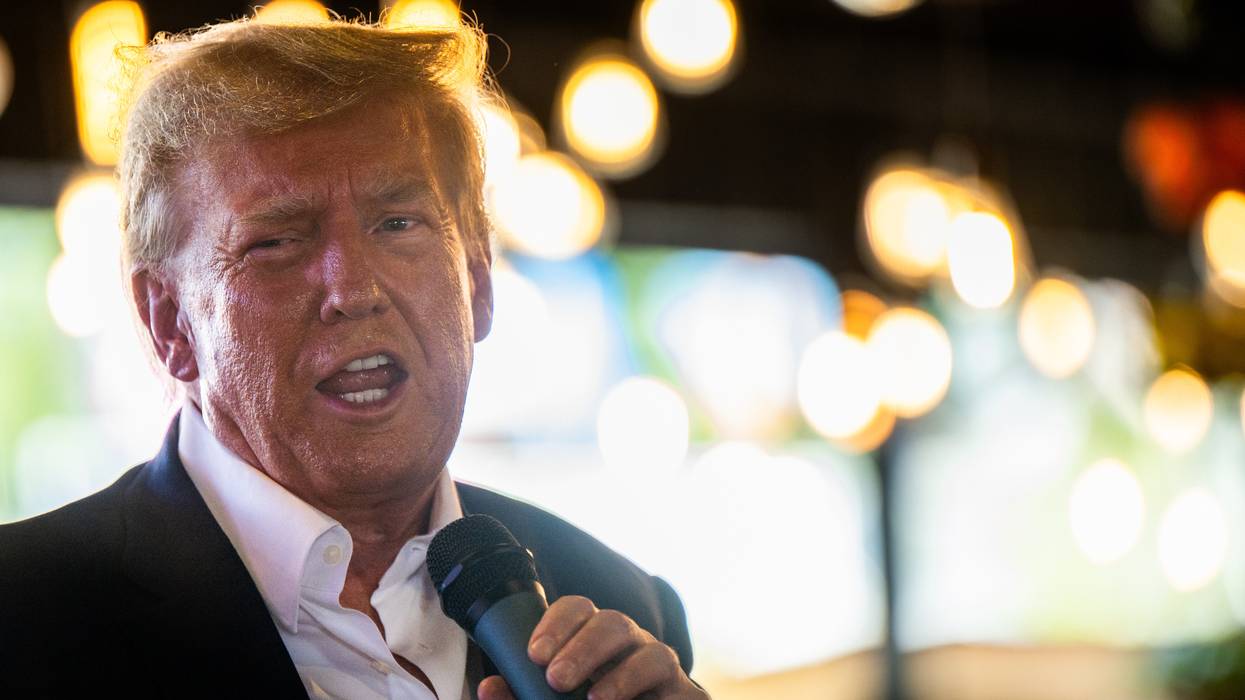
The former president's attacks on his enemies have caused grievous harm to the civility of political discourse.
It could be considered one of Donald Trump’s greatest achievements: attacking his enemies and demeaning their integrity or mental capabilities. It is not one, however, that he should be proud of. It has caused grievous harm to language, and to the civility of political discourse.
During an interview with Brian Stelter, George Lakoff, a linguist and professor emeritus at the University of California, Berkeley, said: “He [Trump] knows how to use language very effectively. And not only that, he has strategic tweets. His tweets fall into four categories. One, they can preemptively frame something, frame something before it’s framed out there in the public. Secondly, it can divert attention away from something that’s threatening to him. It can shift the blame, either to some other person or to the news media itself. And it can be a trial balloon, something really outrageous to see what the reaction is, and if there’s no real reaction, he can do what he wants. And he also knows how to use psychology. For example, there is a phenomenon in which some well-publicized event that is out there, like some particular terrorist attack or something like that, becomes a weaponized way of just categorizing all people. He knows how to do this. This is part of his sales technique.”
These are techniques that Trump has used, with great effectiveness, since he went into politics. Recently, following his arraignment in New York on felony charges, he said in his Florida home, Mar-a-Lago, “The only crime I’ve committed is to fearlessly defend our nation from those who seek to destroy it.” This is a weird assertion by somebody who is accused of having incited an attack on the Capitol, and didn’t make any effort, of his own accord, to rein in his followers who wanted to hang his vice president and hurt several lawmakers.
Trump managed to make his own lawyer use pernicious arguments on his defense. John Lauro, defending Trump against felony charges and attempts to overturn President Joe Biden’s 2020 victory, said on CNN’s “State of the Union,” about Trump’s illegal attempts to overturn the election: “When it comes to political speech, you cannot only advocate for a position, but you can take action, you can petition, you can ask even your vice president to pause the vote. Asking is aspirational. Asking is not action. It’s core free speech.” And as an example of free speech, it is protected by the First Amendment, claims Lauro.
Lauro’s assertions prove that being close to Trump can be contagious, and the person in that situation can make the same grievous mistakes. What Lauro ignores, however, is that the verb aspire is mainly used in a positive sense, when a person aspires to a worthwhile, positive, goal. Thus, it is awkward to say, “Al Capone aspired to kill all the population of Chicago.” However, one can say, correctly, “In love with his teacher, Johnny aspired to be the best student in her class.”
Regarding the fact that Trump’s assertions—no matter how outlandish—have First Amendment protection, legal experts claim that, although all Americans have the right to express their opinion about the 2020 election, they cease to have that right as soon as their words are used to conduct criminal acts. In the case of Trump, those criminal acts included trying to persuade others to join him in criminal conduct, such as signing fake slates of electors or trying to force Vice President Mike Pence to block or delay the Electoral College certification of Biden’s victory.
In an interview with CNN, Bill Barr, a former attorney general during the Trump administration, said that he didn’t think the First Amendment defense was a valid argument for Trump “because, as the indictment says, they’re not attacking his First Amendment right. He can say whatever he wants. He can even lie. He can even tell people that the election was stolen when he knew better. But that doesn’t protect you from entering into a conspiracy. All conspiracies involve free speech. And all fraud involves speech. So, free speech doesn’t give you the right to engage in a fraudulent conspiracy.”
Trump has also repeatedly called Special Counsel Jack Smith a “deranged lunatic,” a “thug,” and “a raging, uncontrolled, Trump hater.” This is Trump’s way of discrediting his accusers. He doesn’t seem to realize that his words don’t hurt Smith, who is widely respected in legal circles but are, perhaps, a reflection of his own inner demons.
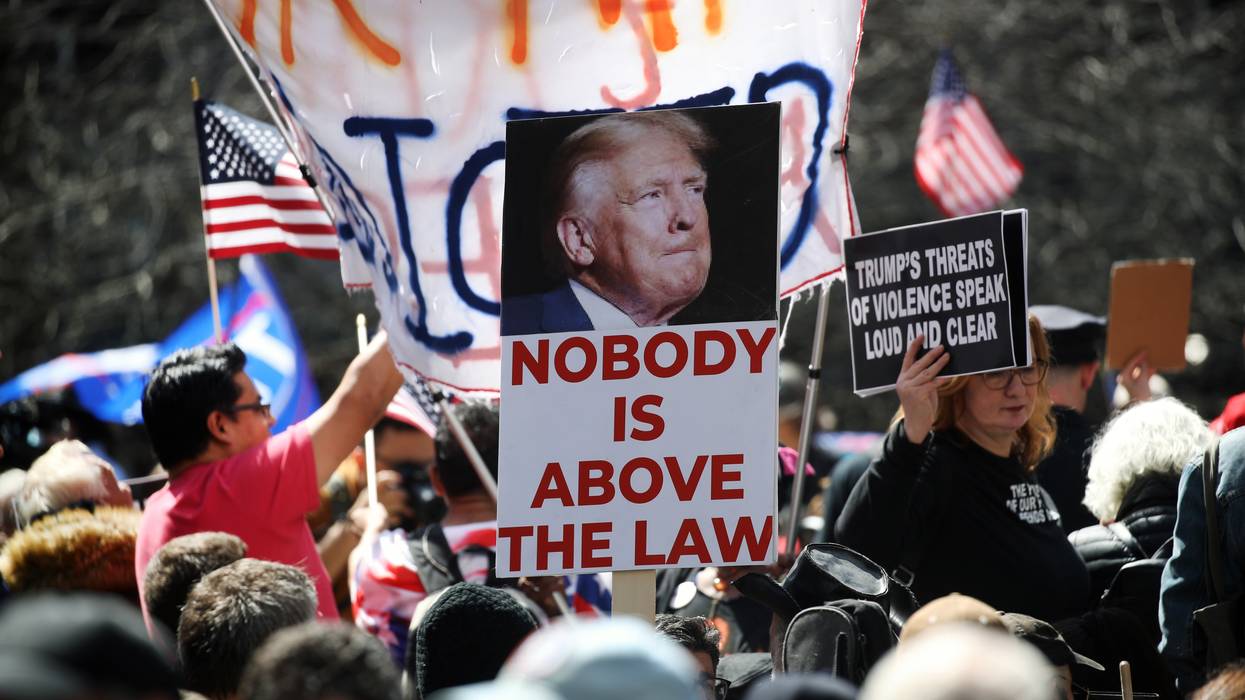
"While Trump and his allies continue their bluster, the media should focus on the facts of the indictment and the unprecedented obstruction it outlines."
A top official at the consumer advocacy group Public Citizen on Tuesday issued a resounding repudiation of Republicans who draw false equivalencies between the alleged misdeeds of former President Donald Trump—who faces scores of federal and state criminal charges—and those of President Joe Biden and his son.
Earlier this month, Trump was charged with 37 federal felony counts related to his alleged possession and sharing of classified government documents after he left office. Additionally, the Manhattan district attorney's office in April charged Trump with 34 felony counts involving alleged hush money payments during the 2016 election cycle to cover up sex scandals.
Fulton County, Georgia District Attorney Fani Willis has signaled that Trump could also be charged for alleged "criminal interference in the administration of Georgia's 2020 general election" during the state superior court's upcoming term, which runs from July 11 through the end of August.
"Key Republicans and former Trump administration officials who have looked at the facts admit that these charges are credible, serious, and necessary."
While numerous Republicans have condemned Trump's actions, the former president and many of his supporters have called his prosecution a "witch hunt" while claiming he's a victim of a legal double standard. Trump's backers point to the classified documents improperly held by Mike Pence, his former vice president and 2024 GOP presidential rival, 2016 Democratic presidential nominee Hillary Clinton, and Biden—who is currently under investigation by a special counsel appointed by Attorney General Merrick Garland.
Some right-wing observers also contend that the plea deal announced Tuesday under which Hunter Biden, the president's son who holds no government office, will avoid prosecution—an outcome common to about 97% of federal criminal cases—proves a legal double-standard favoring Democrats.
However, legal and other experts reject such comparisons, pointing to Trump's refusal to hand over documents in his possession and his showing of the secret files to at least several people, an act that critics say could jeopardize national security.
"There is no both-sidesing this indictment. Key Republicans and former Trump administration officials who have looked at the facts admit that these charges are credible, serious, and necessary," Public Citizen executive vice president Lisa Gilbert said in a statement.
Gilbert cites Trump administration officials including Attorney General William Barr—who called the Espionage Act charges against the former president "solid" and the evidence in the case "very, very damning"—Secretary of State Mike Pompeo, and White House Chief of Staff John Kelly to underscore how even former members of Trump's inner circle acknowledge the validity and gravity of the federal indictment.
Former Defense Secretary Mike Esper said "clearly, it was unauthorized, illegal, and dangerous" for Trump to allegedly take classified national security documents to his Mar-a-Lago resort in Florida and show them to aides, a writer, and at least one supporter.
Esper compared Trump's alleged actions to those of Jack Teixeira, a Massachusetts Air National Guardsman arrested in April for allegedly leaking sensitive documents online.
According to Gilbert:
While Trump and his allies continue their bluster, the media should focus on the facts of the indictment and the unprecedented obstruction it outlines: Trump repeatedly blocked federal law enforcement officials who were attempting to retrieve approximately 300 classified documents that endanger our national security; and he directed his staff and lawyers to hide evidence, lie, and obstruct the FBI and grand jury in an attempt to keep them from recovering these documents—which contained highly classified national security information.
"As the overwhelmingly bipartisan response to the seriousness of this indictment shows, Americans are united in the belief that no one is above the law, not even a former president of the United States," Gilbert added.
Other observers have also decried comparisons of Trump and Biden's alleged misdeeds.
Equating Trump's alleged crimes with Democrats' purported misdeeds may hold water with Trump's staunchest supporters, "but it's false," Vox politics reporter Nicole Narea recently wrote.
"None of those figures ignored a subpoena to turn over classified material concerning highly sensitive matters of national security and then sought to conceal it from federal officials and their own attorneys, as is alleged of Trump," she argued. "And in fact, history suggests that if Trump complied with that request, as some of his peers did, prosecutors may not have pressed charges."
"The case against Trump is not so much about the fact that he retained documents he had no right to keep—but that he allegedly did so knowingly and brazenly defying the federal government while putting U.S. interests at risk," Narea added. "That puts Trump in a class of his own."
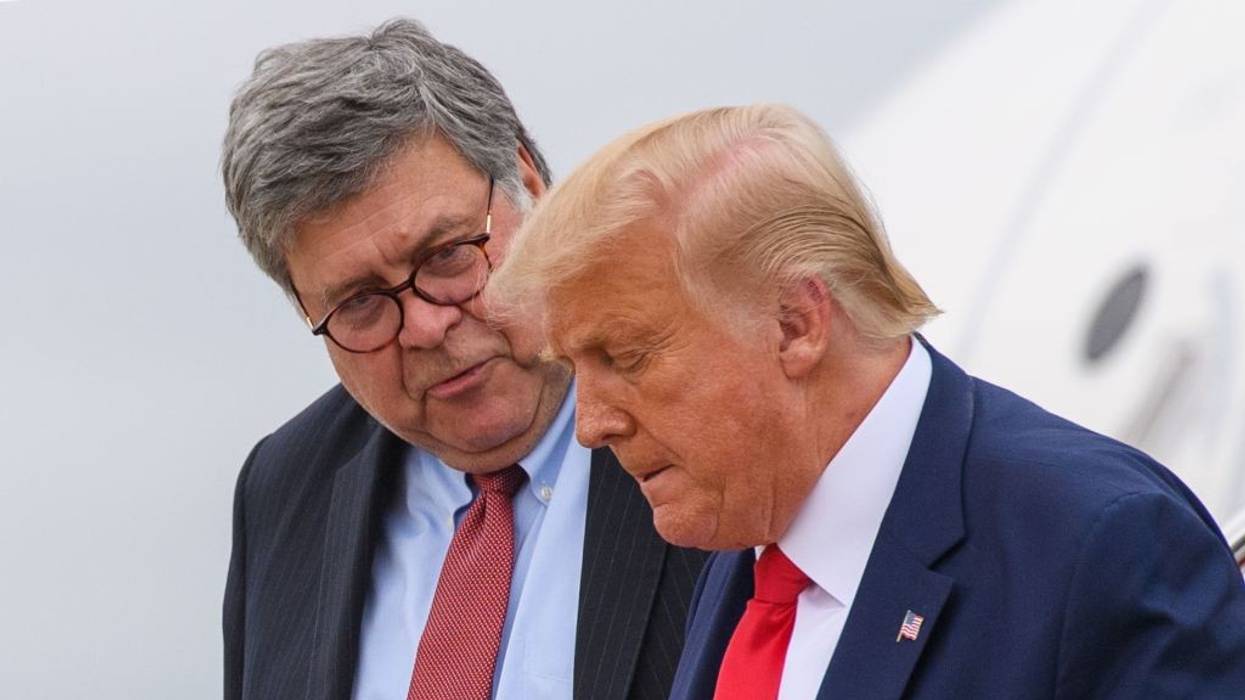
"If even half of it's true, then he's toast," Barr told Fox News Sunday.
Former President Donald Trump's former Attorney General Bill Barr broke with the GOP narrative Sunday to say the government acted responsibly in its indictment of the former president.
Appearing on Fox News Sunday, Barr said the contents of the indictment were "very, very damming."
"If even half of it's true, then he's toast," Barr said.
The indictment, unsealed Friday, included 38 counts against Trump and former aid Walt Nauta—31 against Trump for withholding national defense information, five against both for hiding their possession of classified documents, and one each for lying to the Federal Bureau of Investigators.
In response to the indictment, Trump remained defiant in two speeches at Republican state conventions in Georgia and North Carolina Saturday, calling the charges "baseless" and "ridiculous," as The Associated Press reported.
"They've launched one witch hunt after another to try and stop our movement, to thwart the will of the American people," Trump said in Georgia.
"Those documents are among the most sensitive secrets that the country has, they have to be in the custody of the archivist, he had no right to maintain them and retain them."
However, Barr said Sunday that casting the indictment as a witch hunt was itself "ridiculous."
"Yes, he's been a victim in the past. Yes, his adversaries have obsessively pursued him with phony claims, and I've been at his side defending against them when he is a victim," he said. "But this is much different. He's not a victim here."
Barr added that the former president was "totally wrong that he had the right to have those documents."
"Those documents are among the most sensitive secrets that the country has, they have to be in the custody of the archivist, he had no right to maintain them and retain them, and he kept them in a way, at Mar-a-Lago, that anyone who really cares about national security, their stomach would turn at it."
New Hampshire Republican Gov. Chris Sununu also took the indictment seriously.
"They're very real, they're self-inflicted," he told Face The Nation Sunday. "This is nothing like anything we've seen before."
He added that it was "very likely" the former president would be found guilty "at least on some of these charges."
Sununu also said he thought the rest of the GOP primary candidates vying to run for president in 2024 had a responsibility to make a statement on the indictment.
"They have to come out and acknowledge this is different, this is serious," he said, adding that it had to come from the party as a whole.
" Donald Trump doesn't represent the Republican Party," he said. "He only represents himself."
Whether Republican voters agree is another question. According to a CBS poll released Sunday, 80% of U.S. respondents said that it was a national security risk for Trump to retain nuclear and military documents. However, only 38% of likely GOP primary voters agree. Instead, 76% of these voters think the indictment was politically motivated.
Trump himself has pledged to stay in the race, even if convicted.
"I'll never leave," he told Politico in an interview on his plane Saturday.

John Durham is now a case study in the GOP’s weaponization of the Justice Department.
Rep. Jim Jordan wants special counsel John Durham to testify in his “weaponization” hearings. Created as part of a dark deal that Rep. Kevin McCarthy made with far-right Republican extremists to secure his speakership, Jordan’s new subcommittee claims to be investigating “the politicization of the FBI and the Department of Justice” against Republicans.
So far, Jordan’s (R-Ohio) subcommittee has found nothing. Durham didn’t find anything either, but he spun his report with useful GOP soundbites that are sufficient to achieve Republican objectives:
Muddy the scene. Arouse the mob. And accuse adversaries of your own nefarious deeds. Then exploit the resulting confusion and chaos.
Muddy the scene. Arouse the mob. And accuse adversaries of your own nefarious deeds.
In fact, John Durham is now a case study in the GOP’s weaponization of the Justice Department.
Any genuine “weaponization” probe would have started with former President Donald Trump and his attorney general, William Barr.
Trump had found his Roy Cohn.
In March 2019, Barr had been on the job for only two months when Mueller gave him—but not the public—his 448-page report. It proved that:
Mueller secured convictions against Trump’s top campaign advisers, and he expressly refused to exonerate Trump personally. But notwithstanding powerful evidence proving Trump’s obstruction, Mueller believed that he could not indict a sitting president.
After-the-fact judicial condemnation didn’t matter to Barr. He had weaponized Trump’s false mantra that the FBI’s Russia investigation had been a “hoax” and that Mueller had “exonerated” him.
Immediately, Barr issued a deceptive “summary” of Mueller’s report that kneecapped the actual findings. Relying on Barr’s summary, Trump then tweeted one of the more than 30,000 lies spewed during his presidency:
“No Collusion. No Obstruction. Complete and Total EXONERATION!”
Barr’s summary drew an immediate, albeit private, rebuke from Mueller himself because it created “public confusion about critical aspects of the results of our investigation.” Barr wasn’t confused. He knew exactly what he was doing. And no one could challenge Trump’s or Barr’s lies because Barr didn’t release Mueller’s report to the public for another three weeks.
A year later, a federal judge blasted Barr’s pre-release “distortions” and “lack of candor.” The court questioned “whether Attorney General Barr’s intent was to create a one-sided narrative about the Mueller Report—a narrative that is clearly in some respects substantively at odds” with it. Barr made “a calculated attempt to influence public discourse about the Mueller Report in favor of President Trump despite certain findings… to the contrary.”
After-the-fact judicial condemnation didn’t matter to Barr. He had weaponized Trump’s false mantra that the FBI’s Russia investigation had been a “hoax” and that Mueller had “exonerated” him.
Barr didn’t stop at confusing the public about Mueller’s damning conclusions. He appointed federal prosecutor John Durham to search for evidence supporting Trump’s key talking point: The FBI was out to get him and had no basis for starting the Russia investigation.
Barr took a personal interest in the assignment. In the fall of 2019, he and Durham traveled to Italy and asked officials for evidence that might discredit the Justice Department’s Trump-Russia investigation. Italian officials had nothing to help them, but they did offer a tip: Trump was engaged in suspicious financial activity.
Uh-oh. The Italian tip required a criminal investigation. But rather than assign the matter to another prosecutor, Barr added it to Durham’s plate. Notably, Durham’s final report doesn’t mention the tip or what became of it.
Meanwhile, Durham’s search for FBI abuses or institutional animus toward Trump reached a dead end.
Meanwhile, Durham’s search for FBI abuses or institutional animus toward Trump reached a dead end. So he changed course and tried to blame the Clinton campaign for promoting the suspicious Russia links surrounding Trump.
Durham’s revised mission failed too. His final report acknowledges that, after Wikileaks published hacked Democratic emails, the FBI opened its investigation based on information from an Australian diplomat. The diplomat said that a Trump campaign aide told him that Russia had damaging material on Clinton. At that point, even Durham admits, there was “no question that the FBI had an affirmative obligation to closely examine” the Trump-Russia connection.
But Durham believes that the FBI should have started with a “preliminary investigation” before moving to a “full investigation.” That’s not exactly the blockbuster that Trump and his allies had wanted him to find.
Durham’s final report is an effort to justify the time (four years) and money (more than $6.5 million) wasted on his probe.
Durham charged no high-level FBI or intelligence official with a crime. He has only three prosecutions to show for his pursuit of the Trump/Barr agenda.
Several attorneys on Durham’s team tried unsuccessfully to protect him from his misguided deference to Trump and Barr. His deputy, as well as a prosecutor, resigned in protest.
But as Durham lost trials and the respect of colleagues, he won a new friend:
“While attorneys general overseeing politically sensitive inquiries tend to keep their distance from the investigators, Mr. Durham visited Mr. Barr in his office for at times weekly updates and consultations about his day-to-day work,” the Times wrote. “They also sometimes dined and sipped Scotch together…”
Former acting Solicitor General Neal Katyal, who drafted the special counsel regulations that should have governed Barr’s and Durham’s conduct, observed:
“The special counsel is supposed to be someone who cannot be reasonably accused of laundering an attorney general’s dirty work… Indeed, no one involved in developing these regulations thought that a prosecutor who has regular Scotch-sipping sessions with the attorney general would ever be remotely fit for the job.”
“The special counsel is supposed to be someone who cannot be reasonably accused of laundering an attorney general’s dirty work.”
Durham’s report doesn’t undermine any of Mueller’s conclusions. Nor does it conflict with Horowitz’s conclusion that Trump was not the victim of a “deep state” conspiracy against him.
Rehashing criticisms of certain investigative procedures that the Justice Department and FBI Director Christopher Wray corrected years ago, the report “does not recommend any wholesale changes in the guidelines and policies that the [Justice] Department and the FBI now have in place to ensure proper conduct and accountability in how counterintelligence activities are carried out.” The report’s only substantive recommendation is that the FBI create a new position to help ensure the integrity of politically sensitive investigations.
But none of these facts will prevent Durham’s report from becoming a worthy addition to Trump’s rhetorical library of lies. And when Durham appears before Jordan’s subcommittee, watch Republicans lift phrases from the report, ignore context, and weaponize it.
On second thought, don’t watch any of it.
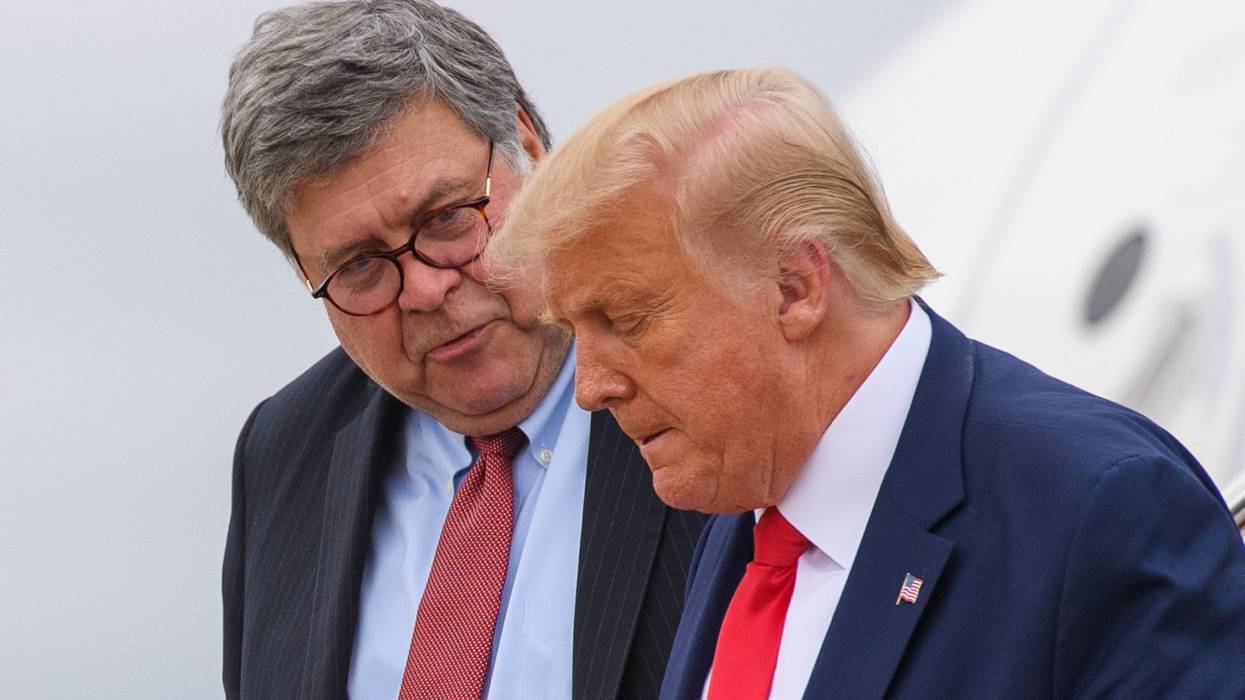
This is a developing story... Please check back for possible updates...
Following a watchdog group's win in court last week, the Biden administration on Wednesday released an unredacted memorandum from 2019 about whether then-President Donald Trump obstructed Special Counsel Robert Mueller's probe of Russia's election interference.
Noah Bookbinder--president of the organization, Citizens for Responsibility and Ethics in Washington (CREW)--highlighted that then-U.S. Attorney General Bill Barr pointed to the memo from the Department of Justice's Office of Legal Counsel to claim there was no justification for charging Trump with obstruction of justice.
"The memo presents a breathtakingly generous view of the law and facts for Donald Trump," Bookbinder said. "It twists the facts and the law to benefit Trump and does not comport with a serious reading of the law of obstruction of justice or the facts as found by Special Counsel Mueller."
As Bookbinder explained: "The memo is premised in large part on the argument that there was no underlying criminal conduct and that it's hard to charge obstruction without an underlying crime. Of course, that's not what Mueller actually found."
"Mueller found there was not sufficient evidence to charge Trump and others with conspiring with Russia," CREW's leader continued. "He didn't find no crime, just not enough evidence for charges. Of course, Trump couldn't know about that future conclusion when he decided whether or not to obstruct."
He also noted that the document "takes an exceedingly cramped view of prior cases" and "relies on Trump's use of open-ended language [about] his 'hope' the investigation would be let go, and his delegation of firing prosecutors or narrowing investigations to others when he could have done it himself, as exonerating Trump."
"The memo is not just wrong; it is dangerous coming from a usually respected office at the Department of Justice," Bookbinder added. "It is clear why Barr did not want the public to see it."
In a series of Wednesday tweets contrasting the memo with Mueller's report, New York Times reporter Charlie Savage said that the newly released document "reads like a defense lawyer's brief."
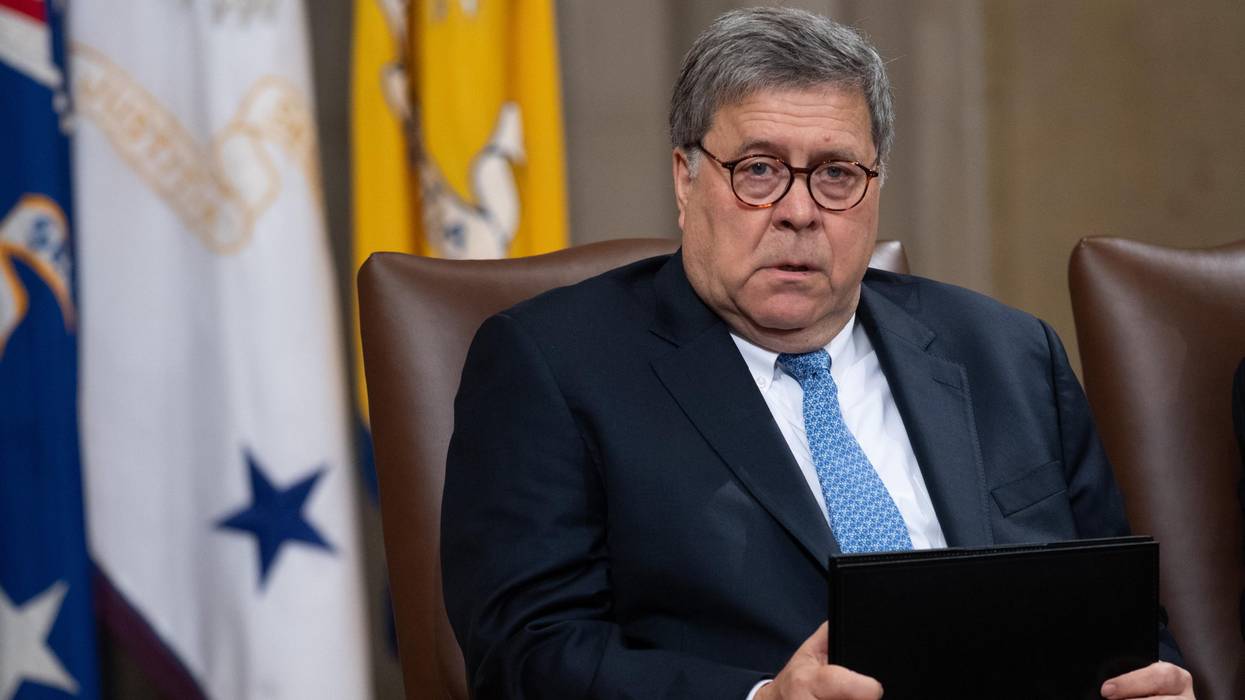
A federal appeals court on Friday ordered the release of a 2019 memorandum about whether then-President Donald Trump obstructed Special Counsel Robert Mueller's investigation into Russian interference in the 2016 presidential election.
Citizens for Responsibility and Ethics in Washington (CREW)--the watchdog fighting to reveal the U.S. Department of Justice (DOJ) memo prepared for then-Attorney General Bill Barr--celebrated the ruling as a win.
"Attorney General Barr cited this memo as a reason not to charge President Trump with obstruction of justice," said CREW spokesperson Jordan Libowitz in a statement. "The American people deserve to know what it says. Now they will."
The unanimous ruling from three judges of the U.S. Court of Appeals for the District of Columbia Circuit affirmed a lower court's opinion about the DOJ Office of Legal Counsel memo--a redacted version of which was made public last year.
D.C. Circuit Chief Judge Sri Srinivasan, joined by Judges Judith Rogers and David Tatel, outlined how the DOJ tried to conceal most of the memo "based on the deliberative process privilege, which protects records documenting an agency's internal deliberations en route to a governmental decision," but the lower court judge, Amy Berman Jackson, rejected that argument.
Jackson determined the DOJ failed to show that the privilege applied--specifically, she found that the department "had not identified a relevant agency decision as to which the memorandum formed part of the deliberations," Friday's ruling highlights.
"The department's submissions, the court explained, indicated that the memorandum conveyed advice about whether to charge the president with a crime. But the court's in camera review of the memorandum revealed that the department in fact never considered bringing a charge," it continues. "Instead, the memorandum concerned a separate decision that had gone entirely unmentioned by the government in its submissions to the court--what, if anything, to say to Congress and the public about the Mueller report."
As Bloomberg detailed:
Srinivasan... wrote that any analysis in the memo about bringing obstruction charges was more like a "thought experiment."
Srinivasan noted that the department expressed "regret" about leaving a "misimpression that an actual charging decision was under consideration," but he wrote that it missed opportunities to address the true purpose of the memo.
The court rejected the government's request for another chance to make the case for keeping the full memo secret. Srinivasan wrote that the Justice Department might have successfully argued to keep the memo sealed if it had revealed the public messaging purpose from the beginning and then tried to invoke what's known as the deliberative process privilege, but that it was too late now.
The DOJ has a week to consider appealing the latest decision. The Washington Post reported that spokespeople for the department and Barr declined to comment.
Politico noted Friday:
Trump was never charged in Mueller's probe and the special prosecutor's final report declined to opine on whether what he did in response to the investigation amounted to a crime.
However, some Trump opponents have called on the Attorney General Merrick Garland to reconsider the issue now that Trump is no longer president. Release of the long-sought DOJ memo could fuel those calls and draw more unwanted attention to Trump's potential criminal liability at a time when he is besieged by a slew of other legal woes relating to his handling of classified government records, his role in inspiring many of those involved in the January 6 attack on the Capitol, and his broader efforts to overturn Joe Biden's win in the 2020 presidential election.
As Common Dreams reported Thursday, a federal judge gave the DOJ a week to propose redactions to the warrant affidavit containing the information that led to last week's search of Mar-a-Lago, Trump's Florida home.
This post has been updated with additional details about the ruling.

Former White House counsel Pat Cipollone thinks that Mike Pence should receive the Presidential Medal of Freedom for refusing Trump's demand to commit a felony and subvert a presidential election. That's how low the bar for heroism among Trump administration alumni has sunk.
When they entered the legal profession, the attorneys advising Trump swore an oath to uphold the Constitution. Those who took government jobs in his administration swore it again. But many of them facilitated Trump's relentless efforts to undermine the rule of law.
The most notorious members of what former Attorney General William Barr now calls Trump's post-election "clown show" may have been Rudy Giuliani, Sidney Powell, John Eastman, and Jeffrey Clark. But Barr, Cipollone, and others with law degrees - including Pence - helped to create the dangerous creature that roamed the White House on January 6, 2021. Their silence during Trump's second impeachment and the months that followed has allowed that creature to continue haunting the country today.
Belatedly, three key Trump advisers with law degrees have now come forward to reveal the ugly truth about the man they had enabled for years.
Heroes or hypocrites?
Barr, one of Trump's most outspoken defenders in his administration, politicized the Justice Department to serve Trump's personal agenda. For example:
Barr now says that before he resigned, he told Trump repeatedly that the claims and conspiracy theories about widespread election fraud were "nonsense" and "bullshit." But prior to the insurrection and for months thereafter, he did not reveal that to the public.
Criticizing Trump publicly has been unfamiliar and uncomfortable territory for Pat Cipollone. American taxpayers had paid him to represent the office of the president, not Trump personally. Apparently, he forgot.
But it took a public shaming by Rep. Liz Cheney (R-WY) and the riveting testimony of a young staffer, Cassidy Hutchinson, to flush Cipollone out and into the witness chair. Finally - 18 months late - he revealed what he knew about Trump's traitorous misconduct.
Engel was with Trump from the beginning of his administration. As assistant attorney general in charge of the Justice Department's Office of Legal Counsel (OLC), he flew under the public radar, but his dubious legal opinions provided cover for Trump's flagrant abuses of power.
At the Oval Office meeting on January 3, 2021, acting Attorney General Jeffrey Rosen and his deputy, Richard Donoghue, told Trump that if he appointed the manifestly unqualified Clark to replace Rosen, they would resign. Engel warned Trump that mass Justice Department resignations - including his own - would follow, and Clark would be "left leading a graveyard."
But for more than a year, Engel said nothing publicly about that meeting.
While the January 3 Oval Office meeting was underway, the Washington Post broke the story of Trump's tape-recorded call pressuring Georgia election officials the previous day.
"I just want to find 11,780 votes," Trump urged Georgia Secretary of State Brad Raffensperger.
At that point, Cipollone, Engel, Rosen, and everyone else attending the Sunday night session knew that Trump was proceeding simultaneously on multiple fronts to overturn the election.
But as January 6 approached, they remained silent.
As the House impeached Trump for his role in the insurrection, they remained silent.
As GOP-dominated state legislatures and their Republican governors relied on Trump's Big Lie to adopt draconian voter suppression laws and propose legislation seeking to thwart future popular presidential vote outcomes, they remained silent.
As Trump and his allies rewrote the story of the insurrection so that the armed mob became "peaceful protesters" and the attackers became "tourists," they remained silent.
And as Republican leaders flip-flopped, they remained silent.
In the immediate aftermath of the attack, Sen. Mitch McConnell (R-KY) condemned Trump. Now he says he'd vote for him again.
Likewise, Rep. Kevin McCarthy (R-CA) said that Trump bore responsibility for the attack. Now he has returned to his familiar role as Trump's lackey.
On January 7, 2021, Sen. Lindsey Graham (R-SC) said, "Count me out... The president needs to understand that his actions were the problem, not the solution. ... It breaks my heart that my friend, a president of consequence, would allow [Jan. 6] to happen, and it will be a major part of his presidency. It was a self-inflicted wound." In September 2021, Graham said that he hoped Trump runs again in 2024.
If Barr had broken his silence before January 6, would the violent attack on the Capitol even have occurred?
In the immediate aftermath of the attack, if Cipollone, Engel, Rosen, and others had revealed what they knew, would Trump have remained the face of the GOP?
If collective fear hadn't kept all of them quiet for so long, would Trump today be the "clear and present danger to democracy" that former Judge J. Michael Luttig warned?
Late is better than never for Republicans who resisted Trump's attempted coup and have now come forward. But they are not profiles in courage. Their prolonged silence forced the nation to live through the catastrophic consequences of their earlier cowardice.
And those consequences endure.
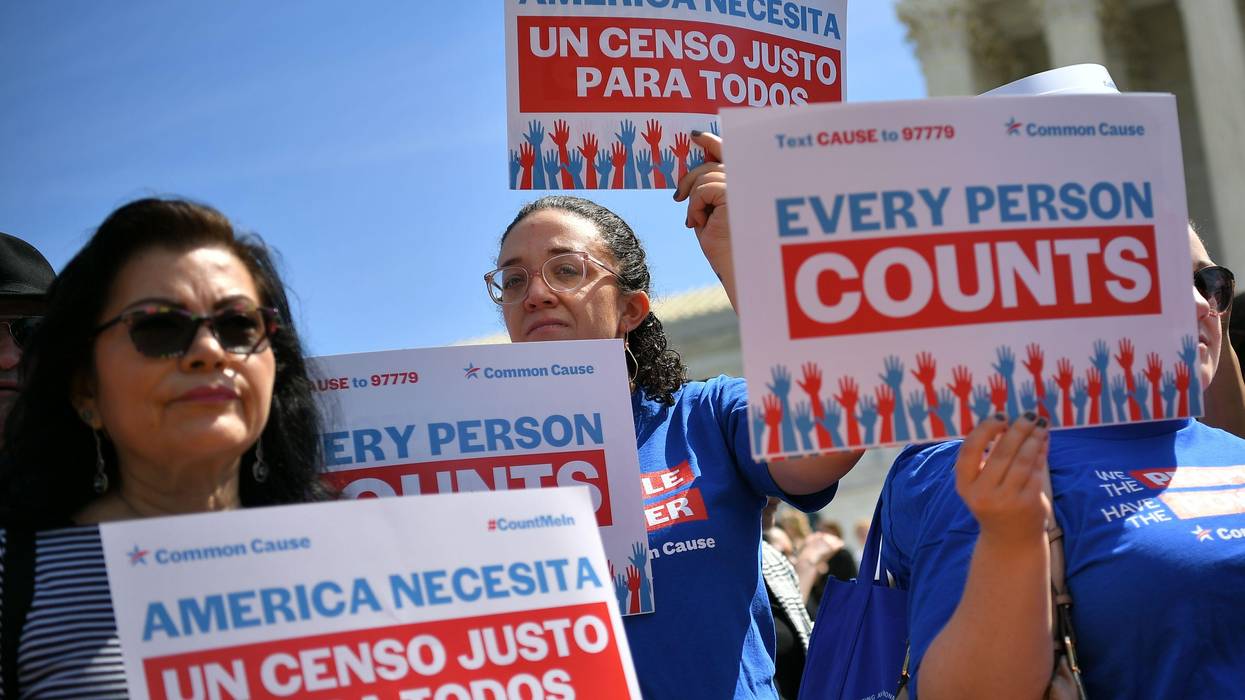
A U.S. House of Representatives panel probing the Trump administration's attempt to add a citizenship question to the 2020 census on Wednesday released a memorandum underscoring that the failed effort was politically motivated.
"The documents ultimately obtained by the committee... shed additional light on the depth of partisan manipulation in the 2020 census."
The memo focuses on documents that were finally shared with the panel in January after former President Donald Trump's commerce secretary and attorney general, Wilbur Ross and William Barr, were held in contempt of Congress for refusing to turn over requested materials.
"The documents ultimately obtained by the committee--including the legal memorandum prepared for Secretary Ross and secret communications between Trump administration lawyers and political appointees--shed additional light on the depth of partisan manipulation in the 2020 census, including senior officials' focus on using a citizenship question to alter apportionment counts and their illegal attempt to develop a pretext," the memo states.
"These documents exposed the vulnerability of our national statistical system to partisan manipulation and highlighted the need for Congress to protect the constitutionally mandated census from abuses of power and political interference," the memo continues.
As the panel's report lays out, the documents from the departments of Commerce and Justice (DOJ) show that:
"Lest anyone doubted that what the Trump administration was up to was wrong, these documents show that even the Trump administration itself knew that what it was doing was illegal," Thomas Wolf, deputy director of the Democracy Program at the Brennan Center for Justice, told The Washington Post on Wednesday.
Civil rights groups have long slammed the Trump administration's push for inserting a citizenship question into the census--which informs the allocation of federal funding and the drawing of political voting maps--as a bid to benefit Republican candidates for office.
John C. Yang, president and executive director of Asian Americans Advancing Justice - AAJC, one of the groups that challenged the Trump effort, nodded to that critique on Wednesday.
"The documents released today demonstrate the depths to which political actors sought to corrupt a basic function enumerated in the Constitution: the counting of all people in America every 10 years," Yang told The New York Times. "Secretary Ross chose to pursue his political goals through whatever means available."
Both the committee's memo and chair, Rep. Carolyn Maloney (D-N.Y.), pointed to the findings as further evidence of the need for reforms--specifically those included in the Ensuring a Fair and Accurate Census Act that she introduced last week.
"For years, the Trump administration delayed and obstructed the oversight committee's investigation into the true reason for adding a citizenship question to the 2020 census, even after the Supreme Court ruled the administration's efforts were illegal," Maloney said in a statement Wednesday.
Though the high court's 2019 decision effectively blocked the inclusion of the citizenship question and a federal court ruled against a July 2020 Trump memorandum intended to exclude undocumented immigrants from the census, a government analysis confirmed this year that minorities were significantly undercounted.
Maloney said that the committee's new memo "pulls back the curtain on this shameful conduct and shows clearly how the Trump administration secretly tried to manipulate the census for political gain while lying to the public and Congress about their goals."
The congresswoman added that "it is clear that legislative reforms are needed to prevent any future illegal or unconstitutional efforts to interfere with the census and chip away at our democracy."
"My bill, the Ensuring a Fair and Accurate Census Act, is commonsense legislation that will help prevent a similar crisis from occurring again and will protect one of our nation's most vital democratic institutions from partisan exploitation," she continued, calling on the Democrat-controlled House to swiftly pass the legislation "to safeguard the integrity and independence of the U.S. Census Bureau."