

SUBSCRIBE TO OUR FREE NEWSLETTER
Daily news & progressive opinion—funded by the people, not the corporations—delivered straight to your inbox.
5
#000000
#FFFFFF
To donate by check, phone, or other method, see our More Ways to Give page.
Daily news & progressive opinion—funded by the people, not the corporations—delivered straight to your inbox.
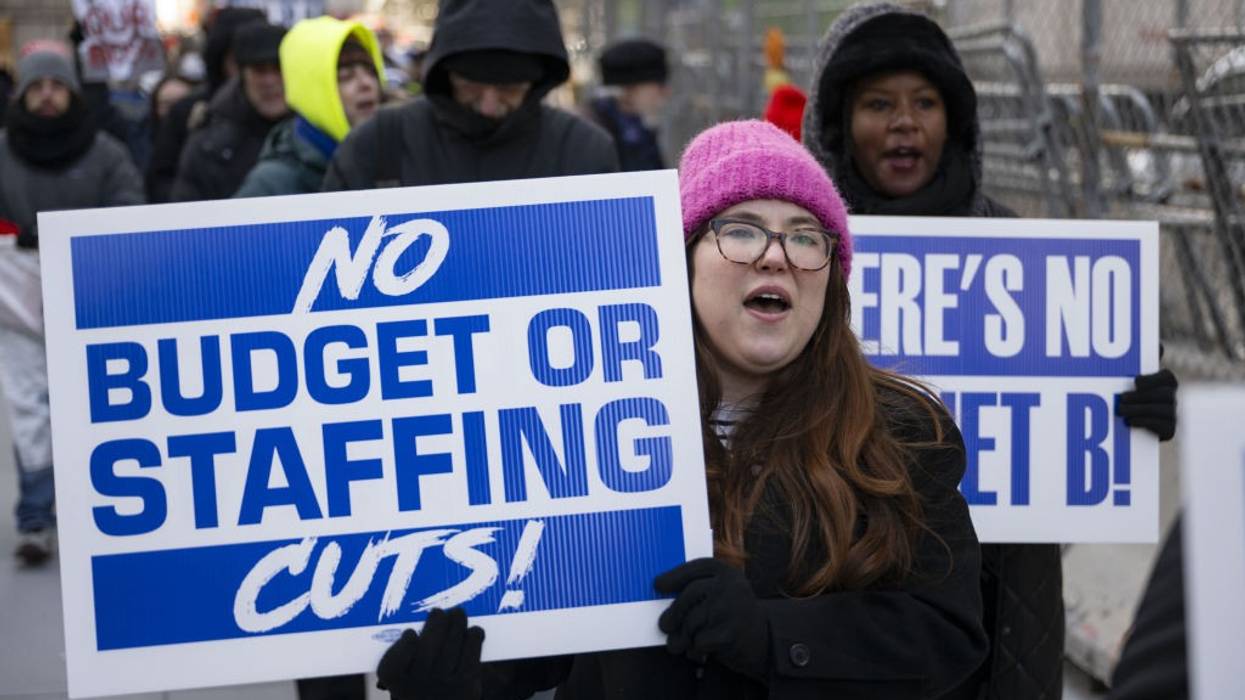
The coalition behind the legal challenge the Court's decision "rightfully maintains the block on the Trump-Vance administration's unlawful, disruptive, and destructive reorganization of the federal government."
The 9th Circuit Court of Appeals on Friday night kept in place a block on President Donald Trump's efforts for massive firings and agency restructuring across the federal government, saying a far-reaching executive order signed in February went way beyond his constitutional authority and that the potential harm caused by the terminations warrants the hold while legal challenges continue to play out in the courts.
"The Executive Order at issue here far exceeds the President's supervisory powers under the Constitution," the appeals court wrote in its 2-1 decision.
The majority decision, written by Senior Circuit Judge William Fletcher, noted that while "the President enjoys significant removal power with respect to the appointed officers of federal agencies," the kind of far-reaching approach represented by Trump's executive order "has long been subject to Congressional approval."
According to the Associated Press:
The Republican administration had sought an emergency stay of an injunction issued by U.S. Judge Susan Illston of San Francisco in a lawsuit brought by labor unions and cities, including San Francisco and Chicago, and the group Democracy Forward.
The Justice Department has also previously appealed her ruling to the Supreme Court, one of a string of emergency appeals arguing federal judges had overstepped their authority.
In a statement late Friday, the coalition behind the lawsuit that challenge Trump's order—which includes nationwide labor unions and non-profit groups as well as cities and counties in California, Illinois, Maryland, Texas, and Washington—welcomed the ruling as it once again slammed Trump's assault on the nation's federal workforce and the rule of law.
The 9th Circuit's decision, the coalition said, "rightfully maintains the block on the Trump-Vance administration's unlawful, disruptive, and destructive reorganization of the federal government."
Trump's actions, the statement continued, "have already thrown agencies into chaos, disrupting critical services to people and communities across our nation. Each of us represents communities deeply invested in the efficiency of the federal government – laying off federal employees en masse and reorganizing government functions haphazardly does not achieve that. We are gratified by the court's decision today to allow the pause of these harmful actions to endure while our case proceeds."
"The Trump administration's reckless attempt to dismantle our government without congressional approval threatens vital services Americans depend on every day—from caring for veterans and safeguarding public health, to protecting our environment and maintaining national security," said Everett Kelley, president of the American Federation of Government Employees (AFGE) union, the nation's largest federal worker union and a party to the suit, in response to the ruling. “This illegal power grab would gut federal agencies, disrupt communities nationwide, and put critical public services at risk. AFGE is proud to stand shoulder-to-shoulder with this coalition to protect not just the patriotic public servants we represent, but the integrity of American government and the essential services that our nation deserves."

"The U.S. is providing the bombs for this genocide," said one plaintiff. "I have lost countless friends and neighbors... When will the courts uphold the law and stop the horror?"
Six weeks after a three-judge panel of the 9th U.S. Circuit Court of Appeals dismissed a lawsuit filed by Palestinians, Palestinian Americans, and rights groups accusing senior Biden administration officials of complicity in Israel's Gaza genocide, plaintiffs in the case on Thursday asked the full federal appellate court to revisit their suit.
The plaintiffs' petition—which was filed by the Center for Constitutional Rights (CCR) and the law firm Van Der Hout LLP—requests an en banc rehearing of their case, in which U.S. President Joe Biden, Secretary of State Antony Blinken, and Defense Secretary Lloyd Austin are defendants. To win such a rehearing, a case must involve a matter of "exceptional importance" or be inconsistent with previous court rulings.
"With unconditional U.S. support, Israel has killed about 40,000 Palestinians, injured more than 90,000, forcibly displaced 2 million, and pushed large segments of Gaza into famine," CCR said in a statement. "Israel's actions, which followed numerous expressions of eliminationist intent by its leaders, have led many legal experts and scholars to conclude that it is committing genocide, the most serious human rights crime."
"With unconditional U.S. support, Israel has killed about 40,000 Palestinians, injured more than 90,000, forcibly displaced 2 million, and pushed large segments of Gaza into famine."
Plaintiff Ayman Nijim said: "Just this week, my brother's apartment building in Gaza was completely destroyed—the second time he lost his home, after our family house was obliterated in 2009. The U.S. is providing the bombs for this genocide. I have lost countless friends and neighbors, so many that I couldn't know where to start to grieve. When will the courts uphold the law and stop the horror?"
The lawsuit—originally filed in November in the U.S. District Court for the Northern District of California in Oakland—sought to stop the Biden administration from aiding Israel's bombardment of Gaza. Billions of dollars worth of U.S.-supplied weapons have played a critical role in Israel's war and have been used in some of the deadliest Israel Defense Forces massacres of Palestinians.
While the court found that "the current treatment of the Palestinians in the Gaza Strip by the Israeli military may plausibly constitute a genocide in violation of international law," it dismissed the case on jurisdictional grounds in late January. The 9th Circuit subsequently granted an expedited appeal in the case, which was heard by the three-judge panel in June and dismissed the following month.
"For almost 11 months we have witnessed the intentional destruction of the Palestinian people in Gaza made possible by these officials," CCR senior staff attorney Pam Spees said on Friday. "With this ruling, the panel has said our courts are too small to do the job they were assigned at the founding—to be a co-equal branch in our government and a check and balance on presidential power."
"If the 9th Circuit doesn't course-correct here, it will be giving this and future presidents license to violate the law at will in the realm of foreign relations," Spees added.
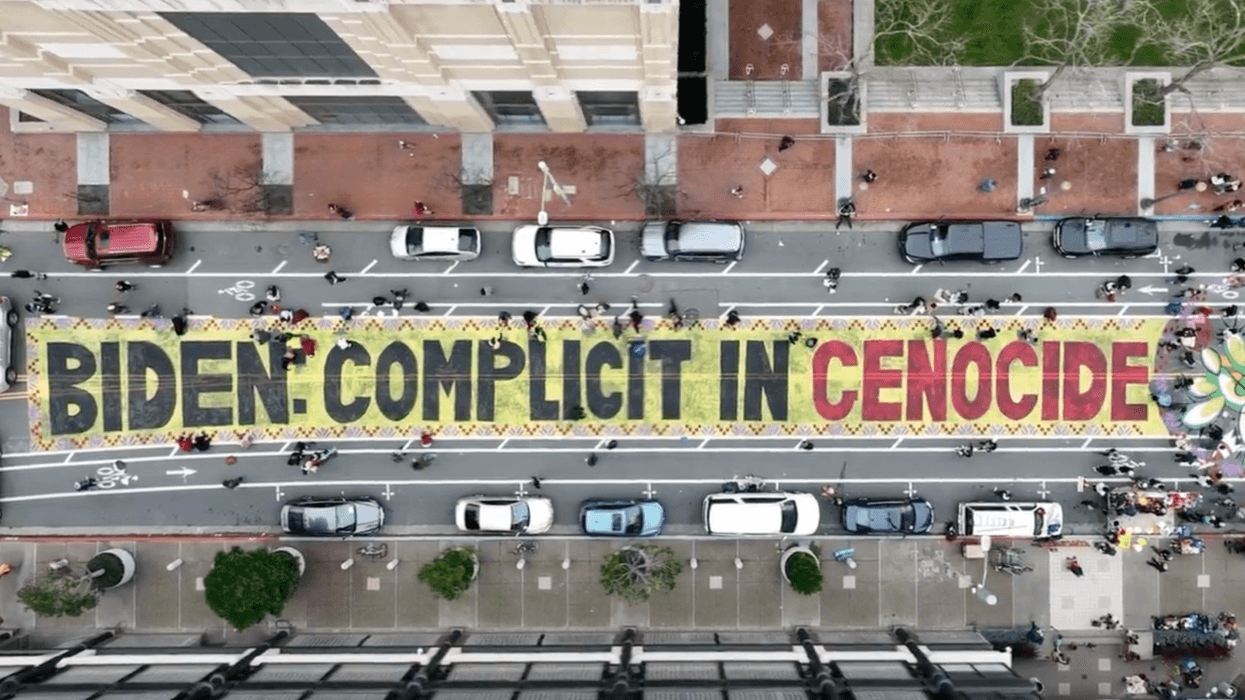
"We turned to the law to help stop the horror, and the court chose to do nothing," said one plaintiff in the case. "We are beyond disappointed."
Palestine defenders on Tuesday decried a U.S. federal appellate panel's dismissal of a case brought by Palestinians accusing senior Biden administration officials of failing to prevent and complicity in Israeli genocide in Gaza.
A three-judge panel of the 9th U.S. Circuit Court of Appeals in San Francisco affirmed a lower court's dismissal of the lawsuit against President Joe Biden, Secretary of State Antony Blinken, and Defense Secretary Lloyd Austin, which was led by the Center for Constitutional Rights (CCR) on behalf of several Palestinian groups and individuals.
During a Tuesday interview on Democracy Now!, CCR attorney Katherine Gallagher—who represented plaintiffs in the case—said its dismissal "essentially gives the blank check to carry out any kind of conduct that the executive wants in times of genocide, in times of war."
Gallagher's interview followed a Monday statement in which she referred to the recent U.S. Supreme Court ruling granting the president "absolute immunity" for "official acts."
"On the heels of Trump v. United States, this stunning abdication of the court's role to serve as a check on the executive even in the face of its support for genocide should set off alarm bells for all," she said.
The lawsuit—originally filed in November in the U.S. District Court for the Northern District of California in Oakland—sought to stop the Biden administration from aiding Israel's bombardment of Gaza. U.S. weapons have played a critical role in Israel's war, which Palestinian and international agencies say has killed, wounded, or left missing more than 137,500 Gazans.
While the court found that "the current treatment of the Palestinians in the Gaza Strip by the Israeli military may plausibly constitute a genocide in violation of international law," it dismissed the case on jurisdictional grounds in late January. The 9th Circuit subsequently granted an expedited appeal in the case, which was heard in June.
"This decision is mind-boggling and, frankly, scary," plaintiff Waeil Elbhassi said in a statement Monday. "It is just unfathomable, while we count our dead, witness the total obliteration of Gaza—aided by our own government."
"As the death toll keeps rising and we see nonstop images of carnage during this livestreamed genocide, the court washes its hands of our case," Elbhassi added. "We turned to the law to help stop the horror, and the court chose to do nothing. We are beyond disappointed. We have no choice but to continue to fight for our people. Our very existence is at stake."
Israel's conduct in Gaza—including alleged forced starvation that has fueled deadly famine in parts of the besieged strip—is under investigation by the International Court of Justice in a genocide case brought by South Africa.
Additionally, International Criminal Court Chief Prosecutor Karim Khan has applied for warrants to arrest Israeli Prime Minister Benjamin Netanyahu, Israeli Defense Minister Yoav Gallant, and three Hamas leaders for crimes including extermination allegedly committed on and after October 7.
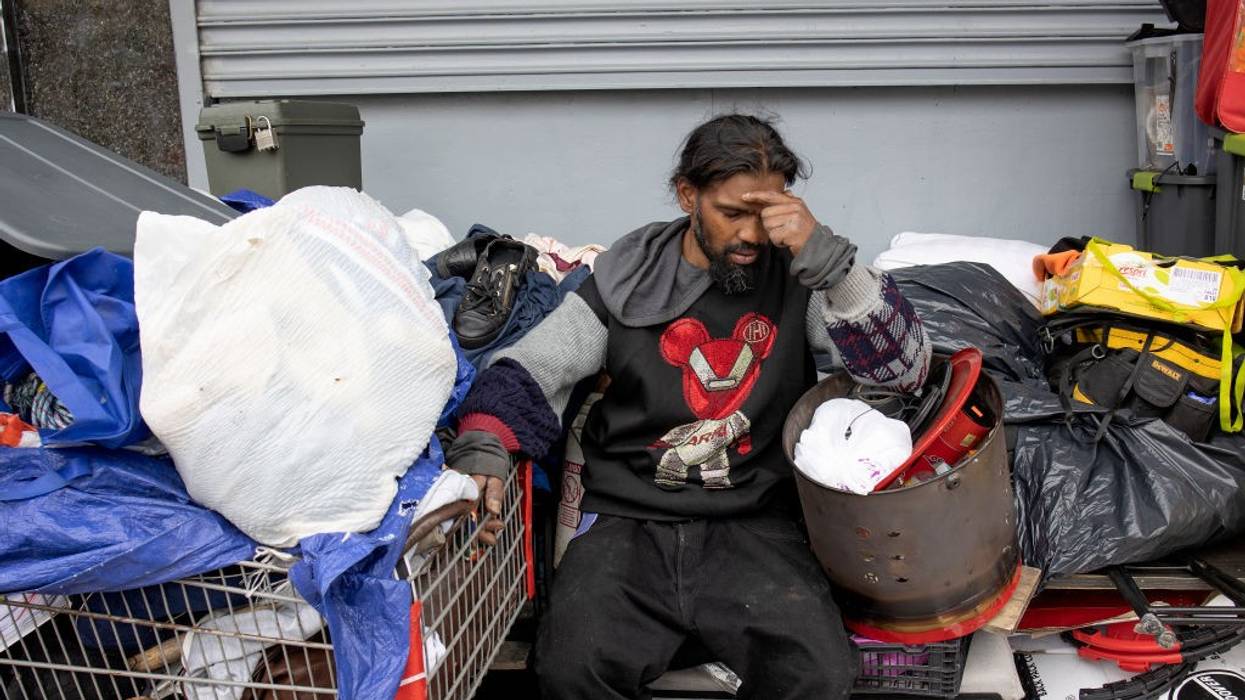
"Maybe the right-wing justices could empathize with the most vulnerable Americans if they spent less time jet-setting on luxury vacations on their wealthy benefactors' dime," said one critic.
"SCOTUS just criminalized homelessness."
So said numerous legal experts and advocates for the unhoused Friday after the U.S. Supreme Court's right-wing supermajority ruled that local governments can enforce bans on sleeping outdoors, regardless of whether municipalities are able to offer them shelter space.
In a 6-3 decision along ideological lines, the justices ruled in City of Grants Pass, Oregon v. Johnson that officials can criminalize sleeping and camping on public property including parks, even when housing options are unavailable or unaffordable.
"We are disappointed that a majority of the court has decided that our Constitution allows a city to punish its homeless residents simply for sleeping outside with a blanket to survive the cold when there is nowhere else for them to go," said Ed Johnson, director of litigation at the Oregon Law Center, which represented unhoused Grants Pass residents in the case.
The decision overturned a ruling by the San Francisco-based 9th U.S. Circuit Court of Appeals that found bans on outdoor sleeping violated the 8th Amendment's proscription of cruel and unusual punishment.
"Homelessness is complex. Its causes are many. So may be the public policy responses required to address it," Justice Neil Gorsuch wrote for the majority. "A handful of federal judges cannot begin to 'match' the collective wisdom the American people possess in deciding 'how best to handle' a pressing social question like homelessness."
Gorsuch suggested that unhoused people could invoke "necessity... insanity, diminished-capacity, and duress defenses" when they are prosecuted for poverty-related offenses.
In a dissent calling the criminalization of unhoused people "unconscionable and unconstitutional," Justice Sonia Sotomayor wrote that "sleep is a biological necessity, not a crime."
"For some people, sleeping outside is their only option," she noted.
Sotomayor continued:
Homelessness is a reality for too many Americans. On any given night, over half a million people across the country lack a fixed, regular, and adequate nighttime residence. Many do not have access to shelters and are left to sleep in cars, sidewalks, parks, and other public places. They experience homelessness due to complex and interconnected issues, including crippling debt and stagnant wages; domestic and sexual abuse; physical and psychiatric disabilities; and rising housing costs coupled with declining affordable housing options.
"It is possible to acknowledge and balance the issues facing local governments, the humanity and dignity of homeless people, and our constitutional principles," Sotomayor asserted. "Instead, the majority focuses almost exclusively on the needs of local governments and leaves the most vulnerable in our society with an impossible choice: Either stay awake or be arrested."
"The Constitution provides a baseline of rights for all Americans rich and poor, housed and unhoused," Sotomayor added. "This court must safeguard those rights even when, and perhaps especially when, doing so is uncomfortable or unpopular."
Attorney Theane Evangelis, who represented Grants Pass in the case, cheered the decision, arguing that the 9th Circuit ruling had "tied the hands of local governments."
Some leaders in places where the homelessness crisis is most acute welcomed Friday's ruling, including Democratic California Gov. Gavin Newsom, who filed an amicus brief in the case, and London Breed, the Democratic mayor of San Francisco, which also filed an amicus brief.
"Gorsuch extensively cites San Francisco's amicus in the decision,"
noted Raya Steier, a San Francisco-based attorney who led the successful campaign to pass a local ballot measure taxing the wealthy to generate hundreds of millions of dollars in revenue for Covid rent relief and affordable housing. "Congratulations London Breed and David Chiu, this is now your legacy."
Economic justice advocates said rising inequality and housing costs have played a key role in driving the U.S. unhoused population to a record 650,000. If all the unhoused people in the country came together to form a city, it would be the nation's 23rd-largest—ahead of Las Vegas, Boston, Detroit, and Portland, Oregon—based on 2020 Census figures.
"We are in the midst of a crisis where housing is unaffordable for millions of Americans. Millions of us are just one paycheck away from losing our homes," New York-based Center for Popular Democracy Action said in a statement. "Today, the Supreme Court has made the morally bankrupt decision to allow people experiencing homelessness to be persecuted and punished just for existing, while denying them shelter and safety as a human right."
"For those who are unhoused, this will mean fines, tickets, and even incarceration for a vulnerable community already abandoned by city and state authorities," the group added.
Referring to the high court's 2010 Citizens United v. Federal Election Commission ruling, many social media users said that "corporations are people" but "the homeless are not."
Others pointed to the millions of dollars worth of gifts and other perks—many of them undisclosed—lavished upon Supreme Court members, especially far-right Justices Clarence Thomas and Samuel Alito, by right-wing billionaires, some with business before the court.
"Today's decision shows how little the MAGA supermajority cares about struggling Americans," said Tracy Adair, communications manager at Stand Up America, a New York-based pro-democracy group. "It is unfathomably cruel to punish unhoused individuals for existing on public property when they have nowhere else to go."
"Maybe the right-wing justices could empathize with the most vulnerable Americans if they spent less time jet-setting on luxury vacations on their wealthy benefactors' dime," Adair added.
Advocates for the unhoused stressed that the solution to homelessness is housing, not criminalization.
"Cities should not punish people for being poor," said Jennifer Friedenbach, executive director of the Coalition on Homelessness, a housing justice and human rights group serving San Francisco. "The solution is, and has always been, safe and affordable housing."
In response to the ruling, the National Homelessness Law Center is calling on the Biden administration to invest at least $356 billion next year to fund universal rental assistance, upgraded public housing, a national housing trust fund, eviction and homelessness prevention programs, and voluntary supportive and emergency services.
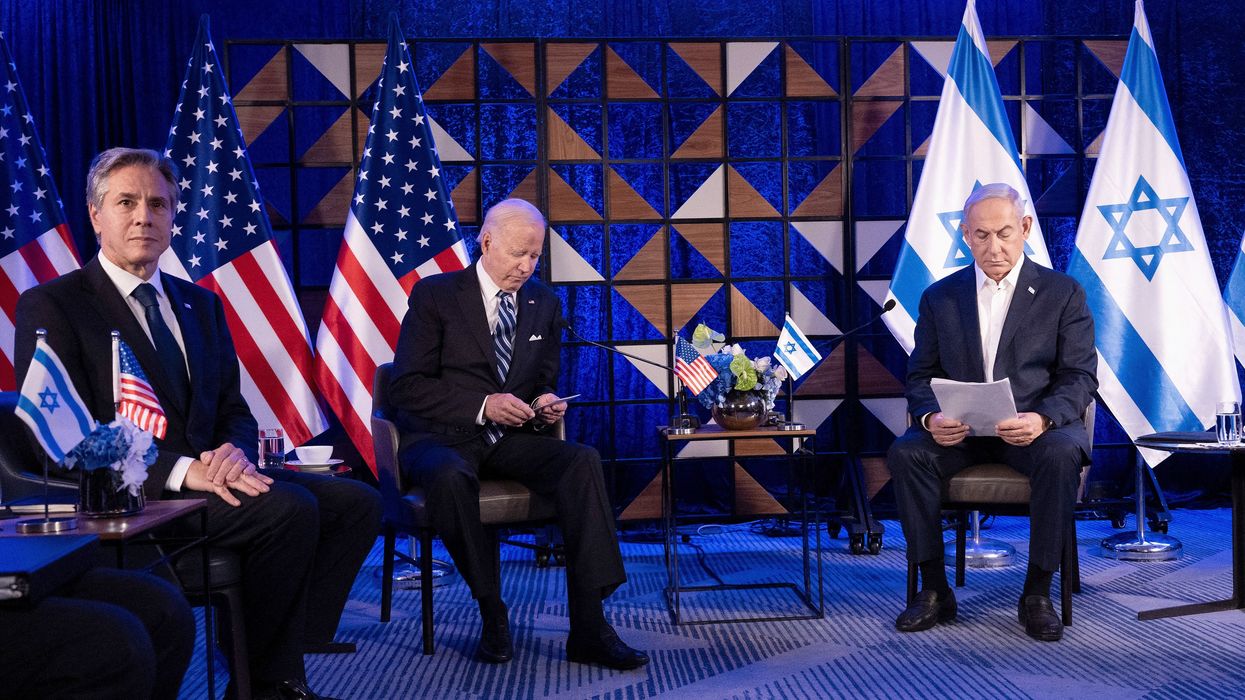
"Genocide can never be a legitimate foreign policy choice," argued one plaintiffs' attorney.
Following the dismissal earlier this year of a federal lawsuit accusing senior Biden administration officials of failing to prevent Israel's U.S.-backed genocide in Gaza, the 9th Circuit Court of Appeals in San Francisco on Monday began hearing an expedited appeal by Palestinian plaintiffs in the case.
Arguing that U.S. leaders "have a legal duty to prevent, and not further," genocide, the Center for Constitutional Rights (CCR) first filed a lawsuit last November in the U.S. District Court for the Northern District of California in Oakland on behalf of the rights groups Defense for Children International-Palestine (DCI-P) and al-Haq, as well as a group of individual Palestinians in Gaza and the United States.
"Genocide can never be a legitimate foreign policy choice," CCR senior staff attorney Katie Gallagher argued during Monday's proceedings.
The suit—which names President Joe Biden, Secretary of State Antony Blinken, and Defense Secretary Lloyd Austin as defendants—seeks to force the U.S. administration to stop "providing further arms, money, and diplomatic support to Israel" as it wages a war of annihilation in which more than 132,000 Palestinians have been killed, maimed, or left missing; nearly 90% of Gaza's population has been forcibly displaced; and at least hundreds of thousands of people are starving.
Palestinian American writer Laila al-Haddad, a plaintiff in the case, lost her aunt and three of her cousins to a November Israeli airstrike on a United Nations school in the Jabalia refugee camp that killed more than 30 people.
"I promised my surviving family members in Gaza that I would do everything in my power to advocate on their behalf," al-Haddad wrote in an article published Monday by The Nation.
"Although I knew the case would be an uphill battle, I testified to make a record of Israel's horrific slaughter of my family, the displacement and dispossession and starvation of the surviving members, the deliberate destruction of my hometown and everything that sustains life there, and ethnic cleansing of my people," she continued.
"As a Palestinian, I struggle to balance the disgust and impotence I feel knowing that my tax dollars are being used to kill my family members in Gaza with an urgency to do everything in my power to demand an end to this administration's complicity in genocide," al-Haddad added.
U.S. District Judge Jeffrey White ruled on January 31 that the case fell "outside the court's limited jurisdiction" and rejected the suit on technical grounds—even as he wrote that "the current treatment of the Palestinians in the Gaza Strip by the Israeli military may plausibly constitute a genocide in violation of international law."
On February 27, the 9th Circuit Court granted a motion by CCR and co-counsel at Van Der Hout LLP to expedite plaintiffs' appeal amid soaring Palestinian civilian casualties and destruction wrought by Israel's assault on Gaza.
Last week, 9th Circuit Judge Ryan Nelson
recused himself from the new case following pressure from plaintiffs who questioned his impartiality after he visited Israel in March with 13 other federal judges on a trip sponsored by the World Jewish Congress meant to convince U.S. jurists of the legality of Israel's Gaza onslaught.
Genocide is defined under the 1948 Genocide Convention as killing or causing serious physical or psychological harm to members of a group, "deliberately inflicting on the group conditions of life calculated to bring about its physical destruction in whole or in part, imposing measures intended to prevent births within the group," or "forcibly transferring children of the group to another group."
At least hundreds of jurists and genocide experts around the world concur that Israel is committing genocide in Gaza. The International Court of Justice is currently weighing a genocide case against Israel brought by South Africa and backed by more than 30 nations and regional blocs. Last month, International Criminal Court Prosecutor Karim Khan said he is seeking to arrest Israeli Prime Minister Benjamin Netanyahu, Israeli Defense Minister Yoav Gallant, and three Hamas leaders for alleged crimes including extermination.
As CCR noted:
Numerous Israeli government leaders have expressed clear genocidal intentions and deployed dehumanizing characterizations of Palestinians, including "human animals." At the same time, the Israeli military has bombed civilian areas and infrastructure, including by using chemical weapons, and deprived Palestinians of everything necessary for human life, including water, food, electricity, fuel, and medicine. Those statements of intent—when combined with mass killing, causing serious bodily and mental harm, and the total siege and closure creating conditions of life to bring about the physical destruction of the group—reveal evidence of an unfolding crime of genocide.
The Biden administration has provided Israel with billions of dollars in military aid and arms and ammunition sales, as well as diplomatic cover in the form of United Nations Security Council vetoes and genocide denial, as its forces continue to obliterate Gaza 248 days after the Hamas-led attacks on October 7 that left more than 1,100 Israelis and foreign nationals dead—at least some of whom were killed by so-called "friendly fire"—and over 240 others taken hostage.
"The U.S. courts have an opportunity in front of them: Judges can choose to take a minimal step towards allowing DCI-P and the other plaintiffs to have a chance at holding the Biden administration accountable for its role in the genocide of Palestinians, or they can sit back and refuse to carry out checks on the executive branch," DCI-P advocacy officer Miranda Cleland wrote in an opinion piece published Friday by Middle East Eye. "It is a choice, quite literally, between life and death."
"Israeli forces, emboldened by the so-called ironclad support of the Biden administration, have killed on average more than 60 Palestinian children every day since October 7," she continued. "That's more than 15,000 children who won't go back to school, or play with their friends, or hug their parents ever again. Those 15,000 children will not grow up and live in a free Palestine."
"If the U.S. courts continue to green-light Biden's impunity, more Palestinian children and their families will pay the price," Cleland added. "It is a price that I, alongside many other voters in the U.S., are not willing to accept."
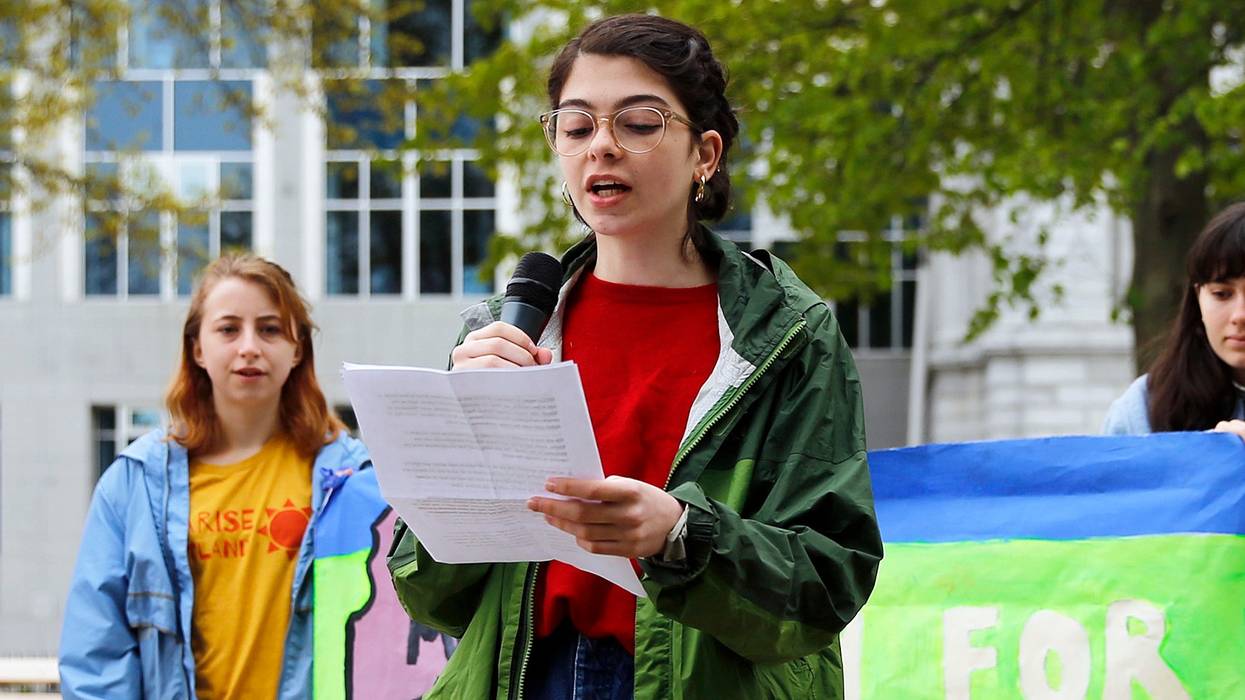
"We will keep fighting for climate justice," said one plaintiff, "but this is another dark day for protecting young people from climate harm imposed by their government."
A panel of three Trump-appointed judges on Wednesday granted the Biden Justice Department's request to have a landmark youth climate case dismissed, another setback for a long-running effort to hold the U.S. government accountable for damaging the planet and violating the rights of younger generations.
The order handed down by a 9th Circuit Court of Appeals panel instructs an Oregon district court to toss Juliana v. United States for lack of standing, siding with the Justice Department's emergency petition for a writ of mandamus—which the DOJ itself describes as "an extraordinary remedy" that "should only be used in exceptional circumstances of peculiar emergency or public importance."
Julia Olson, co-executive director of Our Children's Trust, a public interest law firm backing the youth plaintiffs, said in a statement Wednesday that "the Biden administration was wrong to use an emergency measure to stop youth plaintiffs from having their day in court."
"The real emergency is the climate emergency," said Olson. "This emergency was not created by these young people, who have just been stripped of their fundamental constitutional rights by one of the highest courts in our country. Children deserve access to justice."
Calling the 9th Circuit decision "tragic and unjust" and "wrong on the law," Olson said the legal fight is "not over" and stressed that President Joe Biden "can still make this right by coming to the settlement table."
"We will keep fighting for climate justice, but this is another dark day for protecting young people from climate harm imposed by their government."
Juliana v. United States was brought in 2015 by 21 young Americans who argued the federal government has violated their "fundamental constitutional rights to life, liberty, and property" by continuing to allow the extraction of fossil fuels despite knowing their central role in destructive planetary heating.
Three consecutive administrations have worked aggressively to prevent a trial, deploying emergency legal tactics to delay and derail the youth-led case even as climate impacts became increasingly devastating in the U.S. and around the world.
Mat dos Santos, general counsel of Our Children's Trust, warned last month that "it's a mistake" for the Biden administration to "take this position in an election year, especially when young voters continue to be more and more disenchanted with the current administration and the permitting of big fossil fuel projects."
"This is an opportunity for the administration to do right by young people," he added.
Earlier this year, just before parties to the case were set to receive trial dates from a federal judge in Oregon, the Biden Justice Department filed a motion to stay the case and then another to have it tossed, drawing outrage from the youth plaintiffs. Dozens of members of Congress have weighed in on the side of the plaintiffs, arguing they should be allowed a trial to present their arguments and evidence.
Avery McRae, one of the plaintiffs, said in response to the 9th Circuit order on Wednesday that "every time we get a decision as devastating as this one, I lose more and more hope that my country is as democratic as it says it is."
"I have been pleading for my government to hear our case since I was 10 years old, and I am now nearly 19," said McRae. "A functioning democracy would not make a child beg for their rights to be protected in the courts, just to be ignored nearly a decade later. I am fed up with the continuous attempts to squash this case and silence our voices."
Another plaintiff, Nathan Baring, said that "we will keep fighting for climate justice, but this is another dark day for protecting young people from climate harm imposed by their government."
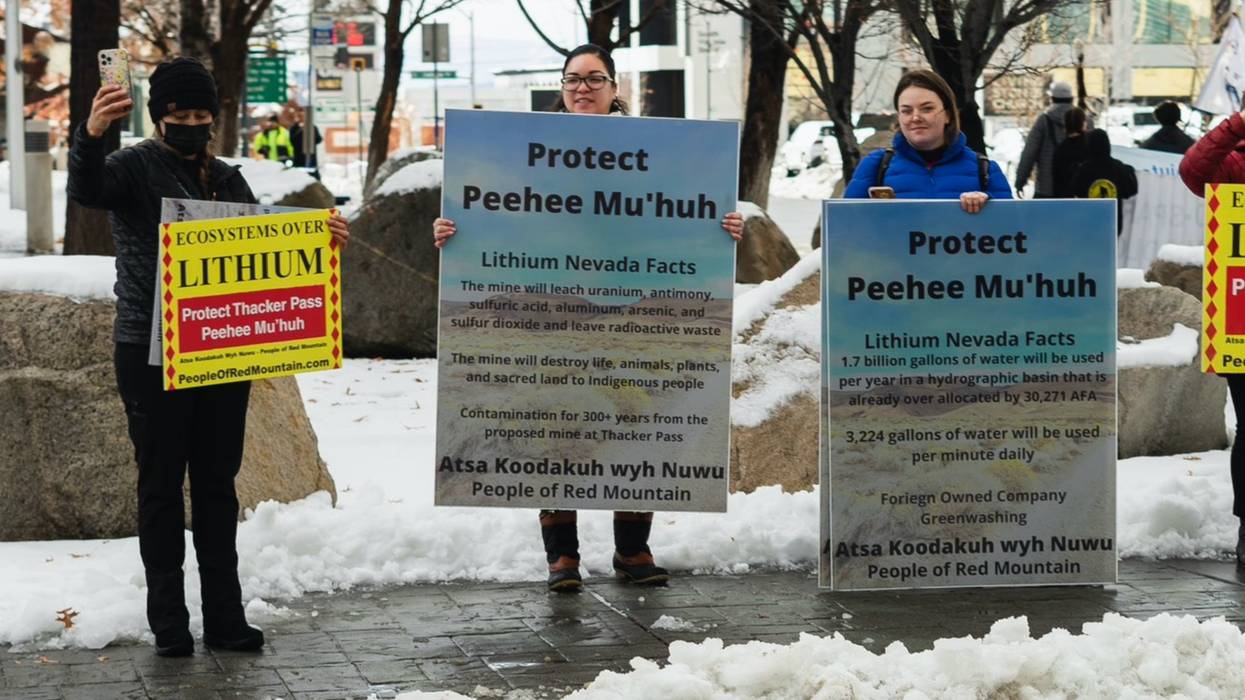
"This massive open-pit mine has been fast-tracked from start to finish in defiance of environmental laws, all in the name of 'green energy,' but its environmental impacts will be permanent and severe," said one opponent of the project.
Indigenous and environmental activists on Wednesday decried the 9th U.S. Circuit Court of Appeals' denial of an emergency injunction sought by conservation groups to block a proposed northern Nevada lithium mine that opponents argue was approved illegally and will harm the land and wildlife in the delicate desert ecosystem.
The San Francisco-based 9th Circuit denied a bid by the Western Watersheds Project (WWP) that would have stopped Lithium Nevada, a subsidiary of Canada-based Lithium Americas, from breaking ground on the Thacker Pass Lithium Mine in Humboldt County near the Oregon border.
Last month, WWP filed an emergency motion for injunction in the the U.S. District Court of Nevada after a federal judge ordered the Bureau of Land Management (BLM) to review part of its approval of the mine but allowed construction to proceed in the meantime. That request was denied last Friday.
"It's a truly unfortunate outcome for the land, wildlife, and cultural resources of this area," WWP staff attorney Talasi Brooks said in a statement. "This massive open-pit mine has been fast-tracked from start to finish in defiance of environmental laws, all in the name of 'green energy,' but its environmental impacts will be permanent and severe."
Opponents argue the Thacker Pass project—which would tap into the largest known source of lithium in the United States and was approved during the final days of the Trump administration—was unlawfully authorized and will irreparably damage lands and wildlife.
Three Native American tribes—the Reno-Sparks Indian Colony, Burns Paiute Tribe, and Summit Lake Paiute Tribe—are also suing in a bid to block construction of the mine, claiming that claimed BLM withheld key information from the Nevada State Historic Preservation Office and misrepresented how much the agency consulted with tribes prior to approving the project.
Thacker Pass—or Pass PeeHee Mu'Huh, which means "rotten moon" to all three tribes—is the site of a September 12, 1865 massacre of dozens and perhaps scores of Northern Paiute men, women, and children by U.S. Cavalry troops. The three tribes want all of Thacker Pass listed on the National Register of Historic Places.
"It is a disappointment to see valuable biological, cultural, and visual resources sacrificed for a stripmine that has been greenwashed to be good for the environment."
"It is a disappointment to see valuable biological, cultural, and visual resources sacrificed for a stripmine that has been greenwashed to be good for the environment," said Kevin Emmerich, co-founder of the advocacy group Basin and Range Watch.
"In reality, the mine will impact Great Basin wildlife and hydrology for centuries or more," Emmerich added. "We will not see any kind of recovery of this region in our lifetime."
Katie Fite of WildLands Defense said after Wednesday's ruling that "Thacker Pass lithium mining will deal a major blow to a critical sage-grouse population."
"BLM's rushed mine approval exposed that it continues to treat the West's irreplaceable sagebrush wild lands and cultural landscapes as sacrifice zones to industry," Fite added. "It's absurd for officials to greenwash this dirty lithium mine. We'll continue working to expose the ecological travesty taking place."
While global demand for lithium is surging, extraction of the metal can have harmful consequences, including the destruction of lands and ecosystems and water contamination.
Thacker Pass is believed to hold enough lithium to supply the needs of more than 1.5 million electric vehicles every year for 40 years, according to Lithium Americas.
"There are no other U.S. alternatives to Thacker Pass to provide lithium at the scale, grade, or timeline necessary to begin closing the gap between the lithium available and the lithium needed to achieve the U.S.' clean energy and transportation goals," lawyers for the company argued.
However, numerous lithium mining experts have asserted that the technology is not green—and comes with high environmental and social costs.
Lithium extraction, noted a 2021 Nature editorial, globally "requires large quantities of energy and water. Moreover, the work takes place in mines where workers—including children as young as seven—often face unsafe conditions."