

SUBSCRIBE TO OUR FREE NEWSLETTER
Daily news & progressive opinion—funded by the people, not the corporations—delivered straight to your inbox.
5
#000000
#FFFFFF
To donate by check, phone, or other method, see our More Ways to Give page.
Daily news & progressive opinion—funded by the people, not the corporations—delivered straight to your inbox.
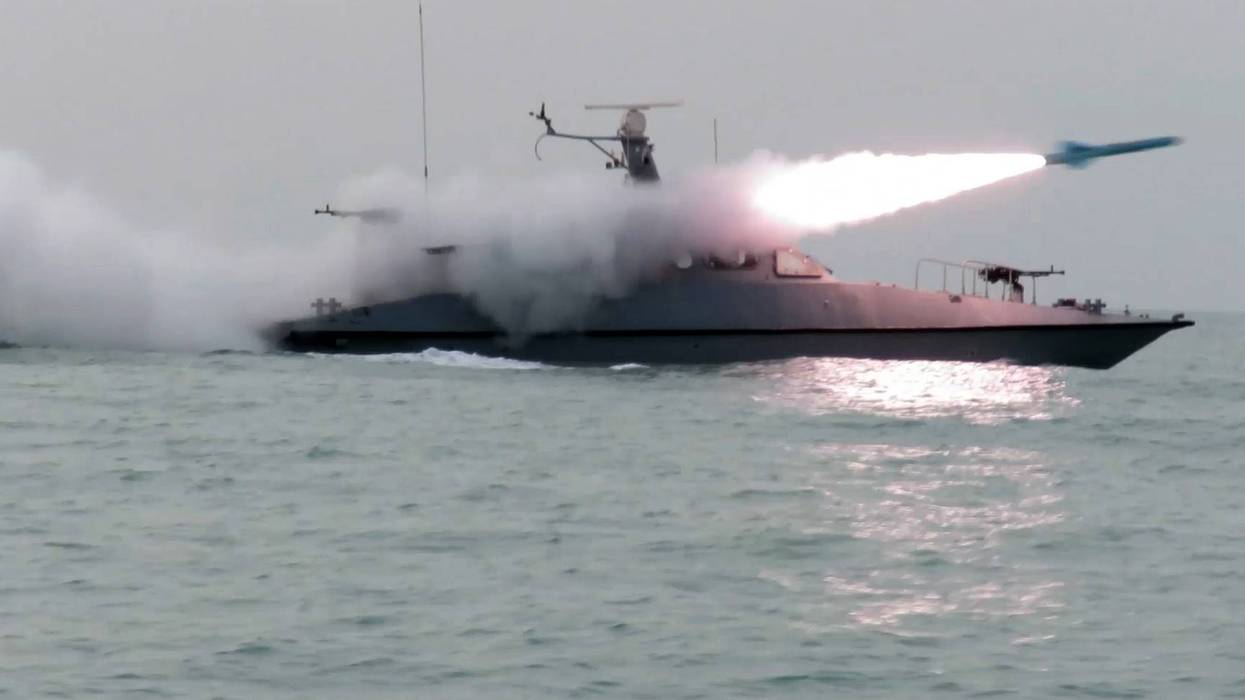
Despite what anyone, including him, might have learned from American history since 1945, he decided to go to war with Iran anyway in 2026.
I was born on July 20, 1944, in the midst of World War II. My father had just returned from Burma where he had been operations officer for the 1st Air Commandos in the China-India-Burma Theater. I, of course, remember nothing about that war—except that my father (on extremely rare occasions) would barely mention what he had gone through but would sometimes take me to World War II movies like The Caine Mutiny and Merrill’s Marauders at local movie theaters.
In a country that has never stopped fighting wars, however, that’s certainly the last one that any American could truly be proud of, the global defeat of Nazi Germany and Imperial Japan.
In fact, we’re talking about a country that, between 2001 and 2024, spent an estimated $21 trillion on its military, which, it turns out, was equal to the military spending of the next 18—yes, 18!—countries combined (if you can even believe it). And in those years, of course, like the 55 preceding ones, the United States managed to never—no, never —actually win a significant war (or, in truth, even come close). In short, President Donald Trump’s present disastrous war with Iran is anything but out of the ordinary when it comes to American military power destroying all too much, but sooner or later finding itself in a remarkably dead-end situation (with an emphasis on dead, of course).
Just imagine for a moment that you had been asked in 2001 to invest $21 trillion taxpayer dollars in a military that would fight wars across the planet without a success in sight after World War II (other than perhaps the invasion of the helpless Caribbean Island of Grenada in 1983). It doesn’t matter whether you’re talking about the Korean War of 1950, the nightmarish Vietnam War that engulfed the 1960s and early 1970s, the Afghan and Iraq wars of this country’s calamitous War on Terror early in this century, or more recently Donald Trump’s wars, which have proven to be one disaster after another, from Somalia to Iran at this very moment.
At the very least, the Iranians should consider renaming the Strait of Hormuz, the Crooked of Donald Trump.
And that should be considered strange indeed. I doubt there’s another example in history of a great imperial power that, for a significant part of its rise (and potential fall) simply couldn’t win a war.
It certainly gives that old song “War (What Is It Good For?)” with the response “absolutely nothing” new meaning. Of course, if you happen to be Donald Trump and you’re the president who simply can’t win a war (which certainly leaves you in good company among American presidents of the last 80 years or so), then the least you can do, when it comes to Iran, is declare that the Strait of Hormuz, through which about 20% of global oil and even more natural gas used to pass and which was closed down by the Iranians in response to his warring acts (distinctly harming the global economy), is now actually US property, or, to be specific, a potential “territory of the United States.” (Phew, that was exhausting!)
And hard as it might be to believe, he really did say that recently. How logical, right? After all, it’s only perhaps 6,500 miles or so from Washington, DC. So, what could possibly make more sense?
Of course, I’m sure you won’t be surprised to learn that Iran’s Deputy Foreign Minister Kazem Gharibabadi responded that, whatever Trump might think, the Strait “cannot be seized with a tweet, nor with an aircraft carrier, nor by issuing an order, nor through an election speech.” He added, “This strait will only be opened and closed under Iran’s command, and as long as you do not accept the reality of defeat and stop indulging in delusions, Iran will continue to enforce the blockade.”
Defeat Donald Trump? In what world could that possibly happen? How delusional could the Iranians be about our distinctly delusional president?
Oh, but in case you think that’s just so much enemy blather, the fact is that, in the ongoing war with Iran, the US has already lost about one-quarter of its crucial Reaper Drones, valued at $30 to $50 million each (or more than $1.3 billion worth of them), mainly around—yes, of course!—the Strait of Hormuz. And many of them have been taken down by Iranian drones valued at $20,000 to $50,000 each.
And while losing so many of its drones, the Trump administration has also been losing other things as well, including its previous insistence that a complete Iranian surrender was the order of the day. No longer, it seems. Now, all that it appears Donald Trump wants (whatever he’s said) is the reopening of the Strait of Hormuz and the free flow of oil and natural gas globally. In other words, what he now yearns for is essentially a return to the very situation that existed six months ago just before he launched his disastrous war.
Or as Vice President JD Vance put it recently, all the Trump administration now wants is to ensure “that the Gulf countries continue to send oil and gas to the world economy so that we have energy price stability,” and, of course, to ensure as well that the Iranians won’t ever have a nuclear weapon. No matter that, as far as anyone knows, they are not faintly close to having, no less possibly even trying to develop such a weapon.
On the other hand, the Iranians are now threatening to continue the state of war with the US until the end of Trump’s second term in office in 2028 (and his approval ratings are, of course, already plunging to new lows). As a senior adviser to the commander of Iran’s Revolutionary Guard put it: “One way is to prolong this war until we get to the next term of the presidency and cause attrition, so that if anyone else wants to attack Iran, they will know there is a cost... We have to attain deterrence so that the enemy never dares to attack us, so we can live with security.”
And let’s not forget that, lest you think Donald Trump has learned anything from all of this, he has only recently been threatening to “bomb the shit out of” long-time American ally Oman, if it “gets in the way” of his Iranian plans—and what, I ask you, could possibly go wrong with that? (I can’t even imagine.)
Of course, we’re talking about the rule (or do I mean reign—or perhaps I actually mean rain, or even thunderstorms or tornados?) of Donald Trump, a president for whom, according to a recent poll, only 29% of potential voters in the coming midterm elections approve of how he’s handling the situation with Iran.
And yet, sad to say, what’s new? Not much, it seems. After all, Trump, who may indeed be unique in so many ways, is proving anything but unique as president of the greatest power on planet Earth (in certain ways, perhaps the greatest in history) when it comes to making war all too miserably, even disastrously. In fact, give him a certain amount of credit. After all, despite what anyone, including him, might have learned from American history since 1945, he decided to go to war with Iran anyway in 2026. It evidently mattered not at all to him that the most obvious and self-evident fact about American war making since 1945 is that defeat (or minimally nothing faintly approaching victory) would essentially be guaranteed. And yet, he still managed to launch another disastrous all-American war on this distinctly embattled planet of ours.
At the very least, the Iranians should consider renaming the Strait of Hormuz, the Crooked of Donald Trump, and let me just hope that I’ll never have to take one of my grandchildren to a movie about his disastrous war.
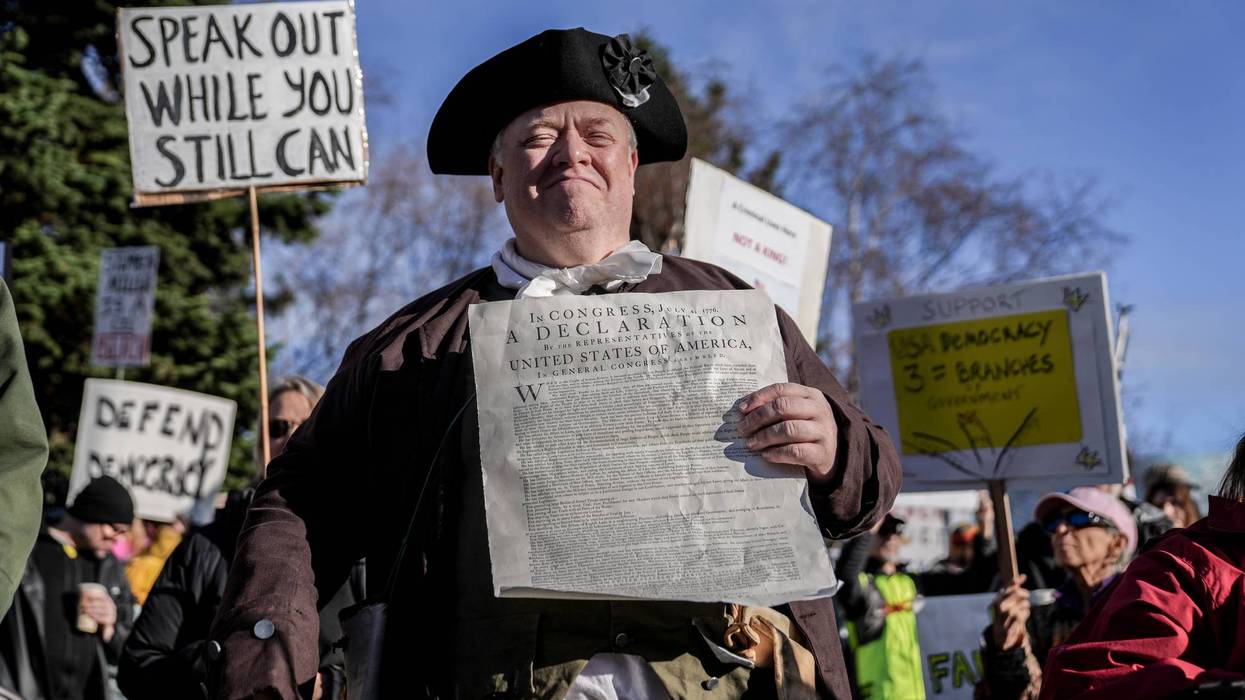
The Declaration of Independence is not merely as a gold-covered lie meant to be plunked in front of the White House as a symbol of American greatness—to be endlessly glorified and endlessly ignored—but a moral fact and, praise be, a tool of the present moment!
Suddenly my cynicism vanished and things started making sense... America started making sense, from past to present.
I was already in the process of writing this column—hey, the nation’s 250th birthday is coming up—and had never felt more lost. Where, where, where am I going with this? What am I trying to say? My words had no core, no soul. I felt like I had given myself the random rubble of a bombed-out building to write about.
Then a friend sent me a link to a New York Times opinion piece. I decided to give it a quick read. I don’t necessarily trust the Times. It can be smugly wrong. But I took a look—it was by literary critic A.O. Scott —and I couldn’t stop reading it. He had found our country, it seemed, beginning with these 35 simple words:
We hold these truths to be self-evident, that all men are created equal, that they are endowed by their Creator with certain unalienable Rights, that among these are Life, Liberty, and the pursuit of Happiness.
To which Scott added: “No matter how many times you’ve read it before, it’s worth reading again. Each idea flows from the previous one, and a comprehensive argument takes shape.”
This country is still being created—out of the same chaos and greed, the same structural racism, the same ignorance and cruelty—that was present in 1776, and you and I and everyone else are the ones creating it.
Ah, the Declaration of Independence. So easily dismissed with a shrug, with a smirk, followed by a quick glance at our history, then a glance toward the Oval Office, a glance at Palestine, a glance at Iran. This is just a feel-good lie, right?
But Scott goes on, pointing out that these simple words “don’t appeal to precedent, tradition, or any other external authority, but to the evidence of our own eyes. Human equality is not aspirational: It’s obvious.”
The words’ lasting significance isn’t due to the deep truths they pull from humanity’s philosophical depths, but rather, Scott notes, the opposite: “Its writers said so much more than they meant. The genius of the document lies not in the original, local intentions that might be excavated from it, but in the meanings that later generations have projected onto it.”
The promises in the words weren’t fulfilled on the spot, but oh so slowly—and only partially—over the last two and a half centuries, as people such as Abraham Lincoln, Martin Luther King, and so many others used the words, again and again, to challenge the reality of their particular present moment.
“For Lincoln and King, the Declaration functions as both a sacred text and an unfulfilled promise,” Scott writes. “The conditions that it holds to be self-evident in that second sentence did not, at the time it was written, exist in any known reality. Whether they subsequently did or ever could is the subject of debates that have more or less defined our politics ever since, but the ringing confidence of the statement has not diminished.”
And the words still pulsate. As I read Scott’s essay, for the first time I saw the Declaration not merely as a gold-covered lie meant to be plunked in front of the White House as a symbol of American greatness—to be endlessly glorified and endlessly ignored—but a moral fact and, praise be, a tool of the present moment! This country is still being created—out of the same chaos and greed, the same structural racism, the same ignorance and cruelty—that was present in 1776, and you and I and everyone else are the ones creating it.
Before this had become apparent to me, I was reading the news, getting endlessly appalled and depressed, trying to figure out how to write about things like: “Bovino Launches Exploratory Committee for Presidential Campaign with Pledge To Deport 100 Million People.”
I couldn’t let go of this recent Common Dreams headline, concerning President Donald Trump’s ex-Border Patrol commander, Gregory Bovino, who wants to run for president. Fine. His right. But he’s running on the idea that 100 million residents are bad, bad people and need to go, and if we give him the power, he’ll shove them all, including the children, into concentration camps and, ultimately, over the border. Good riddance! God gave this country to white people.
Fascism is percolating here. Hell is percolating. I just felt shattered and lost. How can I write about this—simply the latest, and perhaps the craziest, bit of deportation blather to hit the news? I could feel the country sinking, sinking into political quicksand.
But when I heard, in my own mind, the words “all men—all humans—are created equal,” my heart filled with hope and purpose again. There is power in moral sanity, just as there was in 1920, 1954, 1965, 1865, in time immemorial. Hate is a social infection. Fear is a social infection. All we can do is keep recognizing this and creating a morally sane—safe, equal—world.
The same emotional transformation began applying to everything I’d been reading. Trump wants to expand the military budget from $1 trillion annually to $1.5 trillion, at the same time cutting huge chunks of domestic spending? Endless war is the national way, and in the process of losing one war after another, after another, throughout my lifetime—Korea, Vietnam. Afghanistan, Iraq, Iran (?)—we’ve killed, murdered, slaughtered, millions of people, most of whom have been dehumanized in the public mind, turned into numerical abstractions: collateral damage. But...
All humans are created equal?
My God, this simple, deeply buried truth applies even to them, the “other,” the people living beyond our sacred borders. Bombing them is no different from bombing ourselves. This doesn’t mean I can just shrug and relax, waiting for the Moral Arc of the Universe to do its thing. The meaning I felt pulsating was, once again, no more than a speck of moral sanity, but it isn’t going away. It’s real. It’s the core of who we are.
And suddenly, as I say, my cynicism vanished. This truth is right there, simply put, at the heart of our Declaration of Independence. Let us seize it now—once again—and continue devoting our lives to creating a future that values everyone.
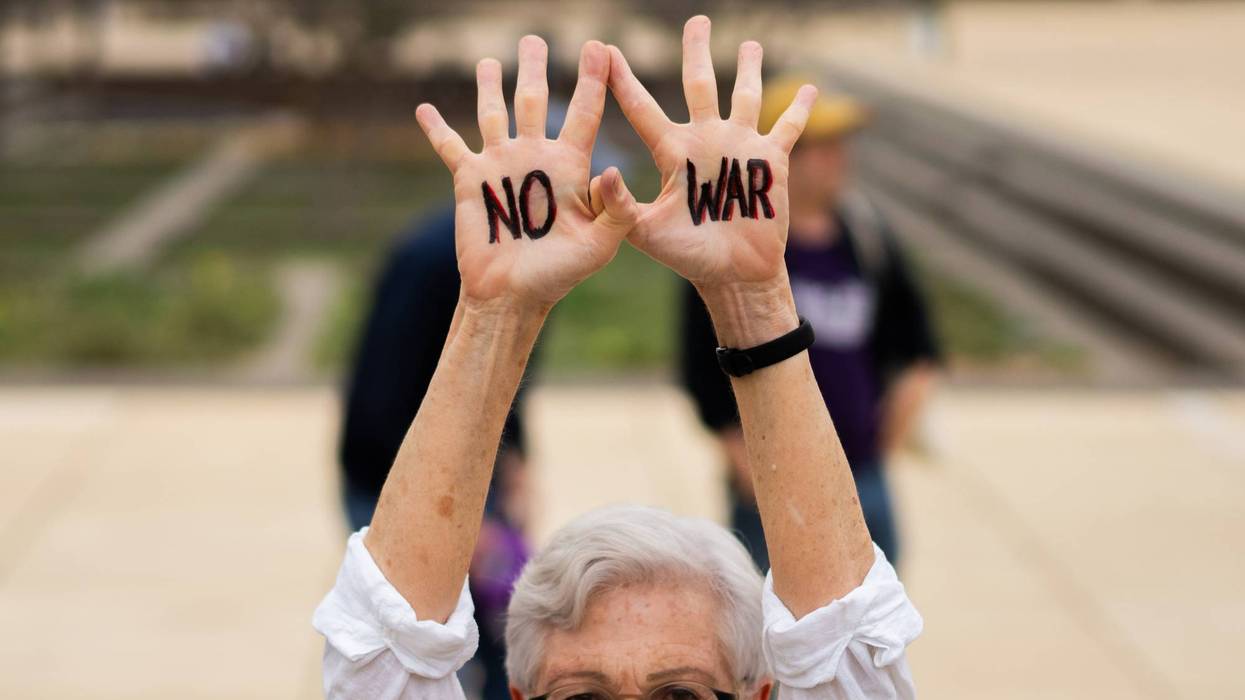
Are we stuck with pending war, and actual war, from now on... until we blow up the planet? I don’t believe that at all.
Is war simply part of human nature? It’s been absurdly “ordinary” throughout my lifetime, and continually expanding its power and psychological reach.
And unless you’re in the middle of it—unless you’re digging for a dead child beneath a bombed building—war is just an abstract horror. It’s necessary. It’s what keeps us safe. Glory, glory hallelujah.
“You ask: What is our policy? I will say: It is to wage war, by sea, land and air, with all our might and with all the strength that God can give us: to wage war against a monstrous tyranny, never surpassed in the dark lamentable catalogue of human crime. That is our policy. You ask, what is our aim? I can answer with one word: Victory—victory at all costs, victory in spite of all terror, victory however long and hard the road may be; for without victory there is no survival.”
Hmmm...
We’ve spent multithousand years now turning war into the building block of civilization. You know: Create an empire. Defend, defend, defend.
This is Britain’s new prime minister, Winston Churchill, speaking in 1940, just as World War II has opened its jaws. In that context, yes, his words make sense, but the paradox hiding in those words—the speech titled “Blood, Toil, Tears, and Sweat”—is that with victory there may be no survival either. The Good War gave us, of course, the nuclear bomb. It gave us much of the military hell that’s happened in my lifetime. It also gave us, along with a multitrillion-dollar annual global military budget, a sense of eternal necessity to be ready for the next evil monster who wants to get us.
That’s it? We’re stuck with pending war, and actual war, from now on... until we blow up the planet? I don’t believe that at all, but I started digging back into history to get a fuller sense of what others thought. Who are we?
As Steve Taylor, writing some years ago in Psychology Today, noted:
Our view of human nature determines our view of the human race’s future. If we believe that human beings are innately warlike, then there is no reason for us to believe that our future holds anything else but more of the chaos and conflict that has filled our past. But if we believe that conflict is not innate to us and that our aggression is due to external factors rather than being "hard-wired" into us, then we’re entitled to have a different vision of the future.
There seems to be a consensus among historians that we didn’t start organizing for—and waging—war until about 10,000 years ago, during the Neolithic era, when agriculture began replacing hunter-gathering as humanity’s primary source of survival. A key component of agriculture was, and is, possession and development of land, which began sending waves of change through human consciousness: protect, protect, protect! Land turned into property. And thus, for thousands and thousands of years now, people have been collectively re-envisioning their relationship with each other.
Obviously, this is a quickie look at human history. My point is simply to push the idea that war isn’t inevitable, but rather a response to significant change. I now jump ahead to 1895, when New York Journal owner William Randolph Hearst sent a photographer to Cuba to cover the insurrection going on there against Spanish colonial rule. The photographer cabled Hearst that there was no war to cover, to which Hearst responded: “You furnish the pictures. I'll furnish the war.”
And Yellow Journalism was born! And war has remained media’s friend ever since. It’s headline news. There’s fighting, slaughter, and eventual victory—for someone. And the victor controls the narrative.
Well, actually, it’s the media that controls the larger narrative. That is to say, the media creates the context: War is real. It’s what we do. In essence, it’s the bookend of every historical period, the arbiter of social change and, therefore, human evolution. Any questions?
OK, here’s where I start losing my sanity. War may not be part of humanity’s DNA, but it certainly seems to be accepted as though it were. We’ve spent multithousand years now turning war into the building block of civilization. You know: Create an empire. Defend, defend, defend. And ultimately transcend, as a new empire emerges. And then another. Whatever we do in between our wars—live in peace, more or less—may have value, but it’s not all that interesting. It’s just the lull between glorious battle cries.
And thus war starts to seem like who we are. Obviously, it’s part of who we are, because we’ve made it so, but whatever serious value it has in the moment is minimal. Mostly it’s incredibly destructive. It’s an addiction. It’s the lavishly funded antithesis of human connection: with one another, with Planet Earth.
As Rupert Ross writes in his excellent book about Aboriginal wisdom, Returning to the Teachings: “The principle of wholeness thus requires looking for, and responding to, complex interconnections, not single acts of separate individuals. Anything short of that is seen as a naïve response destined to ultimate failure.”
Oh God. Wholeness. Connection. This is the opposite of war. The meaning and complexity of these concepts requires enormous exploration, but for the moment I end with a story about heart-ripping courage and connection—about the nature of peace – that I initially wrote about nine years ago.
This happened in 2017, on a commuter train in Portland, Oregon. A man started screaming racial slurs at—started waging war with—two teenage girls on the train, one of whom was wearing a hajib. He shouted, “Go back to Saudi Arabia!”
Several passengers intervened, standing between the girls and the screamer, pushing him away. The screamer had a knife; he started slashing. Two people were killed, a third was injured. The killer fled the train. He was later arrested. But, oh my God, another act of public horror had occurred. People did what they could. A woman knelt by one of the dying men—Taliesin Namkai-Meche—holding him, comforting him. He said to her, “Tell them, I want everybody to know, I want everybody on the train to know, I love them.”
Those were his last words.
As I hear them again, I realize that this is who we are, even if we don’t know what they mean. They sear the soul with doubt, with cynicism. How can we reclaim them? Do we have it in us to be so deeply loving? The only larger question is this: How do we reclaim—and start creating—our future?
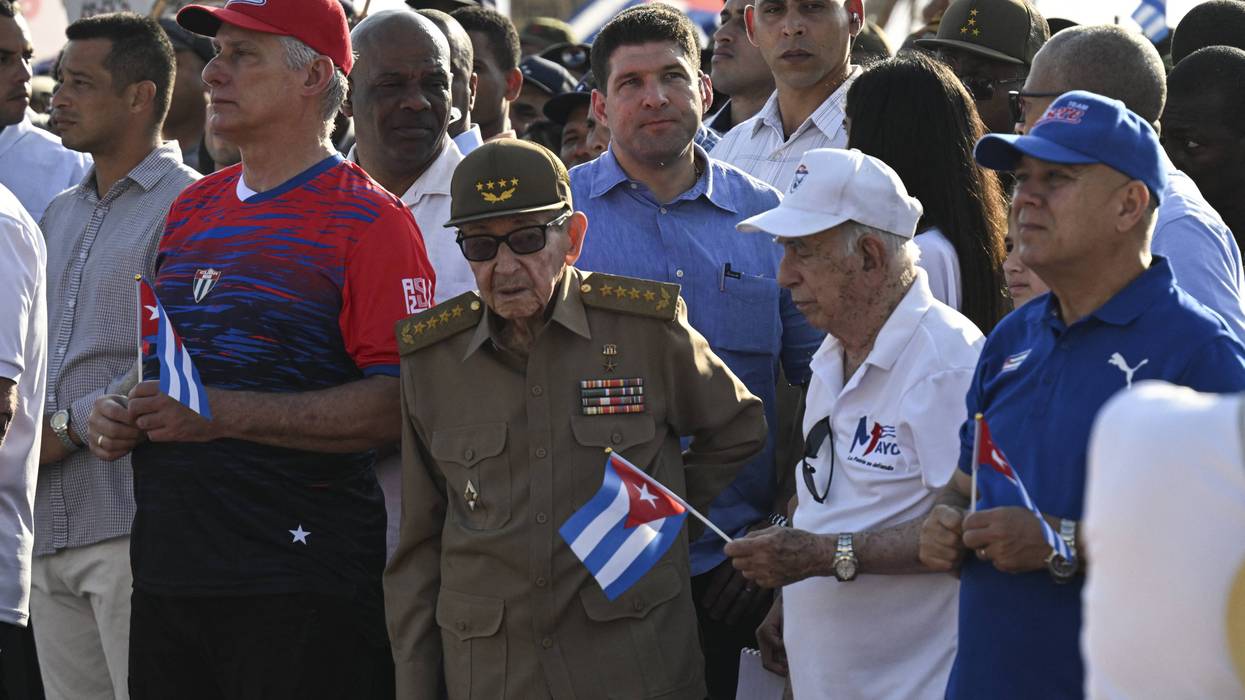
Cuban Chargé d'Affaires Lianys Torres Rivera said her government is willing to negotiate with the US, but "the only exception is our sovereignty, independence, and right to self-determination."
Cuba's top diplomat in the United States on Friday underscored the inviolability of her country's sovereignty amid tenuous negotiations with the Trump administration and mounting fears that the US is planning to criminally indict a former Cuban president and possibly invade the island to abduct him.
Cuban Chargé d'Affaires Lianys Torres Rivera told The Hill that her country's socialist government is open to negotiating with the US, but that "the only exception is our sovereignty, independence, and right to self-determination," adding that "those are the red lines."
Torres Rivera acknowledged that ramped-up US pressure—including President Donald Trump's invasion threats and tightening of the internationally condemned 65-year economic embargo—is inflicting tremendous suffering on the Cuban people.
“It’s difficult. What the Cuban people are enduring these days is difficult," she said. "They are under a collective punishment from the US."
The Cuban government said Thursday that Trump's oil blockade has left the island and its 11 million people without fuel—a situation United Nations experts last week described as illegal "energy starvation."
“We have reorganized the whole country, the healthcare system, the education system, the transportation system, to keep the basic services running," Torres Rivera told The Hill. "But it doesn’t mean that they are running normally. They are running under huge stress.”
Still, "a serious country that respects yourself... won’t put on the table your political system or your internal order that the people of our country decide in a sovereign way," she stressed.
The delicate balancing act Cuba is being forced to perform was on stark display on Thursday as Central Intelligence Agency Director John Ratcliffe traveled to Havana for talks aimed at pressuring Cuban officials into complying with demands that critics say would inrfinge upon the nation's sovereignty. These likely include political and economic reforms, releasing political prisoners, and ending or weakening Cuba's alliances with US adversaries including China, Iran, Russia, and Venezuela.
It was a bitter pill to swallow for Cubans, as the CIA was behind myriad efforts to topple their government, from assassination attempts against revolutionary leader Fidel Castro to the failed Bay of Pigs invasion to supporting Cuban exile terrorists who carried out deadly attacks that Havana says killed thousands of people.
Further stoking fears of aggression from the Trump administration,r unidentified US officials told CBS News that the Department of Justice is preparing to criminally indict 94-year-old former Cuban President Raúl Castro for the 1996 shoot-down of planes belonging to the subversive US-based group Brothers to the Rescue after they violated Cuban airspace.
Some observers noted the 1976 midair bombing by US-based anti-Castro militants of Cubana de Aviacion Flight 455, a commercial airliner carrying 73 passengers and crew. The CIA, under then-Director George H.W. Bush, knew that Cuban exiles were plotting to blow up a Cubana plane, but did not warn Havana. The perpetrators of the bombing eventually made their way back to Florida, where they were welcomed as heroes.
Others surmised that the reported planned indictment is a pretext for a US invasion and arrest of Castro similar to January's abduction of Venezuelan President Nicolás Maduro on dubious—and partially retracted—narco-terrorism allegations.Thirty-two Cubans, including military and police officers providing security for Maduro, were killed by US forces during the abduction operation.
"To me, this signals that the Pirate State could be planning another kidnapping operation against Cuba like they did in Venezuela," British journalist Richard Medhurst said in response to the reporting, referring to the US. "This is the lawless behavior they want to normalize around the world."
ACLU head of digital engagement Stefan Smith said on social media: "Remember Maduro and Venezuela? If you’re a foreign leader indicted in American courts, we claim the right to send the military to kidnap you. Indictment is permission to invade."
Following his visit to Cuba, Ratcliffe said that negotiations "will not stay open indefinitely," remarks that followed numerous threats by Trump to "take" Cuba.
"Whether I free it, take it—I think I can do anything I want," the president said in March as his fuel embargo caused blackouts that brought deadly suffering to the most vulnerable Cubans, including sick people and children.
Torres Rivera insisted that protests over the blackouts don't mean Cubans won't rally in defense of their homeland.
“When they are enduring 20 hours of blackouts, they have grievances, and they express it,” she told The Hill, cautioning US officials against a "wrong reading" of the demonstrations.
"We are preparing to defend ourselves," Torres Rivera said, adding that a US invasion "could be a big mistake. It could be a bloodbath."
"We don’t want Cubans dying in Cuba,” she stressed, nor “any American soldier.”
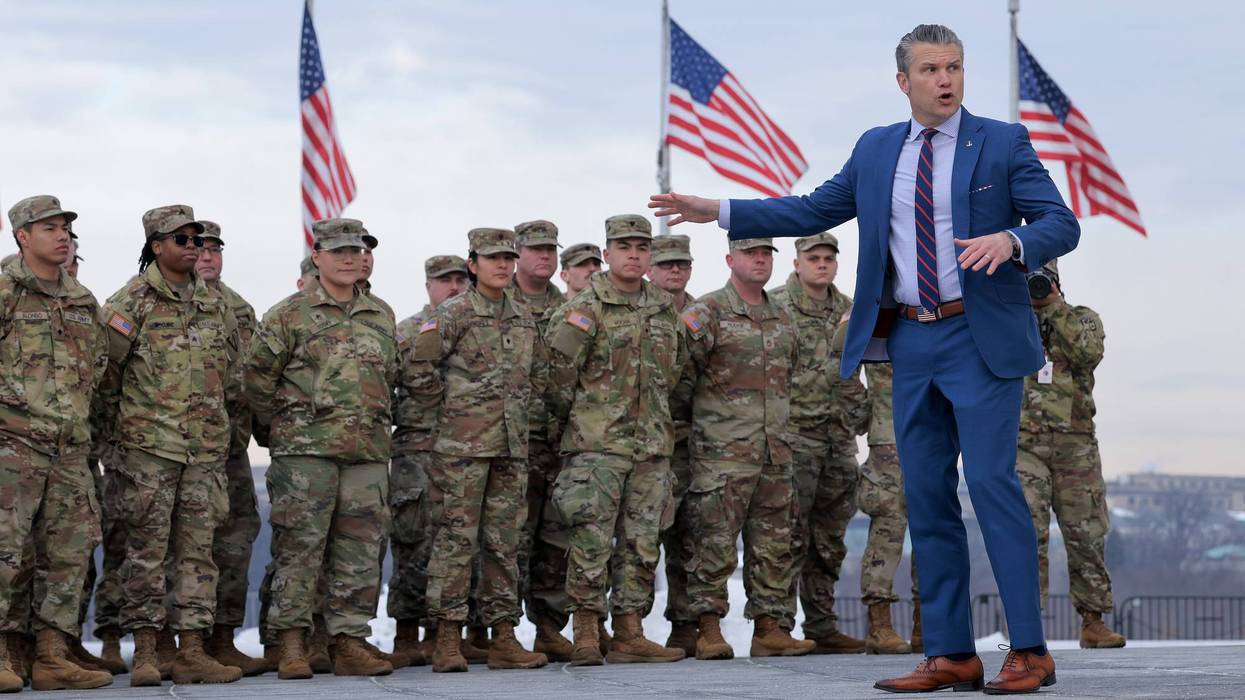
How can it be that the hell of war is so fully a part of the American identity, preparation for which consumes half the national budget every year?
Perhaps theologian Walter Wink can help us understand Pete Hegseth, America’s self-declared “secretary of war” and spokesman, for God’s sake... for God. At a recent prayer service at the Department of Defense, for instance, Hegseth, after calling the Iranians “barbaric savages” who deserve no mercy, called on the citizens of his country to pray for victory “in the name of Jesus Christ.”
Love thy neighbor, folks! Earlier he had boasted that the American bombing campaign had “unleashed twice the firepower in its first five days as the initial ‘shock and awe’ bombing phase of the Iraq War in 2003.” You might recall, of course, that this campaign included the devastation of a school in Minab, which killed—murdered—around 170 people, including over 100 children. God bless America.
Wink, in his book The Powers That Be, discusses what he calls “the myth of redemptive violence”—the belief that violence saves us. Indeed, “It doesn’t seem to be mythic in the least,” he writes. “Violence simply appears to be in the nature of things. It’s what works. It seems inevitable, the last and, often, the first resort in conflicts. If a god is what you turn to when all else fails, violence certainly functions as a god.”
And when we use it, that’s God with an uppercase G. Just ask Hegseth. All of which leaves me emotionally shredded, as I think about the country, the world, the future. How can it be that the hell of war is so fully a part of the American identity, preparation for which consumes half the national budget every year? How can it be that the waging of war—the consequences of war—so easily morphs into an abstraction, at least over here where the bombs aren’t falling, and most discussions of it (not counting the fervor of the anti-war protesters) focus on strategic and political rather than moral issues? Just check out the media.
Unlike dead schoolchildren, harm to Vance’s political future can’t be written off as collateral damage, apparently.
Here, for instance, are some fragments of a recent article in The Atlantic, which, while it was hardly gung ho about the Iran war, oozed, you might say, an abstract neutrality about it—and about all the wars we have to be ready to wage in the future. Worry NO. 1 the article addressed concerned how many American weapons were being used up:
Vice President Vance “has also expressed his concerns about the availability of certain missile systems in discussions with President Trump, several people familiar with the situation told us. The consequences of a dramatic drawdown in munitions reserves are potentially dire: US forces would need to draw from these same stockpiles to defend Taiwan against China, South Korea against North Korea, and Europe against Russia.”
The unquestioned assumption is that war is inevitable—ho hum. No larger questioning occurs, no mention of the looming environmental disaster these coming wars will inflict on the planet. Just an academic shrug. A few paragraphs later:
Pentagon leaders’ positive portrayals present an incomplete picture at best, people familiar with intelligence assessments told us. According to those internal estimates, Iran retains two-thirds of its air force, the bulk of its missile-launching capability, and most of its small, fast boats, which can lay mines and harass traffic in the Strait of Hormuz. At least in terms of resuming stalled maritime commerce, "those are the real threat," one person told us.
The world being presented to the reader seems like a video game. At least that’s the case in this article, which detaches war from any mention of blood and destruction, any mention of schoolchildren lying dead beneath collapsed infrastructure as loved ones dig for their bodies. I’m not saying strategic data doesn’t belong in war reporting, just that if it’s not part of the larger context of the moral realities of war, it turns hell into nothing more than an abstraction. This is the role the mainstream media has long claimed for itself.
But some people are affected by the war, we learn:
The vice president was skeptical about the merits of attacking Iran before the war started; Trump has acknowledged that Vance was "maybe less enthusiastic" about a conflict that has proved deeply unpopular among American voters. But the vice president has multiple factors to balance: his desire to work smoothly with other senior officials, his track record of opposing "forever wars," and his prospects should he mount a presidential run in 2028.
Vance and Hegseth both have a major stake in the war’s outcome... Several people close to Trump believe Vance now sees his political future as tied to what happens in Iran.
Unlike dead schoolchildren, harm to Vance’s political future can’t be written off as collateral damage, apparently.
And the myth of redemptive violence marches on.
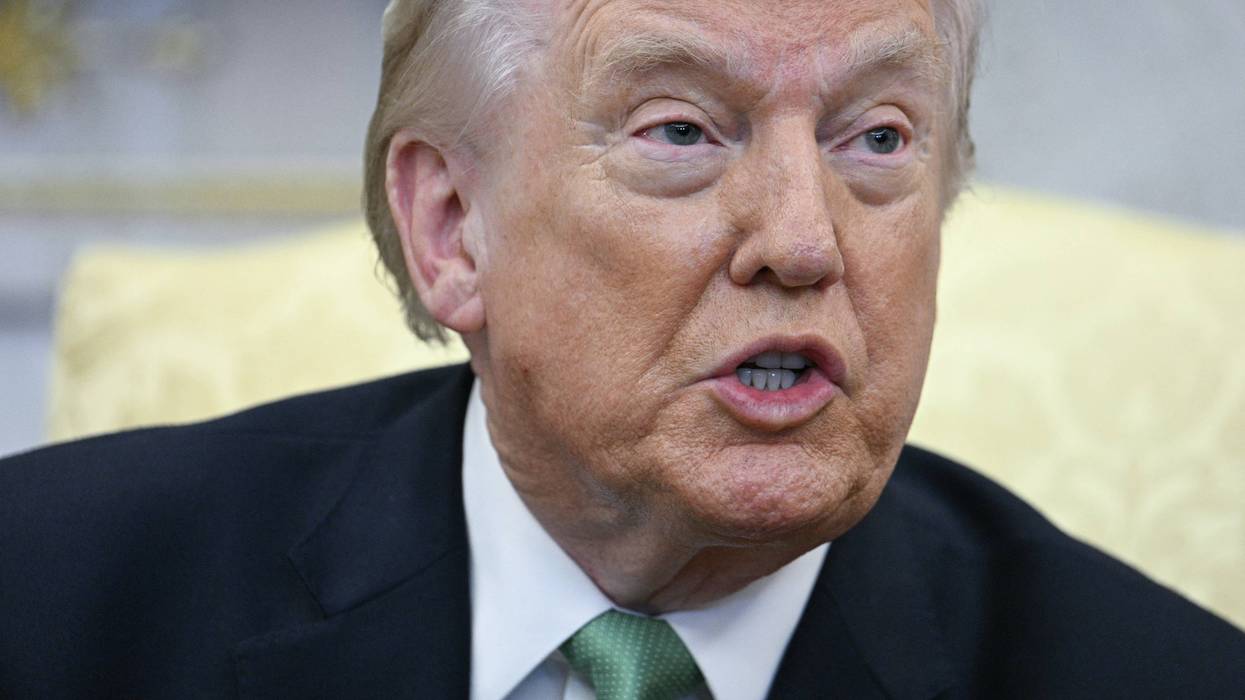
What is commonly thought of as power—power over others, aka, dominance—isn’t power at all. It’s an illusion of power that weakens, and perhaps destroys, those who hold it.
I’m trying to return to the book I started writing a decade ago, and doing so has pulled my awareness of and relationship to the events of 2026 into the larger consciousness the book is struggling to address: What is power?
Can we broaden and expand this word? Can we merge it with collective awareness—you know, the idea of working together? Can we expand our awareness beyond the sense of dominance: power with, rather than power over? Yes, power with, in the “love thy enemy” sense, but without the cynicism and ignorance that usually accompany the word “love."
When we think of power, as I discuss in the book, the word itself commands that we carve the concept into something isolated and wieldable: a sword, a gun, a scepter. Power means power over. There is no basic concept of power—seemingly no word for power in the English language—that also means collaboration, collective participation: people working together, individually empowered at the same time that the larger whole is empowered.
Even when we examine the dark side of power—as in, power corrupts—the examination seems to hover as a warning rather than open up to larger awareness. Consider, for instance, this 2017 article in The Atlantic by Jerry Useem, titled (fasten your seatbelts!) “Power Causes Brain Damage,” which discusses a concept he calls “hubris syndrome.” The essential point the article makes is that people who gain a significant amount of power over others lose the ability to empathize with—or mime, as the article puts it—people in general, the lesser mortals who must follow the boss’ orders. Why am I suddenly thinking of Donald Trump, the world’s “Power Jesus”?
Let’s break the automatic linguistic link right now between power and dominance. True power enlarges the whole; it doesn’t isolate.
This inability to express or feel empathy, it turns out, is serious. It isolates the powerful into their own stereotypes and egotistical certainties, which lessens their ability to make good, or even rational, decisions. (Right, Donald?). And hubris syndrome isn’t merely psychological; it’s also physiological.
Citing neuroscience research, Useem writes:
And when he put the heads of the powerful and the not-so-powerful under a transcranial-magnetic-stimulation machine, he found that power, in fact, impairs a specific neural process, ‘mirroring,’ that may be a cornerstone of empathy. Which gives a neurological basis to what (psychologist Dacher) Keltner has termed the ‘power paradox’: Once we have power, we lose some of the capacities we needed to gain it in the first place.
Useem quotes authors David Owen and Jonathan Davidson, who define hubris syndrome as “a disorder of the possession of power, particularly power which has been associated with overwhelming success, held for a period of years and with minimal constraint on the leader.” Its 14 clinical features, he adds, include: “manifest contempt for others, loss of contact with reality, restless or reckless actions, and displays of incompetence.”
The idea is that we’re naturally connected and subconsciously “mimic” others: We laugh when others laugh, tense up when others grow tense. It’s not faking an emotion to fit in; it’s participating in, feeling, the collective emotion that fills the room. “It helps trigger the same feelings those others are experiencing and provides a window into where they are coming from,” Useem writes. But: Powerful people “stop simulating the experience of others,” leading to what the psychologist calls an “empathy deficit,” which saps the powerful of most, or maybe all, of their social skill, leaving them, even as they generate endless obeisance, socially isolated souls.
The conclusion to be drawn here is that what is commonly thought of as power—power over others, aka, dominance—isn’t power at all. It’s an illusion of power that weakens, and perhaps destroys, those who hold it. Consider the rise and fall of dictators, the toppling of empires, the comeuppance of kings and queens. Let them eat cake.
The article does an excellent job pointing all this out, but at a certain point it falls into a linguistic trap. Useem writes despairingly: “This is a depressing finding. Knowledge is supposed to be power. But what good is knowing that power deprives you of knowledge?”
My answer is this: Knowledge in all its basic innocence is, indeed, power, but rarely is this “power over” someone. Knowledge of how to walk, how to read... this is a child claiming her life. And the entire family is empowered. As the child learns how to function independently, Mom and Dad learn how to parent. Yes, knowledge—power—can be used to further the interests of our darkest impulses. We can use what we learn to blackmail, extort, cheat, bully, win, etc., etc. But let’s break the automatic linguistic link right now between power and dominance. True power enlarges the whole; it doesn’t isolate. As the child learns to function, the family grows.
Yes, the power of self-defense is sometimes necessary, at the individual and, yes, the national level. And power can enable us to win, whether a game or a fight. Hurray! But the point my unfinished book is trying to make is that such power exists in a larger context, just as we exist in a larger context—and this context is ever opening and expanding before us. The US relationship to the rest of the world is larger than Donald Trump’s, or any president’s, ego. It’s larger than our military.
Rather, every last one of us, from newborns to geezers, is a participant in creating who we are, and who we are becoming. Perhaps no one says it better than Pierre Teilhard de Chardin: “Driven by the forces of love, the fragments of the world seek each other so that the world may come into being."
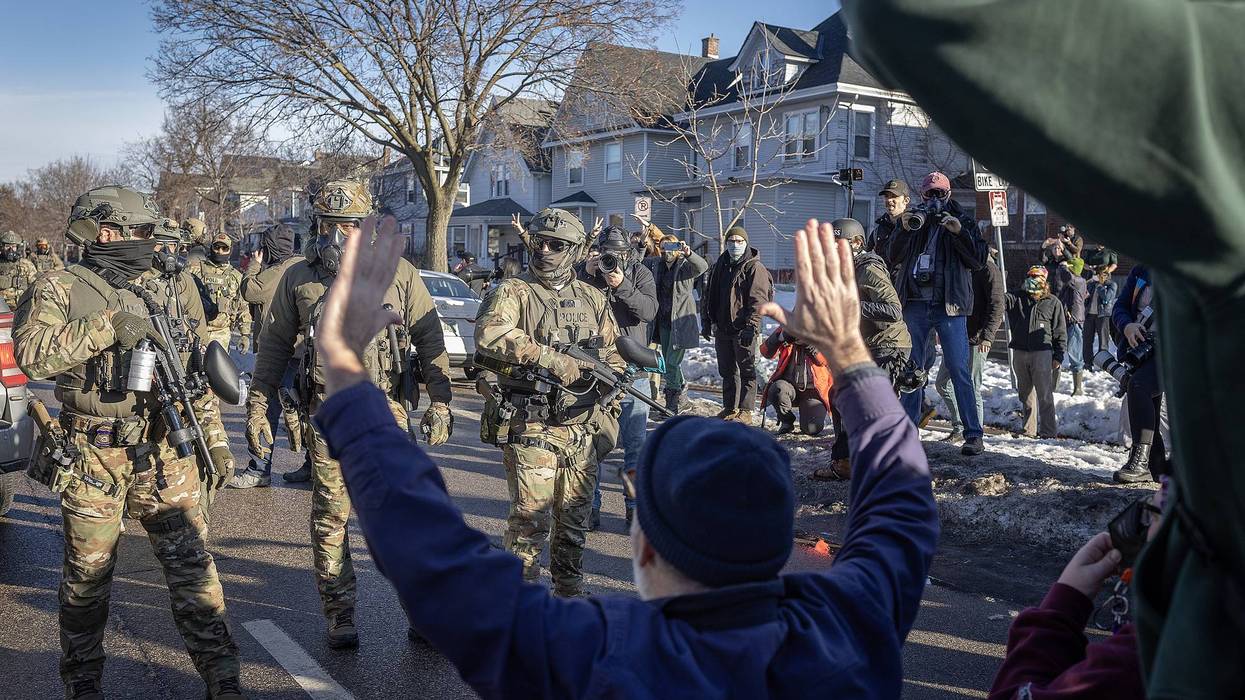
The history of this country has shown not once but many times that people together resisting and fighting for justice (without guns) can win.
Power is felt, attributed, invisible, all-important, descriptive, without shape, and so much more. There is personal power, governmental power, and the collective power of the people. Power can be bought, sold, traded, bestowed, even rescinded. It can be good or bad, positive or corrupt. However you might wish to describe power, one thing is clear: How it’s used depends on the society in which we live.
At present, of course, our society is one in which President Donald J. Trump is the quintessential seeker of power, a man who needs power the way most of us need food. And as it happens, he has at his beck and call not just the entire military establishment, but Immigration and Customs Enforcement (and so much more). With him in the White House, power is distinctly in fashion.
Married and with children, my brother, who was a veteran, kept guns in his basement. “To hunt,” he told me when I objected. But he didn’t hunt, not in Nassau County where he lived, not by taking part in a sport that cost money he didn’t have to travel somewhere, get licenses, and who knows what else. Did he keep guns because he felt afraid? Absolutely not, he insisted. Was his neighborhood one with many break-ins? No, he assured me. So, why did he need weapons in his basement? He couldn’t say, except that it was important to him to own them.
Why? I kept asking him. As a soldier, he reminded me, he had been taught that without his gun he was in danger of being killed.
Under the Trump administration, when more is taken away from so many people than given to them, guns offer those who carry them a reprieve from a sense of powerlessness over their daily lives and futures.
Had he been a man of means, that inculcation wouldn’t, I suspect, have been as powerful, but he wasn’t and never did feel empowered. He’s gone now, but his world isn’t. Guns remain as much a staple in the United States as potatoes.
Well-off families keep guns, too, hopefully in locked places and have the money to buy hunting rifles, licenses, and whatever other paraphernalia they need. But in the United States today, all too many guns—sometimes even untraceable “ghost guns”—aren’t locked in boxes, but carried by young people on the streets and even sometimes into schools. The guns on the streets of inner cities, in rural areas, and even in some suburbs are all too often unlicensed stolen ones. And a desire or need to be seen, known, or heard all too often leads to someone shooting others with one of those weapons in a mall, movie theater, or school. Nearly 47,000 people died of gun-related injuries in this country in 2023. Such shootings occur more often in the United States than in any other nation. Why?
Under the Trump administration, when more is taken away from so many people than given to them, guns offer those who carry them a reprieve from a sense of powerlessness over their daily lives and futures. Many of them are young people alienated by a society that cares little about their well-being. With gun in hand, they experience steadiness, security, and yes, hope (however false it may prove to be).
With a weak social safety net, a gun offers a false sense of personal power and security. Should anyone come too close and aggravate the anger that may be boiling inside, however, that gun could go off. And who wouldn’t be angry? Too many young people in working-class families today are unsure where they might be headed and fear the dead-end jobs that they know lie in their future. The Trump administration, of course, offers such young people little or nothing—and if they weren’t born in the United States, they face the everyday menace of fear, degradation, and deportation. In America today, immigrants have become the scapegoats for such unvarnished racism that it takes one’s breath away. And don’t imagine that this is about so-called borders. Not a chance! Rather, it’s part of Donald Trump’s and his adviser Stephen Miller’s plan to rid the country of as many people of color as they can, with the end result, they hope, being white supremacy.
Though guns should be difficult (if not impossible) to obtain, like drugs, they are, in fact, available around more or less any corner in the most impoverished areas of any state. To stop the acquisition of guns, we would need more than enacted laws. We would also need to strengthen hope and offer a deeper belief in the daily safety of those who don’t for a moment feel taken care of in the most powerful country in the world.
And there’s no hiding from those in need how power is used to procure more and more money for the already wealthy, the Trumpian billionaires of our world.
Why should some, but not most of us, have an equal chance to do more than survive? For too many, their present and future safety becomes their personal problem, while Trump and crew are busily engaged in pursuing military and imperial power to gain yet more wealth for themselves and other billionaires, none of which enhances the power of the American people. And don’t forget that Donald Trump’s blatant racism is a vile infection that spreads daily from the Oval Office.
From toy guns to actual machine guns, the United States offers a constant example of how to express power through weaponry. There are the guns of war, the guns of intimidation, and the guns used against countries whose governments we choose to assault. Take Venezuela, where a recent US military sneak attack killed untold numbers of civilians and snatched its president to imprison him in the United States. That, I say, is one hell of a lot of nerve. The Trump administration certainly didn’t do that to make life better for the Venezuelan people, but to steal that country’s oil riches, which Trump plans to use for the benefit of US oil companies.
And with that in mind, let me head into the past for a moment. In 1968, when riots erupted in many communities to protest the killing of Dr. Martin Luther King, Jr., tanks first appeared on the streets of American inner cities—big, bulging, heavy vehicles, much like the ones being used in the Vietnam War that was then still raging.
That moment could, in fact, be seen as the public start of the militarization of this country’s police—the start but far from the end of it, which we see today, 77 years later, in many states like Minnesota. There, masked, gun-carrying (as in the old West) Border Patrol and federalized ICE agents have invaded, terrorizing and killing innocent civilians and pulling people out of their cars to deposit them in deportation camps. Such scenes not only increase the frustration and fear of so many Americans, but also the desire to carry licensed (or unlicensed) guns to protect themselves.
ICE is the most recent incarnation of weaponization in this country, in which the agents themselves have become the weapons.
Such macho terrorizing actions as in Minnesota, Chicago, Los Angeles, and so many other places in this country, involving the rounding up of immigrants, are all too much like the 1930s Gestapo in Nazi Germany rounding up Jews. The use of such terror is not only sanctioned by the Trump government but also encouraged by racists like Stephen Miller. He is the quintessential representation of where this country is headed, if not stopped and stopped quickly.
In addition to guns, ICE Agents carry other weapons of war: fire suppressers, lasers, accessory mounts, dump pouches, magazine wells—and they use drones. Pepper spray and other debilitating substances are also being used against those who protest the terror.
War is now being waged against Americans on the streets of our country, which is not only antithetical to all our laws but distinctly unconstitutional and, of course, immoral to the nth degree. Such weapons are perfected for one reason: to kill.
Unsurprisingly, ever more money is once again being spent on the Defense Department (now the Department of War), instead of on health, education, science, and so much else. And Donald Trump wants to spend far more. Guns over butter is an old meme, which we simply must not accept.
In Minnesota, ordinary people organized against the fascistic actions of ICE. Their resistance was not only brave, but an important example of the ways in which the people have chosen the good over the actions and behaviors of a bad government, president, and the Stephen Millers of this world. As demonstrated in Minnesota, we Americans have refused to go quietly into ICE’s nightmare. We wouldn’t stand for such injustice and intuitively began organizing to meet the needs of our neighbors and those who are being treated horribly. Watch groups, food groups, school groups, even singing groups were organized by ordinary citizens, inspired by an innate sense of justice and an innate hatred of injustice.
The struggle of Americans during the siege of Minnesota has indeed had results. The Department of Homeland Security, President Trump, Stephen Miller, and their cohorts have lost some credibility and perhaps some of their ability to frighten people into obedience. It’s more than unfortunate, however, that, in the process, children had to (and will continue to have to) experience the unjust power exhibited by ICE and Trump.
The use of guns will undoubtedly continue to be a staple of Donald Trump’s war of intimidation, clearly focused on developing a society where white supremacy rules. (See Project 2025.) His followers are laying the groundwork for the few to rule the many at the cost of our freedom.
We the people have power, too. There is power in knowledge, power in organizing, and power in resistance, all of which can be used to halt the brutality and lies of this administration.
The Russian playwright Anton Chekhov once wrote that, if you introduce a gun in Act One, make sure to use it by the end of the play. In other words, unless stopped, what the Trump administration has been doing will only grow more brutal. Its attempt to militarize this country goes beyond the Department of War to other government departments like the Department of Homeland Security. Its plebeian belief that might is the only right (and only its right) is also its way of opening a road leading to an authoritarian government, where voting itself will undoubtedly become endangered.
We’re living through an exceptionally dark time where tyranny, lies, and encroaching fascism at home, and the rapidly accelerating destruction of our planet (again, with a distinct helping hand from President Trump) are happening in tandem. Our elected representatives have shown themselves to be spectacularly ill-prepared in the face of such threats.
But neither the president nor his government owns the people. We the people have power, too. There is power in knowledge, power in organizing, and power in resistance, all of which can be used to halt the brutality and lies of this administration. Moreover, the people have the numbers. If we wish not to be overtaken by an authoritarian government in whose hands so many more will suffer, then it’s important to resist now.
We the people know how to do that. We have done so throughout history. We have rallied and demonstrated. We have called on our neighbors, friends, and families. We have called on our local media. We have called on members of Congress. We have written letters and posted signs and billboards. We have sat in protest, walked in protest, and even gone to jail in protest. And we weren’t to be stopped. We made our voices heard across society. We appeared in thousands of towns and cities across America.
The history of this country has shown not once but many times that people together resisting and fighting for justice (without guns) can win. It was how Social Security was won, how child labor was ended, how the Vietnam War was made ever more difficult to pursue, and that’s just to start down a long list of examples. Recently, on MS Now, TV host and political analyst Lawrence O’Donnell said:
The protesters always win,
And people die,
But protesters always win.
History proves O’Donnell right.
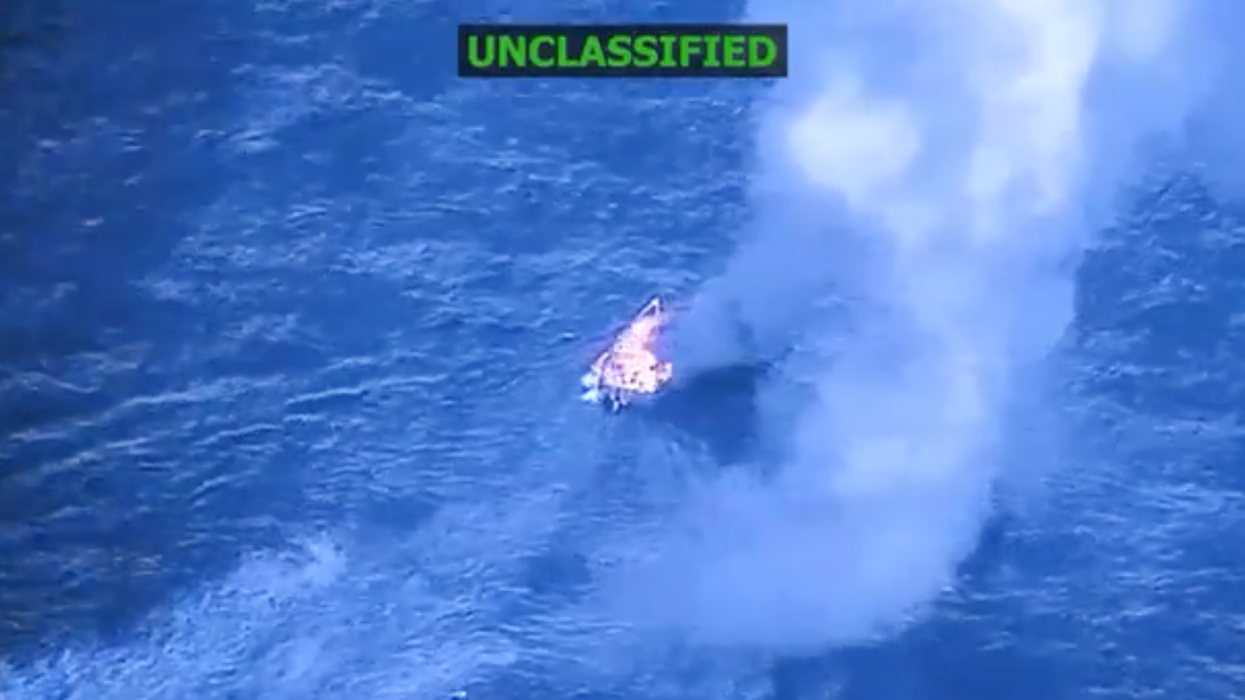
Instead of a values-based foreign policy, what has come out of the Trump White House this past year was a steady drumbeat of aggressive militaristic taunting.
As the world takes stock of the United States’ most recent military venture in South America, it seems an appropriate moment to consider the possible long-term implications of what will be wrought from the seizure of Venezuela President Nicolás Maduro and President Trump’s declaration that “we’re going to run the country.”
Americans historically have wrestled with balancing power politics and moral concerns in their approach to foreign policy. An accounting of the second Trump administration’s first year in office, however, suggests that those leading in Washington today are not all that concerned with such dynamics. This should cause concern, especially after the current military strike on Venezuela. As US foreign policy became less guided by moral ambitions in 2025, it became, perhaps inevitably so, more militarized.
Secretary of State Marco Rubio, laying out the new administration’s priorities back in January 2025, mandated that US foreign policy should answer “three simple questions: Does it make America safer? Does it make America stronger? Does it make America more prosperous?” Nowhere in this guidance did Rubio speak of setting an example based on moral virtues, on values that might favor diplomacy over raw military power within the international arena.
Perhaps unsurprisingly, the latest National Security Strategy, published in November, remained equally silent on morality’s role in defining American grand strategy. It did, though, state that the United States would “reassert and enforce the Monroe Doctrine to restore American pre-eminence in the Western Hemisphere.”
Instead of a values-based foreign policy, what has come out of the Trump White House this past year, culminating with the attack on Venezuela, was a steady drumbeat of aggressive militaristic taunting, much of it threatening military violence and economic sanctions while politicizing the nation’s armed forces, both at home and overseas. These actions, of course, sit at odds with the president’s 2025 inaugural address in which Mr. Trump, evoking Richard Nixon, argued that his “proudest legacy will be that of a peacemaker and unifier.”
A chaotic year in, one might question that historical inheritance. Conjuring a near existential threat at the nation’s southern border, for instance, the president began his term by ordering the Pentagon send some 1,500 active-duty troops to assist with border patrolling and “alien” deportation missions.
Equally belligerent language targeted Denmark over the intent to take Greenland, with Trump declining to rule out the use of military force to achieve his aims. Nearly a full year later, the president is still arguing that the world’s largest island is “essential” to US national security, suggesting that forcible annexation of an ally’s territory is warranted as long as the commander-in-chief deems it so.
Closer to home, the administration also set its sights on the Western Hemisphere, claiming the United States’ command of the Panama Canal despite a 1977 treaty guaranteeing its neutrality. Then, with little restraint and less legal authority, the Department of Defense began attacking suspected drug-smuggling craft off the coast of Venezuela, escalating tensions throughout the second half of 2025 that led to a blockade of the South American country, the CIA carrying out drone strikes on its coastal port facilities, and now a unilateral, illegal invasion ostensibly aimed at regime change and command of the Venezuelan oil industry.
This devaluation of diplomacy is not new. It marked Trump’s first year in office, as the State Department abruptly paused all foreign aid and assistance with little to no warning soon after inauguration, with critics lamenting the impact such suspensions have had on global health programs over the course of 2025.
Such breakneck, unprincipled flexing of American power abroad this arguably was matched by a similar lack of moral concerns at home. The pardoning of domestic terrorists who attacked the US capitol on January 6th, 2020—with far-right extremist groups like the “Proud Boys” vowing revenge for their jail time—and the unlawful militarized policing of American cities were but just two examples of an administration acting with few self-imposed ethical guardrails.
But morals matter, both at home and abroad. They always have, even if the United States historically has not always lived up to its idealistic founding principles. Morality is not irrelevant to a nation’s foreign policy, despite noted State Department diplomat George Kennan once arguing that the “interests of the national society” such as “military security” and “the integrity of its political life…have no moral quality” of their own.
Of course, power matters, too. But power unhinged from ethical reasoning (and restraint) leads to a dark world in which military power becomes the inevitable answer to nearly any foreign policy question. Even a realist like Hans Morgenthau, author of the 1948 Politics Among Nations, counseled that the “aspiration for power” should, in some sense, be “in harmony with the demands of reason, morality, and justice.” As the famed political scientist put it, morality, mores, and law reinforced each other and offered “protection to the life of society and to the lives of the individuals who compose it.”
More recently, Joseph S. Nye, Jr. argued that we should consider the potential benefits of “maintaining an institutional order that encourages moral interests.” In short, the tension between morality and power has been healthy in our past debates over foreign policy. (Even if Morgenthau himself warned against the “intoxication with moral abstractions.”) Historically speaking, moral aims have set examples abroad, highlighted the values of human rights across the globe, and informed critiques against those who support more imperialistic and militaristic policies.
But what happens when the president of the United States, in both rhetoric and deeds, flaunts power and interests above all else? When morals are deemed an inconvenience at best, a threat to rational decision-making at worst? The likely result is the militarization of the nation’s foreign policy.
True, Mr. Trump has boasted that his deal-making has ended eight wars while complaining that he deserves a Nobel Peace Prize for his efforts. Yet motives matter when it comes to moral concerns. Was the president seeking peace or adulation? Moreover, Mr. Trump has seemed reluctant to wade into the details for achieving lasting peace in the Middle East or for holding Vladimir Putin to task for Russia’s unbridled aggression against Ukraine.
In a world deemed existentially dangerous, then only war and the threat of war, the flawed argument goes, will keep the nation safe when morals no longer matter. Seemingly, Mr. Trump sees the world this way. In his inaugural address, the president stressed his responsibility to “defend our country from threats and invasions…at a level that nobody has ever seen before.” Such martial rhetoric has been reinforced this past year by Secretary of Defense (“War”) Pete Hegseth who, in critics’ eyes, views military morality through the lens of “might makes right.”
In our heated, if not fractured, political moment, debating the value of morals guiding our nation’s foreign policy will be a difficult task. Indeed, even finding consensus today over what we mean by “moral behavior” seems a fraught enterprise. But the discussion is needed. Surely, President Barak Obama’s drone-based “targeted killing program” or Joseph Biden’s “unconditional” support of Israeli Prime Minister Benjamin Netanyahu’s exterminationist policies against the Palestinians warrant examination, if not condemnation. So too the militarized actions of the Trump administration this past year. In short, effective American leadership is moral leadership, both at home and abroad.
Moreover, a nation broken free of its ethical moorings will engender only resentment and retaliation on the world stage. In such a scenario, a reliance on military force likely will grow as fears of America losing its “greatness” feed into themselves. If the Trump administration spies a dangerous world beyond its shores, then a foreign policy lacking in any moral principles hardly will dispel those threats, as real as they may be. Indeed, those threats will likely only escalate.
If we can agree with the proposition that power and morals can—and should—reinforce each other, then the opening year of the second Trump administration serve as a warning sign for the coming implications of a nation’s foreign policy bereft of moral criteria. Militarization surely will follow immorality.
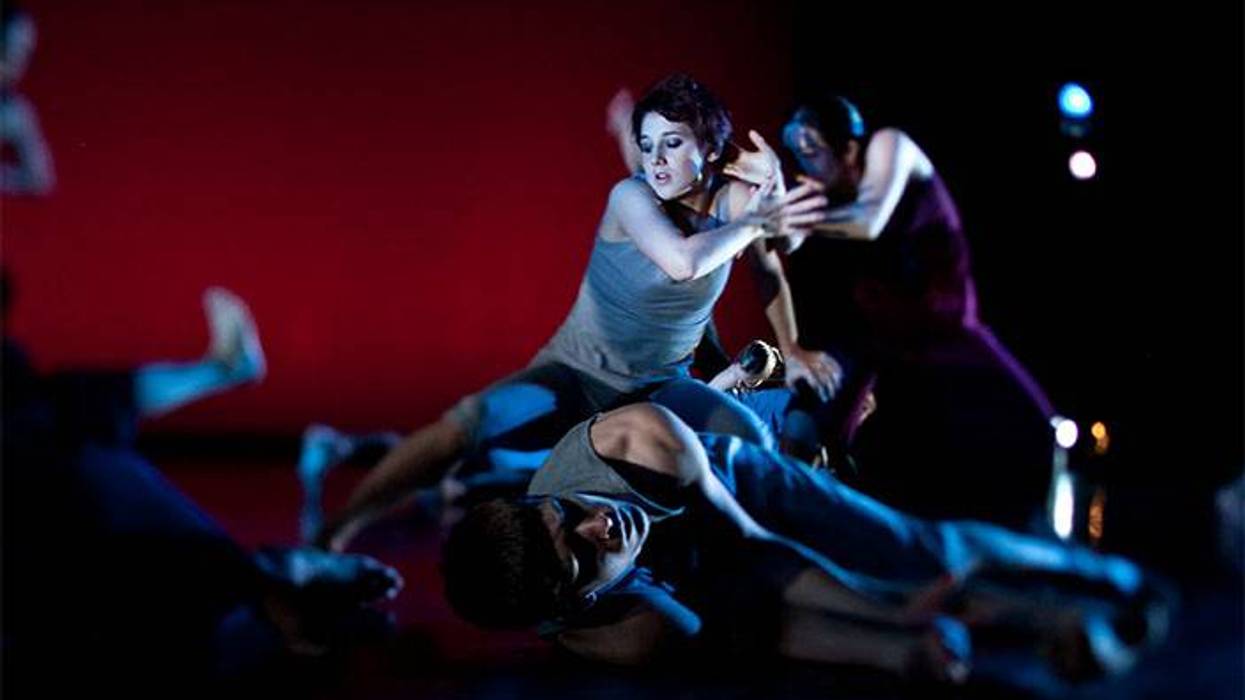
Choreographer Robin Becker reimagines this story of the human tragedy of war and the eruption of violence during student protests into a powerful and poignant dance production.
To commemorate the 50th anniversary of the end of the American War in Vietnam, Hofstra University hosted a performance of choreographer Robin Becker’s “Into Sunlight.” Inspired by Pulitzer Prize-winning author David Maraniss’ book, They Marched Into Sunlight,
Becker reimagines this story of the human tragedy of war and the eruption of violence during student protests into a powerful and poignant dance production. Through expressive movement and visual artistry, the performance explores the psychological, emotional, and moral complexities, as well as the historical significance of this tumultuous period.
As a combat veteran of the American war in Vietnam and having yet to “put the war behind me and go on with my life,” as is often advised by those who were not there, I must admit that I was profoundly conflicted by this performance. “Into Sunlight’s” portrayal of the horror and ugliness of war set against the artistic backdrop of Robin Becker’s brilliant choreography and the skilled movements of her dancers, provided a striking contrast that mirrored a personal unease, one that I have long endured and labored to express in my poem "The Rose":
I remember once, in another lifetime,
noticing a lone rose rising defiantly
from beneath the rubble
of a destroyed city North of Danang.
It had no business being there,
adding color to the drabness of war,
beauty to the ugliness of destruction,
and the hope of life
when life held nothing
but suffering and death.
It was a contradiction
and created confusion
amidst the clarity of killing to survive.
...I stepped on it.
There are no flowers in a warzone
nor color, nor beauty, nor hope.
During the talkback that followed the performance, my uneasiness found expression in my rather abrupt request that audience members refrain from applauding my “service” as they had for previous veteran speakers. While I understood that their intentions were sincere—especially at an event intended to honor the "selfless sacrifices" of veterans—I do not believe that my actions as a warrior deserve praise or appreciation. Nor do I believe that participation in war should routinely be met with honor or celebration.
Moreover, after experiencing the horror of war so powerfully portrayed aesthetically in dance, I thought it crucial that the lessons conveyed by the performance not be misunderstood or, worse, glorified. I felt compelled to point out that the common practice of heroizing veterans is not only misguided and dangerous, but perhaps more importantly, fails to serve the interest of both veterans and civilians for several important reasons.
While recognizing that the mythology of warrior worship must be rejected, and that war is not noble, it is equally important to reject its antithesis as well, the mythology of troop blame. This view regards veterans as murderers and places the entire burden of responsibility for illegal and brutal war on their shoulders while backhandedly absolving civilians of culpability. In a democratic society, governance and responsibility for war is a collective burden—by and for the people. Thus, in a very real sense, there is blood on all of our hands.
The genius of “Into Sunlight” lies in Robin Becker’s ability to choreograph the sublime movement of her dancers to provide audience members a face-to-face confrontation with the harsh realities of military violence, human suffering, and death. By blending the visual beauty of dance with the discomfort, awe, pain, and exhilaration experienced by warriors on the battlefield, Becker creates a powerful contrast that evokes, in the realm of art, the intense and complex emotions associated with personal trauma.
“Into Sunlight” is not to be passively enjoyed in the conventional sense. Rather, it is participatory, reactive, and demands personal engagement and interpretation. Such art provides an immersive experience transforming audience members from passive observers into active co-creators of meaning. By blurring the boundaries between creator and audience, this performance encourages personal growth, introspection, understanding, self-forgiveness, and reconciliation, opening a pathway for audience members to begin the difficult task of identifying, processing, and healing the lingering effects of personal trauma and moral injury. Or, at least, it provides a way to come to terms with these experiences—to find a place for it in one’s “being.” It is precisely at this intersection where beauty meets the sublime that anguish is transformed into poignant artistry, allowing “Into Sunlight” to succeed in ways other more conventional therapies may have failed.
Though the performance is undeniably unsettling, I know I have benefited from the experience and am confident that other “victims” of war or of personal trauma, will benefit as well. Facing the demons we have for so long tried to suppress, though uncomfortable, is a difficult, though necessary, prerequisite on the path to healing.
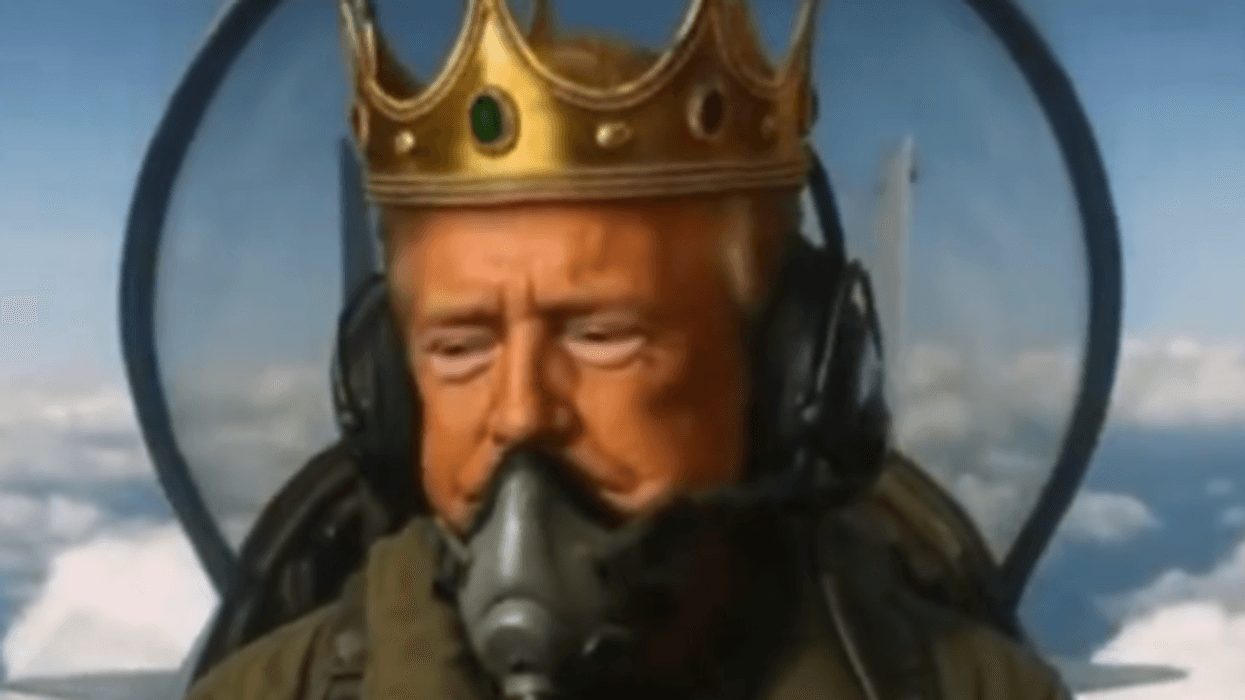
Under his leadership, our political structure is naked and exposed, stripped of its political correctness.
In the Donald Trump era—praise be!—so much is possible that previously no one had ever even imagined. For instance, not only has “the late, great Hannibal Lecter” come back to life, he might even join Trump’s cabinet.
Well, that’s just a guess, but why not? I think he’d fit right in. All of which is to say: “There’s something happening here. What it is ain’t exactly clear...” It’s not simply that Trump is unique (i.e., uniquely crazy). He definitely is, but he’s also American to the core. Under his leadership, our political structure is naked and exposed, stripped of its political correctness. The emperor has no clothes! Suddenly we can’t avoid seeing this.
Indeed, we can’t avoid seeing ourselves. As psychologist John Gartner has pointed out, Trump is not only a malignant narcissist, but—as has been clear in his second term—he’s slithering ever more deeply into dementia. Yet people still support him—enough people to let him win elections. Why?
Because, Gartner notes: “He’s beating up on their shared enemies. There’s a psychological appeal that a Hitler-like character has. Someone who feels disempowered feels re-empowered by someone who, in a punitive way, is attacking their shadow enemies and making them feel powerful and entitled to dominate.”
The “war” on terror, the transcendence of terror—the transformation of humanity, of Planet Earth—begins by looking deeply at ourselves and choosing to evolve.
I would add that these “enemies” may simply be pulled out of the blue... a group his supporters weren’t even aware of. But the strongman has declared them to be the enemy: in effect, creating the enemy. What matters is not that a long-despised group of people are getting what they “deserve,” but that the disempowered supporters now have someone they can feel like they’re dominating.
And, yeah, Trump is going crazy, so to speak, attacking various enemies. As Bret Wilkins writes at Common Dreams:
President Donald Trump—the self-described "most anti-war president in history"—has now ordered the bombing of more countries than any president in history as US forces carried out Christmas day strikes on what the White House claimed were Islamic State militants killing Christians in Nigeria...
In addition to Nigeria, Trump—who says he deserves a Nobel Peace Prize—since 2017 has also ordered the bombing of Afghanistan, Iran, Iraq, Libya, Pakistan, Somalia, Syria, and Yemen, as well as boats allegedly transporting drugs in the Caribbean Sea and Pacific Ocean. Trump has also deployed warships and thousands of US troops near Venezuela, which could become the next country attacked by a president who campaigned on a platform of "peace through strength.”
But this “leadership” is anything but unprecedented. As Palestinian-American comedian Sammy Obeid asks, in a comedy routine with more factual clarity than is often present in the official media: What actually is terrorism, this thing we’ve been trying so hard to eliminate for the last couple decades? To find out, he looked up the definition: Terrorism is “using violence to achieve a political goal.”
Uh... America itself is the biggest terrorist of all time, apparently! Or at least it’s well up there on the list. Beyond the Vietnam War—millions dead—there’s the alleged War on Terror, launched by George W. Bush, continued by Barack Obama, eventually ended by Joe Biden.
According to Brown University’s Costs of War Project: “An estimated over 940,000 people were killed by direct post-9/11 war violence in Iraq, Afghanistan, Syria, Yemen, and Pakistan between 2001-2023. Of these, more than 412,000 were civilians. The number of people wounded or ill as a result of the conflicts is far higher, as is the number of civilians who died ‘indirectly,’ as a result of wars’ destruction of economies, healthcare systems, infrastructure, and the environment. An estimated 3.6-3.8 million people died indirectly in post-9/11 war zones, bringing the total death toll to at least 4.5-4.7 million and counting.”
You might say Trump brings the darkness of all this to light. Isn’t that where war belongs—in raw public scrutiny? Perhaps the greatest enemy of peace is the collective justification and abstraction of war by the political and media complex, along with the financial flow making it possible. This is our national infrastructure. Trump is exposing it, not intentionally, but with snarky, 12-year-old honesty, mixed with dementia.
“Terrorism is using violence to achiever a political goal.” The “war” on terror, the transcendence of terror—the transformation of humanity, of Planet Earth—begins by looking deeply at ourselves and choosing to evolve. If we refuse to do so, we have Donald Trump.