SUBSCRIBE TO OUR FREE NEWSLETTER
Daily news & progressive opinion—funded by the people, not the corporations—delivered straight to your inbox.
5
#000000
#FFFFFF
To donate by check, phone, or other method, see our More Ways to Give page.
Daily news & progressive opinion—funded by the people, not the corporations—delivered straight to your inbox.
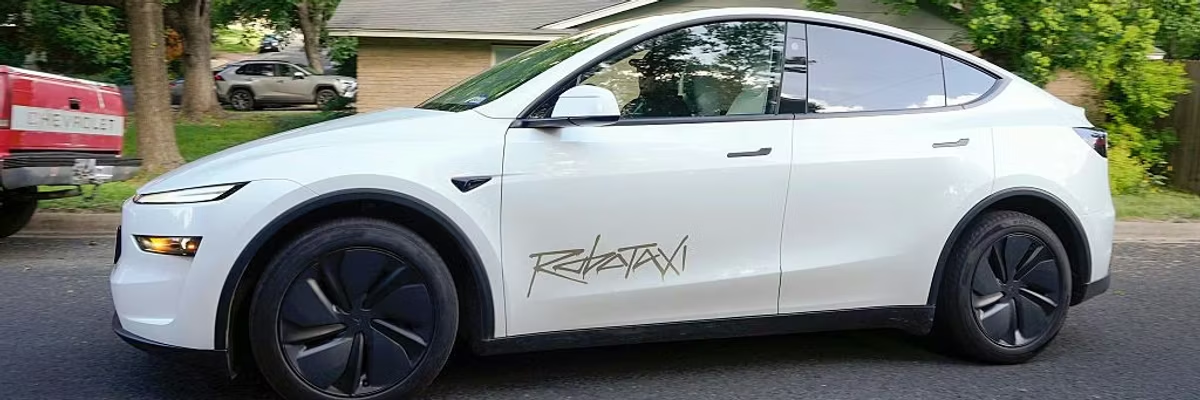
A driverless Tesla Robotaxi, with a man serving as a safety monitor in the front passenger seat, rolls along Laguna Drive in Southeast Austin, Friday, June 27, 2025.
The new data comes as Tesla is removing human safety monitors from its driverless taxi fleet.
Proponents of driverless cars often tout them as a safer alternative to cars with human drivers—but such claims don't appear to be holding up so far in the case of Tesla's Robotaxis.
A Monday report from Elektrek found that Tesla Robotaxis are crashing much more frequently than cars driven by humans, as the company has now reported eight crashes of its driverless taxi fleet in Austin, Texas to the National Highway Traffic Safety Administration since July.
Elektrek also crunched some numbers based on data released by Tesla last month and estimated that the Tesla Robotaxis are involved in a crash for every 40,000 miles they drive. For comparison, the publication reported, cars driven by humans crash about once every 500,000 miles, meaning the Robotaxis so far have crashed 12.5 times more frequently than human-driven cars.
All of the Robotaxi crashes so far have occurred with human safety monitors—who have been trained to take control of the car in the event of a software error—present in the vehicles.
This is significant because, as TechCrunch reported on Monday, Tesla is starting to send out its Robotaxi fleet without safety monitors.
TechCrunch noted that "the removal of the human safety monitors brings the company a critical step closer to its goal of launching a real commercial Robotaxi service," but also said it "will most likely ramp up the scrutiny on Tesla’s ongoing testing in Austin, doubly so when the company starts offering rides in the empty cars."
Tesla's bet on Robotaxis has grown more important given that its vehicle sales in the US and around the world have been dropping significantly so far this year, in part due to a boycott campaign inspired by outrage over CEO Elon Musk's support for far-right political parties.
According to a report from Reuters, the most recent data from car software company Cox Automotive shows that US Tesla sales dropped to a four-year low last month. The news agency also pointed out that Tesla now "is offering financing deals as low as 0% on the Standard Model Y," which is "a sign of weak demand."
Dear Common Dreams reader, It’s been nearly 30 years since I co-founded Common Dreams with my late wife, Lina Newhouser. We had the radical notion that journalism should serve the public good, not corporate profits. It was clear to us from the outset what it would take to build such a project. No paid advertisements. No corporate sponsors. No millionaire publisher telling us what to think or do. Many people said we wouldn't last a year, but we proved those doubters wrong. Together with a tremendous team of journalists and dedicated staff, we built an independent media outlet free from the constraints of profits and corporate control. Our mission has always been simple: To inform. To inspire. To ignite change for the common good. Building Common Dreams was not easy. Our survival was never guaranteed. When you take on the most powerful forces—Wall Street greed, fossil fuel industry destruction, Big Tech lobbyists, and uber-rich oligarchs who have spent billions upon billions rigging the economy and democracy in their favor—the only bulwark you have is supporters who believe in your work. But here’s the urgent message from me today. It's never been this bad out there. And it's never been this hard to keep us going. At the very moment Common Dreams is most needed, the threats we face are intensifying. We need your support now more than ever. We don't accept corporate advertising and never will. We don't have a paywall because we don't think people should be blocked from critical news based on their ability to pay. Everything we do is funded by the donations of readers like you. When everyone does the little they can afford, we are strong. But if that support retreats or dries up, so do we. Will you donate now to make sure Common Dreams not only survives but thrives? —Craig Brown, Co-founder |
Proponents of driverless cars often tout them as a safer alternative to cars with human drivers—but such claims don't appear to be holding up so far in the case of Tesla's Robotaxis.
A Monday report from Elektrek found that Tesla Robotaxis are crashing much more frequently than cars driven by humans, as the company has now reported eight crashes of its driverless taxi fleet in Austin, Texas to the National Highway Traffic Safety Administration since July.
Elektrek also crunched some numbers based on data released by Tesla last month and estimated that the Tesla Robotaxis are involved in a crash for every 40,000 miles they drive. For comparison, the publication reported, cars driven by humans crash about once every 500,000 miles, meaning the Robotaxis so far have crashed 12.5 times more frequently than human-driven cars.
All of the Robotaxi crashes so far have occurred with human safety monitors—who have been trained to take control of the car in the event of a software error—present in the vehicles.
This is significant because, as TechCrunch reported on Monday, Tesla is starting to send out its Robotaxi fleet without safety monitors.
TechCrunch noted that "the removal of the human safety monitors brings the company a critical step closer to its goal of launching a real commercial Robotaxi service," but also said it "will most likely ramp up the scrutiny on Tesla’s ongoing testing in Austin, doubly so when the company starts offering rides in the empty cars."
Tesla's bet on Robotaxis has grown more important given that its vehicle sales in the US and around the world have been dropping significantly so far this year, in part due to a boycott campaign inspired by outrage over CEO Elon Musk's support for far-right political parties.
According to a report from Reuters, the most recent data from car software company Cox Automotive shows that US Tesla sales dropped to a four-year low last month. The news agency also pointed out that Tesla now "is offering financing deals as low as 0% on the Standard Model Y," which is "a sign of weak demand."
Proponents of driverless cars often tout them as a safer alternative to cars with human drivers—but such claims don't appear to be holding up so far in the case of Tesla's Robotaxis.
A Monday report from Elektrek found that Tesla Robotaxis are crashing much more frequently than cars driven by humans, as the company has now reported eight crashes of its driverless taxi fleet in Austin, Texas to the National Highway Traffic Safety Administration since July.
Elektrek also crunched some numbers based on data released by Tesla last month and estimated that the Tesla Robotaxis are involved in a crash for every 40,000 miles they drive. For comparison, the publication reported, cars driven by humans crash about once every 500,000 miles, meaning the Robotaxis so far have crashed 12.5 times more frequently than human-driven cars.
All of the Robotaxi crashes so far have occurred with human safety monitors—who have been trained to take control of the car in the event of a software error—present in the vehicles.
This is significant because, as TechCrunch reported on Monday, Tesla is starting to send out its Robotaxi fleet without safety monitors.
TechCrunch noted that "the removal of the human safety monitors brings the company a critical step closer to its goal of launching a real commercial Robotaxi service," but also said it "will most likely ramp up the scrutiny on Tesla’s ongoing testing in Austin, doubly so when the company starts offering rides in the empty cars."
Tesla's bet on Robotaxis has grown more important given that its vehicle sales in the US and around the world have been dropping significantly so far this year, in part due to a boycott campaign inspired by outrage over CEO Elon Musk's support for far-right political parties.
According to a report from Reuters, the most recent data from car software company Cox Automotive shows that US Tesla sales dropped to a four-year low last month. The news agency also pointed out that Tesla now "is offering financing deals as low as 0% on the Standard Model Y," which is "a sign of weak demand."