

SUBSCRIBE TO OUR FREE NEWSLETTER
Daily news & progressive opinion—funded by the people, not the corporations—delivered straight to your inbox.
5
#000000
#FFFFFF
To donate by check, phone, or other method, see our More Ways to Give page.
Daily news & progressive opinion—funded by the people, not the corporations—delivered straight to your inbox.
I want to be among the last people whose bodies carry the legacy of the nuclear age; whether I am depends on decisions that are still within our reach.
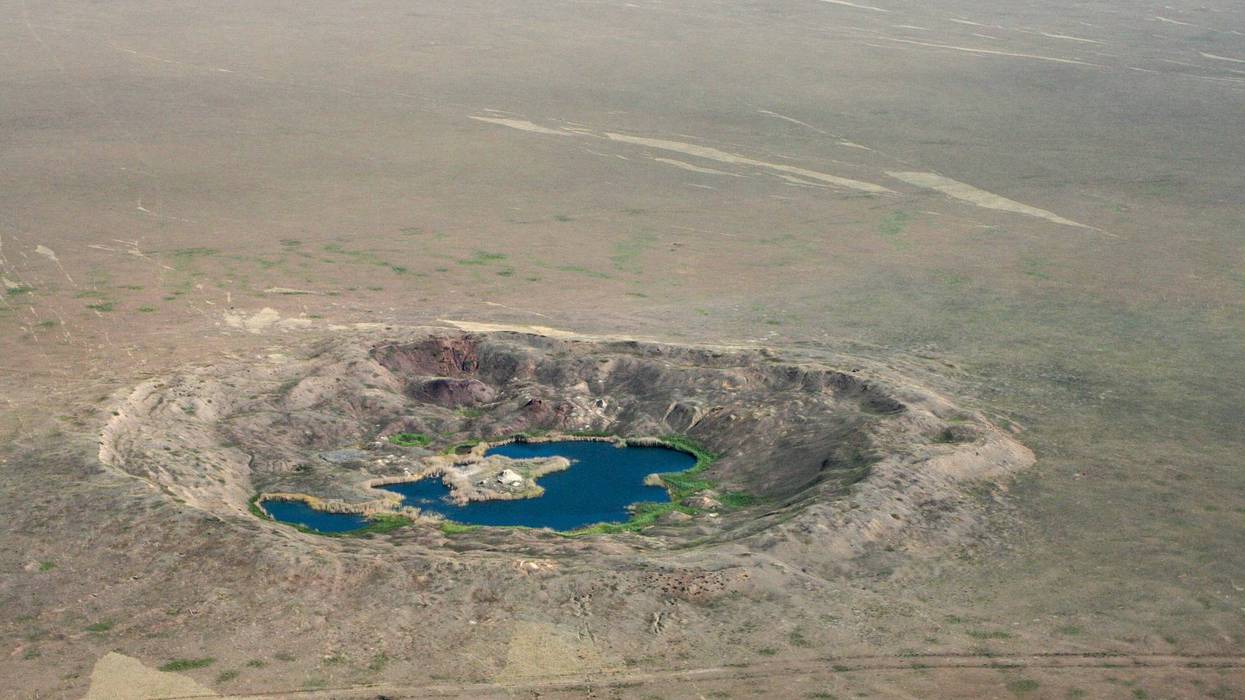
I paint with a brush held between my teeth or my toes. I was born without arms in 1968 about 100 kilometers from the Semipalatinsk nuclear test site in eastern Kazakhstan. My parents’ generation watched mushroom clouds rise over the steppe without being told what the explosions could do to their bodies or their children.
For four decades, the Soviet Union conducted more than 450 nuclear tests at Semipalatinsk. The fallout left cancers, disabilities, trauma, and contaminated land. Today, when leaders discuss nuclear weapons in the language of “deterrence” and “strategic balance,” I think of families paying for decisions in which they had no voice. The bomb is not an abstraction to me. Its history is written on my body.
August 29 carries two memories. On that date in 1949, the Soviet Union detonated its first atomic device at Semipalatinsk. On the same date in 1991, Kazakhstan closed the test site. At Kazakhstan’s initiative, the United Nations later proclaimed August 29 the International Day against Nuclear Tests. It is not simply a day of commemoration. It is a warning from the past about choices being made now.
In 2026, that warning is urgent. The Stockholm International Peace Research Institute estimates that the world began this year with 12,187 nuclear warheads. All nine nuclear-armed states continued strengthening their arsenals last year, while up to 2,200 warheads remained on high operational alert. In February, New START, the last treaty limiting the strategic arsenals of the United States and Russia, expired without a successor. In May, the review conference of the Nuclear Non-Proliferation Treaty (NPT) ended without consensus for the third consecutive time.
I paint the future I want to see: clean land, an unthreatened sky, and children born without the burden my generation inherited.
The world is not merely failing to disarm. It is learning to rely on the bomb again. There is growing rhetoric that nuclear weapons are the ultimate guarantor of peace and security. In moments of heightened tension, some states and strategic thinkers argue that only nuclear capability can prevent coercion, deter conflict, or preserve sovereignty. This logic of “nuclear reassurance” is being normalized not only in official doctrine but in public debate, where deterrence is recast as stability and restraint is portrayed as risk. Yet this framing erodes the very foundation of non-proliferation. It suggests that safety flows from the possession of the most destructive weapons ever created, rather than from law, diplomacy, and mutual restraint.
A non-proliferation system cannot endure if abstinence is portrayed as vulnerability while possession is equated with safety and status. The NPT rests on a bargain: Non-nuclear states agree not to acquire nuclear weapons, while nuclear-weapon states undertake to pursue disarmament. Both sides must keep their word. Rules cannot bind the weak and excuse the powerful.
Kazakhstan chose another logic. When we became independent, 1,410 Soviet strategic nuclear warheads remained on our territory, giving us what was then the world’s fourth-largest nuclear arsenal. We could have treated them as a shortcut to status or a shield against an uncertain future. Instead, a society that knew the price of radiation demanded a different kind of security. We closed Semipalatinsk, relinquished the weapons, and joined the NPT as a non-nuclear state. That choice did not erase the damage, but it showed that renunciation can be an act of sovereignty and strength.
Kazakhstan has tried to turn that experience into institutions. We helped establish the Central Asian Nuclear-Weapon-Free Zone, signed and ratified the Comprehensive Nuclear-Test-Ban Treaty, joined the Treaty on the Prohibition of Nuclear Weapons, and host the International Atomic Energy Agency (IAEA) Low Enriched Uranium Bank.
Our message is not “no” to nuclear science. Peaceful nuclear energy, subject to rigorous safeguards, can serve human development. It is “no” to weapons whose effects no border, hospital, or government can control.
The immediate path is clear. The nine remaining states whose ratification is required must bring the test-ban treaty into force. The United States and Russia must negotiate new verifiable limits, and all nuclear-armed states must join the work of reduction. Iran and the United States must restore full IAEA access through an enforceable agreement. More countries should join the prohibition treaty, while nuclear-armed states should engage with it even before they are ready to accede. Nations must also fund healthcare, victim assistance, and environmental repair. Disarmament cannot speak only about the future while abandoning those living with the past.
Some will call a world without nuclear weapons naive. I have learned what is truly naive: believing that thousands of warheads can remain ready for use indefinitely without error, miscalculation, rage, or technical failure. Deterrence requires every leader to remain rational, every warning system to be accurate, and every crisis to stay controlled—forever. Humanity has never met such a standard.
An artist begins with a blank canvas and believes another reality can be created. I paint the future I want to see: clean land, an unthreatened sky, and children born without the burden my generation inherited.
I want to be among the last people whose bodies carry the legacy of the nuclear age. Whether I am depends on decisions that are still within our reach. Kazakhstan turned away from the bomb. The world can do so too.

As the US-Israeli war on Iran actively unravels 50 years of progress toward nuclear nonproliferation, this moment perfectly captured the backwardness of international nuclear policy.
Less than three weeks after President Donald Trump threatened that “a whole civilization will die tonight” on Truth Social, representatives of the United States—the only country to ever deploy nuclear weapons on another country—took the mic at the United Nations headquarters to lecture the rest of the world about nuclear-weapons safety. As the US-Israeli war on Iran actively unravels 50 years of progress toward nuclear nonproliferation, this moment perfectly captured the backwardness of international nuclear policy.
From April 27 to May 22, representatives of over 200 countries and diplomatic organizations convened at the UN headquarters in New York City for the 11th review conference of the Non-Proliferation Treaty (NPT). Signed in 1970, the NPT remains the pièce de résistance of international nuclear policy, and poses three main rules: States that do not have nuclear weapons will not seek to acquire them; states that do possess nuclear weapons will commit to disarmament instead of engaging in arms races; and all states have the right to utilize nuclear energy. These conferences are held by the UN roughly every five years to ensure the treaty’s tenets are upheld and encourage debate on any possible updates.
This year’s conference, if not the NPT itself, was a farce from the beginning thanks to the United States and Israel. Within the first three hours of the first meeting on April 27, the United States condemned Iran—a country it was actively attacking—for pursuing peaceful enrichment of uranium, the right to which it is guaranteed under the third tenet of the NPT.
From that point on, the contradictions only became more embarrassing. The United Kingdom and France, two other nuclear-armed states, immediately joined the United States in condemning the representative of non-nuclear Iran who had just been elected a vice president of the conference.
When the Africa Group—composed of 54 African nations—used the NPT conference as a platform to call for a new nuclear-free zone for the Middle East, that should be seen as perhaps the most promising proposal to come out of the conference.
When they attacked Iran in February, the United States and Israel sent a clear message to the world that utterly extinguishes any legitimacy of the NPT: The treaty-defined right to peaceful enrichment is a myth, and nuclear-armed states like the United States and Israel will wage wars of aggression and destruction to ensure the nuclear balance of power remains in their favor.
This message is just a reiteration of what the world has known since the beginning of the War on Terror, if not before: As long as the United States is involved, diplomacy is dead. Colin Powell killed it with his speech to the UN Security Council about fictitious WMDs in Iraq. Barack Obama killed it by bombing and seizing $30 billion from Libya, which had already abolished its nuclear weapons program and signed the NPT. And now Donald Trump has killed it again by attacking Iran’s civilian infrastructure, including nuclear facilities which are protected under the NPT.
With the United States as the presiding power, treaties and territorial sovereignty can be torn up at any time. These are the exact political conditions that led a country like North Korea to avoid signing the NPT altogether and develop nuclear weapons. If there is no incentive of safety for following the rules, then it becomes perfectly rational to not follow them.
The Bulletin of Atomic Scientists, the United States-based nuclear watchdog that hosts the famous “Doomsday Clock,” quickly responded to the fact that the legitimacy of the NPT was disintegrating in real time at the UN. Before the conference ended, they published the bluntly titled report Iran’s Positions at the NPT Review Conference Are Rational. Ignoring Them Would Weaken the Treaty. With this report, the international nuclear experts at the Bulletin of Atomic Scientists are practically begging on their knees for the United States to adopt a nuclear policy that isn’t hellbent on illegal wars, mass punishment of civilians, and nullifying of international treaties.
There was good news at the NPT conference too. Although the illegal, bloodthirsty US-Israeli war on Iran has threatened the survival of the nonproliferation policy pushed by the UN, some non-nuclear states used the conference to propose more modest nuclear treaties that may ultimately prove to be more reliable.
In addition to the NPT, there are international treaties establishing “nuclear free zones” in five regions: Latin America and the Caribbean, signed in 1967; the South Pacific, signed in 1985; Southeast Asia, signed in 1995; Africa, signed in 1996; and Central Asia, signed in 2006. The Treaty of Tlatelolco, covering Latin America and the Caribbean, even predates the NPT by three years. These nuclear-free zones have arguably outperformed the NPT in producing nuclear-free outcomes in their respective sections of the globe.
Simply put, these treaties are underrated. Over the past 50 years, the United States has spread its nuclear arsenal to NATO allies including Belgium, Germany, Italy, the Netherlands, and Turkey. And just earlier this spring, Japan’s prime minister floated the possibility of hosting nuclear weapons on behalf of the United States too. Likewise, Russia stations nuclear weapons in its neighbor Belarus. This form of proliferation, dubbed “nuclear sharing,” is essentially a violation of the NPT—it puts nuclear weapons in states that otherwise wouldn’t have them. But while nuclear powers have destroyed the legitimacy of the NPT by engaging in nuclear sharing arms races, non-nuclear countries have shown real leadership on nuclear policy by establishing these nuclear-free zones that effectively and reliably curtail proliferation.
So when the Africa Group—composed of 54 African nations—used the NPT conference as a platform to call for a new nuclear-free zone for the Middle East, that should be seen as perhaps the most promising proposal to come out of the conference. With this suggestion, the Africa Group is stating the obvious: The United States and Israel, with their land-theft operation in Lebanon and their war of terror on Iran, are starting and escalating conflicts in the Middle East faster than the rest of the world can keep up with. The international community might as well try to keep nuclear weapons out of these conflicts.
There’s one problem with this proposal, and it’s not Iran’s alleged nuclear program.
Israel is reported to possess at least 90 nuclear warheads. Unlike Iran, Israel is not a cooperating party to the NPT, so its nuclear arsenal is not monitored by international watchdogs like the International Atomic Energy Agency. To this day, the United States does not acknowledge that Israel’s weapons exist at all.
A nuclear free zone in the Middle East will not be actualized any time soon because Israel is already violating it. But with this proposal the Africa Group is forcing the hand of the US and allies regarding Israel’s nuclear arsenal. This isn’t an adversarial action at all; it’s a necessary, good-faith move toward nuclear policy that is honest and proven to work. That same week, 30 members of Congress signed a letter demanding the United States acknowledge Israel’s warheads.
Even as the United States falsely claims to be eliminating a nuclear threat in the Middle East, it is simultaneously creating a new nuclear threat by proposing to station warheads in Japan, escalating toward a new war with China. Every single one of these escalations brings the world closer not only to all-out nuclear war, but also to imperialist wars of aggression backed by nuclear arsenals, such as the imperialist wars on Iraq, Libya, and Iran.
In 1992, Benjamin Netanyahu, then a member of the Zionist parliament for the Likud party, warned that Iran may develop a nuclear bomb within three to five years. The United States, its media, and its allies have believed and peddled these lies for over 30 years, but the rest of the world has caught up.
Humanity faces a choice, whether consciously or not, to continue down a path of conflict that leads toward ultimate destruction or to renounce its old ways and center peace at the heart of all its efforts.
This speech was delivered to the 11th Review Conference of the Treaty on the Non-Proliferation of Nuclear Weapons on May 1, 2026.
Honorable President, Distinguished Delegates, Colleagues, and Friends,
We are living in a decisive moment. Humanity faces a choice, whether consciously or not, to continue down a path of conflict that leads toward ultimate destruction or to renounce its old ways and center peace at the heart of all its efforts.
International law, built painstakingly over decades and even centuries to prevent such an unfathomable catastrophe, is under brazen and relentless attack today. At the heart of this divergence lies a fundamental question: whether states may claim a right to wage war without restraint, and whether use and even possession of weapons with potential to end human civilization can ever be justified. These are precisely the issues at the core of the Treaty on the Non-Proliferation of Nuclear Weapons (NPT)—whose future we have gathered to discuss at this Review Conference.
Nuclear disarmament and nuclear non-proliferation are not separate tracks toward a safer world—they are intertwined and inseparable paths.
Our world is a time-ticking bomb. There are more than 12,000 nuclear warheads in existence—each capable of killing hundreds of thousands, some even millions of people, and any one of which could trigger a chain reaction leading to full-scale nuclear war in less time than this session will last.
More than 40 years ago, Presidents Ronald Reagan and Mikhail Gorbachev reminded us that “a nuclear war cannot be won and must never be fought.” And yet today, we hear renewed calls to use nuclear weapons in the name of “saving lives,” alongside threats that contemplate the destruction of entire societies.
The five nuclear-weapon states recognized under the NPT, the United States, the Russian Federation, the United Kingdom, France, and China, possess over 95% of the world’s nuclear arsenal. With that power comes not only a moral responsibility, but a clear legal obligation under Article VI of this Treaty: to pursue negotiations in good faith to achieve not only nuclear disarmament, but also total and complete general disarmament.
Nuclear disarmament and nuclear non-proliferation are not separate tracks toward a safer world—they are intertwined and inseparable paths. As Joseph Rotblat warned in his 1995 Nobel Peace Prize acceptance speech: “If the militarily most powerful and least threatened states need nuclear weapons for their security, how can one deny such security to countries that are truly insecure? The present nuclear policy is a recipe for proliferation. It is a policy for disaster.”
We join the voices of hibakusha and countless others who have come before us in urging all NPT States Parties to take immediate and meaningful action:
This call is not just an abstract moral appeal; it is a prerequisite for human survival. The credibility of the NPT and the future of humanity depend on the actions we take over the next three weeks.
In the words of Joseph Rotblat: “The quest for a war-free world has a basic purpose: survival. But if in the process we learn how to achieve it by love rather than by fear, by kindness rather than by compulsion; if in the process we learn to combine the essential with the enjoyable, the expedient with the benevolent, the practical with the beautiful, that will be an extra incentive to embark on this great task.”
Thank you, Honorable President.
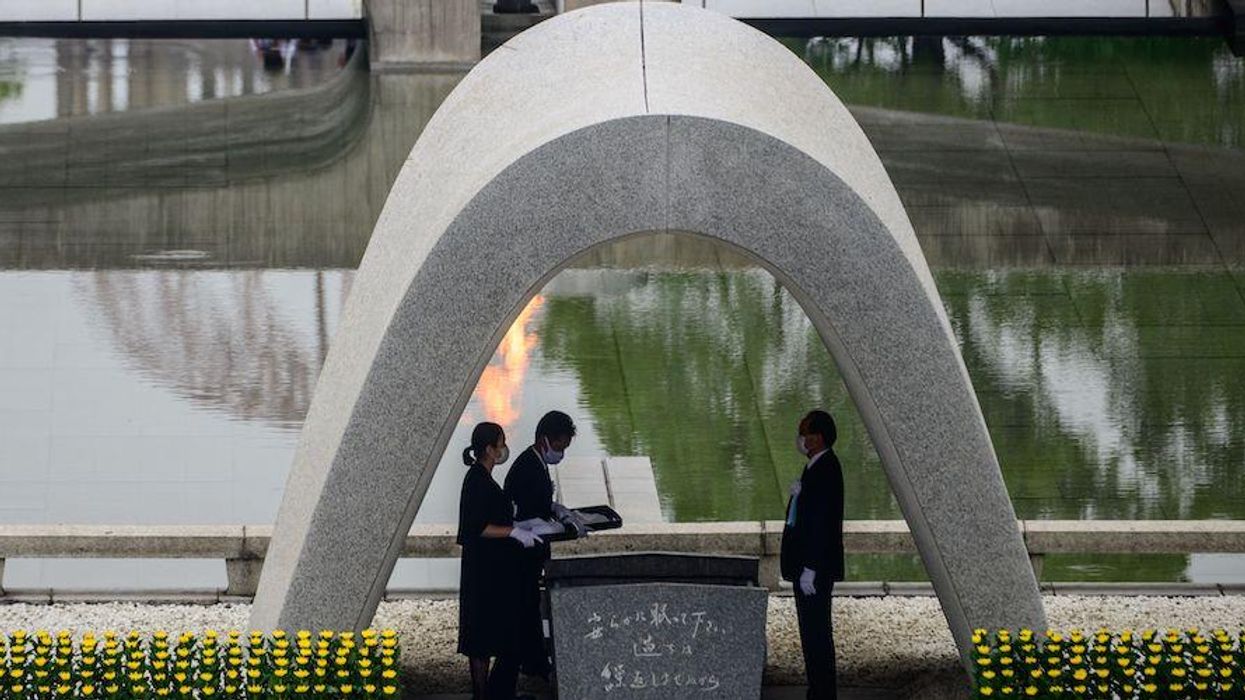
The states that have caused harm to peoples around the planet can finally stop pretending that such harms are either nonexistent or that they have done enough to address them.
On November 7, the First Committee of the United Nations General Assembly overwhelmingly supported a resolution to help victims of nuclear weapons use and testing. Brought forward by the Republics of Kazakhstan and Kiribati, and co-sponsored by 39 additional U.N. Member States, the resolution received 169 votes in favor, with only four nuclear weapon possessors—Democratic People’s Republic of Korea, France, Russia, and the United Kingdom—voting against it. The remaining five nuclear armed states (China, India, Israel, Pakistan, and the United States), plus Poland, all abstained.
The vote is a resounding affirmation that nuclear justice efforts are here to stay. The states that have caused harm to peoples around the planet, including their own citizens and those whose care they were entrusted with, can finally stop pretending that such harms are either nonexistent or that they have done enough to address them. The nuclear weapon possessors, most especially the five nuclear weapon states—China, France, Russia, United States, and the United Kingdom—recognized as such by the Nuclear Non-Proliferation Treaty, must engage in earnest.
Ultimately, nuclear justice must also include elimination of all nuclear weapon arsenals. This would ensure that the suffering of those impacted by nuclear weapons has not been in vain.
Ever-growing understanding of the humanitarian consequences of nuclear weapon attacks by the United States on the Japanese cities of Hiroshima and Nagasaki, as well as the testing of nuclear weapons that lasted for decades and reached numerous corners of the globe, provided a huge impetus behind the Humanitarian Initiative, a successful effort started in the early 2010s by a group of states in collaboration with civil society, all motivated to change the nuclear weapons status quo. Coupled with the growing appreciation of what nuclear war would bring today or tomorrow (subject of another U.N. resolution that passed this month with 141 in favor votes, 30 abstentions, and France, Russia, and the United Kingdom voting no), as well as the research on the risk of nuclear weapon use and the recognition that no adequate response could be devised for such a possibility, the Humanitarian Initiative led to successful efforts to bring into the U.N. system a treaty prohibiting nuclear weapons (Treaty on the Prohibition of Nuclear Weapons or TPNW).
When the TPNW was drafted in 2017, the diplomats recognized that it wasn’t enough to prohibit nuclear weapon activities, but that the past and present consequences for people and the environment had to be addressed head-on. This led to the Articles 6 and 7 of the TPNW on victim assistance, environmental remediation, and international cooperation, which are collectively referred to as the humanitarian provisions of the treaty. The goal is not just to make these ongoing harms integral to the effort to prohibit and eliminate nuclear weapons, but to address them directly and provide tangible results for the communities that have suffered from adverse health and socioeconomic impacts for decades and whose environments may still be radiologically contaminated. Having entered into force in 2021, the TPNW is now faced with the implementation of these provisions for two states that are already parties to the treaty, Republics of Kazakhstan and Kiribati. Kazakhstan was the site of 456 Soviet nuclear tests from 1949 to 1991, while Kiribati was home from 1957 to 1962 to United States and United Kingdom tests whose cumulative yield was equivalent to more than 2,000 Hiroshima bombs.
The humanitarian provisions of the TPNW have led to the broadening of conversations about these harms and the new norm arising from the treaty of the obligation to address them. While the United States had a Radiation Exposure Compensation Act from the early 1990s until its expiration earlier this year, and France introduced its Loi Morin law in 2010, these efforts have been severely limited in their scope and impact. In both cases, the definition of a victim was restricted in such a way as to prevent many of those harmed from qualifying for the compensation. Even for the people who have qualified, the assistance has been inadequate. Worse yet is the case of all of the communities that have been completely disregarded and excluded from such compensation schemes.
What is particularly powerful about the nuclear justice resolution is that, with the exception of Poland this year, it has left the nuclear weapon possessors totally alone. Even their closest friends and allies have now voted in favor of the resolution for the second year in a row. More than 70 states that have not yet joined the TPNW have now affirmed that nuclear justice is a worthwhile effort they are ready to stand behind. In this way, the resolution is a powerful example of the way in which the TPNW Is already having an impact on international norms and policies even as nearly half of U.N. Members States have yet to join the treaty.
The road to nuclear justice is long. It will include acknowledgment, compensation, and the promise to never cause such harms again. The next phase must consist of genuine and independent assessment of needs both for victim assistance and environmental remediation in all impacted areas, with the international community coming together to offer help, including technical and financial assistance. How much remains to be done will in many ways depend on what the assessments demonstrate.
Ultimately, nuclear justice must also include elimination of all nuclear weapon arsenals. This would ensure that the suffering of those impacted by nuclear weapons has not been in vain. Instead, future generations will see it as the rallying call that brought the international community together to guarantee the right of survival to humanity and our fellow Earth inhabitants for the foreseeable future.
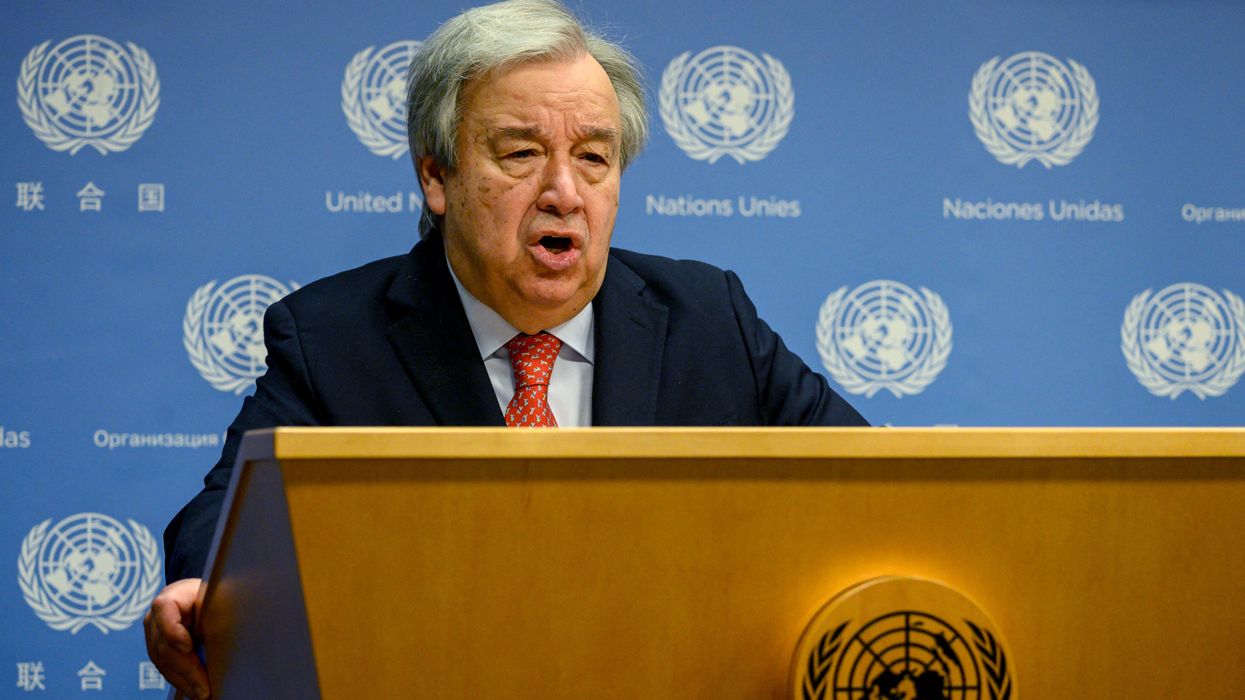
"We will not sit idly by as nuclear-armed states race to create even more dangerous weapons," he said, calling for abolishing such arms.
Nearly eight decades after the United States dropped an atomic bomb codenamed "Fat Man" on the Japanese city of Nagasaki, United Nations Secretary-General António Guterres on Wednesday was among the voices around the world renewing calls for eliminating nuclear weapons.
In a message to the Nagasaki Peace Memorial on the 78th anniversary of the 1945 bombing, Guterres said that "this ceremony is an opportunity to remember a moment of unmatched horror for humanity."
"We mourn those killed, whose memory will never fade. We remember the terrible destruction wrought upon this city and Hiroshima," he continued, referencing the Japanese city that was bombed a few days earlier. "We honor the unrelenting strength and resilience of the people of Nagasaki to rebuild."
"And we recognize the brave hibakusha, whose powerful and harrowing testimonies will forever stand as a reminder that we must achieve a world free of these inhumane weapons," he added, using the Japanese term for survivors of the World War II attacks.
In their name and in memory of the devastation decades ago, Guterres has made eliminating nuclear weapons the U.N.'s highest disarmament priority—at a time when the world is facing fresh threats of nuclear war.
Without naming any nations, Guterres declared Wednesday that "despite the terrible lessons of 1945, humanity now confronts a new arms race. Nuclear weapons are being used as tools of coercion."
"Weapons systems are being upgraded, and placed at the center of national security strategies, making these devices of death faster, more accurate, and stealthier. All this, at a moment when division and mistrust are pulling countries and regions apart," he pointed out. "The risk of nuclear catastrophe is now at its highest level since the Cold War."
Like the Cold War, the United States and Russia have by far the largest stockpiles of the nine nuclear-armed nations—though China is working to significantly boost its arsenal. The other countries with nukes are France, India, Israel, North Korea, Pakistan, and the United Kingdom.
Fears of a potential nuclear catastrophe have ramped up since early last year, when Russia invaded Ukraine, which is receiving military and humanitarian aid from multiple countries, including the United States.
Leaders in Moscow have repeatedly made nuclear threats throughout the ongoing war. Citing a 2020 decree from Russian President Vladimir Putin, Dmitry Medvedev—a former president who is now deputy chair of the country's Security Council—said late last month that if Ukraine's counteroffensive to force out invaders and reclaim territories is successful, "we would be forced to use a nuclear weapon."
Just days later, leading medical journals published a joint editorial warning that "current nuclear arms control and nonproliferation efforts are inadequate to protect the world's population against the threat of nuclear war by design, error, or miscalculation."
Noting that a U.S.-Russia war involving nukes "could kill 200 million people or more in the near term and potentially cause a global 'nuclear winter' that could kill 5-6 billion people, threatening the survival of humanity," the editorial stresses that "the prevention of any use of nuclear weapons is therefore an urgent public health priority" and advocates for abolition.
Guterres similarly said that "we will not sit idly by as nuclear-armed states race to create even more dangerous weapons" and "the only way to eliminate the nuclear risk is to eliminate nuclear weapons."
"The United Nations will continue working with global leaders to strengthen the global disarmament and nonproliferation regime—including through the Treaty on Nonproliferation of Nuclear Weapons and the Treaty on the Prohibition of Nuclear Weapons," pledged the U.N. chief, who last month launched a New Agenda for Peace policy brief that prioritizes disarmament.
"We can never forget what happened here," he added of the devastation in Japan. "We must lift the shadow of nuclear annihilation, once and for all. No more Nagasakis. No more Hiroshimas."
Guterres was far from alone in using the somber occasion to demand the abolition of nuclear weapons.
A peace declaration read during the Wednesday ceremony by Nagasaki Mayor Shiro Suzuki—and translated to English by The Mainichi—notes that the 1945 attack "stole the lives of 74,000 people by the end of the year. The hibakusha who survived developed leukemia, cancer, and other diseases years and decades after the bombing battle with suffering and anxiety due to the effects of radiation even now."
Echoing Hiroshima Mayor Kazumi Matsui's Sunday speech about that city's bombing, the Nagasaki declaration asserts that "as long as states are dependent on nuclear deterrence, we cannot realize a world without nuclear weapons. Eliminating nuclear weapons from the face of the Earth is the only way to truly protect our safety."
"Please visit the atomic bombing sites, see with your own eyes and sense the consequences of nuclear weapons. Please listen to the testimonies of hibakusha, a common inheritance of humankind that must continue to be talked about throughout the world," said Suzuki, whose parents were survivors. "Knowing the reality of the atomic bombings is the starting point for achieving a world without nuclear weapons, and could also be the driving force for changing the world."
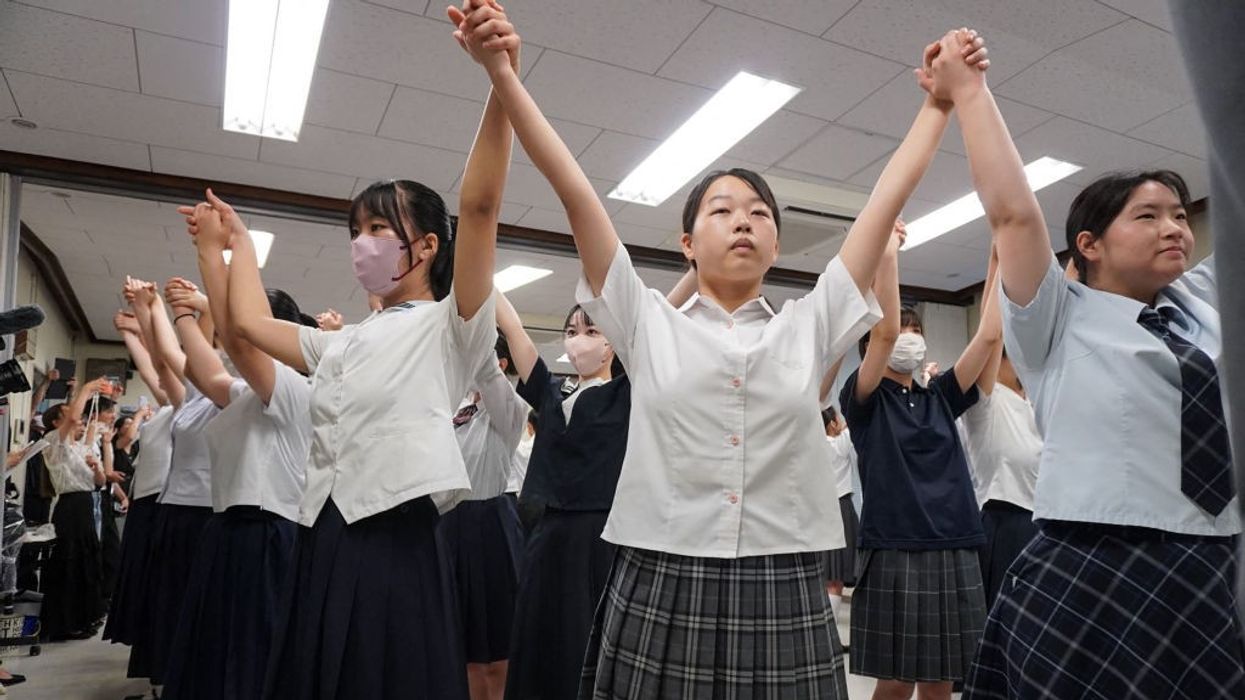
Any use of nuclear weapons is unacceptable; we will not sit idly by as nuclear-armed states race to create even more dangerous weapons.
The following is United Nations Secretary-General António Guterres’ message to the Nagasaki Peace Memorial on the 78th anniversary of the atomic bombing of Nagasaki, held today.
This ceremony is an opportunity to remember a moment of unmatched horror for humanity—the use of atomic weapons on Nagasaki 78 years ago.
We mourn those killed, whose memory will never fade. We remember the terrible destruction wrought upon this city and Hiroshima. We honor the unrelenting strength and resilience of the people of Nagasaki to rebuild. And we recognize the brave hibakusha, whose powerful and harrowing testimonies will forever stand as a reminder that we must achieve a world free of these inhumane weapons.
All this, at a moment when division and mistrust are pulling countries and regions apart. The risk of nuclear catastrophe is now at its highest level since the Cold War.
It is in their name—and in memory of what happened here in 1945—that I have declared that the elimination of nuclear weapons is the United Nations’ highest disarmament priority. We must never again allow such devastation to occur.
Despite the terrible lessons of 1945, humanity now confronts a new arms race. Nuclear weapons are being used as tools of coercion. Weapons systems are being upgraded, and placed at the center of national security strategies, making these devices of death faster, more accurate, and stealthier.
All this, at a moment when division and mistrust are pulling countries and regions apart. The risk of nuclear catastrophe is now at its highest level since the Cold War.
In the face of these threats, the global community must speak as one. Any use of nuclear weapons is unacceptable. We will not sit idly by as nuclear-armed states race to create even more dangerous weapons.
That’s why disarmament is at the heart of the recently launched Policy Brief on a New Agenda for Peace. The agenda calls on U.N. member states to urgently recommit to pursuing a world free of nuclear weapons, and to reinforce the global norms against their use and proliferation. Pending their total elimination, states possessing nuclear weapons must commit to never use them. The only way to eliminate the nuclear risk is to eliminate nuclear weapons.
The United Nations will continue working with global leaders to strengthen the global disarmament and non-proliferation regime—including through the Treaty on Non-Proliferation of Nuclear Weapons and the Treaty on the Prohibition of Nuclear Weapons. I have pledged to do everything in my power to ensure that the voices and testimonies of the hibakusha continue to be heard.
I call on young people—tomorrow’s leaders and decision makers—to carry their torch forward. We can never forget what happened here. We must lift the shadow of nuclear annihilation, once and for all. No more Nagasakis. No more Hiroshimas.
The United Nations looks forward to working with the people of Nagasaki and Japan in this essential effort.

"Believers of proactive nuclear deterrence, who say nuclear weapons are indispensable to maintain peace, are only delaying the progress toward nuclear disarmament," Hiroshima's governor added.
Local, national, and global leaders warned of the dangers of nuclear weapons as they commemorated the 78th anniversary of the dropping of an atomic bomb on the city of Hiroshima Sunday.
This year's anniversary comes as the release of the film Oppenheimer has offered a high-profile reminder of the history of the atomic bomb and as nuclear tensions in the current day have heightened, in part due to Russia's invasion of Ukraine. At the start of the year, the Bulletin of the Atomic Scientists moved their doomsday clock to 90 seconds to midnight.
"Leaders around the world must confront the reality that nuclear threats now being voiced by certain policymakers reveal the folly of nuclear deterrence theory," Hiroshima Mayor Kazumi Matsui said during his peace address at the commemoration ceremony in Hiroshima Sunday, as The Associated Press reported. "They must immediately take concrete steps to lead us from the dangerous present toward our ideal world."
Matsui's remarks responded in part to the Group of Seven summit in the city in May, during which world leaders put out a statement that anti-nuclear advocates considered a major disappointment.
In that statement, the leaders agreed that no country should use nuclear weapons, but that merely possessing the weapons could still "serve defensive purposes, deter aggression, and prevent war and coercion," according to AP. Since then, former Russian President and current deputy chair of that country's Security Council Dmitry Medvedev threatened nuclear war if a NATO-backed Ukrainian offensive reclaims land annexed illegally by Russia.
Hiroshima's Gov. Hidehiko Yuzai agreed with its mayor that deterrence had failed.
"Believers of proactive nuclear deterrence, who say nuclear weapons are indispensable to maintain peace, are only delaying the progress toward nuclear disarmament," Yuzai said, according to AP.
The U.S. dropped an atomic bomb on Hiroshima on August 6, 1945, at 8:15 am local time. A second bomb was dropped on Nagasaki on August 9. The two bombings killed between 110,000 and 210,000 people, according to the Bulletin of the Atomic Scientists. Those who survived, called hibakusha in Japan, still contend with sickness and injury from the bombings even as they advocate for a nuclear free world, according to AP.
"For 78 years, the city of Hiroshima and the hibakusha have worked tirelessly to ensure that nuclear weapons are never used again," United Nations Secretary-General António Guterres said in remarks delivered at Sunday's ceremony by Under-Secretary-General and High Representative for Disarmament Affairs Izumi Nakamitsu.
People began to light candles and incense and pray at a memorial for the victims of the Hiroshima bombings as the sun rose on Sunday, according to The Washington Post. At the exact time of the bombing, a peace bell rang out, followed by a moment of silence, Reuters reported. Around 50,000 people attended the ceremony in 86°F heat.
Among them was Japanese Prime Minister Fumio Kishida, who also called for peace.
"The drums of nuclear war are beating once again."
"The tragedies of Hiroshima and Nagasaki caused by nuclear weapons must never be repeated," he said. "As the only country to have experienced the horror of nuclear devastation in war, Japan will press on tirelessly with its efforts to bring about 'a world without nuclear weapons' while continuing to firmly uphold the 'Three Non-Nuclear Principles.'"
Kishida added that this work had become "more difficult," in part because of disagreements over disarmament and threats from Russia.
"But it is precisely because of these circumstances that it is imperative for us to reinvigorate international momentum once more towards the realization of a 'world without nuclear weapons,'" he continued.
Kishida has been criticized in Japan by survivors for not signing the Treaty on the Prohibition of Nuclear Weapons, according to AP. The prime minister, for his part, has argued such an act would not be effective, since no country currently possessing nuclear weapons has signed the agreement.
Guterres, through Nakamitsu, spoke out in favor of the treaty, as well as the Treaty on Non-Proliferation of Nuclear Weapons.
"World leaders have visited this city, seen its monuments, spoken with its brave survivors, and emerged emboldened to take up the cause of nuclear disarmament," Guterres said. "More should do so, because the drums of nuclear war are beating once again."
And he was clear about what must be done to silence them.
"The only way to eliminate the nuclear risk," Guterres said, "is to eliminate nuclear weapons."

"As long as countries continue their complicity in considering nuclear weapons as anything other than a global problem, this helps give Putin cover to get away with this kind of behavior," said one expert.
In addition to denouncing Russian President Vladimir Putin's plan to station so-called "tactical" nuclear weapons in Belarus, anti-war campaigners are calling into question the effectiveness of "nuclear deterrence" and reiterating their demands for global disarmament.
"As long as Putin has nuclear weapons, Europe cannot be safe," Daniel Högsta, acting executive director of the International Campaign to Abolish Nuclear Weapons (ICAN), said Monday in a statement.
But "he has justified this dangerously escalating proposal to move nuclear weapons into Belarus by citing decades of NATO nuclear sharing," said Högsta. "As long as countries continue their complicity in considering nuclear weapons as anything other than a global problem, this helps give Putin cover to get away with this kind of behavior."
When announcing the Kremlin's plan on Saturday, Putin pointed to the United States' positioning of tactical nuclear weapons in Belgium, Germany, Italy, the Netherlands, and Turkey.
"We're basically doing the same thing they've been doing for a decade," said Putin. "They have allies in certain countries and they train their carriers, they train their crews. We are going to do the same thing."
"We need to urgently stigmatize and delegitimize the use, threat to use, testing, stationing, and possession of nuclear weapons."
Russia "will not hand over" warheads to Belarus, Putin said. He explained that his country has already provided its ally with a nuclear-capable Iskander missile system and ensured that 10 Belarusian aircraft are equipped to use such weapons. According to Putin, Moscow intends to start training crews next week and aims to finish building a special storage facility for the arms by the beginning of July.
Putin's announcement came 13 months into Russia's ongoing invasion of Ukraine. Three days after Putin launched the military assault, Belarusian President Alexander Lukashenko amended the Belarus Constitution to remove its nuclear-free clause. In late 2021, Lukashenko had offered to host Russian nuclear weapons if NATO moved U.S. atomic bombs from Germany to Eastern Europe.
Moscow's deployment decision also came just days after the United Kingdom unveiled its plan to send armor-piercing tank rounds containing depleted uranium to Ukraine—a proposal that has elicited concerns about provoking a nuclear war as well as causing public health and environmental harms.
Putin said the U.K.'s announcement "probably served as a reason" why Lukashenko agreed to Russia's plan, which he argued won't violate the country's obligations under the Treaty on the Nonproliferation of Nuclear Weapons (NPT).
As Reuters explains, the NPT "says that no nuclear power can transfer nuclear weapons or technology to a nonnuclear power, but it does allow for the weapons to be deployed outside its borders but under its control—as with U.S. nuclear weapons in Europe."
ICAN warned Monday that "the deployment of nuclear weapons in additional countries... complicates decision-making and increases the risk of miscalculation, miscommunication, and potentially catastrophic accidents."
Belarusian human rights activist and opposition leader Sviatlana Tsikhanouskaya said Saturday that "Russia's deployment of tactical nuclear weapons in Belarus directly violates the Constitution of Belarus and grossly contradicts the will of the Belarusian people."
"This unacceptable development" makes "Belarus a potential target for preventive or retaliation strikes," she warned, imploring world leaders to demand that Russia "stop this threatening deployment and impose adequate and severe sanctions on the regimes of Lukashenko and Putin as outright threats to international peace and security."
According to Agence France-Presse, "Kyiv is seeking an emergency meeting of the United Nations Security Council over the move."
The U.S., for its part, "has reacted cautiously," Reuters reported Sunday. An unnamed senior Biden administration official told the news outlet that "we have not seen any reason to adjust our own strategic nuclear posture nor any indications Russia is preparing to use a nuclear weapon."
But a European Union official said Monday that the bloc would respond with fresh sanctions if Russia moves ahead with its plan, according to Anadolu Agency, Turkey's state-run news agency.
"That will be a further escalation and direct threat to European security," said Peter Stano, the European Commission's lead spokesperson on foreign affairs.
E.U. authorities "haven't seen any confirmation from the Belarusian side about this being on the agenda or happening anytime," Stano stressed. But if it happens, "there will be consequences."
The Kremlin, meanwhile, said Monday that Russia won't abandon its plan to deploy tactical nuclear weapons in Belarus because of mounting Western criticism.
In the words of Kremlin spokesperson Dmitry Peskov, "Such a reaction of course cannot influence Russian plans."
For Beatrice Fihn, the former executive director of ICAN who led the organization when it was awarded the Nobel Peace Prize in 2017, the entire episode underscores the dangerous incoherence of "nuclear deterrence" theory, which asserts that threatening to use atomic bombs dissuades governments from taking certain actions and thus helps avert nuclear war.
In a Twitter thread, Fihn argued that "the way nuclear deterrence has been talked about this past year has been so bizarre."
According to Fihn:
Most proponents of nuclear weapons have spent this past year arguing that we now shouldn't believe in nuclear deterrence. They say, "Don't believe Russia's threats, it doesn't deter us," but also, "Don't worry, Russia will definitely believe and be deterred by our nuclear threats."
This doesn't make any sense. And I genuinely would like to know from pro-nuclear weapons people in the U.S., U.K., France, and NATO, what could Putin do with his nuclear weapons that would deter you?
If your answer is "nothing" then you either admit nuclear deterrence doesn't work or you're basically saying nuclear deterrence only is credible when you do it but it's not when your enemies do it.
"We know Putin is a war criminal who has no problem killing civilians, so how can you be so sure he won't go ahead with this while at the same time [be] so sure that Putin... would be convinced that Biden would?" she asked.
"Nuclear weapons don't seem to deter any real war and conflict situations," said Fihn. "They only possibly deter hypothetical abstract scenarios in people's minds."
She continued:
None of this means that I'm saying Putin won't use nuclear weapons. There is a risk that Putin will use nuclear weapons in this war. We can debate how high it is, but everyone knows that this risk isn't zero and agrees that it has grown this last year.
But the decision to use nuclear weapons doesn't actually have much to do about believing or not believing in nuclear deterrence, it's just a decision by one man—and will be made based on whatever goes through his head at that point.
He makes the decision based on whatever he's thinking at that moment. Are you really that confident he will always think the right thing? That he'll always make the decision you think he should be making?
"We have to stop being so stupid by continuing to say nuclear deterrence works," Fihn added. "We need to urgently stigmatize and delegitimize the use, threat to use, testing, stationing, and possession of nuclear weapons."
For the first time since the Cold War, the global nuclear stockpile—90% of which is controlled by Moscow and Washington—is projected to grow in the coming years, and the risk of weapons capable of annihilating life on Earth being used is rising.
"We need to use all available methods and tools of the international community to pressure Russia on this," said Fihn. "And then we need to urgently work to eliminate nuclear weapons and remove this option from all counties. For Ukraine and also for every other country and person on this planet."
In October, U.S. President Joe Biden warned that the war in Ukraine had brought the world closer to "Armageddon" than at any point since the Cuban Missile Crisis. Just days later, however, his administration released a Nuclear Posture Review that nonproliferation campaigners said increases the likelihood of calamity, in part because it preserves the option of a nuclear first strike. The U.S. remains the only country to have used nuclear weapons in war, destroying the Japanese cities of Hiroshima and Nagasaki with atomic bombs in August 1945.
"As we're hurtling straight towards climate disaster, where large parts of our Earth will become inhabitable, the incentives for some leaders to use nuclear threats to grab whatever land and resources they feel they need will only increase," Fihn argued. "Nuclear disarmament and stopping climate change are the two central fights for the fate of humanity. You need to get on the right side of these two issues if you want a chance for us all to survive."
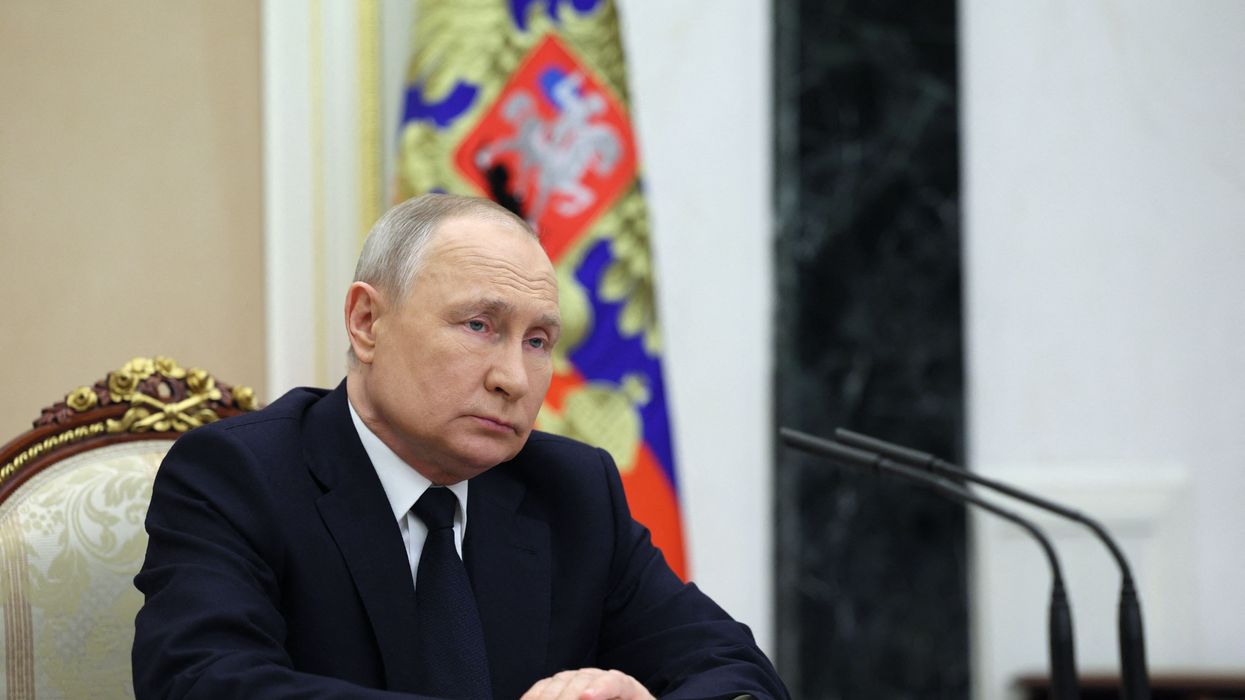
"Putin's nuclear provocations are dangerous and unacceptable. U.S. and NATO must resist calls to respond in kind and avoid injecting nuclear weapons deeper into this war," said Global Zero's Derek Johnson.
Russian President Vladimir Putin announced on state television Saturday plans to station tactical nuclear weapons in Belarus—an escalation anti-war campaigners had been warning about and that alarmed disarmament advocates and experts.
The International Campaign to Abolish Nuclear Weapons (ICAN) "condemns this extremely dangerous escalation which makes the use of nuclear weapons more likely," the group declared in a series of tweets.
"In the context of the war in Ukraine, the likelihood of miscalculation or misinterpretation is extremely high," ICAN added. "Sharing nuclear weapons makes the situation much worse and risks catastrophic humanitarian consequences."
"Sharing nuclear weapons makes the situation much worse and risks catastrophic humanitarian consequences."
The deployment decision comes 13 months into Russia's invasion of Ukraine and after the United Kingdom this week revealed plans to provide the invaded nation with armor-piercing rounds containing depleted uranium (DU).
Putin said the U.K.'s announcement "probably served as a reason" why Belarusian President Alexander Lukashenko agreed to the plan and argued that it won't violate Russia's international nonproliferation treaty obligations, according to a BBC translation.
As Reuters explained, "The Treaty on the Nonproliferation of Nuclear Weapons, signed by the Soviet Union, says that no nuclear power can transfer nuclear weapons or technology to a nonnuclear power, but it does allow for the weapons to be deployed outside its borders but under its control—as with U.S. nuclear weapons in Europe."
The United States, which has the world's second-largest nuclear arsenal after Russia, "long ago deployed their nuclear weapons on the territory of their allies, NATO countries, in Europe," the Russian leader noted. "We are doing the same thing that they have been doing for decades."
Russia "will not hand over" nuclear arms to Belarus, Putin insisted, explaining that his country has already given its ally an Iskander missile complex that can be equipped with weapons, plans to start training crews in early April, and aims to complete construction of a special storage facility for the nukes by the beginning of July.
The Soviet Union collapsed in 1991 and in the five years that followed, nuclear weapons based in Belarus, Kazakhstan, and Ukraine were transferred to Russia—where they have remained since.
"It's a very significant move," Nikolai Sokol, a senior fellow at the Vienna Center for Disarmament and Nonproliferation, told Reuters of the deployment decision. "Russia had always been very proud that it had no nuclear weapons outside its territory. So, now, yes, they are changing that and it's a big change."
Hans Kristensen, director of the Federation of American Scientists' Nuclear Information Project, told Reuters that "this is part of Putin's game to try to intimidate NATO... because there is no military utility from doing this in Belarus as Russia has so many of these weapons and forces inside Russia."
Global Zero managing partner Derek Johnson said that "Putin's nuclear provocations are dangerous and unacceptable. U.S. and NATO must resist calls to respond in kind and avoid injecting nuclear weapons deeper into this war."
In addition to his nuclear announcement, Putin pointed out during the Saturday interview that Russia also has depleted uranium shells. As he put it: "I must say that certainly, Russia has something to respond. Without exaggeration, we have hundreds of thousands, namely hundreds of thousands of such shells. We are not using them now."
A U.K. Ministry of Defense official had confirmed earlier this week that "alongside our granting of a squadron of Challenger 2 main battle tanks to Ukraine, we will be providing ammunition including armor-piercing rounds which contain depleted uranium," which swiftly generated concerns about not only Russian nuclear threats but also public health and environmental impacts.
"DU shells have already been implicated in thousands of unnecessary deaths from cancer and other serious illnesses," stressed Kate Hudson, general secretary of the U.K.-based Campaign for Nuclear Disarmament, which has advocated for a moratorium on such arms. "Sending them into yet another war zone will not help the people of Ukraine."
This post has been updated with new comments from Derek Johnson.