
Nuclear Justice Efforts Are Here to Stay
The states that have caused harm to peoples around the planet can finally stop pretending that such harms are either nonexistent or that they have done enough to address them.
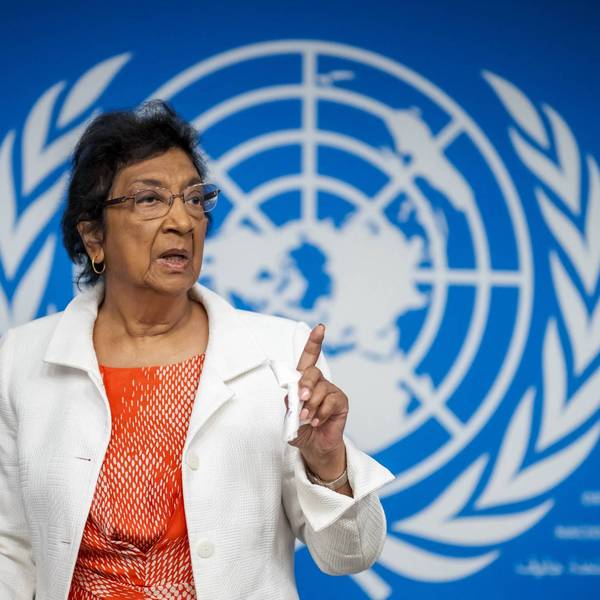
On November 7, the First Committee of the United Nations General Assembly overwhelmingly supported a resolution to help victims of nuclear weapons use and testing. Brought forward by the Republics of Kazakhstan and Kiribati, and co-sponsored by 39 additional U.N. Member States, the resolution received 169 votes in favor, with only four nuclear weapon possessors—Democratic People’s Republic of Korea, France, Russia, and the United Kingdom—voting against it. The remaining five nuclear armed states (China, India, Israel, Pakistan, and the United States), plus Poland, all abstained.
The vote is a resounding affirmation that nuclear justice efforts are here to stay. The states that have caused harm to peoples around the planet, including their own citizens and those whose care they were entrusted with, can finally stop pretending that such harms are either nonexistent or that they have done enough to address them. The nuclear weapon possessors, most especially the five nuclear weapon states—China, France, Russia, United States, and the United Kingdom—recognized as such by the Nuclear Non-Proliferation Treaty, must engage in earnest.
Ultimately, nuclear justice must also include elimination of all nuclear weapon arsenals. This would ensure that the suffering of those impacted by nuclear weapons has not been in vain.
Ever-growing understanding of the humanitarian consequences of nuclear weapon attacks by the United States on the Japanese cities of Hiroshima and Nagasaki, as well as the testing of nuclear weapons that lasted for decades and reached numerous corners of the globe, provided a huge impetus behind the Humanitarian Initiative, a successful effort started in the early 2010s by a group of states in collaboration with civil society, all motivated to change the nuclear weapons status quo. Coupled with the growing appreciation of what nuclear war would bring today or tomorrow (subject of another U.N. resolution that passed this month with 141 in favor votes, 30 abstentions, and France, Russia, and the United Kingdom voting no), as well as the research on the risk of nuclear weapon use and the recognition that no adequate response could be devised for such a possibility, the Humanitarian Initiative led to successful efforts to bring into the U.N. system a treaty prohibiting nuclear weapons (Treaty on the Prohibition of Nuclear Weapons or TPNW).
When the TPNW was drafted in 2017, the diplomats recognized that it wasn’t enough to prohibit nuclear weapon activities, but that the past and present consequences for people and the environment had to be addressed head-on. This led to the Articles 6 and 7 of the TPNW on victim assistance, environmental remediation, and international cooperation, which are collectively referred to as the humanitarian provisions of the treaty. The goal is not just to make these ongoing harms integral to the effort to prohibit and eliminate nuclear weapons, but to address them directly and provide tangible results for the communities that have suffered from adverse health and socioeconomic impacts for decades and whose environments may still be radiologically contaminated. Having entered into force in 2021, the TPNW is now faced with the implementation of these provisions for two states that are already parties to the treaty, Republics of Kazakhstan and Kiribati. Kazakhstan was the site of 456 Soviet nuclear tests from 1949 to 1991, while Kiribati was home from 1957 to 1962 to United States and United Kingdom tests whose cumulative yield was equivalent to more than 2,000 Hiroshima bombs.
The humanitarian provisions of the TPNW have led to the broadening of conversations about these harms and the new norm arising from the treaty of the obligation to address them. While the United States had a Radiation Exposure Compensation Act from the early 1990s until its expiration earlier this year, and France introduced its Loi Morin law in 2010, these efforts have been severely limited in their scope and impact. In both cases, the definition of a victim was restricted in such a way as to prevent many of those harmed from qualifying for the compensation. Even for the people who have qualified, the assistance has been inadequate. Worse yet is the case of all of the communities that have been completely disregarded and excluded from such compensation schemes.
What is particularly powerful about the nuclear justice resolution is that, with the exception of Poland this year, it has left the nuclear weapon possessors totally alone. Even their closest friends and allies have now voted in favor of the resolution for the second year in a row. More than 70 states that have not yet joined the TPNW have now affirmed that nuclear justice is a worthwhile effort they are ready to stand behind. In this way, the resolution is a powerful example of the way in which the TPNW Is already having an impact on international norms and policies even as nearly half of U.N. Members States have yet to join the treaty.
The road to nuclear justice is long. It will include acknowledgment, compensation, and the promise to never cause such harms again. The next phase must consist of genuine and independent assessment of needs both for victim assistance and environmental remediation in all impacted areas, with the international community coming together to offer help, including technical and financial assistance. How much remains to be done will in many ways depend on what the assessments demonstrate.
Ultimately, nuclear justice must also include elimination of all nuclear weapon arsenals. This would ensure that the suffering of those impacted by nuclear weapons has not been in vain. Instead, future generations will see it as the rallying call that brought the international community together to guarantee the right of survival to humanity and our fellow Earth inhabitants for the foreseeable future.
We are at a crossroads
This country and this world are at a monumental crossroads. In a few short weeks, US voters will have an opportunity to beat back the forces of fascism and confront the billionaires who are rigging the economy, our media system, and our democracy, making it increasingly impossible for ordinary people to get by. We’re not just talking about the election. We’re talking about what must be done once these fascist elements are vanquished from power. We need a bolder set of solutions than what either major party has so far been willing to offer and a working-class movement ready to fight like hell for it. Trump didn't emerge from nowhere. The conditions that fueled MAGA authoritarianism were created by decades of radical neoliberal economic policies and a corrupt political system dominated by corporate interests. They slashed taxes on the super-rich, promising that the benefits would trickle down. They said giveaways to the corporate titans would make life more affordable for the rest of us. It was all bullshit. And when a bitter, betrayed populace searches for someone to blame, right-wing demagogues have little trouble finding scapegoats. People know when they're being lied to, but you won't hear any of this from the corporate media. Only independent journalism—powered and funded by people who believe in building a better world—can deliver truly trustworthy daily news. Our Fall Campaign is underway, and we need your help. To power our newsroom through the rest of the year, we need to raise $125,000 by midnight on October 31. So if you share our vision, please contribute whatever you can to sustain our work. |
On November 7, the First Committee of the United Nations General Assembly overwhelmingly supported a resolution to help victims of nuclear weapons use and testing. Brought forward by the Republics of Kazakhstan and Kiribati, and co-sponsored by 39 additional U.N. Member States, the resolution received 169 votes in favor, with only four nuclear weapon possessors—Democratic People’s Republic of Korea, France, Russia, and the United Kingdom—voting against it. The remaining five nuclear armed states (China, India, Israel, Pakistan, and the United States), plus Poland, all abstained.
The vote is a resounding affirmation that nuclear justice efforts are here to stay. The states that have caused harm to peoples around the planet, including their own citizens and those whose care they were entrusted with, can finally stop pretending that such harms are either nonexistent or that they have done enough to address them. The nuclear weapon possessors, most especially the five nuclear weapon states—China, France, Russia, United States, and the United Kingdom—recognized as such by the Nuclear Non-Proliferation Treaty, must engage in earnest.
Ultimately, nuclear justice must also include elimination of all nuclear weapon arsenals. This would ensure that the suffering of those impacted by nuclear weapons has not been in vain.
Ever-growing understanding of the humanitarian consequences of nuclear weapon attacks by the United States on the Japanese cities of Hiroshima and Nagasaki, as well as the testing of nuclear weapons that lasted for decades and reached numerous corners of the globe, provided a huge impetus behind the Humanitarian Initiative, a successful effort started in the early 2010s by a group of states in collaboration with civil society, all motivated to change the nuclear weapons status quo. Coupled with the growing appreciation of what nuclear war would bring today or tomorrow (subject of another U.N. resolution that passed this month with 141 in favor votes, 30 abstentions, and France, Russia, and the United Kingdom voting no), as well as the research on the risk of nuclear weapon use and the recognition that no adequate response could be devised for such a possibility, the Humanitarian Initiative led to successful efforts to bring into the U.N. system a treaty prohibiting nuclear weapons (Treaty on the Prohibition of Nuclear Weapons or TPNW).
When the TPNW was drafted in 2017, the diplomats recognized that it wasn’t enough to prohibit nuclear weapon activities, but that the past and present consequences for people and the environment had to be addressed head-on. This led to the Articles 6 and 7 of the TPNW on victim assistance, environmental remediation, and international cooperation, which are collectively referred to as the humanitarian provisions of the treaty. The goal is not just to make these ongoing harms integral to the effort to prohibit and eliminate nuclear weapons, but to address them directly and provide tangible results for the communities that have suffered from adverse health and socioeconomic impacts for decades and whose environments may still be radiologically contaminated. Having entered into force in 2021, the TPNW is now faced with the implementation of these provisions for two states that are already parties to the treaty, Republics of Kazakhstan and Kiribati. Kazakhstan was the site of 456 Soviet nuclear tests from 1949 to 1991, while Kiribati was home from 1957 to 1962 to United States and United Kingdom tests whose cumulative yield was equivalent to more than 2,000 Hiroshima bombs.
The humanitarian provisions of the TPNW have led to the broadening of conversations about these harms and the new norm arising from the treaty of the obligation to address them. While the United States had a Radiation Exposure Compensation Act from the early 1990s until its expiration earlier this year, and France introduced its Loi Morin law in 2010, these efforts have been severely limited in their scope and impact. In both cases, the definition of a victim was restricted in such a way as to prevent many of those harmed from qualifying for the compensation. Even for the people who have qualified, the assistance has been inadequate. Worse yet is the case of all of the communities that have been completely disregarded and excluded from such compensation schemes.
What is particularly powerful about the nuclear justice resolution is that, with the exception of Poland this year, it has left the nuclear weapon possessors totally alone. Even their closest friends and allies have now voted in favor of the resolution for the second year in a row. More than 70 states that have not yet joined the TPNW have now affirmed that nuclear justice is a worthwhile effort they are ready to stand behind. In this way, the resolution is a powerful example of the way in which the TPNW Is already having an impact on international norms and policies even as nearly half of U.N. Members States have yet to join the treaty.
The road to nuclear justice is long. It will include acknowledgment, compensation, and the promise to never cause such harms again. The next phase must consist of genuine and independent assessment of needs both for victim assistance and environmental remediation in all impacted areas, with the international community coming together to offer help, including technical and financial assistance. How much remains to be done will in many ways depend on what the assessments demonstrate.
Ultimately, nuclear justice must also include elimination of all nuclear weapon arsenals. This would ensure that the suffering of those impacted by nuclear weapons has not been in vain. Instead, future generations will see it as the rallying call that brought the international community together to guarantee the right of survival to humanity and our fellow Earth inhabitants for the foreseeable future.
- On the 70th Anniversary of the Castle Bravo Test, Remember the Victims ›
- Why One 3rd Generation Hiroshima Survivor Won’t Watch Oppenheimer ›
- The Commemoration of the Criminal Bravo H-Bomb Test Is a Cry for a Nuclear Free World ›
- Finding the Victims of Hiroshima and Nagasaki in Oppenheimer ›
- Honor the Victims of the Nuclear Age by Bringing It to an End ›
- Korean Atomic Bomb Victims Seek Justice ›