

SUBSCRIBE TO OUR FREE NEWSLETTER
Daily news & progressive opinion—funded by the people, not the corporations—delivered straight to your inbox.
5
#000000
#FFFFFF
To donate by check, phone, or other method, see our More Ways to Give page.
Daily news & progressive opinion—funded by the people, not the corporations—delivered straight to your inbox.

With officials in Washington now charging Hamas with launching an unprovoked campaign of terror against Israel, critics are insisting that U.S. officials are leaving out the broader context, one that has always been well understood.
As officials in Washington scramble to address the rapid outbreak of war in Israel and Palestine, they are sidestepping the fact that they believed that such a dramatic outburst of violence was likely.
Since May 2021, when Hamas and Israel clashed in a brief war that left more than 200 Palestinians dead and much of Gaza’s infrastructure destroyed, U.S. officials have repeatedly warned that living conditions in Gaza have become so intolerable that a cycle of violence would likely continue until the people of Gaza saw real improvements in their lives.
“If there isn’t positive change, and particularly if we can’t find a way to help Palestinians live with more dignity and with more hope, the cycle’s likely to repeat itself,” Secretary of State Antony Blinken acknowledged at the end of the May 2021 war.
Across Israel and the United States, officials have expressed shock and outrage at Hamas’s recent incursion into Israel. Hamas has attacked and killed hundreds of civilians, leading many officials to condemn Hamas for launching a terrorist attack against Israel. Hamas, designated a terrorist organization by several countries including Israel and the United States, is a militant Islamist organization that controls Gaza.
Israel has responded with airstrikes that have killed hundreds of civilians and has declared a siege on Gaza. In support of Israel, the United States is sending weapons and warships into the area.
Hamas’s initial attack has been widely portrayed by the U.S. mass media as an intelligence failure. U.S. officials have said that Hamas achieved a “complete tactical surprise.”
“This is an enormous intelligence failure by the Israelis and the Americans,” Bruce Riedel, a former C.I.A. analyst, told NBC News.
Just weeks before the attack, Elliott Abrams, a longtime U.S. operative who is now a senior fellow for Middle Eastern studies at the Council on Foreign Relations, exemplified this kind of intelligence failure when he advised a congressional committee that Hamas was focusing its operations in the West Bank, not Gaza.
Hamas “wants to restrain attacks from Gaza,” Abrams told Congress. This is because “it wants to avoid Israeli strikes on Gaza, where it is governing. It wants a level of calm there. It wants the border crossings open.”
Despite these analytical errors, U.S. officials have maintained accurate intelligence on Gaza. Since the May 2021 war, the highest-level U.S. officials have understood that the cycle of violence would likely recur unless conditions in Gaza improved.
In May 2021, President Joe Biden acted on this knowledge when he pledged to organize “a major package” of assistance for the purpose of rebuilding Gaza. The people of Gaza “need the help,” the president said, “and I’m committed to get that done.”
Secretary of State Blinken announced that the reconstruction of Gaza would serve two major purposes. First, he said, it would provide the people of Gaza with much-needed relief. Second, he continued, it would undermine Hamas, especially its ability to thrive on the despair and desperation of the people of Gaza.
“The aspirations of the Palestinian people are like those of people everywhere,” Blinken explained. They want “to live in freedom; to have their basic rights respected, including the right to choose their own leaders; to live in security; to have equal access to opportunity for themselves, for their children; to be treated with dignity.”
U.S. officials made modest efforts to organize a program of aid and reconstruction for Gaza. As part of these efforts, Qatar and the United Nations forged a deal to provide millions in aid to impoverished families in Gaza. In a separate deal, Qatar and Egypt created a program that helped fund the salaries of civil servants in Gaza.
Where U.S. officials failed, however, was in their efforts to establish a reconstruction program. With the United States providing a limited amount of economic assistance and Israel maintaining a blockade of Gaza, the people of Gaza were forced to endure a permanent humanitarian crisis.
Trapped inside the territory, the people of Gaza lacked access to food, water, and essential services. Without reliable electricity, they struggled to keep institutions such as schools and hospitals open.
“Palestinians are grappling with severe poverty, crippling unemployment, and chronic underdevelopment—particularly in Gaza,” the State Department acknowledged in a Congressional Budget Justification.
As violence between Israelis and Palestinians intensified over the past year, officials in Washington recognized the growing dangers, which they associated with ongoing efforts by the Israeli government to seize Palestinian lands and doom the prospects for a Palestinian state.
“What we’re seeing now from Palestinians is a shrinking horizon of hope, not an expanding one,” Secretary of State Blinken acknowledged in January.
Despite this knowledge, officials in Washington did little to address it, even as they observed “a sharp and really shocking degree of violence” between Israelis and Palestinians, as State Department official Barbara Leaf described the situation in June.
Instead, the Biden administration prioritized Israel’s relations with Arab states, largely at the expense of the Palestinians. As a result of the Abraham Accords, which established a formal process for normalizing relations between Israel and several Arab states, the Palestinians have been increasingly sidelined in regional diplomacy.
With officials in Washington now charging Hamas with launching an unprovoked campaign of terror against Israel, critics are insisting that U.S. officials are leaving out the broader context, one that has always been well understood.
“An entire people is living under this kind of incredible oppression, in a pressure cooker,” Rashid Khalidi told DemocracyNow!. “It had to explode.”
Indeed, the real U.S. intelligence failure was not the failure to anticipate an imminent attack by Hamas but an inability to accept what U.S. officials have always understood: a failure to address the humanitarian crisis in Gaza would lead to another cycle of violence, just as Secretary of State Blinken anticipated in 2021.
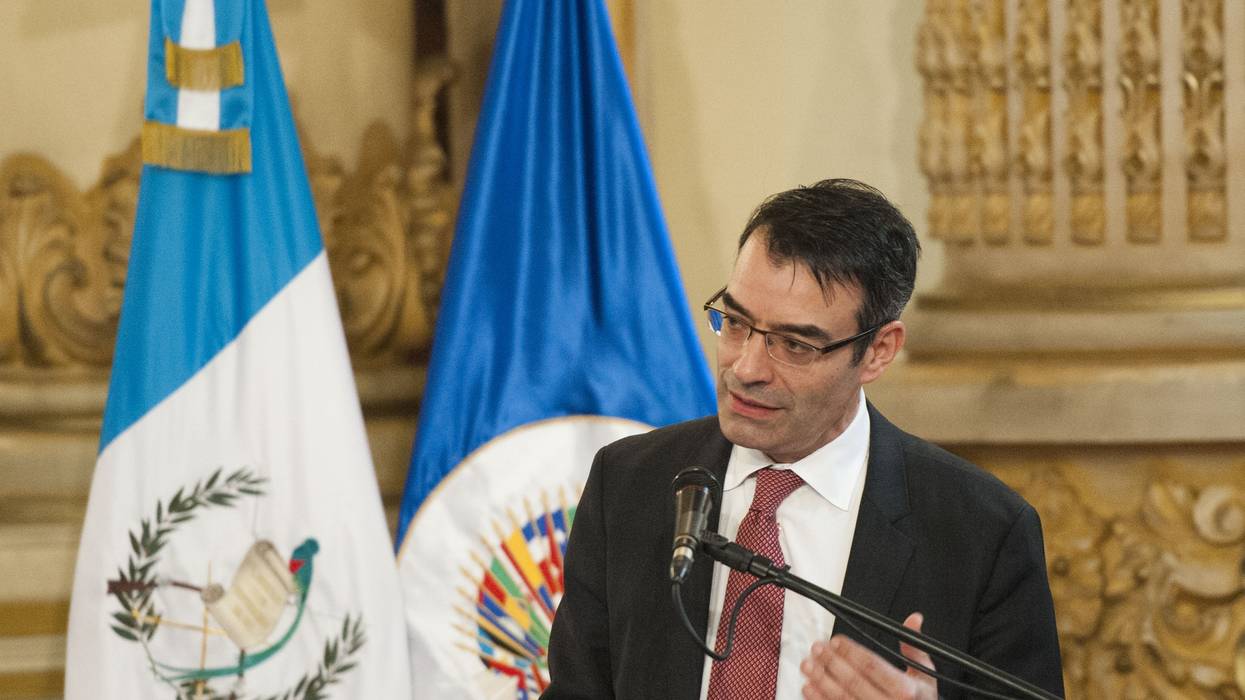
"When it comes to human rights in Israel/Palestine, the U.S. State Department is the outlier," said one advocacy group.
Human rights advocates are warning that the Biden administration's decision to withdraw its nomination of law professor James Cavallaro to serve on a human rights commission could be the latest incident that chills free speech regarding violent Israeli policies in Palestine, as Cavallaro said he was shut out of the position due to his condemnation of Israel's apartheid regime.
Cavallaro was nominated last Friday to sit on the Inter-American Commission on Human Rights, a watchdog within the Organization for American States which he previously served on from 2014-17.
The nomination was met with applause from the human rights advocacy community, but on Tuesday Cavallaro said on social media that he'd been informed by the U.S. State Department that the nomination had been withdrawn "due to my statements denouncing apartheid in Israel/Palestine."
Cavallaro, the founder and executive director of the University Network for Human Rights (UNHR) at Wesleyan University, said he responded to the State Department's news by noting that mainstream human rights groups including Amnesty International, Human Rights Watch, and the Israeli organization B'Tselem have all stated that Israel's illegal settlements, restriction of Palestinians' movement, and other policies amount to apartheid. The United Nations special rapporteur on human rights in Palestine also said last year that the Israeli occupation of Palestinian territories is apartheid.
The Algemeiner, a newspaper that the UNHR called "a fringe, Trump-affiliated media outlet" in a statement Wednesday, reported on Cavallaro's comments about Israel as an "apartheid state" on Monday, in an article that also focused on a tweet written by Cavallaro in December saying U.S. House Minority Leader Hakeem Jeffries (D-N.Y.) has been "Bought. Purchased. Controlled" by the anti-Palestinian rights lobby.
That tweet was written in response to a Guardian article detailing Jeffries' close ties to the American Israel Public Affairs Committee (AIPAC) and other pro-Israel lobbying groups, which donated $460,000 to the Democratic leader last year. Cavallaro also tweeted that right-wing Sen. Joe Manchin (D-W.Va.) was "bought and paid for."
"We were not aware of the statements and writings," U.S. State Department spokesperson Ned Price said in a statement Tuesday.
Cavallaro acknowledged on Wednesday that he removed some of his tweets "proactively and in good faith," to address the State Department's concerns about his public statements on his "personal views on U.S. policy."
In 2019, Rep. Ilhan Omar (D-Minn.) received criticism for her comments on the pro-Israel lobby giving millions of dollars to like-minded lawmakers annually in order to advance pro-Israel legislation—attacks that groups including Jewish Voice for Peace denounced as "disingenuous" at the time, noting that "lobbies influence politics."
The withdrawal of Cavallaro's nomination comes a month after the Harvard Kennedy School, under pressure, reversed its decision to rescind a fellowship invitation to former Human Rights Watch executive director Kenneth Roth. The longtime rights campaigner accused the school of retaliating against him for his statements about apartheid in Israel.
The decision to withdraw Cavallaro's nomination, said Roth, "suggests that only Israeli apologists are acceptable" for human rights positions. He noted that the UNHR director's views on Israel are "a completely mainstream position for any human rights defender."
"There is consensus today across the human rights movement on Israel's system of apartheid, and many other prominent voices—from the former U.N. secretary-general and director general of Israel's Foreign Ministry to the South African government and French foreign minister—have referenced apartheid in relation to Israel's systematic subjugation of Palestinians," said the UNHR. "When it comes to human rights in Israel/Palestine, the U.S. State Department is the outlier."
Jamil Dakwar, director of the ACLU's Human Rights Program, warned that the State Department's decision "sends a dangerous message and chills speech critical of Israel."
David Kaye, a former U.N. special rapporteur on free expression, called the withdrawal "a huge and totally unjustified mistake."
"While Cavallaro's potential participation on the commission would have absolutely no impact on U.S. policy on Israel, the withdrawal of his nomination will have real consequences for human rights in the Americas," said the UNHR. "Cavallaro has been a courageous and committed voice for justice for victims of human rights abuse across the region; as an experienced commissioner in his second term, he would have advanced the cause of human rights in the hemisphere significantly."
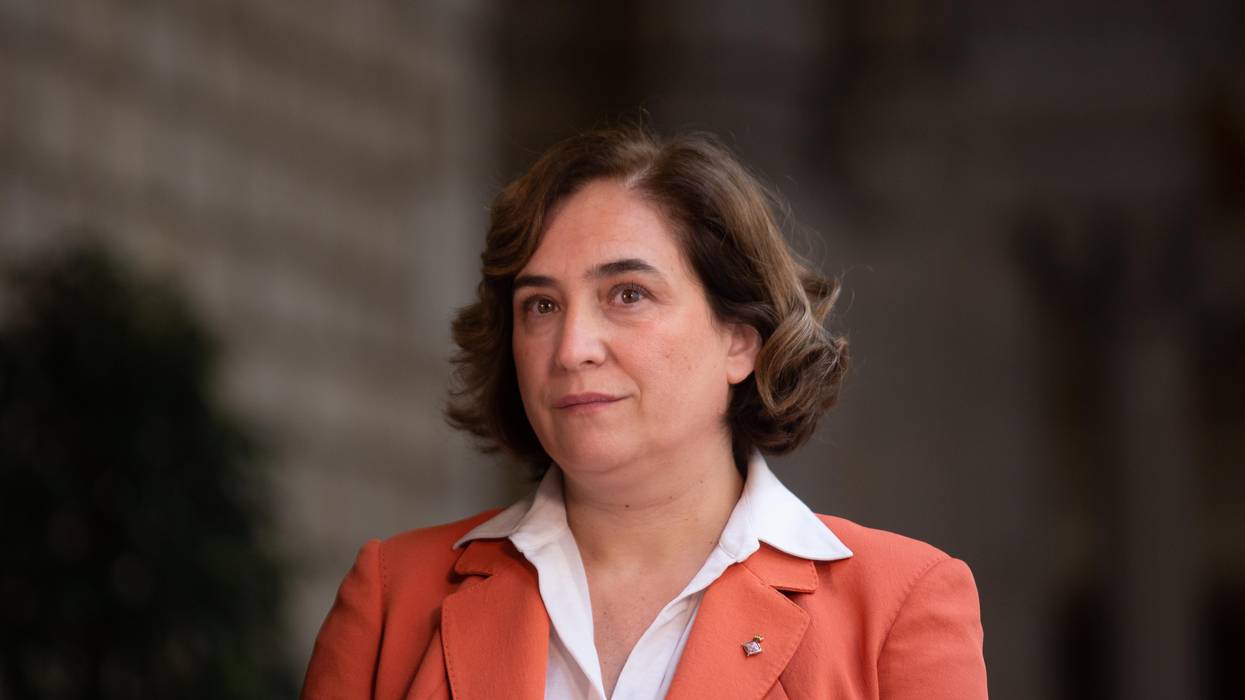
"We cannot be silent," said Colau.
Barcelona Mayor Ada Colau on Wednesday announced her city is cutting ties with Israel and ending its symbolic 25-year-old "twin cities" relationship with Tel Aviv over the Israeli government's violent anti-Palestinian policies.
Colau said at a press conference that the city council came to its decision in response to campaigning by more than 100 rights groups and 4,000 residents, who urged her to cut ties with Israel.
In a letter to Israeli Prime Minister Benjamin Netanyahu, the leftist mayor said her constituents called on her to "condemn the crime of apartheid against the Palestinian people, support Palestinian and Israeli organizations working for peace, and break off the twinning agreement between Barcelona and Tel Aviv."
She added that she is "temporarily" suspending Barcelona-Israel relations "until the Israeli authorities put an end to the system of violations of the Palestinian people and fully comply with the obligations imposed on them by international law."
"We cannot be silent," wrote Colau.
The letter and Colau's announcement to the press come two weeks after an Israeli military raid on a refugee camp in the occupied West Bank killed at least nine Palestinians, including an elderly woman.
Colau said groups in Barcelona began urging her to cut ties with Israel after an 11-day air assault on Gaza in May 2021.
Groups including Amnesty International, Human Rights Watch, and the Israel-based B'Tselem have accused the Israeli government of imposing apartheid policies on Palestinians, including its military occupation of the West Bank and its construction of settlements on Palestinian land.
Michael Lynk, the United Nations special rapporteur on Palestinian human rights, also called Israel's treatment of Palestine "apartheid" last year.
The Sanctions National Committee (BNC), one of the groups that helped push the Barcelona city council to hold Israel accountable, applauded Colau's move.
"Barcelona has become the first city council to suspend ties with apartheid Tel Aviv in solidarity with the Palestinian people, a move that is reminiscent of the historic and courageous city councils that pioneered cutting links with apartheid South Africa," BNC said in a statement.
"Few people have done more to advance human rights than Kenneth Roth," the ACLU's executive director asserted. "If Harvard's decision was based on HRW's advocacy under Ken's leadership, this is profoundly troubling—from both a human rights and an academic freedom standpoint."
Advocacy groups on Friday denounced a decision by a Harvard dean to deny a research fellowship to former longtime Human Rights Watch head Kenneth Roth, allegedly over the organization's criticism of Israeli apartheid and other crimes in Palestine.
For 29 years, Roth headed Human Rights Watch (HRW), one of a growing number of international and Israeli mainstream human rights advocates—including Harvard Law School's International Human Rights Clinic—to call Israel's globally condemned policies and actions against Palestinians apartheid.
"There is no suggestion that Roth's criticisms of Israel are in any way based on racial or religious animus."
After stepping down from his HRW job last April, Roth was offered a position as a senior fellow at the Harvard Kennedy School's Carr Center for Human Rights Policy.
"We thought he would be a terrific fellow," Kathryn Sikkink, a professor of human rights policy at the Kennedy School, told The Nation.
In a statement reacting to Harvard's decision, ACLU executive director Anthony D. Romero said that "few people have done more to advance human rights than Kenneth Roth. If Harvard's decision was based on HRW's advocacy under Ken's leadership, this is profoundly troubling—from both a human rights and an academic freedom standpoint."
"Scholars and fellows have to be judged on their merits, not whether they please powerful political interests," Romero added. "We urge Harvard to reverse its decision."
In an interview with The Guardian, Roth recounted that he and Kennedy School Dean Douglas Elmendorf "had a perfectly pleasant chat for about half an hour or so, but toward the end he asked the question, 'Do you have any enemies?' And I said: 'I've got many. That's a hazard of the trade.'"
"But what he was clearly driving at was Israel," said Roth, who is Jewish. "He didn't want to hear about how I've been sanctioned by China, sanctioned by Russia, or attacked by Rwanda or Saudi Arabia. He wanted to know: what was my position on Israel?"
Roth believes Elmendorf bowed to pressure from staunchly Zionist donors to the Kennedy School and withdrew his fellowship offer.
"I falsely assumed that the dean of the Kennedy School values academic freedom," he said. "Maybe I'm naïve in retrospect, but I assume that criticism of Israel, as criticism of any other government, is just par for the course. That's what a leading foreign policy center does."
Free expression advocate PEN America led criticism of Harvard's move.
"Over his decadeslong career as a leading global human rights advocate, Ken Roth has excoriated many dozens of governments for their abuses; this goes with the territory of building and leading a human rights organization credited with having advanced respect for rights and freedoms the world over," the group said in a statement. "It is the role of a human rights defender to call out governments harshly, to take positions that are unpopular in certain quarters, and to antagonize those who hold power and authority."
"There is no suggestion that Roth's criticisms of Israel are in any way based on racial or religious animus," the group added. "Withholding Roth's participation in a human rights program due to his own staunch critiques of human rights abuses by governments worldwide raises serious questions about the credibility of the Harvard program itself."
Writing for The Nation, Michael Massing contrasted Roth's treatment by Harvard with that of former Kennedy School nonresident senior fellow Michael Morrell, an ex-acting director of the CIA who advised then-President George W. Bush during the early years of the War on Terror and supported U.S. torture and drone strikes that killed at least hundreds of civilians.
Facing pressure from CIA officials, Elmendorf in 2017 also rescinded a visiting fellowship offer to Chelsea Manning—who blew the whistle on U.S. war crimes, including torture—by leaking classified documents, after she was released from prison.
Massing wrote that Harvard's disparate treatment of Morrell, Manning, and Roth suggests a "fundamental reality about the Kennedy School: the dominant presence of the U.S. national security community and its close ally Israel."
That presence includes people from the military-industrial complex, including former Pentagon officials and executives from weapons manufacturers, whose policies and products have killed hundreds of thousands of people in numerous countries during the 21st century alone.
The Kennedy School has also received tens of millions of dollars from Israel supporters including billionaire Les Wexner, who, as Massing noted, played a key role in bringing members of Israel's military and intelligence services to study at the school.
Another major Kennedy School donor, Robert Belfer, "is also closely involved with the Anti-Defamation League and the American Jewish Committee, which have sought to discredit human rights groups over their criticism of Israel," wrote The Guardian's Chris McGreal. "Belfer is a member of the dean's executive board of major donors who advise Elmendorf."
As recognition and condemnation of Israeli crimes including occupation, colonization, torture, extrajudicial killing, ethnic cleansing, and apartheid grow around the world, so too does the backlash from U.S. supporters in the form of laws banning boycotts of Israel and firing or refusing to hire academics, journalists, and others for speaking out against the oppression of Palestinians.
"America's most prominent Jewish organizations have done something extraordinary. They have accused the world's leading human rights organizations of promoting hatred of Jews."
"Over the past 18 months, America's most prominent Jewish organizations have done something extraordinary. They have accused the world's leading human rights organizations of promoting hatred of Jews," wrote columnist Peter Beinart in an August 2022 New York Times opinion piece.
While "for most of the 20th century, leading American Jewish organizations argued that the struggle against antisemitism and the struggle for universal human rights were intertwined," Beinart noted, there was "an ideological transformation" beginning with Israel's illegal occupation of the West Bank, East Jerusalem, Gaza, Egyptian Sinai, and Syria's Golan Heights in 1967.
The result—"largely as a result of lobbying by Jewish organizations," wrote Beinart—has been an attempt to redefine antisemitism to include legitimate criticism of Israel.
Beinart continued:
In a terrible irony, the campaign against "antisemitism," as waged by influential Jewish groups and the U.S. government, has become a threat to freedom. It is wielded as a weapon against the world's most respected human rights organizations and a shield for some of the world's most repressive regimes. We need a different struggle against antisemitism. It should pursue Jewish equality, not Jewish supremacy, and embed the cause of Jewish rights in a movement for the human rights of all. In its effort to defend the indefensible in Israel, the American Jewish establishment has abandoned these principles.
Roth rejected allegations that HRW singles out Israel for criticism, a common charge by Israel supporters against human rights groups.
"Israel is one of 100 countries that we cover. And even within the Israeli Palestinian context, we deal with Hamas, we deal with the Palestinian Authority, we deal with Hezbollah," he told The Guardian. "We are fair and objective, but we are critical, because the Israeli government deserves to be criticized. It is becoming increasingly repressive, and as we found in the occupied territories it is committing the crime against humanity of apartheid."