

SUBSCRIBE TO OUR FREE NEWSLETTER
Daily news & progressive opinion—funded by the people, not the corporations—delivered straight to your inbox.
5
#000000
#FFFFFF
To donate by check, phone, or other method, see our More Ways to Give page.
Daily news & progressive opinion—funded by the people, not the corporations—delivered straight to your inbox.
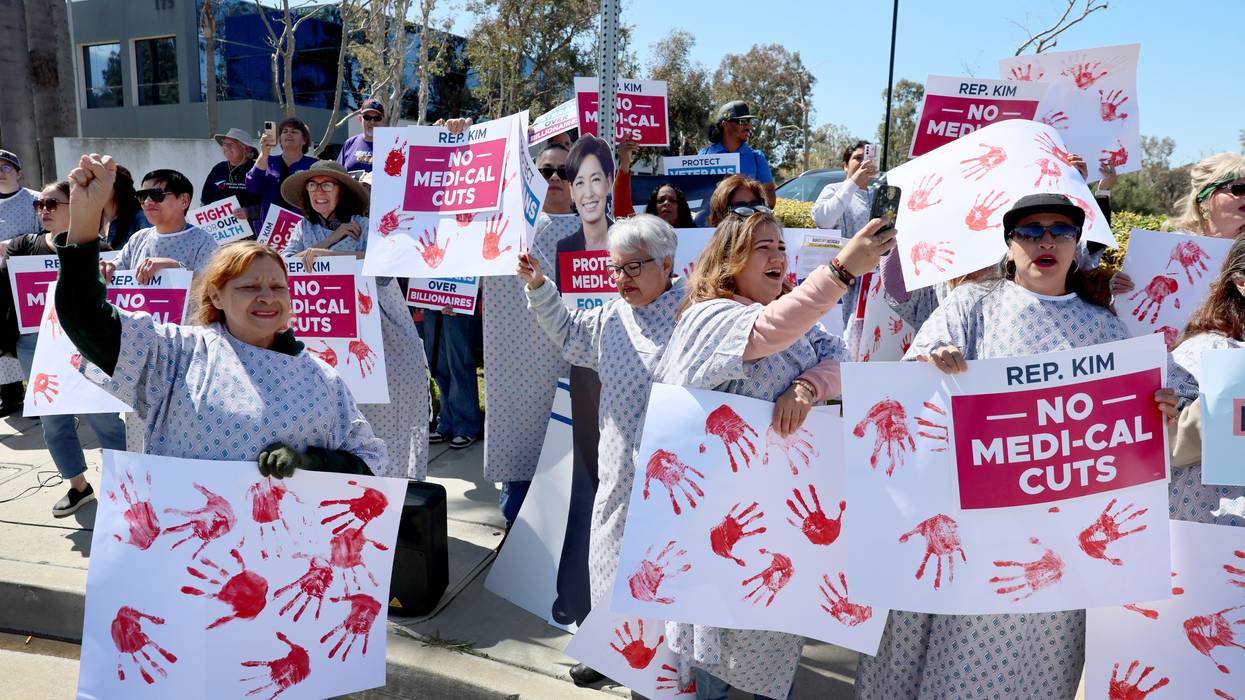
Medicaid doesn’t just provide healthcare. It is the single largest payer for the community-based services people with intellectual and developmental disabilities need to live, work, and thrive in our communities.
With the House passing their budget reconciliation bill with a vote of 215-214, hundreds of billions in proposed cuts to Medicaid have moved one step closer toward very real, harmful consequences, including for people with intellectual and developmental disabilities, or I/DD, whose health, safety, and quality of life depend on Medicaid.
Medicaid doesn’t just provide healthcare. It is the single largest payer for the community-based services people with I/DD need to live, work, and thrive in our communities—services that range from assistance with intimate activities of daily living and personal hygiene, to employment supports to find and maintain a job, to providing residential and in-home supports to support independent living.
If lawmakers approve the proposed cuts to Medicaid, state budgets will be unable to absorb the financial shock. Even if targeted to other groups like those made eligible for services through Medicaid expansion, programs that enable people with I/DD to meaningfully participate and thrive in our society will be the first to go. We know because home- and community-based services for people with I/DD are optional services, meaning they are some of the last services to be funded when there’s a state funding shortfall. We saw this following the Great Recession when, following cuts to federal funding, every single state made cuts to services and 36 states specifically made cuts to services for people with I/DD.
If lawmakers truly care about boosting economies, they would invest in, not divest from Medicaid, because these services actually play a critical yet often invisible role in state economies.
Divesting from Medicaid will be devastating to providers of I/DD services who are already struggling immensely due to insufficient Medicaid reimbursement rates that haven’t kept pace with inflation. As a direct result, 90% of community providers report moderate to severe staffing shortages as workers seek out higher-paying jobs in entry-level retail, convenience, and fast food industries. Without sufficient staffing, 69% of community providers report they’re unable to take new referrals for people with I/DD who need and qualify for services.
Medicaid cuts by another name in the form of increased red tape eligibility requirements or work reporting requirements also threaten people with disabilities, who may lose coverage due to barriers completing onerous reporting requirements, even if they are provided an exemption. Such requirements also threaten to further exacerbate the direct support workforce crisis, as 49% of direct care workers rely on public assistance programs themselves, and approximately one-third work part-time or with inconsistent schedules—two job features that are generally incompatible with work reporting requirements. If direct support professionals, the very backbone of disability services, are unable to meet burdensome reporting requirements, it will only force them to find more stable, higher-paying jobs outside of care work.
If lawmakers truly care about boosting economies, they would invest in, not divest from Medicaid, because these services actually play a critical yet often invisible role in state economies.
New York State’s $6.7 billion investment in home- and community-based services generated $14.3 billion in economic activity, while Maine is estimated to have lost out on over $1 billion due to its shortage of direct care workers. That’s because Medicaid-funded services create jobs, while enabling the family members and caregivers of people with I/DD to remain in the workforce too. Without services, families are also more likely to need public assistance.
The House’s budget proposal will force unthinkable decisions on states and providers. It will undoubtedly lead to people with I/DD losing access to services, potentially being forced to languish in their homes without the assistance they need for using the restroom, supportive hygiene, and preparing and eating meals. It will lead to people with I/DD losing their jobs without the employment supports they need to maintain their careers. And it could mean unnecessary institutionalization of people whose right to live and thrive in their communities was codified by the Americans with Disabilities Act and, later, the Supreme Court’s decision in Olmstead v. L.C.
Senators hold the opportunity to continue protecting our most vulnerable populations by rejecting any cuts to Medicaid and not putting further stress on a system already in crisis.
Update: This piece has been edited to reflect the fact that the U.S. House of Representatives passed their budget reconciliation bill on the morning of May 22, 2025.
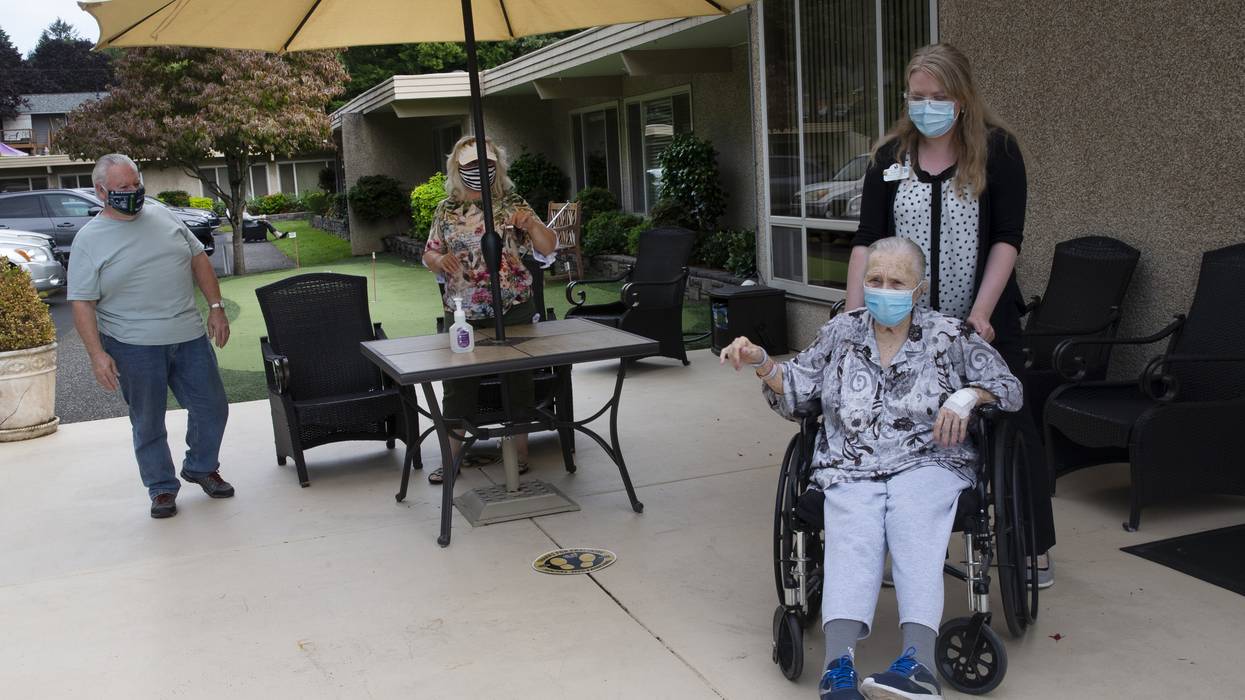
Every moment that activists can delay the passage of these Medicaid cuts is more time to mount an opposition. Republicans might not want to admit it, but support for Medicaid is strong and deep.
The numbers are clear. Nursing home residents depend on Medicaid. According to the nonpartisan Kaiser Family Foundation, fully 63% of nursing home care in the United States is funded by Medicaid. Some states are even more dependent on Medicaid than the national average. For example, in West Virginia fully 77% of nursing home care is funded by Medicaid.
Politico reported on the morning of May 15 that after a marathon markup session lasting 26 hours, the House Energy and Commerce Committee advanced legislation that “would slash Medicaid spending by hundreds of billions of dollars.” These cuts would directly impact nursing home residents and their families. The Washington Post reports that:
“Their [nursing home residents] coverage will be at risk,” said Katie Sloan Smith, president and chief executive of LeadingAge, a Washington lobbying association for operators of nonprofit senior-care facilities. “Either the home itself will have to make up for that loss in some way or they will simply have to say, ‘We can no longer support people on Medicaid’ and close those beds.”
While the Medicaid cuts would hurt nursing home patients, they would also severely impact those who receive care at home (often referred to as home and community-based care). According to National Public Radio, Medicaid pays for care at home for roughly 4.5 million Americans.
The Medicaid cuts that passed the Energy and Commerce Committee would devastate America’s family caregivers as Medicaid also funds caregiver respite programs and caregiver training. The cuts would hurt our most vulnerable and their families.
Where are our citizens on the question of Medicaid cuts? The evidence clearly shows that the American people oppose Medicaid cuts. In fact, there is support for more spending on Medicaid. Polling from the Kaiser Family Foundation published in March of this year found that 42% want to see an increase in Medicaid spending. Just under 3 in 4 (73%) of respondents say that Medicaid is important to their local communities. Democrats (83%), Independents (74%), and Republicans (61%) all see Medicaid as very important to their local community.
Late Thursday May 15, the fate of the measure that passed the Energy and Commerce Committee was in doubt as the legislation moves to a vote in the House of Representatives. There will no doubt be more twists and turns before the measure heads to the Senate. Every moment that activists can delay the passage of these Medicaid cuts is more time to mount an opposition. Republicans might not want to admit it, but support for Medicaid is strong and deep.
This is the greatest threat to Medicaid since its creation in 1965. The GOP legislation is a dagger pointed directly at our most vulnerable. Many of those who would be impacted by Medicaid cuts are not able to raise their voices. Therefore, it up to those of us who can, to raise our voices and tell our elected representatives to reject these cruel proposals that would devastate our families, friends, and neighbors. The stakes in the debate over Medicaid are far too high for any of us to stay silent.
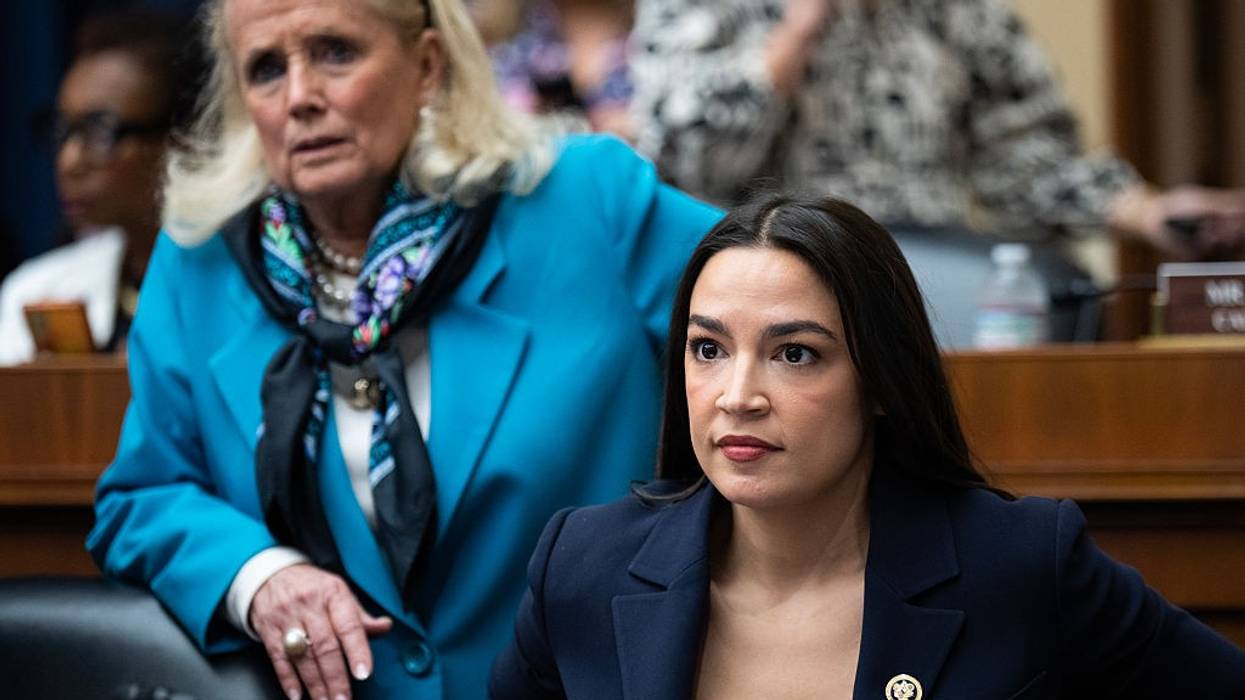
"We've asked for the opportunity to do this in the light of day so that people can call their representatives' offices in order to stop this disaster," said Rep. Alexandria Ocasio-Cortez.
U.S. Rep. Alexandria Ocasio-Cortez castigated House Republicans for pursuing massive cuts to Medicaid "in the dead of night" as a committee markup hearing on the GOP's legislation dragged on into the early hours of Wednesday morning.
Ocasio-Cortez (D-N.Y.) said it is shameful that Republicans are rushing ahead with their proposal "at 2:38 in the morning, when everyone is asleep, when we've asked for the opportunity to do this in the light of day so that people can call their representatives' offices in order to stop this disaster."
As the House Energy and Commerce Committee hearing kicked off Tuesday afternoon, demonstrators gathered in the Rayburn House Office Building and more than two dozen people were arrested for protesting the GOP's Medicaid proposal, which would cut the program by around $800 billion over the next decade and leave around 8 million more people uninsured.
But attention on the hearing naturally dwindled as it continued into the night and early Wednesday morning. As of this writing, the critical markup session is still ongoing.
During her remarks at the hearing, Ocasio-Cortez said Republicans have looked to the state of Georgia as a model for their Medicaid proposals—particularly their push for work requirements that advocates say would endanger coverage for millions of people who are eligible for benefits.
Ocasio-Cortez noted that Georgia is among the states with the highest uninsured rates in the nation.
"The Republican majority has looked at the state with the third-highest number of uninsured Americans and said, 'That's what we want to model our Medicaid system after—this catastrophic failure,'" said the New York Democrat.
Republicans are saying that these cuts will be reinvested into Medicaid for people who "deserve" it.
If that were true, the budget would stay the same. But that's not what's happening. Why?
Because down the hall, they are trying to finance tax breaks for billionaires. pic.twitter.com/98jORYSrTP
— Rep. Alexandria Ocasio-Cortez (@RepAOC) May 14, 2025
The Center on Budget and Policy Priorities (CBPP) noted Tuesday that beginning in 2029, the GOP bill would "require states to deny coverage to people applying for Medicaid if they are not already working (or participating in another qualifying activity) at least 80 hours per month, as well as terminate Medicaid for people already enrolled if they cannot document that they are meeting work requirements."
"Evidence shows that much of the coverage loss due to work requirements would occur among people who work or should qualify for an exemption but nevertheless would lose coverage due to red tape (states should be able to exempt most people with children automatically, but many others who should be exempt, such as people with disabilities, would not be automatically exempted)," the group observed.
CBPP estimated that the Republican plan would put between 9.7 million and 14.4 million people at risk of losing Medicaid coverage by 2034.
"Let me be clear—this is not a moderate bill, and it is not focused on cutting 'waste, fraud, and abuse,'" said Rep. Frank Pallone Jr. (D-N.J.), the ranking member of the House Energy and Commerce Committee. "Instead, Republicans are intentionally taking healthcare away from millions of Americans so they can give giant tax breaks to the ultra-rich who don’t need them."
Politico reported early Wednesday that "after hours of debate, Republicans in unison voted down a Democratic amendment that would have required the Health and Human Services Secretary to certify that the GOP bill would not reduce any Medicaid benefits offered by states, pointing to President Donald Trump's repeated pledges to protect the program."
Republicans started several markup sessions for key pieces of their reconciliation package at around the same time on Tuesday, reportedly a deliberate effort to disperse and weaken the opposition.
"Down the hallway, they are trying to finance tax cuts for people who are inheriting $22 million houses," Ocasio-Cortez said Wednesday, referring to the House Ways and Means Committee's marathon hearing on the tax section of the reconciliation bill.
Republicans also held a hearing Tuesday for their proposal to slash the Supplemental Nutrition Assistance Program (SNAP) by hundreds of billions of dollars. The markup session lasted more than three hours and is expected to resume Wednesday morning.
"Tonight, you're taking food away from single moms with 7-year-olds at home—as if being a single parent raising a young child wasn't hard enough already. And farmers, too, will suffer from your direct attacks on SNAP," Rep. Angie Craig (D-Minn.), the top Democrat on the House Agriculture Committee, said at the hearing. "Benefits will get cut—and for what? To fund tax breaks for everyone but the middle class."
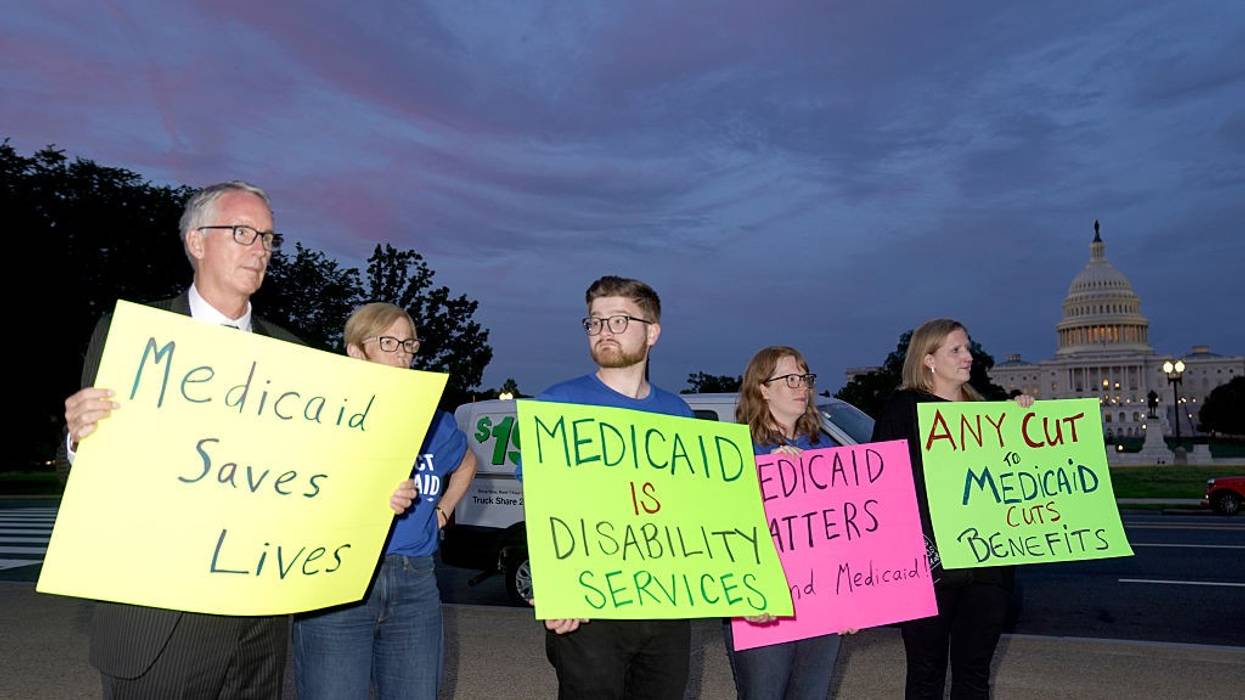
"This bill confirms what we've been saying all along: Trump and Republicans have been lying when they claim they aren't going to cut Medicaid and take away people's healthcare."
House Republicans late Sunday unveiled legislation that analysts said would rip Medicaid coverage from millions of low-income Americans—including children and people with disabilities—to help fund tax breaks that would disproportionately benefit the wealthy.
The bill text released by the House Energy and Commerce Committee is a section of the sprawling budget reconciliation package that Republicans are hoping to complete as soon as Memorial Day.
The legislation includes major changes to Medicaid that, if enacted, would kick millions from the program, including work requirements for some enrollees and new payment mandates for adults living above 100% of the federal poverty level—which, for a single individual, is $15,650 in annual income for 2025.
A snap analysis by the nonpartisan Congressional Budget Office estimates that the healthcare section of the new Republican bill would cut spending by at least $715 billion over the next decade and leave at least 8.6 million more people without insurance.
"Many of the Medicaid proposals from House Republicans are technical and wonky, and will be difficult for the public to absorb," said Larry Levitt, executive vice president for health policy at KFF. "What won't be difficult to absorb: CBO's estimate that the changes will increase the number of people without health insurance by at least 8.6 million."
"Taking healthcare away from children and moms, seniors in nursing homes, and people with disabilities to give tax breaks to people who don't need them is shameful."
With the stated goal of combating fraud, the GOP bill would implement a slew of new reporting and screening requirements to check Medicaid recipients' eligibility—changes that analysts said would ensnare many in procedural red tape, resulting in large-scale loss of coverage.
The measure's work requirement mandates at least 80 hours of work, community service, or related activities per month. Most Medicaid recipients already work, and previous work requirements at the state level have resulted in disaster.
The legislation also alters "cost-sharing requirements for certain expansion individuals under the Medicaid program." In plain terms, the bill would force certain Medicaid recipients to pay more for coverage, whether through premiums or other fees.
"If you make $20,000, a state might slap $1,000 of fees onto your Medicaid," Bobby Kogan, senior director of federal budget policy at the Center for American Progress, wrote in an analysis of the bill. "True sicko shit."
"My heart aches for the people whose lives will be ruined if this becomes law," Kogan added. "So it's our job to stop it."
Rep. Frank Pallone Jr. (D-N.J.), the top Democrat on the House Energy and Commerce Committee, said in a statement Sunday that "this bill confirms what we've been saying all along: Trump and Republicans have been lying when they claim they aren't going to cut Medicaid and take away people's healthcare."
"Let's be clear, Republican leadership released this bill under cover of night because they don't want people to know their true intentions," said Pallone. "In no uncertain terms, millions of Americans will lose their healthcare coverage, hospitals will close, seniors will not be able to access the care they need, and premiums will rise for millions of people if this bill passes."
"Taking healthcare away from children and moms, seniors in nursing homes, and people with disabilities to give tax breaks to people who don't need them is shameful," he added. "Democrats have defeated Republican efforts to cut healthcare before, and we can do it again."

"To make America truly energy independent, we must break our addiction to oil by expanding the use of clean energy technologies that can lower emissions and energy costs," argued Democratic Rep. Diana DeGette.
House Republicans held a hearing Tuesday to consider several pieces of Big Oil-friendly legislation that experts warned would exacerbate the fossil fuel-driven climate emergency and leave U.S. consumers with higher energy bills.
During a joint legislative hearing titled "Unleashing American Energy, Lowering Energy Costs, and Strengthening Supply Chains," two subcommittees of the GOP-led House Energy and Commerce Committee reviewed more than a dozen bills aimed at rescinding regulations to boost the production of planet-heating and illness-inducing fossil fuels.
In the words of Marc Boom, director of federal affairs at the Natural Resources Defense Council (NRDC), the hearing's "vague and seemingly benign title disguises an oil, gas, and coal industry wish list of 17 bills to turn back the clock towards weaker environmental laws, more unbridled development of the fuels that drive climate change, and endangering communities across the country."
The Republican lawmakers in charge of the panels acknowledged the need to expand wind, solar, and other clean power technologies but made little effort to hide their essentially pro-fossil fuel and deregulatory agenda, repeatedly contrasting renewable energy and reliable energy in a bid to discredit the former while attacking bedrock safeguards such as the Clean Air Act.
"Rush-to-green energy policies—both state and federal—have curtailed reliable energy and infrastructure, resulting in everything from blackouts to spiking prices," House Energy and Commerce Committee Chair Cathy Rodgers (R-Wash.) claimed in her opening statement, reviving right-wing myths that renewable energy sources—not Texas' isolated, deregulated, and fossil fuel-dependent grid—were to blame for the state's deadly power outages in February 2021 and that President Joe Biden and congressional Democrats' policies—not oil giants' profiteering from Russia's war on Ukraine—are to blame for skyrocketing gas prices.
"The committee's priority still appears to be cutting taxes on companies earning tens of billions in windfall profits and to weaken the nation's landmark environmental laws that protect Americans from their pollution."
Rep. Jeff Duncan (R-S.C.), chair of the Subcommittee on Energy, Climate, and Grid Security, called for "restoring American energy dominance." Once again neglecting to mention Big Oil's ongoing price-gouging and stock buyback binge, Duncan blamed Biden for "making energy unaffordable and less reliable for American consumers" even though the current president has approved drilling permits on public lands and waters at a faster clip than his notoriously pro-fossil fuel predecessor.
Not to be outdone, Rep. Bill Johnson (R-Ohio), chair of the Subcommittee on Environment, Manufacturing, and Critical Materials, slammed Biden's so-called "war on affordable and reliable energy" and advocated for "removing some of the red tape and delays that can prevent constructing new critical energy projects, keep capital on the sidelines, and kill innovation dead in its tracks."
Republican lawmakers have made it seem as if "oil, gas, and coal companies are actually the victims of government oppression and overreach," Boom noted. "The committee's priority still appears to be cutting taxes on companies earning tens of billions in windfall profits and to weaken the nation's landmark environmental laws that protect Americans from their pollution."
The reality, wrote Boom, is that "the United States is currently the number one producer of oil and gas in the world (also still the number one contributor to historical GHG emissions). The companies behind these fuels have enjoyed more than a century of government subsidies, are reaping record profits, and are fighting the transition toward clean energy that we need to strengthen America's economic and national security, create millions of new jobs, and prevent catastrophic climate change."
In contrast to her Republican colleagues on the House Energy and Commerce Committee, Democratic Rep. Diana DeGette (Colo.) argued Tuesday that "to make America truly energy independent, we must break our addiction to oil by expanding the use of clean energy technologies that can lower emissions and energy costs."
Among the GOP's proposals is a yet-to-be-unveiled resolution "expressing the sense of Congress that the federal government should not impose any restrictions on the export of crude oil or other petroleum products."
During his opening remarks, Duncan asserted that such a measure "is necessary because President Biden and Democrats on this committee have advocated for reinstating the crude oil export ban" that was originally enacted in 1975 and repealed by congressional Republicans and then-President Barack Obama in 2015.
Last year, the Biden administration floated—but never followed through on—reimposing the federal ban on crude exports, a move that progressive advocacy groups urged the White House to make to reduce U.S. fuel prices.
While Duncan claimed that "lifting the export ban... has lowered prices," research shows that the exact opposite has happened.
Since 2015, oil and gas production in the Permian Basin has soared while domestic consumption has remained flat, precipitating a massive build-out of pipelines and other infrastructure that culminated in the U.S. becoming the world's top exporter of liquefied natural gas (LNG)—intensifying greenhouse gas emissions, harming vulnerable Gulf Coast communities already overburdened by pollution, and worsening pain at the pump.
Another GOP proposal discussed Tuesday—H.R. 647, "Unlocking Our Domestic LNG Potential Act of 2023," which has been introduced by Johnson—would "repeal all restrictions on the import and export of natural gas."
As Tyson Slocum, director of the Energy Program at Public Citizen, explained: "The legislation eliminates the requirement that exports and imports be 'consistent with the public interest'―a standard that has been in place to protect consumers for 85 years. This legislation would remove all routine regulatory review to ensure that exports are not increasing prices for American families."
"This agenda is not rooted in reality and would start out by undermining public protections from dangerous pollution caused by energy development."
In addition, the so-called Promoting Cross-Border Energy Infrastructure Act, legislation that has yet to be introduced, would require the Federal Energy Regulatory Commission (FERC) "to approve any natural gas pipeline designed to import or export natural gas to or from Canada and Mexico within 30 days of receiving the complete application," Slocum warned. "This automatic approval eviscerates the Commission’s current public interest determination, and will encourage the construction of cross-border pipelines to Mexico designed to re-export U.S.-produced natural gas from LNG terminals in Mexico."
Slocum testified at Tuesday's hearing, telling lawmakers that the GOP's argument that deregulating the shipment of fracked gas would ease household energy spending couldn't be further from the truth because "U.S. LNG exports will chase whatever country is willing to pay the highest price."
"America's record natural gas exports have come with a tragic cost," Slocum added in a statement. "American households, power producers, and other consumers are now forced to directly compete with their counterparts in Berlin and Beijing, exposing Americans to higher prices and increased volatility."
"These high prices are creating significant economic hardship for tens of millions of our families," he said. "The bills these subcommittees debate today could increase prices for consumers, incentivize mismanagement of America's energy resources, and promote excessive price-gouging by companies looking to enrich their shareholders. Congress must do better to protect consumers from energy company profiteering."
In addition to the aforementioned bills aimed at gutting or eradicating regulatory oversight of fossil fuel exports, Republican members of the House Energy and Commerce Committee advocated for legislation that would:
"That these bills are at the front of the line of the new majority's energy agenda is extremely concerning," Boom argued. "This agenda is not rooted in reality and would start out by undermining public protections from dangerous pollution caused by energy development, rather than trying to find a path where energy development, environmental protection, and community safety work together."

"If today was a sign of what's to come, future House Energy and Commerce Committee hearings will be reduced to GOP members regurgitating Big Oil's false talking points."
On the same day that the largest oil company in the United States reported record profits for 2022, Republicans used the first House Energy and Commerce Committee hearing of the new year to promote the further expansion of climate-wrecking fossil fuel production and attack efforts to build out renewable energy infrastructure.
The energy panel is chaired by Rep. Cathy McMorris Rodgers (R-Wash.), the top recipient of oil and gas PAC money in the last election cycle and a longtime advocate of opening U.S. public lands and waters to fossil fuel drilling.
In keeping with her record, Rodgers kicked off Tuesday's hearing by touting the House's passage of legislation that would require the federal government to lease a certain percentage of public lands and waters for fossil fuel extraction for every non-emergency drawdown of the U.S. Strategic Petroleum Reserve.
Rodgers touted last week's vote as "bipartisan," but just one House Democrat—Rep. Jared Golden of Maine—joined Republicans in passing the bill, which is unlikely to become law. Climate advocates have warned that, if enacted, the measure "could lock in at least a century of oil drilling."
"We need to be doing more to secure and unleash American energy," Rodgers said Tuesday, attacking so-called "rush-to-green" policies and falsely blaming Europe's energy crisis on renewables.
Rep. Jeff Duncan (R-S.C.), chair of the panel's subcommittee on energy, climate, and grid security, toed a similar line during his opening remarks at Tuesday's hearing, decrying "the Democrats' 'rush-to-green policies'" and condemning science-backed calls to phase out fossil fuels.
Duncan also praised surging oil exports, which experts say have driven up costs for U.S. consumers while padding the profits of fossil fuel giants and contributing to the rise of global carbon emissions.
Jordan Schreiber, the director of energy and environment with the progressive watchdog group Accountable.US, said in a statement Tuesday that "if today was a sign of what's to come, future House Energy and Commerce Committee hearings will be reduced to GOP members regurgitating Big Oil's false talking points while openly advocating for energy policies that favor wealthy executives and shareholders over their own constituents."
The hearing began hours after ExxonMobil reported a record-shattering $56 billion in profits for the full year of 2022.
The corporation, whose scientists accurately predicted global warming decades ago as the company publicly lied about climate change, said it distributed nearly $30 billion to shareholders last year as U.S. households struggled to pay their energy bills.
Days before Exxon's earnings release, Chevron—the second-largest oil company in the U.S. by market cap—reported $35.5 billion in 2022 profits, an all-time high for the company.
"Even on a day when three of the country's largest oil companies posted a whopping $82.5 billion in profits for 2022, thanks to the unrelenting price gouging of American consumers, the MAGA majority can not stop themselves from doing the industry’s bidding," said Schreiber, referring to the combined profits of Exxon, Marathon Petroleum, and Phillips 66.
During Tuesday's hearing, Democrats on the House Energy and Commerce Committee slammed their Republican colleagues for prioritizing the interests of the ultra-profitable fossil fuel industry over U.S. consumers and the environment.
"We've all heard the slogans: 'Drill baby, drill,' 'energy dominance,' and now 'energy expansion,'" said Rep. Diana DeGette (D-Colo.). "But don't be fooled. These policies will not expand our potential for new renewable energy sources such as wind and solar, and will only increase our dependence on oil and gas."
"They're nothing more than a giveaway to the oil industry," DeGette said of the House GOP's fossil fuel-centered energy agenda.
Rep. Frank Pallone (D-N.J.), the top Democrat on the committee, pushed back on the GOP narrative that energy prices are high because the Biden administration is hindering the oil and gas industry's ability to drill—something that climate groups have pressured the administration to do, with little success.
"Republicans have pushed this idea that somehow Big Oil wanted to pump more but couldn't," said Pallone. "In reality, they wanted to keep the price artificially high."