

SUBSCRIBE TO OUR FREE NEWSLETTER
Daily news & progressive opinion—funded by the people, not the corporations—delivered straight to your inbox.
5
#000000
#FFFFFF
To donate by check, phone, or other method, see our More Ways to Give page.
Daily news & progressive opinion—funded by the people, not the corporations—delivered straight to your inbox.
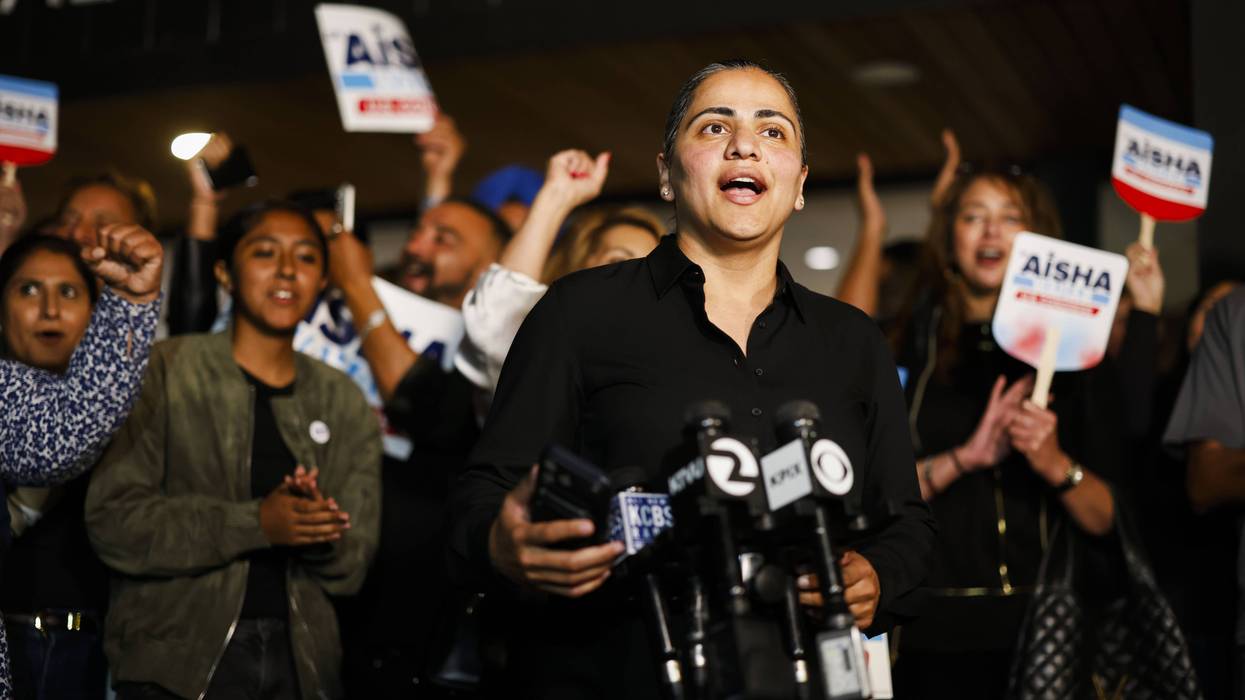
"This victory belongs to the voters who made clear that our district cannot be bought," said Wahab, who will serve out the remainder of former Rep. Eric Swalwell's term.
Progressive California state Sen. Aisha Wahab has won a special election to serve the remainder of disgraced former Rep. Eric Swalwell's term in the US Congress, defeating a centrist Democrat backed by millions of dollars in AIPAC spending.
“This victory belongs to the voters who made clear that our district cannot be bought,” Wahab said in response to news of her victory, which came some 48 hours after election day. "Through one of the ugliest, most expensive elections we’ve ever seen, we never took the bait or went negative. We stayed focused on the people, and I will fight for this district that raised me.”
Wahab, who ran on slashing prescription drug costs and ending forever wars, will represent California's 14th Congressional District until at least January. In November, Wahab will face Bay Area Rapid Transit board member Melissa Hernandez again in a race for a full two-year term in the US House. Tuesday's special election was significantly closer than earlier primary contests, signaling a highly competitive race later this year.
Our Revolution, a progressive advocacy organization that backed Wahab, called her win "a national model for how progressives can defeat big-money outside groups and build a Democratic Party rooted in working people." The United Democracy Project, AIPAC's super PAC, spent $2.5 million on the contest in an effort to boost Hernandez.
BOLD America, a separate super PAC that has received funding from AIPAC, also threw millions of dollars behind Hernandez. By contrast, The American Prospect reported that Wahab’s outside support came "from the state’s leading labor organization, from the leadership PAC of Rep. Pramila Jayapal (D-Wash.), and from the PAC for the Congressional Progressive Caucus."
“Aisha Wahab’s victory should be studied by every progressive running for office in America,” Joseph Geevarghese, executive director of Our Revolution, said in a statement late Thursday. “They had millions of dollars. We had organized people. And organized people won.”
“The lesson from CA-14 is simple: Democrats do not have to surrender to the biggest checkbook in the race,” said Geevarghese. “Big money can buy television ads, mailboxes and endless attacks. It cannot buy the trust built through thousands of conversations between neighbors. That is the model: unite the movement, organize everywhere, and make billionaire money fight us on our terrain.”
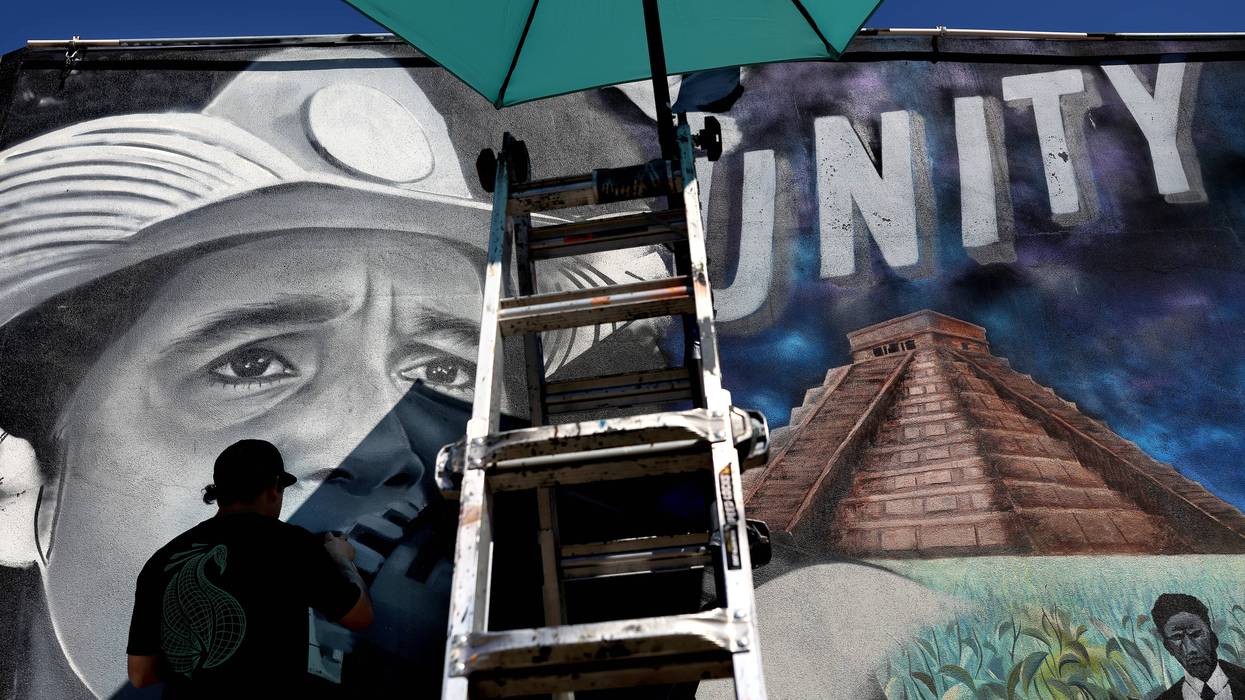
If we are serious about building a world where women have equal power—economic, political, and personal—then we have to be serious about accountability within our own ranks
In the span of a month, two stories have laid bare an uncomfortable truth about progressive politics: Too many people will protect powerful men at the expense of the women they harm, whether to protect a movement, a party, or because they’ve been conditioned to believe this is how power works.
Rep. Eric Swalwell (D-Calif.) announced his resignation from Congress last Month after multiple women came forward with allegations of sexual harassment and assault. March’s revelation by Dolores Huerta that iconic labor leader Cesar Chavez sexually abused girls and women for decades is still reverberating through communities that revered him. In both cases, the pattern is the same: Whisper networks carried warnings for years, but survivors who came forward were silenced or discredited for the sake of the “greater good.”
Why? Because Swalwell was seen as a rising Democratic star, a useful weapon against President Donald Trump. Because Chavez was a civil rights icon whose legacy anchored an entire movement. Because people convinced themselves that exposing the truth would do more damage than burying it.
They were wrong. Silence doesn’t protect movements, it protects oppressors. It tells every woman who has been harassed, groped, or assaulted by a powerful man on “our side” that her pain is an acceptable cost of doing business.
Letting people in power abuse women is never acceptable, regardless of party, regardless of legacy, regardless of how inconvenient the timing might feel.
We have seen this calculation before—the quiet bargain where accountability is sacrificed on the altar of political convenience. It never works. The truth always surfaces. And when it does, the cover-up inflicts its own damage, compounding the harm to survivors and eroding the moral authority these movements depend on.
Consider the moment we’re in. We have a president who was found liable by a jury for sexually abusing a woman, and accused by at least 28 others, and has faced no meaningful consequences for it. A president who has made clear, through word and policy, that he believes powerful men can do whatever they want. His administration is rolling back decades of progress on combatting sexual harassment and assault in workplaces and schools; gutting protections against discrimination; and dismantling the legal infrastructure women depend on for safe, equitable workplaces. The Supreme Court, made up of one-third of Trump appointees, is the first since the 1950s to rule against women and people of color in a majority of civil rights cases.
This is the landscape women are navigating right now. And into this landscape, we are supposed to accept that the men or other abusers on “our side” get a pass? No.
If we are serious about building a world where women have equal power—economic, political, and personal—then we have to be serious about accountability within our own ranks. Not because it’s easy, but because the alternative is corrosive. Every time we look the other way, we tell the next generation that a woman’s safety matters less than a man’s career. We weaken the very movements we claim to be protecting.
The women who came forward about Swalwell, including content creators who had no institutional backing, no legal team—just their own platforms and conviction—showed extraordinary courage. So did the survivors who finally broke decades of silence about Chavez. They did what the political establishment was unwilling to do. They chose the truth.
The lesson here is not that our movements are broken. It’s that they are only as strong as our willingness to hold everyone in them accountable. Letting people in power abuse women is never acceptable, regardless of party, regardless of legacy, regardless of how inconvenient the timing might feel.
We are in a fight for women’s futures in this country. That fight requires moral clarity. It requires us to stop treating accountability as a threat and start treating it as the foundation. Good things, lasting things, come from doing what is right, even when it’s hard. Especially when it’s hard.
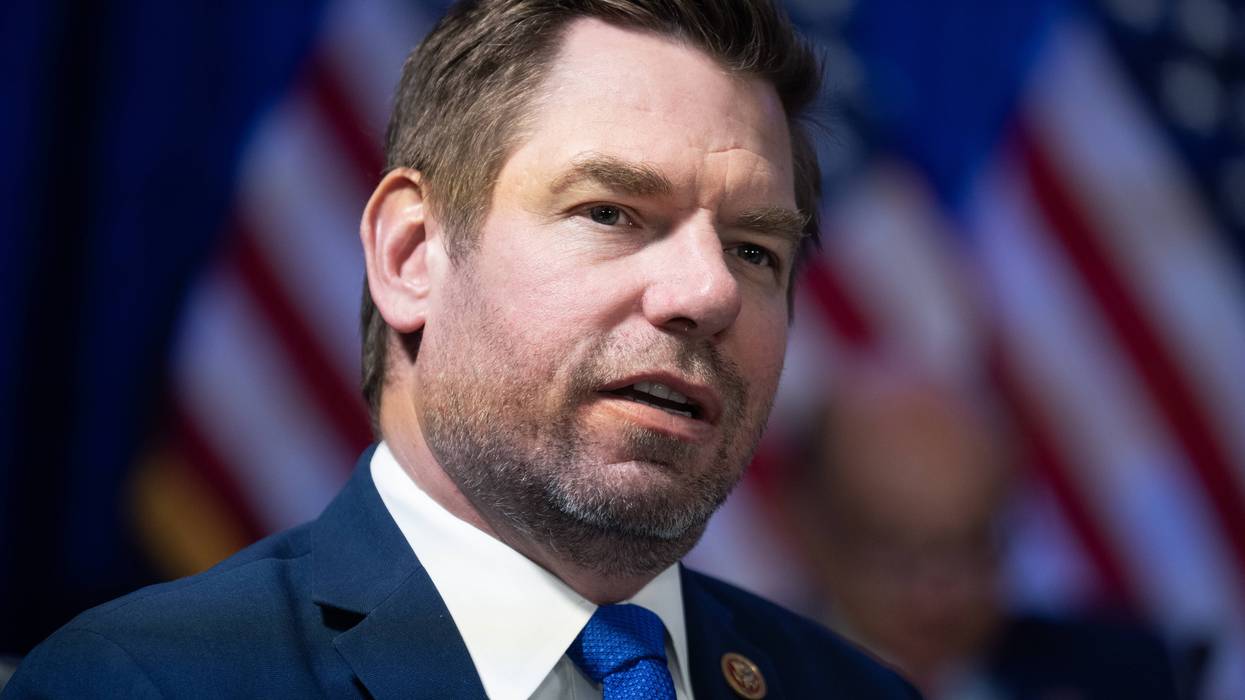
Even in Trump’s America, where lawlessness can feel like the norm, survivors are here, demanding that individuals and institutions treat sexual violence with the seriousness it deserves.
After serious allegations of sexual misconduct, Democratic California Rep. Eric Swalwell and Texas Republican Rep. Tony Gonzales resigned from Congress on the same day. That same week, convicted rapist Harvey Weinstein went on trial for the third time in New York; the University of California, Berkeley removed the name of accused sexual abuser Cesar Chavez from its student center; and a federal judge dismissed a defamation lawsuit brought by President Donald Trump regarding his ties to convicted sex offender Jeffrey Epstein.
These consequences for powerful men credibly accused of sexual assault have people asking: Is the #MeToo movement back?
As a co-founder of the TIME’S UP Legal Defense Fund, which was launched in 2018 to provide legal funding and media assistance to support survivors of workplace sexual harassment and related retaliation, I can confirm: Even in Trump’s America, where lawlessness can feel like the norm, survivors are here, demanding that individuals and institutions treat sexual violence with the seriousness it deserves.
When #MeToo first went viral, it felt like the Earth shook. Women worldwide responded to bombshell New York Times reports by sharing their experiences of sexual harassment and abuse. Quickly, it became clear that Weinstein was the tip of a massive iceberg. Allegations soon spread from Matt Lauer to Roger Ailes and beyond. But while big household names were capturing the public’s attention, something else was happening: People across the country were ready to take their abusers to court.
We have seen consequences for powerful men over the last weeks that go to show that powerful movements don’t end, they echo.
That’s why, three months after #MeToo went viral, the National Women’s Law Center joined with other advocates to create the TIME’S UP Legal Defense Fund, which helps survivors, no matter where they work, find justice. Over the last eight years, we have found a great deal of justice.
Since its founding, we have helped more than 12,000 people get the legal assistance they needed to hold their perpetrators accountable. From McDonald’s workers who were survivors of rampant sexual harassment by their bosses, to a female truck driver in Arizona who was sexually assaulted by her co-worker on the side of the road, the TIME’S UP Legal Defense Fund has fought for justice and accountability—and won.
In the years since we launched the fund, the #MeToo hashtag may have stopped trending (in part because people are less likely to use hashtags altogether), but the movement is still here, doing the work. In fact, 27 states and the District of Columbia have passed laws aimed at strengthening protections against workplace harassment. And we are not done.
We also can’t discount the immense cultural change that #MeToo’s created. For instance, Cheyenne Hunt, a Democratic creator and activist, used social media to draw attention to her story about abuse from Swalwell. She may not have used the #MeToo hashtag in her initial posts, but her courageous work follows the same playbook thousands of other survivors used to hold their perpetrators accountable. And the public was ready to respond, after nearly a decade of being grounded in Tarana Burke’s MeToo framework.
Yet we have seen from across the political divide people questioning whether the movement was successful, as evidenced by the alleged serial abuser now sitting in the Oval Office, who once said, “Grab ‘em by the pussy.” But these are the wrong questions to consider. Better ones might be: What would it take for women to feel safe in the places they work and learn? What support do survivors need? What is the cost of refusing to provide that support—the cost to survivors and to all of us, as women’s careers and contributions and opportunities are short-circuited by sexual violence?
What has happened in comment sections and court rooms has helped assure that this movement lives on in our laws and culture. Try as some might to roll back this progress—and some, particularly the president, are trying mighty hard—this reckoning will never simply be put back in the bottle.
That said, the latest examples make clear that this country still has miles to go. And given who is in the White House, the threat to survivor justice is as stark as it’s ever been. The Trump administration has spent the last year undermining survivor protections—in just over a year, it has refused to enforce harassment protections for transgender workers, blocked funding for domestic and sexual assault organizations, and weakened protections for victims of sexual harassment in schools.
But that is not evidence that this movement has failed; rather, it goes to show what many of us in the movement already knew: that there is always more work to do.
That work is, of course, made harder by people who think women’s bodies are theirs to possess, and that power means being immune to consequences. Still, we have seen consequences for powerful men over the last weeks that go to show that powerful movements don’t end, they echo. No matter how powerful you think you are, no one is above accountability.
So for anyone who thinks the #MeToo movement is over, I challenge you to look into the faces of the brave women whose stories are demanding and shaping change: Lonna Drewes. Ally Sammarco. Annika Albrecht. Regina Ann Santos-Aviles. Jessica Mann. Ana Murguia. Debra Rojas. Dolores Huerta. Annie Farmer. Virginia Giuffre. Survivors everywhere continue to speak truth—and because they do, #MeToo is as loud as it has ever been.
“He needs to withdrawal from the governor’s race and resign from Congress, immediately,” said one of Swalwell's Democratic opponents.
Calls for Democratic Congressman Eric Swalwell to drop out of the California gubernatorial race mounted Saturday as prominent supporters rescinded their endorsements and staffers fled his imploding campaign after more—and more serious—sexual misconduct allegations against him emerged.
Multiple women had already accused Swalwell, 45, of unwanted touching and kissing, and sending them unsolicited explicit images and messages. On Friday, the San Francisco Chronicle reported that a woman who had worked for the Swalwell said he sexually assault her twice while she was too intoxicated to consent. The woman's identity was concealed.
Hours later, CNN aired a report in which a former Swalwell staffer—who is apparently the same woman interviewed by the Chronicle—said the East Bay and Central Valley congressman raped her while she was drunk, leaving her bruised and bleeding. CNN also interviewed three other women who alleged various types of sexual misconduct they said was committed by Swalwell.
Swalwell categorically denied the claims, saying that “these allegations are false and come on the eve of an election against the frontrunner for governor."
Hear it directly from me. These allegations are flat false. And I will fight them. pic.twitter.com/bQSlCquD1U
— Rep. Eric Swalwell (@RepSwalwell) April 11, 2026
"For nearly 20 years, I have served the public—as a prosecutor and a congressman—and have always protected women," he added. "I will defend myself with the facts and where necessary bring legal action. My focus in the coming days is to be with my wife and children and defend our decades of service against these lies.”
Swalwell has claimed that Cheyenne Hunt—the activist and social media influencer who published the initial allegations against him earlier this week—has academic and political connections with former Congresswoman Katie Porter (D-Calif.), one of his rivals in the crowded gubernatorial race.
Porter campaign spokesperson Peter Opitz countered that Hunt and Porter "don't have a relationship to speak of," and that "in fact, Katie endorsed a different candidate when [Hunt] was running in a neighboring district."
Swalwell campaign staff and supporters are fleeing fast.
US Sens. Adam Schiff (D-Calif.), Alex Padilla (D-Calif.), and Ruben Gallego (D-Ariz.); House Minority Leader Hakeem Jeffries (D-NY); and Reps. Nancy Pelosi (D-Calif.), Ted Lieu (D-Calif.), Nanette Barragán (D-Calif.), Mike Thompson (D-Calif.), Doris Matsui (D-Calif.), and Jimmy Gomez (D-Calif.) are among the prominent erstwhile endorsers of Swalwell calling on him to quit.
“What is described is indefensible,” Gallego—who initially defended his friend Swalwell—said in a statement Friday. “Women who come forward with accounts like this deserve to be heard with respect, not questioned or dismissed. I regret having come to his defense on social media prior to knowing all the information. I am equally as shocked and upset about what has transpired.”
Groups ranging from the California Federation of Labor to the California Police Chiefs Association have rescinded their endorsements of Swalwell.
The California Federation of Labor Unions withdraws its endorsement of Rep. Eric Swalwell in the California Governor's race.
[image or embed]
— California Federation of Labor Unions (@californialabor.bsky.social) April 11, 2026 at 9:18 AM
“The allegations are incredibly disturbing and unacceptable against Rep. Swalwell. We are immediately suspending our support,” said California Teachers Association president David Goldberg. “Our elected board will be meeting as soon as possible to follow our union’s democratic process to determine next steps.”
Porter, billionaire Tom Steyer, former Los Angeles Mayor Antonio Villaraigosa, San Jose Mayor Matt Mahan, former state Comptroller Betty Yee, and State Superintendent of Public Instruction Tony Thurmond are among the gubernatorial candidates urging Swalwell to withdraw from the race—and, in some cases, from Congress.
“I want to acknowledge the courage of the women who have come forward and, as I stand here, call on Congressman Eric Swalwell to take responsibility for your actions,” Thurmond said during a press conference Friday. “I’m calling on you to resign from Congress and to step away from this race for governor.”
Porter said: “The allegations against Congressman Swalwell are horrifying. I’m thinking of the courageous women who have come forward to share their stories. We believe you and we stand with you.”
Yee called the allegations against Swalwell "sickening."
"He needs to withdrawal from the governor’s race and resign from Congress, immediately," she added. "Let the women speak.”
Republican gubernatorial candidate Steve Hilton, a supporter of President Donald Trump—who was found civilly liable for sexually abusing and defaming journalist E. Jean Carroll and who is accused of rape or other sex offenses against dozens of women and a child—also called on Swalwell to exit the race.
Other elected officials in California and beyond are urging Swalwell to quit the governor's race and Congress.
The accusations against Eric Swalwell are serious and deeply disturbing. There is no place for sexual assault in public life or anywhere else. He should undertake a swift, public and independent investigation into these allegations. He should resign from Congress and end his campaign for governor.
— Nithya Raman (@nithyaforthecity.bsky.social) April 10, 2026 at 10:03 PM
"His conduct is incompatible with elected office," said Democratic Los Angeles Mayor Karen Bass. "The women who came forward deserve to be heard and deserve justice."
Congresswoman Pramila Jayapal (D-Wash.) said, "Rep. Swalwell should immediately withdraw from the governor’s race and there must be a quick and thorough investigation."
California's so-called "jungle primary"—in which the two top performing candidates advance to the general election, regardless of party—is set for June 2.