SUBSCRIBE TO OUR FREE NEWSLETTER
Daily news & progressive opinion—funded by the people, not the corporations—delivered straight to your inbox.
5
#000000
#FFFFFF
To donate by check, phone, or other method, see our More Ways to Give page.
Daily news & progressive opinion—funded by the people, not the corporations—delivered straight to your inbox.
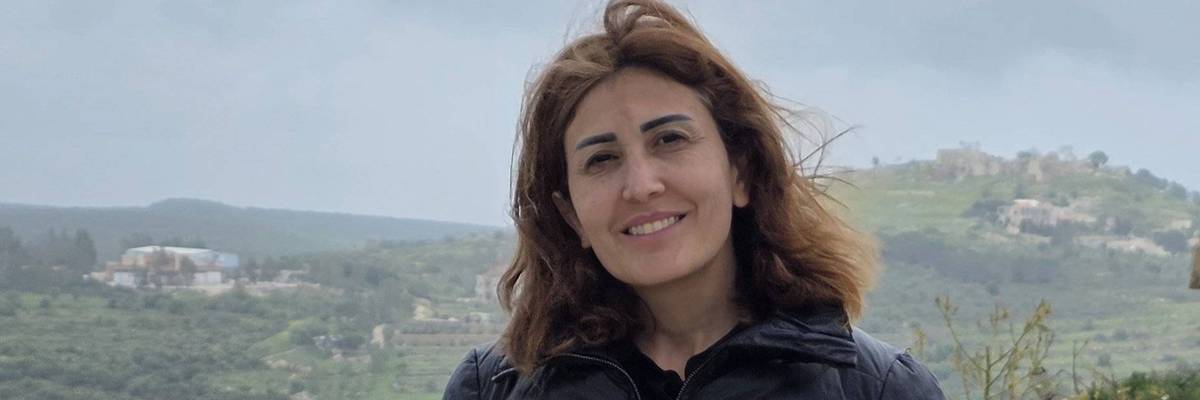
Al-Akhbar journalist Amal Khalil stands overlooking the shrine of the Prophet Shimon al-Safa in the village of Shamaa in southern Lebanon in a photo posted to social media on April 20, 2026.
"Israel treats journalism as a crime," said one Beirut-based editor.
The Israel Defense Forces were condemned on Wednesday following reports that the IDF dropped a grenade on Red Cross workers as they attempted to rescue a Lebanese journalist believed trapped beneath rubble in southern Lebanon.
Two journalists from the local media outlet al-Akhbar, Amal Khalil and Zeinab Faraj, were attacked by the IDF after arriving to report at the scene of a previous strike that had killed two civilians in a car in the village of Al-Tiri, according to Al Jazeera correspondent Heidi Pett.
The journalists, who were wounded, found that their own car was stuck under rubble from the second strike and that they were unable to leave.
Red Cross workers then spent hours attempting to reach the reporters. But according to the National News Agency (NNA), other Israeli attacks targeted a major road leading to the village "to prevent ambulance teams from reaching the two journalists.”
Faraj was rescued and brought to the hospital, where she is being treated for severe injuries that require surgery. The NNA and other Lebanese outlets reported that as she was transported to the hospital, the Red Cross vehicle came under Israeli fire, leaving visible bullet holes.
While Faraj was evacuated, however, Khalil remained trapped. According to Reuters, the Lebanese army asked the Israeli military to allow rescuers to retrieve her.
Lebanon's president, Joseph Aoun, also urged the Lebanese Red Cross to cooperate with the Lebanese army and United Nations peacekeepers to "carry out the rescue operation in the shortest possible time.”
But as the rescue workers lifted Khalil from the rubble, an Israeli drone dropped a stun grenade on them, believed to be a warning, which forced the workers to withdraw from the town, according to the Lebanese outlet LBCI. The Red Cross is expected to return later to continue the search for Khalil.
A recent profile of Khalil in the Beirut-based Public Source magazine celebrated her more than two-decade career, which began shortly before Israel invaded Lebanon in 2006. Though she resisted the label of "war correspondent," much of her work since 2023 has again focused on covering what she's described as "resistance" to Israeli aggression.
"I always highlight the steadfastness of ordinary people in their border villages, like the farmers who continued tending their land while the Israeli settlements across from them in northern Palestine were empty," Khalil said. "I debunk the enemy’s narrative of targeting only military sites by showing evidence of them bombing homes, farms, and killing children. After the [2024] ceasefire, I also started documenting how the destruction that followed was many times greater than what had occurred during the war itself."
According to Reporters Without Borders, Khalil previously received death threats from an Israeli phone number in September 2024, while she was reporting on the war that broke out between Israel and Lebanon earlier that year.
She received a message reading, "We know where you are, and we will reach you when the time comes." The message concluded, "I suggest you flee to Qatar or somewhere else if you want to keep your head connected to your shoulders."
The deliberate killing of journalists who are civilians constitutes a war crime under international humanitarian law.
The IDF said it was aware of reports that journalists were injured in Wednesday's attacks, but did not confirm them to The Associated Press. The IDF denied that it was preventing rescue teams from reaching the area. The military also said it “does not target journalists and acts to mitigate harm to them.”
The Committee to Protect Journalists (CPJ) found that last year was the deadliest year for journalists in the more than three decades since they began collecting data. An unprecedented 129 journalists and media workers were killed on duty last year. Israel was responsible for two-thirds of the press killings in 2024 and 2025, most of whom were Palestinians in Gaza.
Lara Bitar, editor of Public Source magazine, wrote on social media Wednesday that Khalil and her rescuers had come under attack “because Israel treats journalism as a crime.”
Bitar said, "Amal has been tirelessly and lovingly covering communities impacted by war, occupation, and displacement for decades."
Dear Common Dreams reader, It’s been nearly 30 years since I co-founded Common Dreams with my late wife, Lina Newhouser. We had the radical notion that journalism should serve the public good, not corporate profits. It was clear to us from the outset what it would take to build such a project. No paid advertisements. No corporate sponsors. No millionaire publisher telling us what to think or do. Many people said we wouldn't last a year, but we proved those doubters wrong. Together with a tremendous team of journalists and dedicated staff, we built an independent media outlet free from the constraints of profits and corporate control. Our mission has always been simple: To inform. To inspire. To ignite change for the common good. Building Common Dreams was not easy. Our survival was never guaranteed. When you take on the most powerful forces—Wall Street greed, fossil fuel industry destruction, Big Tech lobbyists, and uber-rich oligarchs who have spent billions upon billions rigging the economy and democracy in their favor—the only bulwark you have is supporters who believe in your work. But here’s the urgent message from me today. It's never been this bad out there. And it's never been this hard to keep us going. At the very moment Common Dreams is most needed, the threats we face are intensifying. We need your support now more than ever. We don't accept corporate advertising and never will. We don't have a paywall because we don't think people should be blocked from critical news based on their ability to pay. Everything we do is funded by the donations of readers like you. When everyone does the little they can afford, we are strong. But if that support retreats or dries up, so do we. Will you donate now to make sure Common Dreams not only survives but thrives? —Craig Brown, Co-founder |
The Israel Defense Forces were condemned on Wednesday following reports that the IDF dropped a grenade on Red Cross workers as they attempted to rescue a Lebanese journalist believed trapped beneath rubble in southern Lebanon.
Two journalists from the local media outlet al-Akhbar, Amal Khalil and Zeinab Faraj, were attacked by the IDF after arriving to report at the scene of a previous strike that had killed two civilians in a car in the village of Al-Tiri, according to Al Jazeera correspondent Heidi Pett.
The journalists, who were wounded, found that their own car was stuck under rubble from the second strike and that they were unable to leave.
Red Cross workers then spent hours attempting to reach the reporters. But according to the National News Agency (NNA), other Israeli attacks targeted a major road leading to the village "to prevent ambulance teams from reaching the two journalists.”
Faraj was rescued and brought to the hospital, where she is being treated for severe injuries that require surgery. The NNA and other Lebanese outlets reported that as she was transported to the hospital, the Red Cross vehicle came under Israeli fire, leaving visible bullet holes.
While Faraj was evacuated, however, Khalil remained trapped. According to Reuters, the Lebanese army asked the Israeli military to allow rescuers to retrieve her.
Lebanon's president, Joseph Aoun, also urged the Lebanese Red Cross to cooperate with the Lebanese army and United Nations peacekeepers to "carry out the rescue operation in the shortest possible time.”
But as the rescue workers lifted Khalil from the rubble, an Israeli drone dropped a stun grenade on them, believed to be a warning, which forced the workers to withdraw from the town, according to the Lebanese outlet LBCI. The Red Cross is expected to return later to continue the search for Khalil.
A recent profile of Khalil in the Beirut-based Public Source magazine celebrated her more than two-decade career, which began shortly before Israel invaded Lebanon in 2006. Though she resisted the label of "war correspondent," much of her work since 2023 has again focused on covering what she's described as "resistance" to Israeli aggression.
"I always highlight the steadfastness of ordinary people in their border villages, like the farmers who continued tending their land while the Israeli settlements across from them in northern Palestine were empty," Khalil said. "I debunk the enemy’s narrative of targeting only military sites by showing evidence of them bombing homes, farms, and killing children. After the [2024] ceasefire, I also started documenting how the destruction that followed was many times greater than what had occurred during the war itself."
According to Reporters Without Borders, Khalil previously received death threats from an Israeli phone number in September 2024, while she was reporting on the war that broke out between Israel and Lebanon earlier that year.
She received a message reading, "We know where you are, and we will reach you when the time comes." The message concluded, "I suggest you flee to Qatar or somewhere else if you want to keep your head connected to your shoulders."
The deliberate killing of journalists who are civilians constitutes a war crime under international humanitarian law.
The IDF said it was aware of reports that journalists were injured in Wednesday's attacks, but did not confirm them to The Associated Press. The IDF denied that it was preventing rescue teams from reaching the area. The military also said it “does not target journalists and acts to mitigate harm to them.”
The Committee to Protect Journalists (CPJ) found that last year was the deadliest year for journalists in the more than three decades since they began collecting data. An unprecedented 129 journalists and media workers were killed on duty last year. Israel was responsible for two-thirds of the press killings in 2024 and 2025, most of whom were Palestinians in Gaza.
Lara Bitar, editor of Public Source magazine, wrote on social media Wednesday that Khalil and her rescuers had come under attack “because Israel treats journalism as a crime.”
Bitar said, "Amal has been tirelessly and lovingly covering communities impacted by war, occupation, and displacement for decades."
The Israel Defense Forces were condemned on Wednesday following reports that the IDF dropped a grenade on Red Cross workers as they attempted to rescue a Lebanese journalist believed trapped beneath rubble in southern Lebanon.
Two journalists from the local media outlet al-Akhbar, Amal Khalil and Zeinab Faraj, were attacked by the IDF after arriving to report at the scene of a previous strike that had killed two civilians in a car in the village of Al-Tiri, according to Al Jazeera correspondent Heidi Pett.
The journalists, who were wounded, found that their own car was stuck under rubble from the second strike and that they were unable to leave.
Red Cross workers then spent hours attempting to reach the reporters. But according to the National News Agency (NNA), other Israeli attacks targeted a major road leading to the village "to prevent ambulance teams from reaching the two journalists.”
Faraj was rescued and brought to the hospital, where she is being treated for severe injuries that require surgery. The NNA and other Lebanese outlets reported that as she was transported to the hospital, the Red Cross vehicle came under Israeli fire, leaving visible bullet holes.
While Faraj was evacuated, however, Khalil remained trapped. According to Reuters, the Lebanese army asked the Israeli military to allow rescuers to retrieve her.
Lebanon's president, Joseph Aoun, also urged the Lebanese Red Cross to cooperate with the Lebanese army and United Nations peacekeepers to "carry out the rescue operation in the shortest possible time.”
But as the rescue workers lifted Khalil from the rubble, an Israeli drone dropped a stun grenade on them, believed to be a warning, which forced the workers to withdraw from the town, according to the Lebanese outlet LBCI. The Red Cross is expected to return later to continue the search for Khalil.
A recent profile of Khalil in the Beirut-based Public Source magazine celebrated her more than two-decade career, which began shortly before Israel invaded Lebanon in 2006. Though she resisted the label of "war correspondent," much of her work since 2023 has again focused on covering what she's described as "resistance" to Israeli aggression.
"I always highlight the steadfastness of ordinary people in their border villages, like the farmers who continued tending their land while the Israeli settlements across from them in northern Palestine were empty," Khalil said. "I debunk the enemy’s narrative of targeting only military sites by showing evidence of them bombing homes, farms, and killing children. After the [2024] ceasefire, I also started documenting how the destruction that followed was many times greater than what had occurred during the war itself."
According to Reporters Without Borders, Khalil previously received death threats from an Israeli phone number in September 2024, while she was reporting on the war that broke out between Israel and Lebanon earlier that year.
She received a message reading, "We know where you are, and we will reach you when the time comes." The message concluded, "I suggest you flee to Qatar or somewhere else if you want to keep your head connected to your shoulders."
The deliberate killing of journalists who are civilians constitutes a war crime under international humanitarian law.
The IDF said it was aware of reports that journalists were injured in Wednesday's attacks, but did not confirm them to The Associated Press. The IDF denied that it was preventing rescue teams from reaching the area. The military also said it “does not target journalists and acts to mitigate harm to them.”
The Committee to Protect Journalists (CPJ) found that last year was the deadliest year for journalists in the more than three decades since they began collecting data. An unprecedented 129 journalists and media workers were killed on duty last year. Israel was responsible for two-thirds of the press killings in 2024 and 2025, most of whom were Palestinians in Gaza.
Lara Bitar, editor of Public Source magazine, wrote on social media Wednesday that Khalil and her rescuers had come under attack “because Israel treats journalism as a crime.”
Bitar said, "Amal has been tirelessly and lovingly covering communities impacted by war, occupation, and displacement for decades."