
SUBSCRIBE TO OUR FREE NEWSLETTER
Daily news & progressive opinion—funded by the people, not the corporations—delivered straight to your inbox.
5
#000000
#FFFFFF
To donate by check, phone, or other method, see our More Ways to Give page.


Daily news & progressive opinion—funded by the people, not the corporations—delivered straight to your inbox.
The beginning of jury selection in the New York City “hush-money” case has Trump alarmed that his strategy of delaying his day of reckoning is coming to an end.
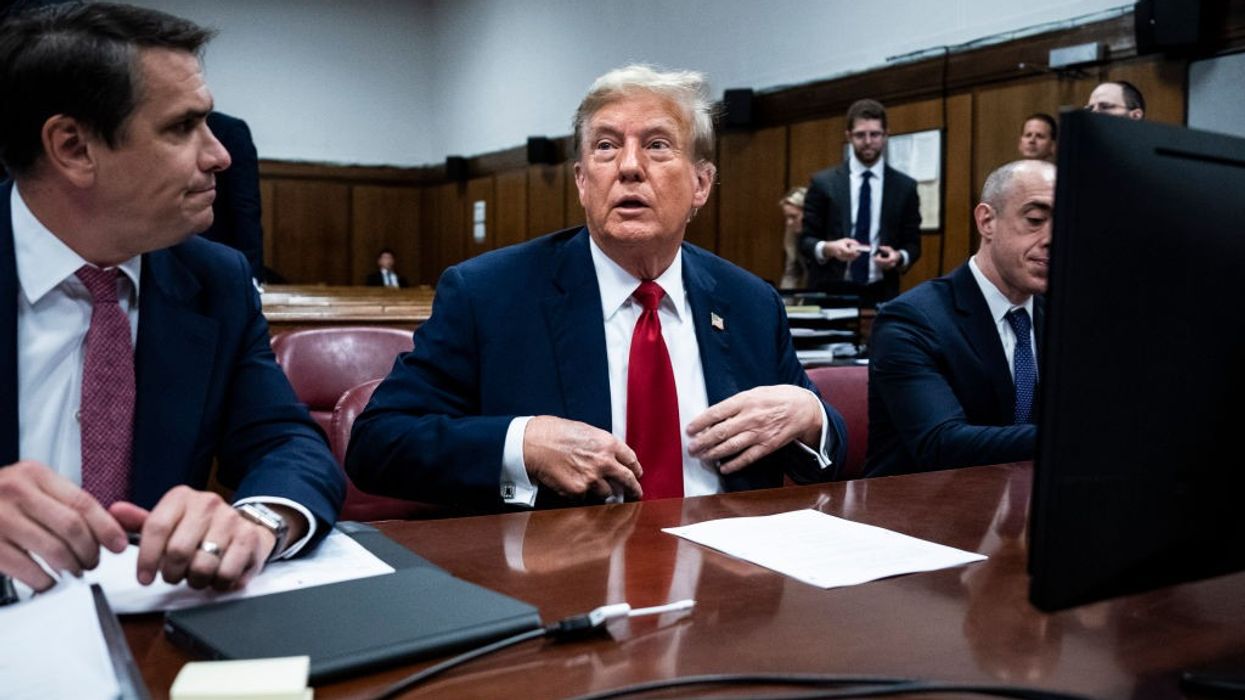
Donald Trump became the first former or sitting U.S. president to stand trial on criminal charges when jury selection began Monday in his “hush-money” case in New York City. Not even Richard Nixon, who was saved from an indictment for his role in the Watergate scandal by a presidential pardon, achieved such ignominy. Whatever its outcome, the trial will make history.
Trump was indicted in New York on March 30, 2023 on 34 felony counts of falsifying business records to cover up a $130,000 payment to porn star Stormy Daniels to prevent her from going public during the 2016 presidential campaign about their alleged sexual encounter a decade earlier. In a “Statement of Facts” filed along with the indictment and in a press release issued the day of Trump’s April 4 arraignment, Manhattan District Attorney Alvin Bragg explained that the payment to Daniels was part of a larger “catch and kill” scheme Trump initiated in August 2015 “to identify, purchase, and bury negative information about him and boost his electoral prospects.”
In addition to the Daniels disbursement, the scheme involved a $150,000 payment to former Playboy magazine “Playmate of the Year” Karen McDougal to cover up an alleged extramarital affair, and a $30,000 payment to Dino Sajudin, a former doorman at the Trump Tower in Manhattan, who allegedly was trying to sell a story about a child Trump had fathered out of wedlock.
From a political standpoint, the hush-money prosecution may not be as significant as Trump’s other criminal cases, but apart from its embarrassing and salacious details—all of which will be laid bare in open court—it is no laughing matter.
The scheme was carried out by Trump’s former lawyer and “fixer” Michael Cohen, who made the payment to Daniels on Trump’s behalf and was later reimbursed by Trump. The payments to McDougal and Sajudin came from American Media, Inc., the former publisher of the National Enquirer tabloid, whose then-chairman and chief executive officer, David Pecker, is a long-time Trump associate.
Although evidence of the larger scheme will come before the jury to show Trump’s intent to use the payments to enhance his election prospects, the indictment only charges him with offenses related to Daniels.
There is nothing illegal per se about making hush-money payments. The wealthy often use them to secure nondisclosure agreements to keep embarrassing or confidential information private.
What makes Trump’s scheme unlawful, according to Bragg, is that Cohen’s $130,000 payment to Daniels was actually a contribution to Trump’s election campaign that was both undisclosed and exceeded the 2016 $2,700 limit on individual contributions set by the Federal Election Campaign Act. In addition, the reimbursement checks written to Cohen in 2017 were “illegally disguised [in the records of the Trump Organization] as… payment for legal services rendered pursuant to a non-existent retainer agreement” to hide their actual purpose. Eleven of the 34 counts lodged against Trump involve checks written to Cohen (nine signed by Trump himself); 12 concern false invoices Cohen submitted; and 12 involve false entries in records maintained by the Trump Organization.
Although New York prosecutors routinely litigate business-record frauds, such cases are usually handled as misdemeanors. Offenses become felonies when the intent to defraud includes an intent to commit or conceal another crime. The other crimes implicated in Trump’s scheme include federal election campaign finance violations, parallel state-election law crimes, and tax fraud.
As in all criminal cases, Bragg’s legal team will have the burden of proving their case beyond a reasonable doubt. The team has named 11 potential witnesses, headed by Cohen, Daniels, and Pecker. Also named are Trump administration operatives Hope Hicks and Madeleine Westerhout, and Trump Organization insiders Rhona Graff, Jeffrey McConney, and Deborah Tarasoff, who presumably will be called to help establish Trump’s knowledge of the scheme and his criminal intent.
In addition to the witnesses, the prosecution will present a trove of documentary evidence, including the reimbursement checks written to Cohen, the phony business ledger entries, and a taped telephone conversation between Cohen and Trump that Cohen secretly recorded in September 2016. The pair can be heard on the recording discussing how to hide the payments to McDougal.
None of this means that the case is a slam dunk. Cohen will be particularly easy prey on cross examination as a convicted felon. In 2018, he pleaded guilty in federal court to tax evasion, making false statements to banks and campaign finance violations for the Daniels and McDougal payments. He was subsequently sentenced to serve three years in prison.
Trump was never charged with a federal crime, but was named in the pleadings filed against Cohen as “individual 1,” on whose behalf Cohen allegedly acted.
All of this has Trump alarmed that his strategy of delaying his day of reckoning in a criminal trial is coming to an end. The strategy has worked thus far in the two cases brought by Justice Department Special Counsel Jack Smith for election subversion and mishandling classified documents, and in the case brought by Fulton County, Georgia District Attorney Fani Willis for election interference.
But the strategy has run aground in Trump’s former hometown, where he rose to fame as a real estate mogul and a “reality TV” huckster. Last week, his attorneys lost four last-ditch motions to delay the trial.
From a political standpoint, the hush-money prosecution may not be as significant as Trump’s other criminal cases, but apart from its embarrassing and salacious details—all of which will be laid bare in open court—it is no laughing matter. Each of the 34 counts carries a potential four-year prison term, with a maximum cap of 20 years for convictions on five or more counts.
We can’t peek inside Trump’s fevered mind, but it’s safe to assume, as former New Jersey Gov. Chris Christie has said, Trump “goes to bed every night, thinking about the sound of that jail cell door closing behind” him.
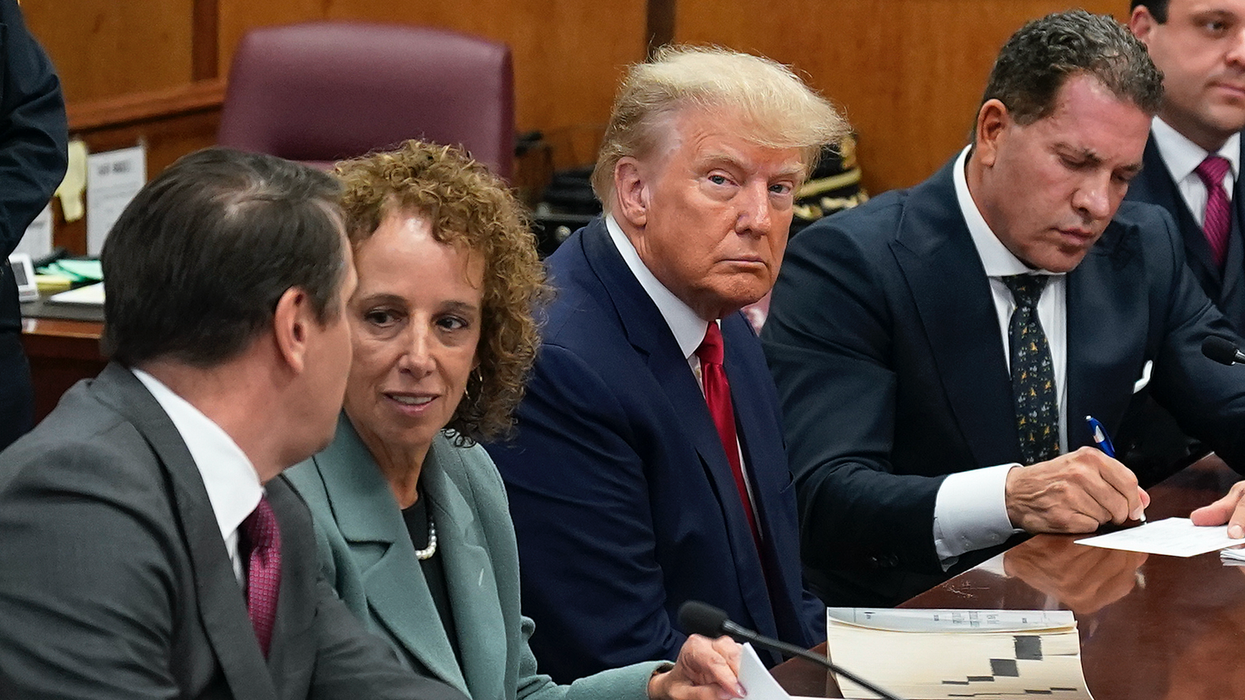
He believes he can get away with intimidating and harassing potential witnesses, jurors, prosecutors, and judges. He is confident he is above the law.
Last night, Trump and 18 others were criminally charged in Georgia in connection with efforts to overturn Joe Biden’s 2020 victory in the state.
Trump was charged with 13 counts, including violating the state’s racketeering act, soliciting a public officer to violate their oath, conspiring to impersonate a public officer, conspiring to commit forgery in the first degree, and conspiring to file false documents.
The indictment also charges some of Trump’s most prominent advisers, including Rudolph W. Giuliani, his former personal lawyer, and Mark Meadows, who served as White House chief of staff at the time of the election.
Trump’s posts continue to directly and explicitly violate the conditions of Trump’s release from jail pending trial.
This indictment follows a two-and-a-half year investigation by Fulton County District Attorney Fani Willis—after audio leaked from a January 2021 phone call during which Trump urged Georgia Secretary of State Brad Raffensperger to question the validity of thousands of ballots, especially in the heavily Democratic Atlanta area, and said he wanted to “find” the votes to erase his 2020 loss in the state.
It is another step in America’s slow but steady process of criminal justice, another illustration that no one is above the law. Fani Willis and her staff deserve the nation’s thanks, as do Jack Smith and his staff, and Alvin Bragg and his staff in Manhattan.
This is not easy work under the best of circumstances. When a rogue former president is on the loose, fanning the flames of anger and recrimination, the work is fraught and potentially dangerous.
Early yesterday morning, before the Georgia grand jury met, Trump posted the following:
I am reading reports that failed former Lt. Governor of Georgia, Jeff Duncan, will be testifying before the Fulton County Grand Jury. He shouldn’t. I barely know him but he was, right from the beginning of this Witch Hunt, a nasty disaster for those looking into the Election Fraud that took place in Georgia. He refused having a Special Session to find out what went on, became very unpopular with Republicans (I refused to endorse him!), and fought the TRUTH all the way. A loser, he went to FNCNN!
I have no idea whether Mr. Duncan was intimidated by this post when he testified yesterday, whether he altered or downplayed his testimony out of fear of retribution by a Trump supporter. But the mere possibility raises a broader question that must be answered by the judges presiding over Trump’s trials—and very soon.
Trump’s conditions of release at his arraignment earlier this month included a vow—which Trump swore to uphold—that he would not intimidate or harass witnesses and officers of the court or threaten the administration of justice.
Yet he has not ceased posting inflammatory invective against potential witnesses, against potential jurors in Washington D.C., New York, and Georgia, against judges who have been assigned to hear the cases against him, against Special Counsel Jack Smith, and against other prosecutors.
His wild statements endanger all these people—we know all too well about the violent proclivities of a subset of Trump supporters. His posts could silence potential witnesses in any and all of Trump’s pending trials. His rants could intimidate jurors, prosecutors, and judges.
Trump’s posts continue to directly and explicitly violate the conditions of Trump’s release from jail pending trial.
Last Friday, federal Judge Tanya Chutkan, who is presiding over the Justice Department’s case charging Trump with federal crimes in connection with seeking to overturn the 2020 election, repeatedly instructed Trump that he is bound by laws preventing him from influencing jurors or witnesses. She said any “inflammatory remarks” that could influence a jury would hasten a trial, and she warned that “I will take whatever measures are necessary to safeguard the integrity of the case.”
Hours later, Trump called Judge Chutkan “highly partisan” and “very biased and unfair,” adding, “She obviously wants me behind bars.”
Friends, Trump is daring Judge Chutkan and other judges involved (or soon to be involved) in these four proceedings to revoke his release pending trial. He believes he can get away with intimidating and harassing potential witnesses, jurors, prosecutors, and judges. He is confident he is above the law.
He must be shown he is not above the law. His release pending trial must be revoked.
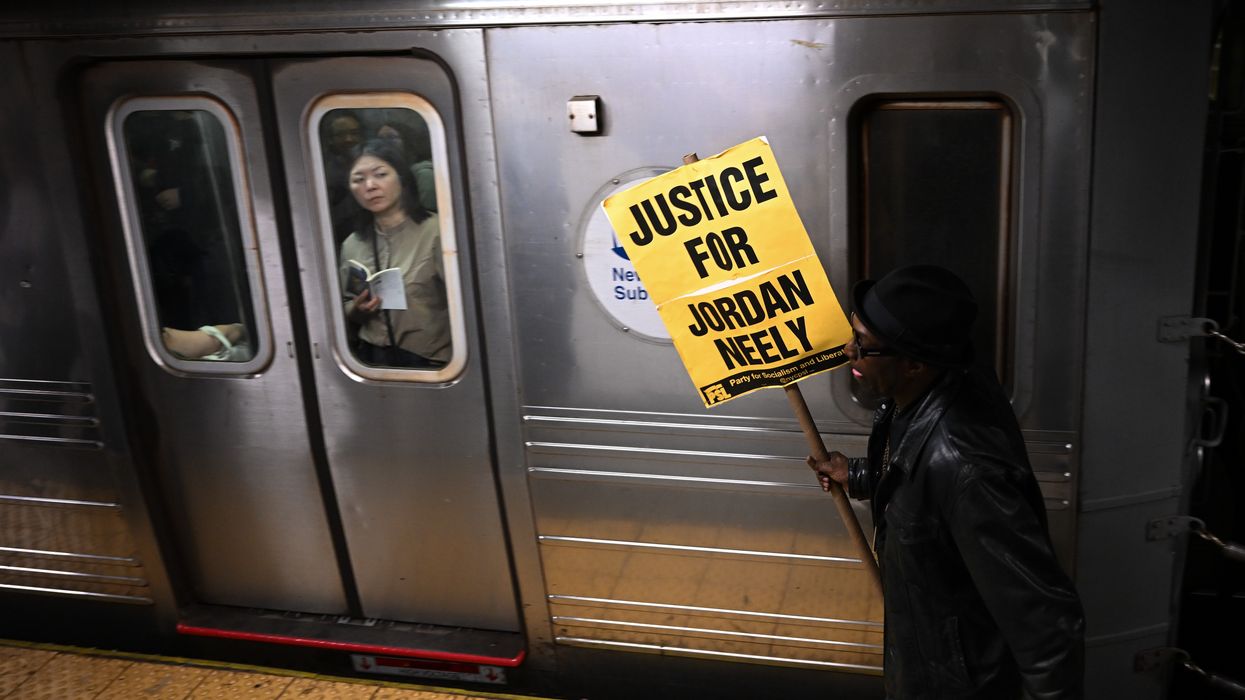
"It's 10 days too late," said one protester in New York City. "Yes it's some step towards progress, but we've been waiting too long."
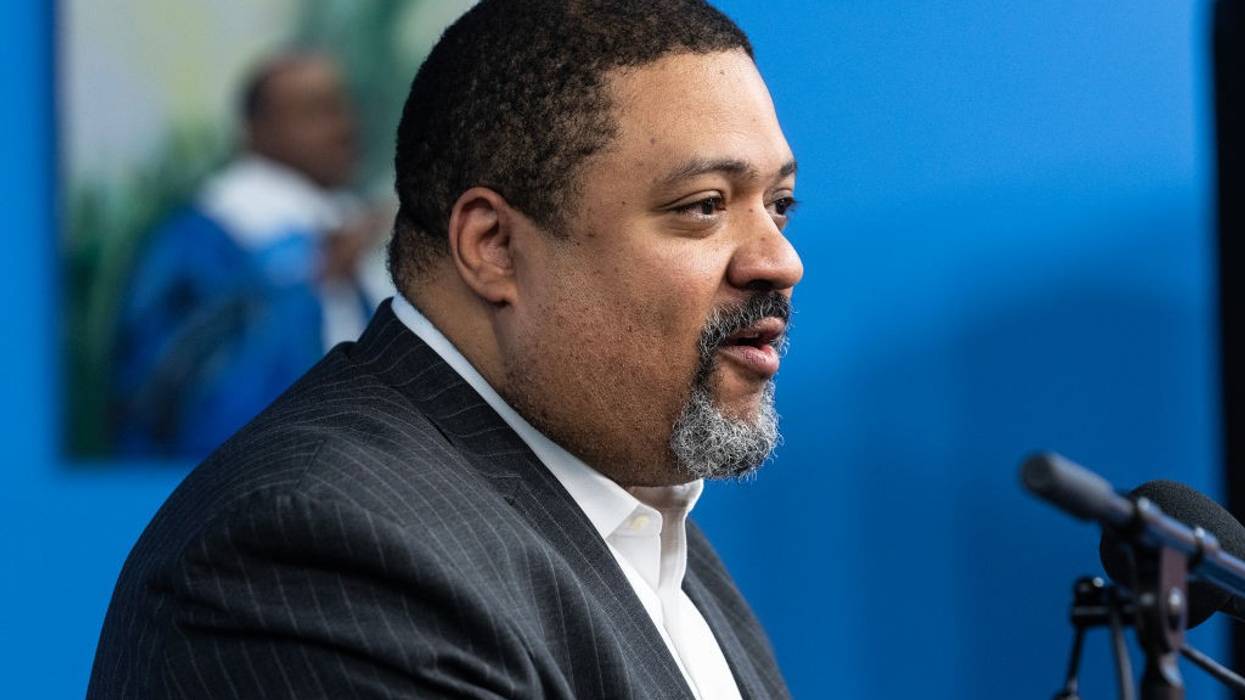
The office of Manhattan District Attorney Alvin Bragg confirmed Thursday that Daniel Penny, who last week fatally choked Jordan Neely on the subway in New York City, is set to be charged Friday and could face up to 15 years behind bars.
"Daniel Penny will be arrested on a charge of manslaughter in the second degree," Bragg's office said in a statement. "We cannot provide any additional information until he has been arraigned in Manhattan Criminal Court, which we expect to take place tomorrow."
While riding the F train on May 1, Neely—a 30-year-old Black subway performer known for impersonating Michael Jackson—was "acting erratically," but he did not attack anyone on the train, according to witness and freelance journalist Juan Alberto Vazquez.
Neely, who was unhoused, shouted about being "fed up and hungry" and "tired of having nothing," said Vazquez—who posted on Facebook footage of Penny putting Neely in a chokehold that the medical examiner concluded killed him.
Penny, a white 24-year-old Marine veteran, was initially questioned and then released by police; his attorneys claim he acted in self-defense.
Meanwhile, the video has spread online and sparked not only demands for justice but also national conversations about homelessness, mental illness, and racism in the United States.
According to NBC New York:
Multiple protests have taken place in Manhattan since Neely's death, with dozens arrested. Protesters again ratcheted up the volume Thursday, even after learning of the charges said to be coming.
"We need people to be held accountable for their actions, however, we don't want this just to be about the need to incarcerate this man," said Jawanza James Williams, the organizing director for Vocal NY.
Still, some said it has taken too long for the charges to come.
"It's 10 days too late," said protester Tanesha Grant. "Yes it's some step towards progress, but we've been waiting too long."
In a Wednesday speech, Democratic New York City Mayor Eric Adams used Neely's death to promote his unpopular policy of addressing NYC's intertwined mental health and homelessness crises with forced hospitalizations.
"There is no evidence supporting Adams' harmful and dangerous rhetoric," responded New York Civil Liberties Union executive director Donna Lieberman. "This kind of stigmatization and fearmongering contributes to the victimization of people with perceived mental illness—the same that led to the killing of Jordan Neely."
"The mayor is right that there are more Jordan Neelys in our city," Lieberman added. "They deserve housing, healthcare, and supportive services to get back on their feet, not to be controlled, criminalized, or killed."
"Rather than allowing the criminal process to proceed in the ordinary course, Chairman Jordan and the committee are participating in a campaign of intimidation, retaliation, and obstruction," reads the lawsuit.
Lawyers for Manhattan District Attorney Alvin Bragg on Tuesday filed a federal lawsuit against U.S. Rep. Jim Jordan, who as chair of the House Judiciary Committee has launched numerous attempts to interfere with the prosecution of former Republican President Donald Trump.
The lawsuit was filed a week after Bragg's office charged Trump with 34 felony counts stemming from his alleged "hush money" payment to adult film star Stormy Daniels during the 2016 presidential election.
Jordan responded to the charges by issuing a subpoena to a former investigator in Bragg's office, Mark Pomerantz, calling on him to provide the Ohio Republican's committee with a closed-door deposition about the probe into Trump's alleged crimes.
The subpoena amounted to a "brazen and unconstitutional attack" by a close ally of Trump who is intent on waging a "transparent campaign to intimidate" the district attorney's office, Bragg's lawyers said in the lawsuit, which was filed in the Southern District of New York.
Bragg is seeking to bar Jordan from enforcing the subpoena and from demanding testimony from anyone else, including the district attorney himself.
"Rather than allowing the criminal process to proceed in the ordinary course, Chairman Jordan and the committee are participating in a campaign of intimidation, retaliation, and obstruction," reads the lawsuit.
In addition to the subpoena, Jordan—along with Reps. James Comer (R-Ky.) and Bryan Steil (R-Wis.), who respectively chair the House Oversight, and Administration committees—sent letters last month to Bragg's office demanding documents regarding the investigation into Trump, claiming the House Judiciary Committee has the authority to oversee the case.
"Usually Republicans want a weak federal government," Maya Wiley, president of the Leadership Conference on Civil and Human Rights, said Tuesday. "Seems now they want a centralized system."
Jordan is also planning to hold a "field hearing" on April 17 in New York to investigate whether Bragg has inappropriately focused on prosecuting Trump—a 2024 presidential candidate—while failing to address crime in the city, which is down this year according to The New York Times.
" House Republicans' attempts to interfere in the prosecution of their political ally Donald Trump by a local DA are unprecedented and dangerous," said Noah Bookbinder, president of Citizens for Responsibility and Ethics in Washington. "It's good that Manhattan DA Alvin Bragg is not taking this lying down."
"It appears you are acting more like criminal defense counsel trying to gather evidence for a client than a legislative body."
On the heels of former President Donald Trump's historic indictment, Manhattan District Attorney Alvin Bragg's office on Friday told three top Republican lawmakers in the U.S. House that their "attempted interference with an ongoing state criminal investigation—and now prosecution—is an unprecedented and illegitimate incursion on New York's sovereign interests."
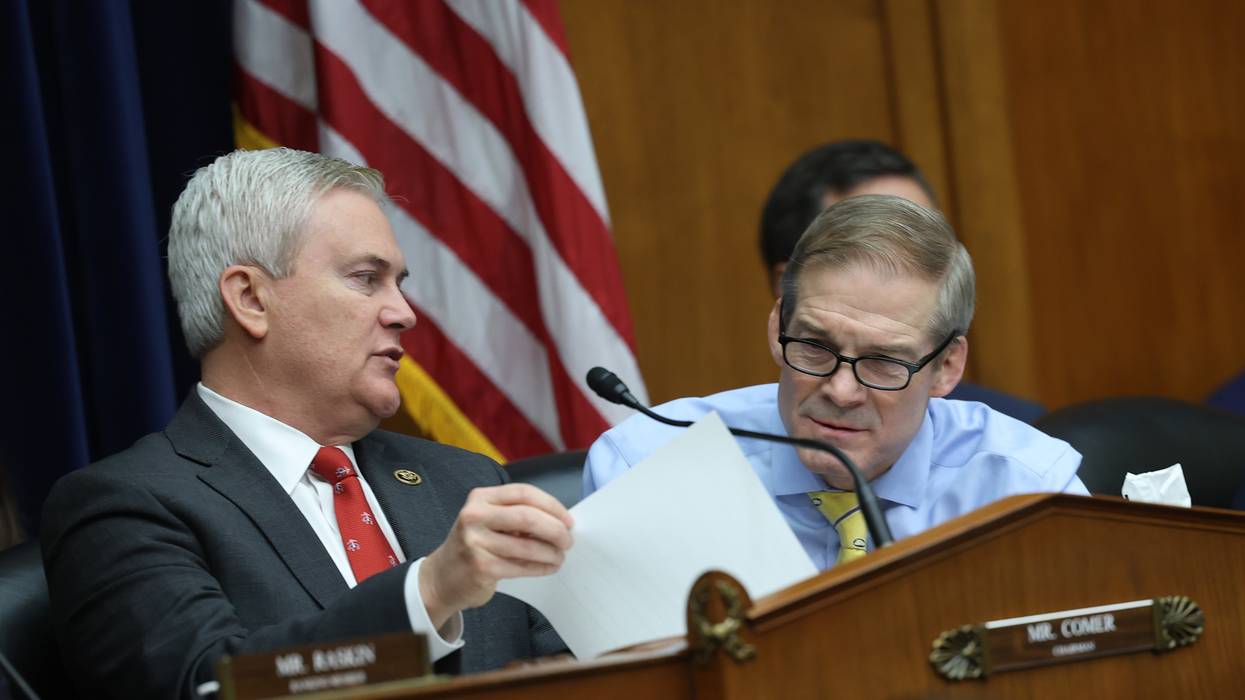
U.S. Reps. Jim Jordan (R-Ohio), James Comer (R-Ky.), and Bryan Steil (R-Wis.)—who chair the House Judiciary, Oversight, and Administration committees, respectively—initially wrote to Bragg last week demanding documents and testimony. In response, the general counsel for Bragg's office, Leslie Dubeck, called their requests an "unlawful incursion" into state sovereignty.
A second letter from Jordan, Comer, and Steil—public allies of Trump—prompted the six-page response from Bragg's office on Friday, less than 24 hours after the New York grand jury convened by Bragg over a hush money payment to a porn star voted to indict the former president and 2024 GOP candidate, who is expected to be arraigned Tuesday.
"You and many of your colleagues have chosen to collaborate with Mr. Trump's efforts to vilify and denigrate the integrity of elected state prosecutors and trial judges and made unfounded allegations."
"Your first letter made an unprecedented request to the district attorney for confidential information about the status of the state grand jury investigation—now indictment—of Mr. Trump," Dubeck wrote to the lawmakers. "Your second letter asserts that, by failing to provide it, the district attorney somehow failed to dispute your baseless and inflammatory allegations that our investigation is politically motivated. That conclusion is misleading and meritless."
"We did not engage in a point-by-point rebuttal of your letter because our office is legally constrained in how it publicly discusses pending criminal proceedings, as prosecutorial offices are across the country and as you well know," the general counsel continued. "That secrecy is critical to protecting the privacy of the target of any criminal investigation as well as the integrity of the independent grand jury's proceedings."
The letter lays out why the congressmen's committees "lack jurisdiction to oversee a state criminal prosecution," and declares that "based on your reportedly close collaboration with Mr. Trump in attacking this office and the grand jury process, it appears you are acting more like criminal defense counsel trying to gather evidence for a client than a legislative body seeking to achieve a legitimate legislative objective."
Dubeck also took aim at their "vague and shifting legislative purpose." Only noting it in the second letter suggests "your proposal to 'insulate current and former presidents' from state criminal investigations is a baseless pretext to interfere with our office's work," she wrote. "Even if you were seriously considering such legislation and had the constitutional authority to enact it (which you do not), your request for information from the district attorney and his former attorneys concerning an ongoing criminal probe is unnecessary and unjustified."
After highlighting that the lawmakers' initial rationale for the inquiry related to the use of federal funding, the letter notes that over the past 15 years, the DA's office has helped the federal government secure over $1 billion from asset forfeiture and the office itself "receives only a small fraction of those forfeited funds."
Dubeck disclosed that from October 2019 to August 2021, approximately $5,000 of the federal forfeiture money was spent investigating the former president or the Trump Organization; most of those costs were related to a case that led to the conviction of Trump Organization CFO Allen Weisselberg and two Trump business entities, and "no expenses incurred relating to this matter have been paid from funds that the office receives through federal grant programs."
The letter explains the DA office's current participation in federal grant programs, then forcefully calls out the congressmen:
Finally, as you are no doubt aware, former President Trump has directed harsh invective against District Attorney Bragg and threatened on social media that his arrest or indictment in New York may unleash "death and destruction." As committee chairmen, you could use the stature of your office to denounce these attacks and urge respect for the fairness of our justice system and for the work of the impartial grand jury. Instead, you and many of your colleagues have chosen to collaborate with Mr. Trump's efforts to vilify and denigrate the integrity of elected state prosecutors and trial judges and made unfounded allegations that the office's investigation, conducted via an independent grand jury of average citizens serving New York state, is politically motivated. We urge you to refrain from these inflammatory accusations, withdraw your demand for information, and let the criminal justice process proceed without unlawful political interference.
Dubeck asked that if the lawmakers won't withdraw their request, they agree to a meeting and provide a list of questions for Bragg as well as a description of documents they believe could be turned over to Congress "without violating New York grand jury secrecy rules or interfering with the criminal case now before a court."
"We trust you will make a good-faith effort to reach a negotiated resolution," she concluded, "before taking the unprecedented and unconstitutional step of serving a subpoena on a district attorney for information related to an ongoing state criminal prosecution."
The latest letter from the DA's office "is really a work of art," independent journalist Marcy Wheeler said in a series of tweets on Friday. "It was a joy to read. Bragg is not fucking around and... well, Jimmy Jordan is."
"His willingness to exploit his supporters has been well documented," one analyst wrote of the former president. "All of this should start closing wallets. But Trump's hold on his followers is strong."
The Trump campaign and the former president's Republican allies wasted no time attempting to turn Thursday's indictment news into a lucrative fundraising opportunity, appealing to their right-wing supporters for cash on live television and in a flurry of late-night emails.
"We are living through the darkest chapter of American history," blared one email that the Trump Save America Joint Fundraising Committee fired off after a Manhattan grand jury voted to indict the former president on criminal charges related to an alleged hush-money payment to porn star Stormy Daniels ahead of the 2016 election.
"With your support, we will write the next great chapter of American history—and 2024 will forever go down as the year we saved our Republic," the email, which was attributed to Trump himself, continued. "Please make a contribution—of truly any amount—to defend our movement from the never-ending witch hunts and WIN the WHITE HOUSE in 2024."
A subsequent email with the subject line "Holding a shirt just for YOU" called Alvin Bragg "George Soros' bought-and-paid-for Manhattan D.A." and said Trump was indicted for "committing NO CRIME."
The email then transitioned to a sales pitch for Trump campaign shirts, which supporters were informed they could receive for "free"—in exchange for a $47 donation.
"What better way to show your support for President Trump and our incredible movement during this dark chapter in our nation's history than to proudly wear the brand-new 'I Stand with President Trump' T-shirt," the appeal declared.
Sen. Lindsey Graham (R-S.C.), meanwhile, used his appearance on Sean Hannity's live-audience Fox News show Thursday night to plead with Trump supporters to "give the president some money to fight this bullshit."
"He's spent more money on lawyers than most people spent on campaigns. They're trying to bleed him dry," said Graham, one of many Republican lawmakers who rushed to Trump's defense following Thursday's news.
Republican members of Congress also sent out urgent fundraising emails Thursday night in an attempt to capitalize on news of Trump's indictment.
"Contribute to our OFFICIAL TRUMP DEFENSE FUND to STAND WITH PRESIDENT TRUMP against this SCAM INDICTMENT," read an email sent by the campaign of Rep. Elise Stefanik (R-N.Y.), the chair of the House Republican Conference.
The Trump campaign said it raked in at least $2 million in donations in the week after the former president predicted on his social media platform earlier this month that his arrest was imminent.
Trump is expected to turn himself in to New York authorities early next week. The former president is reportedly facing more than 30 criminal counts of document fraud, though the indictment and exact charges remain under seal.
MSNBC's Steve Benen wrote Friday that "in theory, it might seem impossible for a scandal-plagued politician to turn a criminal indictment into a grift."
"In practice, the relationship between Donald Trump and his followers is not normal," Benen added, noting that the Trump campaign has successfully raised money off impeachment proceedings, efforts to overturn the 2020 election results, and supposed post-election campaigns to "secure" future contests.
The latter fundraising ploy yielded millions of dollars for Trump's PAC—but that money was reportedly funneled toward the former president's travel costs and other expenses, not the election battles donors were promised.
"Common sense might suggest that the public would see these developments, learn about the former president's underhanded tactics, and his fundraising would dry up—especially in the wake of a criminal indictment," Benen wrote Friday. "His schemes have been exposed. His willingness to exploit his supporters has been well documented. All of this should start closing wallets. But Trump’s hold on his followers is strong—so the grift continues."
The historic charges against the 2024 candidate "are the first ever brought against him, but they will not be the last," said one Trump critic, noting that "we know of literally dozens of credible allegations of crimes."
A Manhattan grand jury voted to indict former U.S. President Donald Trump for his role in a hush money payment to porn star Stormy Daniels, The New York Times reported Thursday, citing five people with knowledge of the matter.
The grand jury's move makes Trump the first ex-president to face criminal charges—and comes as the 76-year-old is seeking the 2024 Republican presidential nomination. An indictment or even conviction in the case would not prevent him from running.
After other outlets also confirmed the historic vote, a spokesperson for District Attorney Alvin Bragg said that "this evening we contacted Mr. Trump's attorney to coordinate his surrender to the Manhattan DA's office for his arraignment on a [New York] Supreme Court indictment, which remains under seal. Guidance will be provided when the arraignment date is selected."
Citing two unnamed sources familiar with the case, CNN reported that Trump faces over 30 counts related to business fraud.
"Donald Trump has spent his entire political career dodging accountability for his wanton disregard for the law. It is finally catching up to him."
In a phone call with ABC News producer John Santucci, Trump said this is an "attack on our country" and "political persecution," adding that "they are trying to impact an election." The twice-impeached former president made similar remarks in a lengthy statement.
Asked by Santucci asked if he will turn himself in, Trump responded, "You take care, John," and hung up. Trump attorney Joe Tacopina told NBC News that his client is expected to surrender to the DA's office early next week.
Trump supporters expressed outrage over the development—as did Republican Florida Gov. Ron DeSantis, who is expected to also run for the 2024 GOP presidential nomination but said Thursday that his state "will not assist in an extradition request."
Despite warnings that this case "is the first to result in an indictment, though arguably the toughest to win," as Mark Joseph Stern wrote for Slate, critics of Trump still welcomed the news as a long-awaited step toward accountability.
"We know of literally dozens of credible allegations of crimes committed by Donald Trump as president or running for it, with no charges filed. Until now," tweeted Noah Bookbinder, president of the watchdog group Citizens for Responsibility and Ethics in Washington (CREW). "We can't yet evaluate these charges, but make no mistake, this is a huge deal for accountability."
"Donald Trump has spent his entire political career dodging accountability for his wanton disregard for the law. It is finally catching up to him," Bookbinder added. "The charges in New York are the first ever brought against him, but they will not be the last."
Congresswoman Ilhan Omar (D-Minn.) similarly said "this is just one of many criminal acts for which Donald Trump is being investigated. Make no mistake: the fact that one of the most powerful people in the world was investigated impartially and indicted is testament to the fact that we still live in a nation of laws. And no one is above the law."
Daniels has alleged that she had an extramarital sexual affair with Trump, which he denies. Daniels' attorney, Clark Brewster, said that "the indictment of Donald Trump is no cause for joy. The hard work and conscientiousness of the grand jurors must be respected. Now let truth and justice prevail. No one is above the law."
Trump's former fixer Michael Cohen, who made a $130,000 payment to Daniels, said Thursday that "accountability matters and I stand by my testimony and the evidence I have provided" to the district attorney.
Aaron Scherb, senior director of legislative affairs at Common Cause, pointed to Cohen's prison time on Thursday.
"No American is above the law, including former presidents, and Donald Trump will get his day in court," said Scherb. "Donald Trump and his co-conspirators clearly appeared to have broken the law and his attorney at the time has already served time in federal prison for charges related to the $130,000 hush money payout. The Manhattan district attorney's office is right to hold the former president to the same standard as every other American."
John Bonifaz, president of Free Speech for People, said that "Donald Trump must face the rule of law for all of the crimes he has committed, and this indictment by the Manhattan grand jury is an important first step."
Urging secretaries of state and chief election officials across the country to "do their job," Bonifaz said that "the insurrectionist disqualification clause of the 14th Amendment makes clear that Trump is disqualified from holding any future public office based on his role in inciting and mobilizing the January 6th insurrection."
"No prior indictment or conviction is required in order to enforce Section 3 of the Fourteenth Amendment against Trump," he added. "To protect our republic, we must uphold this critical constitutional provision at this moment in history."
Prosecuting Donald Trump for both his high crimes and his misdemeanors is necessary to keep the republic—even if the consequence is some kind of "Trump or Death" civil war.
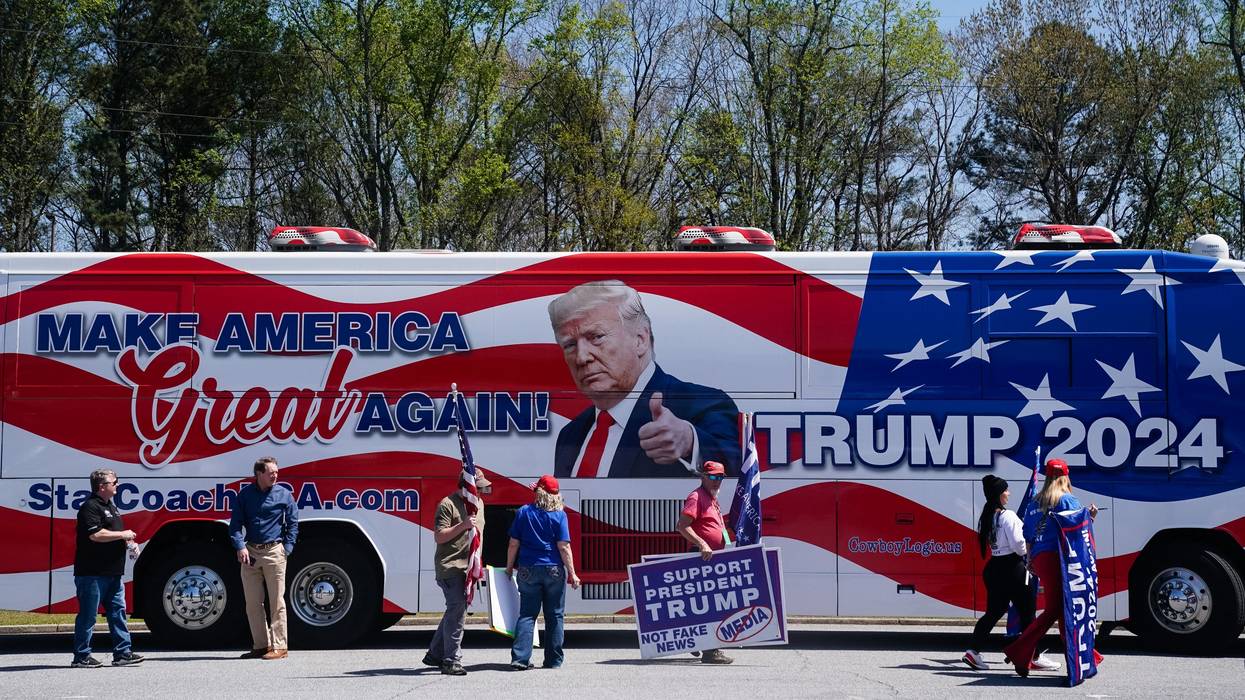
On a Saturday when dark clouds and even killer tornadoes were wending their way over huge swathes of the United States, the sun rose brightly over Waco. On a dusty patch of land in a central Texas town tagged by historic infamy, Donald Trump's army of supporters came early and in surprisingly large numbers on the first weekend of an uneasy American spring.
In the shadow of massive pro-Trump flags—"Trump Or Death 1776 2024" read one fastened to the front bumper of a blue Jeep—flew the undercurrent that the runaway front-runner for the 2024 GOP presidential nomination has sparked in a recent speech. Call it vengeance, or retribution, or old-fashioned smiting your enemies.
On this day, Manhattan District Attorney Alvin Bragg—the Black, progressive-minded prosecutor who may win an indictment of Trump as early as this week—was the new Public Enemy No. 1. "Alvin Bragg is overstepping his boundaries," a man in a Trump hat, brandishing a T-shirt with a picture of the New York prosecutor reading "ARREST ALVIN BRAGG," told a conservative news network. "We the people are calling for the arrest of Alvin Bragg for crimes of treason and election interference—I don't even know if election interference is a crime—but election interference, obstruction of justice, even lying to a grand jury. Trump done nothing wrong. We're here to show support for the greatest president ever."
This random dude's words were echoed by the more powerful in attendance, such as Georgia Rep. Marjorie Taylor Greene, who increasingly sits at the right hand of House Speaker Kevin McCarthy. "We have to stop allowing Democrats to abuse us," said Greene of Bragg, echoing the call for his arrest, while also calling him a puppet of Jewish billionaire George Soros in an antisemitic trope. She pled victimization: "It's like we are a beaten spouse."
Moments later, the jet rebranded as "Trump Force One" flew in for its dramatic landing, now accompanied by a favorite from the 1980s' Top Gun soundtrack. Kenny Loggins blared from the loudspeakers: "Ride into the danger zone..."
Danger zone, indeed. Do not be fooled by the calming blue of a Texas big sky: the 747 of American democracy is flying on a collision course toward a steep mountainside. With the weight of four separate criminal probes dealing with Trump's outrageous behavior before, during and after his disastrous 45th presidency coming down on him, the hero of America's authoritarian right is gaining altitude in utter defiance of political gravity.
With every headline about porn star payoffs, or threatening phone calls demanding that Georgia politicians find him votes, or a more aggressive federal investigation of his attempted coup on Jan. 6, 2021, Trump seems to rise another point or two in the polls—building a huge early lead in the race to win the GOP's 2024 White House nod. The only candidate who's shown signs of mounting an intraparty challenge—Florida Gov. Ron DeSantis—looks increasingly like a frozen deer on the Trump runway, unable to respond to attacks, caught between his me-too, Trump-lite policies and his need to appease traditional Republican fat cats and inside backers like Jeb Bush.
No one knows how a scenario like this ends. But it clearly cannot end well. Will America really see a 2024 campaign where one party's leading candidate isn't jetting around to rallies on Trump Force One but instead is flown between courtrooms in New York, Atlanta, and Washington by armed marshals, wearing an ankle bracelet? And what if the Republican nominee is convicted? How serious to take Trump's prediction in a recent Truth Social post of "potential death & destruction" if he's charged? What to expect from fans vowing "Trump or Death"?
"They're not coming after me, they're coming after you," Trump said Saturday after ambling to the Waco stage, unveiling what ought to be his 2024 campaign slogan. The candidate's occasional rambles into policy—a likely abandonment of Ukraine's defense of democracy, or a fascist level of state control over the classroom—are not what this campaign is about.
Trump's only real promise is a red wedding of revenge, against a "deep state" that ranges from the FBI to Covid bureaucrats, against the army of prosecutors who happen to be Black, against anybody really—school teachers and college professors, or white-coated doctors, or journalists—that people willing to stand for eight hours in Texas dust think are looking down on them.
Why is this working? Don't ask the pundits who get paid a handsome six figures to talk about politics, who seem just as clueless today about Trump and, more importantly, his appeal—maybe more so—than when he cruised down that Trump Tower escalator in 2015.
"You know what I don't get, and I'm going to look stupid on TV for saying this, but I haven't gotten this for the last five or six years," John McWhorter, the Columbia University linguist and New York Times op-ed contributor, a frequent critic of the left, said recently on HBO's "Real Time with Bill Maher." "Is it really true that there are really these people quote unquote sitting in diners with their hats on, et cetera, who are existentially upset that people like us in blue America look down on them? It seems to me most people aren't caring what the wider world thinks about them—they're buying their groceries... I don't believe they think about us."
John, you need to get out of the Upper West Side more often. They are absolutely thinking all the time about you, and your Columbia colleagues, and op-ed writers like me and you—even when you're intellectualizing their hatred of college campuses—and climate scientists and bureaucrats like Anthony Fauci (successful grandson of immigrants who once would have been lauded by conservatives) and of course lawyers like Alvin Bragg. Anyone who brandishes a diploma and tells them what they don't want to hear. Bonus points for anyone who tells them what they don't want to hear while Black, or while female.
Their movement isn't defined by what they want but by whom they hate, and Donald Trump is the first politician who could articulate that rage with crude bluntness.
I've spent a lot of time since the 2000s listening to people on the right—on my car radio, or at Tea Party gatherings and outside Trump rallies—and their message is pretty unambiguous. Their movement isn't defined by what they want but by whom they hate, and Donald Trump is the first politician who could articulate that rage with crude bluntness. McWhorter also said on HBO that Trump is "charismatic," but he's not—not in the sense of JFK or the Gipper. It's only that he hates the right people, that he is the enemy of their enemy.
For people fearful that whites or churchgoers are becoming a minority in America, or angry that cosmopolitan elites were redefining society as a rigged meritocracy where people without diplomas could be viewed as losers, Trump's hokey 2016 message that "I am your voice" resonated. But the perceived slights of the seven years since then—peaking in 2020 with the massive Black Lives Matter protests, the social controls needed to fight a pandemic, and Trump's Big Lie around his election defeat—have inspired 2023's much more dangerous message, that he is "your retribution."
No wonder that Trump's looming potential indictments—by two Black big-city prosecutors that Fox News regularly blames for urban crime, and by the "deep state" of the U.S. Justice Department—are making him stronger by the day. No wonder his Waco throng stood with Trump in a sick musical celebration of the jailed thugs who attacked police officers in their Capitol Hill insurrection, Beer Hall Putsch martyrs for a new millennium.
In an unreality zone called MSNBC, producers have reinvented the Trump saga as a political version of the O.J. Simpson trial—sometimes giving the whole hour to breathless coverage of the legal dramas for a shrinking audience in McWhorter's "blue America." Those viewers remain certain that Bragg or Jack Smith or Fani Willis will finally take down Trump despite seeing that the Access Hollywood tape and two impeachments and everything else did not.
Here's what's real: American democracy has been in a doom loop ever since 2015. That's because the establishment keeps reaching into the traditional toolbox for the things—hard-hitting investigative reporting, congressional hearings, special prosecutors, and even impeachment—that always took down the bad guys of yesteryear, like Richard Nixon. The tools don't work on a movement based around hatred of journalists and prosecutors and even the FBI.
Today, we stand on the banks of the Rubicon, and I would argue that the Alvin Braggs and Fani Willises and all of us treading water in a faith in democracy and the rule of law have no choice but to cross it. Prosecuting Donald Trump for both his high crimes and his misdemeanors is necessary to keep the republic—even if the consequence is some kind of "Trump or Death" civil war. We are on the highway to the danger zone, but there's no exit ramp.
"Trump got his supporters to attack the government once," said one ethics watchdog. "He's making it clear that if he's arrested, he's going to try to do it again."
Government watchdogs on Friday said former President Donald Trump has potentially placed himself in even more legal jeopardy after he threatened violence if he's charged in a criminal case in New York.
Shortly after midnight on Friday, Trump wrote on his social media platform, Truth Social, that potentially "catastrophic" violence would result if he is indicted by a Manhattan grand jury.
"What kind of person can charge another person, in this case a former president of the United States, who got more votes than any sitting president in history, and leading candidate (by far!) for the Republican Party nomination, with a crime, when it is known by all that NO crime has been committed, and also known that potential death and destruction in such a false charge could be catastrophic for our country?" Trump said.
He also called Manhattan Attorney General Alvin Bragg "a degenerate psychopath that truly hates the USA."
Bragg's office has presented a grand jury with evidence related to alleged hush-money payments to adult film star Stormy Daniels during the 2016 presidential campaign, years after the former president allegedly had a sexual relationship with Daniels.
Trump's former lawyer, Michael Cohen, said in 2018 that he made a $130,000 payment to Daniels. He was reimbursed in 2017 by the Trump Organization.
The former president has made several public statements about the case against him in recent days, saying last weekend that he expected to be indicted on Tuesday and calling for a "protest" in New York, and posting an image in social media on Thursday showing Trump holding a baseball bat next to Bragg's head.
His call for "death and destruction" is his most explicit statement about potential violence, said critics including government watchdog Citizens for Responsibility and Ethics in Washington (CREW).
"He's not being subtle, he's threatening prosecutors with violence... Trump got his supporters to attack the government once," said CREW, referring to Trump's encouragement of his supporters to attend the rally at the U.S. Capitol on January 6, 2021 that turned into a violent insurrection aimed at overturning his election loss. "He's making it clear that if he's arrested, he's going to try to do it again."
The group added that Trump's threats of violence "are admissible in court."
Rep. Don Beyer (D-Va.) called on Republicans to clearly "condemn and oppose" Trump's calls for violence, to avoid another violent uprising in his defense.
"Donald Trump's incitement of violence is more direct, explicit, dangerous now than it was before January 6th," said Beyer. "Republican leaders cannot ignore this or wish it away."
According to The Washington Post, the grand jury is next scheduled to meet on Monday at the earliest.
"The district attorney is obliged by the federal and state constitutions to protect the independence of state law enforcement functions from federal interference," wrote the district attorney's general counsel.
The office of Manhattan District Attorney Alvin Bragg on Thursday accused House Republicans of an "unlawful incursion" into New York authorities' investigation of former President Donald Trump, who is expected to face criminal charges over a 2016 pre-election hush-money payment to porn star Stormy Daniels.
In a letter to Reps. Jim Jordan (R-Ohio), Bryan Steil (R-Wis.), and James Comer (R-Tenn.)—respectively the chairs of the House Judiciary, Administration, and Oversight Committees—the Manhattan DA's general counsel Leslie Dubeck wrote that the lawmakers' request earlier this week for confidential information pertaining to the Trump probe amounted to "an unprecedented inquiry into a pending local prosecution."
Dubeck wrote that the GOP lawmakers' Monday letter demanding that Bragg turn over communications and other documents related to the investigation "only came after Donald Trump created a false expectation that he would be arrested the next day and his lawyers reportedly urged you to intervene."
"Neither fact is a legitimate basis for congressional inquiry," Dubeck continued. "The district attorney is obliged by the federal and state constitutions to protect the independence of state law enforcement functions from federal interference."
The reply from Bragg's office came just before news broke that the Manhattan grand jury tasked with considering possible criminal charges against the former president is not expected to convene again until at least Monday of next week.
Trump set off a firestorm over the weekend by claiming on his social media platform that he would be arrested on Tuesday and urging his supporters to mobilize in response. The arrest did not take place as the former president and 2024 candidate predicted, but the post did lead to a flood of donations from his right-wing political supporters.
As Insider reported, Trump "raised $1.5 million in the three days after he claimed on Truth Social that he'd be arrested."
"The resulting average of $500,000 a day," the outlet noted, "is almost double the daily average from the weeks before and after he announced his bid for the White House in November."
In addition to requesting documents and testimony from Bragg, Jordan on Wednesday wrote letters demanding communications and other materials from two former prosecutors who previously led the Trump hush-money investigation.
As The Washington Post summarized on Thursday: "Daniels, whose legal name is Stephanie Clifford, was paid $130,000 by Michael Cohen, Trump's former lawyer and fixer," to stay quiet about an alleged affair.
"Trump reimbursed [Cohen] after becoming president, in installments that were designated legal fees," the Post added. "Bragg (D) has declined to give details of the investigation. But he is believed to be considering charges related to the payments that would include falsifying business records, possibly in commission of another, campaign-related crime. It is up to him to decide whether to ask the grand jury to vote on charging Trump with a crime."