

SUBSCRIBE TO OUR FREE NEWSLETTER
Daily news & progressive opinion—funded by the people, not the corporations—delivered straight to your inbox.
5
#000000
#FFFFFF
To donate by check, phone, or other method, see our More Ways to Give page.
Daily news & progressive opinion—funded by the people, not the corporations—delivered straight to your inbox.
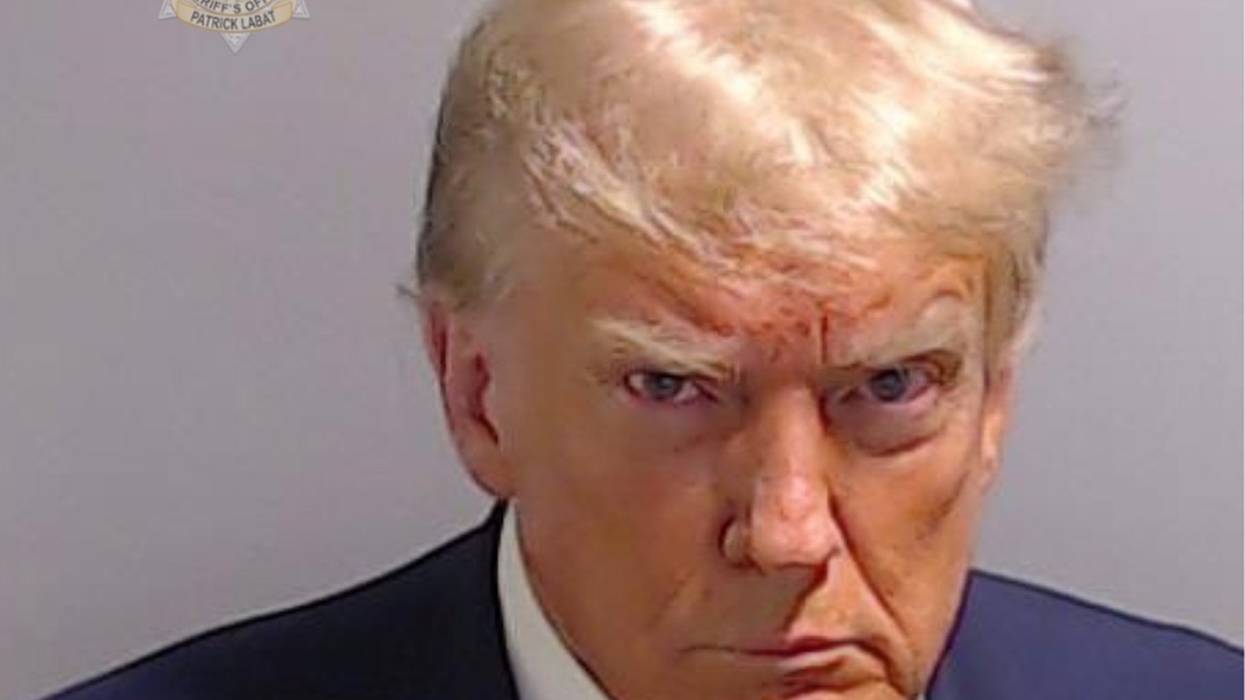
Just like the old Sicilian mafia called itself Cosa Nostra—meaning “our thing”—Trump presents himself as “Our Monster,” a kind of anti-hero who embodies the public’s disgust with a distant and dismissive establishment.
On August 24, 2023, a headline blared “La Maga Nostra” over the front page of the New York Post.
Dominating the layout was a photo of then-ex-President Donald Trump, his chin slightly raised in veiled contempt. The comparison was unmistakable: Trump as Don Corleone, the shadowy figurehead of The Godfather.
An accompanying news box underscored the irony. Trump had been hit with RICO charges, a legal framework famously pioneered by his own lawyer, Rudy Giuliani, to bring down New York’s mafia families, including the infamous “Teflon Don,” John Gotti.
Trump didn’t introduce the corruption of power to America. He simply streamlined it, stripped it of its former subtleties, and branded it in his own image.
The former real estate mogul has long invited comparisons to the mafia. His favorite films include The Godfather and Goodfellas, and his personal style—big pompadour hair, boxy suits, and flashy red ties—reflects that influence.
Michael Cohen once described himself as Trump’s consigliere, akin to Tom Hagen in The Godfather. Former FBI Director James Comey, who spent part of his career investigating organized crime, remarked that Trump’s approach to cultivating loyalty gave him “flashbacks” to his days taking down capos.
Then who could forget Trump’s infamous dig at Chris Cuomo, calling him “Fredo”—a jab that prompted one of the cringiest displays of Italian American male insecurity in decades.
From his “Teflon” ability to evade legal consequences to his swaggering machismo and Joe Pesci-like fragile ego, the affinity is laid bare.
Recent attempts on his life all but cemented Trump’s image as a modern-day mafia man. Whether or not the Post’s editors realized it, they captured the essence of his appeal.
It’s often remarked that unchecked social and economic pain leads to the emergence of “strong men.” In the classic authoritarian model, outlined by thinkers like Theodor Adorno, the disenfranchised turn to leaders who embody defiance, control, and simplicity in the face of chaos.
For millions of Americans mired in debt, struggling to pay rent, and unlikely ever to own a home, calling our society “neo-feudal” hardly feels hyperbolic.
It also tracks with the history of the mafia. The mafia evolved out of feudalism’s wake in southern Italy. As absentee landlords managed vast estates from afar, a vacuum was filled by vicious overseers and middlemen—figures the Sicilian writer Leonardo Sciascia called “parasitic intermediaries.”
Sciascia is widely credited as Italy’s first “anti-mafia” voice, following his 1961 novel The Day of the Owl. He viewed the mafia’s emergence in Sicily, shortly after the country’s unification in 1861, as a metaphor for the modern corruption of power—representing a distorted “ideal” of justice that promises order and protection for society’s have-nots while thriving on internal exploitation.
That this distorted image developed within a historical context marred by colonization and exploitation in Sicily—where peasants often romanticized the mafia and longed for a return to monarchy—pained Sciascia.
Equally, he recognized similar patterns in other contexts.
Trumpism operates in a similar way—not as a rejection of power consolidation, but as its acceleration.
Recent developments in Trump’s second term illustrate how a cartel-like consolidation of power among billionaires is carving out fiefdoms and aligning their interests with Trump’s administration in ways that echo mafia-like dynamics.
Peter Thiel’s role in “disrupting” the establishment sees him pumping money into Trump-friendly candidates and tech ventures that favor the privatization of state functions—a classic power consolidation strategy.
Jared Kushner’s financial deals with Saudi Arabia suggest a patronage model where money secures access and influence. Saudi investments in Silicon Valley, defense, and U.S. real estate could be seen as a geopolitical deal—leveraging Trump’s power for long-term economic control.
Elon Musk’s role, however, may be the most revealing. If Trump is the Don, Musk is shaping up to be his new consigliere, not unlike the old mafia’s lawyer-fixers—except with a global tech empire at his disposal.
His control over X (formerly Twitter) allows him to dictate the flow of political discourse, much like a mafia boss controlling the press. If Cosa Nostra kept power through silence—omertà—Musk ensures loyalty through algorithms, shadowbans, and the subtle privileging of certain voices over others.
Federal deregulation benefiting Musk’s empire (Tesla, SpaceX, Starlink) might reflect the kind of crony capitalism once associated with political machines, but at a planetary scale. Meanwhile, Trump sides with Musk over H-1B visas, even as the MAGA rank and file rebelled, and Musk called them “retarded.”
The direction we are headed in is shocking. But it would be a terrible mistake to view it as aberrant. Trump didn’t introduce the corruption of power to America. He simply streamlined it, stripped it of its former subtleties, and branded it in his own image.
His rise exposes a sickening continuity. Former Presidents Barack Obama and Bill Clinton played the game with suit-and-tie professionalism—the neoliberal, financialized version of patronage. Former President George W. Bush and former Vice President Dick Cheney did it through defense contracting and old-money oil interests.
Trump now strips this down to its rawest level: outright transactionalism, loyalty oaths, and a government that operates like a family business.
He presents himself as the “honest liar,” exploiting well-founded perceptions of corruption while openly admitting to behaviors that elites deny. His blatant displays of donor back-scratching feel almost refreshing in their vulgar transparency.
Just like the old Sicilian mafia called itself Cosa Nostra—meaning “our thing”—Trump presents himself as “Our Monster,” so to speak; a kind of anti-hero who embodies the public’s disgust with a distant and dismissive establishment.
Like Al Capone, who opened a soup kitchen in Chicago during the Great Depression, he swoops in to get “close” to the people. As a distorted Robin Hood-like figure, he plays up his everyman appeal, toggling between his gilded digs and disaffected base. His diction is street-level, his parlance tabloid. He eats the food (McDonald’s). He speaks the language.
Sciascia wrote about the insidious spread of corruption, describing how “the palm line”—as a symbol of mafia influence—creeps northward from Sicily to Rome.
In America, Trump represents its teleological end. He doesn’t need to resort to brute violence.
His power lies in painting a romanticized picture—MAGA—over a bleak reality—“American Carnage.” In an Italian context, Sciascia dubbed this Sicilianità: the tendency to “decorate” harsh realities and mask corruption with rhetorical flourish. The Democrats tried to do something similar with “Joy.” But it failed.
The one thing that Sciascia hated more than the mafia was fascism. Yet in a sense, he viewed them as codependent. Ultimately, he viewed the mafia’s power as resulting from a “historic failure, the failure of the Centre-Left,” and the ravages of “eternal bourgeoisie fascism”—the inability of elites to distinguish their dream-hoarding interests from the needs of the masses.
Which brings us to Musk—a billionaire who sells himself as a free-thinking outsider while constructing a world where he remains the gatekeeper of discourse itself.
If Trump’s rise was a mafia movie, Musk’s role makes it something else entirely—a Pirandellian farce, in which power’s corruption is so blatant that it becomes surreal.
We are now through the looking glass. And whatever comes next will be even more profane than the system Trump claims to oppose.
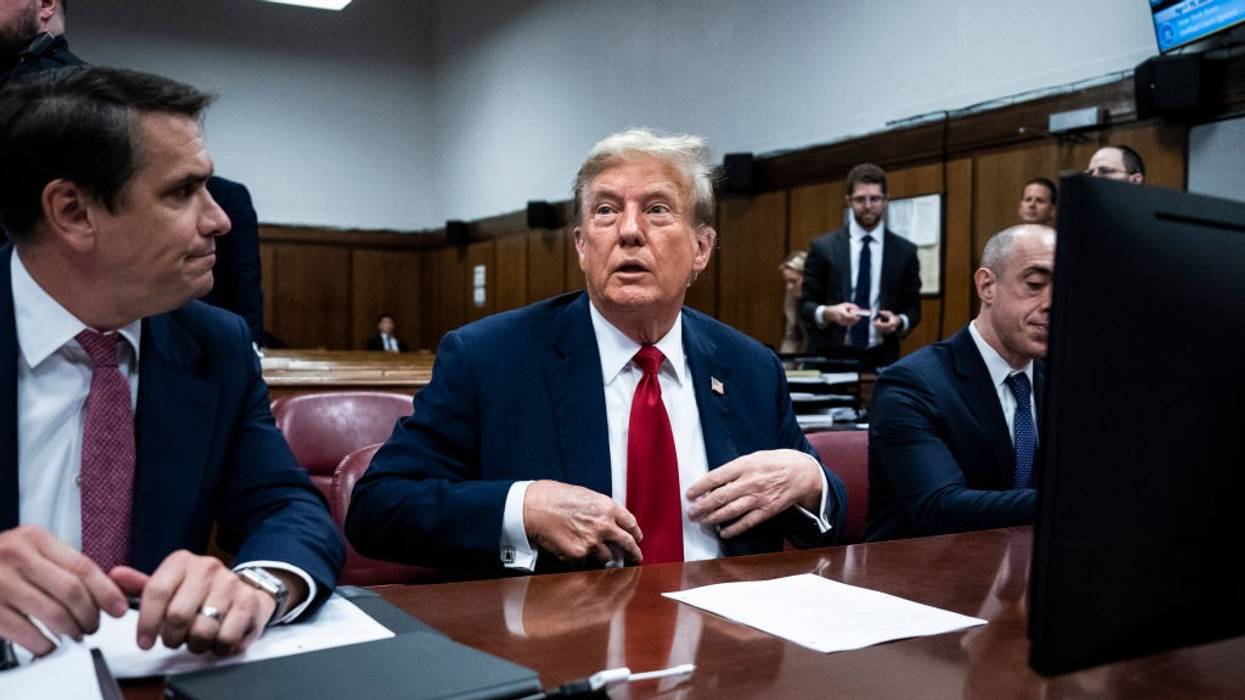
"Trump engaged in criminal acts to cover up the truth just days before the 2016 election, and now he will finally face a jury of everyday Americans."
As former U.S. President Donald Trump's first of four potential criminal trials began in New York on Monday, progressive groups emphasized that what is often called a hush money case involving a porn star "is about voter deception."
Trump, the presumptive Republican candidate to face Democratic President Joe Biden in November, faces 88 felony charges across the four cases. For this one, he was indicted by a New York grand jury last spring with 34 counts of falsifying business records related to alleged hush money payments to cover up sex scandals during the 2016 election cycle.
The payments were made by Michael Cohen, Trump's former fixer, to porn star Stormy Daniels, and by the tabloid The National Enquirer to Karen McDougal, a former Playboy model. The twice-impeached ex-president has pleaded not guilty.
"This case is about the allegation that Trump criminally hid information from voters to influence the outcome of the 2016 election," said Lisa Gilbert, executive vice president of the watchdog group Public Citizen, in a statement Monday.
"You can draw a clear pattern from this election interference behavior to his more emboldened efforts to subvert the 2020 election, which led to the January 6th insurrection, a lasting stain on American democracy," she added, referring to the 2021 U.S. Capitol attack that some critics argue makes him constitutionally ineligible to hold office again. "Accountability for criminal deception of voters is absolutely necessary to ensure future candidates and public officials know they can't get away with this sort of conduct."
Gilbert stressed that "despite what Donald Trump and his allies may claim, no one is above the law—including a former president charged with serious crimes, and today marks the start of the legal system's chance to prove this point."
Stand Up America president and founder Sean Eldridge similarly celebrated that "Donald Trump will finally face accountability for falsifying his company's business records in order to conceal damning information from voters ahead of the 2016 election."
"Concealing secret payments and then lying in official filings to cover it up is a serious crime, which is why Trump has been charged with 34 felony counts," Eldridge said. "This case is a clear example of Trump's pattern of engaging in criminal behavior to cling to power and hide the truth from the American people. No one is above the law in the United States of America, including former presidents."
"A functioning democracy depends on voters having the information they need to pick their leaders," he continued. "Trump engaged in criminal acts to cover up the truth just days before the 2016 election, and now he will finally face a jury of everyday Americans."
This is the first criminal trial of a former American president. Monday featured a series of rulings from Judge Juan Merchan—who has rejected Trump's demands that he step away from the case—and the beginning of jury selection.
The New York Times reported that "the initial pool of prospective jurors dwindled rapidly. More than half of the first group of 96 were dismissed in short order after indicating that they did not believe they could be impartial. Court adjourned for the day roughly two hours after jury selection began, with zero jurors chosen."
In addition to the case in New York, Trump faces two federal cases—overseen by Special Counsel Jack Smith because of Trump's 2024 campaign. One is about his mishandling of classified material and the other stems from his attempt to reverse the 2020 election results. The Republican also faces a Georgia case for interfering with the last presidential contest.
It is not clear whether any of the other three cases will go to trial before the November election. Trump is trying to claim presidential immunity to get the federal election charges dismissed and the U.S. Supreme Court—to which he appointed three justices—is set to hear arguments in that case on April 25.
Public Citizen is among the groups that last week submitted briefs to the high court criticizing Trump's claims. The watchdog's president, Robert Weissman, said that "Trump's legal theory defies common sense and would enable an almost limitless tyranny. Nothing in the Constitution—which aims to prevent tyranny—supports Trump's theory."
This post has been updated with the former president's 88 charges, reduced from 91 in March.
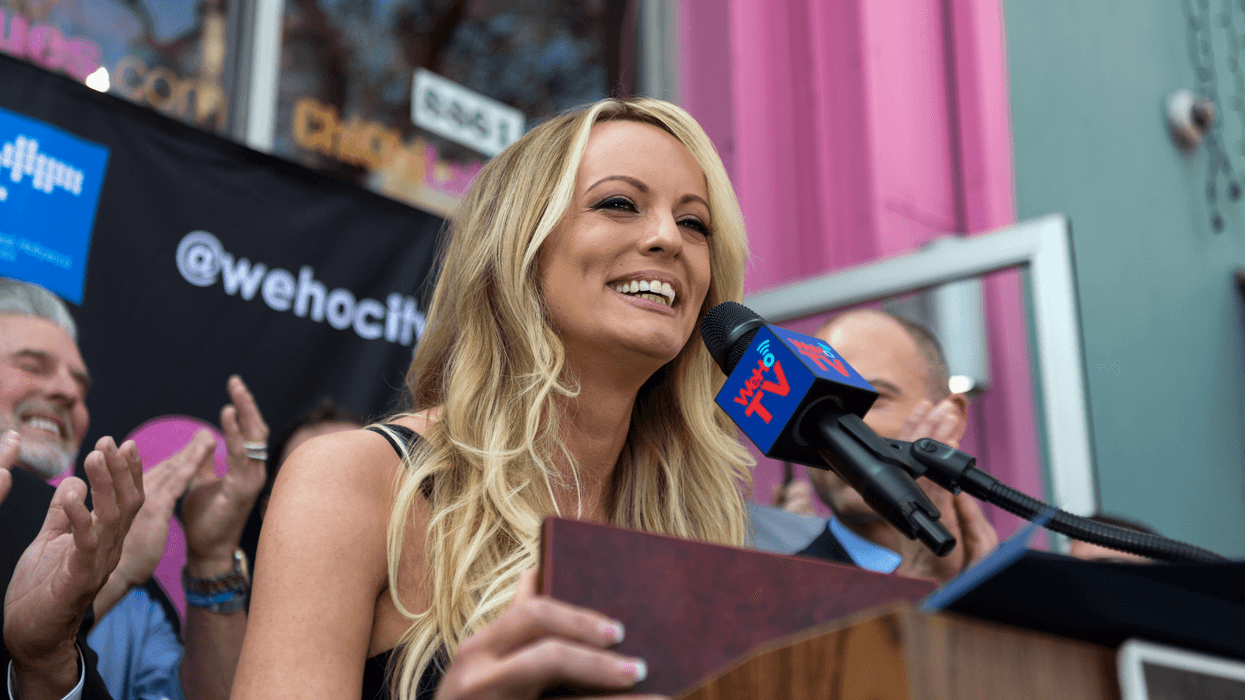
The porn star said she is unafraid of facing the former president in court: "I've seen him naked. There's no way he could be scarier with his clothes on."
Stormy Daniels reacted Friday to the criminal indictment of former U.S. President Donald Trump with a play on his infamous taped remarks seemingly confessing to sexually assaulting women.
"This pussy grabbed back," Daniels—the porn star paid $130,000 by Trump fixer Michael Cohen in return for silence about an alleged 2006 sexual encounter with the future president—told The Times of London in a paywalled article.
One month before the 2016 presidential election, a 2005 recording of Trump telling "Access Hollywood" host Billy Bush that "when you're a star," women let you "do anything" to them," including "grab 'em by the pussy" surfaced.
More than two dozen women and a 13-year-old girl have accused Trump—a 2024 Republican presidential candidate—of sexual misconduct, including assault.
"Trump is no longer untouchable," Daniels continued in the interview. "A person in power is not exempt from the law. And no matter what your job is, or what your bank account says, you're held accountable for the things you've said and done, and justice is served."
Daniels called Trump's indictment—which reportedly involves over 30 as-of-yet unspecified counts stemming from the $130,000 payment—a "vindication."
"But it's bittersweet," she added. "He's done so much worse that he should have been taken down [for] before. I am fully aware of the insanity of it being a porn star. But it's also poetic."
Trump is both the first president to be impeached twice and the first ex-president to face criminal charges.
Daniels said she learned about the indictment while she was out riding her horse, whose name is Redemption.
"There's something really ironic and hilarious that I got the news about the indictment while I was sitting on a horse named Redemption," she said, adding that she used some of the $130,000 hush money payment to buy a horse trailer.
Daniels said the indictment will "divide people" and questioned whether Trump would ultimately be held accountable, noting that he has "already gotten away with inciting a riot."
"Whatever the outcome is, it's going to cause violence, and there's going to be injuries and death," Daniels warned. "There's the potential for a lot of good to come from this. But either way, a lot of bad is going to come from it, too."
However, Daniels says she's undaunted by the prospect of facing Trump in court.
"I've seen him naked," she explained. "There's no way he could be scarier with his clothes on."
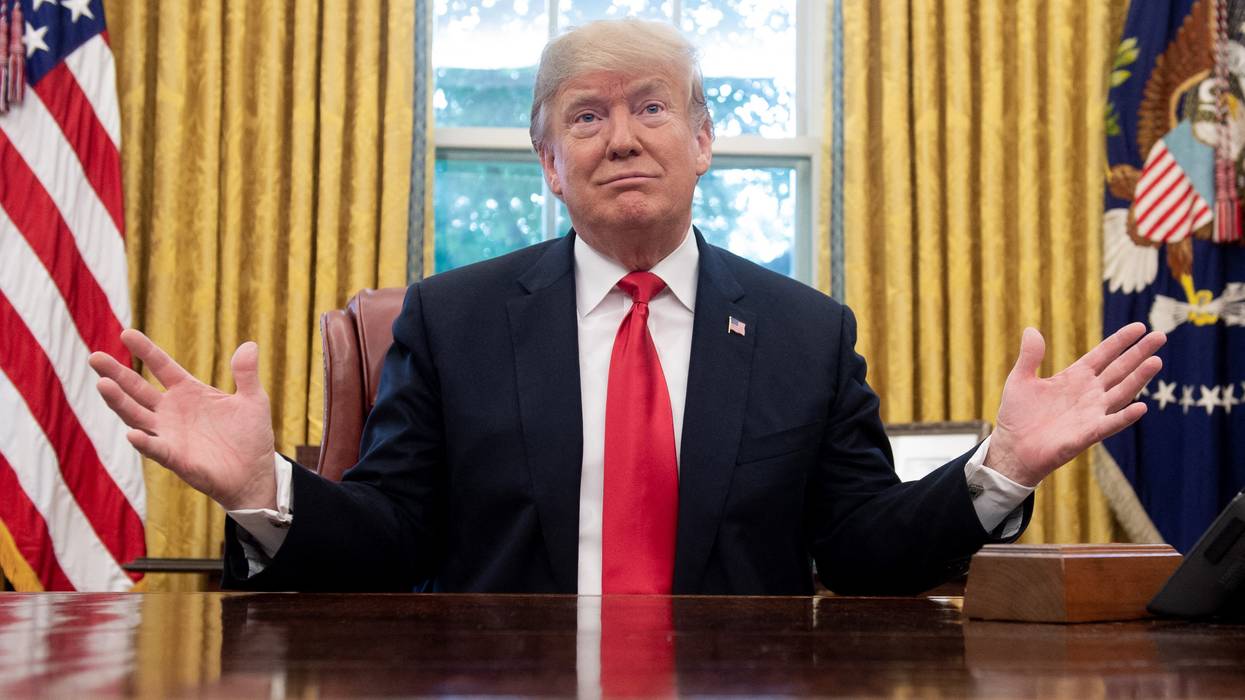
The historic charges against the 2024 candidate "are the first ever brought against him, but they will not be the last," said one Trump critic, noting that "we know of literally dozens of credible allegations of crimes."
A Manhattan grand jury voted to indict former U.S. President Donald Trump for his role in a hush money payment to porn star Stormy Daniels, The New York Times reported Thursday, citing five people with knowledge of the matter.
The grand jury's move makes Trump the first ex-president to face criminal charges—and comes as the 76-year-old is seeking the 2024 Republican presidential nomination. An indictment or even conviction in the case would not prevent him from running.
After other outlets also confirmed the historic vote, a spokesperson for District Attorney Alvin Bragg said that "this evening we contacted Mr. Trump's attorney to coordinate his surrender to the Manhattan DA's office for his arraignment on a [New York] Supreme Court indictment, which remains under seal. Guidance will be provided when the arraignment date is selected."
Citing two unnamed sources familiar with the case, CNN reported that Trump faces over 30 counts related to business fraud.
"Donald Trump has spent his entire political career dodging accountability for his wanton disregard for the law. It is finally catching up to him."
In a phone call with ABC News producer John Santucci, Trump said this is an "attack on our country" and "political persecution," adding that "they are trying to impact an election." The twice-impeached former president made similar remarks in a lengthy statement.
Asked by Santucci asked if he will turn himself in, Trump responded, "You take care, John," and hung up. Trump attorney Joe Tacopina told NBC News that his client is expected to surrender to the DA's office early next week.
Trump supporters expressed outrage over the development—as did Republican Florida Gov. Ron DeSantis, who is expected to also run for the 2024 GOP presidential nomination but said Thursday that his state "will not assist in an extradition request."
Despite warnings that this case "is the first to result in an indictment, though arguably the toughest to win," as Mark Joseph Stern wrote for Slate, critics of Trump still welcomed the news as a long-awaited step toward accountability.
"We know of literally dozens of credible allegations of crimes committed by Donald Trump as president or running for it, with no charges filed. Until now," tweeted Noah Bookbinder, president of the watchdog group Citizens for Responsibility and Ethics in Washington (CREW). "We can't yet evaluate these charges, but make no mistake, this is a huge deal for accountability."
"Donald Trump has spent his entire political career dodging accountability for his wanton disregard for the law. It is finally catching up to him," Bookbinder added. "The charges in New York are the first ever brought against him, but they will not be the last."
Congresswoman Ilhan Omar (D-Minn.) similarly said "this is just one of many criminal acts for which Donald Trump is being investigated. Make no mistake: the fact that one of the most powerful people in the world was investigated impartially and indicted is testament to the fact that we still live in a nation of laws. And no one is above the law."
Daniels has alleged that she had an extramarital sexual affair with Trump, which he denies. Daniels' attorney, Clark Brewster, said that "the indictment of Donald Trump is no cause for joy. The hard work and conscientiousness of the grand jurors must be respected. Now let truth and justice prevail. No one is above the law."
Trump's former fixer Michael Cohen, who made a $130,000 payment to Daniels, said Thursday that "accountability matters and I stand by my testimony and the evidence I have provided" to the district attorney.
Aaron Scherb, senior director of legislative affairs at Common Cause, pointed to Cohen's prison time on Thursday.
"No American is above the law, including former presidents, and Donald Trump will get his day in court," said Scherb. "Donald Trump and his co-conspirators clearly appeared to have broken the law and his attorney at the time has already served time in federal prison for charges related to the $130,000 hush money payout. The Manhattan district attorney's office is right to hold the former president to the same standard as every other American."
John Bonifaz, president of Free Speech for People, said that "Donald Trump must face the rule of law for all of the crimes he has committed, and this indictment by the Manhattan grand jury is an important first step."
Urging secretaries of state and chief election officials across the country to "do their job," Bonifaz said that "the insurrectionist disqualification clause of the 14th Amendment makes clear that Trump is disqualified from holding any future public office based on his role in inciting and mobilizing the January 6th insurrection."
"No prior indictment or conviction is required in order to enforce Section 3 of the Fourteenth Amendment against Trump," he added. "To protect our republic, we must uphold this critical constitutional provision at this moment in history."
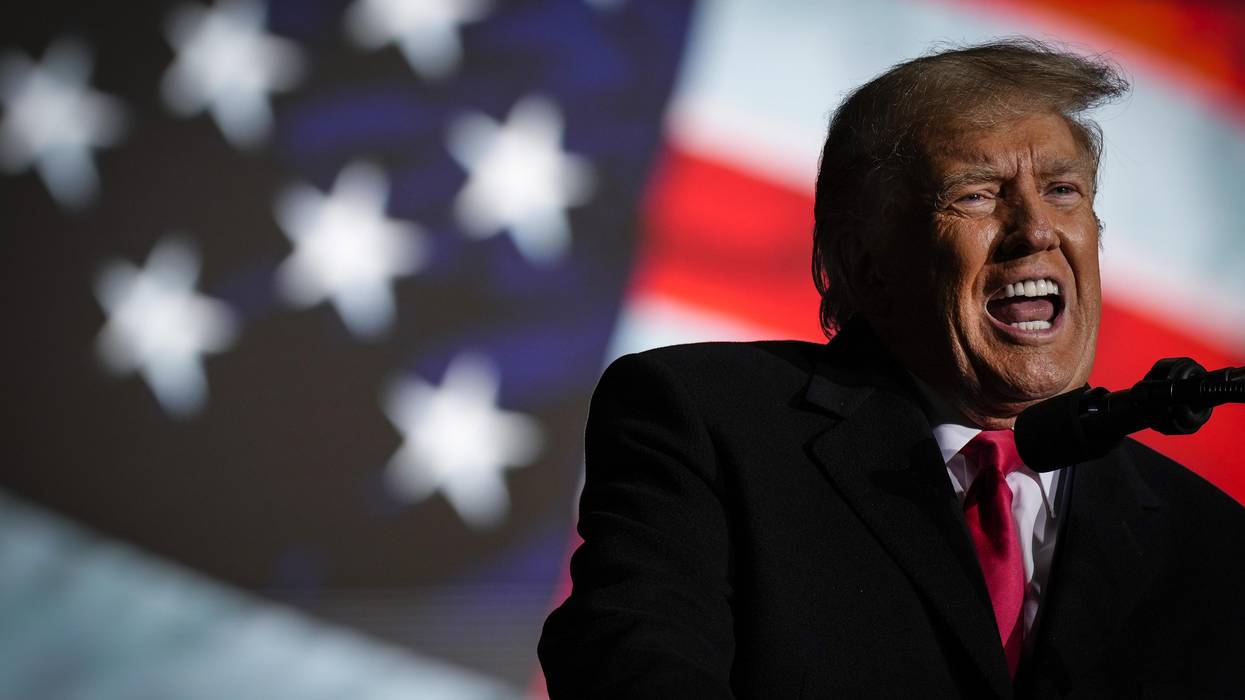
"Trump got his supporters to attack the government once," said one ethics watchdog. "He's making it clear that if he's arrested, he's going to try to do it again."
Government watchdogs on Friday said former President Donald Trump has potentially placed himself in even more legal jeopardy after he threatened violence if he's charged in a criminal case in New York.
Shortly after midnight on Friday, Trump wrote on his social media platform, Truth Social, that potentially "catastrophic" violence would result if he is indicted by a Manhattan grand jury.
"What kind of person can charge another person, in this case a former president of the United States, who got more votes than any sitting president in history, and leading candidate (by far!) for the Republican Party nomination, with a crime, when it is known by all that NO crime has been committed, and also known that potential death and destruction in such a false charge could be catastrophic for our country?" Trump said.
He also called Manhattan Attorney General Alvin Bragg "a degenerate psychopath that truly hates the USA."
Bragg's office has presented a grand jury with evidence related to alleged hush-money payments to adult film star Stormy Daniels during the 2016 presidential campaign, years after the former president allegedly had a sexual relationship with Daniels.
Trump's former lawyer, Michael Cohen, said in 2018 that he made a $130,000 payment to Daniels. He was reimbursed in 2017 by the Trump Organization.
The former president has made several public statements about the case against him in recent days, saying last weekend that he expected to be indicted on Tuesday and calling for a "protest" in New York, and posting an image in social media on Thursday showing Trump holding a baseball bat next to Bragg's head.
His call for "death and destruction" is his most explicit statement about potential violence, said critics including government watchdog Citizens for Responsibility and Ethics in Washington (CREW).
"He's not being subtle, he's threatening prosecutors with violence... Trump got his supporters to attack the government once," said CREW, referring to Trump's encouragement of his supporters to attend the rally at the U.S. Capitol on January 6, 2021 that turned into a violent insurrection aimed at overturning his election loss. "He's making it clear that if he's arrested, he's going to try to do it again."
The group added that Trump's threats of violence "are admissible in court."
Rep. Don Beyer (D-Va.) called on Republicans to clearly "condemn and oppose" Trump's calls for violence, to avoid another violent uprising in his defense.
"Donald Trump's incitement of violence is more direct, explicit, dangerous now than it was before January 6th," said Beyer. "Republican leaders cannot ignore this or wish it away."
According to The Washington Post, the grand jury is next scheduled to meet on Monday at the earliest.

Trump has recently "excused or dismissed the violence of January 6," one journalist warned. "He is an authoritarian willing to (again) use violence for his own ends."
Former U.S. President Donald Trump claimed Saturday on his social media platform that he "will be arrested" on Tuesday and implored his supporters to "protest" and "take our nation back," sparking fears of additional right-wing violence.
Trump's call to action was reminiscent of how, six weeks after losing the 2020 presidential election, he took to Twitter to urge his supporters to join a "big protest" in Washington, D.C. on January 6, 2021. "Be there, will be wild!" he wrote. Hundreds of far-right insurrectionists showed up and, after Trump told them to march from a rally near the White House to the Capitol, stormed the halls of Congress in a bid to prevent lawmakers from certifying President Joe Biden's win. Multiple people died as a result of the failed coup, which was fueled by Trump and his Republican allies' incessant lies about voter fraud.
Trump is expected to be indicted by a Manhattan grand jury in a criminal case involving hush money paid to women who said they had sexual encounters with the former president, but its timing is unclear.
Just before 7:30 am ET on Saturday, Trump baselessly declared on Truth Social: "Illegal leaks from a corrupt and highly political Manhattan district attorney's office... indicate that, with no crime being able to be proven... the far and away leading Republican candidate and former president of the United States of America will be arrested on Tuesday of next week. Protest, take our nation back!"
Alluding to Trump's prior use of social media to provoke the Capitol attack, Citizens for Responsibility and Ethics in Washington asked, "Will Facebook, Twitter, and YouTube allow him to use their platforms to incite riots?"
Mother Jones' D.C. bureau chief David Corn, meanwhile, noted that Trump has recently "excused or dismissed the violence of January 6."
"He is an authoritarian willing to (again) use violence for his own ends," Corn tweeted. "That is a threat to the nation."
As HuffPost's senior White House correspondent S.V. Dáte pointed out, "The coup-attempting former president... began inciting civil unrest if prosecutors came after him more than a year ago."
At a January 2022 rally in Texas, Trump promised to pardon January 6 rioters if he wins in 2024 and urged huge protests if prosecutors investigating his effort to subvert the 2020 election and other alleged crimes try to bring charges.
"If these radical, vicious, racist prosecutors do anything wrong or illegal, I hope we are going to have in this country the biggest protest we have ever had... in Washington, D.C., in New York, in Atlanta, and elsewhere because our country and our elections are corrupt," Trump told a crowd of his supporters 14 months ago.
According to The New York Times:
Early Saturday morning, there was little evidence yet that Mr. Trump's new demand for protests had been embraced by extremist groups.
But Ali Alexander, a prominent organizer of "Stop the Steal" rallies after the 2020 election, reposted a message on his Telegram channel on Saturday suggesting that he supported mass protest to protect Mr. Trump.
"Previously, I had said if Trump was arrested or under the threat of a perp walk, 100,000 patriots should shut down all routes to Mar-a-Lago," Mr. Alexander wrote. "Now I’m retired. I'll pray for him though!"
Lacking the platform provided by the White House or the machinery of a large political campaign, it is unclear how many people Mr. Trump is able to reach, let alone mobilize, using his Truth Social website.
After the FBI in early August searched Trump's Mar-a-Lago palace and removed boxes of documents as part of a federal probe into the ex-president's handling of classified materials, many anonymous and some well-known reactionaries called for "civil war" on Twitter, patriots.win, and elsewhere.
Three days later, Ricky Shiffer, a Trump loyalist with suspected ties to a far-right extremist group and an unspecified connection to the January 6 insurrection, was shot and killed by police after an hourslong standoff. Shiffer, wielding an AR-15 and a nail gun, allegedly attempted to break into the FBI's Cincinnati office and fled to a nearby field when he was unsuccessful.
Meanwhile, Trump continued to lie about the Mar-a-Lago search on Truth Social, sparking an "unprecedented" surge in threats against FBI personnel and facilities.
As Dáte noted on Saturday morning, many people downplayed warnings issued ahead of the January 6 assault.
"Many of Trump's core supporters want authoritarianism," the journalist tweeted. "They believe in neither democracy nor the rule of law."
As the Times reported:
Although prosecutors working for the [Manhattan] district attorney, Alvin L. Bragg, have signaled that an indictment of Mr. Trump could be imminent, there was no immediate indication as to why the former president appeared confident that he would be arrested Tuesday. People with knowledge of the matter have said that at least one more witness is expected to testify in front of the grand jury, which could slightly delay any indictment.
Three people close to Mr. Trump said that the former president's team had no specific knowledge about when an indictment might come or when an arrest could be anticipated. One of those people, who were not authorized to speak publicly, said that Mr. Trump's advisers' best guess was that it could happen around Tuesday, and that someone may have relayed that to him, but that they also had made clear to one another that they didn't know a specific time frame.
Trump is expected to be charged in connection with payments his former lawyer, Michael Cohen, made to silence adult film actress Stormy Daniels and Playboy model Karen McDougal—both of whom alleged affairs with Trump—in the run-up to the 2016 presidential election.
Cohen has testified that at Trump's direction, he orchestrated payments totaling $280,000 to Daniels and McDougal. According to Cohen, the Trump Organization reimbursed him $420,000 and classified it as a legal fee. Trump's former fixer pleaded guilty to federal campaign violations in 2018.
Trump has so far evaded charges but that could soon change, as prosecutors are expected to accuse Trump of greenlighting the false recording of expenses in his company's internal records.
Citing five unnamed officials familiar with the matter, NBC News reported Friday that local, state, and federal law enforcement and security agencies are preparing for the possibility of a Trump indictment as early as next week.
If indicted, Trump would become the first U.S. president to face criminal charges in or out of office. Trump, who has denied all wrongdoing, says that he will keep campaigning regardless of whether he is arrested.
The Manhattan D.A.'s hush money probe is just one of Trump's many legal woes. The twice-impeached president is also facing a state-level criminal investigation in Georgia over his efforts to overturn that state's 2020 election results, as well as federal probes into his coup attempt and his handling of classified government documents.
Nevertheless, Trump is still seen as the front-runner to win the GOP's 2024 nomination.
David Aronberg, the state attorney for Palm Beach County, Florida, said Saturday morning that if Trump is indicted in New York, "there will be protests here," warning: "You have to worry about potential violence."
He pointed out that questions remain as to whether Trump would surrender to New York authorities or face extradition. Republican Florida Gov. Ron DeSantis, another authoritarian demagogue who is widely considered Trump's leading rival for the GOP's 2024 nomination, "has to sign off [any] extradition orders," said Aronberg.
The Times noted that if "Trump is arraigned, he will almost certainly be released without spending any time behind bars because the indictment is likely to contain only nonviolent felony charges."
However, The Associated Press reported that it is not clear when the other investigations into Trump "will end or whether they might result in criminal charges."
"But they will continue regardless of what happens in New York," the outlet explained, "underscoring the ongoing gravity—and broad geographic scope—of the legal challenges confronting the former president."

One legal expert called the report "huge news" indicating that an indictment of the former president is "imminent."
Former U.S. President Donald Trump may soon face criminal charges in connection with the payment of hush money to the adult entertainer Stormy Daniels, The New York Times reported Thursday, citing four unnamed "people with knowledge of the matter."
According to the Times, prosecutors with the Manhattan district attorney's office extended an offer for Trump to testify next week before a grand jury considering the evidence in the prospective case against the twice-impeached ex-president, who is seeking the Republican nomination for 2024.
As Times reporters William K. Rashbaum, Ben Protess, and Jonah E. Bromwich noted:
Such offers almost always indicate an indictment is close; it would be unusual for the district attorney, Alvin L. Bragg, to notify a potential defendant without ultimately seeking charges against him.
In New York, potential defendants have the right to answer questions in the grand jury before they are indicted, but they rarely testify, and Mr. Trump is likely to decline the offer. His lawyers could also meet privately with the prosecutors in hopes of fending off criminal charges.
Any case would mark the first indictment of a former American president, and could upend the 2024 presidential race. It would also elevate Mr. Bragg to the national stage, though not without risk.
At issue is a $130,000 payment made to Daniels—an adult film star who claims she had an affair with Trump—by former fixer Michael Cohen during the last days of the 2016 U.S. presidential election. Trump subsequently reimbursed Cohen for the payment. Cohen has not yet testified before the grand jury, but is expected to do so on an undetermined date.
"Trump has faced an array of criminal investigations and special counsel inquiries over the years but has never been charged with a crime, underscoring the gravity of Mr. Bragg's inquiry," the Times trio wrote.
The journalists further asserted that "Bragg could become the first prosecutor to charge Mr. Trump, but he might not be the last," noting that the Fulton County District Attorney's Office in Georgia is investigating whether the former president interfered in the 2020 election.
"And at the federal level, a special counsel is scrutinizing Mr. Trump's effort to overturn the election results, as well as his handling of classified documents," the reporters added.
Mark Pomerantz—one of two prosecutors involved with the Manhattan district attorney's investigation of the ex-president who resigned in protest last year—wrote in his new book, People vs. Donald Trump: An Inside Account, that "we developed evidence convincing us that Donald Trump had committed serious crimes" involving his finances and business practices.
"As we put the facts together, many of us came to believe that we had enough evidence to convict him, and we could present a solid case in court that would lead to a guilty verdict," Pomerantz related.
He continued:
I believe that Donald Trump is guilty of numerous felony violations of the penal law in connection with the preparation and use of his annual statements of financial condition. His financial statements were false, and he has a long history of fabricating information relating to his personal finances and lying about his assets to banks, the national media, counterparties, and many others, including the American people.
Asked in a recent CBS "60 Minutes" interview what he would advise Bragg in regard to Trump, Pomerantz replied: "This was a righteous case. You should bring it. It's important. And if you made the wrong decision, make a better decision."
Bragg retorted that "after closely reviewing all the evidence from Mr. Pomerantz's investigation, I came to the same conclusion as several senior prosecutors involved in the case, and also those I brought on: More work was needed. Put another way, Mr. Pomerantz's plane wasn't ready for takeoff."
Separately, a New York jury last December found two subsidiaries of the Trump Organization, Trump's company, guilty on all counts of criminal tax fraud. The former president's organization was subsequently ordered to pay a $1.6 million penalty for what a judge called "systemic, egregious fraud."
Also last December, the former congressional committee that investigated the January 6, 2021 attack on the U.S. Capitol by supporters of the Trump's "Big Lie" unanimously voted to recommend federal criminal charges against the former president and some of his associates in connection with the insurrection. Given Trump's 2024 presidential run, U.S. Attorney General Merrick Garland has appointed a special counsel.

GOP federal regulators on Thursday blocked the continuation of a probe into whether former President Donald Trump violated campaign finance law when his personal lawyer Michael Cohen paid $130,000 in hush money to porn star Stormy Daniels just before the 2016 election--sparking calls for action by the U.S. Department of Justice.
Two Republicans on the Federal Election Commission, Trey Trainor and Sean Cooksey, concluded (pdf) that pursuing the case "was not the best use of agency resources." Although Democratic FEC Chair Shana Broussard and Commissioner Ellen Weintraub, disagreed, continuing the investigation required four supportive votes. A third GOP commissioner recused himself and an Independent commissioner was absent.
"Now it's up to the Department of Justice (DOJ) to hold Trump accountable and make clear that no one is above the law," said Paul S. Ryan, vice president for policy and litigation at the pro-democracy group Common Cause, in a statement. "The clock is ticking; a five-year statute of limitations for Trump's campaign finance crimes gives the DOJ only five more months to prosecute these crimes."
On January 22, 2018, Common Cause filed complaints with the DOJ and FEC alleging that the payment to Daniels, whose real name is Stephanie Clifford, was an unreported and illegal in-kind contribution to the Trump campaign. Following public statements from Cohen, the group amended its complaints that March.
"The FEC's nonpartisan career staff attorneys recommended that the commission find reason to believe that Trump, his campaign committee, and the Trump Organization committed the violations alleged in Common Cause's complaints," Ryan noted. He charged that the GOP commissioners' decision to not hold the ex-president accountable for "blatantly and intentionally" violating federal campaign finance law "is just the latest display of dysfunction at the FEC."
"The Senate must pass the For the People Act, which includes provisions to significantly restructure the agency so it can do its job for the American people and enforce the law, in addition to including many tried and tested solutions to hold power accountable and make democracy work for everyone," he said, referencing a bill of popular pro-democracy reforms the House passed in March.
While Trump welcomed the FEC's decision in what he described as a "phony case," Ryan was far from alone in denouncing it.
"To end corrupt partisan decisions by the FEC on enforcement of campaign laws, we need the reforms in the For the People Act," Sen. Jeff Merkley (D-Ore.), lead sponsor of the upper chamber's version of the bill, declared Friday.
"There is ample evidence in the record to support the finding that Trump and the committee knew of, and nonetheless accepted, the illegal contributions at issue here," Broussard and Weintraub said in a statement Thursday.
"To conclude that a payment, made 13 days before Election Day to hush up a suddenly newsworthy 10-year-old story, was not campaign-related, without so much as conducting an investigation, defies reality," the pair said. "But putting that aside, Cohen testified under oath that he made the payment for the principal purpose of influencing the election. This more than satisfies the commission's 'reason to believe' standard to authorize an investigation."
Cohen--who served time in prison after being convicted of campaign finance violations, lying to Congress, making false statements, and tax evasion--admitted to making hush-money payments during the 2016 campaign to Daniels and another woman who say they had affairs with Trump, which the former president denies. In 2019, Cohen submitted to Congress a copy of a check Trump wrote from his personal bank account that the former fixer claimed was a reimbursement for paying off Daniels.
"The hush-money payment was done at the direction of and for the benefit of Donald J. Trump," Cohen said in a statement to the New York Times after the commission dropped the case. "Like me, Trump should have been found guilty. How the FEC committee could rule any other way is confounding."
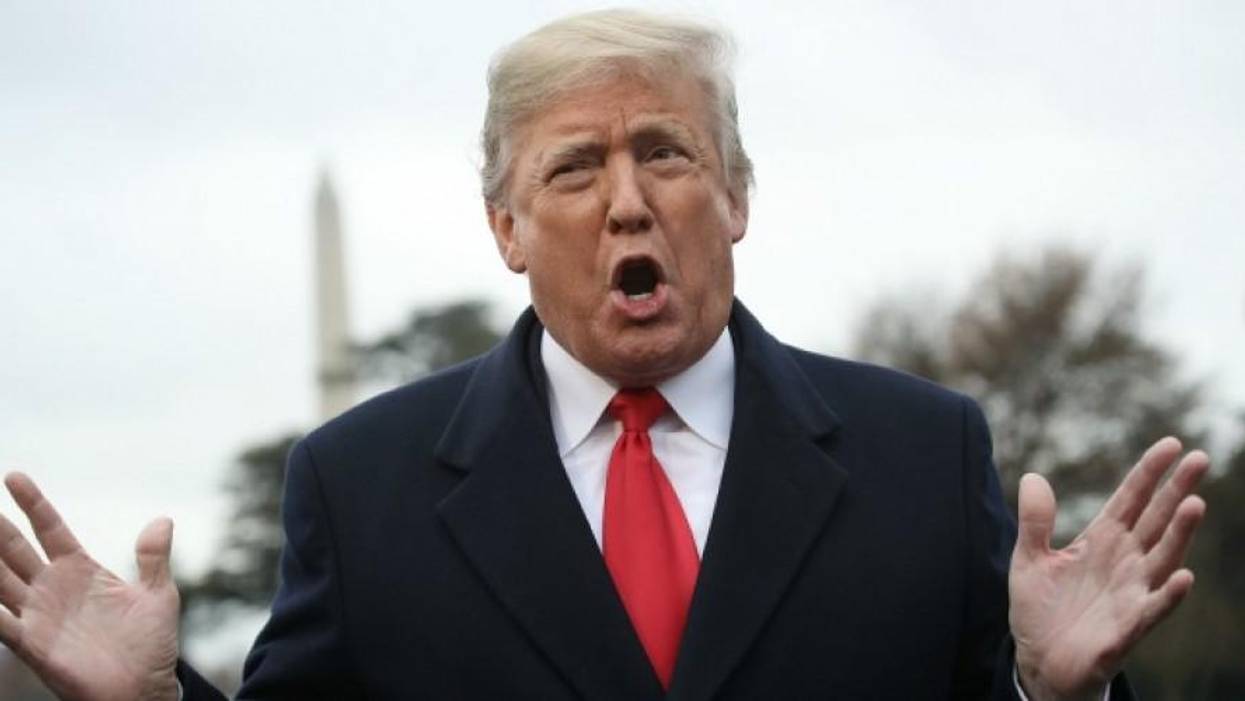
More than 400 former federal prosecutors asserted in a statement published on Medium Monday that President Donald Trump would face multiple felony charges for obstruction of justice if he did not hold his current office.
"We recognize that prosecuting obstruction of justice cases is critical because unchecked obstruction... puts our whole system of justice at risk."
--Ex-prosecutors
The statement comes in response to Special Council Robert Mueller's final report on his investigation into allegations of election meddling by Russian agents as well as potential collusion or obstruction efforts by members of the Trump campaign or administration, including the president.
Attorney General William Barr--who could be found in contempt of Congress later this week for his refusal to hand over the unredacted version of the Mueller report to House lawmakers--released a summary in late March that critics called a "whitewash," followed by a redacted version of the report in mid-April.
Based on the redacted version, the former prosecutors wrote Monday:
The Mueller report describes several acts that satisfy all of the elements for an obstruction charge: conduct that obstructed or attempted to obstruct the truth-finding process, as to which the evidence of corrupt intent and connection to pending proceedings is overwhelming. These include:
The statement highlights some examples of obstruction detailed in the report, including Trump: directing then-White House Counsel Don McGahn to fire Mueller; pressuring then-Attorney General Jeff Sessions to reverse his legally-mandated decision to recuse himself from the probe; and trying to influence his former fixer Michael Cohen and former campaign chairman Paul Manafort to refuse to cooperate with investigators.
The only reason Trump has not been charged with multiple felonies, according to the ex-prosecutors' statement, is because of the Office of Legal Counsel (OLC) policy against indicting a sitting president.
"As former federal prosecutors, we recognize that prosecuting obstruction of justice cases is critical because unchecked obstruction--which allows intentional interference with criminal investigations to go unpunished--puts our whole system of justice at risk," they wrote. "We believe strongly that, but for the OLC memo, the overwhelming weight of professional judgment would come down in favor of prosecution for the conduct outlined in the Mueller report."
The special council's redacted report does not explicitly call for the president to be charged for obstructing justice, but it also does not exonerate him--contrary to Trump's repeated claims since Mueller's investigation concluded.
"[I]f we had confidence after a thorough investigation of the facts that the president clearly did not commit obstruction of justice, we would so state," the Mueller report says. "Based on the facts and the applicable legal standards, we are unable to reach that judgment. Accordingly, while this report does not conclude that the president committed a crime, it also does not exonerate him."
The ex-officials who signed on to the statement Monday served under both Republican and Democratic administrations as line attorneys, supervisors, special prosecutors, U.S. attorneys, and senior officials at the Justice Department.
Justin Vail of the nonprofit Protect Democracy told the Washington Post that his organization started collecting signatures in support of the statement after being contacted by some former prosecutors last week. The group continued to collect signatures on Monday.
"We strongly believe that Americans deserve to hear from the men and women who spent their careers weighing evidence and making decisions about whether it was sufficient to justify prosecution, so we agreed to send out a call for signatories," Vail said. "The response was overwhelming. This effort reflects the voices of former prosecutors who have served at DOJ and signed the statement."
Read the full statement below:
We are former federal prosecutors. We served under both Republican and Democratic administrations at different levels of the federal system: as line attorneys, supervisors, special prosecutors, United States Attorneys, and senior officials at the Department of Justice. The offices in which we served were small, medium, and large; urban, suburban, and rural; and located in all parts of our country.
Each of us believes that the conduct of President Trump described in Special Counsel Robert Mueller's report would, in the case of any other person not covered by the Office of Legal Counsel policy against indicting a sitting President, result in multiple felony charges for obstruction of justice.
The Mueller report describes several acts that satisfy all of the elements for an obstruction charge: conduct that obstructed or attempted to obstruct the truth-finding process, as to which the evidence of corrupt intent and connection to pending proceedings is overwhelming. These include:
Attempts to fire Mueller and then create false evidence
Despite being advised by then-White House Counsel Don McGahn that he could face legal jeopardy for doing so, Trump directed McGahn on multiple occasions to fire Mueller or to gin up false conflicts of interest as a pretext for getting rid of the Special Counsel. When these acts began to come into public view, Trump made "repeated efforts to have McGahn deny the story"--going so far as to tell McGahn to write a letter "for our files" falsely denying that Trump had directed Mueller's termination.
Firing Mueller would have seriously impeded the investigation of the President and his associates--obstruction in its most literal sense. Directing the creation of false government records in order to prevent or discredit truthful testimony is similarly unlawful. The Special Counsel's report states: "Substantial evidence indicates that in repeatedly urging McGahn to dispute that he was ordered to have the Special Counsel terminated, the President acted for the purpose of influencing McGahn's account in order to deflect or prevent scrutiny of the President's conduct toward the investigation."
Attempts to limit the Mueller investigation
The report describes multiple efforts by the president to curtail the scope of the Special Counsel's investigation.
First, the President repeatedly pressured then-Attorney General Jeff Sessions to reverse his legally-mandated decision to recuse himself from the investigation. The President's stated reason was that he wanted an attorney general who would "protect" him, including from the Special Counsel investigation. He also directed then-White House Chief of Staff Reince Priebus to fire Sessions and Priebus refused.
Second, after McGahn told the President that he could not contact Sessions himself to discuss the investigation, Trump went outside the White House, instructing his former campaign manager, Corey Lewandowski, to carry a demand to Sessions to direct Mueller to confine his investigation to future elections. Lewandowski tried and failed to contact Sessions in private. After a second meeting with Trump, Lewandowski passed Trump's message to senior White House official Rick Dearborn, who Lewandowski thought would be a better messenger because of his prior relationship with Sessions. Dearborn did not pass along Trump's message.
As the report explains, "[s]ubstantial evidence indicates that the President's effort to have Sessions limit the scope of the Special Counsel's investigation to future election interference was intended to prevent further investigative scrutiny of the President's and his campaign's conduct"--in other words, the President employed a private citizen to try to get the Attorney General to limit the scope of an ongoing investigation into the President and his associates.
All of this conduct--trying to control and impede the investigation against the President by leveraging his authority over others--is similar to conduct we have seen charged against other public officials and people in powerful positions.
Witness tampering and intimidation
The Special Counsel's report establishes that the President tried to influence the decisions of both Michael Cohen and Paul Manafort with regard to cooperating with investigators. Some of this tampering and intimidation, including the dangling of pardons, was done in plain sight via tweets and public statements; other such behavior was done via private messages through private attorneys, such as Trump counsel Rudy Giuliani's message to Cohen's lawyer that Cohen should "[s]leep well tonight[], you have friends in high places."
Of course, these aren't the only acts of potential obstruction detailed by the Special Counsel. It would be well within the purview of normal prosecutorial judgment also to charge other acts detailed in the report.
We emphasize that these are not matters of close professional judgment. Of course, there are potential defenses or arguments that could be raised in response to an indictment of the nature we describe here. In our system, every accused person is presumed innocent and it is always the government's burden to prove its case beyond a reasonable doubt. But, to look at these facts and say that a prosecutor could not probably sustain a conviction for obstruction of justice--the standard set out in Principles of Federal Prosecution--runs counter to logic and our experience.
As former federal prosecutors, we recognize that prosecuting obstruction of justice cases is critical because unchecked obstruction--which allows intentional interference with criminal investigations to go unpunished--puts our whole system of justice at risk. We believe strongly that, but for the OLC memo, the overwhelming weight of professional judgment would come down in favor of prosecution for the conduct outlined in the Mueller Report.
If you are a former federal prosecutor and would like to add your name below, click here. Protect Democracy will update this list daily with new signatories.

Startled critics on Friday denounced President Donald Trump's blatant encouragement of attacks on his opponents by "tough people"--specifically soldiers, police, and biker gang members--who support him.
The comments made during an interview with the right-wing outlet Breitbartappeared to stir enough controversy that by Friday morning the president had deleted a link to it that he had posted to Twitter the night before.
Speaking to Amanda House, Breitbart's deputy political editor, Trump said he was planning to issue an executive order next week regarding free speech on college campuses, an issue conservatives have latched onto in recent years as students have protested at events featuring right-wing commentators like Milo Yiannopoulos and Richard Spencer.
"Musing about this kind of thing is a great way to plant a seed in certain people's minds, and the fact that Trump keeps fertilizing that seed shouldn't escape notice." --Aaron Blake, Washington Post
The president accused left-wing activists who have demonstrated against the white supremacist views espoused by Yiannopoulos and Spencer of playing a "tougher game" than conservatives and called them "vicious" before appearing to warn that his supporters were prepared to fight back against the left.
"I can tell you I have the support of the police, the support of the military, the support of the Bikers for Trump--I have the tough people, but they don't play it tough--until they go to a certain point, and then it would be very bad, very bad," Trump said.
The remarks were widely interpreted as Trump's latest call for violence against those he disagrees with or people whose actions he objects to, with Vox journalist Aaron Rupar noting that the comments carried echoes of former Trump lawyer Michael Cohen's ominous warning that the president will never allow a "peaceful transition" if he loses the 2020 election.
"I think it sounds very much to me like he's encouraging them to engage in something that's probably illegal such as assaulting people," Sen. Mazie Hirono (D-Hawaii) told MSNBC. "I think it's appalling."
During the 2016 campaign and since taking office, Trump has frequently made public calls for violence. He suggested that so-called "Second Amendment people" could stop Hillary Clinton from appointing liberal judges if she won the presidency and told supporters at a rally in Iowa that he would "pay for the legal fees" if they assaulted anti-Trump attendees.
In July 2017, Trump drew shocked reactions at a law enforcement event on Long Island, New York, where he encouraged police officers to treat suspected members of the gang M-13 violently.
"I think it sounds very much to me like he's encouraging them to engage in something that's probably illegal such as assaulting people. I think it's appalling." --Sen. Mazie Hirono (D-Hawaii)
Washington Post journalist David Nakamura noted that Trump's comments to Breitbart were the second time he has invoked the image of police officers, military members, and the national group Bikers for Trump going head-to-head with left-wing anti-Trump movements.
"Law enforcement, military, construction workers, Bikers for Trump--how about Bikers for Trump?" he said last September in Missouri. "But these are tough people. These are great people. But they're peaceful people, and Antifa and all--they'd better hope they stay that way. I hope they stay that way. I hope they stay that way."
"It's clear from these comments, and the repetition of this formula, that he's suggesting his supporters from the military, law enforcement, and even bikers could be tempted to rise up if things don't go Trump's way," wrote Aaron Blake at the Post.
"The idea that anything like the scenes Trump is describing would ever happen is difficult to believe," Blake added. "But that's not really the point. Musing about this kind of thing is a great way to plant a seed in certain people's minds, and the fact that Trump keeps fertilizing that seed shouldn't escape notice."