

SUBSCRIBE TO OUR FREE NEWSLETTER
Daily news & progressive opinion—funded by the people, not the corporations—delivered straight to your inbox.
5
#000000
#FFFFFF
To donate by check, phone, or other method, see our More Ways to Give page.
Daily news & progressive opinion—funded by the people, not the corporations—delivered straight to your inbox.

We shouldn’t be debating this right now. But since the president chose to act with such striking disregard for the law, here we are.
The US Supreme Court today will hear a major constitutional case about birthright citizenship. We shouldn’t be debating this right now. But since the president chose to act with such striking disregard for the law, here we are.
Birthright citizenship is in the Constitution. The first sentence of the 14th Amendment reads, “All persons born or naturalized in the United States, and subject to the jurisdiction thereof, are citizens of the United States and of the State wherein they reside.”
This has been the law for more than 150 years. The amendment overturned the notorious Dred Scott decision, which said that even free Black Americans could not be U.S. citizens. The Supreme Court in 1898 confirmed the 14th Amendment’s plain meaning. In United States v. Wong Kim Ark, it ruled that children born here are citizens, even if their parents are not. That principle gave rise to generations of new Americans.
Donald Trump tried to Sharpie this out of the Constitution. A few hours after he took office, he signed an executive order purporting to deny citizenship to the children born here to non-U.S. citizens. Courts immediately ruled against the White House. Last summer, the Supreme Court stopped individual judges from issuing such nationwide orders, but it left open the possibility of class action lawsuits. Hence Trump v. Barbara, brought by the American Civil Liberties Union.
This is open and shut. Con law for dummies.
Grasping for arguments, Trump’s lawyers landed on this: The 14th Amendment’s “one pervading purpose” was to protect the children of former slaves, not anyone else. That reading puts aside the clear language of the amendment, along with a century and a half of history and tradition. It’s historical fan fiction, designed to appeal to an “originalist” Court.
Historians Martha Jones and Kate Masur, a member of the Brennan Center’s Historians Council, corrected the record in a key amicus brief. “When the Framers wrote birthright citizenship into the Constitution, they were not addressing only the status of former slaves,” they explained. “They were also remedying the eight decades of injustice imposed upon free people born in the United States, among them free Black Americans, including those who had never been enslaved.” What’s more, the historians note, “The Framers well understood that the Amendment’s broad terms would recognize and protect the citizenship status of the children of immigrants.”
One echo throughout history: We’ve seen the arguments against birthright citizenship before, and they were born of nativism and made by racists. In our Countering Originalism handbook, we call this a “negative precedent.” “Negative,” as in “really ugly.”
Our constitutional rights in 2026 should not just have to rely on the goings-on during the 1860s, when the amendment was drafted. For 150 years, hundreds of thousands of children born in the United States to noncitizen parents have proudly grown up as American citizens.
It’s an open-and-shut case, as I said. So why is this case happening at all?
Because Trump is forcing the issue. And the case offers a depressing window into how the Supreme Court helps drive, ratify, and legitimize extremist arguments. It has fired up an originalist-industrial complex to concoct historical evidence to buttress unjustifiable outcomes.
Trump didn’t dare do this during his first term. But after his “shock and awe” barrage of executive orders at the start of his second term, conservative scholars suddenly had to find it plausible, intriguing, worth a second look. Two top professors, Randy Barnett and Ilan Wurman, suddenly discovered a “puzzle” to solve. “Trump might have a case on birthright citizenship,” they found a way to write.
“A lot of people, when Trump first started talking about it, thought this is crazy,” conservative scholar John Yoo told The New York Times. Yoo thought Barnett and Wurman’s argument too, ahem, tortured, and instead made “the originalist case for birthright citizenship.” The vast majority of scholars agree.
I think the Court is highly likely to reaffirm birthright citizenship. But who knows? I thought it likely the Court would allow criminal prosecutions of former presidents, which is similarly anticipated in the Constitution. Here, the case is even clearer, since the law has affected the lives of so many people before now.
The willingness to chuck aside precedent as well as logic is a hallmark of the Roberts Court. This term, we brace for a demolition of the Voting Rights Act, a further grant of vast power to presidents (this time allowing them to command expert federal agencies that were made independent by Congress), and another ruling to undermine campaign finance rules. The Court stood up to block the unilateral imposition of tariffs and has shown some backbone on other emergency powers cases. But overall, bit by bit, it continues its project to remake the country.
As for birthright citizenship, it is one of the crown jewels of the U.S. Constitution. For a century and a half, the nation’s promise was that anyone born here, however humble their circumstances, is an American. Let’s hope the Court upholds that cherished principle. And let’s shake our heads at the fact that it has to.
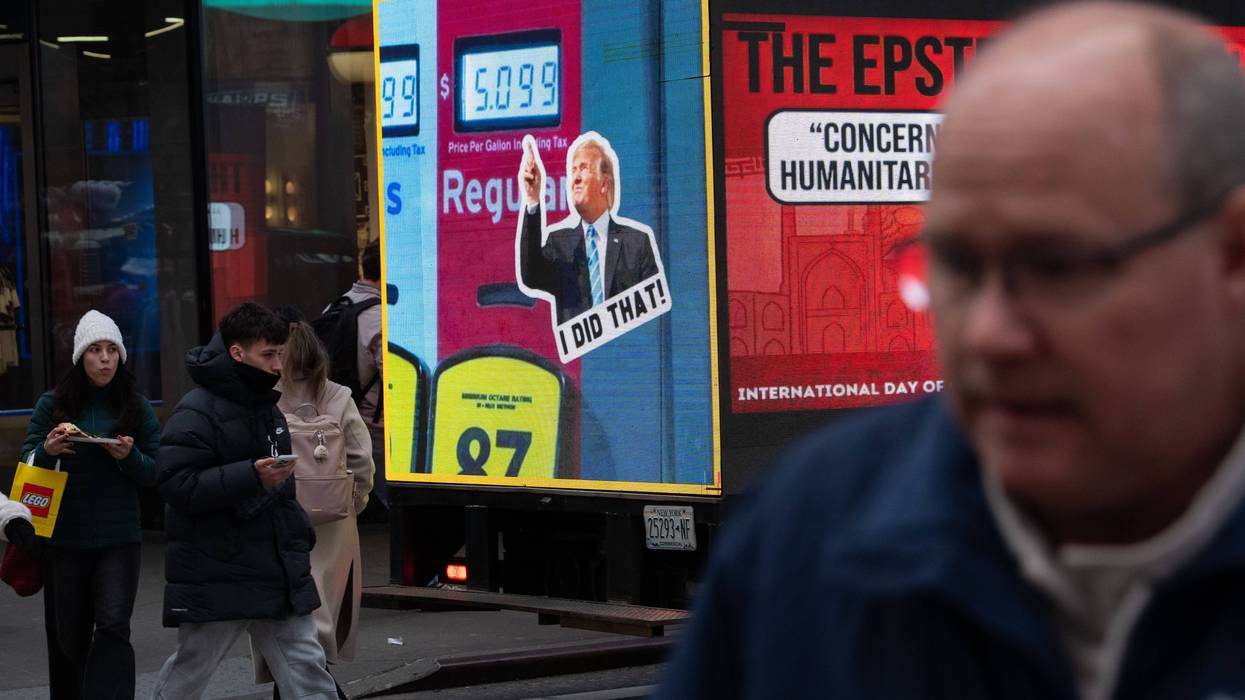
His reckless attack on Iran will do a hundred times more to promote clean energy worldwide than all the incentives in Biden’s Inflation Reduction Act.
President Donald Trump has an incredibly childish obsession with outdoing his predecessors, who he constantly derides as stupid and corrupt. There is, of course, no evidence for Trump’s charges, like the supposedly terrible economy he inherited from President Joe Biden, but Donald Trump is not a man who feels constrained by reality.
While Trump does everything he can to reverse policies to promote clean energy, overturn trade agreements (including his own), and undermine security pacts, there is one area where Trump looks to substantially outpace the work of his predecessors.
This is in promoting the transition to a non-fossil fuel-based economy. As much as Trump loves oil and coal and seems to relish the prospect of destroying the planet for our kids, his reckless attack on Iran will do a hundred times more to promote clean energy worldwide than all the incentives in Biden’s Inflation Reduction Act.
There is both the direct effect of higher oil and gas prices resulting from the closing of the Straits of Hormuz, but also a more important indirect effect. Trump has shown the world that it is dangerous to rely on imported oil and natural gas as energy sources.
It certainly was not the best way to promote a green transition, but no one can deny that Trump’s war is effective.
This applies not only to imports from the Middle East, which apparently any jerk can shut down on a whim. The risks probably apply even more strongly to reliance on the United States as an exporter, Trump’s preferred outcome.
In his tariff games, Trump showed he can be incredibly arbitrary and capricious. He claimed that countries were “ripping us off” because they sell us stuff. There is nothing resembling logic to Trump’s claim. Do Walmart or Costco rip people off when they buy things from them?
But it gets worse. He imposed 50% tariffs on Brazil’s exports because it prosecuted Trump’s friend for trying to overthrow the government. India also faces 50% tariffs on its exports to the US because its prime minister refused to nominate Trump for a Nobel Peace Prize. And Switzerland got hit with a 39% tariff because Trump didn’t like the way its president talked.
The rest of the world would likely much rather take its risks with countries like Iran and Libya than rely on getting oil and gas from Donald Trump’s America. At least there is usually some logic to when these countries threaten to reduce output or raise prices.
The rise in oil and gas prices following the closure of the Straits is making clean energy far more competitive than was already the case. Even with oil at $60 a barrel, and natural gas correspondingly cheap, the vast majority of electricity coming on line across the globe was renewable. This shift will only accelerate, with oil prices up 70% and natural gas having close to doubled. While prices may fall back some if the Straits are reopened soon, they are unlikely to return to their pre-war levels for several years in almost any circumstances.
And the price of wind and solar energy continues to fall, driven primarily by low-cost Chinese manufacturers. Chinese electric vehicles will also become hugely more popular as a result of Donald Trump’s war. These cars are already cheaper to purchase than comparable traditional cars, and Trump has just added roughly $500 a year to the operating cost of a gas-burning vehicle. Already 60% of the cars sold in China are electric, with EVs holding a comparable share in Europe. The same is the case in many developing countries. The EV share will likely quickly move toward 100% thanks to Trump’s war.
It certainly was not the best way to promote a green transition, but no one can deny that Trump’s war is effective. Who knows how much damage the war will ultimately cause in terms of property destruction, the environment, and lives lost. The latter will include both direct effects from the war and likely much larger indirect effects from higher energy and food prices. But one positive outcome is that we will be moving far more rapidly toward a green economy.
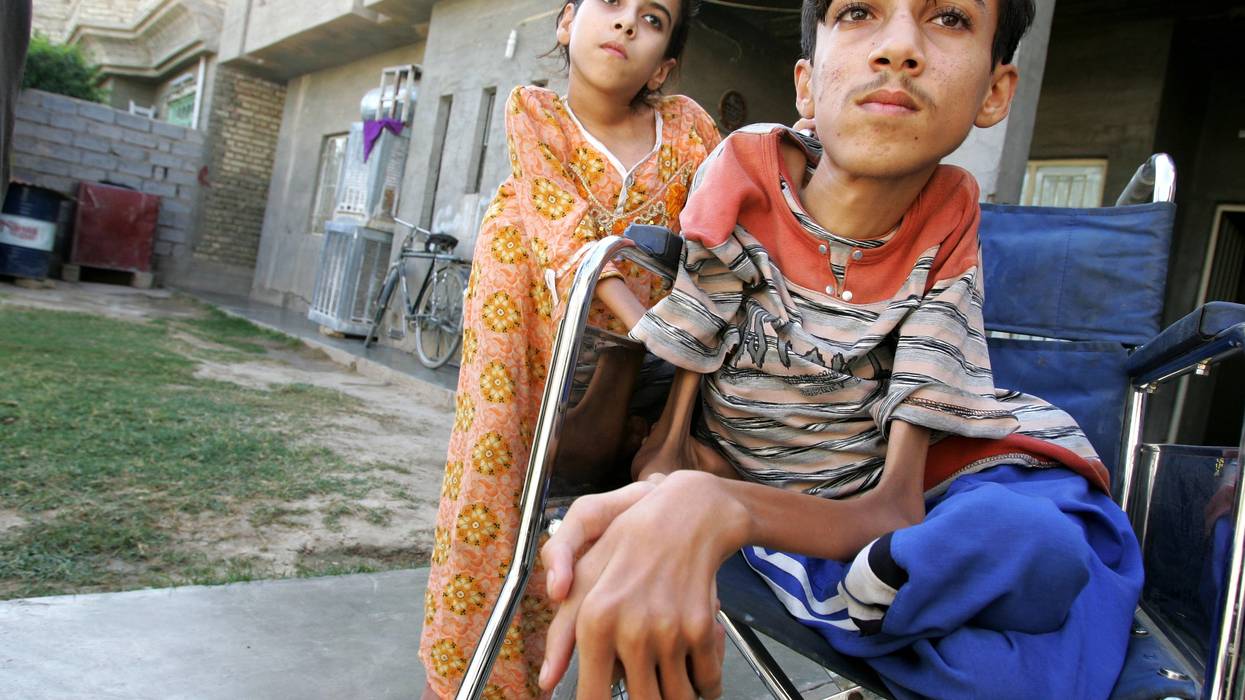
As the US launches another illegal war in the Middle East, an author recalls what she learned from Iraqis who had lived through George W. Bush's invasion of their country.
I’m writing this piece well into President Donald Trump’s new war with Iran, which, with the help of Israel, has already killed more than 2,000 civilians, including 175 schoolgirls and staff; displaced some 3.2 million people; and is costing the American taxpayer at least $1 billion a day. All of which is tragically reminiscent of the last time a Republican president led the US into a war on a river of lies and greed. I’m thinking, of course, about George W. Bush and the invasion of Iraq in 2003.
Weapons that don’t exist. Threats to this country that aren’t real. Liberation for a people that the US will never win over. Freedom for women about whom nobody in power cares a jot. A war that will bring total victory in only a few days or weeks. All this we heard in 2003, and all this we are hearing again now.
I spent many years writing about the Iraq War, even though it took me some time to figure out how to begin. I was sickened by the Muslim baiting that had been going on since the 2001 attacks on New York City and the Pentagon in Washington, DC, and disgusted with the Hollywood movies and legacy press articles glorifying our vengeful wars in Afghanistan and Iraq, while deifying our soldiers. I wanted to tell a different story. I just didn’t know how.
Then, in 2004, I came across the blog Baghdad Burning by a 24-year-old Iraqi woman who called herself Riverbend. She was the first Iraqi I had ever read on the war, and she taught me that those in an occupied country tell a very different story than do the occupiers.
The US might have toppled Saddam Hussein, but in the first five years of our war, we killed at least half as many Iraqis as he had in his 35 years of brutal dictatorship.
Back then, if Iraqi men showed up in American books, movies, or journalism at all, it was usually as an enemy or a clown. Meanwhile, Iraqi women were depicted as little more than incomprehensible black-clad figures hovering in the background or wailing over the dead. But Riverbend was none of those. She was a computer technician in a sophisticated city who sounded like an American college student. I was hooked.
Over the next few months, I read her blog religiously. Riverbend’s language and thoughts sounded no different than those of my own daughter, except that she was describing what it was like to live, hour by hour, through the overwhelming, heart-freezing violence of a US bombing campaign and the occupation of her country.
Today, we can get the same sense of immediacy by reading or listening to brave civilians and journalists in Gaza, but during our post-9/11 wars on Afghanistan and Iraq, hearing any voice from the “other side” was rare. So, Riverbend’s blog was not only eye-opening, but it made readers like me feel as though we were experiencing the war right beside her. She wove the mundane moments of her days—jokes, lighthearted observations, conversations with her family—in with her terror at the falling bombs and her feelings about the United States as she watched us tear apart her country. Her blog was eventually collected into a book and published by The Feminist Press in 2005.
Soon, I began reading other Iraqi blogs, too, along with every translation I could find of Iraqi poetry and fiction. I also followed videos by Iraqis that were appearing online, telling stories remarkably different from those I was hearing here in the United States. Some of those Iraqi civilians did indeed want democracy, although they didn’t believe it could be forced on anyone by a foreign power or bombs. Some had been satisfied living under Saddam Hussein’s autocratic rule. Many were too focused on their daily struggles to find food and avoid bombs to think about politics at all. But all of them, whatever their thoughts and opinions, were suffering horribly, not only from our bombs, but from wounds, illnesses, malnutrition, starvation, and threats of all kinds, as well as from bullying, kidnappings, rape, and murder at the hands of the gangs and militias our war had unleashed.
One of the most eye-opening of those Iraqi videos was made by an anonymous woman early in the war, who put on a burqa, hid her handheld camera under it, and drove around the countryside interviewing women about their struggles and poverty. As she explained, what she was doing was so dangerous that she had no doubt her video would only remain up on YouTube for a day or so. Sure enough, it quickly disappeared. I only hope that she didn’t disappear with it.
President Bush’s war in Iraq quickly became a bloody mess. As I (and many others) documented, the US might have toppled Saddam Hussein, but in the first five years of our war, we killed at least half as many Iraqis as he had in his 35 years of brutal dictatorship. By 2011, our war had slaughtered some 1 million Iraqis, orphaned at least a million children, and displaced 4 million people within or outside Iraq, according to body counts by The Lancet medical journal, Physicians for Social Responsibility, and others. In short, 1 of every 5 Iraqis was forced from his or her home: a chilling foreshadowing of what we have since seen in Gaza, and that we are now beginning to see in Iran and Lebanon.
The US not only killed and displaced all those people; it bankrupted Iraq with sanctions, poisoned it with depleted uranium, destroyed its infrastructure and middle class, and dismantled its achievements. Before we invaded, Iraq had the best medical system in the Middle East, and women there had more rights than in any Muslim country other than Turkey, making up 50% of students and 40% of the workforce. By the time we left, all of that, including women’s rights, had been undone.
Today, women’s rights in Iraq have eroded even further and women are now relegated to second-class citizenship. Just this March 2, the most prominent women’s rights advocate in Iraq, Yanar Mohammed, was shot to death by men driving by on motorcycles. Nobody has claimed responsibility for her assassination, nor has anybody yet been arrested—and that was just one of many political assassinations there since our war.
While the US war machine was busy destroying Iraq and we were hearing all too little from Iraqis themselves, Americans at home were being bombarded with ever more movies (think Hurt Locker and American Sniper, for instance), books, TV series, and news stories about the heroism of US soldiers at war, as well as their traumas and struggles on returning home.
Seeking relief from such a myopic view of war, I set out to meet Iraqis who had lived through the war themselves. I wanted to hear the other side, the side we were not telling. So, when I found out that several hundred Iraqis had been resettled in Albany, New York, on the special visas (called SIVs) reserved for those who had worked for two years or more as interpreters for the US military or government officials, I decided to seek them out. That is how I came to meet several women I will never forget, among them a young poet named Nour, and a mother of three named Hala. (I’m withholding their last names for their safety.)
Nour told me she had been imprisoned and tortured in the city of Abu Ghraib at the age of 16 for writing a poem that Saddam Hussein didn’t like. After her release, she taught herself English and later became a translator for a freelance American journalist. In 2005, she and the journalist were kidnapped in the city of Basra and shot. The journalist was killed, but thanks to several surgeries, Nour survived and came to the US with the help of his widow.
Nour and I met in New York City and had lunch a few times. Small and slight, with an angular face and haunted eyes, she was reserved and visibly fragile, but her bravery was unmistakable. She refused to be pitied and, in spite of all she had been through and the dangers she would face there, wanted more than anything in the world to go home.
Today, in Donald Trump’s America, neither Nour, Hala, nor any of the other Iraqi women and men I met would even be admitted to this country, no matter how much they sacrificed to help Americans and no matter how much they might be targeted at home for having done so.
Hala, the other unforgettable Iraqi woman I met, had fled Baghdad with her husband and children about a year before we met in 2010. The day I arrived at their apartment in a suburb of Albany, New York, he was at his job far away in New Jersey, work he had found only after 10 months of searching. But Hala, who was working as a substitute schoolteacher, was at home with her daughter, Hiba, who was 20, and her son, Mustafa, who had just turned 9. As I speak no Arabic, I was grateful that they were all fluent in English.
“Come in, come in,” Hala said when she opened the door, ushering me in with a smile and showing me to a chair in her immaculate, if somewhat bare, white living room. A round, energetic woman with a kind, if worn, face, she settled onto her sofa and sent her daughter to make the chai (tea). “Mustapha,” she said to her serious-eyed son, “this lady is a writer. She is from England.” (I am British and sound it, although I have lived in the US for many decades.)
His eyes grew big. “You wrote Harry Potter!” he declared. It was not a question. I tried to disabuse him of the idea but he refused to believe me. “I’m a writer, too,” he said. “Want to see?” He ran out to fetch his book—a sheaf of stapled papers he had made in school. “It’s about bad GIs and good GIs.” On each page, he had drawn soldiers and a sky raining with bombs.
After we had settled down comfortably with our tea, Hala told me that she and her husband had both been engineers, a highly respected profession in Iraq, and had hated Saddam Hussein, but had lived a pleasant enough life. Her daughter Hiba had been studying to be a dentist, and their two young sons were in school. “Baghdad was beautiful to us then,” Hala told me wistfully. “Looking back now, it was like that movie Avatar, that world of paradise before the invasion.”
But then the US did invade, their jobs disappeared, and money ran low, so her husband became an interpreter for US officials. Soon afterward, Hala’s brother was killed in retribution. Then, their middle child was kidnapped and murdered (by whom they never knew). He was only 15.
“Every day for a year, Hiba dreamed that she went home and found her brother there,” Hala told me quietly, while Hiba listened without saying a word. “She could not eat or get up or get dressed.” So, in the end, they fled to Jordan to escape the violence and find Hiba therapy, eventually obtaining a visa to the US, where Hala and her husband hoped their children would be able to forge better and safer futures.
“And how is that going?” I asked.
“I like school,” Mustafa told me with confidence. But Hiba said she was mostly ostracized by the other students at her Albany college. Feelings against Iraqis ran high in those days—against all Arabs, in fact—and she was spared little of it.
“Some of them don’t like me because they know I’m an Arab and Muslim, and some because they think I’m Hispanic,” she said, her pretty face rueful, and with a shrug, she pushed her long hair over her shoulder. Her only friend, she added, was a young woman who had moved here from India.
Today, in Donald Trump’s America, neither Nour, Hala, nor any of the other Iraqi women and men I met would even be admitted to this country, no matter how much they sacrificed to help Americans and no matter how much they might be targeted at home for having done so. Indeed, the chances of any refugee finding asylum in the US now are just about zero. The Trump administration has banned refugees, asylum-seekers, or any immigrants from 75 countries—including Iraq.
In light of this, I look back with nostalgia on the time I spent with Riverbend, Nour, and Hala, when Barack Obama was still president and Donald Trump had yet to loom all too large in our lives. And I can’t stop thinking about what Hala said when I apologized for what my country had done to hers.
She looked at me and nodded. “Mustafa, come sit on my lap.” She motioned to her son. “Listen to this lady, so you will know that not all Americans wanted that war.”
He nestled into her lap, his sister sat on another chair, and they all gazed at me, waiting.
Disconcerted by such an unexpected responsibility, I took refuge in addressing Mustafa. Looking into his little face, I attempted to apologize on behalf not only of the United States, but of England, too, for destroying his country and killing his brother. And then, like an idiot, I began to cry.
Hiba handed me a Kleenex, but neither she nor her mother and brother cried with me. I was mortified. What did I want from them, weeping like this? It wasn’t my son and brother who’d been killed. It wasn’t my life that had been torn away. It wasn’t my country that had been ruined.
Yet they continued to be kind. After I had recovered and we had spoken for a few hours, I asked Hala, “How can you stand living here with your former enemy? Aren’t you angry at us Americans?”
She shook her head. “No, no, my friend.” She smiled at me kindly. “We lived under Saddam. We understand that there are people. And there are leaders. And that the two are not the same.”
I wonder, as we rain bombs down on the people of Iran today, if they would be able to find it in themselves to be quite so forgiving.
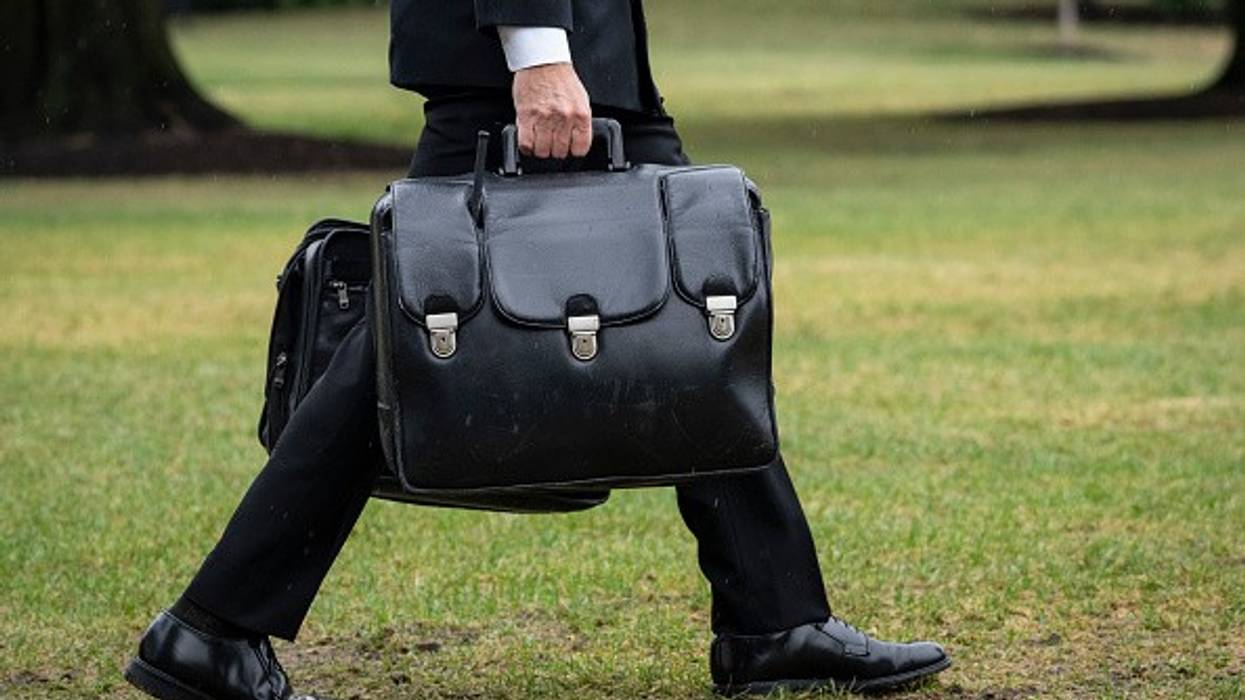
Now that the last nuclear arms control treaty regulating US and Russian nuclear weapons has expired, it is possible that these two superpowers could double their arsenals in one to two years, even as China, North Korea, and France also increase their arsenals.
It is widely thought that the February 5 expiration of New START, the last arms control agreement capping US and Russian nuclear weapons, could usher in a dangerous and highly destabilizing new nuclear arms race. Since the Cold War peak of over 70,000 nuclear weapons in 1986, arms control treaties have reduced the number to approximately 12,200 today—still equivalent, however, to 145,000 Hiroshimas. Many of these decommissioned weapons remain in storage where they can be readily redeployed, making it possible to double Russian and US arsenals in one to two years.
If a new nuclear arms race begins between the US and Russia, the US could “upload” 800 bombs and cruise missiles stored at military bases back onto B-2 and B-52 bombers in a matter of weeks. The number of warheads on submarines could be increased by 400 to 500 by placing additional warheads on each missile and reusing the launch tubes that were closed under New START. Finally, by placing additional warheads on half of its intercontinental ballistic missiles and reloading silos on standby, it could double its ICBM warheads from 400 to 800. Similarly, hundreds of decommissioned Russian warheads could be uploaded onto its bombers, ICBMs, and submarines.
Moreover, both the US and Russia are modernizing their nuclear weapons and new, terrifying systems are being developed. Although their arsenals are much smaller, the other seven nuclear weapon states are also modernizing, and China is rapidly expanding its arsenal. France has also just announced it will increase the size of its arsenal. Several nonnuclear states are considering acquiring nuclear weapons, which would further proliferation and greatly complicate the global situation.
The development of nuclear weapons in space and dual-use technology add to the unpredictability, and the loss of verification and information exchange provided by arms control agreements contribute to greater uncertainty, misunderstanding, and worst-case thinking.
A nuclear war would be utterly catastrophic.
So, will a new nuclear arms race make us more secure?
Given the current very tense and fragile geopolitical environment and questions about the stability of the leaders involved, it is entirely possible that a conventional conflict could escalate into nuclear war. Indeed, the Russians have threatened to use nuclear weapons in the context of their war in Ukraine and they have also lowered their “nuclear doctrine” threshold for using nuclear weapons.
The book Nuclear War: A Scenario and the film A House of Dynamite both offer chilling but realistic scenarios whereby incoming ICBMs would be responded to by massive second-strike retaliation. In just over an hour, life as we know it would be shattered worldwide.
The other grave concern is accidental nuclear war; Published accounts offer multiple examples. Warnings of a nuclear attack have been triggered by a faulty 46-cent computer chip; the mistaken insertion of a training tape into a computer; moon-rise; nuclear submarine collisions; the launch of a weather rocket; and many others. There are also cyber threats that barely existed during the Cold War. Equally worrying is the slippery slope of AI, which could lead to its integration into US, Russian, and Chinese nuclear weapon systems, stimulated by competition, mutual insecurity, and the extremely short decision-making time frame. As Gareth Evans, co-chair of the International Commission on Nuclear Non-proliferation and Disarmament, warns in his latest article: “The fact that we have survived for eight decades without a nuclear weapons catastrophe... is just sheer, dumb luck.”
A nuclear war would be utterly catastrophic. Scientific evidence has shown that a nuclear war would cause a “nuclear winter” where smoke and soot from hundreds of burning cities would loft into the upper atmosphere, blocking sunlight, darkening the sky, chilling the Earth, creating massive crop failures and extreme famine for every country in the world for up to 10 years after an all-out nuclear war. Millions of deaths from the explosions and radiation would be followed by billions of deaths from starvation. It would also significantly deplete the ozone layer, threatening animal and plant life. Recently, it has been shown that even a “limited” war between India and Pakistan could cause a nuclear winter that could kill over 2 billion people.
As Jonathan Schell writes in The Fate of the Earth: “The machinery of destruction is complete, poised on a hair trigger, waiting for the ‘button’ to be ‘pushed’ by some misguided or deranged human being or for some faulty computer ship to send out the instructions to fire. That so much should be balanced on so fine a point—that the fruit of four and a half billion years can be undone in a careless moment—is a fact against which belief rebels.”
Indeed, in January, the Doomsday Clock set annually by The Bulletin of the Atomic Scientists was moved to its closest point to midnight in its history—85 seconds. The Bulletin’s president and CEO, Alexandra Bell, concludes: “The Doomsday Clock’s message cannot be clearer. Catastrophic risks are on the rise, cooperation is on the decline, and we are running out of time. Change is both necessary and possible, but the global community must demand swift action from their leaders.”
Unfortunately, little remains of the broad-based anti-nuclear activism that was prevalent during the Cold War. Nevertheless, there is considerable public concern. A YouGov poll from May 2025 conducted in the US and five European countries shows that 41-55% of respondents think another world war is likely within the next 5 to 10 years and 68-76% believe that, if one occurs, it would involve nuclear weapons. Furthermore, 25-44% believe that it would result in the deaths of most of the world’s population.
If those who are worried about nuclear war were to become involved in a vigorous public debate to educate and activate those who aren’t aware of the magnitude of the threat (including those in power), to urge leaders to re-engage in significant, new arms control negotiations and agreements, they could surely make a difference, as they did during the Cold War, for this most existential of all threats.
As Schell notes: “Every person is the right person to act. Every minute is the right moment to begin.”