SUBSCRIBE TO OUR FREE NEWSLETTER
Daily news & progressive opinion—funded by the people, not the corporations—delivered straight to your inbox.
5
#000000
#FFFFFF
To donate by check, phone, or other method, see our More Ways to Give page.
Daily news & progressive opinion—funded by the people, not the corporations—delivered straight to your inbox.

An explosion over a sports hall in Lamerd, Iran, reportedly carried out with a US missile previously not used in combat, is seen on February 28, 2026.
The Precision Strike Missile has never before been used in combat by the US military.
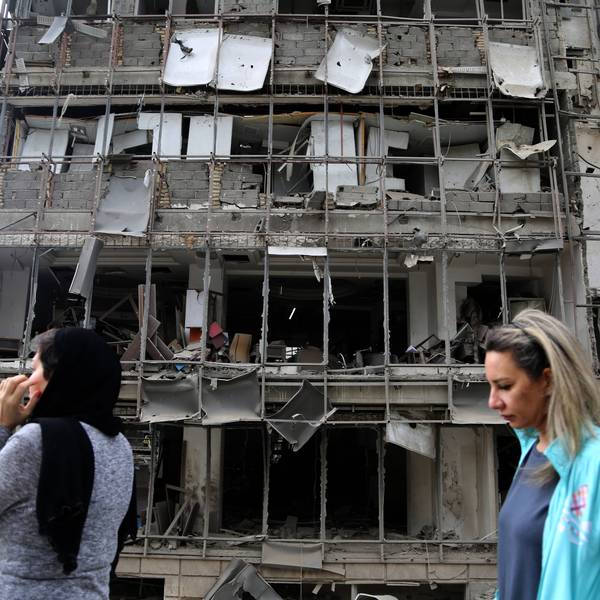
As experts and investigators analyze one of the first strikes carried out in the US-Israeli war on Iran, mounting reports point to a ballistic missile that had never been used before by the US military in combat—but which may have struck a residential area, a sports hall, and a school in the southern city of Lamerd.
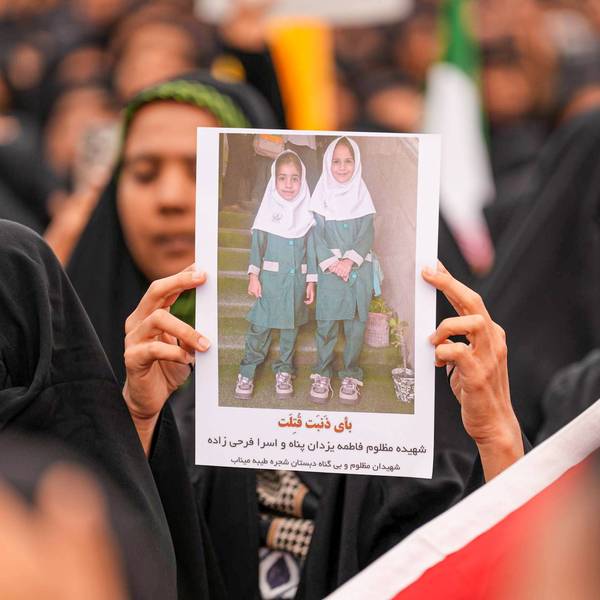
Along with being accused of bombing a school in Minab, killing more than 160 children and teachers, the US reportedly attacked several facilities and civilian areas near an Islamic Revolutionary Guards Corps facility in Lamerd, killing an additional 21 people, including children.
While analysts have found a US Tomahawk cruise missile was used in the Minab attack, munitions experts interviewed by the BBC and The New York Times in recent days said footage of the attacks and images of the targets after they were struck suggest a short-range ballistic missile called a Precision Strike Missile (PrSM) was used to bomb a sports hall, school, and residential neighborhood in Lamerd.
The missiles are newly developed and are designed to detonate just above a target and propel small tungsten pellets into the surrounding area.
As the Times reported, the PrSM is manufactured by Lockheed Martin and has the capability to hit targets at a 400-mile range, "but additional details about the weapon, including its expected accuracy and the quantity of explosives it carries, remain unknown to the public."
The Times reported that munitions experts had analyzed footage of a weapon in flight over a residential area about 900 feet from the sports hall and school, showing the missile erupting "in a large fireball midair."
Another video showed an explosion in midair just above the sports hall and nearby school, and photos of the aftermath showed the sites with numerous holes, presumably from the tungsten pellets.
The Times also verified a video that showed a plume of smoke rising in an area close to the other strikes at the same time, and local media reports said a cultural center had been hit in that attack. The target couldn't be independently verified.
Late last week, the BBC also reported that the PrSM was likely used on residential buildings in Lamerd on the first day of the war.
Experts at the defense intelligence firm Janes and at McKenzie Intelligence told the BBC that the shape, length, and size of the explosions created in verified footage they analyzed indicated the weapons were likely PrSM missiles.
"US Central Command has admitted to using PrSM in strikes from the desert of an unnamed Gulf country against Iran in the early phases of the conflict," McKenzie Intelligence emphasized.
Joint Chiefs of Staff chairman Dan Caine also celebrated the use of the PrSM in a press conference on March 13, reported the BBC, saying the US military had "made history" and carried out attacks with "precision and determination that comes from relentless training and trust in each other and in their weapon systems."
But a spokesperson for US Central Command on Saturday told the Times that Pentagon officials are "aware of the reports and are looking into them," and claimed US forces "do not indiscriminately target civilians."
The US has also not officially taken responsibility for the attack in Minab that happened on the same day as the ones in Lamerd, but fragments of a Tomahawk missile that were found at the site are among the mounting evidence pointing to the Trump administration as the perpetrator.
The sports hall in Lamerd was reportedly being used by a children's volleyball team at the time of the strike; fourth grader Helma Ahmadizadeh and fifth grader Elham Zaeri were among those killed while at volleyball practice, according to an Iran-based journalist, Negin Bagheri.
Zaeri's father "described her as an avid volleyball player, who would always turn up to the sports hall 20 to 25 minutes early," the BBC reported.
The outlet also said the youngest victim of the suspected PrSM strike was two years old.
At Drop Site News, Mahmoud Aslan reported on the attack on the sports hall shortly after it took place, before analysts linked the bombing to the PrSM.
Hossein Gholami told Aslan his 16-year-old daughter, Zahra, had been training in the facility when he "noticed a strange gathering of people at the corner of the street leading to the sports hall."
“The screaming was rising from a distance," said Gholami. "A colleague ran toward me, waving his arm, and said in a shaken voice: ‘Zahra, the hall, there has been an explosion.'"
“The continuous screaming of the injured mixed with the sounds of secondary explosions," said Gholami, whose daughter was killed in the attack. "The ground was covered in debris and shattered glass. It was difficult to move with all the rubble. Ambulances arrived after about twenty minutes, but most of the injured were in critical condition. The smell of blood and burns covered everything."
“Every time I close my eyes," he said, "I see her face, her smile, and I hear the sound of the explosion."
Dear Common Dreams reader, It’s been nearly 30 years since I co-founded Common Dreams with my late wife, Lina Newhouser. We had the radical notion that journalism should serve the public good, not corporate profits. It was clear to us from the outset what it would take to build such a project. No paid advertisements. No corporate sponsors. No millionaire publisher telling us what to think or do. Many people said we wouldn't last a year, but we proved those doubters wrong. Together with a tremendous team of journalists and dedicated staff, we built an independent media outlet free from the constraints of profits and corporate control. Our mission has always been simple: To inform. To inspire. To ignite change for the common good. Building Common Dreams was not easy. Our survival was never guaranteed. When you take on the most powerful forces—Wall Street greed, fossil fuel industry destruction, Big Tech lobbyists, and uber-rich oligarchs who have spent billions upon billions rigging the economy and democracy in their favor—the only bulwark you have is supporters who believe in your work. But here’s the urgent message from me today. It's never been this bad out there. And it's never been this hard to keep us going. At the very moment Common Dreams is most needed, the threats we face are intensifying. We need your support now more than ever. We don't accept corporate advertising and never will. We don't have a paywall because we don't think people should be blocked from critical news based on their ability to pay. Everything we do is funded by the donations of readers like you. When everyone does the little they can afford, we are strong. But if that support retreats or dries up, so do we. Will you donate now to make sure Common Dreams not only survives but thrives? —Craig Brown, Co-founder |
As experts and investigators analyze one of the first strikes carried out in the US-Israeli war on Iran, mounting reports point to a ballistic missile that had never been used before by the US military in combat—but which may have struck a residential area, a sports hall, and a school in the southern city of Lamerd.
Along with being accused of bombing a school in Minab, killing more than 160 children and teachers, the US reportedly attacked several facilities and civilian areas near an Islamic Revolutionary Guards Corps facility in Lamerd, killing an additional 21 people, including children.
While analysts have found a US Tomahawk cruise missile was used in the Minab attack, munitions experts interviewed by the BBC and The New York Times in recent days said footage of the attacks and images of the targets after they were struck suggest a short-range ballistic missile called a Precision Strike Missile (PrSM) was used to bomb a sports hall, school, and residential neighborhood in Lamerd.
The missiles are newly developed and are designed to detonate just above a target and propel small tungsten pellets into the surrounding area.
As the Times reported, the PrSM is manufactured by Lockheed Martin and has the capability to hit targets at a 400-mile range, "but additional details about the weapon, including its expected accuracy and the quantity of explosives it carries, remain unknown to the public."
The Times reported that munitions experts had analyzed footage of a weapon in flight over a residential area about 900 feet from the sports hall and school, showing the missile erupting "in a large fireball midair."
Another video showed an explosion in midair just above the sports hall and nearby school, and photos of the aftermath showed the sites with numerous holes, presumably from the tungsten pellets.
The Times also verified a video that showed a plume of smoke rising in an area close to the other strikes at the same time, and local media reports said a cultural center had been hit in that attack. The target couldn't be independently verified.
Late last week, the BBC also reported that the PrSM was likely used on residential buildings in Lamerd on the first day of the war.
Experts at the defense intelligence firm Janes and at McKenzie Intelligence told the BBC that the shape, length, and size of the explosions created in verified footage they analyzed indicated the weapons were likely PrSM missiles.
"US Central Command has admitted to using PrSM in strikes from the desert of an unnamed Gulf country against Iran in the early phases of the conflict," McKenzie Intelligence emphasized.
Joint Chiefs of Staff chairman Dan Caine also celebrated the use of the PrSM in a press conference on March 13, reported the BBC, saying the US military had "made history" and carried out attacks with "precision and determination that comes from relentless training and trust in each other and in their weapon systems."
But a spokesperson for US Central Command on Saturday told the Times that Pentagon officials are "aware of the reports and are looking into them," and claimed US forces "do not indiscriminately target civilians."
The US has also not officially taken responsibility for the attack in Minab that happened on the same day as the ones in Lamerd, but fragments of a Tomahawk missile that were found at the site are among the mounting evidence pointing to the Trump administration as the perpetrator.
The sports hall in Lamerd was reportedly being used by a children's volleyball team at the time of the strike; fourth grader Helma Ahmadizadeh and fifth grader Elham Zaeri were among those killed while at volleyball practice, according to an Iran-based journalist, Negin Bagheri.
Zaeri's father "described her as an avid volleyball player, who would always turn up to the sports hall 20 to 25 minutes early," the BBC reported.
The outlet also said the youngest victim of the suspected PrSM strike was two years old.
At Drop Site News, Mahmoud Aslan reported on the attack on the sports hall shortly after it took place, before analysts linked the bombing to the PrSM.
Hossein Gholami told Aslan his 16-year-old daughter, Zahra, had been training in the facility when he "noticed a strange gathering of people at the corner of the street leading to the sports hall."
“The screaming was rising from a distance," said Gholami. "A colleague ran toward me, waving his arm, and said in a shaken voice: ‘Zahra, the hall, there has been an explosion.'"
“The continuous screaming of the injured mixed with the sounds of secondary explosions," said Gholami, whose daughter was killed in the attack. "The ground was covered in debris and shattered glass. It was difficult to move with all the rubble. Ambulances arrived after about twenty minutes, but most of the injured were in critical condition. The smell of blood and burns covered everything."
“Every time I close my eyes," he said, "I see her face, her smile, and I hear the sound of the explosion."
As experts and investigators analyze one of the first strikes carried out in the US-Israeli war on Iran, mounting reports point to a ballistic missile that had never been used before by the US military in combat—but which may have struck a residential area, a sports hall, and a school in the southern city of Lamerd.
Along with being accused of bombing a school in Minab, killing more than 160 children and teachers, the US reportedly attacked several facilities and civilian areas near an Islamic Revolutionary Guards Corps facility in Lamerd, killing an additional 21 people, including children.
While analysts have found a US Tomahawk cruise missile was used in the Minab attack, munitions experts interviewed by the BBC and The New York Times in recent days said footage of the attacks and images of the targets after they were struck suggest a short-range ballistic missile called a Precision Strike Missile (PrSM) was used to bomb a sports hall, school, and residential neighborhood in Lamerd.
The missiles are newly developed and are designed to detonate just above a target and propel small tungsten pellets into the surrounding area.
As the Times reported, the PrSM is manufactured by Lockheed Martin and has the capability to hit targets at a 400-mile range, "but additional details about the weapon, including its expected accuracy and the quantity of explosives it carries, remain unknown to the public."
The Times reported that munitions experts had analyzed footage of a weapon in flight over a residential area about 900 feet from the sports hall and school, showing the missile erupting "in a large fireball midair."
Another video showed an explosion in midair just above the sports hall and nearby school, and photos of the aftermath showed the sites with numerous holes, presumably from the tungsten pellets.
The Times also verified a video that showed a plume of smoke rising in an area close to the other strikes at the same time, and local media reports said a cultural center had been hit in that attack. The target couldn't be independently verified.
Late last week, the BBC also reported that the PrSM was likely used on residential buildings in Lamerd on the first day of the war.
Experts at the defense intelligence firm Janes and at McKenzie Intelligence told the BBC that the shape, length, and size of the explosions created in verified footage they analyzed indicated the weapons were likely PrSM missiles.
"US Central Command has admitted to using PrSM in strikes from the desert of an unnamed Gulf country against Iran in the early phases of the conflict," McKenzie Intelligence emphasized.
Joint Chiefs of Staff chairman Dan Caine also celebrated the use of the PrSM in a press conference on March 13, reported the BBC, saying the US military had "made history" and carried out attacks with "precision and determination that comes from relentless training and trust in each other and in their weapon systems."
But a spokesperson for US Central Command on Saturday told the Times that Pentagon officials are "aware of the reports and are looking into them," and claimed US forces "do not indiscriminately target civilians."
The US has also not officially taken responsibility for the attack in Minab that happened on the same day as the ones in Lamerd, but fragments of a Tomahawk missile that were found at the site are among the mounting evidence pointing to the Trump administration as the perpetrator.
The sports hall in Lamerd was reportedly being used by a children's volleyball team at the time of the strike; fourth grader Helma Ahmadizadeh and fifth grader Elham Zaeri were among those killed while at volleyball practice, according to an Iran-based journalist, Negin Bagheri.
Zaeri's father "described her as an avid volleyball player, who would always turn up to the sports hall 20 to 25 minutes early," the BBC reported.
The outlet also said the youngest victim of the suspected PrSM strike was two years old.
At Drop Site News, Mahmoud Aslan reported on the attack on the sports hall shortly after it took place, before analysts linked the bombing to the PrSM.
Hossein Gholami told Aslan his 16-year-old daughter, Zahra, had been training in the facility when he "noticed a strange gathering of people at the corner of the street leading to the sports hall."
“The screaming was rising from a distance," said Gholami. "A colleague ran toward me, waving his arm, and said in a shaken voice: ‘Zahra, the hall, there has been an explosion.'"
“The continuous screaming of the injured mixed with the sounds of secondary explosions," said Gholami, whose daughter was killed in the attack. "The ground was covered in debris and shattered glass. It was difficult to move with all the rubble. Ambulances arrived after about twenty minutes, but most of the injured were in critical condition. The smell of blood and burns covered everything."
“Every time I close my eyes," he said, "I see her face, her smile, and I hear the sound of the explosion."