SUBSCRIBE TO OUR FREE NEWSLETTER
Daily news & progressive opinion—funded by the people, not the corporations—delivered straight to your inbox.
5
#000000
#FFFFFF
To donate by check, phone, or other method, see our More Ways to Give page.
Daily news & progressive opinion—funded by the people, not the corporations—delivered straight to your inbox.
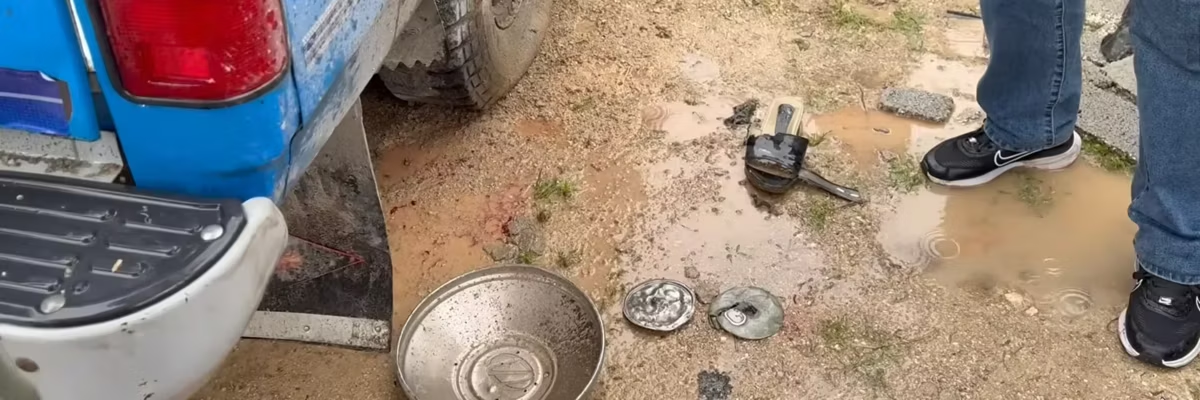
Part of a landmine is seen outside Shiraz, Iran on March 26, 20226.
“If confirmed, US military use of its Gator mine scattering system causing civilian deaths and injuries shows exactly why decades of work to ban these weapons cannot be undone,” said one advocate.
Nearly four months after the Trump administration reversed a Biden-era ban on the use of land mines—and two decades after the weapons were last used by the US—images taken in southern Iran indicate the US military has deployed its its Gator Scatterable Mine system in residential areas, killing at least one person and putting residents at risk for years to come, even after the US-Israeli war on Iran ends.
Iranian media posted images online earlier this week of what it called "explosive packages dropped by American planes in Shiraz," the fifth-most populous city in Iran.
The open source investigative group Bellingcat reported Thursday that the images appeared to show US-made Gator anti-tank mines. The US is the only country involved in the war on Iran, which it started alongside Israel on February 28, known to possess Gator Scatterable Mines.
The Gator system is an "air-delivered dispenser system," Bellingcat reported, that distributes mines over an area nearly half a mile wide. They can dispense up to 94 BLU-92/B antipersonnel and BLU-91/B antitank mines.
N.R. Jenzen Jones, director of Armament Research Services, told Bellingcat that the images appeared to be antitank land mines.
Another expert, Amael Kotlarski of open source intelligence company Janes, said antipersonnel land mines at not "observable in the photographic evidence presented so far," but "this could be that they have not been found."
The two mines used by the Gator system, like other land mines and cluster munitions, can fail to properly explode when they are deployed. They have self-destruct features that can go off within hours, days, or weeks of deployment, and can also explode if they are disturbed—as was reportedly the case when a man picked up one of the mines that had landed near his car, and was killed.
“While these land mines are meant to target armored vehicles, they can still be extremely dangerous to civilians,” Brian Castner, a weapons investigator with Amnesty International, told The Washington Post.
The US last used antipersonnel land mines in Afghanistan in 2002, and scatterable antitank land mines were last used during the Gulf War in 1991.
The US is one of the few countries that have not signed the Ottawa Convention, a 1997 international treaty banning the use of antipersonnel land mines, which killed nearly 2,000 people in 2024 and injured more than 4,300—a 9% increase over the previous year.
Ninety percent of those killed in 2024 were civilians, nearly half of whom were children.
In 2022, President Joe Biden announced the US would begin to follow many of the convention's provisions. But two years later he moved to allow their use in Ukraine, and Defense Secretary Pete Hegseth signed a memo in December allowing the use of the "inherently indiscriminate weapons," as one Amnesty International expert put it, in any conflict zone.
At the time, Tamar Gabelnick, director of the International Campaign to Ban Landmines, said that "by embracing these heinous weapons, the United States would be joining the ranks of countries like Russia and Myanmar, known for their blatant disregard for civilian safety in armed conflict.
Iranian media said "several" people have been killed by the mines dispensed across parts of southern Iran. The Iranian State News Agency said in a Telegram post that at least one person had been killed and others had been injured by “explosive packages that resemble cans." It urged locals to stay away from “any misshapen, deformed, or unusual metal cans" if they see them on the ground.
The Department of Defense did not respond to questions from the media regarding the reports about land mines in southern Iran.
“If confirmed, US military use of its Gator mine scattering system causing civilian deaths and injuries shows exactly why decades of work to ban these weapons cannot be undone without grave harm being the result,” Sarah Yager, Washington director at Human Rights Watch, told The Washington Post.
A Canadian journalist, Dimitri Lascaris, also reported from a village in the Shiraz area, investigated two unexploded mines and visiting the home of a 31-year-old father who was "killed when he picked up one of the mines."
"The authorities have not yet had the opportunity to deal with the aftermath, the horrifying aftermath of what was done here," said Lascaris in a video report he posted on YouTube.
Alireza Akbari, a correspondent with Press TV in Iran, accompanied Lascaris and explained that even the rainy weather that was present in the village could pose a risk, as "the soil and the rain together, they might put pressure on the mine... It might be one of the things that can trigger the mine, and it can be exploded at any moment."
Dear Common Dreams reader, It’s been nearly 30 years since I co-founded Common Dreams with my late wife, Lina Newhouser. We had the radical notion that journalism should serve the public good, not corporate profits. It was clear to us from the outset what it would take to build such a project. No paid advertisements. No corporate sponsors. No millionaire publisher telling us what to think or do. Many people said we wouldn't last a year, but we proved those doubters wrong. Together with a tremendous team of journalists and dedicated staff, we built an independent media outlet free from the constraints of profits and corporate control. Our mission has always been simple: To inform. To inspire. To ignite change for the common good. Building Common Dreams was not easy. Our survival was never guaranteed. When you take on the most powerful forces—Wall Street greed, fossil fuel industry destruction, Big Tech lobbyists, and uber-rich oligarchs who have spent billions upon billions rigging the economy and democracy in their favor—the only bulwark you have is supporters who believe in your work. But here’s the urgent message from me today. It's never been this bad out there. And it's never been this hard to keep us going. At the very moment Common Dreams is most needed, the threats we face are intensifying. We need your support now more than ever. We don't accept corporate advertising and never will. We don't have a paywall because we don't think people should be blocked from critical news based on their ability to pay. Everything we do is funded by the donations of readers like you. When everyone does the little they can afford, we are strong. But if that support retreats or dries up, so do we. Will you donate now to make sure Common Dreams not only survives but thrives? —Craig Brown, Co-founder |
Nearly four months after the Trump administration reversed a Biden-era ban on the use of land mines—and two decades after the weapons were last used by the US—images taken in southern Iran indicate the US military has deployed its its Gator Scatterable Mine system in residential areas, killing at least one person and putting residents at risk for years to come, even after the US-Israeli war on Iran ends.
Iranian media posted images online earlier this week of what it called "explosive packages dropped by American planes in Shiraz," the fifth-most populous city in Iran.
The open source investigative group Bellingcat reported Thursday that the images appeared to show US-made Gator anti-tank mines. The US is the only country involved in the war on Iran, which it started alongside Israel on February 28, known to possess Gator Scatterable Mines.
The Gator system is an "air-delivered dispenser system," Bellingcat reported, that distributes mines over an area nearly half a mile wide. They can dispense up to 94 BLU-92/B antipersonnel and BLU-91/B antitank mines.
N.R. Jenzen Jones, director of Armament Research Services, told Bellingcat that the images appeared to be antitank land mines.
Another expert, Amael Kotlarski of open source intelligence company Janes, said antipersonnel land mines at not "observable in the photographic evidence presented so far," but "this could be that they have not been found."
The two mines used by the Gator system, like other land mines and cluster munitions, can fail to properly explode when they are deployed. They have self-destruct features that can go off within hours, days, or weeks of deployment, and can also explode if they are disturbed—as was reportedly the case when a man picked up one of the mines that had landed near his car, and was killed.
“While these land mines are meant to target armored vehicles, they can still be extremely dangerous to civilians,” Brian Castner, a weapons investigator with Amnesty International, told The Washington Post.
The US last used antipersonnel land mines in Afghanistan in 2002, and scatterable antitank land mines were last used during the Gulf War in 1991.
The US is one of the few countries that have not signed the Ottawa Convention, a 1997 international treaty banning the use of antipersonnel land mines, which killed nearly 2,000 people in 2024 and injured more than 4,300—a 9% increase over the previous year.
Ninety percent of those killed in 2024 were civilians, nearly half of whom were children.
In 2022, President Joe Biden announced the US would begin to follow many of the convention's provisions. But two years later he moved to allow their use in Ukraine, and Defense Secretary Pete Hegseth signed a memo in December allowing the use of the "inherently indiscriminate weapons," as one Amnesty International expert put it, in any conflict zone.
At the time, Tamar Gabelnick, director of the International Campaign to Ban Landmines, said that "by embracing these heinous weapons, the United States would be joining the ranks of countries like Russia and Myanmar, known for their blatant disregard for civilian safety in armed conflict.
Iranian media said "several" people have been killed by the mines dispensed across parts of southern Iran. The Iranian State News Agency said in a Telegram post that at least one person had been killed and others had been injured by “explosive packages that resemble cans." It urged locals to stay away from “any misshapen, deformed, or unusual metal cans" if they see them on the ground.
The Department of Defense did not respond to questions from the media regarding the reports about land mines in southern Iran.
“If confirmed, US military use of its Gator mine scattering system causing civilian deaths and injuries shows exactly why decades of work to ban these weapons cannot be undone without grave harm being the result,” Sarah Yager, Washington director at Human Rights Watch, told The Washington Post.
A Canadian journalist, Dimitri Lascaris, also reported from a village in the Shiraz area, investigated two unexploded mines and visiting the home of a 31-year-old father who was "killed when he picked up one of the mines."
"The authorities have not yet had the opportunity to deal with the aftermath, the horrifying aftermath of what was done here," said Lascaris in a video report he posted on YouTube.
Alireza Akbari, a correspondent with Press TV in Iran, accompanied Lascaris and explained that even the rainy weather that was present in the village could pose a risk, as "the soil and the rain together, they might put pressure on the mine... It might be one of the things that can trigger the mine, and it can be exploded at any moment."
Nearly four months after the Trump administration reversed a Biden-era ban on the use of land mines—and two decades after the weapons were last used by the US—images taken in southern Iran indicate the US military has deployed its its Gator Scatterable Mine system in residential areas, killing at least one person and putting residents at risk for years to come, even after the US-Israeli war on Iran ends.
Iranian media posted images online earlier this week of what it called "explosive packages dropped by American planes in Shiraz," the fifth-most populous city in Iran.
The open source investigative group Bellingcat reported Thursday that the images appeared to show US-made Gator anti-tank mines. The US is the only country involved in the war on Iran, which it started alongside Israel on February 28, known to possess Gator Scatterable Mines.
The Gator system is an "air-delivered dispenser system," Bellingcat reported, that distributes mines over an area nearly half a mile wide. They can dispense up to 94 BLU-92/B antipersonnel and BLU-91/B antitank mines.
N.R. Jenzen Jones, director of Armament Research Services, told Bellingcat that the images appeared to be antitank land mines.
Another expert, Amael Kotlarski of open source intelligence company Janes, said antipersonnel land mines at not "observable in the photographic evidence presented so far," but "this could be that they have not been found."
The two mines used by the Gator system, like other land mines and cluster munitions, can fail to properly explode when they are deployed. They have self-destruct features that can go off within hours, days, or weeks of deployment, and can also explode if they are disturbed—as was reportedly the case when a man picked up one of the mines that had landed near his car, and was killed.
“While these land mines are meant to target armored vehicles, they can still be extremely dangerous to civilians,” Brian Castner, a weapons investigator with Amnesty International, told The Washington Post.
The US last used antipersonnel land mines in Afghanistan in 2002, and scatterable antitank land mines were last used during the Gulf War in 1991.
The US is one of the few countries that have not signed the Ottawa Convention, a 1997 international treaty banning the use of antipersonnel land mines, which killed nearly 2,000 people in 2024 and injured more than 4,300—a 9% increase over the previous year.
Ninety percent of those killed in 2024 were civilians, nearly half of whom were children.
In 2022, President Joe Biden announced the US would begin to follow many of the convention's provisions. But two years later he moved to allow their use in Ukraine, and Defense Secretary Pete Hegseth signed a memo in December allowing the use of the "inherently indiscriminate weapons," as one Amnesty International expert put it, in any conflict zone.
At the time, Tamar Gabelnick, director of the International Campaign to Ban Landmines, said that "by embracing these heinous weapons, the United States would be joining the ranks of countries like Russia and Myanmar, known for their blatant disregard for civilian safety in armed conflict.
Iranian media said "several" people have been killed by the mines dispensed across parts of southern Iran. The Iranian State News Agency said in a Telegram post that at least one person had been killed and others had been injured by “explosive packages that resemble cans." It urged locals to stay away from “any misshapen, deformed, or unusual metal cans" if they see them on the ground.
The Department of Defense did not respond to questions from the media regarding the reports about land mines in southern Iran.
“If confirmed, US military use of its Gator mine scattering system causing civilian deaths and injuries shows exactly why decades of work to ban these weapons cannot be undone without grave harm being the result,” Sarah Yager, Washington director at Human Rights Watch, told The Washington Post.
A Canadian journalist, Dimitri Lascaris, also reported from a village in the Shiraz area, investigated two unexploded mines and visiting the home of a 31-year-old father who was "killed when he picked up one of the mines."
"The authorities have not yet had the opportunity to deal with the aftermath, the horrifying aftermath of what was done here," said Lascaris in a video report he posted on YouTube.
Alireza Akbari, a correspondent with Press TV in Iran, accompanied Lascaris and explained that even the rainy weather that was present in the village could pose a risk, as "the soil and the rain together, they might put pressure on the mine... It might be one of the things that can trigger the mine, and it can be exploded at any moment."