SUBSCRIBE TO OUR FREE NEWSLETTER
Daily news & progressive opinion—funded by the people, not the corporations—delivered straight to your inbox.
5
#000000
#FFFFFF
To donate by check, phone, or other method, see our More Ways to Give page.
Daily news & progressive opinion—funded by the people, not the corporations—delivered straight to your inbox.
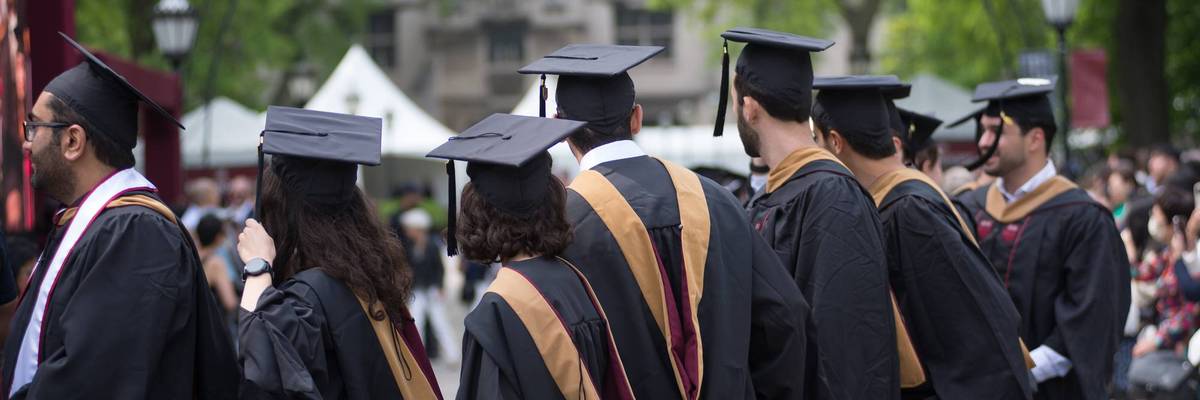
University of Chicago graduates celebrate during the commencement ceremony on June 7, 2025.
More than 7 million borrowers booted from a Biden-era loan forgiveness program will have to quickly switch to a new plan using a system that's been backed up for months.
After axing a Biden-era student loan repayment program, the Trump administration is threatening to kick its millions of mostly low-income beneficiaries onto the government's most expensive plan unless they switch to a new one quickly.
The Washington Post reported on Friday that the Department of Education was beginning to email the more than 7 million people enrolled in the Saving on a Valuable Education (SAVE) program, telling them they needed to change their plan within the next 90 days.
Around 4.5 million of those borrowers earn incomes between 150% and 225%, allowing them to qualify for zero-dollar monthly payments under SAVE, which the Trump administration effectively killed in December after settling with Republican states who'd brought lawsuits against the program under former President Joe Biden.
Anonymous officials told The Post that those who do not switch plans within three months of receiving the email will automatically be re-enrolled in the Standard Plan. Unlike SAVE, which is income-based, the Standard plan has borrowers pay a fixed rate over 10 years.
Standard typically carries the highest monthly payments, and those transitioning to it from SAVE could pay more than $300 extra per month in some cases, with the poorest borrowers seeing the sharpest increases.
While 90 days may seem like plenty of time to switch to a less expensive repayment plan, it's not nearly that simple.
Due to the large exodus of borrowers, the Department of Education has struggled to process all the forms, processing only about 250,000 per month. Many borrowers who have tried to transition have found themselves waiting months for a reply.
To make matters more confusing, many of these borrowers will have to switch programs again soon, since all but one repayment program will be dissolved on July 1, 2028 as a result of last year's Republican budget law. The remaining plan will also be income-driven, though it is still expected to cost borrowers more each month.
According to a report released last month by the Century Foundation and Protect Borrowers, two groups that support loan forgiveness, nearly 9 million student loan borrowers are in default. During Trump's first year back in office, the student loan delinquency rate jumped from roughly zero to 25%, which it called "precedent-shattering."
"Much of the rise in delinquencies can be linked to the Trump administration’s actions aimed at increasing student loan payments," the report said. “The US Department of Education blocked borrowers from accessing more affordable payments through income-driven plans, having ordered a stoppage in application processing for three months and mass-denying 328,000 applications in August 2025. As of December 31, 2025, a warehouse’s worth of 734,000 applications sat unprocessed.”
Being in default has major ramifications for borrowers' finances. Those with delinquent loans saw their credit scores decrease by an average of 57 points during the first three quarters of 2025, dragging around 2 million of them into "subprime" territory, which forces them to pay thousands of dollars more for auto and personal loans and makes them more likely to have difficulty finding housing and employment.
The report estimated that if those booted from SAVE defaulted at the same rate as other borrowers, the number of student loan borrowers in distress could rise as high as 17 million.
According to Protect Borrowers, the typical family will pay more than $3,000 per year in additional costs as a result of the end of SAVE.
The end of SAVE comes as oil shocks caused by Trump's war in Iran have spiked gas prices and threaten to raise them throughout the economy, adding to the already elevated costs of food, housing, and transportation resulting from the president's aggressive tariff regime.
"In the middle of an affordability crisis driven by Donald Trump," said Sen. Elizabeth Warren (D-Mass.), "Trump is killing a plan that lowers student loan costs. It's shameful."
Dear Common Dreams reader, It’s been nearly 30 years since I co-founded Common Dreams with my late wife, Lina Newhouser. We had the radical notion that journalism should serve the public good, not corporate profits. It was clear to us from the outset what it would take to build such a project. No paid advertisements. No corporate sponsors. No millionaire publisher telling us what to think or do. Many people said we wouldn't last a year, but we proved those doubters wrong. Together with a tremendous team of journalists and dedicated staff, we built an independent media outlet free from the constraints of profits and corporate control. Our mission has always been simple: To inform. To inspire. To ignite change for the common good. Building Common Dreams was not easy. Our survival was never guaranteed. When you take on the most powerful forces—Wall Street greed, fossil fuel industry destruction, Big Tech lobbyists, and uber-rich oligarchs who have spent billions upon billions rigging the economy and democracy in their favor—the only bulwark you have is supporters who believe in your work. But here’s the urgent message from me today. It's never been this bad out there. And it's never been this hard to keep us going. At the very moment Common Dreams is most needed, the threats we face are intensifying. We need your support now more than ever. We don't accept corporate advertising and never will. We don't have a paywall because we don't think people should be blocked from critical news based on their ability to pay. Everything we do is funded by the donations of readers like you. When everyone does the little they can afford, we are strong. But if that support retreats or dries up, so do we. Will you donate now to make sure Common Dreams not only survives but thrives? —Craig Brown, Co-founder |
After axing a Biden-era student loan repayment program, the Trump administration is threatening to kick its millions of mostly low-income beneficiaries onto the government's most expensive plan unless they switch to a new one quickly.
The Washington Post reported on Friday that the Department of Education was beginning to email the more than 7 million people enrolled in the Saving on a Valuable Education (SAVE) program, telling them they needed to change their plan within the next 90 days.
Around 4.5 million of those borrowers earn incomes between 150% and 225%, allowing them to qualify for zero-dollar monthly payments under SAVE, which the Trump administration effectively killed in December after settling with Republican states who'd brought lawsuits against the program under former President Joe Biden.
Anonymous officials told The Post that those who do not switch plans within three months of receiving the email will automatically be re-enrolled in the Standard Plan. Unlike SAVE, which is income-based, the Standard plan has borrowers pay a fixed rate over 10 years.
Standard typically carries the highest monthly payments, and those transitioning to it from SAVE could pay more than $300 extra per month in some cases, with the poorest borrowers seeing the sharpest increases.
While 90 days may seem like plenty of time to switch to a less expensive repayment plan, it's not nearly that simple.
Due to the large exodus of borrowers, the Department of Education has struggled to process all the forms, processing only about 250,000 per month. Many borrowers who have tried to transition have found themselves waiting months for a reply.
To make matters more confusing, many of these borrowers will have to switch programs again soon, since all but one repayment program will be dissolved on July 1, 2028 as a result of last year's Republican budget law. The remaining plan will also be income-driven, though it is still expected to cost borrowers more each month.
According to a report released last month by the Century Foundation and Protect Borrowers, two groups that support loan forgiveness, nearly 9 million student loan borrowers are in default. During Trump's first year back in office, the student loan delinquency rate jumped from roughly zero to 25%, which it called "precedent-shattering."
"Much of the rise in delinquencies can be linked to the Trump administration’s actions aimed at increasing student loan payments," the report said. “The US Department of Education blocked borrowers from accessing more affordable payments through income-driven plans, having ordered a stoppage in application processing for three months and mass-denying 328,000 applications in August 2025. As of December 31, 2025, a warehouse’s worth of 734,000 applications sat unprocessed.”
Being in default has major ramifications for borrowers' finances. Those with delinquent loans saw their credit scores decrease by an average of 57 points during the first three quarters of 2025, dragging around 2 million of them into "subprime" territory, which forces them to pay thousands of dollars more for auto and personal loans and makes them more likely to have difficulty finding housing and employment.
The report estimated that if those booted from SAVE defaulted at the same rate as other borrowers, the number of student loan borrowers in distress could rise as high as 17 million.
According to Protect Borrowers, the typical family will pay more than $3,000 per year in additional costs as a result of the end of SAVE.
The end of SAVE comes as oil shocks caused by Trump's war in Iran have spiked gas prices and threaten to raise them throughout the economy, adding to the already elevated costs of food, housing, and transportation resulting from the president's aggressive tariff regime.
"In the middle of an affordability crisis driven by Donald Trump," said Sen. Elizabeth Warren (D-Mass.), "Trump is killing a plan that lowers student loan costs. It's shameful."
After axing a Biden-era student loan repayment program, the Trump administration is threatening to kick its millions of mostly low-income beneficiaries onto the government's most expensive plan unless they switch to a new one quickly.
The Washington Post reported on Friday that the Department of Education was beginning to email the more than 7 million people enrolled in the Saving on a Valuable Education (SAVE) program, telling them they needed to change their plan within the next 90 days.
Around 4.5 million of those borrowers earn incomes between 150% and 225%, allowing them to qualify for zero-dollar monthly payments under SAVE, which the Trump administration effectively killed in December after settling with Republican states who'd brought lawsuits against the program under former President Joe Biden.
Anonymous officials told The Post that those who do not switch plans within three months of receiving the email will automatically be re-enrolled in the Standard Plan. Unlike SAVE, which is income-based, the Standard plan has borrowers pay a fixed rate over 10 years.
Standard typically carries the highest monthly payments, and those transitioning to it from SAVE could pay more than $300 extra per month in some cases, with the poorest borrowers seeing the sharpest increases.
While 90 days may seem like plenty of time to switch to a less expensive repayment plan, it's not nearly that simple.
Due to the large exodus of borrowers, the Department of Education has struggled to process all the forms, processing only about 250,000 per month. Many borrowers who have tried to transition have found themselves waiting months for a reply.
To make matters more confusing, many of these borrowers will have to switch programs again soon, since all but one repayment program will be dissolved on July 1, 2028 as a result of last year's Republican budget law. The remaining plan will also be income-driven, though it is still expected to cost borrowers more each month.
According to a report released last month by the Century Foundation and Protect Borrowers, two groups that support loan forgiveness, nearly 9 million student loan borrowers are in default. During Trump's first year back in office, the student loan delinquency rate jumped from roughly zero to 25%, which it called "precedent-shattering."
"Much of the rise in delinquencies can be linked to the Trump administration’s actions aimed at increasing student loan payments," the report said. “The US Department of Education blocked borrowers from accessing more affordable payments through income-driven plans, having ordered a stoppage in application processing for three months and mass-denying 328,000 applications in August 2025. As of December 31, 2025, a warehouse’s worth of 734,000 applications sat unprocessed.”
Being in default has major ramifications for borrowers' finances. Those with delinquent loans saw their credit scores decrease by an average of 57 points during the first three quarters of 2025, dragging around 2 million of them into "subprime" territory, which forces them to pay thousands of dollars more for auto and personal loans and makes them more likely to have difficulty finding housing and employment.
The report estimated that if those booted from SAVE defaulted at the same rate as other borrowers, the number of student loan borrowers in distress could rise as high as 17 million.
According to Protect Borrowers, the typical family will pay more than $3,000 per year in additional costs as a result of the end of SAVE.
The end of SAVE comes as oil shocks caused by Trump's war in Iran have spiked gas prices and threaten to raise them throughout the economy, adding to the already elevated costs of food, housing, and transportation resulting from the president's aggressive tariff regime.
"In the middle of an affordability crisis driven by Donald Trump," said Sen. Elizabeth Warren (D-Mass.), "Trump is killing a plan that lowers student loan costs. It's shameful."