

SUBSCRIBE TO OUR FREE NEWSLETTER
Daily news & progressive opinion—funded by the people, not the corporations—delivered straight to your inbox.
5
#000000
#FFFFFF
To donate by check, phone, or other method, see our More Ways to Give page.
Daily news & progressive opinion—funded by the people, not the corporations—delivered straight to your inbox.
For the past two months, after the police killing of George Floyd, tens of thousands of Portland residents have continued to engage in daily demonstrations against police violence and in support of the movement for Black lives. In response, the Portland Police and Multnomah County Sheriffs have used unnecessary and unlawful violence against them, including tear gas, OC spray, flash bang grenades, and other so-called "less than lethal" weapons to dispel protestors, enforcing a curfew in the early days and after the curfew was lifted, simply using force to clear the streets.
For the past two months, after the police killing of George Floyd, tens of thousands of Portland residents have continued to engage in daily demonstrations against police violence and in support of the movement for Black lives. In response, the Portland Police and Multnomah County Sheriffs have used unnecessary and unlawful violence against them, including tear gas, OC spray, flash bang grenades, and other so-called "less than lethal" weapons to dispel protestors, enforcing a curfew in the early days and after the curfew was lifted, simply using force to clear the streets. The Portland Chapter of the National Lawyers Guild (NLG-PDX) has had Legal Observers in the streets every day and night who, along with members of the press, have also been the subject of police violence. NLG-PDX condemns the federal government and its use of Border Control and U.S. Marshals in their effort to act as anti-protest shock troops in our city. We call on the federal government, the City of Portland, and the State of Oregon to immediately expel federal law enforcement from Portland, and for all charges related to arrests by those forces to be immediately and summarily dropped.
Members of NLG-PDX continue to monitor law enforcement conduct on the ground as Legal Observers, provide jail and court support to demonstrators who have been arrested, provide Know Your Rights training to community members, and have connected protesters, journalists, and movement organizations with criminal and civil litigation. On behalf of local Black-led organization Don't Shoot Portland, protesters, and members of the press, the NLG-PDX has filed two legal actions against local law enforcement, resulting in a court-ordered injunction against the indiscriminate use of tear gas and other weapons against demonstrators engaging in passive resistance. In addition, the protests and community-led campaigns have resulted in the first signs of long overdue action by the Portland City Council to begin the process of defunding the police by pulling police out of schools and off public transit, eliminating a police task force aimed primarily at Black communities, and taking $15 million from the police budget (far short of the $50 million demanded by community members) and allocating some of those funds for nonpunitive support for unhoused people.
As the protests continued, President Donald Trump saw an opportunity to distract from his failures with the COVID-19 pandemic and burnish his credentials as a so-called "law and order president." On the 4th of July, President Trump deployed federal law enforcement officers to Portland to "quell" the demonstrations. These federal officers--apparently including U.S. Marshals and members of BORTAC, a tactical unit within Border Patrol--have routinely subjected demonstrators to unconscionable violence. They have broken protesters' bones with baton strikes and tackles, shot at least one protester in the head with so-called "less lethal" munitions, and indiscriminately launched huge amounts of tear gas and other chemical agents at crowds of demonstrators, all without warning. These officers do not wear name badges; they are unidentifiable and unaccountable as they terrorize Portlanders on a nightly basis. Recently, unidentified agents in military camouflage pulled random protesters into unmarked vans, taking them into custody to search their persons and belongings. To date, residents and local officials have not received an explanation or reason why federal agents are abducting people off our streets. When Acting Secretary of Homeland Security Chad Wolf visited the city this week to applaud the actions of this federal occupying force, he did not meet with the Mayor or the Chief of Police but did meet with the defiant head of Portland Police union. Alarmingly, on Monday Trump applauded the disturbing actions of federal troops in Portland saying they have done a "fantastic job," and has signaled that similar responses to protests may be replicated in other U.S. cities.
NLG-PDX continues to stand in solidarity with activists fighting for Black liberation. We highlight the cruel irony that those protesting police brutality are met with police brutality, and we condemn the conduct of federal and local law enforcement officers who continue to escalate tactics and punish protesters in violation of their First and Fourth Amendment rights. We echo activists' demands that federal law enforcement leave our city, and support our community's continued resistance against the encroachment of a police state.
NOTE: The NLG National Office has launched a Federal Defense Hotline for activists and lawyers to report incidents of federal repression, such as FBI "door-knocks" at activists' homes, grand jury investigations and subpoenas, and any other federal law enforcement efforts to undermine civil rights, including federal grab squads and the use of unidentified federal agents to police protests. The line is live at: 212-679-2811.
The National Lawyers Guild (NLG) works to promote human rights and the rights of ecosystems over property interests. It was founded in 1937 as the first national, racially-integrated bar association in the U.S.
(212) 679-5100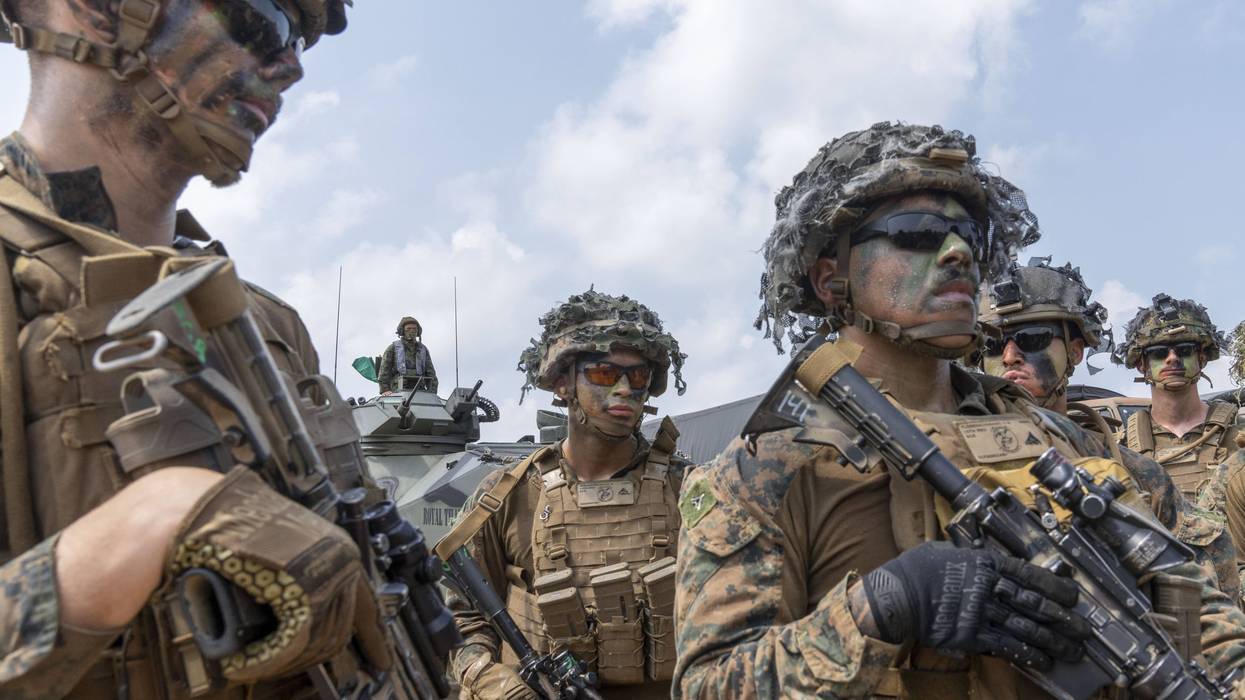
"Bringing this war to an end," said one former US intelligence analyst, "requires recognizing it can still get much, much worse."
In what has been described as a potential "major escalation" of the Trump administration's war with Iran, Defense Secretary Pete Hegseth has reportedly approved a request from US Central Command to move more warships and thousands of Marines to the Middle East following Iran's attacks on vessels in the Strait of Hormuz.
Citing three US officials, The Wall Street Journal reported on Friday that the US was sending "an element of an amphibious ready group and attached Marine expeditionary unit, typically consisting of several warships and 5,000 Marines and sailors."
According to the Journal, the Japan-based USS Tripoli and its attached Marines are already headed to the Middle East.
While the Journal did not explicitly report that the operation was tied to the volatile situation in the Strait of Hormuz, it noted that "the move comes as Iran’s attacks on the strait have paralyzed traffic through the strategic waterway, disrupting the global economy, driving up gas prices and posing a major military and political challenge for President [Donald] Trump."
In his first address on Thursday, delivered by a news anchor on Iranian state TV, the country's new supreme leader, Mojtaba Khamenei, said that “the lever of blocking the Strait of Hormuz must definitely be used" to heighten economic pressure on the US.
Iran's Islamic Revolutionary Guard Corps (IRGC) has declared that "not a liter of oil" shall pass through the strait, and vowed to attack any ship linked to the US and Israel that may attempt to make the journey.
Iran has reportedly attacked at least six commercial ships in the area since Wednesday, including one marked with a Thai flag that still has three crew members missing. US intelligence sources have also accused Iran of laying mines in the Strait, which Iran has neither confirmed nor denied.
The blockage of the strait, through which about one-fifth of global oil shipments pass each year, has sent the global market into chaos. Prices of Brent crude have surged from under $70 less than a month ago to more than $100 per barrel on the global market, and US gas prices have leaped to $3.63 per gallon on average, up from $2.94 a month ago.
Prices have continued to climb even after the International Energy Agency (IEA) announced its largest-ever coordinated release of oil from nations' strategic reserves on Wednesday to combat what it called "the largest supply disruption in the history of the global oil market."
Shashank Joshi, the defense editor at The Economist and a visiting fellow at the Department of War Studies at King's College London, said that a deployment of such a large Marine force seems to be "a key indicator of a potential ground operation" in Iran.
Trump said earlier this week that he was "nowhere near" sending troops into Iran even as it ramped up threats to block the strait. But privately, he has reportedly been mulling plans to put "boots on the ground" within Iranian territory to accomplish a number of objectives, though officials have characterized them as limited special-operations missions.
Administration officials have reportedly suggested a commando raid on Iran's nuclear sites to confiscate or sabotage its supply of uranium, according to Axios. They've also considered a plan to occupy Kharg Island, which sits 15 miles off Iran's coast and handles about 90% of its oil exports, serving as an economic "lifeline" for the battered nation.
But Trump has also said that if Iran blocks the strait, "the US Navy and its partners will escort tankers through the strait, if needed." Chairman of the Joint Chiefs, Gen. Dan Caine, has said the Pentagon is looking at "a range of options" to do this.
In an analysis published Tuesday by Zeteo, Harrison Mann, a former US Army major and executive officer of the Defense Intelligence Agency’s Middle East/Africa Regional Center, suggested that the US may pursue an ambitious plan to "clear Iran’s coastline around the strait" to get tankers moving again.
Mann, who worked under the Biden administration but resigned in protest of its support for the genocide in Gaza, said this plan would require "an indefinite occupation–otherwise missile trucks could just get in position after US forces leave." Doing this, he added, would require "a full-fledged invasion, possibly beyond even the 10,000 or so rapid-response forces at Trump’s disposal."
"All of these ground operations risk high casualties while failing to accomplish their missions," Mann said. "That’s a feature, not a bug. Even if one of these operations met its objectives, troops in peril behind enemy lines demand resupply, evacuation, and revenge, which puts more troops in peril behind enemy lines, and so on."
The movement of more troops comes as the US public expresses strong disapproval of Trump's war with Iran. In a Quinnipiac poll published this week, 53% of registered voters said they opposed US military action against Iran, while just 40% approved.
About 74% said they feared that the war would cause oil and gas prices to rise, and 71% feared that the war would last "months" or longer.
Trump's former chief strategist, Steve Bannon, who remains one of his top allies in media, said on his War Room podcast that deploying such a large military force "sends a signal to Iran, but it also sends a signal to the American people: This is a major escalation."
Mann said that putting troops on the ground in Iran will only "ensure that Trump can't back out easily, which is exactly what [Israeli Prime Minister Benjamin] Netanyahu, [US Sen.] Lindsey Graham (R-SC), and their ilk need to fracture Iran.
"Bringing this war to an end," Mann said, "requires recognizing it can still get much, much worse, refusing to fall for the promise of 'small special ops raids,' and calling these courses of action what they are: a prelude to forever war."
"If high costs weren’t already bad enough, Donald Trump’s unnecessary war in Iran has sent gas prices through the roof," said one House Democrat.
Data released Friday showed that US consumer sentiment hit a new low for 2026 and the American economy expanded by just 0.7% in the fourth quarter of last year, indicators that experts said are only going to get worse due to the cascading impacts of President Donald Trump's deadly, illegal, and expensive war on Iran.
“President Trump is flooring the gas pedal as he drives our economy over a cliff," Alex Jacquez, chief of policy and advocacy at the Groundwork Collaborative, said in response to the new data, some of which was collected before the US and Israel launched their assault on Iran, sparking a regional conflict, sending oil prices surging, and destabilizing the global economy.
"As bad as this week’s data is," Jacquez added, "it understates reality for exhausted consumers who have been hit with even more price hikes caused by the president’s intentional turmoil in the weeks since this data was collected. Instead of working to bring down ever-increasing prices at the pump, the grocery store, and the doctor’s office, the president is betraying working families as his illegal war with Iran stokes inflation."
Figures released Friday by the US Commerce Department's Bureau of Economic Analysis (BEA) showed that real gross domestic product increased at half the rate predicted by previous government estimates.
"Real GDP was revised down 0.7 percentage points from the advance estimate [of 1.4%], reflecting downward revisions to exports, consumer spending, government spending, and investment," the BEA said in a news release.
NBC News noted that "economists had expected the revision to go the other way—and show stronger growth."
The BEA also published data showing that the personal consumption expenditures price index, a key inflation reading, rose at an annualized rate of 2.8% in January.
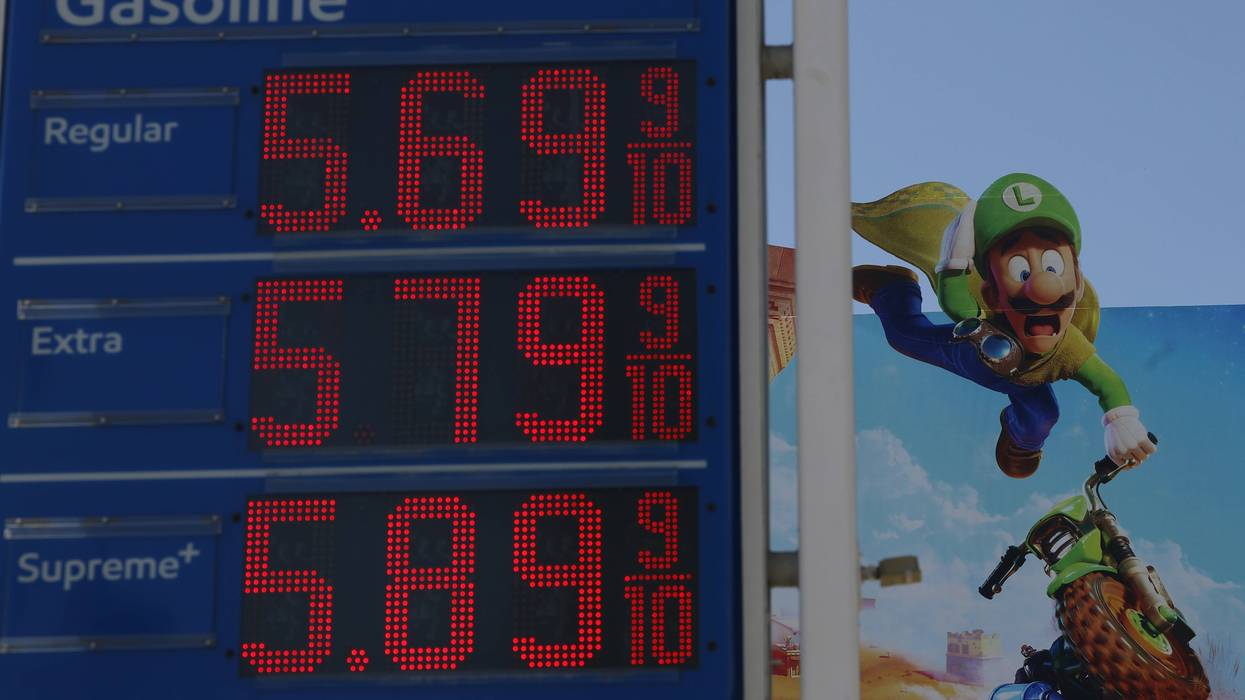
“Families across the United States are struggling to make ends meet in Donald Trump’s economy," Rep. Brendan Boyle (D-Pa.), the top Democrat on the House Budget Committee, said in a statement. "If high costs weren’t already bad enough, Donald Trump’s unnecessary war in Iran has sent gas prices through the roof."
A Harris Poll opinion survey conducted for The Guardian and released Friday found that more than 70% of US voters believe Trump's tariff regime has driven up their costs.
"In the short run, the economic impact of a sustained loss of Gulf oil could be very ugly."
Consumer sentiment, meanwhile, continued its steady decline in March, falling about 2% compared to last month, according to the University of Michigan's Surveys of Consumers. Roughly half of the interviews conducted for the consumer sentiment report were completed before the US and Israel began attacking Iran on February 28.
Joanne Hsu, director of the Surveys of Consumers, noted that "interviews completed prior to the military action in Iran showed an improvement in sentiment from last month, but lower readings seen during the nine days thereafter completely erased those initial gains."
"Gasoline prices have exerted the most immediate impact felt by consumers, though the magnitude of passthrough to other prices remains highly uncertain," Hsu noted. "A broad swath of consumers across incomes, age, and political affiliation all reported declines in expectations for their personal finances, down 7.5% nationally."
"Interviews completed after February 28 exhibited higher inflation expectations than those completed before that date," Hsu added.
The first six days of Trump's war on Iran cost US taxpayers over $11 billion, and the price tag is set to rise exponentially as the administration deploys thousands of additional troops to the Middle East and continues aggressively bombing Iran, which has retaliated in part by closing the Strait of Hormuz—choking off the flow of oil through the critical trade route and sending prices surging.
The Trump administration has sought to downplay skyrocketing oil prices even as it takes emergency action in an attempt to bring them down. The International Energy Agency said Thursday that the US-Israeli assault on Iran sparked "the largest supply disruption in the history of the global oil market."
Economist Paul Krugman warned Friday that "oil prices could easily go much higher," noting, "The US and other major economies are a lot less oil-dependent than they were in the 1970s, and even at $100 a barrel oil prices are not high enough to provoke a major crisis."
"In the short run, the economic impact of a sustained loss of Gulf oil could be very ugly," Krugman wrote. "I’ve seen some alarmists warn that a long war in the Gulf could lead to oil at $150 a barrel. That looks low to me."
"When will President Trump understand that Americans want lower prices, not more unnecessary wars?"
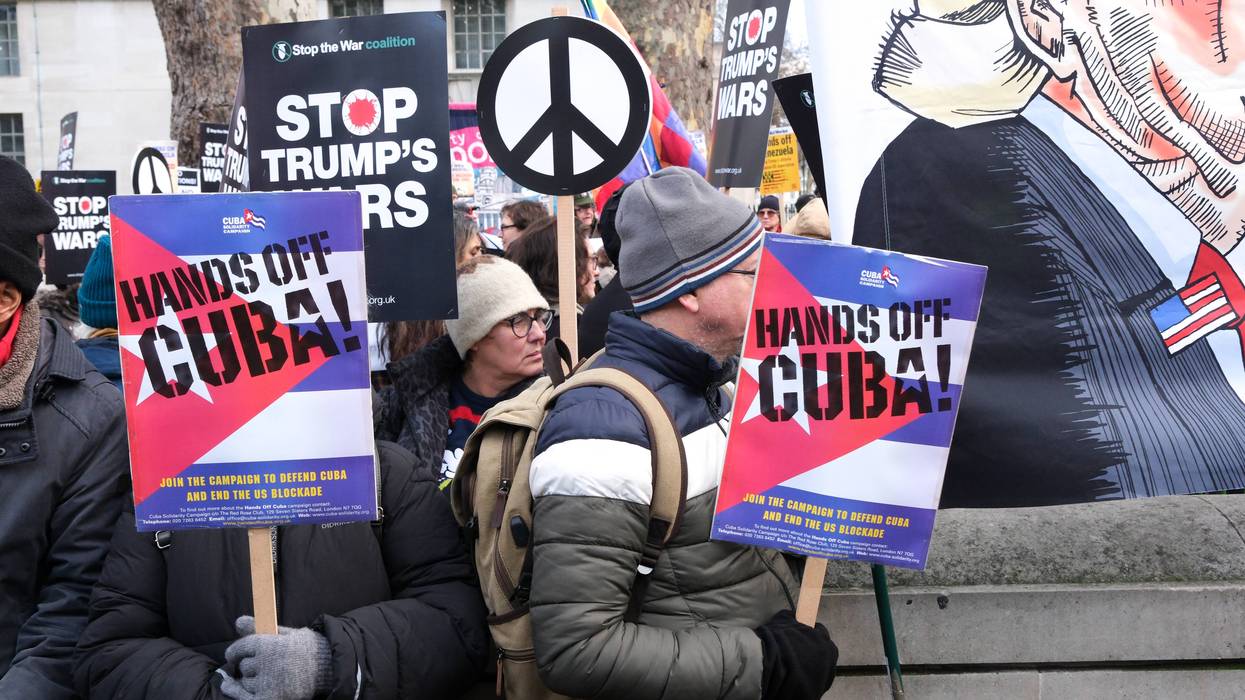
As President Donald Trump continued to face global criticism for his and Israel's joint assault on Iran, a trio of US Senate Democrats on Friday introduced a war powers resolution intended to prevent him from also attacking Cuba without congressional authorization amid talks with the island's government.
Despite the US Constitution empowering Congress to declare war, Trump this year has not only launched Operation Epic Fury against Iran but also killed dozens of Venezuelans and Cubans in a military invasion to abduct President Nicolás Maduro, sent troops to Ecuador for a joint campaign to combat "narco-terrorism," and blown up over 150 people allegedly trafficking drugs in Caribbean Sea and Pacific Ocean in bombings that critics have called "war crimes, murder, or both."
"When will President Trump understand that Americans want lower prices, not more unnecessary wars?" asked Sen. Tim Kaine (D-Va.), who is spearheading the Cuba measure with Sens. Adam Schiff (D-Calif.) and Ruben Gallego (D-Ariz.). A member of the Senate Armed Services and Foreign Relations committees, Kaine also led the war powers resolution on Iran that Sen. John Fetterman (D-Pa.) and nearly all Republicans blocked last week.
Despite constitutional limits, Trump "operates with the belief that the US military is a palace guard, ordering military action in the Caribbean, Venezuela, and Iran without Congress' authorization or any explanation for his actions to the American people," said Kaine. "We shouldn't risk our sons and daughters' lives at the whims of any one person."
The Biden administration intended to cut Cuba from the State Sponsors of Terrorism list, but Trump reversed course after returning to office last year and revived a list of "restricted entities" established during his first term. US Secretary of State Marco Rubio, the son of Cuban immigrants and longtime supporter of regime change on the island, also expanded a visa policy targeting Cuba's international medical missions.
Since Trump's operation to abduct Maduro and seize control of his country's nationalized oil industry—which led to protests in Venezuela and Cuba—Trump has also ramped up the United States' decades-long economic blockade against the island, cutting off shipments of Venezuelan oil, with dire consequences for the Cuban people.
As Marta Hurtado, a spokesperson for United Nations High Commissioner for Human Rights Volker Türk, explained last month: "Given the dependence of health, food, and water systems on imported fossil fuels, the current oil scarcity has put the availability of essential services at risk nationwide. Intensive care units and emergency rooms are compromised, as are the production, delivery, and storage of vaccines, blood products, and other temperature-sensitive medications."
Meanwhile, Trump and his allies have signaled they're considering an attack on the island. Trump told reporters late last month that "the Cuban government is talking with us," but also said that "maybe we'll have a friendly takeover of Cuba."
Just days later, after Trump ditched nuclear negotiations with Iran and teamed up with Israel to bomb the Middle Eastern country, Sen. Lindsey Graham (R-SC) declared during a Fox News interview: "Cuba's next. They're gonna fall."
Noting the rising death toll for US service members involved in the war on Iran, Schiff said Friday that "the American people have spoken loud and clear that they do not want any more costly wars of choice that skyrocket prices at home."
"The president's saber-rattling toward Cuba makes clear where his sights are next," he continued. "Congress must make its voice heard, or we risk involvement in another risky war of choice and losing our constitutionally granted authorities forever."
Gallego also highlighted how Trump's misadventures abroad are impacting US citizens, as Americans contend with surging gasoline prices on top of high costs for groceries, housing, and health insurance, plus massive cuts to social safety net programs that congressional Republicans and the president imposed with their budget package last year to give more tax cuts to the rich.
"As if the disaster of the Iran War and the resulting spike in oil prices weren't enough, Trump is now threatening to intervene in Cuba as well," said Gallego, a former Marine who served in the Iraq War. "He ran on America First, but now it's clear he's become a puppet of the war hawks in his party. The American people want nothing to do with nation building—they want lower prices, good healthcare, and affordable homes, not a new war to satisfy neoconservatives in South Florida."
The senators announced their resolution as Cuban President Miguel Díaz-Canel publicly confirmed that his government recently held "sensitive" talks with the Trump administration "to determine the willingness of both parties to take concrete actions for the benefit of the people of both countries. And in addition, to identify areas of cooperation to confront threats and guarantee the security and peace of both nations, as well as in the region."
According to The Associated Press:
US Secretary of State Marco Rubio and top aides met late last month in the Caribbean with the grandson of retired Cuban leader Raul Castro, two US officials said Friday shortly after Díaz-Canel spoke.
The US officials, who spoke on condition of anonymity because of the sensitivity of the discussions, said that Rubio had met secretly with Raúl Guillermo Rodriguez Castro on the sidelines of a Caribbean Community leaders meeting in St. Kitts and Nevis.
Rubio's meeting coincided with a shootout involving men on a Florida speedboat and Cuban forces that left five suspects dead and five others detained in Cuba, facing terrorism charges. The AP noted that when asked about that case on Friday, Díaz-Canel "said that FBI officials would visit Cuba soon as both countries continue to share information on the incident."
During his remarks to reporters, Díaz-Canel also noted the "tremendous" impact of the oil blockade, which has affected communications, education, healthcare, and transportation.
Sharing a clip of the Cuban leader's comments on social media, Progressive International co-general coordinator David Adler said: "I am asking you to imagine how a civilian population of over 10 million people can survive without any access to imported energy for three whole months. In Cuba, the United States is committing the most barbaric war crimes known to man—and Washington simply shrugs it off."