

SUBSCRIBE TO OUR FREE NEWSLETTER
Daily news & progressive opinion—funded by the people, not the corporations—delivered straight to your inbox.
5
#000000
#FFFFFF
To donate by check, phone, or other method, see our More Ways to Give page.
Daily news & progressive opinion—funded by the people, not the corporations—delivered straight to your inbox.
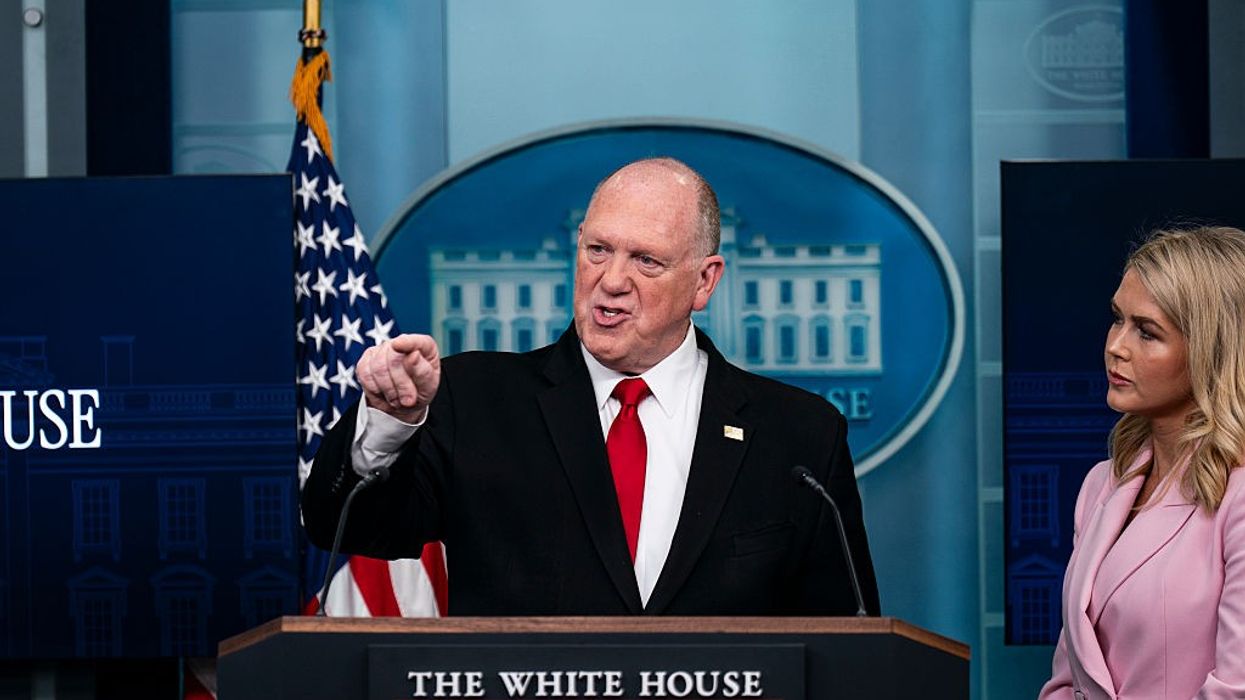
"We must not allow intimidation and authoritarian tactics to take root in our political system."
A coalition of advocacy organizations on Saturday expressed support for Wisconsin Gov. Tony Evers and warned that the Trump border czar's threat against the Democratic leader marks a "dangerous escalation" of the administration's assault on the rule of law across the United States.
The groups—including All Voting Is Local and the ACLU of Wisconsin—said in a joint statement that Evers' guidance to state officials on how to handle being confronted by federal agents was "a prudent measure aimed at ensuring compliance with state and federal laws while protecting the rights of state employees."
The suggestion by Tom Homan, a leader of President Donald Trump's mass deportation campaign, that Evers could be arrested for issuing such guidance undermines "the foundational principles of our democracy, including the separation of powers, the rule of law, and the right of state governments to operate without undue federal interference," the groups said Saturday.
"To threaten our governor over his legal directive is gross overreach by our federal government, and it is not occurring in a vacuum," they continued, warning that the administration's rhetoric and actions represent a "chilling attempt to normalize fascism."
"Similar occurrences are happening across the nation, including within our academic systems," the groups added. "If we do not reject these actions now, states and other institutions will only lose more and more of their autonomy and power. This is exactly why we underscore Gov. Evers' claim that this event is 'chilling.'"
The threats against Gov. Evers in Wisconsin undermine the foundational principles of our democracy: the separation of powers, the rule of law, and the right of state governments to operate without undue federal interference. We must reject this overreach. allvotingislocal.org/statements/w...
[image or embed]
— All Voting is Local (@allvotingislocal.bsky.social) May 3, 2025 at 9:58 AM
Trump administration officials and the president himself have repeatedly threatened state and local officials as the White House rushes ahead with its lawless mass deportation campaign, which has ensnared tens of thousands of undocumented immigrants and at least over a dozen U.S. citizens—including children.
In an executive order signed late last month, Trump accused "some state and local officials" of engaging in a "lawless insurrection" against the federal government by refusing to cooperate with the administration's deportation efforts.
But as Temple University law professor Jennifer Lee recently noted, localities "can legally decide not to cooperate with federal immigration enforcement."
"Cities, like states, have constitutional protections against being forced to administer or enforce federal programs," Lee wrote. "The Trump administration cannot force any state or local official to assist in enforcing federal immigration law."
Administration officials have also leveled threats against members of Congress, with Homan suggesting earlier this year that he would refer Rep. Alexandria Ocasio-Cortez (D-N.Y.) to the U.S. Justice Department for holding a webinar informing constituents of their rights.
During a town hall on Friday, Ocasio-Cortez dared Homan to do so.
"To that I say: Come for me," she said to cheers from the audience. "We need to challenge them. So don't let them intimidate you."
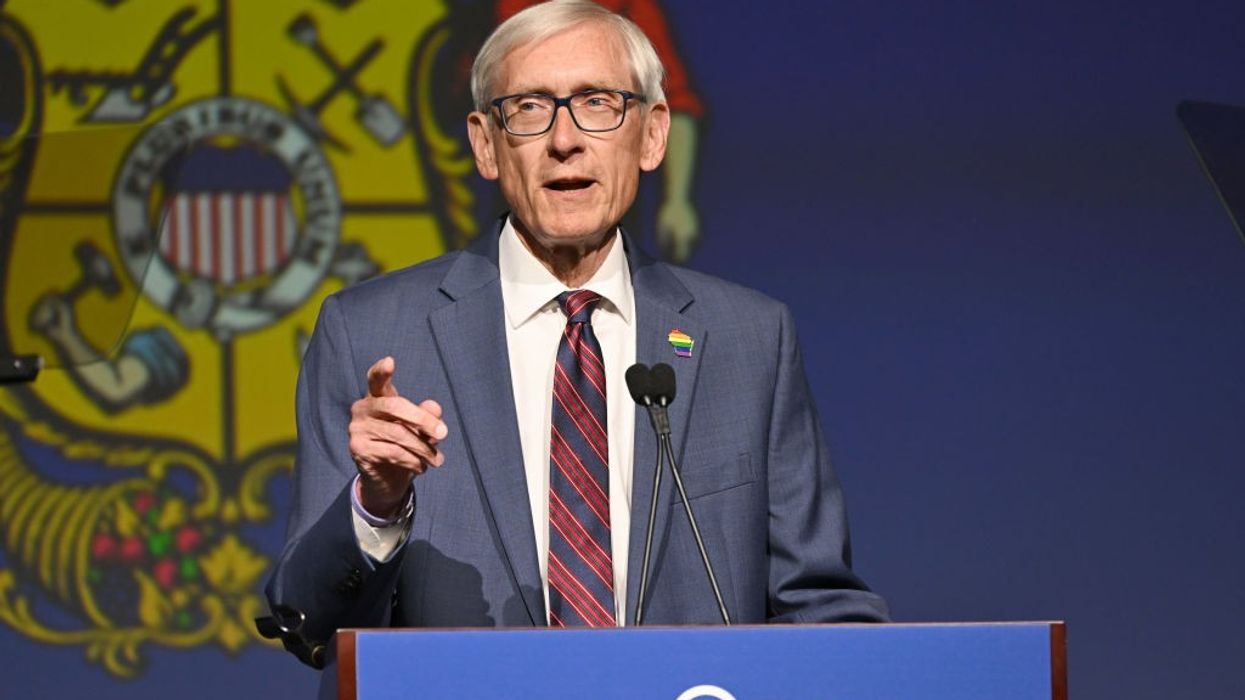
"We now have a federal government that will threaten or arrest an elected official—or even everyday American citizens—who have broken no laws, committed no crimes, and done nothing wrong."
Wisconsin Gov. Tony Evers hit back Friday after U.S. President Donald Trump's border czar suggested the Democratic leader could be arrested for distributing guidance to state employees on what to do if confronted by federal immigration agents.
The guidance is straightforward and unremarkable, instructing state employees to "stay calm," ask federal agents for their name and badge, contact an attorney, and decline to answer questions or provide agents access to any documents without a lawyer present.
"State employees may not grant [Immigration and Customs Enforcement] or another agent access to any such data or information absent authorization from their legal counsel pursuant to a valid judicial warrant," the guidance reads.
In a speech addressed to Wisconsinites and the nation, Evers said that the "goal of this guidance was simple—to provide clear, consistent instructions to state employees and ensure they have a lawyer to help them comply with all federal and state laws."
"But Republicans and their right-wing allies, including Elon Musk, lied about this guidance, spread misinformation, accused me of doing things I didn't do or say, and fueled a fake controversy of their own creation," Evers said.
One Republican member of the Wisconsin State Assembly on Friday morning posted an AI-generated image of Evers in handcuffs at the state capitol, with Trump standing behind him in police uniform.
"I'm used to Republicans and the right wing lying about me. It comes with the job," Evers said Friday. "But, this time, these lies came at a cost. I haven't broken the law. I haven't committed a crime. And I've never encouraged or directed anyone to break any laws or commit any crimes."
"But when President Trump's hand-picked appointee, Tom Homan, was asked about me and this guidance after he apparently threatened to arrest elected officials across the country, he said, 'Wait 'til you see what's coming,'" the governor continued. "Overnight, Republican lawmakers piled on, encouraging the Trump administration to arrest me."
Watch Homan's comments to reporters:
NEW: When asked about Wisconsin Governor Tony Evers telling state officials not to cooperate with ICE, Border Czar Tom Homan seems to signal arrests could be imminent:
“Wait until you see what’s coming. I meant what I said.” pic.twitter.com/xJxw5sBVY6
— Charlie Kirk (@charliekirk11) May 1, 2025
Homan's thinly veiled threat against Evers and other officials came days after FBI agents arrested Wisconsin Judge Hannah Dugan on obstruction charges alleging that she helped an undocumented immigrant evade arrest by misdirecting federal authorities. Dugan's legal team says she is innocent and will be vindicated in court.
Evers said Friday that Homan's threats are "chilling" and "should be of concern to every Wisconsinite and every American who cares about this country and the values we hold dear."
"These threats represent a concerning trajectory in this country," said Evers. "We now have a federal government that will threaten or arrest an elected official—or even everyday American citizens—who have broken no laws, committed no crimes, and done nothing wrong."
"And as disgusted as I am about the continued actions of the Trump administration, I am not afraid," he added. "I have never once been discouraged from doing the right thing, and I will not start today."
Watch Evers' remarks in full:
The Wisconsin governor's full address is transcribed below:
Good morning, Wisconsin. Governor Tony Evers here.
I’m speaking to you today as your governor but also as a concerned American.
Yesterday, a Trump administration official, in not so many words, apparently threatened to arrest me for distributing guidance that asked state agency employees to consult with an attorney if federal agents show up at state buildings with legal documents.
The goal of this guidance was simple—to provide clear, consistent instructions to state employees and ensure they have a lawyer to help them comply with all federal and state laws. Nothing more, nothing less.
But Republicans and their right-wing allies, including Elon Musk, lied about this guidance, spread misinformation, accused me of doing things I didn’t do or say, and fueled a fake controversy of their own creation.
Now, I’m used to Republicans and the right wing lying about me. It comes with the job. But, this time, these lies came at a cost. I haven't broken the law. I haven't committed a crime. And I’ve never encouraged or directed anyone to break any laws or commit any crimes.
But when President Trump's hand-picked appointee, Tom Homan, was asked about me and this guidance after he apparently threatened to arrest elected officials across the country, he said, "Wait 'til you see what's coming." Overnight, Republican lawmakers piled on, encouraging the Trump administration to arrest me.
Chilling threats like this should be of concern to every Wisconsinite and every American who cares about this country and the values we hold dear.
We live in the United States of America, folks. We are a country of laws. The rule of law matters. Following the law matters.
In this country, the federal government doesn't get to abuse its power to threaten everyday Americans. In this country, the federal government doesn’t get to arrest American citizens who have not committed a crime. In this country, we don't threaten to persecute people just because they belong to a different political party.
These threats represent a concerning trajectory in this country. We now have a federal government that will threaten or arrest an elected official—or even everyday American citizens—who have broken no laws, committed no crimes, and done nothing wrong.
And as disgusted as I am about the continued actions of the Trump administration, I am not afraid. I have never once been discouraged from doing the right thing, and I will not start today.
I swore an oath when I took this office to support the Constitution of the United States and the Constitution of the state of Wisconsin and to faithfully discharge the duties of this office to the best of my ability. I will never waver from that promise.
I hope and pray every elected and appointed official in this country, including the president of the United States of America, will do the same.
Forward, and for Wisconsin, always.
Thank you.
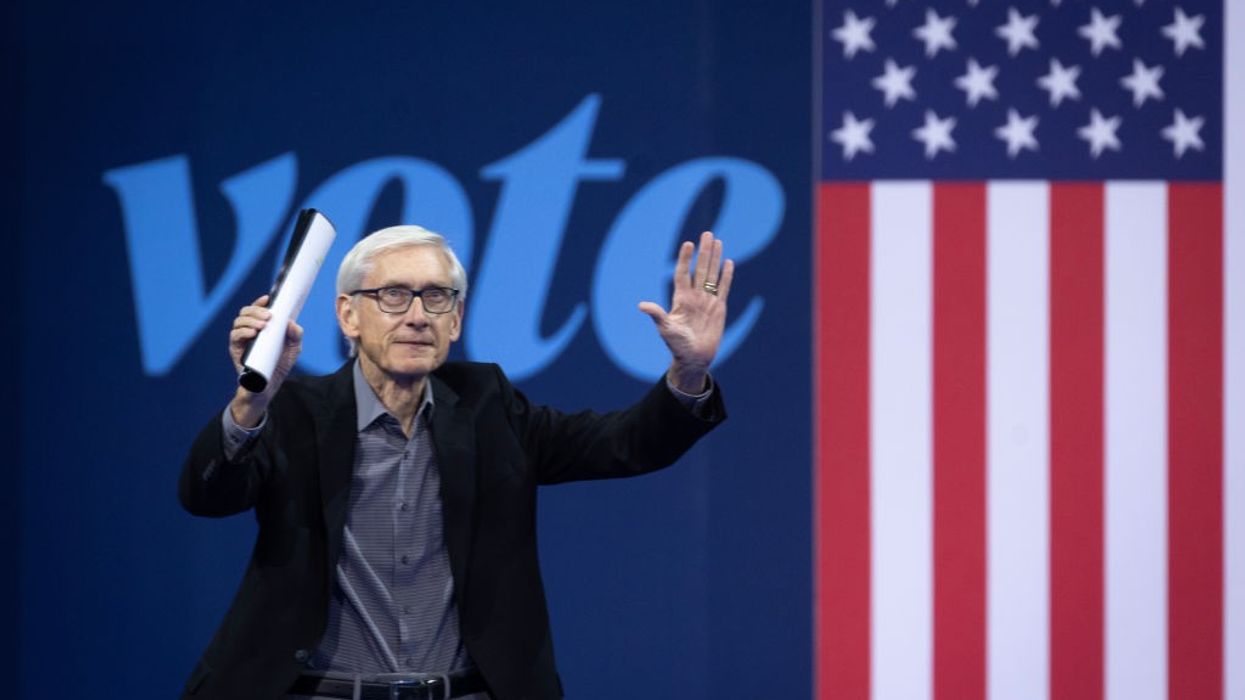
Gov. Tony Evers' suggested priorities for state ballot measures include abortion rights, expanding public healthcare for low-income people, gun safety reform, and marijuana legalization.
Amid discussions across the United States about how to fight for progressive policies given the federal government's looming Republican trifecta, Democratic Wisconsin Gov. Tony Evers on Wednesday renewed his call for letting voters in his state initiate ballot measures.
" Republicans' message to Wisconsinites is crystal clear—anything that gives the people of Wisconsin a voice and direct input on the policies of our state is 'dead on arrival,'" Evers said in a Wednesday statement. "That's breathtaking."
Wisconsin is among the two dozen U.S. states that don't allow citizen-initiated ballot measures, according to Ballotpedia. In the Badger State, only lawmakers can put a proposed constitutional amendment on the ballot, after it passes two consecutive legislative sessions.
Evers, who is halfway through his second term, is fighting for a citizen-initiated option, despite opposition from Republican state lawmakers. The governor is including his proposal for ballot measures from voters in his budget for 2025-27, as he detailed in a video posted on social media.
"The will of the people should be the law of the land. Republican lawmakers have repeatedly worked to put constitutional amendments on the ballot that Republicans drafted, and Republicans passed, all while Republicans refuse to give that same power to the people of Wisconsin. And that's wrong," Evers told reporters on Friday, according to the Milwaukee Journal Sentinel.
Despite new political maps for the November elections, Republicans retained control of the Wisconsin State Legislature, with a 54-45 majority in the Assembly and 18-15 majority in the Senate. Key lawmakers, including Assembly Speaker Robin Vos (R-63) and Senate Majority Leader Devin LeMahieu (R-9), have made their opposition to Evers' proposal clear.
While opposing Evers' effort to boost direct democracy in the state, Wisconsin's Republican legislators have taken advantage of the state's existing process. The Senate on Wednesday voted along party lines for a proposed constitutional amendment to require voter ID for elections—continuing a trend from last year.
Evers' office explained that "Wisconsinites saw five statewide referenda questions in 2024—the most in a single year in over four decades, according to a report from the Milwaukee Journal Sentinel—all of which were drafted, legislatively passed, and placed on the ballot by Republican lawmakers, largely without direct input from the people of Wisconsin."
The governor said Wednesday that "Republican lawmakers in the next week are set to add yet another constitutional amendment to the ballot while telling Wisconsinites they can't have that same power. If Republicans are going to continue to legislate by constitutional amendment, then they should be willing to give Wisconsinites that same opportunity. Pretty simple stuff."
His office also suggested some potential ballot measure priorities: "legalizing and regulating marijuana, ensuring access to safe and legal abortion, expanding BadgerCare, and enacting commonsense gun safety reform policies."
Amid a fresh wave of Republican policymakers' attacks on reproductive freedom in the wake of the U.S. Supreme Court's right-wing majority reversing Roe v. Wade in 2022, several states have passed protections via ballot measures, including 7 of 10 states in November. Another top priority in recent cycles has been measures to help workers, including raising the minimum wage.
"As Americans prepare for the conservative headwinds in Washington, ballot measures offer a way to circumvent regressive political agendas and partisan gridlock to make change for working families, according to the Fairness Project, an advocacy group that supports progressive citizen-led initiatives.
The Fairness Project last month released a report detailing how it "has an unmatched number of victories on progressive ballot measure campaigns across the country, having won a total of 39 campaigns across 20 states since 2016," including nine efforts in the last cycle.
"We won in some of the deepest red, most conservative places in our country," noted Kelly Hall, the group's executive director, in a statement. "We won against vehement opposition and politicians who tried to stack the odds in their favor. And we won on issues like abortion, paid leave, and raising the minimum wage—issues politicians have failed to advance for their constituents for decades."
"We're not stopping. In fact, we're going on offense," Hall added. "The power of ballot measures is that the American people don't have to wait—they can make change themselves. And we intend to support them with everything we have."
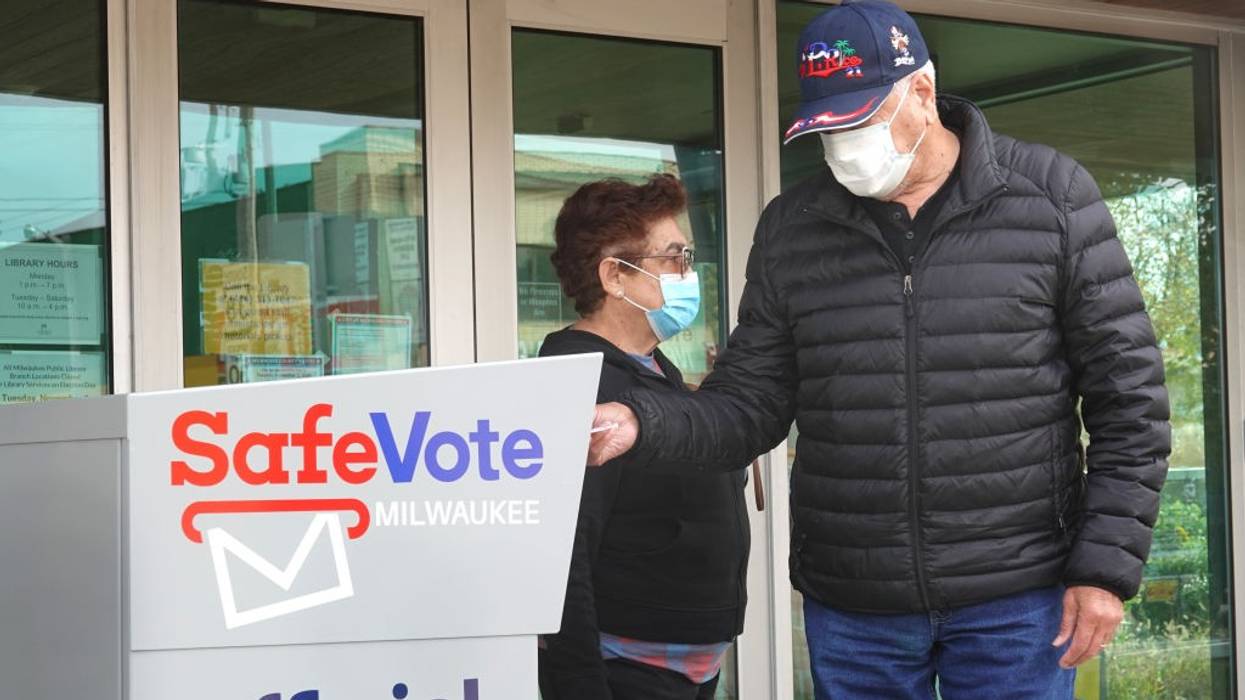
"At the very heart of our democracy is the fundamental freedom to vote," said Democratic Gov. Tony Evers. "This is a victory for our democracy."
Democracy defenders in Wisconsin celebrated on Friday after the state Supreme Court ruled that absentee ballot drop boxes can be located throughout communities for the November elections, reversing a decision from two years ago, when there was a majority of right-wing justices.
"Wisconsin voters won big today with the decision to reinstate drop boxes across the Badger State," said All Voting is Local Wisconsin state director Sam Liebert in a statement. "Drop boxes are an incredibly popular form of voting that offer greater access to the elections for those who may not be able to wait in line at the polls, particularly those with disabilities."
"Wisconsin voters should have more options, and drop boxes are a secure and easy way to increase civic participation and ensure voters have another safe, secure, and accessible way to cast their ballot," Liebert added.
Common Cause Wisconsin co-chair Penny Bernard Schaber, whose group joined an amicus brief to the court in May, also welcomed the ruling, saying that "reinstating the use of secure ballot drop boxes is good for all of us in Wisconsin."
"It is especially good for individual voters who have mobility issues and time constraints that make it difficult for them to go into and out of a polling place or an election clerk's office," the former Democratic state representative similarly stressed. "Secure ballot drop boxes are a necessary and safe way to return our ballots."
Congressman Mark Pocan (D-Wis.) declared: "This is huge news for democracy! Making it easier for folks to vote is a good thing."
Common Cause Wisconsin pointed out that "voter drop boxes have been used since before 2016 and in 2020-21, during the height of the Covid-19 pandemic, the number of drop boxes was expanded to 570 located in 66 of Wisconsin's 72 counties. The expanded number of drop boxes, authorized by the bipartisan Wisconsin Elections Commission (WEC), offered voters a more convenient and safe way to ensure that their absentee ballots could be returned in time to be counted, in part because of the uncertainty of timely delivery of ballots by the U.S. Postal Service."
Justice Ann Walsh Bradley wrote in the majority opinion that "our decision today does not force or require that any municipal clerks use drop boxes. It merely acknowledges what Wis. Stat. § 6.87(4)(b)1. has always meant: that clerks may lawfully utilize secure drop boxes in an exercise of their statutorily-conferred discretion."
She was joined by the other three liberals, including Justice Janet Protasiewicz, whose election last year ended right-wing control of the court. Wisconsinites are preparing for a similar electoral battle next year, when Walsh Bradley plans to retire.
The court earlier this week agreed to take up a pair of high-profile abortion cases. Late last year, the liberal majority threw out Wisconsin's legislative maps, which were rigged to favor Republicans. Democratic Gov. Tony Evers signed new maps in February.
Applauding the ruling on Friday, Evers said that the court "affirmed what we've been saying all along: Drop box voting is safe, secure, and legal, and local clerks should be empowered to make decisions that make sense for their local communities."
"At the very heart of our democracy is the fundamental freedom to vote," he continued. "This is a victory for our democracy. And we're going to keep fighting to ensure that every eligible voter can cast their ballot safely, securely, and as easily as possible to make sure their voices are heard."
The decision comes as Wisconsin is expected to play a key role in this year's contest for the White House. Democratic President Joe Biden, who is now seeking reelection and campaigning in Wisconsin on Friday, won the state by about 20,000 votes in 2020, when he beat former President Donald Trump, now the presumptive Republican nominee.
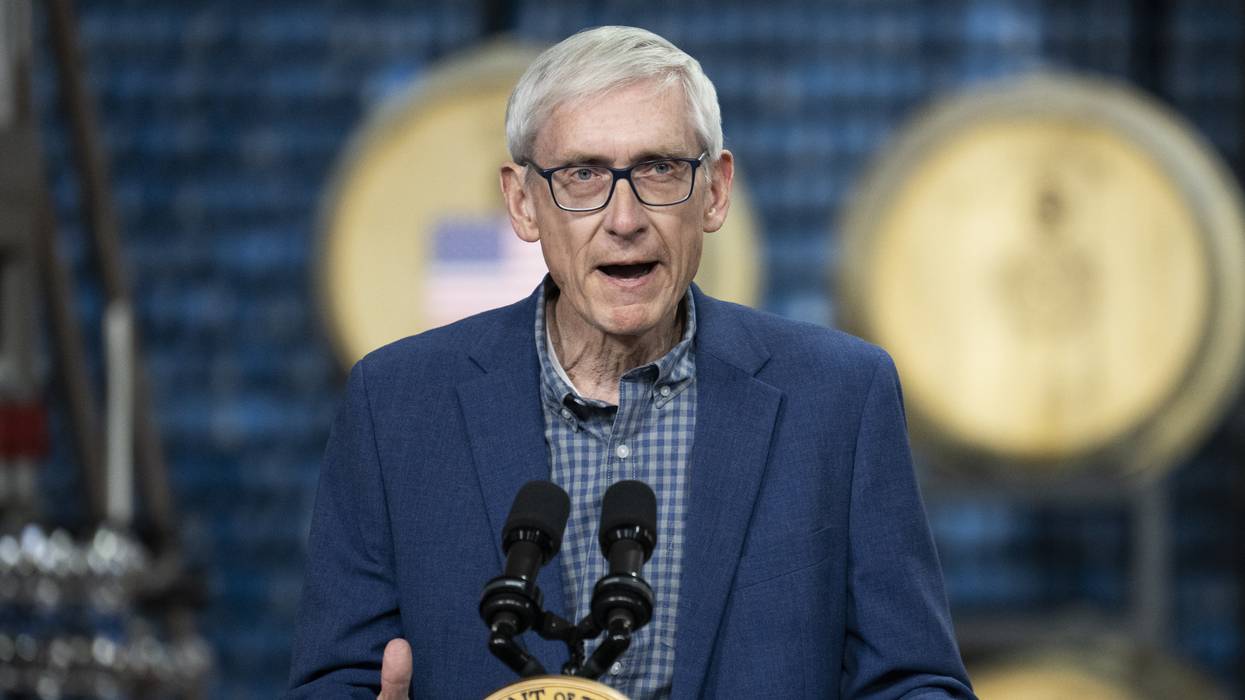
"Wisconsin, for the first time in over a decade, we will not have some of the most gerrymandered maps in America," Evers said.
For the first time since 2011, Wisconsin has state Assembly and Senate maps that do not unconstitutionally favor Republican candidates.
Gov. Tony Evers, a Democrat, signed new legislative maps into law on Monday that were crafted by his office and approved by the state Supreme Court.
"I've promised from the beginning that I will always try to do the right thing. Today, I'm keeping that promise and I'm signing fair maps for Wisconsin," Evers said in a statement posted on social media. "Wisconsin, for the first time in over a decade, we will not have some of the most gerrymandered maps in America."
"This is a win for Wisconsinites, who for decades have suffered under maps that Republicans gerrymandered to protect their power and allow themselves to obstruct action on popular policies while avoiding accountability at the ballot box."
Evers said that Wisconsin was a "purple state," and that its maps "should reflect that basic fact."
"The people should get to choose their elected officials, not the other way around," Evers continued.
Wisconsin has been one of the most gerrymandered states in the nation since 2011, when Republican lawmakers redrew the state's maps under Gov. Scott Walker. In one recent example, the GOP made so many alterations to the 73rd Assembly District in 2022 that residents said it looked like a Tyrannosaurus rex, according to ProPublica.
Fair election groups saw a chance to challenge the maps in August 2023, when the state's Supreme Court flipped from a conservative to liberal majority with the swearing in of Justice Janet Protasiewicz, who had criticized the maps during her campaign. Advocacy groups and law firms filed a suit on behalf of 19 Democratic Wisconsin voters, and, in December, the court ruled that the maps were unconstitutional because the districts were not "composed of physically adjoining territory" as the state Constitution requires.
The court asked different groups to submit new maps and tasked University of California, Irvine political scientist Bernard Grofman and Carnegie Mellon University political scientist Jonathan Cervas with reviewing them, as Wisconsin Public Radio reported. The experts determined that maps submitted by Evers, the Wisconsin Democrats behind the lawsuit, Democratic state senators, and a group of independent mathematicians were competitive, while two by the state legislature and the conservative Wisconsin Institute for Law and Liberty amounted to gerrymandering. Though Evers' maps are slightly more favorable to Republican candidates, the court determined that, using his maps, "the party that wins the most votes will win the most seats."
"The governor's maps are pretty darn good," said Jay Heck, the executive director of Common Cause Wisconsin.
The resolution to the fight over Wisconsin's maps came as something of a surprise, as Republican lawmakers had initially opposed Evers' maps before introducing them last week and passing them through both the Assembly and Senate. GOP legislators said they decided that the governor's maps were their best option.
"This fall Republicans will prove that we can win on any maps because we have the better policy ideas for the State of Wisconsin," Assembly Speaker Robin Vos, (R-63) said, as Wisconsin Public Radio reported.
Most Democrats voted against the maps out of concern that the GOP was not acting in good faith and was in fact preparing a new legal challenge.
"I am voting no because I do not trust what you guys are up to," Sen. Chris Larson, a Milwaukee Democrat, said, as ProPublica reported.
Good governance groups, however, applauded the development.
"This is a win for Wisconsinites, who for decades have suffered under maps that Republicans gerrymandered to protect their power and allow themselves to obstruct action on popular policies while avoiding accountability at the ballot box," Chris Walloch, executive director of A Better Wisconsin Together, said in a statement.
Walloch added that Evers' maps were "a more fair and accurate representation of Wisconsin's diverse communities than other maps proposed by Republicans" and that they would give Wisconsin voters "a renewed chance for competitive elections and a truly representative government for all." He also expressed gratitude to the state Supreme Court and Evers for making the new maps possible.
Walloch concluded: "We deserve a legislature that represents us as constituents and prioritizes our best interests. MAGA faction politicians and their special interest allies have gone to great lengths, and great expense, to protect a rigged system that benefited them, and we will continue to hold accountable any politician who attempts to obstruct today's progress."
The Democratic Legislative Campaign Committee (DLCC) said they saw the new maps as an opportunity, especially since the entire Wisconsin Assembly and half of its Senate are up for re-election in November, when the new maps will be in use.
"While we still have more work to do to ensure fair representation in each and every Wisconsin community, with these new maps in place, the Democratic Legislative Campaign Committee reaffirms its commitment to reverse the Republican takeover of this state and shift the balance of power in both the Wisconsin Assembly and the Wisconsin Senate," committee president Heather Williams said in a statement.
"Wisconsin is a top priority for the DLCC in 2024, and we're already hard at work building the campaigns that will fuel our legislative gains this fall," Williams continued. "The time for fair representation in Wisconsin is long overdue, and we are building winning campaigns and sustainable infrastructure to build power this cycle and ultimately take back both majorities."
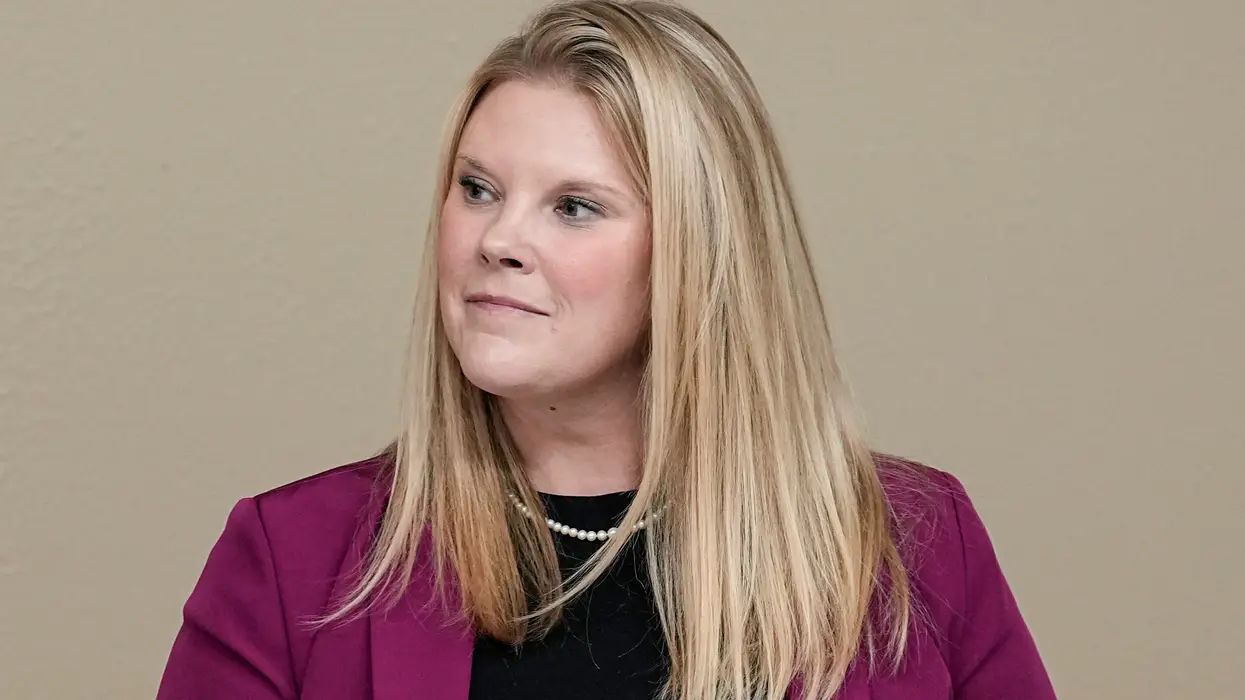
One expert said Republicans are using "extreme tactics" like the Senate vote and threats of impeaching a state Supreme Court justice "to subvert fair elections and maintain anti-democratic grip on power."
Democratic Wisconsin Attorney General Josh Kaul on Thursday swiftly filed a lawsuit after Republican senators attempted to oust the state's top election official, Meagan Wolfe, despite arguments that they lacked authority to do so.
The Wisconsin Senate's 22-11 party-line vote on Wolfe was "a bid to give election deniers and conspiracy theorists more control over how elections are run in the state," explained Mother Jones national voting rights correspondent Ari Berman.
"That follows threats by Republican legislative leaders to impeach newly elected state Supreme Court Justice Janet Protasiewicz before she has even ruled on a case," he added, "so that the court's new 4-3 liberal majority will be unable to strike down the heavily gerrymandered maps that have been integral to the GOP's stranglehold over the Legislature for the past decade-and-a-half."
Wolfe began serving as interim administrator of the Wisconsin Elections Commission (WEC) in early 2018 and was unanimously confirmed by the state Senate the following year. As Politico reported Thursday:
Wolfe's position is a nonpartisan, nonvoting one tasked with implementing the decisions made by the three Democratic and three Republican commissioners.
As the head of the commission, Wolfe has been the target of GOP attacks following the 2020 presidential election, when President Joe Biden narrowly beat former President Donald Trump in the state. Wolfe has garnered vitriol from Republicans who amplified Trump's false claims about widespread fraud in the election.
The administrator's term expired on July 1, but the WEC's three Democrats abstained from voting to renominate Wolfe because they feared GOP senators would refuse to confirm her and, as Kaul highlighted last month, "the Wisconsin Supreme Court has squarely held that a holdover appointee may legally remain in office following the expiration of the term."
GOP legislators—led by Senate Majority Leader (R-9) Devin LeMahieu—went ahead with the vote on Thursday even though "the Republicans' own lawyers, as well as the state's Democratic attorney general, told the senators before the vote that they didn't have the authority to remove Meagan Wolfe," according to The Washington Post.
"Wisconsin Republicans' attempt to illegally fire Wisconsin's elections administrator without cause today shows they are continuing to escalate efforts to sow distrust and disinformation about our elections, denigrate our clerks, poll workers, and election administrators, and undermine basic tenets of our democracy, including the peaceful transfer of power," declared Democratic Gov. Tony Evers.
Referencing a "bogus" bill unveiled earlier this week by GOP leaders, the governor said that "just days after Republicans announced they want Legislature-picked, Legislature-approved map drawers to conduct redistricting, Republicans today demonstrated why they cannot be trusted with that important responsibility—because they will threaten, intimidate, punish, and even attempt to illegally fire anyone who stands in the way of their relentless pursuit to retain political power."
"Our chief election administrator is a consummate, qualified professional who's worked in voter registration and outreach and election security for more than a decade—experience that I have no doubt was among the reasons she was unanimously confirmed by many of these same Republicans just a few years ago," he added. "I'm requesting the Wisconsin Department of Justice provide immediate representation to defend Ms. Wolfe so she can remain in this important role."
The Wisconsin attorney general, who filed a complaint in Dane County Circuit Court, said that "the story today is not what the Senate has purported to do with its vote. It's that the Senate has blatantly disregarded state law in order to put its full stamp of approval on the ongoing baseless attacks on our democracy."
"We are going to court to minimize the confusion resulting from today's stunt," Kaul continued, "and to protect a pillar of our democracy—the fair administration of elections."
The Cap Times reported that "there is no formal appeals process for Wolfe to tap in order to push back against her ousting, according to the Wisconsin Legislative Council, a nonpartisan agency that provides legal and policy analysis for the Legislature. That leaves a lawsuit as her only option."
Wolfe welcomed the lawsuit and confirmed that she will continue to serve as administrator unless a majority of the WEC or a court orders her out. She said that "the Senate's vote today to remove me is not a referendum on the job I do but rather a reaction to not achieving the political outcome they desire."
The controversy comes as the state prepares for next year's elections. At the presidential level, Biden is seeking reelection and Trump is currently the GOP front-runner, despite facing four criminal cases—including two related to his efforts to overturn the 2020 results—and arguments that inciting the January 6, 2021 insurrection constitutionally disqualifies him from holding office.
"I think it's really worrisome because we're in the final stages of preparation for the 2024 elections," Barry Burden, a political scientist at the University of Wisconsin-Madison and director of its Elections Research Center, told the Post. "The elections commission is training clerks around the state and issuing guidance, so to have uncertainty about who the top administrator is going into this crucial election season, I think is a real problem."
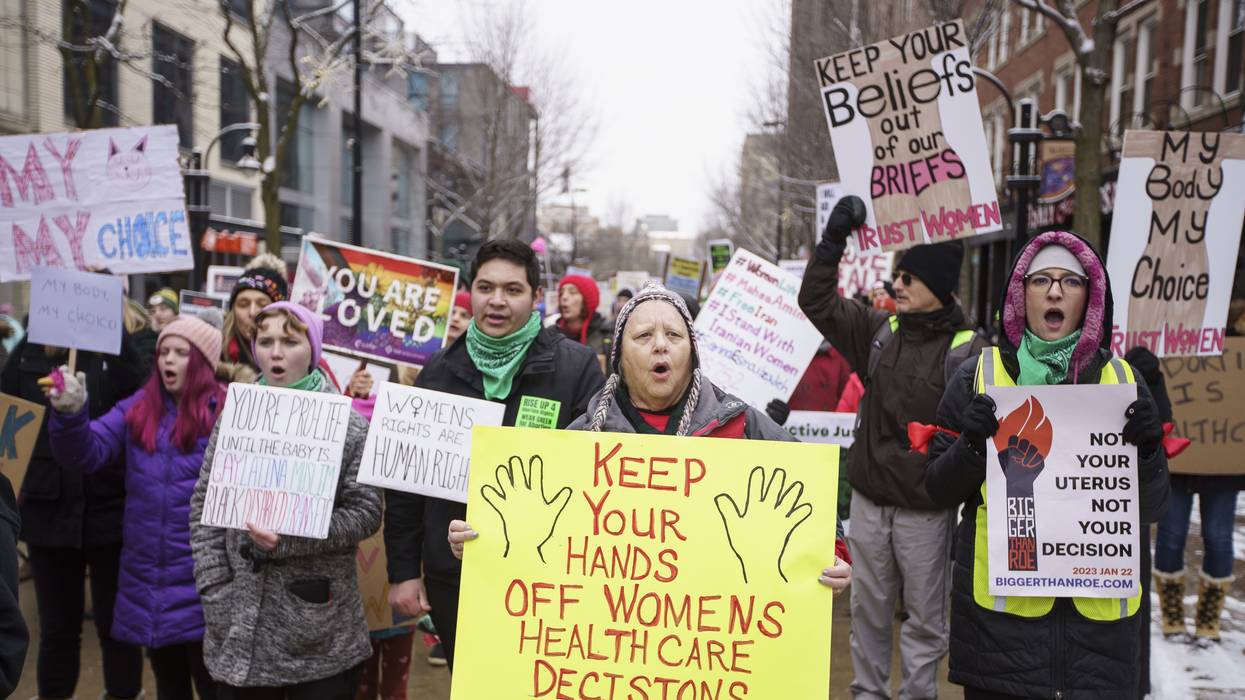
While welcoming the shift, Gov. Tony Evers also stressed that the broader battle is far from over and "I will keep fighting like hell every day until Wisconsinites have the right to make their own healthcare decisions."
Wisconsin residents, reproductive rights advocates, and Democratic political leaders on Thursday celebrated after Planned Parenthood announced that it will resume abortion care at Madison and Milwaukee clinics next week following a recent court ruling.
"With patients and community as our central priority and driving force, we are eager to resume abortion services and provide this essential care to people in our state," said Planned Parenthood of Wisconsin (PPWI) president and CEO Tanya Atkinson in a statement.
"With the recent confirmation from the court that there is not an enforceable abortion ban in Wisconsin, our staff can now provide the full scope of sexual and reproductive healthcare to anyone in Wisconsin who needs it, no matter what," added Atkinson.
After the U.S. Supreme Court's right-wing majority reversed Roe v. Wade last year, PPWI stopped providing abortion care due to uncertainty over an 1849 Wisconsin law—which is still being challenged and expected to eventually reach the state Supreme Court.
As Atkinson explained in a two-minute video posted on social media Thursday, PPWI decided to resume care after Dane County Judge Diane Schlipper ruled in July that "there is no such thing as an '1849 abortion ban' in Wisconsin."
Schlipper determined that the law only applies to feticide, or the act of killing a fetus, and wrote that "a physician who performs a consensual medical abortion commits a crime only 'after the fetus or unborn child reaches viability.'"
The Guttmacher Institute—which tracks state-level policy changes on abortion rights across the country—declared Thursday on X, formerly Twitter, that "this is a win for people in Wisconsin seeking care, advocates, and providers!"
The pause on abortion care in Wisconsin forced patients to continue dangerous or unwanted pregnancies, self-manage abortions, or seek care elsewhere—such as in Democrat-controlled Illinois, which is surrounded by states with strict anti-choice laws, including Wisconsin, and has been flooded with "abortion refugees" since the Roe reversal.
"The ability to provide abortion services in Wisconsin again is crucial to being able to address the full scope of care for our patients," PPWI associate medical director Dr. Allie Linton said Thursday. "Patients who walk through our doors can again know they will receive the comprehensive, high quality, nonjudgmental, and confidential reproductive care they deserve."
In a statement welcoming PPWI's decision, Democratic Wisconsin Gov. Tony Evers noted that Schlipper's ruling in July stemmed from an attempt to dismiss a lawsuit that he and state Attorney General Josh Kaul filed to clarify that the 1849 law could not be used to prevent abortion care.
"I've been clear from the beginning that I would fight to restore reproductive freedom in our state with every power and every tool we have, and I've spent every day over the last year doing just that," said Evers. "This is critically important news for Wisconsin women and patients across our state who, for a year now, have been unable to access the healthcare they need when and where they need it."
"But I also want to be clear today: I will never let up. And we must not let up. Our fight to restore the same reproductive rights and freedoms Wisconsinites had up until the day the U.S. Supreme Court overturned Roe must continue," he added. "I will keep fighting like hell every day until Wisconsinites have the right to make their own healthcare decisions without interference from politicians who don't know anything about their lives, their family, or their circumstances."
Other Democratic political leaders in Wisconsin who applauded the development included former Lt. Gov. Mandela Barnes, Secretary of State Sarah Godlewski, U.S. Sen. Tammy Baldwin, and Congresswoman Gwen Moore, who has previously spoken about her decision, as a low-income 19-year-old mother, to end her second pregnancy before Roe.
Praising PPWI's announcement as "an important step toward restoring reproductive freedom for everyone in our state," Opportunity Wisconsin said that "no Wisconsinite should face a massive financial burden just to access the basic healthcare services they need."
The coalition also called out Wisconsin Republicans in Congress who have joined their GOP colleagues in blocking federal legislation that would affirm abortion rights nationwide.
Abortion—and specifically, fights over the 1849 law—was a key issue in the April election in which voters elected Milwaukee County Judge Janet Protasiewicz to the Wisconsin Supreme Court, which now has a liberal majority for the first time in 15 years. Republicans in the state Legislature are threatening to impeach her before she even hears a case.
"Wisconsin Republicans are threatening to impeach Justice Protasiewicz for one reason: to stay in power," Moore said Sunday. "They know they're outnumbered on issues like abortion, so the only way to keep their extreme policies in place is to subvert the will of the voters."
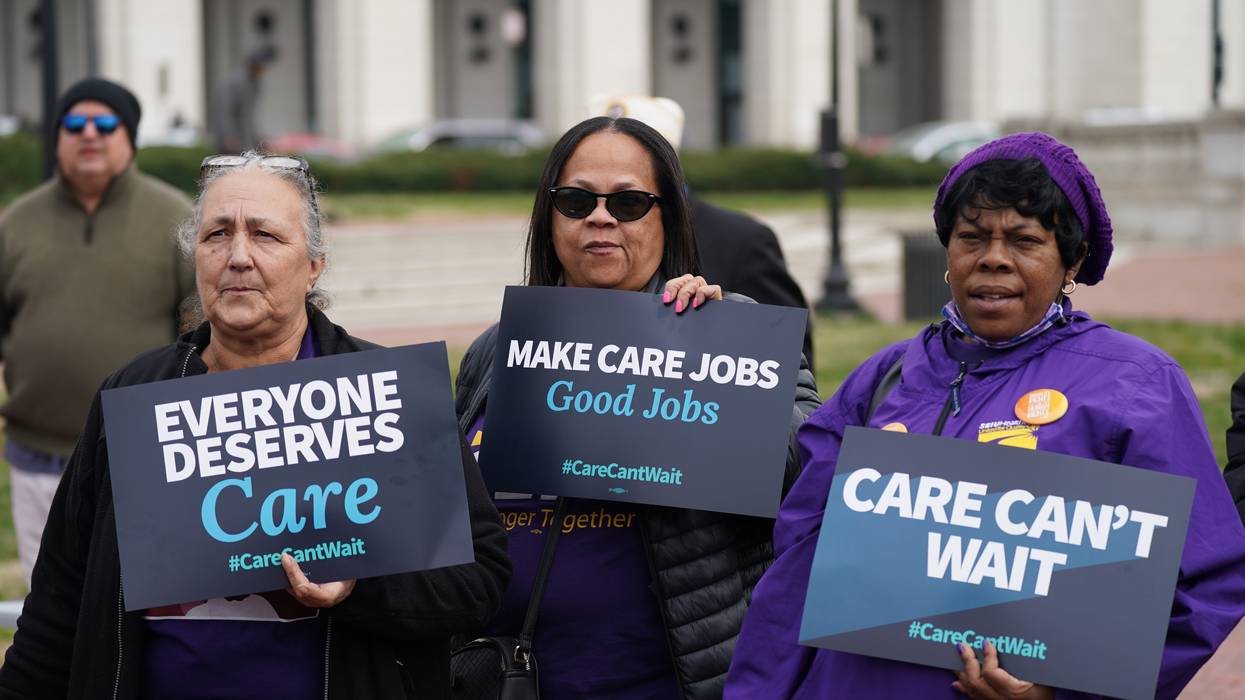
"Healthcare for so many people, most of whom have limited resources and are struggling with chronic health conditions, is critical and cannot lapse."
More than 3 million kids across the United States could lose childcare and nearly 7 million patients could lose access to primary care if Congress doesn't approve funding by September 30.
But lawmakers in both the House and Senate left town for August recess late last week after making little noticeable progress toward averting the looming care funding cliffs and keeping the federal government open.
Unless Congress acts by the end of September, the government will shut down—a potential outcome that Republicans are using as leverage to pursue painful spending cuts to education, childcare programs, environmental protection, and more.
The Senate is set to return from recess on September 5 and House lawmakers will be back in Washington, D.C. on September 12, leaving them with little time to prevent disaster.
The Century Foundation warned in a recent report that roughly 3.2 million children could lose their childcare spots—and more than 230,000 childcare workers could lose their jobs—if Congress allows emergency funding provided under the American Rescue Plan to expire without any additional investments.
In a memo released last month, the National Women's Law Center and other advocacy organizations called for an investment of at least $16 billion per year to "stave off shrinking childcare spots, staffing shortages, and rising prices that will disrupt both families and our economy writ large."
"Allowing the [American Rescue Plan] supplemental funding to expire without providing new childcare funding would mean fewer families eligible for childcare assistance, more eligible families on the waiting list for assistance, more burdensome copayments for families receiving assistance, and stagnant or reduced payments to childcare programs," the groups said.
The potential lapse of childcare funding has sent states scrambling to prepare.
Last week, Democratic Wisconsin Gov. Tony Evers delivered an address warning that if the state Legislature doesn't act quickly, "2,110 childcare programs could close their doors, we could lose over 4,800 childcare jobs, and over 87,000 children could be left without care" once American Rescue Plan funding runs out.
"That would be a catastrophe for our state's economy, workforce, and businesses, potentially causing about half a billion dollars in economic impacts across our state," Evers said.
Advocates and progressive lawmakers are also sounding the alarm over the possible expiration of community health center funding at the end of next month.
While the House Energy and Commerce Committee has passed legislation that would boost health center funding by $4.2 billion annually for the next two years, the Senate has yet to reach an agreement.
Sen. Bernie Sanders (I-Vt.), the chair of the Senate Health, Education, Labor, and Pensions (HELP) Committee, wants to go further. Last month, Sanders introduced legislation that would invest $20 billion over a five-year period into expanding community health centers—which provide care to around 30 million people nationwide—and boost funding for doctors, nurses, and other healthcare workers.
As The Washington Post reported Tuesday, Sen. Bill Cassidy (R-La.)—the top Republican on the Senate HELP Committee—"slammed [Sanders'] proposal as 'partisan legislation that cannot pass the Senate.'"
"Sanders wound up canceling a planned markup of his bill," the Post added. "Instead, he pledged to work with lawmakers on the committee—such as Sen. Roger Marshall (R-Kan.)—to have legislation ready by the first week of September."
The National Association of Community Health Centers (NACHC) recently estimated that "almost 7 million patients will lose access to care if Congress does not extend health center funding."
"Healthcare for so many people, most of whom have limited resources and are struggling with chronic health conditions, is critical and cannot lapse," Rachel Gonzales-Hanson, NACHC's interim president and CEO, said in a statement last month.
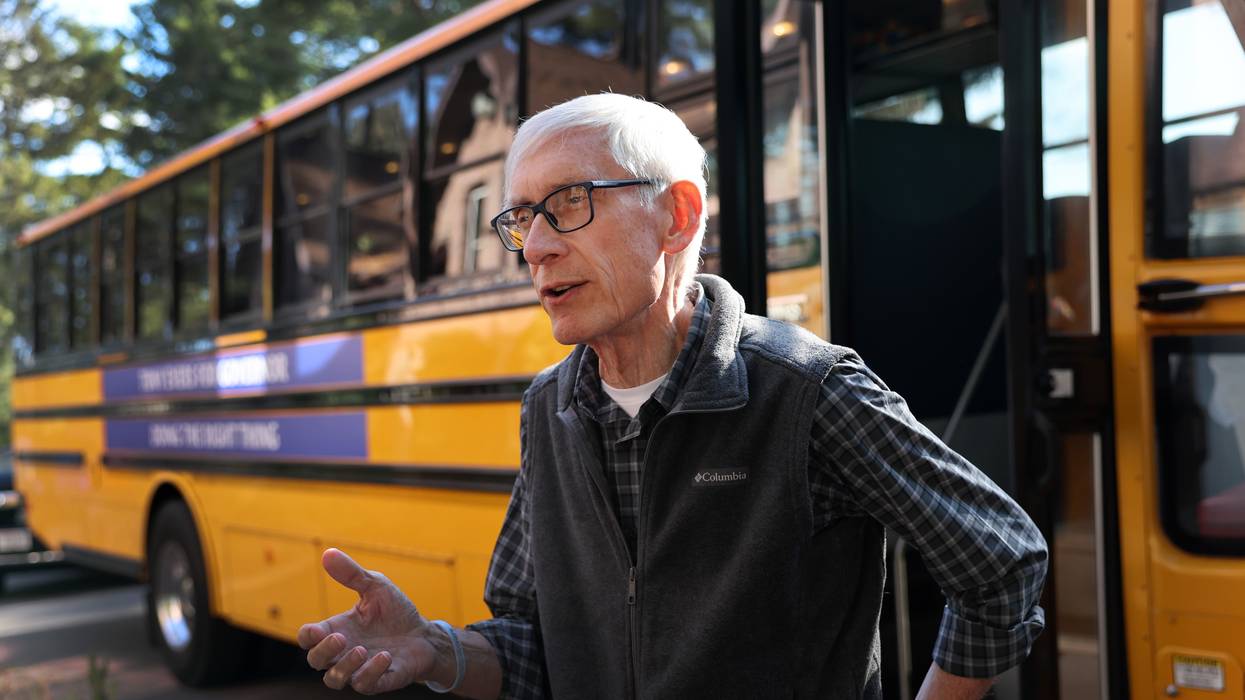
"This is how you're supposed to legislate," said Nina Turner.
Among the dozens of Democratic Wisconsin Gov. Tony Evers' line-item vetoes for state Republicans' two-year budget on Wednesday was a move to boost funding for public education for the next four centuries.
The budget approved by Wisconsin lawmakers hiked the revenue limit for school districts—or how much they can raise from state aid and local property taxes—by $325 per student "for the 2023-24 school year and the 2024-25 school year." Evers, a former public school teacher and administrator, turned that into "for 2023-2425."
Evers said during a press conference that while he has been able to increase aid by over $300 per student in recent years, "we know that we will still have a lot of work [to] ensure that state investments can keep up with inflation. So I have also used my broad veto authority to provide school districts with predictable long-term increases for the foreseeable future."
As The Cap Times reported:
It comes amid high inflation and after two years of frozen per pupil revenue limits in the previous state budget. Republicans justified those limits by pointing to the significant amounts of federal Covid-19 relief funding districts received, but districts suggested that put them in a challenging position as they relied on one-time funds for ongoing costs.
In many cases, districts now face fiscal cliffs for the 2024-25 budget, after the federal money has expired. The Madison Metropolitan School District, for example, provided the maximum base wage increase for staff this year of 8%, and combined with other costs, faces a cliff of more than $20 million before it has even started working on that budget.
The change, by the time it expired in 2425, would add $130,650 per pupil to a district's revenue limit. The revenue limit for MMSD in 2022-23 was $14,254 per student.
Dan Rossmiller, who represents the Wisconsin Association of School Boards, told the Milwaukee Journal Sentinel that the boost was "certainly appreciated" but the impact could vary by district and may not be enough to address inflation in some regions.
"I wish the amount would have been higher," Rossmiller said. "With inflation at 40-year highs, it's really important to be able to attract and retain teachers and staff, and to be able to pay the increased costs of everything in a school district's budget."
The governor's veto message says in part that "building on our historic progress in fully funding our public schools, this budget and 2023 Wisconsin Act 11 provide an overall increase of nearly $1.2 billion in spendable authority for public school districts, including state categorical aids. This increase will be more than 10 times larger than what the increase in spendable authority was for public school districts in the 2021-23 biennium."
"While this is progress compared to the last biennium, this budget is well short of my proposed level of spending for our schools," the message notes. "We must continue to work to prioritize school funding during this biennium and into the future. This budget is an important step toward meeting our ultimate goals for our schools and our kids."
More broadly, Evers' message stresses that "we have gotten to work these last four years making smart, strategic investments—and our economy shows it. So, we began this biennial budget process with historic opportunity, and with it, historic responsibility—not to be careless or reckless, but to save where we can and stay well within our means while still investing in needs that have long been neglected to protect the future we are working hard to build together."
"Even as I am glad the Legislature joined me in making critical investments in several key areas, the fact remains that this budget, while now improved through strategic vetoes, remains imperfect and incomplete," the message adds, explaining that Evers did not veto it in full because doing so "would mean abandoning priorities and ideas that I have spent four years advocating for."
In addition to the public education funding adjustment, Evers targeted the GOP's $3.5 billion tax cut for the state's richest residents, taking action to ensure that relief "goes to working families who need help affording rising costs—not the wealthiest 11 taxpayers in Wisconsin, who would have received an average tax cut of $1.8 million per year," the governor's office said.
Evers' more than 50 vetoes for the 2023-25 budget also include changes to invest in childcare for working parents, help lower-income households update their homes to address dangers such as lead and mold, and enable the University of Wisconsin system to retain 188.80 full-time positions.