SUBSCRIBE TO OUR FREE NEWSLETTER
Daily news & progressive opinion—funded by the people, not the corporations—delivered straight to your inbox.
5
#000000
#FFFFFF
To donate by check, phone, or other method, see our More Ways to Give page.
Daily news & progressive opinion—funded by the people, not the corporations—delivered straight to your inbox.
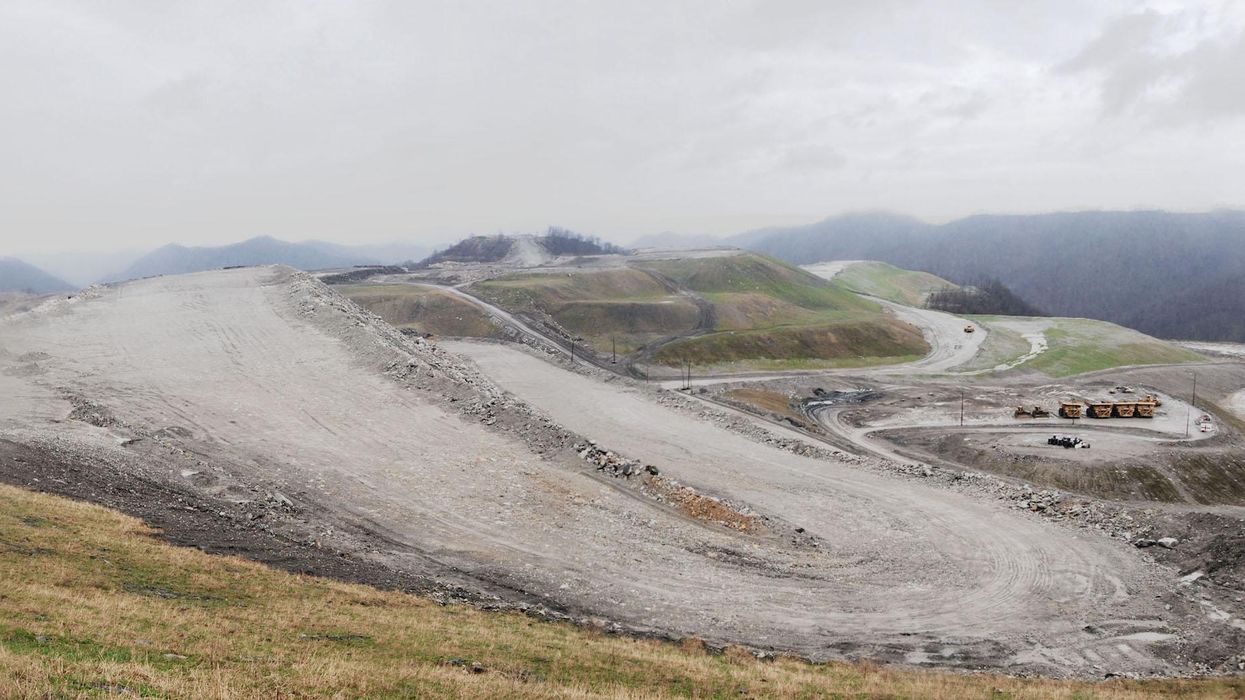
On Earth Day this year, as President Biden assembled world leaders to a climate summit to focus on a "clean energy future," retired coal miner Chuck Nelson hunkered down in the green hills of West Virginia, recovering from a recent stroke and with one remaining kidney, as thousands of tons of explosives from mountaintop removal strip mining operations detonated nearby with a toxic haze of coal dust.
Yes, Greta (Thunberg), we still blow up mountains in the United States to mine deadly coal.
While coal mining has decreased dramatically in recent years, state permits for reckless mountaintop removal operations by absentee corporations, which involve only small numbers of non-union heavy equipment operators and explosives, in contrast to labor-intensive underground mines, continue to be doled out in central Appalachia in a desperate attempt to shake down the region for a final coal tattoo.
In fact, the West Virginia Department of Environmental Protection celebrated Earth Day by rubber-stamping a new strip-mining permit for an out-of-state coal company, slated to destroy 1,085 acres of forested ridges and wreak havoc for neighboring communities for the next eight years, despite decades of protest by local citizens and reams of shocking health studies on heightened cancer, heart and birth defect rates associated with mountaintop removal mining dust.
The endless war on the central Appalachian mountains continues. Needlessly, we should add.
"Millions of acres of Appalachian mountains have been permanently destroyed, and thousands of miles of streams have been permanently buried," emailed Nelson, whose wife died from chronic obstructive pulmonary disease in 2019. "With a flow of permits being processed right now, thousands more acres are planned to be wiped away forever. As devastating as mountaintop removal mining is to our majestic mountains, and the people's health impacts, only 3% of it is for electrical demand -- only 3%. Mountaintop removal mining goes against everything we're fighting for in trying to deal with the climate crisis. These are criminal acts carried out by criminal enterprises."
Instead of recognizing the century-old legacy of ruin in coal country, from Appalachia to Alaska and 20-odd states and several First Nations in between -- including an enduring array of abandoned mines, dangerous coal slurry impoundments, fraudulent "reclamation" projects, polluted waterways, desperate black lung victims, and gutted and sick communities with few economic options -- the Biden administration risks falling into the trap of outdated policies.
Two days after Earth Day applause, the Department of Energy quietly awarded millions of dollars "to boost the economic potential of coal and power plant communities," and subsidize "critical mineral extraction from coal and associated waste streams," as well as widely debunked carbon capture and storage schemes.
Listen here: Advocates in coal country have been calling for a Green New Deal since 2008 -- and a coalfields regeneration fund for everyone in coal mining communities, not simply the out-of-state companies, and not just throwing out a few job training opportunities for the dwindling ranks of largely non-union miners.
If the Biden administration and Congress truly want to build back better, they should have passed the RECLAIM ACT years ago, simply to start the process of reclaiming and reinvesting in all mining regions. And they should now double down on the commitment and make the Appalachian region, like all extraction zones from the Illinois Basin to the Navajo Nation to the Powder River Basin, a showcase for a clean energy economy, not a backwoods of denial.
If the Biden administration and Congress want to end the war on Appalachia, they should simply pass the Appalachian Community Health Emergency (ACHE) Act, which calls for a moratorium on such devastating operations until a basic health study is completed.
This is one of the most shameless realities in regulation: One of the Trump administration's first acts was to cancel a long-term health study on the impacts of mountaintop removal mining.
The sad truth is that this humanitarian and environmental crisis has been a federally sanctioned disaster since Jimmy Carter begrudgingly signed the Surface Mining Control and Reclamation Act in 1977, complaining that it would allow "the mining companies to cut off the tops of Appalachian mountains to reach entire seams of coal."
Let's repeat that phrase, "cut off the tops of Appalachian mountains" -- as in the tops of more than 500 mountains for over a half-century, literally clear-cutting deciduous forests and the region's ancient carbon sink, blowing ridges into oblivion with explosives and dumping the toxic remains and pulverized heavy metals in polluted streams, and ravaging the lives of citizens considered collateral damage, along with everything else in the way.
It doesn't have to be like this. Last month, Canadian government officials reversed their own 45-year policy for open-pit coal mining, admitting, "We didn't get this one right."
It's time for Biden and Congress to get this one right in Appalachia and all mining communities.
Just listen to Vernon Haltom, director of Coal River Mountain Watch, based in the frontline extraction zones of West Virginia, not in Washington, an organization that deserves as much support as possible:
With millions of Americans seriously ill or dead from the COVID pandemic, the stockholders and executives of Alpha Metallurgical Resources have no qualms about filling the air in Appalachian communities with carcinogenic blasting dust. Their enablers at the West Virginia Department of Environmental Protection have no qualms about rubber stamping new and renewed mountaintop removal permits, "just following the law" to sentence innocent people to death and misery. People like WVDEP permit supervisor Laura Claypool face no negative consequences for their actions, apparently not even remorse, but the people face the consequences of death. How do they sleep at night? It's not as if they don't know about the dozens of peer-reviewed health studies demonstrating that mountaintop removal is a deadly public health threat. No, they sleep soundly in the comfort of a steady job doing the coal barons' bidding. The WVDEP has made it personal by approving the death of friends and family like Judy Bonds, Larry Gibson and Joanne Webb, so they shouldn't be surprised if we make it personal about their cold, inhumane decisions. But since they've proven their incapacity for basic human decency, we need the Appalachian Communities Health Emergency (ACHE) Act, H.R. 2073 in this U.S. Congress, to protect the people.
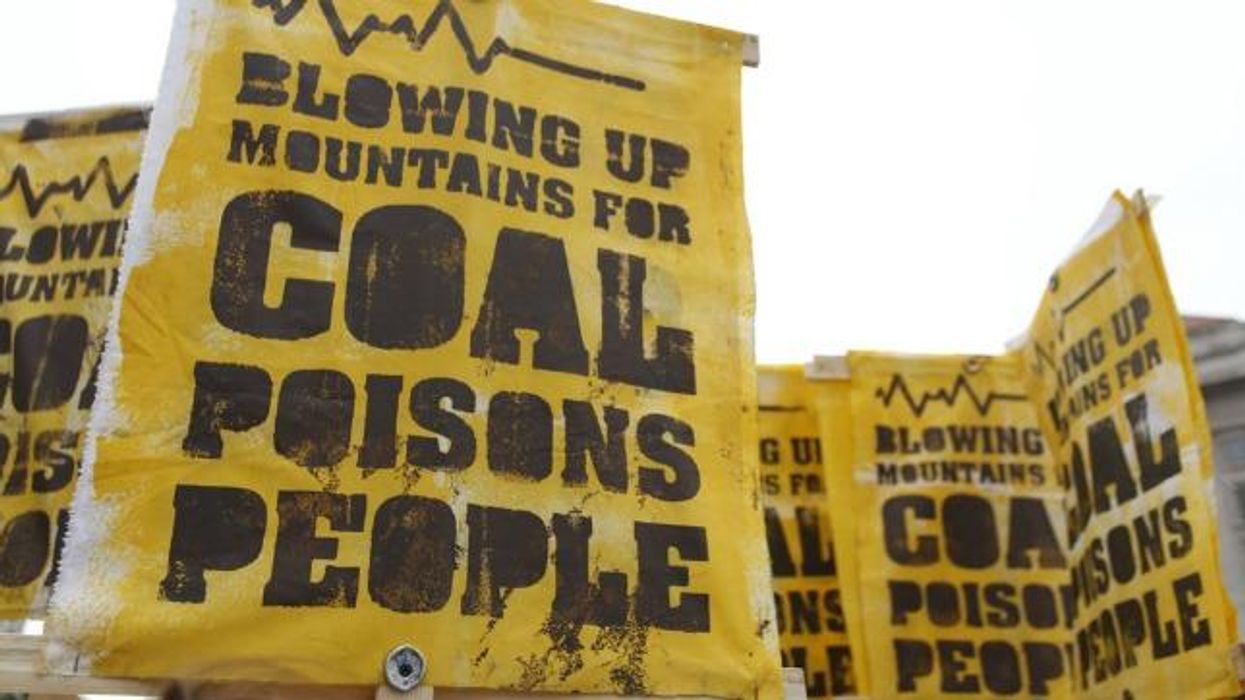
Outrage has followed the Trump administration's decision late last week to put the brakes on a study into the health impacts of mountaintop removal coal mining in Central Appalachia.
The National Academies of Sciences, Engineering, and Medicine said Monday it received a letter from the Interior Department's Office of Surface Mining Reclamation and Enforcement ordering it to put a halt on its two-year project "largely as a result of the Department's changing budget situation."
"Trump has once again shown the people of Appalachia that we mean nothing to him." --Bill Price, Sierra Club"The OSM," as journalist Ken Ward Jr. writes at the West Virginia Gazette-Mail, "had committed more than $1 million to the study, which was launched last year after a request from officials from the West Virginia Department of Environmental Protection and the state Bureau for Public Health" in light of scientific research linking "mountaintop removal to increased risks of birth defects, cancer, and premature death among residents living near large-scale surface coal mines in Appalachia."
Bill Price, senior Appalachia organizing representative for Sierra Club's Beyond Coal campaign, called it "infuriating that Trump would halt this study on the health effects of mountaintop removal coal mining, research that people in Appalachia have been demanding for years. Trump has once again shown the people of Appalachia that we mean nothing to him. From his proposed budget cuts to the Appalachian Regional Commission, to pushing to take away healthcare from thousands of Appalachian people, to now stripping doctors and scientists of the ability to warn us about the health effects of mountaintop coal removal, Trump's showing that he's only been pretending to care about our communities."
"What did we ever do to him?" Price continued. "Everyone knows there are major health risks living near mountaintop removal coal mining sites, but communities living with daily health threats were counting on finally getting the full story from the professionals at the National Academies of Science. To take that away without warning or adequate reason is beyond heartless. It appears that the only people Trump cares about in Appalachia are coal executives, not the people who've lived and worked here for generations. People here trusted him, but he is proving he didn't deserve that trust."
Also denouncing the development is Rep. Raul M. Grijalva (D-Ariz.), the ranking member of the House Committee on Natural Resources, who said the move was another sign of the administration's war on science and interest in doing the industry's bidding.
"Every time some reckless industry hurts working people, this administration is there to provide political cover," Grijalva said Monday.
"Mountaintop removal mining has been shown to cause lung cancer, heart disease, and other medical problems. Clearly this administration and the Republican Party are trying to stop the National Academy of Sciences from uncovering exactly how harmful this practice is. Stopping this study is a ploy to stop science in its tracks and keep the public in the dark about health risks as a favor to the mining industry, pure and simple," Grijalva said.
As Michael Gerrard, director of Columbia University's Sabin Center for Climate Change Law, summarized dryly on Twitter: "Trump's great way of helping his West Virginia voters: Halt scientific study of how mountaintop removal coal mining makes them sick."
Standing in solidarity with the water protectors on the Standing Rock Sioux Nation, Coal River Mountain residents already fending off seven square miles of devastating mountaintop removal mining permits are planning a protest on Monday at the Department of Environmental Protection in Charleston, West Virginia against pending permits for a possible expansion of operations by formerly bankrupt Alpha Natural Resources.
Yes, Virginia, in 2016 formerly bankrupt coal companies continue to blast away historic Coal River Mountain and adjacent communities.
Let's call it morally bankrupt.
And while the presidential campaigns trade "war on coal" slogans, no candidate and few reporters have made a single mention of one of the most egregious environmental crimes and civil rights violations in our lifetimes: The enduring health crisis of residents living amid the fallout of mountaintop removal operations.
Mountaintop removal mining in Appalachia has never ended -- despite decades of local campaigns and a historic petition last year of 200,000 signatures for a moratorium until the federal government could carry out a basic health assessment.
Sure, mining has declined, due to natural gas competition, but mountaintop removal mining has never ended--despite the documented health crisis and cancer link from millions of pounds of strip mining explosives, silica dust, and contamination of waterways from pulverized heavy metals.
And Coal River mountaineers living in the toxic ruins of the coal industry, with few resources, continue to fight harder and finish off the outlaw ranks of Big Coal, in the words of Goldman Prize recipient Judy Bonds, until they bring an end to this "war on Appalachia."
"From the mountains of Appalachia to the plains of Lakota country to the western ports and pipelines, from Black Mesa to the Gulf of Mexico to the Arctic, extreme extraction industries jeopardize the health, water, air, and land of local communities," said Vernon Haltom, with Coal River Mountain Watch. "It's all one water, one atmosphere, and one Earth on which we all depend and for which we all must fight."
"People need to stop saying mountaintop removal is over," said Goldman Prize recipient Maria Gunnoe, who lives under a mountaintop removal operation in West Virginia. "It is not over! We are seeing new permits weekly. We have educated thousands of people on mountaintop removal. Most of them have left and moved on and are now fighting other issues with more funding I don't understand why they didn't complete the job and end mountaintop removal."
Sure, there have been some glimmers of hope--after years of denial and hand-wringing as the coal industry openly carried out violation-ridden mines, the feds have agreed to conduct an independent assessment of existing research on the health impacts of mountaintop removal, but still allow mining to continue; the West Virginia Department of Environmental Protection
recently halted the devastating KD#2 mine near the Kanawha State Forest; and former Massey Energy CEO Don Blankenship is serving a href="https://www.nytimes.com/2016/04/07/us/donald-blankenship-sentenced-to-a-year-in-prison-in-mine-safety-case.html">prison sentence for conspiring to violate mine safety measures.
But, here are four points to remember:
1) Mountaintop removal, like all strip mining, should have been abolished in 1971, as US Rep. Ken Hechler from West Virginia proposed to the Congress--not regulated, given the century-long rap sheet of an outlaw coal industry that has openly flaunted rules in a constant state of violation, exploited loopholes and a corrupt state and federal system that tolerates regulatory manslaughter.
2) Mountaintop removal is a human rights and civil rights issue, not just an environmental issue, which has resulted in forced removals, the desecration of churches and burial grounds, the poisoning of waterways and air, and the toxic contamination of pregnant mothers, child and the elderly.
""We didn't formally know in the 1990s what we know now," said Bob Kincaid, with Coal River Mountain Watch, "that mountaintop removal steals innocent lives. Any acceptance of the practice now carries with it a tolerance, an acquiescence to homicide."
3) Mountaintop removal has endured because our country still accepts the reality of "sacrifice zones," where the health of certain regions and people is considered as disposable as our natural resources.
Appalachia, like 25 other states that mine or have mined coal, will be living with the toxic fallout of coal mines and coal slurry for generations.
4) Mountaintop removal is a climate change issue. The refusal to address mountaintop removal over the last half century--and during President Obama's administration--despite the fact that it only provides 5% of our national coal production, reflects our denial to take the urgent action necessary to combat climate change. Recognizing the great carbon sink of the Appalachian mountains, the abolition of mountaintop removal would have offered such a chance to end a disastrous coal policy and make Appalachia the front-line showcase for our nation's clean energy agenda, not the backwoods of denial.
"Mountaintop removal is not an accident," said Bo Webb, a long-time activist in West Virginia, whose family lived under a mountaintop removal operations. "It is done with purpose knowing that water, air, and soil are all being poisoned and knowing that elevated rates of cancer, heart and lung disease, and birth defects in surrounding communities are directly attributed to this specific form of coal mining. It is time for President Obama to speak to the heartache of living near mountaintop removal. It is also time for the Sierra Club and other large organizations to fully support the ACHE Act and end mountaintop removal."
President Obama's visit to address the drug epidemic in West Virginia on Oct. 21st falls on the anniversary of a historic coal slurry disaster that symbolizes another Appalachian emergency health crisis: Cancer-linked fallout and toxic coal slurry from reckless mountaintop removal operations.
Ever since Obama took office, the long-time tragedy of Oxycontin and prescription painkillers, along with heroin, has ravaged coal mining communities in central Appalachia--despite years of national news investigations on failed regulatory enforcement.
In that same light, after years of ignoring pleas from besieged residents on failed mining regulations, will President Obama and members of his administration finally make their first historic visit to a coal slurry impoundment and a mountaintop removal operation, and recognize a spiraling health disaster that has resulted in documented high rates of birth defects, lung cancer and heart problems?
En route to West Virginia, President Obama will literally fly over massive coal slurry impoundments and untold miles of mountaintop removal operations.
All the president needs to do is look outside his window--and acknowledge an American tragedy that should be abolished, not regulated.
Earlier this year, over 200,000 residents and Americans petitioned President Obama and the US Congress to enact the Appalachian Community Health Emergency Act, a moratorium on mountaintop removal mining until federal health studies are conducted.
"The sludge pond that hangs like a Sword of Damocles a few hundred yards up the mountain above Marsh Fork Elementary School in Raleigh County," wrote former West Virginia Rep. Ken Hechler, recalling the coal slurry disaster on Oct. 21 in Wales that shocked American coal mining communities. "With 2.8 billion gallons of sludge close to the blasting of mountaintop removal nearby, is it any wonder that I think about Aberfan?"
At the age of 101, mountain hero Ken Hechler--the only member of Congress to march in Selma, Alabama in 1965--awaits a visit from Obama in West Virginia, and has personally called on the President for years to have a "Truman moment" and end the crime of mountaintop removal.
Despite the decline in the central Appalachia coal mining operations, devastating mountaintop removal operations continue--the war on Appalachia is far from over.
No different than the long overdue address on the Appalachian drug epidemic, it's time for President Obama to finally address the mounting health crisis and death toll from mountaintop removal and coal slurry.
With mountaintop removal mining on the ropes, as the last bank financiers ditch lending support amid new scientific research that demonstrates "solid evidence that dust collected from residential areas near mountaintop removal sites causes cancerous changes to human lung cells," residents from across central Appalachia's coal country are converging on Monday, March 16, at the West Virginia Department of Environmental Protection headquarters in Charleston to demand an end to new permits.
A day of reckoning is arriving in Appalachia.
In the aftermath of last year's world attention on the state's handling of the coal chemical disaster on Elk River, and with the once invincible "dark lord" of mountaintop removal Don Blankenship facing criminal conspiracy charges, a renewed coalition of citizens groups called the People's Foot movement is confronting state and federal agencies directly for their complicity in ignoring the growing and indisputable evidence on deadly health effects from mountaintop removal mining.
"Our politicians and all government agencies need to stop running from the truth that we are forced to live and die with everyday," said Maria Gunnoe, the Goldman Prize recipient and an organizer with the Ohio Valley Environmental Coalition in West Virginia. "The science shows that mountaintop removal kills people. Why is mountaintop removal still being permitted? Is it because we don't matter or is it because someone's financial status depends on us dying quietly one activist at a time?"
The writing is on the wall--and in two dozen peer-reviewed scientific studies: Newspapers will one day feature stories about wrongful death settlements with the coal companies--such as last summer's $26 billion verdict against the tobacco companies for lung cancer--and criminal charges of negligent homicide by policymakers and politicians who have openly allowed such a health crisis to take place, as I've noted before.
No one knows this better than Stanley Sturgill, the legendary retired coal miner and mine inspector from Harlan County, Kentucky, who served 41 years in the mines.
"I'm traveling from Harlan County, Kentucky because I want to lend (100%) my hand in support of trying to stop the insane practice called mountaintop removal mining," Sturgill said. "This practice of coal mining is not only killing the folks down stream of these mines, but also the very miners that blast our mountains away. "
Now suffering with black lung disease, a preventative malady that still kills three coal miners daily, Sturgill has testified in hearings across the country, including the recent Climate March in New York City, occupied the Kentucky governor's office, and been arrested on Capitol Hill in Washington, DC for simply requesting a meeting with his member of Congress to discuss the devastating impact of mountaintop removal operations on his community, his fellow miners and the environment.
Sturgill's statement at today's People's Foot rally puts the state of West Virginia, and the nation, on notice:
Hello, my name is Stanley Sturgill and I am 69 years old. I'm a retired and very proud UMWA coal miner and federal coal mine inspector (MSHA) with 41 years of service to the coal industry.
I fully support all of our miners, I work for their health and safety every day, but in no way, do I support the mining method of MTR, whether it's scab or UMWA doing the mining. That's why I plan to attend the "People's Foot" rally in Charleston, WVA. I'm traveling from Harlan County, Kentucky because I want to lend (100%) my hand in support of trying to stop the insane practice called mountaintop removal mining. This practice of coal mining is not only killing the folks down stream of these mines, but also the very miners that blast our mountains away.
I know coal bought politicians and King Coal don't believe in science and scientific studies that prove mountaintop removal is killing people and they also refuse to stop this type of coal mining. So today I would like to let them know of one thing, there is no statutes of limitations on killing people, even the folks here in Appalachia.
There has been some shocking news out of Appalachia in recent days. First, a game-changing new study demonstrated, for the first time, a direct link between the dust from mountaintop removal coal mines and lung cancer. Then Ken Ward, Jr.
There has been some shocking news out of Appalachia in recent days. First, a game-changing new study demonstrated, for the first time, a direct link between the dust from mountaintop removal coal mines and lung cancer. Then Ken Ward, Jr. of the Charleston Gazette reported on a West Virginia lab worker who pled guilty to falsifying water test results because of pressure from the coal industry. And on top of all that came another report, this time out of Kentucky, showing that mountaintop removal is straining the ecosystems needed to support wildlife and critical stream habitats.
The results of the West Virginia University health study are jaw-dropping. Researchers exposed human lung tissue to mountaintop removal dust in the lab, and they found the dust exposure promoted development of lung cancer is the first study that has demonstrated such a direct link between mountaintop removal pollution and these serious health consequences.
I think someday we'll look back on the publication of this study as a watershed moment in the long mountaintop removal struggle. Health problems have been long documented in mountaintop removal country, including in dozens of peer reviewed studies, but the coal industry has always tried to shift the blame to other causes. As Dr. Michael Hendryx told the Charleston Gazette:
"The larger implication is that we have evidence of environmental conditions in mining communities that promote human lung cancer. Previous studies ... have been criticized for being only correlational studies of illness in mining communities, and with this study we have solid evidence that mining dust collected from residential communities causes cancerous human lung cell changes."
Meanwhile, the plot thickens in the case of the lab that diluted, substituted and otherwise tampered with water samples from coal mining sites across the state. These self-reported water samples are a key part of oversight of coal mining pollution. Just yesterday came further news from West Virginia that despite the state Department of Environmental Protection revoking certification for the lab where the falsified tests happened, the state board of environmental quality issued a stay on the revocation pending a full hearing to be held in December.
My colleague Bill Price, a fellow West Virginian and long-time advocate for Appalachian communities, is as baffled as I am. "The decision to not immediately implement the certificate revocation shows a total disregard for the safety of local residents," he said. "If you can't do it right, you don't deserve to be a certified water testing company. Period."
Bill, like me and so many others, hopes that federal and state investigators will dig much deeper, and faster. We have a right to know if the coal industry is pressuring other labs to falsify water tests, and guilty parties should be held responsible.
Meanwhile, the study out of Kentucky shows that reclamation of mined sites does not lead to recovery of the ecosystem, and that's because of fundamental, long term damage to waterways caused by surface and mountaintop removal mining activities. You can't blow off the top of the mountain, shove all the debris into a nearby valley, then replant some trees and expect everything to go back to normal. Among other reasons, this is because the science is making it increasingly clear that coal mining waste continues to pollute streams decades after mining ends.
As residents in West Virginia, Kentucky and other Appalachian states call for an end to mountaintop removal and all the harms it causes, they are also calling on their leaders to chart a safe, healthy, prosperous path forward for the region. In West Virginia and Kentucky, legislators have assembled task forces to begin tackling the question of how to diversify coalfield economies--the SCORE program in West Virginia and the SOAR project in Kentucky. It remains to be seen whether these efforts will really grapple with moving beyond a boom and bust fossil fuel economy, but it's a start. Meanwhile, grassroots organizations in both states are doing sophisticated, important work on economic transition.
As Appalachia charts its future, one thing is clear--it's long past time to end mountaintop removal. The U.S. EPA can act to rein in the worst abuses of the coal industry. Congress can pass the Appalachian Communities Health Emergency (ACHE) Act and the Clean Water Protection Act. There is no time to waste--with each passing day, lives hang in the balance.
Appalachia scored a victory for clean water and public health this week.
In the latest development in ongoing legal challenges, a federal judge has upheld a veto by the Environmental Protection Agency of a permit for one of the biggest mountaintop removal coal mines in West Virginia.
Arch Coal's Mingo Logan had challenged the 2011 decision by the EPA to veto, using its authority under Section 404 of the Clean Water Act, the permit issued by the Army Corps of Engineers for the Spruce Mine in Logan County.
But the EPA's decision to veto the permit based on "unacceptable adverse effects" of the project, U.S. District Judge Amy Berman Jackson stated in her ruling (pdf) delivered Tuesday, "was reasonable, supported by the record, and based on considerations within EPA's purview."
Community and environmental groups welcomed the decision.
The "court victory is a win for all Americans who believe our children deserve clean water and healthy lives without facing the increased threats of cancer, birth defects and early mortality associated with mountaintop removal coal mining," stated Emma Cheuse, an attorney with environmental group Earthjustice who argued on behalf of several Appalachian groups.
"Now that a court has affirmed EPA's decision to prevent the unacceptable devastation this practice causes in this important instance, we need EPA to do its job across the board to protect Appalachian communities before the coal industry destroys more waterways, communities and unique natural areas for good," Cheuse stated.
Appalachian and environmental groups have for years highlighted the dangers--to water, wildlife and human--of mountaintop removal.
Nonprofit organization Rainforest Action Network has described the practice, in which "the coal industry literally blows the tops off the mountains: clear-cutting forests, wiping out natural habitats and poisoning rivers and drinking water," as "one of America's worst environmental crimes."
In a breathtaking but largely overlooked ruling this week, a federal judge agreed that the U.S. Army Corps of Engineers may disregard studies on the health impacts of mountaintop removal mining in its permitting process, only two weeks after Goldman Prize Award-winning activist Maria Gunnoe wrote an impassioned plea to President Barack Obama to renew withdrawn funding for US Geological Survey research on strip mining operations and redouble federal action to address the decades-old humanitarian disaster.
(Gunnoe's full letter is below.)
The prophetic call for immediate federal action by Gunnoe, a community organizer for the West Virginia-based Ohio Valley Environmental Coalition and a long-time witness to the tragedy of mountaintop removal, has never been so timely. "Appalachian citizens are the casualties of a silent "war on people" who live where coal is extracted," Gunnoe wrote the president. "Citizens of all ages are dying for the coal industry's bottom line." Gunnoe concluded:
We all must recognize and resolve these mountaintop-removal-caused health problems and end the onslaught of pollution on people. Ending mountaintop removal could be as simple as passing HR 526: the Appalachian Community Health Emergency Act, or possibly even an Executive Order. The ACHE Act will place a moratorium on all new mountaintop removal permits. This bill, when passed, will immediately improve the lives and health of the people who live with these impacts daily.
Two years ago, in fact, the USGS published preliminary findings on "unusually high" toxic compounds in the soil and water near strip mining operations. That USGS research team is no longer funded.
"Our state politicians display a willful ignorance of some 24 peer-reviewed scientific reports about mountaintop removal's human health effects," Gunnoe wrote. "Studies show a correlation between living near a mountaintop removal site and significantly increased rates of cancer, birth defects and premature deaths. We believe they'd have a much harder time ignoring studies put out by the USGS."
Besieged residents in strip mining areas of Illinois, including Rocky Branch, and Kentucky, where a similar ruling over ignored human health risks, have long called for federal enforcement and action of flawed mining regulations.
Last night in Charleston, West Virginia, the premiere screening of a new feature film, "Moving Mountains," based on the award-winning book by journalist Penny Loeb, was a reminder of the decades-long struggle by citizens for civil rights and health protection in coal mining communities in the courts and political corridors. Here's a trailer of the film, which stars actress Theresa Russell:
Moving Mountainswww.youtube.com
"Moving Mountains," tragically enough, dates back to 1994. In fact, August 3rd marked the 37th anniversary of the flawed Surface Mining Control and Reclamation Act, which granted federal sanctioning for mountaintop removal, which President Jimmy Carter called a "disappointing effort" and a "watered down bill."
"Very little has changed," Gunnoe said, referring to the film's true life heroine, Patricia Bragg, a coal miner's wife who defends her community from water contamination. "There are only more Patricia Braggs now."
Even while central Appalachia's coal industry falters to exploding markets in the Illinois Basin and western coalfields, permits for new mountaintop removal operations continue to be filed.
"Judge Copenhaver confirmed what we already know: there is no law in the United States that says a permitting agency must consider Mountaintop Removal's toxic effects on people's health," said Bob Kincaid, with the Appalachian Community Health Emergency Act Movement. "At present, as a matter of law, people in Appalachia simply do not matter at all. If we had the A.C.H.E. Act, these ill-considered rulings wouldn't happen. They couldn't happen. The A.C.H.E. Act's moratorium on new permits would stop them."
Gunnoe's letter to President Obama is below:
July 29, 2014
President Obama
The White House
1600 Pennsylvania Avenue NW
Washington, DC 20500
Dear President Obama,
My name is Maria Gunnoe. I live in Boone County, West Virginia, at the base of a mountaintop removal coal mining operation. My family has been here for generations, before the mine moved in above us.
Since the mine moved in, my family has experienced problems we trace directly back to that mine. (Details on some of that are below.) My outspokenness on what has happened to us, to my neighbors and to others living near these mines has led to my current employment as an organizer with the Huntington, W.Va.-based Ohio Valley Environmental Coalition (OVEC). It also led to my receiving the 2009 Goldman Prize for North America and the 2012 Wallenberg Medal. I am also an active member of the Appalachian Community Health Emergency campaign.
I write on behalf of OVEC, because something I read in the July 26 edition of the Charleston Gazette shocked me. An article titled, "USGS halts research on mountaintop removal's public-health effects," reports that, "Last year, the Obama administration quietly put the brakes on any new field work to gather data on the potential public-health threats posed by mountaintop removal." (https://www.wvgazette.com/article/20140726/GZ01/140729409/1419)
I write to ask you restore the funding for Dr. Bill Orem's team at USGS to gather data on the human health impacts of mountaintop removal coal mining. I believe any data gathered so far that is ready for publication should be released at once. In order to re-fund these studies, any USGS research on the health and environmental effects of unconventional oil and gas extraction should not be halted.
I think Dr. Orem's work will show that the practice of mountaintop removal coal mining is not good for anyone, including the men and women who work on mountaintop removal operations.
Our state politicians display a willful ignorance of some 24 peer-reviewed scientific reports (https://ohvec.org/issues/mountaintop_removal/articles/health/) about mountaintop removal's human health effects. Studies show a correlation between living near a mountaintop removal site and significantly increased rates of cancer, birth defects and premature deaths. We believe they'd have a much harder time ignoring studies put out by the USGS.
Living with the impacts of mountaintop removal daily, while others get the pleasure of pretending it is not really happening, takes fortitude. When you see community members dying because of toxic air, it is truly devastating to take your next breath. We have watched so many people living near mountaintop removal sites become sick. I think the USGS studies will give scientific support to what we know, to what we live.
OVEC volunteers and staff members have worked in the communities that are heavily affected by mountaintop removal pollution. We have members, staffers and friends living in toxic air because of the practice of blowing up mountains for coal. The communities that are most affected by mountaintop removal are those in which we live, work and recreate, and OVEC demands better for everyone. We work to improve lives in these communities with community leadership. The communities tell us what is important to them and, right now, they need an end to mountaintop removal coal mining. They need healthy air, healthy water and medical follow-up on the health problems caused by the pollution from mountaintop removal operations.
The toxic dust from mountaintop removal operations has invaded our homes and our bodies. It overcomes everything. Our state politicians ignore these facts, thus allowing people to become ill and even die prematurely!
In some cases, mountaintop removal is happening just hundreds of feet from occupied structures such as schools, churches and homes. It's taking place directly above parks in communities such as Twilight, Madison, Artie, Peach Tree, Blair, Marsh Fork, Ashford, Williams Mountain, Prenter, Kayford, Whitesville, Mud, Sylvester and so many more. Even historic family cemeteries are surrounded by exploding mountains.
OVEC has witnessed an overall demise in the mental and physical well-being of people living in these communities. We worry that this is the worst of the effects of mountaintop removal. What this practice is doing to people is inhumane and cruel; they are living in hell on earth in the communities where mountaintop removal is happening, and they are not being heard by the politicians and regulators who should be listening.
Again, we believe they'd have a much harder time not listening when it is the USGS telling us about the human health impacts of mountaintop removal coal mining.
We hope that our politicians see what a massive mistake they have made in fighting hard for more mountaintop removal coal mining. We all should recognize the risk to human lives and immediately end all mountaintop removal operations in order to protect human lives. This is the coal industry's and the politicians' chance to show that they truly do care about the people of Appalachia and not only the production of Appalachian coal.
Coal miners and their families deserve better living conditions in their homes and communities than they have on their job sites, but not even their children have safe air to breathe. It must be terrible to have to pollute your children's air for a paycheck. The enforcement of regulations protects lives on the job and the lives of people in our communities. The companies' rights to mine coal ends when it infringes on citizens' rights to live healthy lives in our homes.
There should never be another mention of the "war on coal" by our state leaders. The truth is that Appalachian citizens are the casualties of a silent "war on people" who live where coal is extracted. Citizens of all ages are dying for the coal industry's bottom line.
We all must recognize and resolve these mountaintop-removal-caused health problems and end the onslaught of pollution on people.
Ending mountaintop removal could be as simple as passing HR 526: the Appalachian Community Health Emergency ACT (https://acheact.org/the-legislation/), or possibly even an Executive Order. The ACHE Act will place a moratorium on all new mountaintop removal permits. This bill, when passed, will immediately improve the lives and health of the people who live with these impacts daily.
As you can tell, I want an end to mountaintop removal today. I'm tired of watching the people in our community get sick and die too early. I believe the science is already in showing this type of coal mining is dangerous and deadly. I believe that the passage of the ACHE Act would end mountaintop removal. But, still I ask that you restore the funding for Dr. Orem's team, because their findings would arm us with the scientific evidence we need to finally convince Congress and you that we are saying is indeed true.
The health of those of us here in central Appalachia does matter. Please restore the funding and help us end mountaintop removal!
With deepest respect and sincerity,
Maria Gunnoe
OVEC
P.O. Box 6753
Huntington, WV 25773
A year ago this week, Sens. Barbara Boxer (D-CA) and Benjamin Cardin (D-MD) and Rep. Ed Markey (D-MA) hosted four leading scientists for Senate and House briefings on the environmental and health impacts of mountaintop removal (MTR) mining in Appalachia.
The scientists' peer reviewed research was damning: mountain top removal, the practise of clearing mountaintops of trees and topsoil and then blasting them with explosives to reveal the coal seams underneath, is polluting the Appalachian watershed decreasing organism diversity, increasing flooding, and contaminating ground water. The air's in trouble too, leading to high rates of cancer, heart and respiratory disease.
"Preliminary laboratory tests, using air samples from areas where people are living in Appalachia, show mountaintop removal mining dust kills heart cells and impairs vascular function.
Mortality rates in the affected areas of Kentucky, Tennessee, Virginia and West Virginia are rising:
From 1999 to 2005, there were 4,432 "excess deaths" in Appalachia. It has also been found that babies born to mothers who live in areas with mountain top removal mining have a 26% higher rate of birth defects. That compares to babies born to mothers who smoke during pregnancy who only have an 18% higher risk of birth defects.
Right now, members of the Appalachian Community Health Emergency Campaign are back on Capitol Hill preparing to brief House staffers on the Appalachian Community Health Emergency Act (ACHE Act, H.R. 526) which an impressive group of Democrats has introduced to protect Appalachian families and communities from mountaintop removal, what many call "extreme mining."
The Appalachian Community Health Emergency Act's leading sponsors are Rep. John Yarmuth (D-KY) and Rep. Louise Slaughter (D-NY), joined by original cosponsors Rep. Earl Blumenauer (D-OR), Rep. John Conyers (D-MI), Rep. Rush Holt (D-NJ), Rep. Raul Grijalva (D-AZ), Rep. John Sarbanes (D-MD), Rep. Jim Moran (D-VA), Rep. Donna Edwards (D-MD), Rep. Judy Chu (D-CA), Rep. Keith Ellison (D-MN), Rep. Charles Rangel (D-NY), Rep. Jared Huffman (D-CA), Rep. Barbara Lee (D-CA), Rep. Michael Honda (D-CA), Rep. Peter DeFazio (D-OR), Rep. Matt Cartwright (D-PA), Rep. Rosa DeLauro (D-CT), Rep. Lucille Roybal-Allard (D-CA), Rep. Chellie Pingree (D-ME), Rep. Janice Schakowksy (D-IL), Rep. Jim McDermott (D-WA), Rep. Eleanor Holmes Norton (D-DC), and Rep. Jared Polis (D-CO).
This Earth Day why not give your Representative a call and urge them to support the Bill. For more information, here's a compilation of the health studies, with summaries, much of it from the University of West Virginia: https://www.crmw.net/content/health-impacts-mountaintop-removal-and-coal-mining.
Mountaintop removal coal mining is the worst environmental tragedy in American history. When will the Obama administration finally stop this Appalachian apocalypse?
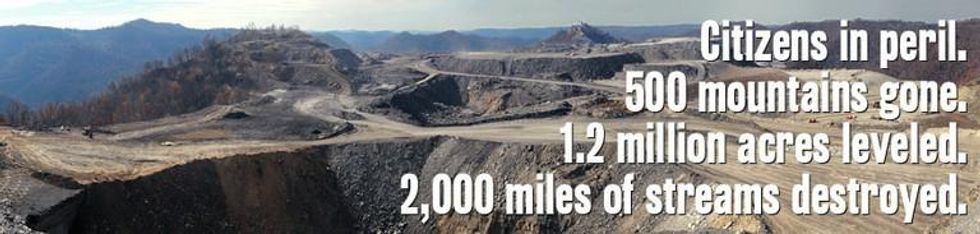
If ever an issue deserved President Obama's promise of change, this is it. Mining syndicates are detonating 2,500 tons of explosives each day -- the equivalent of a Hiroshima bomb weekly -- to blow up Appalachia's mountains and extract sub-surface coal seams. They have demolished 500 mountains -- encompassing about a million acres -- buried hundreds of valley streams under tons of rubble, poisoned and uprooted countless communities, and caused widespread contamination to the region's air and water. On this continent, only Appalachia's rich woodlands survived the Pleistocene ice ages that turned the rest of North America into a treeless tundra. King Coal is now accomplishing what the glaciers could not -- obliterating the hemisphere's oldest, most biologically dense and diverse forests. Highly mechanized processes allow giant machines to flatten in months mountains older than the Himalayas -- while employing fewer workers for far less time than other types of mining. The coal industry's promise to restore the desolate wastelands is a cruel joke, and the industry's fallback position, that the flattened landscapes will provide space for economic development, is the weak punchline. America adores its Adirondacks and reveres the Rockies, while the Appalachian Mountains -- with their impoverished and alienated population -- are dismantled by coal moguls who dominate state politics and have little to prevent them from blasting the physical landscape to smithereens.
Obama promised science-based policies that would save what remains of Appalachia, but last month senior administration officials finally weighed in with a mixture of strong words and weak action that broke hearts across the region. The modest measures federal bureaucrats promised amount to little more than a tepid pledge of better enforcement of existing laws.
And government claims of doing everything possible to halt the holocaust are simply not true. George Bush gutted Clean Water Act protections. Obama must restore them.
First, the White House should fix the "fill" rule the Bush administration adopted in 2002 to allow coal companies to use streams as waste dumps. Under this perverse interpretation of the Clean Water Act, 2,000 miles of Appalachian streams have been interred under mining waste. Obama could reverse the "fill" rule to reflect its original meaning, which forbids waste matter from being dumped into waterways.
Second, the Interior Department should strictly enforce the widely ignored "buffer zone" rule that forbids dumping waste within 100 feet of intermittent or perennial streams.
Third, our laws require companies to restore mined areas to their original condition. The administration should end the absurd fiction that extraction pits filled with unconsolidated rocks and rubble where trees will never grow and streams will never flow are "reclaimed."
Fourth, current law forbids the issuance of "fill" permits that will cause "significant degradation" to waterways. It is absurd for the Army Corps of Engineers to endorse the canard that filling miles of streams is not causing significant degradation. The president should require the Corps to deny and rescind permits where operations will cause downstream damage.
Fifth, the Clean Water Act requires mining operators to prove that they can restore the "function and structure" of affected streams. Operators have never been compelled to make the functional or structural analyses of the aquatic ecosystem required by the act. Obama should order his officials to stop ignoring this requirement.
Sixth, the administration should enforce the law requiring an environmental impact study for each permit when a mine "may have significant environmental impacts," individually or cumulatively. The Corps of Engineers routinely allows coal operators to escape this mandate -- an illegal practice that should stop.
Instead of acting to enforce these laws, administration officials indicated last month that they will allow more than 100 permits to go forward while they carefully review their regulatory options. If they act accordingly, the ruined landscapes of Appalachia will be Obama's legacy.
President Obama should go to Appalachia and see mountaintop removal. My father visited Appalachia in 1966 and was so horrified by strip mining -- then in its infancy -- that he made it a key priority of his political agenda. He complained that Appalachia, with our nation's richest natural resources, was home to America's poorest populations, its worst education system, and its highest illiteracy and unemployment rates. These statistics are even grimmer today as mining saps state wealth. In 1966, 46,000 West Virginia miners were collecting salaries and pensions and reinvesting in their communities. Mechanization has shrunk that number to fewer than 11,000. They extract more coal annually, but virtually all the profits leave the state for Wall Street.
The coal industry provides only 2 percent of the jobs in Central Appalachia. Wal-Mart employs more people than the coal companies in West Virginia. Last week a major study documented how coal imposes a net cost to Kentucky of more than $100 million per year. Coal is not an economic engine in the coalfields. It is an extraction engine.
Obama has the authority to end mountaintop removal, without further action from Congress and without formal rulemaking. He just needs to make the coal barons obey the law.