

SUBSCRIBE TO OUR FREE NEWSLETTER
Daily news & progressive opinion—funded by the people, not the corporations—delivered straight to your inbox.
5
#000000
#FFFFFF
To donate by check, phone, or other method, see our More Ways to Give page.
Daily news & progressive opinion—funded by the people, not the corporations—delivered straight to your inbox.
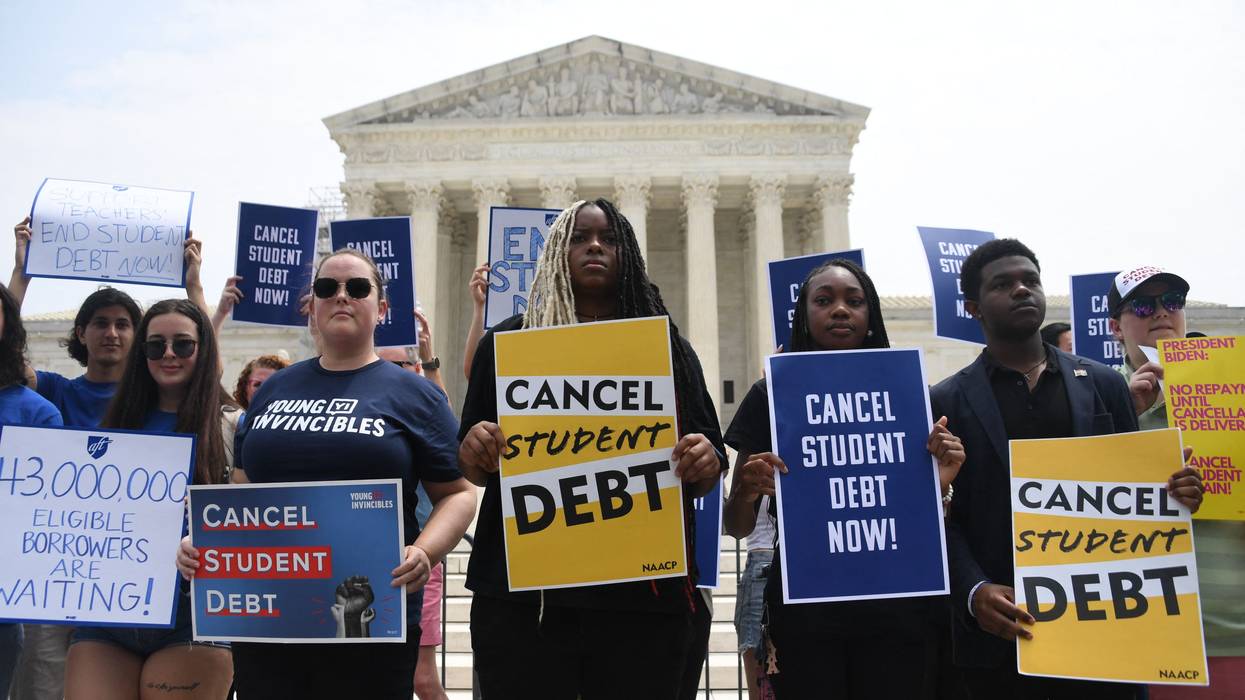
"Opponents of democracy are terrified that they will lose again at the ballot box in November and are rushing to right-wing judges to hamstring democratic governance," said one observer.
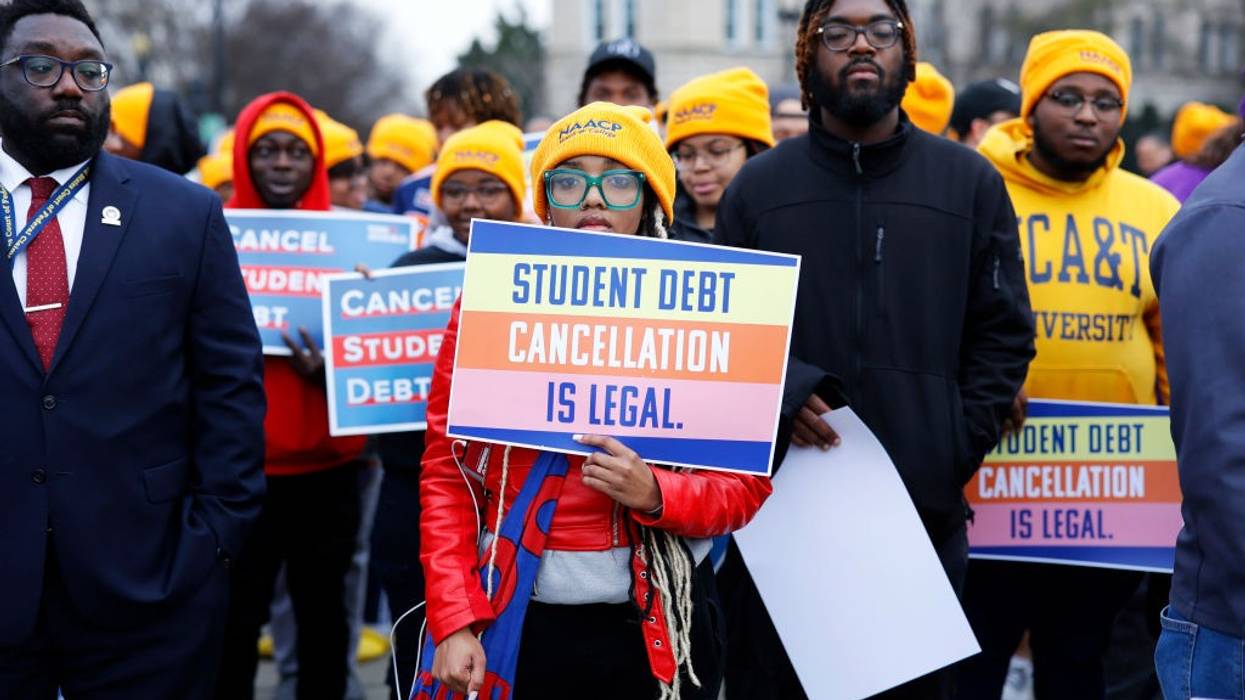
A Republican-appointed U.S. federal judge in Georgia raised eyebrows and objections Thursday after taking what observers called the "unprecedented" step of blocking a rule that hasn't even been finalized in order to stop the Biden administration from implementing a plan to deliver promised debt relief to millions of student borrowers.
U.S. District Judge for the Southern District of Georgia James Randal Hall issued an order blocking the Biden administration's proposed federal student debt relief rule. Hall—an appointee of former President George W. Bush—granted a motion by a coalition of right-wing state attorneys general to preempt the rule's eventual implementation.
"The court is substituting its judgment for those elected to serve the public," American Federation of Teachers president Randi Weingarten said in response to the ruling. "It subverts the democratic process and denies relief to student loan borrowers, many of whom rely on debt relief programs already advanced by the Biden-Harris administration."
"This court's unprecedented decision to block a rule that does not yet exist is not only bad for the 30 million borrowers who were relying on the administration to deliver much-needed relief," she continued. "It's a harbinger of the chaos and corruption right-wing judges seek to force on the American people."
Mike Pierce, executive director of the Student Borrower Protection Center—which called the ruling "dangerous and unprecedented"—denounced Hall for preventing the Biden administration from delivering student debt relief "even though no plan has been finalized."
"This is an extraordinary break with precedent and a brazen move by the conservative movement to shift even more power to unelected, unaccountable red-state judges," he said. "Opponents of democracy are terrified that they will lose again at the ballot box in November and are rushing to right-wing judges to hamstring democratic governance."
"This is the clearest sign yet that Project 2025 is already terrorizing student loan borrowers through a slow-moving judicial coup," Pierce added, referring to a conservative coalition's agenda for a far-right takeover of the federal government—which critics warn would worsen the U.S. student debt crisis.
Biden's proposal would forgive some or all student debt for around 30 million borrowers who have been repaying undergraduate loans for at least 20 years, or graduate loans for 25 years.
Hall's order is based on what he said was the plaintiffs' "substantial likelihood of success on the merits given the rule's lack of statutory authority" and U.S. Education Secretary Miguel Cardona's "attempt to implement a rule contrary to normal procedures."
"This is especially true in light of the recent rulings across the country striking down similar federal student loan forgiveness plans," he added.
The U.S. Supreme Court's right-wing supermajority last year struck down Biden's initial plan to relieve up to $20,000 in federal scholastic debt for around 40 million borrowers, and last month the justices kept in place a sweeping suspension of the administration's Saving on a Valuable Education (SAVE) program, which aims to lower monthly repayments and hasten loan forgiveness.
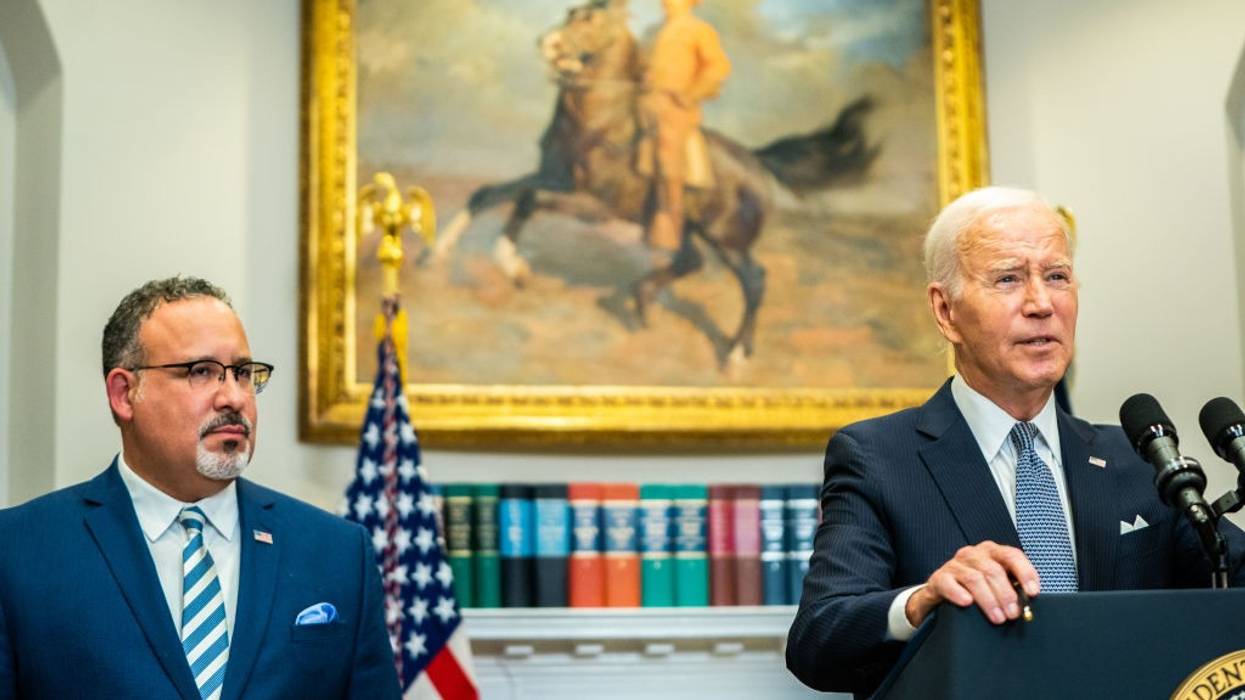
While praising the Biden administration's move "to stave off this reckless attack from extremist politicians and judges," advocates stressed that "broad-based debt cancellation is the only solution."
The Biden administration responded to an appellate court temporarily blocking one of its student debt relief programs by pausing payments for the 8 million borrowers already enrolled—a move welcomed by advocates, even as some called for further action.
U.S. Secretary of Education Miguel Cardona acknowledged in a statement that the 8th Circuit Court of Appeals' ruling against President Joe Biden's Saving on a Valuable Education (SAVE) plan "could have devastating consequences for millions of student loan borrowers crushed by unaffordable monthly payments if it remains in effect."
"It's shameful that politically motivated lawsuits waged by Republican elected officials are once again standing in the way of lower payments for millions of borrowers," Cardona continued. "Borrowers enrolled in the SAVE plan will be placed in an interest-free forbearance while our administration continues to vigorously defend the SAVE plan in court. The department will be providing regular updates to borrowers affected by these rulings in the coming days."
The appellate court's Thursday ruling was just the latest in a series of legal decisions endangering one of the administration's surviving policies to help Americans with burdensome student loans. Biden's attempt to roll out a broader debt cancellation program last year was thwarted by the U.S. Supreme Court's right-wing justices.
Despite that setback, the Democratic president has continued to pursue relief programs while seeking reelection in November. Biden and Vice President Kamala Harris are preparing to face former Republican President Donald Trump and Sen. JD Vance (R-Ohio). Analyses have warned that Trump's return to the White House would worsen the U.S. student debt crisis.
"It wasn't so long ago that a million borrowers defaulted on their student loans every single year, mainly because they couldn't afford the payments," Cardona noted Friday. "The SAVE plan is a bold and urgently needed effort to fix what's broken in our student loan system and make financing a higher education more affordable in this country. The Biden-Harris administration remains committed to delivering as much relief as possible for as many borrowers as possible."
"Already, we've approved an unprecedented $169 billion in relief for nearly 4.8 million Americans, including teachers, veterans, and other public servants, students who were cheated by their colleges, borrowers with disabilities, and more," he added. "And from larger Pell Grants to free community college, President Biden, Vice President Harris, and I continue to believe that college affordability is a cause worth fighting for—and we're not giving up."
The Student Borrower Protection Center, which had advocated for a payment pause after Thursday's ruling, thanked Cardona "for taking swift action to protect the millions of borrowers enrolled in SAVE."
"Opponents of SAVE have inflicted mass confusion and chaos across the entire student loan system—all borrowers are at risk," the group added. "Halt student loan payments and protect borrowers ASAP!"
American Federation of Teachers president Randi Weingarten put out a statement on Friday praising the administration's action "to stave off this reckless attack from extremist politicians and judges."
"But we shouldn't even be in this situation," she stressed. "These borrowers are on a roller coaster that's being forced off the rails by far-right politicians who will do anything in their power to hurt them, rather than help them get the relief they deserve."
"We are grateful that the Biden-Harris administration will continue to push for affordable monthly payments as bad faith actors continue to throw up roadblock after roadblock," she added. "In the end, broad-based debt cancellation is the only solution—and we will continue to advocate for it through every avenue available."
While also welcoming the pause as the court battle continues, the Debt Collective said Friday: "But no need to stop there—pause everyone's payments. Unburden them from what has been."
Recalling when student debt payments were halted because of the Covid-19 pandemic, initially under Trump and then Biden, the group also said that the president "never should have restarted student loan payments," calling it "an unforced error."
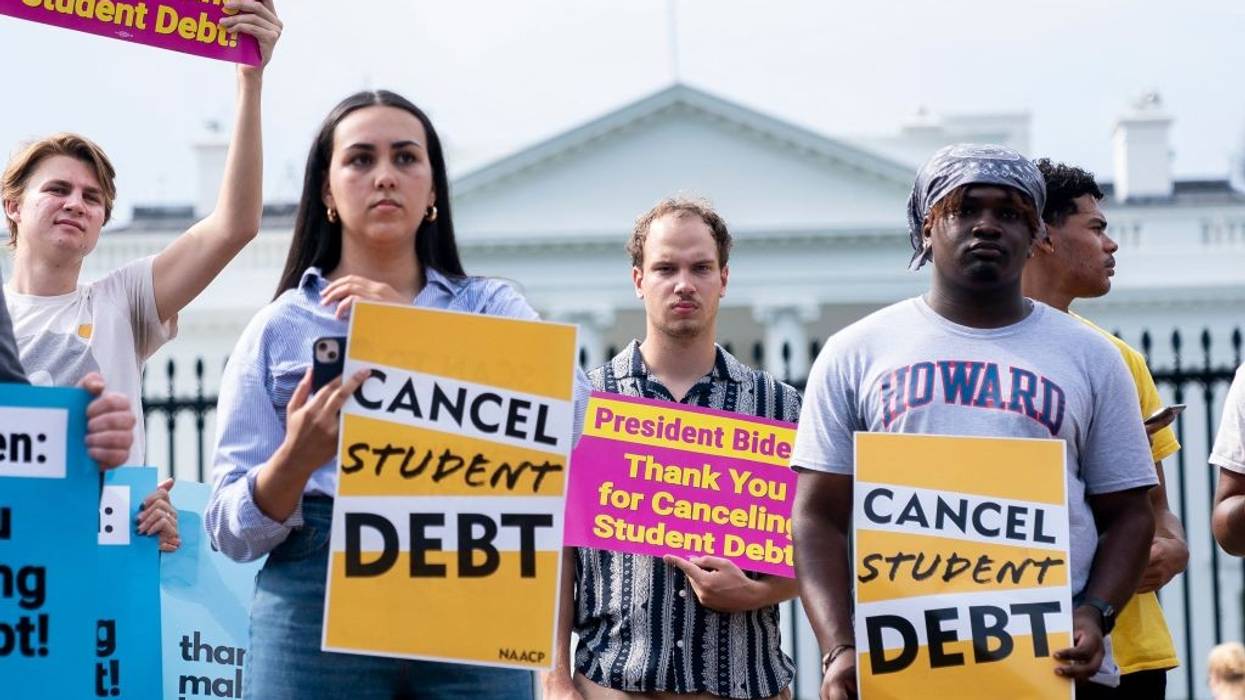
"Let's keep fighting until we cancel student debt for EVERY single borrower," said Rep. Ilhan Omar.
Progressive U.S. lawmakers and campaigners on Thursday cheered the Department of Education's announcement of nearly $6 billion in additional student loan relief—this time for public service workers—as President Joe Biden continues to find ways to work around a Supreme Court ruling limiting how he can eliminate educational debt.
The Department of Education (DOE) said the administration has approved $5.8 billion in student debt for around 78,000 borrowers, the result of adjustments to the Public Service Loan Forgiveness (PSLF) program. The move brings the total amount of student loan forgiveness approved by Biden administration to $143.6 billion for nearly 4 million borrowers.
"Of the estimated 43 million student loan borrowers in America, approximately 20% have either been approved for debt cancellation or have no current repayment obligation."
"For too long, our nation's teachers, nurses, social workers, firefighters, and other public servants faced logistical troubles and trap doors when they tried to access the debt relief they were entitled to under the law," U.S. Education Secretary Miguel Cardona said in a statement.
"With this announcement, the Biden-Harris administration is showing how we're taking further steps not only to fix those trap doors, but also to expand opportunity to many more Americans," Cardona added. "Today, more than 100 times more borrowers are eligible for PSLF than there were at the beginning of the administration."
Before 2021, only around 7,000 borrowers benefited from PSFL relief. During Biden's tenure, more than 871,000 people have had their student loan debt canceled after the administration updated and fixed key parts of the program, including by introducing a new help tool to simplify navigation of the debt relief process.
"The president gets it. Today, thousands more borrowers are finally able to imagine life after student debt," Congressional Progressive Caucus Chair (CPC) Pramila Jayapal (D-Wash.) said in a statement.
Jayapal noted that after the U.S. Supreme Courtstruck down the president's student debt cancellation program last June, Biden and Cardona "got to work" and have been "relentless in the pursuit of other avenues to help the millions of Americans burdened by student debt."
"With the administration's fixes to the Public Service Loan Forgiveness program, teachers, nurses, firefighters, and others in public service will see their relief sooner and can finally start putting their hard-earned income towards buying homes, investing in their communities, and taking care of their families," she added.
Student loan attorney Adam Minsky noted this week that "of the estimated 43 million student loan borrowers in America, approximately 20% have either been approved for debt cancellation or have no current repayment obligation."
According to the Education Data Initiative, U.S. student loan debt in the United States currently totals more than $1.7 trillion.
Some advocates reacted to the Biden administration's announcement by calling for more debt relief and even tuition-free higher education.
"Americans have a right to an education, and it should be debt-free," the Student Debt Crisis Center said on social media. "The time to #CancelStudentDebt is now, not later."
Former Democratic Ohio state Sen. Nina Turnerasserted: "The more student debt canceled, the better. "We must keep pushing for more; it's a nearly $2 trillion crisis."
"We must stop saddling our students with this debt to begin with," Turner added. "We need tuition-free college."
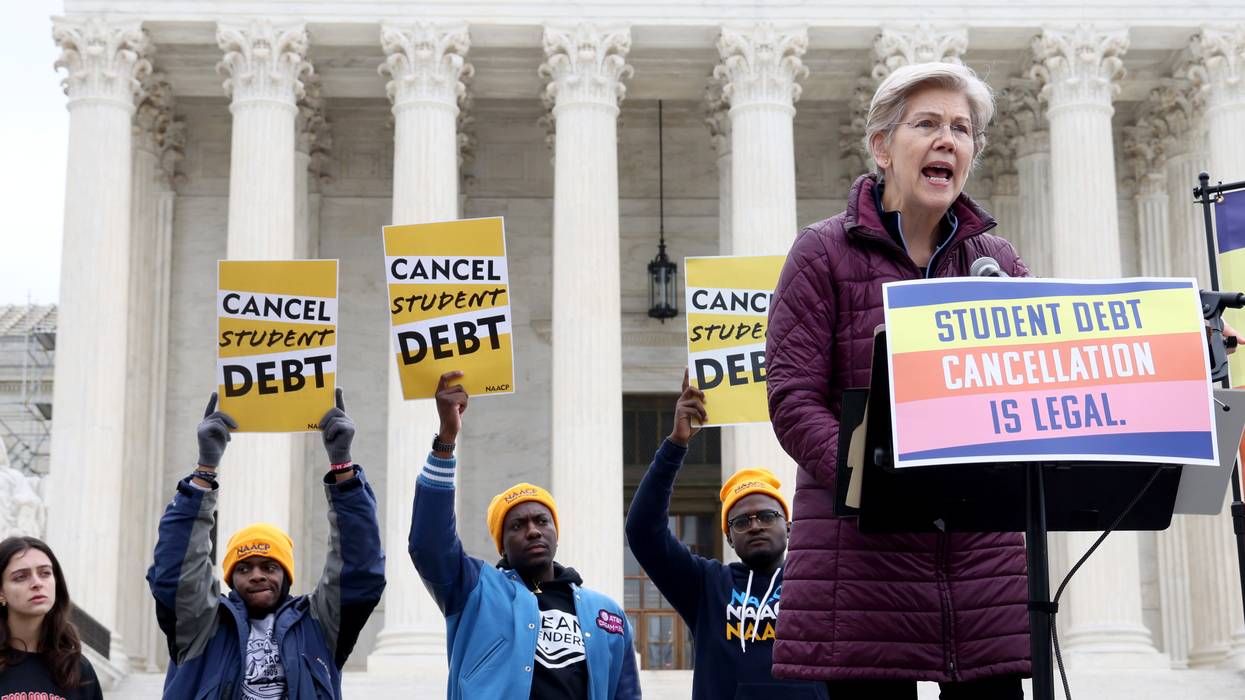
"We are concerned that the latest draft of the rule would fall far short of providing the full scale of debt relief that low- and middle-income Americans urgently need."
Seven members of Congress on Monday sounded the alarm about the Biden administration's evolving student debt cancellation plan and called on U.S. Secretary of Education Miguel Cardona to use his authority to provide broad relief.
After the right-wing U.S. Supreme Court in June struck down President Joe Biden's initial debt relief plan—designed to cancel up to $20,000 per federal borrower—the administration launched a negotiated rulemaking process to establish an alternative plan under the Higher Education Act (HEA) of 1965.
The committee responsible for crafting the rule "has met several times already, but its final round of talks began on Monday and will continue through Tuesday," reported USA Today. "Frustrations arose almost immediately. Committee members expressed disappointment in the department's latest forgiveness proposal, released last week, which many said doesn't go far enough in its current form to address the issues they've spent months debating."
U.S. Senate Majority Leader Chuck Schumer (D-N.Y.), Sens. Alex Padilla (D-Calif.), Bernie Sanders (I-Vt.), and Elizabeth Warren (D-Mass.), and Reps. Ilhan Omar (D-Minn.), Ayanna Pressley (D-Mass.), and Frederica Wilson (D-Fla.) are also unsatisfied with the draft, as they made clear Monday in a letter to Cardona.
"This regulation has the potential to improve the financial security of tens of millions of hard-working Americans who are currently trapped by crushing student debt," the lawmakers noted. "However, we are concerned that the latest draft of the rule would fall far short of providing the full scale of debt relief that low- and middle-income Americans urgently need."
The letter explains that under the draft, only four groups would be eligible for relief: "(1) borrowers with outstanding federal student loan balances that exceed their original principal balance, due to interest; (2) borrowers with loans that have been in repayment for over 20 or 25 years; (3) borrowers who are eligible for forgiveness under an enumerated repayment plan or loan program but have not enrolled; and (4) certain borrowers who took on loans to attend programs that provide insufficient financial value, lost Title IV eligibility, or were found to have committed misconduct."
The U.S. Education Department (ED) "has also released an issue paper indicating the potential need for the rule to address a fifth category: 'those experiencing hardship that is not otherwise addressed by the existing student loan system,'" the letter notes.
The HEA empowers Cardona to "enforce, pay, compromise, waive, or release" federal student loans. The lawmakers pressured him "to leverage this authority to its fullest extent, maximizing relief for the greatest number of borrowers facing financial hardship," highlighting that 43.6 million borrowers "collectively owe an astronomical $1.65 trillion."
"As we lend our support to your diligent efforts to provide debt relief through regulatory procedures, we urge you to consider several recommendations to strengthen the department's debt relief rule," the lawmakers wrote, detailing six proposals:
"We are encouraged by the department's critical efforts to provide student debt relief through negotiated rulemaking. However, we believe more must be done to improve the draft regulatory text," the letter concludes. "The Biden administration should take every
opportunity to use the authority Congress has already given it to deliver on the promises made to student loan borrowers."
Acknowledging the letter on the Senate floor Monday, Schumer declared that "following the Supreme Court's cruel, abrupt blocking of student debt relief, too many borrowers—too many—remain saddled with massive—in many cases, unbearable—amounts of debt. We can and we must do more to help these borrowers."
After being paused throughout the Covid-19 pandemic and the legal battle over Biden's first debt relief proposal, student loan repayments resumed in October. Since the high court's ruling, federal borrowers across the country have pushed the president to continue pursuing sweeping debt cancellation.
"An Education Department spokesperson said the agency had received the letter, is reviewing it, and welcomes the input from lawmakers," according to Politico.
"The Biden-Harris administration is proud of our record of providing relief to borrowers as we work to fix the broken student loan system," the spokesperson said in a statement. "This rulemaking process is about standing up for borrowers who've been failed by the country's broken student loan system and creating new regulations that will reduce the burden of student debt in this country."

"How can we expect kids to learn and teachers to teach when there are concerts, movies, parties, cyberbullies, shopping malls, and drug dealers in their pockets?" said the leader of a letter to the U.S. education secretary.
Dozens of parents, child advocates, and researchers this week called on U.S. Secretary of Education Miguel Cardona to issue an official advisory "urging U.S. K-12 schools to adopt phone-free policies" to "promote student achievement, foster educational excellence, and ensure an equitable experience for all."
"We are a community of individuals and organizations who see an academic, mental health, and teaching crisis in every state of the union that can be improved automatically and effectually with a single strategy: removing students' personal mobile devices from our places of learning (with notable exceptions for those with special educational or medical needs)," states the Monday letter to Cardona.
"If all students are phone-free during the school day, there will be less distraction, less inappropriate content viewed, less cyberbullying, less planned fights," the letter stresses. "There will be more focus on academics, development of social skills, and students engaging with each other—in class and at extracurricular activities."
In 2019-20—the most recent data available—nearly 77% of U.S. public schools prohibited nonacademic use of cellphones or smartphones during school hours, according to the National Center for Education Statistics. However, research suggests much more needs to be done.
As the letter details:
According to the Common Sense Media report, Constant Companion: A Week in the Life of a Young Person's Smartphone Use, released this month, "Phone use during school hours is nearly universal but varies widely, reflecting a patchwork of different school policies." 97% of participants used their phones during school hours for an average of 43 minutes per day. The majority of students' time was spent on social media (32%), gaming (17%), and YouTube (26%). Mobile devices are a deterrent to learning.
Those findings are part of the growing collection of research and reporting that the signatories—including experts in early childhood development, education, psychology, and technology—highlighted to make the case for phone-free U.S. schools.
Researchers and journalists have documented differences in students' note-taking and grades as well as "alarming" misuse of personal devices, "from sexting to air-dropping compromising photos to hundreds of classmates with one click, to purchasing drugs," the letter notes. A theater teacher in Colorado told The Denver Post that her students are "more hesitant to take risks in class because they fear that they will be recorded, the video will be posted online, and then they will be judged."
The journalism referenced in the letter also captures positive responses to well-implemented policies, such as "phone hotels" where kids stash their devices during instruction. Public school district superintendents from Illinois to Maine told Education Week that students have thanked them for ending the distraction of phones in class.
Florida's newly implemented statewide ban "has been extraordinarily positive for [students'] mental health from an anecdotal perspective," one principal told Education Week. "Our kids are way more engaged. The apathy that we had seen from them in the last year to two years has seemed to wane. They seem more like they're waking back up to a social experience."
In addition to an official U.S. Department of Education advisory, the letter signatories urged Cardona to "encourage state boards of education to offer grants, like those offered in Massachusetts," to implement policies on the use of electronic devices.
The letter emphasizes the urgency of the situation, citing U.S. Surgeon General Dr. Vivek Murthy's May advisory about the effects of social media on young people, which states that "at a moment when we are experiencing a national youth mental health crisis, now is the time to act swiftly and decisively to protect children and adolescents from risk of harm."
As Common Dreams reported, 41 states and the District of Columbia on Tuesday filed a pair of lawsuits against Meta, which owns Facebook and Instagram, to protect children from features they argue are designed to keep users addicted to social media.
Efforts to better protect kids from social media platforms and electronic devices used to access them are far from limited to the United States. The letter points to China, England, and France's education-related phone policies as well as a recent United Nations Educational, Scientific, and Cultural Organization (UNESCO) report that advocates for a global ban on smartphones in schools.
"Phones are polluting our schools. They sabotage the teaching and learning processes," said Lisa Cline of the Screen Time Action Network at Fairplay for Kids, who spearheaded the letter to Cardona, in a statement on Wednesday.
"We know empirically that they are distracting—by design—so it's not a fair fight," she added. "How can we expect kids to learn and teachers to teach when there are concerts, movies, parties, cyberbullies, shopping malls, and drug dealers in their pockets?"
"We condemn this move to block a plan that will provide significant financial relief to low-income borrowers and communities of color," said one advocate.
Just as the Biden administration announced this week that 4 million people have enrolled in its new income-driven repayment plan for student loan borrowers just two weeks after it was launched, Republican lawmakers in Congress announced plans to rip the debt relief away from Americans—saddling them with a continued financial burden that has left many working people unable to purchase homes, provide for a family, and save money.
Led by Sens. Bill Cassidy (R-La.), John Thune (R-S.D.), and John Cornyn (R-Texas), 17 Republican senators said Tuesday that they would use the Congressional Review Act (CRA), a tool members of Congress can invoke to overturn final rules set by federal agencies, to repeal the Saving on a Valuable Education (SAVE) plan.
The plan bases student debt monthly payments on borrowers' income and family size, allowing those who earn $15 per hour or less to avoid any monthly payment. An estimated 1 million people are expected to have no monthly payments under the plan and other borrowers are expected to save at least $1,000 per year compared with other income-driven repayment plans.
Education Secretary Miguel Cardona said Tuesday that Americans are submitting new applications for the SAVE plan each day "so that they, too, can take advantage of the most affordable student loan repayment plan in history."
"This is real money President [Joe] Biden is putting back into the pockets of working families," Cardona said last month when the program was launched. "And when borrowers struggle to make ends meet, we're not going to kick them while they're down."
But Republicans including Reps. Virginia Foxx (R-N.C.) and Lisa McClain (R-Mich.), who have introduced a companion bill to Cassidy's in the U.S. House, claim the program is "illegal" and will "leave mountains of debt at the feet of taxpayers while absolving millions of borrowers of their loans."
Jaylon Herbin, director of federal campaigns at the Center for Responsible Lending, said Wednesday that lawmakers should "oppose the CRAs to repeal SAVE."
"Senate Democrats will strongly oppose this Republican measure should it come to the floor for a vote, and we will stand with student loan borrowers as we continue to push for as much relief as possible."
"We condemn this move to block a plan that will provide significant financial relief to low-income borrowers and communities of color," said Herbin. "SAVE provides hope for borrowers as the administration continues to fight alongside advocacy groups to find other ways to achieve broad-based student loan relief. We continue to support President Biden in his quest to make our educational finance system fairer for all borrowers and oppose harmful legislation, such as these CRAs, that will set our already flawed student loan repayment system back to the pre-pandemic era."
Debt relief campaigners and legal experts have said for years that the Biden administration is legally able to wipe out student debt—going much further than the SAVE plan does—using the Higher Education Act of 1965, which allows the education secretary "to enforce, pay, compromise, waive, or release any right, title, claim, lien, or demand" related to federal student loans.
Republicans including Cassidy previously tried to block Biden's debt relief plan which would have canceled up to $20,000 in debt for some student loan borrowers, before the right-wing majority on the U.S. Supreme Court struck down the proposal.
The GOP announced its latest plan to stop borrowers from benefiting from the income-based repayment plan as the administration works on a broad relief plan under the Higher Education Act, and just days after interest on federal student loans began to accrue again following a pause that began during the coronavirus pandemic.
About half of student borrowers in a poll released by Life and My Finances said they would not be able to afford monthly payments when they resume next month.
While "Democrats work hard to find new ways to provide relief for borrowers in need," said Senate Majority Leader Chuck Schumer (D-N.Y.), "Republicans, instead of working with us to find a fix to our broken student loan system, immediately shoot them down."
"Republicans use the same old, tired excuse: that student loan relief only helps the few, the wealthy. That's utter nonsense," said Schumer. "President Biden's SAVE plan will benefit the Americans who need it most: working and middle-class families, students of color, community college students, and borrowers working in public service."
"Senate Democrats will strongly oppose this Republican measure should it come to the floor for a vote," he added, "and we will stand with student loan borrowers as we continue to push for as much relief as possible."

"Colleges and universities are a path towards opportunity, but this opportunity should not be locked behind an ivory tower."
A trio of progressive New England senators on Monday called on U.S. Education Secretary Miguel Cardona to use his powers "to even the playing field for college applicants by helping to end preferential treatment" for higher education aspirants who are the children of alumni and donors.
"In its June decision in Students for Fair Admissions, Inc. v. President and Fellows of Harvard College, the United States Supreme Court once again overturned decades of settled precedent, this time gutting the use of affirmative action in college admissions," Sens. Ed Markey (D-Mass.), Bernie Sanders (I-Vt.), and Elizabeth Warren (D-Mass.) wrote in a letter to Cardona made public Tuesday.
"The court's decision strikes a blow against diversity in higher education while keeping intact harmful practices that advantage the wealthy and well-connected," the senators asserted. "The U.S. Department of Education must respond."
The lawmakers implored Cardona to "immediately take steps to mitigate the impact of this Supreme Court decision, including by using your advisory and enforcement authority to help effectively end preferential treatment given to children of alumni—legacy admissions—and donors and help ensure a more even playing field for students applying to college."
The senators say those steps should include:
"Colleges and universities are a path towards opportunity, but this opportunity should not be locked behind an ivory tower," the lawmakers stressed. "We must ensure that future generations will not be weighed down by the inequities of our past. We must endeavor to give every student the opportunity to fulfill their educational dreams."
The lawmakers' letter follows the launch last month of a Department of Education civil rights probe of Harvard University's legacy admissions program and a lawsuit filed by civil rights groups challenging the elite Massachusetts school's preferential treatment of applicants related to alumni and donors—a policy the litigants say "severely damages and harms" prospective students of color.
A recent study by economists at Harvard revealed that legacy students were nearly four times likelier to be admitted than other applicants with identical test scores.
Last year, U.S. Sen. Jeff Merkley (D-Ore.) and Rep. Jamaal Bowman (D-N.Y.) introduced the Fair College Admissions for Students Act, which would bar colleges and universities from favoring the children of alumni and donors during the admissions process.

"These for-profit companies literally committed crimes—but Trump/Reagan judges don't care," said one economic justice group.
Economic justice advocates on Monday said three right-wing federal judges sought to "make fraud legal" when they blocked newly implemented Biden administration rules that made it easier for student loan borrowers to cancel their debt if they were defrauded.
A panel on the 5th U.S. Circuit Court of Appeals—composed of judges appointed by former Republican Presidents Ronald Reagan and Donald Trump—granted a temporary nationwide injunction requested by Career Colleges & Schools of Texas (CCST), a group representing dozens of for-profit colleges.
The panel said it will consider the group's case against the rules in the fall and did not explain their reasoning in the two-page ruling, but the Debt Collective, a union of student loan borrowers that has advocated for student debt cancellation for years, said the three judges simply "don't care" that for-profit colleges "literally committed crimes."
"We have a judicial problem," said the group.
The rules—which took effect on July 1 and are separate from President Joe Biden's thwarted student debt cancellation program—were finalized late last year by U.S. Education Secretary Miguel Cardona. The new policy reformed the government's "borrower defense to repayment" standards, which govern the Education Department's authority to discharge loans due to colleges' misconduct.
Under the rules, the Education Department was able to review claims filed by individual borrowers or large groups of student who said they had been defrauded. They also compelled colleges to cover the cost when students' loans were cancelled due to fraud and made it easier for borrowers to obtain relief if an institution closed suddenly after promising them an education.
Peter Mills, a legislative assistant to U.S. Sen. Chris Murphy (D-Conn.), demanded to know how CCST had legal standing when it requested the injunction.
"They got their money and defrauded students," he said on social media. "Why does it matter at all what happens to the loans we should've never allowed to go to criminal organizations like these colleges in the first place?"
As the ruling was handed down, The Washington Post reported that the Project on Predatory Lending (PPSL) has accused the Education Department of violating its new policy of requiring loan servicing companies to issue full refunds to borrowers whose student debt has been cancelled.
"There should be parity in the department's policy on these refunds," Eileen Connor, president and director of PPSL. "If it was willing to make a change going forward, why not apply that policy to everyone?"
The Debt Collective said that ongoing litigation regarding student debt cancellation denotes "problem" with the Biden administration as well as with the courts.
The administration "should simply stop funding predatory colleges," said the group. "They can do this without Congress."

Thanks to the moratorium, said one advocate, "tens of millions of Americans have been able to put food on the table, pay for childcare, stay in their homes, and purchase their lifesaving medicine."
Supporters of U.S. President Joe Biden's plan to cancel over $400 billion in college debt to more than 43 million borrowers reacted angrily Monday to a lawsuit filed by an online finance company trying to overturn his administration's latest pause on student loan repayments—a policy that has cost the firm more than $100 million in lost profits.
San Francisco-based SoFi filed suit Friday in the U.S. District Court for the District of Columbia on Friday against the U.S. Department of Education and Education Secretary Miguel Cardona over the agency's rdecision in November to extend a Covid-19-based moratorium on student loan repayments due to ongoing legal battles.
Founded in 2011, SoFi "was once the leader of a booming private student loan refinancing industry," according to to the Student Borrower Protection Center (SBPC), a nonprofit advocacy group. SoFi's stock price has plummeted by more than 70% since its peak.
"SoFi has a long history of misleading student debtors and tricking them into refinancing their loans."
SoFi told The Washington Post that "we have supported and continue to support targeted student loan forgiveness, in addition to the student loan payment moratorium during the economic crisis at the height of the Covid-19 pandemic," but that the latest extension is an "illegal overreach."
However, according to the Debt Collective, the U.S.' first debtors union:
SoFi has a long history of misleading student debtors and tricking them into refinancing their loans in a way that costs hardworking Americans more interest in the long run. SoFi also engages in racist lending practices. The Debt Collective is encouraging its members—and anyone who has been misled or harmed by SoFi—to immediately file a complaint with the Consumer Financial Protection Bureau as well as their state's attorney general.
The Biden administration's pause extensions have kept cash in the pockets of people who desperately need it—disproportionately women, low-income families, and Black communities. Thanks to years of a pause on federal student debt, tens of millions of Americans have been able to put food on the table, pay for childcare, stay in their homes, and purchase their lifesaving medicine.
"SoFi CEO Anthony Noto is a financial vulture gorging himself on our bloated and broken student loan system," SBPC executive director Mike Pierce said in a statement. "Noto's failing company thinks it is entitled to engorge itself by skimming the cream off of the federal student loan portfolio and—after a failed back-room lobbying blitz—is running into court because the government doesn't agree."
"The real story here is the huge risk this poses to tens of millions of working people who SoFi would never lend to—families across the country that depend on the student loan payment pause to shield them from financial devastation," Pierce added.
As the Post's Danielle Douglas-Gabriel noted:
SoFi has a lot at stake with the ongoing payment pause. The company made a name for itself by refinancing education loans—lowering the interest rates and monthly payments of people with private and federal student loans. Refinancing federal student loans can save borrowers money, especially those with high-interest graduate debt. But it means giving up federal benefits, including access to income-driven repayment plans and public service loan forgiveness. The trade-off has become less appealing in the wake of the payment pause, according to SoFi.
The moratorium has eliminated the primary benefits of student loan refinancing by suspending interest on most federal student loans for the past three years, the complaint said. Whereas SoFi originated about $450 million to $500 million of refinanced federal student loans per month before March 2020, the volume plummeted by more than 75% following the initial pause, according to the company. The decline has accelerated and resulted in the company losing roughly $150 million to $200 million in profits over the past three years, the company said.
The current repayment pause—which costs the federal government $5 billion each month—could continue until August, depending upon the timing of the U.S. Supreme Court's ruling on two cases that will decide the fate of Biden's plan.
Last month, the nine justices heard oral arguments in the cases. Members of the court's right-wing supermajority repeatedly criticized the president's proposal and its estimated $400 billion-plus price tag. U.S. Solicitor General Elizabeth Prelogar told the Supreme Court that failing to cancel student debt and lifting the moratorium will bring extreme financial hardship to millions of borrowers and cause defaults to skyrocket.
"The Department of Education should immediately cancel all federal student loans. Don't feed the parasites."
Debt Collective spokesperson Braxton Brewington ripped SoFi's "ridiculous" filing as "just a continuation of the sham lawsuits pushed by Republican states and right-wing dark-money groups opposing student debt relief."
"What the Biden administration needs to do is fight back and choose working-class people over corporate profits," Brewington continued. "A predatory corporation losing revenue because the federal government continues good policy is not grounds to end that policy. "SoFi claims they want to lower Americans' interest rates, but they're working to destroy 0% interest to force Americans into a higher rate with them."
Debt Collective organizer Thomas Gokey called SoFi "a parasite on a policy failure."
"SoFi CEO Anthony Noto is starting to get desperate now that everyone realizes that there is no reason to ever restart student debt payments," Gokey contended. "The Department of Education should immediately cancel all federal student loans. Don't feed the parasites."
The lawsuit came on the same day that the Student Loan Law Initiative—an academic partnership between the University of California, Irvine School of Law and SBPC—published a new analysis detailing how "the ongoing student loan payment pause may have been even more beneficial for federal borrowers than previously understood."