

SUBSCRIBE TO OUR FREE NEWSLETTER
Daily news & progressive opinion—funded by the people, not the corporations—delivered straight to your inbox.
5
#000000
#FFFFFF
To donate by check, phone, or other method, see our More Ways to Give page.
Daily news & progressive opinion—funded by the people, not the corporations—delivered straight to your inbox.
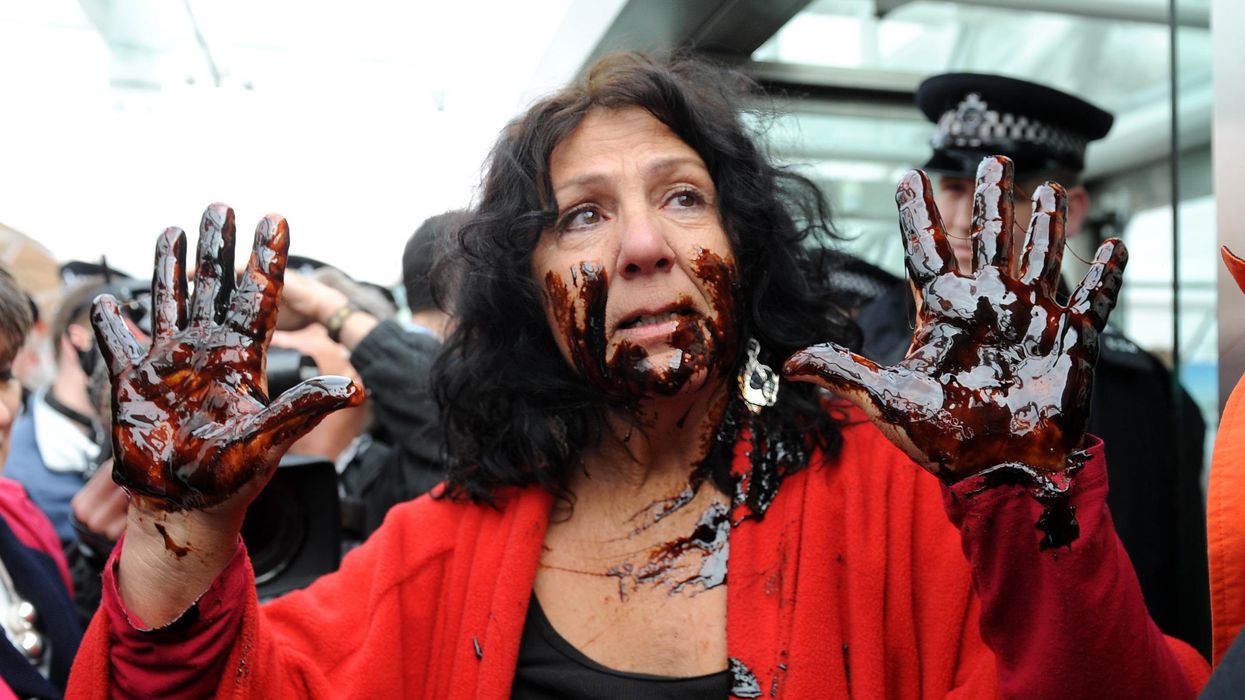
One Goldman Environmental Prize recipient was Diane Wilson, who won a historic $50 million settlement in a case against Formosa Plastics.
Activists from Zambia, Indonesia, Turkey, Finland, Brazil, and the United States were awarded the 2023 Goldman Environmental Prize on Monday for fighting destructive mining projects, working to protect imperiled marine ecosystems, shielding Indigenous land from corporate plunder, and holding a powerful plastics company accountable for dumping toxic waste on Texas' Gulf Coast.
"Now that the world has awakened to acute environmental crises like climate change, fossil fuel extraction, and pollution of our air and water, we are much more aware of our connections to each other and to all life on the planet," said John Goldman, president of the Goldman Environmental Foundation. "A grassroots activist in Malawi working to combat plastic pollution in her own country is directly connected to us, and vice versa; and she has much to teach us about how we can do that work at home, where we live. This work, and our fates, are all intertwined."
This year's recipients of the prize, awarded annually to grassroots campaigners from the world's six inhabited continents, were Chilekwa Mumba of Zambia, Zafer Kizilkaya of Turkey, Tero Mustonen of Finland, Delima Silalahi of Indonesia, Alessandra Korap Munduruku of Brazil, and Diane Wilson of the United States.
In 2019, Wilson—a fourth-generation shrimper—won a $50 million settlement in a landmark case against the petrochemical behemoth and notorious polluter Formosa Plastics. The Texas Tribune noted that the 2019 settlement, which a judge ordered the company to place in a trust devoted to habitat restoration and other efforts on the Texas Gulf Coast, was "the largest in U.S. history involving a private citizen's lawsuit against an industrial polluter under federal clean air and water laws."
Other Goldman prize recipients helped score victories against powerful companies.
Alessandra Korap Munduruku of Brazil "organized community efforts to stop mining development by British mining company Anglo American in Brazil's Amazon rainforest," forcing the firm to "withdraw 27 approved research applications to mine inside Indigenous territories," the Goldman Environmental Foundation noted.
Chilekwa Mumba of Zambia, for his part, coordinated legal action against Vedanta Resources, the United Kingdom-based parent company of a massively polluting mining operation in the African nation's Copperbelt Province.
"Chilekwa's victory in the U.K. Supreme Court set a legal precedent—it was the first time an English court ruled that a British company could be held liable for the environmental damage caused by subsidiary-run operations in another country," the Goldman Environmental Foundation said. "This precedent has since been applied to hold Shell Global—one of the world's 10 largest corporations by revenue—liable for its pollution in Nigeria."
A formal award ceremony will be held in Washington, D.C. on Monday at 8:30 pm ET.
Watch live:
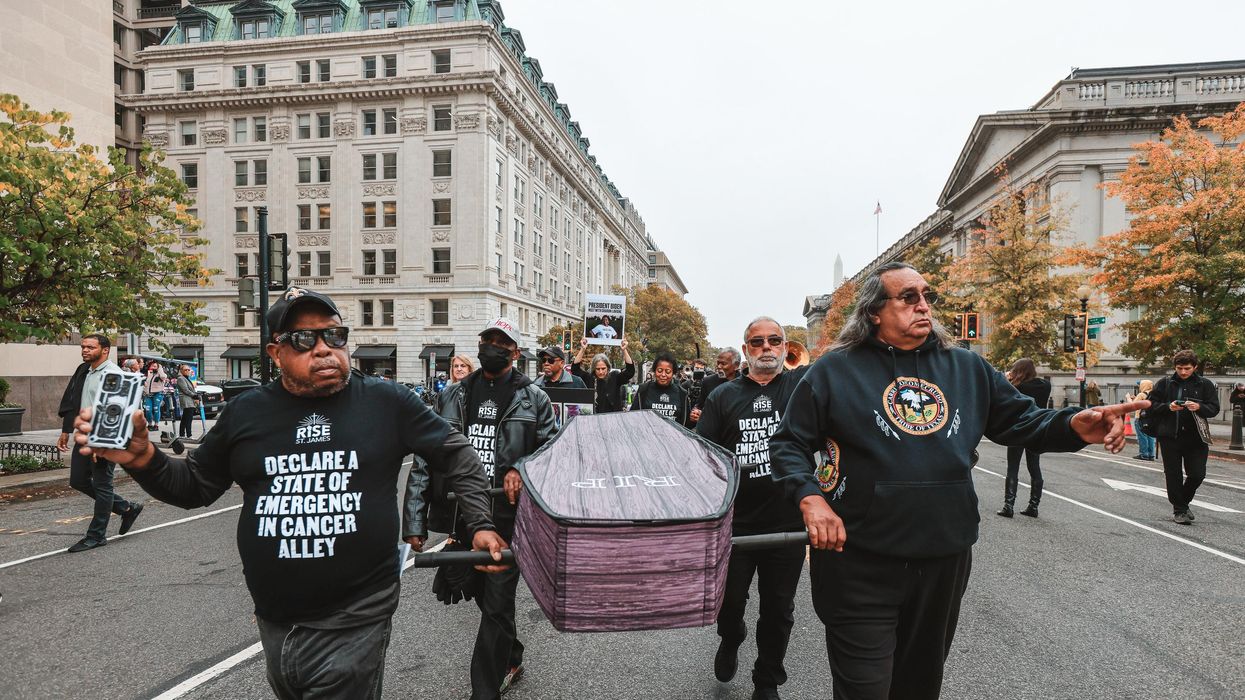
Environmental justice activists from Louisiana's "Cancer Alley" on Monday held a funeral procession in Washington, D.C. to remember victims--overwhelmingly Black people--killed by petrochemical industry pollution and to demand that U.S. President Joe Biden declare a climate emergency and do more to stop deadly fossil fuel projects.
"President Biden, you are drinking clean water, and we are not. You can plant a garden over here; we cannot, the soil is destroyed."
Activists led by the frontline action group RISE St. James held a second-line march--the procession, replete with brass band musicians and parasol-toting dancers, that rallies behind relatives of the deceased in a traditional New Orleans funeral--to the White House, where they held large photos of dead cancer victims and pleaded with Biden to take action to protect their lives and their environment.
"I want the world to know what's going on in St. James Parish and throughout the Gulf Coast," said RISE St. James president Sharon Lavigne outside the White House.
"People are dying," she continued. "Cancer is taking over our lives in the river parishes, in St. James Parish, and throughout the Gold Coast. So we're asking President Biden to declare St. James Parish, Cancer Alley, to declare this an emergency. If he will not declare this an emergency, we are going to die."
"We are already dying, slowly but surely," Lavigne said. "Sometimes we have one funeral per week for someone dying of cancer. If this don't stop, we won't have anything left of our area. We need you all to work with us to help us to declare this a climate emergency."
"We won the fight with Formosa Plastics. The judge rules in our favor on all counts," she added to loud applause, referring to last month's court order blocking the construction of a highly controversial petrochemical factory along the Mississippi River in St. James Parish. "With God's help we're gonna win any other fight that's coming to our neighborhood, and that's a fact. We will not allow any more because we're gonna stand together, and we will fight any industry that tries to come into our neighborhood and destroy us."
St. James Parish sits in the middle of an 85-mile stretch along the Mississippi River between New Orleans and Baton Rouge known as Cancer Alley due to its nearly 150 oil refineries and plastics and chemical plants.
According to data from the U.S. Environmental Protection Agency (EPA), the cancer risk in predominantly Black areas of St. James Parish is as high as 105 per million, compared with 60 to 75 cases per million in majority white areas. The EPA's Risk-Screening Environmental Indicators database reported an 800% cancer hazard increase due to petrochemical facilities in the parish between 2007 and 2018.
"President Biden, you are drinking clean water, and we are not. You can plant a garden over here; we cannot, the soil is destroyed because of [the] petrochemical industry," Lavigne said, inviting the president to "come to St. James Parish" and "see what we are going through."
"We need your help," she added, "and we are pleading with you and your staff."
In a letter to Biden published Tuesday, Lavigne wrote:
St. James Parish now has the most polluted air in America, with cancer rates more than 50% higher than the national average. Our air is quite literally killing us, and no one seems to really mind. Sure, there have been promises. You yourself uttered the words "Cancer Alley," during your first week in office, something very few politicians of your stature have been willing to do. This has given us hope, and when you sent EPA Administrator Michael Reagan down to visit me and other activists, we were encouraged that change will come.
"However, we are still dying, struggling to breath polluted air, and without clean water to drink," she stressed. "President Biden. Please save us. You too understand the gut-wrenching pain of losing a loved one to cancer. Help to make it so that no one else in St. James Parish has to feel this pain. "
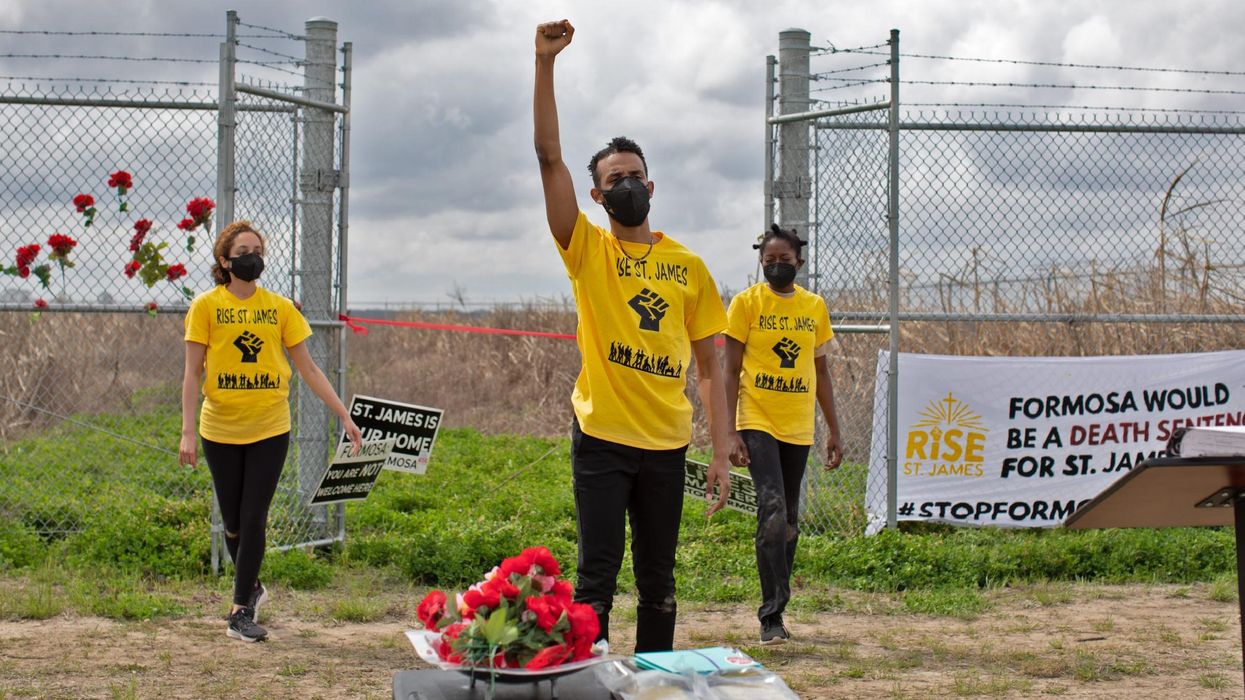
Environmental justice and climate campaigners celebrated after a federal official on Wednesday ordered a detailed review of the impacts of a massive Formosa Plastics complex set to be built on over 2,000 acres in an area of Louisiana long known as "Cancer Alley."
"Today's announcement is the ultimate David v. Goliath victory."
--Anne Rolfes, Louisiana Bucket Brigade
"Today's announcement is the ultimate David v. Goliath victory," declared Anne Rolfes, executive director of Louisiana Bucket Brigade. "We were not scared of Formosa Plastics and its $9 billion project, or the fact that our governor has been cheering for Formosa all along."
"St. James Parish residents are the ones who have shown leadership and wisdom," Rolfes continued, calling the order for an environmental impact statement (EIS) of what would be one of the world's biggest plastics plants "common sense."
"Our state and federal officials should have demanded it from the outset," she added. "I am hopeful that this is the nail in the coffin of Formosa Plastics in St. James Parish. And don't try to build somewhere else. Pack up and go home."
The directive for an EIS--long demanded by local groups representing Black and low-income communities that would be affected by the $9.4 billion petrochemical project, which a global credit rating agency said last year could cost up to $12 billion--comes after the U.S. Army Corps of Engineers suspended a permit for it in November following a legal challenge.
The Associated Press reports that "Jaime Pinkham, the Army's acting assistant secretary for civil works, ordered the review after a virtual meeting with opponents of a Corps wetlands permit that allowed Formosa Plastics Group member FG LA LLC to build 10 chemical plants and four other major facilities on the Mississippi River between Baton Rouge and New Orleans."
Pinkham, in a two-page memo on Wednesday, wrote that "as a result of information received to date and my commitment for the Army to be a leader in the federal government's efforts to ensure thorough environmental analysis and meaningful community outreach, I conclude an EIS process is warranted to thoroughly review areas of concern, particularly those with environmental justice implications."
"The tweet and accompanying letter from the acting assistant secretary of the Army posted today online provide little detail on EIS procedure the Corps intends to use in its additional evaluation of the project," Janile Parks, a spokesperson for FG LA LLC, told The Advocate on Wednesday. "As a result, the company will continue to work with the Corps as we receive more guidance on the additional evaluation and has no further comment at this time."
Sharon Lavigne of the local faith-based group RISE St. James said in a statement responding to Pinkham's memo that "the Army Corps has finally heard our pleas and understands our pain. With God's help, Formosa Plastics will soon pull out of our community."
"The Army Corps has finally heard our pleas and understands our pain."
--Sharon Lavigne, RISE St. James
"Nobody took it upon themselves to speak for St. James Parish until we started working to stop Formosa Plastics," added Lavigne, who earlier this year was awarded the Goldman Environmental Prize for her advocacy work. "Now the world is watching this important victory for environmental justice."
Previous analyses have shown the local and global effects of the complex, which would emit 13.6 million metric tons of greenhouse gases and hundreds of tons of toxic air pollutants annually.
The Center for Biological Diversity highlighted that in addition to ignoring the project's water, air, climate, and health impacts, the Corps "failed to properly evaluate and protect burial sites of enslaved people discovered on the property."
"This long-overdue review will show the unacceptable harm Formosa Plastics' massive petrochemical complex would inflict on this community, our waterways, and our climate," Julie Teel Simmonds, a senior attorney at the center, said of the forthcoming EIS.
"This terrible project shouldn't have been rubber-stamped and it should never be built," she added. "Climate action and environmental justice mean we have to stop sacrificing communities and a healthy environment just to make throwaway plastic."
Myrtle Felton, director of Inclusive Louisiana, noted that "our region is already full of toxic, polluting plants."
"If Formosa Plastics is allowed to build, it will be a death sentence for us," Felton said. "We can't breathe already so we say no to Formosa and its pollution."
Jane Patton, a campaign manager for the Center for International Environmental Law, put Formosa's so-called "Sunshine Project" in the context of environmental justice issues on a national scale.
"The race to massively expand plastics and petrochemical infrastructure is putting communities across the U.S. at risk, with disproportionate and overwhelming impacts on communities of color," Patton told DeSmog. "The Army Corps of Engineers' initial approval of the Formosa Plastics megacomplex in St. James without adequately assessing these or other impacts was a grave mistake. It should be the last such mistake."
"In the end, we expect the Army Corps of Engineers to uphold their obligations to human rights and environmental justice by revoking Formosa's permit, once and for all," Patton added, "and by ensuring that other proposed facilities that could create similar risks are never approved."
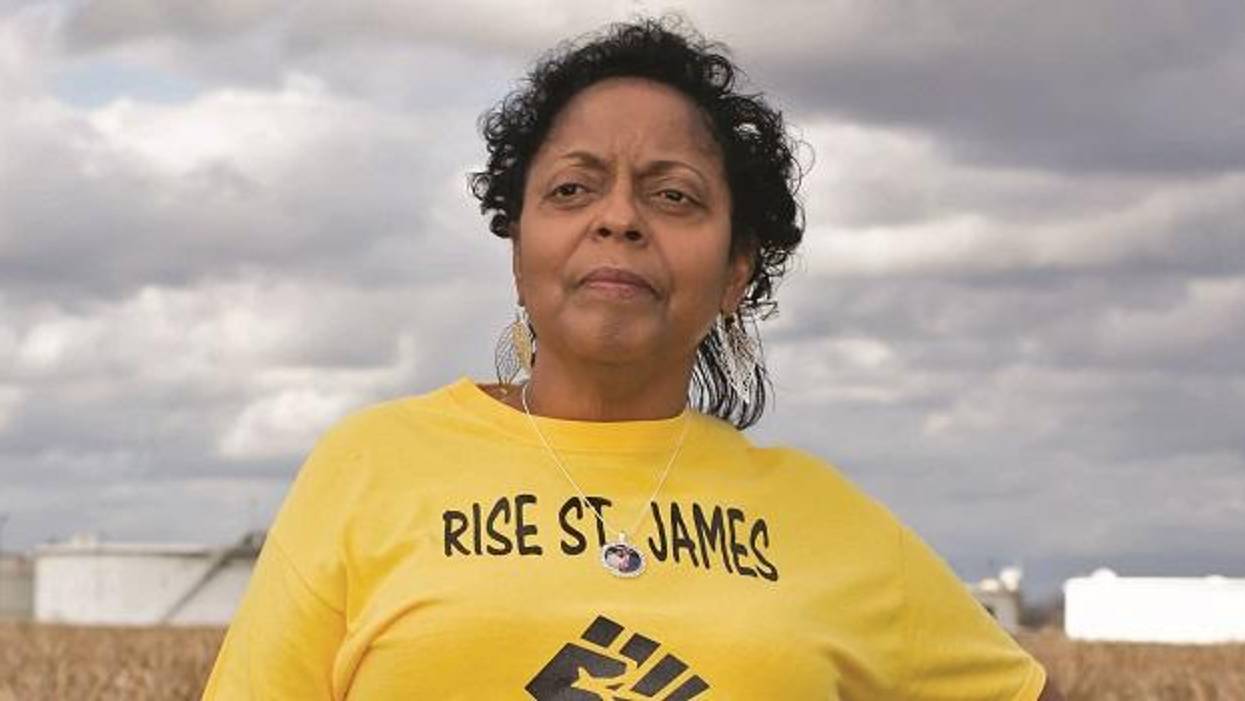
Environmental justice activist Sharon Lavigne, who led a successful grassroots campaign to block a toxic plastics manufacturing plant in her Louisiana community, is this year's North American winner of the prestigious Goldman Environmental Prize.
The awards, sometimes referred to as the Green Nobels, were announced Tuesday to recognize "grassroots environmental heroes" on each of the planet's inhabited continents who have exhibited "sustained and significant efforts to protect and enhance the natural environment, often at great personal risk."
"Sharon is in an intense, ongoing fight for the life of her community and our planet."
Lavigne is a former special education teacher and founder and president of the faith-based grassroots group RISE St. James. The St. James Parish is located in a predominantly Black area along the Mississippi River known as "cancer alley"--a nickname in reference to the human impact of the toxic industries that have polluted, and are slating to continue polluting, the surrounding communities.
The 69-year-old has been leading efforts against such environmental racism, and Goldman recognized her advocacy to successfully stop the Wanhua plastics complex. As a statement from Goldman notes, St. James Parish Council gave the plant zoning approval, even though it would have produced "hundreds of tons of methylene diphenyl diisocyanate (MDI)--a chemical used in the production of foam. MDI affects respiratory function in humans and is found to produce tumors in rats." It would also have released "carbon monoxide, volatile organic compounds, formaldehyde, benzene, and other toxic pollutants into the environment--directly next to residential neighborhoods and the Mississippi River."
By leading what the prize called "a master class in campaigning for environmental justice," including forming alliances with other environmental and climate justice organizations, Wanhua withdrew the project.
But, as she and her allies stress, the battle to stop the community from continuing to be a sacrifice zone to benefit polluting industries. At the center of that struggle is stopping Taiwan-based Formosa Plastics Group from building a $9.4 billion petrochemical plant.
Lavigne's group along with allies Louisiana Bucket Brigade and Healthy Gulf, filed a federal lawsuit last year to stop the plant, triggering a construction delay.
Following the award announcement, Lavigne's allies sang her praises and referenced her determination.
"When the governor of Louisiana came to St. James Parish and announced Formosa Plastics was coming to town, Sharon Lavigne was brave enough to stand up and say no. Sharon had a different vision for her historic Black community," Anne Rolfes, director of the Louisiana Bucket Brigade, said in a statement.
"When parish officials told her that Formosa was a done deal, she insisted that it was not," Rolfes added. "Her leadership, courage, and vision are rewarded today by the Goldman Prize. And she would be the first to say that this is just the beginning. The fight has just begun."
"These phenomenal environmental champions remind us what can be accomplished when we fight back and refuse to accept powerlessness and environmental degradation."
Julie Teel Simmonds, a senior attorney at the Center for Biological Diversity, which represented the groups fighting Formosa Plastics, also celebrated Lavigne's achievement.
"Sharon is in an intense, ongoing fight for the life of her community and our planet," she said. "Sharon has battled through pollution-related illness and the loss of loved ones, and she keeps faithfully fighting environmental racism. Under the leadership of this amazing woman, we're going to stop Formosa Plastics and advance environmental justice in this country."
Other Goldman Prize winners this year include Gloria Majiga-Kamoto of Malawi for fighting against plastics pollution; pangolin advocate Thai Van Nguyen of Vietnam; dam opponent Maida Bilal of Bosnia and Herzegovina; anti-coal activist Kimiko Hirata of Japan; and conservation champion Liz Chicaje Churay of Peru.
"These Prize winners," said Goldman Environmental Foundation vice president Susie Gelman, "have so much to teach us about the path forward and how to maintain the balance with nature that is key to our survival. These phenomenal environmental champions remind us what can be accomplished when we fight back and refuse to accept powerlessness and environmental degradation."
"They have not been silenced--despite great risks and personal hardship--and we must also not be silent, either. It takes all of us," added Gelman.
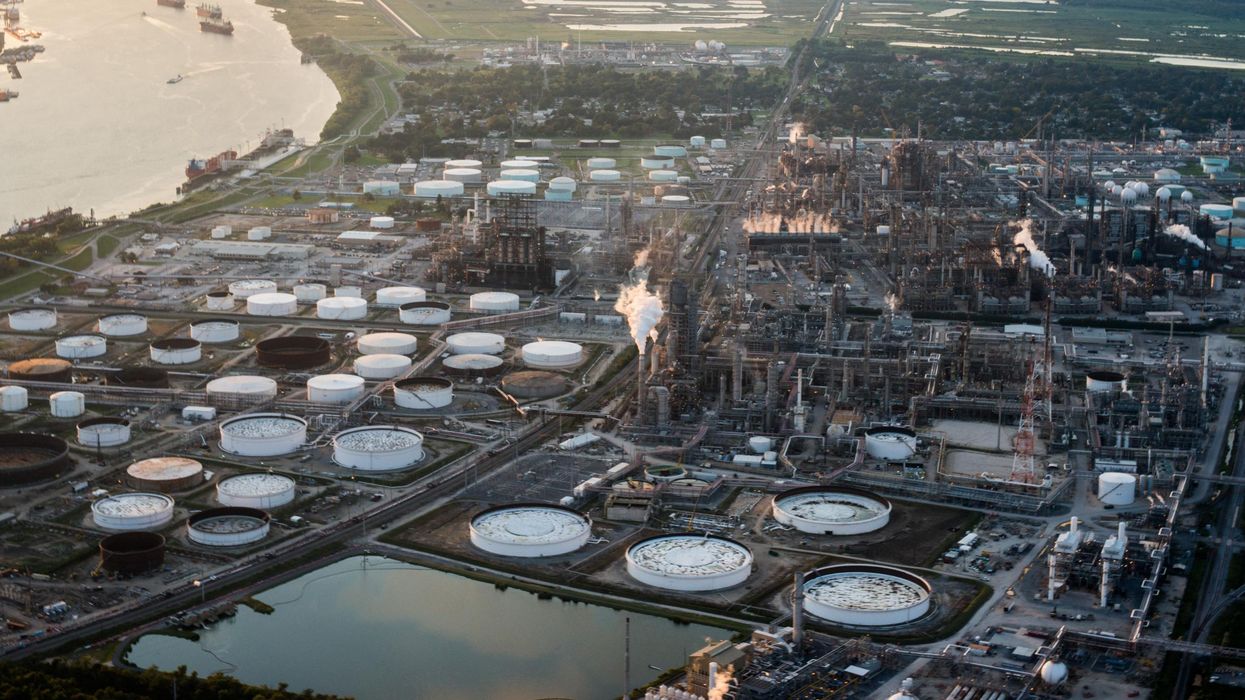
Citing the imperative to "protect the residents and natural resources of St. James Parish and to prevent public health and environmental harms across our jurisdictions," attorneys general from four states and the District of Columbia on Monday sent a letter to the U.S. Army Corps of Engineers asking it to thoroughly evaluate the adverse impacts of Formosa Plastics' massive proposed petrochemical complex in Louisiana's "Cancer Alley."
"The corps must reevaluate the environmental justice implications of issuing the permit, including the plastics complex's disproportionate impacts on low-income African-American communities in St. James Parish."
--state AGs' letter
The Center for Biological Diversity, Healthy Gulf, the Louisiana Bucket Brigade, and RISE St. James last year sued the Trump administration over a federal permit for the proposed project--which could cost up to $12 billion--prompting the Army Corps of Engineers to suspend that permit pending a broader environmental review.
"The corps must reevaluate the environmental justice implications of issuing the permit, including the plastics complex's disproportionate impacts on low-income African-American communities in St. James Parish that are already overburdened by pollution from existing refineries and petrochemical facilities," states the letter (pdf)--which was led by New York Attorney General Letitia James and signed by William Tong, Karl Racine, Maura Healey, and Gurbir Grewal--her counterparts in Connecticut, the District of Columbia, Massachusetts, and New Jersey, respectively.
"We also request that you reevaluate the plastics complex's greenhouse gas emissions and contribution to the global climate crisis, as well as its impacts on migratory birds and other species resulting from the destruction of forested wetlands and degradation of water quality," the five attorneys general wrote. "By reevaluating these environmental and public health impacts, the corps will comply with applicable law and prevent harm to our residents and natural resources."
"Such comprehensive analysis furthers the Biden administration's important environmental justice policies, which direct federal agencies to address the disproportionate health, environmental, and climate impacts of agency programs and decision-making on disadvantaged communities," the letter states.
St. James Parish residents--nearly half of whom are Black--and environmental advocates strongly oppose the proposed plant, which they say will release carcinogenic chemicals and, according to one environmental watchdog, spew 13.6 million tons of planet-heating emissions into the atmosphere each year.
Formosa Plastics has also faced intense criticism for failing to follow through on a promise to alter the plant's layout to lessen the exposure of nearby residents and schoolchildren to toxins, and for its failure to notify the community of the discovery of a burial ground for enslaved Black people.
"Any serious analysis should cause the Army Corps to reject this major threat to public health and our climate. We can't let industry pollute another working-class Black community as it creates mountains of plastic the world doesn't want or need."
--Julie Teel Simmonds,
Center for Biological Diversity
St. James Parish is located amid an 85-mile stretch along the Mississippi River between New Orleans and Baton Rouge commonly called Cancer Alley due to its nearly 150 oil refineries and plastics and chemical plants.
According to data from the U.S. Environmental Protection Agency (EPA), the cancer risk in predominantly Black areas of St. James Parish is significantly higher than in majority white areas. The EPA's Risk-Screening Environmental Indicators database reported an 800% cancer hazard increase due to petrochemical facilities in the parish between 2007 and 2018.
Local and national advocacy groups praised the action by the attorneys general.
"I'm grateful that these attorneys general understand the threat Formosa Plastics poses to us and are demanding action," Sharon Lavigne, founder of RISE St. James, said in a statement. "The Army Corps needs to listen and do a proper analysis of a project that would endanger our lives."
"I believe that if there's an honest assessment of the environmental racism behind this project's approval then it will never be permitted," added Lavigne. "We must stop Formosa Plastics."
Louisiana Bucket Brigade director Anne Rolfes said that "it's refreshing to see public servants actually act in the interest of the people they serve... We are glad that at least some attorneys general actually have a backbone, and we are grateful for their support. We will continue to push the Biden administration to take a stand for environmental justice and permanently revoke this project's permits."
Julie Teel Simmonds, a lawyer at the Center for Biological Diversity, said that the group is "pleased these state attorneys general are joining our coalition's call for stronger federal scrutiny of Formosa Plastics' terrible project."
"Any serious analysis should cause the Army Corps to reject this major threat to public health and our climate," Teel Simmonds continued. "We can't let industry pollute another working-class Black community as it creates mountains of plastic the world doesn't want or need. I'm hoping this letter will help convince Formosa Plastics to abandon this dangerous project."
St. James Parish has been the site of numerous protests against the proposed Formosa complex, including the youth-led Sunrise Movement's "Generation on Fire" 400-mile march from New Orleans to Houston.
Around 175 advocacy groups and numerous Democratic lawmakers have also voiced their opposition to the proposed plant.

Calling a planned petrochemical manufacturing complex in Louisiana's "Cancer Alley" a "textbook case of environmental racism," 175 organizations from around the world sent a letter to financial institutions Tuesday urging them not to fund, underwrite, or invest in the project, which could cost up to $12 billion.
"Formosa Plastics will destroy our land, our homes, and the lives of our community. We're saying enough is enough, and we're standing up for a better, cleaner future for ourselves and our children."
--Sharon Lavigne,
RISE St. James
The letter--led by the faith-based grassroots group RISE St. James--says that Taiwan-based Formosa Plastics Group's 2,400-acre Sunshine Project, which is slated to be built in a vulnerable floodplain amid intensifying climate-driven hurricanes and tropical storms,"presents an unnecessary burden for our already-polluted community."
"We are fighting to protect ourselves from Formosa Plastics' disastrous environmental and human-rights record in the United States and around the world," the letter states.
Residents of St. James Parish--nearly half of whom are Black--and environmental advocates strongly oppose the plant, which, if built as planned, will release carcinogenic chemicals and, according to one environmental watchdog, produce 13.6 million tons of planet-heating emissions annually.
Formosa Plastics has also come under fire for failing to follow through on a promise to alter the plant's layout to lessen the exposure of nearby residents and schoolchildren to toxins, and for its failure to notify the community of the discovery of a burial ground for enslaved Black people.
St. James Parish sits in the middle of an 85-mile stretch along the Mississippi River between New Orleans and Baton Rouge known as Cancer Alley or Death Alley due to its nearly 150 oil refineries and plastics and chemical plants.
According to data from the U.S. Environmental Protection Agency (EPA), the cancer risk in predominantly Black areas of St. James Parish is as high as 105 per million, compared with 60 to 75 cases per million in majority white areas. The EPA's Risk-Screening Environmental Indicators database reported an 800% cancer hazard increase due to petrochemical facilities in the parish between 2007 and 2018.
The Sunshine Project has drawn the attention and condemnation of environmental and racial justice groups, United Nations human rights experts, progressive lawmakers, and others. Last month, Democratic U.S. Reps. Raul Grijalva (Ariz.) and Donald McEachin (Va.) urged President Joe Biden to deliver on his campaign promises to reduce pollution in frontline communities by blocking the project.
Signatories of the RISE St. James letter urged banks and asset managers to avoid financing, underwriting, or investing in Formosa Plastics projects, and to divest from the "serial environmental offender."
The letter continues:
In the context of the Covid-19 pandemic, Formosa Plastics' plan to construct a facility that would double or triple the toxic levels of cancer-causing pollutants in communities in St. James Parish represents a stunning, potentially devastating increase in our community's environmental burden. In addition to elevating residents' risk of cancer, asthma, and other serious diseases, this increase in toxic air pollution places residents at a higher risk from respiratory infections including a higher risk of death from Covid-19.
Study after study has demonstrated inextricable links between air pollution exposure and Covid-19 death rates. As of July 2020, three out of Louisiana's five parishes with the highest Covid-19 death rates were located in Cancer Alley, including St. James Parish, with averages up to 3.8 times the state's median. Our community simply cannot afford more air pollution--our survival depends on it.
It notes that Formosa Plastics has been hit with over $650 million in fines and penalties for violations at more than a dozen facilities around the world, including a 2016 spill of cyanide and other deadly chemicals that devastated marine life and livelihoods along a 125-mile stretch of the central Vietnamese coast--the country's worst-ever environmental catastrophe.
"High-profile disasters have caused at least two dozen deaths, dozens more injuries, and tens of thousands of disrupted lives and livelihoods from evacuations, shelter in place orders, and long-lasting damage to ecosystems that communities depend on," Tuesday's letter states.
The letter urges its recipients to follow the examples of financiers and entities like Norway's Sovereign Wealth Fund that have divested from or rejected investment in Formosa Plastics.
"Formosa Plastics is not welcome by the local people of St. James," the letter declares. "We want clean air, water, and soil. It is incumbent on any responsible corporation to listen to our community and cease all business relationships with Formosa Plastics Group and its constituent entities, to avoid any association with the severe and unjust impacts its operations would have on us."
Sharon Lavigne, founder and president of RISE St. James, said in a statement that "Formosa Plastics will destroy our land, our homes, and the lives of our community. We're saying enough is enough, and we're standing up for a better, cleaner future for ourselves and our children."
"Banks shouldn't finance this level of pollution," she added, "and if they want to show that they can be responsible then they need to say no to Formosa."

A pair of lawmakers known for fighting for environmental justice in Congress sent a letter to the White House on Wednesday urging President Joe Biden to deliver on his campaign promises to curb pollution in frontline communities by permanently blocking a large petrochemical complex in an area of Louisiana called "Cancer Alley."
"It is imperative that we protect people's health over polluters' profit, and revoke the Army Corps' permit for the proposed Formosa Plastics petrochemical complex."
--Rep. Donald McEachin
Residents of St. James Parish, Louisiana and environmental justice advocates nationwide have come out against the Taiwan-based Formosa Plastics Group's plans for a $9.4 billion complex that would release cancer-causing chemicals and, according to one watchdog's estimate, produce 13.6 million tons of planet-heating emissions per year.
As Reps. Raul M. Grijalva (D-Ariz.) and Donald McEachin (D-Va.)--authors of the Environmental Justice for All Act--asserted in their letter (pdf) to the president, "This disastrous project is an affront to environmental justice and contrary to your goals to reduce pollution in frontline communities."
"Along the 85-mile stretch between Baton Rouge and New Orleans, communities of color are already overburdened with the cumulative impacts of more than 150 petrochemical facilities," the congressmen noted, detailing the complex's anticipated impacts on public health, the local environment, and the climate.
"The residents of St. James Parish--and in fact, all Louisianians--deserve to breathe clean air, drink clean water, and live in community free [of] toxic pollution," said McEachin. "It is imperative that we protect people's health over polluters' profit, and revoke the Army Corps' permit for the proposed Formosa Plastics petrochemical complex."
The letter highlighted the company's troubled history of "disregarding human health and environmental safety," from facing 98 state or federal civil cases in the United States and failing to correct Clean Air Act violations to discharging plastic pellets into the Gulf of Mexico and leaking cyanide into the South China Sea, "causing massive fish die-offs along Vietnam's central coast, devastating local fishing communities, and impacting more than 40,000 workers."
Early last year, the Center for Biological Diversity, Healthy Gulf, the Louisiana Bucket Brigade, and RISE St. James sued the Trump administration over a federal permit for the project. In mid-November, the Army Corps of Engineers suspended that permit to complete a broader environmental review.
"The facts are clear, and environmental justice leaders, environmental nonprofits, and community members all agree that this project must be terminated," wrote Grijalva and McEachin, warning Biden that "ultimately, the Formosa Plastics project is a leap backwards from your vision to build back better."
"We are on the precipice of achieving racial justice and creating a sustainable and green economy," they added. "Allowing the Formosa Plastics complex to continue would cause irreparable harm to the Black community members of St. James Parish, destroy the environment, and set back your goals of achieving an equitable and just transition. Mr. President, the time to end this project is now."
The lawmakers' demand was echoed by local organizers including RISE St. James founder Sharon Lavigne, who said that "when President Biden was elected I had hope that he would change things, that he would save the lives of people in St. James Parish and stop the Formosa project."
"We are asking President Biden to save our lives."
--Sharon Lavigne, RISE St. James
"It lies in his hands," Lavigne continued. "He can stop it. Our governor wants it, our politicians want it, but they are not listening to the citizens. We are asking President Biden to save our lives."
Anne Rolfes, director of Louisiana Bucket Brigade, said that "Formosa Plastics is an opportunity for President Biden to take bold action on environmental justice and climate change, two issues that are important to him and important to us."
"There has been so much wrong on these issues, not just in the last four years but in the last 50," Rolfes added. "Now is the moment to change things. President Biden can create a lasting legacy and stand up for the values of equality that we know he believes in."
Grijalva, who chairs the House Natural Resources Committee, expressed optimism about the president's potential permitting decision.
"If we're truly going to build a better economy and a healthier, more livable world, we have to stop treating large chunks of the country as sacrifice zones," he said. "Millions of Americans today are expected to breathe polluted air, drink polluted water, and live on polluted land as the price of other people's prosperity. President Biden knows that we can't keep living like that, and I know he'll do the right thing here."

A coalition of local and national groups on Friday launched a legal challenge to a Louisiana state agency's decision to approve air permits for a $9.4 billion petrochemical complex that Taiwan-based Formosa Plastics Group plans to build in the region nationally known as "Cancer Alley."
Louisiana residents and environmental justice advocates have pressured local, state, and federal officials to reject permits for the proposed project in St. James Parish. Critics have raised concerns that the complex would adversely affect public health and the environment by emitting cancer-causing chemicals and producing an estimated 13.6 million tons of planet-heating emissions annually.
Earthjustice filed the new lawsuit (pdf) in the Louisiana 19th Judicial District Court on behalf of RISE St. James, the Louisiana Bucket Brigade, Center for Biological Diversity, Healthy Gulf, No Waste Louisiana, Earthworks, and the Sierra Club. The suit appeals the air permits issued by the Louisiana Department of Environmental Quality (LDEQ).
"Louisiana violated the Clean Air Act when it gave Formosa the greenlight to double toxic air pollution in St. James," Earthjustice attorney Corinne Van Dalen said in a statement. "It's time for LDEQ to put Louisianans first and reject more pollution that puts their health, safety, and environment at risk."
As the lawsuit explains:
LDEQ granted Formosa Plastics permits to construct 14 separate major facilities, including 10 chemical plants. The planned chemical complex would manufacture ethylene and propylene, primarily to produce plastics. The other four facilities would support these operations. Formosa Plastics would build this complex a mile from an elementary school in Welcome, and less than one mile from the community of Union in Convent. Its massive air pollution emissions would vastly add to the significant environmental and health burden that African American communities in and near St. James must suffer--including from two new recently permitted methanol petrochemical plants, and Nucor Steel's major expansion project.
Formosa Plastics' air emissions will also spread to communities across St. James Parish, contributing to the region's air pollution problems. The permits would allow Formosa Plastics to release fine particulates and nitrogen dioxide in quantities that exacerbate ongoing violations of EPA's mandatory national standards in St. James Parish. And they would allow Formosa Plastics to be one of the largest industrial sources in the state for some of the most dangerous carcinogenic air pollutants, such as benzene and formaldehyde, and one of the largest in the nation for others, such as ethylene oxide.
In an email to the Associated Press on Friday, LDEQ spokesperson Gregory Langley said that "we don't comment on ongoing litigation."
Anne Rolfes, director of the Louisiana Bucket Brigade, called the permit approval "a new low" for LDEQ, pointing out that the department received over 15,500 comments from residents opposing the complex.
"Formosa Plastics would be one of the largest plants in the world, but our state used the same old rubber stamp to approve the project," said Rolfes. "We will act to protect the people of Louisiana since the state has clearly failed to do so."
Sharon Lavigne, founder and president of the local organization RISE St. James, declared that "LDEQ doesn't care about people's lives."
"They should have consulted the citizens of St. James, not the public officials, before approving these permits. It just tells me that people in higher office can do what they want and poison an entire African American community," she said. "RISE is going to fight to save the lives of the people in our community. This approval is making our fight harder, but it's making us stronger, and we will fight until the end to stop Formosa."
Representatives from national organizations signed on to the suit expressed support for the community members battling against the project but also put the fight into a broader context.
"This plant would poison the people of St. James Parish and worsen the climate crisis just so Formosa can churn out more throwaway plastic," said Lauren Packard, an attorney at the Center for Biological Diversity. "Using our oversupply of fracked gas to create products that add to the plastic pollution crisis is appalling. We stand with the local community in opposing this dangerous project."
"By issuing these permits to Formosa, LDEQ yet again acquiesced to the fossil fuel industry's reckless plans to rapidly expand in the face of our worsening climate crisis."
--Ethan Buckner, Earthworks
As Common Dreams reported last month, Environmental Integrity Project found that greenhouse gas emissions from the U.S. oil, gas, and petrochemical industries could jump about 30% by 2025 compared with 2018 because of additional drilling and 157 new or expanded projects "fueled by the fracking boom." The Formosa complex would have the highest potential yearly emissions among all the future and petrochemical and plastics projects included in the analysis.
"The fight against Formosa's polluting and unjust petrochemical complex is part of a growing national movement to address the triple threat of climate chaos, plastics pollution, and environmental racism," Earthworks energy campaigner Ethan Buckner said Friday. "By issuing these permits to Formosa, LDEQ yet again acquiesced to the fossil fuel industry's reckless plans to rapidly expand in the face of our worsening climate crisis."
"As investors sour on oil and gas companies, plastics are Big Oil's lifeline. And LDEQ threw them the rope," Buckner added. "Yet the voices of Cancer Alley's leaders are stronger than ever, and we will defend their right to clean water, air, and a stable climate."
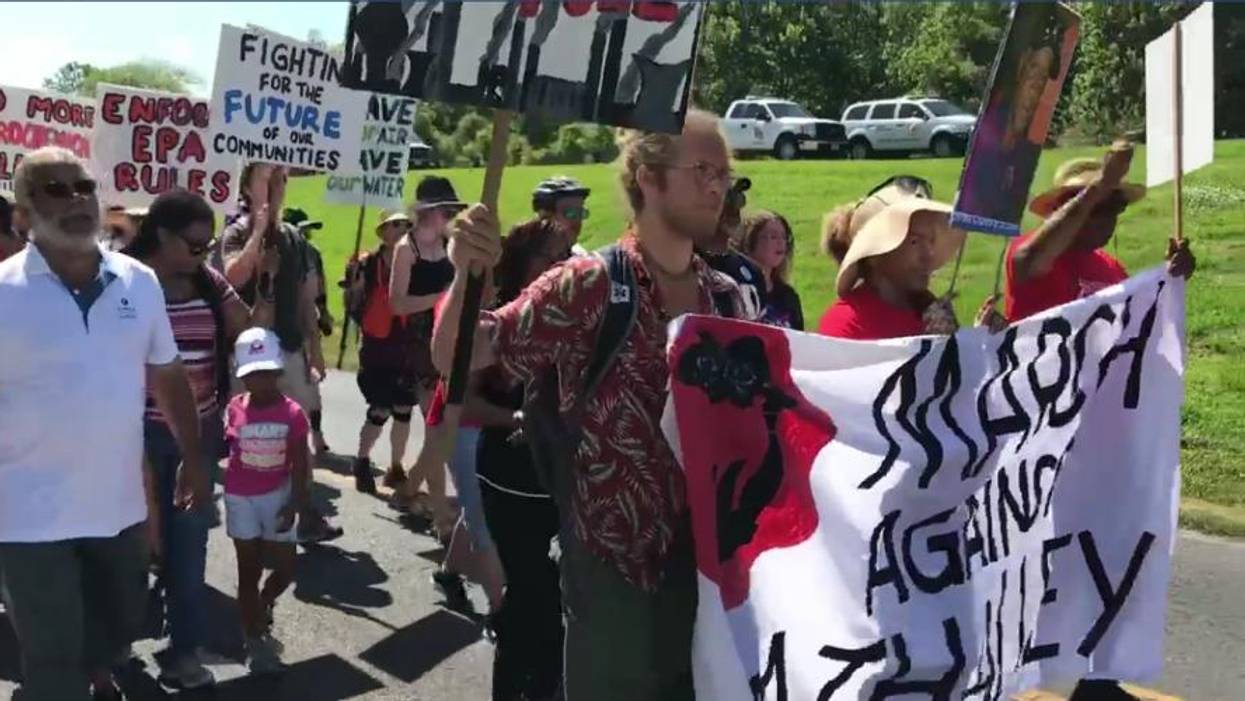
Activists in southern Louisiana kicked off a five-day march on Thursday that aims to bring environmental justice to Cancer Alley--the 85-mile stretch between Baton Rouge and New Orleans that's home to poverty-stricken communities in the shadow of scores of petrochemical facilities.
The march was organized by the Coalition Against Death Alley (CADA), which formed earlier this year and began planning "non-violent protests to pressure industrial giants and governments to stop the ongoing poisoning of majority-black communities" in the region, also known as Louisiana's Petrochemical Corridor, which runs along the Mississippi River.
Marchers began Thursday morning in St. John the Baptist Parish at an elementary school near the Ponchartrain Works facility, which the American chemical giant DuPont sold to the Japanese company Denka in 2015.
A study released by the Environmental Protection Agency that same year determined that the plant--the only one in the United States that manufactures neoprene, synthetic rubber made from chloroprene--put nearby residents at the highest risk for developing cancer from airborne pollution of anywhere in the country.
Denka reached an agreement with the state's environmental agency in 2017 to scale back the facility's high emissions of chloroprene, which the EPA classifies as "likely to be carcinogenic to humans." However, readings from last year show that the company has failed to reach its reduction targets, and activists are demanding bolder action for the sake of public health.
In an interview with The Guardian Thursday outside the elementary school by the facility, local activist Robert Taylor called for the plant to be shuttered.
"We are demanding not only the saving of our children at this school, we are demanding the salvation of this entire area," he said. "Up and down this river they are poisoning our communities with impunity. We have implored [the factory] to get down to at least what the EPA says is a safe level. They have refused to do that and based on that, they need to shut down."
CADA's broader demands, detailed on the coalition's website, are:
The marchers took a detour from their planned route on Friday to attend a court hearing in Baton Rouge for a lawsuit filed earlier this week over state officials' refusal to grant activists permission to march across the Interstate 10 bridge in Baton Rouge and the Sunshine Bridge, which crosses the Mississippi River.
"We see the act of crossing these bridges as symbolic," Rev. Gregory Manning, one of the march's organizers, told The Louisiana Weekly earlier this week. "We want to bring attention to how this is an issue that impacts both sides of the river, and we also want to bring attention to specific plants like Denka Dupont, and the recently approved Formosa plastics plant in St. James."
The newspaper reported that in addition to signs, marchers planned to carry photos of loved ones lost to cancer and other illnesses that they believe were tied to regional pollution from the petrochemical industry.
"What we are seeing illustrated now is intentional genocide, and the Louisiana Department of Environmental Quality and the governor are very conscious of what is happening with the uncontrolled amounts of poison and toxins filling the air in this sacrificial zone, where the ancestors of those enslaved became sharecroppers and worked hard to purchase property, now worth pennies on the dollar," Manning added. "The government is complicit, and this behavior will not be tolerated any longer."
According to the LA Bucket Brigade, the judge was expected to rule on whether the marchers will be allowed to cross the bridges sometime Friday afternoon. Members of the coalition spoke outside the courthouse about the suit as well as the march, which is set to conclude at the steps of the Louisiana State Capitol on Monday.