
SUBSCRIBE TO OUR FREE NEWSLETTER
Daily news & progressive opinion—funded by the people, not the corporations—delivered straight to your inbox.
5
#000000
#FFFFFF
To donate by check, phone, or other method, see our More Ways to Give page.


Daily news & progressive opinion—funded by the people, not the corporations—delivered straight to your inbox.
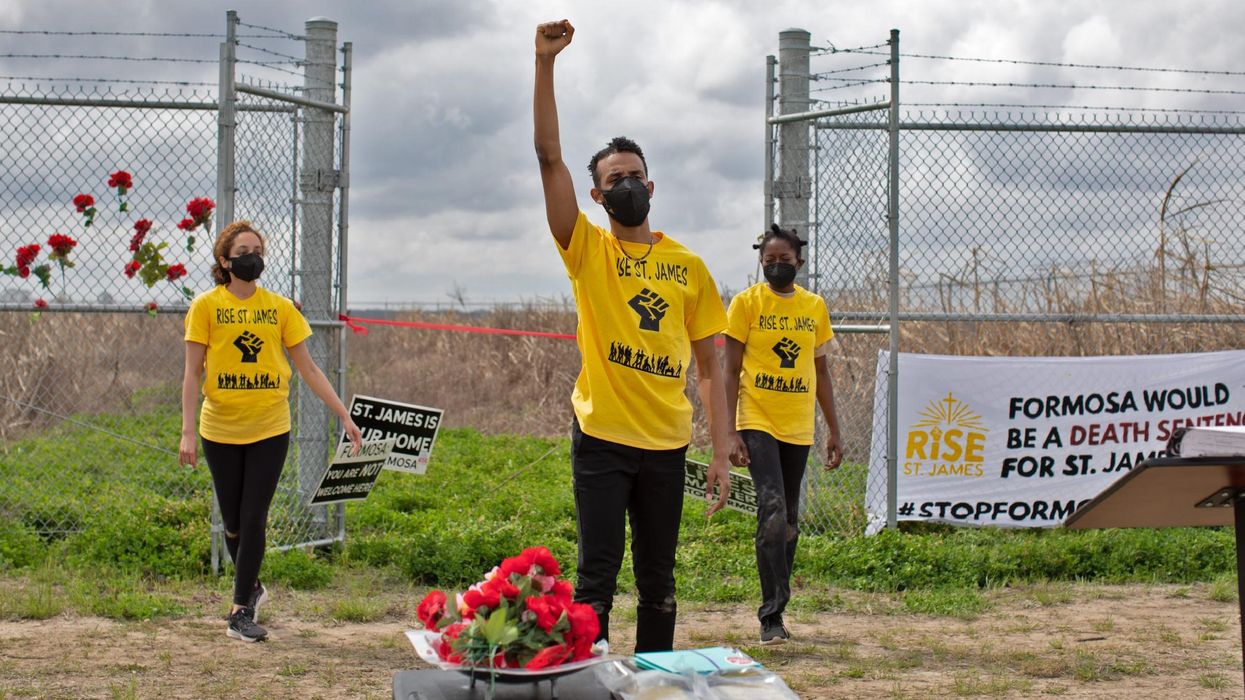
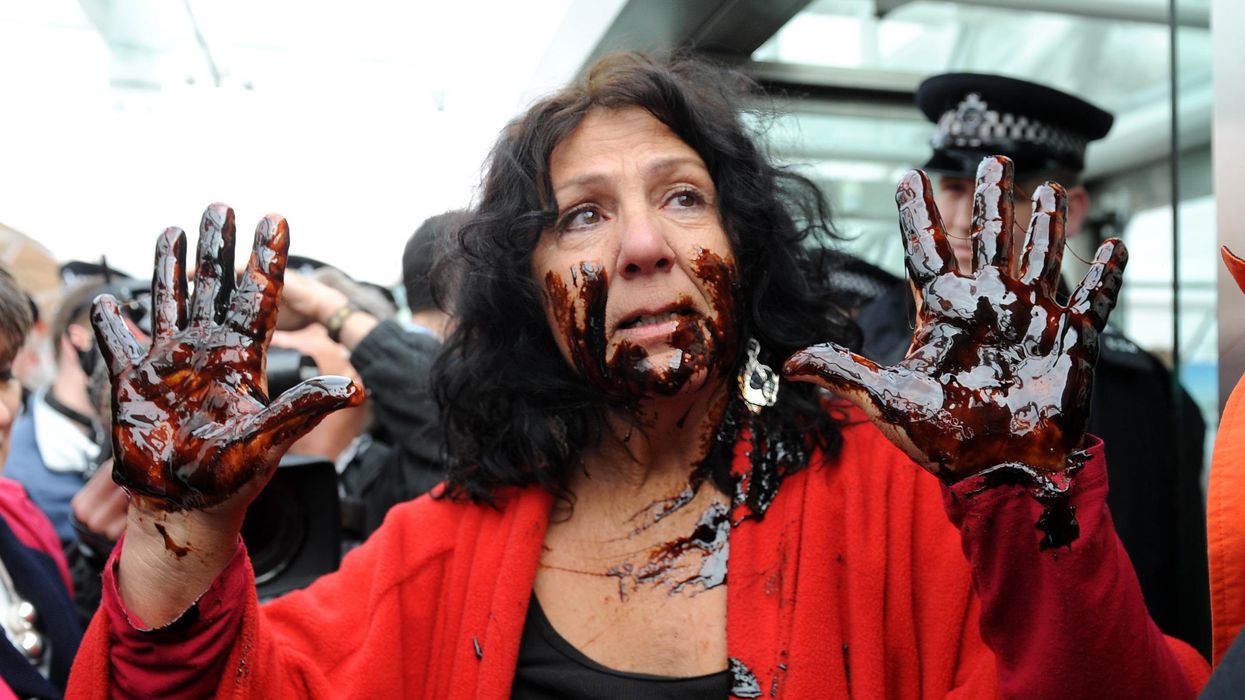
One Goldman Environmental Prize recipient was Diane Wilson, who won a historic $50 million settlement in a case against Formosa Plastics.
Activists from Zambia, Indonesia, Turkey, Finland, Brazil, and the United States were awarded the 2023 Goldman Environmental Prize on Monday for fighting destructive mining projects, working to protect imperiled marine ecosystems, shielding Indigenous land from corporate plunder, and holding a powerful plastics company accountable for dumping toxic waste on Texas' Gulf Coast.
"Now that the world has awakened to acute environmental crises like climate change, fossil fuel extraction, and pollution of our air and water, we are much more aware of our connections to each other and to all life on the planet," said John Goldman, president of the Goldman Environmental Foundation. "A grassroots activist in Malawi working to combat plastic pollution in her own country is directly connected to us, and vice versa; and she has much to teach us about how we can do that work at home, where we live. This work, and our fates, are all intertwined."
This year's recipients of the prize, awarded annually to grassroots campaigners from the world's six inhabited continents, were Chilekwa Mumba of Zambia, Zafer Kizilkaya of Turkey, Tero Mustonen of Finland, Delima Silalahi of Indonesia, Alessandra Korap Munduruku of Brazil, and Diane Wilson of the United States.
In 2019, Wilson—a fourth-generation shrimper—won a $50 million settlement in a landmark case against the petrochemical behemoth and notorious polluter Formosa Plastics. The Texas Tribune noted that the 2019 settlement, which a judge ordered the company to place in a trust devoted to habitat restoration and other efforts on the Texas Gulf Coast, was "the largest in U.S. history involving a private citizen's lawsuit against an industrial polluter under federal clean air and water laws."
Other Goldman prize recipients helped score victories against powerful companies.
Alessandra Korap Munduruku of Brazil "organized community efforts to stop mining development by British mining company Anglo American in Brazil's Amazon rainforest," forcing the firm to "withdraw 27 approved research applications to mine inside Indigenous territories," the Goldman Environmental Foundation noted.
Chilekwa Mumba of Zambia, for his part, coordinated legal action against Vedanta Resources, the United Kingdom-based parent company of a massively polluting mining operation in the African nation's Copperbelt Province.
"Chilekwa's victory in the U.K. Supreme Court set a legal precedent—it was the first time an English court ruled that a British company could be held liable for the environmental damage caused by subsidiary-run operations in another country," the Goldman Environmental Foundation said. "This precedent has since been applied to hold Shell Global—one of the world's 10 largest corporations by revenue—liable for its pollution in Nigeria."
A formal award ceremony will be held in Washington, D.C. on Monday at 8:30 pm ET.
Watch live:
Community organizers and their supporters are celebrating that after years of local resistance, South Louisiana Methanol won't complete a stalled $2.2 billion petrochemical complex in a region known as "Cancer Alley."
"It took hundreds of residents banding together to force LDEQ to recognize how overburdened the community is with industrial pollution, and to show polluters that we will not accept another plant moving in."
In a statement Friday, the environmental law organization Earthjustice and groups it has represented in challenges to the project--RISE St. James, Louisiana Bucket Brigade, Healthy Gulf, and Sierra Club--highlighted a letter to the company from the Louisiana Department of Environmental Quality (LDEQ).
As the letter details, the LDEQ in July notified South Louisiana Methanol (SLM) that its application to modify permits for the complex in St. James Parish would be withdrawn from review unless the company provided the department with necessary information by August 19.
"No response from SLM was received. Accordingly, LDEQ hereby withdraws the aforementioned application from review," the letter states, adding that new authorization would be required to start or resume construction.
Corinne Van Dalen, senior attorney at Earthjustice, noted Friday that "St. James Parish was targeted by a petrochemical industry accustomed to breezing through the permitting process that has ignored community concerns and allowed toxic plants to move into predominantly Black neighborhoods."
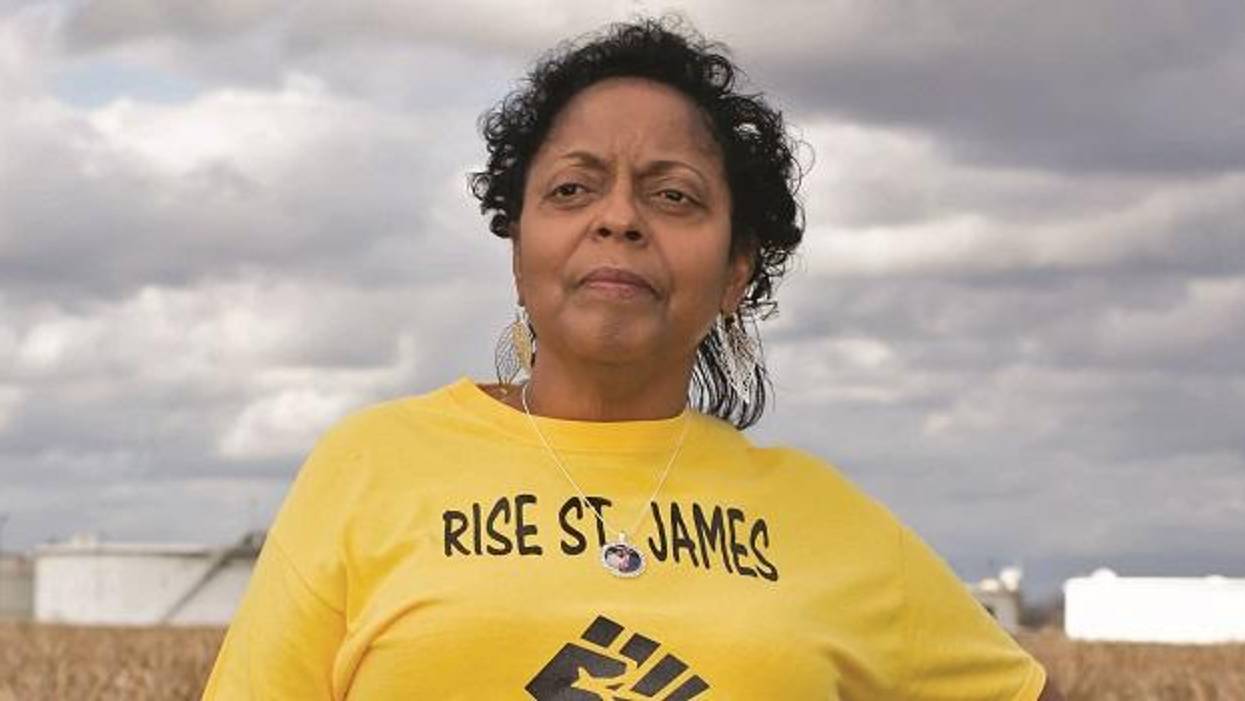
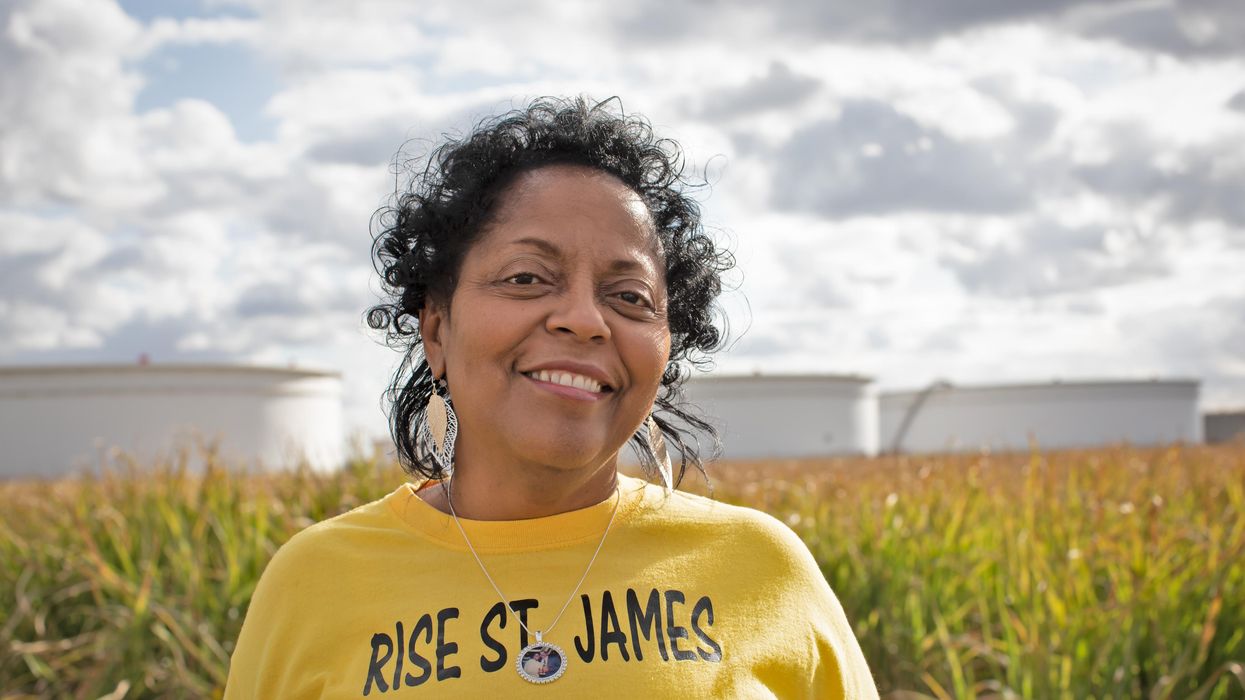
Sharon Lavigne, founder of RISE St. James and a winner of the Goldman Environmental Prize, declared that "South Louisiana Methanol finally threw in the towel having learned that our community will not back down in the fight to protect our health and well-being from more industrial pollution."
"Today is a tremendous victory, but we will never stop fighting against polluters who think our health is less important than their dirty profits," said Lavigne, whose group sent members to Washington, D.C. for Thursday's major mobilization of frontline organizers and residents.
Anne Rolfes, director of the Louisiana Bucket Brigade, also welcomed the development, charging the that proposed complex "has been a hazard since its conception" and SLM "bungled this project for over a decade, as demonstrated by its ongoing starts and stops."
"It should have been obvious to the state that the company was in no shape to run such a hazardous facility," she added. "It took hundreds of residents banding together to force LDEQ to recognize how overburdened the community is with industrial pollution, and to show polluters that we will not accept another plant moving in."
The celebrations Friday came after the St. James Parish Council earlier this month rejected a zoning ordinance that would have allowed other industrial use of the company's property.
As The Lens reported:
The proposed ordinance would have rezoned a residential neighborhood in the parish's 5th Council District--a low-income, majority-Black district on the parish's west bank that is already home to a large number of industrial sites--to a "residential/future industrial" designation.
The council's rejection of the change effectively precludes SLM--a joint venture between the New Zealand-based Todd Corporation and a Houston-based subsidiary of the Saudi Arabian company SABIC--from selling the property to any entity with designs for industrial development.
The ordinance, introduced by Councilmember Donald Nash, never went to a vote, as no council member seconded a motion to consider it.
"We saw humanity there tonight," Barbara Washington, a resident of St. James Parish and a founding member of the nonprofit Inclusive Louisiana, told The Lens of the council meeting. "It seemed like all the time that we've been talking, they haven't been listening--but tonight, it seemed like they were actually listening, and that's hopeful for us."
Environmental justice and climate campaigners celebrated after a federal official on Wednesday ordered a detailed review of the impacts of a massive Formosa Plastics complex set to be built on over 2,000 acres in an area of Louisiana long known as "Cancer Alley."
"Today's announcement is the ultimate David v. Goliath victory."
--Anne Rolfes, Louisiana Bucket Brigade
"Today's announcement is the ultimate David v. Goliath victory," declared Anne Rolfes, executive director of Louisiana Bucket Brigade. "We were not scared of Formosa Plastics and its $9 billion project, or the fact that our governor has been cheering for Formosa all along."
"St. James Parish residents are the ones who have shown leadership and wisdom," Rolfes continued, calling the order for an environmental impact statement (EIS) of what would be one of the world's biggest plastics plants "common sense."
"Our state and federal officials should have demanded it from the outset," she added. "I am hopeful that this is the nail in the coffin of Formosa Plastics in St. James Parish. And don't try to build somewhere else. Pack up and go home."
The directive for an EIS--long demanded by local groups representing Black and low-income communities that would be affected by the $9.4 billion petrochemical project, which a global credit rating agency said last year could cost up to $12 billion--comes after the U.S. Army Corps of Engineers suspended a permit for it in November following a legal challenge.
The Associated Press reports that "Jaime Pinkham, the Army's acting assistant secretary for civil works, ordered the review after a virtual meeting with opponents of a Corps wetlands permit that allowed Formosa Plastics Group member FG LA LLC to build 10 chemical plants and four other major facilities on the Mississippi River between Baton Rouge and New Orleans."
Pinkham, in a two-page memo on Wednesday, wrote that "as a result of information received to date and my commitment for the Army to be a leader in the federal government's efforts to ensure thorough environmental analysis and meaningful community outreach, I conclude an EIS process is warranted to thoroughly review areas of concern, particularly those with environmental justice implications."
"The tweet and accompanying letter from the acting assistant secretary of the Army posted today online provide little detail on EIS procedure the Corps intends to use in its additional evaluation of the project," Janile Parks, a spokesperson for FG LA LLC, told The Advocate on Wednesday. "As a result, the company will continue to work with the Corps as we receive more guidance on the additional evaluation and has no further comment at this time."
Sharon Lavigne of the local faith-based group RISE St. James said in a statement responding to Pinkham's memo that "the Army Corps has finally heard our pleas and understands our pain. With God's help, Formosa Plastics will soon pull out of our community."
"The Army Corps has finally heard our pleas and understands our pain."
--Sharon Lavigne, RISE St. James
"Nobody took it upon themselves to speak for St. James Parish until we started working to stop Formosa Plastics," added Lavigne, who earlier this year was awarded the Goldman Environmental Prize for her advocacy work. "Now the world is watching this important victory for environmental justice."
Previous analyses have shown the local and global effects of the complex, which would emit 13.6 million metric tons of greenhouse gases and hundreds of tons of toxic air pollutants annually.
The Center for Biological Diversity highlighted that in addition to ignoring the project's water, air, climate, and health impacts, the Corps "failed to properly evaluate and protect burial sites of enslaved people discovered on the property."
"This long-overdue review will show the unacceptable harm Formosa Plastics' massive petrochemical complex would inflict on this community, our waterways, and our climate," Julie Teel Simmonds, a senior attorney at the center, said of the forthcoming EIS.
"This terrible project shouldn't have been rubber-stamped and it should never be built," she added. "Climate action and environmental justice mean we have to stop sacrificing communities and a healthy environment just to make throwaway plastic."
Myrtle Felton, director of Inclusive Louisiana, noted that "our region is already full of toxic, polluting plants."
"If Formosa Plastics is allowed to build, it will be a death sentence for us," Felton said. "We can't breathe already so we say no to Formosa and its pollution."
Jane Patton, a campaign manager for the Center for International Environmental Law, put Formosa's so-called "Sunshine Project" in the context of environmental justice issues on a national scale.
"The race to massively expand plastics and petrochemical infrastructure is putting communities across the U.S. at risk, with disproportionate and overwhelming impacts on communities of color," Patton told DeSmog. "The Army Corps of Engineers' initial approval of the Formosa Plastics megacomplex in St. James without adequately assessing these or other impacts was a grave mistake. It should be the last such mistake."
"In the end, we expect the Army Corps of Engineers to uphold their obligations to human rights and environmental justice by revoking Formosa's permit, once and for all," Patton added, "and by ensuring that other proposed facilities that could create similar risks are never approved."
Environmental justice activist Sharon Lavigne, who led a successful grassroots campaign to block a toxic plastics manufacturing plant in her Louisiana community, is this year's North American winner of the prestigious Goldman Environmental Prize.
The awards, sometimes referred to as the Green Nobels, were announced Tuesday to recognize "grassroots environmental heroes" on each of the planet's inhabited continents who have exhibited "sustained and significant efforts to protect and enhance the natural environment, often at great personal risk."
"Sharon is in an intense, ongoing fight for the life of her community and our planet."
Lavigne is a former special education teacher and founder and president of the faith-based grassroots group RISE St. James. The St. James Parish is located in a predominantly Black area along the Mississippi River known as "cancer alley"--a nickname in reference to the human impact of the toxic industries that have polluted, and are slating to continue polluting, the surrounding communities.
The 69-year-old has been leading efforts against such environmental racism, and Goldman recognized her advocacy to successfully stop the Wanhua plastics complex. As a statement from Goldman notes, St. James Parish Council gave the plant zoning approval, even though it would have produced "hundreds of tons of methylene diphenyl diisocyanate (MDI)--a chemical used in the production of foam. MDI affects respiratory function in humans and is found to produce tumors in rats." It would also have released "carbon monoxide, volatile organic compounds, formaldehyde, benzene, and other toxic pollutants into the environment--directly next to residential neighborhoods and the Mississippi River."
By leading what the prize called "a master class in campaigning for environmental justice," including forming alliances with other environmental and climate justice organizations, Wanhua withdrew the project.
But, as she and her allies stress, the battle to stop the community from continuing to be a sacrifice zone to benefit polluting industries. At the center of that struggle is stopping Taiwan-based Formosa Plastics Group from building a $9.4 billion petrochemical plant.
Lavigne's group along with allies Louisiana Bucket Brigade and Healthy Gulf, filed a federal lawsuit last year to stop the plant, triggering a construction delay.
Following the award announcement, Lavigne's allies sang her praises and referenced her determination.
"When the governor of Louisiana came to St. James Parish and announced Formosa Plastics was coming to town, Sharon Lavigne was brave enough to stand up and say no. Sharon had a different vision for her historic Black community," Anne Rolfes, director of the Louisiana Bucket Brigade, said in a statement.
"When parish officials told her that Formosa was a done deal, she insisted that it was not," Rolfes added. "Her leadership, courage, and vision are rewarded today by the Goldman Prize. And she would be the first to say that this is just the beginning. The fight has just begun."
"These phenomenal environmental champions remind us what can be accomplished when we fight back and refuse to accept powerlessness and environmental degradation."
Julie Teel Simmonds, a senior attorney at the Center for Biological Diversity, which represented the groups fighting Formosa Plastics, also celebrated Lavigne's achievement.
"Sharon is in an intense, ongoing fight for the life of her community and our planet," she said. "Sharon has battled through pollution-related illness and the loss of loved ones, and she keeps faithfully fighting environmental racism. Under the leadership of this amazing woman, we're going to stop Formosa Plastics and advance environmental justice in this country."
Other Goldman Prize winners this year include Gloria Majiga-Kamoto of Malawi for fighting against plastics pollution; pangolin advocate Thai Van Nguyen of Vietnam; dam opponent Maida Bilal of Bosnia and Herzegovina; anti-coal activist Kimiko Hirata of Japan; and conservation champion Liz Chicaje Churay of Peru.
"These Prize winners," said Goldman Environmental Foundation vice president Susie Gelman, "have so much to teach us about the path forward and how to maintain the balance with nature that is key to our survival. These phenomenal environmental champions remind us what can be accomplished when we fight back and refuse to accept powerlessness and environmental degradation."
"They have not been silenced--despite great risks and personal hardship--and we must also not be silent, either. It takes all of us," added Gelman.