

SUBSCRIBE TO OUR FREE NEWSLETTER
Daily news & progressive opinion—funded by the people, not the corporations—delivered straight to your inbox.
5
#000000
#FFFFFF
To donate by check, phone, or other method, see our More Ways to Give page.
Daily news & progressive opinion—funded by the people, not the corporations—delivered straight to your inbox.
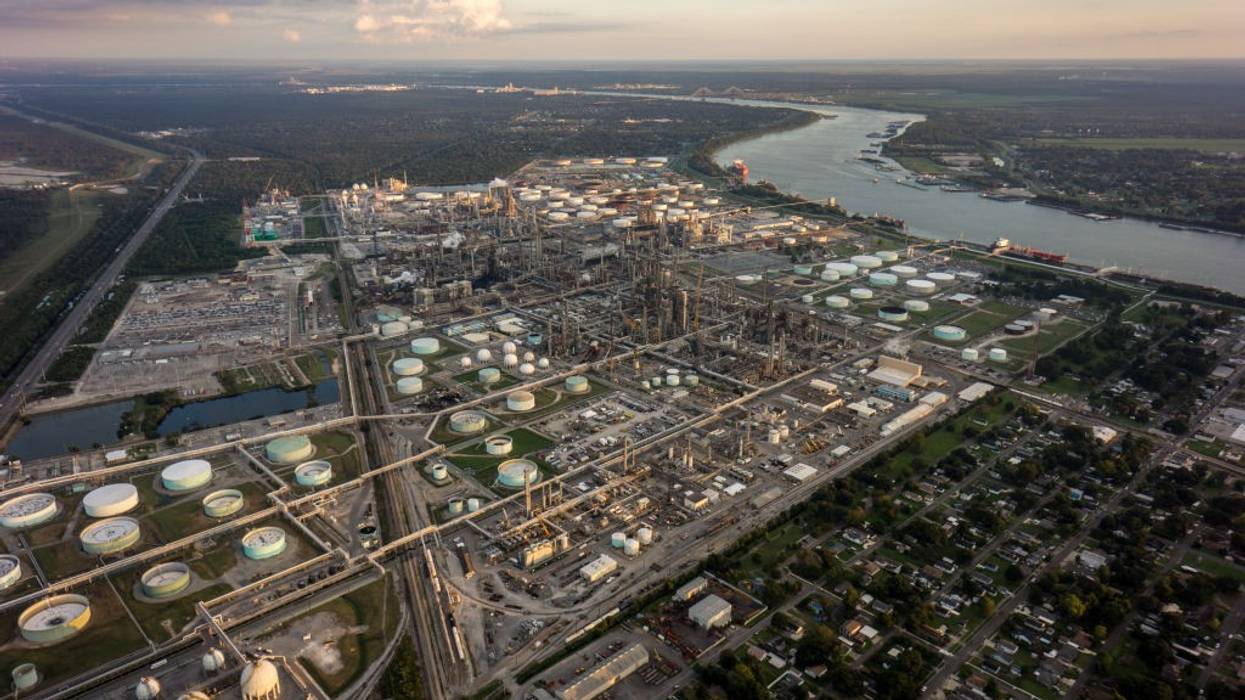
The Riverplex Megapark planned for Louisiana's Ascension Parish threatens both the history and future of the community with the destruction of former slave cabins and the construction of a polluting ammonia plant.
I was pleased to see Sinners have a good night at the Oscars, picking up four trophies. It didn’t win Best Picture, but to my mind, it is the movie of the year. Sinners had far and away the greatest cultural impact, especially among Black people.
Sinners is the rare blockbuster film that explores Black history from the perspective of Black people, but I believe the reason the film has touched such a nerve is that it’s much more than a period piece. When I watched Sinners, I didn’t just see a movie about the past. I saw a mirror. The horror in the film isn’t history; the blood-sucking vampires of racism, white supremacy, and cultural erasure still haunt us today.
For me, Sinners hit literally close to home. Although it is set in Mississippi, it was filmed entirely in southeastern Louisiana, where my roots trace back to a small community called Donaldsonville. The film reminded me of my childhood when grandpa and I walked the avenue to shop. We’d walk from Smoke Bend, up the avenue, to a warehouse on the edge of town to get syrup in a yellow can—perfect for eating with fry bread. What’s funny about the movie is that Michael B. Jordan’s characters’ names were Smoke and Stack. And my grandpa told me that Smoke Bend got its name from the Indian campfires travelers saw when they came around the river bend. The scenes where Smoke and Stack go to Clarksdale to buy supplies were shot on Railroad Avenue in Donaldsonville, where I live and work. Folks from around here remember hearing the alarm and radio announcements from Ascension Parish Barn on Church street as they shopped along the Avenue.
The Jim Crow era depicted in Sinners has ended, but here in Ascension Parish, we are in a struggle to protect Black lives and preserve Black heritage. In the name of economic growth, the Parish government is planning to create a massive, 17,000-acre industrial complex—the so-called Riverplex Megapark—featuring a Hyundai plant and other pollution-producing factories. The complex will decimate the historic predominantly Black community of Modeste and part of Donaldsonville, displacing as many as 800 people.
We will not be able to protect our communities unless more should-be allies come to recognize that environmental justice is a major civil rights issue of our time.
In October, Modeste residents reported that heavy machinery had demolished some of the slave cabins on the site of the former Germania and Mulberry Plantations. The purpose of the destruction was to make way for the Hyundai facility, which could destroy both plantations as well as the neighboring Zeringue Plantation.
Those cabins hold the stories of their enslaved ancestors, the people whose labor built this land and whose spirit still breathes through it. Among the destroyed cabins was one of deep significance to me: My uncle, Cloveste, was born in one of them. Like the juke joint in Sinners, those cabins are a sacred space; they are bloodline, legacy, and love—and they were bulldozed to make room for corporate profit.
While erasing our past, this industrial complex also threatens our future. Located in the heart of “Cancer Alley,” Ascension Parish is one of the most polluted counties in the United States. Less than 3 miles from my house is the world’s largest ammonia plant, the single worst polluting factory in the country. I am a breast cancer survivor. All three of my children were born prematurely, and one of them has had respiratory problems his whole life. These kinds of sicknesses are commonplace around here. Yet plans for the complex include another ammonia plant that will spew out thousands of tons of pollution.
Down here, corporate executives don’t wear hoods or burn crosses, but their greed can kill us just the same.
We are all for development, but we want economic growth that strengthens our communities, not that erases and endangers them while creating generational wealth for others. Rural Roots Louisiana, the organization I founded, is leading an effort to block the “megapark,” and a judge recently ruled in our favor, ordering the front group behind the project to turn over relevant public records.
But we are up against forces with bottomless resources, which they are using to try to buy out and pay off people in the community. This presents people with hard choices, but as we see in Sinners, there is a cost to accommodating your oppressor. As Director Ryan Coogler said, his film explores “the deals people in oppressive situations must rationalize.”
In this struggle, as in all my work, I take heart in the example of our ancestors, who persevered in the face of even steeper odds. Their efforts and sacrifices ended American apartheid, and it is important to remember how far the country has come. Sinners itself, the fact that it got made, is a form of progress. It serves as a rebuke to those trying to erase Black history.
I also draw inspiration from activists and organizers throughout southeast Louisiana. A few years ago, in Plaquemines Parish—where most of Sinners was shot—community members blocked an oil terminal that would have destroyed a cemetery where their enslaved ancestors were buried. In St. James Parish, community groups have made headway in their lawsuit seeking a landmark moratorium on petrochemical facilities, while in St. John Parish, a historic Black community waged a heroic battle against a proposed grain elevator.
Still, we will not be able to protect our communities unless more should-be allies come to recognize that environmental justice is a major civil rights issue of our time. Put another way, environmental racism might not seem like the scariest vampire—it dresses in suits and wears nice shoes—but none have more blood on their teeth.
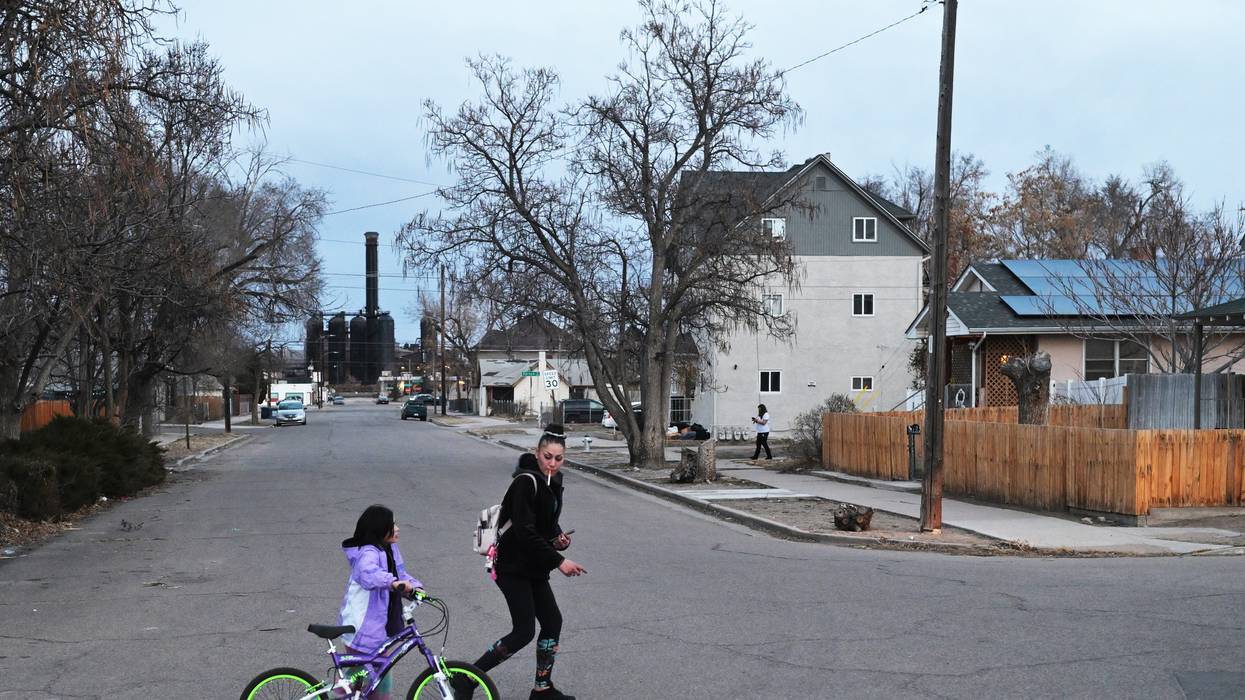
"So many people will needlessly die because of this," said one critic.
In the Trump administration's latest move to obliterate three decades of work to address the systemic injustices faced by low-income and minority communities across the United States, the Environmental Protection Agency on Tuesday announced plans to shutter all ten of the agency's environmental justice regional offices as well as its central hub addressing the issue in Washington, D.C.
EPA Administrator Lee Zeldin sent an internal memo to agency officials saying that "reorganizing" and eliminating the offices would help fulfill President Donald Trump's "mandate" to end "forced discrimination programs.
The EPA's Office of Environmental Justice was opened during the Clinton administration and expanded by former Democratic President Joe Biden, who emphasized the office's mission of ensuring "the fair treatment and meaningful involvement of all people regardless of race, color, national origin, or income" with respect to environmental policies.
But Zeldin likened the office's goal of addressing pollution in regions like "Cancer Alley," an 85-mile stretch of land in Louisiana where the high number of petrochemical plants has been linked to higher-than-average cancer rates in predominantly Black and poor communities, to "discrimination"—apparently against wealthy households and white Americans.
"Wait a second, so trying to address environmental pollution and high cancer rates in poor, rural, or minority areas is racist, but the actual fact that polluting is happening is not bad?" asked one critic on social media.
Zeldin's memo came days after the EPA and the Department of Justice dropped a lawsuit filed by the Biden administration against Denka Performance Elastomer plant in Louisiana, where regulators found the company's chloroprene emissions were fueling health problems across nearby communities.
"If anybody needed a clearer sign that this administration gives not a single damn for the people of the United States, this is it," Matthew Tejada, who led EPA environmental justice work for a decade until 2023, told The New York Times after Zeldin sent the memo Tuesday.
Zeldin also announced on Monday that he was cancelling 400 grants for environmental justice and diversity initiatives—despite numerous court orders against Trump's attempt to freeze federal funding that has already been appropriated, including one in which the U.S. District Court for the District of Maryland prohibited federal agencies from terminating "equity-related" grants.
The administrator claimed Monday that the EPA is "working hand-in-hand with [the Department of Government Efficiency] to rein in wasteful federal spending," but Margie Alt, director of the Climate Action Campaign, said that "cleaning up pollution is only 'wasteful' if you don't believe everyone in America has the equal right to breathe clean air."
"Lee Zeldin's idea of 'accountability' is apparently to create a world of hurt for the most vulnerable while spitting in the face of the law and giving wealthy corporate interests the ability to pollute at will," said Alt. "All the while Elon Musk lines his pockets with billions of taxpayer dollars as his so-called efficiency agents take a hatchet to programs designed to help people at risk survive. Congress must put a stop to Trump's brazen refusal to follow the law and demand these illegally canceled funds already promised to disadvantaged communities are released."
The coming closure of all EPA environmental justice offices suggested that "the GOP way" includes letting "the kids drink sewage water and breathe polluted air to make the 1% richer," said columnist Wajahat Ali.
Former New Hampshire Democratic Party Chair Kathy Sullivan said that for the Trump administration, it is "not enough to ban talking about discrimination," a reference to words and phrases like "inclusiveness" and "inequality" that agencies have flagged in government documents.
"Trump's policies bring back discrimination," said Sullivan.
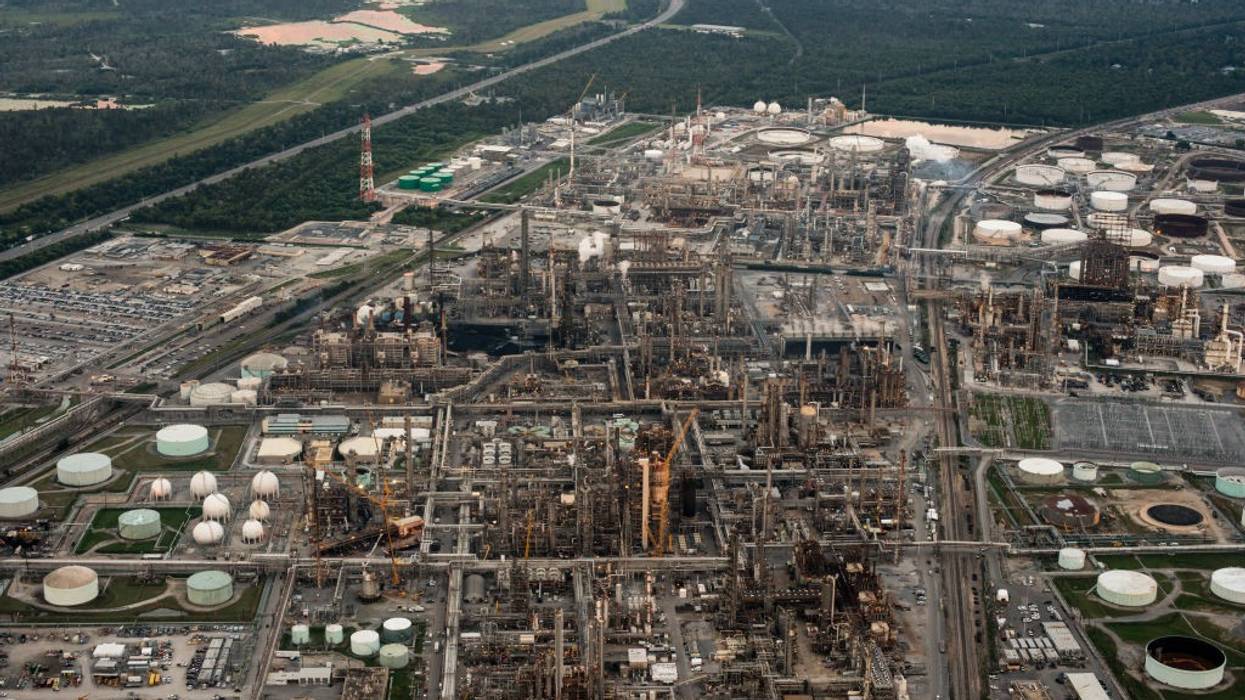
"Louisiana has given industrial polluters open license to poison Black and brown communities for generations," and the new ruling from a Trump-appointed judge will only magnify the problem, a campaigner said.
A right-wing federal judge in Louisiana on Thursday permanently blocked two federal agencies from enforcing civil rights legislation that could protect Black communities from disproportionate pollution in the state, drawing condemnation from environmental justice advocates.
The two-page ruling, issued by U.S. District Court Judge James Cain, who was appointed to the federal bench in 2019 by then-President Donald Trump, is a setback in the push for accountability for corporate polluters, most notably in "Cancer Alley," a roughly 85-mile stretch that runs along the Mississippi River from Baton Rouge to New Orleans.
Cancer Alley is home to a disproportionate number of poor and working-class Black people who have highly escalated risks of cancer thanks to the long line of petrochemical plants in the corridor. A recent study showed that the air there is far worse than previously realized.
"Louisiana has given industrial polluters open license to poison Black and brown communities for generations, only to now have one court give it a permanent free pass to abandon its responsibilities," Patrice Simms, a vice president at Earthjustice, said in a statement.
The ruling forbids the U.S. Environmental Protection Agency (EPA) and the U.S. Department of Justice from enforcing "disparate-impact requirements" under Title VI the 1964 Civil Rights Act in the state of Louisiana. The ruling affects permitting for industrial projects and could, according to Earthjustice, even be applied to "basic services such as sewage, drinking water, and health services." Cain opted not to make the ruling effective nationwide.
The main events leading up to Thursday's decision began in January 2022, when Earthjustice filed a complaint to the EPA on behalf of St. John the Baptist Parish, a majority-Black community in the heart of Cancer Alley. The EPA then opened an investigation into whether Louisiana state agencies had failed to protect the parish from environmental health threats. The agency was preparing to negotiate reforms with the Louisiana Department of Environmental Quality. This was part of a nationwide EPA effort to tackle environmental racism.
However, Louisiana, like other states, fired back. In May 2023, then-Attorney General Jeff Landry, who is now governor, filed a lawsuit—the same lawsuit Cain ultimately ruled on—against the EPA to block the investigation. The next month, the EPA dropped its investigation, disappointing parish residents and human rights groups. The Intercept later reported that the agency dropped the investigation because of fear the state's case would reach the U.S. Supreme Court.
Cain could then have dropped Louisiana's suit, but, in a move that may have been aimed at preventing future such investigations, he moved forward with it, issuing a 77-page temporary injunction in January that laid the groundwork for today's far briefer decision, which made the ruling permanent.
In the temporary injunction, Cain put forth ahistorical and power-blind arguments about race that are common in right-wing circles.
"To be sure, if a decision-maker has to consider race, to decide, it has indeed participated in racism," the judge wrote. "Pollution does not discriminate."
Earthjustice warned that though Cain's ruling applies only in Louisiana, "it may embolden other states to seek similar exceptions and create a chilling effect on civil rights enforcement by other federal agencies."
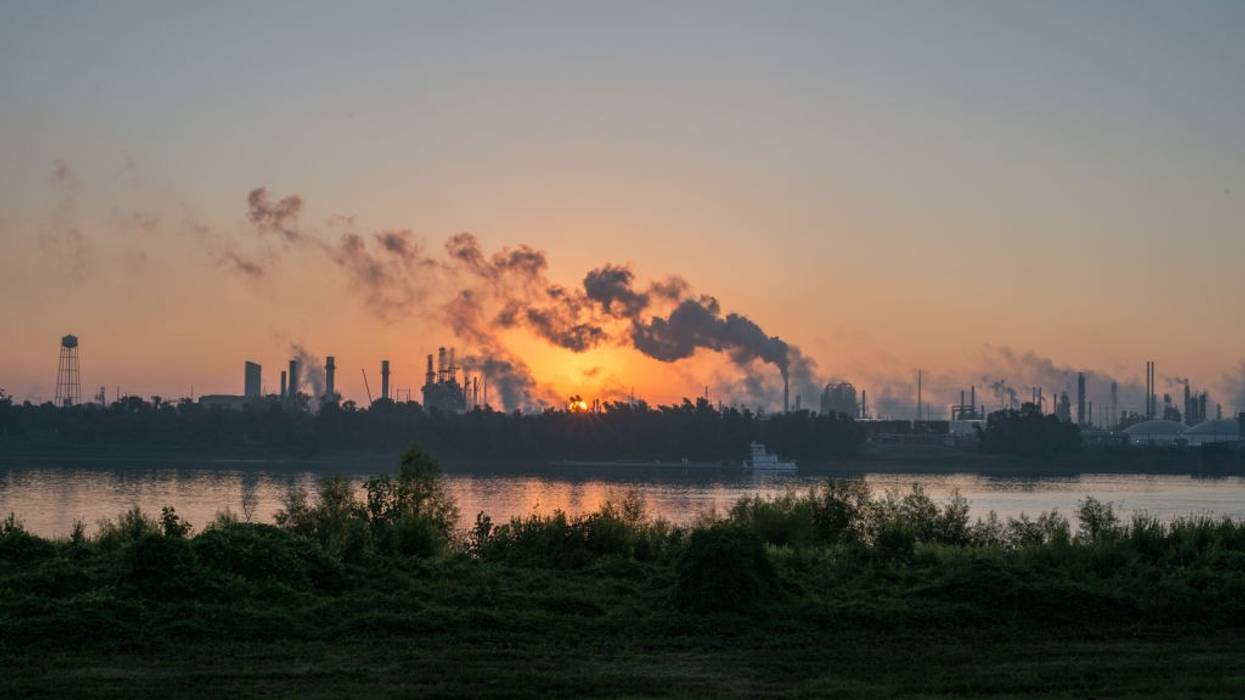
Ethylene oxide, a carcinogenic gas, is nine times more prevalent than the EPA estimated, a study shows. And inside petrochemical plants, workers are likely subjected to much higher concentrations, an author said.
The presence of a dangerous chemical in the air of southeast Louisiana's "Cancer Alley," which has a substantial Black population, is far greater than the U.S. Environmental Protection Agency estimated and exceeds safe limits, a study published Tuesday found.
The levels of ethylene oxide, exposure to which can cause lung, breast, or other cancers, are nine times higher than the EPA estimated, the study, which was published in the journal Environmental Science & Technology, shows. Ethylene oxide is a gas used in plastic production and in the sterilization of medical equipment. Long-term exposure is exceptionally dangerous: The EPA regards it as unsafe, due to cancer risk, at a level above about 11 parts per trillion (ppt) in the air.
The new study found that the gas' presence averaged about 31 ppt in Cancer Alley, and was far higher in certain locations within the industrial corridor, which runs alongside the Mississippi River from Baton Rouge to New Orleans. In each of the census tracts the researchers studied, the level of the gas was higher than the EPA had estimated for that area, in most cases significantly, with a median discrepancy of about 21 ppt.
"We expected to see ethylene oxide in this area," Peter DeCarlo, an associate professor at Johns Hopkins University and an author of the study, told The Guardian, noting that it was "worrisome," especially for children. "But we didn't expect the levels that we saw, and they certainly were much, much higher than EPA's estimated levels."
Concentrations of ethylene oxide could be much higher "inside the fenceline" of petrochemical plants—areas which couldn't be studied—where workers are "getting much, much higher concentrations over the course of their day," DeCarlo told Grist.
A groundbreaking study by @JohnsHopkins in @EnvSciTech has uncovered alarming levels of ethylene oxide emissions from petrochemical facilities in Cancer Alley, Louisiana. #BeyondPetrochemicals #PeopleOverPollution pic.twitter.com/s9vygj8RlV
— Beyond Petrochemicals (@BeyondPetrochem) June 11, 2024
People in Cancer Alley are nearly twice as likely to get cancer as other Americans, and ethylene oxide accounts for most of the known carcinogenic risk there, roughly 68%, if EPA estimates are correct. "The fact that so much of the environmental risk in this area seems to come from a single chemical is remarkable," the study authors wrote.
DeCarlo said this is why the authors deemed it important to study the amount of ethylene oxide in the air there. However, he cautioned that ethylene oxide is far from the only problem.
"The reality is people aren't just breathing ethylene oxide, they are breathing a whole soup of chemicals," he told The Guardian. "When you start to add everything up it becomes a much more problematic picture."
The risk to human health is likely not limited to facilities that are emitting ethylene oxide, as the researchers found plumes of gas that were miles long. East Ascension High School in Gonzales, Louisiana, is about five miles from an ethylene oxide hotspot, the study notes.
In 2021, United Nations experts called for an end to environmental racism in Cancer Alley, and the organization's special rapporteur on the issue of human rights called the area a "sacrifice zone" the following year. In January, Human Rights Watch released a report on systemic injustice there.
Sharon Lavigne, the founder of Rise St. James, a community organization in St. James Parish, said the findings were a "step in the right direction" but must lead to accountability and change.
"These monitors are good, but in the meantime, people are dying," she told Grist.
Earlier this year, the EPA announced new ethylene oxide rules that could cut Louisiana emissions of the gas by nearly 80%—"the first time that federal regulations for chemical plants have been updated in decades," Grist reported in April. Cancer Alley had been among the places that EPA Administrator Michael Regan visited on his 2021 "Journey to Justice" tour. Yet the new study may lead to calls for further action.
"The EPA's new rule was necessary but should only be the start of how we begin to make things right here," Heather McTeer Toney, who leads a Bloomberg Philanthropies campaign to end petrochemical plant expansion, told Grist. "I'm hopeful to see levels go down, but the data suggest we have a long way to go."
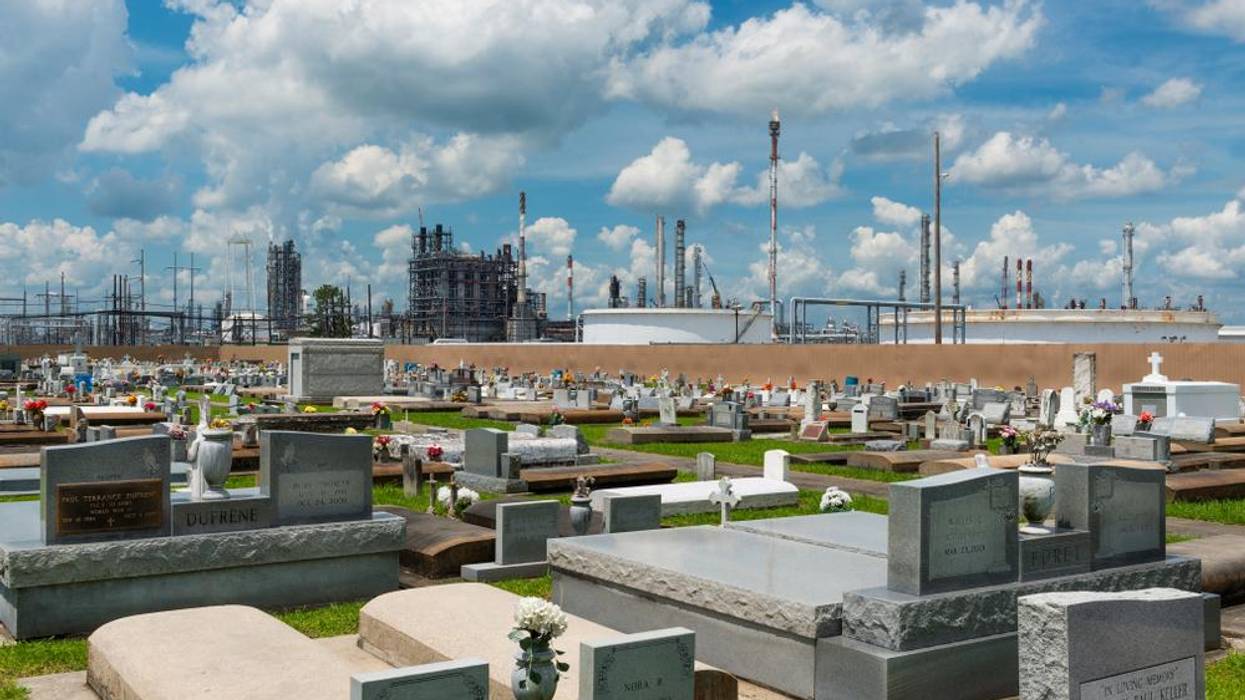
"Many of the states that have signed the petition have historically allowed these harmful facilities to be placed in predominantly Black and brown communities," said one advocate.
Led by Florida Attorney General Ashley Moody, Republican leaders in 23 states on Tuesday filed a petition making clear their aim to allow petrochemical companies and other corporations to continue operating pollution-causing facilities without regard for the "disparate impact" they can have on low-income communities of color.
The attorneys general of states including Mississippi, Alabama, and Texas wrote to Environmental Protection Agency (EPA) Administrator Michael Regan, asking him to amend Title VI under the Civil Rights Act of 1964.
The law prohibits recipients of federal funds from discriminating against residents based on race and national origin and allows residents to petition the EPA arguing that state agencies have intentionally discriminated or disparately impacted a particular community.
Title VI has underpinned hundreds of legal cases, including recent EPA investigations into the 85-mile stretch of land in Louisiana known as Cancer Alley, where dozens of petrochemical plants have been built and health experts have observed a disproportionate number of cancer cases and other medical problems among the predominantly Black population.
The attorneys general said they object to the Biden administration's use of Title VI to "advance what it calls 'environmental justice,'" and complained that the EPA aims to create "a condition in which no racially or economically defined group experiences adverse environmental impacts."
Andre Segura, vice president of litigation at the environmental legal group Earthjustice, said Wednesday that the Republican attorneys general aim to "eviscerate civil rights protections just to make it easier for industrial polluters to continue with business as usual."
"Everyone should be alarmed by these outrageous efforts," said Segura. "The fact is, many of the states that have signed the petition have historically allowed these harmful facilities to be placed in predominantly Black and brown communities, without regard for the health and safety of residents."
Manuel Fernandez, president of Miami-Dade County Democrats in Florida, said the effort was "embarrassing" and called on Moody to resign.
The petition was filed three months after U.S. District Court Judge James Cain Jr., an appointee of former President Donald Trump in Louisiana, ruled that Title VI requirements amount to "government overreach."
The EPA halted its Title VI investigation into the Louisiana Department of Environmental Quality (LDEQ) last year a month after Louisiana Attorney General Jeff Landry, a Republican, sued the agency over its Title VI regulations. The EPA had been probing whether the LDEQ placed the historically Black town of St. John the Baptist Parish at risk by allowing companies to build petrochemical plants nearby.
There are more than 50 pending cases regarding Title VI violations, Earthjustice said.
"These decades-old Title VI regulations are critical tools for the federal government to use to ensure that funding is not used to perpetuate this toxic legacy," said Segura, "and the EPA should swiftly reject this petition."

Establishing a statewide Mardi Gras sustainability committee could play a vital role in advocating for eco-conscious alternatives and mitigating environmental repercussions.
Mardi Gras in New Orleans is hailed as the greatest show on earth, a celebration rooted in tradition and extravagance, captivating both locals and international revelers. Amid the vibrant culture, however, lies a sobering reality—a trail of waste, with plastic beads as the most notorious symbol.
The environmental toll of Mardi Gras beads is staggering, with cheap single-use plastics contributing to a significant portion of the waste transported to landfills. Beyond the aesthetic blight, plastic pollution poses profound ecological and human health ramifications. There is increasing awareness that plastic pollutes not only our external environment, but also our bodies—coming to us through our food, our water, even breastmilk.
Each year, Mardi Gras festivities yield an alarming amount of waste. Streets overflowing with plastic litter overburden an already fragile waste management system, and contribute to the global plastic waste problem. According to data from the City of New Orleans, in 2023 alone, 1,162 tons of Mardi Gras trash were transported to the landfill in just 11 days, equivalent to 2.5 million pounds of waste. Alarmingly, a quarter of this waste consisted of plastic beads, used just briefly and tossed out.
By reimagining traditions through a lens of sustainability, we can ensure that the magic of Mardi Gras endures for generations to come—like the glass beads we could be wearing in place of cheap, dirty plastic—without compromising the health of our planet or future revelers.
Globally, over a third of plastic produced is for packaging, including single-use containers. But we pay a high price for this fleeting convenience. Plastic doesn’t just pollute once it’s been thrown out or escaped into the environment as trash. The manufacturing process of plastics also perpetuates a cycle of environmental degradation. From the extraction and intensive processing of fossil fuels to the release of harmful chemicals into the environment, making plastic takes a heavy toll on both human health and the planet’s well-being. Moreover, the repercussions of plastics extend far beyond their physical presence, as pollutants permeate the air, water, and soil, posing a continual threat to ecosystems and public health.
On Friday, January 19, 2024, the Louisiana First Circuit Court of Appeals delivered a verdict upholding the air permits necessary for the construction of the Formosa Plastics’ “Sunshine Project” in St. James, Louisiana. This proposed mega petrochemical complex would span 2,400 acres, housing 14 chemical manufacturing plants and various support facilities. The anticipated emissions from this industrial behemoth are projected to exceed 800 tons per year of toxic chemicals and 13.6 million tons of greenhouse gases annually, tripling the local toxic burden.
The proximity of the site to Black communities and an elementary school magnifies the gravity of this decision. Frontline communities in Cancer Alley—the stretch of land lining the Mississippi River from Baton Rouge to New Orleans that is packed with over 200 industrial plants—are already grappling with the adverse effects of the climate crisis. Residents are enduring a relentless barrage of hurricanes, heavy rainfall, flooding, and extreme heat. Formosa Plastics risks exacerbating existing environmental injustices and compounding the challenges faced by historically disadvantaged communities.
According to Gov. John Bel Edwards’ Climate Initiative Task Force, a startling 66% of Louisiana’s carbon emissions are from industrial sources—the highest proportion in the nation. This disproportionate contribution underscores the state’s complicity in exacerbating the climate crisis, amplifying the burdens endured by its residents and ecosystems. With 99% of plastics made from fossil fuels, the decision to build or expand petrochemical plants demands greater scrutiny and accountability to safeguard the well-being of both current and future generations.
Despite these challenges, there’s an opportunity for evolution. With the Formosa Plastics air permits back on, it is imperative that President Joe Biden step in to take meaningful action to address the ongoing environmental racism experienced in Cancer Alley, starting with ordering the Army Corps of Engineers to not grant the wetlands permits. Additionally, the financiers of Formosa Plastics and other petrochemical companies must take responsibility for what they are bringing to fruition. Financing for petrochemicals is financing for the fossil fuels stoking the climate crisis and for toxic air and water pollution disproportionately harming people of color. It’s time for banks to say no to plastic and instead listen to what kinds of investments communities need in order to thrive.
Establishing a statewide Mardi Gras sustainability committee could play a vital role in advocating for eco-conscious alternatives and mitigating environmental repercussions. By championing sustainable practices, the committee could significantly reduce the carbon footprint and plastic pollution associated with Mardi Gras celebrations and inspire similar efforts in other areas. A halt on any new industrial facilities in Cancer Alley would allow residents to breathe deeper while envisioning a new way to create opportunities and thrive—both economically and physically. And a strong, binding Global Plastics Treaty that tackles plastic pollution at the source—by limiting production—would ensure that Big Plastic doesn’t just take its dirty business to another sacrifice zone.
As we celebrate Mardi Gras, let’s also prioritize environmental responsibility. By reimagining traditions through a lens of sustainability, we can ensure that the magic of Mardi Gras endures for generations to come—like the glass beads we could be wearing in place of cheap, dirty plastic—without compromising the health of our planet or future revelers. Plastic never goes away, but New Orleans, with its iconic Mardi Gras, renowned cuisine, and myriad of other celebrations, is uniquely positioned to pave the path towards a plastic-free future.

"People's lives and the environment are being devastated at the hands of big business," one human rights researcher said.
Amnesty International and Human Rights Watch both published reports on Thursday detailing how the fossil fuel industry has harmed the health and environment of communities in Texas and Louisiana, and how state and federal regulators have failed to protect them.
The Amnesty report, The Cost of Doing Business? The Petrochemical Industry's Toxic Pollution in the USA, focused on the Houston Ship Channel, which has some of the worst air pollution measurements in the U.S. The HRW report, "We're Dying Here": The Fight for Life in a Louisiana Fossil Fuel Sacrifice Zone, looked at the state's Cancer Alley, an 85-mile zone along the Mississippi that reportedly has the highest concentration of fossil fuel and petrochemical plants in the Western Hemisphere.
"We're dying from inhaling the industries' pollution," 71-year-old Sharon Lavigne, who lives in the town of Welcome in Louisiana's St. James Parish and started the environmental justice group RISE St. James, told HRW. "I feel like it's a death sentence. Like we are getting cremated, but not getting burnt."
In its report, HRW noted that Lavigne and other Cancer Alley residents put up yard signs reading, "We live on death row."
Cancer Alley—which extends from Baton Rouge to New Orleans—has around 200 petrochemical and fossil fuel plants. HRW observed many near to homes, schools, senior centers, playgrounds, and workplaces that would regularly release flares, smoke, or foul smells.
HRW interviewed 70 people between September 2022 and January 2024, including 37 residents as well as regulatory officials, health experts, and nonprofit workers. It spoke to people who had been diagnosed with cancers and various respiratory ailments. One census tract, in St. John Parish, has a cancer risk from air pollution that is more than seven times the national average, the highest in the nation.
"What's happening in Louisiana's Cancer Alley is indeed like a sacrifice, a daily human sacrifice on the altar of our global fossil fuel cult."
"People are getting cancer diagnoses as a result of industry being so close to our homes," 31-year-old Kaitlyn Joshua, who lives in Ascension Parish, told HRW.
The report also reveals new research on reproductive health that is currently under review for publication in Environmental Research Health. Scientists from Tulane University found that there were rates of low birth weight and preterm birth as much as triple the national average, and that the highest rates were found in areas with the highest pollution levels.
The ongoing public health crisis disproportionately impacts Black and low-income communities. For example, nearly 90% of the residents in Welcome are Black as well as 60% of the residents of St. John, compared to 33% of the state population and 13.6% of the national population.
The United Nations special rapporteur on human rights and the environment listed Cancer Alley in 2022 as one of the most toxic places on Earth, termed "sacrifice zones."
"What's happening in Louisiana's Cancer Alley is indeed like a sacrifice," HRW European media and editorial director Andrew Stroehlein wrote in his daily brief Thursday, "a daily human sacrifice on the altar of our global fossil fuel cult."
The Houston Ship Channel in southeast Texas is another "sacrifice zone" where the fossil fuel industry disproportionately harms the health of low-income communities of color, according to Amnesty.
"People's lives and the environment are being devastated at the hands of big business," Alysha Khambay, Amnesty International's researcher on business and human rights, said in a statement. "Affected communities are predominantly Latinx/Hispanic and Black, low income, often lack access to healthcare they need, and face almost insurmountable barriers to justice. It is environmental racism."
"The doctor can't tell you, 'You got this cancer because you live next to this plant.' But there's no way living right next to them is good. It isn't."
The report focused on four plants owned by major oil and gas companies: ExxonMobil's Baytown Complex, LyondellBasell's Channelview Complex, Shell's Deer Park Chemicals, and Intercontinental Terminals Company's (ITC) Deer Park. Amnesty International interviewed dozens of people and looked at documents, data, and videos and images of the plants between January and December of 2023. It found that the four plants had often released more air pollution than their permits allowed over the past two decades, and three of them had experienced a fire or explosion in the last five years.
As in Louisiana, the plants harm residents' health. They release carcinogenic chemicals including the volatile organic compounds (VOCs) benzene, toluene, 1-3 butadiene, and ethylene oxide. One study found higher rates of childhood leukemia in parts of Houston with higher levels of benzene and 1,3-butadiene. Life expectancy is as much as 20 years lower in some polluted areas when compared to majority white communities 15 miles away.
"My mom, she recently had uterine cancer," one resident told Amnesty. "A lot of people have cancer, breathing difficulties… The doctor can't tell you, 'You got this cancer because you live next to this plant.' But there's no way living right next to them is good. It isn't."
Respiratory illnesses are another major health issue, with 15 of 29 interviewees saying either they or a close relative had been diagnosed with one or experienced chronic symptoms like a persistent cough.
"It pretty much affects me and my family every single day," Channelview-area resident Alondra Torres told Amnesty. "There's always smells in the air, every time you step outside for a little while."
Both reports detailed how government agencies had failed to protect people living near polluting plants.
"The failure of state and federal authorities to properly regulate the industry has dire consequences for residents of Cancer Alley," Antonia Juhasz, HRW senior researcher on fossil fuels, said in a statement.
Resident Brenda Bryant told HRW that making a complaint to the Louisiana Department of Environmental Quality (LDEQ) was like "going up against a brick wall."
"The current system is stacked in favor of the companies and against the people they harm."
A 2021 state audit found that the department did not thoroughly examine facilities' emissions reports, while the U.S. Environmental Protection Agency (EPA) Office of Inspector General found in 2011 that LDEQ had the lowest level of enforcement in its region for the Clean Air Act, Resource Conservation and Recovery Act, and Clean Water Act.
"DEQ has been actively hostile to communities in Cancer Alley for a long, long time," law professor and University for Human Rights co-founder Ruhan Nagra told HRW.
Louisiana state Sen. Cleo Fields (D-14) said LDEQ was "like partners" with the fossil fuel industry.
"My experience of the last 20 years is that state officials consistently cover for the petroleum industry and the polluters," Louisiana Bucket Brigade director Anne Rolfes told HRW.
Yet the U.S. EPA has not adequately fulfilled its mandate to make sure federal laws are enforced, though HRW noted the agency was hampered by underfunding and hostile court rulings. While the Biden administration has made more of an emphasis on environmental justice, its EPA dropped an investigation into whether or not LDEQ and the Louisiana Department of Health had violated Title VI of the US Civil Rights Act by disproportionately exposing Black residents to pollution.
In an example of the difficulties facing Cancer Alley residents, a Louisiana appeals court on Friday upheld air permits for a proposed Formosa Plastics plant in the area, which would be the largest of its kind in the U.S., as The Guardian reported. Then, on Tuesday, a federal judge in Louisiana blocked the EPA from enforcing Title VI requirements going forward.
In Texas, meanwhile, Amnesty found that, in the past few years, the Texas Commission on Environmental Quality (TCEQ) penalized less than 3% of incidents in which a plant had exceeded its permitted level of pollution and that the fines it does issue are under the maximum amount and usually not high enough to dissuade the companies from reoffending.
"A company gets fined less than one person who's affected by it would spend on medical bills… it's very unfair," resident Carolyn Stone told Amnesty.
A 2022-23 review of the agency said its commissioners were "reluctant regulators" who largely allowed the industry to monitor itself.
"There is no effective regulatory deterrent to prevent these firms harming people, which they are doing with near impunity," Khambay said in a statement. "The current system is stacked in favor of the companies and against the people they harm. The human rights abuses related to the petrochemicals industry worldwide are often staggeringly harmful. This must and can change."
Both reports point out that the pollutants harming the residents of Cancer Alley and the Houston Ship Channel are also helping to destabilize the global climate and expose people around the world to extreme weather and other impacts. Around 150 plants in Cancer Alley were responsible for 66% of Louisiana's 2020 greenhouse gas emissions and released the equivalent of what 140 coal plants would release in a year between 2016 and 2021.
Petrochemical plants also produce plastics, a major environmental pollutant and health hazard. Yet their production is set to double by 2040, Amnesty said.
"It's long past time for governments to uphold their human rights obligations and for these sacrifices to end."
Both HRW and Amnesty said that regulators should stop approving new fossil fuel facilities in polluted areas and instead focus on a just transition to cleaner industries. HRW called for a Federal Fossil Fuel and Petrochemical Remediation and Relocation Plan, whereby companies in Louisiana would work with communities to provide jobs, decommission plants, remediate polluted areas, and offer to pay the moving expenses of residents who wished to relocate. Amnesty pointed out that renewable energy has the potential to employ more than 1.1 million people in Texas in the next quarter-century.
"I would like to see the end of fossil fuels," Lavigne told HRW. "If that's going to make me live a longer life, breathe clean air, drink clean water, they should shut them down."
HRW also said that Louisiana regulators should stop issuing permits in communities with high levels of pollution and that the EPA should use its Clean Air Act authority to shut down facilities until they can operate without breaking the law. In Texas, Amnesty said that local agencies should increase monitoring and enforcement, and also that the EPA should step in more frequently to enforce federal standards.
"It's long past time for governments to uphold their human rights obligations and for these sacrifices to end," Juhasz said in a statement.
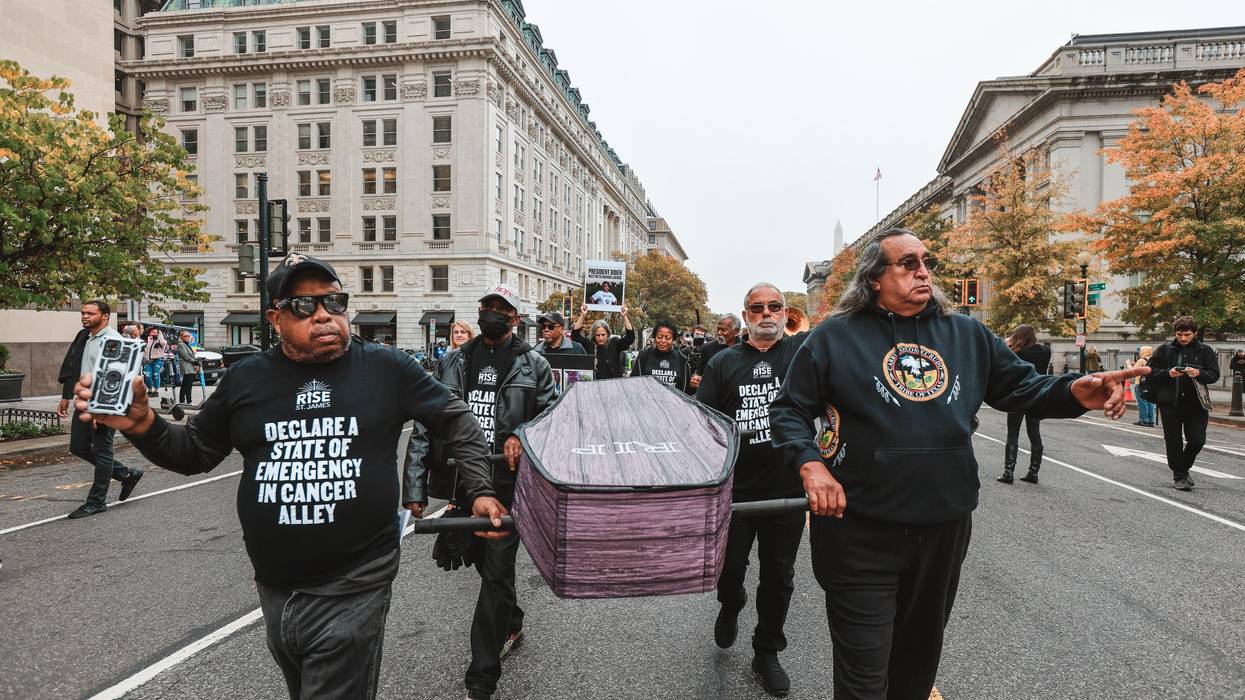
"Instead of fixing the discriminatory permitting programs that have created sacrifice zones like Cancer Alley, Louisiana is fighting tooth and nail to keep them in place," said one advocate.
A ruling in Louisiana by a federal judge appointed by former Republican President Donald Trump will make it even harder for communities to fight environmental racism and the establishment of "sacrifice zones," said one advocacy group on Tuesday.
U.S. District Court Judge James Cain, Jr., appointed in 2018, ruled in favor of Louisiana eight months after GOP Attorney General Jeff Landry sued the Environmental Protection Agency (EPA), aiming to stop the Biden administration from opening investigations into violations of Title VI under the Civil Rights Act of 1964.
Title VI prohibits recipients of federal funds from discriminating against state residents based on race and national origin, and allows residents to petition the EPA arguing that state agencies have intentionally discriminated or disparately impacted a particular community.
In the U.S. District Court for the Western District of Louisiana, Cain ruled that Title VI requirements amount to “government overreach” and said in the decision that “pollution does not discriminate.”
While pollution itself does not discriminate against communities, numerous studies have shown the impact of environmental injustice and racism.
One paper published in 2022 by Tulane Environmental Law Clinic researchers found that communities of color face 7-21 times the amount of pollution that white communities experience and pointed to so-called “Cancer Alley”—an 85-mile stretch in Louisiana where petrochemical companies have built dozens of plants and medical experts have seen a disproportionate number of cancer cases—as an area that’s faced environmental injustice as a result of the state’s permitting process.
As Prism reported last week, the EPA was close to holding the Louisiana Department of Environmental Quality (LDEQ) accountable for putting the historically Black community of St. John the Baptist Parish at risk last year by greenlighting pollution-causing petrochemical plants near the town in Cancer Alley—but it halted a year-long investigation last June, a month after Landry filed his lawsuit.
At the time, Mary Hampton of Concerned Citizens of St. John told Earthjustice, which had called for the EPA's investigation on behalf of residents, that the agency's decision made residents "feel like our lives don't matter."
"We are suffering, we are dying," said Hampton. "That's a hard thing to deal with."
On Tuesday, Sam Sankar, senior vice president of programs for Earthjustice, said that Cain's injunction will allow Louisiana to continue allowing companies to pollute Cancer Alley without considering "disparate environmental impacts."
"Instead of fixing the discriminatory permitting programs that have created sacrifice zones like Cancer Alley, Louisiana is fighting tooth and nail to keep them in place," said Sankar. "The public health crisis in St. John the Baptist Parish shows us why we need Title VI: EPA needs to be able to use our civil rights laws to stop states from running permitting programs that perpetuate environmental injustice."
As The Intercept reported last week, the EPA also backed away from another Title VI case last year—one alleging that the Michigan Department of Environment, Great Lakes, and Energy had violated the law by issuing permits to an asphalt plant in a low-income, majority-Black town where residents were also at increased risk for asthma.
"Experts say that the EPA appears to be shying away from certain Civil Rights Act investigations in states that are hostile to environmental justice, due to fears that Landry's suit or similar efforts could make their way to the conservative Supreme Court," wrote Delaney Hogan.
On Tuesday, Hogan suggested Cain's ruling makes it more likely that the Supreme Court could eventually "crush the EPA's ability to pursue environmental justice."
"I think we can all see where this is headed," said Hogan.
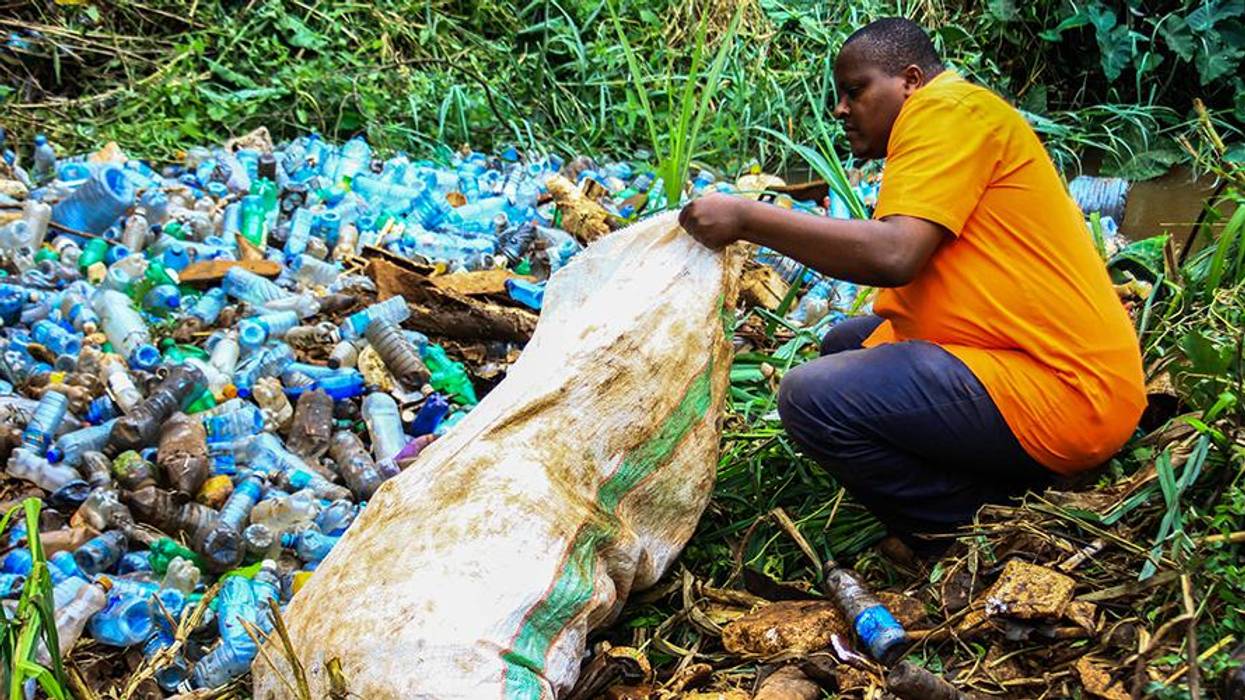
A reduction of at least 75% in plastic making by 2040; the elimination of dangerous chemicals, polymers, and single-use plastic packaging; and a just transition for those in the plastics industry are integral components of a transformative approach.
Last week, I was in Nairobi, Kenya, for negotiations on the Global Plastic Treaty. This treaty is a once-in-a-generation opportunity to stem the tide of throwaway plastic that is destroying our planet.
Ninety-nine percent of plastics are made from fossil fuels like oil and gas, which are driving the climate crisis. The pollution from creating plastics is poisoning communities—especially communities of color. Microplastics and hazardous chemicals have been found in the food we eat, the air we breathe, and even in our blood and organs. And because so little plastic is actually recycled, it ends up polluting our oceans and communities. If the plastic and oil industries have their way, there will be a massive increase in the amount of plastic produced, an increase that people and the planet cannot afford.
At the heart of the matter lies a critical divergence in approach. The United States has been advocating for a voluntary agreement centered on plastic recycling and waste management, steering clear of addressing the root causes of the issue. This stance falls short of the mark, given the stark realities illuminated by the scientific community and the overwhelming concerns voiced by the American people. At this meeting, it was apparent that the U.S. approach is evolving. They were more constructive on process issues than in earlier meetings, and there were some improvements on policy. Overall, though, the U.S. has yet to embrace the fact that an effective treaty must reduce production.
The final rounds of negotiations scheduled to take place in Canada and Korea next year represent a historic opportunity for the Biden administration to leave a lasting environmental legacy.
This was the third session of the United Nations Intergovernmental Negotiating Committee on Plastic Pollution. The goal is to finalize a Global Plastics Treaty in 2024. I implore President Joe Biden and all global leaders to seize the opportunity to adopt a binding Global Plastics Treaty that will reduce plastic production by at least 75% by 2040. We cannot recycle our way out of this crisis. The only solution is to stop producing so much plastic in the first place.
The adverse effects of plastic permeate every stage of its life cycle. The extraction of fossil fuels to produce plastic drives climate change and disproportionately impacts marginalized communities. The example of Louisiana's Cancer Alley, an 85-mile stretch along the Mississippi River, stands as a poignant reminder of the devastating impact on communities hosting oil refineries and plastic manufacturing facilities. Workers in contact with plastic fibers exhibit lung problems and reduced lung capacity.
A staggering array of chemicals—over 13,000 of them—are used in plastic production. Alarming statistics from the United Nations Environment Program reveal that 3,200 of these chemicals have the potential to cause cancer, nervous system issues, and hormonal disruptions. These health risks, connected to diseases like cancer, heart problems, and birth defects, underscore the multifaceted nature of the crisis. Microplastics and chemical additives infiltrate our bodies when we eat, drink, and even breathe. Since the 1950s, scientists have warned us about the perils of plastic chemicals entering our bodies through food and drink. This year, Japanese and Chinese scientists discovered that microplastics are not only present in clouds but may actually be affecting cloud formation.
The journey of plastic does not end with consumption. Chemicals like bisphenol A (BPA) and phthalates, commonly found in plastics, can leach into our food and water, causing hormone disruption and posing severe health risks. Recycling, touted as a solution, can paradoxically render plastics more toxic, exacerbating the environmental and health challenges we face.
Yet our leaders continue to advocate for the seemingly reassuring façade of recycling. The inconvenient truth, however, is that less than 10% of plastic has ever been recycled. The vast majority ends up in our oceans, detrimentally impacting marine life and tarnishing our coastlines. Often, wealthier countries like the United States ship their plastic waste to poorer countries, with severe ramifications for public health and environmental justice.
As the United States pushes for a primarily voluntary agreement emphasizing plastic recycling and waste management, the scientific community and the American public voice their concerns. According to recent polls, over 80% of American voters are concerned about single-use plastic products, calling for a reduction in plastic packaging and holding businesses accountable for their plastic waste. The disconnect between governmental priorities and public sentiment underscores the need for a paradigm shift in plastic governance.
The Global Plastics Treaty presents an unprecedented opportunity to effect meaningful change. Greenpeace USA urges the Biden administration to take bold action, recognizing the urgency of the crisis. Fundamentally, the treaty must address the root causes of plastic pollution. A reduction of at least 75% in plastic production by 2040; the elimination of dangerous chemicals, polymers, and single-use plastic packaging; and a just transition for those in the plastics industry are integral components of a transformative approach. We must also incentivize innovation that will help scale up reuse.
Environmental justice must be at the forefront of our efforts. The disproportionate impact of plastic production on marginalized communities demands a commitment to fair and equitable transitions as we move toward a low-carbon, zero-waste, and reusable economy. This is not just an environmental imperative but a moral obligation to protect the health and well-being of all Americans and the global community.
The final rounds of negotiations scheduled to take place in Canada and Korea next year represent a historic opportunity for the Biden administration to leave a lasting environmental legacy. The Global Plastics Treaty is not just a policy initiative but a manifestation of the people's will. It is time to listen, act decisively, and champion a future free from the shackles of plastic pollution. Our health, our planet, and the legacy we leave for future generations depend on the choices we make today.
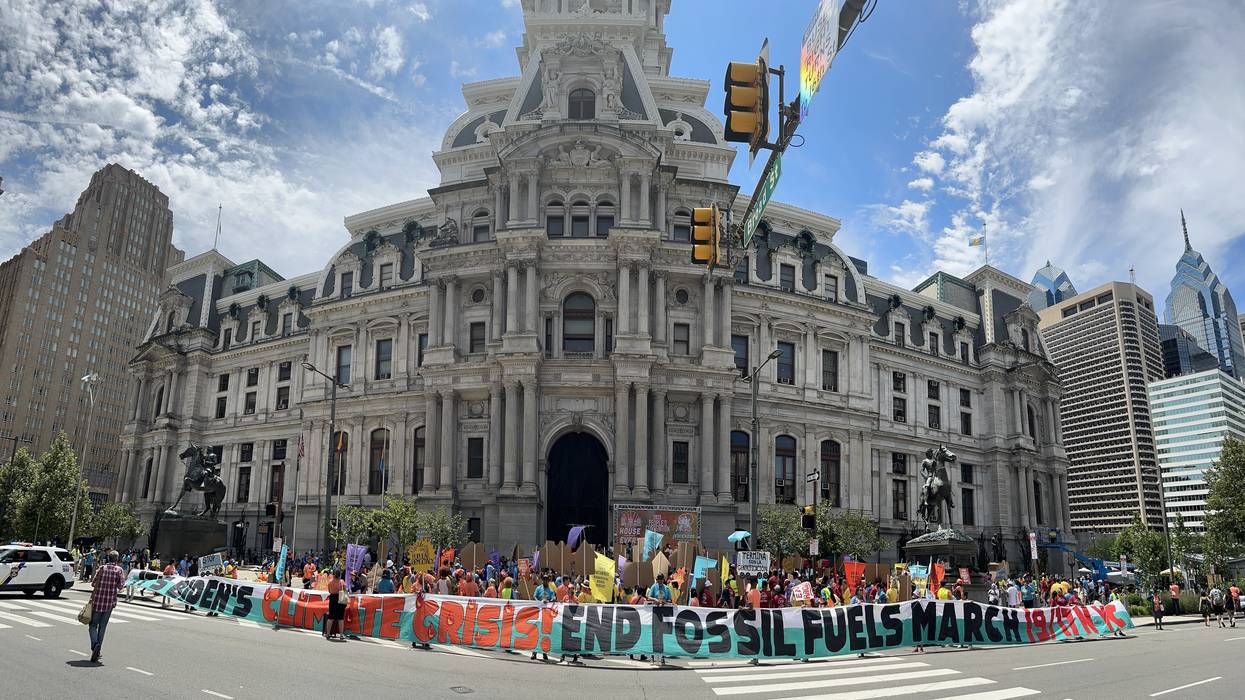
Our multiracial movement of climate leaders and defenders is turning up the volume over the bullhorn at next week’s March to End Fossil Fuels—bringing the crisis to the footsteps of the U.N. Climate Ambition Summit.
The following is part of a series of opinion pieces Common Dreams is publishing in the lead-up to the March to End Fossil Fuels on Sunday, September 17 in New York City. Read the rest of the series and our complete coverage here.
In case you haven’t noticed, it’s dangerously hot out there. Record-breaking heat—an all-too-familiar byproduct of climate change—has claimed 142 American lives this Summer and closed schools across the East Coast. Category 5 Hurricane Lee hovers near the Caribbean only days after Hurricane Idalia pounded Florida with 125 mile-per-hour winds while more than 1,000 Hawaiians lost their lives to the wildfires in Maui.
The climate crisis is killing us. And we know the racial wealth gap that besieges Black, Brown, and Indigenous communities exponentially increases their risk of exposure to environmental and climate disasters. It’s why our multiracial movement of climate leaders and defenders is turning up the volume over the bullhorn at next week’s March to End Fossil Fuels in New York City—bringing the crisis to the footsteps of the United Nations Climate Ambition Summit.
BIPOC communities have always lived at the intersection of wealth disparity and the climate crisis. For example, more than half of households in South Los Angeles—a community composed mostly of people of color—live below the poverty level. Nearly three-fifths of people living in that neighborhood didn’t have access to air conditioning in 2020. Moreover, a study by the Joint Center for Political and Economic Studies discovered that more than 30% of Black New Orleans residents didn’t own cars, which could’ve helped them escape Hurricane Katrina ahead of the storm. In fact, low-income communities of color are often systemically herded into low-lying areas that are at higher risk of catastrophic flooding from hurricanes.
As the largest progressive grassroots organizing network in the country, alongside 600+ organizations, we are mobilizing the largest march of civil society since the start of the pandemic to put all eyes on President Joe Biden and demand an end to fossil fuels.
Communities of color are disproportionately affected by diseases from air pollution caused by fossil fuel extraction and emissions. Federal policies have consistently greenlit corporations to earmark historically redlined areas as convenient covert landfills for oil and gas wells. More than 17 million folks living near them experience higher rates of cardiovascular disease, asthma, higher Alzheimer’s disease risk, and preterm births.
Then there’s Cancer Alley—where 30 large petrochemical plants are concentrated near primarily Black neighborhoods along the Mississippi River between New Orleans and Baton Rouge. These plants—including the Shintech ethylene plant—have polluted the air, seeped blue runoff into roadside ditches, and contaminated the water. Now, 1 of every 10 households has a prospect of at least one cancer death.
Last week the U.N. released an alarming report stating, “The window of opportunity to secure a livable and sustainable future for all is rapidly closing,” The globe has to cut its emissions of heat-trapping gases by 43% by 2030, and 60% by 2035, the report said. In order to meet these goals “the phase-out of unabated fossil fuels is required.”
As the largest progressive grassroots organizing network in the country, alongside 600+ organizations, we are mobilizing the largest march of civil society since the start of the pandemic to put all eyes on President Joe Biden and demand an end to fossil fuels. The crisis demands that we amplify the voices of communities most impacted alongside powerful organizations like Make the Road NY, NY Communities for Change, and countless others traveling from as far away as Alaska.
Since Earth Day 2023 we have led escalated protests and civil disobedience to urge the Biden administration to act. We visited cities across America with a 120-foot banner, shut down public events and fundraisers to demand Biden declare a climate emergency and end the era of fossil fuels once and for all. As global leaders and heads of state gather this week’s first-of-its-kind Climate Ambition Summit hosted by the U.N. Secretary-General, we need President Biden, arguably the most critical global leader, to bring the most ambitious plan to phase out fossil fuels. Since the start of his administration, he has approved more fossil fuel projects than former President Donald Trump—a step backward from what is truly needed.
It is true that the climate justice movement has historically struggled to be a truly multiracial movement that centers the voices of those most impacted by the unfolding crisis, and, even though climate mitigation only receives 2% percent of philanthropic giving and BIPOC-led organizations even less than that, it is Black, Indigenous, immigrant, working-class people of color who have been leading the efforts in the lead up to this historic march in NYC.
Last week’s New York Times/Siena poll showed Black and Brown voters have cooled toward the president. We urge him to woo that crucial voting bloc that elected him. The Inflation Reduction Act is a crucial first step, but it falls short of confronting the true scope of the crisis.
As Congress returns to the Capitol and Dems hit the campaign trail this election season, we demand that lawmakers and the White House make good on promises to end our reliance on fossil fuels and transition to renewable energy now before we’re past the point of no return.