

SUBSCRIBE TO OUR FREE NEWSLETTER
Daily news & progressive opinion—funded by the people, not the corporations—delivered straight to your inbox.
5
#000000
#FFFFFF
To donate by check, phone, or other method, see our More Ways to Give page.
Daily news & progressive opinion—funded by the people, not the corporations—delivered straight to your inbox.
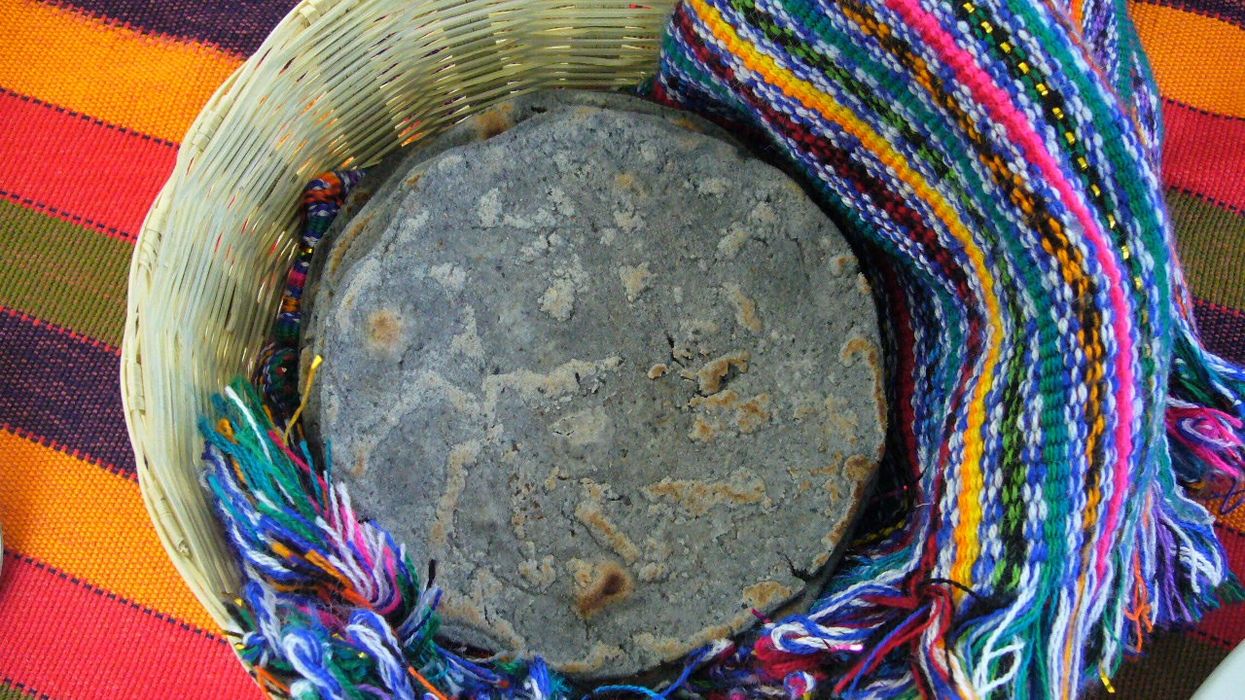
U.S. and Canadian civil society groups are supporting the successful efforts of the “Sin Maíz No Hay País” (“Without Corn There’s No Country”) campaign to protect cultural heritage and biodiversity.
Three decades later, it’s clear the Zapatistas were right.
For Mexico, NAFTA meant abandoning food sovereignty in favor of imports of basic grains, causing an increase in inequality and migration. It meant abandoning the countryside and opening borders to trade, creating a vacuum that organized crime has filled.
Trinational civil society organizations warned 30 years ago that the free trade model could destroy age-old farming traditions. Today they are demanding that Mexico stand up to the pressure of the agribusiness oligopolies and stop what could be the final blow to Mexican food culture.
But, for a handful of transnational agribusiness corporations—such as Bimbo, Maseca, Monsanto, and Cargill—NAFTA has delivered huge profits.
La Jornada reports that, today, food shortages and dependence continue to worsen while imports of basic grains in Mexico are growing to unprecedented levels—accounting for more than half of consumption.
In 2020, the three North American governments renegotiated some aspects of NAFTA. But as La Jornada op-ed coordinator and columnist Luis Hernandez Navarro explained then, “in the agricultural area, the United States-Mexico-Canada Agreement is more of the same, but worse. It is a central instrument for oligopolies to strip control of farmers’ seeds from those who have developed and cared for them for thousands of years. It’s a key piece of the neoliberal order in the region.”
Thus, under the USMCA, Mexico now has to defend itself tooth and nail against plans of the United States, supported by Canada, to flood the country with genetically modified corn.
Last August, the United States filed a claim under the treaty’s dispute settlement framework over a February 13, 2023, Mexican government decree that prohibits the use of biotech corn in tortillas and dough and phases out its use in all products for human and animal consumption.
The U.S. government charges that Mexico’s anti-GM corn policy lacks sufficient scientific basis and undermines the market access that the country agreed to in the trade treaty.
This attack on Mexican sovereignty has reactivated the trinational solidarity of Mexican, American, and Canadian organizations—a transcontinental bond strengthened in the decades since NAFTA was negotiated behind the people’s backs.
U.S. and Canadian civil society groups are supporting the successful efforts of the “Sin Maíz No Hay País” (“Without Corn There’s No Country”) campaign to protect cultural heritage and biodiversity by preventing the planting of GM corn and the use of the herbicide glyphosate over potential risks to human health, the environment, and the country’s biocultural diversity. In one form of solidarity, they’ve submitted a series of statements to the trade dispute process.
As Karen Hansen-Kuhn of the U.S.-based Institute for Agriculture and Trade Policy puts it, “whether or not the dispute panel accepts these statements, the range of topics covered will enrich the public debate on how trade rules could limit or enable sustainable solutions that promote public health, human rights, and economic opportunities.”
The organizations’ statements emphasize the insufficient research on the safety of GM corn for human consumption and the risks of glyphosate. They also emphasize the contradiction between the U.S. claim against Mexico and other key provisions of the treaty, which the United States should not be treating as mere decorations.
For example, Article 32.5 of the USMCA states that the treaty does not prevent a party from adopting or maintaining a measure that it deems necessary to comply with its legal obligations to Indigenous peoples, as well as protections for biological diversity in the chapter on the environment.
The statements emphasize the cultural and environmental risks of GM corn’s proliferation in Mexico, considering the diversity of over 59 native corn varieties that Indigenous peoples have constantly labored to diversify and adapt. They explain that the Mexican policy does not discriminate against U.S. producers, and in fact, these producers are profiting from increased exports of non-GM corn to Mexico.
A support statement led by Rick Arnold of the Council of Canadians—a network of tens of thousands of members from coast to coast and supported by Common Frontiers, a broad network of Canadian organizations—critiques the cozy relationship between their own government and large agribusinesses.
“As Canada joins the U.S. in challenging Mexico to stop its planned phaseout of genetically modified corn for human consumption,” they write, “a too-close collaboration between federal government departments and the biotechnology industry has been exposed […] CropLife Canada was instrumental in Canada’s new decision to remove regulation from many coming gene-edited GMOs.”
Canadian organizations demand that their government support Mexico in its efforts to gradually eliminate the importation of GM corn, and are calling upon the USMCA dispute panel to rule in favor of protecting health, small farmers, and environmental well-being, as Mexico has done for several millennia.
Trinational civil society organizations warned 30 years ago that the free trade model could destroy age-old farming traditions. Today they are demanding that Mexico stand up to the pressure of the agribusiness oligopolies and stop what could be the final blow to Mexican food culture. Long live international solidarity.
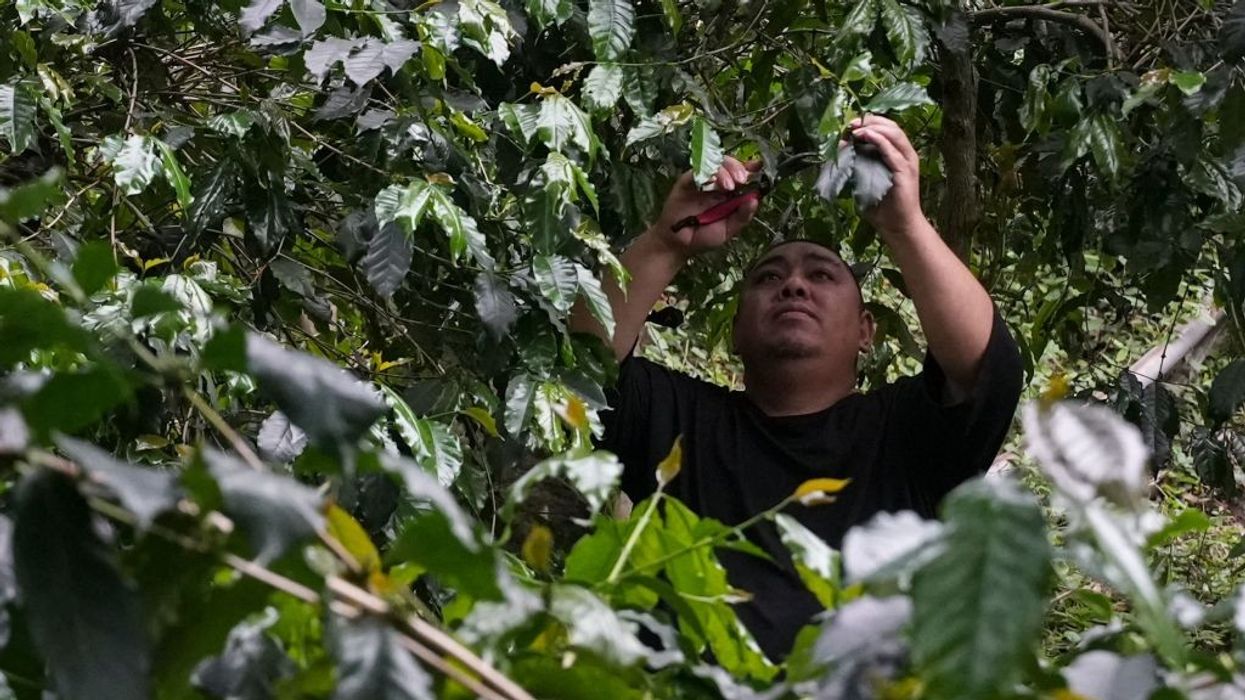
The U.N. should address issues such as land concentration, so that peasant agroecology can have a real chance to flourish and make a significant contribution to tackling hunger, climate change, and biodiversity loss.
A U.N. summit on global food systems should be an opportunity to address structural inequalities and tackle hunger. It should be a chance to learn from small-scale producers whose sustainable food practices feed 70% of the world. Instead, next week’s conference in Rome will be a festival of greenwashing, allowing Big Agriculture corporations to tighten their grip on food systems.
This will be the second Food Systems Summit (UNFSS). The first, in 2021 was supposed to address the lack of progress towards the U.N.’s sustainable development goals. It was dubbed a “people’s summit” by the organizers, but caused an outcry among local producers when their calls to roll back the power of transnational corporations were cynically ignored.
Corporations that dominate global food systems, such as Bayer and Nestlé, used the summit to promote greenwashing initiatives rather than address pressing problems such as food speculation and the impact of Covid-19 on world hunger.
The U.N.’s special rapporteur on the right to food Michael Fakhri described it as “inviting the fox right into the henhouse.”
Discussions on eradicating hunger were hosted by the Global Alliance for Improved Nutrition (GAIN), a foundation partly funded by processed food and consumer goods giant Unilever, while transnational corporations were invited to discuss solutions to problems they had largely created. The whole event was an excellent opportunity for them to identify new profit-making ventures and to “capture the global narrative of ‘food systems transformation.’”
More than a thousand small-scale food producer associations and Indigenous Peoples’ groups, academics, and social movements boycotted the event, which was also widely criticized by U.N/ human rights experts and others.
The U.N.’s special rapporteur on the right to food Michael Fakhri described it as “inviting the fox right into the henhouse.”
Food is a common good and access to healthy and nutritious food is a basic human right enshrined in U.N. covenants. These are the issues that governments and the U.N. should focus resources on, and next week’s summit provided a perfect opportunity.
Sadly, it looks set to simply consolidate corporate control over food and natural resources.
Hundreds of grassroots groups have called out the U.N., saying they are still being excluded and claiming the summit is “poised to repeat the failures” of two years ago and want to see fundamental change in food systems.
Here’s the picture as it stands. A handful of agribusinesses control more than 70% of the world’s farmland. Smallholder farmers, fisherfolk, pastoralists, and Indigenous peoples, who use agroecology and other sustainable practices, feed 70% of the world’s population with just 10% of global farmland.
In just the last five years, the world’s nine largest fertilizer companies—with nearly 40% of global synthetic fertilizer sales— have tripled their profits.
Agriculture is responsible for nearly 40% of global greenhouse gas emissions, almost 90% of deforestation, and 80% of biodiversity loss, the bulk of which can be attributed to industrial agriculture and agribusiness operations.
The disruption of global fertilizer supply chains has been a major focus of the U.N.’s response to the global food crisis. But the dangers of market concentration, which make food systems extremely fragile to shocks, have been largely ignored.
In just the last five years, the world’s nine largest fertilizer companies—with nearly 40% of global synthetic fertilizer sales— have tripled their profits. Rocketing fertilizer prices have less to do with disrupted supply chains than quasi-monopolies.
Despite all this—and the growing global obesity pandemic, for which consumption of ultra-processed industrial food bears a major responsibility—the U.N. continues to empower corporations. What it should be doing is addressing issues such as land concentration, so that peasant agroecology can have a real chance to flourish and make a significant contribution to tackling hunger, climate change, and biodiversity loss.
A dystopian future where a handful of corporations control everything we eat is just around the corner, if we do not resist now.
About 60% of all calories consumed worldwide come from just four crops: rice, wheat, corn, and soy. Everyone is vulnerable if we are over-dependent on global corporate-controlled supply chains. Industrial agriculture has failed to address rising levels of hunger and malnutrition across the world, which are now at an estimated 828 million people.
We are facing a stark choice between unsustainable, exploitative, corporate-controlled food systems and diverse, locally sourced ecological food.
The global governance of food is being hijacked by corporate interests. The U.N.’s Food and Agriculture Organization receives less than a third of its $3.25bn budget from the world’s governments, making it dependent on “voluntary contributions”—including from corporations and their proxies—for the rest.
We are facing a stark choice between unsustainable, exploitative, corporate-controlled food systems and diverse, locally sourced ecological food that prioritises the needs and rights of those most affected by the hunger, climate, and health crises.
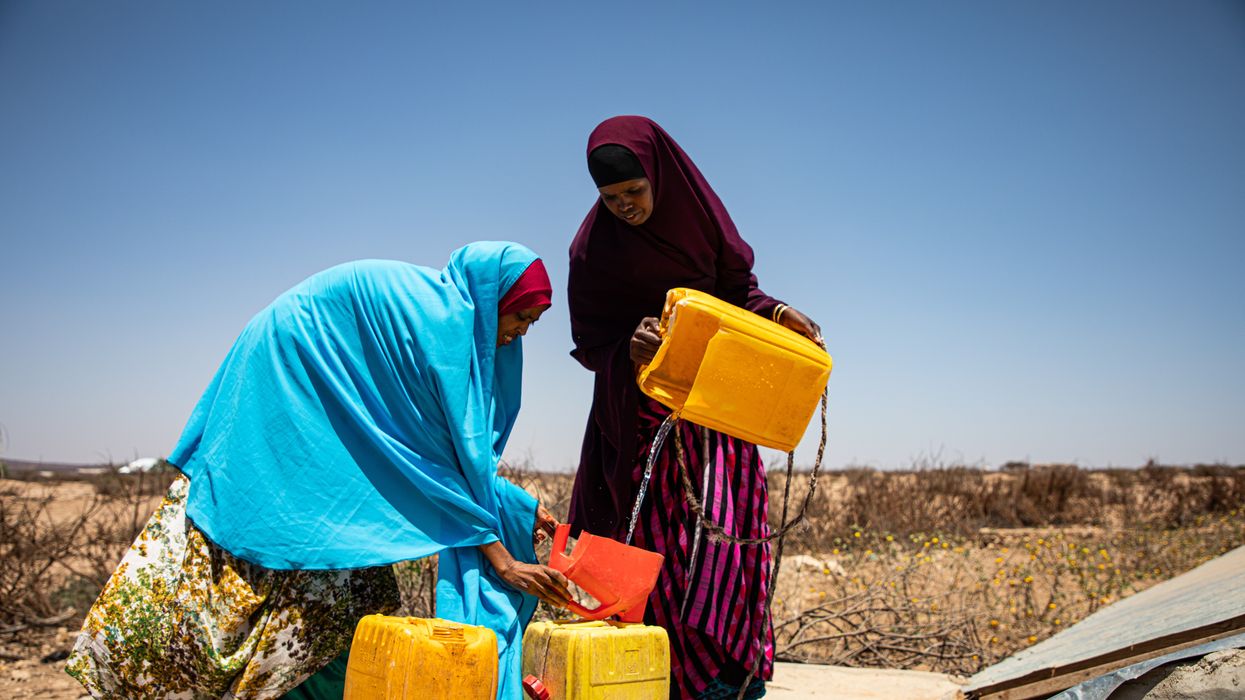
Urgent action is needed now more than ever to help countries rebuild their capacity to produce the food they require to break their dependence on the global market.
Russia announced on Monday that it was suspending a crucial deal that allows grain to be exported from Ukraine to countries in Africa and the Middle East.
The grain agreement, which was brokered in July 2022 by the United Nations and Turkey to allow grain that had been blocked by the conflict to be exported through the Black Sea, was aimed at alleviating the global food crisis, which had been worsened by the war in Ukraine.
And it was effective too. Prices of global foods have been declining in recent months thanks in large part to this initiative. The U.N. FAO Food Price Index shows that prices are now 13% lower than they were in February 2022, when Russia invaded Ukraine.
Local communities in the Global South are on average now spending twice as much on a loaf of bread, fertilizer, and petrol as before the war.
But not everywhere experienced this relief. In 14 countries surveyed as part of ActionAid’s recent research into the human impacts of the cost-of-living crisis across Africa, Asia, and the Caribbean, the cost of essential items has been continuing to escalate to crisis levels over the past 18 months. Local communities in the Global South are on average now spending twice as much on a loaf of bread, fertilizer, and petrol as before the war.
It’s a far worse picture than the last time we looked. Research released in May 2022 indicated that at worst, some local communities were paying up to quadruple the food, fuel, and fertilizer prices from before the war began. Now, in Zimbabwe, where an estimated 2.8 million people are unemployed, families are spending up to 10 times more. In some districts, petrol prices reportedly rose by more than 900%, pasta by up to 750%, fertilizer costs by more than 700%, and period pads by an extra 600%.
So what will happen now that the grain deal is dead? While the U.N. is hard at work to find a solution to this problem and ensure that Ukrainian and Russian grain and fertilizer can still make it out on the global market, I simply can’t agree with those who suggest that the move will have little immediate impact due to the current harvest season in the Northern Hemisphere. While the E.U.’s “Solidarity Lanes” should be applauded for enabling the export of about 25 million tonnes of Ukrainian grain, oilseeds, and related products to world markets between May and October last year, communities in the Global South are still suffering. We can’t take the chance that prices will increase even more, further exacerbating the harsh situations faced by many vulnerable countries already facing acute hunger.
If the situation worsens, women and girls will be the hardest hit. They already are: Community leaders in 10 out of 11 of the countries ActionAid surveyed said that rates of child marriage were increasing in their local areas, while almost half of survey respondents said mothers in their communities were reducing their food intake so their children could eat. More than half of those we spoke to said the price hikes made them feel sad or hopeless.
East Africa has faced four years of failed harvests, unpredictable rainfall, and rocketing global food prices. In Somaliland, people have been pushed to the brink since war broke out more than 3,000 miles away and are facing an extreme drought which scientists say would not have happened without climate change. Hibo Aden, women’s rights officer at ActionAid Somaliland, says that the situation has become so desperate for some families in a country where in one district, the price of cooking oil has risen by 224%, that girls are being forced to marry in exchange for food and water.
Russia pulling out of the Black Sea grain initiative could plunge food consumers in countries dependent on Ukrainian and Russian food supplies, like Somaliland, into food shortage, and re-ignite food price rises and volatility. If prices go up again, with the current dollar depreciation, the food import bills for countries already suffering will become even more unaffordable, leading to millions experiencing famine.
Our food system is to blame: 75% of the world’s nutrition comes from
12 crops and five animal species, while an even smaller group of just three crops—maize, wheat, and rice—constitute nearly 60% of humans’ caloric needs. Production of these three grains, plus soybeans, is concentrated in a few key regions, and is dominated by less than 15 companies. These factors combined make it easy for any industry to maintain high prices and reduce the number of farmers, making food production highly susceptible to shocks.
Ever-rising prices are likely to continue to push communities to their limits, and the devastating impacts we are seeing—both in Ukraine and across the Global South—will only intensify. Urgent action is needed now more than ever to help countries rebuild their capacity to produce the food they require to break their dependence on the global market. The World Bank, International Monetary Fund, and private banks have a role to play here. By cancelling the debts of countries like Malawi, where in one district the price of bread has risen by up to 233%, they would enable them to invest in greater domestic food security, shifting their focus towards climate-resilient agroecological farming, strengthening local food systems to help stabilize food supplies and prices.
Don’t take it from me—Meem, a student from the remote village of Kolpara in southern Bangladesh puts it best: “The rich may get away with price hikes, but the poor will struggle. Something has to be done, or society will suffer a lot.”
"Don't appoint the goat as gardener, a peasant proverb says," one advocate said of inviting agricultural companies to weigh in on issues of global food security.
World leaders will
gather in Rome next week for the United Nations Food Systems Summit +2 Stocktaking Moment, but local producers, Indigenous people, and the world's largest global food justice movements are sounding the alarm that the U.N. process favors the industrial agriculture status quo over true transformation.
The various groups, who claim to represent millions worldwide and gather under the banner of the People's Autonomous Response to the U.N. Food Systems Summit (UNFSS), say their primary concern is that large corporations and their proxies will unduly influence the U.N.'s new and contested approach to food security.
"Don't appoint the goat as gardener, a peasant proverb says," Patti Naylor of the National Family Farm Coalition said in a statement Monday. "The corporate ag, food, and data giants don't care about democratic governance in the U.N.—they just use it for their profits. Like the goat, corporations will eat the salad and the roses, if you don't stop them."
"The intention of the summit organizers is to sell us the corporate and industrial project as transformation."
The world's food system is in crisis. In 2022, acute food insecurity impacted around 258 million people, the People's Autonomous Response said in a declaration issued July 12. That was an increase from 193 million people in 2021 and 155 million people in 2020. A U.N. report published the same day found that a combination of the climate crisis, war, and the Covid-19 pandemic had forced an additional more than 100 million people into hunger since 2019.
The U.N. is therefore not on track to meet its sustainable development goal of ending hunger by 2030. The People's Autonomous Response believe they have a solution rooted in food sovereignty, centering frontline communities,, agroecology, encouraging biodiversity, territorial markets, and an economy based on solidarity.
"The evidence is overwhelming—the solutions devised by small-scale food producers and Indigenous peoples not only feed the world but also advance gender, social, economic justice, youth empowerment, workers' rights, and real resilience to crises," Shalmali Guttal of Focus on the Global South said in a statement. "Why are policymakers not listening to them and providing them with adequate support?"
One example of this lack of listening, the People's Autonomous Response says, was the UNFSS in September 2021. The summit raised alarms in part because it moved from a multilateral approach—with member states coming to an international agreement at the end of the talks—with a "multistakeholderism" approach that opponents argue allows private interests and large corporations a disproportionate influence on decision making. They worried at the time that the summit would muscle out the already existing Committee on World Food Security (CFS) that uses multilateral and human rights-based decision making.
During the summit, the voices of wealthy nations, companies, and large, corporate-linked nonprofits were raised over other member states, particularly from the Global South, the People's Autonomous Response said. At the same time, the summit failed to take into account some of the root causes of the global food crisis: Covid-19 pandemic, industrial agriculture, and the influence of large corporations on global food systems.
"The UNFSS has not only overlooked our rights and the structural causes of the crises…The intention of the summit organizers is to sell us the corporate and industrial project as transformation," said Saúl Vicente from the International Indian Treaty Council.
The original summit inspired a massive countermobilization, with more than 9,000 people speaking out against a pre-summit in July 2021 and more than 700 organizations and over 300 activists and academics endorsing a declaration to the summit in September.
"In these times of growing hunger and multiple crises, it is more urgent than ever that governments and the U.N. listen to us."
Despite all this, global food justice activists are concerned that the coming stocktaking moment, which will run from July 24 to 26, is "poised to repeat the failures of the FSS itself, further advancing industrial food systems, and opening the door of the U.N. to even greater influence by large private companies and their networks, without a corporate accountability framework in place."
In particular, they worry that member states will lend the process undeserved legitimacy by attending and sharing their plans for improving their food systems.
The People's Autonomous Response argues that world leaders should turn away from corporate-backed proposals for addressing food insecurity and heed the knowledge of people working on and in the ground.
"In these times of growing hunger and multiple crises, it is more urgent than ever that governments and the U.N. listen to us," Perla Álvarez from La Vía Campesina said in a statement. "We call on you: Change direction, and support our demands and efforts for a food sovereign future based on human rights and the principles of agroecology, care, justice, diversity, solidarity, and accountability."

In our struggle, we are connected in solidarity with people around the world who are facing varied forms of exploitation and devastation stemming from the corporate capitalist food system. From land-grabbing and hunger, to farmer debt and agricultural slave-labor, to deforestation and climate change, our struggles are connected by a common root -- a food system driven by the logics of commodification, profit-maximization and concentration of wealth and power. We resist and build together, inspired by our knowing that a more democratic, sustainable and equitable food system is not only possible, but that it is what the vast majority of us want.
We share our story as part of this rising awareness of our common struggle.
Since GMO testing began in Hawaii, over 3,000 permits have been granted for open-air field trials, more than in any other state in the nation. In 2012 alone, there were 160 such permits issued on 740 sites. Kauai, the fourth largest of the main islands and known as the "Garden Isle," has the highest number of these experimental sites. On Kauai alone these sites are associated with the use of 22 "restricted-use pesticides" (RUPs) in the amount of approximately 18 tons of concentrate each year, as well as perhaps 5 times that amount of non-restricted pesticides such as glyphosate.
We know, from information obtained solely due to a lawsuit, that Pioneer DuPont alone has used 90 pesticide formulations with 63 active ingredients in the past 6 years. They apply these pesticides around 250 (sometimes 300) days each year, with 10-16 applications per day on average. For a small island ecosystem, these numbers are astounding. We have no similar information from any of the other companies -- Dow, Syngenta or BASF.
The agrochemical-GMO industry occupies nearly all of the leased agricultural lands on the west side of Kauai -- in total over 15,000 acres in close proximity to schools, residences, hospitals and waterways. More than half of these lands are State Lands, disputed lands that were usurped in the overthrow and following US annexation of the independent Kingdom of Hawaii. At the very least, according to the State's own laws, these lands are to be managed for the common good of Hawaii's people, and especially for the betterment of the conditions of Native Hawaiians.
The industry often states that they came to Hawaii because we have a year-round growing season. But it's not just our good weather they were after. They came because they saw us as an exploitable community, left with an economic void when the sugar plantations hastily exited. Our state was challenged to think outside of the box of plantation agriculture after 150 years of it. The agrochemical-GMO companies saw a community of mostly working-class people, already conditioned to accept an industry that exports all of its profits and leaves behind nothing but pollution, health bills and unsafe, low-paying jobs. They came because, despite our enlightened state motto -- Ua Mau ke Ea o ka 'Aina i ka Pono (the life of the land is perpetuated in righteousness) -- we allow them to get away with doing things that they wouldn't be allowed to do in many other places.
Residents of Kauai currently do not have the right to know what is happening on our agricultural lands, nor how these activities are affecting our common air, water and soil. We do not know which pesticides are being used, where, in what amounts, how they are being mixed, or what their cumulative impacts might be. We also know nothing about the experimental GMO crops being tested. Even when the federal government determines that new pesticide-GMO crop combos significantly affect the quality of the human environment -- as the USDA did in the recent case of 2,4-D and dicamba resistant crops -- we have no way of knowing whether they were tested here and what their impacts might have been.
We are currently struggling to pass a Kauai County bill that would require pesticide disclosure and set-up a buffer zone between the spraying and residential areas. The bill would require that the county conduct an Environmental Impact Statement, and in the meantime put a moratorium on new operations. It would also mandate that experimental pesticides and GMOs be tested in containment rather than in the open-air.
The pesticides the bill pertains to are not the type you purchase at Ace Hardware. They are "restricted-use pesticides" (RUPs) because they are recognized as extremely dangerous. Atrazine (produced by Syngenta), for example, is known to cause birth defects, cancer and reproductive issues. Lorsban (produced by Dow) is known to cause impaired brain and nervous system functions in children and fetuses, even in minute amounts. The EPA has determined that the risks to children are so severe, Lorsban should not be used anywhere they could be exposed. Studies show that other RUPs being used are linked to brain cancer, autism, and heart and liver problems.
Despite national laws that prohibit RUP drift, atrazine, chlorpyrifos (Lorsban) and bifenthrin have made it into the drinking water or air at Waimea Canyon Middle School, almost certainly the result of spraying by the chemical-GMO operations around the school. On several occasions children and teachers have become very ill. In one incident at least 10 children collapsed and were sent to the hospital. An investigation into the matter was strikingly incomplete, testing for only 6 of the 63 active pesticide ingredients used on just one of several neighboring operations, and completely neglecting acute exposure.
It is morally abhorrent that the companies have refused to disclose even the most basic information we need to protect our health, and are now fighting our very reasonable attempt for more transparency. The severity of their backlash and the massive resources they are pouring into subverting our efforts is clear indication that they consider transparency a real threat. These corporations are accustomed to externalizing all of their costs onto workers, communities and the environment. The prospect of being held accountable is an alarming one because their massive profits come at the expense of forcing the rest of us to pick up their health and environmental remediation bills.
Their tactics have been predictably vile. As they are doing to farmers, communities and nations across the globe, they are threatening to sue us. They are claiming that under Hawaii's "Right to Farm Act" they are not responsible for any off-sight impacts. At the same time they are marketing themselves publicly as "responsible community members" and "stewards of the land." They are buying local lobbyists with connections. They are breaking national laws and then claiming they are already over-regulated. They are slandering scientists who raise questions. They are outright lying, deceiving and offending our intelligence.
Most upsetting for our community, these corporations are threatening to take away the jobs of our friends and neighbors if we force them to disclose their chemical use. Syngenta has had the audacity to tell their workers that they may decide to close shop on July 31, the day of the bill's public hearing. They paid their workers to attend the first hearing, and it is likely that they will fly people in for the second. Similar to many other environmental justice issues, the west side community is one of the most economically disadvantaged in the State. It also has one of the highest Native Hawaiian populations. Workers are being told that their only option is to support the long-term poisoning of their families and the land many of them have inhabited for generations, or risk loosing their livelihoods. While the industry's scare tactics are somewhat transparent, they invoke very real and legitimate fear.
According to the industry's own high (undocumented) claims, they provide roughly 2% of jobs on the island. At least half of these are part-time, seasonal jobs. They bring in temporary cheaper labor from other countries, undercutting the ability of local workers to push for better wages and working conditions. Foreign "guest-workers" are amongst the most vulnerable for workplace abuses. Most, if not all, of the well-paying, managerial and "high-tech" jobs go to people from the mainland.
The people of Kauai are building an alternative vision. One in which our economy is more equitable and resilient, and not dependent on the whims of transnational corporations who can leave at any moment. One in which we grow healthy food for ourselves, in a way that is consistent with the value of malama `aina (care for the land). One in which our agricultural jobs are safe and long-term, and benefits accrue to the workers rather than transnational corporations. As an island dependent on barges coming from at least 2500 miles away for 85% of our food, there are huge possibilities.
Locally and globally, we do face real structural challenges to building a more fair and sustainable food system. However, possibilities are already present that can begin to move us in the right direction. At a local level in Hawaii, just a few examples include: making state lands available and affordable for real farmers, upholding the public trust doctrine in water law, workers' cooperatives, research and subsidy support for sustainable regional food systems, food hubs for cooperative processing and distribution, supporting soil and water remediation, state ag parks, food assistance programs, local food procurement policies, waste reduction and recycling programs, stronger labor protections, and regulations that prohibit pollution of the finite resources we depend upon.
Critically, these steps must be part of the global movement to change the underlying logics of the system. We must resist the structural conditions that create a radically immoral food system, while we build towards vantage points that allow us to imagine other possibilities. Perhaps, acting in solidarity, the constraints are not as great as we think them to be, and what we need above all is to believe that we are actually capable of creating a more equitable, sustainable and democratic food system. And so we share our story, as part of the rising global movement that does indeed believe.