

SUBSCRIBE TO OUR FREE NEWSLETTER
Daily news & progressive opinion—funded by the people, not the corporations—delivered straight to your inbox.
5
#000000
#FFFFFF
To donate by check, phone, or other method, see our More Ways to Give page.
Daily news & progressive opinion—funded by the people, not the corporations—delivered straight to your inbox.
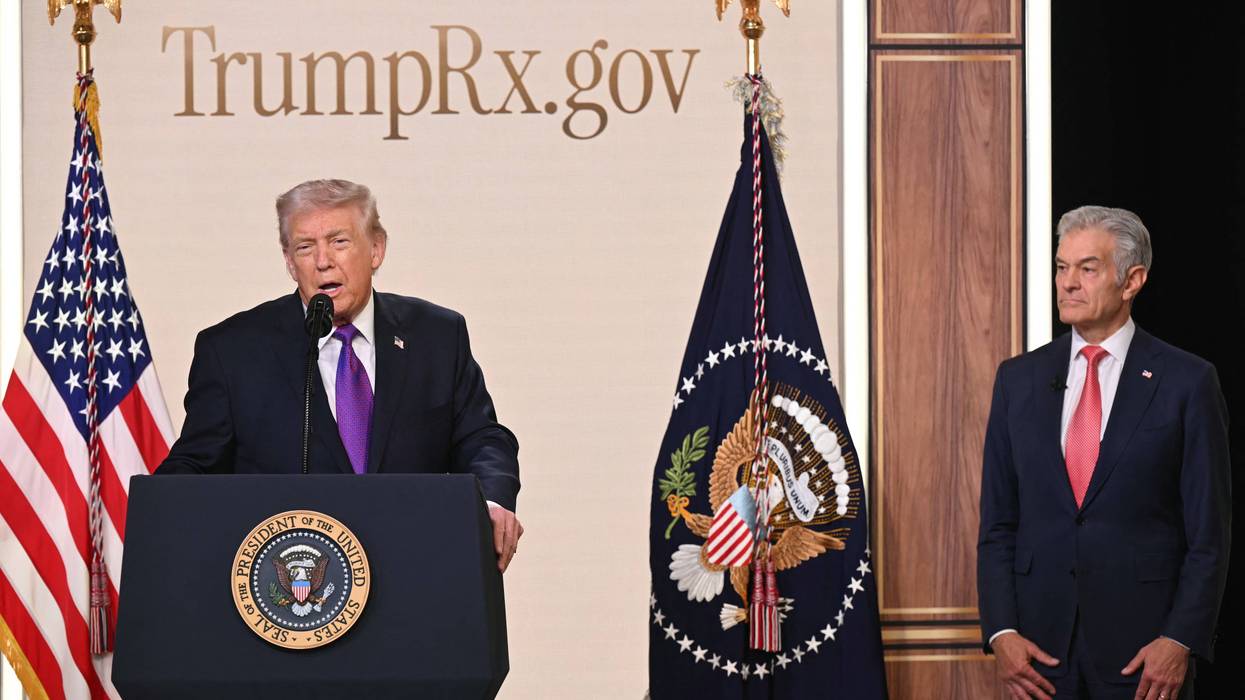
"Trump’s claim to have lowered drug prices amounts to distortion and stealing credit from past administrations whose policies actually made a difference," said one expert.
A new analysis published Thursday argues that President Donald Trump's claims about prescription drug price reductions under his administration fall into one of three categories: "fake," "exaggerated," or "probably won't happen."
The analysis, released by the consumer advocacy group Public Citizen, came after Trump recently—and buffoonishly—tried to take credit for what was described as the largest year-over-year price drop in more than 60 years, even as experts said a Biden-era policy allowing Medicare to directly negotiate the prices of some drugs was likely the most significant driver of those cost reductions. Data from the US Bureau of Labor Statistics indicates that drug prices fell 3.1% last month compared to the previous year, apparently the biggest decline since 1963.
But Public Citizen emphasized that the Trump administration "did not publish the methods they used for their analyses so that their work can be independently verified."
"For example, because the [Consumer Price Index for Prescription Drugs] is indexed to 1982, the administration would have had to recalculate the index in earlier years to make proper comparisons dating back to the 1960s, and we don’t have information on how this was accomplished," the group's analysis notes. "We also don’t know where they started the time cut offs for presidential administrations in their graph comparing Trump’s supposed achievements to other presidents. Team Trump has a history of misleading Americans using CPI-Rx data by for example picking arbitrary baselines that make their achievements look better. Their lofty claims were disproven in the past."
Public Citizen also took issue with the Trump White House's assertion that the president's "most favored nation" (MFN) deals with pharmaceutical companies are responsible for falling drug prices. The group observed that the only element of Trump's MFN agenda that has been fully launched is TrumpRx, which has not exactly delivered blockbuster savings.
"That’s in part because most Americans have health insurance and will do better purchasing drugs through their insurance plans," Public Citizen said. "TrumpRx may also cause consumers to overpay on brand drugs, as many of the medicines on the site have cheaper generic competitors available at lower price points."
The more likely cause of falling drug prices overall, according to Public Citizen, were "the genericization of expensive branded drugs," the Biden-era Medicare price negotiation program that Trump and congressional Republicans have worked to sabotage, and regulatory changes that took effect in 2024, prior to the start of Trump's second White House term.
“Trump has three kinds of drug pricing policy: fake, exaggerated, and not-real-yet, probably-won’t-happen,” Peter Maybarduk, access to medicines director for Public Citizen, said in a statement. “Prescription drug corporations are raising the prices of new medicines every year, and the CPI doesn’t even count that cost. It’s more likely that patent cliffs and Medicare price negotiation, which took effect this year and saved billions, drove changes in the CPI."
"Trump’s claim to have lowered drug prices amounts to distortion and stealing credit from past administrations whose policies actually made a difference," Maybarduk added.
Last weekend, Trump showcased to reporters a printout of a Washington Post story headlined, "Prescription drug prices record sharpest drop in more than 60 years."
"I told you that was going to happen," the president said.
Trump didn't mention that the Post's story highlights experts' view that "a Biden-era policy that requires Medicare to negotiate prices for some popular prescription drugs is more likely to be driving down costs."
Richard Frank, a senior fellow at the Brookings Institution and professor emeritus of health economics at Harvard University, told the newspaper that "if I was a betting guy on what mattered most, it would be probably stuff around the Inflation Reduction Act," Democratic legislation that included the Medicare drug price negotiation changes.
Trump’s policies, Frank added, "wouldn’t be where I’d place my money."
The president's attempt to take credit for falling drug prices came as his administration actively worked to undermine the price negotiation program that's helping drive costs down.
A Public Citizen investigation published earlier this month revealed that "a quiet change in policy interpretation" that the Trump administration wants to make permanent allowed AbbVie’s pancreatic enzyme medication Creon to escape Medicare price negotiations for at least another seven years.
“The Trump administration wants to make permanent a costly Medicare mistake, which creates windfalls for AbbVie and other drug corporations by excluding some expensive biologic drugs from negotiations for years,” said Maybarduk. “Medicare price negotiation already is far too generous to drugmakers, which gouge Americans for many years before negotiated prices kick in.”
"Yet again, Trump has betrayed the American people and put billionaires ahead of working families.”
The world's ten largest pharmaceutical giants reaped around $300 billion in combined global revenue during the first half of 2026 as millions of people in the US—the country with the highest drug prices in the world—stretched, skipped, or rationed doses to afford their medications, despite President Donald Trump's lofty pledges to slash costs.
An analysis released Thursday by the advocacy group Protect Our Care estimates that Johnson & Johnson, Novartis, AbbVie, Merck, Pfizer, and other pharma behemoths collectively reported $298 billion in revenue in the first half of the year—a $24 billion increase compared to 2025—and distributed $63 billion in benefits to shareholders in the form of share repurchases and dividends.
"The numbers speak for themselves," said Vaishu Jawahar, director of policy programs at Protect Our Care. "While big drug companies make record-breaking sales, raking in billions more than they did last year, a growing number of Americans are struggling to afford their prescription drugs. Yet again, Trump has betrayed the American people and put billionaires ahead of working families.”
Throughout his second White House term, Trump has made mathematically impossible claims about his efforts to curb drug costs, asserting repeatedly that he has cut prices by upwards of 1,000%. Critics of the Trump administration's approach have noted that it has relied on voluntary and secretive deals with pharmaceutical companies, which have gone on to raise prices after meeting with the president and showering him with praise.
One high-profile administration initiative, TrumpRX, has been widely denounced as a scam that will do virtually nothing to lower drug costs for most Americans. The president has also worked to weaken the Medicare drug price negotiation program established during the Biden administration.
“Instead of lowering drug prices for seniors, Trump is holding backroom deals with big drug companies and handing them blockbuster giveaways," said Jawahar. "He has created loopholes for industry giants to evade price negotiations and jack up drug prices for seniors."
The advocacy group Patients for Affordable Drugs noted in a March report that during the first week of 2026, pharmaceutical companies "increased prices on 64 oncology drugs, with 73% of hikes exceeding inflation."
Sixty percent of US adults say they are struggling or worried about being able to afford their prescription medications, according to recent polling from the health policy research organization KFF. The group said that number marked the highest level since 2018.
Separate polling released in March by the West Health-Gallup Center on Healthcare in America found that tens of millions of people in the US "said they have made at least one trade-off with daily living expenses to afford healthcare," including skipping a meal, prolonging a current prescription, and cutting back on utilities.
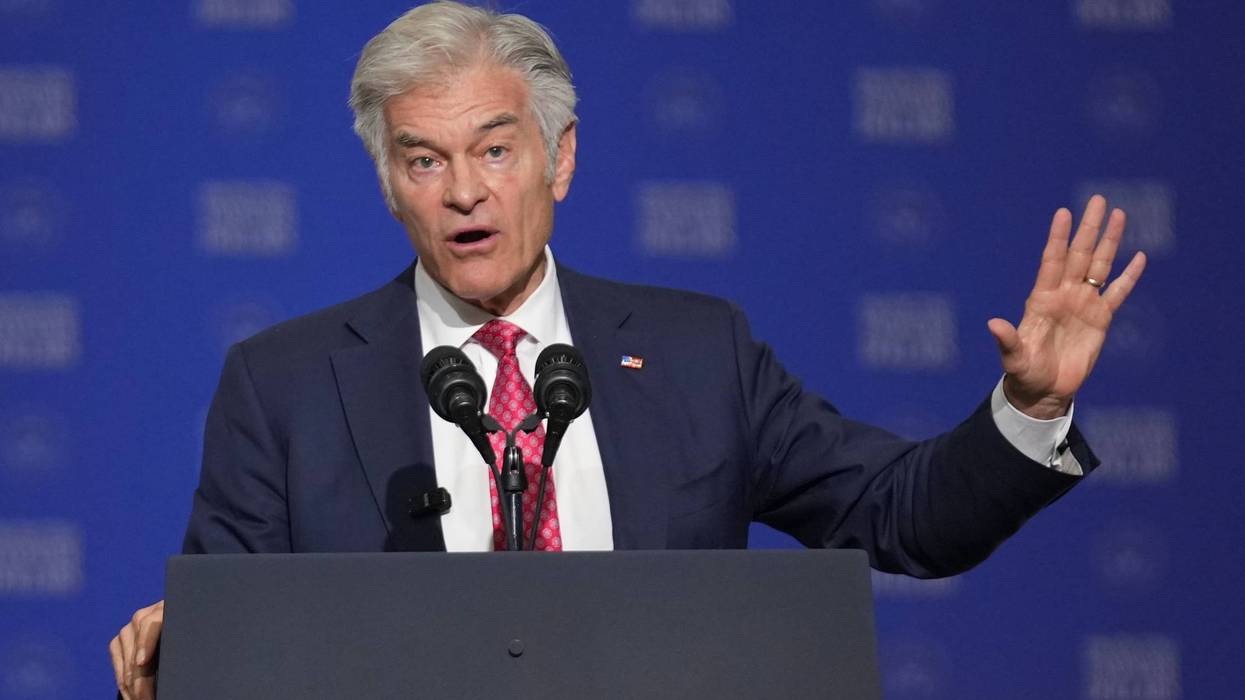
"Donald Trump and Republicans are making healthcare more expensive for seniors at every turn."
The Trump administration on Tuesday said it would end a subsidy program that helped lower premiums for seniors enrolled in Medicare Part D prescription drug plans, a move that's expected to increase monthly costs for millions of Americans amid a broader affordability crisis.
The Centers for Medicare and Medicaid Services (CMS), headed by Mehmet Oz, announced "the conclusion of the Part D Premium Stabilization Demonstration" for the coming year, just months before the start of Medicare open enrollment. Oz characterized the subsidy program as a "bailout" for insurance companies and said that "premiums will go up by less than $10 for most Medicare recipients."
But The Wall Street Journal, which reported the administration's move ahead of the public announcement, noted that nearly half of Medicare Part D plan enrollees would likely see increases "largely in the $11 to $20 range a month." The subsidy program, established in the wake of the Biden-era Inflation Reduction Act, cut the average Part D premium by more than 25% this year.
Leslie Dach, chair of the advocacy group Protect Our Care, said in a statement that President Donald Trump and his Republican allies "continue to force seniors to pay more while handing tax breaks to billionaires and big corporations."
"Trump and Republicans are making healthcare more expensive for seniors at every turn," said Dach. "In the middle of a GOP-induced affordability crisis, they are eliminating a key program that helps seniors afford their medications, meaning countless seniors will soon pay more just to get the lifesaving prescriptions they need. For older Americans living on fixed incomes, even an extra ten or twenty dollars a month can mean choosing between filling their prescription, paying the electric bill, or buying groceries. Seniors deserve lower prescription drug costs and affordable healthcare."
Around 25 million Americans are enrolled in standalone prescription drug plans through Medicare Part D, which is offered by private, Medicare-approved companies. Another 31 million Americans are enrolled in Medicare Part D via privatized Medicare Advantage plans.
Juliette Cubanski, vice president and director of the Program on Medicare Policy at the nonprofit research group KFF, wrote that standalone Medicare Part D prescription drug plans "may soon seem even less affordable" following the Trump administration's change, "leading to further enrollment growth in Medicare Advantage." (Prior to becoming head of CMS, Oz was a prominent booster of Medicare Advantage.)
Each year, millions of people across the US are forced to forgo or ration prescription medications due to high costs.
Kendall Witmer, rapid response director at the Democratic National Committee, said the Trump administration's decision to terminate the Medicare Part D subsidy program shows that the president and his party "are doing everything they can to make healthcare unaffordable for Americans, especially for seniors."
"Trump and Republicans’ massive healthcare cuts have pushed working families to the brink as they grapple with skyrocketing insurance premiums, even bigger medical bills, and rising prescription drug costs," said Witmer. "Americans are taking on record amounts of medical debt just to make ends meet—all while Trump and his family get even richer and his wealthy donors rake in tax cuts."
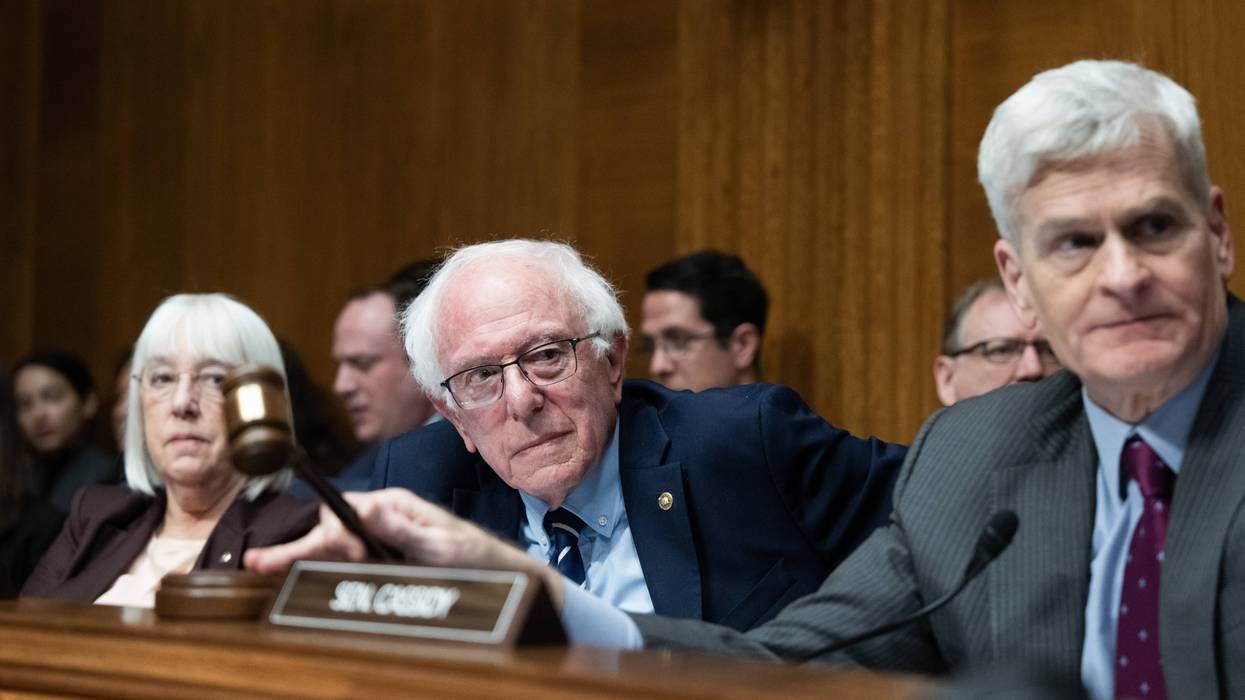
Sen. Bernie Sanders said the amendment blocked by the GOP "would prevent pharmaceutical companies from charging more for prescription drugs in the United States than they do in Canada, the UK, Germany, France, and Japan."
Senate Republicans voted in the early hours of Thursday morning to reject an amendment offered by Sen. Bernie Sanders that aimed to cut US prescription drug prices in half by mandating that Americans pay no more for medications than people in Canada and other wealthy nations.
Just two Republicans, Sens. Josh Hawley of Missouri and Dan Sullivan of Alaska, voted with every present Democrat in support of Sanders' (I-Vt.) proposed amendment to the GOP's emerging budget reconciliation package. Republicans plan to use the legislative vehicle to fund the Department of Homeland Security and its component agencies, principally Immigration and Customs Enforcement (ICE) and Customs and Border Protection (CBP).
The amendment vote put nearly every Senate Republican on the record against a policy supported by President Donald Trump. Last year, Trump signed an executive order directing federal health officials to "communicate most-favored-nation price targets to pharmaceutical manufacturers to bring prices for American patients in line with comparably developed nations."
But experts have noted that, without congressional action giving the federal government more power over drug pricing, pharmaceutical companies would not be required to comply with the proposed targets—rendering Trump's order effectively meaningless. Drug prices have continued to rise in the US despite Trump's order and his outlandish, mathematically impossible claims.
"If Trump is serious about making real change rather than just issuing a press release," Sanders said last year in response to Trump's executive order, "he will support legislation I will soon be introducing to make sure we pay no more for prescription drugs than people in other major countries. If Republicans and Democrats come together on this legislation, we can get it passed in a few weeks."
The Sanders-led amendment that Republicans blocked on Thursday called for reducing "the price of prescription drugs in the United States by more than 50% by adopting most-favored-nation drug pricing so that the American people pay no more for prescription drugs than Europeans or Canadians."
Research has shown that Americans pay at least twice as much on average for prescription drugs as people in other wealthy nations.
"This amendment is very simple," Sanders said during Senate debate on Thursday. "It would prevent pharmaceutical companies from charging more for prescription drugs in the United States than they do in Canada, the UK, Germany, France, and Japan.”
Last May, Sanders and several of his Democratic colleagues in the Senate introduced the Prescription Drug Price Relief Act, which would require federal health officials to "review brand-name drugs annually for excessive pricing and, if a drug is found to be priced excessively, to void any exclusivity granted to its sponsor."
"Under the bill, a price is considered excessive if the domestic average manufacturing price exceeds the median price for the drug in Canada, the United Kingdom, Germany, France, and Japan," according to a summary of the legislation. "If a price does not meet this criteria, or if pricing information is unavailable in at least three of these countries, the price is still considered excessive if it is higher than reasonable in light of specified factors, including development cost, revenue, and the size of the affected patient population."
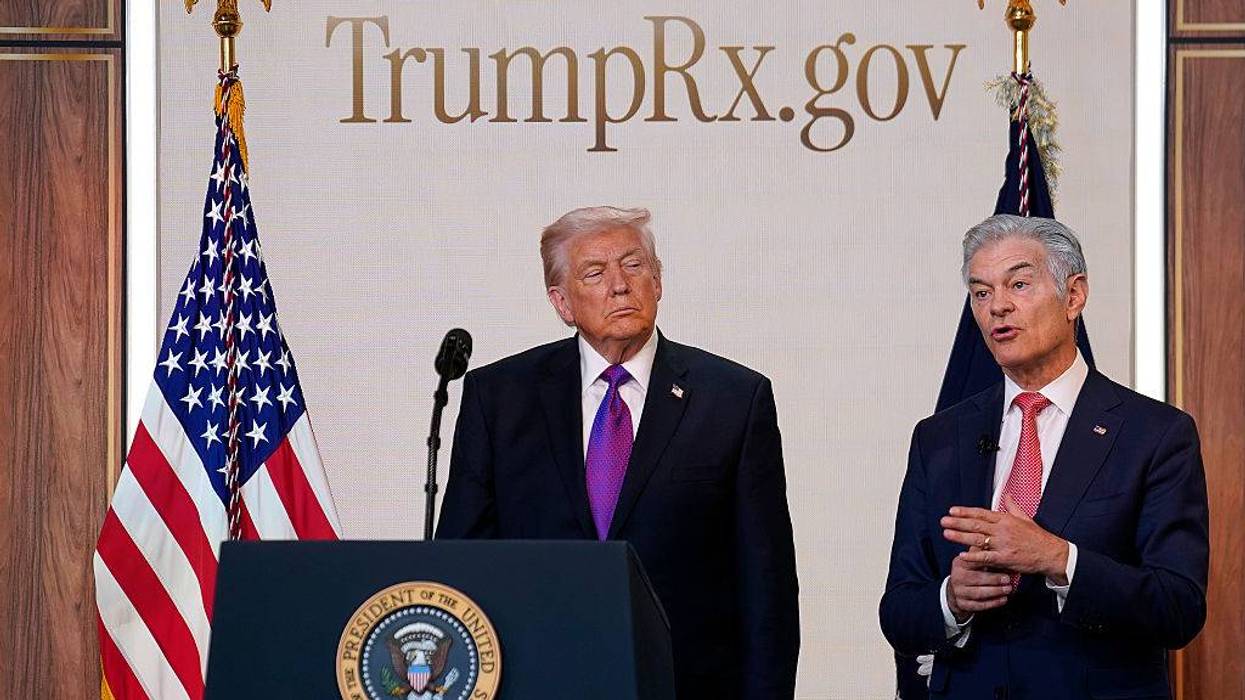
"As they continue to hike prices, the pharmaceutical industry is also working overtime to block reforms that would lower them, and patients are paying the price."
A report released Monday found that Big Pharma has continued raising prices on dozens of cancer drugs, despite President Donald Trump's repeated false claims that he and his administration have slashed drug prices by a mathematically impossible 600%.
The analysis, conducted by Patients for Affordable Drugs, found that pharmaceutical companies increased prices on 64 oncology drugs in the first weeks of 2026, with the vast majority of price hikes coming in above the rate of inflation.
Patients for Affordable Drugs noted the heavy financial toll that paying for treatments takes on US cancer patients, and said the latest price increases would only exacerbate the crisis.
"Cancer drugs are among the most expensive drugs on the market, costing $74,000 more on average than non-cancer drugs," the group explained. "More than 42% of cancer patients in the US fully depleted their savings within two years of diagnosis to cover their care. More than half of Americans with cancer go into debt because of the cost of their care."
Making matters worse, the group added, is that Big Pharma is heavily lobbying Congress to pass legislation that would further delay small molecule drugs, including "widely used, high-cost cancer treatments," from becoming eligible for Medicare price negotiations.
Merith Basey, CEO of Patients for Affordable Drugs, stressed that the latest price increases were unacceptable given that "cancer is a leading cause of death among American seniors, and the treatments patients rely on are already among the most expensive."
"Yet as they continue to hike prices, the pharmaceutical industry is also working overtime to block reforms that would lower them," added Basey, "and patients are paying the price."
While the Patients for Affordable Drugs report focuses on cancer drugs, a December report from Reuters found that at least 350 branded medications are set for price hikes in 2026, including “vaccines against Covid, RSV, and shingles,” as well as the “blockbuster cancer treatment Ibrance.”
The total projected number of drugs seeing price increases in 2026 is significantly higher than in 2025, when 3 Axis Advisors estimated that pharmaceutical companies raised prices on 250 medications. The median price increase for drugs in 2026 is projected at 4%, roughly the same as in 2025.
All of these price increases have come despite Trump's false claims that he has lowered the prices of drugs to the point where pharmaceutical companies would actually be paying patients to take them.
An analysis released last week by the Center for American Progress (CAP) found that the president's TrumpRx initiative, which was created to purportedly offer Americans cheaper prescription drugs, offered genuinely lower prices on "exactly one" of the 54 medications listed on its website.
CAP also found that nearly one-third of the drugs available on the TrumpRx website have generic alternatives that were cheaper than what was being offered, and that the website made no mention of this.
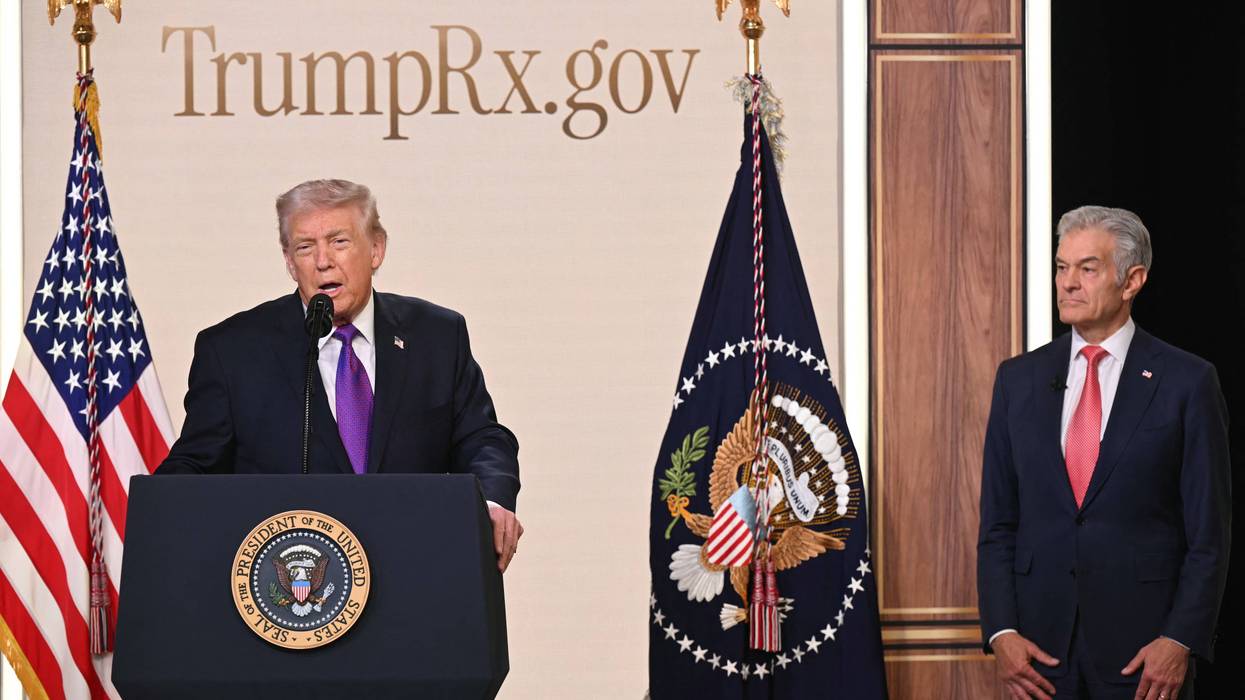
"Trump has dressed up yet another corporate giveaway as a boon to patients," said one watchdog. "Real drug price reform doesn’t look like a website."
US President Donald Trump on Thursday launched a website, branded with his name, in a purported effort to help patients buy prescription drugs at lower prices.
But experts, watchdog groups, and Democratic lawmakers said TrumpRx will likely do little for consumers—or for the broader goal of bringing down exorbitant medicine costs—while further enriching Big Pharma and potentially lining the pockets of his eldest son, Donald Trump Jr.
TrumpRx.gov, launched in partnership with pharmaceutical giants, points users to direct-to-patient sales platforms hosted by drug companies to facilitate the purchase of an extremely limited selection of medications. For example, TrumpRx's listing for Farxiga links users to AstraZeneca Direct, where patients can pay out of pocket for the type 2 diabetes medication.
Donald Trump Jr. is on the board of BlinkRx, a prescription drug platform that stands to benefit from the Trump administration's promotion of direct-to-patient medicine sales. In December, the president's son reportedly met with top drug company executives and administration officials responsible for regulating the pharmaceutical industry—a gathering hosted by BlinkRx.
Frank Pallone Jr. (D-NJ), the top Democrat on the House Energy and Commerce Committee, said in a statement Thursday that TrumpRx "not only threatens patients’ health, safety, and privacy, but also likely includes kickback schemes designed to enrich President Trump, his family, and their friends."
"TrumpRx has been shrouded in secrecy from the beginning because the administration clearly does not want anyone to know it likely won’t save patients money," said Pallone. "However, we do know Trump only slaps his name on things when there’s something in it for him."
Last week, a group of Democratic senators sent a letter to the inspector general of the US Department of Health and Human Services warning that "without stricter safeguards before its official launch, TrumpRx could be used as a potential vehicle for unlawful kickback schemes that result in excessive costs for the federal government."
In addition to sending users to direct-to-patient sales sites, TrumpRx offers Trump-branded coupons for some medications. To obtain a coupon, site users must accept terms that state: "You agree that by redeeming this coupon, you (and anyone else acting on your behalf) agree not to seek reimbursement from any insurance plan for out-of-pocket costs for prescriptions purchased with this coupon. You also agree not to count the cost of prescriptions toward your deductible or true out-of-pocket costs."
The Washington Post reported that pharmaceutical companies "have agreed to list their drugs on TrumpRx.gov."
"TrumpRx is designed to help Big Pharma keep its prices high by diluting the bargaining power of insurance companies, weakening an important check on pharma."
Experts warned that patients who use TrumpRx could end up paying more for their medications than if they pursued other available options.
"TrumpRx’s offerings are very limited, fewer than 50 drugs listed, and most are niche products used by few patients," Rena Conti, an associate professor at Boston University, told ABC News. "Many are available in generic form at even lower prices or already available to consumers at low or even very low prices elsewhere. This suggests it pays for consumers to check their insurance coverage and ask their regular doctor or pharmacist before they use this service."
Peter Maybarduk, access to medicines director at Public Citizen, offered a more scathing assessment of TrumpRx, saying the president has "dressed up yet another corporate giveaway as a boon to patients."
"Most patients will do better through their insurance than through TrumpRx. Many patients without insurance will not be able to afford drugmakers’ still-high prices funneled through TrumpRx," said Maybarduk. "But drugmakers certainly will appreciate TrumpRx’s free promotion of their products, delivered with a false veneer of price accountability. TrumpRx is designed to help Big Pharma keep its prices high by diluting the bargaining power of insurance companies, weakening an important check on pharma."
“TrumpRx also appears to be another example of this president’s repeated corruption," he continued. "Trump’s son, Donald Trump Jr., sits on the board of BlinkRx, a key business that may benefit financially from TrumpRx. Getting serious about medicine affordability means getting serious about challenging Big Pharma. For all Trump’s talk, Big Pharma is getting a lot of special favors from this White House, while patients still are waiting. Real drug price reform doesn’t look like a website."
Throughout his second White House term, Trump has made outlandish promises to cut drug costs and hosted top executives at the White House to tout splashy deals—only for pharmaceutical giants to continue jacking up prices. Reuters reported last month that drugmakers planned to "raise US prices on at least 350 branded medications, including vaccines against Covid, RSV, and shingles and blockbuster cancer treatment Ibrance" in 2026.
Merith Basey, CEO of Patients for Affordable Drugs Now, said in a statement that the Trump administration's "voluntary agreements" with drug companies "lack clear enforcement mechanisms and still put the power to set and increase prices firmly in the hands of pharmaceutical corporations."
"Patients in our community will soon learn if they can reliably access these discounts at the pharmacy counter, where the program will ultimately be tested and where affordability matters most," Basey said of TrumpRx.
One critic charged that Trump's earlier deals with pharmaceutical companies "just nibble around the margins in terms of what is really driving high prices for prescription drugs in the US."
President Donald Trump in recent months has made ludicrously false claims about his administration slashing prescription drug prices in the US by as much as 600%, which would entail pharmaceutical companies paying people to use their products.
In reality, reported Reuters on Wednesday, drugmakers are planning to raise prices on hundreds of drugs in 2026.
Citing data from healthcare research firm 3 Axis Advisors, Reuters wrote that at least 350 branded medications are set for price hikes next year, including "vaccines against COVID, RSV, and shingles," as well as the "blockbuster cancer treatment Ibrance."
The total projected number of drugs seeing price increases next year is significantly higher than in 2025, when 3 Axis Advisors estimated that pharmaceutical companies raised prices on 250 medications.
The median price increase for drugs next year is projected at 4%, roughly the same as in 2025.
Reuters also found that some of the companies raising prices on their drugs are the same ones who struck deals with Trump to lower the costs of a limited number of prescriptions earlier this year, including Novartis, Pfizer, Boehringer Ingelheim, and GSK.
In announcing the deals with the pharmaceutical companies, Trump declared that "starting next year, American drug prices will come down fast and furious and will soon be the lowest in the developed world."
But Dr. Benjamin Rome, a health policy researcher at Brigham and Women's Hospital in Boston, told Reuters that the projected savings for Americans under the Trump deals are a drop in the bucket compared with the continued price hikes on other drugs.
"These deals are being announced as transformative when, in fact, they really just nibble around the margins in terms of what is really driving high prices for prescription drugs in the US," Rome explained.
Merith Basey, CEO of Patients For Affordable Drugs Now, a patient advocacy organization focused exclusively on lowering the cost of medications, also said she was unimpressed by Trump's deals with drugmakers.
"Voluntary agreements with drug companies—especially when key details remain undisclosed—are no substitute for durable, system-wide reforms," she said earlier this month. "Patients are overwhelmingly calling on Congress to do more to lower prescription drug prices by holding Big Pharma accountable and addressing the root causes of high drug prices, because drugs don’t work if people can’t afford them."
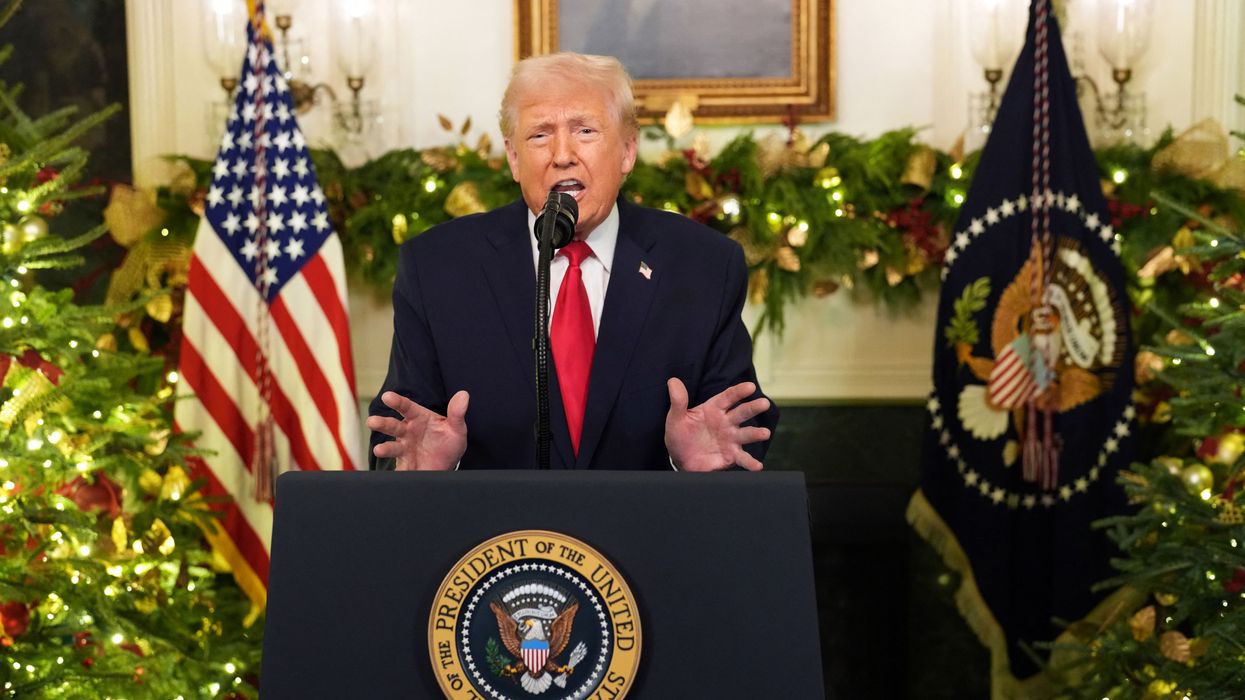
"No matter how he tries to spin it, everything is getting more expensive and the American people are hurting."
US President Donald Trump tried desperately to defend his stewardship of the nation's economy in a primetime address Wednesday night as prices continued to rise, unemployment jumped to a level not seen since the Covid-19 pandemic, and job growth slowed to a halt.
Consistent with his administration's recent efforts to downplay negative economic data and opinion polling, Trump falsely declared in his televised address that he is bringing "high prices down and bringing them down very fast," blaming his predecessor for economic pain that voters—including a growing share of the president's—have increasingly pinned on the current occupant of the Oval Office.
Trump had fact-checkers working furiously to keep up as he repeated lie after lie, claiming grocery prices—which are up this year—are "falling rapidly," a narrative sure to anger Americans who are skipping meals and tapping into their dwindling savings to make ends meet.
The president also asserted that he has pushed down drug prices by up to 600% as many Americans skip doses of their medications and cut pills in half to save money. Trump went on to decry the "steep increase in [health insurance] premiums being demanded by the Democrats," a false description of premium hikes stemming from Republicans' refusal to extend enhanced Affordable Care Act tax credits.
In an effort to bolster Trump's distorted depiction of the US economy, the White House reportedly provided major television networks with graphics designed to give the president's claims about falling prices the sheen of legitimacy. But the networks, with the predictable exception of Fox News, rebuffed White House pressure to use the slides because the data they showed was not clearly sourced.
"No matter how he tries to spin it, everything is getting more expensive and the American people are hurting," said Rep. Pramila Jayapal (D-Wash.). "Our government should be working to lower costs, not pointing fingers and making excuses."
Rep. Mark Pocan (D-Wis.) characterized the speech as further evidence that Trump is unfit for office.
"25th Amendment, folks," Pocan wrote on social media. "This is pathetic."
Very bizarre to give a victory lap speech when your numbers look like this pic.twitter.com/tW8bXYcjRj
— Alex Jacquez (@AlexSJacquez) December 18, 2025
With his economic approval rating at a new low, Trump tried to assuage angry Americans with promises of economic rewards in the near future, including a $1,776 "warrior dividend" for some military service members, purportedly funded by revenue from tariffs—which have driven up prices for US consumers.
A Joint Economic Committee analysis released this week estimates that "in just 10 months, the average American family has already paid nearly $1,200 in tariff costs, with the costs climbing steadily since the beginning of President Trump’s second term."
Trump also celebrated the sprawling budget package that he signed into law over the summer, enacting the largest cuts to Medicaid and nutrition assistance in US history while delivering more tax breaks to the rich.
"Next year, you will also see the results of the largest tax cuts in American history that were really accomplished through our great Big, Beautiful Bill, perhaps the most sweeping legislation ever passed in Congress," Trump boasted.
Bloomberg noted earlier this week that "most taxpayers will likely see only a modest boost that will do little to assuage their pocketbook concerns," and that "wealthy taxpayers in high-tax states like California, New York, and New Jersey are the biggest winners."
Ken Martin, chair of the Democratic National Committee, said in a statement following the president's address that "Donald Trump tried to sell us all a shit sandwich, desperate to convince the American people (and even convince himself) that he isn't a complete and utter failure."
"Let's summarize Trump's first year back in office: He skyrocketed prices with his chaotic trade war, triggered mass layoffs, and priced millions out of healthcare—all while digging through the pockets of taxpayers to give massive tax cuts to CEOs and billionaires," said Martin. "All he seems to care about is his $400 million ballroom to entertain his ultrawealthy donors."
If the point of a healthcare system is to provide people with the healthcare they need, the Republican proposals are nonstarters.
During his first term, after repeatedly promising the country a terrific healthcare plan, Donald Trump famously commented, “Nobody knew that healthcare could be so complicated.” In fact, everyone who spent even a few minutes looking at the issue knew that healthcare was complicated. That is why Obamacare ended up being a hodgepodge that was pasted together to extend healthcare coverage as widely as possible. It is also the reason Trump and the Republicans never produced a healthcare plan in Trump’s first term.
The basic problem is that healthcare costs are hugely skewed. Ten percent of the population accounts for more than 60% of total spending, and just 1% accounts for 20% of spending. Most people have relatively low healthcare costs. The trick with healthcare is paying for small number of people who do have high costs.
The Republicans in Congress, along with Trump on alternate days, are pushing plans that are supposed to give choice to individuals and somehow take it away from insurers. It’s not clear what they think they are saying. They seem to still envision that people will buy insurance, as they do now in the Obamacare exchanges, but somehow that they will have more control in the Republican option.
There is one story they could envision, which would make it much easier for insurers to skew their pool. The Affordable Care Act (ACA) restricted what sort of plans could be offered in the exchanges in order to limit the ability for insurers to avoid high-cost individuals.
It would be possible to relax these restrictions to allow insurers to cherry pick their enrollees. For example, they could offer high-deductible plans, say $15,000 in payments, before any coverage kicked in.
The Republican healthcare plan is a rerun of the bluff and lie strategy they have been doing for more than 15 years.
No person with a serious health condition would buy this sort of plan since they know they would be paying at least $15,000 a year in medical expenses, and then a substantial fraction of everything above this amount, in addition to the premium itself. On the other hand, a low-cost plan with $15,000 deductible might look pretty good to someone in good health, whose medical expenses usually don’t run beyond the cost of annual checkup.
The Republicans can look like the great promoters of individual choice by allowing insurers to market these high-deductible plans. The problem is that healthy people will all gravitate to high-deductible plans, leaving only the people with serious health issues—the 10%—to buy plans with more modest deductibles.
These plans will then be ridiculously expensive since insurers are not going to insure people at a loss. If they have a pool with four or five times the average per person healthcare costs, they will charge a premium that is four five times the average cost, plus a margin for administrative costs and profits. This means that cancer survivors, people with heart disease, and other serious health conditions will be screwed, given the option of ridiculously expensive insurance or none at all.
The most painful part of this story is that we have all been around the block many times on this story. Unless Trump and the Republicans are extremely ignorant, which can never be ruled out, they are simply lying and hope that the media will let them get away with it. They have no brilliant plan to lower healthcare costs. They are simply proposing a scheme that will lower premiums for healthy people by screwing the ones who need healthcare most.
It amounts to lowering costs by not providing care. It’s like reducing the cost of food by not letting people eat. But if the point of a healthcare system is to provide people with the healthcare they need, the Republican proposals are nonstarters.
As a practical matter, contrary to what the Republicans and the media say, healthcare cost growth did slow sharply after Obamacare passed. That may not have been entirely due to Obamacare, but that is the reality. Too bad the Democratic consultants tell Democratic politicians not to talk about it.
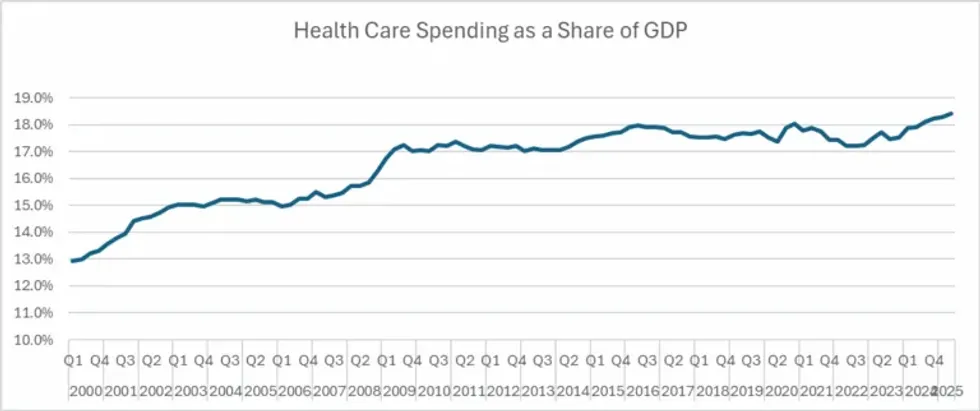
We do pay way too much for healthcare in the United States, but it is not because of Obamacare. We pay twice as much for our drugs, medical equipment, and doctors as people in other wealthy countries. These high payments persist because they are supported by powerful lobbies.
Some of us had hope that the Trump administration might take some steps to reduce these prices, especially in the case of drugs, since RFK, Jr. had railed against corruption in the pharmaceutical industry. Unfortunately, his tirades were limited to an evidence-free crusade against long-proven vaccines, which are not even a major source of profit for the industry.
Donald Trump talked about reducing drug prices 1,500% (really), but this mostly amounted to getting his name on a drug discount website for a small group of patients. We were spending 6.4% more on drugs in September of this year than in the same month in 2024. (September is the most recent month for which data are available.)
Trump has shown no interest in doing anything to lower the cost of medical equipment. And he has said nothing about lowering doctors’ fees, although some reshuffling of the Medicare reimbursement schedules may reduce overpayments to specialists and better pay for family practitioners. His immigration policies are going the wrong way here, making it even more difficult for foreign-trained medical students and doctors to practice here.
And there are the insurers themselves, which gobble up close to 25% of the money they pay out to providers in the form of administrative costs and profits. A recent study found that If we add in the cost imposed by insurers on hospitals, doctors’ offices, and other providers, they take up close to a third of healthcare expenses.
Trump has shown no interest in reining in the insurance industry apart from his silly talking point about giving people money directly to… wait, wait, buy their own unregulated insurance. That will do nothing to reduce the money flowing into the industry’s pockets.
The Republican healthcare plan is a rerun of the bluff and lie strategy they have been doing for more than 15 years. Given the right-wing control of much of the media, it could work for them politically. The tragic part of the story is that millions could end up without the healthcare they need.
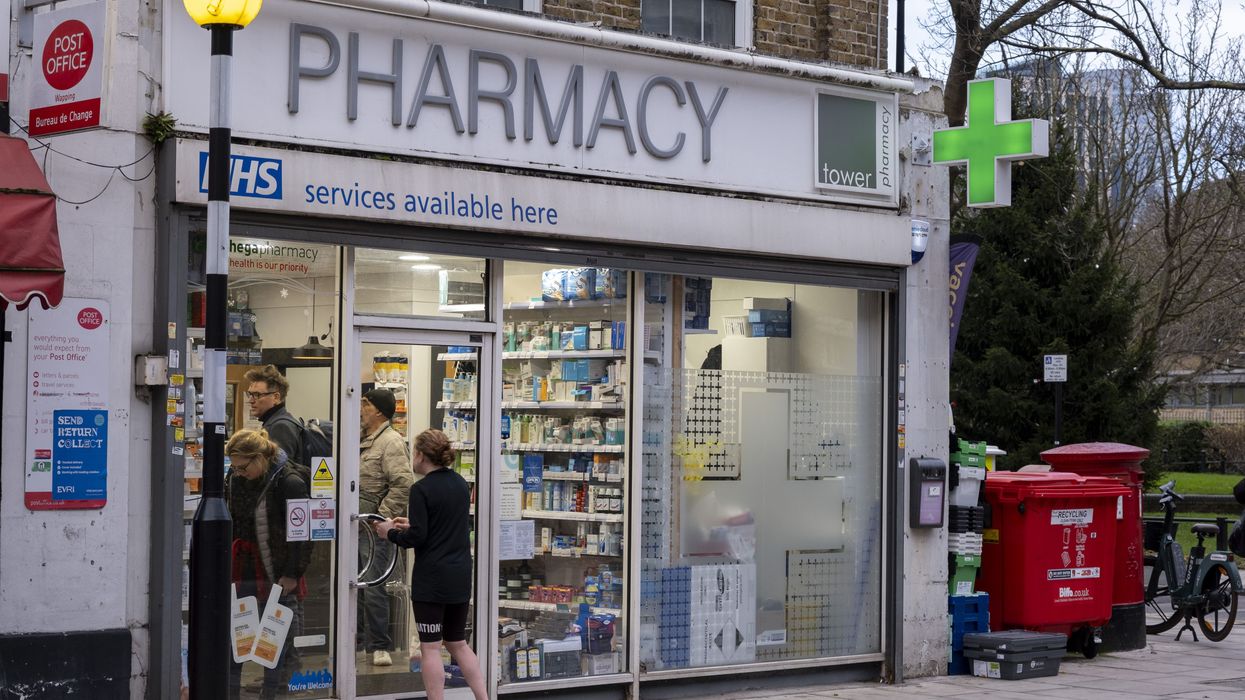
One British lawmaker condemned the agreement as "a Trump shakedown of the NHS."
The government of British Prime Minister Keir Starmer faced swift backlash on Monday after the Trump administration announced a deal under which the United Kingdom's prized National Health Service would pay higher prices for new medicines in exchange for tariff exemptions.
The agreement in principle, outlined in a statement by the Office of the United States Trade Representative, was seen by UK lawmakers and advocacy groups as a gross capitulation to US President Donald Trump and the pharmaceutical industry that would harm the NHS and British patients for years to come.
"Giving in to Big Pharma’s demands to hike the price of medicines spells disaster for our NHS, and for the lives of ordinary people," said Global Justice Now, a UK-based group. "We are being held to ransom. Our government must stand up to Big Pharma and for our NHS by reversing course."
Under the three-year deal, the NHS would boost the net price it pays for new pharmaceutical drugs, many of which emerge from the US, by 25%—a change that's expected to cost British taxpayers roughly £3 billion. In return, Trump has agreed not to impose tariffs on UK pharmaceuticals.
Helen Morgan, the Liberal Democrat MP for North Shropshire, denounced the new agreement as "a Trump shakedown of the NHS." As evidence, she pointed to US Health and Human Services Secretary Robert F. Kennedy Jr.'s celebration of the bilateral deal.
"It cannot go ahead," said Morgan. "RFK Jr. has put it in black and white: Trump demanded these pay rises to put Americans first, and our government rolled over. Patients stuck on crammed hospital corridors, or unable to get an ambulance, won’t forget it."
"The British people didn’t vote for this," Morgan added. "The government must put this agreement to a vote in parliament.”
Andrew Hill, a visiting health economics researcher at the University of Liverpool, similarly criticized the deal.
“The UK hasn’t benefited from this at all, but we’re having to pay all this extra money," said Hill. "More money spent on drugs means less money spent on ambulances, doctors, nurses, simple health interventions."
In addition to facing the threat of Trump tariffs, the UK government was under pressure from the powerful pharmaceutical industry to jack up NHS drug spending. The Guardian reported in September that "big pharmaceutical companies have ditched or paused nearly £2 billion in planned UK investments so far this year" as the firms "accused the government of not spending enough on new medicines."
Survey data released just ahead of Monday's deal announcement shows that 64% of the British public is opposed to the NHS paying higher prices for medicines.
"This is a betrayal of NHS patients," said Diarmaid McDonald, executive director of the advocacy group Just Treatment. "Big Pharma have got what they want. Donald Trump has got what he wants. In the face of their coordinated threats, the government has folded and thousands of patients will pay for this with their lives, as precious funds get stripped from other parts of the health service to line the pockets of rich pharmaceutical execs."
"MPs need to urgently hold the government to account," McDonald added, "and demand they publish the evidence showing the impact of this catastrophic move.”
"This outrageous giveaway to Big Pharma does nothing to lower prices in the United States. It only hurts UK patients."
Asked at a Monday press briefing if the deal would actually benefit US patients and consumers, as the Trump administration has claimed, or if the alleged revenue generated by the agreement would just be "sucked up" by the drug companies, White House Press Secretary Karoline Leavitt did not have an immediate answer.
"I'm going to be honest with you, Ed," Leavitt told the reporter: "I'll get you an answer to that question after the briefing."
Peter Maybarduk, Public Citizen’s Access to Medicines director, argued in a statement that the agreement wouldn't help Americans or Britons.
" Drug prices are far too high everywhere, including in the UK, backed by patent monopolies and contributing to rationing and preventable suffering," said Maybarduk. "This outrageous giveaway to Big Pharma does nothing to lower prices in the United States. It only hurts UK patients while distracting from the serious action needed at home to hold Pharma accountable and make medicine affordable and available for all.”