SUBSCRIBE TO OUR FREE NEWSLETTER
Daily news & progressive opinion—funded by the people, not the corporations—delivered straight to your inbox.
5
#000000
#FFFFFF
To donate by check, phone, or other method, see our More Ways to Give page.
Daily news & progressive opinion—funded by the people, not the corporations—delivered straight to your inbox.
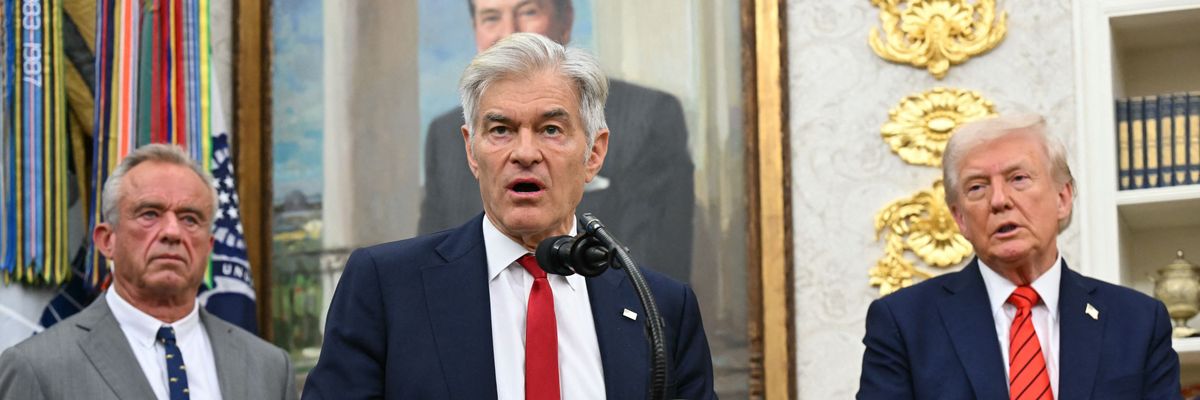
Centers for Medicare and Medicaid Services Administrator Mehmet Oz speaks during an announcement on drug pricing at the Oval Office of the White House on October 10, 2025.
"Medicare drug price negotiation is about to deliver tangible lower costs to seniors in Medicare, unlike Trump’s ceremonial events with Big Pharma CEOs in the Oval Office," said one Democratic senator.
The Trump administration on Tuesday announced newly negotiated prices for more than a dozen prescription drugs covered by Medicare, an achievement made possible by a Biden-era law that has faced relentless attacks from the pharmaceutical industry, GOP lawmakers, and the Republican president.
The announcement marks the end of the second round of Medicare drug price negotiations required under the Inflation Reduction Act (IRA), a measure passed in 2022 without the support of a single Republican in Congress. Last year, House GOP leaders said the law was "disastrous" and decried what they called "the mandate from bureaucrats to artificially set prescription drug prices."
The new list contains 15 drugs, including the diabetes and weight loss medication Ozempic, the breast cancer drug Ibrance, and the prostate cancer drug Xtandi. The Centers for Medicare & Medicaid Services (CMS) estimated that if the new prices—which take effect in 2027—had been in effect last year, Medicare would have saved $12 billion.
President Donald Trump campaigned on rolling back the IRA, which for the first time allowed Medicare to negotiate drug prices directly with pharmaceutical companies. Since taking office, Trump has taken steps to weaken the law, including by signing a measure that will exempt certain high-priced drugs from Medicare negotiations—a multibillion-dollar handout to Big Pharma.
But in statements on Tuesday, Trump-appointed officials hailed the newly negotiated prices. Robert F. Kennedy Jr., secretary of the Health and Human Services Department, said the negotiation results stemmed from a Trump directive to "stop at nothing to lower healthcare costs for the American people."
CMS Administrator Mehmet Oz declared that the second round of negotiations was more successful than the first, which was held under the Biden administration. Experts said that claim is specious at best.
Democratic lawmakers were quick to highlight Republican opposition to the IRA, and continued attacks on the law, in response to the newly negotiated prices.
"Democrats took on Big Pharma by giving Medicare the power to negotiate on behalf of the tens of millions of seniors that want lower drug prices while every Republican voted against it,” said Sen. Ron Wyden (D-Ore.), the top Democrat on the Senate Finance Committee. “Today’s announcement is a result of that effort by Democrats to lower health costs for older Americans."
"Medicare drug price negotiation is about to deliver tangible lower costs to seniors in Medicare, unlike Trump’s ceremonial events with Big Pharma CEOs in the Oval Office," Wyden added. "Republicans neutered future Medicare drug price negotiations by adding delays and exemptions to some of the most expensive drugs, especially cancer drugs like Keytruda."
Tuesday's announcement came less than a week after the pharmaceutical industry suffered its 16th defeat in court as it continues its legal campaign against the Medicare price negotiations. The industry is also lobbying aggressively in support of legislation that would further weaken the IRA price-negotiation provisions.
"Drug corporations already secured a $9 billion giveaway from President Trump and congressional Republicans paid for by taxpayers and cancer patients through the Big Ugly Bill, and they are trying to go even further to delay and exempt price negotiations for more blockbuster drugs," said Steve Knievel, access to medicines advocate at Public Citizen.
"Policymakers must reject these efforts to undermine Medicare drug price negotiations," Knievel added. "Instead they should build on the program’s success by providing everyone access to negotiated prices, negotiating lower prices for more drugs sooner, and ensuring drug corporations can no longer rip us off by charging the highest prices in the world for medications."
Dear Common Dreams reader, It’s been nearly 30 years since I co-founded Common Dreams with my late wife, Lina Newhouser. We had the radical notion that journalism should serve the public good, not corporate profits. It was clear to us from the outset what it would take to build such a project. No paid advertisements. No corporate sponsors. No millionaire publisher telling us what to think or do. Many people said we wouldn't last a year, but we proved those doubters wrong. Together with a tremendous team of journalists and dedicated staff, we built an independent media outlet free from the constraints of profits and corporate control. Our mission has always been simple: To inform. To inspire. To ignite change for the common good. Building Common Dreams was not easy. Our survival was never guaranteed. When you take on the most powerful forces—Wall Street greed, fossil fuel industry destruction, Big Tech lobbyists, and uber-rich oligarchs who have spent billions upon billions rigging the economy and democracy in their favor—the only bulwark you have is supporters who believe in your work. But here’s the urgent message from me today. It's never been this bad out there. And it's never been this hard to keep us going. At the very moment Common Dreams is most needed, the threats we face are intensifying. We need your support now more than ever. We don't accept corporate advertising and never will. We don't have a paywall because we don't think people should be blocked from critical news based on their ability to pay. Everything we do is funded by the donations of readers like you. When everyone does the little they can afford, we are strong. But if that support retreats or dries up, so do we. Will you donate now to make sure Common Dreams not only survives but thrives? —Craig Brown, Co-founder |
The Trump administration on Tuesday announced newly negotiated prices for more than a dozen prescription drugs covered by Medicare, an achievement made possible by a Biden-era law that has faced relentless attacks from the pharmaceutical industry, GOP lawmakers, and the Republican president.
The announcement marks the end of the second round of Medicare drug price negotiations required under the Inflation Reduction Act (IRA), a measure passed in 2022 without the support of a single Republican in Congress. Last year, House GOP leaders said the law was "disastrous" and decried what they called "the mandate from bureaucrats to artificially set prescription drug prices."
The new list contains 15 drugs, including the diabetes and weight loss medication Ozempic, the breast cancer drug Ibrance, and the prostate cancer drug Xtandi. The Centers for Medicare & Medicaid Services (CMS) estimated that if the new prices—which take effect in 2027—had been in effect last year, Medicare would have saved $12 billion.
President Donald Trump campaigned on rolling back the IRA, which for the first time allowed Medicare to negotiate drug prices directly with pharmaceutical companies. Since taking office, Trump has taken steps to weaken the law, including by signing a measure that will exempt certain high-priced drugs from Medicare negotiations—a multibillion-dollar handout to Big Pharma.
But in statements on Tuesday, Trump-appointed officials hailed the newly negotiated prices. Robert F. Kennedy Jr., secretary of the Health and Human Services Department, said the negotiation results stemmed from a Trump directive to "stop at nothing to lower healthcare costs for the American people."
CMS Administrator Mehmet Oz declared that the second round of negotiations was more successful than the first, which was held under the Biden administration. Experts said that claim is specious at best.
Democratic lawmakers were quick to highlight Republican opposition to the IRA, and continued attacks on the law, in response to the newly negotiated prices.
"Democrats took on Big Pharma by giving Medicare the power to negotiate on behalf of the tens of millions of seniors that want lower drug prices while every Republican voted against it,” said Sen. Ron Wyden (D-Ore.), the top Democrat on the Senate Finance Committee. “Today’s announcement is a result of that effort by Democrats to lower health costs for older Americans."
"Medicare drug price negotiation is about to deliver tangible lower costs to seniors in Medicare, unlike Trump’s ceremonial events with Big Pharma CEOs in the Oval Office," Wyden added. "Republicans neutered future Medicare drug price negotiations by adding delays and exemptions to some of the most expensive drugs, especially cancer drugs like Keytruda."
Tuesday's announcement came less than a week after the pharmaceutical industry suffered its 16th defeat in court as it continues its legal campaign against the Medicare price negotiations. The industry is also lobbying aggressively in support of legislation that would further weaken the IRA price-negotiation provisions.
"Drug corporations already secured a $9 billion giveaway from President Trump and congressional Republicans paid for by taxpayers and cancer patients through the Big Ugly Bill, and they are trying to go even further to delay and exempt price negotiations for more blockbuster drugs," said Steve Knievel, access to medicines advocate at Public Citizen.
"Policymakers must reject these efforts to undermine Medicare drug price negotiations," Knievel added. "Instead they should build on the program’s success by providing everyone access to negotiated prices, negotiating lower prices for more drugs sooner, and ensuring drug corporations can no longer rip us off by charging the highest prices in the world for medications."
The Trump administration on Tuesday announced newly negotiated prices for more than a dozen prescription drugs covered by Medicare, an achievement made possible by a Biden-era law that has faced relentless attacks from the pharmaceutical industry, GOP lawmakers, and the Republican president.
The announcement marks the end of the second round of Medicare drug price negotiations required under the Inflation Reduction Act (IRA), a measure passed in 2022 without the support of a single Republican in Congress. Last year, House GOP leaders said the law was "disastrous" and decried what they called "the mandate from bureaucrats to artificially set prescription drug prices."
The new list contains 15 drugs, including the diabetes and weight loss medication Ozempic, the breast cancer drug Ibrance, and the prostate cancer drug Xtandi. The Centers for Medicare & Medicaid Services (CMS) estimated that if the new prices—which take effect in 2027—had been in effect last year, Medicare would have saved $12 billion.
President Donald Trump campaigned on rolling back the IRA, which for the first time allowed Medicare to negotiate drug prices directly with pharmaceutical companies. Since taking office, Trump has taken steps to weaken the law, including by signing a measure that will exempt certain high-priced drugs from Medicare negotiations—a multibillion-dollar handout to Big Pharma.
But in statements on Tuesday, Trump-appointed officials hailed the newly negotiated prices. Robert F. Kennedy Jr., secretary of the Health and Human Services Department, said the negotiation results stemmed from a Trump directive to "stop at nothing to lower healthcare costs for the American people."
CMS Administrator Mehmet Oz declared that the second round of negotiations was more successful than the first, which was held under the Biden administration. Experts said that claim is specious at best.
Democratic lawmakers were quick to highlight Republican opposition to the IRA, and continued attacks on the law, in response to the newly negotiated prices.
"Democrats took on Big Pharma by giving Medicare the power to negotiate on behalf of the tens of millions of seniors that want lower drug prices while every Republican voted against it,” said Sen. Ron Wyden (D-Ore.), the top Democrat on the Senate Finance Committee. “Today’s announcement is a result of that effort by Democrats to lower health costs for older Americans."
"Medicare drug price negotiation is about to deliver tangible lower costs to seniors in Medicare, unlike Trump’s ceremonial events with Big Pharma CEOs in the Oval Office," Wyden added. "Republicans neutered future Medicare drug price negotiations by adding delays and exemptions to some of the most expensive drugs, especially cancer drugs like Keytruda."
Tuesday's announcement came less than a week after the pharmaceutical industry suffered its 16th defeat in court as it continues its legal campaign against the Medicare price negotiations. The industry is also lobbying aggressively in support of legislation that would further weaken the IRA price-negotiation provisions.
"Drug corporations already secured a $9 billion giveaway from President Trump and congressional Republicans paid for by taxpayers and cancer patients through the Big Ugly Bill, and they are trying to go even further to delay and exempt price negotiations for more blockbuster drugs," said Steve Knievel, access to medicines advocate at Public Citizen.
"Policymakers must reject these efforts to undermine Medicare drug price negotiations," Knievel added. "Instead they should build on the program’s success by providing everyone access to negotiated prices, negotiating lower prices for more drugs sooner, and ensuring drug corporations can no longer rip us off by charging the highest prices in the world for medications."